
Skip to Content
  • 4.1
    Impact Factor
  • 7.6
    CiteScore
  • 18 days
    Submission to First Decision
  • 3 days
    Acceptance to Publication

Agronomy

Agronomy is an international, peer-reviewed, open access journal on agronomy and agroecology published semimonthly online by MDPI. The Spanish Society of Plant Biology (SEBP) is affiliated with Agronomy and their members receive discounts on the article processing charges.

Get Alerted

Add your email address to receive forthcoming issues of this journal.

All Articles (20,821)

  • Article
  • Open Access

Ammonia (NH3) volatilization is a major pathway of gaseous nitrogen (N) loss from croplands, yet how N application rate modifies soil NH3 volatilization (SAV) in maize–soybean intercropping remains poorly understood. A three-year field experiment (2024–2026) in a calcareous soil on the North China Plain compared maize monoculture (MM), soybean monoculture (MS), and maize–soybean intercropping (IMS) under no N (NN), conventional N (ConN), and 20% reduced N (20%RN). SAV was monitored using a chamber-based portable ammonia detection system, alongside measurements of soil water content (SWC), temperature (ST), pH, and labile N pools; exploratory structural equation modeling (SEM) was used to evaluate statistical associations among variables in the 2024 dataset. A controlled-release compound fertilizer (N–P2O5–K2O = 28–10–12) was applied before sowing. ConN rates were 225 and 45 kg N ha−1 for maize and soybean, respectively, and 20%RN rates were 180 and 36 kg N ha−1; IMS received the sum of the corresponding monoculture rates. The intercropping effect on cumulative SAV depended on N rate: cumulative SAV in IMS was 13.3–16.8% higher than in MM under ConN but 3.1–10.6% lower under 20%RN, whereas MS consistently exhibited the lowest emissions. Season-mean pH did not differ significantly among cropping systems but was significantly affected by N application: values were significantly higher under NN (8.46) than under ConN (8.43), with 20%RN (8.44) being intermediate and not significantly different from either. IMS had larger nitrate, water-extractable organic N, and microbial biomass N pools than MM and maintained higher mid-season SWC. Across systems, NH4+-N showed the strongest direct statistical association with SAV (standardized path coefficients, 0.57–0.61). Path networks showed different descriptive patterns among systems; however, these observational SEM results indicate exploratory associations rather than providing independent evidence of causation. Overall, N rate modulated the direction and magnitude of the intercropping–SAV relationship. Whether IMS combined with moderate N reduction can jointly reduce emissions and maintain productivity remains a hypothesis requiring validation through crop yield and N-use-efficiency measurements.

Agronomy

27 November 2026

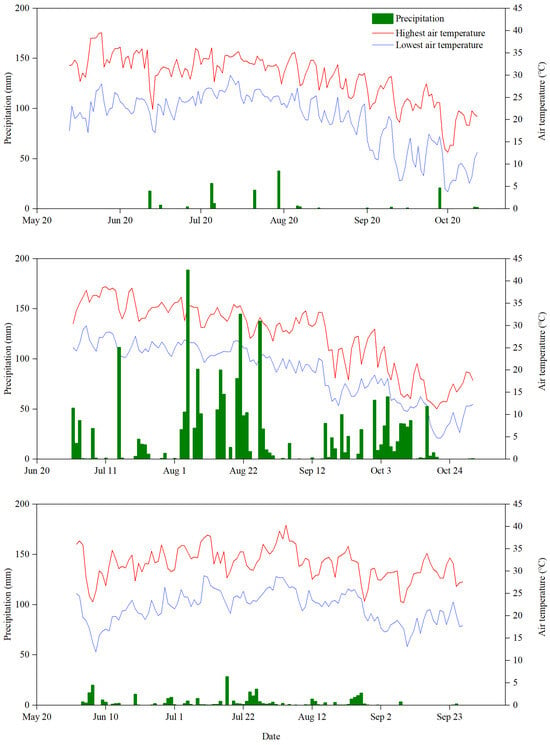
Daily precipitation and air temperature throughout the 2024–2026 growing seasons.
  • Article
  • Open Access

To elucidate how long-term incorporation of organic materials with contrasting carbon stability regulates soil carbon dynamics and greenhouse gas (GHG) emissions in Mollisols, we evaluated the effects of straw, compost, and biochar on soil organic carbon (SOC) sequestration, maize (Zea mays L.) productivity, net global warming potential (NGWP), and greenhouse gas intensity (GHGI) in a 10-year field experiment in the Mollisol region of Northeast China. Five treatments were evaluated: no fertilization (CK), chemical fertilizer alone (NPK), and NPK combined with straw (NPKST), compost (NPKCP), or biochar (NPKBR). The three organic amendments were applied at equivalent carbon input rates. All organic–mineral treatments increased maize grain yield relative to NPK; the average annual yield increased by 9.37%, 11.54%, and 7.57% under NPKST, NPKCP, and NPKBR, respectively. Compared with NPK, all organic-mineral treatments increased SOC content, SOC stock, carbon sequestration rates, labile carbon pools I and II (LPI-C and LPII-C), the recalcitrant carbon pool (RP-C), and microbial biomass carbon (MBC). SOC stock under NPKST, NPKCP, and NPKBR increased by 13.76%, 19.18%, and 30.58%, and the carbon sequestration rate was 0.96-, 1.19-, and 1.73- fold that of NPK, respectively. NPKCP reduced the temperature sensitivity of CO2 emissions by 6.57–39.78% and 0.45–15.52% in the two years, respectively. Straw incorporation increased subsoil labile carbon and maintained the highest labile carbon proportion (53.87–61.73% of SOC). All organic–mineral treatments substantially reduced NGWP and GHGI. NPKST increased maize yield without significantly increasing CO2 or N2O emissions relative to NPK. NPKBR achieved the highest carbon sequestration efficiency. These results suggest that no single amendment is optimal for all objectives and that amendment selection for Mollisol conservation should be matched to management priorities.

Agronomy

27 November 2026

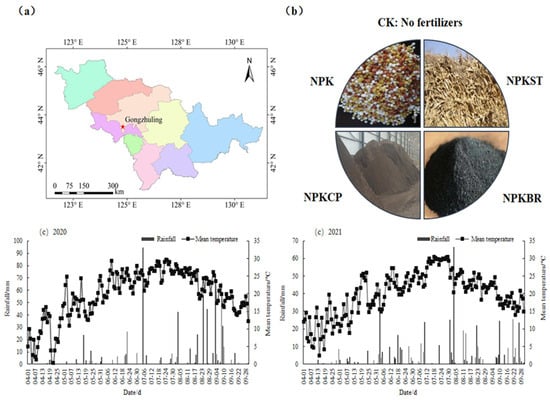
(a) The locations of the experimental site and the golden maize belt; (b) tillage pattern diagram under different applications of organic-mineral fertilizers: no fertilizers (CK), mineral fertilizers (NPK), mineral fertilizers plus maize straw (NPKST), mineral fertilizers plus maize straw compost (NPKCP), and mineral fertilizers plus maize straw biochar (NPKBR); (c) climatic data for two maize growing seasons of 2020 and 2021 at the experimental station.
  • Article
  • Open Access

Biochar and arbuscular mycorrhizal fungi (AMF) have considerable potential for improving soil quality and plant performance while reducing dependence on conventional fertilizers. However, their effects under field conditions may vary depending on amendment combinations and crop responses. This study evaluated the effects of bamboo biochar (BB-char), AMF, and fertilizer treatments on soil chemical properties, growth, mineral content, and phenolic content of Chinese kale (Brassica oleracea var. alboglabra) under field conditions. Six soil amendment treatments were evaluated: untreated soil (T1), soil amended with chemical fertilizer (T2), organic fertilizer (T3), BB-char (T4), BB-char + AMF (T5), and BB-char + half-rate chemical fertilizer (T6). Soil chemical properties were analyzed after amendment and incorporation but before planting, and again after 45 days of cultivation. At the end of the cultivation period, plant growth was assessed, and the leaf samples were analyzed for mineral and total phenolic contents. Post-harvest soil analysis showed that T6 had the highest values for soil pH, organic matter, organic carbon, total nitrogen, and exchangeable potassium; however, available phosphorus data was not available. Treatment T2 promoted the greatest vegetative growth, producing the longest shoots and roots and the highest shoot and root biomass. In contrast, T4 produced the highest number of leaves (8.63 ± 0.64 leaves per plant), while the highest SPAD value was recorded in T2 (51.62 ± 1.80 SPAD units). Regarding leaf mineral content, T5 showed the highest nitrogen, calcium, and magnesium contents, although these values did not differ significantly from those in the untreated soil (T1). The highest phosphorus (3.55 ± 0.15%) and potassium (3.00 ± 0.14%) contents were recorded in T1. In addition, T3, T4, and T5 exhibited the highest total phenolic contents, with no significant differences among these treatments. Collectively, the soil amendment treatments differentially influenced soil chemical properties, plant growth, leaf mineral content, and total phenolic content of Chinese kale. Although chemical fertilizer promoted biomass production, BB-char-based treatments demonstrated potential for improving soil chemical properties and some nutritional and functional properties of Chinese kale, supporting their potential as components of more sustainable field-based nutrient management strategies under field conditions.

Agronomy

27 November 2026

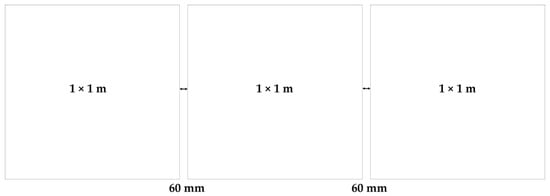
Layout of the experimental field. Each experimental plot was 1 × 1 m, with a 60 mm separation between each of the experiments.
  • Article
  • Open Access

The maize and soybean intercropping system offers a promising route to expand soybean production in China, yet the shading cast by the taller maize crop imposes stress on soybean and limits its yield. To identify shade-tolerant, high-yield soybean varieties and to understand the underlying regulatory mechanisms, we conducted spring- and autumn-sowing field experiments in Hunan Province, in which yield, agronomic traits, and dry matter accumulation were assessed under intercropping, and two representative varieties with contrasting shade tolerance were subjected to integrated transcriptomic and metabolomic analysis. Huadou 12 and Xiangchun 2704 emerged as shade-tolerant varieties, yielding 1748.71 and 1670.68 kg·hm−2 in spring and 1019.28 and 894.65 kg·hm−2 in autumn under intercropping, significantly more than the shade-susceptible Xiangchun bean 26. Intercropped soybean was taller and had a higher bottom pod height and lodging rate but a smaller stem diameter than monoculture, and shading shifted dry matter allocation toward stems at the expense of pods; the combined maize yield across the two seasons reached 14,001.57 kg·hm−2. Transcriptomic profiling revealed fewer differentially expressed genes in the shade-tolerant variety under shading, together with stable expression of light-harvesting complex genes in the photosynthesis–antenna proteins pathway and active expression of hormone signal transduction genes. Metabolomic analysis showed that differentially accumulated metabolites were mainly enriched in zeatin biosynthesis, flavonoid metabolism, and amino acid metabolism. Integrated analysis indicated that the shade-tolerant variety adapted to shading primarily through coordinated regulation of zeatin biosynthesis, α-linolenic acid metabolism, and carotenoid biosynthesis, whereas the shade-susceptible variety depended more on flavonoid metabolic responses. These findings clarify the transcriptional and metabolic regulation underlying soybean shade tolerance and provide candidate materials and a theoretical basis for breeding shade-tolerant varieties and optimizing maize–soybean intercropping systems.

Agronomy

27 November 2026

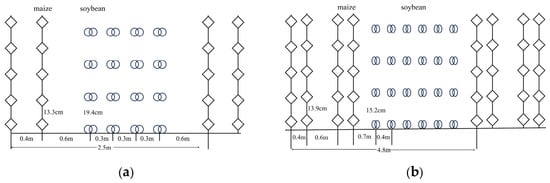
Field planting pattern of maize and soybean intercropping system. (a) Spring planting pattern. (b) Autumn planting pattern.

Highly Accessed Articles

News & Conferences

Latest Issues

Open for Submission

Journal Sections

XFacebookLinkedIn
Agronomy - ISSN 2073-4395