



Next Issue
Volume 10, March
Previous Issue
Volume 10, January


Urban Sci., Volume 10, Issue 2 (February 2026) – 57 articles
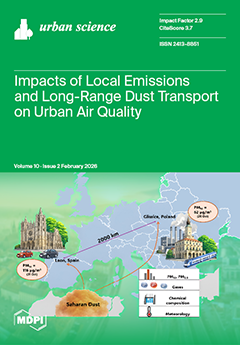
Cover Story (view full-size image): Understanding how local emissions interact with long-range atmospheric transport is essential for interpreting urban air quality patterns. In Europe, Saharan dust intrusions can alter particulate matter concentrations, even in areas far from North Africa. In summer, Leon (Spain) records increases in PM associated with long-range transport, especially during conditions conducive to dust intrusions. By contrast, Gliwice (Poland) exhibits higher PM levels linked to local emissions. This study compares summer air quality dynamics in both cities, highlighting the need to integrate local sources and regional processes. Although studies confirm that dust reaches Central Europe, analyses are lacking that quantify its impact and compare it with cities closer to the source, such as Leon. View this paper
  • Issues are regarded as officially published after their release is announced to the table of contents alert mailing list.
  • You may sign up for e-mail alerts to receive table of contents of newly released issues.
  • PDF is the official format for papers published in both, html and pdf forms. To view the papers in pdf format, click on the "PDF Full-text" link, and use the free Adobe Reader to open them.
Order results
Result details
Section
Select all
Export citation of selected articles as:
20 pages, 10641 KB  
Article
Public Transport Accessibility Level and Public Perceptions: A Framework for Urban Mobility Analysis
by Adelina Camelia Tarko, Marius Lupșa Matichescu, Maria-Raluca Răducan and Alexandru Dragan
Urban Sci. 2026, 10(2), 122; https://doi.org/10.3390/urbansci10020122 - 21 Feb 2026
Viewed by 581
Abstract
This study investigates the influence of public transport on the quality of urban life through a combined approach that includes both an objective and a subjective assessment. The objective quality of the public transport network in Timișoara was measured using the Public Transport [...] Read more.
This study investigates the influence of public transport on the quality of urban life through a combined approach that includes both an objective and a subjective assessment. The objective quality of the public transport network in Timișoara was measured using the Public Transport Accessibility Level (PTAL) index, whose values were recalibrated to better fit the context of an Eastern European post-communist city, while citizens’ perceptions were analyzed based on a public opinion survey in Timișoara, conducted over 5 years on 9490 respondents. The research methods used combine cartography and statistics, with tools such as ArcGIS Pro, IBM SPSS Statistics v27, and R v4.5.2. The results highlight a correlation between accessibility levels and user satisfaction, emphasizing spatial disparities between the city center, which enjoys excellent accessibility, and the periphery, where accessibility is much lower. The integration of these two dimensions provides a holistic perspective on urban mobility and makes relevant contributions to sustainable planning strategies and the development of smart city initiatives. Full article
Show Figures

Figure 1

19 pages, 1337 KB  
Article
Urban Amenities in Chinese Cities: A Geographical Analysis of Social Group Disparities
by Xu Zhang, Jianing Tang and Zhe Gao
Urban Sci. 2026, 10(2), 121; https://doi.org/10.3390/urbansci10020121 - 20 Feb 2026
Viewed by 593
Abstract
This study investigates inter-city disparities in the distribution of social amenities for four demographic groups across mainland China, moving beyond the conventional focus on knowledge-economy amenities to include relatively disadvantaged populations. It further explores the relationship between amenity distribution and China’s urban hierarchy [...] Read more.
This study investigates inter-city disparities in the distribution of social amenities for four demographic groups across mainland China, moving beyond the conventional focus on knowledge-economy amenities to include relatively disadvantaged populations. It further explores the relationship between amenity distribution and China’s urban hierarchy at multiple geographical scales. Results show that amenities are disproportionately concentrated in cities with larger populations, stronger economies, and higher administrative status, reflecting the influence of demographic, economic, and political structures. Consequently, substantial geographical disparities align with regional economic imbalances. However, inequality levels vary by amenity type and social group: commercially oriented amenities, such as those targeting high-skilled professionals and women, exhibit greater inequality, whereas publicly supported amenities for older adults and children exhibit comparatively lower disparities. The study further reveals that in many smaller cities, the provision of high-skilled labor amenities tends to outstrip local demand, indicating that the role of such amenities in shaping location choices may be overestimated in less central regions. These findings highlight the need for context-sensitive urban amenity policies and greater governmental attention to mitigating inequalities in essential public amenities to promote urban equity and competitiveness. Full article
(This article belongs to the Section Urban Economy and Industry)
Show Figures

Figure 1

30 pages, 21334 KB  
Article
Measuring Retail Resilience Using a Geospatial Multi-Criteria Model: A Case Study of Saida, Lebanon
by Nour Ahmad El Baba, Ibtihal Y. El Bastawissi, Ayman Afify and Hiba Mohsen
Urban Sci. 2026, 10(2), 120; https://doi.org/10.3390/urbansci10020120 - 18 Feb 2026
Viewed by 827
Abstract
Urban retail environments are social and economic manifestations of a city, enhancing economic growth and social cohesion. However, they increasingly face challenges from economic downturns, changing consumer preferences, and spatial dynamics, making their ability to adapt and remain viable a critical concern. In [...] Read more.
Urban retail environments are social and economic manifestations of a city, enhancing economic growth and social cohesion. However, they increasingly face challenges from economic downturns, changing consumer preferences, and spatial dynamics, making their ability to adapt and remain viable a critical concern. In this context, retail resilience refers to the capacity of urban retail environments to absorb disturbances, adapt to change, and sustain their economic and social functions over time. Despite growing interest in urban resilience, the operationalization of retail resilience through spatially explicit and measurable indicators remains limited, as many assessments focus on city or regional scales and overlook variations at the neighborhood level. Thus, this paper aims to develop a geospatial multi-criteria model yielding a composite Urban Retail Resilience Index (URRI) to analyze and interpret retail resilience in Saida’s urban retail environment through an adaptive cycle lens. The URRI combines indicators related to diversity, spatial proximity, and socioeconomic conditions, and is applied using two weighting scenarios—baseline and stakeholder-based weights—to test the model’s robustness and reflect local priorities. The results reveal distinct spatial variations in retail resilience across the study area, enabling the identification of hotspots for interventions and highlighting the role of accessibility and diversity in shaping the adaptive capacity. These findings confirm that Saida’s retail resilience is closely linked to walkability and socio-cultural characteristics. The proposed geospatial multi-criteria model provides a robust and replicable framework for assessing retail resilience, offering practical insights for urban planners and policymakers. Full article
(This article belongs to the Section Urban Planning and Design)
Show Figures

Figure 1

24 pages, 6403 KB  
Article
Research on High-Resolution Urban Regional Carbon Emission Estimation Method from the Perspective of Functional Areas: A Case Study of Beijing
by Hongyuan Huo, Ling Li, Yi Lian, Peng Du and Lei Cui
Urban Sci. 2026, 10(2), 119; https://doi.org/10.3390/urbansci10020119 - 16 Feb 2026
Viewed by 431
Abstract
Rapid industrialization and urbanization have significantly accelerated carbon dioxide emissions, intensifying climate mitigation challenges. Accurate micro-scale assessment of urban carbon emissions is imperative for formulating effective reduction policies in China; however, current efforts are often constrained by a lack of high-resolution data, limiting [...] Read more.
Rapid industrialization and urbanization have significantly accelerated carbon dioxide emissions, intensifying climate mitigation challenges. Accurate micro-scale assessment of urban carbon emissions is imperative for formulating effective reduction policies in China; however, current efforts are often constrained by a lack of high-resolution data, limiting the ability to capture fine-grained spatial heterogeneity. To address this gap, this study integrates the 1 m resolution national land cover product (SinoLC-1) with OpenStreetMap (OSM) networks and point of interest (POI) data to delineate urban functional zones in Beijing. We subsequently developed a method to estimate and spatially allocate carbon emissions at a 1 m resolution across these zones, categorized by industrial sector. Results for 2020 indicate that carbon sequestration by forests, water bodies, and grasslands totaled approximately 624,900 tons, while total emissions from cultivated land and energy consumption in built-up areas reached 107,692,300 tons. Built-up land was identified as the primary carbon source, whereas forestland and water bodies functioned as key sinks. Notably, the tertiary industry accounted for the largest share of energy-related emissions (41.80%), driven primarily by electricity and kerosene consumption. Spatially, emissions exhibited pronounced heterogeneity, with high-value clusters concentrated in the central urban core and specific suburban hubs. Cross-validation demonstrates that this functional-zone-based spatial allocation method significantly outperforms traditional nighttime light-based approaches in resolving micro-scale emission patterns. This high-resolution analysis improves the characterization of spatial variability in urban carbon cycles, offering robust data support for precision low-carbon planning and energy management. Full article
Show Figures

Figure 1

21 pages, 1517 KB  
Article
Urban Fragmentation and Residential Segregation in Medium-Sized Cities: A Multidimensional Urban Territorial Index (UTI) Analysis from Spain
by Maria Angeles Rodríguez-Domenech and Isabel Rodriguez-Domenech
Urban Sci. 2026, 10(2), 118; https://doi.org/10.3390/urbansci10020118 - 14 Feb 2026
Cited by 1 | Viewed by 647
Abstract
Medium-sized cities are increasingly affected by processes of urban fragmentation and residential segregation, despite having traditionally been perceived as more socially cohesive and territorially balanced than large metropolitan areas. Acting as functional connectors between metropolitan hubs and rural regions, these cities are particularly [...] Read more.
Medium-sized cities are increasingly affected by processes of urban fragmentation and residential segregation, despite having traditionally been perceived as more socially cohesive and territorially balanced than large metropolitan areas. Acting as functional connectors between metropolitan hubs and rural regions, these cities are particularly vulnerable to unplanned suburban growth, housing market polarization and uneven access to urban opportunities. This study develops and applies a multidimensional Urban Territorial Index (UTI) to diagnose socio-spatial inequality in medium-sized cities, using Ciudad Real (central Spain) and its functional urban area as a case study. The UTI integrates six indicators across three analytical dimensions—socioeconomic, sociodemographic and housing—through a PCA-informed weighting scheme and GIS-based spatial analysis. The index is calculated at census-tract and neighborhood scales and is validated through internal consistency checks, external comparison with a local Human Development Index (r = 0.87; p < 0.001), and qualitative robustness assessments. Results reveal a pronounced core–periphery polarization: central and strategically located neighborhoods associated with key infrastructures (university, high-speed rail station and hospital) concentrate higher income levels, educational attainment and land values, while peripheral municipalities and disadvantaged neighborhoods exhibit higher unemployment, lower housing values and greater social vulnerability. The analysis also identifies population–housing mismatches linked to suburban expansion without equivalent functional integration. Beyond the local case, the study provides a transparent and replicable methodological framework tailored to medium-sized cities, where metropolitan-scale indices often fail to capture fine-grained socio-spatial disparities. The UTI offers a practical tool for comparative analysis, temporal monitoring and evidence-based urban policy, supporting more inclusive and territorially balanced development strategies in diverse institutional and geographical contexts. Full article
(This article belongs to the Special Issue Social Evolution and Sustainability in the Urban Context)
Show Figures

Figure 1

21 pages, 790 KB  
Article
Assessing Transport Affordability and Spatial Inequality: Evidence from a Hierarchical Bayesian Regression Framework of South Africa’s Provinces
by Fatima Jili, Sanele Gumede, Jessica Goebel and Jeffrey Wilson
Urban Sci. 2026, 10(2), 117; https://doi.org/10.3390/urbansci10020117 - 13 Feb 2026
Viewed by 1325
Abstract
Transport affordability defined as the share of household income devoted to transport expenditure is a key dimension of urban equity and social inclusion, particularly in contexts characterised by spatial inequality and income disparities. This study examines provincial variation in public transport affordability across [...] Read more.
Transport affordability defined as the share of household income devoted to transport expenditure is a key dimension of urban equity and social inclusion, particularly in contexts characterised by spatial inequality and income disparities. This study examines provincial variation in public transport affordability across South Africa using a hierarchical Bayesian regression framework applied to province–year data from 2015 to 2022 (n = 72). Affordability is operationalised as a transport cost burden, with higher values indicating a greater proportion of household income spent on transport, and is modelled as a function of household income, trip frequency, household population, and total provincial employment, with province-level random intercepts capturing unobserved regional heterogeneity. The results indicate that household income is negatively associated with transport cost burden, suggesting that provinces with higher average income devote a smaller share of income to transport and therefore experience better affordability. In contrast, household population and aggregate provincial employment are positively associated with transport cost burden, reflecting higher overall mobility and commuting demands in larger and more economically active provinces rather than improved affordability. Trip frequency shows no statistically meaningful association with affordability once household composition and income capacity are accounted for. After accounting for observed characteristics, between-province variation is limited, indicating that affordability dynamics are broadly similar across provinces over the study period. Methodologically, the hierarchical Bayesian framework enables partial pooling across provinces and supports probabilistic inference through credible intervals, thereby improving the stability of estimates in a small-sample multilevel context. While the analysis is associational rather than causal, the findings provide policy-relevant evidence for monitoring transport affordability, including benchmarking the prevalence of affordability burdens relative to the commonly used 10% threshold. Full article
Show Figures

Figure 1

39 pages, 16163 KB  
Article
Assimilation or Segregation? Evolutionary Trajectories and Driving Forces of Chinese Immigrant Residential Concentration in Seoul, South Korea
by Hanbin Wei, Yiting Zheng, Xiaolei Sang, Mengru Zhou and Sunju Kang
Urban Sci. 2026, 10(2), 116; https://doi.org/10.3390/urbansci10020116 - 12 Feb 2026
Viewed by 818
Abstract
The spatial distribution of immigrants and associated patterns of residential segregation and integration can manifest not only at the metropolitan scale but also at finer micro-spatial resolutions, reflecting the interaction between path dependence and structural reconfiguration. This article examines the micro-spatial residential patterns [...] Read more.
The spatial distribution of immigrants and associated patterns of residential segregation and integration can manifest not only at the metropolitan scale but also at finer micro-spatial resolutions, reflecting the interaction between path dependence and structural reconfiguration. This article examines the micro-spatial residential patterns of Chinese immigrants in Seoul under institutional and market constraints. Using a Spatial Durbin Model and Multiscale Geographically Weighted Regression, it shows that from 2011 to 2025, immigrant settlements shifted from a monocentric pattern to a polycentric, functionally differentiated, and networked structure. While overall spatial embeddedness is high and segregation remains low, traditional cores such as Guro–Daerim persist. Selective clustering is shaped by path-dependent migrant networks, urban redevelopment policies, and intra-group differentiation, while infrastructure homogenization renders transportation accessibility a background condition. The findings support segmented assimilation theory in high-density East Asian cities and underscore the importance of incorporating immigrant needs into urban policy to promote inclusive integration. Full article
Show Figures

Figure 1

20 pages, 2179 KB  
Article
A Multidimensional Framework for Examining the Potential of Housing Cooperatives to Promote Aging in Place
by Ana García Sánchez, Ana Torres Barchino and Jorge Llopis Verdú
Urban Sci. 2026, 10(2), 115; https://doi.org/10.3390/urbansci10020115 - 12 Feb 2026
Viewed by 644
Abstract
NORC (Naturally Occurring Retirement Community) programs and senior cohousing are two community-based, sustainable initiatives for aging in place associated with cooperative housing in New York and Spain, which are spreading rapidly as an alternative to institutionalization. This paper examines how NORC programs and [...] Read more.
NORC (Naturally Occurring Retirement Community) programs and senior cohousing are two community-based, sustainable initiatives for aging in place associated with cooperative housing in New York and Spain, which are spreading rapidly as an alternative to institutionalization. This paper examines how NORC programs and senior cohousing support aging in place using a conceptual framework derived from theories on active aging and the ecological model of aging, which suggests specific dimensions to characterize the processes through which these initiatives potentially achieve their goal of promoting healthy, active aging, including aspects of the physical and social environment. Our framework was applied to a selection of case studies from each model, allowing us to conceptualize their strengths and weaknesses as developed in cooperatives in these two contexts. Findings show that NORC programs help older people stay in familiar neighborhoods and take advantage of economies of scale; however, dwellings are not adapted for reduced mobility. Spanish senior cohousing is an affordable and accessible alternative; however, existing communities are relatively isolated. Future research should consider hybrid models that incorporate the characteristics of various initiatives best suited to each context’s housing policies and welfare system. Full article
Show Figures

Figure 1

15 pages, 3417 KB  
Article
Assessing Safety and Compliance in Commercial LPG Systems: A Critical Diagnosis from the Ecuadorian Regulatory Framework
by Diego Venegas-Vásconez, Gloria Vanegas-Zabala, Melany Peñafiel-Zúñiga, William Pilataxi-Muñoz, Andrés Gómez-Guerra, María Soledad Miranda-Salazar, César Ayabaca-Sarria, Luis Tipanluisa-Sarchi and Cinthia Vasquez-Sandoval
Urban Sci. 2026, 10(2), 114; https://doi.org/10.3390/urbansci10020114 - 12 Feb 2026
Viewed by 665
Abstract
Liquefied petroleum gas (LPG) plays a central role in urban energy systems in Ecuador; however, its widespread use in commercial settings has been accompanied by recurrent safety deficiencies and regulatory non-compliance. This study presents a systematic assessment of safety conditions and regulatory compliance [...] Read more.
Liquefied petroleum gas (LPG) plays a central role in urban energy systems in Ecuador; however, its widespread use in commercial settings has been accompanied by recurrent safety deficiencies and regulatory non-compliance. This study presents a systematic assessment of safety conditions and regulatory compliance in commercial LPG installations in the city of Ambato, Ecuador, within the framework of national technical standards and international safety codes. An observational diagnostic approach was applied through in situ inspections of 380 commercial establishments, evaluating both technical aspects—such as container location, sizing, piping integrity, connection length, and equipment condition—and administrative requirements, including permits, preventive maintenance plans, and the use of subsidized LPG. The results reveal pervasive non-compliance across critical safety parameters, with particularly high deficiencies in container location, excessive connection lengths, lack of maintenance, absence of permits, and misuse of subsidized fuel. These findings indicate systemic weaknesses in regulatory enforcement and safety management, exacerbated by economic incentives associated with fuel subsidies. The study highlights significant implications for urban safety, public health, and fiscal sustainability and underscores the urgent need to strengthen inspection mechanisms, improve technical training, and implement risk-based regulatory strategies to ensure the safe and sustainable use of LPG in densely populated commercial environments. Full article
Show Figures

Figure 1

1 pages, 138 KB  
Correction
Correction: Turkina et al. Smart City Innovations: The Role of Local and Global Collaborations. Urban Sci. 2025, 9, 505
by Ekaterina Turkina, Nasrin Sultana and Boris Oreshkin
Urban Sci. 2026, 10(2), 113; https://doi.org/10.3390/urbansci10020113 - 11 Feb 2026
Viewed by 275
Abstract
The authors would like to make the following correction to the published paper [...] Full article
26 pages, 1771 KB  
Article
The iWater Index: A Desalination-Sensitive Framework for Water Security and Resilience with Applications in Egypt
by Hassan Tolba Aboelnga and Omnia Abouelsaad
Urban Sci. 2026, 10(2), 112; https://doi.org/10.3390/urbansci10020112 - 11 Feb 2026
Cited by 1 | Viewed by 797
Abstract
Water scarcity represents an increasing threat to sustainable development, particularly in arid and semi-arid nations such as Egypt. Desalination has emerged as a principal alternative to increase water supply. This paper introduces a new framework, complemented by the iWater Index, a novel holistic [...] Read more.
Water scarcity represents an increasing threat to sustainable development, particularly in arid and semi-arid nations such as Egypt. Desalination has emerged as a principal alternative to increase water supply. This paper introduces a new framework, complemented by the iWater Index, a novel holistic evaluation tool designed to quantify desalination’s contribution to water security and resilience. The new DECSI framework integrates five interconnected dimensions—Drinking Water and Human Needs, Ecosystem Sustainability, Climate Resilience, Socio-Economic Equity, and Institutional and Governance Capacity—operationalized through 31 indicators spanning technical performance, environmental sustainability, social acceptability, economic feasibility, and governance effectiveness. The framework was illustrated for Egypt to qualitatively assess the current performance and strategic priority of each indicator. Results highlight the approximately intermediate performance along most axes, with climate resilience being a primary gap, indicating a challenge in reinforcing overall water resilience. The DECSI-iWater tool provides diagnostic and decision-support capabilities, enabling prioritization of interventions, the identification of critical gaps, and the formulation of a step-by-step roadmap for the integration of desalination into national agendas for sustainable water security and resilience. Although developed in Egypt, the model is designed for use in any geographic, institutional, and socio-economic setting, offering a globally relevant strategy for integrating desalination planning with robust water security objectives. Full article
(This article belongs to the Special Issue Urban Water Resources Assessment and Environmental Governance)
Show Figures

Figure 1

31 pages, 1807 KB  
Systematic Review
Challenges and Vulnerabilities of Female-Headed Households in Obtaining Affordable Housing in Urban Areas: A Systematic Review
by Haile Legese Zewale, Sayeh Kassaw Agegnehu, Petra Hirschler and Gerhard Navratil
Urban Sci. 2026, 10(2), 111; https://doi.org/10.3390/urbansci10020111 - 11 Feb 2026
Viewed by 812
Abstract
This study explores the key challenges and vulnerabilities of Female-Headed Households (FHHs) in accessing affordable housing in urban areas worldwide. Besides, the study discusses the global experience of FHHs regarding access to affordable housing in the global south, particularly in the Ethiopian context. [...] Read more.
This study explores the key challenges and vulnerabilities of Female-Headed Households (FHHs) in accessing affordable housing in urban areas worldwide. Besides, the study discusses the global experience of FHHs regarding access to affordable housing in the global south, particularly in the Ethiopian context. To this aim, 73 peer-reviewed papers published between 1 January 2014 and 30 February 2025 were analyzed. The Preferred Reporting Items for Systematic Reviews and Meta-Analyses (PRISMA) approach was employed to select studies. The findings of the papers were analyzed using thematic analysis, word clouds, and keyword bibliometric analysis. The results indicate that the key problems affecting FHHs’ access to affordable housing globally are high housing prices, inadequate supply of affordable housing, economic insecurity, policy gaps, gender inequality, and patriarchal and socio-cultural practices. All of these factors and their intersectionality have forced FHHs to various socio-economic and health problems, including homelessness, delayed marriage and childbearing, gender based violence, food insecurity, and physical and mental health problems. Improving the supply of affordable housing is crucial to address the financial stress of FHHs and enhance their livelihoods. Additionally, implementing gender-responsible housing policies and promoting gender inequality in education and job opportunities is vital to promote an inclusive and sustainable urban development. Full article
(This article belongs to the Section Urban Planning and Design)
Show Figures

Figure 1

31 pages, 25759 KB  
Article
Quantifying Spatial Urban Park Cooling Efficiency and Blue-Green Infrastructure Performance in Tropical Megacity Using Advanced Remote Sensing
by Bijay Halder and Liew Juneng
Urban Sci. 2026, 10(2), 110; https://doi.org/10.3390/urbansci10020110 - 10 Feb 2026
Viewed by 784
Abstract
Urban Heat Island (UHIs) are becoming increasingly extensive in tropical megacities, highlighting the need for efficient Blue-Green Infrastructure (BGI) to control surface temperatures and enhance urban climate resilience in Kuala Lumpur. Therefore, this study estimates BGI in Kuala Lumpur’s five parks using Landsat [...] Read more.
Urban Heat Island (UHIs) are becoming increasingly extensive in tropical megacities, highlighting the need for efficient Blue-Green Infrastructure (BGI) to control surface temperatures and enhance urban climate resilience in Kuala Lumpur. Therefore, this study estimates BGI in Kuala Lumpur’s five parks using Landsat for monthly temperatures from 2014 to July 2025 and geospatial indices and ECOSTRESS-based temperatures from June to July 2025 for the urban park cooling intensity (UPCI). Bukit Jalil Recreational Park (BJRP) and Permaisuri Lake Garden (PLG) demonstrated the strongest synergy between vegetation and moisture, with the median land surface temperature (LST) (31.1 °C to 31.4 °C), the highest vegetation index (>0.26), moisture index (~0.27), and significant negative correlations with LST (r ≈ −0.6). Due to built-up and nighttime light, Kuala Lumpur City Centre Park (KLCCCP) recorded an LST exceeding 36 °C, low vegetation (0.18), and average moisture levels (0.17). Parks with water features, like Botanical Garden and Taman Tasik Titiwangsa (TTT), had LSTs 4 °C to 6 °C lower than adjacent built-up. According to UPCI, KLCCP recorded the highest cooling at 300 to 400 m (−0.92 °C), while BJRP experienced warming, with the UPCI increasing to +0.57 °C. Patch density analysis indicated that less fragmented, moisture-rich vegetation provides better cooling. These analyses suggest global transferable climate warming for tropical megacities and discuss how integrated BGI may propose practical, data-driven urban planning and climate-responsive redesign methods to decrease UHI and enhance climate resilience. Full article
(This article belongs to the Special Issue Remote Sensing & GIS Applications in Urban Science)
Show Figures

Figure 1

17 pages, 867 KB  
Review
Sustainable Water and Waste Systems for Resilient Housing in Canada
by Rakesh Kumar, Alex Dekin, Madelaine Prince, Thomas Froese and Phalguni Mukhopadhyaya
Urban Sci. 2026, 10(2), 109; https://doi.org/10.3390/urbansci10020109 - 10 Feb 2026
Viewed by 611
Abstract
Sustainable water and solid waste systems are critical components of resilient building design, essential for addressing climate change, rapid urbanization, and resource scarcity. This study adopts a narrative and integrative review approach to synthesize contemporary practices, emerging technologies, and regulatory frameworks, with a [...] Read more.
Sustainable water and solid waste systems are critical components of resilient building design, essential for addressing climate change, rapid urbanization, and resource scarcity. This study adopts a narrative and integrative review approach to synthesize contemporary practices, emerging technologies, and regulatory frameworks, with a particular focus on the Canadian and British Columbia context. Even though Canada possesses about 20% of the world’s freshwater reserves, relatively high per capita consumption (the average is 286 L per day in British Columbia) and rising demand underscore the urgent need for conservation-oriented policies. This research explores decentralized strategies such as rainwater harvesting, greywater reuse, and on-site treatment to alleviate pressure on aging municipal infrastructure. It explores sustainable waste management by focusing on source separation, diversion programs, and the shift toward a circular economy. It emphasizes that achieving long-term sustainability in residential building requires addressing issues of equity, governance, and the incorporation of Indigenous knowledge. The findings indicate that a comprehensive approach, which includes innovative technologies, behavioral changes, supportive policies, and code updates, is essential for creating equitable and environmentally responsible systems in residential buildings. The key contribution of this review is its assessment of system thinking, focusing on technical performance, environmental resilience, governance, and equity, emphasizing the need for holistic approaches over isolated technological solutions. Full article
Show Figures

Figure 1

25 pages, 947 KB  
Review
Real Estate Trends and 15-Min Cities: A Scoping Review and Spatial–Economic Framework
by Nikolaos Karanikolas and Eleni Kyriakidou
Urban Sci. 2026, 10(2), 108; https://doi.org/10.3390/urbansci10020108 - 10 Feb 2026
Viewed by 2143
Abstract
The 15-min city (15 MC) is an urban planning concept that organizes cities through proximity-based systems, enabling residents to access essential services within a 15-min walk or cycle. Although the health and environmental benefits of this model are well documented, its effects on [...] Read more.
The 15-min city (15 MC) is an urban planning concept that organizes cities through proximity-based systems, enabling residents to access essential services within a 15-min walk or cycle. Although the health and environmental benefits of this model are well documented, its effects on the real estate market have received limited attention. This paper examines the impact of 15-min proximity-based urban planning models on land use patterns, property values, and sociospatial interactions in urban settings. It adopts a scoping review approach (structured mapping and synthesis of the available literature) and, using a transparent source selection process (PRISMA-ScR), compiles evidence on how functional accessibility, mixed uses, and proximity to green/public spaces affect prices and rents in residential and/or commercial real estate. The synthesis shows that proximity is often capitalized as a proximity premium, but it can exacerbate inequalities and displacement risks without accompanying regulatory mechanisms. Based on the findings, an operational spatial–economic framework is proposed that links (a) planning interventions, (b) functional accessibility, (c) behavioral adaptation, (d) market valuation reactions, and (e) governance/redistribution tools (e.g., land value capture, inclusionary zoning), as a diagnostic tool for assessing surplus value and displacement risk and as a basis for future GIS/hedonic testing. Full article
Show Figures

Figure 1

23 pages, 4890 KB  
Article
Strategic Modeling of Hybrid Smart Micro Energy Communities: A Decision-Oriented Approach
by Helena M. Ramos, Alex Erdfarb, Isil Demircan, Kemal Koca, Aonghus McNabola, Oscar E. Coronado-Hernández and Modesto Pérez-Sánchez
Urban Sci. 2026, 10(2), 107; https://doi.org/10.3390/urbansci10020107 - 10 Feb 2026
Viewed by 467
Abstract
Hybrid renewable energy systems are increasingly important for enabling sustainable and resilient energy supply in rural smart communities, yet existing tools often lack the ability to integrate environmental variability, multi-technology interactions, and economic–environmental assessment in a unified framework. This study presents Hybrid Smart [...] Read more.
Hybrid renewable energy systems are increasingly important for enabling sustainable and resilient energy supply in rural smart communities, yet existing tools often lack the ability to integrate environmental variability, multi-technology interactions, and economic–environmental assessment in a unified framework. This study presents Hybrid Smart Micro Energy Community (HySMEC), a novel modeling approach that combines high-resolution meteorological data, technology-specific generation models, detailed demand characterization, and financial analysis to evaluate hybrid configurations of hydropower, solar PV, wind, battery storage, and grid interaction. Hourly simulations capture seasonal dynamics and system behavior under realistic technical efficiencies, investment costs, and emission factors, enabling a transparent assessment of energy flows, self-consumption, and grid dependence. The results show that hybrid systems can achieve competitive economic performance, low Levelized Costs of Energy, and significant CO2 emission reductions across diverse rural community profiles, even when space or demand constraints are present. The analysis confirms the technical feasibility and environmental benefits of integrating multiple renewable sources with storage, highlighting the importance of self-consumption ratios in improving system profitability. Overall, HySMEC provides a robust and scalable tool to support data-driven design and optimization of distributed energy systems, offering valuable insights for researchers, planners, and decision-makers involved in sustainable rural energy development. Full article
(This article belongs to the Special Issue Low-Carbon Buildings and Sustainable Cities)
Show Figures

Figure 1

30 pages, 20917 KB  
Article
Protection of Immovable Cultural Heritage: The Urban Structure of Vlasotince, Southern Serbia
by Ana Momčilović Petronijević, Ivana Cvetković, Đorđe Stošić, Mirko Stanimirovic and Ivan Ćirić
Urban Sci. 2026, 10(2), 106; https://doi.org/10.3390/urbansci10020106 - 10 Feb 2026
Viewed by 536
Abstract
This study examines the architectural heritage of Vlasotince, a small town in southern Serbia affected by long-term depopulation, economic stagnation, and insufficient institutional mechanisms for heritage care. The research provides a comprehensive and systematically documented basis for protecting the historic urban core—Stara čaršija—using [...] Read more.
This study examines the architectural heritage of Vlasotince, a small town in southern Serbia affected by long-term depopulation, economic stagnation, and insufficient institutional mechanisms for heritage care. The research provides a comprehensive and systematically documented basis for protecting the historic urban core—Stara čaršija—using an integrated methodology that combines archival analysis, urban and architectural surveying, interviews, and extensive 3D photogrammetric documentation. The collected dataset enabled the evaluation of cultural, architectural, and urban values, the identification of a coherent spatial cultural-historical unit, and the development of a typology of degradation affecting the historic fabric. Results show that 52% of buildings within the core possess exceptional or notable value, yet degradation is widespread: 40% of buildings exhibit altered openings or portals, 29% have lost decorative plasterwork, and 23% represent new constructions incompatible with the ambient character. Mapping values and vulnerabilities at the building level allow for the definition of priority interventions. The study demonstrates that combining digital documentation, spatial analysis, and value-based assessment offers an effective framework for heritage management in small towns with limited resources. The proposed methodological model is replicable and contributes to data-driven conservation planning, supporting the sustainable revitalization of historic urban landscapes in similar regional contexts. Full article
Show Figures

Figure 1

19 pages, 5072 KB  
Article
Urban Air Quality Under Local Emissions and Long-Range Transport: A Dual City European Analysis
by Fernanda Oduber, Elwira Zajusz-Zubek, Catia Gonçalves, Carlos Blanco-Alegre, Estela D. Vicente and Roberto Fraile
Urban Sci. 2026, 10(2), 105; https://doi.org/10.3390/urbansci10020105 - 9 Feb 2026
Viewed by 656
Abstract
This study compares air quality in two European cities with contrasting characteristics during July–October 2024: Leon (Spain) and Gliwice (Poland). Concentrations of PM10, PM2.5, particulate matter chemical composition, and trace gases were analysed alongside meteorological data. The results show [...] Read more.
This study compares air quality in two European cities with contrasting characteristics during July–October 2024: Leon (Spain) and Gliwice (Poland). Concentrations of PM10, PM2.5, particulate matter chemical composition, and trace gases were analysed alongside meteorological data. The results show that both cities were influenced by local emissions, primarily from traffic, as well as by Saharan dust transport events. Leon, located closer to North Africa, experienced an intense dust intrusion episode with a PM10 peak of 116 µg m−3, whereas Gliwice reached 62 µg m−3. The comparison revealed differences in aerosol intensity and composition, which are determined by geographic location and atmospheric conditions. This analysis highlights the importance of integrating local and regional data to understand urban aerosol dynamics in Europe. Full article
Show Figures

Figure 1

27 pages, 593 KB  
Article
Trade Openness and Agricultural Land Use Dynamics: Evidence from Selected Developing Economies
by Nil Sirel Öztürk
Urban Sci. 2026, 10(2), 104; https://doi.org/10.3390/urbansci10020104 - 9 Feb 2026
Viewed by 311
Abstract
This study examines the long-run relationship between trade openness, economic development, urbanization, and agricultural land use in developing economies. Using a panel of 20 developing countries covering the period 1990–2023, the analysis adopts a land systems perspective to assess how global economic integration [...] Read more.
This study examines the long-run relationship between trade openness, economic development, urbanization, and agricultural land use in developing economies. Using a panel of 20 developing countries covering the period 1990–2023, the analysis adopts a land systems perspective to assess how global economic integration influences land use dynamics. Agricultural land, measured as a share of total land area, is employed to capture changes in land allocation associated with structural transformation. Given the presence of cross-sectional dependence and slope heterogeneity, second-generation panel econometric methods are applied. Panel unit root tests indicate that all variables are integrated of order one, while the Westerlund cointegration test provides strong evidence of a long-run equilibrium relationship among the variables. Long-run coefficients are estimated using the Augmented Mean Group (AMG) estimator, which accounts for heterogeneous country-specific effects and unobserved common factors. Dumitrescu–Hurlin panel causality tests are further employed to explore causal interactions. The findings identify long-run structural interdependence and feedback patterns at the macro level rather than precise causal mechanisms or policy transmission channels. The results reveal a stable long-run linkage between agricultural land use, trade openness, income levels, and urbanization, with notable heterogeneity across countries. Bidirectional causality between trade openness and agricultural land use highlights feedback mechanisms between economic integration and land systems, underscoring the need to integrate land use considerations into trade and development policies. Full article
Show Figures

Figure 1

19 pages, 10469 KB  
Article
Assessment of Urban Size-Fractionated PM Down to PM0.1 Influenced by Daytime and Nighttime Open Biomass Fires in Chiang Mai, Northern Thailand
by Phakphum Paluang, Thaneeya Chetiyanukornkul, Phuchiwan Suriyawong, Masami Furuuchi and Worradorn Phairuang
Urban Sci. 2026, 10(2), 103; https://doi.org/10.3390/urbansci10020103 - 5 Feb 2026
Cited by 1 | Viewed by 861
Abstract
Open biomass burning (OBB) adversely affects air quality, climate systems, and public health. Large-scale OBB, including forest fires and crop residue burning, is prevalent in Southeast Asia (SEA), a region with agrarian countries. The characteristics of OBB have been widely studied in SEA; [...] Read more.
Open biomass burning (OBB) adversely affects air quality, climate systems, and public health. Large-scale OBB, including forest fires and crop residue burning, is prevalent in Southeast Asia (SEA), a region with agrarian countries. The characteristics of OBB have been widely studied in SEA; however, the understanding of daytime and nighttime variations in fire activity and the effects of fire production remains limited. A significant amount of particulate matter (PM) is released into the atmosphere during OBB episodes. This study employs the Visible Infrared Imaging Radiometer Suite (VIIRS) to detect active fires during daytime and nighttime from OBB in Chiang Mai, Thailand, during March–April 2020, and investigates the mass concentration of size-specific PM down to PM0.1. The results showed that hotspots occur more often at night than during the day. The VIIRS fire detection data provided a better response to small fires and improved mapping of extensive fire perimeters. PM0.5–1.0 showed the highest mass concentration among particle sizes. Moreover, fire hotpots show the highest correlations with PM0.1–0.5 during the daytime and PM0.5–1.0 during the nighttime, and the large OBB in Chiang Mai significantly contributes to ambient PM. Overall, this study offers crucial insights into particulate pollution from biomass burning. Full article
Show Figures

Figure 1

30 pages, 8679 KB  
Article
Co-Creating Accessibility-Centred Mobility Strategies in Low-Density Suburban Contexts: Evidence from Coimbra, Portugal
by José Gomes, João Monteiro, Anabela Ribeiro and Marta García
Urban Sci. 2026, 10(2), 102; https://doi.org/10.3390/urbansci10020102 - 5 Feb 2026
Viewed by 636
Abstract
Promoting and increasing sustainable mobility has become more of a focus in transport and mobility policies and plans. However, challenges remain in its implementation in low-density urban areas, which are usually highly dependent on private motorised transport. This study investigates how local actors [...] Read more.
Promoting and increasing sustainable mobility has become more of a focus in transport and mobility policies and plans. However, challenges remain in its implementation in low-density urban areas, which are usually highly dependent on private motorised transport. This study investigates how local actors and citizens in a low-density suburban area perceive the main mobility challenges and opportunities, contributing empirical evidence on how collaborative planning operationalises accessibility-oriented mobility models in low-density suburban territories, an under-researched context in sustainable mobility. It also examines how co-creation processes contribute to identifying barriers and priorities and to what extent proximity-based concepts such as the 15-Minute City, Transit-Oriented Development (TOD), and Mobility as a Service (MaaS) can be reinterpreted for low-density suburban realities. The methodological approach involved three focus groups with local actors and citizens to identify barriers, priorities, and strategies through collective discussion and co-creation. This process resulted in an agreement on eight (8) co-created strategies, revealing convergence towards promoting active modes and public transport and emphasising that accessibility depends on territorial redesign, digital integration, and inclusive governance. The findings contribute to the empirical evidence that participatory and context-sensitive approaches can enable sustainable mobility transitions in suburban areas by efficiently meeting people’s needs and aspirations. Full article
(This article belongs to the Section Urban Mobility and Transportation)
Show Figures

Figure 1

21 pages, 3715 KB  
Article
Mapping and Monitoring Peri-Urban Territorial Dynamics Using Multi-Source Geospatial Data: A Case of the Casablanca Region
by Asmaa Moussaoui, Ilyas Maataoui, Yassir Ait Youssef, Imane Sebari and Kenza Aitelkadi
Urban Sci. 2026, 10(2), 101; https://doi.org/10.3390/urbansci10020101 - 5 Feb 2026
Viewed by 549
Abstract
Peri-urbanization is one of the most complex and rapidly territorial phenomena in African metropolitan areas, including Morocco. This dynamic, characterized by unplanned urban growth, presents significant challenges in terms of land management and sustainable territorial planning. In this context, this work proposes a [...] Read more.
Peri-urbanization is one of the most complex and rapidly territorial phenomena in African metropolitan areas, including Morocco. This dynamic, characterized by unplanned urban growth, presents significant challenges in terms of land management and sustainable territorial planning. In this context, this work proposes a methodology for detecting and analyzing peri-urban areas using a deep learning model based on the Global Human Settlement Layer and Global Land Analysis and Discovery Land Cover data. The Multi-Layer Perceptron model was trained on a manually annotated dataset covering the Casablanca metropolitan region and then used to classify the area into four categories: urban, peri-urban, rural, and water. Model interpretability was ensured through the Shapley Additive Explanations method, and a diachronic analysis was conducted from 2005 to 2025. The model achieved high accuracy (90.6%), with strong performance in identifying urban (F1 ≈ 0.996) and rural (F1 ≈ 0.94) areas. However, peri-urban areas represent some challenges, which result in a lower F1-score of about 0.63 due to transitional land patterns. The results reveal a significant expansion of peri-urban areas (+28,000 ha) at the expense of rural lands. These findings offer valuable insights for policymakers to develop sustainable land-use planning strategies and to anticipate urban sprawl dynamics. Full article
Show Figures

Figure 1

14 pages, 1060 KB  
Article
When Smoke Enters the City: Challenges for HVAC Filters in Resilient Buildings
by Tanya Shirman, Hediyeh Zamani and Sissi Liu
Urban Sci. 2026, 10(2), 99; https://doi.org/10.3390/urbansci10020099 - 4 Feb 2026
Viewed by 690
Abstract
Climate-driven increases in wildfire activity threaten urban air quality both through long-range smoke transport from rural fires and direct exposure as the wildland–urban interface expands. Filters installed in Heating Ventilation and Air Conditioning (HVAC) systems represent a critical first barrier for limiting indoor [...] Read more.
Climate-driven increases in wildfire activity threaten urban air quality both through long-range smoke transport from rural fires and direct exposure as the wildland–urban interface expands. Filters installed in Heating Ventilation and Air Conditioning (HVAC) systems represent a critical first barrier for limiting indoor exposure to smoke-derived particulate matter. In this study, we evaluated the smoke filtration performance of more than seventeen commercially available HVAC filter media spanning efficiency ratings from 10 to 15 (Minimum Efficiency Reporting Value, MERV) using pine needle combustion aerosols as a wildfire smoke proxy, quantifying size-resolved filtration efficiency, pressure drop, and temporal performance changes. The results show that charged polymer media across all tested MERV classes exhibited pronounced and rapid losses in smoke removal efficiency under exposure, despite minimal changes in airflow resistance. In contrast, mechanical media demonstrated greater stability in filtration efficiency over time but experienced considerable increases in pressure drop. Scanning electron microscopy revealed distinct smoke deposition morphologies on filter fibers, providing insight into mechanisms underlying performance degradation. Collectively, these findings indicate that filtration performance under wildfire smoke conditions is not adequately captured by current standards based on inorganic test aerosols. The results underscore the importance of advancing filter material evaluation and developing smoke-relevant testing approaches to better support indoor air quality, energy-aware building operation, and urban resilience under climate-driven wildfire smoke exposure. Full article
Show Figures

Graphical abstract

19 pages, 762 KB  
Article
Integrating Urban Green Ecosystem Services into Municipal Natural Resources Management Through ESG Reporting: Evidence from Greek Cities
by Ilias Tanimanidis and Konstantinos G. Papaspyropoulos
Urban Sci. 2026, 10(2), 98; https://doi.org/10.3390/urbansci10020098 - 4 Feb 2026
Viewed by 763
Abstract
Urban green is a key component of municipal natural resources management (MNRM) in metropolitan areas, providing ecosystem services (ESs) related to climate regulation, environmental quality, and citizens’ well-being. However, these ESs are often weakly integrated into municipal management practices, and this may be [...] Read more.
Urban green is a key component of municipal natural resources management (MNRM) in metropolitan areas, providing ecosystem services (ESs) related to climate regulation, environmental quality, and citizens’ well-being. However, these ESs are often weakly integrated into municipal management practices, and this may be due to the absence of structured accountability and reporting mechanisms. This study examines whether a topic-specific Environmental, Social, and Governance (ESG) reporting framework for urban green could support the integration of ecosystem services into MNRM. The research is based on semi-structured interviews with representatives from 23 municipalities across Greece, exploring awareness of ESG concepts, views on accountability and stakeholder engagement, and perceptions of urban green as a managed natural resource. The findings indicate broad recognition of the multifunctional role of urban green and strong agreement on the value of systematic reporting and accountability. At the same time, municipalities identify the lack of an appropriate reporting framework as a key constraint, alongside organizational and staffing limitations. Drawing on stakeholder and impression management theory, the study shows the respondents support that urban green ESG reporting can function as a governance tool, enhancing transparency and stakeholder involvement. A municipal ESG reporting framework is perceived as a tool that could support operationalizing ESs within local governance structures, contributing to a more effective MNRM. Full article
Show Figures

Figure 1

25 pages, 2199 KB  
Article
Health Risk Assessment of PM2.5, NO2, and BC Exposure on Adults and Children in Karachi, Pakistan
by Najm Alsadat Madani, David O. Carpenter and Haider A. Khwaja
Urban Sci. 2026, 10(2), 97; https://doi.org/10.3390/urbansci10020097 - 4 Feb 2026
Viewed by 1361
Abstract
Air pollution is a major environmental health hazard. This study evaluates the health risks of air pollution exposure in the megacity Karachi, Pakistan, using the cigarette-equivalent technique developed previously for translating air pollution exposure into passive cigarette equivalents. Sampling of fine particulate matter [...] Read more.
Air pollution is a major environmental health hazard. This study evaluates the health risks of air pollution exposure in the megacity Karachi, Pakistan, using the cigarette-equivalent technique developed previously for translating air pollution exposure into passive cigarette equivalents. Sampling of fine particulate matter (PM2.5), nitrogen dioxide (NO2), and black carbon (BC) was performed at various fixed locations throughout the four seasons of the year. We evaluated the health risks of pollutants exposure using four different health endpoints including low birth weight (<2500 g at term after 37 weeks of gestation), decreased lung function (Forced Expiratory Volume in 1 s), cardiovascular mortality, and lung cancer in residents of Karachi. The average risks of low birth weight from PM2.5, NO2, and BC were 37.2, 14.8, and 1.01, respectively, (expressed as the equivalent number of passively smoked cigarettes, PSCs) while the average risks of decreased lung function were 93.9, 38.8, and 2.87. Risks of cardiovascular mortality were 51.9, 14.3, and 2.79, and those of lung cancer were 31.3, 6.47, and 1.32, respectively. The remarkably high risks are attributed to high concentrations of air pollutants. These results suggests that residents of Karachi may experience other adverse health effects beyond those typically attributed to air pollution. These PSC equivalent risks indicate a substantial potential health burden in Karachi and support the need for emission reduction efforts targeting traffic, industrial activity, and open burning. PM2.5 and BC were measured in 2008–2011 and NO2 in 2008–2009, so the results should be interpreted as baseline risk estimates for that period rather than current (2025) concentrations. Full article
(This article belongs to the Section Urban Environment and Sustainability)
Show Figures

Graphical abstract

24 pages, 4412 KB  
Article
Embodied Carbon Assessment of Signage Systems in Urban Environments: Case Studies from Australia
by Prudvireddy Paresi, Fatemeh Javidan, Nitin Muttil and Paul Sparks
Urban Sci. 2026, 10(2), 96; https://doi.org/10.3390/urbansci10020096 - 4 Feb 2026
Viewed by 390
Abstract
Signage systems are an integral part of modern urban environments, and they influence both city aesthetics and information flow. But their growing use also adds to the embodied carbon footprint of urban infrastructure, a factor that is often overlooked in sustainable city planning. [...] Read more.
Signage systems are an integral part of modern urban environments, and they influence both city aesthetics and information flow. But their growing use also adds to the embodied carbon footprint of urban infrastructure, a factor that is often overlooked in sustainable city planning. The present study investigates the environmental impact of signage within the context of urban development and climate-responsive design using two Australian case studies, including one installed at a national bank. The assessment is limited to the cradle-to-site (A1–A4) stages, focusing on material production and transportation impacts only. In each case study, one installed signage unit is used as the functional unit, with the results scaled to a nationwide-deployment scenario in Case Study 2. The results show that aluminium and steel dominate signage materials in both mass and embodied carbon. The study also proposes several mitigation strategies, including the use of low-carbon aluminium, higher-grade steel, and design optimization methods. A quantitative analysis also demonstrates the potential reductions in embodied carbon, ranging from 18% to 80.3%, with low-carbon material substitution achieving up to an 83.4% reduction in one case study. The findings also highlight that targeted material and design choices in the signage sector can significantly advance urban sustainability goals. Full article
Show Figures

Figure 1

18 pages, 653 KB  
Article
Urban Adaptation to Climate Change: Climate Refuge Networks as a Strategy to Mitigate Thermal Stress
by Carmen Díaz-López, Rubén Mora-Esteban, Francisco Conejo-Arrabal and Juan Marcos Castro-Bonaño
Urban Sci. 2026, 10(2), 100; https://doi.org/10.3390/urbansci10020100 - 4 Feb 2026
Viewed by 599
Abstract
Urban areas face rising risks from extreme heat due to climate change, intensifying thermal stress and exacerbating social inequalities. Urban climate refuges—cool, accessible indoor and outdoor public spaces that maintain their ordinary functions—are increasingly adopted as a local adaptation measure to protect vulnerable [...] Read more.
Urban areas face rising risks from extreme heat due to climate change, intensifying thermal stress and exacerbating social inequalities. Urban climate refuges—cool, accessible indoor and outdoor public spaces that maintain their ordinary functions—are increasingly adopted as a local adaptation measure to protect vulnerable populations during heat events. This study aims to develop and test a SWOT–CAME analytical framework to evaluate and compare the maturity, equity, and implementation logic of urban climate refuge networks in three European cities with contrasting climates and governance traditions: Barcelona, Amsterdam, and Copenhagen. A qualitative multiple-case design is combined with a transparent indicator set (coverage, accessibility, and typology mix) derived from official municipal sources and planning documents. Results show differentiated pathways: Barcelona represents an institutionalized network model; Amsterdam illustrates an emerging coordinated public-health approach; and Copenhagen reflects an ecosystem-based orientation where green–blue infrastructure provides substantial passive cooling capacity but requires clearer heat-specific operational protocols. The discussion highlights the need for hybrid adaptation strategies that combine nature-based solutions with operational governance and targeted support for vulnerable groups. The paper concludes with a transferable framework for cities seeking to integrate climate refuges into resilience and climate-justice agendas. Full article
Show Figures

Figure 1

20 pages, 8812 KB  
Article
Spatiotemporal Analysis of Thermal Environment and Land Use Change in Sonipat, Panipat, and Jhajjar Districts Under the Central Circle Forest Area of Haryana, India (1993–2023)
by Himanshi Sharma, Doyeli Sanyal, Rishikesh Singh and Santosh Pal Singh
Urban Sci. 2026, 10(2), 95; https://doi.org/10.3390/urbansci10020095 - 3 Feb 2026
Viewed by 1135
Abstract
Changes in land use patterns due to urbanisation impact local weather patterns by influencing Land Surface Temperatures (LSTs). Despite rapid urbanisation in the Delhi-NCR (National Capital Region), the peri-urban fringes of Haryana, such as the Central Circle Forest (CCF) region, in the past [...] Read more.
Changes in land use patterns due to urbanisation impact local weather patterns by influencing Land Surface Temperatures (LSTs). Despite rapid urbanisation in the Delhi-NCR (National Capital Region), the peri-urban fringes of Haryana, such as the Central Circle Forest (CCF) region, in the past three decades, a comprehensive 30-year analysis that integrates LST, the Normalised Difference Vegetation Index (NDVI), the Normalised Difference Built-up Index (NDBI), and Land Use/Land Cover (LULC) is lacking. The current study on the decadal analysis covering the 1993 to 2023 time period shows an increase in built-up areas (14.6–38.4%), a decline in NDVI (−0.01 to −0.08), a 6 °C rise in summer LST, and weak correlations between LST and NDVI. A significant increase in summer mean LSTs was observed, with some regions reaching temperatures beyond 35 °C in the selected districts. The LST and LULC zonal statistics revealed that the open fields/agricultural land and floodplains of the Yamuna River have adversely affected the weather pattern with rising LST. The average NDVI declined from −0.01 in 1993 to −0.08 in 2023, indicating a loss of vegetative buffers. Meanwhile, NDBI trends from 2003 to 2023 showed that built-up areas have steadily grown, and LULC data highlighted 38.43% of the built-up area in 2023. Correlation analysis showed a weak negative relationship between LST and NDVI (r = −0.47), suggesting diminishing cooling effects of vegetation, while a weak positive correlation between LST and NDBI indicates that urban expansion is significantly contributing to the urban heat island effect. This study emphasises the need for green infrastructure, afforestation, and water conservation in urban planning frameworks to enhance climate resilience and ecological sustainability. Full article
Show Figures

Figure 1

15 pages, 1988 KB  
Article
Urban Surface Runoff Treatment Using Natural Wood Sorbents
by Elena Korshikova and Elena Vialkova
Urban Sci. 2026, 10(2), 94; https://doi.org/10.3390/urbansci10020094 - 3 Feb 2026
Viewed by 310
Abstract
The problem of urban surface runoff (USR) treatment is associated with the presence of high concentrations of specific pollutants. One of these pollutants is petroleum product (PP), whose concentration depends on the season and the location of the formation of snow masses, meltwater, [...] Read more.
The problem of urban surface runoff (USR) treatment is associated with the presence of high concentrations of specific pollutants. One of these pollutants is petroleum product (PP), whose concentration depends on the season and the location of the formation of snow masses, meltwater, and rainwater. For USR treatment, it is possible to use very environmentally friendly and inexpensive technologies. The article discusses natural sorbents based on wood materials, which effectively remove dissolved petroleum products from water. Pine sawdust and shredded branches of maple, birch, and poplar are used as raw materials, which are waste products from the city’s woodworking enterprise and utilities. These materials were pre-microwave (MW) treated to improve their sorption properties. As a result of the experiment, it turned out that modified pine sawdust and crushed maple pinwheels proved to be the most effective sorbents. The maximum sorption capacity values were 0.689 mg/g and 0.952 mg/g for pine and maple sorbents, respectively. This article proposes schemes for filtering devices that can be used in practice in an urban environment. Full article
Show Figures

Figure 1

21 pages, 2915 KB  
Article
Governing Low- and Zero-Emission Zones in the Global South: An ASIF-Based Framework for Rio de Janeiro
by Dalton Domingues de Carvalho Neto, Daniel Neves Schmitz Gonçalves, Gabriela Maciel Wagner, Anderson Costa Reis, Lino Guimarães Marujo and Marcio de Almeida D’Agosto
Urban Sci. 2026, 10(2), 93; https://doi.org/10.3390/urbansci10020093 - 3 Feb 2026
Viewed by 664
Abstract
This study examines the role of Low and Zero Emission Zones (LEZ/ZEZ) as urban climate-governance instruments in Latin American cities, using Rio de Janeiro as a case study. The objective is to assess the feasibility and institutional readiness for implementing a LEZ/ZEZ in [...] Read more.
This study examines the role of Low and Zero Emission Zones (LEZ/ZEZ) as urban climate-governance instruments in Latin American cities, using Rio de Janeiro as a case study. The objective is to assess the feasibility and institutional readiness for implementing a LEZ/ZEZ in the city’s central area, taking into account its regulatory framework, urban context, and transport- and emissions-related conditions. The methodology adopts an exploratory, qualitative approach based on the ASIF (Activity-Structure-Intensity-Fuel) framework, combined with a systematic review of municipal legislation, climate action plans, emissions inventories, and international best practices. Rather than developing a mathematical or predictive model, the study organizes these policy and institutional elements into a structured decision-support framework and proposes a roadmap to guide phased implementation. The results show that Rio de Janeiro possesses a favorable legal and policy environment for LEZ/ZEZ deployment, particularly through its Climate Action Plan and the legally established District of Low Emissions, while also identifying constraints related to data availability, monitoring capacity, and inter-institutional coordination. The study concludes that the proposed framework provides a practical governance-oriented tool to support low-carbon urban transitions, whose operational effectiveness will depend on future quantitative data collection, transport-demand simulation, and stakeholder engagement to strengthen evidence-based decision-making. Full article
(This article belongs to the Special Issue Urban Built Environments: Form, Planning and Use)
Show Figures

Figure 1

Previous Issue
Next Issue
Back to TopTop
