


Abstract
The problem of urban surface runoff (USR) treatment is associated with the presence of high concentrations of specific pollutants. One of these pollutants is petroleum product (PP), whose concentration depends on the season and the location of the formation of snow masses, meltwater, and rainwater. For USR treatment, it is possible to use very environmentally friendly and inexpensive technologies. The article discusses natural sorbents based on wood materials, which effectively remove dissolved petroleum products from water. Pine sawdust and shredded branches of maple, birch, and poplar are used as raw materials, which are waste products from the city’s woodworking enterprise and utilities. These materials were pre-microwave (MW) treated to improve their sorption properties. As a result of the experiment, it turned out that modified pine sawdust and crushed maple pinwheels proved to be the most effective sorbents. The maximum sorption capacity values were 0.689 mg/g and 0.952 mg/g for pine and maple sorbents, respectively. This article proposes schemes for filtering devices that can be used in practice in an urban environment.
1. Introduction
A modern city consists of many elements that make up a complex multi-component dynamic system with intensive industrial, transport, and socio-cultural ties. Urban infrastructure is aiming to create a comfortable living environment for people. According to the Central Intelligence Agency, in 2020, 56.2% of the world’s population lived in cities [1]. According to the United Nations forecast for 2050, this figure will increase to 68.6% [2]. There is an active growth of the territories occupied by cities in the processes of urbanization and agglomeration. The waterproof surface of the world’s megacities reaches 90% [3]. This contributes to an increase in the volume of urban surface runoff (USR) collected from waterproof pavements of streets and squares [4]. The rain and melt waters of the city are saturated with very specific pollution. This runoff is generally discharged into urban water bodies, which are characterized by a high degree of degradation [5]. Regulatory documents require thorough treatment of USR before discharge into surface watercourses and water bodies. Water treatment technologies must be efficient and cost-effective, as well as taking into account the seasonal characteristics of surface runoff [6].
Petroleum products (PP) are one of the main types of USR pollution. The main source of such pollution is motor vehicles. Small specific enterprises (for example, gas stations, fuel oil facilities, etc.) and fuel storage facilities (for example, at motor fleets and airports) also contribute to the accumulation of soluble and insoluble PP in the urban environment [7,8]. The concentration of such pollutants in meltwater and stormwater flows can vary from 1 to 25 mg/L, and in some areas reach even higher values [7,8,9,10,11,12].
Sorption is one of the few methods of water purification that is already experiencing the fourth industrial revolution, associated with the complexity of technologies for obtaining and activating sorbents [13]. Extraction of crude oil and petroleum products from water using sorption filters is one of the areas of modern development. For example, there are a number of special sewerage structures that not only remove USR (trays, ditches, storm drains and others), but also pre-filter dirty water through a layer of natural sorbent, retaining various pollutants washed away from the city streets. This is very convenient for organizing an urban stormwater system [14].
The main industrial sorbents for the collection of oil and petroleum products have different bases: charcoal, peat, natural minerals, polyurethane foam, polypropylene and other artificial polymers. The efficiency of oil and PP-extraction depends on the chemical affinity of the sorbent and the sorbent material, as well as on the structure of the material [15]. To increase the efficiency of sorption of such contaminants, it is necessary to select a sorbent that is polar, but at the same time contains functional groups and components close to the oil composition. In addition, the absorption of these hydrocarbons depends on the form in which they are in wastewater (undissolved or dissolved) [16,17,18,19].
In order to reduce the anthropogenic impact on the environment, the use of wood waste is considered a promising direction in the creation of effective and environmentally friendly sorbents [20]. Many cities have small industrial enterprises whose waste can be used as a raw material for the production of sorbents. In this case, a comprehensive approach is considered, which is quite suitable for the urban environment. On the one hand, production waste is used as a secondary raw material for sorbents, and on the other hand, the use of waste makes it much cheaper and easier to purify USR before discharging it into water bodies. For example, wood waste generated in the city by woodworking enterprises or municipal services can be used as a raw material for the production of cellulose sorbents [13,21].
Cellulose sorbents are natural materials of plant origin, attractive due to their biodegradation and cost-effectiveness compared to synthetic analogs. Their use does not require complex regeneration due to the availability of raw materials and provides the possibility of using environmentally friendly disposal methods, minimizing the formation of secondary waste. Cellulose fibers, due to the possibility of their modification in various ways, are considered as a promising base for sorbents. Wood, which has a developed porous structure, is a heterocapillary system. The main factor determining the sorption properties of wood cell walls is the pore system (simple and bordered), as well as the chemical composition of the cell wall, including cellulose, hemicellulose, lignin, and functional groups (hydroxyl, carboxylic, carbonyl) in wood components [15,22,23].
To improve the sorption properties of these materials, modification and activation methods are used to increase the porosity and concentration of active sorption centers [12,13]. Modification is a way to improve the sorption properties of natural materials, in which irreversible changes occur in the structure of the sorbent. To optimize the choice of processing method for a cellulose sorbent, an analysis of sorbent structural characteristics is carried out, including the determination of porosity, specific surface area, total volume, and average pore diameter. An increase in the specific surface area of the sorbent correlates with an increase in the concentration of active sites on the surface, which, in turn, increases the efficiency of absorption of pollutants. Therefore, the size of the specific surface area and the features of the porous structure are the determining parameters when choosing a sorbent [24].
Microwave (MW) processing wood raw materials is considered to be one of the ways to modify sorbents [25,26,27]. Currently, the use of microwave radiation to change the properties of various materials is of great interest and is being actively investigated. Thus, the authors of the studies [28,29] cite the positive effect of this type of treatment on the properties of some inorganic sorbents (natural zeolites, clays, activated coals): permeability increases, specific surface area increases, active centers of functional groups become available, sorption activity increases, and processing time is significantly reduced. When exposed to MW, the samples were activated by rapidly heating the material and releasing the active sites of the functional groups that are initially occupied by water. However, in some cases, negative results of MW exposure are also noted, namely a deterioration in their sorption characteristics. Therefore, it is necessary to determine the individual optimal parameters (radiation power and MW duration) in order to achieve the best results [30,31].
This article presents the results of research work, the purpose of which was to assess the possibility of using waste from urban woodworking industries (pine sawdust, crushed branches of maple, birch, and poplar) in technologies for USR treatment. The main novelty of this study is the comparison of several common urban tree species as potential feedstocks for sorbents. Additionally, the seasonal variations in USR quality were taken into account depending on the places where it was formed. In general, an attempt was made to integrate green infrastructure into urban stormwater drainage systems. In the process of carrying out this scientific work, laboratory studies were carried out according to the following plan: (1) Measurement of the concentration of petroleum products in urban surface runoff for different seasons in order to determine the concentration values of the model solution; (2) determination of the properties of wood sorbent materials, giving an idea of their sorption capabilities; (3) study of sorption properties of wood sorbents in the process of extracting dissolved petroleum products from model solutions; and (4) analysis and comparison of wood sorbents, as well as the development of recommendations for use in surface runoff treatment technologies.
2. Materials and Methods
2.1. Surface Runoff Samples
The territory of an industrial city located in the north of the country (the city of Tyumen, Russia) was chosen for the research. Samples of snow masses were taken in winter using the “square” method directly at the snow storage area (on roadsides, from lawns, from the city snow dump and other places). The procedure for sampling by the “square” method was as follows: a sampling site (at least 10 × 10 m in size) was selected, on which squares (at least 3 pieces) with a side of 1 m were outlined; snow samples were taken at the corners of the square (4 samples) and in the center of the square (1 sample). A total of 5 samples were taken from each square, which were combined and used for one analysis. Samples were extracted with a shovel to almost the entire depth of the snow layer. The purpose of this was to collect all the pollutants that had accumulated during the season.
Meltwater samples were taken in the spring on days of active snowmelt (in the daytime) from streams near the sampling sites in winter. Samples were taken at several points (3 to 5 samples of 200 mL each) and then mixed to obtain a common mixed sample for analysis. Rain samples were taken in the summer during intense rain in the designated places, and an average water sample was also sent for analysis. The following parameters were selected for control: pH, concentration of petroleum products (PP) and content of suspended solids (SS). Table 1 presents the water indicators, methods for determining, and devices used in the chemical analysis of samples.
Table 1.
Indicators, methods, and devices for determining water quality indicators.
2.2. Preparation of Sorbent Samples and Determination of Their Properties
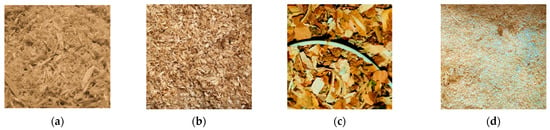
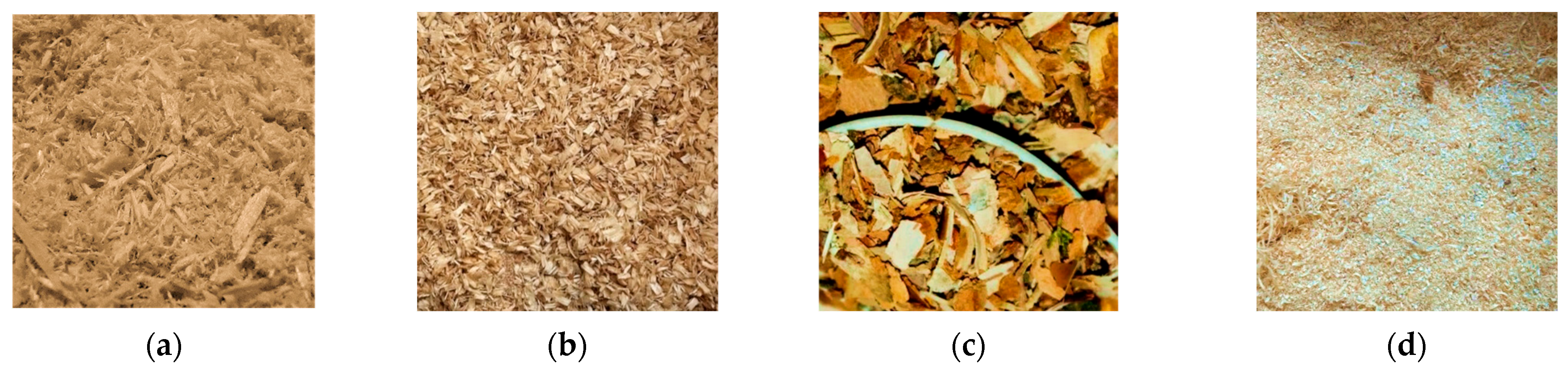
Wood waste was used as raw material for the preparation of the sorbent, such as pine sawdust and shredded maple branches with a fraction of 1–4 mm, crushed poplar branches with a fraction of 3–5 mm, shredded birch branches with a fraction of 5–7 mm (Figure 1). These wood waste materials were obtained from municipal enterprises in Tyumen (Russia). The samples were thoroughly washed with water, then dried at room temperature and crushed. Some of the samples were modified in order to improve their sorbent properties.
Figure 1.
Samples of the studied wood waste: (a)—pine sawdust; (b)—crushed poplar branches; (c)—crushed birch branches; and (d)—crushed maple branches.
The specific surface area of the sorbents was determined by Standard Test Method for Carbon Black D6556-21 [32] by estimating the amount of nitrogen absorbed by the sample adsorbed at a given pressure and temperature using the Brunauer, Emmett, and Teller theory (BET). An adsorption analyzer of specific surface area and porosity “3P SYNC 210A” was used for the study.
Next, the water saturation of sorption material samples was determined according to the standard method, which showed the maximum absorption of distilled water by the sorbent (g/g). The sorbent sample (5 g) was placed in water-filled dishes, the sorbent layer varied from 1 to 30 mm depending on the diameter of the dish. The water saturation (W, g/g) was determined by the formula:
where MC is the weight of the wet sorbent, g; M is the weight of the dry sorbent, g.
The oil saturation of the sorption material was measured according to the method, which showed the maximum absorption of oil product by the sorbent (g/g). The sorbent sample (5 g) was poured into a metal mesh, which was pre-weighed, and immersed in oil for 15 min. After the specified time, the sorbent was removed. After the excess oil was drained, the sample was weighed. Oil saturation (KO, g/g) was calculated according to the formula:
where MO is the weight of oil absorbed by the sorbent, g; MS is the sorbent weight, g.
2.3. Preparation of a Model Solution of Petroleum Products
Model solutions of petroleum products were prepared by mixing distilled water and “Mobil Rarus SHC 1025” oil and then separating into fractions. The concentration of dissolved petroleum products for different series of experiments was 12, 18, 24 and 50 mg/L, which corresponds to the order of concentration values of rainwater and meltwater [4,12].
2.4. Modification of Sorbents
Initially, the raw materials were washed, dried, and crushed. Then, some of the samples were modified by microwave radiation treatment using a household microwave oven at the following parameters: absolute power of 600 W, frequency of 2.45 GHz, processing time of 1 min, and sorbent weight of 5 g.
2.5. Study of Sorption Properties
For indirect assessment of sorption properties, the static sorption capacity (SSC) for methylene blue was initially determined according to State Standard GOST4453-74 (Russia) [33] under static conditions. A sorbent sample (5 g) was placed in a conical flask, a solution (100 cm3) of methyl blue mass concentration of 10 mg/L was added to it, closed with a stopper and left for 20 h, stirring with a laboratory mixer. Then, the sample was centrifuged for 15 min. Next, the optical density of the solution was determined using the device “Spectrophotometer PE-5400VI” at a wavelength of 645 nm. Static sorption capacity (SSC, mg/g) was calculated according to the Formula (3):
where C1 is the concentration of the indicator solution at the inlet, mg/L; C2 is the concentration of the indicator solution at the outlet, mg/L; V is the volume of the indicator solution, L; m is the weight of the sorbent, g.
The static sorption capacity of dissolved petroleum products (SSCo) on a model solution with a volume of 100 cm3 was determined similarly:
where C01 is the concentration of the indicator PP-solution at the inlet, mg/L; C02 is the concentration of the indicator PP-solution at the outlet, mg/L; V is the volume of the indicator solution of dissolved petroleum products, L; and m is the sorbent weight, g.
At the second stage, the dynamic sorption capacity of dissolved petroleum products (DSCo) under dynamic conditions was determined. A model solution with a volume of 150 cm3 was continuously filtered from top to bottom through a column filled with sorbent sample (5 g) at a constant rate of 0.1 cm3/s. The DSCo study was carried out without reaching the full sorption capacity, only for the purpose of comparing the properties of the samples. Dynamic sorption capacity (DSCo, mg/g) was determined by the Formula (5):
where VF is the volume of filtrate that has left the column from the beginning of the experiment, L; C is the equilibrium concentration of dissolved petroleum products in the filtrate, mg/L; m is the sorbent weight, g.
In each case, at least three repetitions of the experiment were performed, and the relative error of direct laboratory measurements did not exceed ±10%.
3. Results
3.1. Surface Runoff Quality Study
In water samples, the concentrations of petroleum products (PP) and suspended solids (SS) were measured. Table 2 presents the summary results of laboratory studies of the snow masses, meltwater, and rainwater composition. The error in measuring the indicators did not exceed 10%. Samples for analysis were taken at various sections of the urban infrastructure: from the roadsides, inside residential areas, from the territories of green lawns and squares, and from a snow landfill. The values obtained for samples taken from a public garden on the outskirts of the city represent background concentrations (i.e., samples with minimal anthropogenic influence of the urban environment).
Table 2.
Results of the study of the quality of urban surface runoff.
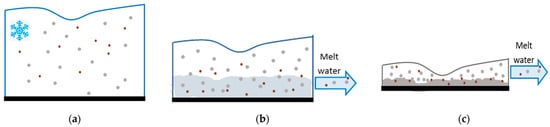
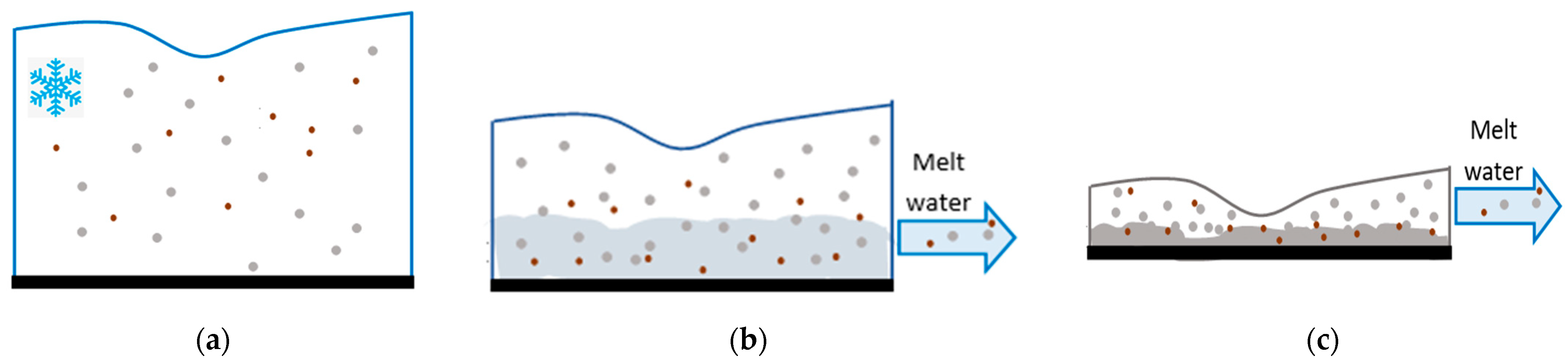
Based on the results obtained, it turned out that the dirtiest composition is layer-by-layer snow, especially from the roadsides of highways, where there is heavy traffic. The concentration of petroleum products can reach more than 22 mg/L. Meltwater is cleaner than snow masses; this is due to the fact that the snow accumulates and as it melts, solids with adsorbed petroleum products slowly settle and concentrate at the bottom of the layer of snow mass, and the melt water carries only some part of the pollution out. This mechanism is reflected in Figure 2, which shows the stages of snow melting with the release of melt water and the formation of a lower dirty layer. And yet, in some samples of melt water, the concentration of oil products was very high (more than 15 mg/L). Rainwater is cleaner compared to meltwater and snow masses, as it does not accumulate in one place, but immediately moves towards the runoff. This constant natural renewal more or less cleanses the streets. An increase in the concentration of pollutants (more than 10 mg/L) in rainwater runoff can only be associated with a long dry period, and this usually manifests itself in the first streams of USR.
Figure 2.
Movement and concentration of pollutants in the snow mass in the process of melting: (a)—initial state of snow masses; (b)—decrease in the height of the snow layer and increase in concentration in the lower layer; (c)—formation of a highly concentrated lower layer of mud.
Analyzing the results obtained (Table 1), the concentrations of the model solution of petroleum products were accepted for further study: 12, 18 and 24 mg/L. This is slightly higher (about 10%) than the maximum values for snow masses, meltwater, and rainwater. In general, the values obtained do not contradict the standards (Construction Rules SP32.13330.2018, Russia) [34], which are in the range from 1 to 25 mg/L. For the production of isotherms of sorption, the maximum concentration of the model solution was 50 mg/L.
3.2. Results of the Study of the Woody Sorbents Properties
Laboratory studies of the properties of wood sorbents were carried out before (nature) and after modification by microwave radiation (after MW). For sorbent samples, the specific pore surface area (m2/g), maximum water saturation (g/g), and oil saturation (g/g) were determined. The results are shown in Table 3.
Table 3.
Properties of wood sorbents.
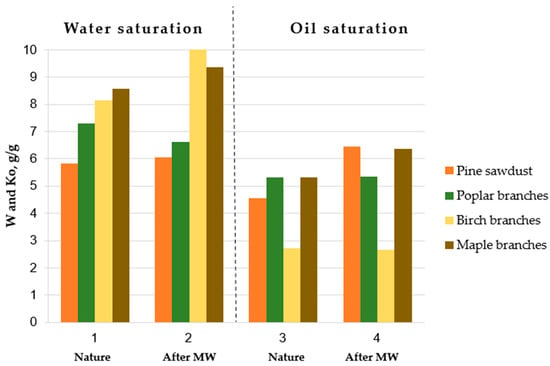
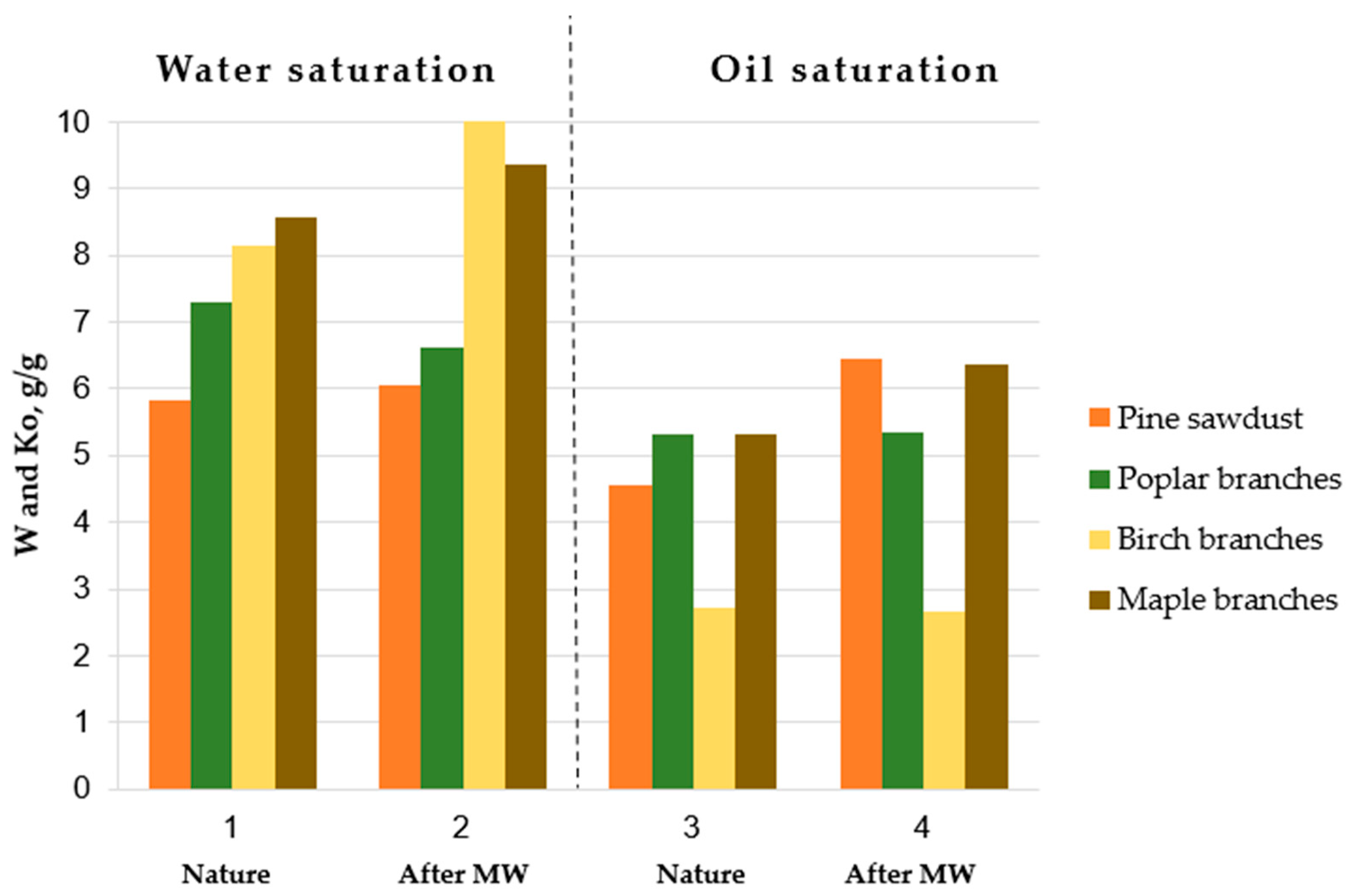
To compare the properties of wood sorbents, diagrams were built for water saturation and oil saturation before and after microwave treatment (Figure 3). In their natural state, shredded maple branches have the highest specific surface area (1.555 m2/g), and pine sawdust has the smallest (0.955 m2/g). After modifying the shredded branches of maple, birch and poplar, an increase in the specific surface area could not be achieved, and it remained almost at the same level. At the same time, the maximum increase in the parameter was achieved for samples made of pine sawdust—the specific surface area increased by 1.23 times. The results obtained are consistent with the data presented in the research [26,27].
Figure 3.
Water and oil saturation for wood sorbents before (on the X axis: 1 and 3) and after microwave modification (on the X axis: 2 and 4).
Wood is a complex biological material that consists of various structures, tissues, substances and free water. Water is a dielectric and therefore, under the influence of microwave radiation, water molecules receive energy, begin to move faster, and random vibrations of molecules lead to an increase in temperature, creating vapor pressure, and water boils in the pores. The amount of vapor pressure generated depends on the radiation power: low power causes an increase in the permeability of the material with minor damage to the structure, while high power can lead to cell damage, an increase in pore diameter and a significant increase in porosity. As a result of the destruction of the walls of structural cells and the formation of cracks under the influence of MW, porosity and, accordingly, the specific surface area increase. At the same time, the heating is volumetric, and the processed wood has approximately the same temperature in different areas in thickness, while traditional heating occurs from the upper layers to the lower ones [26,27].
After microwave radiation treatment, the water saturation of shredded birch branches increased by 1.23 times. The increase in the water saturation of pine sawdust (by 1.04 times) and maple branches (by 1.09 times) was insignificant. For shredded birch branches, water saturation increased dramatically (by 1.23 times), but for poplar branches it decreased (by 1.1 times). When assessing the oil absorption of sorbents before and after their modification, it was noted that MW contributed to the maximum increase in the oil saturation of pine sawdust—the indicator increased by almost 1.42 times. Also, the oil intensity of shredded maple branches increased by about 1.2 times. Microwave treatment of poplar and birch branches had no effect (Table 3).
Based on the results obtained, it can be concluded that water saturation and oil saturation are dependent parameters: with an increase in water saturation (W), oil saturation (Ko) also increases. However, microwave irradiation has a significant positive effect on Ko only when treating pine sawdust (by 41.5%) and crushed maple branches (by 19.5%). For these sorbents, additional pore characteristics were obtained (Table 4).
Table 4.
Structural characteristics of sorbent pores.
For shredded maple branches, after MW, an increase in the total pore volume by 20% and the average pore diameter by 6% is observed. In the case of pine sawdust, the average pore diameter decreased by 20.4% under the influence of microwaves. According to the IUPAC (International Union of Pure and Applied Chemistry) classification, the pore size of the examined samples corresponds to the range of mesopores (2–50 nm). A change in the specific surface area was observed under the influence of MW: in maple samples, the specific surface area increased only by 1%, while in pine samples it increased by 20–25%.
3.3. Results of the Study of Sorption Properties
The study of wood sorbents’ sorption properties involved determining sorption capacities under static and dynamic conditions, and building sorption isotherms based on model solutions (maximum initial concentration was 24 mg/L). The sorption capacity of the samples for methylene blue in statics (SSC) and dissolved petroleum products (PP) in statics (SSCo) and dynamics (DSCo) is given in Table 5. The sorption capacity values for natural samples and those treated with microwave radiation are presented below.
Table 5.
Sorption capacity of wood sorbents.
According to the obtained SSC values, it was established that the sorption capacity for methylene blue of all samples is within the margin of error, and is no more than 2.5%. The largest sorption capacity for dissolved petroleum products under dynamic conditions in the native state was shown by crushed maple branches. The DSCo value for maple is 1.75 times higher than that of poplar, 1.9 times higher than that of birch, and 1.5 times higher than that of pine sawdust. In general, DSCo values for natural materials ranged from 0.11 to 0.21 mg/g. However, after performing a microwave modification, it was possible to achieve a significant change in this parameter. After MW treatment, the DSCo value of pine sawdust increased by 15%, for shredded birch branches—by 14%. When treating maple branches, a slight increase in DSCo was achieved (only by 8–10%), and when treating poplar branches, there was even a decrease of 13–20%. It is possible that the negative effects are due to the peculiarities of the structure of these wood materials, so a different modification method is necessary. The obtained DSCo values (no more than 1 mg/g) correspond to the published data for natural sorbents [13].
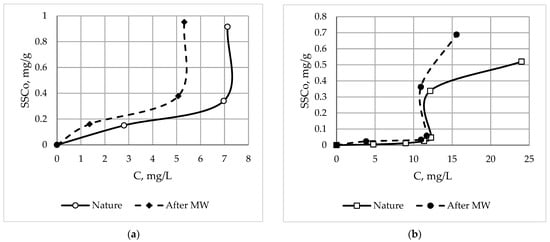
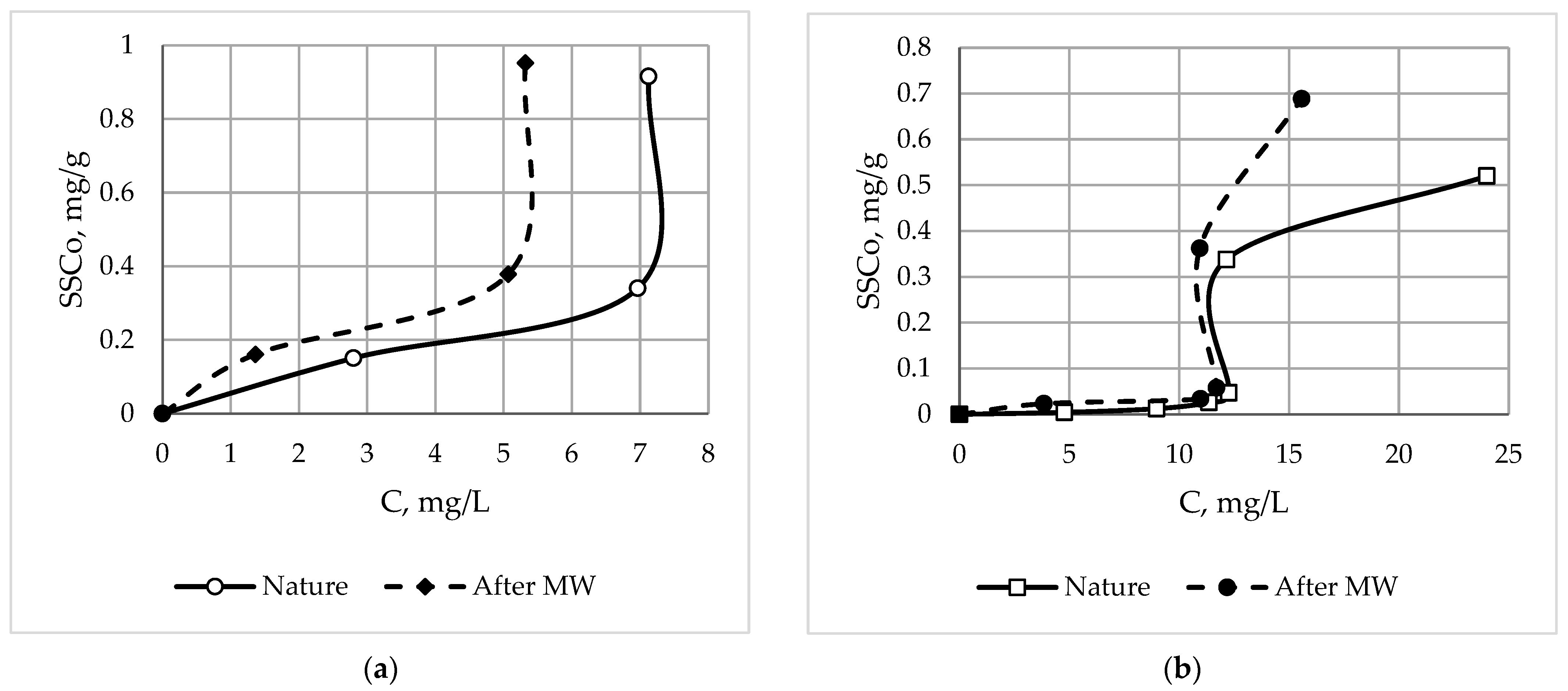
Figure 4 shows PP sorption isotherms based on measurements for modified and unmodified samples. Coordinate axis parameters: SSCo is the adsorption capacity of PP under static conditions; C is the residual concentration of PP in water after adsorption. The initial concentration of the model solution varied from 12 to 50 mg/L. The value of the residual PP concentration in the model solution after sorption (C) did not reach as high as possible, since it was not required for comparison.
Figure 4.
Sorption isotherms of dissolved petroleum products from water for: (a)—crashed maple branches and (b)—pine sawdust.
The obtained isotherms belong to type II according to the BET classification. Analysis of isotherms demonstrates an increase in the sorption capacity after wood treatment with microwave irradiation. Isotherms of sorption of petroleum products are S-shaped characters, which indicates polymolecular sorption and pore filling with an increase in solution concentration [21]. After MW treatment, the maximum SSCo of shredded maple branches slightly increased—by only 4% (Figure 4a). While the SSCo of modified pine sawdust increased by almost 25% compared to natural raw materials (Figure 4b).
In particular:
- (1)
- At low concentrations of petroleum products (the initial PP concentration of the model solution was 12 mg/L), the maximum SSCo of shredded maple branches without treatment was 0.151 mg/g, after MW treatment—0.161 mg/g.
- (2)
- At high concentrations (initial PP concentration of model solution was 50 mg/L), the maximum SSCo increased from 0.916 mg/g (without treatment) to 0.952 mg/g (after MW treatment).
- (3)
- At low initial concentrations of petroleum products (12 mg/L), the maximum SSCo of natural pine sawdust increased from 0.047 mg/g (without treatment) to 0.058 mg/g (after MW-treated).
- (4)
- At high initial concentrations (50 mg/L), the SSCo of natural pine sawdust was 0.520 mg/g, and it increased to 0.689 mg/g after being treated with MW.
The experiments showed that the higher the concentration of oil products in the initial solution, the greater the saturation of the pores of wood sorbents and the higher the value of the sorption capacity. MW treatment of wood structure sorbents improves the sorption properties of pine sawdust, maple and birch branches in relation to PP in aqueous solutions. Microwave processing as a modification is not suitable for chopped poplar branches, as shown in Table 5.
3.4. Mechanism for Extraction of Petroleum Products by Wood Sorbents
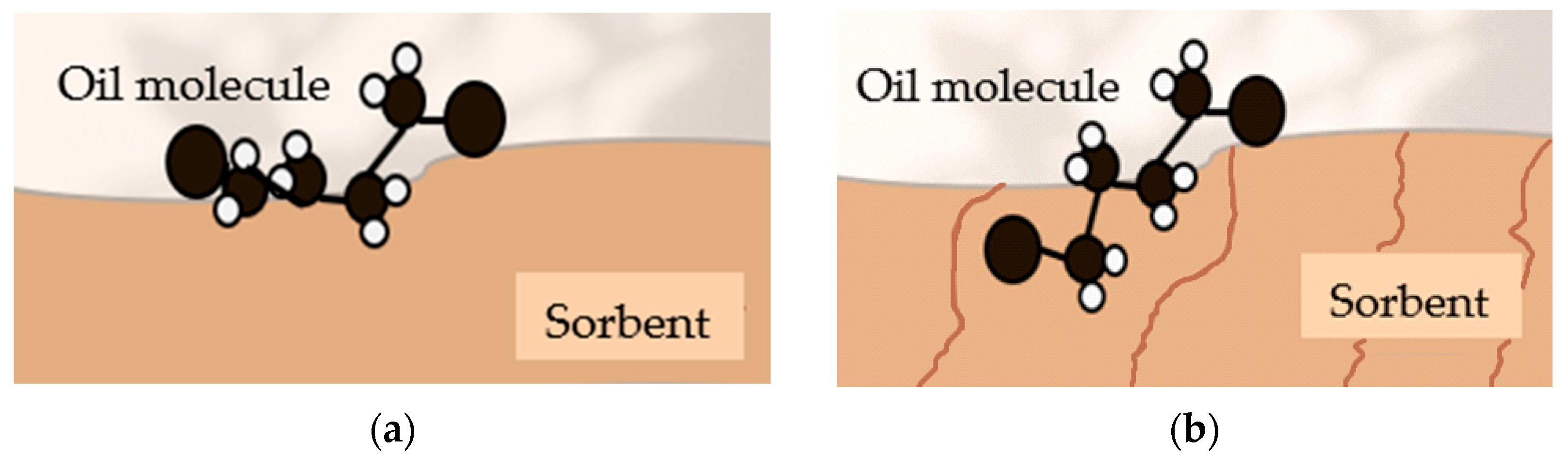
The efficiency of extracting petroleum products from water depends on the chemical composition of the sorbent, as well as on the structure of its material. A polar sorbent containing certain functional groups and components similar to the composition of PP would be more suitable [17,18]. In this case, the absorbed substance is first concentrated at the borderline between two phases (sorbate-sorbent), and then the substance penetrates into the pores of the sorbent. During the sorption of PP in porous sorbents, these processes are practically impossible to separate, and in the pores of plant sorbents, the process of capillary condensation is also possible. In addition, sorption significantly depends on the form of the state of the petroleum products—dissolved or undissolved [8,13].
Wood raw materials (sawdust, crushed bark, and branches) are able to adsorb PP by virtue of their high porosity and the presence of high-molecular components of cellulose, hemicellulose, and lignin in the structure, as mentioned earlier. A quick phase of physical adsorption occurs at the start of the process: the power centers of the sorbent surface particles intensively interact with the molecules of PP due to the presence of mutual attraction with the formation of intermolecular bonds (including hydrogen) at the interface of the contacting phases. Physical adsorption is due to the orientation, induction, and dispersion forces of attraction of sorbent and sorbate molecules, which occur at a very high speed even at low temperatures, therefore it does not require activation. On the contrary, an increase in temperature leads to a decrease in sorption, since the kinetic energy of the molecules increases, which reduces the chance of binding to the sorbent surface. The PP-sorption slows down after the polar functional groups on its surface become saturated. But then capillary condensation in the pores of the sorbents again leads to an increase in absorption intensity. PP molecules enter the material’s porous structure and fill all the existing holes such as tracheids and vessels. The absorption process occurs in both vertical and horizontal directions. Petroleum products are held firmly because of micelles or polymer chain nodes in the structure of cellulose fibers, which limit the free space inside macromolecules [13,24,35]. In general, the absorption of oil products from water by wood sorbents occurs in several stages: diffusion of oil molecules to the surface of the sorbent, penetration of oil products into the structure of the sorbent due to capillary forces, accumulation of oil products in the porous and rough structure of the sorbent (Figure 5). PP-Sorption is associated with the properties of functional groups of cellulose, which are the main component of wood sorbent.
Figure 5.
Mechanism of PP-Sorption from aqueous solutions: (a)—diffusion of oil-molecule to the surface of the sorbent and (b)—penetration of oil-molecule into the sorbent structure.
4. Discussion
The results obtained regarding changes in the porosity of wood waste after microwave treatment are consistent with the published data [36,37]. Wood is a complex biopolymer material consisting of a variety of cell structures, tissues, substances and associated moisture. Water is a dielectric and intensively absorbs energy under the influence of microwave radiation, which leads to local heating. Water vapor pressure occurs inside the pore-forming material, causing moisture to boil in the cells. This pressure and heat lead to partial destruction of the cell walls, the formation of cracks, and an increase in the size of the pores, which leads to an increase in the porosity of the material. The amount of vapor pressure generated depends on the power of microwave radiation: at a relatively low power, moderate drying and an increase in the permeability of the material occurs with minimal damage to the structure, while at high power, significant destruction of cell walls, an increase in the average diameter of pores, and a sharp increase in overall porosity are possible [38]. The use of microwave modification is more suitable for processing pine sawdust and shredded maple branches, which can be used in specific facilities to collect and treat urban surface runoff.
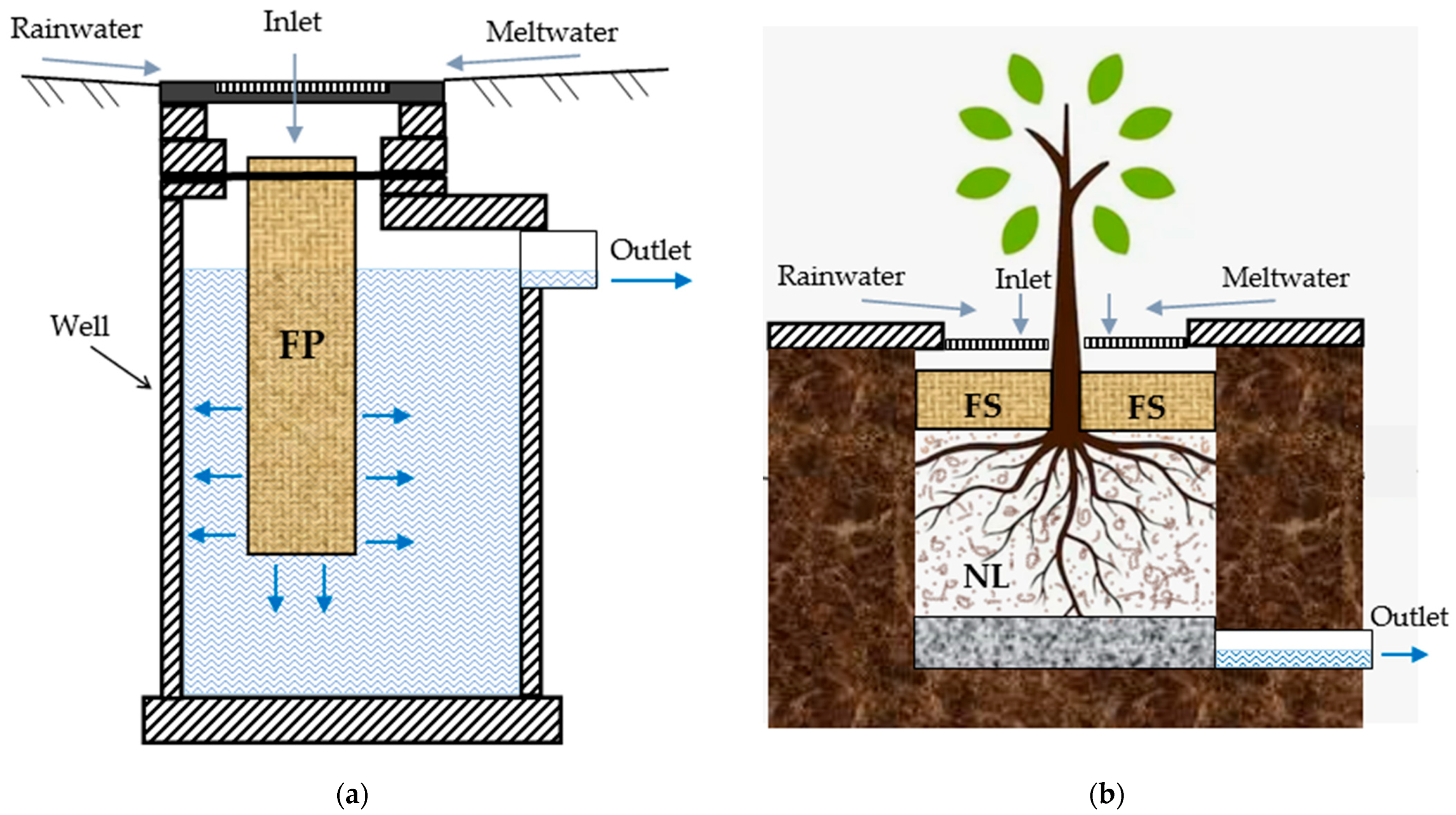
The results substantiate the expediency of using wood sorbents in the development of technologies for treating USR from oil products and other types of pollution on a modern urban scale. These can be special filter cartridges in wells on the rainwater network, filled with wood waste after treatment and modification (Figure 6a). Or a variant of a natural filtering barrier (filter layer) in the way of dirty rain and melt runoff in lawns and areas of the root system of trees (Figure 6b). At the same time, the height of the layer of such material should be at least 0.45 m [39]. Wood waste can be used in its natural form, but then the efficiency of such devices will be lower by about 15–20%.
Figure 6.
Installations: (a)—filter cartridge with sorbent loading (FP—filter-patron) in an outdoor well and (b)—sorbent filter layer (FS) in the street lawn above the nutrient layer (NL).
It must be recognized that the sorption properties of natural wood materials are very modest compared to engineered sorbents, such as activated carbon, biochar, hydrocoal, etc. For example, when using industrial activated carbons, the sorption of petroleum products from water reaches 1–3 g/g, when natural sorbents do not absorb more than 0.5 g/g of PP dissolved in water. The cost of such sorbents can be 350 US dollars per ton and more. At the same time, carbon sorbents can be used repeatedly as a result of regeneration (usually 1–3 cycles) [13,40,41,42]. The use of microwave processing is also problematic due to the lack of industrial microwave reactors for this purpose [30].
However, natural wood sorbents have a number of advantages. They are low cost, as they can be made from wastes; no regeneration is required (for example, after the end of the life cycle, used sorbents can be used as raw materials for fuel briquettes); their biodegradability means they have a minimal secondary effect on environmental pollution; and it is easy to prepare such sorbents before use.
5. Conclusions
Thus, having carried out the above scientific work, the following conclusions can be drawn:
- (1)
- Laboratory research confirmed that the quality of snow masses, meltwater, and rainwater collected from the territory of the modern city is very dirty. The concentrations of petroleum products varied from 0.01 to 22.53 mg/L depending on the place of sampling. The dirtiest were snow masses formed along a road with heavy traffic.
- (2)
- Sorption is quite applicable for the treatment of rain and melt runoff. It is possible to use waste from urban industries as sorbents, for example, pine sawdust from a woodworking enterprise or shredded branches formed during pruning of trees by public utilities.
- (3)
- Modified pine sawdust and crushed maple branches turned out to be the most effective wood-based sorbents. Their sorption capacity depends on the initial concentration of oil products in water, modification using microwave irradiation, as well as on the experimental conditions (static or dynamic). The maximum values of sorption capacity were obtained under static conditions and reached 0.689 mg/g and 0.952 mg/g for modified pine sawdust and shredded maple branches, respectively.
In practice, the obtained wooden sorbents can be used as loads in filtration units located directly in the urban environment. The use of such “green” technologies will not only improve the condition of urban water bodies and soils, but also make it possible to reuse waste from small woodworking enterprises and municipal services of the city.
For further development of this technology, an in-depth study of the effect of microwave treatment modes on the sorption properties of the material is recommended. It will be necessary to conduct a comparative statistical analysis of the data obtained. This will optimize the process of obtaining the sorbent and increase its efficiency. It is also necessary to check the change in the concentrations of other types of pollutants that saturate rain and melt water in a modern city, such as metal and salt ions. In addition, it is necessary to consider scaling up the process to ensure the production of natural sorbents on an industrial scale, which will make this technology available for widespread use in utilities and other industries. At the same time, it is necessary to pay attention to minimizing waste and reusing resources.
6. Patents
There are patents resulting from the work reported in this manuscript:
- (1)
- RU 229690 (2024) Batch sorption reactor for wastewater treatment, author Korshikova E.S.
- (2)
- RU 2834538 (2025) Reagent-free method of wastewater treatment, authors: Korshikova E.S. and Vialkova E.I.
Author Contributions
Conceptualization, E.V.; methodology, E.K.; formal analysis, E.V.; investigations, E.V. and E.K.; data curation, E.V. and E.K.; writing—original draft preparation, E.V. and E.K.; writing—review and editing, E.V.; visualization, E.V. and E.K.; supervision, E.V.; project administration, E.V.; funding acquisition, E.V. All authors have read and agreed to the published version of the manuscript.
Funding
This research received no external funding.
Institutional Review Board Statement
Not applicable.
Informed Consent Statement
Not applicable.
Data Availability Statement
The data presented in this study are available on request from the corresponding author.
Conflicts of Interest
The authors declare no conflicts of interest. The funders had no role in the design of the study, in the collection, analyses, or interpretation of data, in the writing of the manuscript, or in the decision to publish the results.
Abbreviations
The following abbreviations are used in this manuscript:
| USR | Urban Surface Runoff |
| SS | Suspended Solids |
| PP | Petroleum Products |
| SSC | Static Sorption Capacity |
| SSCo | Static Sorption Capacity of dissolved petroleum product |
| DSC | Dynamic Sorption Capacity |
| DSCo | Dynamic Sorption Capacity of dissolved petroleum product |
| MW | Microwave |
References
- Cia.gov. The World Factbook—Central Intelligence Agency. Available online: https://web.archive.org/web/20190621041256/https://www.cia.gov/library/publications/the-world-factbook/index.html (accessed on 6 December 2025).
- Worldometers.info. Available online: https://www.worldometers.info/world-population/ (accessed on 6 December 2025).
- Brown de Colstoun, E.C.; Huang, C.; Wang, P.; Tilton, J.C.; Tan, B.; Phillips, J.; Niemczura, S.; Ling, P.-Y.; Wolfe, R.E. Global Man-made Impervious Surface (GMIS) Dataset from Landsat. 2017. Available online: https://www.earthdata.nasa.gov/data/catalog/sedac-ciesin-sedac-ulandsat-gmis-v1-1.0 (accessed on 7 December 2025).
- Potreck, A.; Tränckner, J. Stormwater Pollution of Non-Urban Areas—A Review. Water 2025, 17, 1704. [Google Scholar] [CrossRef] [Scilit]
- Nickel, J.P.; Sacher, F.; Fuchs, S. Up-to-date monitoring data of wastewater and stormwater quality in Germany. Water Res. 2021, 202, 117452. [Google Scholar] [CrossRef] [Scilit] [PubMed]
- Wierzbicka, M.; Bemowska-Kałabun, O.; Gworek, B. Multidimensional evaluation of soil pollution from railway tracks. Ecotoxicology 2015, 24, 805–822. [Google Scholar] [CrossRef] [Scilit] [PubMed]
- O’Connor, C.B.; Levin, P.S. Mental Models for Assessing Impacts of Stormwater on Urban Social–Ecological Systems. Urban Sci. 2023, 7, 14. [Google Scholar] [CrossRef] [Scilit]
- Strelkov, A.K.; Stepanov, S.V.; Teplykh, S.Y.; Sargsyan, A.M. Monitoring Pollution Level in Railroad Right-of-Way. Procedia Environ. Sci. 2016, 32, 147–154. [Google Scholar] [CrossRef] [Scilit]
- Jia, Y.; Ehlert, L.; Wahlskog, C.; Lundberg, A.; Maurice, C. Water quality of stormwater generated from an airport in a cold climate, function of an infiltration pond, and sampling strategy with limited resources. Environ. Monit. Assess. 2017, 190, 4. [Google Scholar] [CrossRef] [Scilit]
- Qiao, X.-J.; Liao, K.-H.; Randrup, T.B. Sustainable stormwater management: A qualitative case study of the Sponge Cities initiative in China. Sustain. Cities Soc. 2020, 53, 101963. [Google Scholar] [CrossRef] [Scilit]
- Zamanifard, H.; Morgan, E.A.; Hadwen, W.L. Community Perceptions and Knowledge of Modern Stormwater Treatment Assets. Urban Sci. 2021, 5, 5. [Google Scholar] [CrossRef] [Scilit]
- Voronov, A.A.; Maksimova, S.V.; Osipova, E.Y. Purification of urbanized melt water with plant sorbents. Vestn. Tomsk. Gos. Arkhitekturno-Stroit. Univ. J. Constr. Archit. 2021, 2, 105–117. (In Russian) [Google Scholar] [CrossRef] [Scilit]
- Vialkova, E.; Korshikova, E.; Fugaeva, A. Phytosorbents in Wastewater Treatment Technologies: Review. Water 2024, 16, 2626. [Google Scholar] [CrossRef] [Scilit]
- Perez, J.; Ramos, A.; Ordonez, J.; Gomes, M. Dual-stage peat beds in small community wastewater treatment. J. Environ. Sci. Health Part A 2007, 42, 1125–1130. [Google Scholar] [CrossRef] [Scilit]
- Taufik, S.H.; Ahmad, S.A.; Zakaria, N.N.; Shaharuddin, N.A.; Azmi, A.A.; Khalid, F.E.; Merican, F.; Convey, P.; Zulkharnain, A.; Abdul Khalil, K. Rice Straw as a Natural Sorbent in a Filter System as an Approach to Bioremediate Diesel Pollution. Water 2021, 13, 3317. [Google Scholar] [CrossRef] [Scilit]
- Behnood, R.; Anvaripour, B.; Fard, N.J.H.; Farasati, M. Application of Natural Sorbents in Crude Oil Adsorption. Iranian J. Oil Gas Sci. Technol. 2013, 2, 1–11. [Google Scholar] [CrossRef] [Scilit]
- Kahramanly, Y.N. Foamed polymeric petroleum sorbents. Environmental problems and their solutions. Baku ELM 2012, 305. Available online: https://anl.az/el_ru/kniqi/2013/1-753193.pdf (accessed on 7 December 2025). (In Russian)
- Boyko, Y.N.; Agoshkov, A.I.; Gulkov, A.N.; Solomennik, S.F.; Gulkova, S.G.; Meiss, N.A. Natural sorbents used to purify water from oil and products of its processing. Min. Inf. Anal. Bull. (Sci. Tech. J.) 2013, 22, 12–17. (In Russian) [Google Scholar]
- Lee, J.; Wang, D.; Kang, T. Environmental problems and strategies caused by coal mining. Mod. Mater. Res. 2012, 433–440, 2071. [Google Scholar] [CrossRef] [Scilit]
- Malyshkina, E. Classification of the sorbents capable of removing the petroleum products from Wastewater. IOP Conf. Ser. Mater. Sci. Eng. 2020, 962, 42063. [Google Scholar]
- Nasr, M.; Khan, N.; Sillanpää, M. Fourth Industrial Revolution of Wastewater Treatment with Adsorption. Adsorpt. Sci. Technol. 2023, 2023, 9897865. [Google Scholar] [CrossRef] [Scilit]
- Ikenyiri, P.N.; Ukpaka, C.P. Overview on the Effect of Particle Size on the Performance of Wood Based Adsorbent. J. Chem. Eng. Process Technol. 2016, 7, 315. [Google Scholar] [CrossRef]
- Gote, M.; Dhila, H.H.; Muley, S. Advanced Synthetic and Bio-Based Sorbents for Oil Spill Clean-up: A Review of Novel Trends. Nat. Environ. Pollut. Technol. 2023, 22, 39–61. [Google Scholar] [CrossRef] [Scilit]
- Bulauka, Y.A.; Mayorava, K.I.; Ayoub, Z. Emergency sorbents for oil and petroleum product spills based on vegetable raw materials. IOP Conf. Ser. Mater. Sci. Eng. 2018, 451, 12218. [Google Scholar] [CrossRef] [Scilit]
- Yek, P.N.Y.; Liew, R.K.; Osman, M.S.; Lee, C.L.; Chuah, J.H.; Park, Y.-K.; Lam, S.S. Microwave steam activation, an innovative pyrolysis approach to convert waste palm shell into highly microporous activated carbon. J. Environ. Manag. 2019, 236, 245–253. [Google Scholar] [CrossRef] [Scilit] [PubMed]
- Mascarenhas, F.J.R.; Dias, A.M.P.G.; Christoforo, A.L. State of the Art of Microwave Treatment of Wood: Literature Review. Forests 2021, 12, 745. [Google Scholar] [CrossRef] [Scilit]
- Torgovnikov, G.; Vinden, P. Microwave wood modification technology and its application. For. Prod. J. 2010, 60, 173–182. [Google Scholar] [CrossRef] [Scilit]
- Kitaeva, N.K.; Bannova, E.A. Synthesis of carbon-base materials by microwave irradiation of peat. Mod. Appl. Sci. 2015, 9, 71–80. [Google Scholar] [CrossRef] [Scilit]
- Belchinskaya, L.I.; Khodosova, N.A.; Novikova, L.A. Effect of different mechanisms of heating of layered aluminosilicate on sorption processes. Communication 1. Effect of preliminary thermal and electromagnetic (microwave) heating of montmorillonite on sorption of water. Sorpt. Chromatogr. Process. 2017, 17, 781–791. (In Russian) [Google Scholar] [CrossRef] [Scilit]
- Vialkova, E.; Obukhova, M.; Belova, L. Microwave irradiation in technologies of wastewater and wastewater sludge treatment: A review. Water 2021, 13, 1784. [Google Scholar] [CrossRef] [Scilit]
- Faizal, A.M.; Kutty, S.R.M.; Ezechi, E.H. Removal of Oil from Water by Column Adsorption Method Using Microwave Incinerated Rice Husk Ash (MIRHA). In CIEC; Hassan, R., Yusoff, M., Alisibramulisi, A., Mohd Amin, N., Ismail, Z., Eds.; Springer: Singapore, 2015; pp. 963–971. [Google Scholar] [CrossRef] [Scilit]
- Store.astm.org. Standard Test Method for Carbon Black—Total and External Surface Area by Nitrogen Adsorbtion. ASTM D6556-21. Available online: https://store.astm.org/d6556-21.html (accessed on 6 December 2025).
- GOST 4453-74; Active Adsorpting Powder Charcoal. Specifications: Moscow, Russia, 1976. Available online: https://files.stroyinf.ru/Data2/1/4294823/4294823851.pdf (accessed on 6 December 2025). (In Russian)
- SP32.13330.2018; Sewerage. Pipelines and Wastewater Treatment Plants: Moscow, Russia, 2019. Available online: https://solidt.ru/assets/documents/sp32.13330.2018%20kanalizaciyasetiisoor-snip-2.04.03-85-solidt.ru.pdf (accessed on 6 December 2025). (In Russian)
- Alyoshina, L.A.; Gurtova, V.A.; Melekh, N.V. Structure and physico-chemical properties of celluloses and nanocomposites based on them. PetrGU 2014, 240. (In Russian) [Google Scholar]
- Azmi, S.N.H.; Al Lawati, W.M.; Al Hoqani, U.H.A.; Al Aufi, E.; Al Hatmi, K.; Al Zadjali, J.S.; Rahman, N.; Nasir, M.; Rahman, H.; Khan, S.A. Development of a Citric-Acid-Modified Cellulose Adsorbent Derived from Moringa peregrina Leaf for Adsorptive Removal of Citalopram HBr in Aqueous Solutions. Pharmaceuticals 2022, 15, 760. [Google Scholar] [CrossRef] [Scilit]
- Khan, Q.; Zahoor, M.; Salman, S.M.; Wahab, M.; Talha, M.; Kamran, A.W.; Khan, Y.; Ullah, R.; Ali, E.A.; Shah, A.B. The Chemically Modified Leaves of Pteris vittata as Efficient Adsorbent for Zinc (II) Removal from Aqueous Solution. Water 2022, 14, 4039. [Google Scholar] [CrossRef] [Scilit]
- Stjepanović, M.; Velić, N.; Galić, A.; Kosović, I.; Jakovljević, T.; Habuda-Stanić, M. From Waste to Biosorbent: Removal of Congo Red from Water by Waste Wood Biomass. Water 2021, 13, 279. [Google Scholar] [CrossRef] [Scilit]
- Vialkova, E.; Fugaeva, A. Wastewater Treatment with the Natural Sorbents from the Arctic. Water 2022, 14, 4009. [Google Scholar] [CrossRef] [Scilit]
- Veprikova, E.V.; Tereshchenko, E.A.; Chesnokov, N.V.; Shchipko, M.L.; Kuznetsov, B.N. Peculiarity of Water Purifying from Oil Products with Make Use of Oil Sorbents, Filtering Materials and Active Coals. J. Sib. Fed. Univ. Chem. 2010, 3, 285–304. (In Russian) [Google Scholar]
- Rajapaksha, A.U.; Chen, S.S.; Tsang, D.C.W.; Zhang, M.; Vithanage, M.; Mandal, S.; Gao, B.; Bolan, N.S.; Ok, Y.S. Engineered/designer biochar for contaminant removal/immobilization from soil and water: Potential and implication of biochar modification. Chemosphere 2016, 148, 276–291. [Google Scholar] [CrossRef] [Scilit] [PubMed]
- Thompson, K.A.; Shimabuku, K.K.; Kearns, J.P.; Knappe, D.R.U.; Summers, R.S.; Cook, S.M.; Cook, S.M. Environmental Comparison of Biochar and Activated Carbon for Tertiary Wastewater Treatment. Environ. Sci. Technol. 2016, 50, 11253–11262. [Google Scholar] [CrossRef] [Scilit] [PubMed]

Disclaimer/Publisher’s Note: The statements, opinions and data contained in all publications are solely those of the individual author(s) and contributor(s) and not of MDPI and/or the editor(s). MDPI and/or the editor(s) disclaim responsibility for any injury to people or property resulting from any ideas, methods, instructions or products referred to in the content. |
© 2026 by the authors. Licensee MDPI, Basel, Switzerland. This article is an open access article distributed under the terms and conditions of the Creative Commons Attribution (CC BY) license.