Article

Strategic Modeling of Hybrid Smart Micro Energy Communities: A Decision-Oriented Approach

by
Helena M. Ramos
1,*,
Alex Erdfarb
1,
Isil Demircan
2,
Kemal Koca
2,
Aonghus McNabola
3,
Oscar E. Coronado-Hernández
4 and
Modesto Pérez-Sánchez
5,*
1
Civil Engineering Research and Innovation for Sustainability (CERIS), Instituto Superior Técnico, Department of Civil Engineering, Architecture and Environment, University of Lisbon, 1049-001 Lisbon, Portugal
2
Department of Mechanical Engineering, Abdullah Gul University, 38080 Kayseri, Turkey
3
School of Engineering, RMIT University, 124 La Trobe St, Melbourne, VIC 3000, Australia
4
Instituto de Hidráulica y Saneamiento Ambiental, Universidad de Cartagena, Cartagena 130001, Colombia
5
Hydraulic Engineering and Environmental Department, Universitat Politècnica de València, 46022 Valencia, Spain
*
Authors to whom correspondence should be addressed.
Urban Sci. 2026, 10(2), 107; https://doi.org/10.3390/urbansci10020107
Submission received: 11 December 2025 / Revised: 23 January 2026 / Accepted: 4 February 2026 / Published: 10 February 2026
(This article belongs to the Special Issue Low-Carbon Buildings and Sustainable Cities)

Abstract

Hybrid renewable energy systems are increasingly important for enabling sustainable and resilient energy supply in rural smart communities, yet existing tools often lack the ability to integrate environmental variability, multi-technology interactions, and economic–environmental assessment in a unified framework. This study presents Hybrid Smart Micro Energy Community (HySMEC), a novel modeling approach that combines high-resolution meteorological data, technology-specific generation models, detailed demand characterization, and financial analysis to evaluate hybrid configurations of hydropower, solar PV, wind, battery storage, and grid interaction. Hourly simulations capture seasonal dynamics and system behavior under realistic technical efficiencies, investment costs, and emission factors, enabling a transparent assessment of energy flows, self-consumption, and grid dependence. The results show that hybrid systems can achieve competitive economic performance, low Levelized Costs of Energy, and significant CO2 emission reductions across diverse rural community profiles, even when space or demand constraints are present. The analysis confirms the technical feasibility and environmental benefits of integrating multiple renewable sources with storage, highlighting the importance of self-consumption ratios in improving system profitability. Overall, HySMEC provides a robust and scalable tool to support data-driven design and optimization of distributed energy systems, offering valuable insights for researchers, planners, and decision-makers involved in sustainable rural energy development.

1. Introduction

Regarding optimization and decision-making frameworks, ref. [1] developed smart, integrated, hybrid renewable energy systems for small energy communities and applied them to a real case study to achieve energy self-sufficiency and promote sustainable, decentralized energy generation. Stand-alone (SA) and grid-connected (GC) configurations are compared using an optimized mathematical model and data-driven optimization, complemented by an economic assessment of various renewable combinations (PV, wind, PHS, BESS, and grid) to identify the optimal solution. Ref. [2] presented a study focused on selecting the optimal configuration of a hybrid renewable energy microgrid (MG) for a village in India. The MG includes solar photovoltaic (PV) modules, a wind turbine generator, a biomass generator, a diesel generator, a battery bank, and an electric vehicle. The optimal model is selected based on technical, economic, environmental, social, and reliability criteria. A novel spoonbill swarm optimization algorithm is proposed to determine the most suitable hybrid MG system, and its performance is compared with particle swarm optimization, a genetic algorithm, and the grasshopper optimization algorithm.
In [3], a modular decision-making framework for impeller optimization is introduced, incorporating design objectives, simulation constraints, and the physical characteristics of turbomachinery. The study in [4] aims to review several types of projects implemented in different micro-communities, specifically small islands and remote villages, considering both real implementations and evaluation-only studies. Documented projects in micro-communities with fewer than 100,000 inhabitants were analyzed, examining indicators related to island characterization, energy demand, and proposed technical solutions, to identify the key factors influencing successful implementation and understanding how these factors differ between islands and remote villages. Finally, ref. [5] proposes a smart hybrid renewable energy system for communities (SHREC), which accounts for both the thermal and electricity markets. A more efficient modeling and optimization method for SHREC is developed, emphasizing the usefulness of day-ahead modeling and optimization for system operation. The approach promotes the integration of renewable energy and energy storage to enhance overall efficiency. The global transition toward decentralized and sustainable energy systems has catalyzed the emergence of Hybrid Smart Micro Energy Communities (HySMECs)—localized networks that integrate diverse energy sources, intelligent control systems, and participatory governance. These communities are increasingly recognized as pivotal nodes in achieving energy resilience, carbon neutrality, and equitable access, particularly in remote or resource-constrained regions. The accelerating shift toward decentralized and low-carbon energy systems has positioned smart micro energy communities (SMECs) as critical building blocks in the pursuit of resilient and sustainable energy futures. These localized networks can integrate diverse energy sources, digital control technologies, and community-driven governance to deliver reliable, efficient, and context-sensitive energy solutions. Their capacity to adapt to dynamic environmental, economic, and social conditions makes them particularly suited for rural, islanded, or disaster-prone regions.
Moreover, other barriers include customers’ unwillingness to alter their consumption habits, particularly if they are not involved in the changing process of the energy system [6], the complexity in monitoring and controlling the new energy system, and cost issues due to new technological components [7]. Governance model formalization to empower EC members includes the implementation of RECs [8] as well as the modeling and optimization of RECs using Mathlab, developing an algorithm for the operation of cells coupled to RESs [9]. Ref. [10] analyzes energy-sharing directives—energy, environmental, and economic analyses—as well as the comparison of efficient users’ systems and conventional single users. Ref. [11] suggests applying the actor–network theory approach. Another study focuses on optimizing RECs to account for economic and environmental factors [12]. A new development of an energy management system (EMS), includes optimization, and sensitivity analysis, and ref. [13] analyzed the energy self-consumption in RECs, developing a mathematical model for multi-criteria decision-making methods. Ref. [14] created an economic assessment with an investigation of the feasibility of a hydrogen power-to-gas system inside a REC. Ref. [15] presents an optimization of the open-loop control problem using a receding-horizon approach and evaluates the performance of algorithms applied to REC control problems. In [16], a technoeconomic analysis is developed for a real case study involving collective self-consumption and a smart battery management system (BMS), incorporating an optimal BMS strategy based on perfect forecasts. Energy storage system (ESS) technologies are generally categorized into six primary groups: mechanical, thermal, chemical, electrochemical, electrical, and other types such as hybrid energy storage systems [17,18]. Based on their response characteristics, ESSs may also be classified into three main temporal categories. Short-term storage systems, operating over seconds to minutes, are primarily employed to enhance power quality. Medium-term systems, with durations ranging from minutes to hours, help alleviate grid congestion and provide frequency regulation. Long-term systems, spanning hours to days, are used to balance supply and demand over extended periods [19]. A more detailed subclassification of ESS technologies is provided in [20]. A critical component of energy communities (ECs) is the integration of energy storage units, which play a fundamental role in maintaining equilibrium between energy supply and demand, particularly during the operation of distributed generators (DGs). The intermittent nature of most renewable energy sources (RESs) poses a significant challenge to the stability and reliability of power networks. To mitigate these issues, extensive research has examined various strategies, including electrical energy storage (EES), demand-side management, and interconnection with external grids. Among these options, EES has emerged as a particularly promising solution [21]. In the current economic context, batteries are considered a cost-effective option, although they exhibit relatively higher environmental impacts compared to other storage technologies [22]. Energy sharing within renewable energy communities involves the cooperative distribution and utilization of locally generated distributed renewable energy (DRE). In cases of surplus generation, participants redistribute excess energy among themselves, fostering a decentralized and sustainable energy paradigm [23]. This practice transforms individual consumers into prosumers, enabling them to contribute surplus energy to the community. Community-level energy planning offers enhanced opportunities to tailor energy systems to local conditions and specific constraints, thereby improving efficiency and promoting the sustainable use of RESs [24]. Energy sharing mechanisms may include community micro-grids, peer-to-peer energy trading platforms [25,26,27], and collective energy storage initiatives. These approaches aim to optimize RES utilization, strengthen community engagement, enhance energy resilience, and support self-sufficiency in sustainable energy practices.
There are main gaps identified in the literature, namely the lack of integrated, transparent, and data-driven modeling frameworks that combine hourly environmental variability, multi-technology interactions, and joint techno-economic–environmental assessment within a single methodology as developed in HySMEC. A central challenge in HySMEC design lies in the optimization of hybrid energy configurations, which typically combine renewable sources (e.g., solar, wind, hydro) with conventional or storage-based systems in an old heritage mill. The heterogeneity of energy profiles, load demands, and environmental conditions necessitates robust frameworks for resource allocation, system sizing, and operational scheduling. Moreover, the integration of smart technologies, including digital twin and IoT, enables monitoring, predictive analytics, and adaptive control, allowing dynamic response to fluctuating supply and demand, enhancing overall system efficiency. Hence, this study presents a comprehensive framework for the design and optimization of hybrid energy systems in smart micro energy communities, emphasizing the role of intelligent configurations and data-driven decision support. By integrating simulation, modeling, and stakeholder-informed criteria, the proposed approach aims to develop reproducible and scalable methodologies for next-generation energy planning.

2. Materials and Methods

2.1. Brief Description

The methodology is developed to evaluate the technical, economic, and environmental feasibility of hybrid renewable energy systems tailored to a specific Hybrid Smart Micro Energy Community (HySMEC). The proposed methodology integrates the collection of technical and environmental data, energy generation modeling, demand estimation, and comprehensive financial analysis. By combining hourly simulations with system optimization techniques, the approach seeks to identify the most appropriate system configurations under varying consumption patterns and operational constraints.
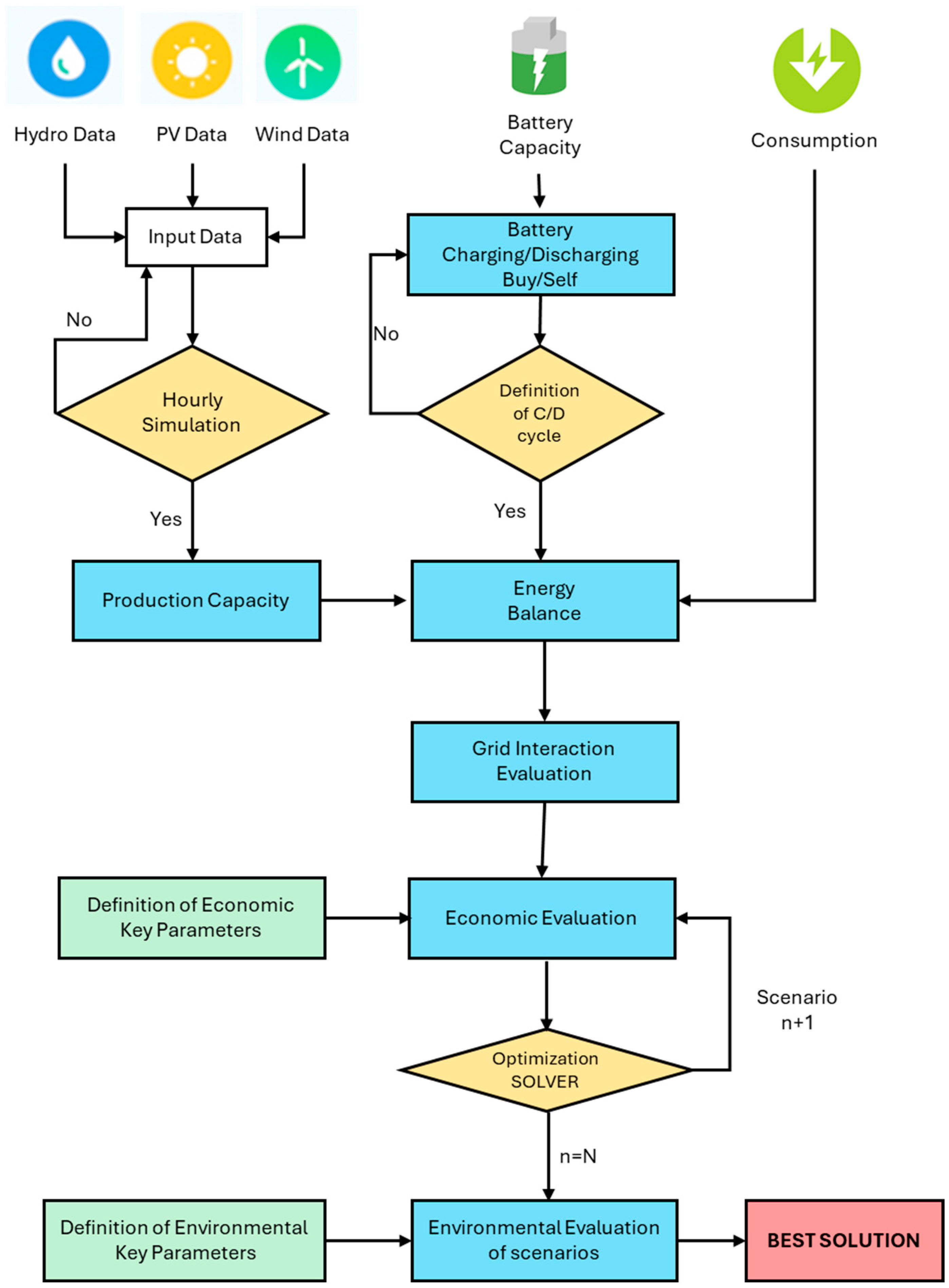
The methodology begins with the acquisition of environmental and meteorological data from open-access sources, such as Open-Meteo, which are used to estimate hydrological flow availability, solar irradiance, and wind speed profiles. These inputs are processed on an hourly basis to simulate the potential energy production of micro-hydropower systems, photovoltaic (PV) arrays, and small wind turbines, applying established performance models and technology-specific assumptions. In parallel, four distinct hourly electricity demand scenarios are developed to represent different consumption profiles of nearby residential, commercial, and institutional buildings. For each scenario, a detailed annual hourly energy balance is calculated by comparing electricity generation and demand. This analysis identifies periods of energy surplus and deficit, which subsequently determine the operational behavior of the battery storage system, including charging, discharging, and interactions with the electricity grid through imports and exports. The methodology illustrated in Figure 1 outlines a structured, multi-criteria framework for evaluating and optimizing hybrid energy systems in small communities. It begins with the collection of input data—typically hourly environmental and demand profiles—which feed into a simulation module that models energy production from hydropower, solar, and wind sources. In parallel, the system simulates battery charging and discharging behavior, including buy/sell interactions with the grid, and defines the control logic for charge/discharge cycles. These simulations converge in an energy balance module that integrates generation, storage, and consumption dynamics. Following this, the methodology evaluates grid interactions and defines key economic parameters such as investment costs, electricity prices, and financial indicators. These feed into an economic evaluation module that calculates metrics like Net Present Value (NPV). The system then enters an optimization phase, where a solver adjusts PV and wind capacities to maximize NPV, while hydropower remains fixed due to regulatory constraints. Environmental parameters—such as emission factors—are defined and used to assess the environmental impact of each scenario. The process concludes by identifying the best solution based on technical feasibility, economic performance, and environmental benefit.
The model computes the total energy flows and system interactions for each scenario, making the outputs dependent on the installed capacity of each energy source. These results feed into a financial model, which calculates economic indicators, such as Net Present Value (NPV), Internal Rate of Return (IRR), Levelized Cost of Energy (LCOE), and Payback Period (PB), based on variables including electricity prices, capital investments, and technology lifetimes.
The system is then optimized to maximize NPV by adjusting the size of the solar PV and wind components, while hydropower remains fixed due to water availability and low LCOE after finding the optimal configuration for each scenario.
Finally, a comparison between models is performed to evaluate the robustness of the proposed model and solutions under changing conditions. Key parameters such as the electricity purchase/selling price and the discount rate are varied to assess their influence on the financial viability of each scenario. This methodology ensures a comprehensive evaluation of both technical performance and economic resilience, where the full process is summarized in Figure 1.

2.2. Parameters Characterization

For Hydropower Generation the power is calculated as follows:
P = ρ g Q H η
where P is the hydraulic power output in W; ρ is the water density, considering 1000 kg/m3; g is the gravitational acceleration, considering 9.81 m/s2; Q is the flow rate in m3/s; H is the net head in mwc; and η is the overall system efficiency, which is dimensionless.
The Solar PV Output is calculated by
E P V = G t i l t e d P P V P R E
where EPV is the daily energy output in kWh; Gtilted is the daily global tilted irradiation in kWh/m2; PPV is the installed PV capacity in kW; and PRE is the performance ratio, considering typically 0.75.
The wind turbine yield is modeled by
P w i n d = P W 1 2 ρ a i r A v 3 C p η
where Pwind is the instantaneous wind power output in W; ρair is the air density, considering 1.225 kg/m3; PW is the installed capacity in kW; A is the swept area of the turbine in m2; v is the wind speed in m/s; Cp is the power coefficient, considering typically 0.3–0.4; and η is the system efficiency, considering electrical/mechanical losses.
The Battery Storage Dynamics includes the State of Charge (SoC) update defined by
S o C t = S o C t 1 + ( E c h a r g e η c h a r g e C b a t ) ( E d i s c h a r g e η d i s c h a r g e C b a t )
where SoCt is the battery State of Charge at time t; Cbat is the battery capacity in kWh; η_discharge is the charge/discharge efficiency, considering typically 0.95; and Echarge or Edischarge is the energy charged/discharged in kWh.
Another important key performance indicator is the Levelized Cost of Energy (LCOE):
L C O E = t = 0 n I t   +   O t   +   M t ( 1   +   r ) t t = 0 n E t ( 1   +   r ) t
where It is investment cost in € in year t; Ot is the operational cost in € in year t; Mt is the maintenance cost in € in year t; Et is the generated energy in kWh in year t; r is the discount rate (adimensional); and n is the project lifetime in years.
The definition of the objective function uses the Net Present Value (NPV), which is defined by
m a x   ( N P V ) = m a x t = 0 n R t + C t ( 1 + r ) t
where Rt is the revenue in € in year t; Ct is the cost in € in year t.
The estimation of the Internal Rate of Return is defined as follows:
0 = t = 0 n R t + C t ( 1 + I R R ) t
where IRR is the Internal Rate of Return.
The Payback Period is the number of years required for the cumulative net cash flow to become positive, i.e., for the initial investment to be recovered.

2.3. Input Parameters and Assumptions

The HySMEC model, designed as a techno-economic–environmental framework, operates based on predefined assumptions and input parameters that reflect the technical characteristics and economic conditions of the study site.
For all simulations, the photovoltaic (PV) system was defined with a surface requirement of 4.5 m2 per kW installed and an average effective generation period of 6 h per day. The battery storage subsystem was modeled with a charging/discharging efficiency of 95%, an initial State of Charge (SOC) of 50%, and a minimum SOC threshold of 10% to avoid deep discharge and prolong system lifetime. Emission factors for electricity generation were set at 35 g CO2-eq/kWh for PV, 10 g CO2-eq/kWh for wind and hydropower, and 170 g CO2-eq/kWh for grid electricity, ensuring a consistent environmental assessment across technologies.
From an economic standpoint, a discount rate of 5% was adopted for the financial evaluation. The choice of a 5% discount rate follows common practice in techno-economic assessments of small-scale renewable energy systems. While discount rates can vary depending on market volatility, country-specific financial conditions, and investor risk profiles, values in the range of 4–7% are widely used in the literature for community-scale renewable energy projects and infrastructure with relatively low financial risk. The selected value of 5% therefore, represents a moderate and widely accepted benchmark, neither overly optimistic nor excessively conservative, and is consistent with typical assumptions adopted in comparable studies. Grid electricity purchase and selling prices were assumed to be 0.26 €/kWh and 0.06 €/kWh, respectively. The capital investment costs considered were 9700 € for hydropower (fixed), 1650 €/kW for PV, 2185 €/kW for wind generation, and 560 €/kWh for battery storage capacity [28]. Operation and maintenance expenses were calculated as a percentage of the initial investment: 3% for hydropower, 1.5% for PV and battery storage, and 2.5% for wind technology. These assumptions ensure consistency, comparability, and robustness in the techno-economic and environmental evaluation of the hybrid energy configurations.
These parameters are kept constant across all scenarios. The investment costs reflect average values found in the recent literature and market data for the region, while emission factors are based on life-cycle assessments.
Environmental Impact Assessment: Additionally, an environmental impact assessment is incorporated by estimating the emissions reductions associated with the displacement of conventional fossil fuel-based electricity generation. Using emission factors relevant to the regional grid mix, the model quantifies avoided CO2 and other pollutant emissions for each hybrid system configuration, providing an integrated view of the system’s sustainability benefits alongside its techno-economic performance.
The avoided emissions are calculated by multiplying the renewable energy generated by the corresponding emission factor of the regional grid, as expressed by Equation (8):
A v o i d e d   E m i s s i o n s = E g e n e r a t e d × E F
where E g e n e r a t e d is the annual energy produced by the hybrid system (kWh), and EF is the emission factor of the local electricity grid (kg CO2/kWh).

2.4. Optimization Procedure and Analyses

The hybrid renewable energy system is optimized by adjusting the capacities of solar PV and wind components to maximize the Net Present Value (NPV). Hydropower capacity is fixed due to its low Levelized Cost of Energy (LCOE) and stable output. The optimization process uses an iterative approach in the Solver optimizer; a single-objective optimization was carried out using the Nonlinear Generalized Reduced Gradient (GRG) method, which identifies improved solutions by following local gradient patterns and is therefore sensitive to the initial values of the decision variables, often converging to locally optimal solutions. To mitigate this limitation and enhance solution robustness, the multistart option was employed. The multistart strategy combines the computational efficiency of the GRG algorithm with the global search capability of the Evolutionary (genetic algorithm-based) approach implemented in the Solver. By initiating multiple search trajectories from diverse starting points, this hybrid approach significantly increases the likelihood of identifying a global or near-global optimum. The population size for the evolutionary component was set to 200 individuals to ensure adequate exploration of the solution space, while no initial seed was specified to preserve randomness and avoid bias. The convergence tolerance was maintained at the default value of 0.0001, providing a suitable balance between solution accuracy and computational efficiency. The hybrid renewable energy system is optimized by adjusting the capacities of solar PV and wind components to maximize the Net Present Value (NPV).
An additional constraint is introduced in an alternative scenario by limiting the rooftop area available for PV installation to 6 m2 per building, which restricts the maximum PV capacity and influences the optimal design. This optimization framework ensures the selection of the most financially viable and technically feasible hybrid system for the local context. To evaluate the robustness of the proposed solutions under varying market and economic conditions, model comparison is performed. Each result assesses its impact on financial indicators such as NPV, IRR, and LCOE, as well as on the optimal system configuration. This analysis helps to support decision-making.

3. Case Study

3.1. System Description

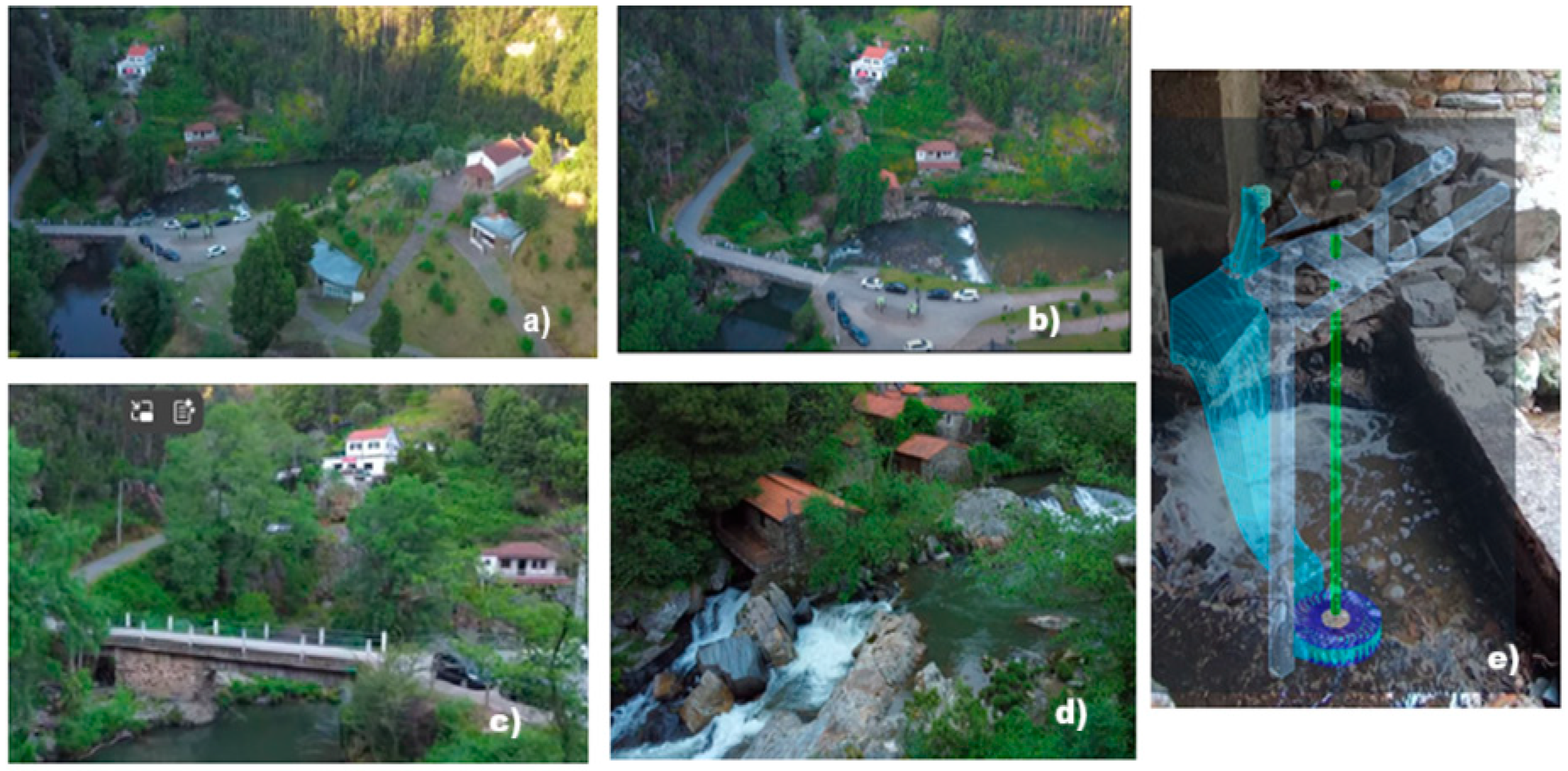
The site features an existing hydraulic infrastructure with a usable head of about 2.8 m, which will be utilized for the development of the renewable energy system. The region, in Sousa River, north of Portugal, is characterized by high water availability throughout the year that feeds an old existing mill, making it suitable for the implementation of a small-scale hydroelectric system integrated with other renewable energy sources. Favorable topographic and environmental conditions allow for an installation that respects and harmonizes with the natural surroundings, minimizing environmental impact. Moreover, the area consists of a small rural community including residences, a restaurant, and a church, all currently fully dependent on the conventional electrical grid, as a small community (Figure 2). The proximity of these buildings offers an opportunity to supply locally generated renewable energy, contributing to energy self-sufficiency and sustainable development in the region.
Additionally, the location benefits from being part of a region with growing interest in decentralized renewable energy projects, aligning with national and EU goals for energy transition. The historical and cultural value of the site further enhances the project’s visibility and potential support from local stakeholders. Although access is limited for large vehicles, it is adequate for light machinery and installation work. Local buildings, such as residences, a restaurant, and a church, are currently connected to the public electrical grid. Depending on the final design, the generated power may be used in a self-consumption regime (e.g., UPAC) or injected into the grid, subject to technical and regulatory feasibility. The existing weir is a traditional stone structure located across the stream, with an estimated length of approximately 22 m. It remains in good condition and effectively diverts water to the old mill through a water intake lateral channel. Minor rehabilitation works have already been carried out, including improvements to the intake point and reinforcement of the water diversion system, in order to optimize the turbine’s performance. The structural integrity of the weir was preserved, ensuring no negative impacts on river dynamics.
As shown in Figure 2d, the original hydraulic channel leading water from the weir to the mill building remains partially intact and follows the historical path used for mill operation. While some sections may require clearing or stabilization, the existing slope and layout are favorable for reuse in the proposed system. The existing weir maintains a solid structure and is integrated naturally into the river’s landscape. The structure currently supports a gross head of around 2.8 m, which is crucial for the implementation of a micro-scale hydropower system within the proposed hybrid renewable energy solution.

3.2. Energy Balancing

3.2.1. Procedures

To evaluate the performance of each configuration, a daily energy balance is calculated over one year. This balance is based on the interaction between energy consumption, renewable production, and the battery system. The main objective is to determine, for each day, whether energy must be purchased from the grid or can be sold to the grid, depending on system behavior. For each day, the following steps are performed—(i) Production: Total daily generation from photovoltaic panels and wind turbine. Although the wind turbine was sized around 2 kW as a reference, its actual production varies daily based on wind conditions and the system optimization; (ii) Demand: The fixed daily electricity consumption of the household or additional demands; (iii) Excess Energy: When production exceeds demand, the surplus energy is first stored in the battery (if there is capacity). If the battery is full, the remaining excess is sold to the grid; (iv) Deficit Energy: When demand exceeds production, the system draws energy from the battery. If the battery is depleted, the remaining deficit must be bought from the grid; (v) Battery State of Charge (SoC): The battery charge level is updated daily, constrained by its maximum and minimum operating limits to prevent degradation; (vi) Grid Transactions—Buy: Energy purchased from the grid during deficit periods after battery depletion; Sell: Energy sold to the grid when there is excess production and the battery is already fully charged.
These daily values are accumulated over the year to determine the total amount of energy bought and sold, which are essential inputs for techno-economic assessment.

3.2.2. Demand Scenarios

To assess the technical viability of the proposed renewable energy system, four different consumption scenarios were defined based on the existing infrastructure and potential energy users in the surrounding area (Figure 1).
The electricity demand scenarios were developed based on site-specific conditions, reflecting the existing infrastructure and realistic patterns of energy use in the surrounding area. Four distinct consumption scenarios were defined to assess the technical viability of the proposed renewable energy system: (i) Scenario 1—1 Household; (ii) Scenario 2—8 Households; (iii) Scenario 3—1 Household + Restaurant + Church; (iv) Scenario 4—1 Household + Restaurant.
The estimations are based on the annual electricity consumption of a real household located next to the mill, occupied by two people, with a total annual consumption of 6 MWh. This value was used as the base for both individual and combined consumption cases. For the nearby restaurant, an estimated annual consumption of 15 MWh was considered, based on typical usage patterns for small rural restaurants. The church’s consumption was assumed to be similar to that of a household (6 MWh/year) but with a constant weekly consumption of 115 kWh per week, reflecting its limited use during the week and higher activity during weekends and religious events.
Each scenario was modeled using realistic daily and seasonal profiles to reflect typical variations in demand throughout the year. These profiles were compiled into tables that display consumption by hour of the day and month of the year. To aid in interpretation, two color scales were applied: one representing unit consumption (e.g., kWh), which highlights usage intensity patterns; another based on absolute totals, emphasizing the contribution of each time segment to the overall energy demand.
This dual representation enables a better understanding of both temporal usage behavior and cumulative energy needs, helping to identify optimal system sizing and energy balancing strategies under each scenario.
Scenario 1—1 Household
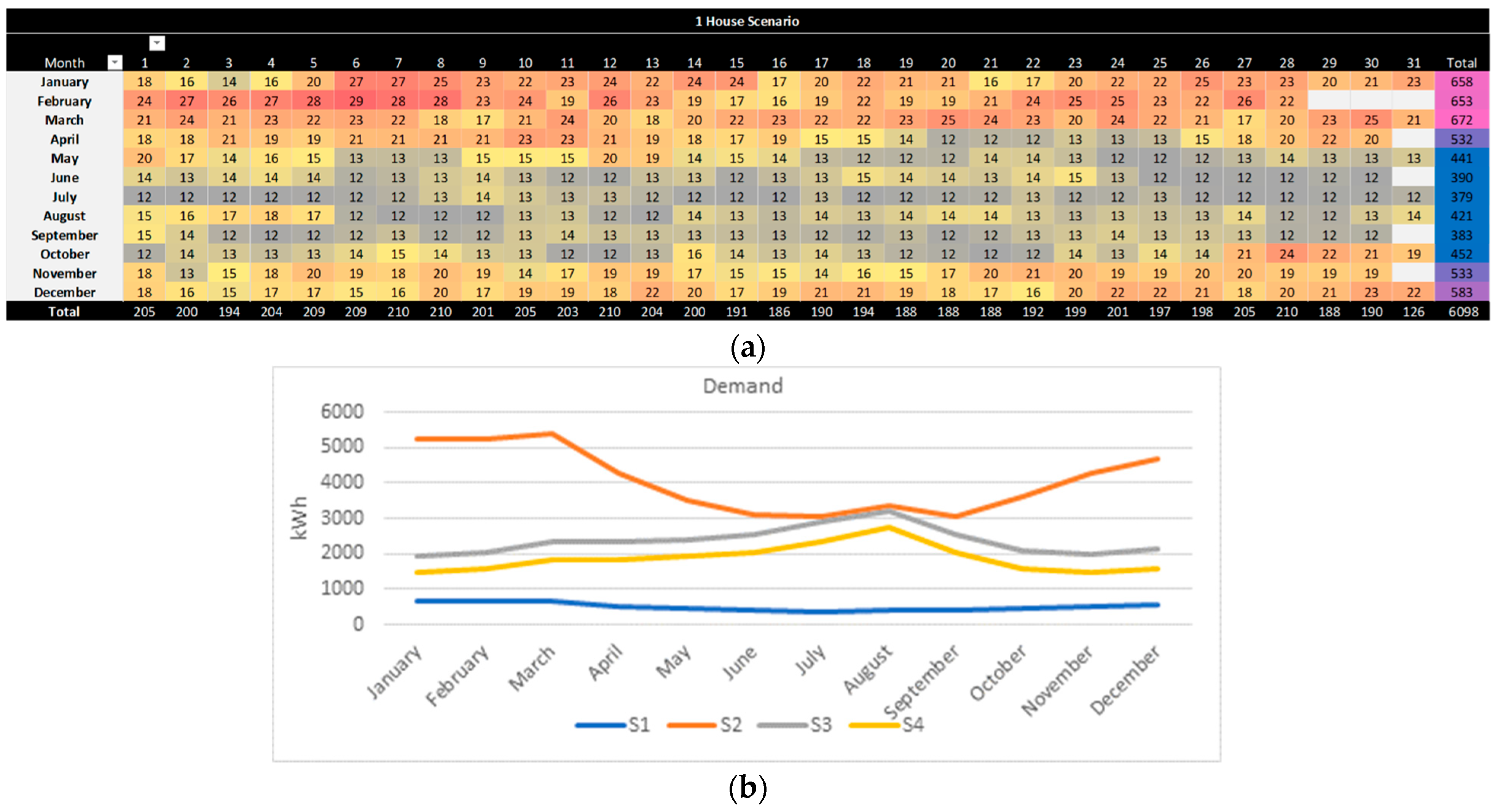
This scenario represents the consumption pattern of a single household, with an annual total of approximately 6.1 MWh. The data, shown in Figure 3a, reveals a noticeable increase in energy demand during the winter months—particularly December, January, February, and March. This trend is likely associated with the use of electric heating, which raises the household’s energy needs during the colder season. The profile is relatively stable during the rest of the year, showing typical residential usage (Figure 3b).
Scenario 2—8 Households
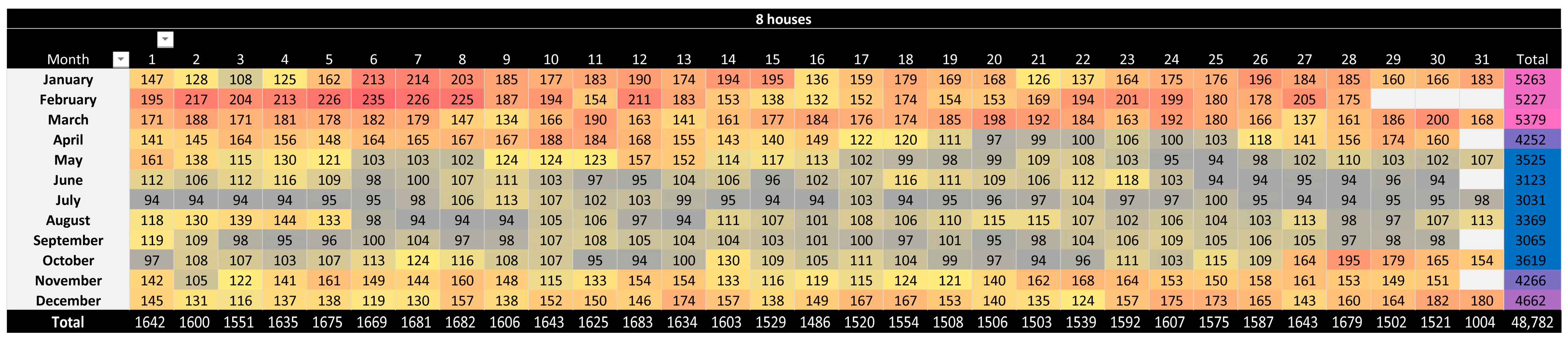
With a total annual consumption of 48.8 MWh, this scenario significantly amplifies the residential demand, representing a micro community of eight households. As shown in Figure 3, the peak consumption shifts to the summer months, especially between June and September. This pattern suggests the influence of seasonal tourism, with the restaurant nearby likely contributing to increased activity during the high season. The data highlights a marked rise in usage during the warmer months, likely due to increased refrigeration, lighting, and air conditioning (Figure 3b and Figure 4).
Scenario 3—1 House + Restaurant + Church
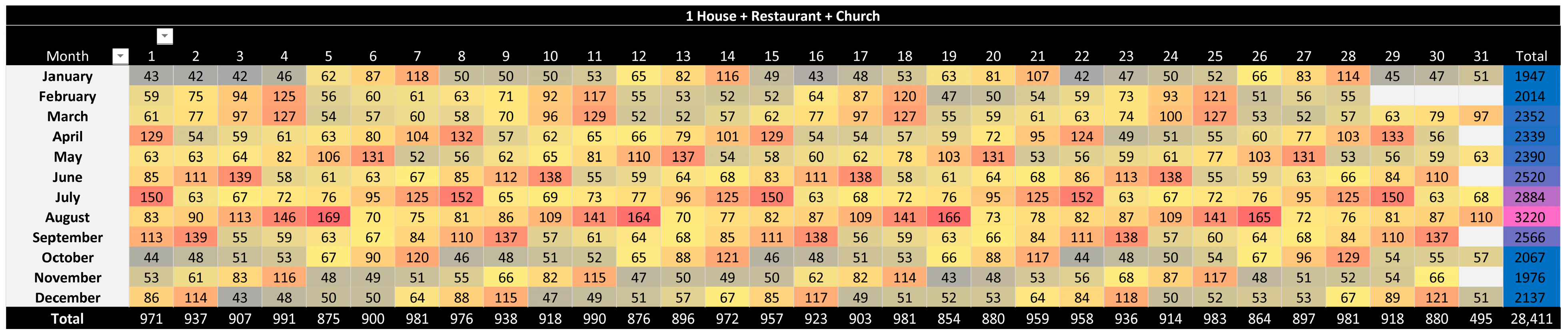
Combining three types of consumers, this scenario reaches a total annual consumption of 28.4 MWh. As shown in Figure 3, the overall consumption pattern follows a similar trend to Scenario 1, with higher energy use in the winter months, again likely due to heating. However, the presence of the restaurant introduces secondary peaks during the summer, driven by seasonal business activity. This dual behavior results in a more balanced yet still winter-heavy consumption curve (Figure 5).
Scenario 4—1 House + Restaurant
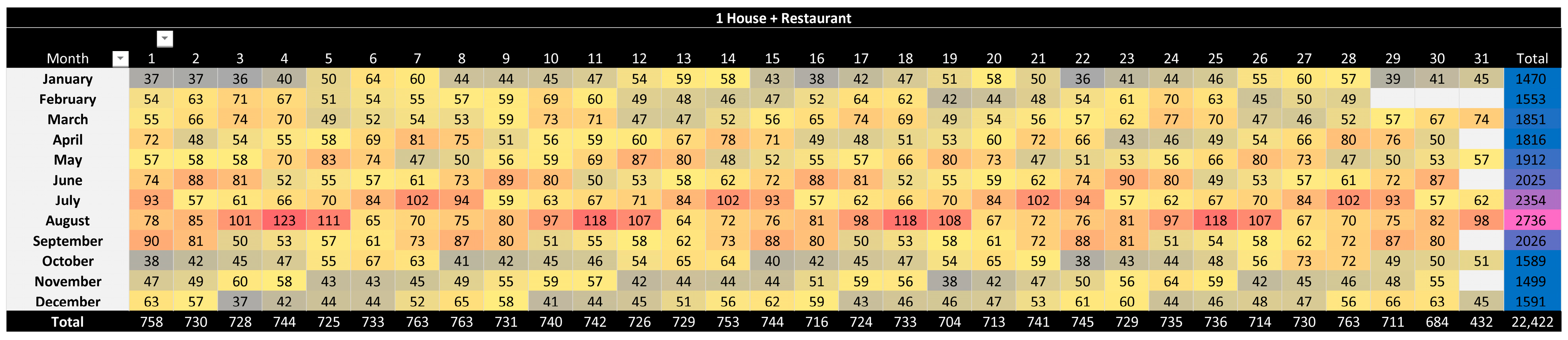
The final scenario combines residential and commercial consumption, resulting in a total of 22.4 MWh annually. As shown in Figure 3, the data reveals a strong peak in the summer months, reflecting the restaurant’s high seasonal activity. This pattern mirrors that observed in Scenario 2, where tourism and warmer weather increase overall demand. While the winter months still contribute to baseline consumption due to the household’s heating needs, summer clearly dominates in terms of total energy use (Figure 6).

3.3. Techno-Economic Assessment

3.3.1. Procedures of System Sizing and Optimization

For the techno-economic assessment, the sizing of each technology was optimized to maximize the Net Present Value (NPV) for each scenario. The micro-hydropower system was fixed in capacity, as its Levelized Cost of Energy (LCOE) is significantly lower than the electricity selling price, making it economically advantageous to operate at full capacity.
Starting from this fixed hydropower baseline, the capacities of the solar photovoltaic (PV) and wind turbine systems were varied to identify the optimal combination maximizing NPV. PV sizing assumed a panel power density of 1 kW per 4.5 m2, typical of commercial solar panels.
The assessment included modeling the energy balance for each scenario, incorporating data from the different energy resources, and sizing a battery storage system designed to provide an average of 6 h of autonomy. Economic analyses were conducted over a 25-year project lifetime, considering all relevant cash inflows and outflows, including realistic market electricity prices, investment costs, and maintenance expenses.
Economic indicators such as NPV, Internal Rate of Return (IRR), and LCOE were calculated. Optimization was performed using the HySMEC model to find the optimal solution.
This approach allowed evaluation of the trade-offs between system size and economic and environmental performances, providing insight into the most feasible configurations under real-world spatial constraints.

3.3.2. Assumptions and Economic Metrics (LCOE, NPV, IRR, Payback)

This section presents the assumptions for the economic assessment of the four hybrid renewable energy system configurations evaluated. Each scenario involves different combinations of solar PV and wind generation capacities, along with a fixed micro-hydro baseline, to identify the most financially attractive system layout.
The economic assessment applies a 5% discount rate and relies on a consistent set of cost assumptions across all scenarios. Capital expenditures were based on unit costs of €9700 per kW for hydropower, €1650 per kW for solar PV, €2185 per kW for wind, and €560 per kWh for battery storage. Annual operation and maintenance expenses were calculated as a percentage of the initial investment—3% for hydropower, 1.5% for solar PV and batteries, and 2.5% for wind. Grid electricity purchases were valued at €0.26 per kWh, while exported energy was priced at €0.06 per kWh. Battery replacement costs were incorporated into the cash flow analysis to reflect their shorter lifespan, and residual values of all components were accounted for at the end of the project. Using these assumptions, this study evaluated each scenario through four economic indicators: the Levelized Cost of Energy, which expresses the discounted cost per kilowatt-hour produced; the Net Present Value, which measures overall profitability; the Internal Rate of Return, which identifies the discount rate at which the project breaks even; and the Payback Period, which indicates how long it takes to recover the initial investment. Together, these metrics provide a comprehensive view of the financial performance of the different hybrid system configurations. Cost inputs were based on current market values for solar PV, wind turbines, micro-hydro systems, and battery storage components [28]. Revenue streams were estimated from both the reduction in electricity purchases from the grid and potential energy exports. The cash flow analysis considered all capital expenditures, operation and maintenance costs, equipment replacement (such as battery systems), and residual values at the end of the project lifespan. These assumptions provide a solid basis for comparing scenarios and identifying the configuration that offers the optimal balance between investment cost, energy performance, and financial return.
The regional regulatory framework offers substantial advantages for hybrid renewable energy systems, such as subsidies:
  • Support to a more sustainable region: Up to 85% coverage of solar/battery costs (€2500 per installation);
  • Next Generation EU Funds: 40–60% financing for innovative hydro-solar projects;
  • Tax benefits:
  • Total of 6% VAT (vs. 23%) on renewable equipment (valid in June 2025);
  • Municipal tax deductions for solar installations;
  • Administrative simplification:
  • Greater than 3-month licensing for projects <1 MW;
  • Environmental assessment exemption for retrofits.
These instruments significantly reduce upfront investment and shorten Payback Periods, transforming marginally viable configurations into highly profitable projects across all scenarios.

4. Results and Discussion

4.1. Analysis of Scenarios

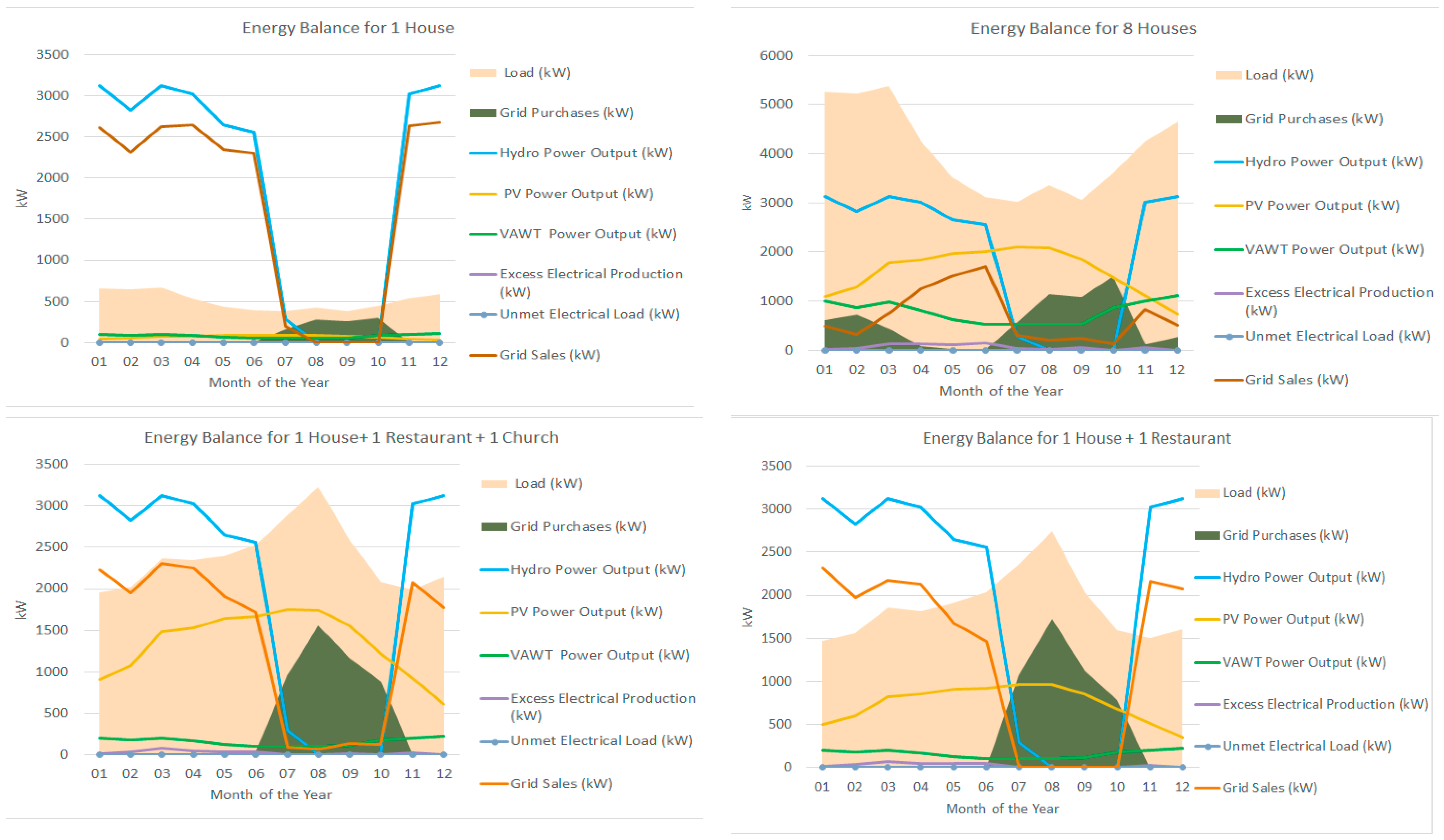
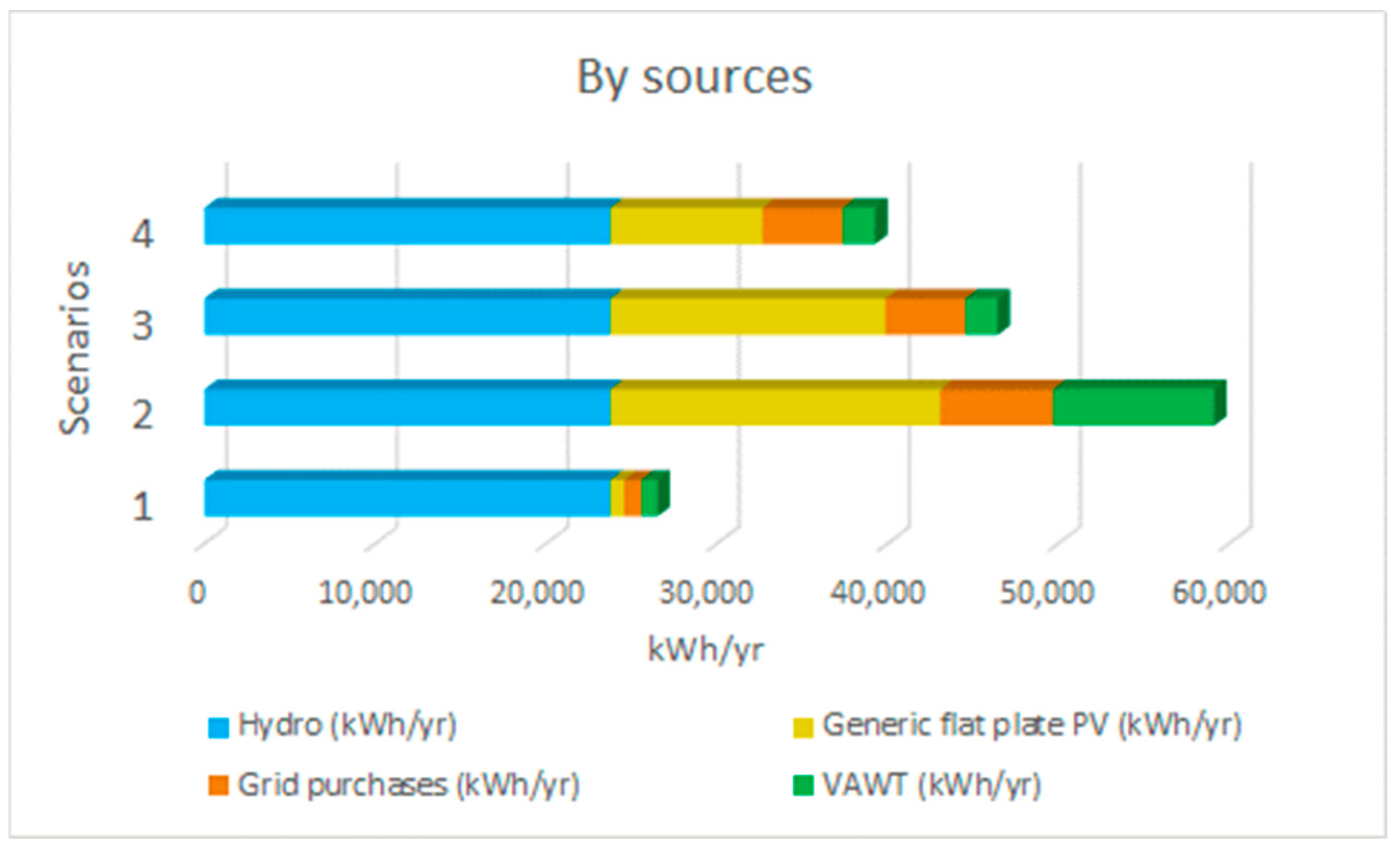
Each scenario is analyzed, and the behaviors are represented in Figure 7 and Figure 8.
Scenario 1—Base Case (Single Household) (6100 kWh per year)
In the first scenario, the system was designed to meet the energy needs of a single household with an annual consumption of approximately 6100 kWh. The optimal configuration includes a fixed hydropower component based on a constant water flow of 0.44 m3/s, complemented by 0.62 kW of solar PV and 0.72 kW of wind capacity. A 4 kWh battery system was sized to provide autonomy during approximately six hours of typical consumption.
The combined renewable generation across the three sources yields a total annual production of approximately 29 MWh. The system purchases 832 kWh from the grid to cover shortfalls and exports 23,725 kWh, generating revenue from surplus energy. Over the course of the year, the battery is charged to 266 kWh and discharges 251 kWh, helping to smooth daily fluctuations between generation and consumption.
From a financial perspective, this configuration results in a Net Present Value (NPV) of €15,060, an Internal Rate of Return (IRR) of 14%, a Payback Period (PBP) of 6.65 years, and a Levelized Cost of Energy (LCOE) of €0.04/kWh, indicating strong economic viability for a single household deployment under these conditions (Figure 4).
Additionally, this scenario served as the reference case for analyzing the individual performance of each energy source. A system relying solely on hydropower demonstrated a slightly shorter Payback Period of 6.06 years, a higher IRR of 15.53%, and a NPV of €14,675, but its LCOE was slightly higher at €0.044/kWh compared to the hybrid configuration. On the other hand, if solar PV or wind power were used independently, their respective LCOEs would be significantly higher—€0.22/kWh for solar and €0.28/kWh for wind—making them less competitive than even purchasing electricity from the grid.
However, when these sources are combined in a hybrid system that shares a common battery, the overall system benefits from cost synergies, reduced intermittency, and greater grid independence. This integration allows the hybrid system to achieve a lower LCOE than grid electricity, highlighting the value of combining generation sources in a coordinated design.
Scenario 2—8 Households (48,782 kWh per year)
Scaling up to eight households with a combined annual demand of 48,782 kWh, the optimal capacities are 14.44 kW solar PV and 9.87 kW wind, while hydropower remains fixed. This requires approximately 65 m2 of PV surface area, averaging 8.12 m2 per household. Total renewable generation reaches 57,341 kWh, with grid imports at 7041 kWh and exports of 15,130 kWh. Battery cycling involves 4472 kWh charged and 445 kWh discharged. The financial metrics show a NPV of €35,359, a Payback Period of 8.7 years, an IRR of 9%, and a LCOE of €0.09/kWh (Figure 4).
Limiting rooftop PV area to a conservative 6 m2 per unit (compared to an available 12 m2) results in a slight decrease in NPV to €34,856 and a shift in generation mix to 10.67 kW solar and 11.33 kW wind capacity.
Scenario 3—1 House + Restaurant + Church (28,411 kWh per year)
This scenario includes a household, a restaurant, and a church, with a combined annual consumption of 28,411 kWh. The optimized system incorporates 12.03 kW solar PV and 1.98 kW wind, producing about 44,182 kWh per year. The system exports 2404 kWh and imports 17,883 kWh from the grid, with battery charges totaling 2679 kWh and discharges of 2638 kWh annually.
Economically, it shows a strong performance with a NPV of €38,860, payback of 7.03 years, IRR of 13%, and a LCOE of €0.07/kWh (Figure 4).
When PV surface is restricted to 6 m2 for the house and restaurant only (excluding the church), capacities adjust to 2.67 kW solar and 4.98 kW wind, reducing annual production to roughly 37 MWh. Grid imports increase to 4081 kWh, and exports drop to 12,416 kWh, resulting in an NPV of €31,763.
Scenario 4—1 House + Restaurant (22,422 kWh per year)
This scenario considers a combined load from a household and a restaurant, resulting in an annual energy demand of 22,422 kWh. The optimal hybrid system configuration includes 6.66 kW of solar PV and 1.71 kW of wind capacity, with hydropower remaining constant as in previous scenarios. Under these conditions, the system generates a total of 37,466 kWh per year.
The renewable system exports 16,654 kWh to the grid and imports only 1773 kWh, reflecting a high degree of self-sufficiency. Battery activity involves 1458 kWh charged and 1429 kWh discharged, supporting energy balancing and reducing grid reliance.
Financially, the system performs well, achieving a Net Present Value (NPV) of €36,065, a Payback Period (PBP) of 6.3 years, an Internal Rate of Return (IRR) of 13%, and a Levelized Cost of Energy (LCOE) of €0.06/kWh, indicating solid economic potential for this type of mixed residential-commercial application (Figure 7).
In a restricted PV space of 6 m2, the configuration adjusts to 2.67 kW of PV and 2.43 kW of wind, shifting the generation mix. Despite the reduction in solar capacity, the system remains financially attractive, with a slightly lower NPV of €35,167, while maintaining comparable performance metrics.

4.2. Comparisons Across Scenarios

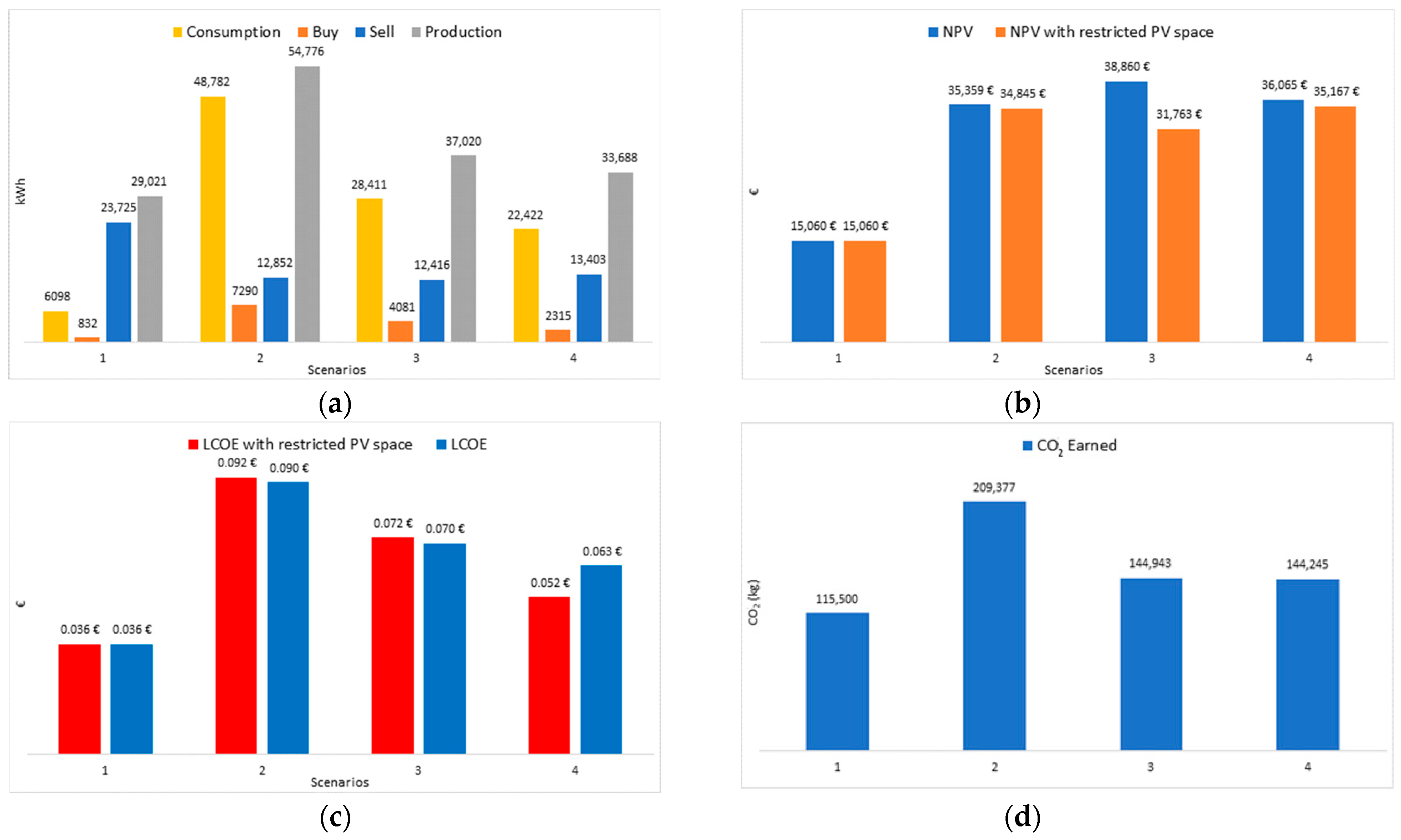
The energy performance of each scenario shows the proportions of energy generated, consumed, exported, and purchased (Figure 9a). All systems demonstrate a strong energy surplus, exporting significantly more electricity than they import from the grid. This highlights the effectiveness of the hybrid configurations in achieving energy autonomy and contributing renewable excess to the network.
From a financial standpoint, Scenario 3 (1 household + restaurant + church) offers the highest Net Present Value (€38,860) under optimal conditions, making it the most attractive project configuration when no PV surface restrictions are applied (Figure 9b). However, when limiting PV surface to 6 m2 per rooftop (excluding the church in Scenario 3), the situation shifts: Scenario 2 (8 households) becomes the most beneficial, with a strong NPV of €34,856. This shift is largely due to the higher level of collective self-consumption, which enhances the financial returns of shared systems under spatial constraints. In essence, the more on-site consumption is required, the greater the economic impact of the hybrid renewable system—highlighting the importance of the self-consumption ratio in determining the optimal deployment strategy.
The Levelized Cost of Energy (LCOE) assessment reveals significant differences between scenarios, ranging from €0.04/kWh (Scenario 1) to €0.09/kWh (Scenario 2) in unconstrained configurations (Figure 9c). Smaller-scale systems (Scenarios 1 and 4) achieve the most competitive LCOE (≤€0.06/kWh), driven by the high contribution of low-cost hydropower (€0.025/kWh) relative to their limited demand. In contrast, collective-demand scenarios (2 and 3) show higher LCOE (€0.07–0.09/kWh) due to greater solar/wind investments, yet remain 65–85% cheaper than grid electricity (€0.26/kWh). PV area restrictions increase LCOE by up to 25% in Scenario 1, while Scenarios 4 demonstrates resilience by maintaining LCOE through optimal wind compensation. This cost hierarchy confirms hydropower as the economic backbone of the hybrid system, with solar/wind integration proving most advantageous in communities with complementary demand profiles and available space.
The implementation of these hybrid renewable energy systems substantially reduces CO2 emissions compared to conventional grid electricity consumption. Each scenario contributes positively to climate change mitigation (Figure 9d):
Annual CO2 savings correlate closely with total renewable generation, with larger systems naturally achieving higher absolute reductions.
Scenario 3 achieves a high emission reduction due to its larger total energy output, while Scenario 1 shows a strong reduction relative to its scale.
Limiting PV surface area marginally reduces emission savings but still maintains a significant environmental benefit.
Reduced reliance on grid electricity also decreases transmission losses and grid strain, enhancing overall system sustainability.
These environmental advantages complement the economic benefits, making the proposed hybrid configurations viable solutions for both energy security and ecological responsibility.

4.3. Summary of KPI and Discussion

Table 1 consolidates the key technical and financial indicators across all four scenarios, enabling a clear comparison of performance under optimal conditions. Scenarios 3 and 4 stand out in terms of total energy production and Net Present Value, while Scenario 1 demonstrates good cost efficiency with the lowest Levelized Cost of Energy. When PV installation is limited, Scenario 2 proves to be the most resilient, maintaining strong returns due to shared demand and high self-consumption. This comparison underscores the importance of tailoring system design to local energy needs, space availability, and consumption profiles to maximize the impact of hybrid renewable systems.
Each hybrid system configuration presents unique advantages and challenges that influence its suitability depending on the specific application and constraints:
Scenario 1 (Single Household): Offers high economic viability with the lowest LCOE (€0.04/kWh) and a short Payback Period. Its compact size and relatively low complexity make it ideal for individual homes. However, its smaller scale limits the benefits of economies of scale and shared infrastructure.
Scenario 2 (8 Households): Benefits from shared resources and economies of scale, improving financial metrics. This scenario leverages collective self-consumption, which enhances grid independence and reduces peak loads. The main limitation is the need for coordination among multiple households and a slightly higher upfront investment.
Scenario 3 (House + Restaurant + Church): The most attractive financially, due to diverse demand profiles and load complementarities. It maximizes renewable utilization and export potential. Its complexity, involving multiple building types and usage patterns, requires sophisticated management and control systems.
Scenario 4 (House + Restaurant): Delivers high total energy production and competitive financial performance.
Overall, the hybrid approach enables cost synergies and improved reliability, but system design must carefully consider local demand profiles, spatial constraints, and stakeholder coordination to optimize performance.

4.4. Model Validation

A comparison is made between HySMEC, a research model, and HOMER—a well-known commercial model. HySMEC (Hybrid Smart Micro Energy Communities) is a research-oriented modeling framework developed to support advanced analysis of hybrid energy systems in smart micro energy communities within an EU project, particularly emphasizing environmental performance, system dynamics, and integration flexibility. It allows for customized input structures and detailed tracking of emissions, energy flows, and component interactions, making it well-suited for academic and technical investigations. In contrast, HOMER is a commercially available optimization tool widely used in industry and research for designing and simulating microgrids and hybrid energy systems. The adapted HOMER inputs in this study leverage its robust economic modeling capabilities, user-friendly interface, and extensive component libraries. HOMER offers several advantages, including streamlined techno-economic analysis, reliable financial metrics (e.g., NPV, IRR, LCOE), and proven applicability across diverse geographic and operational contexts. Together, the integration of HySMEC and HOMER-adapted inputs enables a comprehensive evaluation of hybrid configurations, combining the methodological rigor of research modeling with the practical strengths of commercial simulation.
Across all four scenarios, energy consumption, production, and supply values reveal small differences between HOMER-adapted and HySMEC outputs. Scenario 1, characterized by minimal consumption (6099 kWh/year), shows that HySMEC estimates slightly higher total production (29,000 kWh/year) and energy supplied (29,832 kWh/year) compared to HOMER (25,505 and 26,508 kWh/year, respectively), suggesting a more generous energy yield. Scenario 2, with the highest consumption (48,776 kWh/year), exhibits a consistent trend. Scenario 3 presents moderate consumption (28,513 kWh/year) but a divergence in energy supply estimates, with HySMEC forecasting 62,065 kWh/year of production and HOMER-adapted 46,428 kWh/year. Scenario 4, with consumption of 22,468 kWh/year, shows close agreement between models in terms of energy supplied (39,239 kWh/year for HySMEC and 39,272 kWh/year for HOMER), indicating minor differences in system efficiency or loss modeling (Table 2).
Based on a comprehensive evaluation of technical, economic, and environmental indicators (Table 3), Scenario 3 under HySMEC modeling stands out as the most balanced and advantageous configuration. Technically, it operates with moderate renewable capacity (12.03 kW solar PV and 1.98 kW wind), achieving substantial energy production and supply. Economically, it offers a strong Internal Rate of Return (13%), a competitive Levelized Cost of Energy (€0.07/kWh), and a favorable Net Present Value (€38,860), with a Payback Period of just over 7 years. Emissions were quantified based on the emission factors provided in the HySMEC framework, with parameter adaptation in HOMER for compatibility of input data. The analysis encompassed both earned and total generated emissions. Environmentally, Scenario 3 demonstrates robust performance, earning 145 tons of CO2 credits while maintaining a net negative total CO2 production (−24 tons), indicating meaningful carbon mitigation. This scenario effectively integrates technical feasibility, financial viability, and environmental sustainability, making it the most promising option among the evaluated configurations.
Table 2 and Table 3 correspond to the robustness assessment described in the methodology. Hybrid HySMEC configurations clearly outperform single-technology systems, achieving competitive LCOE values (0.036–0.09 €/kWh), self-consumption levels above 70%, and CO2 reductions exceeding 60%. Their strong economic performance—positive NPVs, IRRs above 8–10%, and Payback Periods under 9 years—shows that community-scale hybrid systems are financially viable even under spatial or demand constraints. The substantial reduction in grid imports (40–80%) further supports policies aimed at strengthening rural resilience and reducing grid congestion.
However, the scalability of these solutions depends on regional environmental agency regulations, which restrict hydropower expansion, land availability for PV and wind, and interventions in heritage water infrastructures. These regulatory limits shape the feasible technology mix and must be incorporated into regional energy-community planning.
The results also reinforce the relevance of self-consumption frameworks, highlighting the potential of collective self-consumption, shared storage, and cooperative ownership models—especially when supported by targeted incentives and streamlined licensing. Finally, the significant emission reductions align HySMEC-type projects with regional decarbonization goals and EU directives promoting distributed renewable generation.

5. Conclusions

HySMEC (Hybrid Smart Micro Energy Communities) is a research-oriented modeling framework designed to evaluate and optimize hybrid renewable energy systems for smart micro energy communities. It emphasizes environmental performance, dynamic system behavior, and flexible integration of hydro, solar PV, wind, batteries, and grid interaction. The model supports customized inputs and tracks emissions, energy flows, and component interactions, enabling rigorous academic and technical investigations. This study integrates environmental data collection, energy generation modeling, demand estimation, and financial analysis to identify technical and economically viable configurations. Hourly data from Open-Meteo informs simulations for hydro, PV, and wind generation, while four demand scenarios are modeled: Scenario 1 (1 household, 6.1 MWh/year), Scenario 2 (8 households, 48.8 MWh/year), Scenario 3 (house + restaurant + church, 28.4 MWh/year), and Scenario 4 (house + restaurant, 22.4 MWh/year). Hourly energy balances guide battery charging, discharging, and grid interactions, capturing seasonal variations such as winter heating and summer tourism peaks.
Optimization is performed by varying PV and wind capacities to maximize Net Present Value (NPV), while hydropower remains fixed due to its low Levelized Cost of Energy (LCOE). A constrained variant limits PV installation to 6 m2 per building, excluding the church. Technical assumptions include a PV surface requirement of 4.5 m2/kW, battery efficiency of 95%, and initial State of Charge at 50%. Emission factors are set at 35 g CO2/kWh for PV, 10 g for wind and hydro, and 170 g for grid electricity. Economic inputs include a 5% discount rate, electricity purchase price of €0.26/kWh, and sale price of €0.06/kWh. Investment costs are €9700/kW for hydro, €1650/kW for PV, €2185/kW for wind, and €560/kWh for batteries, with operation and maintenance costs ranging from 1.5% to 3% of the investment.
Scenario 3 emerges as the optimal configuration, delivering the highest NPV (€38,860), strong IRR (13%), a Payback Period of 7.03 years, and a competitive LCOE (€0.07/kWh). It achieves significant CO2 mitigation, earning 145 tons and producing –24 tons, indicating net carbon negativity. This scenario benefits from high self-consumption and diverse demand profiles, minimizing grid dependence and enhancing profitability, especially under rising electricity prices. If rooftop space is constrained, Scenario 2 becomes preferable due to its resilience and collective self-consumption synergies, yielding a NPV of €35,359, IRR of 9%, and LCOE of €0.09/kWh. Scenario 1 offers the lowest LCOE (€0.04/kWh) and highest IRR (14%) with minimal capacity and strong environmental performance (−90 tons CO2 produced). Scenario 4 demonstrates high self-sufficiency and low grid imports, with a NPV of €36,065 and LCOE of €0.063/kWh.
Overall, the analysis confirms that hybrid systems combining hydropower, solar PV, and wind are technically viable and economically robust across varied use cases. Financial returns remain positive under conservative market assumptions, and higher self-consumption ratios significantly improve profitability and system sizing. Beyond technical and economic strengths, the proposed system delivers social and cultural benefits by enabling energy autonomy, reducing vulnerability to energy insecurity, and fostering community empowerment. Inherent rehabilitation of historical mill sites supports heritage preservation, education, and sustainable tourism. These findings position HySMEC-based hybrid systems as scalable, sustainable, and adaptable solutions for rural communities. The HySMEC framework addresses the lack of transparent, data-driven, and integrative modeling tools that combine hourly environmental variability, multi-technology interactions, and joint techno-economic–environmental assessment within a single framework tailored for small energy communities. To further substantiate the scientific novelty, this research includes a benchmark comparison with an established modeling tool (HOMER), which serves to validate the proposed approach and demonstrate its consistency with existing methodologies while highlighting its added value in terms of transparency, adaptability, and community-specific applicability.
There are main gaps that HySMEC addresses. Existing tools, such as digital twins, focus on large or urban systems and require data infrastructures unavailable in rural areas, whereas HySMEC offers a lightweight, hourly, data-driven framework suitable for small communities. Current multi-objective optimization studies emphasize algorithmic performance rather than transparent, reproducible decision support, so HySMEC provides an interpretable NPV-based optimization with scenario-driven sensitivity analyses for planners. Additionally, most models overlook regulatory constraints; HySMEC explicitly incorporates regional environmental agency limits on hydropower, land use for PV and wind, and heritage-related restrictions. HySMEC’s data-driven structure provides a scalable and reproducible tool for planners, researchers, and local authorities seeking to evaluate distributed energy solutions in smart micro energy communities under diverse conditions. Further research can include potential extensions such as integrating more detailed demand-side management strategies, incorporating real-time control or digital-twin applications, exploring additional storage technologies, and applying the framework to different community typologies or climatic contexts.

Author Contributions

Conceptualization, H.M.R., A.E., and I.D.; methodology, H.M.R., A.E., I.D., O.E.C.-H., and M.P.-S.; validation, H.M.R., K.K., and A.M.; formal analysis, H.M.R., A.E. and I.D.; investigation, H.M.R., M.P.-S. and O.E.C.-H.; resources, H.M.R.; data curation, O.E.C.-H. and M.P.-S.; writing—original draft preparation, H.M.R., A.E. and I.D.; writing—review and editing, K.K., O.E.C.-H., A.M.; supervision, H.M.R., M.P.-S. All authors have read and agreed to the published version of the manuscript.

Funding

This research received no external funding.

Institutional Review Board Statement

Not applicable.

Informed Consent Statement

Not applicable.

Data Availability Statement

The data is all presented in this study.

Acknowledgments

This work was supported by FCT, UIDB/04625/2025 CERIS in the Hydraulic Laboratory for experiments on pumped storage performance and the project HY4RES (Hybrid Solutions for Renewable Energy Systems) EAPA_0001/2022 from the INTERREG ATLANTIC AREA PROGRAMME.

Conflicts of Interest

The authors declare no conflicts of interest.

Abbreviations

The following abbreviations are used in this manuscript:
Acronyms
EFEmission Factor
EUEuropean Union
IRRInternal Rate of Return
IIRRInvestment Internal Rate of Return
LCOELevelized Cost of Energy
NPVNet Present Value
O&MOperation and Maintenance
OPEXOperational Expenditure
PBPayback Period
PRPerformance Ratio
PVPhotovoltaic
SoCState of Charge
UPACProduction Units for Self-Consumption
VAWTVertical Axis Wind Turbine
List of variables
ASwept area of the turbine (m2)
CbatBattery capacity (kWh)
CpPower coefficient (typically ~0.3–0.4)
CtCost in year t
CtCost in year t
Echarge/EdischargeEnergy charged/discharged (kWh)
Egeneratedis the annual energy produced by the hybrid system (kWh)
EPVDaily energy output (kWh)
EtEnergy produced in year t
gGravitational acceleration (9.81 m/s2)
GtiltedDaily global tilted irradiation (kWh/m2)
HNet head (m)
IRRInternal rate of return
IInvestment cost per year
MMaintenance cost per year
nProject lifetime (years)
Nlifespan of the project (years)
OOperational cost per year
PHydraulic power output (W)
PPVInstalled PV capacity (kW)
PRPerformance ratio (typically 0.75
PWInstalled W capacity (kW)
PwindInstantaneous wind power output (W)
QFlow rate (m3/s)
rDiscount rate
RtRevenue in year t
SoCtBattery state of charge at time t
vWind speed (m/s)
ηOverall system efficiency (dimensionless)
ηSystem efficiency (electrical/mechanical losses)
ηdischargeCharge/discharge efficiencies

References

  1. Coelho, J.S.T.; Pérez-Sánchez, M.; Coronado-Hernández, O.E.; Sánchez-Romero, F.-J.; McNabola, A.; Ramos, H.M. Hybrid Renewable Systems for Small Energy Communities: What Is the Best Solution? Appl. Sci. 2024, 14, 10052. [Google Scholar] [CrossRef]
  2. Gupta, M.; Bhargava, A. Optimal design of hybrid renewable-energy microgrid system: A techno–economic–environment–social–reliability perspective. Clean Energy 2024, 8, 66–83. [Google Scholar] [CrossRef]
  3. Remache, A.; Pérez-Sánchez, M.; Hidalgo, V.H.; Ramos, H.M. Hybrid Optimization Approaches for Impeller Design in Turbomachinery: Methods, Metrics, and Design Strategies. Water 2025, 17, 1976. [Google Scholar] [CrossRef]
  4. Neves, D.; Carlos Silva, A.; Connors, S. Design and implementation of hybrid renewable energy systems on micro-communities: A review on case studies. Renew. Sustain. Energy Rev. 2014, 31, 935–946. [Google Scholar] [CrossRef]
  5. Wang, H.; Abdollahi, E.; Lahdelma, R.; Jiao, W.; Zhou, Z. Modelling and optimization of the smart hybrid renewable energy for communities (SHREC). Renew. Energy 2015, 84, 114–123. [Google Scholar] [CrossRef]
  6. Ahmed, S.; Ali, A.; D’Angola, A. A Review of Renewable Energy Communities: Concepts, Scope, Progress, Challenges, and Recommendations. Sustainability 2024, 16, 1749. [Google Scholar] [CrossRef]
  7. Ahmadifar, A.; Ginocchi, M.; Golla, M.S.; Ponci, F.; Monti, A. Development of an Energy Management System for a Renewable Energy Community and Performance Analysis via Global Sensitivity Analysis. IEEE Access 2023, 11, 4131–4154. [Google Scholar] [CrossRef]
  8. Trevisan, R.; Ghiani, E.; Pilo, F. Renewable Energy Communities in Positive Energy Districts: A Governance and Realisation Framework in Compliance with the Italian Regulation. Smart Cities 2023, 6, 563–585. [Google Scholar] [CrossRef]
  9. Bianchi, F.R.; Bosio, B.; Conte, F.; Massucco, S.; Mosaico, G.; Natrella, G.; Saviozzi, M. Modelling and Optimal Management of Renewable Energy Communities Using Reversible Solid Oxide Cells. Appl. Energy 2023, 334, 120657. [Google Scholar] [CrossRef]
  10. Musolino, M.; Maggio, G.; D’Aleo, E.; Nicita, A. Three Case Studies to Explore Relevant Features of Emerging Renewable Energy Communities in Italy. Renew. Energy 2023, 210, 540–555. [Google Scholar] [CrossRef]
  11. Lazzari, F.; Mor, G.; Cipriano, J.; Solsona, F.; Chemisana, D.; Guericke, D. Optimizing Planning and Operation of Renewable Energy Communities with Genetic Algorithms. Appl. Energy 2023, 338, 120906. [Google Scholar] [CrossRef]
  12. Ceglia, F.; Esposito, P.; Faraudello, A.; Marrasso, E.; Rossi, P.; Sasso, M. An energy, environmental, management and economic analysis of energy efficient system towards renewable energy community: The case study of multi-purpose energy community. J. Clean. Prod. 2022, 369, 133269. [Google Scholar] [CrossRef]
  13. Gribiss, H.; Aghelinejad, M.M.; Yalaoui, F. Configuration Selection for Renewable Energy Community Using MCDM Methods. Energies 2023, 16, 2632. [Google Scholar] [CrossRef]
  14. Spazzafumo, G.; Raimondi, G. Economic Assessment of Hydrogen Production in a Renewable Energy Community in Italy. e-Prime-Adv. Electr. Eng. Electron. Energy 2023, 4, 100131. [Google Scholar] [CrossRef]
  15. Aittahar, S.; de Villena, M.M.; Derval, G.; Castronovo, M.; Boukas, I.; Gemine, Q.; Ernst, D. Optimal Control of Renewable Energy Communities with Controllable Assets. Front. Energy Res. 2023, 11, 879041. [Google Scholar] [CrossRef]
  16. Pasqui, M.; Felice, A.; Messagie, M.; Coosemans, T.; Bastianello, T.T.; Baldi, D.; Lubello, P.; Carcasci, C. A New Smart Batteries Management for Renewable Energy Communities. Sustain. Energy Grids Netw. 2023, 34, 101043. [Google Scholar] [CrossRef]
  17. Mitali, J.; Dhinakaran, S.; Mohamad, A.A. Energy Storage Systems: A Review. Energy Storage Sav. 2022, 1, 166–216. [Google Scholar] [CrossRef]
  18. Das, C.K.; Bass, O.; Kothapalli, G.; Mahmoud, T.S.; Habibi, D. Overview of Energy Storage Systems in Distribution Networks: Placement, Sizing, Operation, and Power Quality. Renew. Sustain. Energy Rev. 2018, 91, 1205–1230. [Google Scholar] [CrossRef]
  19. Masaud, T.M.; Lee, K.; Sen, P.K. An Overview of Energy Storage Technologies in Electric Power Systems: What Is the Future? In Proceedings of the North American Power Symposium, Arlington, TX, USA, 26–28 September 2010; IEEE: New York, NY, USA, 2010; pp. 1–6. [Google Scholar]
  20. Schoenung, S.M.; Eyer, J.M.; Iannucci, J.J.; Horgan, S.A. Energy Storage for a Competitive Power Market. Annu. Rev. Energy Environ. 1996, 21, 347–370. [Google Scholar] [CrossRef]
  21. Chen, H.; Cong, T.N.; Yang, W.; Tan, C.; Li, Y.; Ding, Y. Progress in Electrical Energy Storage System: A Critical Review. Prog. Nat. Sci. 2009, 19, 291–312. [Google Scholar] [CrossRef]
  22. Hannan, M.A.; Wali, S.B.; Ker, P.J.; Abd Rahman, M.S.; Mansor, M.; Ramachandaramurthy, V.K.; Muttaqi, K.M.; Mahlia, T.M.I.; Dong, Z.Y. Battery Energy-Storage System: A Review of Technologies, Optimization Objectives, Constraints, Approaches, and Outstanding Issues. J. Energy Storage 2021, 42, 103023. [Google Scholar] [CrossRef]
  23. Herenčić, L.; Kirac, M.; Keko, H.; Kuzle, I.; Rajšl, I. Automated Energy Sharing in MV and LV Distribution Grids within an Energy Community: A Case for Croatian City of Križevci with a Hybrid Renewable System. Renew. Energy 2022, 191, 176–194. [Google Scholar] [CrossRef]
  24. Ruparathna, R.; Hewage, K.; Karunathilake, H.; Dyck, R.; Idris, A.; Culver, K.; Sadiq, R. Climate Conscious Regional Planning for Fast-Growing Communities. J. Clean. Prod. 2017, 165, 81–92. [Google Scholar] [CrossRef]
  25. Mehrjerdi, H. Peer-to-Peer Home Energy Management Incorporating Hydrogen Storage System and Solar Generating Units. Renew. Energy 2020, 156, 183–192. [Google Scholar] [CrossRef]
  26. Duvignau, R.; Heinisch, V.; Göransson, L.; Gulisano, V.; Papatriantafilou, M. Benefits of Small-Size Communities for Continuous Cost-Optimization in Peer-to-Peer Energy Sharing. Appl. Energy 2021, 301, 117402. [Google Scholar] [CrossRef]
  27. JRC Photovoltaic Geographical Information System (PVGIS)—European Commission. Available online: https://re.jrc.ec.europa.eu/pvg_tools/en/ (accessed on 5 June 2025).
  28. Erdfarb, A. (Civil Engineering Research and Innovation for Sustainability (CERIS), Instituto Superior Técnico, Department of Civil Engineering, Architecture and Environment, University of Lisbon, 1049-001 Lisbon, Portugal). Hybrid solutions for renewable energy systems: Application to Moinho do Salto System, Project in Engineering and Management I, IST, 2025. Unpublished work. 2025. [Google Scholar]
Figure 1. Flow chart of the methodology developed for HySMEC model: general integration and resource optimization.
Urbansci 10 00107 g001
Figure 2. Smart Energy Community: (a) Top view showing few households, restaurant and church; (b) view of the available water stream surrounding this community; (c) bridge over the water stream; (d) household with old water mills to replace one by a water-wheel turbine; (e) overlaying of the existent old intake channel, which is out of service, to connect to the water-wheel identical to the old water mill.
Urbansci 10 00107 g002
Figure 3. Scenario 1 (a); Evolution of the demand across all scenarios (b).
Urbansci 10 00107 g003
Figure 4. Scenario 2.
Urbansci 10 00107 g004
Figure 5. Scenario 3.
Urbansci 10 00107 g005
Figure 6. Scenario 4.
Urbansci 10 00107 g006
Figure 7. Energy balance across all four scenarios.
Urbansci 10 00107 g007
Figure 8. Contribution by energy sources for all scenarios.
Urbansci 10 00107 g008
Figure 9. Annual energy balance by scenario in kWh (a); comparison of NPV across scenarios without and with PV surface limitation (b); comparison of LCOE with/without restricted PV space (c); and CO2 earned across scenarios (d).
Urbansci 10 00107 g009
Table 1. Results of the HySMEC.
Scenarios1234
Surface per house (m2)2.788.1217.0014.99
PV Surface (4.5 m2/KW)2.7864.9634.0029.97
P PV (KW)0.6214.4412.036.66
P Wind (KW)0.729.871.981.71
Q Micro-H (m3/s)0.440.440.440.44
Flood flow in River (m3/s)24242424
Production (kWh)29,02157,34244,18237,466
Consumption (kWh)609848,78228,41122,422
Buy (kWh)832704124041773
Sell (kWh)23,72515,13017,88316,654
Balance (kWh)22,924855915,77115,044
Charge (kWh)266447226791458
Discharge (kWh)251442326381429
Losses of Ch,Dis (kWh)26445266144
Check (P-C+B-S) (kWh)30470291163
NPV (€)15,06035,35938,86036,065
PB (Years)6.68.77.06.3
IRR14%9%13%15%
LCOE (€/kW)0.0360.0900.0700.063
CO2 produced (kg)−89,584−9364−45,843−48,952
CO2 Earned (kg)115,500216,689166,591144,245
Table 2. Comparison of energy balance between HySMEC and HOMER for each scenario.
ScenarioConsumption
(kWh/yr)
Total Production (kWh/yr)Total Energy Supplied (kWh/yr)
HOMER AdaptedHySMECHOMER AdaptedHySMEC
Scenario 16.09925,50529,00026,50829,832
Scenario 248,77652,49257,34159,09464,382
Scenario 328,51341,72944,18246,42862,065
Scenario 422,46834,53737,46639,27239,239
Table 3. Comparison and verification of both models (HOMER adapted and HySMEC) for techno-economic–environmental conditions across all scenarios.
Tech/
Economic/
Environ
Scenario 1Scenario 2Scenario 3Scenario 4
HOMER AdaptedHySMECHOMER AdaptedHySMECHOMER AdaptedHySMECHOMER AdaptedHySMEC
Solar PV Capacity (kW)0.620.6214.4414.4412.0312.036.666.66
Wind Turbine Capacity (kW)10.72109.8721.9821.71
Grid Purchase (kWh/yr)100383266027041469917,88347091773
Grid Sell (kWh/yr)20,35223,725827415,13016,609240415,96916,654
Battery Charge (kWh/yr)86.626664934472257326798851458
Battery Disch. (kWh/yr)80.32519181445243526388331429
NPV (€)610315,06089,08035,35945,94738,86035,04536,065
LCOE (€/kWh)0.0190.0360.1800.090.1060.070.0950.063
IRR (%)−11469913913
Payback Period (yr)-6.6510.58.78.757.038.96.3
CO2 earned (ton)108115223209177145147144
CO2 total produced (ton)−75−90101−2−30−24−34−49
Disclaimer/Publisher’s Note: The statements, opinions and data contained in all publications are solely those of the individual author(s) and contributor(s) and not of MDPI and/or the editor(s). MDPI and/or the editor(s) disclaim responsibility for any injury to people or property resulting from any ideas, methods, instructions or products referred to in the content.