

You are currently on the new version of our website. Access the old version .

Land

Land is an international, cross-disciplinary, peer-reviewed, open access journal on land system science, landscape, soil and water, urban study, land–climate interactions, water–energy–land–food (WELF) nexus, biodiversity research and health nexus, land modelling and data processing, ecosystem services, multifunctionality and sustainability, and is published monthly online by MDPI.
The International Association for Landscape Ecology (IALE), European Land-use Institute (ELI), Landscape Institute (LI) and Urban Land Institute (ULI) are affiliated with Land, and their members receive discounts on the article processing charges.
Quartile Ranking JCR - Q2 (Environmental Studies)

All Articles (12,014)

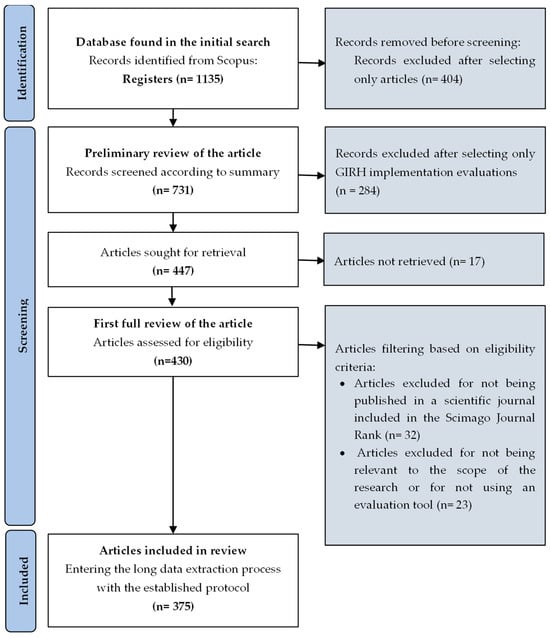
Despite the growing recognition of heritage risk reduction, a comprehensive framework for multi-risk assessment remains notably absent within the context of historic urban landscapes (HULs) across diverse global contexts. This paper aims to fill this gap by developing an assessment framework to address multiple emerging risks in HUL management, considering climate-related, human-induced, and mixed hazards in UNESCO World Heritage properties. A four-step process is established—hazard identification, exposure categorisation, adaptation capacity-building, and vulnerability monitoring and evaluation. Using content analysis, this framework is applied to official reports from 33 World Heritage HUL cases across 33 countries. The results show that, although various hazards have been acknowledged by state parties, local governments prioritise human-induced or natural hazards more often than mixed hazards, leading to a shortage of comprehensive risk management plans and practical actions in most cases. Regarding heritage adaptation, the factors of capacity and governance are widely addressed, demonstrating the commitment of state parties to formulate strategies and solve problems. However, public participation and education practices remain insufficiently implemented, resulting in a relatively low degree of adaptation capacity-building. The proposed multi-risk assessment framework offers a crucial reference for global urban heritage management and risk reduction.

21 January 2026
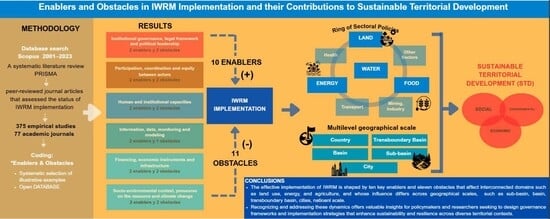
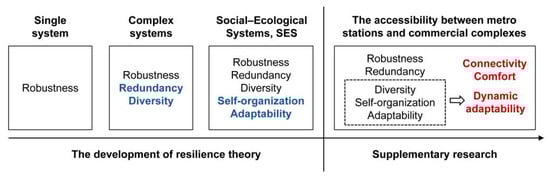
Multi-risk assessment framework for World Heritage HULs.

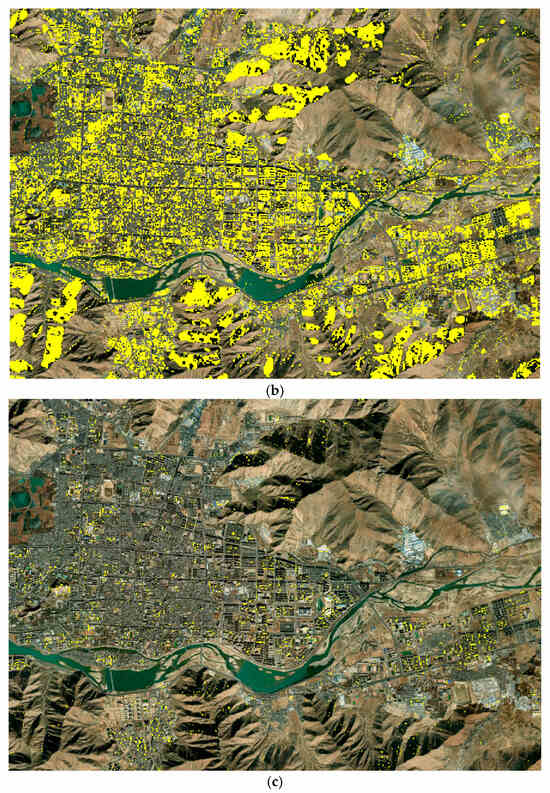
Rapid urbanization has significantly affected urban ecological environments, necessitating accurate and scientific quality assessments. In this study, we develop an enhanced remote sensing ecological index (WRSEI) for water network cities using Linyi City, China, as a case study. Key innovations include (1) introducing a water–vegetation index to better represent aquatic ecosystems; (2) incorporating nighttime light data to quantify the intensity of human activity; and (3) employing hierarchical PCA to rationally weight ecological endowment and stress indicators. The model’s effectiveness was rigorously validated using independent land use data. The results show that (1) the WRSEI accurately captures Linyi’s “water–city symbiosis” pattern, increasing the assessed ecological quality of water bodies by 15.78% compared to the conventional RSEI; (2) hierarchical PCA provides more ecologically reasonable indicator weights; and (3) from 2000 to 2020, ecological quality exhibited a pattern of “central degradation and peripheral improvement”, driven by urban expansion. This study establishes a validated technical framework for ecological assessment in water-rich cities, offering a scientific basis for sustainable urban management.

21 January 2026
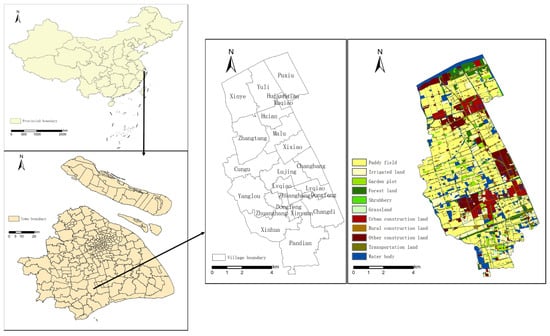
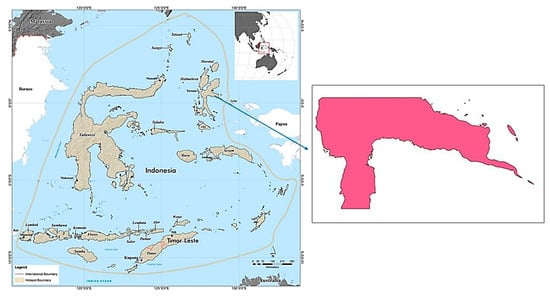
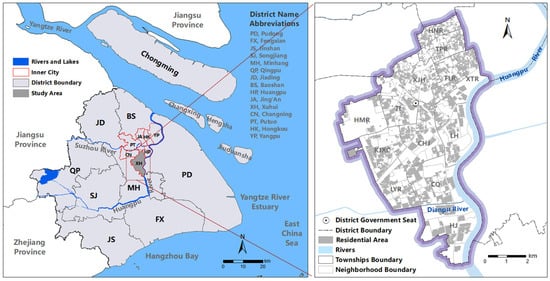
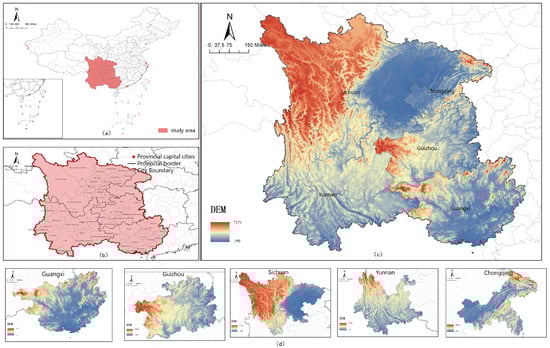
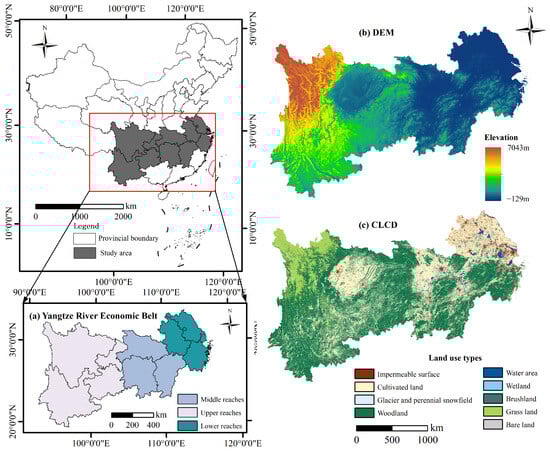
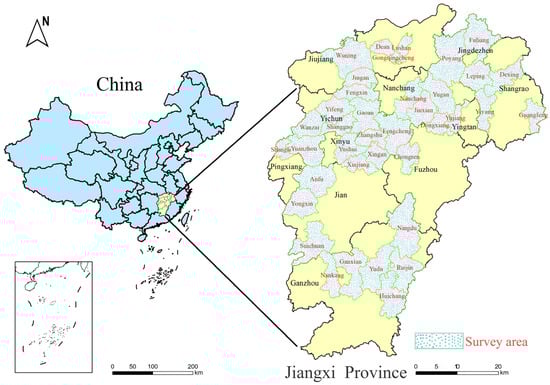
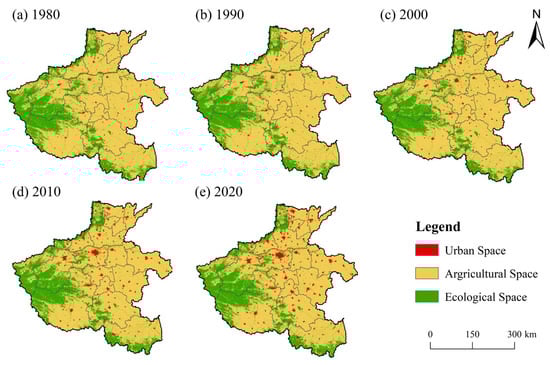
Location of the study area.

Land Prices and Determinants of Socio-Economic Development in Pleiku, Central Highlands, Vietnam

  • Tran Trong Phuong,
  • Tran Duc Vien and
  • Wolfgang Scholz
  • + 3 authors

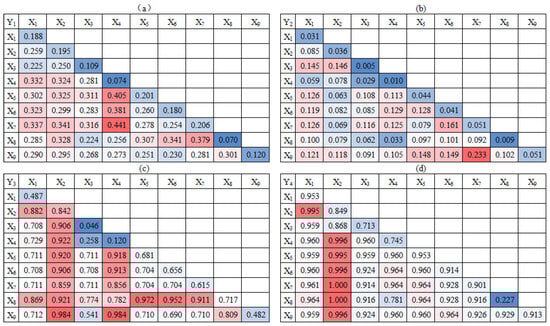
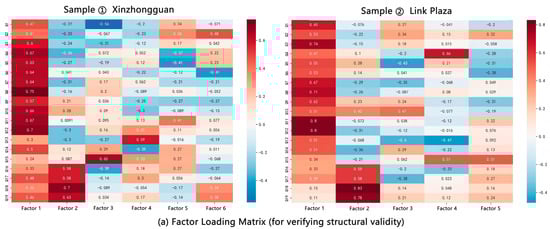
The rapid urbanization of Pleiku City, Vietnam, has led to a sharp increase in the demand for and prices of residential land, creating challenges for urban management and land valuation. This study aims to identify and quantify the key factors influencing residential land prices in Pleiku to provide a scientific basis for land use planning and smart urban development. Data were collected through surveys of 30 state officials involved in land valuation and 250 households living along major streets in Pleiku. Cronbach’s alpha was used to test the reliability of the collected data, and exploratory factor analysis (EFA) was used to identify influencing factor groups. The results show that residential land prices are strongly influenced by multiple factors, with location and infrastructure playing the most decisive roles. Market land prices were found to be approximately 1.5–2 times higher than state-regulated prices. Among the identified factor groups, location and infrastructure had the strongest influence, followed by economic, social, legal, and specific land use factors. Price differences between land plots mainly reflect variations in location, street characteristics, accessibility, and commercial potential. The study concludes that location and infrastructure development are the dominant drivers of residential land prices in Pleiku. These findings have important implications for land valuation, urban planning, and the implementation of smart urban construction policies in rapidly developing cities in Vietnam.

21 January 2026

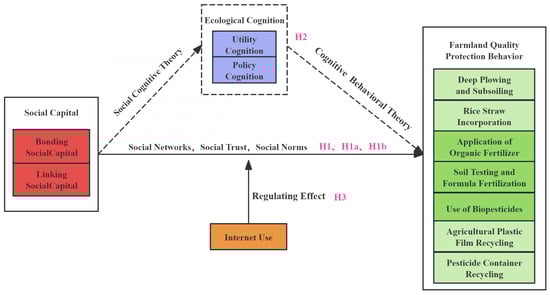
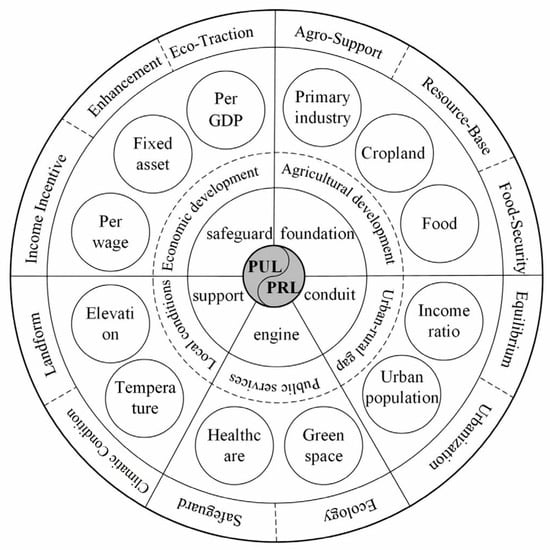
Research model. Notes: β: Standardized regression coefficient; VIF: Variance inflation factor; Sig.: Significance level; KMO: Kaiser–Meyer–Olkin. Source: Authors’ compilation, 2024.

The territorial development of the city of Brno during the 19th–21st centuries meant not only the growth of built-up areas (residential, industrial, commercial), but also the absorbing of segments of the ancient rural agricultural landscape. Within the current borders of the city of Brno, a number of green areas have been preserved, which have spontaneously developed from the original agricultural landscape, without being the result of urban planning. In half of the cases (17 out of a total of 34), they have still preserved the traditional small-scale division of land. Among the 10 medium-sized Moravian cities (between 30,000 and 400,000 inhabitants) in the historical region of Moravia in the east of the Czech Republic, the presence of 34 remnants of the ancient rural landscape in the city of Brno is quite exceptional (in Ostrava only 1; in other cities 0). The subject of the research is the inventory of such segments within the city borders and an attempt to explain their location in the city, state, focusing on the role of natural factors, land ownership and personal and recreational interests of residents. Segments of the ancient rural cultural landscape were identified by comparing the current landscape on aerial photographs with the landscape image on cadastral maps from the 1820s–1830s. Additional data on their natural and cultural properties were obtained through archival and field research. The segments were classified according to their degree of preservation and forms of threat. The results show that the remains of the ancient rural cultural landscape in the city of Brno have generally been preserved in locations that, due to the slope of the slopes, unsuitable building subsoil and poor soil, but locally on warm southern slopes, were not suitable for construction for the time being. Urban gardening contributes to their preservation and these areas are part of the city’s greenery. However, urban gardening also contributes to the destruction of these remnants. In 17 cases, the land was completely re-divided, built up with recreational facilities and overgrown with trees due to poor care. Another 17 locations are threatened by this process due to ignorance of their historical value, although this is essentially a positive development in terms of benefits for the city’s residents—land users. Although the Master Plan of the city of Brno foresees the existence of garden colonies in the future, it does not address the importance of the best-preserved segments as historical heritage. Community agriculture can play a positive role in maintaining segments of rural heritage within the city.

21 January 2026

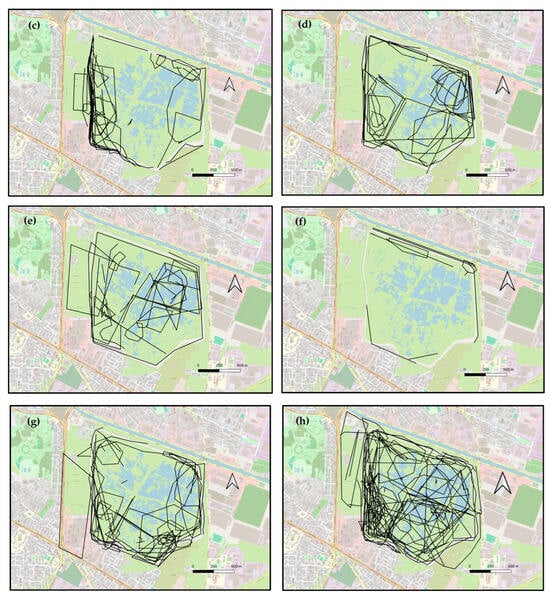
Relief of Brno with the locations of relatively well-preserved segments of historic rural cultural landscape.

News & Conferences

Issues

Open for Submission

Editor's Choice

Reprints of Collections

Feature Papers for Land Systems and Global Change Section
Reprint

Feature Papers for Land Systems and Global Change Section

2nd Edition
Editors: Le Yu, Xin Chen, Zhenrong Du, Pengyu Hao
Ecological and Cultural Ecosystem Services in Coastal Areas
Reprint

Ecological and Cultural Ecosystem Services in Coastal Areas

Editors: Mita Drius, Maria Laura Carranza, Robert Philipp Wagensommer

Get Alerted

Add your email address to receive forthcoming issues of this journal.

XFacebookLinkedIn
Land - ISSN 2073-445X