



Next Issue
Volume 15, March
Previous Issue
Volume 15, January


Land, Volume 15, Issue 2 (February 2026) – 153 articles
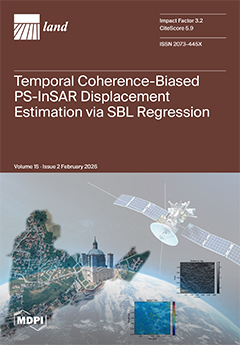
Cover Story (view full-size image): Understanding soil displacement is essential for assessing geohazards, yet satellite-based PS-InSAR measurements are inherently affected by temporal coherence, which introduces uncertainty in displacement estimation. The study presents a coherence-based, data-driven framework that integrates PS-InSAR time series with low-cost in situ soil temperature and moisture sensors using Sparse Bayesian Learning (SBL). In the work, the relationship between temporal coherence and predictive uncertainty is explicitly analysed. Then, an optimal coherence threshold is identified to define the dataset for training of the SBL displacement model. In this way, the proposed approach enables the reconstruction of soil displacement histories at a finer temporal resolution than satellite revisit cycles, while providing predictive capability for soil monitoring. View this paper
  • Issues are regarded as officially published after their release is announced to the table of contents alert mailing list.
  • You may sign up for e-mail alerts to receive table of contents of newly released issues.
  • PDF is the official format for papers published in both, html and pdf forms. To view the papers in pdf format, click on the "PDF Full-text" link, and use the free Adobe Reader to open them.
Order results
Result details
Section
Select all
Export citation of selected articles as:
19 pages, 3786 KB  
Article
Assessing the Effectiveness and Driving Forces of the Ecological Conservation Redline in Hainan Island Based on the Multiple Ecosystem Service Landscape Index
by Chuanzhuo Liang, Peihong Jia, Yuxin Zhu and Diangong Gao
Land 2026, 15(2), 355; https://doi.org/10.3390/land15020355 - 23 Feb 2026
Viewed by 124
Abstract
The Ecological Conservation Redline (ECR) is a key spatial policy tool in China’s efforts to protect the Ecosystem Services (ES) of Hainan Island. However, its effectiveness in promoting the coordinated restoration of Hainan Island’s ES remains unclear. This study employs the InVEST model [...] Read more.
The Ecological Conservation Redline (ECR) is a key spatial policy tool in China’s efforts to protect the Ecosystem Services (ES) of Hainan Island. However, its effectiveness in promoting the coordinated restoration of Hainan Island’s ES remains unclear. This study employs the InVEST model to assess the spatiotemporal dynamics of carbon storage, habitat quality, water yield, and soil retention within the ECR zones of Hainan Island from 1990 to 2020. A Multiple Ecosystem Service Landscape Index (MESLI) was constructed, and Geographically Weighted Regression (GWR) was applied to examine the influence of ECR implementation on ES synergies and the spatial drivers underlying these patterns, aiming to elucidate the complex interactions between conservation policy and ecosystem functioning. The results show that (1) the delineation of the ECR has facilitated ecological restoration in the region. MESLI detrimentally declined before 2010 but positively increased by 12.7% during 2010–2020, indicating an improvement consistent with the period of ECR implementation. Moreover, (2) ESs within the ECR display marked spatial heterogeneity. GWR results reveal that MESLI is positively associated with vegetation cover and slope, and negatively associated with population density, with pronounced disparities in northern and central regions that call for differentiated governance strategies. Finally, (3) constructing a composite evaluation framework based on multiple ESs contributes to optimizing the delineation and management of ECRs, enhancing their scientific support for regional sustainable development. This study provides decision-making guidance for the zoned governance of conservation areas on tropical islands and offers insights for redline management in other ecologically sensitive regions. Full article
Show Figures

Figure 1

23 pages, 1192 KB  
Article
Effects of Illegal Logging on Birds as Sentinels of Biodiversity in White-Sand Forests of the Peruvian Amazon
by Nico Arcilla, Alex Glass, Julio Sánchez Indama and Robert J. Cooper
Land 2026, 15(2), 354; https://doi.org/10.3390/land15020354 - 22 Feb 2026
Viewed by 126
Abstract
Illegal logging is a major driver of tropical deforestation, accounting for the majority of timber harvested in many tropical countries and degrading many protected areas, due to both weak law enforcement capacity and corruption. Commercial logging is illegal in Peru’s Allpahuayo-Mishana National Reserve, [...] Read more.
Illegal logging is a major driver of tropical deforestation, accounting for the majority of timber harvested in many tropical countries and degrading many protected areas, due to both weak law enforcement capacity and corruption. Commercial logging is illegal in Peru’s Allpahuayo-Mishana National Reserve, a state protected area, but clandestine logging operations persist and affect its biodiversity, including the endemic bird species associated with its rare Amazonian white-sand forests. We examined the effects of illegal logging operations on white-sand forest understory bird communities as sentinels of biodiversity. We sampled birds with mist nets at 12 study sites in unlogged forest and forest regenerating between 1 and 10 years after timber harvest, capturing and releasing 348 birds representing 54 species in 16 families. Forest structure differed significantly between forest treatments, with canopy cover in logged forest significantly lower than in unlogged forest. All avian foraging guilds tested (including ant followers, other insectivores, frugivores, granivores, and nectarivores) responded significantly to changes in one or more forest structure characteristics we measured. The abundance of ant followers and other insectivores was positively correlated with canopy cover, while granivore abundance was positively correlated with subcanopy cover, and both frugivore and nectarivore abundance was negatively correlated with the numbers of trees in white-forest stands. We also took a rare opportunity to compare avian foraging guilds and relative abundance using capture data collected at the same white-sand forest sites in both 2005 and 2023. Over this 18-year period, the total number of understory birds and ant followers in particular declined, whereas other insectivores increased with time since logging. Our results demonstrate that logging has significant influences on white-sand forest habitat structure and bird community dynamics for decades after logging events. Illegal logging threatens forests and wildlife in many tropical protected areas, and we recommend their managers prioritize both preventing illegal logging and mitigating its negative effects to effectively conserve biodiversity. Full article
Show Figures

Figure 1

18 pages, 9306 KB  
Article
Unraveling the Spatiotemporal Dynamics and Nonlinear Driving Mechanisms of Cultivated Land Fragmentation: An Interpretable Machine Learning Approach
by Le’an Qu, Weimeng Zhang, Wangbing Liu, Junjun Zhi, Yufan Zhou, Zijie Zhao, Yufei Wei, Wei Jiang, Jiuxing Wu, Chen Li and Zuyuan Wang
Land 2026, 15(2), 353; https://doi.org/10.3390/land15020353 - 22 Feb 2026
Viewed by 75
Abstract
Cultivated land fragmentation (CLF) has evolved from a physical landscape phenomenon into a systemic constraint on agricultural sustainability, especially in rapidly urbanizing regions such as the Yangtze River Delta (YRD). Existing studies are limited by static “snapshot” comparisons that obscure continuous trajectories and [...] Read more.
Cultivated land fragmentation (CLF) has evolved from a physical landscape phenomenon into a systemic constraint on agricultural sustainability, especially in rapidly urbanizing regions such as the Yangtze River Delta (YRD). Existing studies are limited by static “snapshot” comparisons that obscure continuous trajectories and by linear models that fail to capture nonlinear interactions and threshold effects. This study integrates the Space–Time Cube (STC) model with an interpretable machine learning framework (Extreme Gradient Boosting–Shapley Additive Explanations, XGBoost–SHAP) to explore the spatiotemporal dynamics and driving mechanisms of CLF in the YRD (1990–2020) at a 1 km2 resolution. The STC identifies a distinct north–south gradient, with persistent hotspots in low-lying plains and intensifying fragmentation at peri-urban interfaces. SHAP interpretation suggests a “Base–Stabilizer–Amplifier” structure in the modeled relationships: hydrological accessibility and soil fertility form the dominant background linked to higher CLF, whereas topography correlates with lower CLF, and socioeconomic variables exhibit nonlinear, threshold-like increases in fragmentation beyond higher development levels. Overall, CLF reflects coupled natural–anthropogenic interactions with pronounced nonlinear responses. This mechanism-oriented framework provides actionable guidance for adaptive farmland governance. It also offers a transferable methodology for analyzing land system changes in other deltaic agricultural regions worldwide. Full article
37 pages, 13245 KB  
Article
Spatial Morphology Gene Map of Small Industrial and Mining Towns
by Qiguo Li, Lin Yang, Zhaomin Xu and Tingting Gao
Land 2026, 15(2), 352; https://doi.org/10.3390/land15020352 - 21 Feb 2026
Viewed by 169
Abstract
The small towns influenced by the long-term impact of the industrial and mining industries have formed distinctive spatial morphology. A systematic exploration of their spatial form characteristics can make up for the deficiencies of the existing research on spatial form, enrich the theory [...] Read more.
The small towns influenced by the long-term impact of the industrial and mining industries have formed distinctive spatial morphology. A systematic exploration of their spatial form characteristics can make up for the deficiencies of the existing research on spatial form, enrich the theory of urban spatial form, and provide theoretical support for the planning practice of such special towns. Therefore, this paper constructs a theoretical framework of structure–region–boundary and uses methods such as space syntax, shape index, and compactness to comprehensively analyze the spatial morphology gene types of 28 small industrial and mining towns in terms of structure, region, and boundary, and draw the corresponding gene maps. The research results show that in terms of structural genes, the transportation structure of small towns can be classified into grid, branch-shaped, and hybrid types; the relationship between mountains and towns can be categorized as mountain-encircled, mountain-fringed, mountain-adjacent, and no-mountain types; and the relationship between water and towns can be divided into simple intersection, intersection along the short side, intersection along the long side, compound intersection, and no-river types. The common types are grid, mountain-encircled, and no rivers. In terms of regional genes, the texture of small towns can be classified as self-organized, planned, and hybrid types; the public space of streets can be divided into high, medium, and low according to accessibility; the form of industrial and mining processing areas can be classified as terminal, marginal, independent, and central types. Among these, the hybrid, low-accessibility, and terminal types are the most common. In terms of boundary genes, the boundary morphology of most industrial and mining small towns is finger-shaped and uniform. Full article
(This article belongs to the Section Urban Contexts and Urban-Rural Interactions)
Show Figures

Figure 1

40 pages, 8879 KB  
Article
Supply-Demand Mismatch of Urban Commercial Land and Its Impact Mechanism in Gansu Province Based on an Explainable Machine Learning Model
by Yongxin Liu, Congguo Zhang and Sidong Zhao
Land 2026, 15(2), 351; https://doi.org/10.3390/land15020351 - 21 Feb 2026
Viewed by 87
Abstract
As the global urban economy accelerates its transition from an “industrial economy” to a “service economy”, consumption has replaced investment as the core engine driving economic development. Commercial land serves as the physical foundation for consumer activities and plays a vital role in [...] Read more.
As the global urban economy accelerates its transition from an “industrial economy” to a “service economy”, consumption has replaced investment as the core engine driving economic development. Commercial land serves as the physical foundation for consumer activities and plays a vital role in boosting urban economic vitality, enhancing residents’ quality of life, and promoting regional sustainable development when appropriately allocated. This study constructs a technical framework for analyzing the mismatch between commercial land supply and residential consumption demand, along with its impact mechanism, based on the integrated application of the multidisciplinary quantitative models such as the Boston Consulting Group Matrix (BCGM), Exploratory Spatial Data Analysis (ESDA), Decoupling Model (DM), and Explainable Machine Learning (EML). It conducts empirical research across 87 county-level cities in Gansu Province. The findings reveal that commercial land supply and consumption demand exhibit dynamic diversification, with prominent regional disparities and spatial autocorrelation characteristics. Commercial land in Gansu faces a severe mismatch, with demand exceeding supply and supply exceeding demand occurring simultaneously, and the former holding absolute dominance. The formation of mismatched relationships is influenced by many factors, exhibiting significant path nonlinearity, spatial non-stationarity, and relational interactivity. It is suggested that strategies of planning zoning and regional coordination be developed for mismatch governance, and differentiated management measures be implemented based on local conditions. This will provide a scientific basis for commercial territorial space planning and consumption policy design. Full article
Show Figures

Figure 1

24 pages, 4481 KB  
Article
Three Decades of Remote Sensing Reveal Contrasting Trends of Biomass and Tree Regeneration in Argentine Dry Forests
by Agostina Figueroa-Masanet, Gabriel Gatica, Rosina Soler, Priscila Villalobos-Perna and Valeria E. Campos
Land 2026, 15(2), 350; https://doi.org/10.3390/land15020350 - 21 Feb 2026
Viewed by 87
Abstract
Dry forests are increasingly threatened by degradation, which determines their structural integrity, functional capacity, and the ability to provide essential ecosystem services. Degradation is the consequence of processes that reduce the different attributes of forests. This study aimed to (i) identify remote sensing [...] Read more.
Dry forests are increasingly threatened by degradation, which determines their structural integrity, functional capacity, and the ability to provide essential ecosystem services. Degradation is the consequence of processes that reduce the different attributes of forests. This study aimed to (i) identify remote sensing proxies for above-ground biomass (AGB) and tree regeneration in three ecoregions of dry forest localized in west Argentina; (ii) analyze the temporal dynamics between 1993 and 2023; (iii) assess the role of precipitation in their temporal variability, and (iv) map their spatial distribution. The median Tasseled Cap Transformation Wetness (TCTW) was the best-performing spectral proxy for AGB, while median Enhanced Vegetation Index (EVI) best captured tree regeneration. In the time series of TCTW, no significant breakpoint was detected; however, a pronounced decline in the median EVI occurred in 1998 in the Monte of Plains and Plateaus and Monte of Hills and Basins ecoregions, particularly near watercourses. In the Dry Chaco, tree regeneration recovered after 2013; however, a decline after a breakpoint coincided with decreased precipitation. Overall, AGB and tree regeneration exhibited contrasting temporal and spatial patterns, underscoring the heterogeneity of dry forests. A weakening relationship between precipitation, a key driver of forests, and forest attributes suggests the influence of other factors, including topography and land use change. Full article
Show Figures

Figure 1

30 pages, 1600 KB  
Article
REGENA: Financial Engineering for Carbon Farming
by Georgios Karakatsanis, Dimitrios Managoudis and Emmanouil Makronikolakis
Land 2026, 15(2), 349; https://doi.org/10.3390/land15020349 - 20 Feb 2026
Viewed by 125
Abstract
Our work develops the financial engineering module of the REGENerative Agriculture (REGENA) Production Function, with Soil Organic Carbon (SOC) as ecosystem service and contract underlying index, contributing to the global literature and business practices. Specifically, we design and engineer a 30-year Net Present [...] Read more.
Our work develops the financial engineering module of the REGENerative Agriculture (REGENA) Production Function, with Soil Organic Carbon (SOC) as ecosystem service and contract underlying index, contributing to the global literature and business practices. Specifically, we design and engineer a 30-year Net Present Value (NPV) intergenerational ecological bond instrument tailored for carbon farming (CF) as a part of regenerative practices. With SOC constituting a fundamental soil health indicator for the European Union Soil Observatory (EUSO), we model the flow of value from atmospheric CO2 removal and its metabolism into SOC within a stochastic SOC Value at Risk (VaR) framework. We assess the SOC VaR in five experimental plots in five Mediterranean countries in South Europe and North Africa for three different treatments in each plot. In turn, the SOC VaR is incorporated into an adjusted Shannon entropy index (H(X)ADJ) to estimate the coefficient of a positive, net-zero, or negative carbon balance and further assess the risk-adjusted discount rate. The monetary value per gram of carbon per kilogram of soil (g C/kg Soil) signifies a clear advantage of combined regenerative treatments. Finally, three selected extensions of our work are discussed, such as the application of the framework to other nutrients, the establishment full cost–benefit accounting methods for monetizing the environmental benefits of CF to upscale investments and the lifecycle accounting of ecosystem services. Full article
(This article belongs to the Special Issue Economic Perspectives on Land Use and Valuation)
26 pages, 2421 KB  
Article
Spatiotemporal Dynamics and Regional Disparities of Urban Resilience in China’s Mining Cities
by Hua Wei, Qipeng Liao, Jie Yang, Xinsheng Hu and Daojun Zhang
Land 2026, 15(2), 348; https://doi.org/10.3390/land15020348 - 20 Feb 2026
Viewed by 117
Abstract
Building safe and resilient cities is a key objective of China’s urbanisation and a prerequisite for high-quality development. This study assesses urban resilience in 73 mining cities from 2014 to 2023 using a composite index system (30 indicators) structured around robustness, resistance, and [...] Read more.
Building safe and resilient cities is a key objective of China’s urbanisation and a prerequisite for high-quality development. This study assesses urban resilience in 73 mining cities from 2014 to 2023 using a composite index system (30 indicators) structured around robustness, resistance, and recovery. We integrate ARIMA-based forecasting, kernel density estimation, and Dagum Gini decomposition to characterise spatiotemporal dynamics and quantify regional inequality. Urban resilience increases steadily over the study period and can be characterised by three sequential stages, with further gains forecast for 2024–2030. Spatially, high-resilience cities shift from a dispersed pattern to belt-like and clustered agglomerations, consistent with an increasingly stratified centre–periphery structure. Inequality is driven primarily by between-region disparities: the East performs best, followed by the Central region, whereas the West and Northeast lag behind, revealing a pronounced gap between the Northeast and the East, alongside relatively convergent Central–West trajectories. These patterns are associated with interacting differences in location and market development, fiscal capacity and transition pathways, infrastructure endowment and ecological constraints, and institutional and demographic dynamics. The findings underscore the need for place-based regional coordination and targeted investments to strengthen recovery-related capacities. Full article
Show Figures

Figure 1

36 pages, 1369 KB  
Article
Holism and Territorial Spatial Planning Reform in China: Evolutionary Challenges and Governance Measures Under Chinese-Style Modernization
by Chenyuxuan Hong, Zichun Zhang, Xigang Zhu and Peng Zeng
Land 2026, 15(2), 347; https://doi.org/10.3390/land15020347 - 20 Feb 2026
Viewed by 131
Abstract
Amid the accelerating agenda of Chinese-style modernization, China’s territorial spatial planning is undergoing a major transition and facing mounting challenges, while the theoretical foundations that support this transition remain at an early stage and require further integration. Drawing on holism, this paper operationalizes [...] Read more.
Amid the accelerating agenda of Chinese-style modernization, China’s territorial spatial planning is undergoing a major transition and facing mounting challenges, while the theoretical foundations that support this transition remain at an early stage and require further integration. Drawing on holism, this paper operationalizes a cognition–relation–testing governance chain and develops an analytical framework to explain the institutional evolution and governance performance of China’s territorial spatial planning. Using clause- and paragraph-level evidence units from policy and planning texts, the study reviews and compares five historical stages of China’s territorial spatial planning, emphasizing simultaneous consistency across the three levels and a replicable diagnostic procedure. Building on this analysis, the paper proposes a holistic coordination pathway oriented toward modernization governance: it anchors implementation in auditable trade-off rules and executable boundary instruments, strengthens collaboration and conflict-adjudication procedures, and embeds a closed loop of “evaluation–adjustment–accountability” across the full planning life cycle, thereby providing an analytical approach and indicator toolkit for assessing the degree of governance closure in planning practice. Full article
Show Figures

Figure 1

19 pages, 2223 KB  
Article
From Electricity-Informed Occupancy Dynamics to Rural Shrinkage Mechanisms: An Evidence-Driven, Explainable Framework
by Fang Liu, Peijun Lu, Songtao Wu and Mingyi He
Land 2026, 15(2), 346; https://doi.org/10.3390/land15020346 - 20 Feb 2026
Viewed by 126
Abstract
Rural shrinkage is increasingly expressed through changing residential mobility, housing under occupancy, and intermittent dwelling use, rather than a simple linear process of permanent outmigration and abandonment. Yet empirical measurement of occupancy dynamics and the service-mediated mechanisms shaping residence stability remains limited. This [...] Read more.
Rural shrinkage is increasingly expressed through changing residential mobility, housing under occupancy, and intermittent dwelling use, rather than a simple linear process of permanent outmigration and abandonment. Yet empirical measurement of occupancy dynamics and the service-mediated mechanisms shaping residence stability remains limited. This study proposes an evidence-driven and explainable assessment framework that links energy-informed occupancy dynamics with settlement building area and mechanism identification, using Fuyuan City as a case study. Daily electricity consumption time series from 2021 to 2024 are used to infer occupancy dynamics and detect behavioral signatures of long term residence, seasonal residence, return visits, and vacancy. Shape-based temporal clustering identifies six occupancy trajectories, revealing pronounced heterogeneity in mobility rhythms within the rural settlement system. Settlement vacancy-related built-environment changes are characterized from 2 m remote sensing imagery, using a trained YOLO-based building detection workflow, producing settlement-level total building area as a physical indicator of the development intensity. Integrating these behavioral measures with multi-source spatial factors, the mechanism model shows that development, governance, and environmental conditions influence residence stability primarily through service provision. Among service domains, education services exhibit the strongest direct association with long-term residence stability, while transport and daily life services show modest positive effects and healthcare presents a smaller positive effect. Development conditions positively promote all service types, whereas governance and environmental context display differentiated and, in some pathways, opposing effects across services. Overall, the framework enables interpretable monitoring of rural shrinkage dynamics by jointly quantifying occupancy trajectories, settlement morphology, and service-mediated pathways shaping residential outcomes. Full article
(This article belongs to the Section Land – Observation and Monitoring)
Show Figures

Figure 1

23 pages, 13076 KB  
Article
Balancing Productivity and Ecosystem Services in Major Crops Under Intensive Management in a Semi-Arid Region, Iran
by Saeed Sharafi, Deirdre Dragovich and Maryam Lorvand
Land 2026, 15(2), 345; https://doi.org/10.3390/land15020345 - 20 Feb 2026
Viewed by 130
Abstract
This study provides a comprehensive economic valuation of ecosystem services and environmental impacts across four major agroecosystems—wheat, barley, sugar beet, and coriander—under intensive management in the semi-arid Nahavand County, Iran. Soil properties, ecosystem service provision, and environmental disservices such as greenhouse gas emissions, [...] Read more.
This study provides a comprehensive economic valuation of ecosystem services and environmental impacts across four major agroecosystems—wheat, barley, sugar beet, and coriander—under intensive management in the semi-arid Nahavand County, Iran. Soil properties, ecosystem service provision, and environmental disservices such as greenhouse gas emissions, soil erosion, and nutrient leaching were systematically assessed using field surveys, farmer questionnaires, and established ecological models. Coriander exhibited the highest net ecosystem service value, ranging from $115,840 to $154,750 ha−1, driven by superior provisioning services (39.77% of total value) and the lowest environmental costs. In contrast, sugar beet presented the greatest ecological burden, with environmental costs exceeding $22,000 ha−1, leading to the lowest net benefits ($51,940–$79,300 ha−1). Nonlinear Gaussian regression models demonstrated strong predictive capacity (R = 0.91 to 0.99) for marketable value based on yield metrics, highlighting the importance of biomass productivity in economic valuation. These findings underscore the multifunctionality of coriander and emphasize the pivotal role of crop selection in optimizing agroecosystem sustainability, balancing food security, ecosystem health, and environmental conservation in semi-arid agricultural landscapes. Full article
Show Figures

Figure 1

29 pages, 2818 KB  
Article
Beyond the Footprint: Empirical Land Use and Environmental Patterns of Wind Energy in Mountainous Landscapes
by Andreas Vlamakis, Ioanna Eleftheriou, Sevie Dima, Efi Karra and Panagiotis Papastamatiou
Land 2026, 15(2), 344; https://doi.org/10.3390/land15020344 - 19 Feb 2026
Viewed by 336
Abstract
In a world of over 8.2 billion people, the land footprint of any infrastructure has become a critical factor in sustainable spatial planning. In the case of wind energy deployment, land use primarily involves hardstands, access roads, and interconnection infrastructure. This study focuses [...] Read more.
In a world of over 8.2 billion people, the land footprint of any infrastructure has become a critical factor in sustainable spatial planning. In the case of wind energy deployment, land use primarily involves hardstands, access roads, and interconnection infrastructure. This study focuses on Greece, a country with complex mountainous terrain, where Wind Power Stations are predominantly installed along ridgelines and slopes. Using GIS analysis based on digitization of actual on-site infrastructure, we measured the land coverage of wind energy facilities with a total installed capacity of nearly 2.6 GW. We found an average land-use intensity of 0.33 hectares per megawatt (ha/MW), placing it near the lower end of the range reported in international literature. For the subset of projects with available energy yield data, the value was 1.58 square meters per megawatt-hour (m2/MWh). This approach provides one of the largest, nationally representative, infrastructure-based estimates of actual wind energy land use in complex terrain. Applying these findings to the onshore wind deployment targets of Greece’s National Energy and Climate Plan (NECP) for 2030 and 2050, we estimate that only 0.02–0.03% of the country’s land area will be occupied by wind energy infrastructure. By comparison, lignite mining has already transformed approximately 0.13% of the national territory—almost four times more land than projected for wind energy use in 2050. Further spatial analysis was conducted to identify the land use categories associated with wind energy infrastructure, while for the subset of projects located within Natura 2000 protected areas, the types of affected habitats were also examined. Treating land coverage as a standalone proxy for environmental impact should be avoided; the study demonstrates the need for a context-sensitive interpretation of land use, accounting for ecological context, land-use compatibility, and positive co-benefits, such as improved forest accessibility, fire prevention works and recreation parks. Repowering maximizes land efficiency by extending wind farm lifetimes without expanding their footprint. Full article
Show Figures

Figure 1

27 pages, 48696 KB  
Article
The Accuracy, Spatial Consistency, and Impact Factors of Global Cropland Products in Karst Landscapes: A Case Study of the Yunnan–Guizhou Plateau
by Yi Xia, Li Bao, Yunsheng Xia and Guangjie Liu
Land 2026, 15(2), 343; https://doi.org/10.3390/land15020343 - 19 Feb 2026
Viewed by 163
Abstract
Reliable cropland mapping in Karst landscapes is hindered by high topographic heterogeneity and landscape fragmentation. Focusing on the Yunnan–Guizhou Plateau in Southwest China, this study evaluates the accuracy and spatial consistency of seven global land cover products (i.e., GlobeLand30, CLCD, GLC_FCS30, CACD, ESA [...] Read more.
Reliable cropland mapping in Karst landscapes is hindered by high topographic heterogeneity and landscape fragmentation. Focusing on the Yunnan–Guizhou Plateau in Southwest China, this study evaluates the accuracy and spatial consistency of seven global land cover products (i.e., GlobeLand30, CLCD, GLC_FCS30, CACD, ESA WorldCover, Esri Land Cover, and FROM-GLC10) against the Third National Land Survey released by China’s Ministry of Natural Resources. Furthermore, we employed Multiscale Geographically Weighted Regression (MGWR) to diagnose key impact factors. The results reveal that the 10 m ESA WorldCover offers superior reliability (OA = 0.81, R2 = 0.84), whereas GLC_FCS30 exhibits the weakest performance among the evaluated datasets (OA = 0.72, R2 = 0.29), highlighting significant uncertainty in this complex terrain. Crucially, MGWR diagnostics (adjusted R2=0.923) uncover how mapping uncertainty is driven by spatially non-stationary environmental constraints. Landscape fragmentation was identified as the primary global driver, exhibiting a consistent negative correlation with accuracy and indicating that the mixed pixel dilemma is the pervasive error source. In contrast, topographic slope operated as a dominant local constraint, with its inhibitory effect intensifying specifically in high-relief gorges where terrain shadowing compromises optical signals. Based on these mechanism diagnostics, we propose a region-adaptive decision framework integrating multi-source fusion and temporal logic to specifically target these topography- and fragmentation-induced uncertainties in future mapping. Full article
Show Figures

Figure 1

34 pages, 13604 KB  
Article
Implementation of Equivalence-Based Land Readjustment Model Using a Hybridized Multi-Criteria Decision Analysis
by Fatma Bunyan Unel
Land 2026, 15(2), 342; https://doi.org/10.3390/land15020342 - 19 Feb 2026
Viewed by 137
Abstract
Land readjustment (LR) constitutes the foundation of orderly and sustainable urbanization, serving as the primary implementation tool for development plans. LR implementations are generally addressed within the framework of development implementation models—namely area-based, value-based, and hybrid models—based on the principle of redistribution. The [...] Read more.
Land readjustment (LR) constitutes the foundation of orderly and sustainable urbanization, serving as the primary implementation tool for development plans. LR implementations are generally addressed within the framework of development implementation models—namely area-based, value-based, and hybrid models—based on the principle of redistribution. The present study aims to implement an equivalence-based LR model in the Davultepe Neighborhood of Mezitli, Mersin. In addition, it compares an equivalence-based LR implementation with an area-based LR implementation. The area-based LR implementation was conducted according to Article 18 of Law No. 3194 within the scope of Turkish Zoning Legislation. The equivalence-based implementation was performed using the hybridized multi-criteria decision analysis methods—specifically, SWARA and WASPAS. Cadastral and zoning criteria were determined separately. For data related to spatial criteria, walking distances were calculated using network analysis in Geographic Information Systems software. The weighting of the criteria was performed using the SWARA method. Cadastral and zoning parcels were treated as alternatives, and the WASPAS weight for each parcel was determined. The results indicate that, although allocated zoning parcel areas were generally smaller than the original cadastral parcel areas, in some cases, they exceeded the cadastral parcel areas due to the allocation of zoning parcels designated for agricultural use. Full article
(This article belongs to the Special Issue Recent Progress in Land Cadastre)
Show Figures

Figure 1

43 pages, 1900 KB  
Article
A Risky and Potentially Costly Future: Implications of Climate-Induced Changes in Groundwater and Flooding for Coastal Dairy Farming in New Zealand
by Paula Holland, Zoe Qu, Zeb Etheridge, Christo Rautenbach and Chris C. Tanner
Land 2026, 15(2), 341; https://doi.org/10.3390/land15020341 - 18 Feb 2026
Viewed by 229
Abstract
Climate change poses significant risks to New Zealand’s coastal agriculture through both slow-onset hazards (e.g., gradual sea level-induced groundwater rise) and sudden-onset hazards (e.g., increasing frequency and severity of storms). These physical changes threaten the productivity and economic viability of coastal farms. However, [...] Read more.
Climate change poses significant risks to New Zealand’s coastal agriculture through both slow-onset hazards (e.g., gradual sea level-induced groundwater rise) and sudden-onset hazards (e.g., increasing frequency and severity of storms). These physical changes threaten the productivity and economic viability of coastal farms. However, few studies assess their combined economic impacts in a manner that supports land-use planning. This paper presents a conceptual framework to examine the implications of interacting slow- and sudden-onset climate hazards for New Zealand dairy farms, informed by real-world consultation with subject-matter experts to support assessment. We draw conclusions that illustrate the monetary impacts on farms associated with potential absorptive, adaptive, and transformational responses. The findings highlight the critical role of timing as environmental conditions deteriorate under climate change, as well as the need for policy frameworks that recognise and monetize the contribution of ecosystem services provided by coastal vegetation habitats to social, cultural, and environmental wellbeing. Incorporating these values into present-day financial decision-making is essential for supporting climate-related financial risk reduction and long-term land-use planning. Without such frameworks, the most beneficial land-use transitions are unlikely to be affordable or sustainable in New Zealand, especially towards the year 2100. Full article
(This article belongs to the Special Issue Integrating Climate, Land, and Water Systems)
Show Figures

Figure 1

24 pages, 3721 KB  
Article
Multi-Scenario Simulation Analysis of Land Use Based on Geographical Processes: A Case Study of Longhu Town, China
by Yubo Ma, Guoqing Shi and Yitong Guo
Land 2026, 15(2), 340; https://doi.org/10.3390/land15020340 - 18 Feb 2026
Viewed by 211
Abstract
To address the disconnect between macro-quantity planning and micro-spatial allocation at the township level during rapid urbanization, this study developed a coupled model framework based on Multi-Objective Planning (MOP) and the Future Land-Use Simulation (FLUS) model, using Longhu Town as a case study. [...] Read more.
To address the disconnect between macro-quantity planning and micro-spatial allocation at the township level during rapid urbanization, this study developed a coupled model framework based on Multi-Objective Planning (MOP) and the Future Land-Use Simulation (FLUS) model, using Longhu Town as a case study. First, economic and ecological benefit coefficients were calibrated via the Grey Prediction Model and equivalent factor method to define three scenarios: Economic Priority (EPS), Ecological Protection (EcPS), and Balanced Development (BDS). Second, an Artificial Neural Network (ANN) was employed to quantify driving factors, coupled with self-adaptive Cellular Automata (CA) for spatial allocation in 2030. The results indicate that: (1) The model exhibits high reliability for small-scale simulation, with a Kappa coefficient of 0.95 and a Figure of Merit (FoM) of 0.29. (2) Strategic orientations lead to distinct spatial differentiation: under the EPS, urban–industrial land expands significantly northwestward (+16.60%), causing fragmented erosion of cropland; the EcPS achieves a 5.27% increase in forest land and ecological restoration through strict quantitative constraints; the BDS realizes the synergy of urban clustering and ecological enhancement with a marginal urban increase (0.72%). (3) The eastern urban sectors and northeastern cropland belts are identified as future land-use conflict hotspots. The “quantity-space” collaborative optimization path proposed in this study provides a scientific basis and dynamic simulation tool for refined territorial spatial management at the township scale. Full article
(This article belongs to the Section Land Use, Impact Assessment and Sustainability)
Show Figures

Figure 1

26 pages, 8760 KB  
Article
Cropland Change Simulation in Arid Regions Based on Coupled Prediction and Spatial Allocation Models: A Case Study of Ningxia
by Yao Cui, Yaolin Liu, Yanfang Liu, Dan Liu, Xiankang Hua, Li Chen and Qiaoyang Liu
Land 2026, 15(2), 339; https://doi.org/10.3390/land15020339 - 17 Feb 2026
Viewed by 194
Abstract
Cropland dynamics in ecologically fragile regions are central to balancing food security and ecological integrity in the Yellow River Basin. Ningxia Hui Autonomous Region is used as a case study. An integrated simulation framework is developed by coupling an improved grey prediction model [...] Read more.
Cropland dynamics in ecologically fragile regions are central to balancing food security and ecological integrity in the Yellow River Basin. Ningxia Hui Autonomous Region is used as a case study. An integrated simulation framework is developed by coupling an improved grey prediction model (Improved GM(1,1)) with the CLUMondo spatial model. The analysis addresses four questions: how cropland changed during 2009–2024, which drivers explain cropland suitability and transitions, what spatial resolution is appropriate for implementation, and how cropland patterns differ under alternative development pathways for 2025–2040. Historical cropland change in Ningxia during 2009–2024 is quantified, and spatial patterns for 2025–2040 are projected under three scenarios: business-as-usual (BAU), ecological protection (EP), and rapid urbanization (URE). Cropland change during 2009–2024 shows pronounced phased fluctuations and a stable redistribution pattern described as “southern reduction and northern replenishment, urban decrease and rural increase”. Population growth, economic expansion, and policy regulation jointly drive this spatiotemporal reconfiguration. Land demand forecasting is improved by introducing a metabolism mechanism and residual correction into the grey model, which reduces mid- to long-term divergence. Multi-scale logistic regression tests show the highest AUC at 50 m, with AUC values exceeding 0.8 across land categories, and this resolution is used for model implementation. Model performance is evaluated using AUC, Kappa, and overall accuracy, supporting the applicability of the framework in arid, ecologically fragile regions. Scenario simulations reveal clear divergence in future spatial outcomes. BAU maintains sustained pressure on cropland protection and ecological security. URE increases the risk of encroachment on high-quality cropland in the central–northern irrigated areas due to urban expansion. EP constrains construction land growth and secures strategic ecological spaces, thereby slowing the loss of high-quality cropland while maintaining development capacity. These results provide a transparent basis for scenario-based territorial spatial planning in Ningxia and offer transferable evidence for managing cropland–ecology tradeoffs in arid and semi-arid regions. Full article
Show Figures

Figure 1

34 pages, 13632 KB  
Article
Spatiotemporal Evolution of Vegetation Cover and Identification of Driving Factors Based on kNDVI and XGBoost-SHAP: A Study from Qinghai Province, China
by Hongkui Yang, Yousan Li, Lele Zhang, Xufeng Mao, Xiaoyang Liu, Mingxin Yang, Zhide Chang, Jin Deng and Rong Yang
Land 2026, 15(2), 338; https://doi.org/10.3390/land15020338 - 16 Feb 2026
Viewed by 209
Abstract
Vegetation cover characteristics underpin the understanding of regional ecosystem status and guide sustainable development. While extensive research has documented long-term vegetation dynamics in Qinghai Province, critical gaps remain in identifying driving factors, quantifying their thresholds, and uncovering nonlinear relationships governing vegetation cover. In [...] Read more.
Vegetation cover characteristics underpin the understanding of regional ecosystem status and guide sustainable development. While extensive research has documented long-term vegetation dynamics in Qinghai Province, critical gaps remain in identifying driving factors, quantifying their thresholds, and uncovering nonlinear relationships governing vegetation cover. In view of this, based on the MOD13Q1V6 dataset from the Google Earth Engine (GEE) platform, this study constructed a kernel normalized difference vegetation index (kNDVI) dataset for Qinghai Province spanning the period 2001–2023. Furthermore, the spatiotemporal characteristics and future evolution trends of vegetation cover were revealed by employing methods including the Theil–Sen–Mann–Kendall (Theil–Sen–MK) trend test, Hurst exponent, and centroid migration model. At a grid scale of 5 km × 5 km, based on the combined model of Extreme Gradient Boosting and SHapley Additive exPlanations (XGBoost-SHAP), this study integrated 10 multi-source remote sensing variables related to natural conditions, socioeconomic factors, and geographical accessibility to reveal the nonlinear effects between driving factors and kNDVI and identify the key threshold inflection points. The results showed the following: (1) From 2001 to 2023, the kNDVI of Qinghai Province exhibited a fluctuating growth trend with an annual growth rate of 0.0016 per year, presenting a spatial pattern of being higher in the southeast and lower in the northwest. Specifically, the kNDVI of unused land achieved the highest growth rate (65.96%), which was significantly higher than that of other land use types. (2) The kNDVI in Qinghai Province was dominated by stable areas, accounting for 52.75%. Future trend analysis indicated that the region was primarily characterized by sustainable improvement zones (39.91%), while areas with uncertain future trends accounted for 39.70%. (3) The XGBoost-SHAP model revealed that the annual mean precipitation (AMP) (47.26%) and Digital Elevation Model (DEM) (20.40%) exerted substantial impacts on the kNDVI. Marginal effect curves identified distinct threshold inflection points for the major characteristic factors: AMP = 363.2 mm (95%CI: 361.2–365.2 mm), DEM = 4463.9 m (95%CI: 4446.0–4481.1 m), grazing intensity = 1.8 SU (Stocking Unit)·ha−1 (95%CI: 1.8–1.9 SU·ha−1), and slope = 2.8° (95%CI: 2.7–3.0°) and 19.0° (95%CI: 18.8–19.3°). The interaction combinations of AMP × DEM and DEM × distance to construction land exerted a strong positive effect on the kNDVI in the study area, which was conducive to enhancing vegetation cover. These findings verified the effectiveness of ecological projects implemented in Qinghai Province to a certain extent and provided data support for subsequent differentiated restoration and management. Full article
(This article belongs to the Section Land – Observation and Monitoring)
Show Figures

Figure 1

26 pages, 3277 KB  
Article
Construction and Empirical Study of Evaluation System of IST Development Potential in Heilongjiang Province Based on Multi-Source Heterogeneous Data
by Yuexing Tang, Xingyu Zhao, Zhiqing Zhao, Shuo Chen and Xue Wang
Land 2026, 15(2), 337; https://doi.org/10.3390/land15020337 - 16 Feb 2026
Viewed by 183
Abstract
Against the backdrop of rapid development in the IST industry, addressing issues such as regional homogeneity and uneven spatiotemporal development requires scientific identification and analysis of related resources to support sustainable regional IST development and promote high-quality regional economic growth. This study proposes [...] Read more.
Against the backdrop of rapid development in the IST industry, addressing issues such as regional homogeneity and uneven spatiotemporal development requires scientific identification and analysis of related resources to support sustainable regional IST development and promote high-quality regional economic growth. This study proposes a framework based on “policy orientation–theoretical support–regional adaptation,” utilizing machine learning to construct a multi-dimensional evaluation index system for IST development potential. By combining subjective and objective criteria to determine indicator weights, a scientific evaluation system is established, with visual analysis conducted through Geographic Information System (GIS). The research selects 22 indicator factors across four dimensions: natural environmental suitability, socio-economic support capacity, regional transportation accessibility, and tourism appeal. Through weighted superposition analysis, it achieves visual representation of spatial differentiation characteristics in the development potential levels of IST in Heilongjiang Province. Results demonstrate a distinct “V”-shaped distribution of high development potential, primarily concentrated in the Greater Khingan Range region, Harbin–Mudanjiang border zone, and Jiamusi, with gradual decline from the core “V”-shaped area to both sides. The proposed evaluation index system provides scientific quantitative decision-making support for regional IST planning, and this methodology also holds reference value for evaluating other tourism industry developments. Full article
(This article belongs to the Section Land Planning and Landscape Architecture)
Show Figures

Figure 1

18 pages, 6850 KB  
Article
Modeling the Coupling Relationship Between Crop Rotation Ratio and Planting Structure in China’s Black Soil Region: Implications for Sustainable Land Governance
by Junfeng Gao, Rui Zhang, Bonoua Faye, Ronghua Tian, Ruhao Xue and Guoming Du
Land 2026, 15(2), 336; https://doi.org/10.3390/land15020336 - 15 Feb 2026
Viewed by 240
Abstract
Strengthening cropping patterns and crop planting structure policies is significant for ensuring sustainable agriculture, with broader implications for food security and cultivated land quality conservation. In this context, enhancing the crop rotation project in China’s Black Soil region requires exploring the coupling relationship [...] Read more.
Strengthening cropping patterns and crop planting structure policies is significant for ensuring sustainable agriculture, with broader implications for food security and cultivated land quality conservation. In this context, enhancing the crop rotation project in China’s Black Soil region requires exploring the coupling relationship between the rotation ratio and crop planting structure. Selecting China’s Black Soil region as a case study, this paper presents an equation-based model to determine regional rotation probabilities for the years 2020 to 2021. The Tupu method of geo-information analysis is utilized to explore the characteristics of crop planting structures and rotations. Furthermore, the study explored the relationship between the rotation ratio and crop planting structure, with rotation probability serving as a mediator. The results revealed that corn had a significant impact on the crop planting structure due to its prevalence in continuous cropping. The area dedicated to corn and soybean rotation accounted for only 12.09%. Additionally, correlation analysis showed that a more balanced cropping ratio results in a higher rotation ratio. Therefore, this research suggests that increasing the subsidy standard for crops in relatively low areas and allocating rotation indicators from south to north may help improve the regional rotation ratio in the Black Soil region. These insights should guide policy formulation and implementation to promote sustainable agricultural practices and optimize the rotation policy in China’s Black Soil region. Full article
Show Figures

Figure 1

25 pages, 2200 KB  
Article
Biodiversity of Woody Plant Species, Indicator Values and Soil Properties in Priority Habitat 91E0* in the Nestos Area, Greece: A Monitoring Study
by Alexandra D. Solomou, Evangelia Korakaki, Christos Georgiadis, Panagiotis Michopoulos and Georgios Karetsos
Land 2026, 15(2), 335; https://doi.org/10.3390/land15020335 - 15 Feb 2026
Viewed by 234
Abstract
Priority habitat 91E0* (alluvial forests with Alnus glutinosa and Fraxinus excelsior) constitutes a key riparian biodiversity hotspot, yet it is increasingly threatened by woody invasions that alter the community composition and reduce the habitat’s heterogeneity. Ten permanent plots (15 m radius) were [...] Read more.
Priority habitat 91E0* (alluvial forests with Alnus glutinosa and Fraxinus excelsior) constitutes a key riparian biodiversity hotspot, yet it is increasingly threatened by woody invasions that alter the community composition and reduce the habitat’s heterogeneity. Ten permanent plots (15 m radius) were surveyed in the Nestos River delta (NE Greece) in 2019 and 2023, following a manual control campaign conducted in 2021, targeting Amorpha fruticosa and Acer negundo. Because systematic plot-level vegetation data were collected only in 2019 and 2023, the study evaluates before–after changes rather than continuous annual dynamics. Woody species composition and diversity, community turnover (Bray–Curtis dissimilarites/PCoA; PERMANOVA), invasive dynamics (negative binomial GLMs), and community-weighted Ellenberg-type indicator values and their relationships with the soil properties (0–30 cm) were assessed. Across the surveys, 18 woody taxa were recorded, dominated by native riparian trees and shrubs, together with four established alien species. The total alien abundance declined from 943 to 385 individuals between 2019 and 2023, driven by A. negundo (−68%) and A. fruticosa (−39%). The woody community composition differed significantly between years (R2 = 0.12; p = 0.013) and river banks, whereas plot-scale diversity indices changed modestly and evenness increased. The mean community-weighted moisture affinity increased (CWM_F: 6.28 → 7.07), nutrient affinity remained high, and reaction values declined slightly. The soil’s properties did not differ between the treated and control plots; nevertheless, Shannon diversity was positively correlated with organic C, total N, exchangeable Ca and K, and clay content. Permanent plot resurveys thatintegrate soil properties and indicator-based community metrics provide robust baselines to support Article 17 reporting under the EU Habitats Directive and to guide spatially targeted invasive-species management in Mediterranean alluvial forests (habitat 91E0) undergoing restoration actions. Full article
Show Figures

Figure 1

34 pages, 6074 KB  
Article
Ecological and Economic Sustainability in Resource-Based Cities: A Case Study of Ecosystem Services, Drivers, and Compensation Strategies in Xinzhou, China
by Xiaodan Li, Shuai Mao, Zhen Liu, Xiaosai Li, Zhiping Liu and Jing Li
Land 2026, 15(2), 334; https://doi.org/10.3390/land15020334 - 15 Feb 2026
Viewed by 224
Abstract
Mining-resource-based cities, as distinctive human–environment systems, face urgent challenges from intensified urbanization and mining, leading to land imbalance and ecosystem service degradation. To enhance resilience, it is essential to identify the evolution and drivers of ecosystem services and construct targeted ecological compensation models. [...] Read more.
Mining-resource-based cities, as distinctive human–environment systems, face urgent challenges from intensified urbanization and mining, leading to land imbalance and ecosystem service degradation. To enhance resilience, it is essential to identify the evolution and drivers of ecosystem services and construct targeted ecological compensation models. This study focuses on Xinzhou, a representative mining city in China, and systematically analyzes three aspects: (1) spatiotemporal dynamics of land use and ecosystem service value (ESV) from 2000 to 2023 using Markov chains, equivalent factor method, hotspot and sensitivity analyses; (2) identification of ESV driving mechanisms through an integrated “stepwise regression + geographical detector” framework; and (3) formulation of ecological compensation models via quantification of priority indices, demand intensity coefficients, and compensation standards. Key findings indicate that land conversion was concentrated in coalfield zones and surrounding built-up areas, involving 2,518,341.75 hm2 (35.76% of total area), primarily characterized by a reduction in farmland and expansion of forest, grassland, and construction land. ESV showed a striped spatial pattern, with higher values in mountainous zones and lower values in valleys and basins with frequent human activity. The northwest coalfield region experienced an initial decline followed by a recovery in ESV. Annual mean temperature emerged as the dominant driver, while DEM influence increased annually. All factor interactions exhibited synergistic effects, with natural variables exerting greater influence than socio-economic ones. Ecological compensation demand was high overall, especially in Wutai, Kelan, and Pianguan counties, with high-value compensation areas mainly distributed in the eastern and central parts of Xinzhou. Looking ahead, a compensation framework prioritizing ecological–economic optimization should be developed, guided by zoned, typological, and dynamic configurations. By analyzing ecosystem governance from the perspective of a mining-resource-based city, this study enhances global ecosystem service evaluation frameworks and offers a replicable model to advance transnational ecological cooperation and green urban transformation. Full article
(This article belongs to the Section Land Use, Impact Assessment and Sustainability)
Show Figures

Figure 1

30 pages, 14744 KB  
Article
Geospatial and Sentinel-2 Analysis of Mediterranean Wildfire Severity and Land-Cover Patterns in Greece During the 2024 Fire Season
by Ignacio Castro-Melgar, Eleftheria Basiou, Ioannis Athinelis, Efstratios-Aimilios Katris, Maria Zacharopoulou, Ioanna-Efstathia Kalavrezou, Artemis Tsagkou and Issaak Parcharidis
Land 2026, 15(2), 333; https://doi.org/10.3390/land15020333 - 15 Feb 2026
Viewed by 243
Abstract
Wildfires pose increasing challenges for Mediterranean landscapes, making rapid and reliable mapping of burn severity essential for management and recovery planning. This study applies an integrated geospatial workflow to wildfires that occurred in Greece during the 2024 summer season. Sentinel-2-derived dNBR and RBR [...] Read more.
Wildfires pose increasing challenges for Mediterranean landscapes, making rapid and reliable mapping of burn severity essential for management and recovery planning. This study applies an integrated geospatial workflow to wildfires that occurred in Greece during the 2024 summer season. Sentinel-2-derived dNBR and RBR indices were used to map burn severity, while CORINE Land Cover and Tree Cover Density datasets provided complementary context for interpreting how severity varied across different vegetation types and canopy-density conditions. A one-way ANOVA was used to summarize differences in burned area among severity classes. The results show that low and moderate-low severity levels dominated most fire perimeters, whereas high-severity patches were spatially limited and typically coincided with densely forested areas. Validation against Copernicus Emergency Management Service data yielded an overall agreement of approximately 94%, indicating that the applied multispectral workflow produced severity extents broadly consistent with independent operational products. By applying a consistent methodology across multiple fire events, this study demonstrates the value of combining spectral indices with land-cover information for interpreting severity patterns and supporting post-fire management. The findings highlight the usefulness of freely accessible remote sensing data for timely fire assessment in Mediterranean environments and provide a basis for future multi-regional and multi-year comparisons. Full article
Show Figures

Figure 1

43 pages, 19919 KB  
Article
A Remote Sensing Baseline and Time Sequence of Land Cover Change for the Conservation of Rainbowfish (Melanotaenia spp.) from the Bird’s Head Peninsula, Western New Guinea
by Margaret Kalacska, Oliver Lucanus, Hans Georg Evers and Juan Pablo Arroyo-Mora
Land 2026, 15(2), 332; https://doi.org/10.3390/land15020332 - 15 Feb 2026
Viewed by 191
Abstract
Rainbowfish of the genus Melanotaenia are highly endemic freshwater fishes found only in Australia and New Guinea. Although widespread, most species have narrow geographic ranges, making them particularly vulnerable to environmental change. Currently, 43 described (and many undescribed) Melanotaenia species occur in the [...] Read more.
Rainbowfish of the genus Melanotaenia are highly endemic freshwater fishes found only in Australia and New Guinea. Although widespread, most species have narrow geographic ranges, making them particularly vulnerable to environmental change. Currently, 43 described (and many undescribed) Melanotaenia species occur in the Bird’s Head and Bird’s Neck region of Western New Guinea, 29 of which are currently classified as critically endangered, endangered, or vulnerable by the IUCN Red List, including two that may be extinct in the wild. We generated a high-spatial-resolution baseline land cover classification of rainbowfish habitats using low-cloud Planet Labs quarterly basemap mosaics and compared it with a moderate-resolution Landsat 8 OLI-derived classification to assess how spatial resolution influences land cover classification. Using the full 40-year Landsat archive, we quantified decadal land cover change around species type localities and identified localized disturbance events that may affect rainbowfish habitats. For species described from large rivers and lakes, changes in water-body extent over time were quantified. Deforestation varied widely, ranging from little or no detectable change in remote, difficult-to-access locations (e.g., M. misoolensis, M. sneideri), to landscapes heavily modified by logging, urbanization, mining, and agriculture (e.g., M. boesemani, M. arfakensis). Around the type localities, from the high-resolution imagery, we detected ~2939 ha of cleared land, whereas from the Landsat classification we identified only 31 ha of clearing, indicating that most of the fine-scale deforestation was not resolved at the Landsat scale. Time-sequence analyses indicate that over one-third of type localities experienced one or more localized disturbance events over the last 40 years. Land cover change in this region is highly dynamic and differs from commonly studied frontier deforestation patterns elsewhere. It also underscores a critical conservation challenge where rainbowfish species are being discovered in landscapes that are simultaneously undergoing rapid, spatially heterogeneous change. The same infrastructure that enables biological exploration also accelerates habitat modification. These changes threaten the persistence of highly endemic rainbowfish and underscore the value of multi-scale spatial and temporal remote sensing approaches for assessing habitat change in remote, biodiverse regions. The framework presented here is also broadly applicable to other narrowly distributed endemic taxa. Full article
(This article belongs to the Special Issue Land Use and Land Cover Change Analysis in Dynamic Landscapes)
28 pages, 5737 KB  
Review
Benefits and Challenges of Artificial Intelligence in Soil Science—A Review
by Christos Kikis and Vasileios Antoniadis
Land 2026, 15(2), 331; https://doi.org/10.3390/land15020331 - 15 Feb 2026
Viewed by 337
Abstract
Artificial intelligence (AI) is rapidly affecting soil science by allowing the analysis of large, complex, and heterogeneous datasets that were previously difficult to exploit. The current review synthesizes the recent advances of AI and highlights how these tools are applied in key soil [...] Read more.
Artificial intelligence (AI) is rapidly affecting soil science by allowing the analysis of large, complex, and heterogeneous datasets that were previously difficult to exploit. The current review synthesizes the recent advances of AI and highlights how these tools are applied in key soil science domains, such as digital soil mapping, soil fertility management, soil moisture prediction, contamination monitoring, soil carbon assessment, and precision agriculture. This study evaluates the performance of different AI methods, showing that techniques such as random forests, neural networks, and convolutional neural networks often outperform traditional methods in capturing non-linear soil-environment. At the same time, it identifies major limitations such as data scarcity, reproducibility, lack of large datasets, uncertainty, and the “black-box” nature of many models. This review concludes that AI has strong potential to support sustainable soil management, but its real-world impact will depend on better data integration, explainability, standardization, and closer collaboration with scientists, technologists, and end-users. Full article
Show Figures

Figure 1

28 pages, 6818 KB  
Article
Multiple Scenario-Based Impacts of Urban Expansion on Ecosystem Health in the Three Major Urban Agglomerations of the Yangtze River Economic Belt, China
by Jiahui Wu, Wanqi Zhang, Yelin Peng, Liang Zheng, Jianpeng Wang and Zhiling Liu
Land 2026, 15(2), 330; https://doi.org/10.3390/land15020330 - 14 Feb 2026
Viewed by 178
Abstract
The rapid urban expansion (UE) in the Yangtze River Economic Belt (YREB) in China has profoundly reshaped landscape patterns and ecosystem functions. Understanding the impact of UE on ecosystem health (EH) across different urban agglomerations is crucial for informing effective ecological governance and [...] Read more.
The rapid urban expansion (UE) in the Yangtze River Economic Belt (YREB) in China has profoundly reshaped landscape patterns and ecosystem functions. Understanding the impact of UE on ecosystem health (EH) across different urban agglomerations is crucial for informing effective ecological governance and sustainability strategies. However, whether UE ultimately promotes or constrains EH across urban agglomerations under multi-scenario remains unclear. This study aims to address this gap by employing the Patch-generating Land Use Simulation model and the Vigor–Organization–Resilience–Service framework to simulate UE and EH in three major urban agglomerations of the YREB, while also examining the mechanisms through which UE influences EH. The results revealed substantial UE under all scenarios, with the Yangtze River Delta urban agglomerations exhibiting the most pronounced growth. The EH index showed a downward trend, from 0.621 in 2010 to 0.613 in 2020. Bivariate spatial autocorrelation and spatial regression analyses revealed a significant negative correlation between UE and EH. The study identified land fragmentation and occupation due to UE as the primary factors contributing to the deterioration of EH. The findings indicated the necessity of strategic urban planning to mitigate potential ecosystem risks while promoting sustainable urban development. Furthermore, regional cooperation is critical for addressing transboundary ecological challenges and ensuring the long-term sustainability and resilience of the YREB ecosystem. Full article
(This article belongs to the Special Issue Coupled Man-Land Relationship for Regional Sustainability)
Show Figures

Figure 1

28 pages, 4477 KB  
Article
Automated Microclimate Model Generation from Remote Sensing Data
by Max Spett, Kevin Lau and Agatino Rizzo
Land 2026, 15(2), 329; https://doi.org/10.3390/land15020329 - 14 Feb 2026
Viewed by 213
Abstract
The ongoing climate crisis has highlighted the need for sustainability and resilience in the development and maintenance of urban areas regarding climate comfort. Weather simulation tools can aid researchers in understanding the effects that weather has on the microclimate in urban areas. While [...] Read more.
The ongoing climate crisis has highlighted the need for sustainability and resilience in the development and maintenance of urban areas regarding climate comfort. Weather simulation tools can aid researchers in understanding the effects that weather has on the microclimate in urban areas. While simulations are handled autonomously by computers once set up, the creation of the requisite input urban models is still a highly manual process. In this study, a novel method for the automated generation of urban models using land and cadastral remote sensing data is presented. By analyzing grass, trees, buildings, and roads algorithmically, data can be extracted and configured into spatial models compatible with microclimate simulation software such as ENVI-Met. Comparison to a baseline model shows that our method enables the creation of models fit for use for exploring microclimate scenarios in the urban environment, saving time by eliminating the need for manual processing. Full article
(This article belongs to the Special Issue Big Data in Urban Land Use Planning)
Show Figures

Figure 1

24 pages, 2649 KB  
Article
Second-Home Leisure and Place Identity Formation in a Tourism-Oriented Rural Community: Evidence from Mayangxi, China
by Lei Wang, Fengrun Liu, Hui Tao and Jinxuan Xiong
Land 2026, 15(2), 328; https://doi.org/10.3390/land15020328 - 14 Feb 2026
Viewed by 195
Abstract
Amid the growing convergence of leisure mobility, tourism, and rural development, second homes have emerged as a significant spatial phenomenon reshaping community structures in tourism-oriented rural areas. This study examines how second-home leisure practices contribute to place-making and community identity formation through land-use [...] Read more.
Amid the growing convergence of leisure mobility, tourism, and rural development, second homes have emerged as a significant spatial phenomenon reshaping community structures in tourism-oriented rural areas. This study examines how second-home leisure practices contribute to place-making and community identity formation through land-use transformation and everyday spatial experience. Using the Mayangxi Ecotourism Area in Fujian Province, China, as a case study, this study develops a “space–sense of home–place identity” analytical framework grounded in Lefebvre’s theory of the production of space. A mixed-methods design integrating fieldwork, interviews, questionnaire surveys, and structural equation modeling is adopted. The results indicate that perceptions of physical, social, and cultural space significantly enhance second-home users’ sense of home. Physical and social spaces exert strong direct effects on place identity, with social interaction emerging as the most influential factor. Although sense of home positively mediates the relationship between spatial perception and place identity, this mediation is conditional rather than automatic. These findings suggest that second homes should be understood not merely as outcomes of land development, but as negotiated everyday spaces through which land-use transformation, social interaction, and emotional attachment collectively shape community reconstruction in tourism-oriented rural areas. Full article
Show Figures

Figure 1

37 pages, 19473 KB  
Article
Landscape Character and Quality Assessment Through Map-Based Visibility Indicators: A Case Study in Western Crete, Greece
by Georgios Lampropoulos, Evangelia G. Drakou and Dimitrios D. Alexakis
Land 2026, 15(2), 327; https://doi.org/10.3390/land15020327 - 14 Feb 2026
Viewed by 232
Abstract
Landscape Character Assessment (LCA) is increasingly used to support landscape-sensitive planning; however, existing approaches often lack an operational integration of visual perception and map-based indicators, particularly in complex Mediterranean island contexts. This study demonstrates a methodology for integrated landscape character and quality assessment, [...] Read more.
Landscape Character Assessment (LCA) is increasingly used to support landscape-sensitive planning; however, existing approaches often lack an operational integration of visual perception and map-based indicators, particularly in complex Mediterranean island contexts. This study demonstrates a methodology for integrated landscape character and quality assessment, combining landform and landcover mapping with map-based visibility indicators derived from the local road network. The approach was applied to the Platanos community in western Crete, a representative Mediterranean landscape of contrasting coastal resort zones, agricultural lowlands, and cultural heritage sites. The methodology followed three stages: desk-based mapping of Land Description Units (LDUs) using landform and landcover data, field surveys to define Landscape Character Types (LCTs) and assess socio-cultural and perceptual attributes, and GIS-based visibility analysis from 18 road observation points. Six visual indicators (connectivity, complexity, naturalness, disturbance, historicity, and visual scale) were calculated to quantify spatial and perceptual characteristics. Results revealed a spatial division between a core northern area of high visual scale, cultural importance, but also disturbance, and a southern area of greater naturalness but lower visual openness and cultural visibility. These results highlight that high landscape quality is not solely associated with naturalness, but emerges from the interaction between physical structure, cultural elements, and visual perception. The findings underscore the complementary value of combining physical, cultural, and perception-based metrics in LCA. The proposed framework offers a reproducible tool for evidence-based landscape planning and heritage-sensitive development in accordance with the principles of the European Landscape Convention (ELC). Full article
Show Figures

Figure 1

28 pages, 12745 KB  
Article
Spatial Imbalance and Driving Mechanisms of Human–Environment Coupling in the Xiuhe River Basin: Implications for Coordinated Ecosystem Services in Agricultural Landscape
by Dongping Zha, Ligang Xu, Junwei Wu, Weiqi Min, Nan Wu and Meng Zhang
Land 2026, 15(2), 326; https://doi.org/10.3390/land15020326 - 14 Feb 2026
Viewed by 138
Abstract
This study examines the spatial imbalance and driving mechanisms of human–environment coupling in the Xiuhe River Basin, an important agricultural–ecological watershed in the middle and lower reaches of the Yangtze River. We integrated the coupling-coordination degree (CD) model, Coupling [...] Read more.
This study examines the spatial imbalance and driving mechanisms of human–environment coupling in the Xiuhe River Basin, an important agricultural–ecological watershed in the middle and lower reaches of the Yangtze River. We integrated the coupling-coordination degree (CD) model, Coupling Elasticity Index (CEI), spatial autocorrelation analyses (global and local Moran’s I, LISA, and Getis–Ord Gi*), and GeoDetector to assess spatial heterogeneity, classify coupling types, and identify key human–ecosystem. The results reveal marked spatial variation in coordination levels, which are higher in the central–western mountains and lower in the southeastern plains (global Moran’s I = 0.7344, p < 0.01), indicating significant spatial clustering. Using the CEI, the basin was classified into ecology-dominated zones (ecological advancement with human retreat), human-dominated zones (human advancement with ecological retreat), and relatively balanced zones. Upstream areas (CEI < 0.6) exhibit ecological advantages, whereas downstream plains (CEI > 1.5) experience dominant human pressures. GeoDetector analysis identified population density, proportion of built-up land, and water quality indicators (COD and TP) as the primary drivers, with interactions substantially enhancing explanatory power (e.g., PD × COD q = 0.86). These findings underscore nonlinear feedbacks and cross-scale interactions that influence coordinated ecosystem services in agricultural landscapes. We recommend differentiated management strategies: conserving upstream ecological functions, promoting balanced development in midstream areas, and regulating development intensity and pollution downstream to sustain human–environment coordination. This study provides quantitative evidence and methodological insights to improve understanding of ecological complexity and optimize governance of the agricultural landscape. Full article
(This article belongs to the Section Land Use, Impact Assessment and Sustainability)
Show Figures

Figure 1

Previous Issue
Next Issue
Back to TopTop
