1. Introduction
Ecosystem services (ESs) describe the benefits that humans obtain from ecosystems and provide essential support for human well-being, livelihood, and survival [
1,
2,
3]. By making the value of nature’s contribution to people explicit, trade-offs between services and the prioritization of management/policy options are enabled [
4]. Climate change and the acceleration of urbanization have caused great pressure on the ecological environment, and the supply of two-thirds of the ecosystem services in the world has shown a sharp downward trend, so it is urgent to adopt proactive management measures to maximize various ESs [
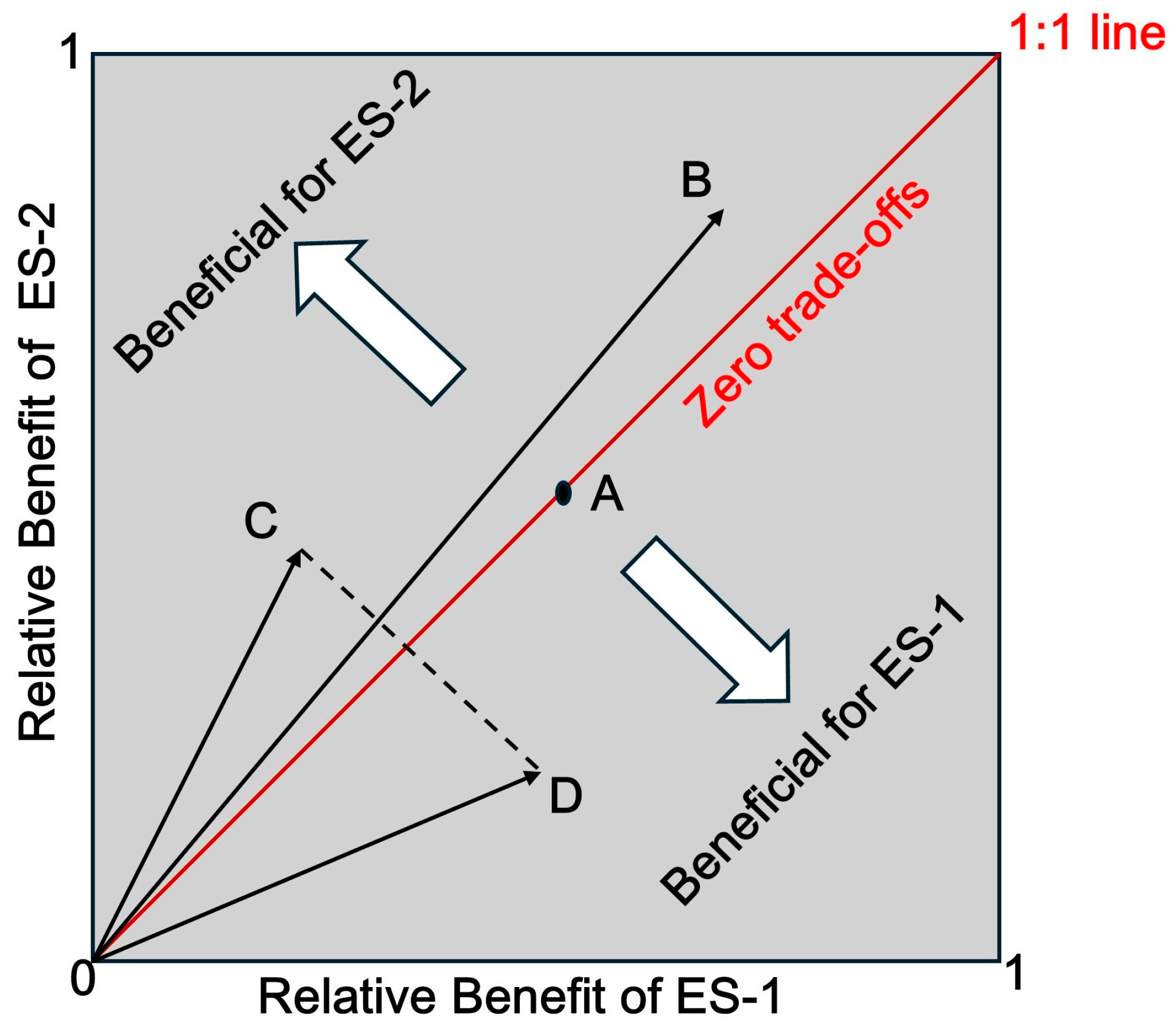
5]. The relationship between ESs mainly manifests in two forms: trade-offs and synergy. Synergy refers to the state wherein all kinds of ESs increase or decrease at the same time, and trade-offs represent that when one ecosystem service increases, another ecosystem service will decrease [
6]. However, all kinds of ESs influence each other and have complex nonlinear relationships, which leads to synergy or trade-offs, and it is difficult to achieve the goal of the diversification of all kinds of ecosystem services and maximization of benefits [
7,
8]. Among them, the complexity of ecosystem service trade-offs increases the difficulty of ecosystem management [
9], and its effect is far greater than the synergistic effect of ecosystem services [
10]. Evidence suggests that trade-offs among ecosystem services often exhibit non-linear patterns, indicating complex interactions within the system [
11,
12]. Therefore, it is of great significance to focus on the trade-offs between ecosystems for maintaining the balance of ecosystems, optimizing the structure of ecosystems, and ensuring the sustainable development of ecosystems [
13].
ESs emerge from ecological processes that are specific to different scales and interact in complex ways across these scales, with the variations in ecological patterns and processes observed at different scales, referred to as scale effects [
14]. Understanding ESs at a single scale is inadequate, as the cross-scale interactions of ecological processes lead to outcomes that are unpredictable in single scenarios [
15]. If the evaluation scale is too large, internal variations within an evaluation unit may be overlooked, while a scale that is too small may fail to capture regional specificities. Neglecting scale dependence can lead to the misinterpretation of ES interactions and their relationships with influencing factors. Consequently, it is essential to conduct multi-scale analyses of ecosystem services to explicitly examine how the effects of influencing factors vary across spatial scales. Some studies showed that ES trade-offs/synergies have scale effects from a multi-scale perspective. For example, a pattern observed across China’s terrestrial ecosystems shows that the synergies between different ecosystem services become stronger and the trade-offs become weaker as the spatial scale increases [
16]. Zheng et al. analyzed that even the same ESs had different degrees of synergies at different scales, and trade-offs appeared at a much smaller scale [
17]. However, although numerous studies have explored ES trade-off intensity from a multi-scale perspective, the selection of spatial scales in most cases is based on subjective experience or predefined administrative units, which may overlook the continuous and dynamic characteristics of geographical processes during scale expansion and contraction. This limitation hinders the identification of characteristic scales at which ES interactions are most pronounced. Wavelet transform provides an effective solution to this problem, as it enables the objective, scale-dependent decomposition of non-stationary spatial series, allowing ES interactions and their driving factors to be examined across a continuous range of spatial scales. Moreover, wavelet analysis captures coherence and phase relationships across both space and scale, thereby revealing cross-scale spatial heterogeneity and neighborhood interactions. Wavelet transform is particularly suitable for analyzing multi-scale and non-stationary space-series data, as it enables scale-dependent decomposition that cannot be achieved using conventional mathematical models. It provides coherence coefficients and phase information across spatial locations and scales, while also capturing cross-scale spatial heterogeneity and neighborhood interactions [
18]. In recent years, wavelet analysis has been increasingly applied in ecological and environmental studies [
19]. In this study, we introduce an automatic, data-driven scale identification framework by integrating continuous wavelet transform (CWT) with optimal parameter geographic detector (OPGD), which allows characteristic scales of ES trade-off intensity to be objectively extracted rather than predefined.
ESs are significantly influenced by both natural complexities and human activities. Natural factors originate within ecosystems and directly affect their functioning. Human activities often result in unsustainable resource depletion, the degradation of resource quantity and quality, and increased environmental pressure [
20,
21,
22]. Different driving factors influence ESs in distinct ways, with some affecting individual ESs while others simultaneously impact multiple ESs [
23,
24,
25]. Many previous studies used a variety of methods to explore the influencing factors that affected ESs, including correlation analysis [
26], Geodetector Modeling [
27], geographic regression models [
28], and machine learning [
29,
30]. In contrast to the conventional geographical detector, the optimal parameter geographical detector (OPGD) [
31] can automatically identify the optimal discretization strategy and parameter combination for each explanatory variable, thereby enhancing the explanatory power of the geographical detector model. Few studies have employed the OPGD to investigate the primary drivers of trade-offs in ESs. So, understanding the interactions among influencing factors and their contributions is crucial.
Regarding the selection of research areas, the previous studies on ESs focused on urban agglomerations [
32,
33], typical ecologically fragile areas [
21,
34,
35,
36], watersheds [
37,
38,
39], etc., but there has been no study on the large-scale geographical transition zone [
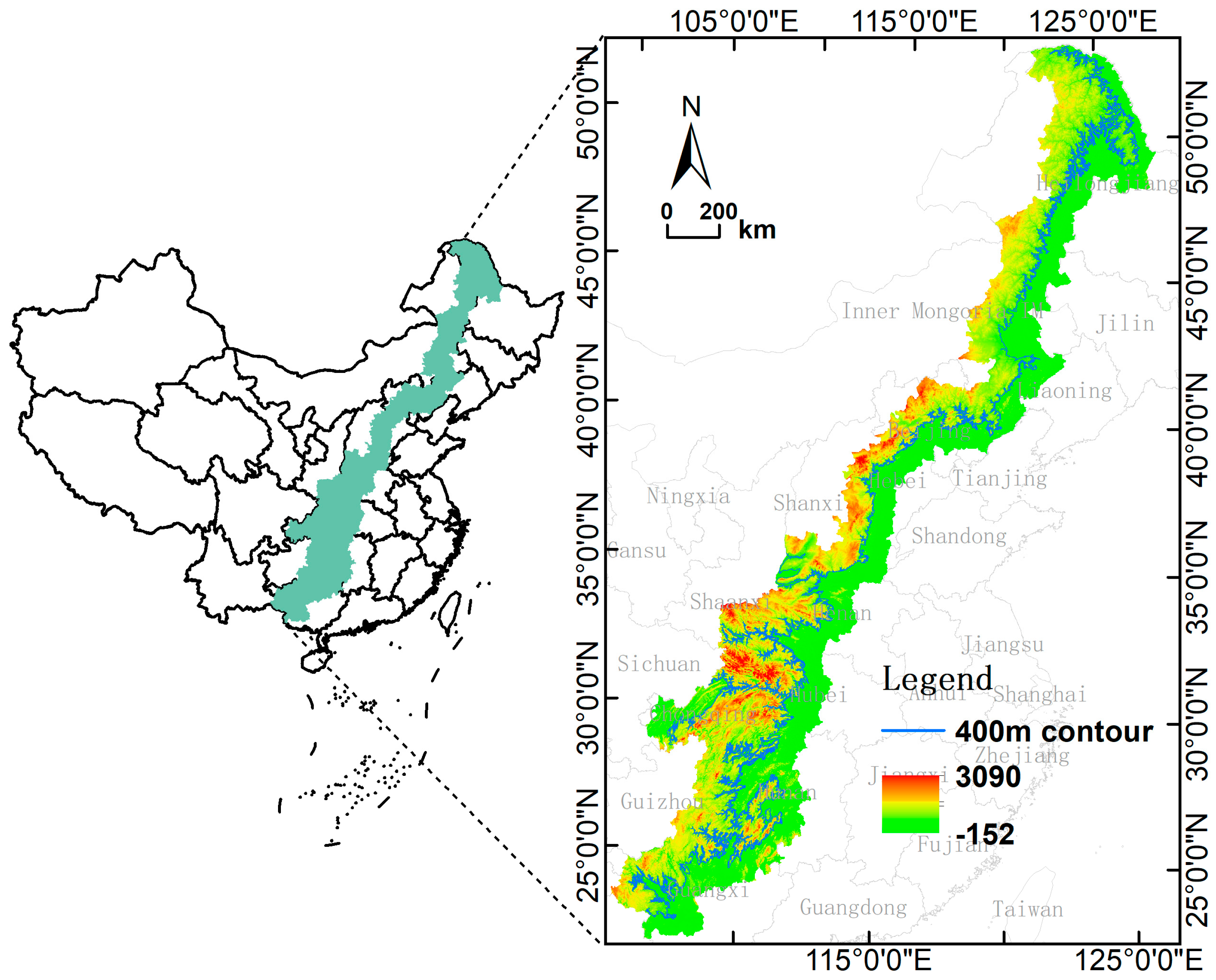
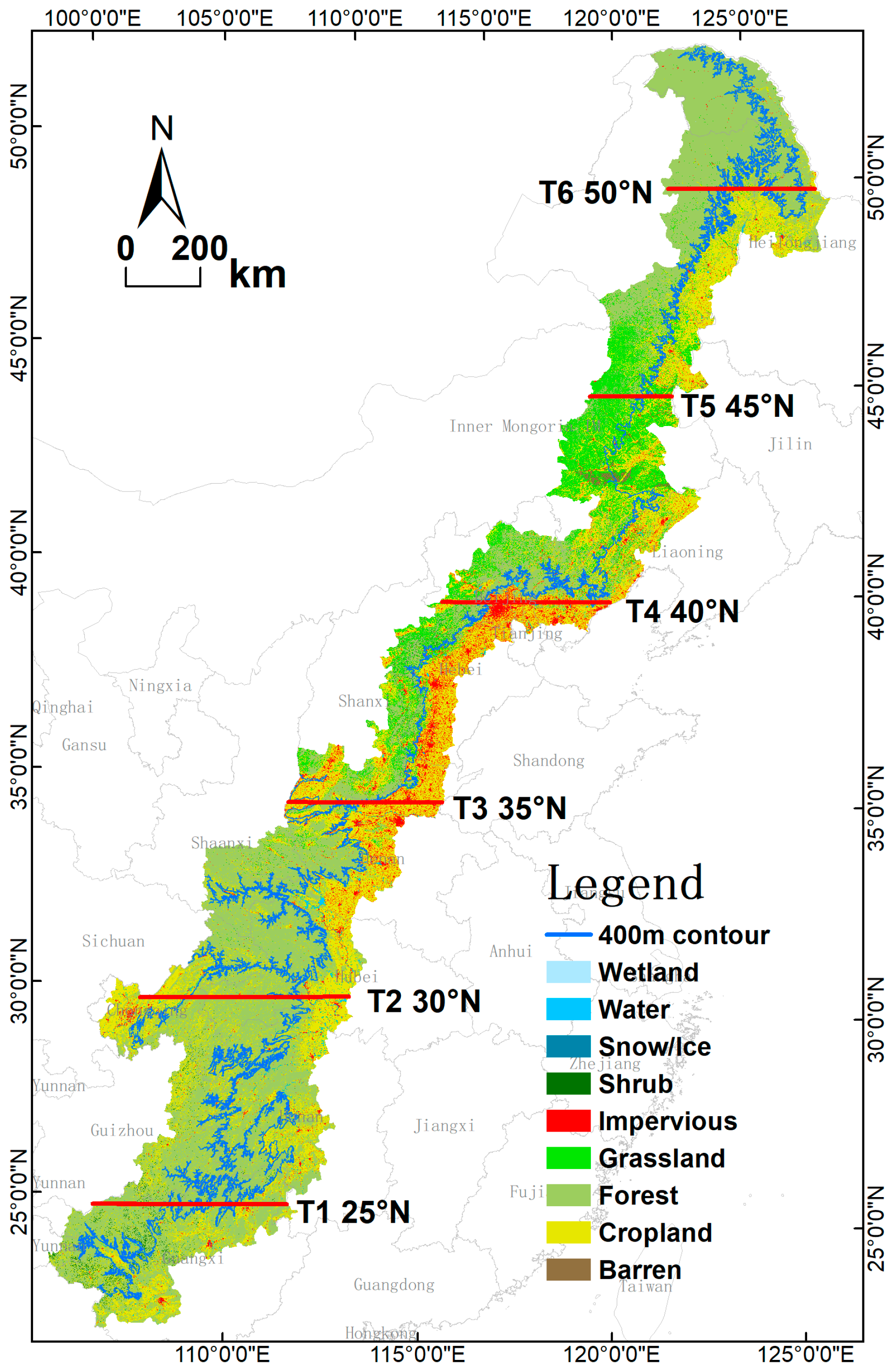
40]. The geomorphic configuration of China’s three major terrain steps plays a pivotal role in shaping the country’s multi-level, multi-scale transitional geographical spaces. This configuration underscores spatial heterogeneity, structural complexity, and functional diversity. Notably, China’s “plain–mountain transition zone” (referred to as the “transition zone”) serves as both the geographical transition between the country’s second and third terrain steps and the economic boundary between the developed eastern regions and the less-developed western areas. This region exhibits structural complexity driven by the interplay of natural and human factors, offering a novel perspective distinct from previous research areas.
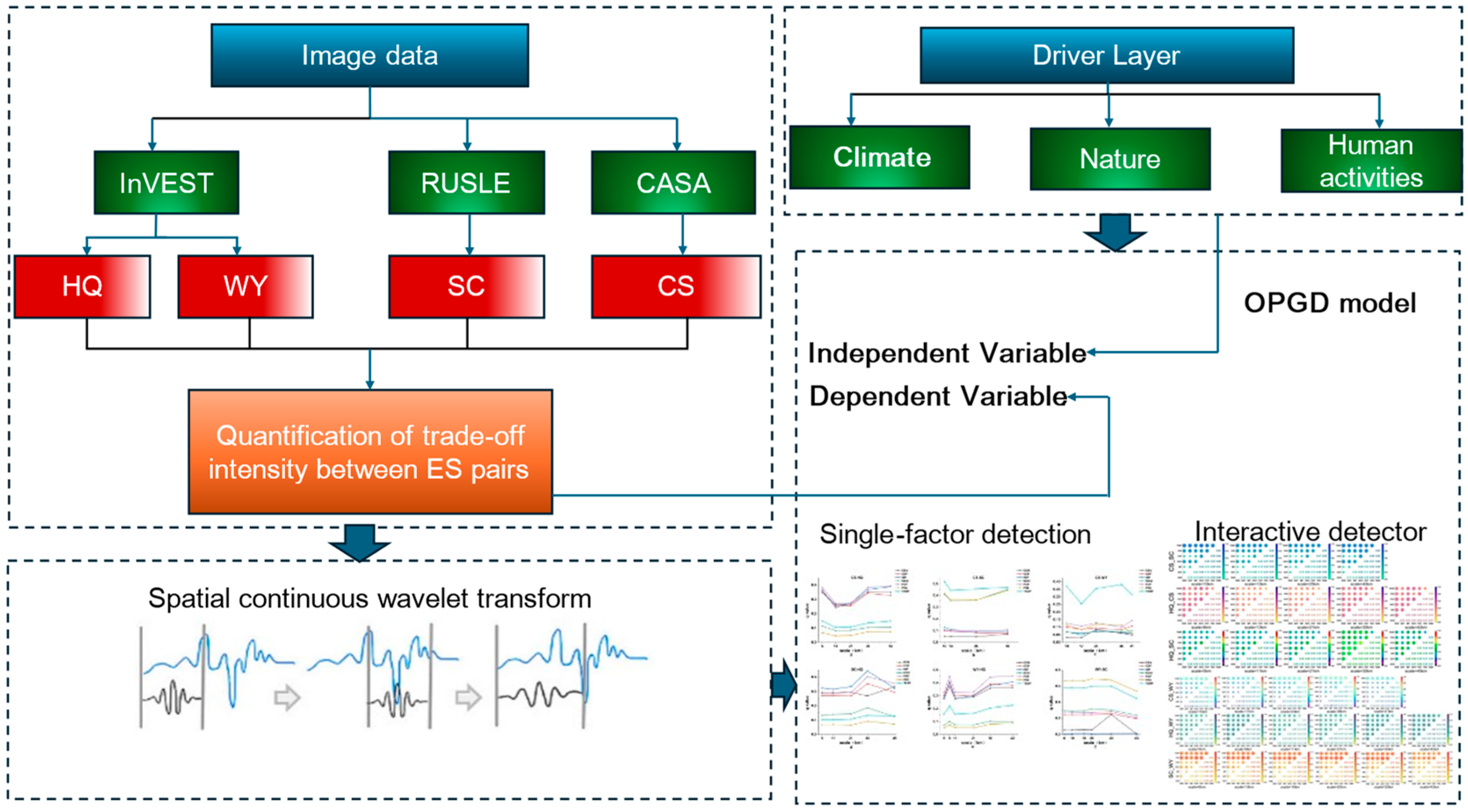
Therefore, this study takes China’s “plain-mountain transition zone” as the study area to explore the multi-scale driving mechanisms of ES trade-off. The specific research objectives include the following: (1) to quantify water yield (WY), habitat quality (HQ), soil conservation (SC), and carbon storage (CS) using the InVEST, RUSLE, and CASA models; (2) based on the characteristic scales identified through spatial continuous wavelet analysis, to utilize the OPGD model to reveal the multi-scale explanatory power and spatial heterogeneity between the trade-off intensity of ESs and driving factors; and (3) to uncover the scale-dependent effects of individual driving factors on ES trade-offs. This study employed spatial continuous wavelet transform to identify the characteristic scales for the years 2000 to 2020. We further investigated how the key drivers influencing the intensity of ecosystem service trade-offs vary across these scales and examined their potential temporal shifts over this period. The findings are expected to enhance the understanding of multi-scale ES interactions, provide scientific evidence for ES management in ecologically sensitive and underrepresented regions, and offer a theoretical basis for ecological governance and coordinated regional development.
3. Results
3.1. Spatial Distribution of Ecosystem Services
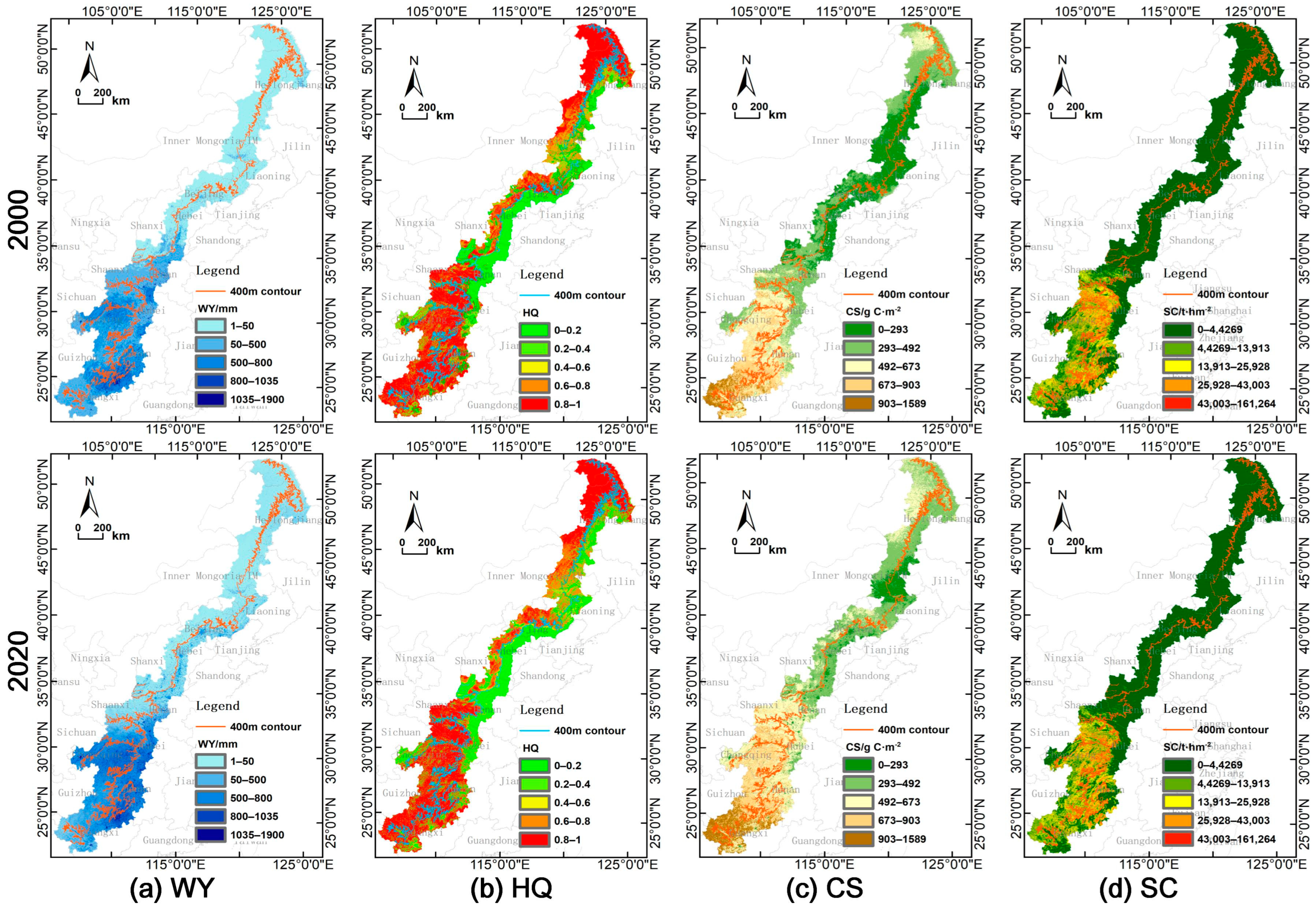
For the representative year of 2020, the spatial patterns of the four ecosystem services in the transition zone are characterized in
Figure 5. The WY services show more of a spatial distribution pattern in the south and less in the north, and more in the east and less in the west, which is mainly affected by rainfall and topographic factors. The average WY in the transition zone is 293 mm, among which the maximum WY (800–1900 mm) is located in the mountainous and hilly region in the south of the transition zone, followed by the mountainous region in the south, with the WY ranging from 500 to 800 mm. The minimum WY is observed in the hilly region of the north and the plain and mountainous regions of the central area (1–50 mm).
The HQ of the transitional zone is roughly divided by a 400 m contour line, showing the characteristics of high mountains and low plains with an average value of 0.65, which indicates that the ecological environment of the transition zone is in good condition, and its spatial distribution is related to land use/cover types. When the land use/cover types are mainly forest land, the habitat quality is also at a high level, with a main range of 0.6–1. When the land use type/cover type is plains, the HQ is low, the main range is 0–0.4, and, in the middle of the transition zone, the HQ is the worst—the range is 0–0.2.
The CS in the transition zone is affected by vegetation type, land use/cover type, and human activities. From northeast to southwest, the CS service value of sub-thermal evergreen broad-leaved forest region is the largest, and the land use/cover type is mainly woodland, with the value ranging from 903 to 1589 gC·m−2. Secondly, the central part of the sub-hot evergreen broad-leaved forest region serves the cold–temperate coniferous forest in the northeast of the transition zone between 673 and 903.9 gC·m−2, and the warm–temperate broad-leaved forest in the middle mountain region serves 293–492 gC·m−2. Grasslands and hilly plains in the middle of the transitional zone have the smallest carbon storage service value, and the land use/cover type is mainly cultivated land, ranging from 0 to 293 gC·m−2.
The average value of SC in the transition zone is 54.03 t·hm−2. The high value area is mainly distributed in the southern mountainous area, with a range of 430–1621 t·hm−2, and the low value area is distributed in the plain area of the transition zone, with a range of 0–44 t·hm−2. This distribution characteristic is not only related to the regional topographic relief characteristics but also to the land use/cover types. For example, in the mountainous area in the south of the transition zone, although its topography fluctuates greatly, its vegetation coverage is high and its soil water storage capacity is strong, so the possibility of soil erosion in this area is low. Comparatively speaking, the terrain fluctuation in the plain area is small, and the possibility of soil erosion is low. However, due to its high proportion of impermeable surfaces and low vegetation coverage, the SC capacity in plain areas remains low, even though the terrain is relatively flat.
3.2. Spatial Distribution of Trade-Offs Between Ecosystem Services
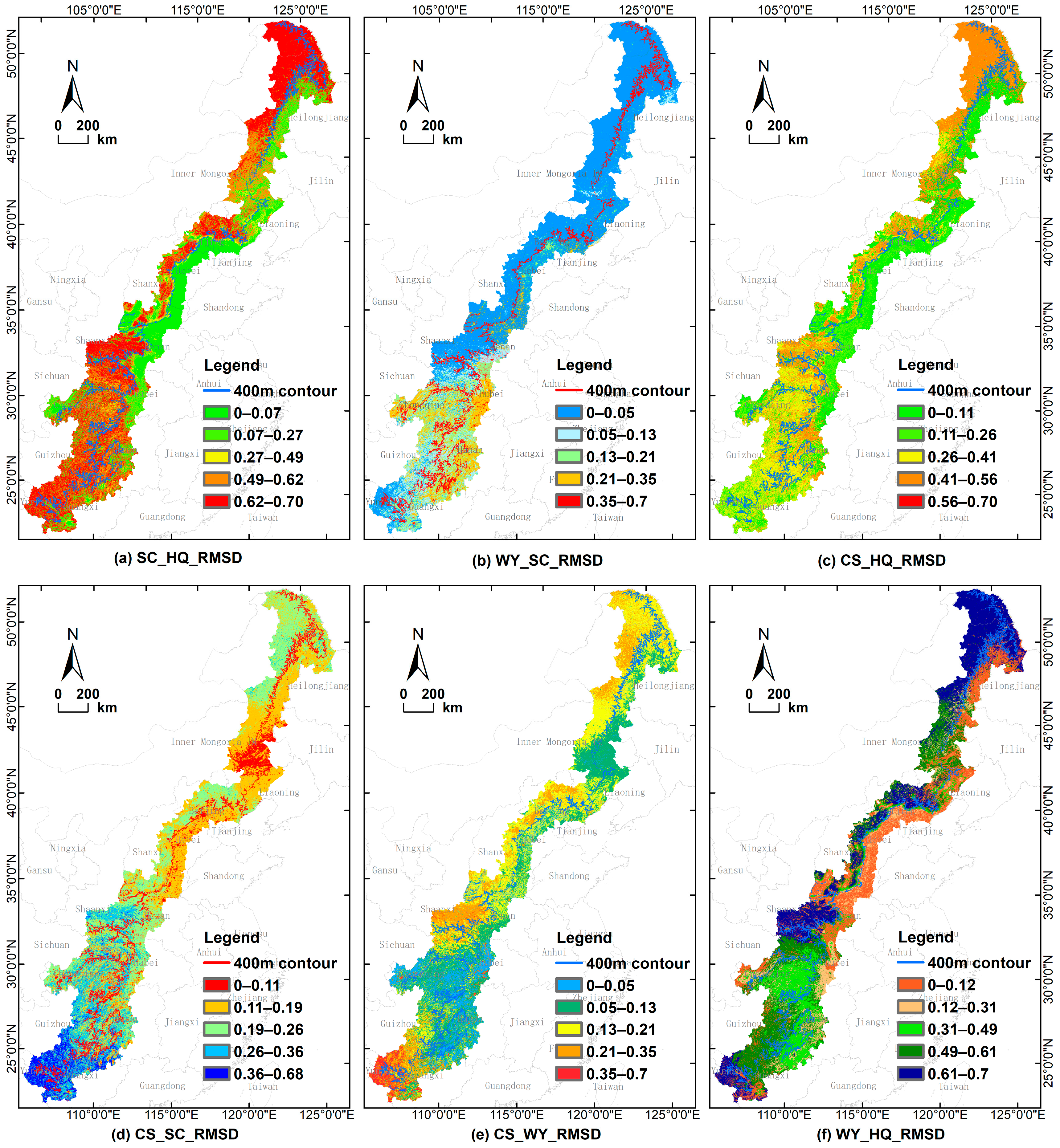
For the representative year 2020, the spatial distribution of trade-offs between ecosystem services in the transition zone is shown in
Figure 6. The trade-offs between SC and HQ is the highest, with an average value of 0.61. The region with higher trade-off intensity is located in the northern mountainous–hilly region of the transition zone, where the HQ is at a high level but the WY remains low. This trade-off relationship represents a pattern in which one ecosystem service is at a higher level while the other remains relatively low. Consequently, the trade-offs between the two ecosystem services become more pronounced. The trade-offs between WY and SC are the weakest, with an average value of 0.11. The region with higher trade-off intensity is located in the mountainous plain region in the south of the transition zone, where the WY and CS are both at high levels, but its trade-off intensity is still on the high side because the trade-off relationship exists not only in the form of one service increasing at the expense of another but also in the form of an uneven rate in the same direction. Therefore, the trade-offs between the two ecosystem services will also be at a higher level.
3.3. Multi-Scale Analysis of Influencing Factors
3.3.1. Characteristic Scale Recognition
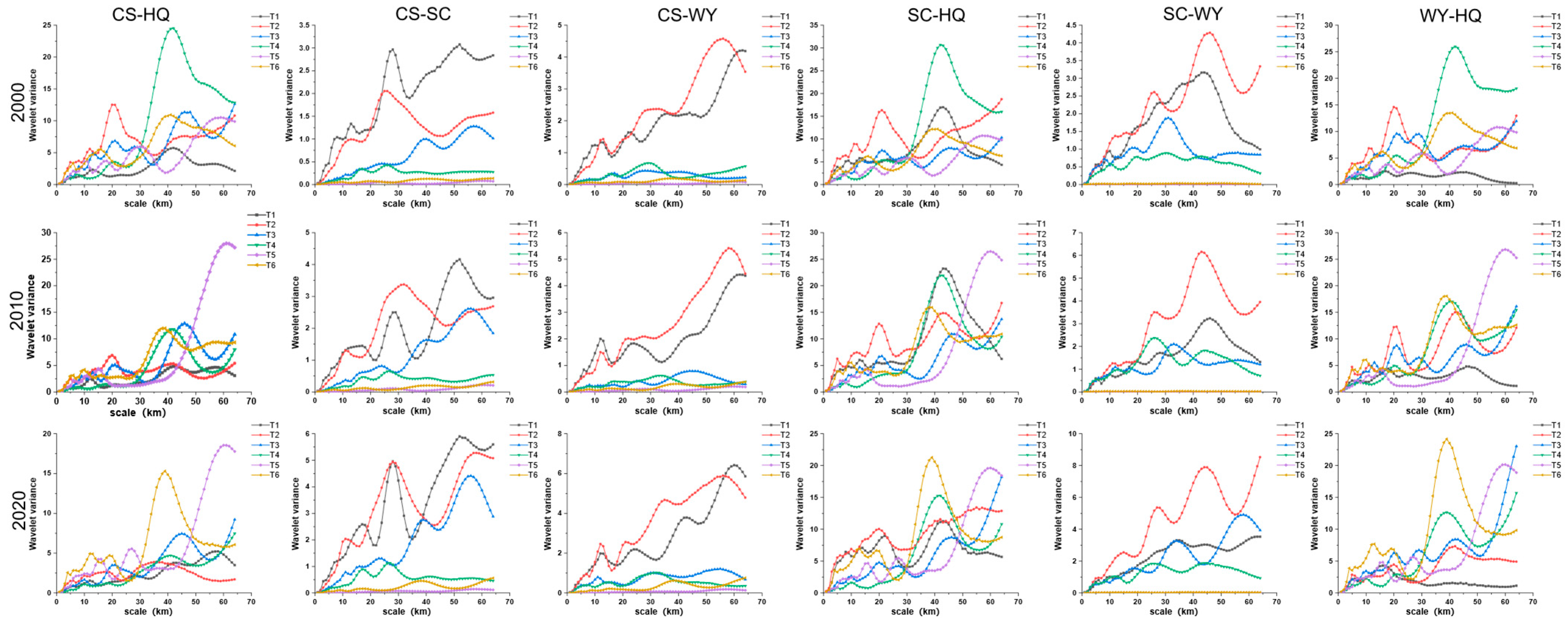
This study calculated the wavelet variances of trade-offs between four ecosystem services along six transects for 2000, 2010, and 2020 based on a 1 km sampling resolution. Characteristic scales for influencing factors were subsequently established from the principal periods of the wavelet variance. Taking the trade-offs between SC and WY in 2020 as an example, the trade-off intensity exhibits more than two adjacent local maxima on the T2 wavelet variance curve of the transect. Specifically, the first dominant period is 44 (grid number), followed by the second, third, and fourth dominant periods at 27, 15, and 6, respectively. This indicates that the trade-offs between WY and SC show high spatial heterogeneity at the scales corresponding to 6, 15, 27, and 44, with significant differences in the expression of characteristic information across these different scales. The trade-offs between different ecosystem service combinations also have the same characteristic scale. For example, the trade-offs between CS and HQ combination and the trade-offs between WY and SC combination have two identical main cycles (6 and 27), which indicates that the characteristic scale of the trade-offs between ecosystem service combination is relatively consistent. Although the characteristic scale of the trade-offs between the same ecosystem service combination is different in different zones, the variation trend of wavelet variance curve is the same. Similarly, the wavelet variance curves of five trade-offs between WY and HQ, WY and CS, CS and HQ, CS and SC, and SC and HQ in different transect were analyzed.
To investigate the multi-scale influencing factors of trade-offs between ecosystem service intensities, this study integrated the characteristic scales of four ecosystem service trade-off combinations across different transects to determine the appropriate sampling grid sizes for driving factors. For instance, at a 1 km sampling resolution, the principal wavelet variance periods for the trade-offs between SC and WY in 2020 were identified at 6, 15, 27, 35, 44, and 50 km. Accordingly, grids corresponding to these dominant variance periods were established as characteristic scales, enabling the detection and analysis of drivers influencing trade-offs across different scales. Similarly, the characteristic scales for the ecosystem service trade-off combinations were established for the years 2000, 2010, and 2020 by determining their respective principal periods (
Figure 7).
3.3.2. Analysis of Single-Factors Detection of Multi-Scale Trade-Offs
This study investigates the response characteristics of the driving factors influencing the trade-offs between different ecosystem service combinations across varying scales. Independent variables include DEM, annual average temperature (TEMP), annual average precipitation (PRE), NDVI, population density (POP), Gross Domestic Product Density (GDP), and impervious surface ratio (IMP), while trade-off intensity serves as the dependent variable. Using the optimal parameter geographic detector, the parameter combination with the highest q value is identified to spatially discretize the driving factors. This study quantitatively analyzes the variation in each driving factor across different scales and seeks to identify overarching patterns in these changes, aiming to establish stable scale association rules.
Results of Single-Factor Detection for ES Trade-Offs in 2000
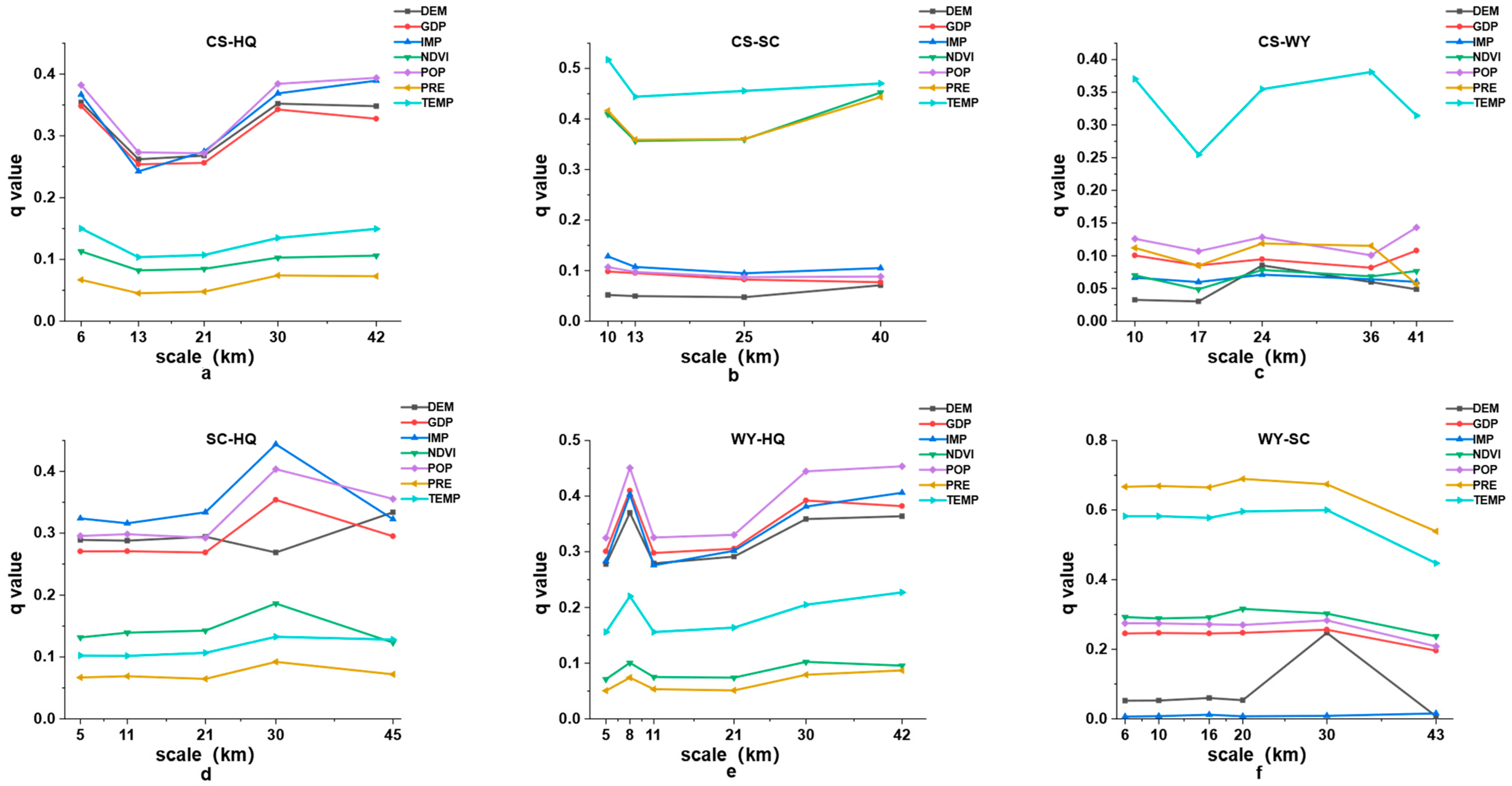
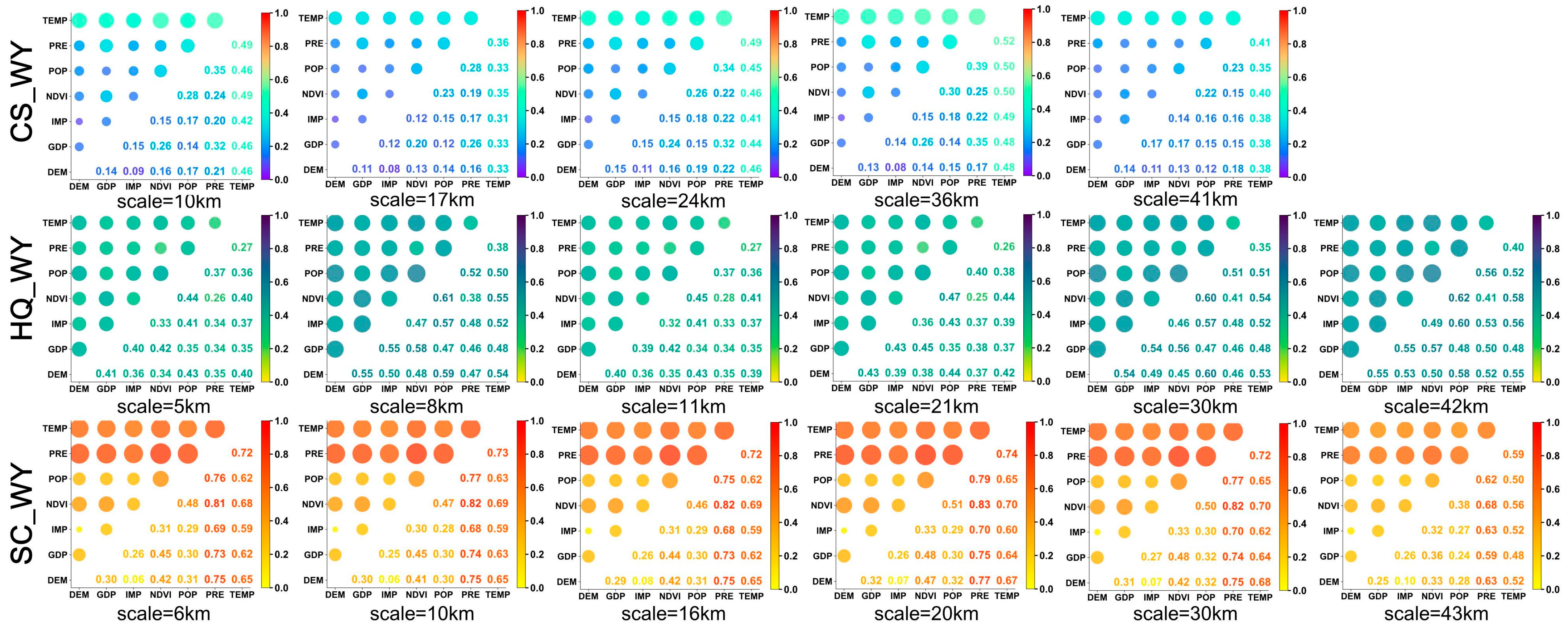
Looking at the results of single factor detection for ES trade-offs in 2000 (
Figure 8), the trade-offs between CS and HQ were predominantly explained by POP at the 6 km and 13 km scales, with q value exhibiting a declining trend as the scale increased. A transition in the primary drivers was observed at the 21 km scale, as the IMP demonstrated a more pronounced increase in the q value compared to other factors, thereby becoming the leading influence. Upon further upscaling, all driving factors except GDP displayed an upward trend in q value, and both POP and IMP retained strong explanatory power. The trade-offs between CS and SC were persistently controlled by annual average temperature and annual average precipitation throughout the investigated scales. The q value of these two climatic factors displayed a consistent non-linear response, initially decreasing before subsequently increasing with scale expansion. Regarding the trade-offs between CS-WY, the annual average temperature was identified as the dominant factor across scales, and its q value showed highly synchronized trends. Specifically, the q value decreased from 10 km to 17 km then increased up to 36 km before experiencing a further decline at the 41 km scale.
The driving factors of the SC-HQ trade-offs evolved with scale: IMP and POP were the main influences at 5 km and 11 km. By 21 km, DEM had superseded POP as a co-dominant factor with IMP. At 30 km, the influence of DEM had diminished, and POP had reemerged as a primary driver alongside IMP. Finally, at 45 km, a marked drop in the q value of IMP shifted the dominant factors to POP and DEM. The WY-HQ trade-offs exhibited relatively stable driving factors across finer spatial scales, where POP and GDP remained dominant. However, at the 42 km scale, the q value of GDP underwent a substantial decline, leading to its replacement by IMP as a key factor in conjunction with POP. For the trade-offs between WY-SC, the annual average temperature and annual average precipitation consistently provided the highest explanatory power across all scales despite their q value generally showing a decreasing trend with increasing spatial extent.
In 2000, the ES trade-off intensity exhibited clear scale-dependent patterns (
Table 2). For example, the trade-offs between CS-HQ and WY-HQ were mainly controlled by human activity factors at small scales, while climatic and nature factors became more influential as scale increased. In contrast, the trade-offs between CS-WY and WY-SC were consistently dominated by climatic drivers, particularly temperature and precipitation, across all scales.
Results of Single-Factor Detection for ES Trade-Offs in 2010
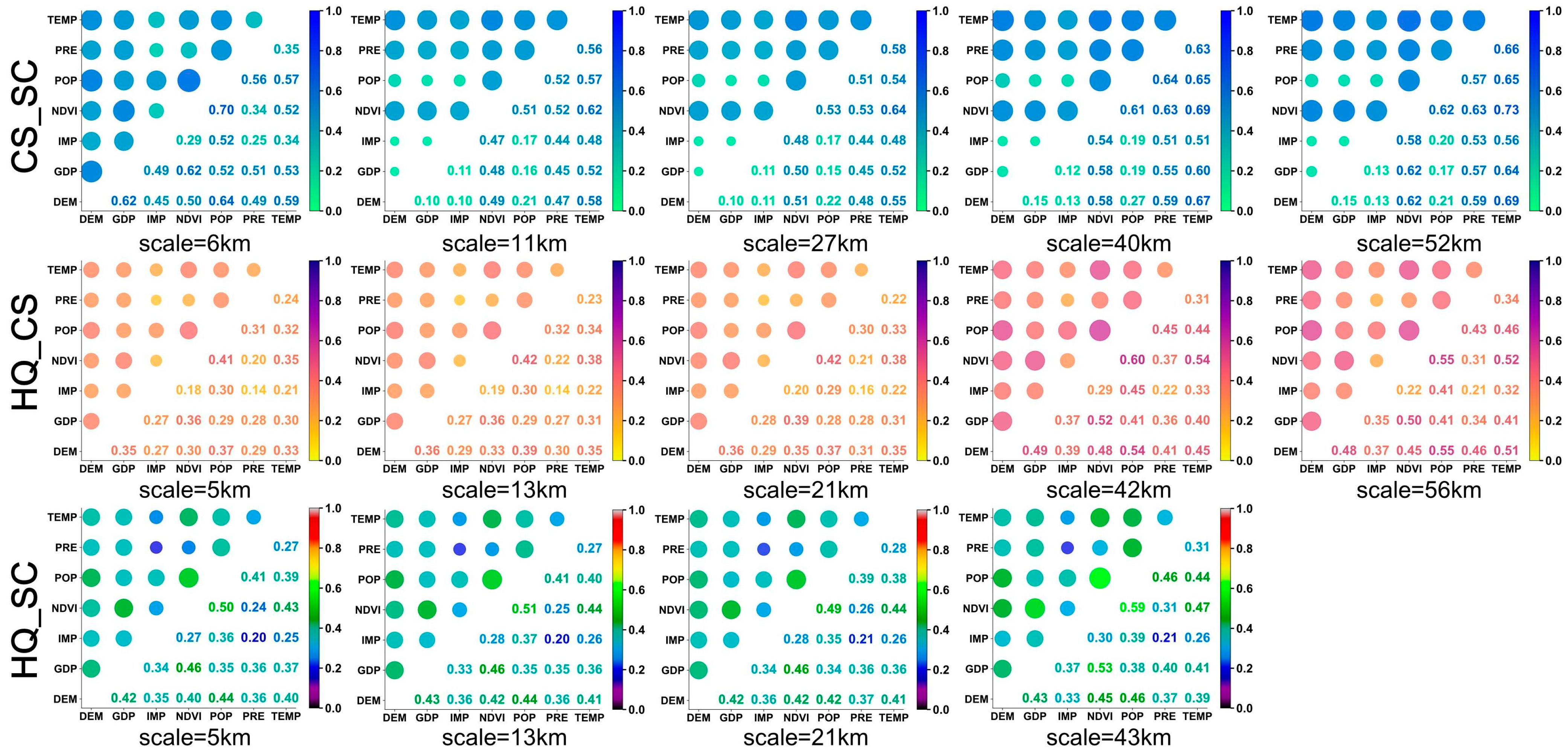
The results of single-factor detection for ES trade-offs in 2010 (
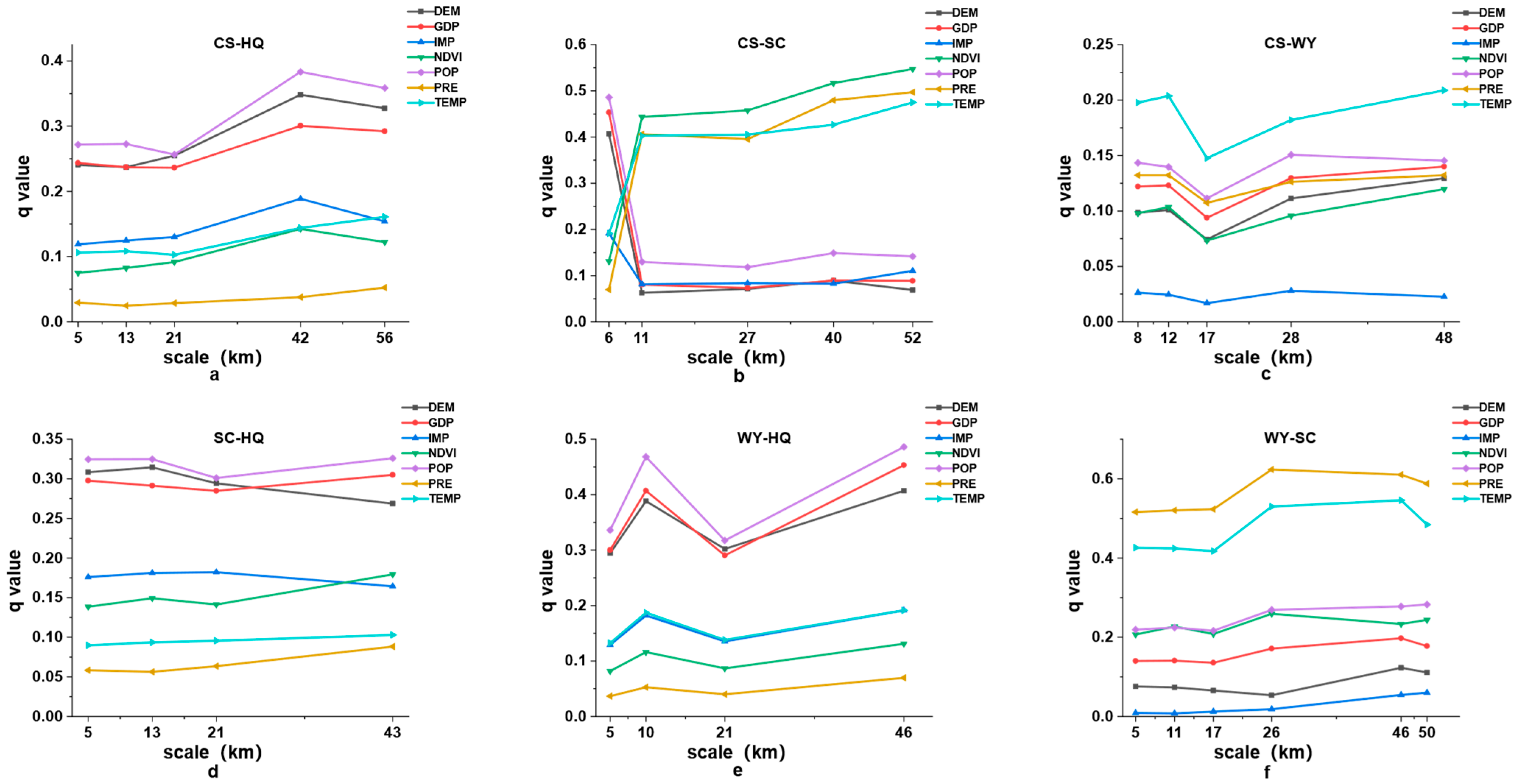
Figure 9) showed that the trade-offs between CS and HQ at the 5 km scale were primarily driven by POP and GDP. As the scale increased to 13 km, the q value of GDP decreased while that of DEM increased, shifting the dominant drivers to POP and DEM. At 21 km, although the q value of POP declined, it remained higher than those of other factors. With further upscaling, the q value of most drivers showed an increasing trend, with POP and DEM maintaining strong explanatory power; For the trade-offs between CS-SC, POP and GDP were the dominant factors at 6 km. As the scale expanded, the q value of POP and GDP decreased significantly, while those of NDVI, annual average precipitation, and annual average temperature increased markedly. By 11 km, the main drivers had shifted to NDVI and annual average precipitation. At 27 km, the q value of annual average precipitation decreased, and annual average temperature exhibited higher explanatory power than annual average precipitation. However, when the scale reached 40 km, the q value of annual average precipitation increased more substantially than that of annual average temperature, making NDVI and annual average precipitation the dominant drivers at larger scales. The q value of drivers influencing the CS-WY trade-offs followed similar fluctuating trends: they initially increased then decreased, and subsequently increased again with increasing scale. At small to medium scales, annual average temperature and POP had a higher q value than the other factors, showing strong explanatory power.
For the trade-offs between SC and HQ, POP and DEM were the main influencing factors at 5 km and 13 km. At 21 km, the q value of POP fell below that of DEM, indicating stronger explanatory power of DEM. When the scale increased to 43 km, the q value of DEM decreased, while those of POP and GDP rose, making them the dominant drivers. The trade-offs between WY and HQ were mainly influenced by POP and GDP at 5 km and 10 km, with the q value of all drivers increasing. When the scale reached 21 km, the q value of most drivers decreased, particularly that of GDP, and the dominant factors shifted to POP and DEM. At 46 km, the q value of GDP notably increased, and POP and GDP again became the dominant drivers. For the trade-offs between WY and SC, annual average precipitation and annual average temperature were the dominant factors across all scales. In the small to medium scale range (5–26 km), the q value of most drivers increased, with annual average precipitation and annual average temperature having higher values than the other factors. As the scale expanded from 26 km to 46 km, all drivers except NDVI and annual average precipitation showed an increasing q value. By 50 km, the q value of most drivers decreased.
In 2010, the dominant drivers of ES trade-off intensity shifted with spatial scale, showing an increasing influence of natural factors at medium and large scales (
Table 3). Human activity factors (POP and GDP) strongly influenced CS-HQ and SC-HQ trade-off intensity at finer scales, whereas NDVI and climatic variables became dominant for CS-SC and WY-SC trade-off intensity as the scale increased. These results indicate a gradual transition from anthropogenic to climate-controlled mechanisms with scale expansion.
Results of Single-Factor Detection for ES Trade-Offs in 2020
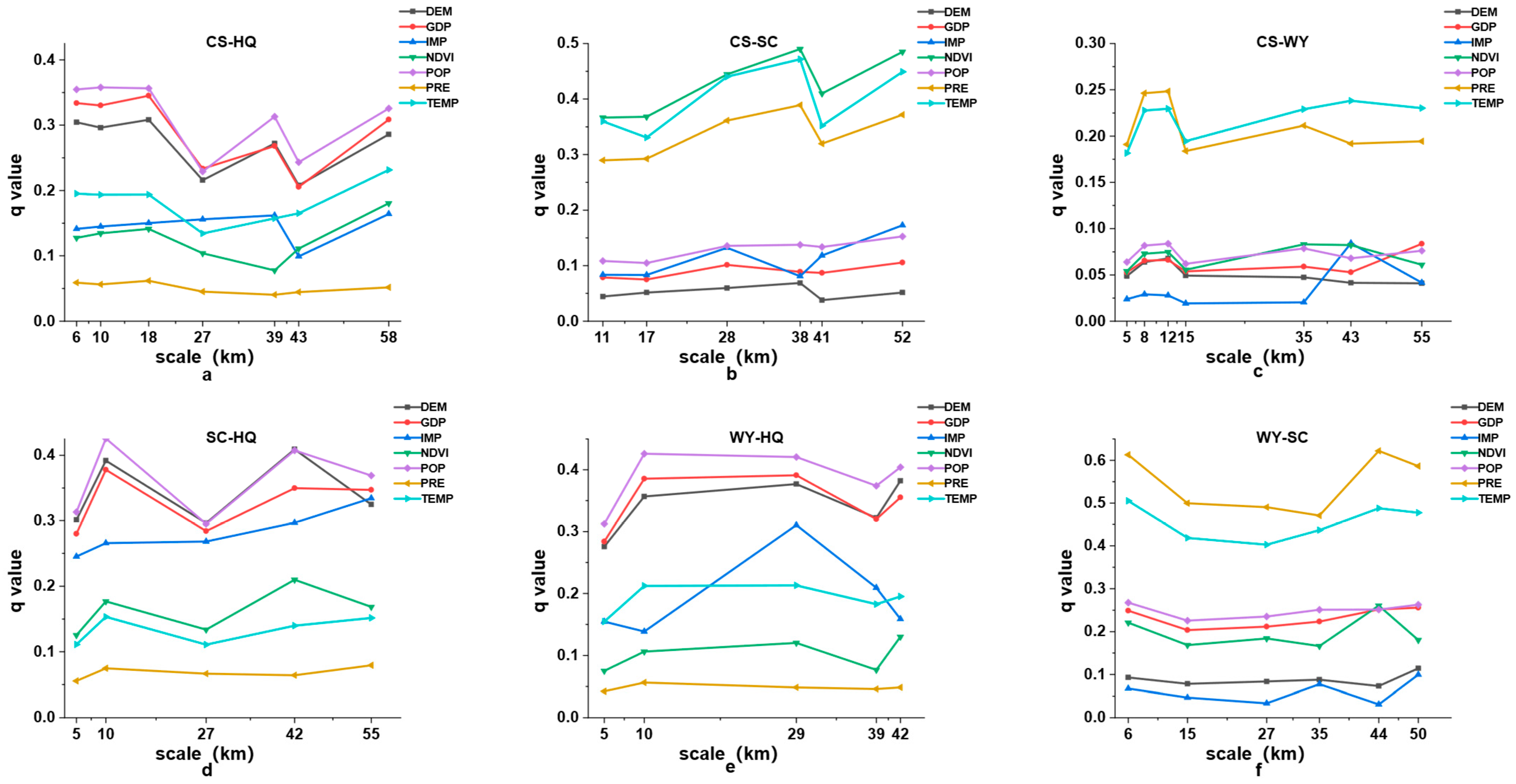
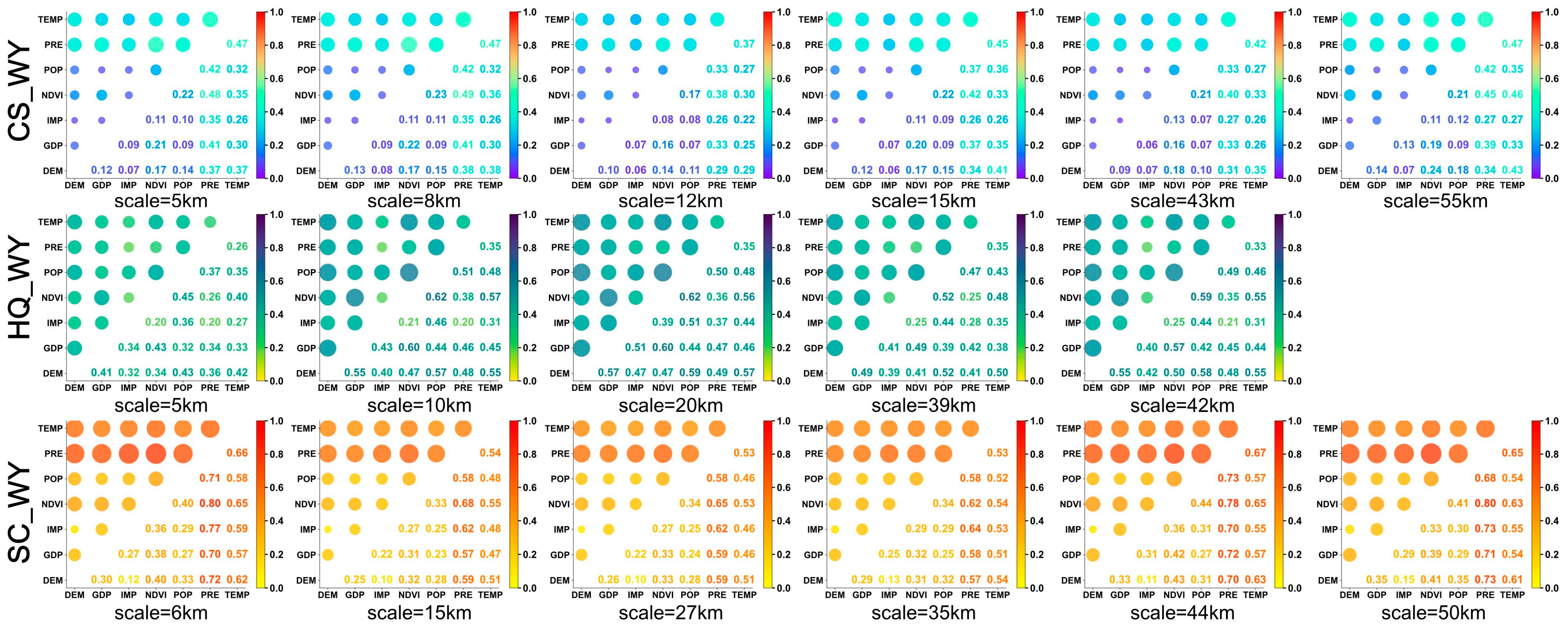
The results of single-factor detection for ES trade-offs in 2020 (
Figure 10) showed that the trade-offs between CS and HQ combinations were at the 6 km, 10 km, and 18 km scales, and the main driving factors were POP, GDP, and DEM. When the characteristic scale was 27 km, the q values of the three driving factors all showed a downward trend, and the q value of GDP decreased less than the other two factors. With the increase of the characteristic scale, the change trend of different driving factors mainly rose first, then fell and finally rose again, and POP and GDP became the main influencing factors. The trade-offs between CS and SC are mainly affected by NDVI, average annual temperature, and average annual precipitation at different scales, and the q value of the three factors is much higher than other driving factors, which indicates that the trade-offs between CS and SC is mainly affected by climate and natural factors. At the 5 km, 8 km, and 12 km scales, the CS-WY trade-offs were significant, and the primary influencing factors remained relatively stable; at 15 km, the q value of the three factors shows a downward trend, among which the q value of the average annual precipitation decreases greatly. With the increase of scale, the q value of average annual temperature is higher than other factors.
The main driving factors of trade-offs between the SC and HQ combination show an “M” trend. On the scales of 5 km, 10 km, and 27 km, the main driving factors are POP, DEM, and GDP. When the characteristic scale increases from 5 km to 10 km, the q values of all driving factors showed an upward trend, which shows that the explanatory power of each driving factor to trade-offs is continuously enhanced with the increase of scale. When the characteristic scale increased from 10 km to 27 km, except for IMP, all factors showed a downward trend. Among them, the q value of POP decreased the most, which shows that the explanatory power of POP to trade-off intensity shows a weakening trend and increases further to 42 km. The q value of other driving factors showed an upward trend, among which the q value of POP increased the most, from 0.295 at 27 km to 0.407. With the increase of the feature scale, the q value of impervious surface ratio also increased. When the feature scale was 55 km, the q value of impermeable surface ratio reached the maximum, which became one of the main driving factors of large-scale trade-off strength. The driving factors of the trade-offs between WY and HQ in the range of 5~42 km of the whole characteristic scale. Except for the proportion of impervious surface, the q value of the other factors increased, decreased, and then increased again with the increase of the scale, and the main driving factors were POP, GDP, and elevation. The main driving factors of the WY and SC combination trade-off intensity are average annual precipitation and average annual temperature. In the range of the characteristic scale of 6~27 km, the q values of both showed a decreasing trend. With the characteristic scale increasing from 27 km to 35 km, the q value of average annual temperature continued to decrease, but the q value of average annual precipitation increased to 35 km. When the characteristic scale increased from 35 km to 44 km, the q value of both showed an upward trend and the q value of average annual precipitation increased greatly.
By 2020, the influence of human activities on ecosystem service trade-offs had strengthened (
Table 4), especially for the SC-HQ and WY-HQ trade-off intensities of POP, GDP, and IMP, dominated by several trade-offs at small to medium scales, while climatic factors remained the primary drivers of WY-SC and CS-WY trade-off intensity across all scales. Overall, the scale effects remained strong, but the relative importance of drivers showed increasing temporal stability.
In summary, the results of single-factor detection indicate that from 2000 to 2020, the primary drivers of trade-off intensity between different ESs varied with spatial scale (
Table 5). The trade-off intensity between CS and HQ is primarily influenced by human activity factors (POP, GDP, IMP), with the explanatory power (q value) varying across scales. The trade-off intensity between CS and SC is mainly driven by human activity factors such as POP and GDP at smaller scales; however, as the scale increases, NDVI and annual average temperature become the dominant influencing factors. For the trade-offs between CS and WY, climatic factors such as annual average temperature and annual average precipitation are the main drivers across different scales. The key factors affecting the trade-offs between SC and HQ also shift with changing scales: at small to medium scales, IMP, POP, and DEM are predominant, while at larger scales, POP and GDP become more influential. The trade-off intensity between WY and HQ is consistently governed by POP and GDP across scales, and the q value of these two factors exhibit highly similar interannual variation trends, both increasing with scale. In contrast, the trade-off intensity between WY and SC is relatively stable, with annual average precipitation and annual average temperature being the dominant factors throughout the characteristic scale range. This study’s findings show that changing the spatial scale alters the integrity and structure of internal landscapes, thereby governing the magnitude of driving factors’ effects and their interactions within a grid.
3.3.3. Analysis of Interactive Detection of Multi-Scale Trade-Offs
Results of Interactive Detection for ES Trade-Offs in 2000
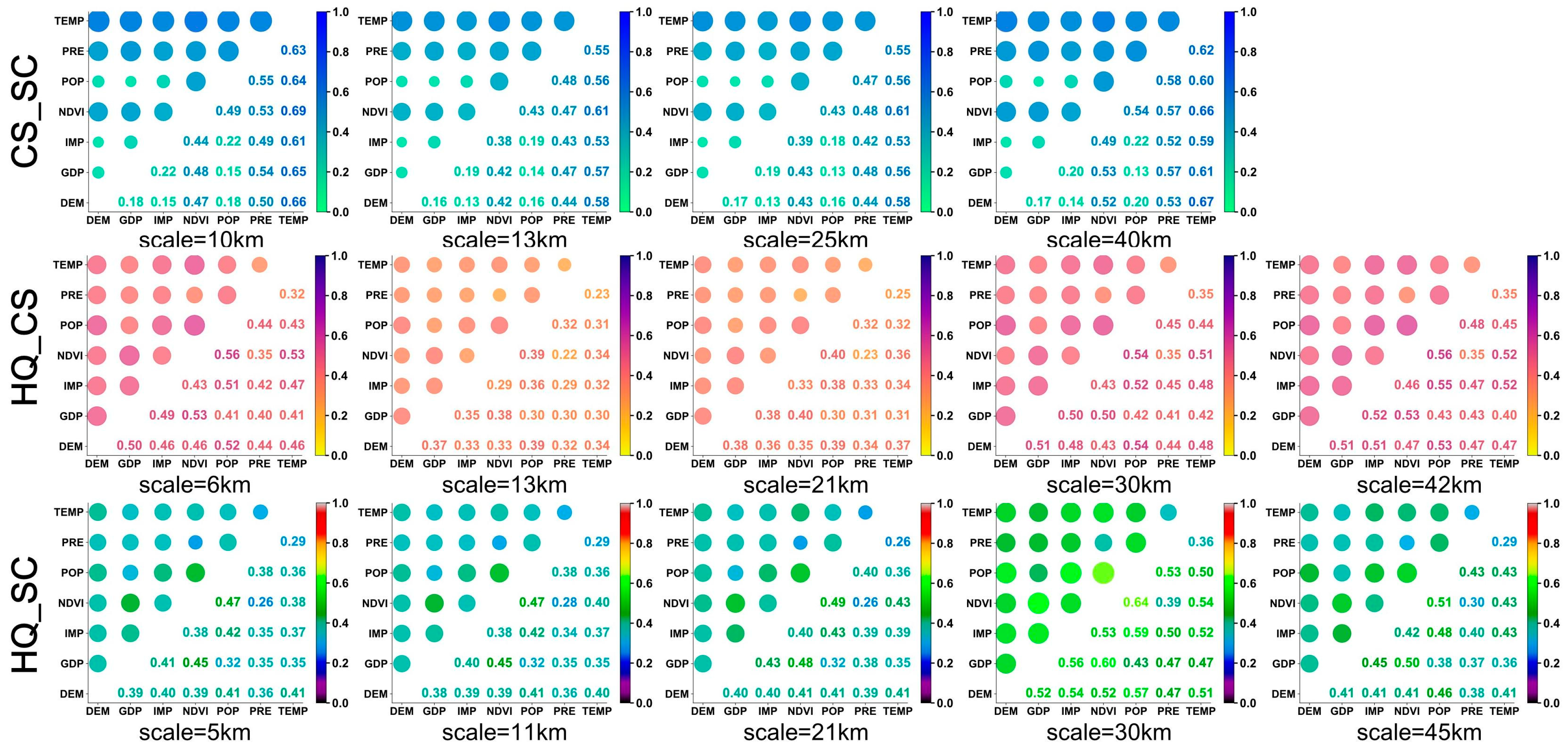
The interactive detection results in 2000 (
Figure 11 and
Figure 12) show that the trade-offs between CS and SC were primarily influenced by the interaction between annual average temperature and NDVI at small to medium characteristic scales (10–25 km), with a q value consistently above 0.6. When the scale increased to 40 km, the interaction between annual average temperature and DEM became significantly stronger, exhibiting the highest q value. For the trade-offs between HQ and CS at the 6 km scale, the main interacting factors were NDVI with POP and GDP, all with an explanatory power (q value) greater than 0.5. At 13 km, the dominant interactive influences shifted to POP with NDVI and DEM, accompanied by a decline in the q value to 0.39. By 21 km, the q value for the interaction between NDVI and GDP increased. At 30 km, the interactions involving POP with NDVI and DEM strengthened again, both reaching a q value of 0.54. When the scale reached 42 km, the main interactive factors changed to POP with NDVI and IMP, with q values of 0.56 and 0.55, respectively. The key interacting factors affecting the HQ and SC trade-offs remained relatively stable across the entire range of characteristic scales, with strong interactions consistently observed between NDVI and POP, as well as GDP. From 5 km to 30 km, the q value showed an increasing trend, peaking at 30 km with values of 0.64 and 0.6, respectively. At 45 km, although the dominant interacting factors remained unchanged, their explanatory power declined.
The trade-offs between CS and WY were mainly affected by the interactions of annual average temperature with annual average precipitation and NDVI. The q value for annual average temperature with annual average precipitation and annual average temperature with NDVI followed nearly identical trends across scales, initially decreasing then increasing, and eventually decreasing again. The lowest q value (0.36 and 0.35) occurred at 17 km, while the highest (0.52 and 0.5) was observed at 36 km. For the HQ and WY trade-offs, interactions between NDVI and POP, as well as DEM, were dominant at smaller scales (5–11 km). At 21 km, the interactions between NDVI and POP, as well as GDP, showed higher explanatory power than other factors, with q values of 0.47 and 0.45. When the scale increased to 42 km, the main interacting factors shifted to POP with NDVI and IMP, and the interaction between NDVI and POP exhibited the highest q value across all characteristic scales. Lastly, the trade-offs between SC and WY were primarily influenced by interactions involving annual average precipitation with NDVI and POP across the 6–30 km scale range. At 43 km, the interactions between annual average precipitation and NDVI, as well as DEM, demonstrated stronger explanatory power.
The interactive detection results in 2000 showed that ES trade-off intensity was predominantly driven by interactions between climatic, natural, and human activity factors, with clear scale dependence (
Table 6). The CS-SC, CS-WY, and WY-SC trade-off intensities were mainly controlled by interactions between temperature, precipitation, and NDVI, while the HQ-CS, HQ-SC, and HQ-WY trade-off intensities were consistently dominated by interactions between NDVI and human activity factors (POP, GDP, IMP) across scales.
Results of Interactive Detection for ES Trade-Offs in 2010
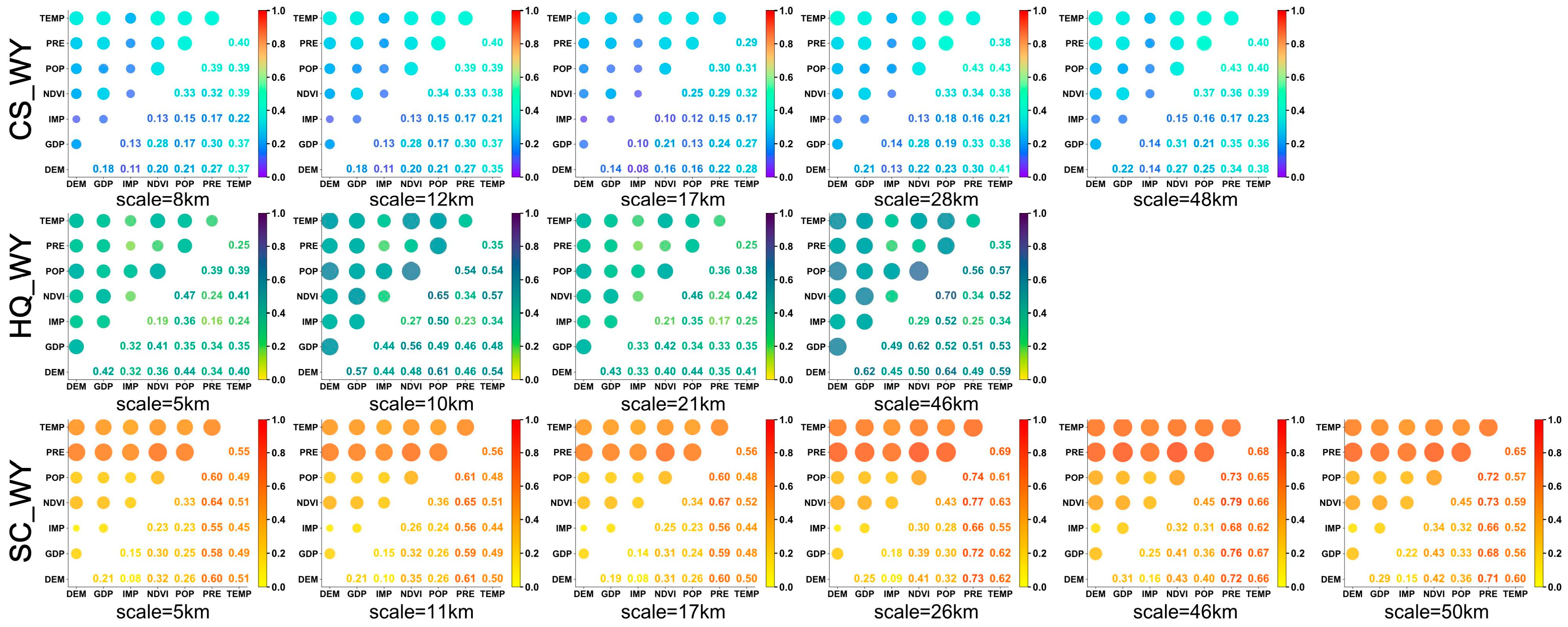
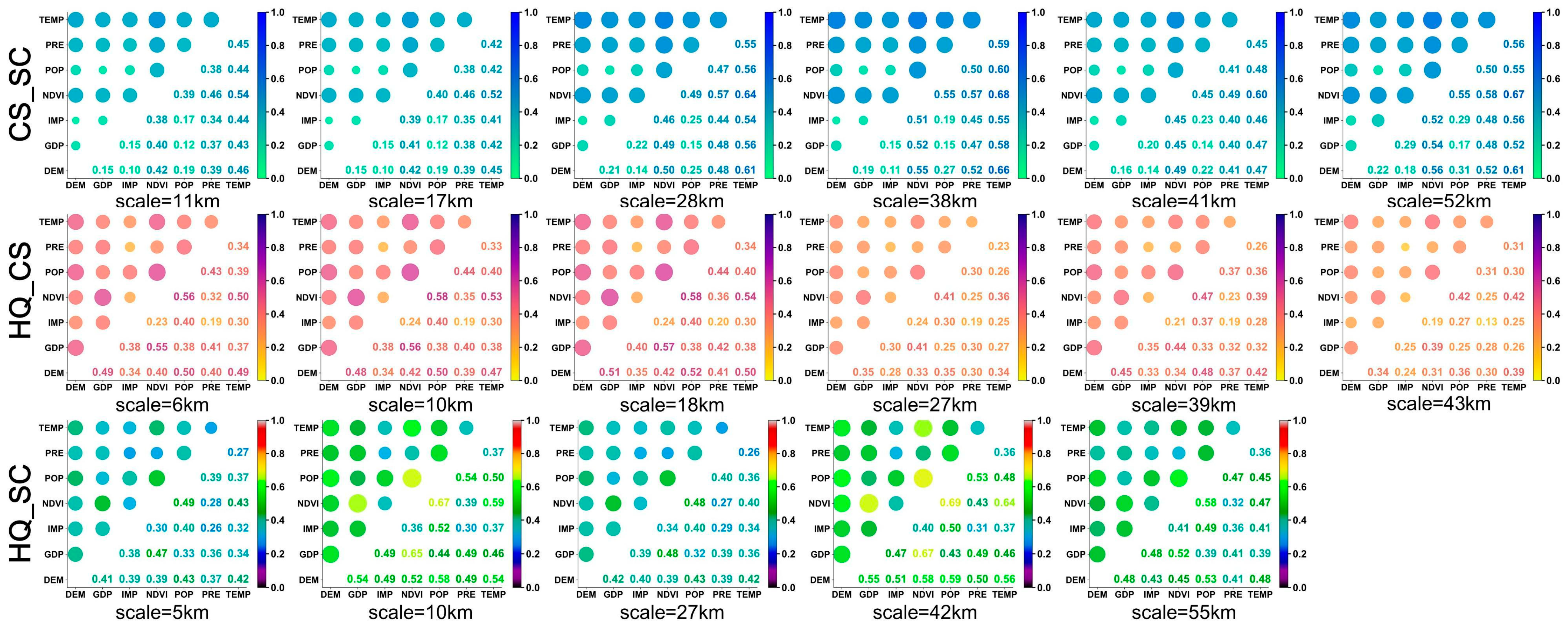
The interactive detection results in 2010 (
Figure 13 and
Figure 14) showed that at the 6 km scale, the trade-offs between CS and SC were most strongly explained by the interactions of POP with NDVI and DEM, with q values of 0.7 and 0.64, respectively. At scales of 11 km and 27 km, the interactions between NDVI and annual average temperature, as well as DEM, showed the highest explanatory power. When the scale increased to 40 km, the interactions between annual average temperature and NDVI, as well as DEM, yielded higher q values (0.69 and 0.67) than other factor combinations. For the trade-offs between HQ and CS, the interactions of NDVI with POP and DEM were dominant at the 5 km and 13 km scales. As the scale increased to 21 km, the q value for the interaction between NDVI and GDP rose significantly, and the key interacting drivers shifted to NDVI with POP and GDP, with q values of 0.42 and 0.39, respectively. At larger scales of 42 km and 56 km, the main influencing factors changed again to NDVI with POP and DEM, and the q value exhibited an increasing trend with scale. The trade-offs between HQ and SC were consistently influenced by the interactions of NDVI with POP and GDP across all characteristic scales, with no change in the dominant interacting factors. The highest q values for these interactions were observed at the 43 km scale, reaching 0.59 and 0.53, respectively.
In the case of the CS and WY trade-offs, the interactions between annual average precipitation and annual average temperature as well as POP were dominant at the 8 km and 12 km scales. When the scale increased to 17 km, the main interacting factors shifted to annual average temperature with NDVI and POP. At scales of 28 km and 48 km, the dominant interactions changed to POP with annual average temperature and annual average precipitation, which showed a higher explanatory power (q values of 0.43 and 0.4) than other factors. For the HQ and WY trade-offs, the interactions between POP and DEM, as well as NDVI and GDP, were most influential at the 5 km and 10 km scales. At 21 km, the dominant interacting factors shifted to NDVI with POP and DEM, accompanied by a decline in q value. As the scale continued to increase, the most influential interactions changed to POP with NDVI and POP with DEM, both with q values exceeding 0.6. Finally, the trade-offs between SC and WY were primarily influenced by the interactions of annual average precipitation with NDVI and DEM at the 6 km and 11 km scales. At 17 km, the q value for the interaction between annual average precipitation and NDVI increased to 0.67. With further increases in scale, the influencing factors stabilized and were dominated by annual average precipitation with NDVI and POP, both maintaining a q value above 0.7.
In 2010, the results of interactive detection showed strong scale-dependent patterns in the drivers of ES trade-off intensity, with dominant interactions shifting across characteristic scales (
Table 7). The CS-SC, CS-WY, and WY-SC trade-off intensities were mainly controlled by temperature, precipitation, NDVI, and POP, while the HQ-WY, HQ-CS, and HQ-SC trade-off intensities were consistently dominated by interactions between NDVI and human activity factors (POP, GDP) across scales.
Results of Interactive Detection for ES Trade-Offs in 2020
The interactive detection results in 2020 (
Figure 15 and
Figure 16) showed that the trade-offs between CS and SC were relatively stable. In the whole characteristic scale range of 11~52 km, the interaction between NDVI and annual average temperature and DEM had higher explanatory power, and with the increase of scale, the q values of the two pairs of driving factors were 0.54 and 0.46 at 11 km, respectively. When the characteristic scale was 52 km, the q values were greater than 0.6, indicating that the trade-offs between CS and SC are mainly affected by natural factors. For the trade-offs between HQ and CS, the interactions between NDVI and POP, as well as GDP, exhibited the highest explanatory power (q > 0.5) at characteristic scales of 6–18 km. However, when the scale increased to 27 km, the explanatory power of these interactions weakened, with the q values declining to 0.40, respectively. As the scale continued to increase, the dominant interaction factors shifted. At 39 km, interactions involving POP with NDVI and DEM showed the highest explanatory power, with q values of 0.47 and 0.48. At 43 km, the dominant factors changed to NDVI with DEM and POP, yielding a q value of 0.42. The main driving factors of the interactive detection trade-offs of HQ and SC were NDVI, GDP, and POP in the range of 5~42 km. When the characteristic scale was 55 km, the main driving factors of interactive detection became POP, NDVI, and DEM, and the q values were all greater than 0.5.
The interactive detection results of trade-offs between CS and WY show that the main driving factors in the range of 5~55 km are annual average precipitation, annual average temperature, and POP. The q values of the two pairs of driving factors show a trend of first increasing then decreasing, and finally rising with the increase of scale. Among them, at the characteristic scale of 15 km, the q values of the two pairs of driving factors are lower than 0.4, indicating that their degree of influence is gradually weakening. When the characteristic scale is 15~55 km, the two pairs of influencing factors increase with the increase of scale. The trade-offs between HQ and WY can be divided into two interval ranges. In the range of 5~20 km, the driving factors of interactive detection are NDVI, GDP, and POP, and the two pairs of q values show an upward trend with the increase of scale. When the feature scale is 39 km and 42 km, the higher explanatory driving factors of interactive detection are POP, NDVI, and DEM. The q values at a scale of 39 km are 0.518 and 0.519, respectively, and rise to 0.586 and 0.582 when the scale increases to 42 km, respectively. The trade-offs between SC and WY are in the range of 6~35 km. The main driving factors of interactive detection are annual average precipitation, NDVI, and IMP. The q values of the interactive detection of two pairs of driving factors decrease with the increase of scale, indicating that the intensity of interaction gradually decreases. When the characteristic scale increases to 44 km, the driving factors of interaction are annual average precipitation, NDVI, and POP, and their q values are all above 0.72. When the characteristic scale increases to 50 km, the main driving factors of the interaction are annual average precipitation, DEM, and NDVI, with q values of 0.72 and 0.8, respectively.
To sum up, the result of the interactive detection results in 2020 showed that ES trade-off intensities were increasingly dominated by natural factor interactions at larger scales (
Table 8). The CS-SC and CS-WY trade-off intensities were mainly regulated by interactions among NDVI, temperature, precipitation, and POP, with explanatory power generally strengthening as scale increased, whereas the HQ-CS, HQ-SC, and HQ-WY trade-off intensities were primarily controlled by interactions between NDVI and human activity factors (POP, GDP) at small–medium scales and gradually shifted toward NDVI and POP or GDP interactions at larger scales.
In summary, from 2000 to 2020, the key interacting factors driving the intensity of ES trade-offs remained relatively stable (
Table 9), whereas their explanatory power (q value) varied with spatial scale. These findings underscore that ESs are shaped by the effects of climatic, natural, and human activity factors, whose impacts are both scale-sensitive and time-variant. Therefore, prioritizing the management of factors involved in high q value interactions is crucial for effective ecosystem service protection.
4. Discussion
4.1. Identifying the Characteristic Scale of Ecosystem Service Trade-Offs
Scale is a critical factor influencing the relationships among ecosystem services. The same scientific question may yield different results at various scales, highlighting the scale effect between ecosystem services. This scale effect complicates the use of conventional linear or nonlinear methods in accurately capturing the trade-offs between ecosystem services. Spatial wavelet transform methods can mitigate the arbitrariness of selecting characteristic scales by identifying them based on the primary periods of wavelet variance. This approach enhances the reliability of ecological process studies by ensuring that the selected scales contain rich structural information.
Figure 5 shows the wavelet variance curves for trade-offs among six pairs of ecosystem services from 2000 to 2020. Notably, the wavelet variance for the same pair of ecosystem services differs across the six transects. This variation arises from the significant latitude differences between transects, which result in distinct spatial heterogeneity in natural geographic phenomena or processes. Interannual variation was observed in the characteristic scales of trade-off intensity for identical ecosystem service pairs. Consequently, the positions of local maxima on the wavelet variance curves vary, reflecting differences in the expression of characteristic information at different scales.
4.2. Scale Effects of Factors Influencing ES Trade-Offs
ES trade-off intensity is influenced by various factors, including climate change, the natural environment, and human activities. Changes in these factors can lead to shifts in ecosystem service functions. Quantifying the contribution of these factors and understanding the mechanisms driven by multiple factors are crucial for this study. Different factors affect the trade-off intensity between ecosystem services at various scales.
Spatial scale is a critical determinant of the relationships among ecosystem services (ESs), as correlations between ESs often vary across scales. Analyses conducted at a single spatial scale may therefore overlook or even misrepresent the true interaction patterns among ecosystem services. This scale dependency arises because ecological processes operate across a hierarchy of spatial scales, and the biophysical linkages among ecosystem services are inherently scale-dependent.
Accordingly, the dominant drivers of ecosystem service trade-off intensity exhibit complex and inconsistent patterns across scales. For trade-off intensity between CS and HQ, human activity factors play a dominant role. These factors are closely associated with urban expansion and habitat fragmentation, which directly degrade habitat integrity. At the same time, intensified human activities alter land use and land cover patterns, thereby reshaping ecosystem composition and structure and ultimately amplifying trade-offs between habitat-related services and other ecosystem functions.
The temporal shift in the dominant drivers of the SC-HQ trade-offs reveals a fundamental change in the underlying human–environment interaction mechanisms. Specifically, the dominant drivers of SC-HQ trade-offs shifted from impervious surface proportion in 2000 to population density in 2020, reflecting intensified urban sprawl and land-use fragmentation. As human activities expand, habitat fragmentation reduces landscape connectivity for various species [
52], while increased population density amplifies disturbance pressures (e.g., pollution and resource extraction), thereby exacerbating trade-offs between soil conservation and habitat quality.
The dominant drivers of the trade-offs between WY and HQ exhibited a relatively stable pattern from 2000 to 2020, with population density (POP) consistently emerging as the primary influencing factor across spatial scales. This temporal stability suggests that the WY-HQ trade-off intensity is closely linked to persistent human pressure rather than short-term environmental fluctuations. As population density increases, water demand for domestic, agricultural, and industrial uses intensifies, leading to greater water extraction and altered hydrological processes. The sustained dominance of POP across multiple time periods indicates that demographic pressure represents a long-term and structurally stable driver of WY-HQ trade-offs in the transition zone, underscoring the importance of population-oriented management strategies for mitigating conflicts between water resource utilization and biodiversity conservation.
In contrast, the dominant drivers of the trade-offs between CS and SC shifted over time, transitioning from climatic controls to vegetation regulation. This shift is largely attributable to the implementation of ecological restoration projects, which enhanced vegetation cover and gradually strengthened the influence of NDVI on both carbon accumulation and soil retention processes.
The trade-off intensity between CS and WY remained relatively stable over time and was primarily regulated by temperature and precipitation. These climatic factors jointly determine the spatial distribution of water yield, and long-term variations in precipitation and temperature exert a stronger influence on water yield dynamics than human activities. This indicates that despite increasing anthropogenic disturbances, climate remains the fundamental constraint governing the CS-WY trade-offs in the transition zone.
The dominant drivers of the trade-off intensity between WY and SC remained relatively stable from 2000 to 2020 and were consistently controlled by climatic factors, particularly precipitation and temperature. This temporal stability indicates that WY-SC trade-offs are primarily regulated by long-term hydro–climatic conditions rather than short-term variations in human activities. Precipitation directly determines runoff generation and soil moisture availability, thereby influencing both water yield and soil erosion processes, while temperature regulates evapotranspiration and vegetation growth, indirectly affecting soil retention capacity. The joint influence of precipitation and temperature shapes the balance between runoff production and soil stabilization, resulting in persistent trade-offs between WY and SC across different time periods. The sustained dominance of climatic drivers suggests that WY-SC trade-offs in the transition zone are structurally constrained by regional climate regimes, highlighting the importance of incorporating climate variability and change into long-term watershed management and soil conservation strategies.
In conclusion, the influencing factors of trade-offs exhibit inconsistent patterns across spatial scales. The factors influencing the trade-off intensity of the same pair of ecosystem services may change. The influence of environmental factors on ecosystem services varied with environmental context, while the magnitude of their effects was strongly scale-dependent [
53]. This is likely due to the varying roles of different influencing factors. At smaller spatial scales, human activities such as socio–economic factors have a more pronounced effect on ecological processes, while natural factors dominate larger-scale ecological processes [
54,
55]. The contributions of factors such as POP and GDP are generally limited across scales, primarily influencing ecological processes at smaller spatial scales [
56,
57]. However, Su et al. [
15] proposed that as the spatial scale increases, factors such as human activities gradually become the dominant influential factors on ecosystem services. The above conclusions are reflected in the research in this study. The reasons for this phenomenon may be attributed to differences in the geographical location and spatial extent of the study areas, the limited comprehensiveness and specificity in the selection of influencing factors by researchers from different disciplinary backgrounds, and variations in the types of ecosystem services studied. Therefore, future research should focus on comparative validation across different regions, selecting influencing factors based on regional environmental conditions, and comprehensively understanding the multi-scale dynamics of changes in the drivers of ecosystem service trade-offs.
4.3. Implications for Ecosystem Service Management
This study analyzed the scale effects of factors influencing ecosystem service trade-off intensity using a grid-based approach. However, grid-based analytical scales do not always align with administrative or management units, which limits the direct translation of these results into policy actions. To bridge this gap, a hierarchical management framework is recommended: ecosystem management should be planned at broader administrative scales to account for overall regional conditions, while grid-based analyses could be used to guide fine-scale, location-specific management interventions. This combined approach enables the integration of scientific analysis with practical policy implementation.
The results further indicate that climatic, human activity, and natural factors exert distinct influences on the trade-off intensity among different ecosystem services. Climatic factors play a dominant role in regulating WY services, as precipitation and temperature directly control WY and SC trade-off intensity. Intensified human activities contribute to habitat fragmentation and degradation, thereby increasing trade-offs involving habitat quality. Natural factors, such as topography and vegetation conditions, also significantly affect CS and other ecosystem functions.
These findings highlight the necessity of incorporating climate change considerations into ecosystem management strategies. Continued implementation of ecological restoration programs, such as reforestation and the conversion of cropland to forest or grassland, is essential to enhance ecosystem resilience to climatic and environmental changes. Moreover, management policies should be spatially differentiated according to local natural conditions and stages of urbanization, allowing for targeted zoning strategies that more effectively promote ecological improvement and sustainable land management.
4.4. Limitations and Future Research Directions
This study uses spatial continuous wavelet transform to determine the characteristic scales of trade-offs between ecosystem services and explores the key factors influencing these trade-offs at different scales. While this method provides research scales with rich structural information, reducing the arbitrariness in scale selection, it also has certain limitations. The characteristic scales identified are based on grid units, leading to a scale mismatch between the analytical framework and administrative boundaries commonly used in public management. This discrepancy poses challenges in directly translating research findings into policy recommendations. Future studies could address this issue by employing a multi-scale analytical approach, where classification and zoning are conducted at the administrative scale while refined management measures are implemented at the grid level. Such an approach would help bridge the gap between analytical and managerial scales, facilitating more effective policy applications.
Additionally, the transects employed in this study vary only along the latitudinal direction and follow a single orientation, which may limit the identification of characteristic scales. Future studies could consider incorporating transects with multiple orientations to enhance the robustness and comprehensiveness of the results. Moreover, the models used for ecosystem service estimation inherently involve a certain degree of uncertainty. To address this, future research will integrate extensive field observations with experimental analyses tailored to the specific characteristics of the study area. This combined approach will facilitate the calibration and validation of key model parameters, enabling an evaluation of their applicability and ultimately improving the accuracy and reliability of ecosystem service simulations.
5. Conclusions
This study adopted a multi-scale perspective and employed spatial continuous wavelet transform to extract the characteristic scales of ES trade-off intensity as the analysis units. Four ESs (WY, HQ, CS, SC) were quantified using the InVEST model, and their scale-dependent driving mechanisms across time were explored using optimal parameter geographical detector (OPGD). The main conclusions of the study are as follows:
- (1)
This study integrates wavelet transform-based scale extraction with OPGD to provide a robust analytical framework for identifying scale-sensitive ecological processes, which can be extended to other regions or ecosystem service types, and the results demonstrate the importance of using characteristic scales rather than arbitrary spatial units in ecosystem service assessments, thereby reducing scale-induced bias in driver identification.
- (2)
The characteristic scales of trade-off intensity between the same pairs of ESs varied across years, indicating temporal instability in the scale at which trade-offs were most prominent. From 2000 to 2020, CS-HQ, SC-HQ, and WY-HQ trade-off intensity were jointly driven by both natural conditions and human activities, whereas CS-SC was predominantly influenced by natural and climatic factors. The trade-offs between CS-WY, WY-SC were mainly controlled by climatic forces.
- (3)
Moreover, the magnitude of influence exerted by each driving factor differed substantially across characteristic scales. Overall, although individual factors can affect trade-off intensity to some extent, multi-factor interactions exerted a far stronger and more significant influence.
- (4)
Ecosystem management should adopt a hierarchical approach in which regional planning is conducted at broad administrative scales, while local interventions are guided by fine-scale ecological information. In addition, management strategies should prioritize factors involved in high-intensity trade-off interactions, particularly those related to climate regulation and human disturbances, to maximize ecological benefits.
- (5)
Future research should apply this framework to additional ecosystem services and socio–ecological contexts to test its generalizability. Moreover, integrating scenario simulations and climate projections would enable the assessment of how ecosystem service trade-offs may evolve under future environmental change.
Despite the strengths of the proposed framework, several limitations should be acknowledged. First, the characteristic scales identified in this study were derived from spatial wavelet analysis based on gridded data that do not fully correspond to administrative or management boundaries, potentially limiting direct policy implementation. Second, ecosystem service estimates were generated using process-based models, and uncertainties in input data, parameterization, and model structure may propagate into the assessment of trade-off intensity across scales. Third, although this study captured the dominant drivers of ecosystem service trade-offs at characteristic scales, potential lag effects and nonlinear responses to long-term climate change and human activities were not explicitly considered. Future studies should incorporate uncertainty analysis, scenario simulations, and multi-model comparisons to further improve the robustness and applicability of multi-scale ecosystem service trade-off assessments.







 ,
,