

Skip to Content

Toxins, Volume 12, Issue 8

2020 August - 61 articles

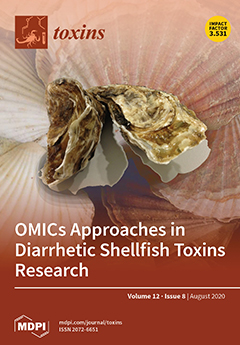
Cover Story: Important seafood resources such as bivalve mollusks are often affected by the occurrence of toxic algal blooms (HABs). Toxic algae lead to the contamination of seafood resources and have severe implications in the environment as well as in aquaculture and human health. Among the biotoxins most often found in seafood are diarrhetic shellfish toxins (DSTs). Despite the advances achieved in the knowledge of these toxins, few measures have been proposed to minimize or prevent the adverse effects of DSTs in the environment and human health. This article focuses on the importance of omics approaches in the investigation of DSTs, particularly on the elucidation of the molecular processes responsible for the toxicity of these molecules, but also on the processes involved in the bioconversion, bioavailability, and bioaccessibility of DSTs. View this paper
  • Issues are regarded as officially published after their release is announced to the table of contents alert mailing list .
  • You may sign up for email alerts to receive table of contents of newly released issues.
  • PDF is the official format for papers published in both, html and pdf forms. To view the papers in pdf format, click on the "PDF Full-text" link, and use the free Adobe Reader to open them.

Articles (61)

  • Article
  • Open Access
28 Citations
4,010 Views
17 Pages

Identification and Structure Elucidation of Epoxyjanthitrems from Lolium perenne Infected with the Endophytic Fungus Epichloë festucae var. lolii and Determination of the Tremorgenic and Anti-Insect Activity of Epoxyjanthitrem I

  • Sarah C. Finch,
  • Michèle R. Prinsep,
  • Alison J. Popay,
  • Alistair L. Wilkins,
  • Nicola G. Webb,
  • Sweta Bhattarai,
  • Joanne G. Jensen,
  • Allan D. Hawkes,
  • Jacob V. Babu and
  • Geoffrey A. Lane
  • + 1 author

17 August 2020

Epoxyjanthitrems I–IV (14) and epoxyjanthitriol (5) were isolated from seed of perennial ryegrass (Lolium perenne) infected with the endophytic fungus Epichloë festucae var. lolii. Although structures for epoxyjanthitrems I–IV...

  • Article
  • Open Access
19 Citations
7,245 Views
21 Pages

Seaweed Essential Oils as a New Source of Bioactive Compounds for Cyanobacteria Growth Control: Innovative Ecological Biocontrol Approach

  • Soukaina El Amrani Zerrifi,
  • Fatima El Khalloufi,
  • Richard Mugani,
  • Redouane El Mahdi,
  • Ayoub Kasrati,
  • Bouchra Soulaimani,
  • Lillian Barros,
  • Isabel C. F. R. Ferreira,
  • Joana S. Amaral and
  • Vitor Vasconcelos
  • + 4 authors

17 August 2020

The application of natural compounds extracted from seaweeds is a promising eco-friendly alternative solution for harmful algae control in aquatic ecosystems. In the present study, the anti-cyanobacterial activity of three Moroccan marine macroalgae...

  • Article
  • Open Access
11 Citations
3,594 Views
18 Pages

Zearalenone and Metabolites in Livers of Turkey Poults and Broiler Chickens Fed with Diets Containing Fusariotoxins

  • Didier Tardieu,
  • Angelique Travel,
  • Jean-Paul Metayer,
  • Celeste Le Bourhis and
  • Philippe Guerre

15 August 2020

Zearalenone (ZEN) and metabolites were measured in livers of turkeys and broilers fed a control diet free of mycotoxins, a diet that contained 0.5 mg/kg ZEN (ZEN diet), and a diet that contained 0.5, 5, and 20 mg/kg of ZEN, fumonisins, and deoxynival...

  • Article
  • Open Access
10 Citations
6,063 Views
11 Pages

Protein Identification of Venoms of the African Spitting Cobras, Naja mossambica and Naja nigricincta nigricincta

  • Ottilie Katali,
  • Loide Shipingana,
  • Peter Nyarangó,
  • Mirva Pääkkönen,
  • Erastus Haindongo,
  • Timothy Rennie,
  • Peter James,
  • John Eriksson and
  • Christian John Hunter

14 August 2020

Cobra snakes, including Naja mossambica and Naja nigricincta nigricincta, are one of the major groups of snakes responsible for snakebites in southern Africa, producing significant cytotoxicity and tissue damage. The venom of N. mossambica has been b...

  • Article
  • Open Access
26 Citations
4,128 Views
12 Pages

Contamination of Zearalenone from China in 2019 by a Visual and Digitized Immunochromatographic Assay

  • Xia Hong,
  • Yuhao Mao,
  • Chuqin Yang,
  • Zhenjiang Liu,
  • Ming Li and
  • Daolin Du

14 August 2020

Zearalenone (ZEN) is a prevalent mycotoxin that needs intensive monitoring. A semi-quantitative and quantitative immunochromatographic assay (ICA) was assembled for investigating ZEN contamination in 187 samples of cereal and their products from Chin...

  • Review
  • Open Access
61 Citations
9,729 Views
24 Pages

Current Insights on Vegetative Insecticidal Proteins (Vip) as Next Generation Pest Killers

  • Tahira Syed,
  • Muhammad Askari,
  • Zhigang Meng,
  • Yanyan Li,
  • Muhammad Ali Abid,
  • Yunxiao Wei,
  • Sandui Guo,
  • Chengzhen Liang and
  • Rui Zhang

14 August 2020

Bacillus thuringiensis (Bt) is a gram negative soil bacterium. This bacterium secretes various proteins during different growth phases with an insecticidal potential against many economically important crop pests. One of the important families of Bt...

  • Article
  • Open Access
32 Citations
4,894 Views
17 Pages

Bioaccumulation and Phytotoxicity and Human Health Risk from Microcystin-LR under Various Treatments: A Pot Study

  • Lei Xiang,
  • Yan-Wen Li,
  • Zhen-Ru Wang,
  • Bai-Lin Liu,
  • Hai-Ming Zhao,
  • Hui Li,
  • Quan-Ying Cai,
  • Ce-Hui Mo and
  • Qing X. Li

14 August 2020

Microcystin-LR (MC-LR) is prevalent in water and can be translocated into soil-crop ecosystem via irrigation, overflow (pollution accident), and cyanobacterial manure applications, threatening agricultural production and human health. However, the ef...

  • Article
  • Open Access
10 Citations
3,841 Views
13 Pages

14 August 2020

Using the pathosystem Phaseolus vulgaris–tobacco necrosis virus (TNV), we demonstrated that PD-L1 and PD-L4, type-1 ribosome inactivating proteins (RIPs) from leaves of Phytolacca dioica L., possess a strong antiviral activity. This activity wa...

  • Article
  • Open Access
9 Citations
3,892 Views
14 Pages

The Proposed Neurotoxin β-N-Methylamino-l-Alanine (BMAA) Is Taken up through Amino-Acid Transport Systems in the Cyanobacterium Anabaena PCC 7120

  • Zi-Qian Wang,
  • Suqin Wang,
  • Ju-Yuan Zhang,
  • Gui-Ming Lin,
  • Nanqin Gan,
  • Lirong Song,
  • Xiaoli Zeng and
  • Cheng-Cai Zhang

13 August 2020

Produced by cyanobacteria and some plants, BMAA is considered as an important environmental factor in the occurrence of some neurodegenerative diseases. Neither the underlying mechanism of its toxicity, nor its biosynthetic or metabolic pathway in cy...

  • Article
  • Open Access
2 Citations
4,042 Views
15 Pages

Production of Recombinant Gelonin Using an Automated Liquid Chromatography System

  • Maria E. B. Berstad,
  • Lawrence H. Cheung and
  • Anette Weyergang

13 August 2020

Advances in recombinant DNA technology have opened up new possibilities of exploiting toxic proteins for therapeutic purposes. Bringing forth these protein toxins from the bench to the bedside strongly depends on the availability of production method...

  • Review
  • Open Access
45 Citations
7,265 Views
17 Pages

12 August 2020

Bacillus thuringiensis (Bt) is an important cosmopolitan bacterial entomopathogen, which produces various protein toxins that have been expressed in transgenic crops. The evolved molecular interaction between the insect immune system and gut microbio...

  • Article
  • Open Access
29 Citations
4,768 Views
15 Pages

12 August 2020

Ochratoxin A (OTA) is a nephrotoxic mycotoxin, which deserves particular attention for its widespread contamination of a variety of food and feed. Aspergillus ochraceus, Aspergillus carbonarius, and Penicillium nordicum are an important source of OTA...

  • Review
  • Open Access
49 Citations
11,718 Views
22 Pages

12 August 2020

Staphylococcus aureus is a Gram-positive pathogen capable of infecting nearly every vertebrate organ. Among these tissues, invasive infection of bone (osteomyelitis) is particularly common and induces high morbidity. Treatment of osteomyelitis is not...

  • Article
  • Open Access
52 Citations
8,283 Views
16 Pages

12 August 2020

The optimal ranges of protein for healthy adult dogs are not known. This study evaluated the impact of long-term consumption of foods containing low, medium, and high levels of protein on serum, urine, and fecal metabolites, and gut microbiome in bea...

  • Review
  • Open Access
28 Citations
5,075 Views
12 Pages

11 August 2020

In occupational settings where exposure to organic dust occurs (e.g., intensive animal production, waste management, farming and many others) workers can also be exposed to mycotoxins. However, recognizing exposure to mycotoxins in workplace environm...

  • Article
  • Open Access
15 Citations
4,595 Views
12 Pages

Survey of Tetrodotoxin in New Zealand Bivalve Molluscan Shellfish over a 16-Month Period

  • Michael J. Boundy,
  • Laura Biessy,
  • Brian Roughan,
  • Jeane Nicolas and
  • D. Tim Harwood

10 August 2020

Tetrodotoxin (TTX) is a heat-stable neurotoxin typically associated with pufferfish intoxications. It has also been detected in shellfish from Japan, the United Kingdom, Greece, China, Italy, the Netherlands and New Zealand. A recent European Food Sa...

  • Article
  • Open Access
13 Citations
8,545 Views
20 Pages

Safety, Tolerability, Pharmacokinetics, and Concentration-QTc Analysis of Tetrodotoxin: A Randomized, Dose Escalation Study in Healthy Adults

  • Mojgan Kavoosi,
  • Terry E. O’Reilly,
  • Mehran Kavoosi,
  • Peng Chai,
  • Caroline Engel,
  • Walter Korz,
  • Christopher C. Gallen and
  • Robert M. Lester

9 August 2020

Tetrodotoxin (TTX) is a highly specific voltage-gated sodium channel (VGSC) blocker in clinical evaluation as a peripheral-acting analgesic for chronic pain. This study presents the first published results of the safety including cardiac liability of...

  • Article
  • Open Access
9 Citations
4,189 Views
14 Pages

8 August 2020

Phospholipase A1 from Thai banded tiger wasp (Vespa affinis) venom also known as Ves a 1 plays an essential role in fatal vespid allergy. Ves a 1 becomes an important therapeutic target for toxin remedy. However, established Ves a 1 structure or a me...

  • Article
  • Open Access
5 Citations
4,830 Views
16 Pages

Purification and Characterization of the Pink-Floyd Drillipeptide, a Bioactive Venom Peptide from Clavus davidgilmouri (Gastropoda: Conoidea: Drilliidae)

  • Victor M. Chua,
  • Joanna Gajewiak,
  • Maren Watkins,
  • Samuel S. Espino,
  • Iris Bea L. Ramiro,
  • Carla A. Omaga,
  • Julita S. Imperial,
  • Louie Paolo D. Carpio,
  • Alexander Fedosov and
  • Gisela P. Concepcion
  • + 3 authors

7 August 2020

The cone snails (family Conidae) are the best known and most intensively studied venomous marine gastropods. However, of the total biodiversity of venomous marine mollusks (superfamily Conoidea, >20,000 species), cone snails comprise a minor fract...

  • Review
  • Open Access
83 Citations
21,165 Views
17 Pages

Foodborne Botulism: Clinical Diagnosis and Medical Treatment

  • Davide Lonati,
  • Azzurra Schicchi,
  • Marta Crevani,
  • Eleonora Buscaglia,
  • Giulia Scaravaggi,
  • Francesca Maida,
  • Marco Cirronis,
  • Valeria Margherita Petrolini and
  • Carlo Alessandro Locatelli

7 August 2020

Botulinum neurotoxins (BoNTs) produced by Clostridia species are the most potent identified natural toxins. Classically, the toxic neurological syndrome is characterized by an (afebrile) acute symmetric descending flaccid paralysis. The most know typ...

  • Article
  • Open Access
73 Citations
5,999 Views
19 Pages

6 August 2020

Pigs are highly susceptible to mycotoxins. This study investigated the effects of a postbiotic yeast cell wall-based blend (PYCW; Nicholasville, KY, USA) on growth and health of newly-weaned pigs under dietary challenge of multiple mycotoxins. Forty-...

  • Review
  • Open Access
21 Citations
6,653 Views
25 Pages

α-Conotoxin Peptidomimetics: Probing the Minimal Binding Motif for Effective Analgesia

  • Adam C. Kennedy,
  • Alessia Belgi,
  • Benjamin W. Husselbee,
  • David Spanswick,
  • Raymond S. Norton and
  • Andrea J. Robinson

6 August 2020

Several analgesic α-conotoxins have been isolated from marine cone snails. Structural modification of native peptides has provided potent and selective analogues for two of its known biological targets—nicotinic acetylcholine and γ-...

  • Article
  • Open Access
15 Citations
4,501 Views
11 Pages

Endothelial Cell-Specific Molecule 1 Promotes Endothelial to Mesenchymal Transition in Renal Fibrosis

  • Tung-Wei Hung,
  • Chao-Yang Chu,
  • Chen-Lin Yu,
  • Chu-Che Lee,
  • Li-Sung Hsu,
  • Yong-Syuan Chen,
  • Yi-Hsien Hsieh and
  • Jen-Pi Tsai

6 August 2020

The endothelial-to-mesenchymal transition (EndoMT) is involved in the complex pathogenesis of renal fibrosis. The soluble proteoglycan endothelial cell-specific molecule 1 (ESM1) is significantly upregulated in many tumor cells and cirrhosis-related...

  • Article
  • Open Access
16 Citations
6,312 Views
13 Pages

Adverse Reactions after Administration of Antivenom in Korea

  • Jin Seok Shim,
  • Hyunggoo Kang,
  • Yongil Cho,
  • Hyungoo Shin and
  • Heekyung Lee

6 August 2020

Kovax® antivenom is the main treatment for toxins produced by the Gloydius species. However, research on adverse reactions after Kovax® antivenom administration is scarce. We aimed to identify the incidence and characteristics of adverse reac...

  • Article
  • Open Access
13 Citations
12,778 Views
18 Pages

Proteotranscriptomic Insights into the Venom Composition of the Wolf Spider Lycosa tarantula

  • Dominique Koua,
  • Rosanna Mary,
  • Anicet Ebou,
  • Celia Barrachina,
  • Khadija El Koulali,
  • Guillaume Cazals,
  • Pierre Charnet and
  • Sebastien Dutertre

5 August 2020

Spider venoms represent an original source of novel compounds with therapeutic and agrochemical potential. Whereas most of the research efforts have focused on large mygalomorph spiders, araneomorph spiders are equally promising but require more sens...

  • Article
  • Open Access
32 Citations
5,261 Views
14 Pages

Indoxyl Sulfate Contributes to Adipose Tissue Inflammation through the Activation of NADPH Oxidase

  • Shoma Tanaka,
  • Hiroshi Watanabe,
  • Takehiro Nakano,
  • Tadashi Imafuku,
  • Hiromasa Kato,
  • Kai Tokumaru,
  • Nanaka Arimura,
  • Yuki Enoki,
  • Hitoshi Maeda and
  • Toru Maruyama
  • + 3 authors

5 August 2020

Adipose tissue inflammation appears to be a risk factor for the progression of chronic kidney disease (CKD), but the effect of CKD on adipose tissue inflammation is poorly understood. The purpose of this study was to clarify the involvement of uremic...

  • Article
  • Open Access
16 Citations
4,503 Views
15 Pages

Cyanobacterial Abundance and Microcystin Profiles in Two Southern British Lakes: The Importance of Abiotic and Biotic Interactions

  • David M. Hartnell,
  • Ian J. Chapman,
  • Nick G. H. Taylor,
  • Genoveva F. Esteban,
  • Andrew D. Turner and
  • Daniel J. Franklin

5 August 2020

Freshwater cyanobacteria blooms represent a risk to ecological and human health through induction of anoxia and release of potent toxins; both conditions require water management to mitigate risks. Many cyanobacteria taxa may produce microcystins, a...

  • Perspective
  • Open Access
32 Citations
5,324 Views
15 Pages

4 August 2020

The three different botulinum toxin type A (BoNT/A) preparations being licensed in Europe and the U.S. differ in protein content, which seems to be a major factor influencing the antigenicity of BoNT/A. In the present study, several arguments out of...

  • Communication
  • Open Access
13 Citations
4,815 Views
17 Pages

Evaluation of Antifungal Activity of Naja pallida and Naja mossambica Venoms against Three Candida Species

  • Ewelina Kuna,
  • Aleksandra Bocian,
  • Konrad K. Hus,
  • Vladimir Petrilla,
  • Monika Petrillova,
  • Jaroslav Legath,
  • Anna Lewinska and
  • Maciej Wnuk

4 August 2020

In contrast to comprehensively investigated antibacterial activity of snake venoms, namely crude venoms and their selected components, little is known about antifungal properties of elapid snake venoms. In the present study, the proteome of two venom...

  • Article
  • Open Access
26 Citations
6,352 Views
11 Pages

Determination of Aflatoxin M1 in Raw Milk from Different Provinces of Ecuador

  • Byron Puga-Torres,
  • David Salazar,
  • Mayra Cachiguango,
  • Gabriela Cisneros and
  • Carlos Gómez-Bravo

3 August 2020

Aflatoxin M1 (AFM1) is a mycotoxin from Aspergillus flavus and A. parasiticus, classified as carcinogenic and hepatotoxic. The objective of the present investigation was to determine its presence in raw milk from north-central Ecuador, constituted by...

  • Article
  • Open Access
21 Citations
4,459 Views
13 Pages

2 August 2020

The mammary gland of the cow is particularly susceptible to infections of a wide range of pathogenic bacteria, including both Gram-positive and Gram-negative bacteria. The endotoxins of these pathogenic bacteria include peptidoglycan (PGN), lipoteich...

  • Article
  • Open Access
25 Citations
4,542 Views
19 Pages

Individual and Combined In Vitro Effects of Deoxynivalenol and Zearalenone on Boar Semen

  • Panagiotis D. Tassis,
  • Ioannis A. Tsakmakidis,
  • Veronika Nagl,
  • Nicole Reisinger,
  • Eleni Tzika,
  • Christiane Gruber-Dorninger,
  • Ilias Michos,
  • Nikolaos Mittas,
  • Athina Basioura and
  • Dian Schatzmayr

1 August 2020

Mycotoxins deoxynivalenol (DON) and zearalenone (ZEN) can negatively affect pig health. However, little is known about their effects on boar semen. We assessed the individual and combined effects of DON and ZEN on boar semen in vitro. In a pretrial,...

  • Article
  • Open Access
40 Citations
4,923 Views
13 Pages

1 August 2020

In practical dairy production, cows are frequently subjected to inflammatory diseases, such as high-grain diet-induced subacute ruminal acidosis (SARA) as well as mastitis and metritis. Under the circumstances, lipopolysaccharide (LPS) induces oxidat...

  • Article
  • Open Access
9 Citations
4,446 Views
10 Pages

Rectus Femoris Characteristics in Post Stroke Spasticity: Clinical Implications from Ultrasonographic Evaluation

  • Lucia Cosenza,
  • Alessandro Picelli,
  • Danila Azzolina,
  • Marco Alessandro Minetto,
  • Marco Invernizzi,
  • Michele Bertoni,
  • Andrea Santamato and
  • Alessio Baricich

31 July 2020

In stroke survivors, rectus femoris (RF) spasticity is often implicated in gait pattern alterations such as stiff knee gait (SKG). Botulinum toxin type A (BoNT-A) is considered the gold standard for focal spasticity treatment. However—even if t...

  • Article
  • Open Access
20 Citations
5,911 Views
31 Pages

Revealing the Therapeutic Potential of Botulinum Neurotoxin Type A in Counteracting Paralysis and Neuropathic Pain in Spinally Injured Mice

  • Valentina Vacca,
  • Luca Madaro,
  • Federica De Angelis,
  • Daisy Proietti,
  • Stefano Cobianchi,
  • Tiziana Orsini,
  • Pier Lorenzo Puri,
  • Siro Luvisetto,
  • Flaminia Pavone and
  • Sara Marinelli

31 July 2020

Botulinum neurotoxin type A (BoNT/A) is a major therapeutic agent that has been proven to be a successful treatment for different neurological disorders, with emerging novel therapeutic indications each year. BoNT/A exerts its action by blocking SNAR...

  • Article
  • Open Access
36 Citations
7,065 Views
12 Pages

The Effects of Botulinum Toxin Injections on Spasticity and Motor Performance in Chronic Stroke with Spastic Hemiplegia

  • Yen-Ting Chen,
  • Chuan Zhang,
  • Yang Liu,
  • Elaine Magat,
  • Monica Verduzco-Gutierrez,
  • Gerard E. Francisco,
  • Ping Zhou,
  • Yingchun Zhang and
  • Sheng Li

31 July 2020

Spastic muscles are weak muscles. It is known that muscle weakness is linked to poor motor performance. Botulinum neurotoxin (BoNT) injections are considered as the first-line treatment for focal spasticity. The purpose of this study was to quantitat...

  • Review
  • Open Access
22 Citations
8,459 Views
24 Pages

OMICs Approaches in Diarrhetic Shellfish Toxins Research

  • Alexandre Campos,
  • Marisa Freitas,
  • André M. de Almeida,
  • José Carlos Martins,
  • Dany Domínguez-Pérez,
  • Hugo Osório,
  • Vitor Vasconcelos and
  • Pedro Reis Costa

31 July 2020

Diarrhetic shellfish toxins (DSTs) are among the most prevalent marine toxins in Europe’s and in other temperate coastal regions. These toxins are produced by several dinoflagellate species; however, the contamination of the marine trophic chai...

  • Review
  • Open Access
44 Citations
11,003 Views
27 Pages

Advances in Detecting Ciguatoxins in Fish

  • Tibor Pasinszki,
  • Jimaima Lako and
  • Todd E. Dennis

31 July 2020

Ciguatera fish poisoning (CFP) is currently the most common marine biotoxin food poisoning worldwide, associated with human consumption of circumtropical fish and marine invertebrates that are contaminated with ciguatoxins. Ciguatoxins are very poten...

  • Article
  • Open Access
27 Citations
5,475 Views
30 Pages

Enhanced Antimicrobial Activity of N-Terminal Derivatives of a Novel Brevinin-1 Peptide from The Skin Secretion of Odorrana schmackeri

  • Xiaowei Zhou,
  • Yue Liu,
  • Yitian Gao,
  • Yuanxing Wang,
  • Qiang Xia,
  • Ruimin Zhong,
  • Chengbang Ma,
  • Mei Zhou,
  • Xinping Xi and
  • Lei Wang
  • + 4 authors

30 July 2020

Antimicrobial peptides (AMPs) are promising therapeutic alternatives compared to conventional antibiotics for the treatment of drug-resistant bacterial infections. However, the application of the overwhelming majority of AMPs is limited because of th...

  • Article
  • Open Access
17 Citations
7,412 Views
16 Pages

Intra-Specific Venom Variation in the Australian Coastal Taipan Oxyuranus scutellatus

  • Theo Tasoulis,
  • Anjana Silva,
  • Punnam Chander Veerati,
  • Mark Baker,
  • Wayne C. Hodgson,
  • Nathan Dunstan and
  • Geoffrey K. Isbister

30 July 2020

Intra-specific venom variation has the potential to provide important insights into the evolution of snake venom, but remains a relatively neglected aspect of snake venom studies. We investigated the venom from 13 individual coastal taipans Oxyuranus...

  • Article
  • Open Access
1 Citations
3,942 Views
14 Pages

Purification, Toxicity and Functional Characterization of a New Proteinaceous Mussel Biotoxin from Bizerte Lagoon

  • Riadh Marrouchi,
  • Evelyne Benoit,
  • Sébastien Schlumberger,
  • Zeineb Marzougui,
  • Jean-Pierre Le Caer,
  • Jordi Molgó and
  • Riadh Kharrat

30 July 2020

The marine environment is known to be occupied by microorganisms. The potential toxicity of some of these marine microorganisms, that are capable of producing unknown biotoxins, has always been underestimated. Indeed, these biotoxins may be a threat...

  • Article
  • Open Access
38 Citations
5,398 Views
13 Pages

Simultaneous Quantification of Aflatoxin B1, T-2 Toxin, Ochratoxin A and Deoxynivalenol in Dried Seafood Products by LC-MS/MS

  • Yijia Deng,
  • Yaling Wang,
  • Qi Deng,
  • Lijun Sun,
  • Rundong Wang,
  • Xiaobo Wang,
  • Jianmeng Liao and
  • Ravi Gooneratne

30 July 2020

Mycotoxins are secondary metabolites produced by fungi. These contaminate dried seafoods during processing and storage and represent a potential health hazard for consumers. A sensitive, selective and accurate liquid chromatography/tandem mass spectr...

  • Review
  • Open Access
103 Citations
10,061 Views
19 Pages

Mycotoxins in Feed and Food and the Role of Ozone in Their Detoxification and Degradation: An Update

  • Giuseppe Conte,
  • Marco Fontanelli,
  • Francesca Galli,
  • Lorenzo Cotrozzi,
  • Lorenzo Pagni and
  • Elisa Pellegrini

30 July 2020

Mycotoxins are secondary metabolites produced by some filamentous fungi, which can cause toxicity in animal species, including humans. Because of their high toxicological impacts, mycotoxins have received significant consideration, leading to the def...

  • Article
  • Open Access
12 Citations
5,301 Views
19 Pages

In Vivo Evaluation of the Chronic Oral Toxicity of the Marine Toxin Palytoxin

  • Andrea Boente-Juncal,
  • Sandra Raposo-García,
  • Carmen Vale,
  • M. Carmen Louzao,
  • Paz Otero and
  • Luis M. Botana

30 July 2020

Palytoxin (PLTX) is one of the most poisonous substances known to date and considered as an emergent toxin in Europe. Palytoxin binds to the Na+-K+ ATPase, converting the enzyme in a permeant cation channel. This toxin is known for causing human fata...

  • Article
  • Open Access
11 Citations
4,226 Views
22 Pages

Molecular and Structural Basis of Cross-Reactivity in M. tuberculosis Toxin–Antitoxin Systems

  • Himani Tandon,
  • Akhila Melarkode Vattekatte,
  • Narayanaswamy Srinivasan and
  • Sankaran Sandhya

29 July 2020

Mycobacterium tuberculosis genome encodes over 80 toxin–antitoxin (TA) systems. While each toxin interacts with its cognate antitoxin, the abundance of TA systems presents an opportunity for potential non-cognate interactions. TA systems mediat...

  • Review
  • Open Access
33 Citations
19,162 Views
14 Pages

29 July 2020

Recently, consumption of the gyromitrin-containing neurotoxic mushroom Gyromitra sp. (false morel), as gourmet food was hypothesized to play a role in sporadic amyotrophic lateral sclerosis genesis. The present review analyses recent data on edibilit...

  • Feature Paper
  • Article
  • Open Access
7 Citations
4,212 Views
13 Pages

Primary Human Derived Blood Outgrowth Endothelial Cells: An Appropriate In Vitro Model to Study Shiga Toxin Mediated Damage of Endothelial Cells

  • Wouter J. C. Feitz,
  • Nicole C. A. J. van de Kar,
  • Ian Cheong,
  • Thea J. A. M. van der Velden,
  • Carolina G. Ortiz-Sandoval,
  • Dorothea Orth-Höller,
  • Lambert P. J. W. van den Heuvel and
  • Christoph Licht

29 July 2020

Hemolytic uremic syndrome (HUS) is a rare disease primarily characterized by hemolytic anemia, thrombocytopenia, and acute renal failure. Endothelial damage is the hallmark of the pathogenesis of HUS with an infection with the Shiga toxin (Stx) produ...

  • Article
  • Open Access
65 Citations
7,587 Views
14 Pages

Effect of Temperature, Water Activity and Carbon Dioxide on Fungal Growth and Mycotoxin Production of Acclimatised Isolates of Fusarium verticillioides and F. graminearum

  • Ladi Peter Mshelia,
  • Jinap Selamat,
  • Nik Iskandar Putra Samsudin,
  • Mohd Y. Rafii,
  • Noor-Azira Abdul Mutalib,
  • Noordiana Nordin and
  • Franz Berthiller

28 July 2020

Climate change is primarily manifested by elevated temperature and carbon dioxide (CO2) levels and is projected to provide suitable cultivation grounds for pests and pathogens in the otherwise unsuitable regions. The impacts of climate change have be...

  • Article
  • Open Access
20 Citations
4,698 Views
12 Pages

Iron Deposits in Periaqueductal Gray Matter Are Associated with Poor Response to OnabotulinumtoxinA in Chronic Migraine

  • Clara Domínguez Vivero,
  • Yago Leira,
  • Marta Saavedra Piñeiro,
  • Xiana Rodríguez-Osorio,
  • Pedro Ramos-Cabrer,
  • Carmen Villalba Martín,
  • Tomás Sobrino,
  • Francisco Campos,
  • José Castillo and
  • Rogelio Leira

28 July 2020

Previous studies have reported increased brain deposits of iron in patients with chronic migraine (CM). This study aims to determine the relation between iron deposits and outcome after treatment with OnabotulinumtoxinA (OnabotA). Demographic and cli...

of 2

XFacebookLinkedIn
Toxins - ISSN 2072-6651