



Skip to Content
You are currently on the new version of our website. Access the old version .

All Articles (36,960)

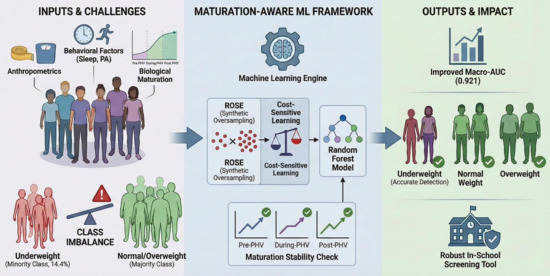
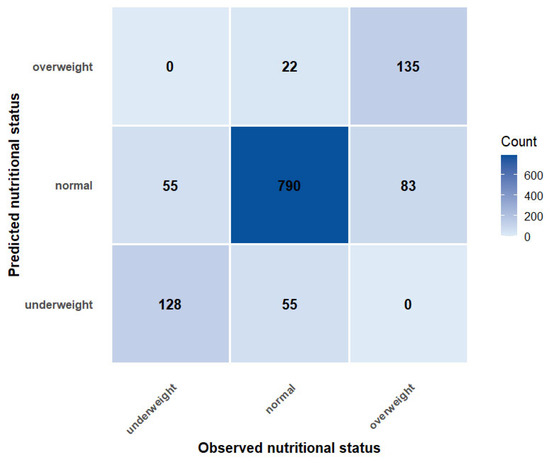
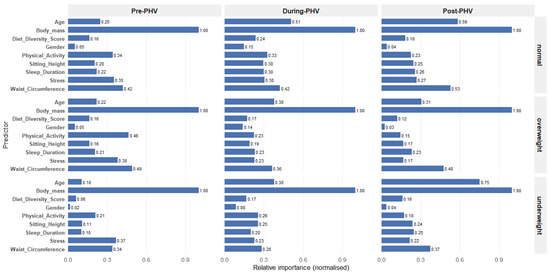
Background: Malnutrition in adolescents remains a significant public health issue worldwide, with undernutrition and overweight often coexisting. Accurate nutritional screening during adolescence is complicated by variability in biological maturation and class imbalance, particularly among underweight adolescents. Objective: This study aims to develop and validate machine learning models for classifying the nutritional status of adolescents, accounting for class imbalance and biological maturation, and to evaluate model stability and variable importance at different stages of peak height velocity (PHV). Methods: In this cross-sectional study, 4232 adolescents aged 11 to 18 years were recruited from nine educational institutions in Tunisia. Their nutritional status was classified according to the International Obesity Task Force (IOTF) BMI thresholds into three categories: underweight (14.4%), normal weight (68.3%), and overweight (17.2%). Ten anthropometric, behavioral, and maturation-related predictors were analyzed. Six supervised machine learning algorithms were evaluated using a 70/30 stratified split between training and test sets, with five-fold cross-validation. Class imbalance was addressed by ROSE combined with cost-sensitive learning. Model performance was assessed using accuracy, Cohen’s kappa coefficient, macro F1 score, sensitivity, specificity, and AUC. Results: The cost-sensitive Random Forest (RF) model achieved the best overall performance, with an accuracy of 0.830, a macro F1 score of 0.767, a macro-AUC of 0.921, and a macro- sensitivity of 0.743. The class-specific sensitivities were 0.70 (underweight), 0.91 (normal weight), and 0.62 (overweight), with no major misclassification between the extreme categories. Performance remained stable across the different maturation phases (accuracy from 0.823 to 0.839), with optimal discrimination in the pre-PHV (macro-AUC = 0.936; sensitivity for underweight = 0.82) and post-PHV (macro-AUC = 0.931) periods. Body mass was the main predictor (importance = 1.00), followed by waist circumference (0.34–0.53). The importance of age for classifying underweight increased significantly from the pre-PHV (0.10) to the post-PHV (0.75) period. A two-stage hierarchical model further improved underweight detection (stage 1 AUC = 0.911; sensitivity = 0.732). Conclusions: A cost-sensitive RF model, combined with ROSE, provides robust classification of adolescents’ nutritional status maturation, significantly improving underweight detection while preserving overall accuracy. This approach is particularly well-suited to public health screening in schools as a first-stage assessment that requires clinical confirmation and promotes a maturation-aware interpretation of nutritional risk among adolescents.
17 February 2026

Confusion Matrix of Cost-Sensitive Random Forest.

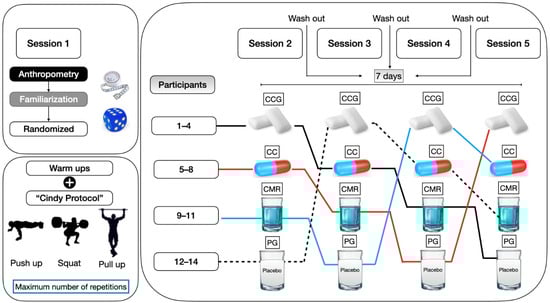
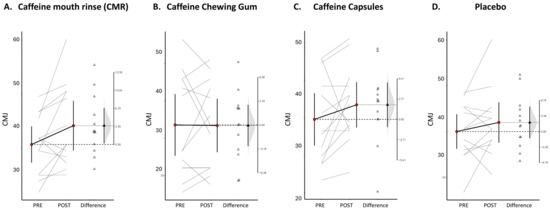
Background/Objectives: The aim of this study was to compare the different forms of caffeine (CAF) administration in CrossFit® participants. The countermovement jump (CMJ), the rate of perceived exertion (RPE), the total number of repetitions, and the maximum (HRmax) and mean heart rate (HRmean) were evaluated. Methods: Fourteen males with more than six months of continuous CrossFit® training (30.9 [5.62] years, 179 [1.33] cm, 78 [5.75] kg, 24.3 [1.33] kg·m−2) participated in this randomized, placebo-controlled, crossover study. Participants were randomized in a repeated measures design using caffeine capsule (CC), caffeine chewing gum (CCG), and caffeine mouth rinse (CMR) protocols, along with a placebo group (PG). Participants were unaware of whether any of the delivery methods contained caffeine. A 7-day washout period before each crossover was used. To ensure ecological validity, we replicated the real-world practice of CAF ingestion 30 min prior to training, mirroring typical athlete pre-workout routines. The participants of CrossFit® performed the ‘Cindy’ protocol, and the CMJ as a primary outcome was measured pre- and post-intervention, while the RPE, HR, and the number of repetitions were tracked at the end of the workout for comparisons. Results: No significant differences were found between CAF forms in internal load measures (RPE, HRmax, HRmean) or the number of repetitions. While no changes were observed with other CAF forms, CMR significantly improved the CMJ performance compared to the baseline (Δ: +3.5; Cohen’s dunb: 0.51], which exceeded the estimated SWC by approximately three-fold. However, the inferential analysis revealed no significant main effects of the caffeine administration method on any measured outcomes. Conclusions: While CAF delivery forms did not improve internal load measures or performance parameters, such as the RPE, HR, or the total number of repetitions, the caffeine mouth rinse (CMR) showed a potentially meaningful improvement in CMJ performance after CrossFit® training in participants with a certain level of experience.

17 February 2026

Background/Objectives: This study aimed to examine levels of food agency and intentions to improve cooking skills among Korean young adults in their 20s, and to identify demographic differences and underlying motivators. Subjects/Methods: An online survey was administered from February 18 to 25, 2021, targeting Korean adults aged 20–29 years (n = 1102; 579 men, 523 women). Food agency was assessed using the Cooking and Food Provisioning Action Scale (CAFPAS), comprising three subscales: self-efficacy (13 items), attitude (10 items), and structure (5 items). Participants also reported their intentions to improve cooking skills and the motivators behind those intentions. Reliability of multi-item measures was confirmed using Cronbach’s alpha. Descriptive statistics were calculated for all study variables. Demographic differences in food agency and intentions were analyzed using independent t-tests and one-way ANOVA. Open-ended responses were analyzed using qualitative content analysis to explore key motivators. Statistical analyses were performed using SPSS Statistics 28.0 (α = 0.05). Results: Food agency scores were significantly lower among university graduates, employed individuals, and those from lower-income households. Single-person households reported significantly higher self-efficacy and attitude scores, while structure scores were significantly lower in this group. Lower structure scores were also observed among women; university graduates or individuals with higher levels of education; employed respondents; and those belonging to the low-income group. Intentions to improve cooking skills were significantly higher among women and single-person households. Qualitative analysis identified media influence and the demands of independent living as primary motivational drivers. Conclusions: These findings highlight the need for targeted interventions to enhance structural capacity for food agency, particularly among women, employed individuals, those with higher education, and people in the low-income range. Efforts should focus on leveraging media influence and supporting individuals adapting to independent living to promote cooking skill development.

17 February 2026

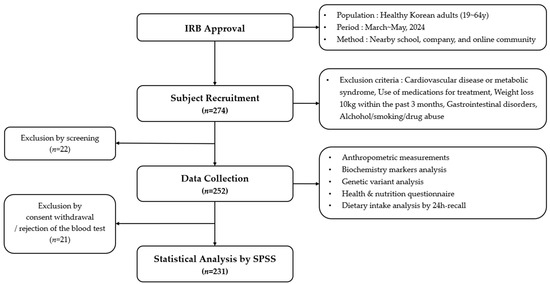
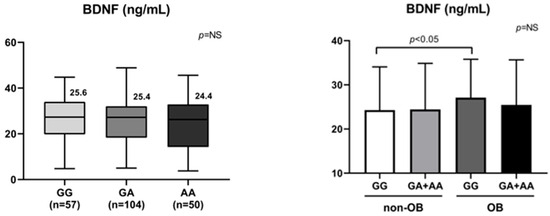
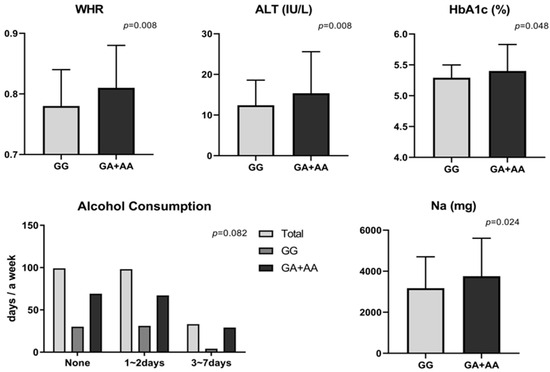
Background/Objectives: Among more than 300 candidate genes for obesity, FTO, MC4R, and BDNF have been approved for DTC genetic testing. However, population-specific evidence supporting their relevance to obesity-related phenotypes in Koreans remains limited. Methods: A total of 231 healthy adults aged 19–64 years were recruited between March and May 2024. Anthropometric and clinical measurements, genotyping, dietary intake, and questionnaires on socioeconomic status, family history, and lifestyle behaviors were obtained. Associations between genotypes and obesity-related phenotypes were evaluated using ANOVA and ANCOVA, multivariable-adjusted models and multicollinearity analysis-based stepwise regression. Results: In Koreans, MAFs for FTO (3 SNPs), MC4R rs17782313 and BDNF rs6265 were 13–16%, 27.1% and 47.4%, respectively. OB frequency (%) differed significantly between BDNF GG and A allele carriers (p < 0.05). Compared to GG, BDNF A allele carriers showed higher WHR, ALT, HbA1c and sodium intake (p < 0.05). BDNF A allele carriers were observed to have higher drinking frequency and elevated ALT levels. Significant genotype–obesity interactions were identified for RMR/BW status, dietary fiber, Vit E, folate, P, K, cholesterol, and PUFA (p < 0.05). Among A allele carriers, OB-related indicators (BMI, RMR, WHR) were independently associated with age, sex, RMR, SBP, ALT, leptin, and dietary intakes of Vit A and sugars. Conclusions: These findings support the relevance of BDNF rs6265 in obesity phenotypes among Korean adults and provide Korean-specific evidence for genotype-based nutrition strategies. Given the cross-sectional study, the interpretation of personalized nutrition approaches for genetic risk carriers should be made with caution.
16 February 2026

News & Conferences

Issues

Open for Submission

Editor's Choice

Reprints of Collections

Body Image and Nutritional Status Among Adolescents and Adults
Reprint

Body Image and Nutritional Status Among Adolescents and Adults

Editors: Emanuela Gualdi-Russo, Luciana Zaccagni
Dietary Supplements in Human Health and Disease
Reprint

Dietary Supplements in Human Health and Disease

Editors: Elisa Benetti, Valentina Boscaro

Get Alerted

Add your email address to receive forthcoming issues of this journal.

XFacebookLinkedIn
Nutrients - ISSN 2072-6643