
Journal Description
Wind
Wind
is an international, peer-reviewed, open access journal on wind-related technologies, environmental and sustainability studies published quarterly online by MDPI.
- Open Access— free for readers, with article processing charges (APC) paid by authors or their institutions.
- High Visibility: indexed within ESCI (Web of Science), Scopus, and other databases.
- Journal Rank: CiteScore - Q2 (Engineering (miscellaneous))
- Rapid Publication: manuscripts are peer-reviewed and a first decision is provided to authors approximately 25 days after submission; acceptance to publication is undertaken in 9.6 days (median values for papers published in this journal in the second half of 2025).
- Recognition of Reviewers: APC discount vouchers, optional signed peer review, and reviewer names published annually in the journal.
- Journal Cluster of Energy and Fuels: Energies, Batteries, Hydrogen, Biomass, Electricity, Wind, Fuels, Gases, Solar, ESA, Bioresources and Bioproducts and Methane.
Impact Factor:
1.7 (2024);
5-Year Impact Factor:
1.6 (2024)
Latest Articles
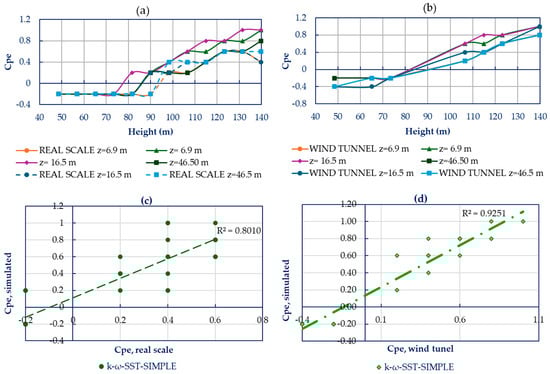
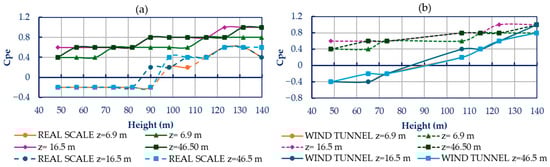
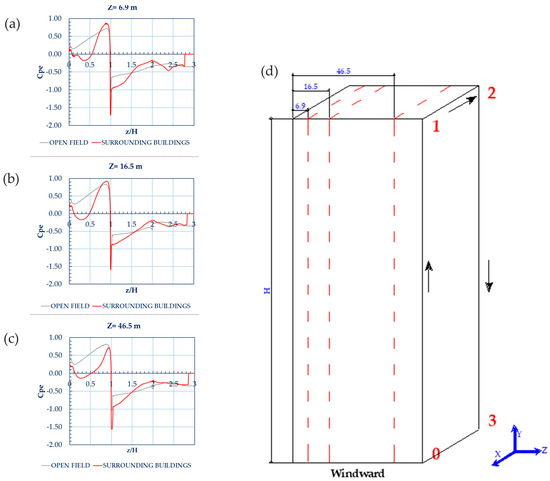
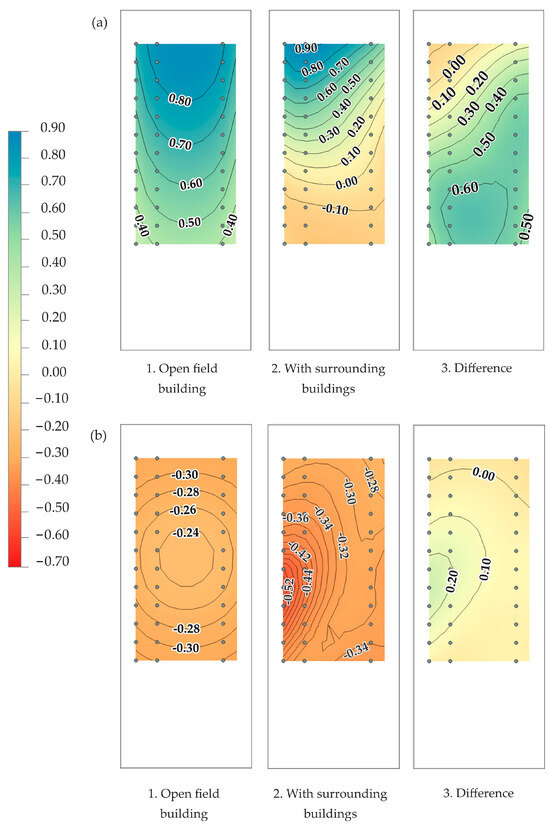
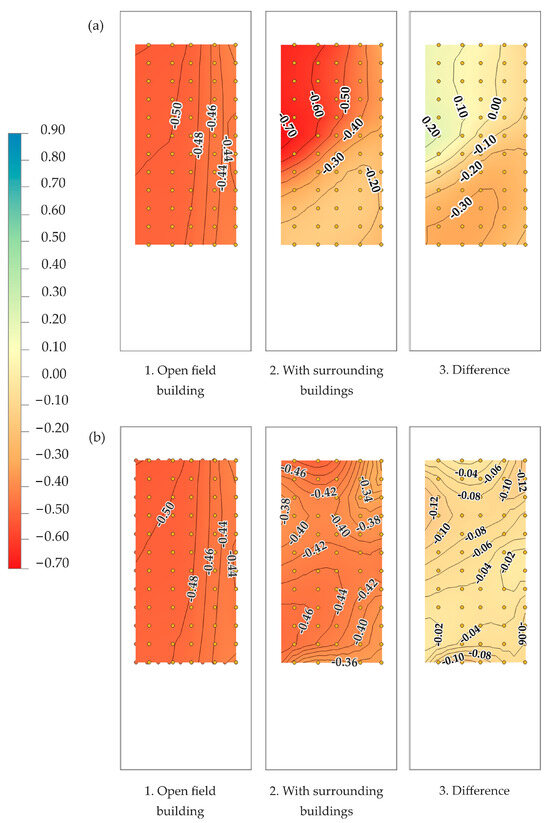
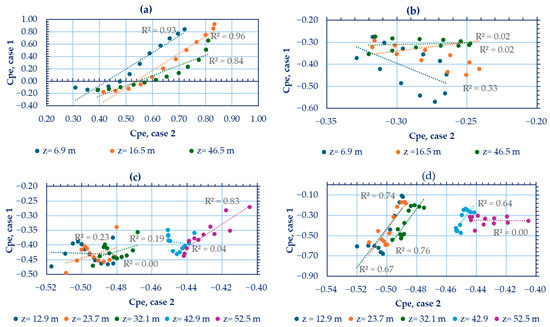
Wind Effects of Surrounding Structures in an Urban Area on a High-Rise Building by Computational Fluid Dynamics
Wind 2026, 6(2), 16; https://doi.org/10.3390/wind6020016 - 2 Apr 2026
Abstract
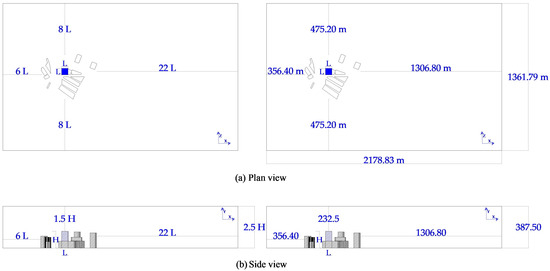
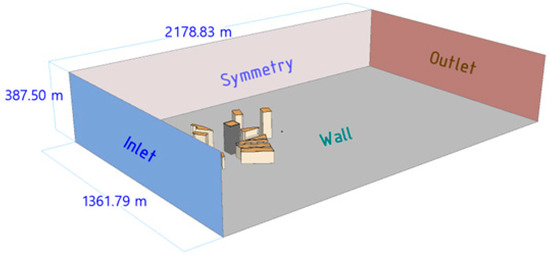
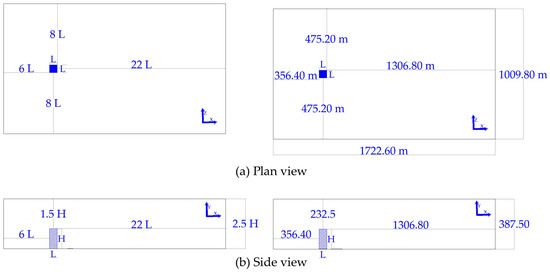
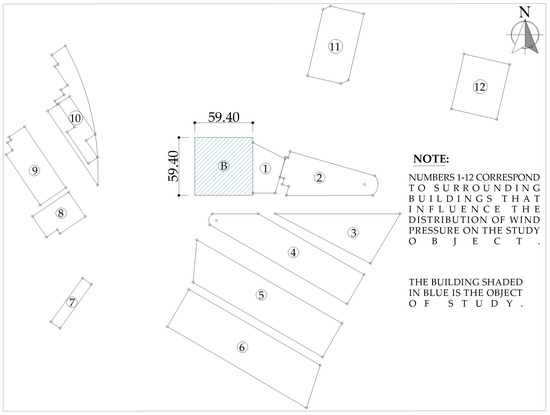
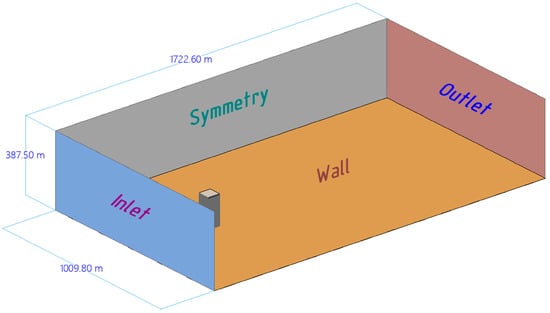
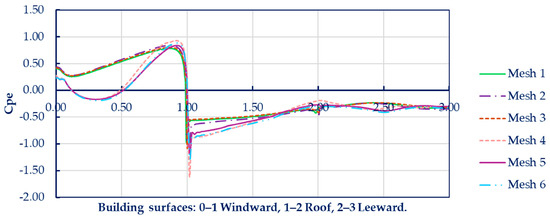
Wind design aims to ensure the stability, safety, and durability of a structure exposed to wind forces. This comparative study using Computational Fluid Dynamics (CFD) was conducted to evaluate the effects of surrounding structures in wind building design. Two scenarios were analyzed: the
[...] Read more.
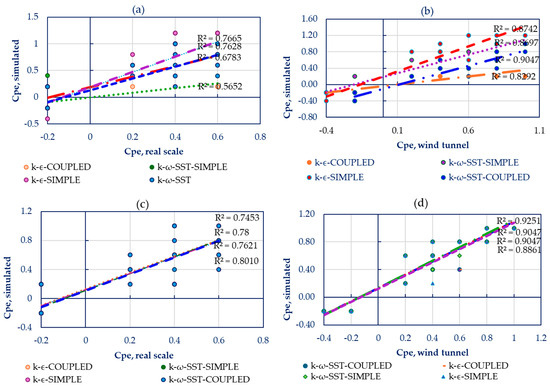
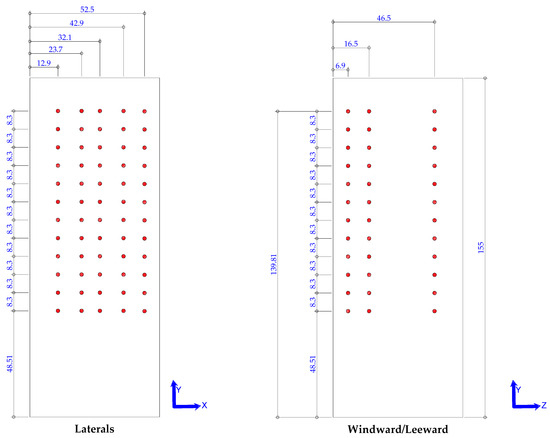
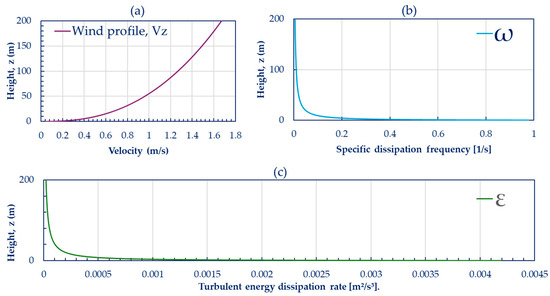
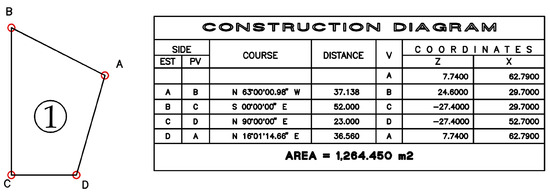
Wind design aims to ensure the stability, safety, and durability of a structure exposed to wind forces. This comparative study using Computational Fluid Dynamics (CFD) was conducted to evaluate the effects of surrounding structures in wind building design. Two scenarios were analyzed: the first, in which the building was exposed to an open field, and the second, in which the building was surrounded by other buildings of equal or lower height. A CFD model, previously calibrated with experimental data, was used to simulate wind behavior. The results obtained showed significant differences between the two scenarios, confirming that nearby structures have a considerable impact on the distribution of wind pressures on the building. Therefore, the importance of considering surrounding buildings is highlighted. CFD could be a useful complementary tool for obtaining pressure coefficients and for detailed analyses of wind behavior, which could improve the design and safety of buildings under wind loads.
Full article
(This article belongs to the Special Issue Wind Effects on Civil Infrastructure)
►
Show Figures
Open AccessArticle
Building a Classification Map of Wind Turbine Characteristics Compatible with the Winds of Middle and Southern Regions in Iraq
by
Firas A. Hadi, Rawnak A. Abdulwahab and Khattab Al-Khafaji
Wind 2026, 6(2), 15; https://doi.org/10.3390/wind6020015 - 2 Apr 2026
Abstract
►▼
Show Figures
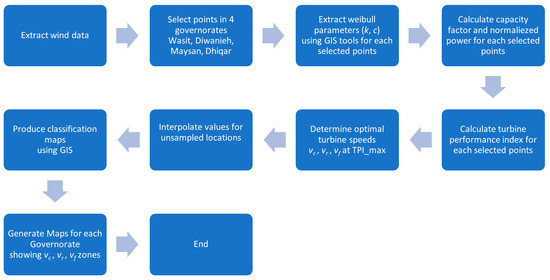
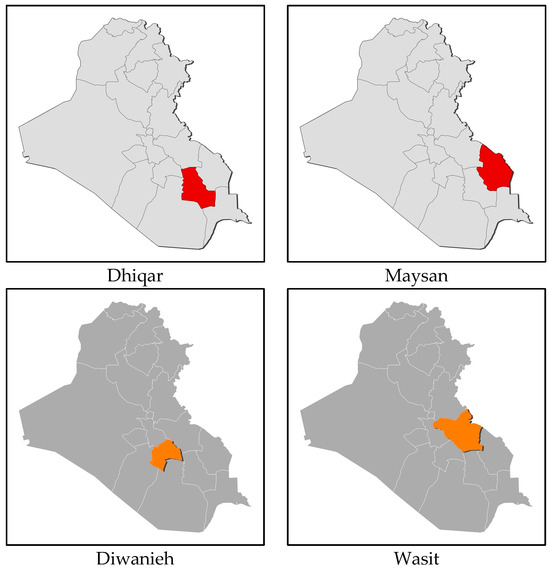
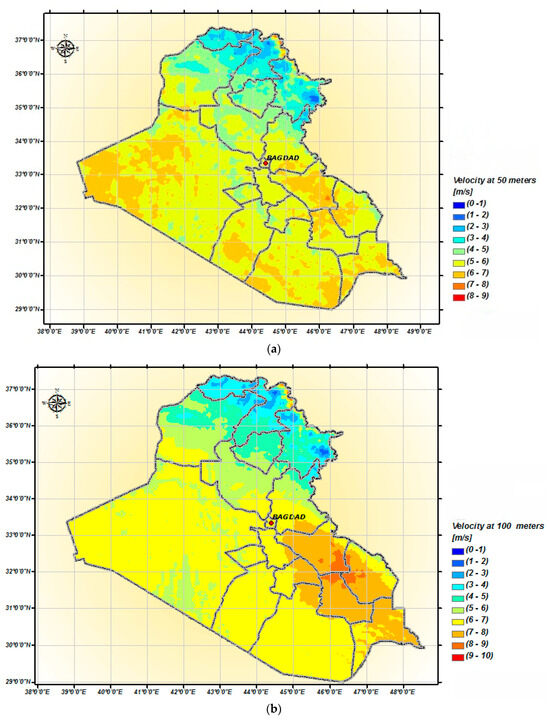
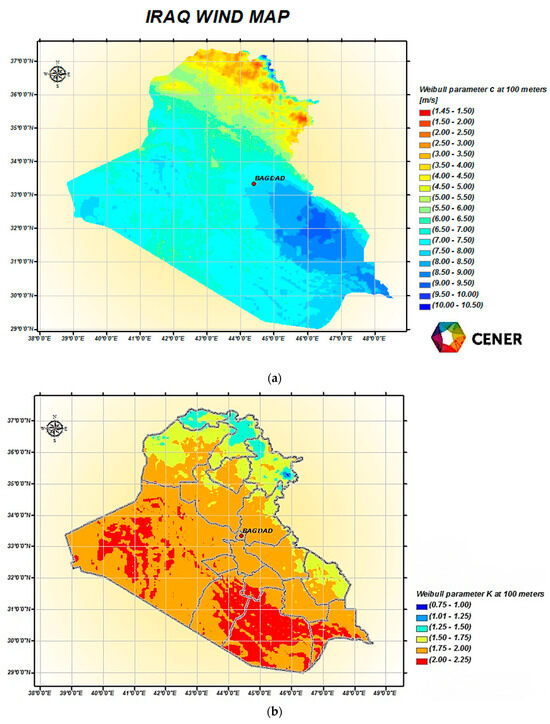
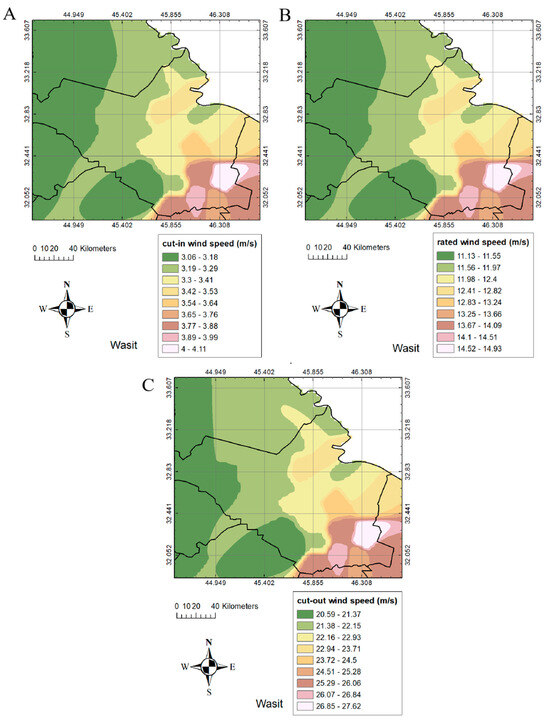
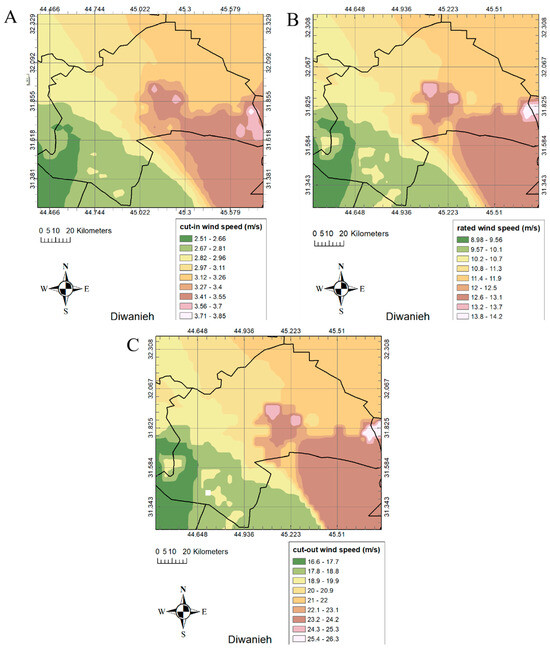
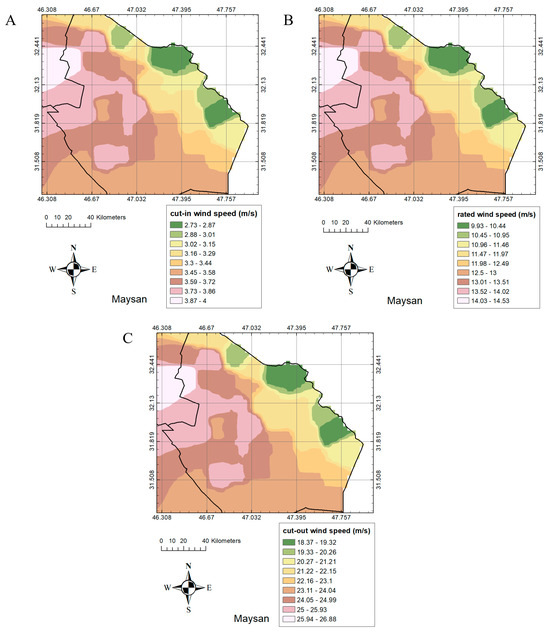
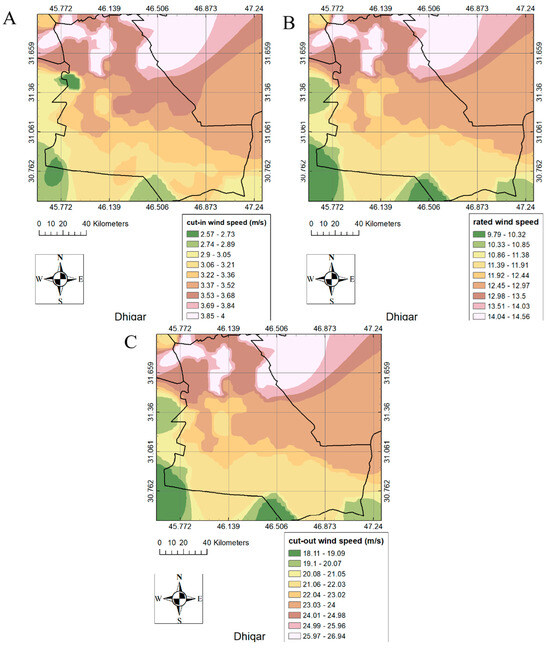
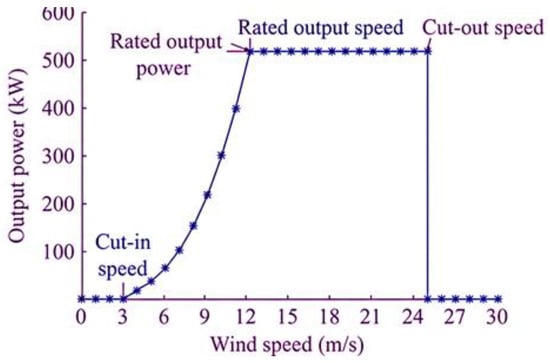
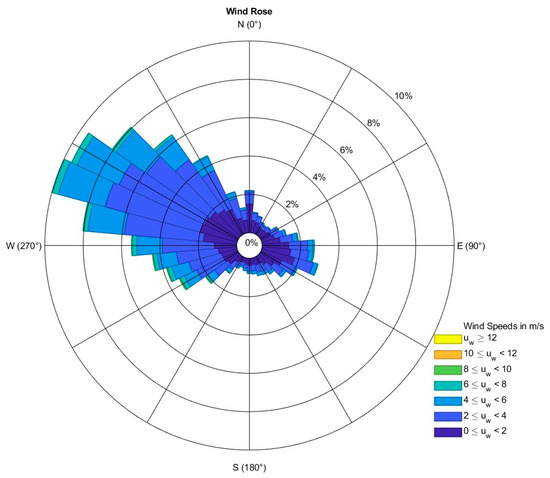
The research creates classification maps of wind turbine operational speeds based on the wind regimes of four governorates in central and southern Iraq: Wasit, Diwaniyah, Maysan, and Dhiqar. High-resolution wind data from GEOSUN resource maps, together with statistical analysis of the Weibull distribution,
[...] Read more.
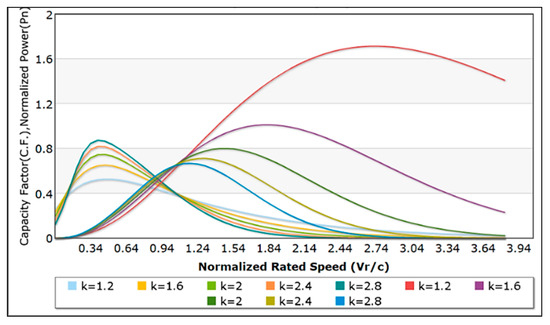
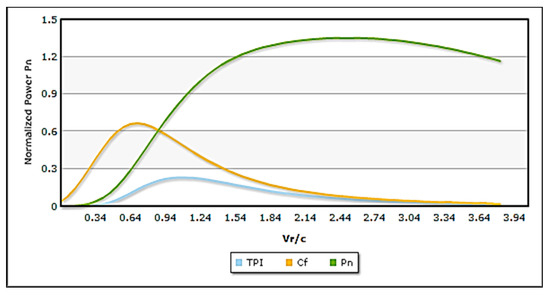
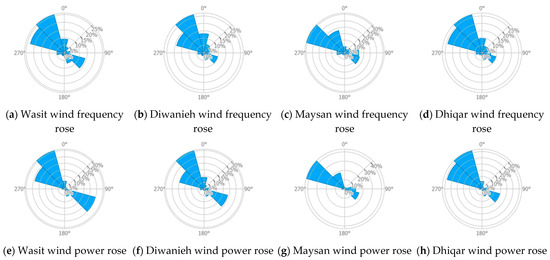
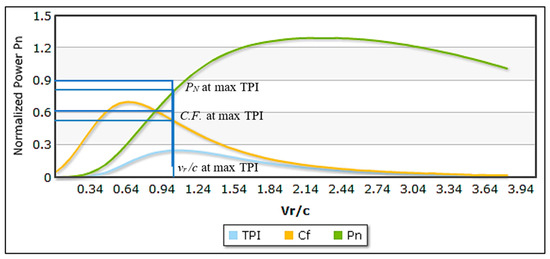
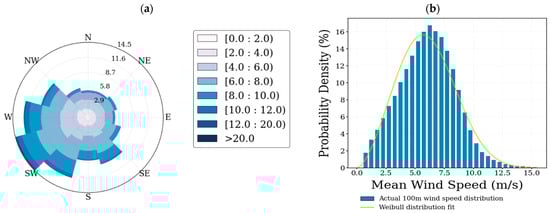
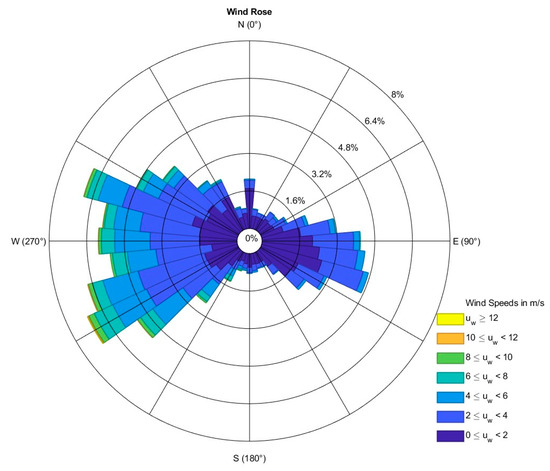
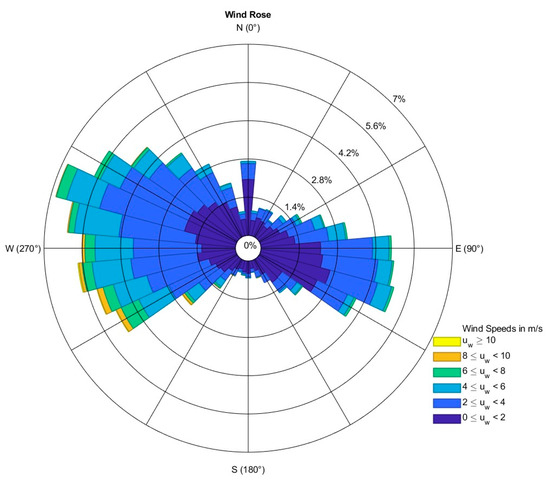
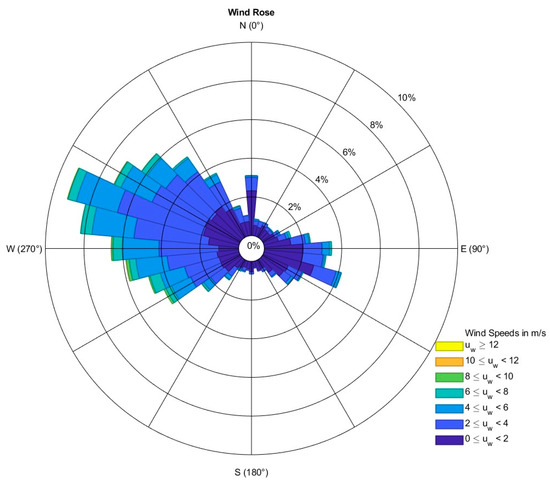
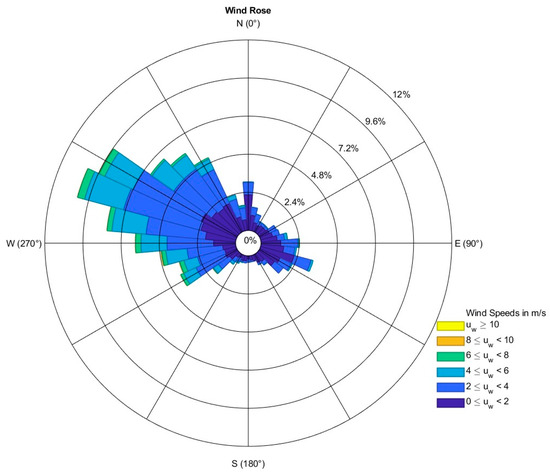
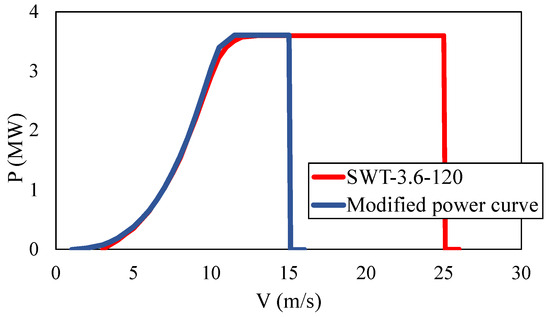
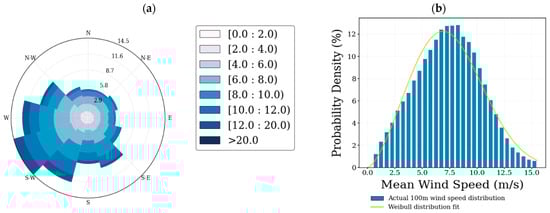
The research creates classification maps of wind turbine operational speeds based on the wind regimes of four governorates in central and southern Iraq: Wasit, Diwaniyah, Maysan, and Dhiqar. High-resolution wind data from GEOSUN resource maps, together with statistical analysis of the Weibull distribution, are used to derive site-specific shape and scale parameters, which are then utilized to calculate the ideal cut-in, rated, and cut-out wind speeds for each location. A turbine performance index integrates capacity factor and normalized power output to determine the turbine speed combination that optimizes energy production for the local wind distribution. The resultant maps exhibit distinct geographical gradients: in all four governorates, cut-in, rated, and cut-out speeds consistently escalate towards the eastern regions of the research area, therefore broadening the range of technologically suitable turbines. Quantitatively, Wasit demonstrates the highest rated wind speeds, ranging from approximately 11.1 to 14.9 m per second, and cut-out speeds from about 20.5 to 27.6 m per second, indicating superior wind resource quality relative to other governorates. In contrast, Diwaniyah is suitable for lower-speed turbines, with minimum rated speeds between 8.9 and 9.5 m per second and minimum cut-out speeds around 16.6 to 17.6 m per second. Analysis of wind direction indicates that around fifty percent of the wind power potential originates from the northwest sector, suggesting that turbines should be aligned toward the northwest to optimize yearly energy acquisition. The maps serve as an effective decision support instrument that connects quantitative wind resource assessment to turbine operational specifications, facilitating expedited preliminary turbine selection, enhanced energy efficiency, and diminished dependence on traditional fossil fuel power plants in areas experiencing persistent electricity deficits.
Full article

Figure 1
Open AccessArticle
Wind Energy Assessment in Forest Areas Using Multi-Source Optimized WRF Model
by
Yujiao Liu, Zixin Yang, Yang Zhao and Daocheng Zhou
Wind 2026, 6(2), 14; https://doi.org/10.3390/wind6020014 - 31 Mar 2026
Abstract
►▼
Show Figures
Accurate wind field simulation in forest areas is crucial for wind energy development but remains challenging for traditional WRF models due to complex terrain and vegetation heterogeneity. This study proposes a multi-source optimization framework integrating seasonal PBL scheme selection, localized leaf area index
[...] Read more.
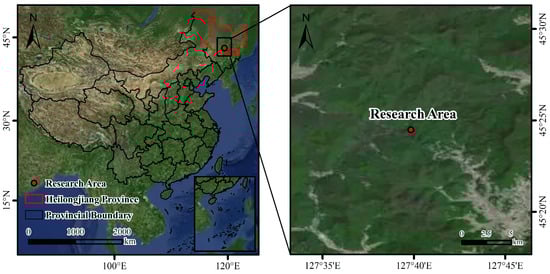
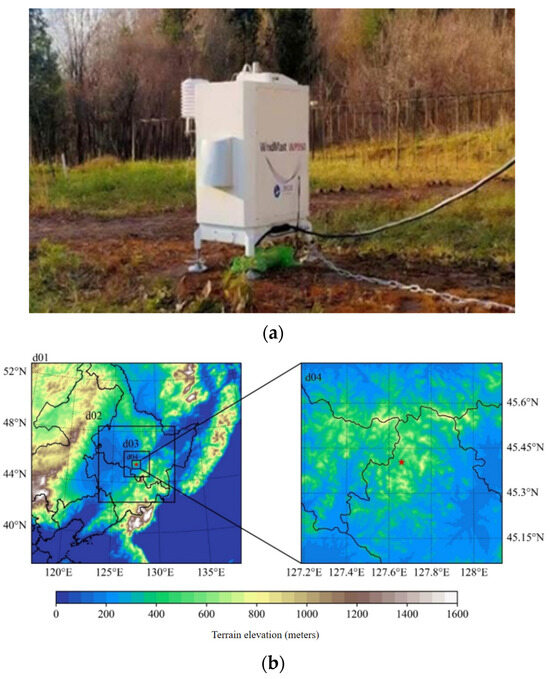
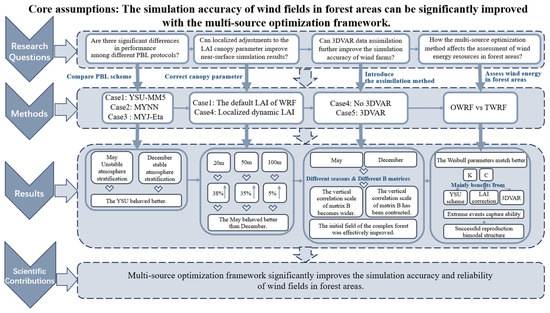
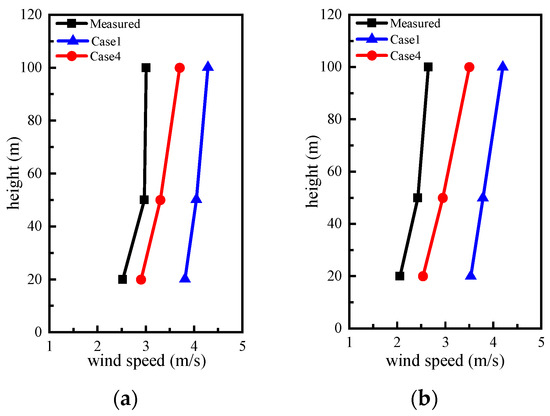
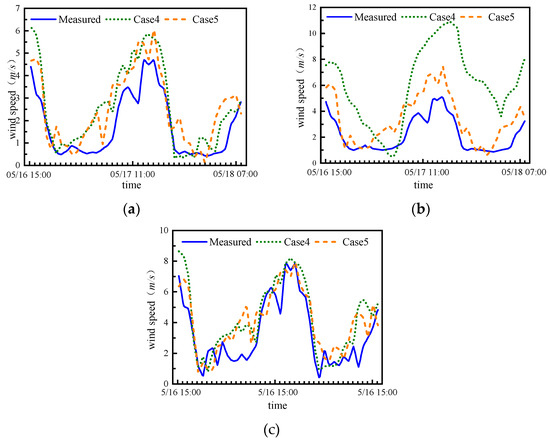
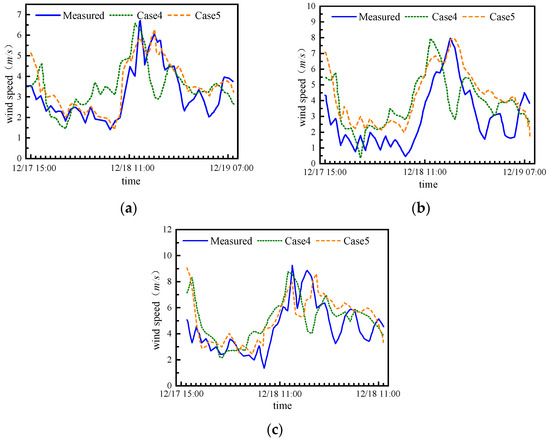
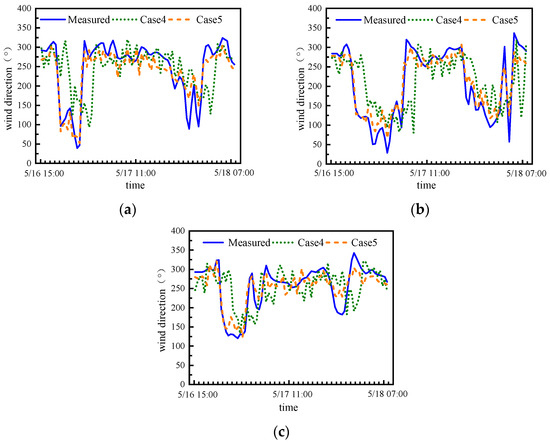
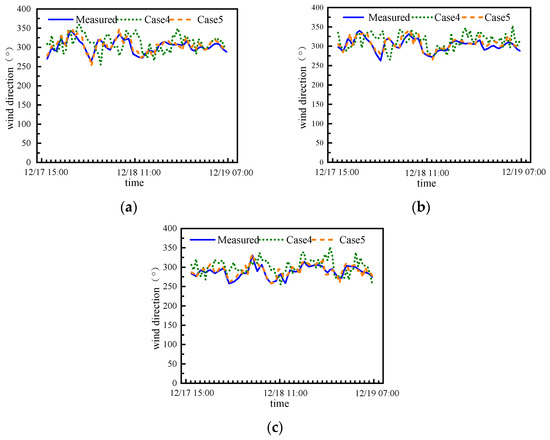
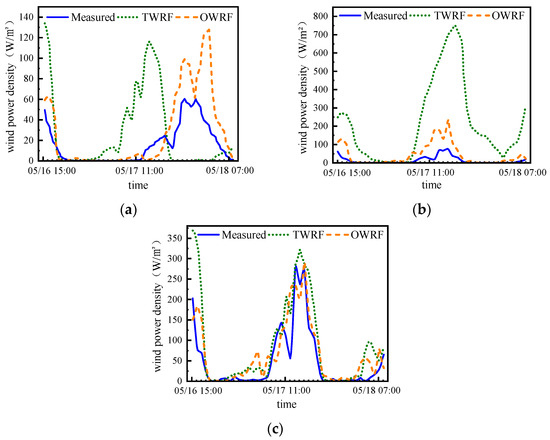
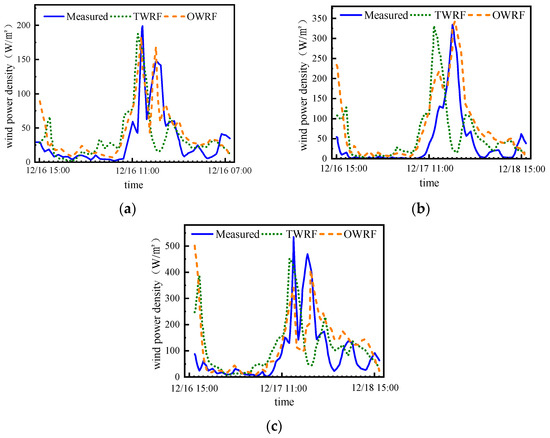
Accurate wind field simulation in forest areas is crucial for wind energy development but remains challenging for traditional WRF models due to complex terrain and vegetation heterogeneity. This study proposes a multi-source optimization framework integrating seasonal PBL scheme selection, localized leaf area index (LAI) adjustment, and 3DVAR data assimilation to improve WRF performance in forested terrain. The framework was validated using observations at 20 m, 50 m, and 100 m heights in Maoershan forest area. Results show that: (1) PBL schemes exhibit significant seasonal dependence—YSU performs best in spring (unstable conditions), while MYJ shows slight advantages near the surface in winter (stable conditions). (2) Localized LAI correction reduces near-surface wind speed bias by 35% and improves wind direction accuracy by 28%, with stronger effects in summer. (3) 3DVAR assimilation further enhances accuracy, achieving correlation coefficients of 0.869 for wind speed and 0.813 for wind direction, with greater improvements in summer and near the surface. (4) Winter wind power density at 100 m reaches 475 W/m2, 38% higher than summer, indicating stable exploitable resources. The proposed framework provides a replicable methodology for wind field simulation in forest regions worldwide.
Full article

Figure 1
Open AccessArticle
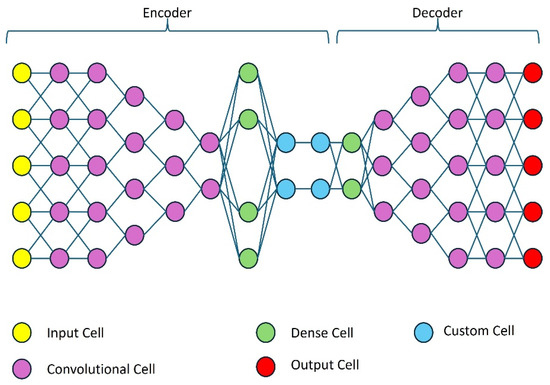
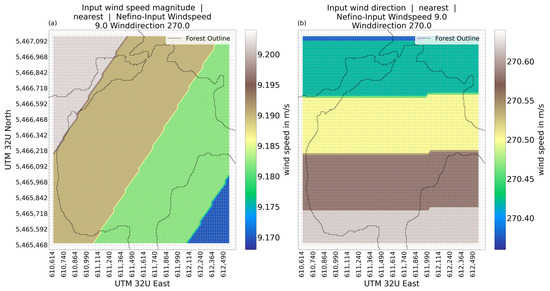
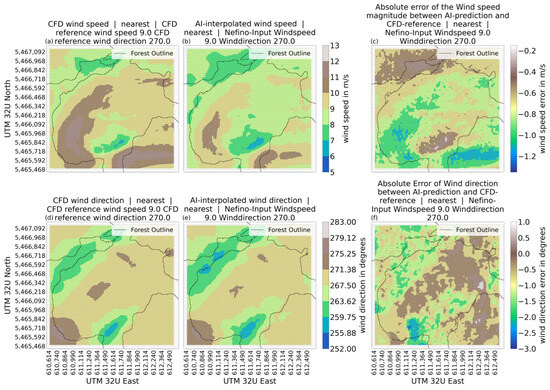
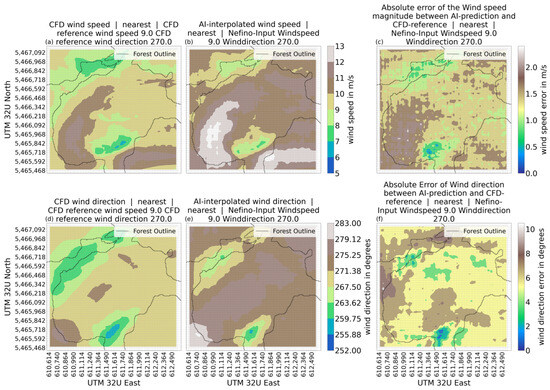
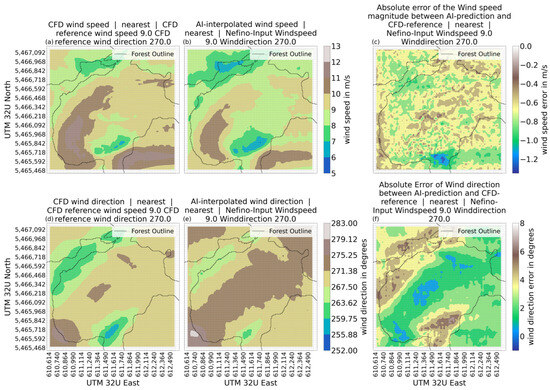
Variational Autoencoder to Obtain High Resolution Wind Fields from Reanalysis Data
by
Bernhard Rösch, Konstantin Zacharias, Luca Fabian Schlaug, Daniel Westerfeld, Stefan Geißelsöder and Alexander Buchele
Wind 2026, 6(1), 13; https://doi.org/10.3390/wind6010013 - 18 Mar 2026
Abstract
►▼
Show Figures
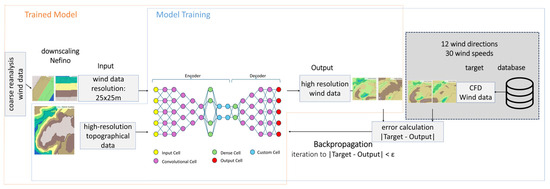
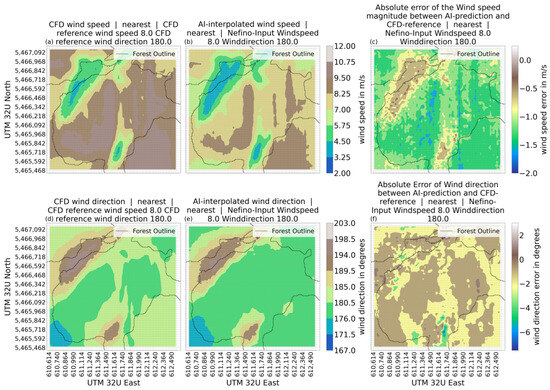
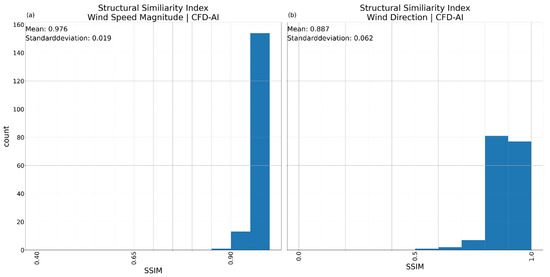
Accurate wind flow prediction is essential for various applications, including the placement of wind turbines and a multitude of environmental assessments. Traditionally this can be achieved by using time-consuming computational fluid dynamics (CFD) simulations on reanalysis data. This study explores the performance of
[...] Read more.
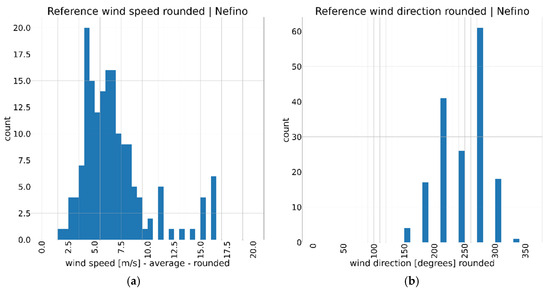
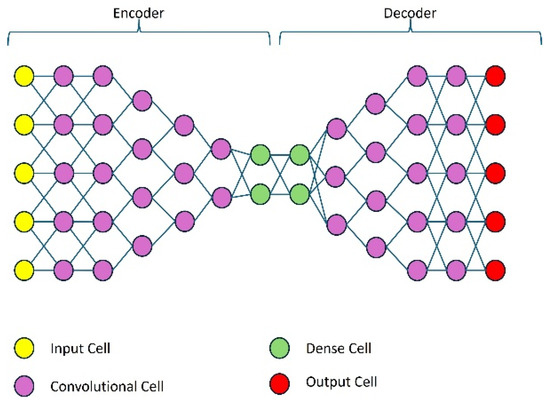
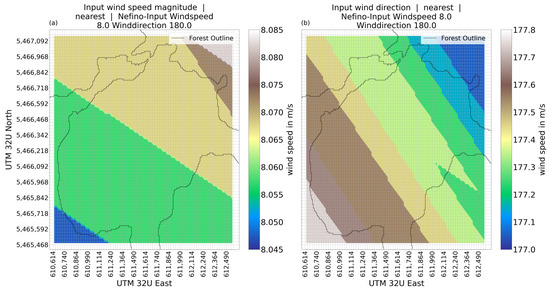
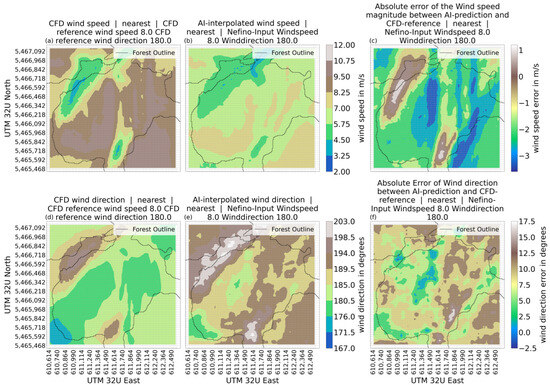
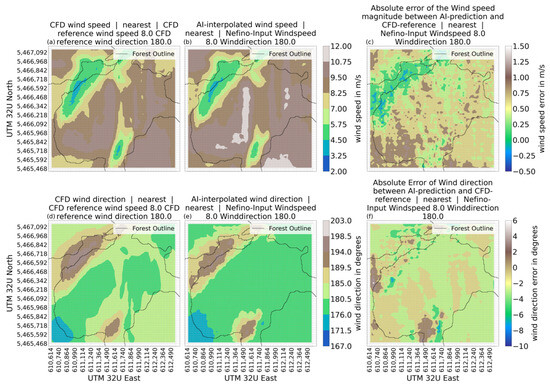
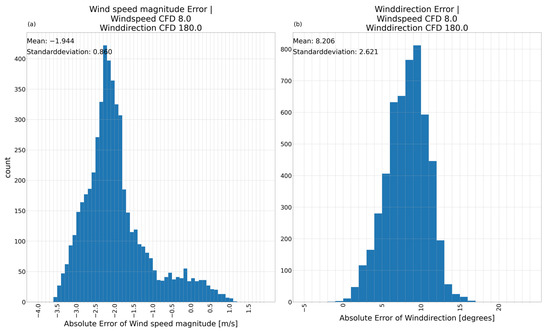
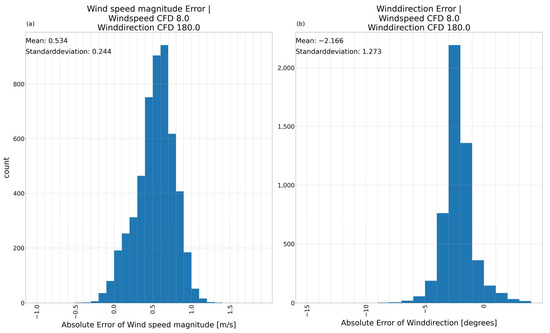
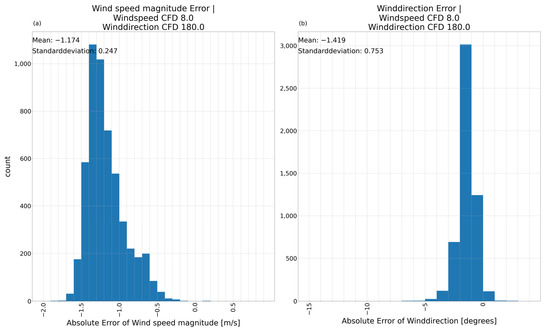
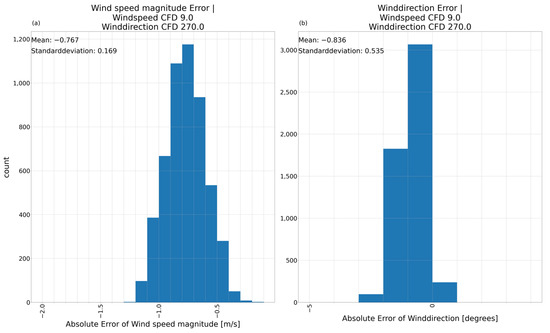
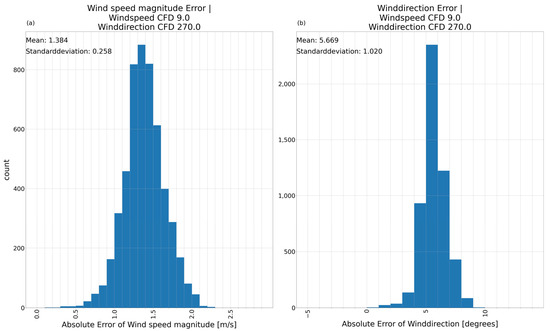
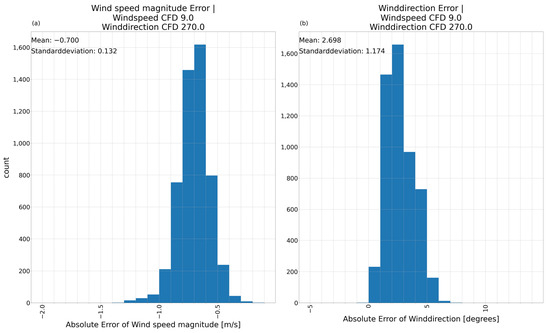
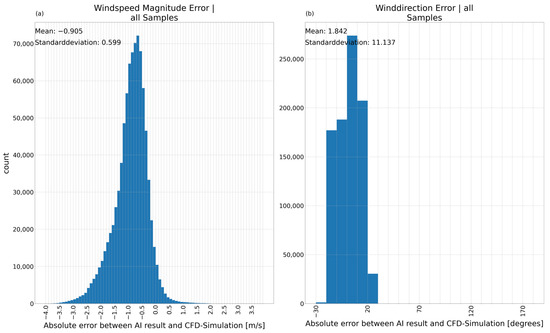
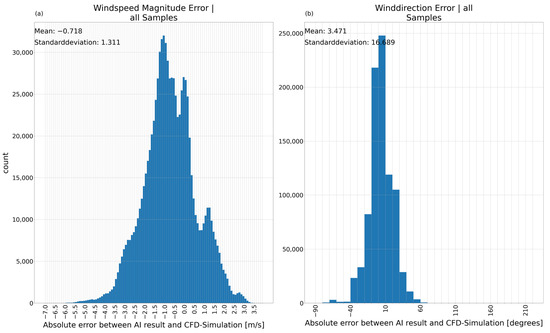
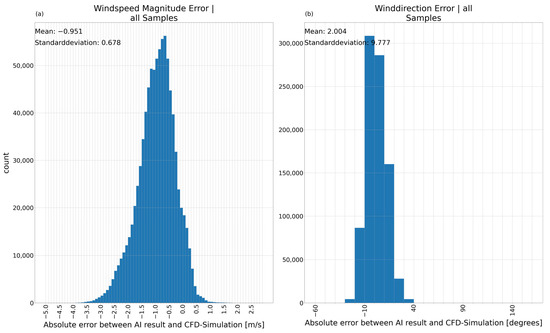
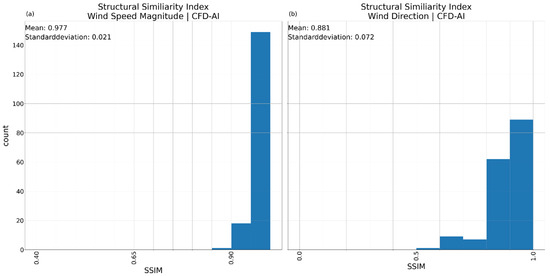
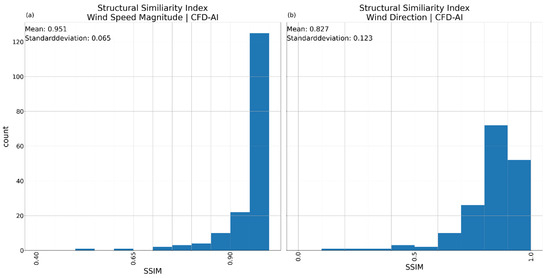
Accurate wind flow prediction is essential for various applications, including the placement of wind turbines and a multitude of environmental assessments. Traditionally this can be achieved by using time-consuming computational fluid dynamics (CFD) simulations on reanalysis data. This study explores the performance of an autoencoder (AE) and a variational autoencoder (VAE) in approximating downscaled wind speed and direction using real-world reanalysis data and reference geo- and vegetation data. The AE model was trained for 2000 epochs and demonstrates the ability to replicate wind patterns with a mean absolute error (MAE) of approximately −0.9. However, the AE model exhibited a consistent underestimation of wind speeds and a directional shift of approximately 10 degrees compared to CFD reference simulations. The VAE model produced visually improved results, capturing complex wind flow structures more accurately than the AE model. It mainly achieves better local accuracy and a reduced variance of the results. The overall result suggests that while autoencoders can approximate wind flow patterns, challenges remain in capturing the full variability of wind speeds and directions with sufficient precision. The study highlights the importance of balancing reconstruction accuracy and latent space regularization in VAE models. Future work should focus on optimizing model architecture and training strategies to enhance accuracy, prediction reliability and generalizability across diverse wind conditions and various locations.
Full article

Figure 1
Open AccessArticle
The Fate of Floating Offshore Wind in Taiwan—Buried in the Cradle? A Comparative Study with France and Strategies for Revitalization
by
Karl Gebrael, Glib Ivanov and Leon van Jaarsveldt
Wind 2026, 6(1), 12; https://doi.org/10.3390/wind6010012 - 12 Mar 2026
Abstract
►▼
Show Figures
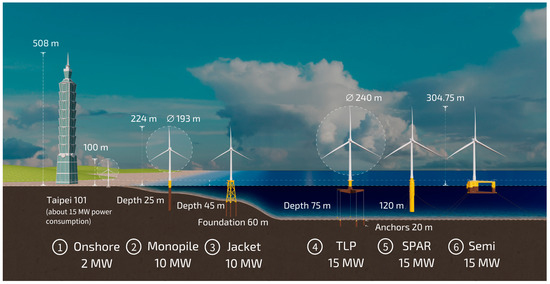
Floating offshore wind holds immense promise for nations with deep coastal waters and robust wind resources. Taiwan, with 90% of its territorial waters deeper than 50 m and consistently strong wind speeds, is well-positioned to lead in this domain. However, recent project withdrawals
[...] Read more.
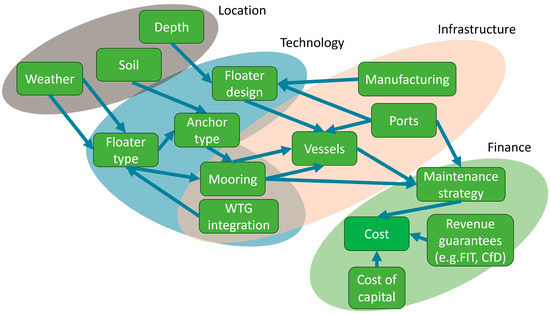
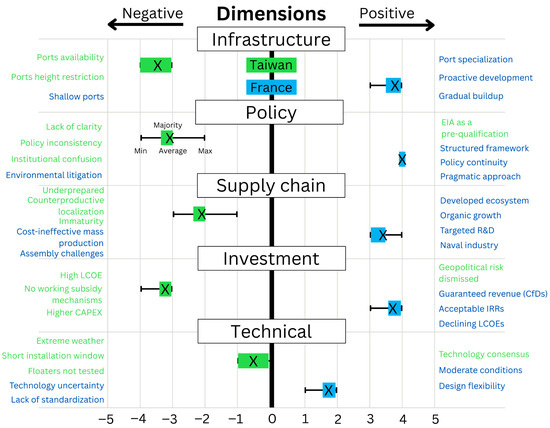
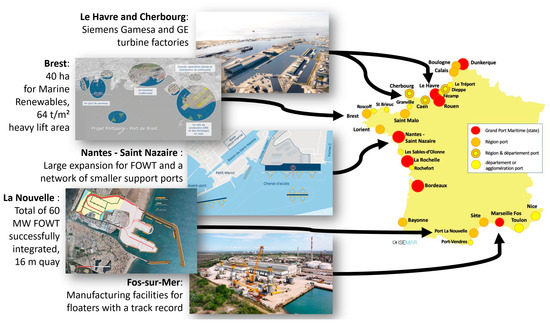
Floating offshore wind holds immense promise for nations with deep coastal waters and robust wind resources. Taiwan, with 90% of its territorial waters deeper than 50 m and consistently strong wind speeds, is well-positioned to lead in this domain. However, recent project withdrawals by major developers have raised concerns over the sector’s viability. This paper investigates the stagnation of Taiwan’s floating wind industry by comparing its development framework with that of France, now a global frontrunner in floating offshore wind. Through a mixed-method approach combining literature review, techno-economic benchmarking, and thematic analysis of interviews with industry leaders, the research identifies key barriers in Taiwan, including insufficient port infrastructure, unclear regulatory frameworks, fragmented supply chains, and a lack of financial incentives. Drawing on lessons from France’s structured tendering system and phased industrial strategy, the paper outlines actionable recommendations for revitalizing Taiwan’s floating wind sector. These include policy reforms, supply chain enhancements, and demonstration-scale deployments. The findings aim to inform both policymakers and industry stakeholders in shaping a more viable future for floating offshore wind in Taiwan.
Full article

Figure 1
Open AccessReview
Review of Load Frequency Control in Wind Energy Conversion System
by
Welcome Khulekani Ntuli and Musasa Kabeya
Wind 2026, 6(1), 11; https://doi.org/10.3390/wind6010011 - 5 Mar 2026
Abstract
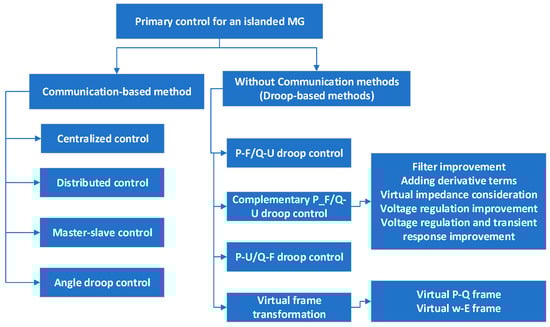
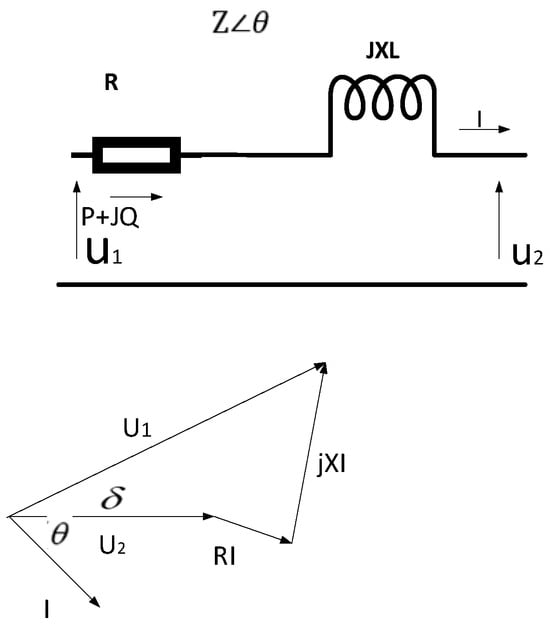
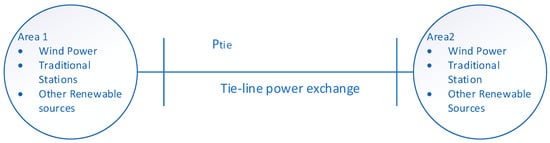
The integration of renewable energy sources (RESs) into modern power systems has introduced significant challenges in maintaining system stability and reliability. Among these challenges, load frequency control (LFC) has become a vital area of research. The variable nature of RESs, such as wind
[...] Read more.
The integration of renewable energy sources (RESs) into modern power systems has introduced significant challenges in maintaining system stability and reliability. Among these challenges, load frequency control (LFC) has become a vital area of research. The variable nature of RESs, such as wind and solar, along with their intermittent availability, necessitates advanced management systems for effective frequency regulation. LFC plays a crucial role in ensuring the stability and performance of electrical power systems by managing frequency through the balance of supply and demand, accounting for variations in load, generation, and other disturbances within the system. In traditional power systems, LFC is achieved through a combination of primary, secondary, and tertiary control mechanisms. However, the advent of smart grids has considerably complicated and enhanced the potential for LFC. In these smart grids, which leverage digital communication, sensors, and automation technologies, LFC becomes more intricate and adaptable. These systems not only utilize traditional centralized control but also incorporate RESs, decentralized resources, energy storage solutions, and real-time data to improve frequency management. This research methodically evaluates current LFC techniques using a hierarchical control and technology-focused framework, classifying approaches as conventional, intelligent, and hybrid control schemes within centralized and decentralized system architectures. An evaluative analysis reveals that while intelligent and hybrid control strategies markedly enhance dynamic frequency response and robustness with substantial renewable energy source (RES) integration, persistent challenges remain regarding controller coordination, scalability, computational requirements, and real-time execution. The analysis highlights adaptive hybrid intelligent control schemes, namely those that combine data-driven learning with physical system models, as the most promising avenue for future research, particularly in low-inertia and highly dispersed smart grid scenarios.
Full article
(This article belongs to the Topic Wind Energy in Multi Energy Systems)
►▼
Show Figures

Figure 1
Open AccessArticle
Assessing the Impact of Forests on Wind Flow Dynamics and Wind Turbine Energy Production
by
Svetlana Orlova, Nikita Dmitrijevs, Marija Mironova, Edmunds Kamolins and Vitalijs Komasilovs
Wind 2026, 6(1), 10; https://doi.org/10.3390/wind6010010 - 5 Mar 2026
Abstract
►▼
Show Figures
Forests play a vital role in influencing wind flow by modifying turbulence intensity and vertical wind shear. Because wind turbines are susceptible to these conditions, accurately characterising wind flow in forested environments is vital to ensuring structural reliability and realistic energy-yield assessments. In
[...] Read more.
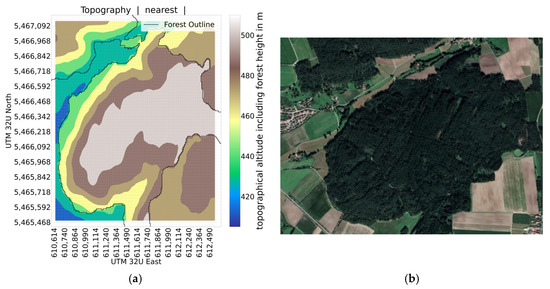
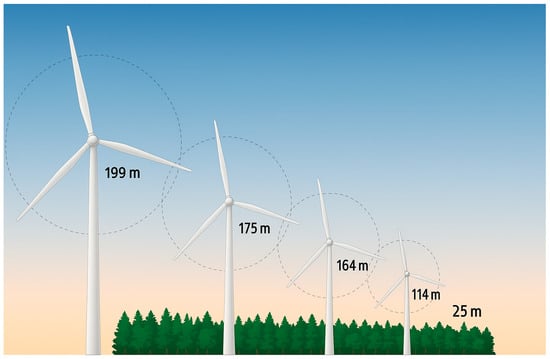
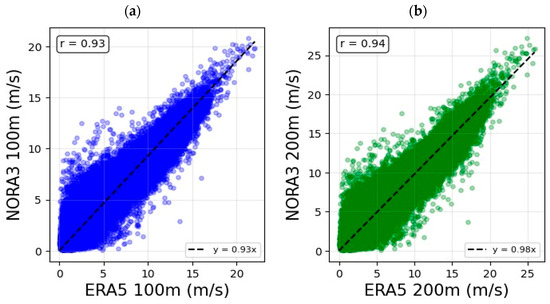
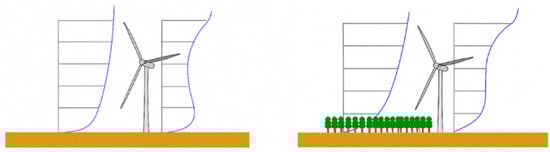
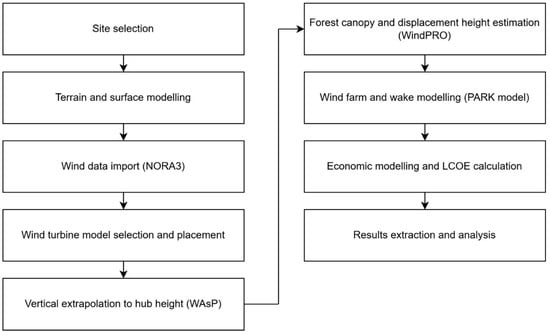
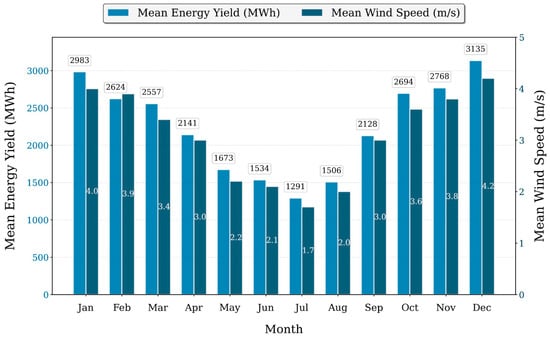
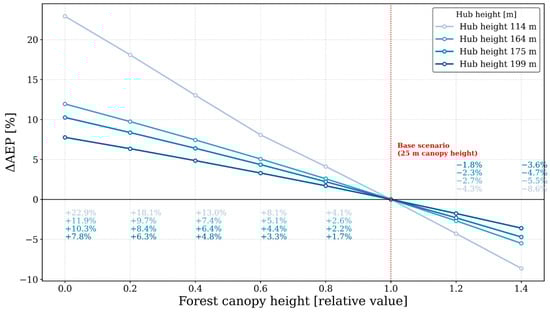
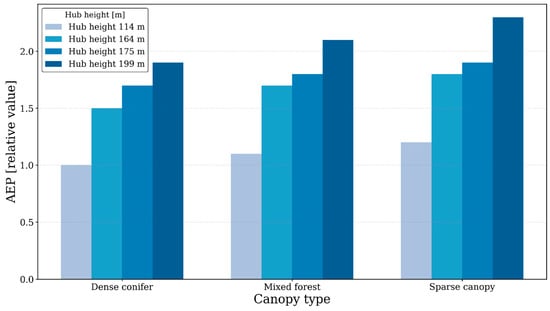
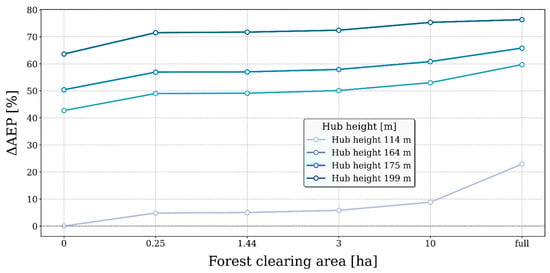
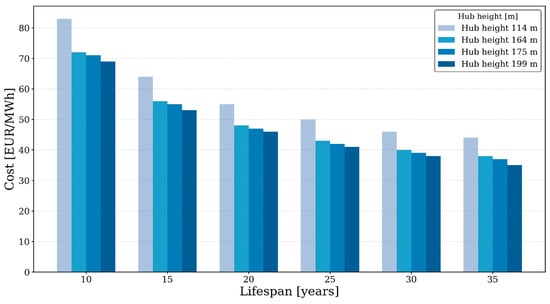
Forests play a vital role in influencing wind flow by modifying turbulence intensity and vertical wind shear. Because wind turbines are susceptible to these conditions, accurately characterising wind flow in forested environments is vital to ensuring structural reliability and realistic energy-yield assessments. In Latvia, where approximately 51.3% of the territory is covered by forests; the likelihood of wind turbine deployment in such areas is considerable. However, wind behaviour within and above forests is complex and strongly influenced by canopy effects, which in turn affect wake dynamics, structural fatigue, and power production. Advancing research in this field is therefore crucial for improving the accuracy of wind resource assessment and supporting evidence-based engineering solutions that enable the sustainable development of wind energy. Wind conditions were evaluated using NORA3 reanalysis data. Wake effects were simulated with the Jensen wake model to estimate annual energy production (AEP), which then informed levelised cost of energy (LCOE) calculations at various hub heights. The results indicate clear seasonal variability and show that increasing hub height leads to higher AEP and lower LCOE, owing to higher wind speeds and reduced turbulence. For forest heights of 0–25 m, the AEP loss increases from 7.8% (hub height = 199 m) to 22.9% (hub height = 114 m). Higher hub heights are also less sensitive to canopy-induced variability, reducing the impact of forest-related turbulence on energy production.
Full article

Figure 1
Open AccessArticle
Development of a Wind Speed Forecasting Model Using Observed Data and Machine Learning Approaches
by
Paula Rose de Araújo Santos, Louise Pereira da Silva, Susane Eterna Leite Medeiros and Raphael Abrahão
Wind 2026, 6(1), 9; https://doi.org/10.3390/wind6010009 - 24 Feb 2026
Abstract
►▼
Show Figures
Considering the growing potential of artificial intelligence (AI), its application has become increasingly relevant in climate-related studies and energy assessments. In this study, the Random Forest algorithm was applied to impute missing values in time series of air temperature, wind speed, atmospheric pressure,
[...] Read more.
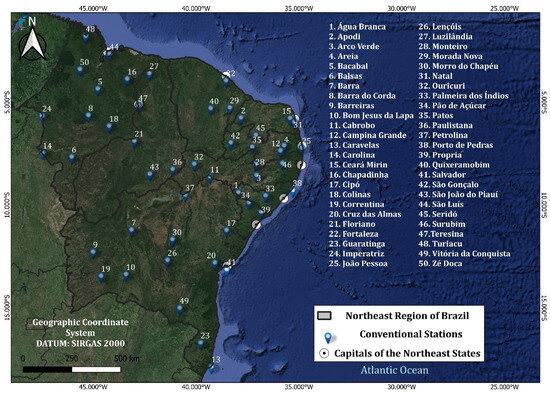
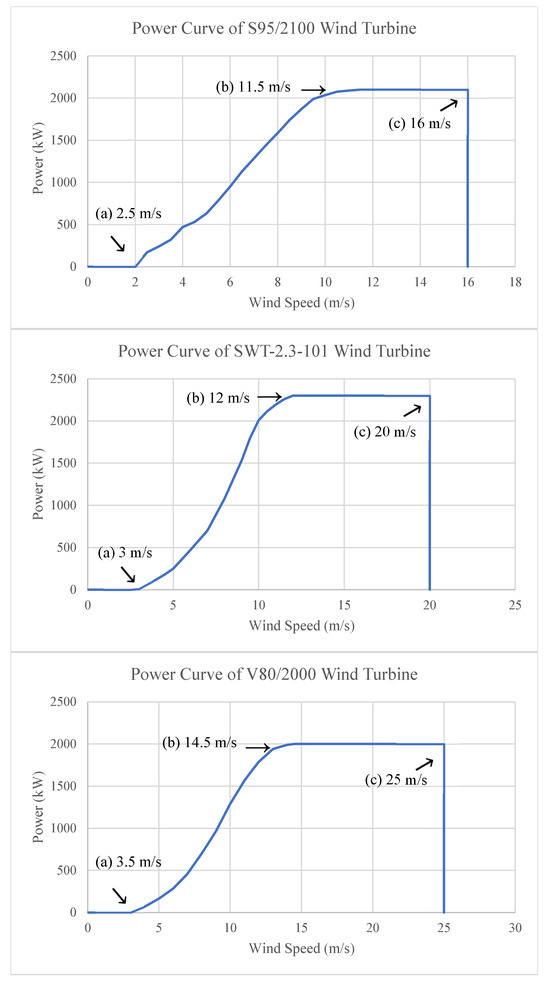
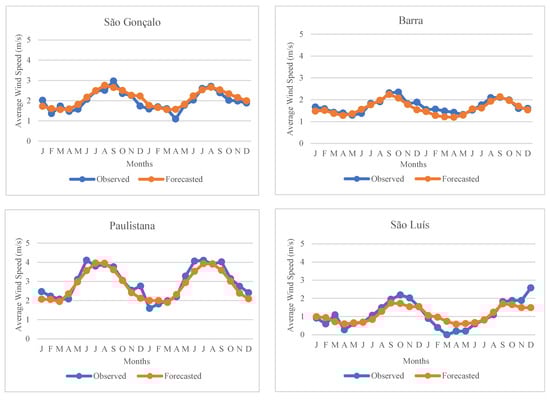
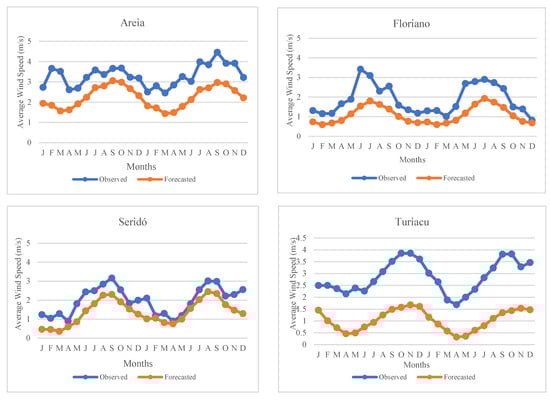
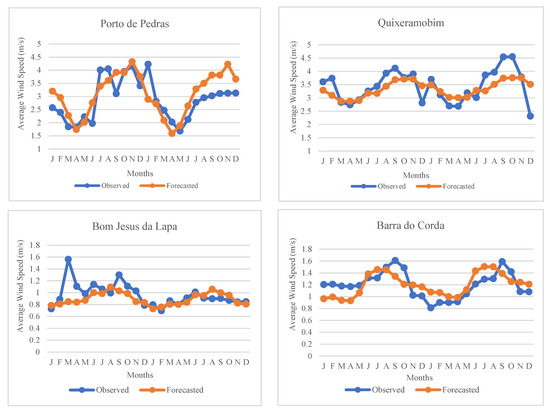
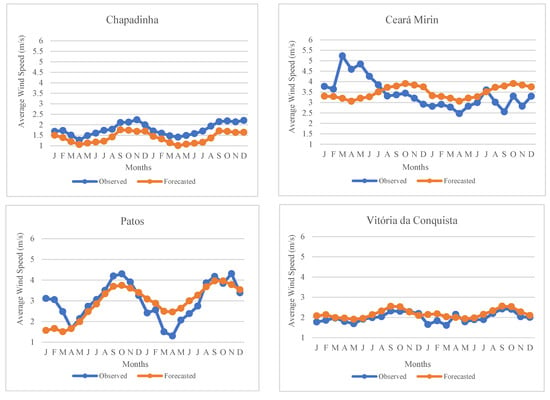
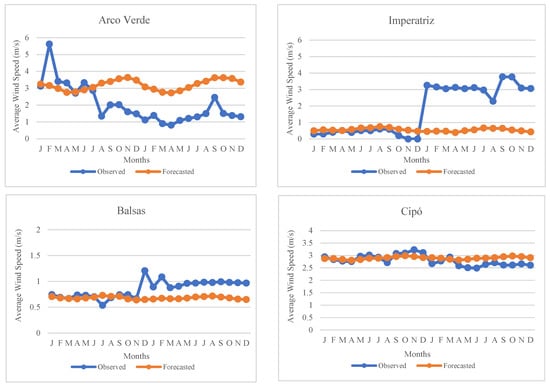
Considering the growing potential of artificial intelligence (AI), its application has become increasingly relevant in climate-related studies and energy assessments. In this study, the Random Forest algorithm was applied to impute missing values in time series of air temperature, wind speed, atmospheric pressure, and wind direction. The performance of the data imputation was evaluated using RMSE, MSE, and MAE metrics, as well as the Kolmogorov–Smirnov (KS) test, which supported the selection of the most appropriate exogenous variable. Subsequently, short-term wind speed forecasting was performed using the SARIMAX model, and monthly energy generation was estimated for the V80/2000, SWT-2.3-101, and S95/2100 wind turbine models. The proposed methodology was applied to data from 50 conventional meteorological stations of the National Institute of Meteorology (INMET) located in Northeast Brazil. The results indicate that the gap-filling procedure was effective, particularly for wind speed and mean air temperature. Moreover, the SARIMAX model demonstrated good forecasting performance at most of the analyzed stations. Overall, the findings suggest that the majority of the locations analyzed present favorable conditions for wind-based electricity generation.
Full article

Figure 1
Open AccessReview
A Review of Yaw Optimization Strategies for Wind Farms with Complex Terrain
by
Gaoxue Cheng, Wei Ma, Yalong Lan, Hongrui Ping, Shijin Ma, Fulong Wei, Zhenbo Gao, Guanlin Lu and Lidong Zhang
Wind 2026, 6(1), 8; https://doi.org/10.3390/wind6010008 - 13 Feb 2026
Abstract
►▼
Show Figures
Considering the global shift towards clean energy, advancing wind power generation technology is crucial. In complex terrain, turbines face significant challenges, such as increased fatigue loads from turbulent airflow, which reduce efficiency and structural integrity. Yaw optimization has emerged as a key solution
[...] Read more.
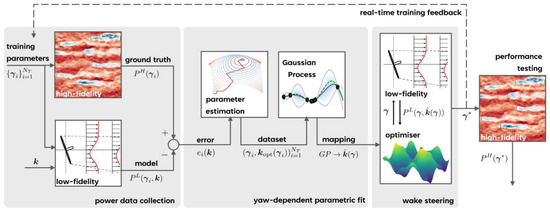
Considering the global shift towards clean energy, advancing wind power generation technology is crucial. In complex terrain, turbines face significant challenges, such as increased fatigue loads from turbulent airflow, which reduce efficiency and structural integrity. Yaw optimization has emerged as a key solution to enhance performance in these environments. By dynamically adjusting the nacelle orientation, it improves wind capture, mitigates load fluctuations, and alleviates stress on turbine components. This not only boosts energy output but also extends equipment lifespan and reduces operational costs, supporting the economic feasibility of wind projects in complex terrain. This paper reviews current research and development trends in yaw optimization for wind farms in such settings, focusing on adaptive control strategies and the balance between load management and power efficiency. It examines the impact of different yaw optimization approaches on both individual turbines and overall wind farm performance. In conclusion, tailored yaw optimization strategies are proposed to maximize wind resource utilization in complex terrain, providing a reference for more resilient and efficient wind energy systems.
Full article

Figure 1
Open AccessArticle
Rain Erosion Atlas of Wind Turbine Blades for Japan Based on Long-Term Meteorological and Climate Dataset CRIEPI-RCM-Era2
by
Eiji Sakai, Atsushi Hashimoto, Kazuki Nanko, Toshihiko Takahashi, Hiroyuki Nishida, Hidetoshi Tamura, Yasuo Hattori and Yoshikazu Kitano
Wind 2026, 6(1), 7; https://doi.org/10.3390/wind6010007 - 10 Feb 2026
Abstract
►▼
Show Figures
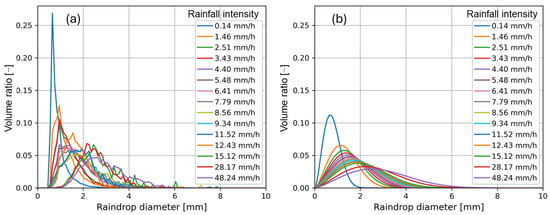
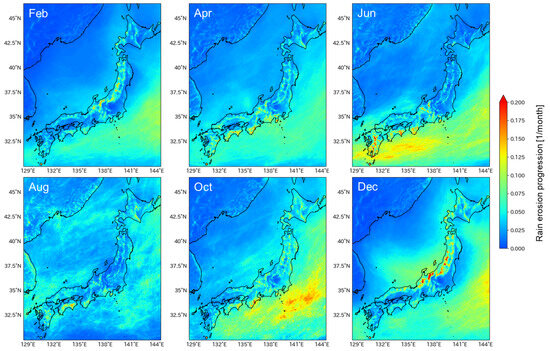
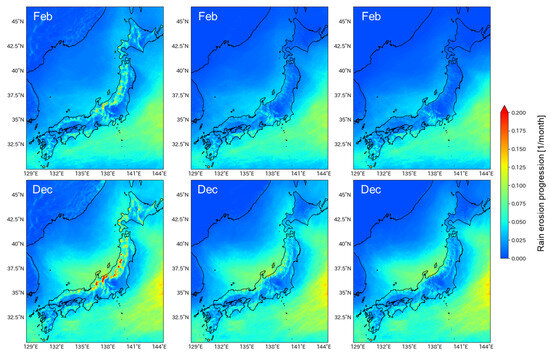
Leading-edge erosion of wind turbine blades caused by repeated raindrop impingement can significantly reduce power output and increase maintenance costs. This study develops a rain erosion atlas for Japan over 11 years from 2006 to 2016 based on the CRIEPI-RCM-Era2 dataset. The NREL
[...] Read more.
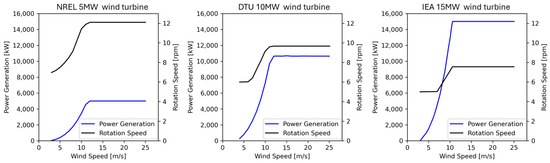
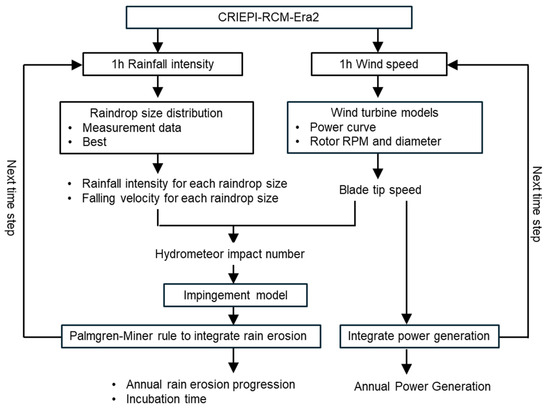
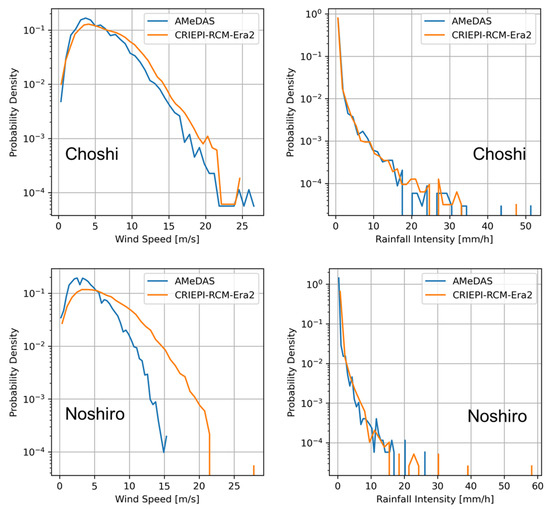
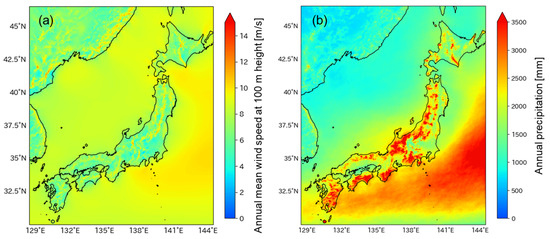
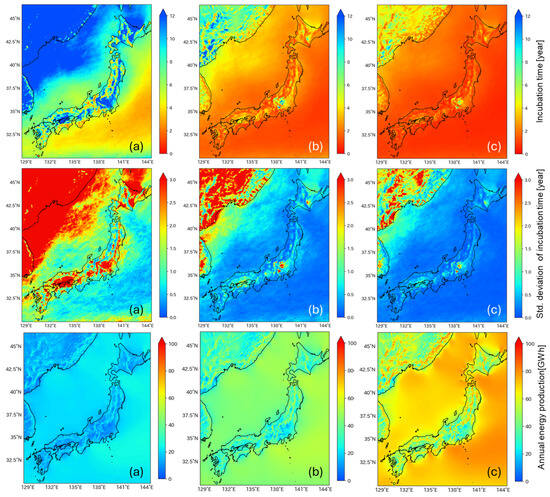
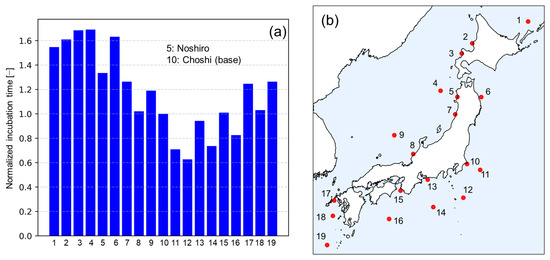
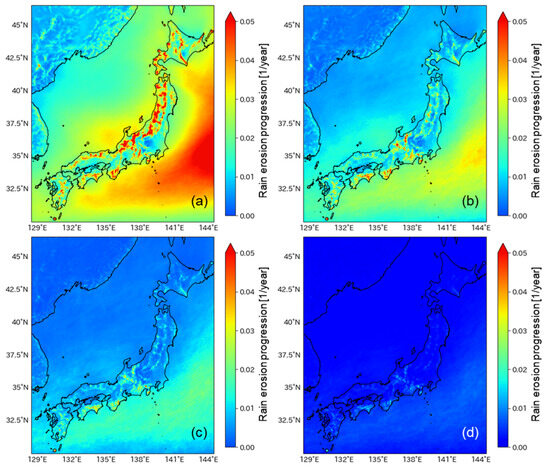
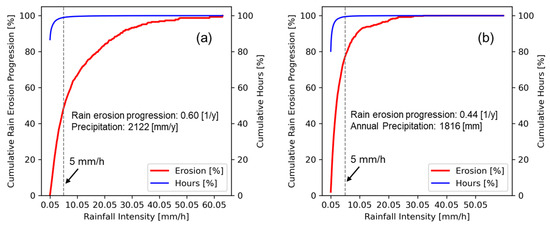
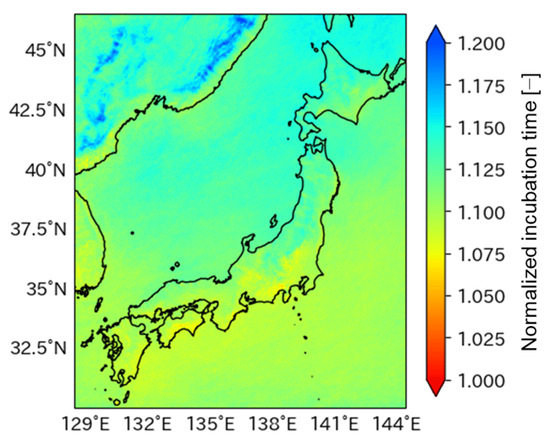
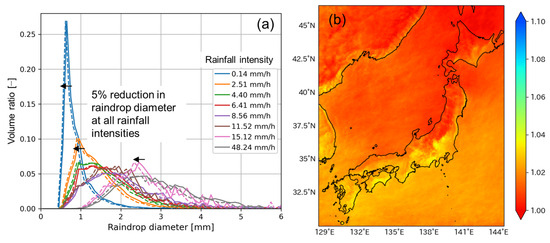
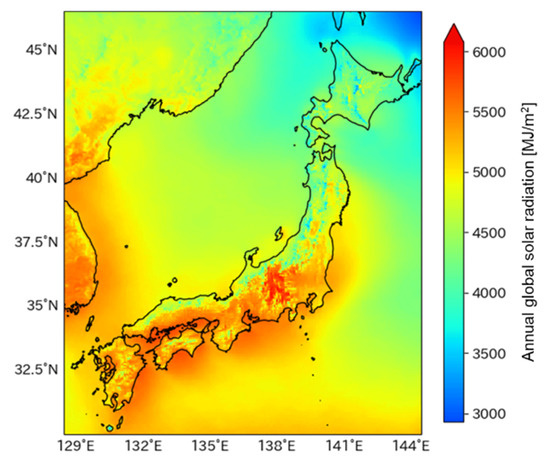
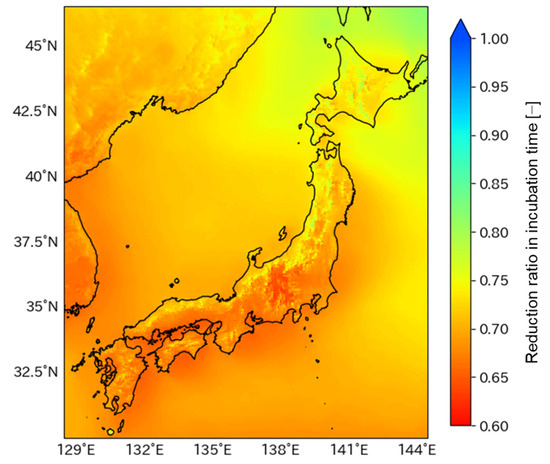
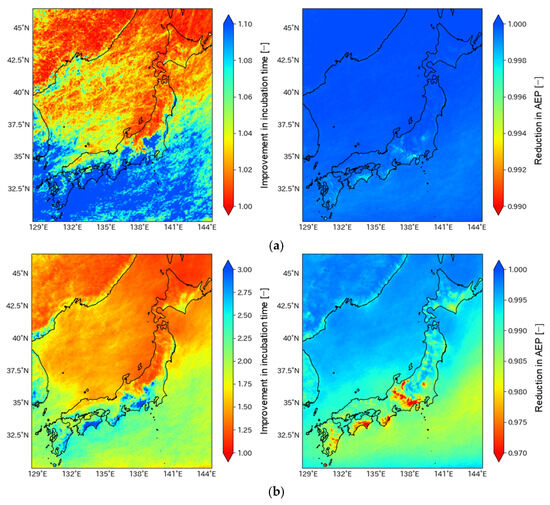
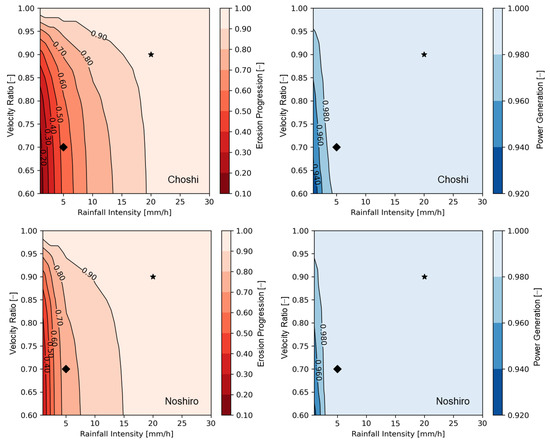
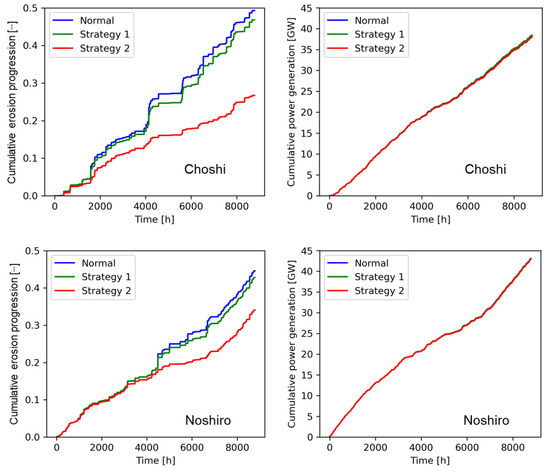
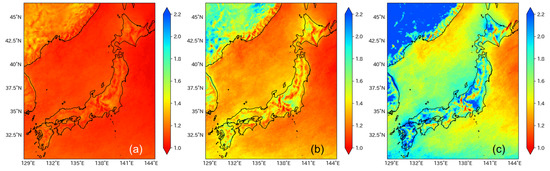
Leading-edge erosion of wind turbine blades caused by repeated raindrop impingement can significantly reduce power output and increase maintenance costs. This study develops a rain erosion atlas for Japan over 11 years from 2006 to 2016 based on the CRIEPI-RCM-Era2 dataset. The NREL 5 MW, DTU 10 MW, and IEA 15 MW wind turbines were employed to evaluate the incubation time (erosion onset time) of commercial polyurethane-based coating at the blade tip. Erosion progression was simulated using an empirical damage model that relates raindrop impingement and impact velocity to the incubation time. The rain erosion atlas reveals a clear correlation between wind turbine size and erosion risk: the NREL 5MW turbine shows an incubation time of 3–12 years, the DTU 10MW turbine 1–4 years, and the IEA 15MW turbine 0.5–2 years. Shorter incubation times are observed on the Pacific Ocean side, where annual precipitation is higher than on the Sea of Japan side. Additionally, the influence of coating degradation due to ultraviolet radiation was assessed using solar radiation data, revealing a further reduction in incubation time on the Pacific Ocean side. Finally, the potential of erosion-safe mode operation was examined, demonstrating its effectiveness in alleviating erosion progression.
Full article

Figure 1
Open AccessArticle
A Model Downscaling Study of Wind Park Exposure to Extreme Weather: The Case of Storm “Ylva” in Arctic Norway
by
Igor Esau, Pravin Punde and Yngve Birkelund
Wind 2026, 6(1), 6; https://doi.org/10.3390/wind6010006 - 2 Feb 2026
Abstract
►▼
Show Figures
Wind energy has the potential to become an important source of energy for remote Arctic regions. However, there are risks associated with the exposure of coastal wind parks to extremely strong winds caused by storms and polar lows. Extreme winds can either enhance
[...] Read more.
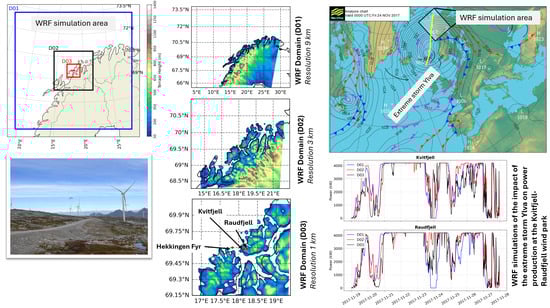
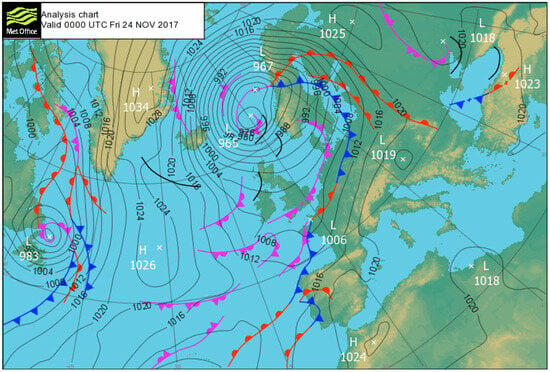
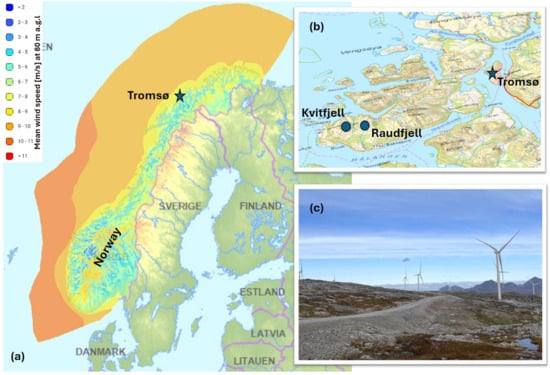
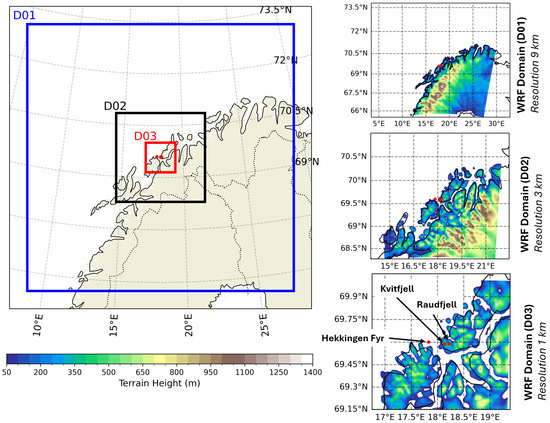
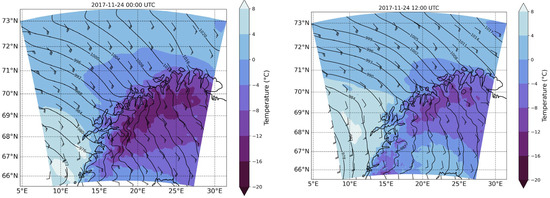
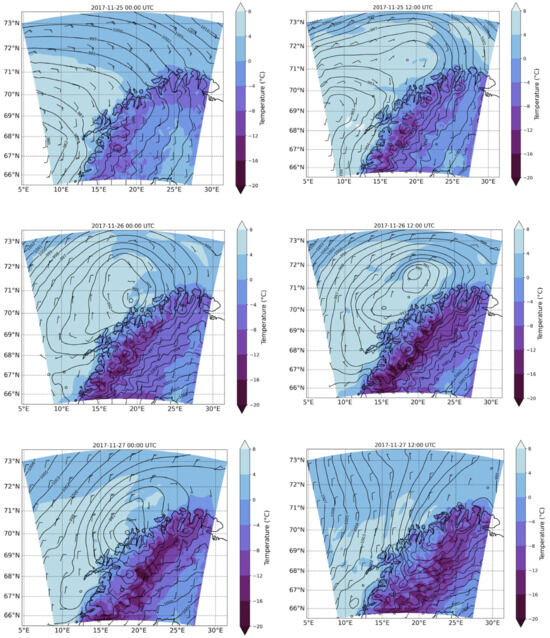
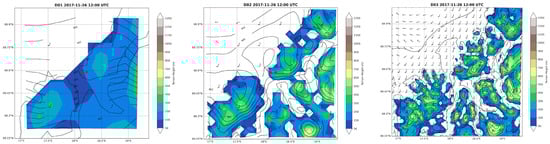
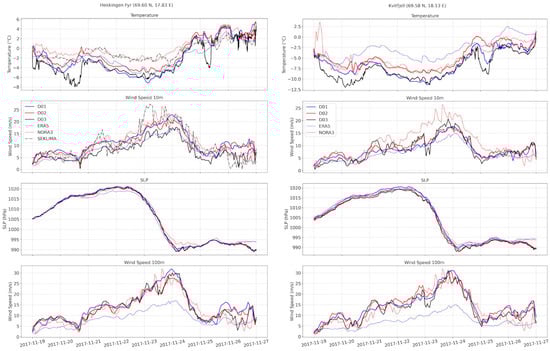
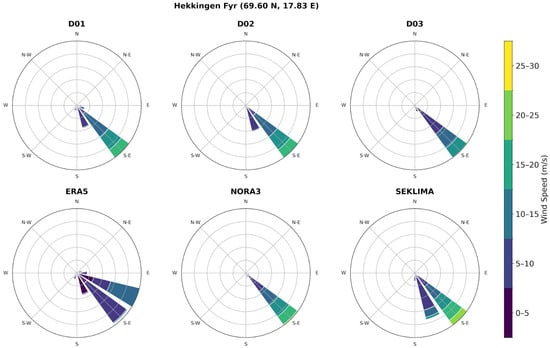
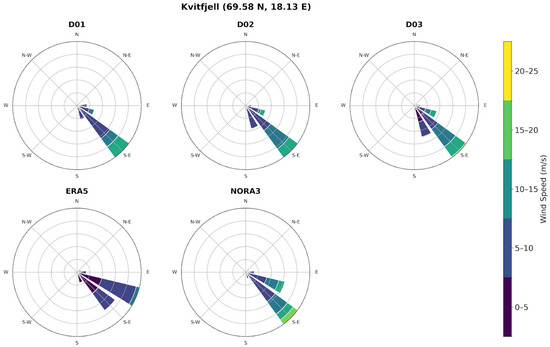
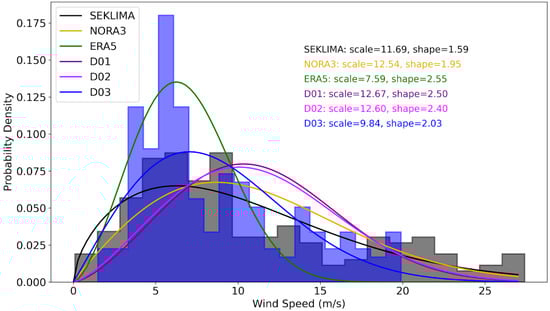
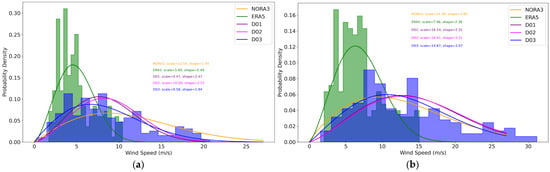
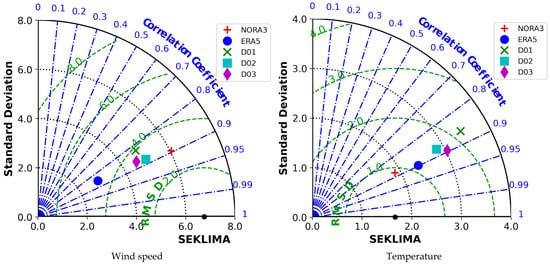
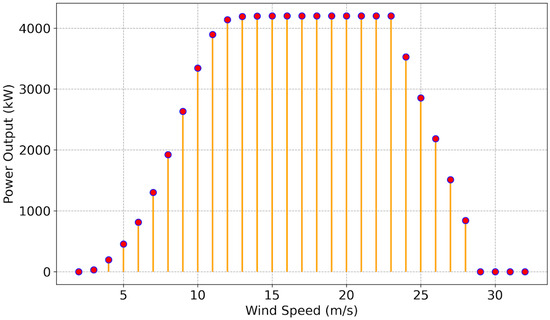
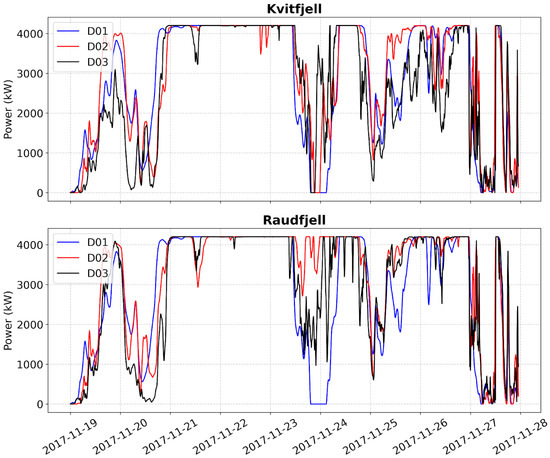
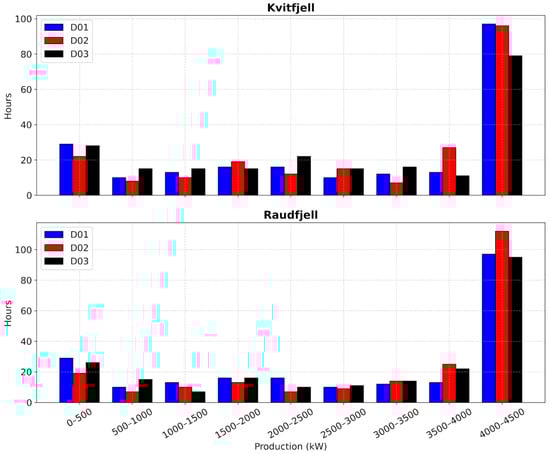
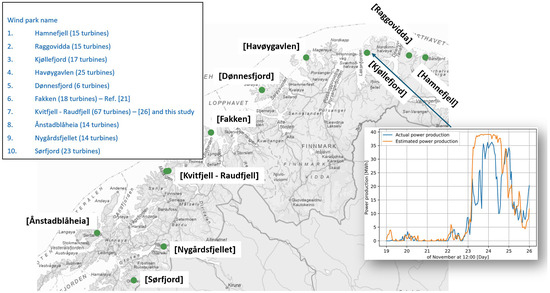
Wind energy has the potential to become an important source of energy for remote Arctic regions. However, there are risks associated with the exposure of coastal wind parks to extremely strong winds caused by storms and polar lows. Extreme winds can either enhance or reduce wind energy production. The outcomes largely depend on the coastal landscape surrounding the wind park. To address these questions, we conducted a series of simulations using the Weather Research and Forecasting (WRF) model. This study focuses on one of the strongest wind events along the western Norwegian coast—the landfall of the storm “Ylva” (24–27 November 2017). The study employs terrain-resolving downscaling by zooming in on the area of the Kvitfjell–Raudfjell wind park, Norway. The terrain-resolving WRF simulations reveal stronger winds at turbine hub height (80 m to 100 m above the ground level) in the coastal area. However, it was previously overlooked that the landfall of an Atlantic storm, which approaches this area from the southwest, brings the strongest winds from southeast directions, i.e., from the land. This creates geographically extensive and vertically deep wind-sheltered areas along the coast. Wind speeds at hub height in these sheltered areas are reduced, while they remain extreme over wind-channeling sea fjords. The novelty and applied value of this study is that it reveals an overlooked opportunity for optimal wind park siting. The coastal wind parks can take advantage of both sustained westerly winds during normal weather conditions and wind sheltering during extreme storm conditions. We found that the Kvitfjell–Raudfjell location is nearly optimal with respect to the extreme winds of “Ylva.”
Full article

Graphical abstract
Open AccessArticle
An Efficient Hybrid Evolutionary Algorithm for Enhanced Wind Energy Capture
by
Muhammad Rashid, Abdur Raheem, Rabia Shakoor, Muhammad I. Masud, Zeeshan Ahmad Arfeen and Touqeer Ahmed Jumani
Wind 2026, 6(1), 5; https://doi.org/10.3390/wind6010005 - 29 Jan 2026
Abstract
An optimal topographical arrangement of wind turbines (WTs) is essential for increasing the total power production of a wind farm (WF). This work introduces PSO-GA, a newly formulated algorithm based on the hybrid of Particle Swarm Optimization (PSO) and the Genetic Algorithm (GA)
[...] Read more.
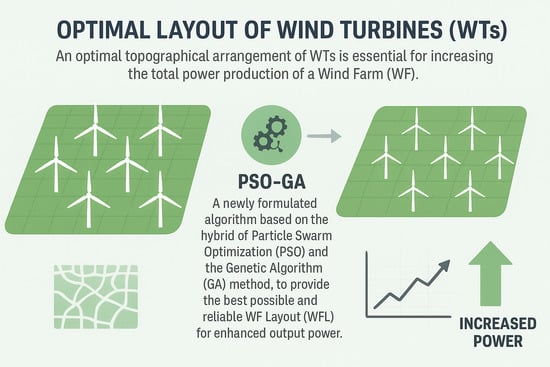
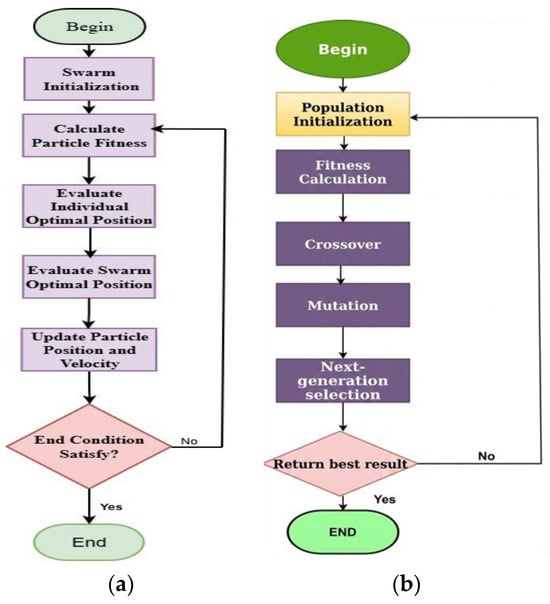
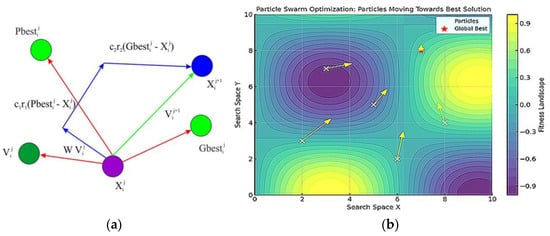
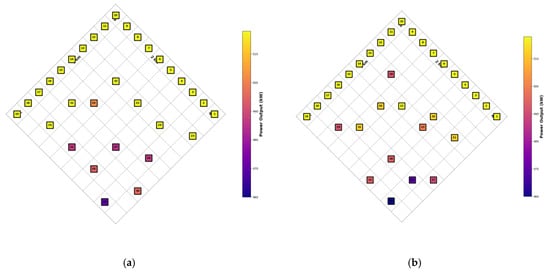
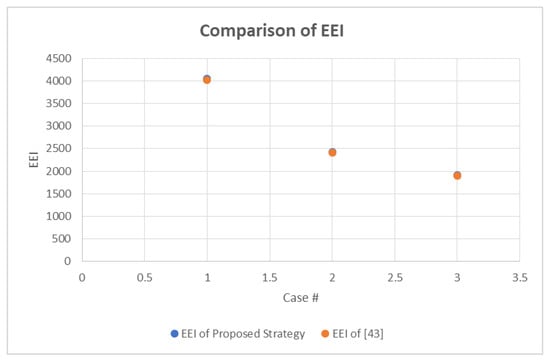
An optimal topographical arrangement of wind turbines (WTs) is essential for increasing the total power production of a wind farm (WF). This work introduces PSO-GA, a newly formulated algorithm based on the hybrid of Particle Swarm Optimization (PSO) and the Genetic Algorithm (GA) method, to provide the best possible and reliable WF layout (WFL) for enhanced output power. Because GA improves on PSO-found solutions while PSO investigates several regions; therefore, hybrid PSO-GA can effectively handle issues involving multiple local optima. In the first phase of the framework, PSO improves the original variables; in the second phase, the variables are changed for improved fitness. The goal function takes into account both the power production of the WF and the cost per power while analyzing the wake loss using the Jenson wake model. To evaluate the robustness of this strategy, three case studies are analyzed. The algorithm identifies the best possible position of turbines and strictly complies with industry-standard separation distances to prevent extreme wake interference. This comparative study on the past layout improvement process models demonstrates that the proposed hybrid algorithm enhanced performance with a significant power improvement of 0.03–0.04% and a 24–27.3% reduction in wake loss. The above findings indicate that the proposed PSO-GA can be better than the other innovative methods, especially in the aspects of quality and consistency of the solution.
Full article
(This article belongs to the Special Issue O&M and Innovative Solutions Bringing Scale and Speed to Wind Energy Engineering)
►▼
Show Figures

Graphical abstract
Open AccessArticle
Enhancing Wind Farm Siting with the Combined Use of Multicriteria Decision-Making Methods
by
Dimitra Triantafyllidou and Dimitra G. Vagiona
Wind 2026, 6(1), 4; https://doi.org/10.3390/wind6010004 - 16 Jan 2026
Cited by 1
Abstract
►▼
Show Figures
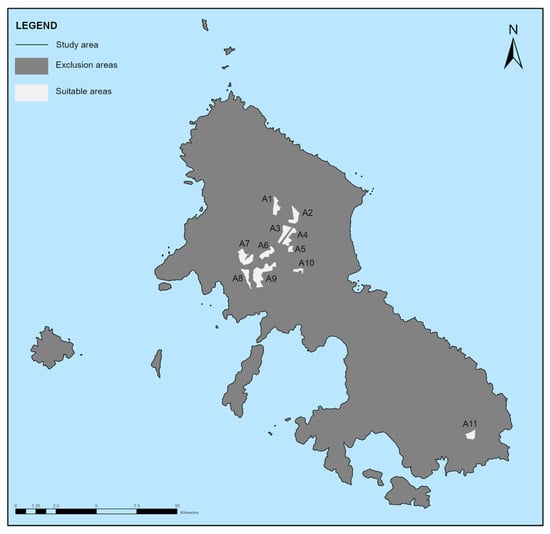
The purpose of this study is to determine the optimal location for siting an onshore wind farm on the island of Skyros, thereby maximizing performance and minimizing the project’s environmental impacts. Seven evaluation criteria are defined across various sectors, including environmental and economic
[...] Read more.
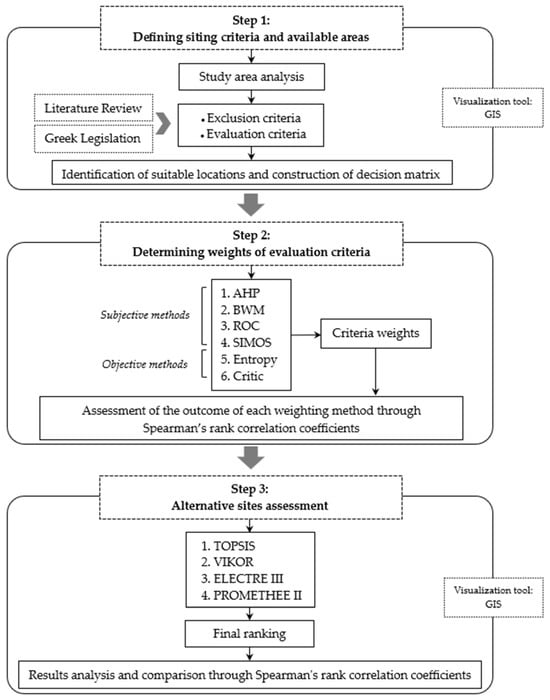
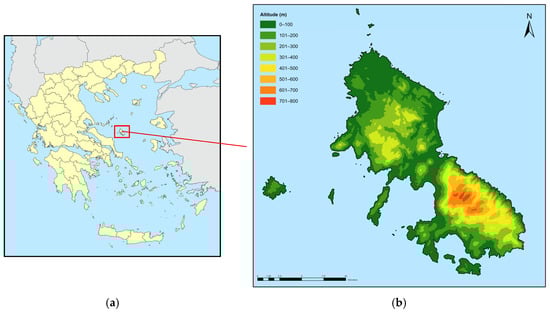
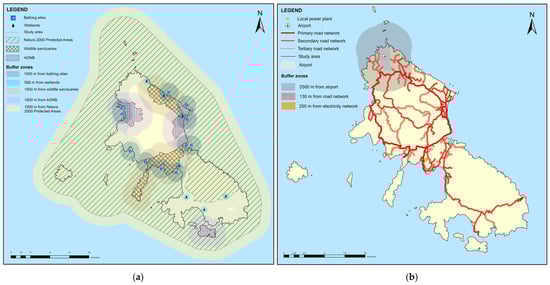
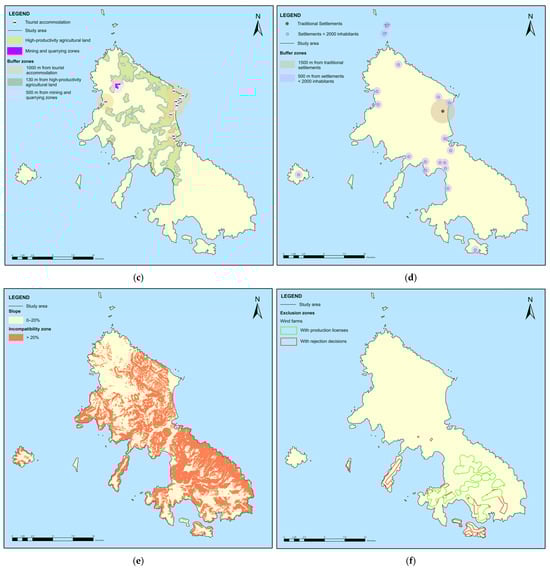
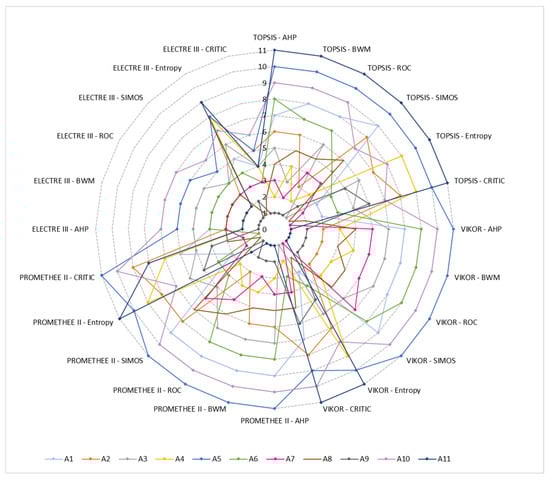
The purpose of this study is to determine the optimal location for siting an onshore wind farm on the island of Skyros, thereby maximizing performance and minimizing the project’s environmental impacts. Seven evaluation criteria are defined across various sectors, including environmental and economic sectors, and six criteria weighting methods are applied in combination with four multicriteria decision-making (MCDM) ranking methods for suitable areas, resulting in twenty-four ranking models. The alternatives considered in the analysis were defined through the application of constraints imposed by the Specific Framework for Spatial Planning and Sustainable Development for Renewable Energy Sources (SFSPSD RES), complemented by exclusion criteria documented in the international literature, as well as a minimum area requirement ensuring the feasibility of installing at least four wind turbines within the study area. The correlations between their results are then assessed using the Spearman coefficient. Geographic information systems (GISs) are utilized as a mapping tool. Through the application of the methodology, it emerges that area A9, located in the central to northern part of Skyros, is consistently assessed as the most suitable site for the installation of a wind farm based on nine models combining criteria weighting and MCDM methods, which should be prioritized as an option for early-stage wind farm siting planning. The results demonstrate an absolute correlation among the subjective weighting methods, whereas the objective methods do not appear to be significantly correlated with each other or with the subjective methods. The ranking methods with the highest correlation are PROMETHEE II and ELECTRE III, while those with the lowest are TOPSIS and VIKOR. Additionally, the hierarchy shows consistency across results using weights from AHP, BWM, ROC, and SIMOS. After applying multiple methods to investigate correlations and mitigate their disadvantages, it is concluded that when experts in the field are involved, it is preferable to incorporate subjective multicriteria analysis methods into decision-making problems. Finally, it is recommended to use more than one MCDM method in order to reach sound decisions.
Full article

Figure 1
Open AccessArticle
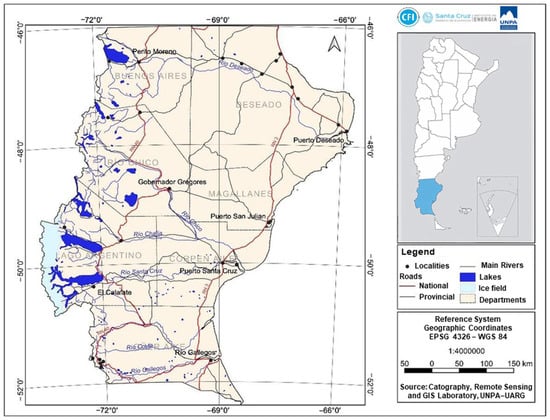
Exploratory Analysis of Wind Resource and Doppler LiDAR Performance in Southern Patagonia
by
María Florencia Luna, Rafael Beltrán Oliva and Jacobo Omar Salvador
Wind 2026, 6(1), 3; https://doi.org/10.3390/wind6010003 - 15 Jan 2026
Abstract
►▼
Show Figures
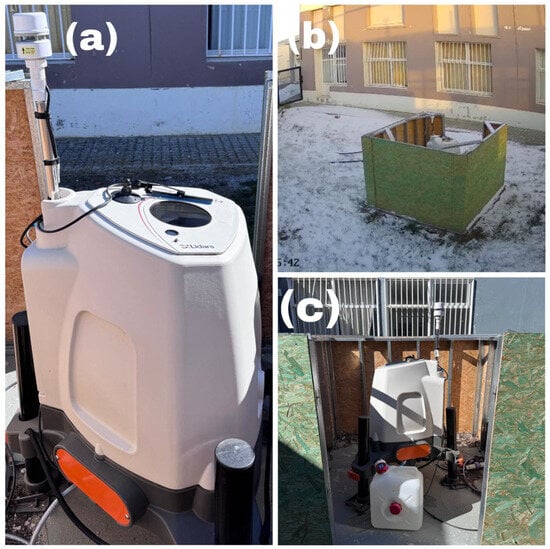
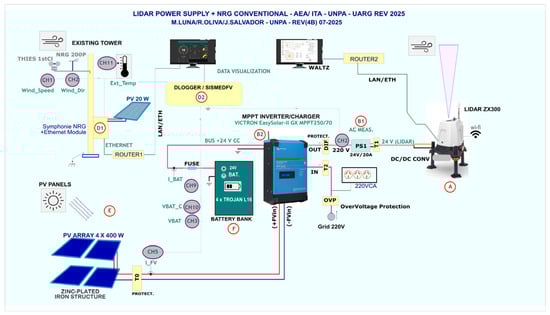
Southern Patagonia in Argentina possesses a world-class wind resource; however, its remote location challenges long-term monitoring. This study presents the first long-term Doppler LiDAR-based wind characterization in the region, analyzing six months of high-resolution data at a 100 m hub height. Power for
[...] Read more.
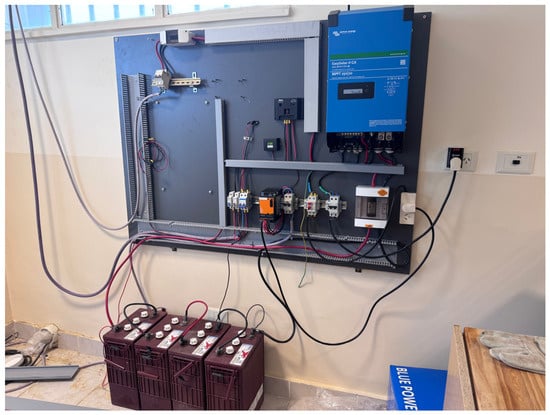
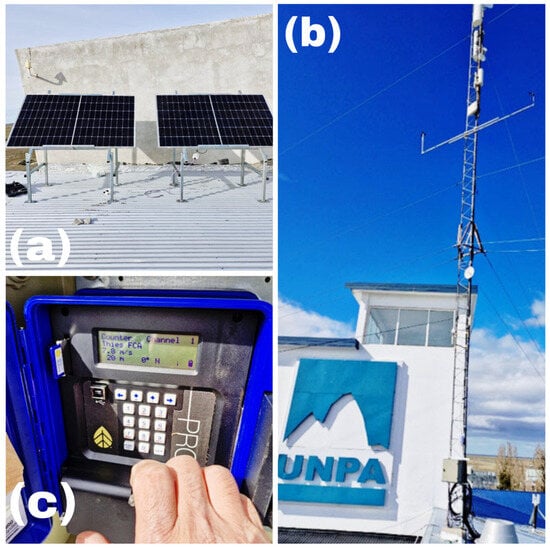
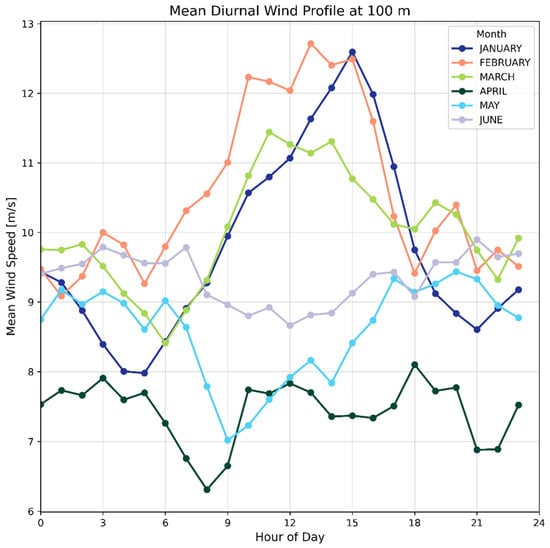
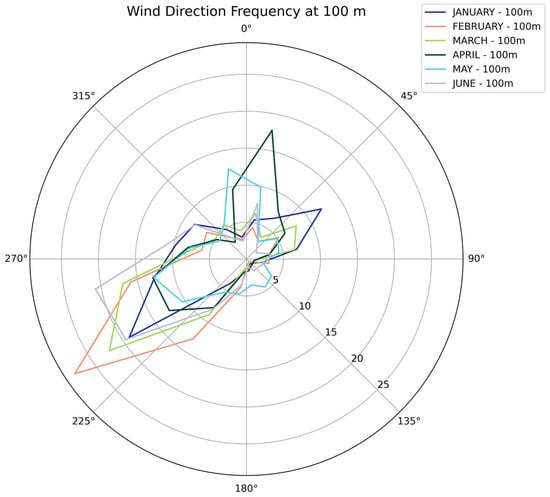
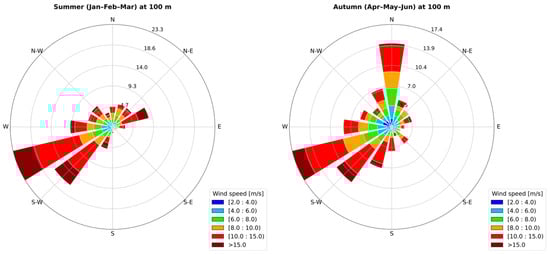
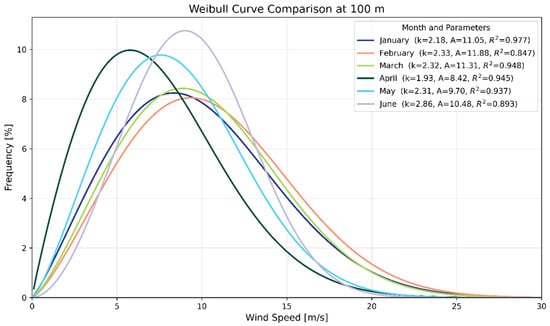
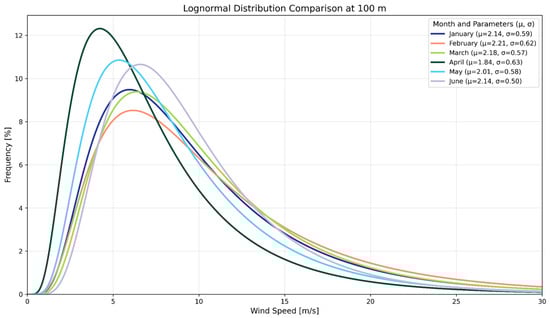
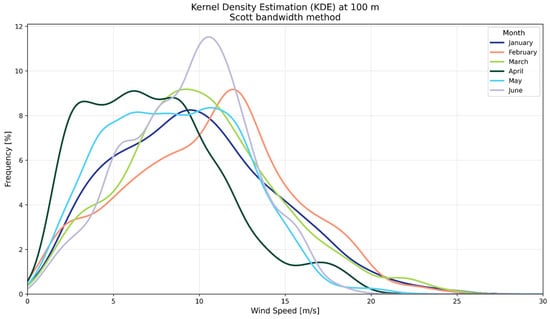
Southern Patagonia in Argentina possesses a world-class wind resource; however, its remote location challenges long-term monitoring. This study presents the first long-term Doppler LiDAR-based wind characterization in the region, analyzing six months of high-resolution data at a 100 m hub height. Power for the LiDAR is provided by a hybrid system combining photovoltaic (PV) and grid sources, with remote monitoring. The results reveal two distinct seasonal regimes identified through a multi-model statistical framework (Weibull, Lognormal, and non-parametric Kernel Density Estimation: a high-energy summer with concentrated westerly flows and pronounced diurnal cycles (Weibull scale parameter A ≈ 11.9 m/s), and a more stable autumn with a broad wind direction spectrum (shape parameter k ≈ 2.86). Energy output, simulated using Windographer v5.3.12 (Academic License) for a Vestas V117-3.3 MW turbine, shows close alignment (~15% difference) with the operational Bicentenario I & II wind farm (Jaramillo, AR), validating the site’s wind energy potential. This study confirms the viability of utility-scale wind power generation in Southern Patagonia and establishes Doppler LiDAR as a reliable tool for high-resolution wind resource assessment in remote, high-wind environments.
Full article

Figure 1
Open AccessArticle
Range-Wide Aerodynamic Optimization of Darrieus Vertical Axis Wind Turbines Using CFD and Surrogate Models
by
Giusep Baca, Gabriel Santos and Leandro Salviano
Wind 2026, 6(1), 2; https://doi.org/10.3390/wind6010002 - 12 Jan 2026
Abstract
►▼
Show Figures
The depletion of fossil fuel resources and the growing need for sustainable energy solutions have increased interest in vertical axis wind turbines (VAWTs), which offer advantages in urban and variable-wind environments but often exhibit limited performance at low tip speed ratios (TSRs). This
[...] Read more.
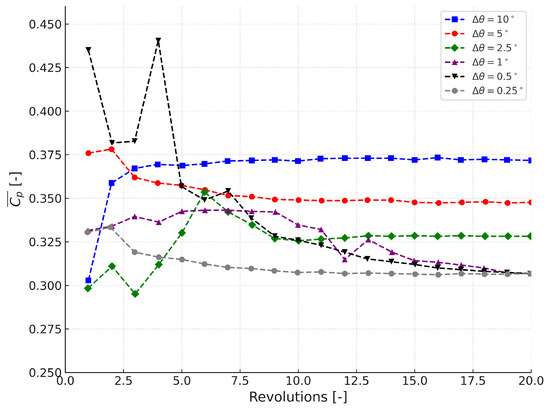
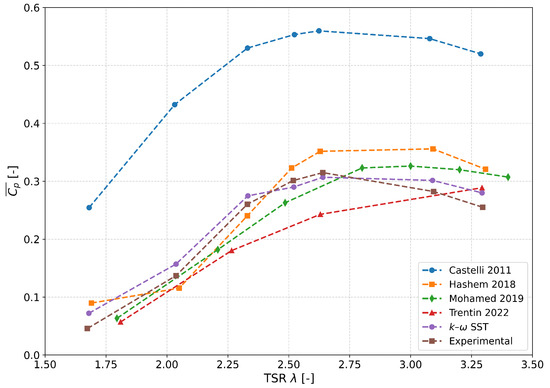
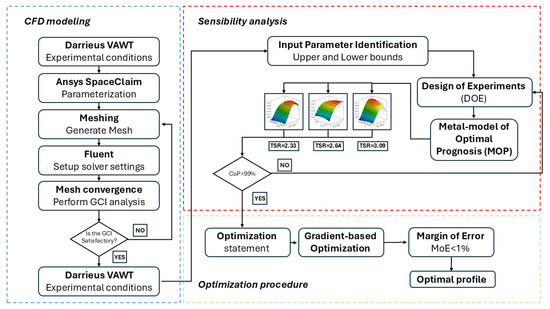
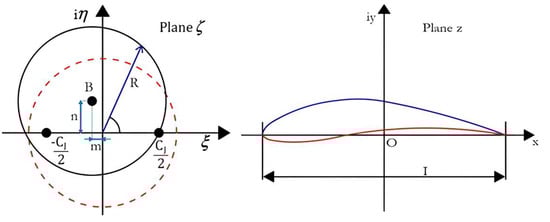
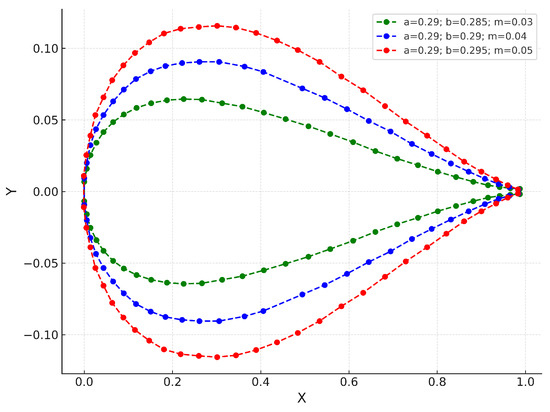
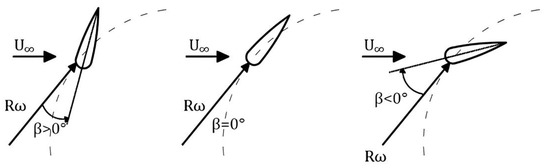
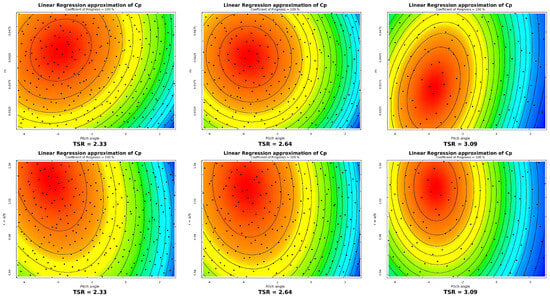
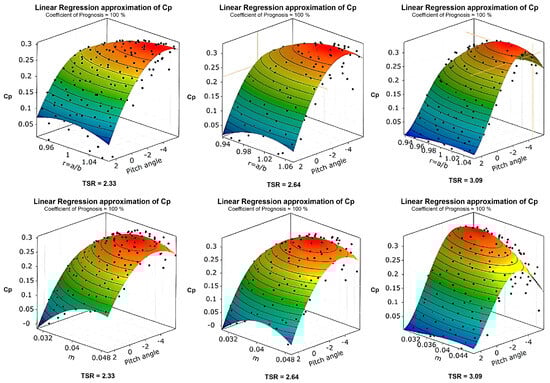
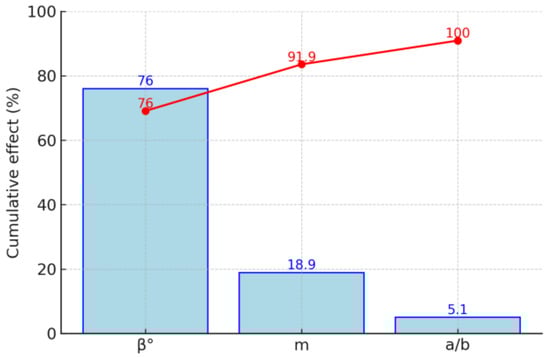
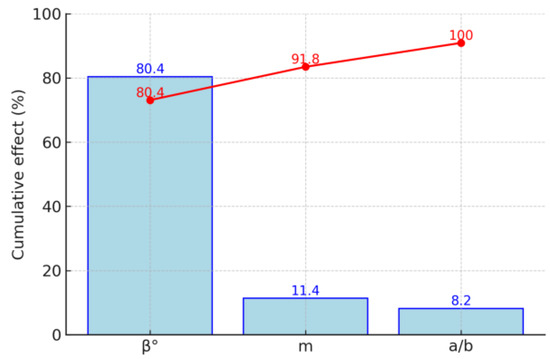
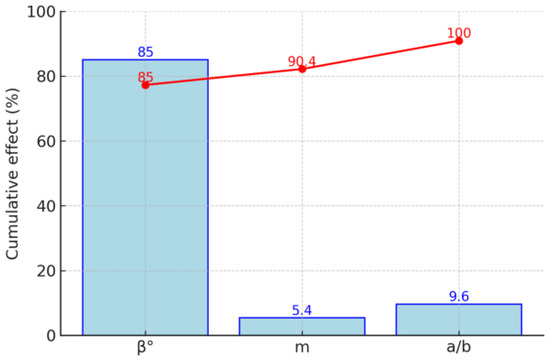
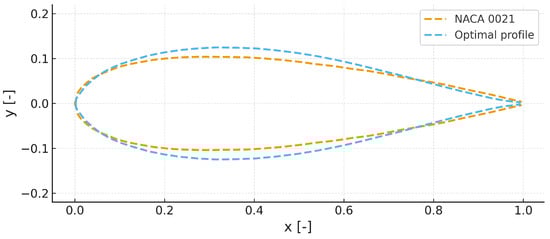
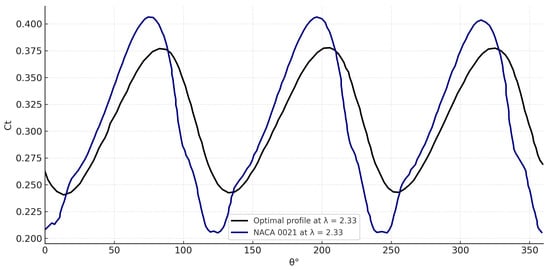
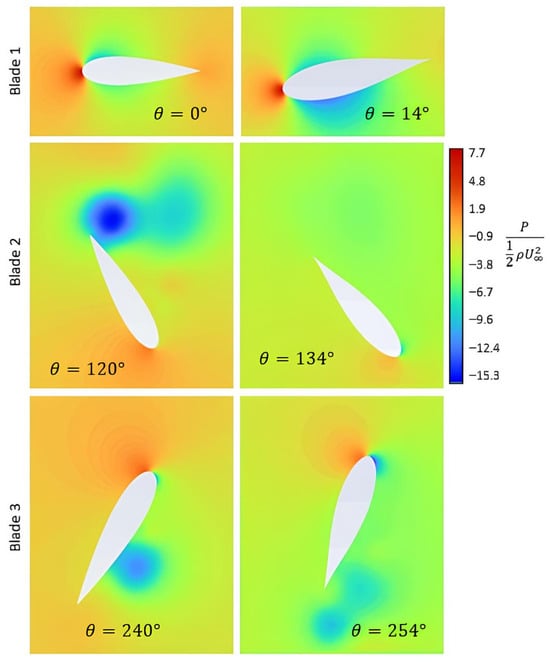
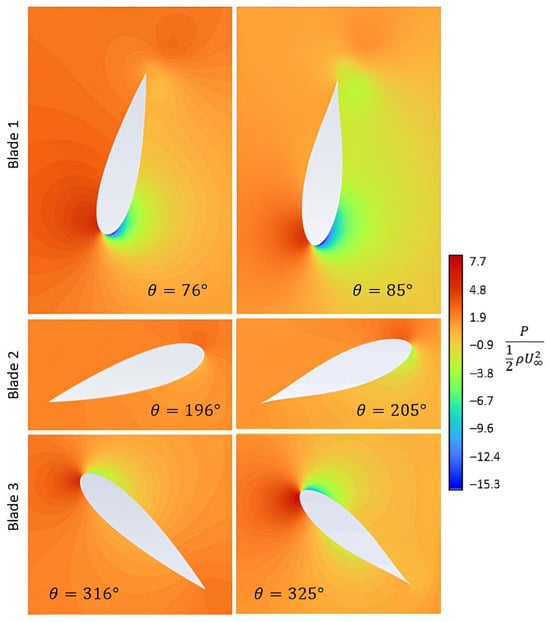
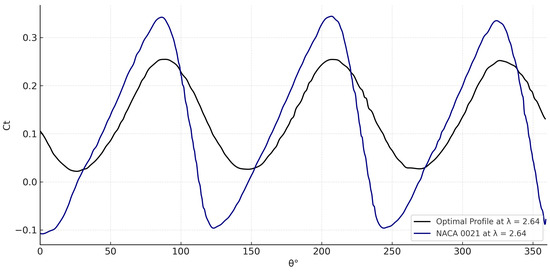
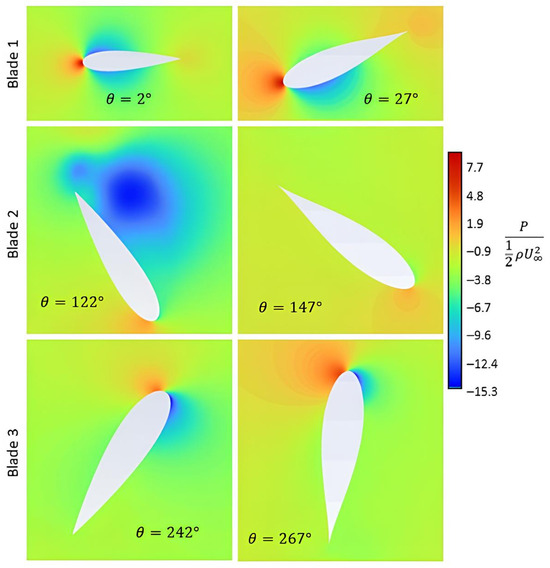
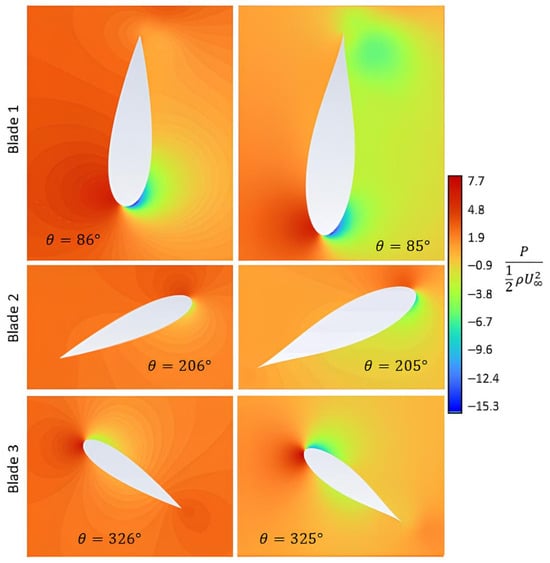
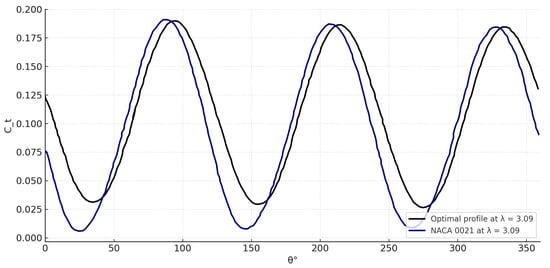
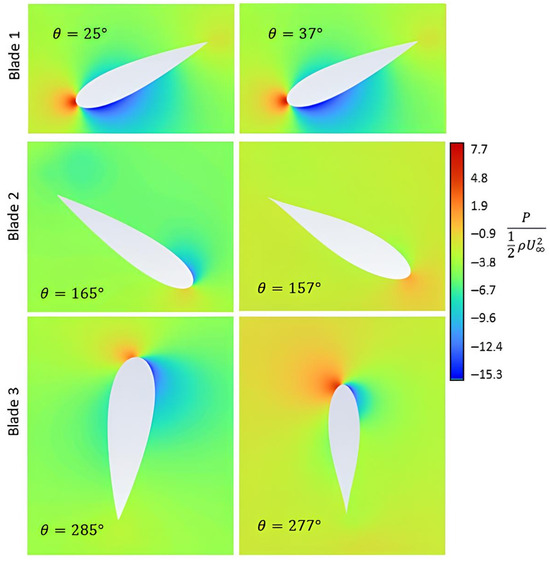
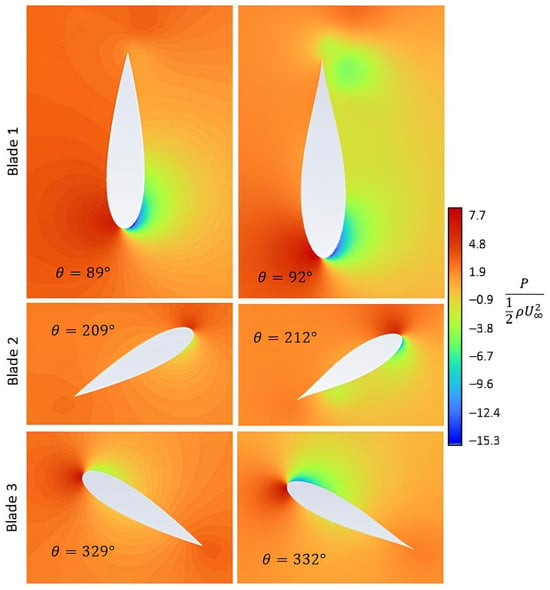
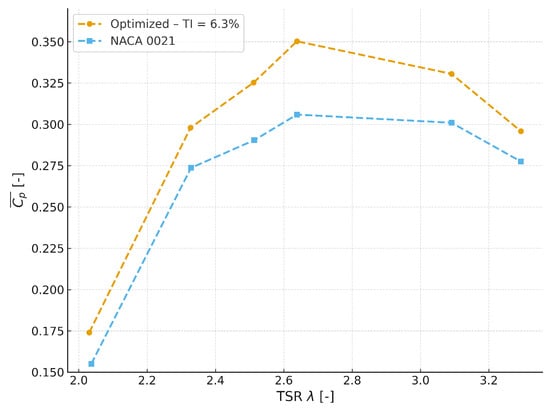
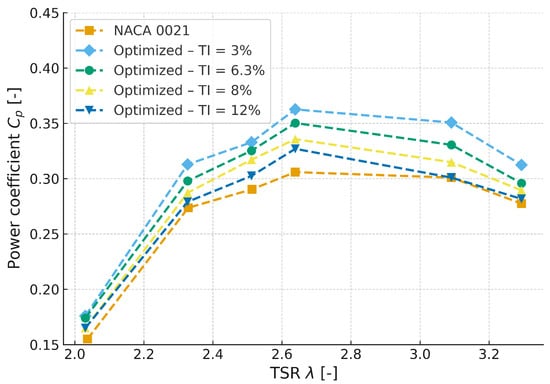
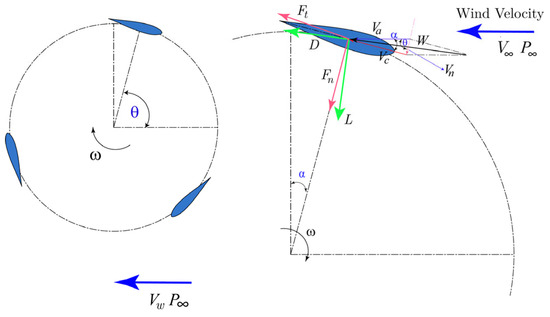
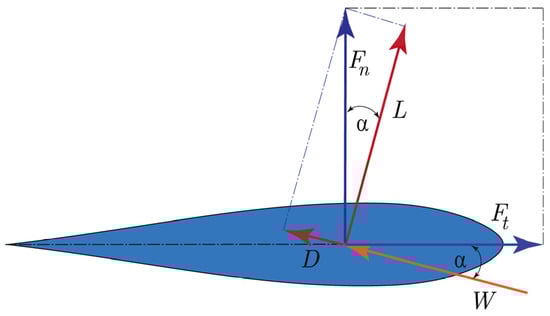
The depletion of fossil fuel resources and the growing need for sustainable energy solutions have increased interest in vertical axis wind turbines (VAWTs), which offer advantages in urban and variable-wind environments but often exhibit limited performance at low tip speed ratios (TSRs). This study optimizes VAWT aerodynamic behavior across a wide TSR range by varying three geometric parameters: maximum thickness position ( ), relative thickness (m), and pitch angle ( ). A two-dimensional computational fluid dynamics (CFD) framework, combined with the Metamodel of Optimal Prognosis (MOP), was used to build surrogate models, perform sensitivity analyses, and identify optimal profiles through gradient-based optimization of the integrated – curve. The Joukowsky transformation was employed for efficient geometric parameterization while maintaining aerodynamic adaptability. The optimized airfoils consistently outperformed the baseline NACA 0021, yielding up to a 14.4% improvement at and an average increase of 10.7% across all evaluated TSRs. Flow-field analysis confirmed reduced separation, smoother pressure gradients, and enhanced torque generation. Overall, the proposed methodology provides a robust and computationally efficient framework for multi-TSR optimization, integrating Joukowsky-based parameterization with surrogate modeling to improve VAWT performance under diverse operating conditions.
Full article

Figure 1
Open AccessArticle
Towards Resilient Grid Integration of Wind Power: A Comparative Study of Nine Numerical Approaches Across Six Cities in Palestine
by
Ahmed Badawi, Wasel Ghanem, Nasser Ismail, Alhareth Zyoud, I. M. Elzein and Ashraf Al-Rimawi
Wind 2026, 6(1), 1; https://doi.org/10.3390/wind6010001 - 22 Dec 2025
Abstract
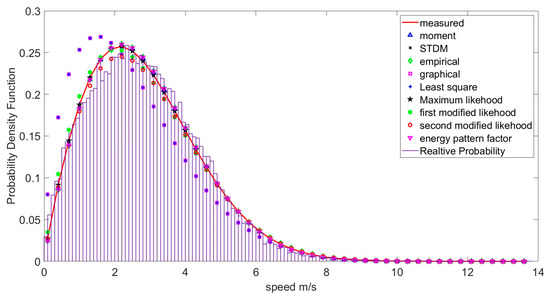
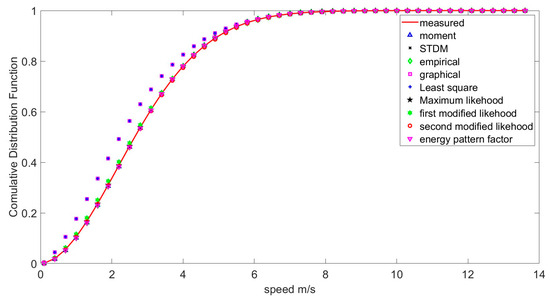
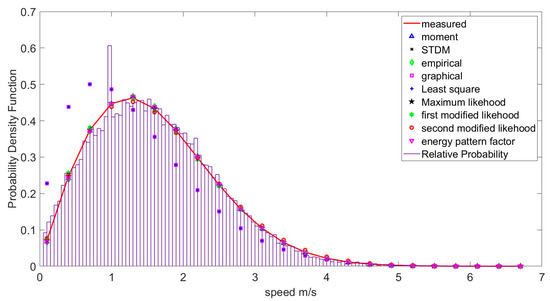
This research presents a detailed assessment of the wind power potential in six Palestinian cities—Bethlehem, Jericho, Jenin, Nablus, Ramallah, and Tulkarm—utilizing daily wind speed data from the years 2015 to 2021. The primary goal of this study is to formulate a robust, data-driven
[...] Read more.
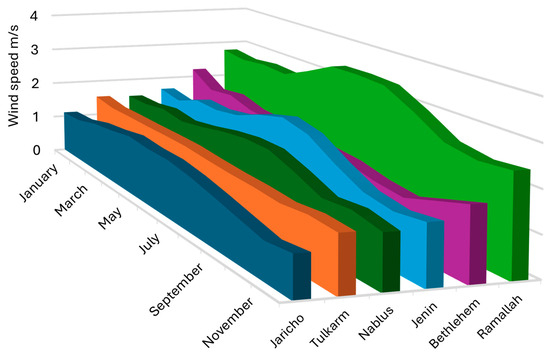
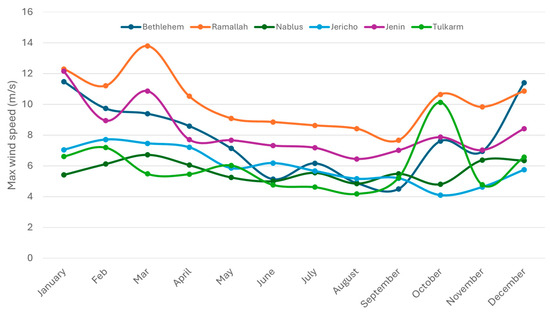
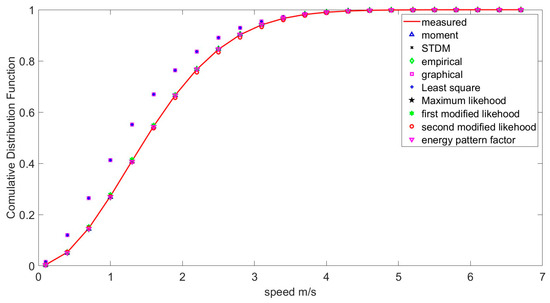
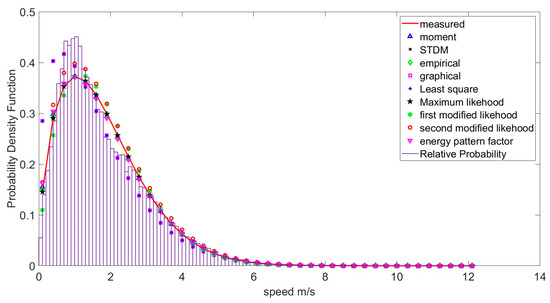
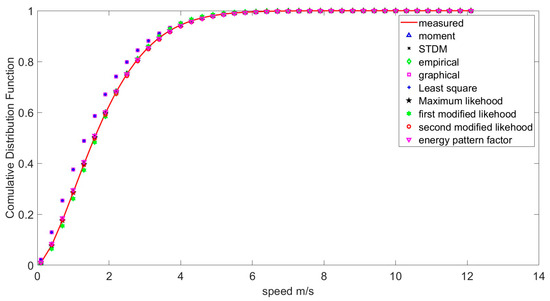
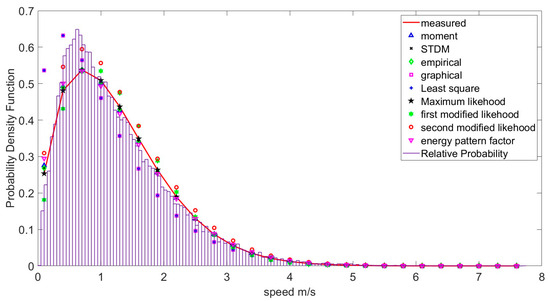
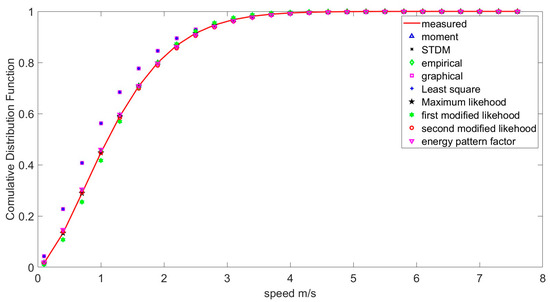
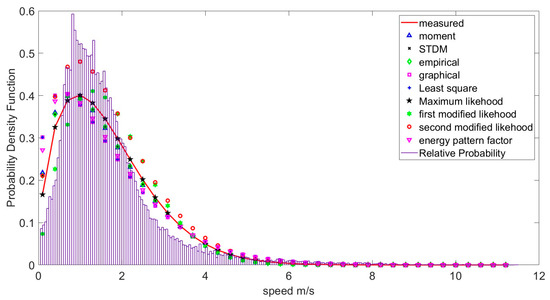
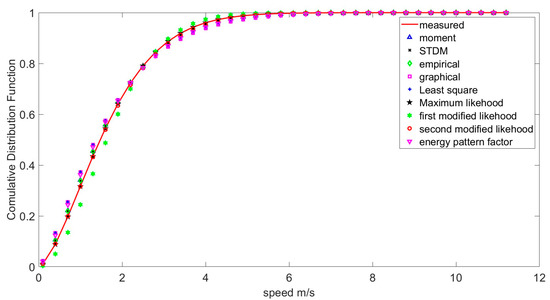
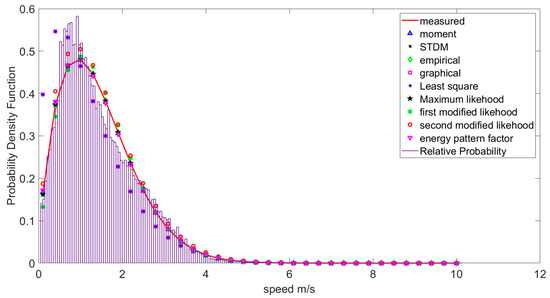
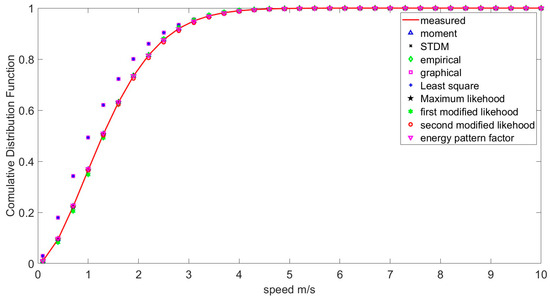
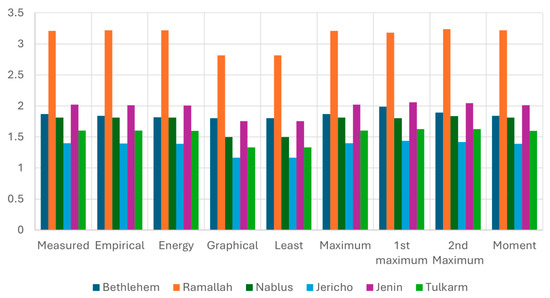
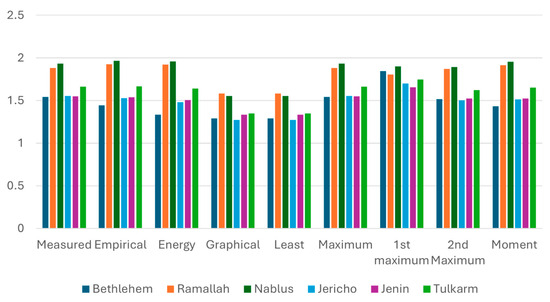
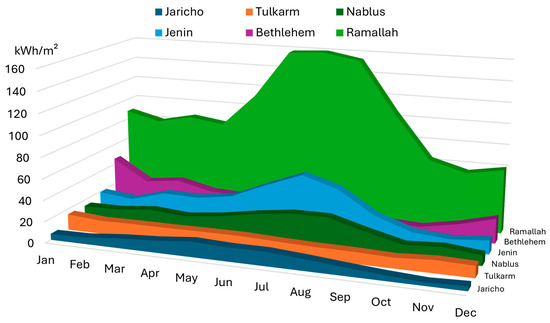
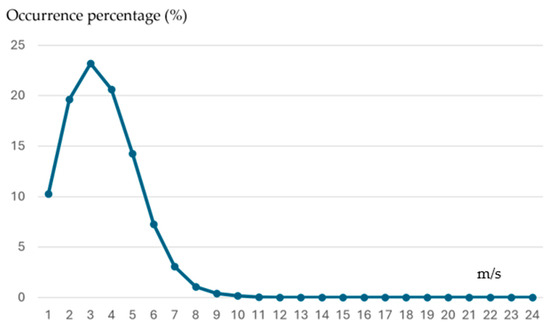
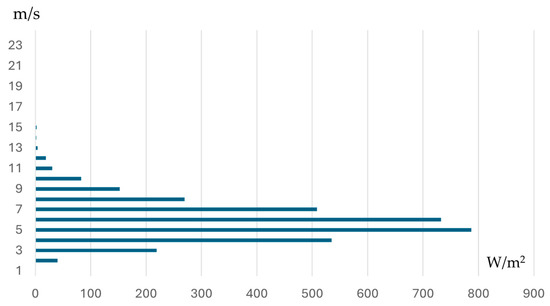
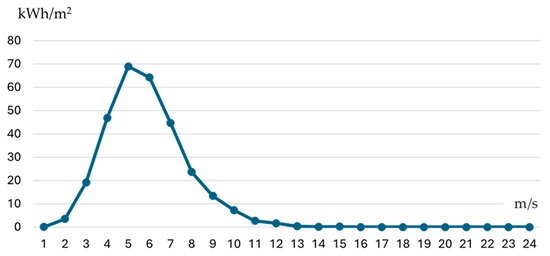
This research presents a detailed assessment of the wind power potential in six Palestinian cities—Bethlehem, Jericho, Jenin, Nablus, Ramallah, and Tulkarm—utilizing daily wind speed data from the years 2015 to 2021. The primary goal of this study is to formulate a robust, data-driven framework for the strategic placement of turbines and the economical production of energy in areas with limited wind resources. A critical aspect of this research is the application of nine numerical methods, including the Maximum Likelihood Method (MLM) and the Energy Pattern Factor Method (EPF), to analyze the wind data. These methods were employed to estimate the shape and scale parameters of the Probability Distribution Function (PDF) that represents the Weibull distribution for various shape factor values. The accuracy of the numerical methods was validated through five statistical tools, including the Root Mean Square Error (RMSE) and Chi-square tests ( ). The Weibull parameters obtained from the numerical techniques indicated shape factors ranging from 1.27 to 1.96 and scale factors between 1.16 and 3.21 m/s. The energy output was calculated based on the swept area of the wind turbine, following Betz’s limit. The estimated annual energy production per square meter in the six cities is as follows: Ramallah—123 kWh/m2, Bethlehem—24.42 kWh/m2, Jenin—31.12 kWh/m2, Nablus—22 kWh/m2, Tulkarm—15.5 kWh/m2, and Jericho—10.36 kWh/m2. A 5 kW small-scale wind turbine was utilized to evaluate the technical feasibility, sustainability, and economic viability of small-scale wind energy applications. The anticipated energy output from the proposed wind turbine is 2054 kWh, with an estimated payback period of approximately 11.6 years.
Full article
(This article belongs to the Special Issue O&M and Innovative Solutions Bringing Scale and Speed to Wind Energy Engineering)
►▼
Show Figures

Figure 1
Open AccessArticle
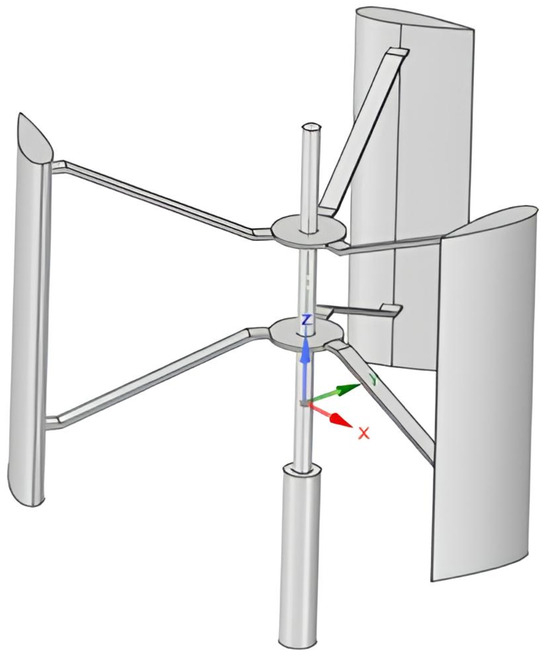
Design of Low-Power Vertical-Axis Wind Turbine Based on Parametric Method
by
F. Díaz-Canul, J. O. Aguilar, N. Rosado-Hau, E. Simá and O. A. Jaramillo
Wind 2025, 5(4), 35; https://doi.org/10.3390/wind5040035 - 10 Dec 2025
Cited by 1
Abstract
►▼
Show Figures
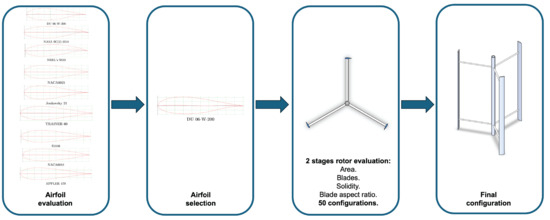
The parametric design of a low-power (<1 kW) H-type vertical-axis wind turbine tailored to the wind conditions of the Yucatán Peninsula is presented. Nine airfoils were evaluated using the Double Multiple Streamtube method and Qblade Lifting-Line Theory numerical simulations, considering variations in solidity
[...] Read more.
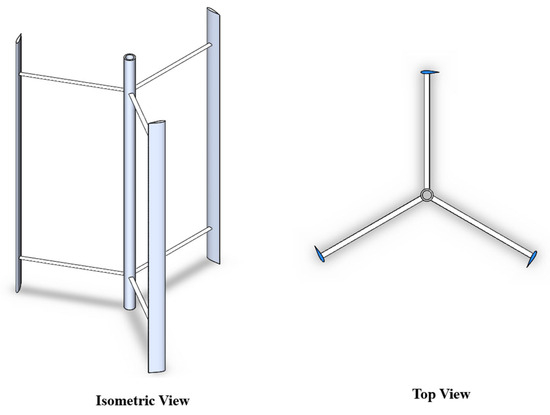
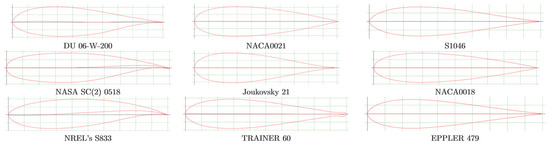
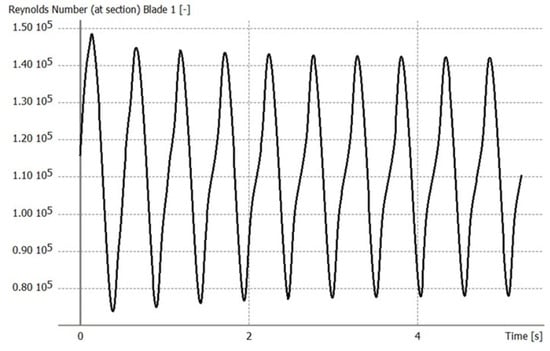
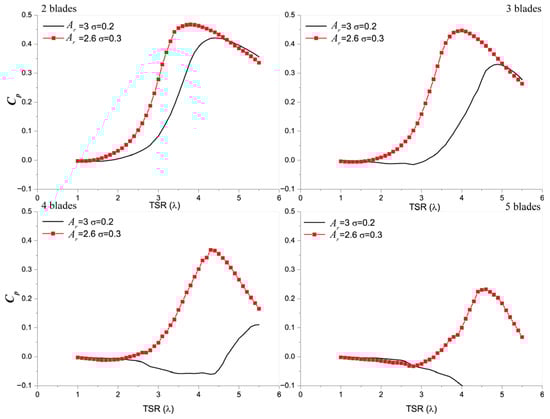
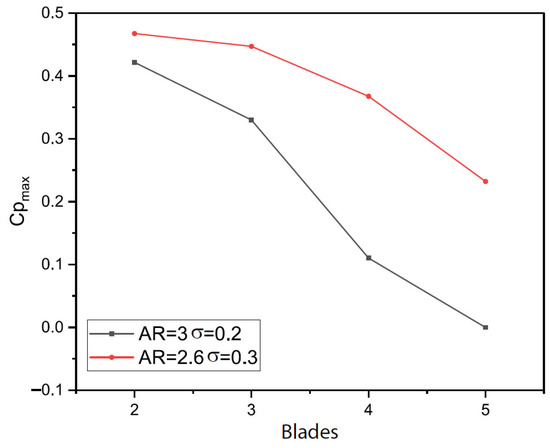
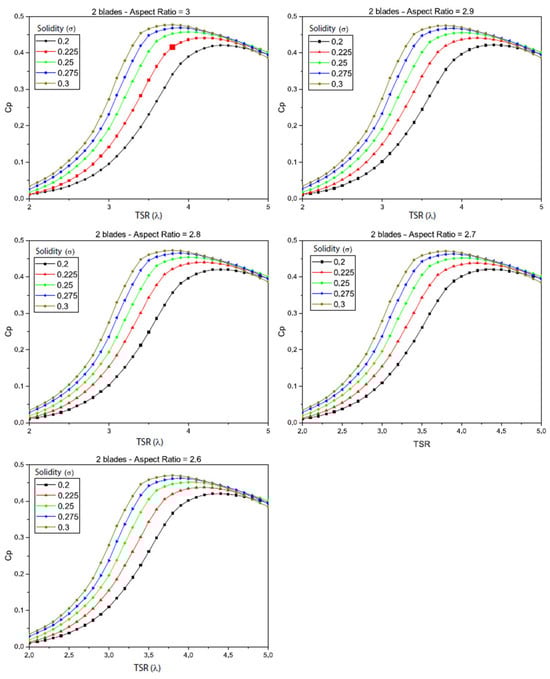
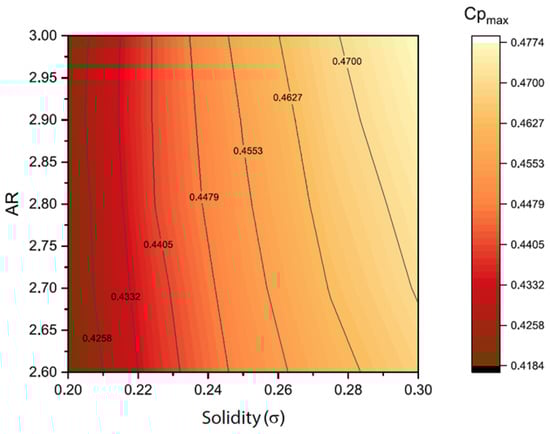
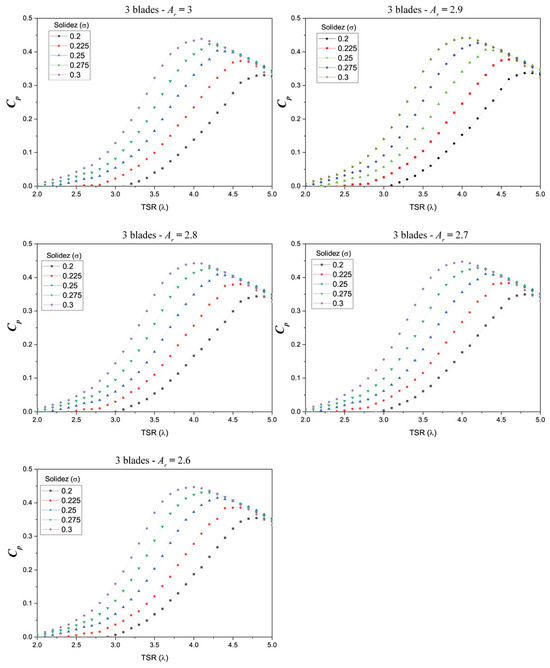
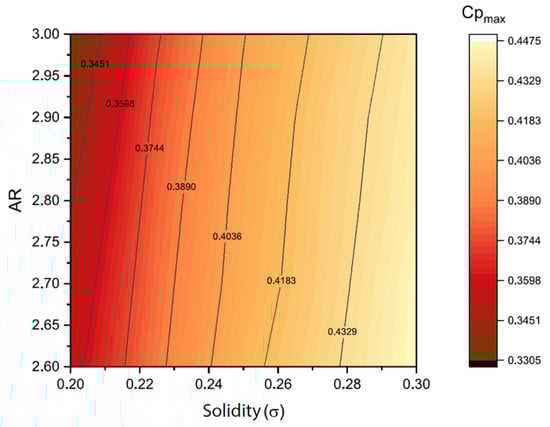
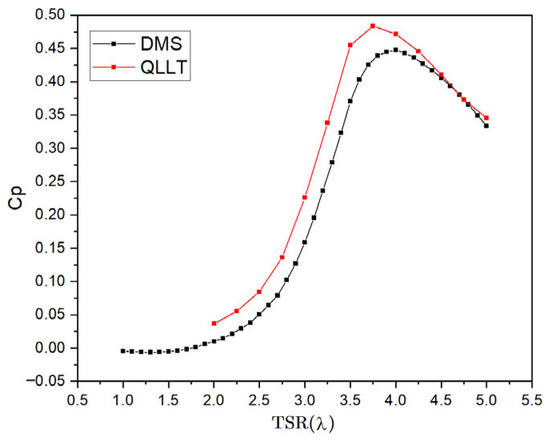
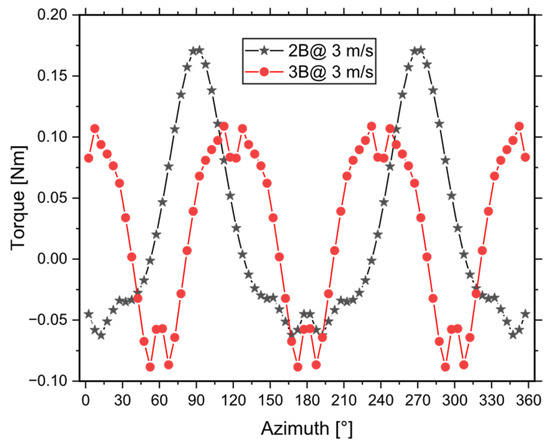
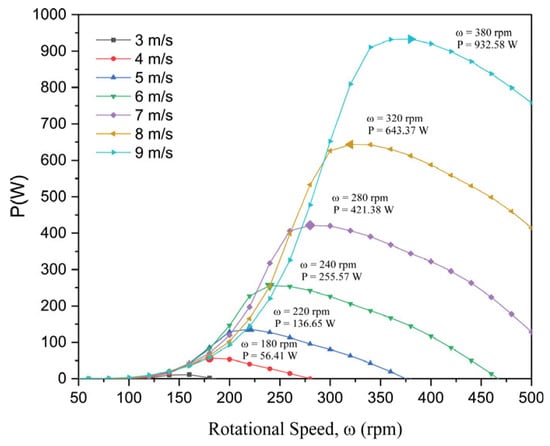
The parametric design of a low-power (<1 kW) H-type vertical-axis wind turbine tailored to the wind conditions of the Yucatán Peninsula is presented. Nine airfoils were evaluated using the Double Multiple Streamtube method and Qblade Lifting-Line Theory numerical simulations, considering variations in solidity (σ = 0.20–0.30), aspect ratio (Ar = H/R = 2.6–3.0), number of blades (2–5), and a swept-area constraint of 4 m2. The parametric study shows that fewer blades increase Cp, although a three-blade rotor improves start-up torque, vibration mitigation, and load smoothing. The recommended configuration—three blades, Ar = 2.6, σ = 0.30 and S1046 (or NACA 0018) operated near λ ≈ 3.75—balances efficiency and start-up performance. For the representative mean wind velocity of 5 m/s, typical of the Yucatán Peninsula, the VAWT achieves a maximum output of 136 W at 220 rpm. Under higher-wind conditions observed in specific sites within the region, the predicted maximum output increases to 932 W at 380 rpm.
Full article

Graphical abstract
Open AccessArticle
Enhancing Dynamic Voltage Stability of Wind Farm Based Microgrids Using FACTS Devices and Flexible Control Strategy
by
Huzaifah Zahid, Muhammad Rashad and Naveed Ashraf
Wind 2025, 5(4), 34; https://doi.org/10.3390/wind5040034 - 1 Dec 2025
Abstract
►▼
Show Figures
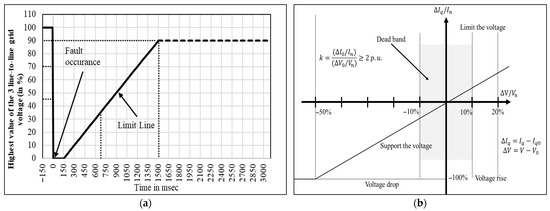
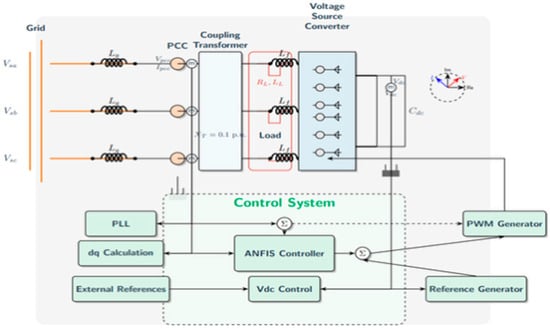
Voltage instability and power quality degradation represent critical barriers to the reliable operation of modern wind farm-based microgrids. As the share of distributed wind generation continues to grow, fluctuating wind speeds and variable reactive power demands increasingly challenge grid stability. This study proposes
[...] Read more.
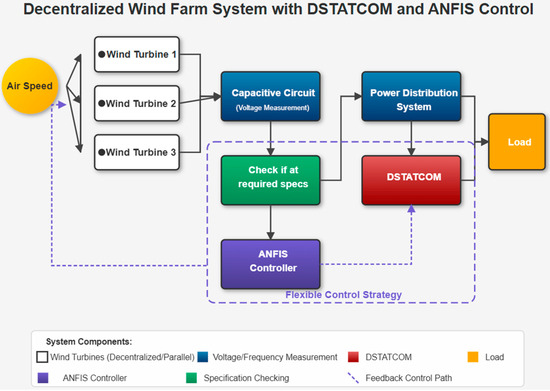
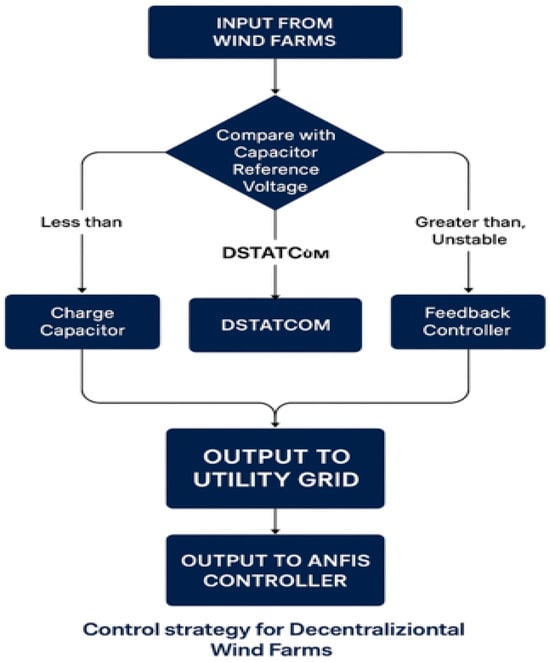
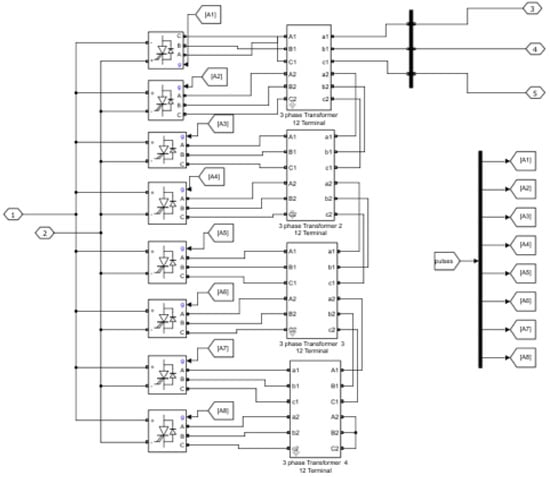
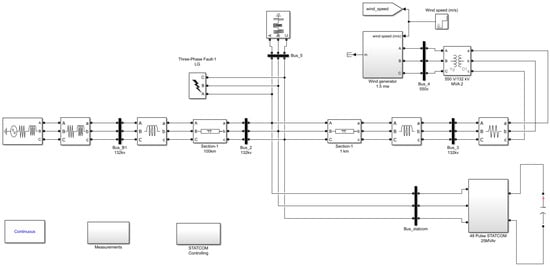
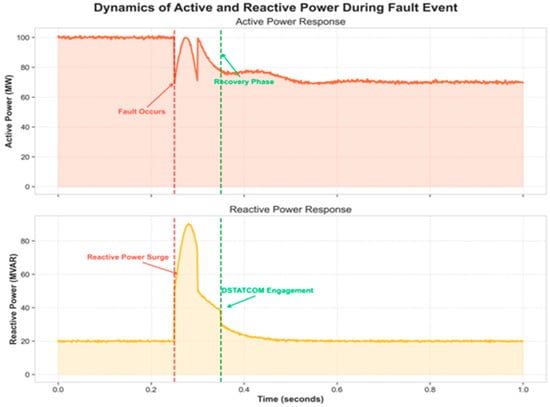
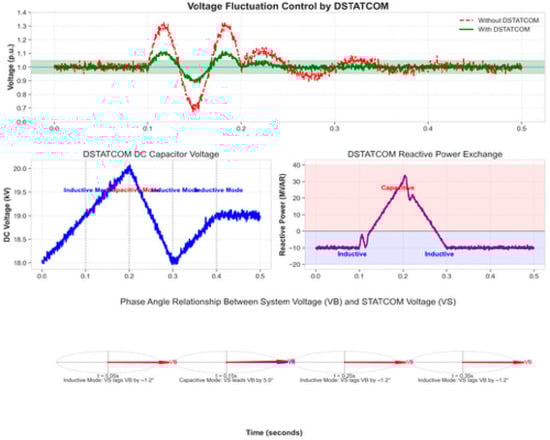
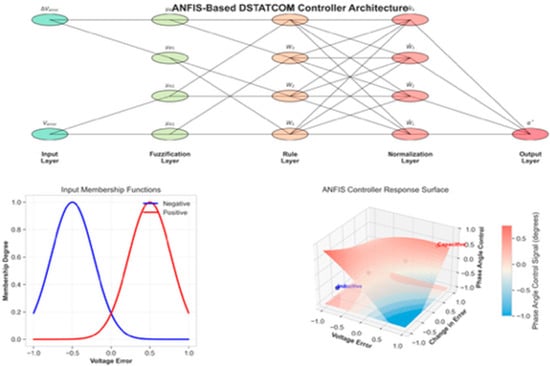
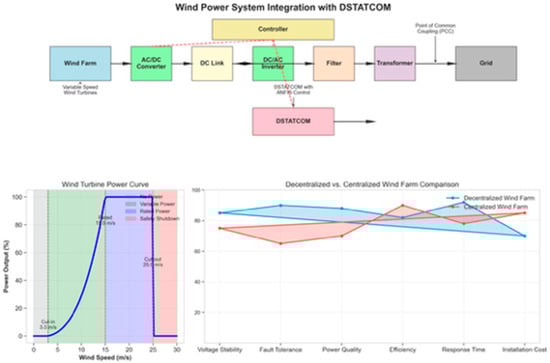
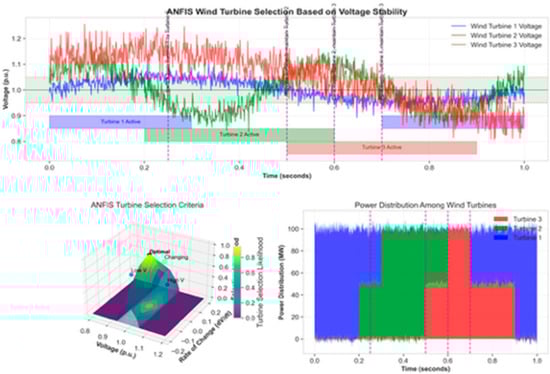
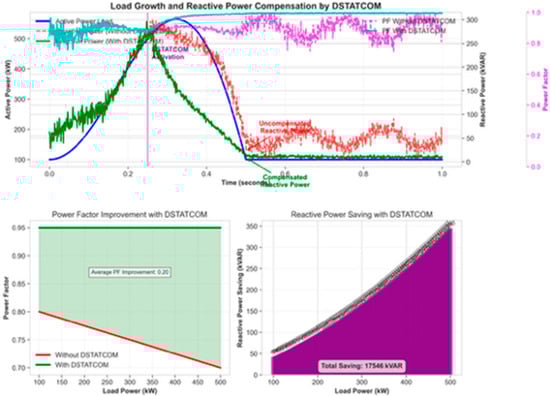
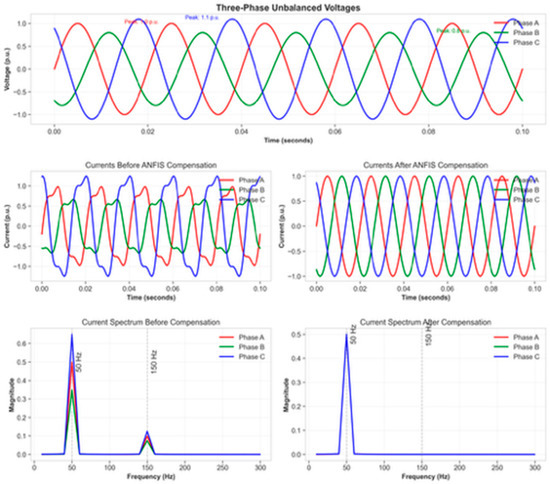
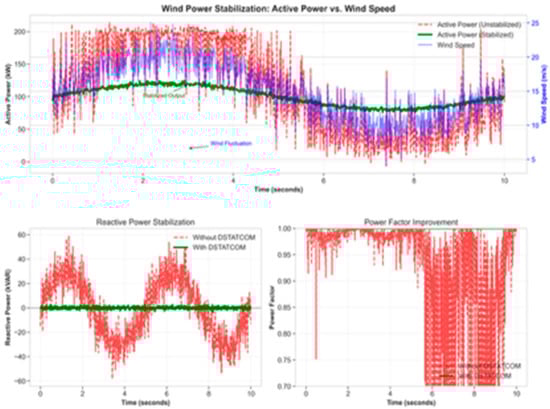
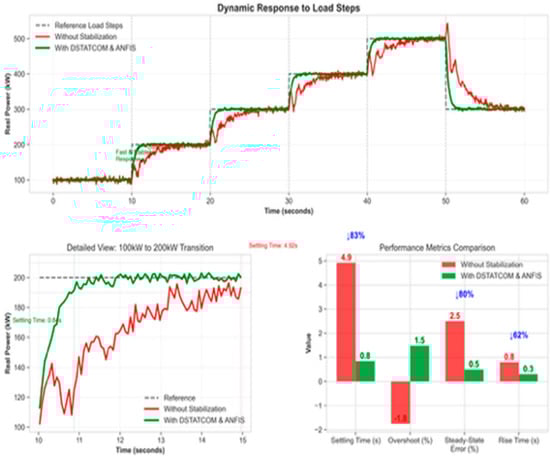
Voltage instability and power quality degradation represent critical barriers to the reliable operation of modern wind farm-based microgrids. As the share of distributed wind generation continues to grow, fluctuating wind speeds and variable reactive power demands increasingly challenge grid stability. This study proposes an adaptive decentralized framework integrating a Dynamic Distribution Static Compensator (DSTATCOM) with an Artificial Neuro-Fuzzy Inference System (ANFIS)-based control strategy to enhance dynamic voltage and frequency stability in wind farm microgrids. Unlike conventional centralized STATCOM configurations, the proposed system employs parallel wind turbine modules that can be selectively switched based on voltage feedback to maintain optimal grid conditions. Each turbine is connected to a capacitive circuit for real-time voltage monitoring, while the ANFIS controller adaptively adjusts compensation signals to ensure minimal voltage deviation and reduced harmonic distortion. The framework was modeled and validated in the MATLAB/Simulink R2023a environment using the Simscape Power Systems toolbox. Simulation results demonstrated superior transient response, voltage recovery, and power factor correction compared with traditional PI and fuzzy-based controllers, achieving a total harmonic distortion below 2.5% and settling times under 0.5 s. The findings confirm that the proposed decentralized DSTATCOM–ANFIS approach provides an effective, scalable, and cost-efficient solution for maintaining dynamic stability and high power quality in wind farm based microgrids.
Full article

Figure 1
Open AccessArticle
Integrated CFD and ANN Approach for Predicting Blade Deformation and Aerodynamic Response
by
Hudhaifa Hamzah, Ali Alkhabbaz, Aisha Koprulu, Laith M. Jasim, Ibrahim K. Alzubaidi, Abdulelah Hameed Yaseen, Ho-Seong Yang and Young-Ho Lee
Wind 2025, 5(4), 33; https://doi.org/10.3390/wind5040033 - 1 Dec 2025
Cited by 1
Abstract
►▼
Show Figures
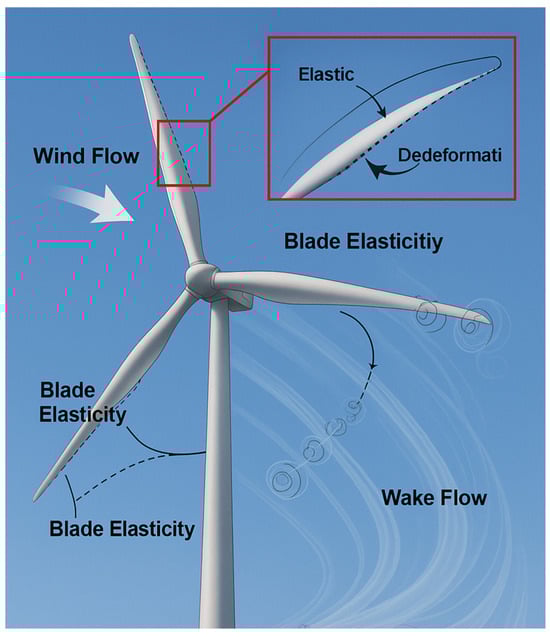
The growing demand for renewable energy has amplified the need for efficient and reliable wind turbine technologies, where understanding aerodynamic performance and aeroelastic behavior plays a critical role. In this study, a high-fidelity computational fluid dynamics (CFD) model was developed to analyze the
[...] Read more.
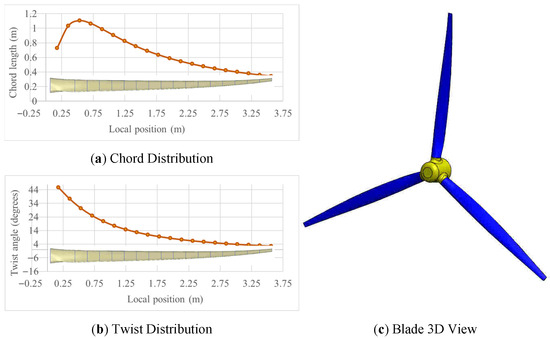
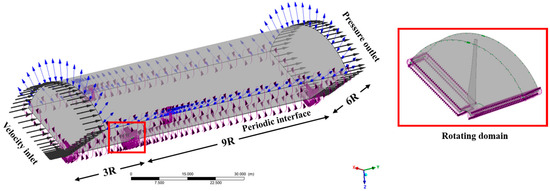
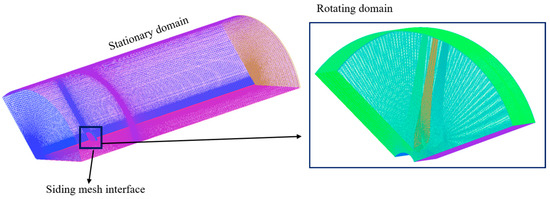
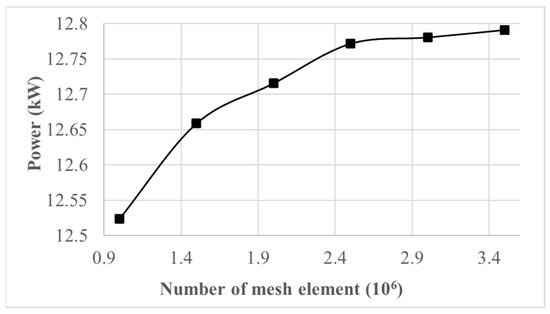
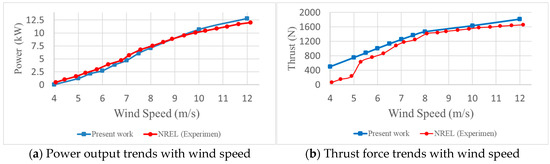
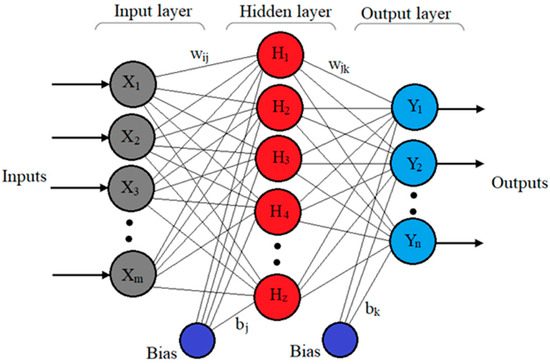
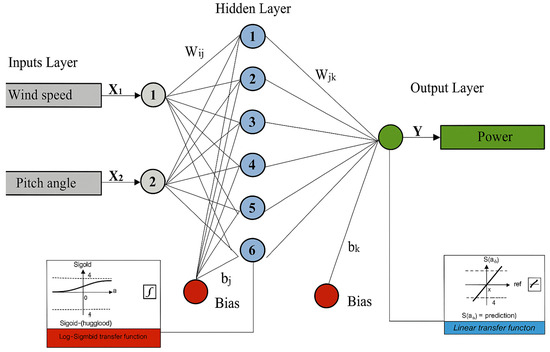
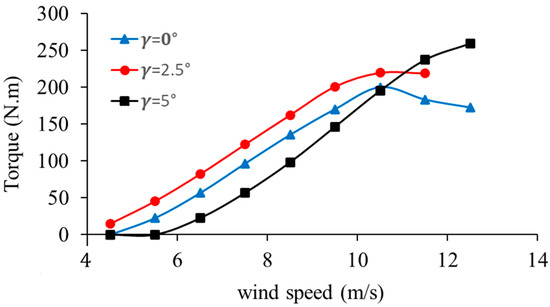
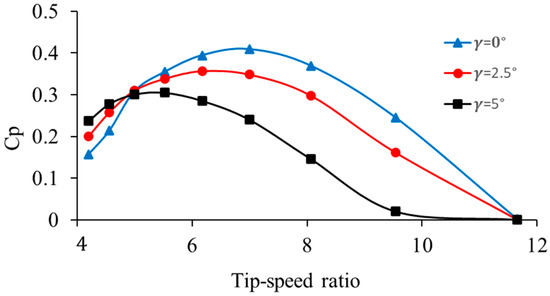
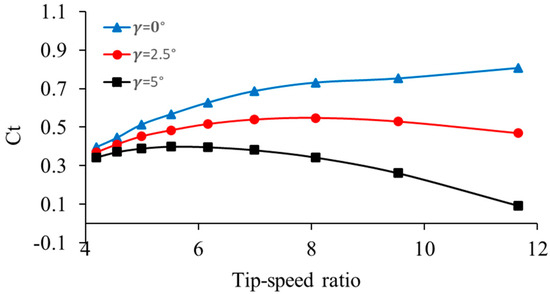
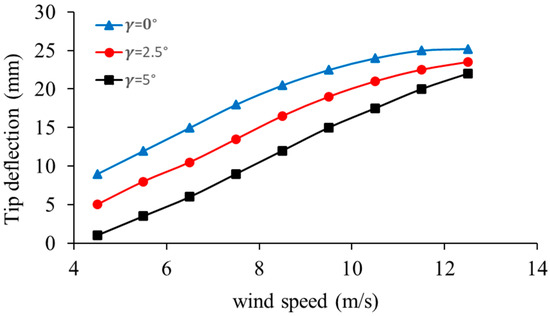
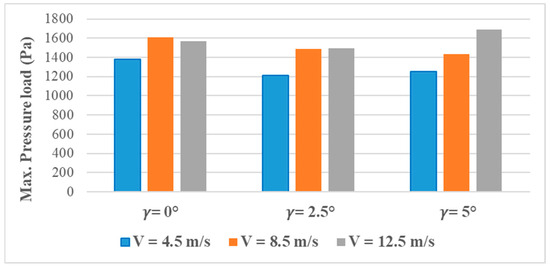
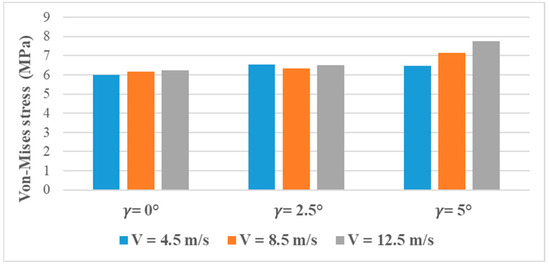
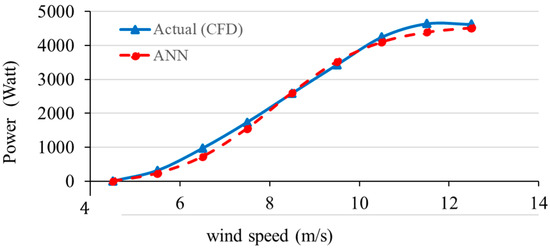
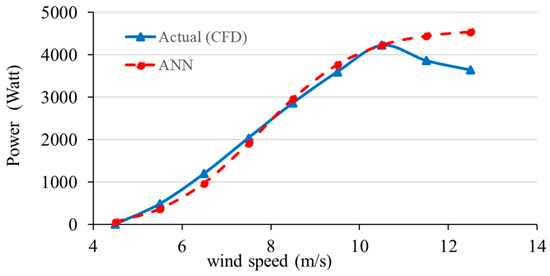
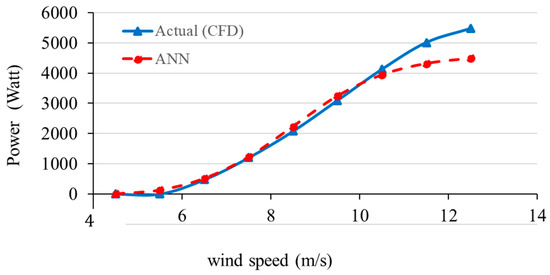
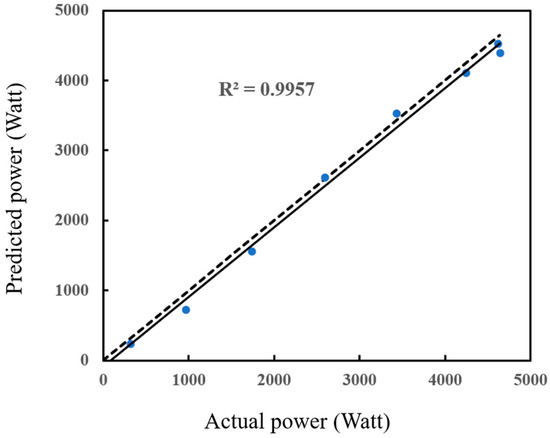
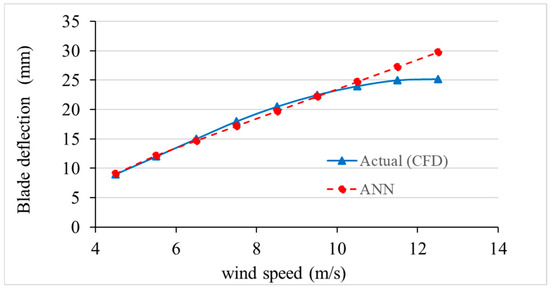
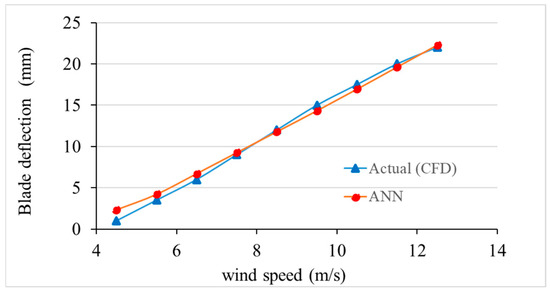
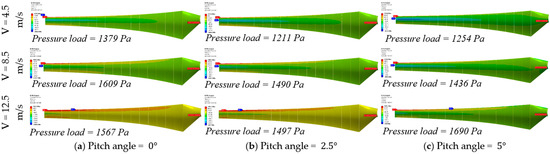
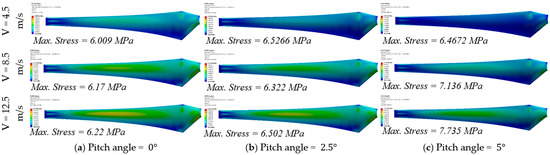
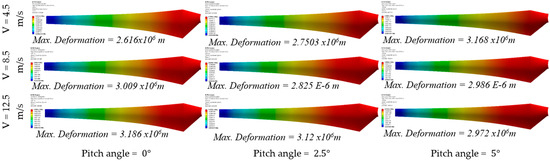
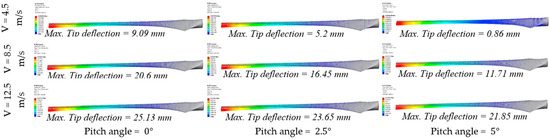
The growing demand for renewable energy has amplified the need for efficient and reliable wind turbine technologies, where understanding aerodynamic performance and aeroelastic behavior plays a critical role. In this study, a high-fidelity computational fluid dynamics (CFD) model was developed to analyze the aerodynamic loads and structural responses of a 2 kW horizontal-axis wind turbine, while an artificial neural network (ANN) was trained using CFD-generated data to predict power output and aeroelastic characteristics. The work combines ANN predictions and CFD simulations to determine the feasibility of machine learning as a surrogate model, which is much less expensive in terms of computational costs and time, with no negative effects on the accuracy. Findings indicate ANN predictions are closely comparable to CFD results with under 5–7% deviation at optimal blade pitch angles, which was shown to be very reliable in capturing nonlinear aerodynamic trends at different wind speeds and blade pitch angles. In addition, the obtained result emphasizes the example of the trade-off between aerodynamic efficiency and structural safety, where the largest power coefficient (0.42) was achieved at pitch and the tip deflections were reduced by almost 60% as the pitch was raised to . Such results substantiate the usefulness of ANN-based methods in the rapid aerodynamic and aeroelastic simulation of wind turbines and provide a prospective direction for effectively designed wind power generation and optimization.
Full article

Figure 1
Open AccessArticle
Wind Resource Assessment over Extremely Diverse Terrain
by
Jay Prakash Goit
Wind 2025, 5(4), 32; https://doi.org/10.3390/wind5040032 - 26 Nov 2025
Abstract
►▼
Show Figures
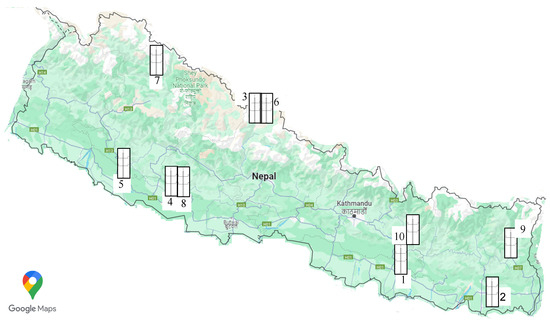
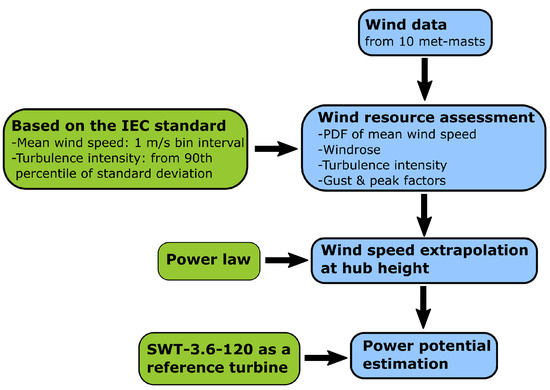
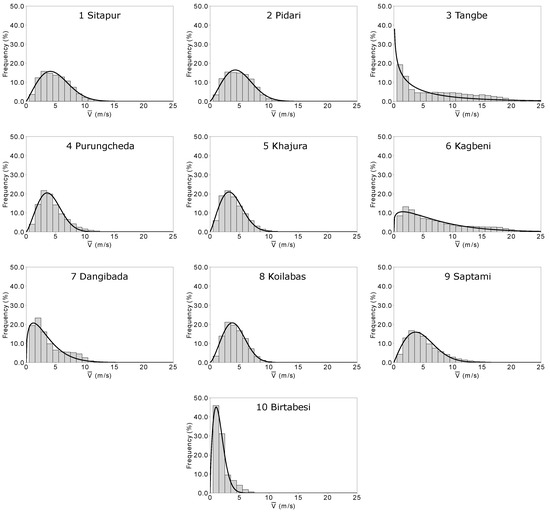
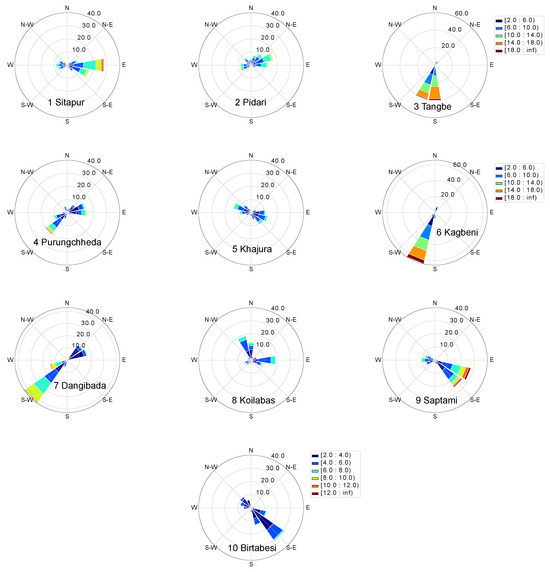
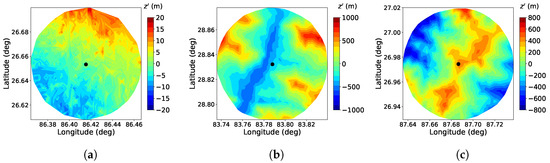
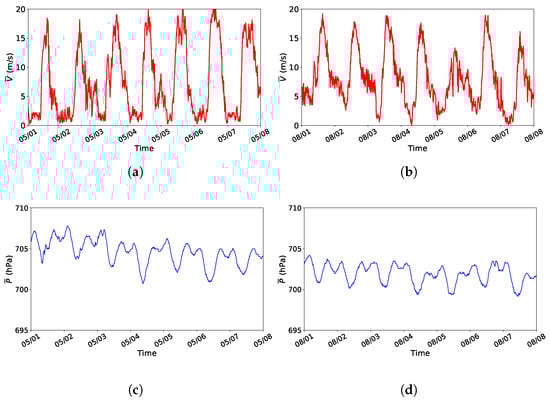
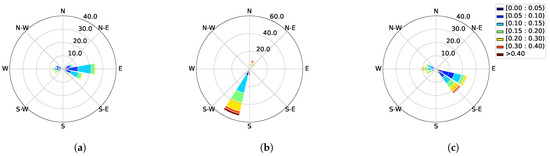
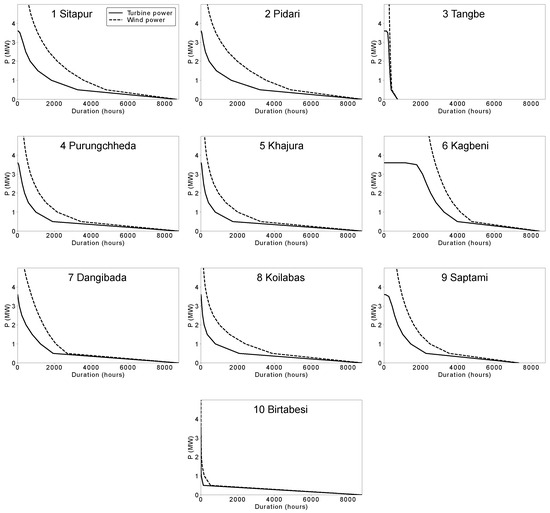
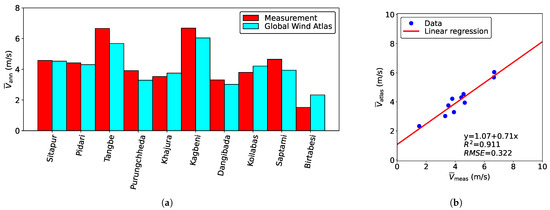
The current study investigates the effect of terrain features on wind resources in a region with extremely diverse terrain. To that end, a case study of Nepal based on annual wind data collected from 10 different sites is performed. The evaluation of mean
[...] Read more.
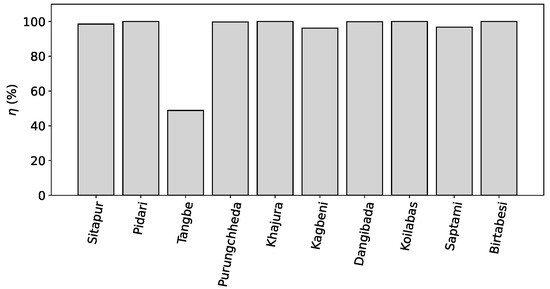
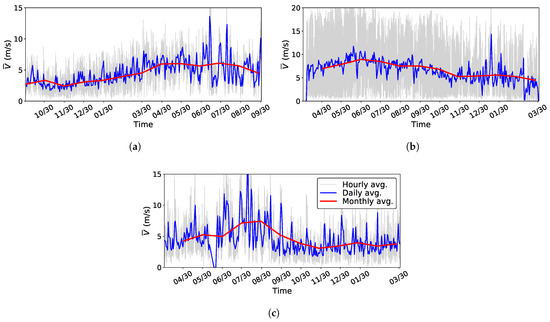
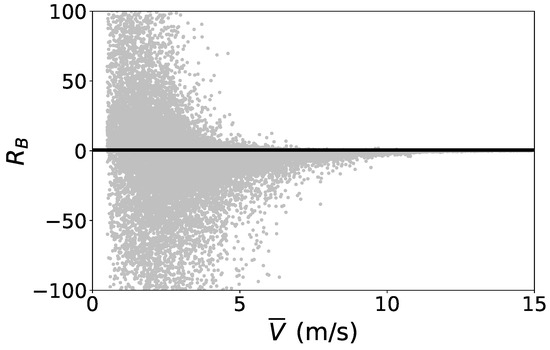
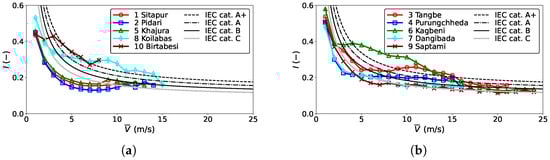
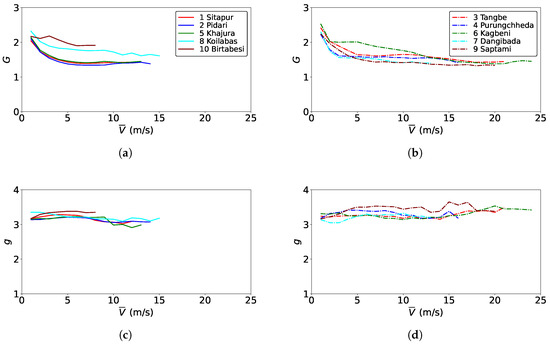
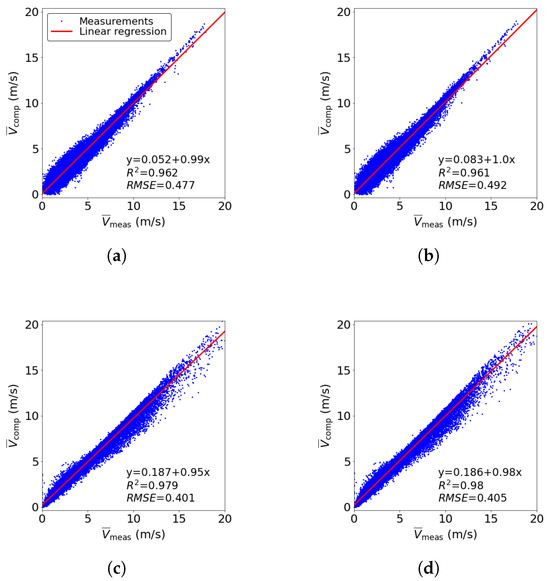
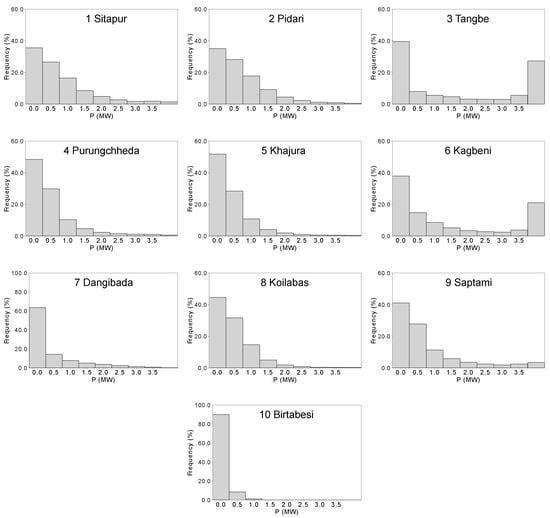
The current study investigates the effect of terrain features on wind resources in a region with extremely diverse terrain. To that end, a case study of Nepal based on annual wind data collected from 10 different sites is performed. The evaluation of mean wind speeds using Weibull probability density functions (PDFs) shows that complex-terrain sites exhibit greater variability in 10-min average wind speeds relative to the annual average wind speeds. This pattern is also evident in comparisons of short- and long-term average wind speeds. At the complex-terrain sites, the wind speeds exhibited strong short-term variations, suggesting that local terrain effects dominate over seasonal wind variation. Terrain complexity also strongly affected turbulence. The flat-terrain sites showed turbulence intensities below the lowest IEC category turbulence profile, while the complex-terrain sites exceeded the highest IEC profile. This indicates that the IEC standard may require modification based on site complexity parameters, such as the standard deviation of elevation fluctuations. The power law exponent ( ), used to extrapolate wind speeds to higher elevations, deviated notably from the typical 1/7 value, even in flat terrain. Finally, a power potential analysis indicated that three sites with higher mean wind speeds achieved higher capacity factors.
Full article

Figure 1
Highly Accessed Articles
Latest Books
E-Mail Alert
News
Topics
Topic in
Applied Sciences, Energies, Forecasting, Solar, Wind, Batteries
Solar and Wind Power and Energy Forecasting, 2nd Edition
Topic Editors: Emanuele Ogliari, Alessandro Niccolai, Sonia LevaDeadline: 31 July 2026
Topic in
Applied Sciences, Energies, J. Compos. Sci., JMSE, Machines, Wind, Fluids
Advancements in Cost-Effective and Reliable Floating Offshore Wind Technologies: From Innovative Design to System Integration
Topic Editors: Yanfei Deng, Mingming Zhang, Xiaowei DengDeadline: 30 November 2026
Topic in
Applied Sciences, Energies, JMSE, Sustainability, Wind
Advances in Structural Wind-Resistant Analysis and Disaster Mitigation
Topic Editors: Tianyou Tao, Haojun Tang, Fei DingDeadline: 31 December 2026
Topic in
Aerospace, Applied Sciences, Energies, Machines, Wind
Advances in Aeroacoustics Research in Wind Engineering
Topic Editors: Firoz Alam, Yingai Jin, Xingjun HuDeadline: 15 February 2027
Special Issues
Special Issue in
Wind
New Fluid Mechanics Research in Wind Engineering
Guest Editors: Costin Cosoiu, Horia HanganDeadline: 30 June 2026
Special Issue in
Wind
Wind Effects on Civil Infrastructure
Guest Editor: Mihail IancoviciDeadline: 31 August 2026
Special Issue in
Wind
Canadian Wind Energy Research
Guest Editor: Marianne RodgersDeadline: 30 November 2026
Special Issue in
Wind
Wind Energy Resource Development and the Sustainable Environment
Guest Editors: Alexandra Ionelia Diaconita, Gabriel AndreiDeadline: 31 December 2026