Article

Building a Classification Map of Wind Turbine Characteristics Compatible with the Winds of Middle and Southern Regions in Iraq


by
Firas A. Hadi
1,*,
Rawnak A. Abdulwahab
2 and
Khattab Al-Khafaji
3,*
1
Dept. of Renewable Energy Science, College of Energy and Environmental Science, Al-Karkh University of Science, Baghdad 10081, Iraq
2
Scientific Research Commission, Baghdad 10070, Iraq
3
Dept. of Environmental Science, College of Energy and Environmental Science, Al-Karkh University of Science, Baghdad 10081, Iraq
*
Authors to whom correspondence should be addressed.
Submission received: 27 January 2026 / Revised: 6 March 2026 / Accepted: 19 March 2026 / Published: 2 April 2026

Abstract

The research creates classification maps of wind turbine operational speeds based on the wind regimes of four governorates in central and southern Iraq: Wasit, Diwaniyah, Maysan, and Dhiqar. High-resolution wind data from GEOSUN resource maps, together with statistical analysis of the Weibull distribution, are used to derive site-specific shape and scale parameters, which are then utilized to calculate the ideal cut-in, rated, and cut-out wind speeds for each location. A turbine performance index integrates capacity factor and normalized power output to determine the turbine speed combination that optimizes energy production for the local wind distribution. The resultant maps exhibit distinct geographical gradients: in all four governorates, cut-in, rated, and cut-out speeds consistently escalate towards the eastern regions of the research area, therefore broadening the range of technologically suitable turbines. Quantitatively, Wasit demonstrates the highest rated wind speeds, ranging from approximately 11.1 to 14.9 m per second, and cut-out speeds from about 20.5 to 27.6 m per second, indicating superior wind resource quality relative to other governorates. In contrast, Diwaniyah is suitable for lower-speed turbines, with minimum rated speeds between 8.9 and 9.5 m per second and minimum cut-out speeds around 16.6 to 17.6 m per second. Analysis of wind direction indicates that around fifty percent of the wind power potential originates from the northwest sector, suggesting that turbines should be aligned toward the northwest to optimize yearly energy acquisition. The maps serve as an effective decision support instrument that connects quantitative wind resource assessment to turbine operational specifications, facilitating expedited preliminary turbine selection, enhanced energy efficiency, and diminished dependence on traditional fossil fuel power plants in areas experiencing persistent electricity deficits.

1. Introduction

Iraq must expand its use of renewable energy plants that may drastically cut carbon emissions in order to revive initiatives aimed at lowering these emissions, since it is a party to the Kyoto Protocol and the Paris Agreement on climate change and carbon emissions control. Carbon dioxide emissions are reduced by 3.3 million tons annually for every gigawatt of renewable energy capacity added, according to the Energy Sector Management Assistance Program [1].
Wind energy has become a popular alternative energy source because of its many benefits, the drawbacks of fossil fuels, and the environmental issues they cause. Fundamentally, wind energy is more plentiful, clean, limitless, reasonably priced, and has fewer adverse effects on the environment. Around 1011 gigawatts of wind energy are thought to be accessible worldwide, which is many times more than the amount of energy that is currently consumed [2,3].
For proper and beneficial development of wind power at any site, wind data analysis and accurate wind energy potential assessment are the key requirements. An accurate assessment of wind resource is an important and critical factor to be well understood for harnessing the power of the wind.
Renewable energy derived from wind is clean, sustainable energy, and is considered the least expensive type of renewable energy technology. It is also necessary to refer to the wind map in Iraq that was prepared previously, such as the GEOSUN map, so it has become easy to find the best places with high wind speeds [4].
The main objective of this research is to create classification maps for the central and southern regions of Iraq to represent the characteristics (cut-in vc, rated vr, and vf speeds) of the best wind turbines that match the conditions and climate of these regions. Thus, the process of identifying and selecting the compatible wind turbine (by knowing those speeds) with the study area will be straightforward process based on those maps. The method involves the use of Weibull probability density functions to model wind speeds and normalized power curves to derive the turbine’s optimal speed characteristics. A key component of this research is the introduction of the Wind turbine performance index (TPI), a ranking parameter that helps determine the most suitable turbine for a given wind site. Three key elements make up this paper’s technical and scientific contribution: a low-cost and environmentally friendly solution for the southeast parts of Iraq; a reduction in the need to run costly traditional power plants for energy generation; and the selection of turbines that are compatible with the wind nature in those areas based on the maps created by this research paper [5,6]
Numerous studies examining wind energy in Iraq have utilized GEOSUN data and maps due to their comprehensive coverage across the entire country, including data-deficient desert and border areas, and their supply of wind speeds referenced to turbine hub heights (e.g., 100 m), thereby minimizing significant extrapolation errors. Furthermore, they enhance high-resolution GIS modeling and site ranking when integrated with layers of roads, grid, land use, and slope [6,7,8].
Despite the availability of wind resource maps such as GEOSUN for Iraq, there is a critical lack of detailed guidance on selecting wind turbines that are optimally matched to local wind conditions, particularly in the middle and southern regions. Existing studies often focus on wind potential assessment without providing actionable tools for turbine selection, leaving a gap in practical implementation. The absence of region-specific turbine classification maps exacerbates these challenges, hindering the effective deployment of wind energy solutions to address the country’s power deficits.
This study bridges the gap by developing classification maps that identify optimal wind turbine characteristics (cut-in, rated, and cut-out speeds) tailored to the wind profiles of Iraq’s middle and southern regions. By leveraging Weibull distribution analysis and GIS tools, the research provides a cost-effective, data-driven approach to turbine selection, enhancing energy efficiency and reducing reliance on polluting power plants. The findings are particularly significant for Iraq’s renewable energy transition, offering policymakers and developers a practical framework to harness wind energy potential, mitigate power shortages, and align with global climate commitments such as the Paris Agreement. This work not only supports sustainable energy goals but also serves as a replicable model for other regions with similar challenges.
Iraq has regular, ongoing power outages as a result of a lack of electricity generation, due to the aging of power plants, an overloaded electrical infrastructure, and several other issues. Iraq has up to 20 h outages per day, which forces both government and civilian structures to rely on diesel generators. These methods of producing power result in higher CO2 emissions. Thus, it is crucial to decarbonize the production of power to enhance residential communities’ well-being while implementing recent CO2 emission reduction legislation [9].
Iraq has four types of power plants: steam power plants, gas power plants, diesel power plants, and hydroelectric power plants. The share of each of them is 22%, 34%, 3%, and 1% of the total electricity production of the country.
Wind energy assessment studies in Iraq focused mainly on estimating wind potential or independently assessing the performance of turbines. However, limited research has integrated spatial wind characterization and turbine compatibility into a coherent framework for decision support, in particular for the central and southern regions of Iraq. This manuscript is an original research article presenting a quantitative wind resource assessment and GIS-based turbine compatibility analysis for central and southern Iraq. This approach directly links the local wind regimes to the turbine-specific performance, unlike the conventional assessment of wind resources which only ranks locations on the basis of average wind speeds or power densities. In addition, the study provides one of the first spatially explicit maps of turbine compatibility for central and southern Iraq, providing a practical planning tool for policy makers and investors in regions facing renewable energy shortages and limited energy use. The proposed framework allows for the preliminary selection of turbines before a detailed techno-economic analysis, thus reducing planning uncertainty.
Recent research focuses on assessing wind resources in Iraq, selecting sites, and designing independent and hybrid systems. Several studies show that large parts of Iraq have moderate to good wind speeds (around 6–8 m/s at 50–100 m), especially in the south (Basra, Nasiriyah, Amarah) and some areas of the north and Kurdistan [6,10].
In the Kurdistan Region, GIS and remote sensing analysis showed that 21% of the area has “excellent and good potential” with speeds of 7–14 m/s, a theoretical power exceeding 48,000 MW, and an estimated annual generation capacity of 42.9 TWh [11]. Models of hybrid systems in Baghdad reveal that the hybrid energy source setup is the best. Wind makes up around 28% of the electricity, the cost of power is about 0.052 USD/kWh, and CO2 emissions are cut down a lot [12]. In summary, there is a majority agreement that wind energy, alongside solar energy, is being used to a degree that does not reflect the true potential available in the country, as shown by Husain, Z. S et al. [9,13].
Depending on the season, Iraq’s peak power consumption ranges from 34 to 40 gigawatts, with air conditioning driving up demand during the summer. The mismatch between supply and demand, which ranges from 10 to 14 GW, causes frequent power outages in most Iraqi provinces. The key energy-related indicators that are pertinent to Iraq’s energy problems and provides a snapshot of the energy landscape in Iraq [14].
Iraq’s energy sector is dominated by the oil and gas sector, which generates over 90% of the nation’s energy. A relatively tiny portion of the energy mix is made up of renewable energy projects, most of which are currently in the planning or early phases of development. Many solar projects are now under construction, including a 1 GW project in Karbala and a 750 MW project in Najaf. Pilot wind farms are being studied in northern Iraq [1].

2. Materials and Methods

The information used to support the study’s conclusions came from Scientific Research Commission’s GEOSUN/Spain wind energy maps. The corresponding author can provide more processed data that was used and examined in the current work upon reasonable request.
The procedures followed in this research are summarized into the following steps: the first step uses GEOSUN maps. The promising areas in these maps were sampled for the purpose of extracting Weibull parameter values scale and shape parameters, where GIS program is used to extract the values of the Weibull shape and scale parameters (k) and (c), for example, see Table 1.
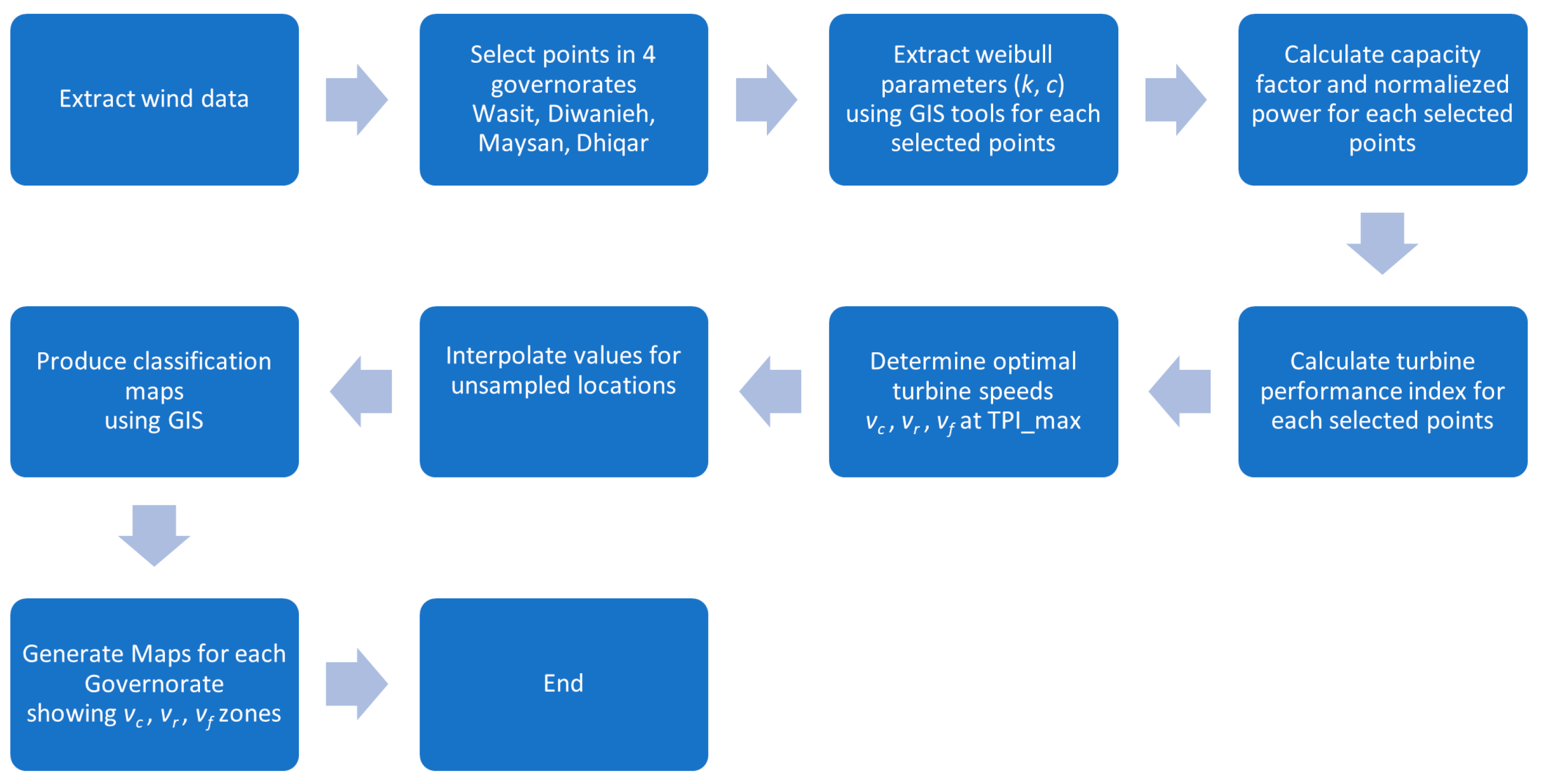
The second step, in which the values of the properties of the turbines compatible with the promising areas are calculated, determines the highest energy at the highest capacity factor, by taking advantage of the Weibull parameters taken from the previous first stage. The optimum speed values for the turbine vc, vr, and vf are found through the turbine performance index curve TPI (will be described below). The third and final stage involves producing maps through vr, vc, and vf values by using GIS tools, which give the optimal speed of the turbine that matches the study areas. Figure 1 is a flowchart that shows the general process used in this research work.

2.1. Weibull Distribution Function

The variability of wind speed is described, and the observed wind speed data are analyzed using the Weibull probability distribution. It is defined by the scale factor (c) and the shape factor (k). The scale factor (c) is related to the mean wind speed, while the shape factor (k) determines the shape of the distribution curve as described in [15].
f v = ( k c ) ( v c ) k 1 e x p ( v c ) k
v = wind speed,
c = Weibull scale factor,
k = Weibull shape factor,
f(v) = Weibull probability distribution.
In this research, the values of scale and shape parameters for all locations are obtained through GEOSUN maps (they will be described below). The reliability of these maps has been proven through many studies, such as [14,16].

2.2. Wind Site Description

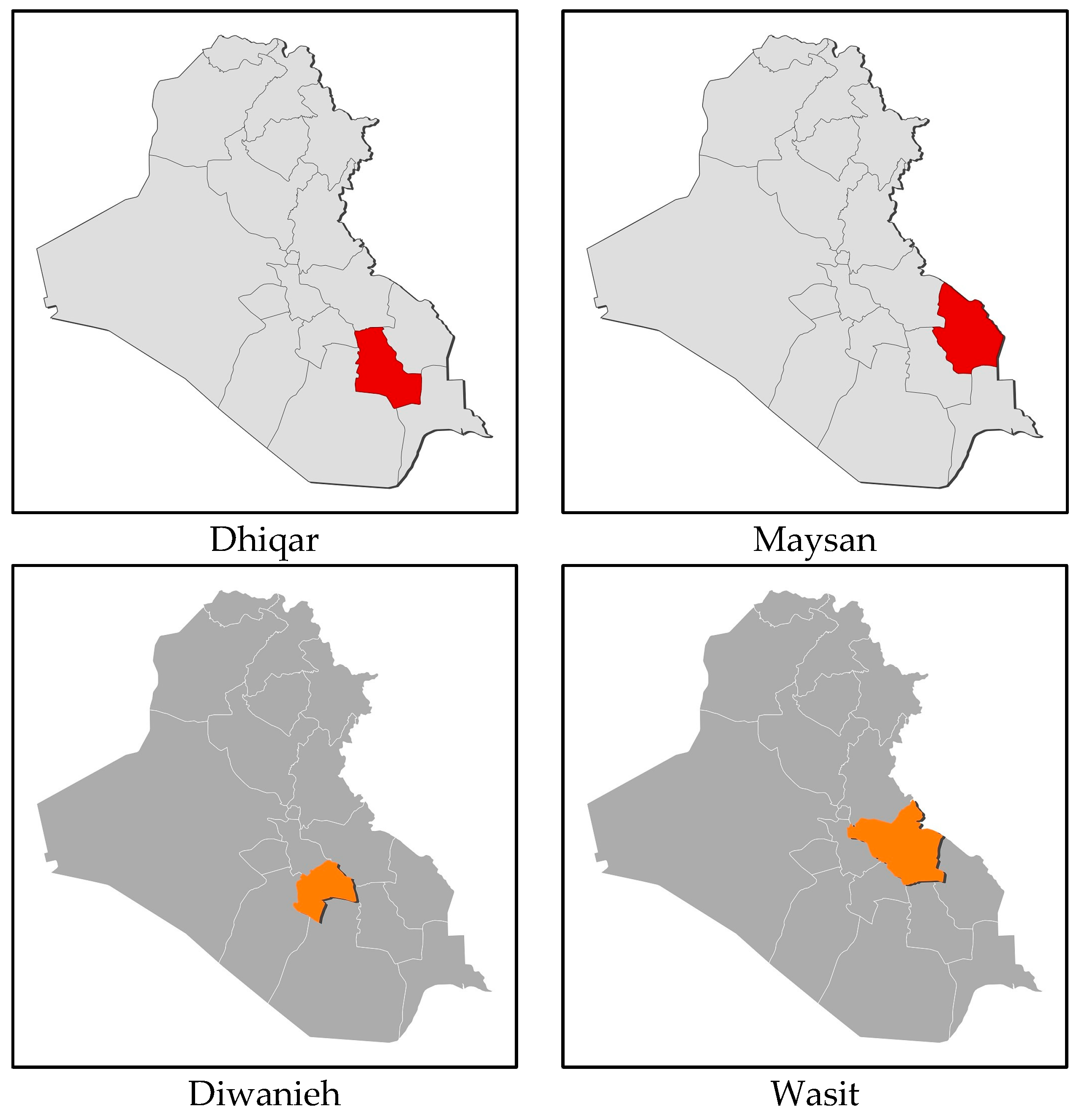
Among the 18 Iraqi governorates, four governorates located in the southeast of Iraq were selected for the purpose of conducting this study: Wasit, Diwanieh, Maysan, and Dhiqar, as shown in Figure 2.
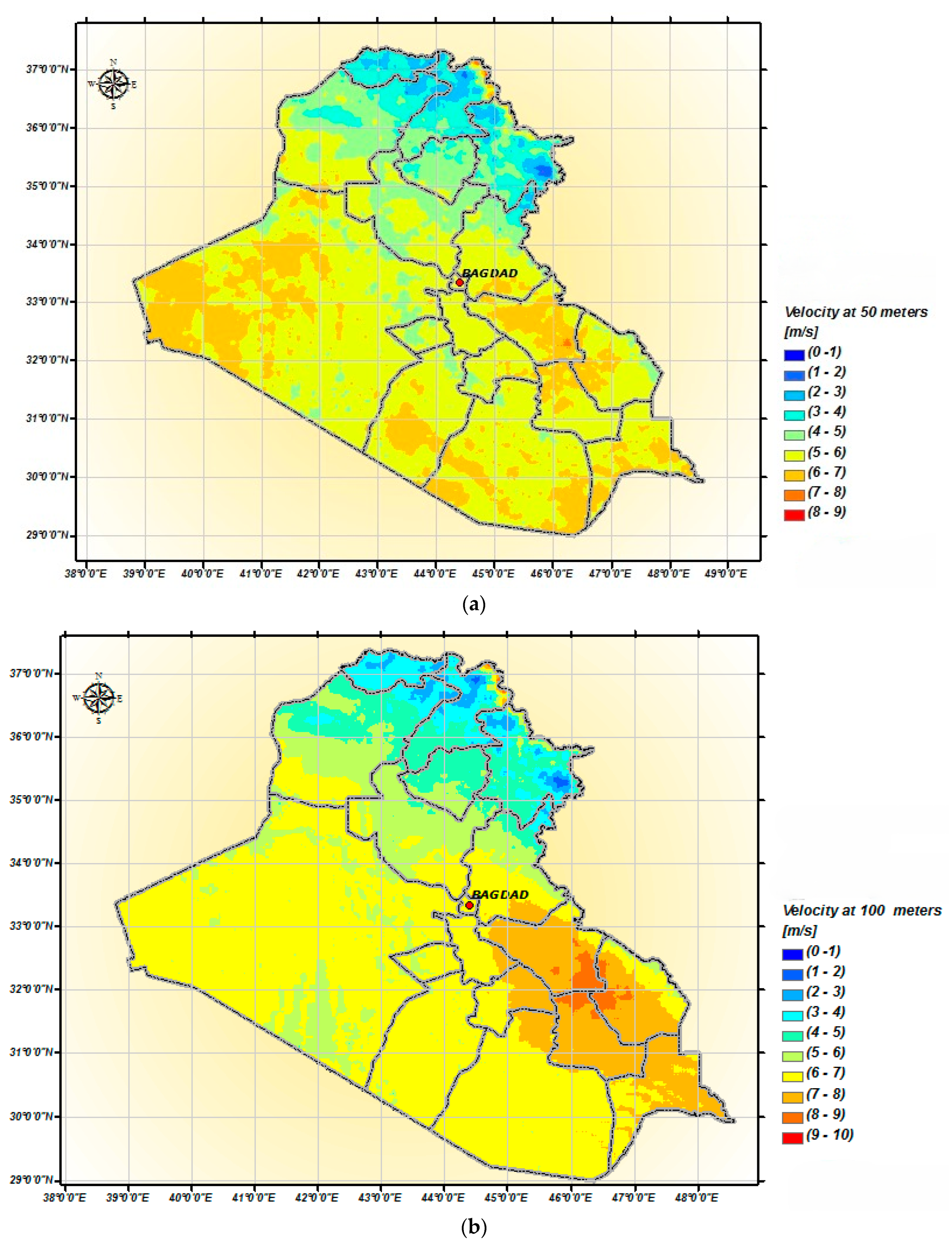
These governorates have the highest mean wind speed compared to other regions of the country, according to GEOSUN maps, where the highest wind speed rates in the selected locations range between 3 and 8 m/s at an altitude 50 m given in Figure 3a, while they range from 6–9 m/s at an altitude 100 m, as given in Figure 3b.
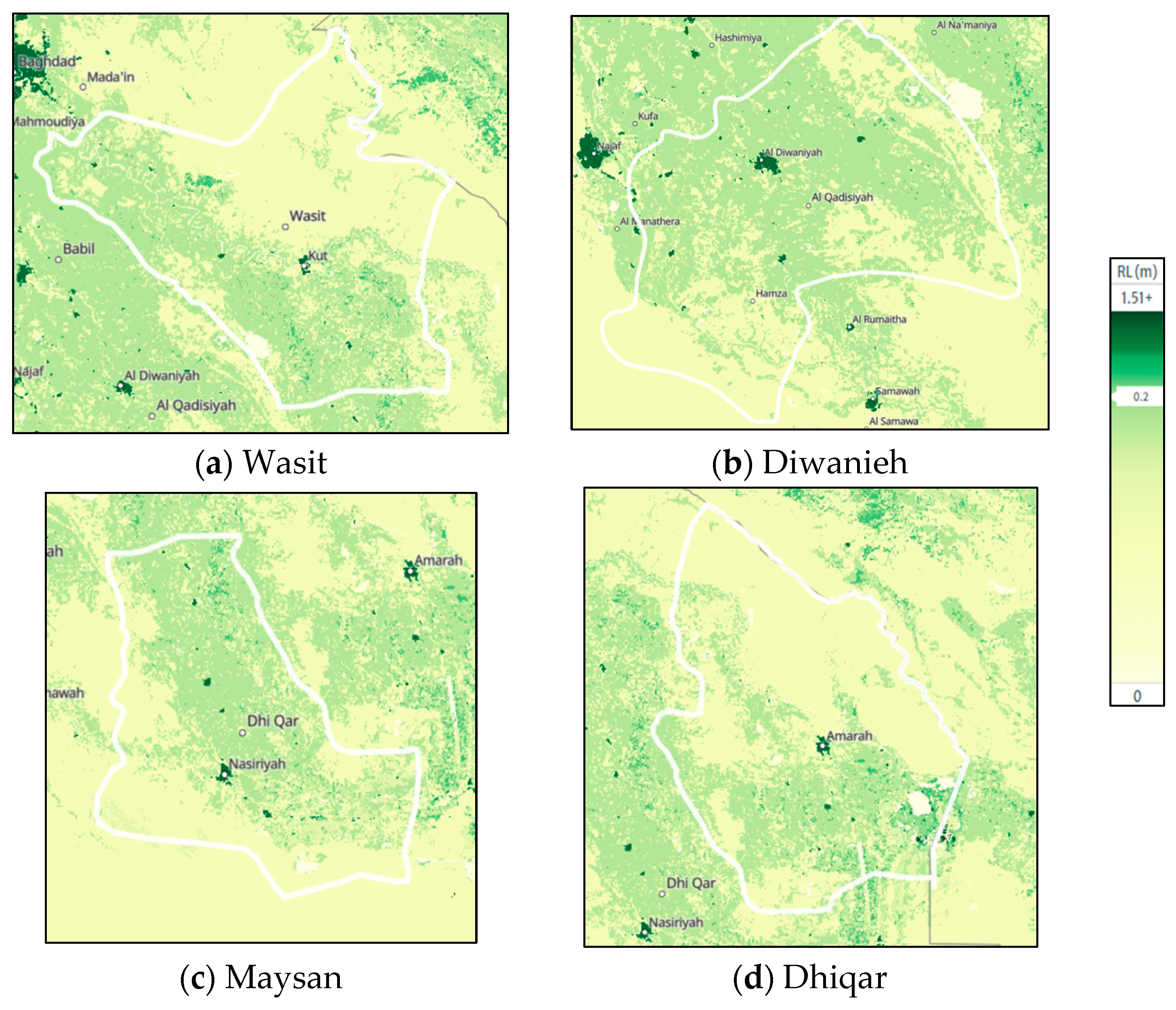
The roughness scale for the four places (four governorates) in southeast Iraq is displayed in Figure 4, which indicates that it has low roughness with values ranging between 0.005 m and 0.1 m. A low roughness length means that the topography provides less wind resistance, more consistent wind flow, faster wind speeds, and improved wind turbine conditions [18].

2.3. Wind Resource Map of Iraq

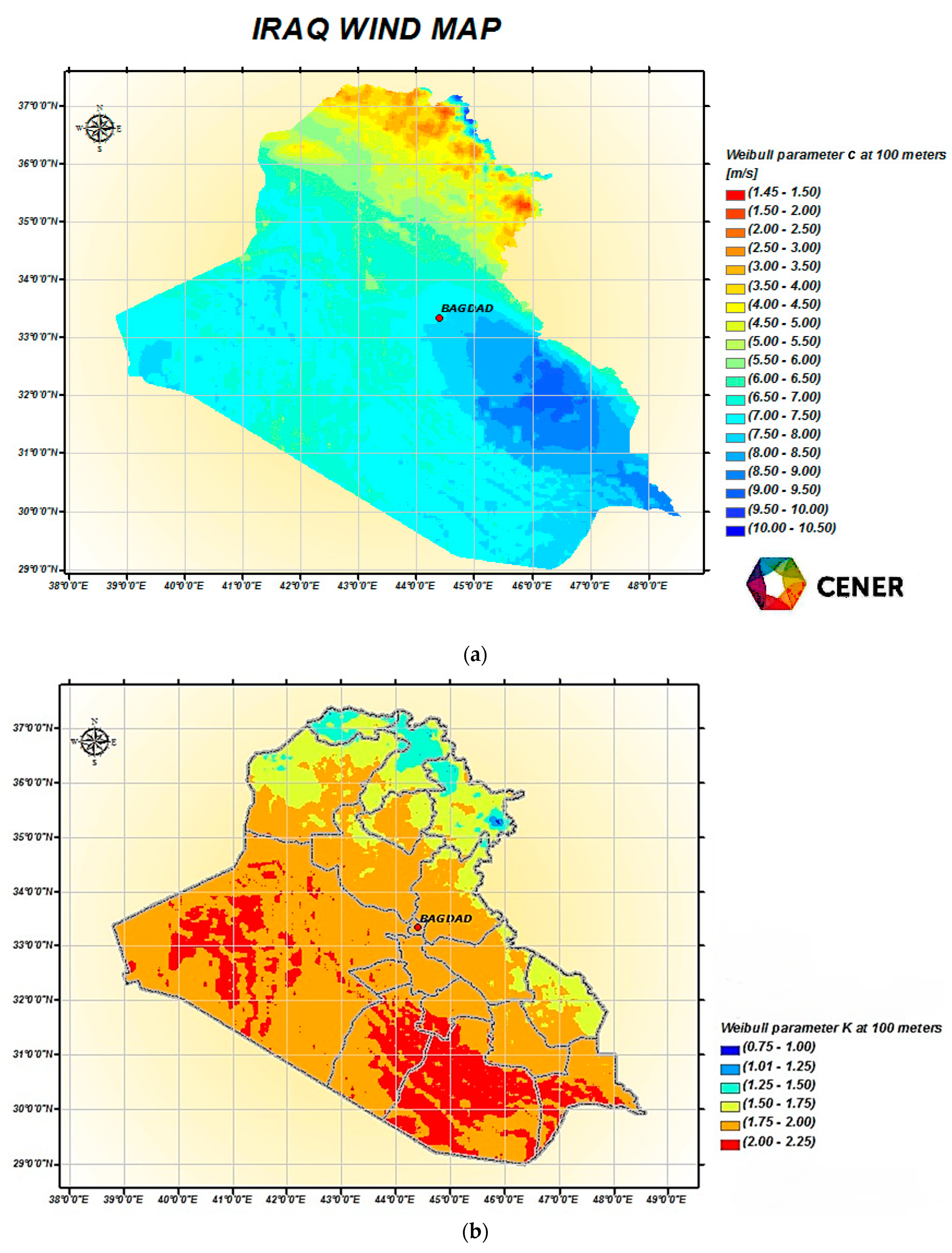
The proposed work utilized the Iraq wind energy map, prepared by the Spanish GEOSUN Center for Renewable Energies. This hourly map was produced using the SKIRON mesoscale atmospheric model, from which maps were generated at three altitudes above ground level (30, 50, and 100 m) and with a resolution of 1 km × 1 km. These maps were provided by the Iraqi Ministry of Science and Technology to the Renewable Energies Center. In this work, only the 100 m altitude map was used to obtain the Weibull parameters (shape and scale parameters). The GEOSUN map shown in Figure 5 was used to capture the Weibull parameter values and locations using GIS software (ArcGIS 10.8) [8,19].

2.4. Identifying Optimum Wind Turbine Generator Parameters for a Site

Using normalized power curves, Jangamshetti et al. [20] demonstrated how to match wind turbine generators to a location. The turbine performance index (TPI) curve, which was derived from the normalized curves, was used to determine the ideal speed parameters, vc, vr, and vf for site matching in order to produce more energy at a higher capacity factor [10]. To do this, it is necessary to find the wind speed probability density function (explained before), capacity factor, normalized power, then the turbine performance index as shown below.

2.5. Determination of the Capacity Factor

The theoretical maximum power is divided by the actual average energy power generated over a given time period to determine CF. It displays the potential energy output of a certain wind turbine at a specific location; however, the capacity factor given by [21].
C . F = e x p [ ( v c / c ) k ] e x p [ ( v r / c ) k ] ( v r / c ) k ( v c / c ) k e x p [ ( v f / c ) k ]
Here, C.F is the capacity factor, (vr/c) is the normalized rated speed, and vc, vr, and vf are defined in Table 1. It is evident that the site characteristics c and k, as well as the primary turbine parameters vc, vr, and vf influence the capacity factor.

2.6. Normalized Power

The electrical power output for a wind turbine system can be given by:
0 ,   v < v c i P r v v c i v r v c i 3 ,   v c i v < v r P r ,   v r v v c o 0 ,   v > v c o
where P e R is the rated power at v r , and it is given by
P e R = C p R . . η m R . η g R . 1 2 ρ A v r 3
In Equation (3), CpR = performance coefficient at vr; ηmR = mechanical efficiency at rated power; ηgR = generator efficiency at rated power; ρ = air density (kg⁄m3) and A = turbine swept area (m2). It is necessary to know that in Equation (2), v c   = p v r and v f   = q v r , where p < 1.0, q > 1.0. Thus, the normalized power in Equation (5) will depend entirely on normalized rated wind speed and the value of k. It is very important to know all the values of k and c will be taken from GEOSUN map.
P N = P e , a v e η ° R 1 2 ρ A c 3 = ( C . F ) ( v r c ) 3
With a considerably greater capacity factor for a certain wind regime, PN = r × PN,max where 0.5 ≤ r < 1.0, will produce a total energy production that is closer to the maximum [22].

2.7. Limitations for Choosing Optimum Wind Turbine Parameters

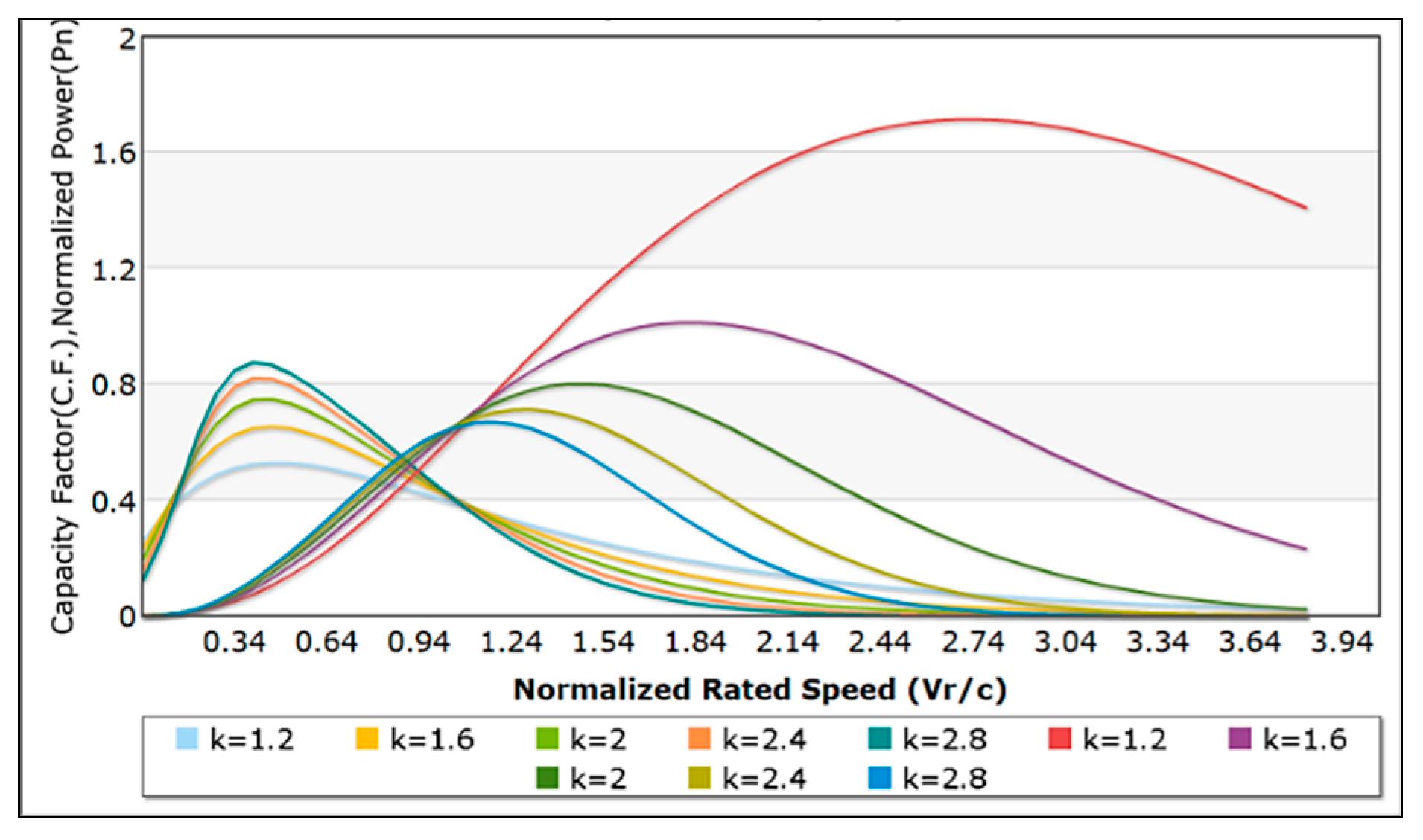
Figure 6 contains two groups, one group represents the normalized power PN, while the other group represents the capacity factors C.F. Equations (2) and (5) were used to find C.F. and PN, for different values of k and ( v r / c ) . This figure shows the change in each of the two groups depending on the change in the common x-axis represented by the normalized rated speed ( v r / c ) . The k values vary by the same value for both groups, ranging from 1.2 to 2.8, while the ( v r / c ) values range from 0 to 4.0. The range of these values was chosen to include the characteristics of the studied sites, in addition to the specifications of the various turbines.
In order to avoid having a very low C.F. at the highest PN or a low PN at the maximum C.F., Figure 6 shows the need for an ideal ( v r / c ) value such that neither C.F. nor PN has the maximum value. A higher PN will compensate for a lower capacity factor, thereby raising the price of components like switches, transformers, and generators. Conversely, a low C.F. indicates that the turbine will run for a short amount of time. This means that the appropriate design procedure requires finding an appropriate value of normalized rated speed ( v r / c ) . Since the value of Weibull scale parameter c can be found from the GEOSUN map, thus, it is then easy to estimate the turbine rated speed ( v r ) . The cut-in and cut-out turbine speeds are computed using the relations v c   = p v r and v f   = q v r , where p < 1.0, q > 1.0.

2.8. Turbine Performance Index (TPI)

The turbine performance index (TPI) is a composite indicator that combines capacity factor and normalized power output into one comparative measure [23]. To guarantee uniformity and comparability across turbine models and geographical locations, the fixed normalization parameters used in the TPI formulation were chosen. In order to enable cross-model comparison, the normalization procedure scales turbine outputs in relation to rated power and standardized operational thresholds, following well-established methods in the literature on wind energy performance assessment. It was shown from the previous section that an increase in PN is accompanied by a decrease in C.F. and vice versa. Therefore, the best value of ( v r / c ) lies between the values of PN,max and C.F.max (where the product of them gives the highest value) and it is termed as the optimum normalized rated speed ( v r / c ) o . Accordingly, TPI or turbine performance index, which is defined in Equation (6), will therefore give the optimum ( v r / c ) at the greatest TPI, then an ideal cut-in and cut-out speeds are assessed utilizing v C O = p v r o and v f O = q v r o (here p = 0.2, q = 1.77). The cut-in and cut-out wind speeds are expressed as proportional functions of the rated wind speed. Based on typical operational ranges of commercial wind turbines, the empirical coefficients p = 0.2 and q = 1.77 are adopted, corresponding approximately to vci ≈ 3 m/s and vco ≈ 25 m/s relative to the rated wind speed.
T P I = P N × C . F . P N , m a x × C . F m a x
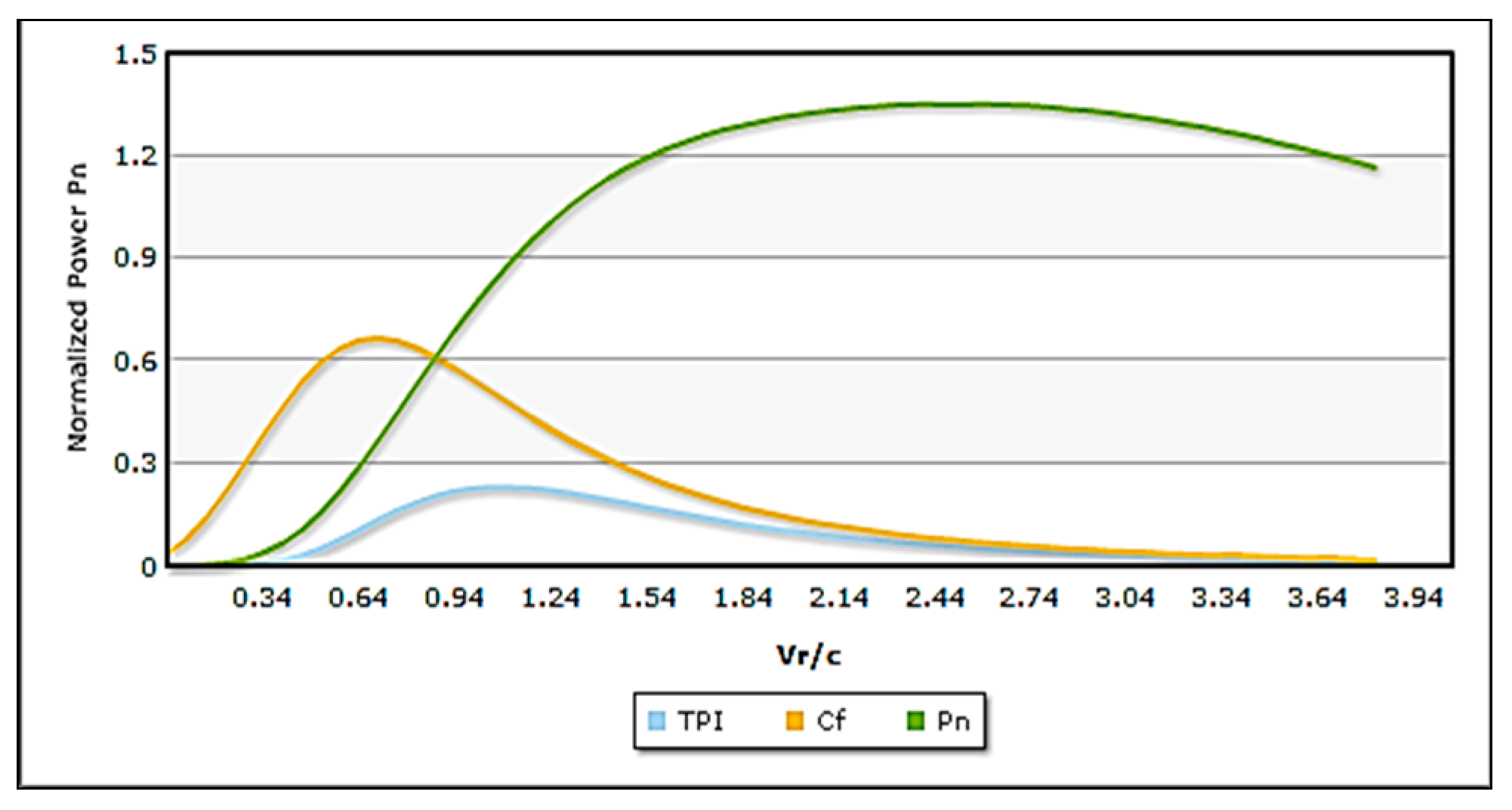
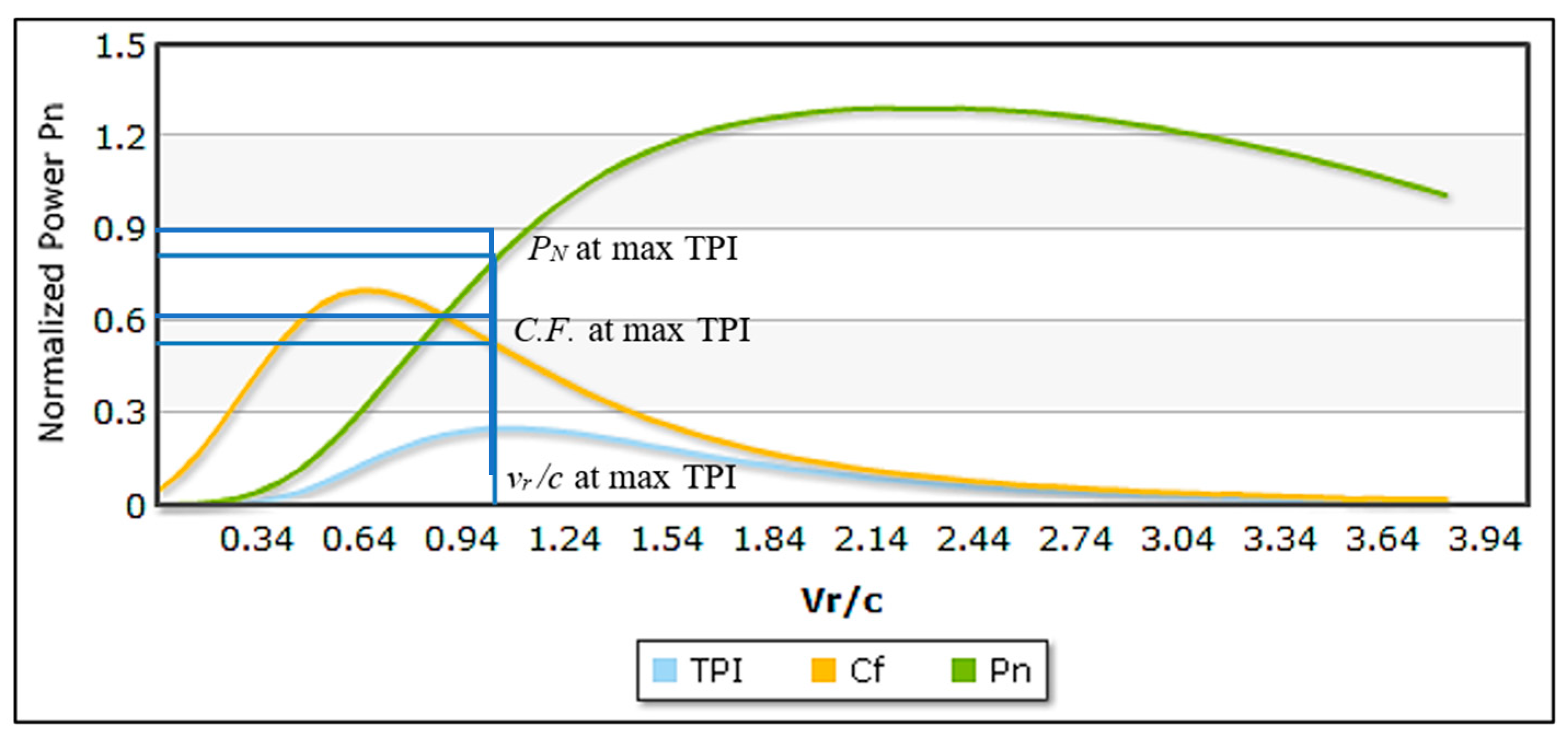
Figure 7 provides an example of how to create normalized power, capacity factor, and turbine performance index (TPI) curves where the Weibull shape factor is known for a site. The TPI value and the normalized rated speed are both displayed on the curve. From this figure, the normalized rated speed ( v r / c ) at maximum TPI can be found first. The second step is finding the turbine rated speed vr since the Weibull scale factor parameter is known. The last step used to calculate the turbine’s cut-in and cut-out speed parameters by using relationships listed in Section 2.6. In our research, since both the size and shape parameters of the Weibull are known from GEOSUN map, it is possible to find the appropriate turbine speeds for the study site.

3. Results and Discussion

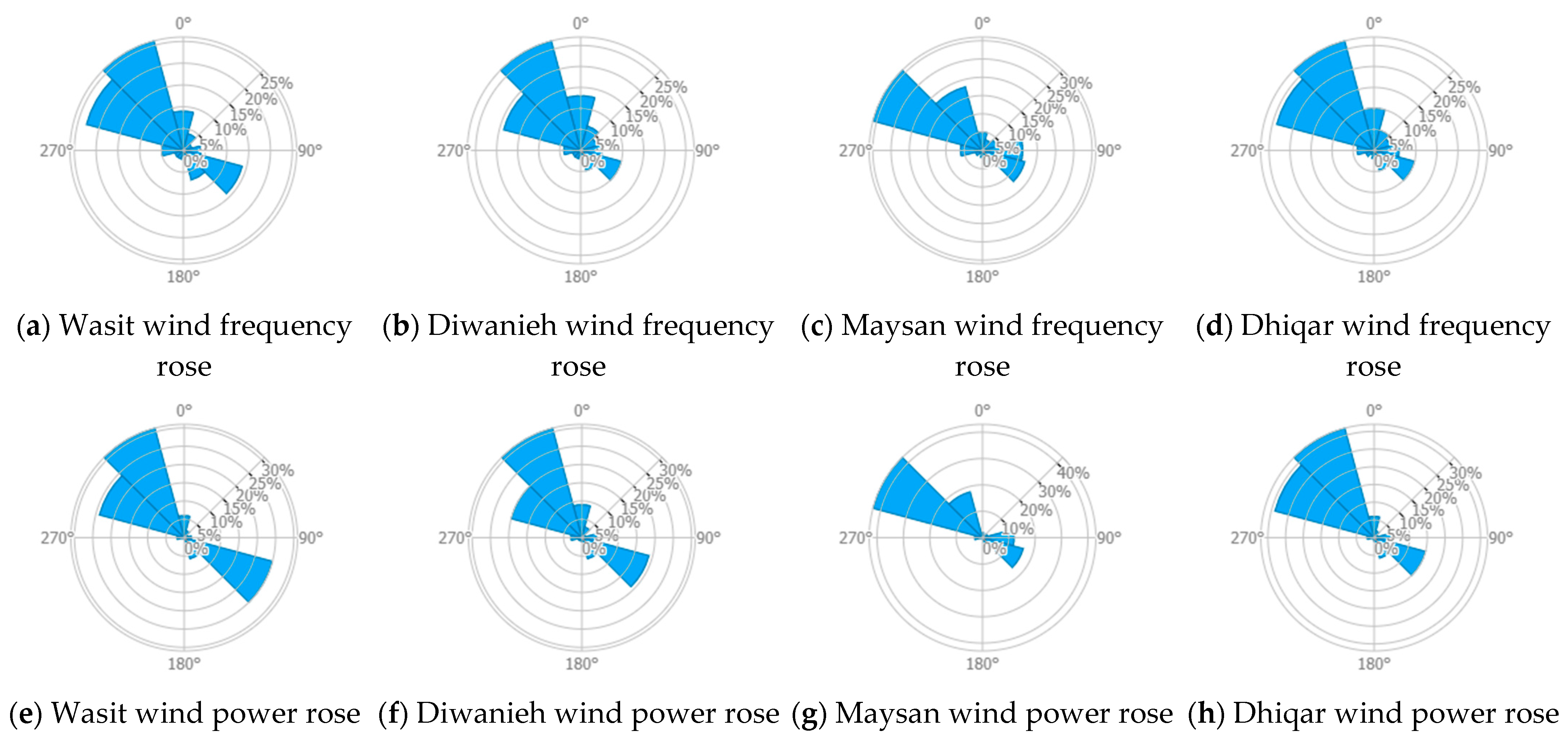
In wind energy studies, wind farm designers need to establish a geometric distribution of turbine locations. This distribution is primarily based on the wind direction. Figure 8 shows the wind direction for the four selected governorates (Wasit, Diwanieh, Maysan, and Dhiqar), where approximately 47% of the winds blow from the northwest (between 270° and 0°), the dominant wind direction. The second dominant wind direction is the southeast (90° and 180°), representing 7–25% of the total wind direction across the four governorates. The northern direction (0°) is the third dominant wind direction, representing 5–13% of the total wind direction across the four governorates (Figure 8a–d). Figure 8e–h shows the wind power blowing over the four study sites from different directions. As noted, wind power is directly proportional to wind frequency. Therefore, it is very important to know that the northwest direction (270–0°) has the highest potential wind power, accounting for approximately 55%, followed by the southeast direction (90–180°) with varying percentages ranging from 13 to 30%. Therefore, the turbines should be positioned facing northwest.
To ensure precise mapping, around 100 locations were encoded in each of the four governorates. Table 2 displays the outcomes for three typical coded samples from each governorate, along with the corresponding findings for each coded sample. The number of places chosen from each governorate on the GEOSUN map is indicated by the points column. The relevant turbine parameters were then calculated for each point. In order to produce a map that provides the characteristics of the appropriate turbines at any location, interpolation is required to determine the values between those points (locations). On the GEOSUN map, the coordinates of the chosen site are shown in the Lon and Lat columns. The Weibull k, c parameters, which are derived from the GEOSUN map at 100 m above sea level, are shown by the other two columns. Next, C.F., vr, vc, vf, and PN values at TPImax were determined by applying Weibull parameters in the previously described equations.
The process of selecting the three wind turbine speeds vc, vr, and vf that make the wind turbine compatible with the installation site is based on TPI values. The best turbine speed values are those corresponding to maximum turbine performance index (TPImax), at which values C.F., PN, and vr/c are recorded as shown in Figure 9 and Table 2. Finally, after knowing the vr/c value, it was possible (as explained in the previous sections) to calculate the parameters of the turbine suitable for installation in that location.
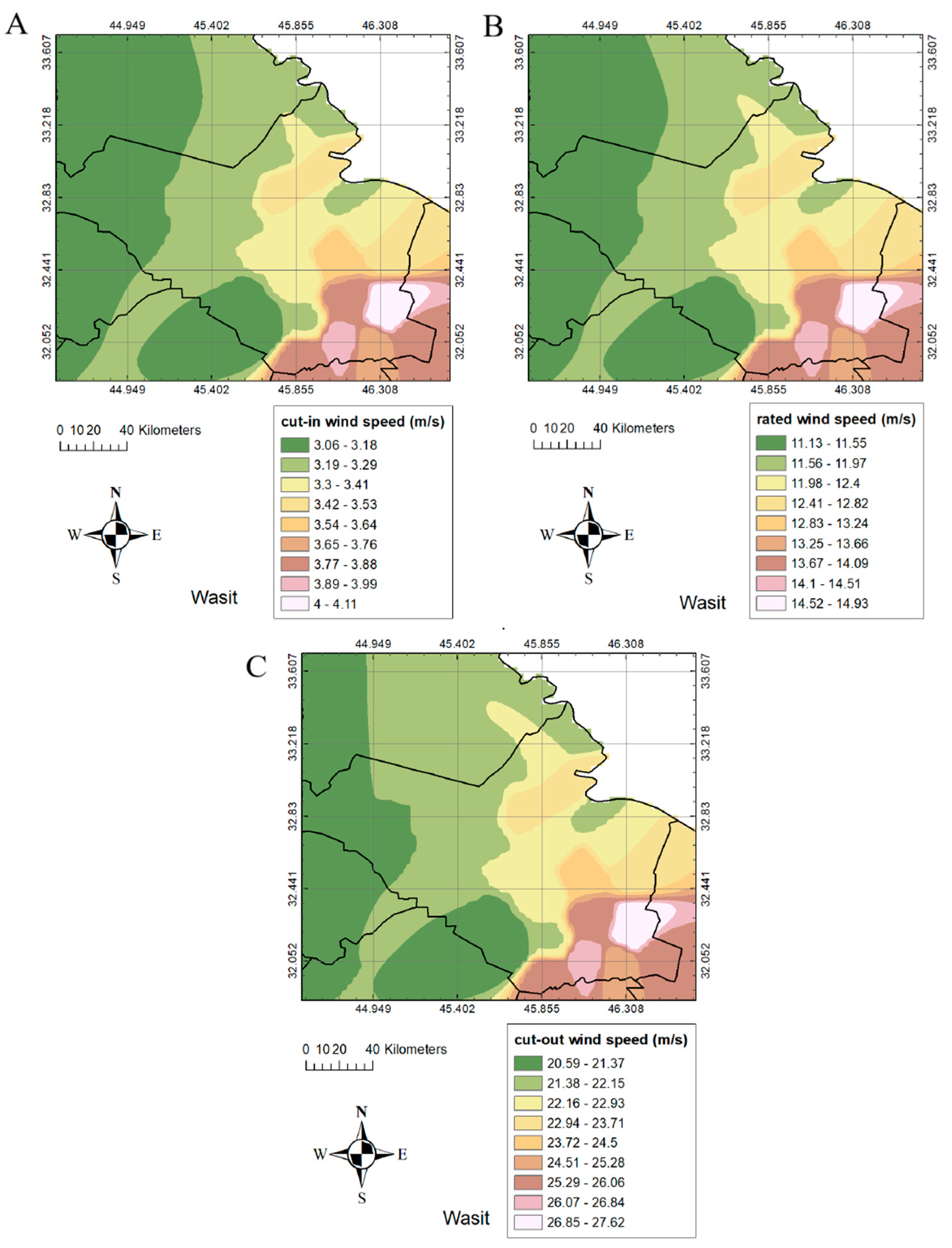
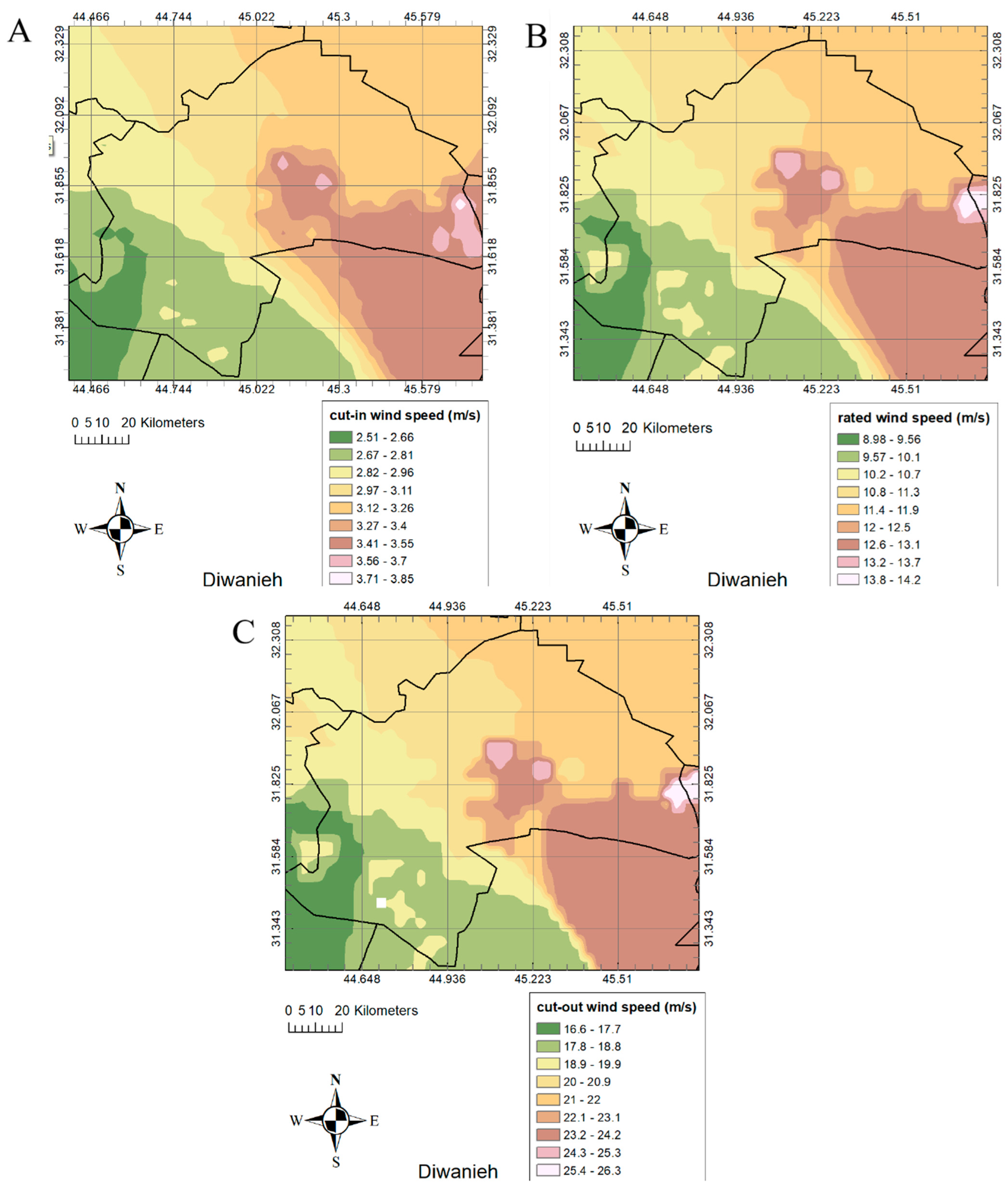
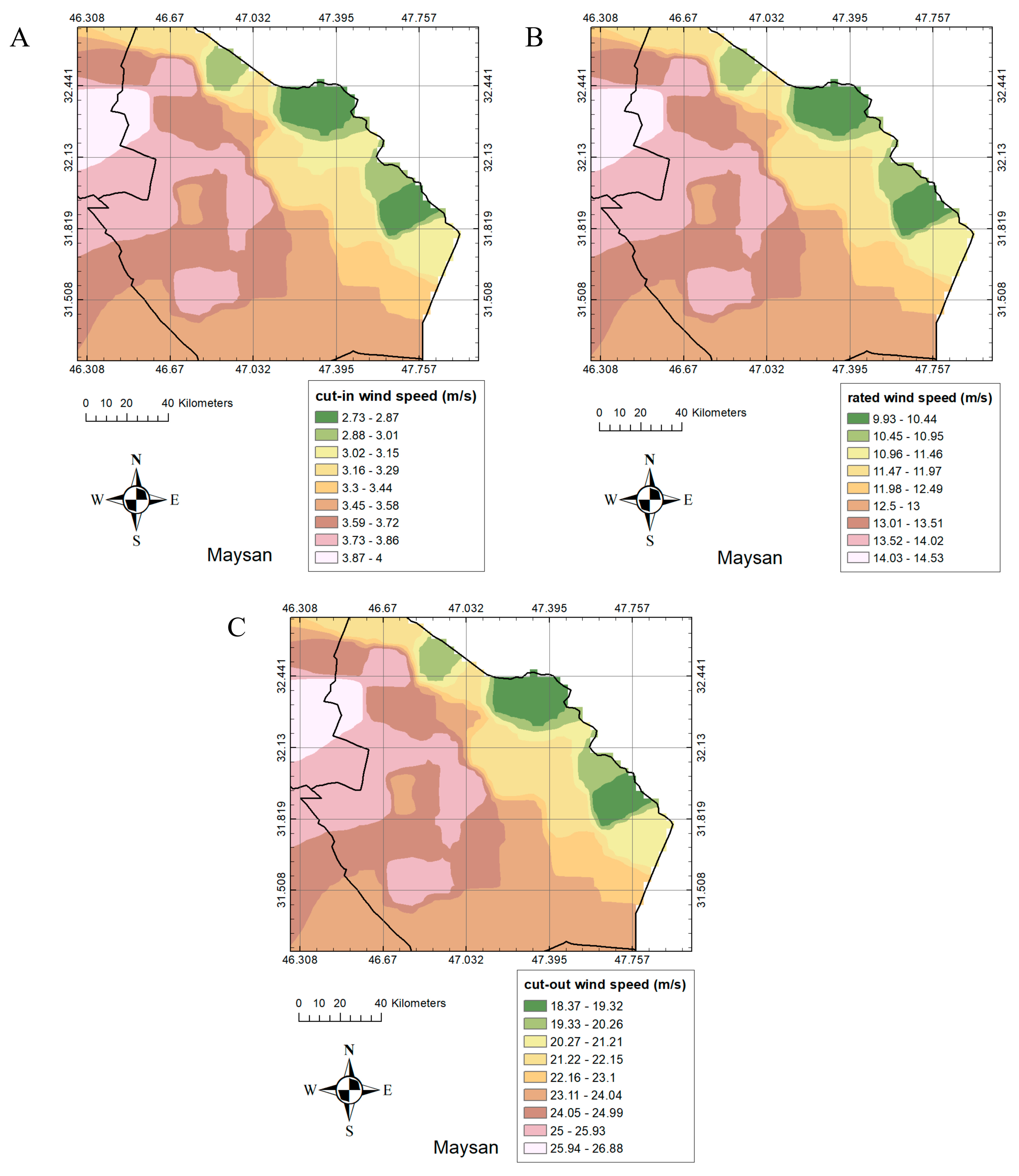
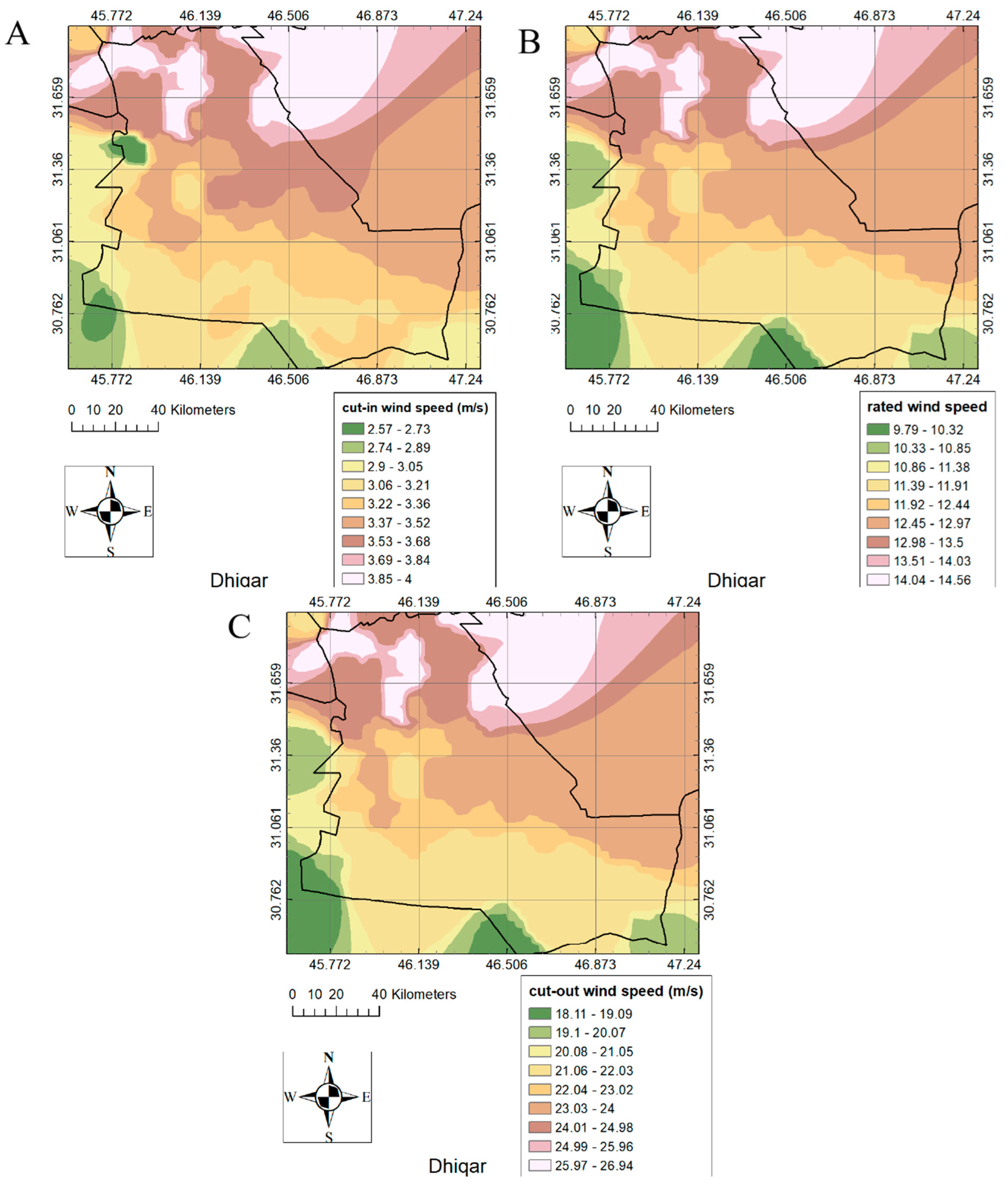
Figure 10, Figure 11, Figure 12 and Figure 13 represent maps classified into nine categories that belong to the four governorates (Wasit, Diwanieh, Maysan, and Dhiqar). These four classified figures are based on the values (vr, vc, and vf) of the turbine parameters, which are suitable for the study site.
Wasit Governorate is the subject of Figure 10A, which is divided into nine categories based on cut-in turbine speed values (vc) ranging from green (3.0–3.1) to white (3.9–4.1), each of which provides a particular range of cut-in wind speed values. Meanwhile, Figure 10B is divided into nine categories based on rated (vr) wind speed values ranging from green (11.1–11.5) to white (14.5–14.9). On the basis of cut-out (vf) wind speed values, Figure 10C is divided into nine groups, ranging from green (20.5–21.3) to white (26.8–27.6). Figure 10 illustrates how the three turbine parameters all rise eastward.
Figure 11 refers to Diwanieh Governorate where Figure 11A is classified based on cut-in turbine speed values (vc) into nine categories from green (2.4–2.6) to white (3.7–3.9), each one of these categories gives a specific range of cut-in wind speed values, while Figure 11B is classified based on rated (vr) wind speed values into nine categories from green (8.9–9.5) to white (13.6–14.2). While Figure 11C is classified based on cut-out (vf) wind speed values into nine categories from green (16.6–17.6) to white (25.2–26.3), Figure 11 shows an increase in all three turbine parameters towards the east.
The Maysan Governorate is depicted in Figure 12A, which is divided into nine categories based on cut-in turbine speed values (vc) ranging from green (2.7–2.8) to white (3.8–4), each of which provides a particular range of cut-in wind speed values. Meanwhile, Figure 12B is divided into nine categories based on rated (vr) wind speed values ranging from green (9.9–10.4) to white (14.0–14.5). On the basis of cut-out (vf) wind speed values, Figure 12C is divided into nine groups, ranging from green (18.3–19.3) to white (25.9–26.8). Figure 12 illustrates how all three turbine parameters rise eastward.
Figure 13 refers to Dhiqar Governorate where Figure 13A is classified based on cut-in turbine speed values (vc) into nine categories from green (2.5–2.7) to white (3.8–4), each one of these categories gives a specific range of cut-in wind speed values, while Figure 13B is classified based on rated (vr) wind speed values into nine categories from green (9.7–10.3) to white (14.0–14.5). While Figure 13C is classified based on cut-out (vf) wind speed values into nine categories from green (18.1–19.0) to white (25.9–26.9), Figure 13 shows an increase in all three turbine parameters towards the east.
All these figures help the specialist to know the characteristics of the turbine that is compatible with any location in the governorates easily and directly.
Table 3 provides concise values for wind turbine speed characteristics in the form of intervals within certain limits for each governorate. It shows the lower-to-higher values compared to other governorates, thus expanding the range of possibilities for selecting the appropriate turbine for that location.

4. Conclusions

This research developed new maps that identify the most suitable wind turbine characteristics for the central and southern regions of Iraq, facilitating the selection of the ideal turbine for each site. The use of the Weibull distribution in analyzing wind data helped determine accurate values for the shape and scale parameters necessary for system design. Furthermore, relying on reliable data such as GEOSUN maps enhanced the accuracy of the results and made them directly applicable. The research results indicated that Wasit Governorate has the highest average wind speed values and highest turbine speed parameters (Table 3). While low-speed turbines can be installed in Diwaniyah Governorate, allowing for the opportunity to take advantage of low wind speeds. Wind rose analysis revealed that the prevailing wind direction in most of the selected sites is northwesterly, necessitating turbines to be oriented in this direction to achieve higher efficiency. The resulting maps represent a practical and immediate tool for determining optimal turbine operating speeds, saving time and effort during the planning and implementation phases. The study highlights the significant potential for renewable energy in Iraq, especially in light of chronic power outages. It also contributes to reducing reliance on costly and polluting traditional energy sources and supports the transition to sustainable energy solutions.

Author Contributions

Conceptualization, F.A.H. and R.A.A.; methodology, F.A.H.; software, K.A.-K.; validation, F.A.H., R.A.A. and K.A.-K.; formal analysis, F.A.H.; investigation, F.A.H.; resources, F.A.H.; data curation, F.A.H. and K.A.-K.; writing—original draft preparation, F.A.H.; writing—review and editing, F.A.H.; visualization, F.A.H.; supervision, F.A.H. and K.A.-K.; project administration, F.A.H.; funding acquisition, R.A.A. All authors have read and agreed to the published version of the manuscript.

Funding

This research received no external funding.

Institutional Review Board Statement

Not applicable.

Informed Consent Statement

Not applicable.

Data Availability Statement

The data supporting the findings of this study are publicly available in the GitHub (https://github.com/) repository: Building-A-Classification-Map-of-Wind-Turbine-Characteristics-Compatible-with-the-Winds-of-Middle-and-Southern-Regions-in-Iraq (https://github.com/Firas-hadi/Building-A-Classification-Map-of-Wind-Turbine-Characteristics-Compatible-with-the-Winds-?utm_source=chatgpt.com, accessed on 5 March 2026).

Acknowledgments

We are deeply grateful to everyone who supported and encouraged us throughout this research journey. Our sincere thanks go to our colleagues and institution for their guidance and resources. We also appreciate the thoughtful feedback from reviewers, which made this work stronger. Above all, we thank our families for their patience, encouragement, and unwavering support.

Conflicts of Interest

The authors declare no conflict of interest.

Nomenclature

The definition of symbols.
SymbolDescriptionUnitMathematical Representation
v Wind speedm/s v 0 , )
k Weibull shape parameterk > 0
c Weibull scale parameterm/sc > 0
f ( v ) Weibull probability density function f v = ( k c ) v c k 1 e x p ( v c ) k
P ( v ) Turbine electrical power output kW 0 ,   v < v c i P r v v c i v r v c i 3 ,   v c i v < v r P r ,   v r v v c o 0 ,   v > v c o
P r Rated power of turbinekWPr = maximum designed power output
v c i Cut-in wind speedm/svci = minimum operational wind speed
v r Rated wind speedm/svr = wind speed at P(v) = Pr
v c o Cut-out wind speedm/svco = maximum operational wind speed
C.FCapacity factor C . F = e x p [ ( v c / c ) k ] e x p [ ( v r / c ) k ] ( v r / c ) k ( v c / c ) k     e x p [ ( v f / c ) k ]
P n o r m Normalized power output P N = P e , a v e η ° R 1 2 ρ A c 3 = ( C . F ) ( v r c ) 3
TPITurbine Performance IndexTPI = w1Pnorm + w2 C.F
w 1 , w 2 Weighting coefficientsw1 + w2 = 1.0 ≤ w1, w2 ≤ 1
T Time periodhT = total operating hours
GDPGross Domestic ProductGDP = v a l u e   A d d e d   ( M a c r o e c o n o m i c   i n d i c a t o r )

References

  1. Al-Yozbaky, O.S.A.-D.; Khalel, S.I. The future of renewable energy in Iraq: Potential and challenges. Indones. J. Electr. Eng. Inform. (IJEEI) 2022, 10, 273–291. [Google Scholar] [CrossRef]
  2. Ukoima, K.; Okoro, O.; Akuru, U.; Davidson, I. Determination of the Weibull parameters and wind power potential: A case of Okorobo-Ile town, Rivers state, Nigeria. Wind Energy Eng. Res. 2024, 2, 100006. [Google Scholar] [CrossRef]
  3. Rotich, I.K.; Musyimi, P.K. Wind power density characterization in arid and semi-arid Taita-Taveta and Garissa counties of Kenya. Clean. Eng. Technol. 2023, 17, 100704. [Google Scholar] [CrossRef]
  4. Hadi, F.A.; Makki, Z.F.; Al-Baldawi, R.A. Optimum Selection of Wind Turbines Using Normalized Power and Capacity Factor Curves. Iraqi J. Sci. 2021, 62, 2813–2822. [Google Scholar] [CrossRef]
  5. Gugliani, G.K.; Sarkar, A.; Ley, C.; Matsagar, V. Identification of optimum wind turbine parameters for varying wind climates using a novel month-based turbine performance index. Renew. Energy 2021, 171, 902–914. [Google Scholar] [CrossRef]
  6. Nassif, W.G.; Elhmaidi, D.; Al-Timimi, Y.K. Selecting Suitable Sites for Wind Energy Harvesting in Iraq using GIS Techniques. Iraqi J. Sci. 2024, 65, 5959–5971. [Google Scholar] [CrossRef] [PubMed]
  7. Mustafa, S.A.; Aziz, N.A.; Alwan, I.A. Geospatial Suitability Mapping for Sustainable Energy Site Selection in Iraq. Eng. Technol. Appl. Sci. Res. 2025, 15, 25192–25198. [Google Scholar] [CrossRef]
  8. Sachit, M.S.; Shafri, H.Z.M.; Abdullah, A.F.; Rafie, A.S.M. Combining Re-Analyzed Climate Data and Landcover Products to Assess the Temporal Complementarity of Wind and Solar Resources in Iraq. Sustainability 2021, 14, 388. [Google Scholar] [CrossRef]
  9. Hussain, Z.S.; Alhayali, S.; Dallalbashi, Z.E.; Salih, T.; Yousif, M.K. A look at the wind energy prospects in Iraq. In 2022 International Conference on Engineering & MIS (ICEMIS); IEEE: New York, NY, USA, 2022; pp. 1–7. [Google Scholar]
  10. Al-Assadi, Z.I. Harnessing Renewable Energy in Basra, Iraq: Study the Wind Energy. Technium 2024, 23, 54–62. [Google Scholar] [CrossRef]
  11. Khodakarami, L.; Dara Khalid, K.; Jafar Abdullah, A.; Jehan Mahmmod, R.; Frya Rebwar, A.; Aya Bakhtyar, S.; Zulfa Jalil, K. Innovative GIS and Remote Sensing Approaches for Revealing Hidden Wind Energy Hotspots and Optimizing Wind Farm Siting. Int. J. Energy Res. 2025, 2025, 5580703. [Google Scholar] [CrossRef]
  12. Qasim, M.A.; Yaqoob, S.J.; Bajaj, M.; Blazek, V.; Obed, A.A. Techno-economic optimization of hybrid power systems for sustainable energy in remote communities of Iraq. Results Eng. 2025, 25, 104283. [Google Scholar] [CrossRef]
  13. Saleh, N.M.; Saleh, A.M.; Hasan, R.A.; Mahdi, H.H. The renewable, sustainable, and clean energy in Iraq between reality and ambition according to the Paris agreement on climate change. Mesopotamian J. Big Data 2022, 2022, 36–43. [Google Scholar] [CrossRef]
  14. Liu, D. International energy agency (IEA). In The Palgrave Encyclopedia of Global Security Studies; Springer: Berlin/Heidelberg, Germany, 2023; pp. 830–836. [Google Scholar]
  15. Teimourian, H.; Abubakar, M.; Yildiz, M.; Teimourian, A. A comparative study on wind energy assessment distribution models: A case study on Weibull distribution. Energies 2022, 15, 5684. [Google Scholar] [CrossRef]
  16. Studies, D.o.P.a. (Ministry of Electricity). Annual Statistical Report 2023; Ministry of Electricity: Baghdad, Iraq, 2024; p. 39.
  17. Abdul Wahab, R.A.; Nassir, S.T.; Hadi, F.A. Prepare A Map for the Number of Hours of Electricity Generation for Different Wind Turbines in The Province of Wasit–Iraq. Iraqi J. Sci. 2019, 60, 1259–1265. [Google Scholar] [CrossRef]
  18. Hadi, F.A.; Oudah, S.S.; Al-Baldawi, R.A. Pre-feasibility study of hypothetical wind energy project using simulated and measured data. In 2018 2nd International Conference for Engineering, Technology and Sciences of Al-Kitab (ICETS); IEEE: New York, NY, USA, 2018; pp. 60–65. [Google Scholar]
  19. Sachit, M.S.; Shafri, H.Z.M.; Abdullah, A.F.; Rafie, A.S.M.; Gibril, M.B.A. A novel GeoAI-based multidisciplinary model for SpatioTemporal Decision-Making of utility-scale wind–solar installations: To promote green infrastructure in Iraq. Egypt. J. Remote Sens. Space Sci. 2024, 27, 120–136. [Google Scholar] [CrossRef]
  20. Jangamshetti, S.H.; Rau, V.G. Normalized power curves as a tool for identification of optimum wind turbine generator parameters. IEEE Trans. Energy Convers. 2001, 16, 283–288. [Google Scholar] [CrossRef]
  21. Chang, T.-P.; Liu, F.-J.; Ko, H.-H.; Cheng, S.-P.; Sun, L.-C.; Kuo, S.-C. Comparative analysis on power curve models of wind turbine generator in estimating capacity factor. Energy 2014, 73, 88–95. [Google Scholar] [CrossRef]
  22. Albadi, M.; El-Saadany, E. Optimum turbine-site matching. Energy 2010, 35, 3593–3602. [Google Scholar] [CrossRef]
  23. Lee, J.C.; Stuart, P.; Clifton, A.; Fields, M.J.; Perr-Sauer, J.; Williams, L.; Cameron, L.; Geer, T.; Housley, P. The Power Curve Working Group’s assessment of wind turbine power performance prediction methods. Wind Energy Sci. 2020, 5, 199–223. [Google Scholar] [CrossRef]
Figure 1. Flowchart diagram illustrating the overall methodology.
Wind 06 00015 g001
Figure 2. The four selected governorates in Iraq.
Wind 06 00015 g002
Figure 3. GEOSUN wind speed maps (a) at 50 m height (b) at 100 m height [17].
Wind 06 00015 g003
Figure 4. Geographical surface roughness length of the study areas.
Wind 06 00015 g004
Figure 5. Iraq Weibull parameters maps at 100 m height (a) Weibull scale factor c m/s (b) Weibull shape factor k.
Wind 06 00015 g005
Figure 6. Normalized power and capacity factor curve.
Wind 06 00015 g006
Figure 7. Normalized power, capacity factor, and turbine performance index curves.
Wind 06 00015 g007
Figure 8. Wind frequency and power rose belong to four governments.
Wind 06 00015 g008
Figure 9. Method for determining turbine coefficients at TPImax, where k = 2.5, c = 11.6. (at TPImax C.F. = 0.5, PN = 0.83, vr/c = 1.18).
Wind 06 00015 g009
Figure 10. Wind turbine characteristics at Wasit government. (A) cut-in wind speed map classes. (B) rated wind speed map classes. (C) cut-out wind speed map classes.
Wind 06 00015 g010
Figure 11. Wind turbine characteristics at Diwanieh government. (A) cut-in wind speed map classes. (B) rated wind speed map classes. (C) cut-out wind speed map classes.
Wind 06 00015 g011
Figure 12. Wind turbine characteristics at Maysan government. (A) cut-in wind speed map classes. (B) rated wind speed map classes. (C) cut-out wind speed map classes.
Wind 06 00015 g012
Figure 13. Wind turbine characteristics at Dhiqar government. (A) cut-in wind speed map classes. (B) rated wind speed map classes. (C) cut-out wind speed map classes.
Wind 06 00015 g013
Table 1. Selected points for Wasit Governorates at 100 m height.
No.Lon.Lat.kcvcvrvf
145.97759333.3007261.6063897.0362923.211.621.5
245.86756733.1784751.8013897.3510553.312.222.57
345.69641733.117351.8287468.0863083.211.922.13
445.49470332.9217491.9018138.325423.211.821.85
545.32966532.9706491.9140538.1941563.211.621.52
645.09738933.0378871.8982568.0392633.111.421.9
Table 2. Determine the turbines’ parameters at the specified locations (at 100 m).
PointsLon.Lat.Weibull k ParameterWeibull c ParametervcvrvfAt TPImax
C.F.PN
Wasit
145.97759333.3007261.607.032.7512.5223.790.311.76
245.86756733.1784751.807.352.4911.3221.510.371.35
345.69641733.117351.828.082.7412.4523.660.371.34
Diwanieh
145.68450131.915881.968.232.5711.722.230.401.16
245.62039331.853271.978.162.5511.522.020.401.16
344.50967631.474582.007.162.2410.1719.320.401.15
Maysan
146.58884632.7872741.636.382.4210.9820.860.331.66
246.55217132.6772481.697.272.6612.0822.950.341.55
346.50938332.5244351.708.273.0213.7426.110.341.55
Dhiqar
147.11202930.6501831.977.9172.4711.2421.360.401.16
246.89658330.7756141.938.162.6612.0922.970.381.24
347.05005231.0928811.848.472.8713.0624.811.340.37
Table 3. Comparison of turbine characteristics of the four governorates.
Gov.vcvrvf
MinMaxMinMaxMinMax
Wasit3.0–3.13.9–4.111.1–11.514.5–14.920.5–21.326.8–27.6
Diwanieh2.4–2.63.7–3.98.9–9.513.6–14.216.6–17.625.2–26.3
Maysan2.7–2.83.8–4.09.9–10.414.0–14.518.3–19.325.9–26.8
Dhiqar2.5–2.73.8–4.09.7–10.314.0–14.518.1–19.025.9–26.9
Disclaimer/Publisher’s Note: The statements, opinions and data contained in all publications are solely those of the individual author(s) and contributor(s) and not of MDPI and/or the editor(s). MDPI and/or the editor(s) disclaim responsibility for any injury to people or property resulting from any ideas, methods, instructions or products referred to in the content.