1. Introduction
Wind energy development has become a key component of national and regional decarbonisation strategies, particularly in countries seeking to expand renewable electricity generation while reducing dependence on imported fuels. In this context, the eastern part of the Baltic Sea has received relatively limited targeted attention, with few comprehensive studies addressing its wind energy potential within an integrated policy, economic, and technological framework [
1,
2]. This limitation is particularly relevant for Latvia, where approximately 51.3% of the territory is covered by forests, making wind energy projects feasible in forest-dominated areas.
Several studies have demonstrated that the wind field above forests exhibits aerodynamic characteristics that differ significantly from those in open terrain. The airflow is typically characterised by high turbulence intensity, a strong vertical wind shear, and a pronounced wind veer with height, all of which influence the stability of the boundary-layer flow and the available wind energy potential [
3]. The power function of a wind turbine depends not only on wind speed and air density but also on vertical wind shear, vertical wind veer, turbulence intensity, directional variation, and inflow angle. Over forested terrain, surface roughness enhances wind shear, veer, and turbulence, altering the effective inflow conditions and increasing aerodynamic loading on the turbine. Therefore, accurate assessment of these parameters is crucial for determining the optimal hub height and for predicting the annual energy yield and structural performance [
3,
4]. According to IEC 61400-1:2019, the optimum hub height of a wind turbine is determined not only by economic and structural constraints but also by compliance with the standard turbulence classes (A, B, or C). Since turbulence intensity generally decreases with height, even above forests, increasing the hub height is considered a practical engineering approach to reduce dynamic loading and enhance energy yield [
5].
In the study [
6], high-resolution LES modelling, corroborated by experimental data, shows that the density of the forest canopy significantly influences turbulence at wind turbine heights, increasing energy efficiency but simultaneously raising dynamic loads on the turbines. The study [
7] using LES shows that the forest canopy significantly alters the structure of the wind turbine wake: in forested areas, higher turbulence and faster wake recovery are observed compared to flat surfaces, allowing turbines to be placed closer downstream. However, this also increases load fluctuations and wake meandering, necessitating consideration of forest canopy characteristics in wind farm design. A study [
8] using the WindPRO software (version: 4.1.292) shows that uncertainties in input parameters can significantly affect AEP estimates, with surface roughness and wind speed being the dominant sources of variability; sensitivity analyses indicate that roughness-related effects are strongly nonlinear and may lead to AEP deviations of up to approximately 30%, while wind speed and power-curve uncertainties have a more linear and moderate impact. In a study [
9], uncertainty in AEP estimates was shown to be strongly influenced by the quality and representativeness of on-site wind measurements and the extrapolation method used, particularly in complex terrain. Linear models such as WAsP may significantly overestimate wind-speed-up effects over steep terrain, whereas advanced approaches like WAsP-CFD provide improved accuracy even when measurement data are limited. Similar sensitivity of turbine performance to environmental flow conditions has been reported in validated experimental and CFD studies, which demonstrate a strong influence on wake behaviour and performance metrics [
10]. In [
11], a series of numerical calculations was conducted using seven wind modelling tools at five sites with complex terrain, and the results were compared with measured wind speeds at control points.
Previous studies have documented significant performance losses associated with forested inflow conditions. For example, Ref. [
12] reported that a forested fetch can reduce turbine performance by 30% due to forest-induced changes in wind flow and increased turbulence. These figures are comparable to the roughly 20% mechanical power losses reported by [
13] for forest versus non-forest configurations. Experimental studies in [
14] have demonstrated that forested terrain increases background turbulence and alters wake structure relative to typical turbulent boundary layers, leading to changes in flow recovery and potentially affecting wind turbine performance. In a study [
15], it was observed that a turbine with a forested fetch has an annual energy yield 17% lower than a turbine with an unforested fetch.
While wake modelling and forest-induced flow effects have been widely investigated [
6,
7,
8,
9,
10,
11,
12,
13,
14,
15], these studies primarily focus on aerodynamic processes or methodological comparisons. The integrated quantitative assessment of canopy variability, hub-height sensitivity, and economic performance under Latvian forest conditions remains limited. Accurate modelling of forest-induced wind flow effects is therefore crucial for reliable AEP estimation. Since AEP directly impacts economic evaluations, uncertainties in forest representation can significantly affect the LCOE and overall project viability. The LCOE is the average total cost per megawatt-hour of generating electricity over its lifetime, including capital, operating, and maintenance costs relative to the total energy produced.
Table 1 displays recent LCOE figures for onshore wind energy in various countries. Costs generally range from 35 to 90 €/MWh, depending on wind resource quality, terrain difficulty, and financing conditions. Onshore sites with forests tend to have higher LCOE due to lower wind speeds and higher construction and maintenance costs.
This study aims to assess the influence of forest-related parameters and seasonal wind variability on the annual energy output and economic performance of wind turbines located in forested areas. Specifically, it examines how forest canopy height, canopy type, surface roughness, and the extent of forest clearing impact wind flow patterns, turbine efficiency, and AEP across different hub heights. Additionally, it examines how these factors affect economic indicators, such as the LCOE, over the project’s lifespan. The novelty of this work lies in its provision of a site-specific, integrated technical–economic assessment for forest-dominated terrain in Latvia, where such combined analyses remain limited. Wind flow and wake effects are simulated using WindPRO software (version: 4.1.292) selected for its widespread industry application and integrated modelling capabilities, enabling consistent evaluation of energy yield, capacity factor, and LCOE across hub-height scenarios.
3. Results
3.1. Effect of Seasonal Wind Variation on Energy Yield
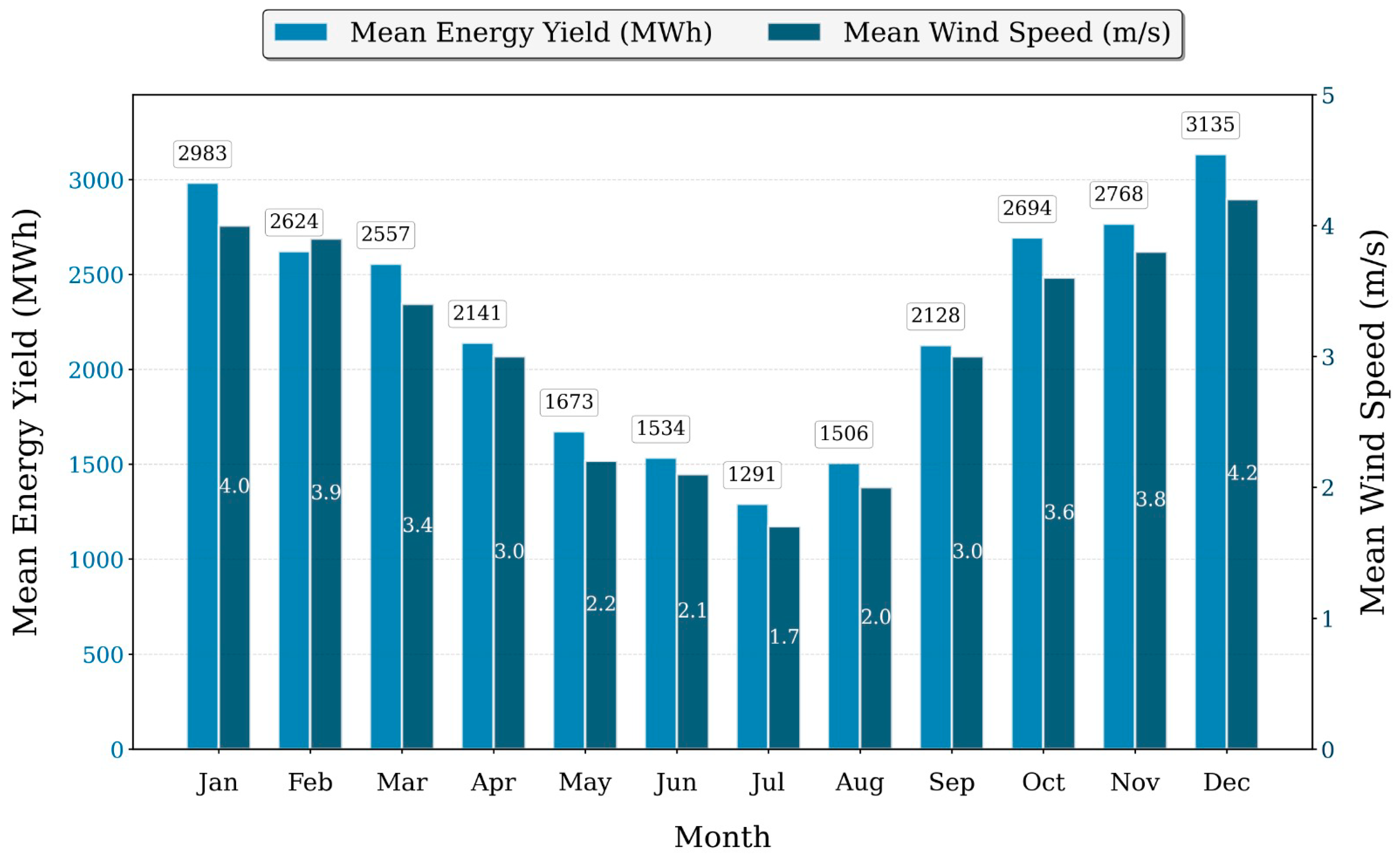
Figure 8 shows the monthly variation of average energy yield (MWh) and average wind speed (m/s) throughout the year at a hub height of 199 m. The graph is based on NORA3 meteorological data from January 1999 to July 2025, covering 26.5 years. The results reveal a clear seasonal pattern, with both parameters higher during the winter months and lower during the summer.
Seasonal variability in wind resource in the Baltic region shows significantly higher average wind speeds and wind power density in winter than in summer, corresponding to stronger atmospheric circulation and storm tracks during the cold months, and weaker, more stable conditions in summer. Studies have shown that winter wind speeds over northern Europe and the Baltic Sea can be markedly higher than in summer, thereby increasing wind energy yield in cold months. Additionally, Latvia’s climate is dominated by westerly winds associated with Atlantic cyclones, and the North Atlantic Oscillation influences the strength of this westerly flow, further explaining the seasonal contrast [
28].
The highest energy production occurs in January (3100 MWh), followed by February (2900 MWh) and December (2900 MWh), corresponding to mean wind speeds of approximately 9.0–9.3 m/s. Conversely, the lowest energy yield is observed in June (1200 MWh), coinciding with the minimum mean wind speed of 5.8 m/s. From July onwards, wind conditions gradually improve, leading to a steady increase in energy output that peaks again during autumn and winter. This pattern reflects the typical seasonal wind regime in temperate climates, in which stronger and more consistent winds predominate during the colder months. The strong correlation between mean wind speed and energy yield highlights the sensitivity of wind turbine performance to seasonal wind variability.
3.2. Effect of Canopy Height on Annual Energy Production
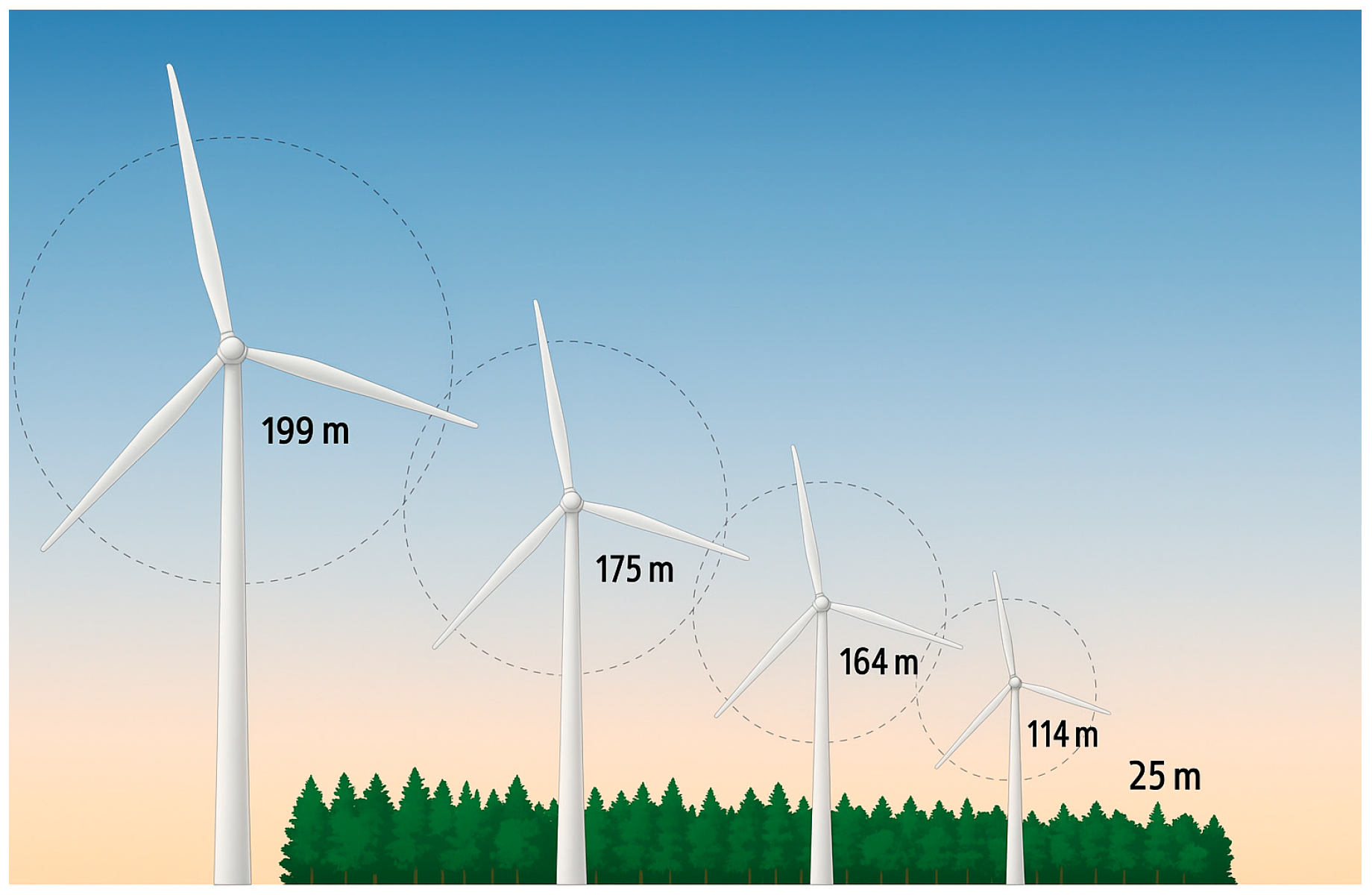
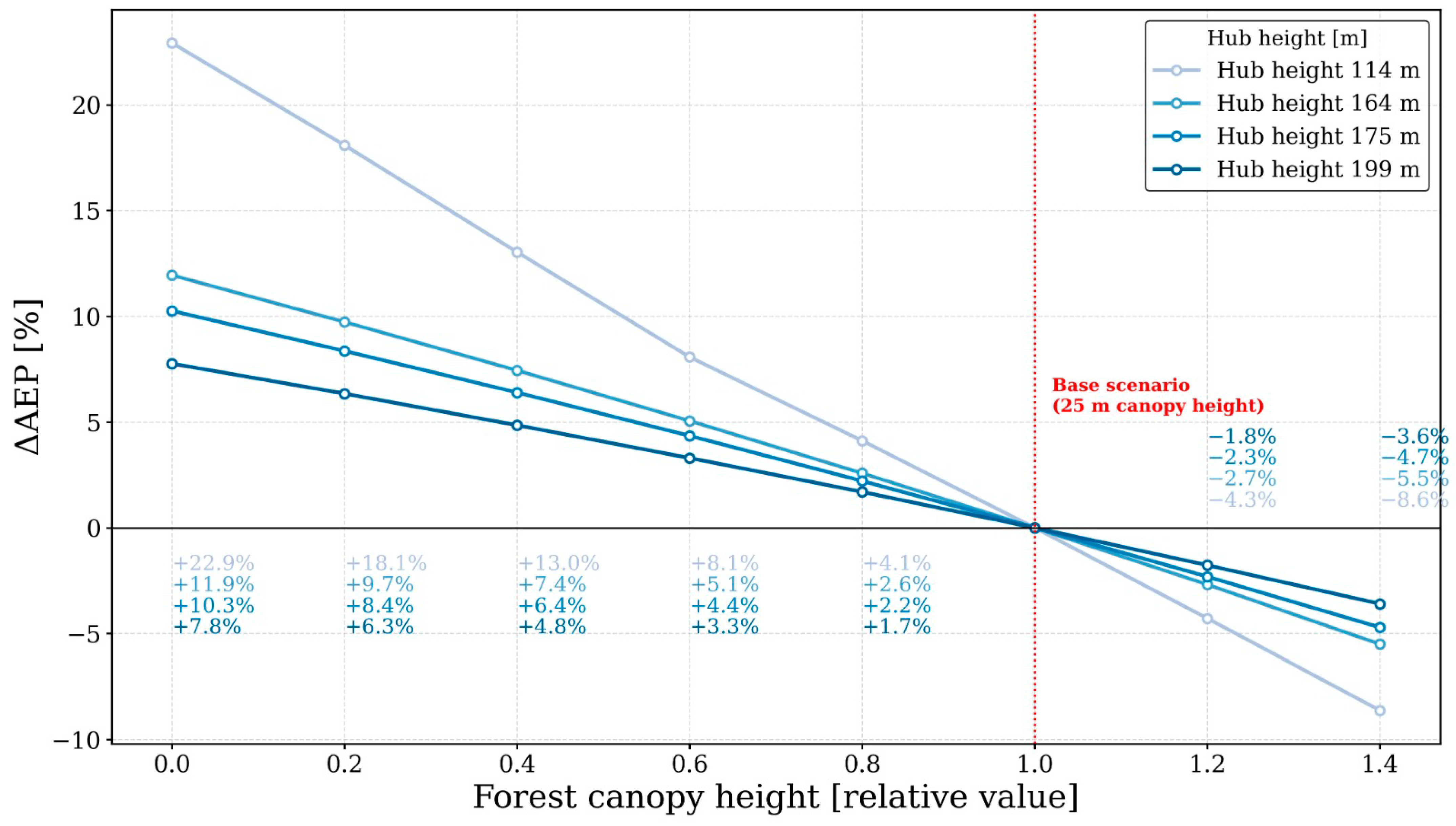
To evaluate the impact of forest canopy on wind turbine performance, a parametric sensitivity analysis was conducted to assess annual energy production (AEP) as a function of the canopy coefficient. This coefficient is defined as a multiplier based on a tree height of 25 m (the baseline coefficient is set at 1.0). The canopy height varied from 0 to 35 m, corresponding to a canopy coefficient between 0.0 and 1.4. Positive ΔAEP values indicate an increase in output relative to the baseline. The calculations focused on the Vestas V172-7.2 turbine, utilising four different hub heights: 114 m, 164 m, 175 m, and 199 m (see
Figure 9).
The curve shows that decreasing the coefficient increases Annual Energy Production (AEP), while increasing it reduces AEP. The lowest hub height of 114 m shows the most incredible sensitivity, with AEP varying from +22.9% to −8.6%. Increasing the hub height from 114 m to 164–175 m significantly reduces the impact of canopy changes on AEP, as it elevates the rotor above the high-turbulence layer above the treetops. The slight difference in AEP between heights of 164 and 175 m is negligible compared to other uncertainties. At a hub height of 199 m, the range of AEP variation narrows to +7.8% to −3.6%.
At a hub height of 114 m, the V172-7.2 rotor, with an 86-m radius, has its lower tip approximately 28 m above ground. With a representative canopy height of 25 m, this results in a clearance of only about 3 m above the treetops. Consequently, part of the rotor operates within the zone of intense turbulence just above the canopy. This zone, known as the roughness (canopy) sublayer, typically extends to roughly twice the canopy height above the treetops. Therefore, at a hub height of 114 m, a significant part of the rotor disc is situated within an unfavourable height range.
3.3. Effect of Forest Canopy Type on Annual Energy Production
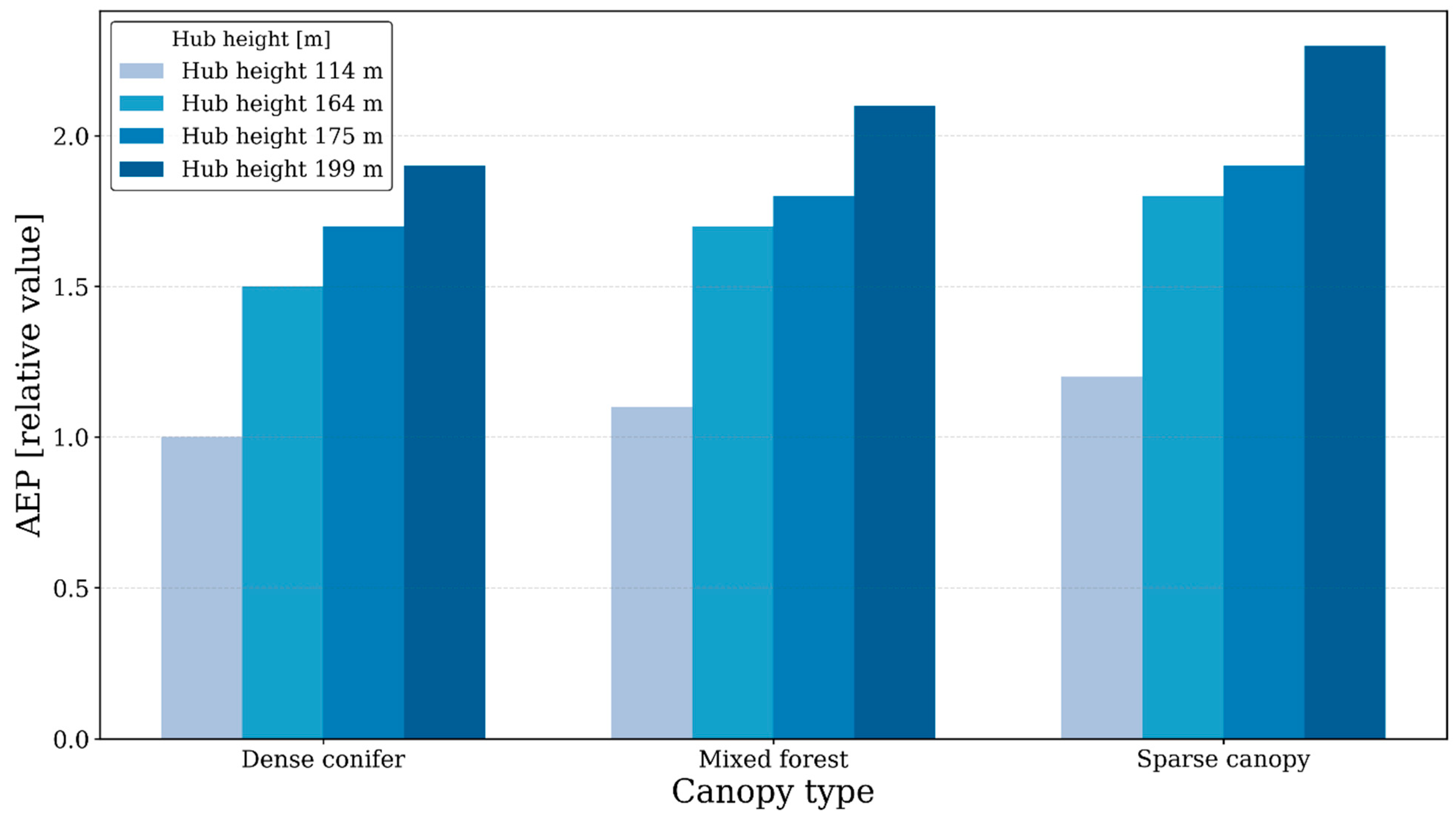
To analyse the influence of surface conditions and hub height on wind turbine performance, the results are presented as relative annual energy production (AEP). The baseline reference is defined as the AEP at a hub height of 114 m over dense coniferous forest, which is set to unity (Relative AEP = 1).
Figure 10 illustrates how relative AEP values change as hub height increases up to 199 m across different types of forest canopies—dense coniferous forest, mixed forest, and sparse canopy forest. The observed relationships highlight the impact of surface roughness and turbulence, influenced by varying forest density and structure, on energy production efficiency.
The analysis results show that both hub height and the type of underlying forest canopy greatly affect the relative annual energy production (AEP). Raising the hub height from 114 to 199 m consistently increases AEP across all scenarios, mainly due to reduced surface roughness and turbulence. The highest energy yields are found over sparse canopy conditions, while the lowest occur in dense coniferous forests. Additionally, differences between canopy types become more pronounced at higher hub heights, underscoring the importance of forest features in wind resource assessment and turbine siting.
Differences in energy yield between forest types are primarily driven by variations in canopy structural parameters. Dense coniferous forests are characterised by high canopy density and needle-shaped foliage, which increase aerodynamic roughness and enhance momentum absorption, resulting in stronger wind-speed attenuation. Mixed forests exhibit intermediate roughness due to heterogeneous canopy structure, while sparse forests with lower canopy density allow for greater wind penetration and reduced turbulence intensity, resulting in higher near-surface wind speeds and increased energy yield.
3.4. Effect of Forest Clearing Area on Annual Energy Production
Planning and siting of wind turbines require effective management of fire risk, as this is a crucial factor influencing the safety and resilience of wind energy infrastructure. A comprehensive assessment of each turbine or wind farm should consider site-specific ecological, climatic, and geographical conditions, addressing not only energy efficiency but also noise propagation and broader environmental implications. Preventive measures aim to lower both the likelihood of wildfires being caused by turbine-related incidents and the risk of wildfires damaging turbine infrastructure. Currently, there are no universally recognised standards for the minimum separation distances between wind turbines and woodland. For example, in the United States, a minimum clearance distance of 152 m (≈7.3 ha) from trees is specified, assuming a circular buffer area. For turbines near shrub or brush vegetation, a base clearance zone of 60 m (≈1.1 ha) is recommended [
29]. Likewise, the Confederation of Fire Protection Associations Europe (CFPA-E) recommends creating a 25 m (≈0.2 ha) buffer zone cleared of scrub and low vegetation to reduce the risk of fire spread [
30]. Such area-based safety zones serve as valuable references for spatial planning in forested or fire-prone areas. They can be incorporated into wind farm layout optimisation to improve fire resilience.
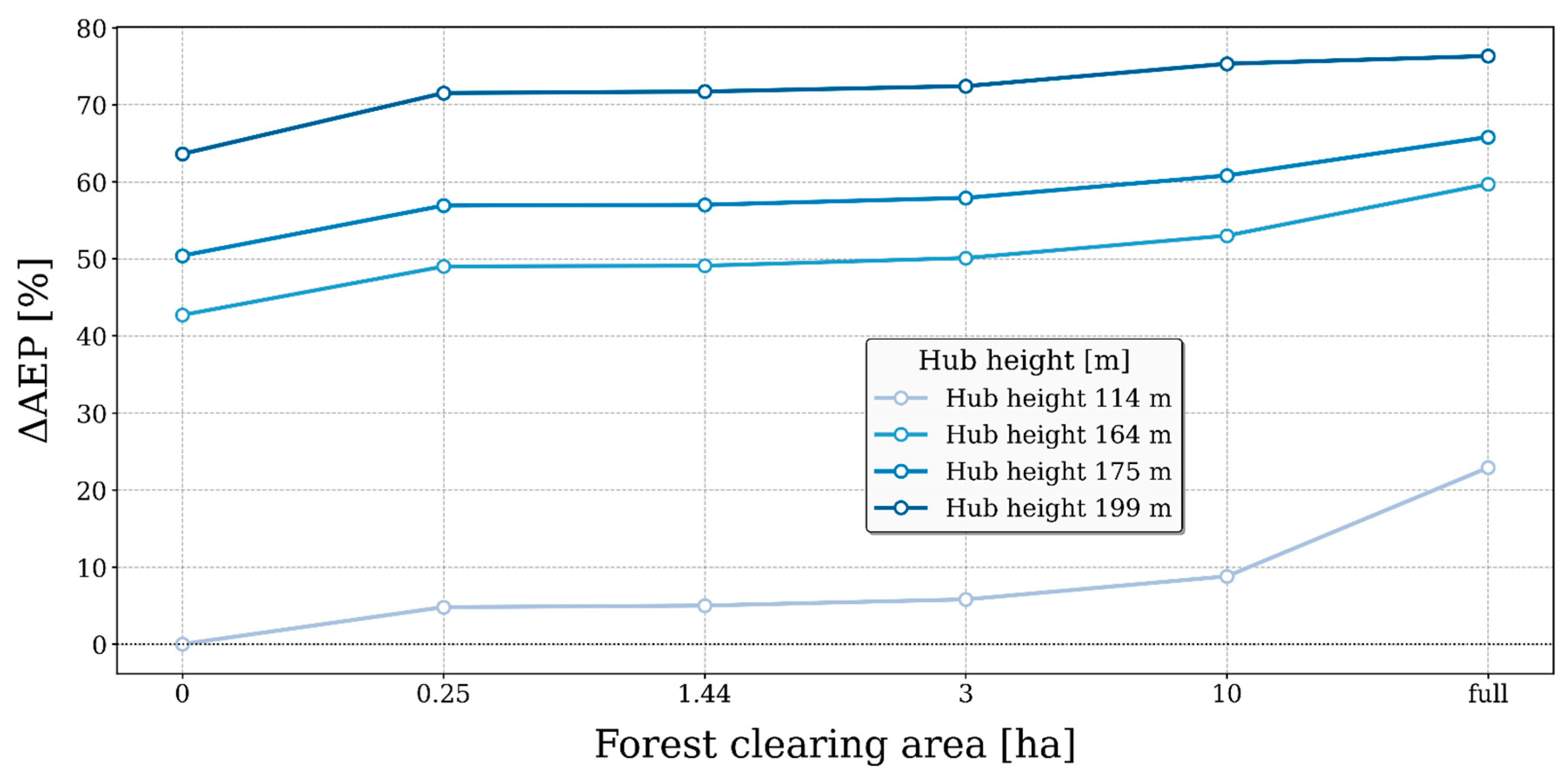
Figure 11 illustrates the variation in annual energy production (AEP, %) as a function of forest clearing area for turbines with hub heights of 114 m, 164 m, 175 m, and 199 m. A consistent increase in AEP is observed with the expansion of forest clearing across all configurations. This trend indicates that removing surrounding vegetation reduces surface roughness and turbulence intensity, thereby increasing the effective wind speed at hub height.
The results are based on simulations of rectangular forested areas with mixed canopies that were progressively cleared to create open zones around a centrally positioned turbine. The scenarios range from 0.25 ha to complete forest removal.
The results indicate that the extent of forest clearing has a greater effect on AEP for turbines with lower hub heights, reflecting the influence of forest structure on wind flow dynamics. In contrast, turbines with higher hub heights demonstrate reduced sensitivity to forest clearing, resulting in more consistent AEP across varying levels of forest removal.
The quantitative relationship presented in
Figure 11 was derived from simulations of progressively expanded rectangular clearings. Starting from a baseline of no clearing (0 ha), the open area around the centrally positioned turbine was increased in discrete steps to 0.25 ha, 1.44 ha, 3 ha, and finally 10 ha, with forest canopy parameters replaced by those of open terrain at each step.
3.5. Evaluation of Economic Efficiency Using the Levelised Cost of Electricity (LCOE)
To evaluate the project’s economic efficiency, the levelised cost of electricity (LCOE) indicator was employed, representing the average cost of electricity generation over the installation’s entire lifecycle [
31]. This indicator enables an objective comparison of different configurations and parameters of wind energy systems, considering both capital costs and operational expenses.
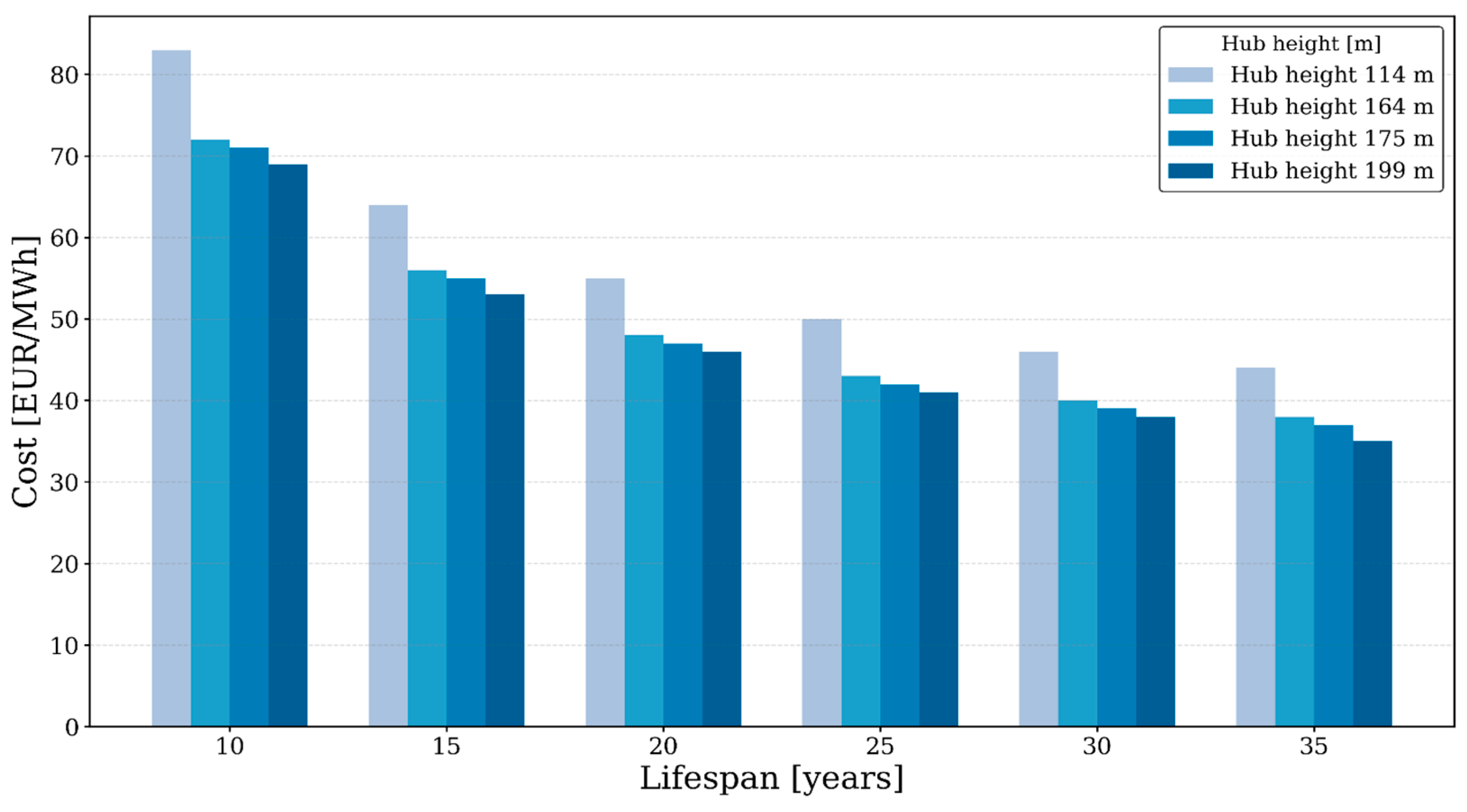
Figure 12 illustrates the variation in the LCOE as a function of turbine hub height across different assumed operational lifespans.
The assessment was conducted for an onshore wind farm consisting of 25 Vestas V172-7.2 MW turbines, located in the northern part of Latvia within a forested area characterised by mixed vegetation and an average tree height of approximately 25 m.
The LCOE is calculated using Equation (2) with a 5% discount rate, which accounts for the time value of money. It should be noted that forest clearing costs were not included in the CapEx component of the LCOE sensitivity analysis. While expanding the clearing area may increase total investment costs in practical wind energy projects, these costs are highly site-specific and depend on regulatory, environmental, and operational constraints. As a result, they were excluded from the present analysis, which aims to isolate the effects of wind resource variability and canopy-induced flow modification on energy yield. Incorporating forest clearing costs into scenario-based LCOE assessments is identified as an important topic for future research. The economic analysis adopts a deterministic framework in which CapEx, OpEx, DevEx, and AbEx are defined using fixed unit costs and percentage-based assumptions and are kept constant across all scenarios. The results demonstrate a consistent pattern: increasing hub height reduces LCOE, with the lowest values achieved at an installation lifespan of 35 years.
The downward trend in LCOE with longer operational lifespans reflects the effect of spreading capital costs over a larger cumulative energy output. As the lifespan extends from 10 to 35 years, LCOE decreases from approximately 80–85 EUR/MWh to 40–45 EUR/MWh, depending on hub height. This suggests that project longevity significantly affects economic performance, thereby enhancing the overall cost-effectiveness of wind power generation.
Additionally, turbines with higher hub heights consistently achieve lower LCOE values within each lifespan category. This improvement is attributed to higher average wind speeds and reduced turbulence intensity at higher elevations, resulting in increased AEP. For example, at a 25-year lifespan, turbines with a hub height of 199 m have an LCOE around 10–15% lower than those with a hub height of 114 m.
Overall, the analysis indicates that increasing hub height, extending project lifespans, and reducing wake losses all help to lower the levelised cost of wind energy.
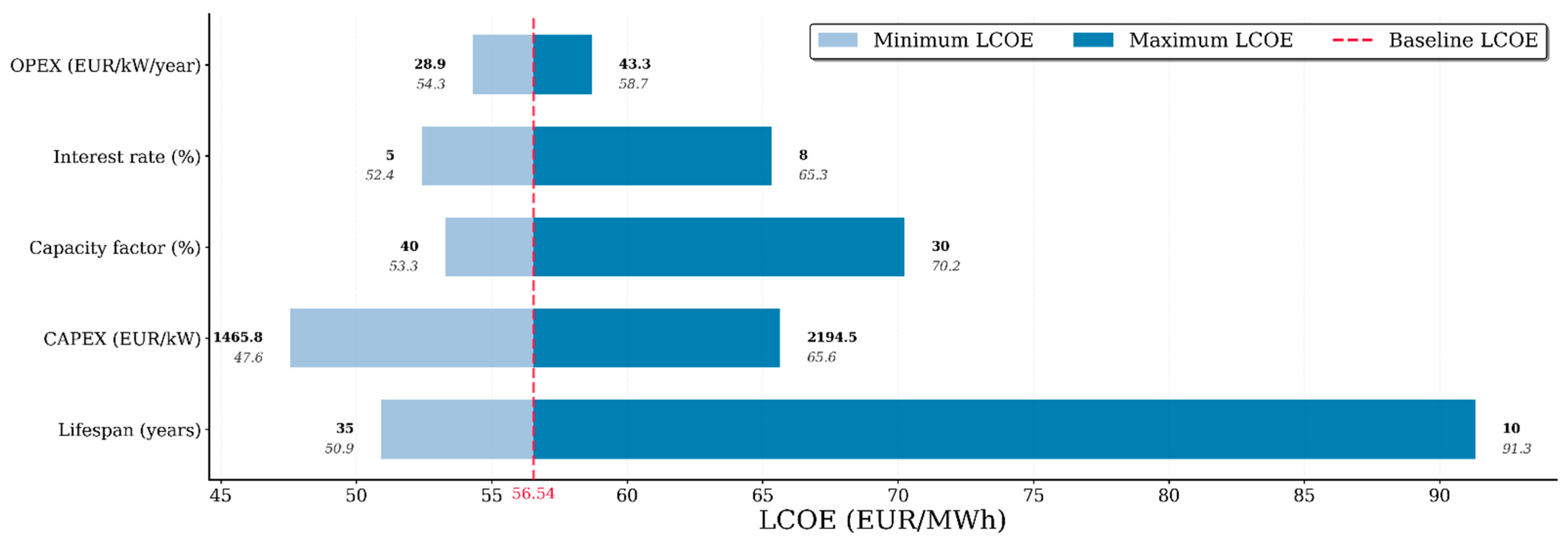
Figure 13 illustrates the results of the sensitivity analysis of the LCOE to changes in key parameters.
Data for the analysis were obtained by developing multiple scenarios in the Cost Model Setup. The baseline scenario assumed a project lifetime of 25 years, an interest rate of 6%, a capacity factor of 37.6%, a capital expenditure (CapEx) of 1829 EUR/kW, an operational expenditure (OpEx) of 36.2 EUR/kW/year. It resulted in an LCOE of 56.54 EUR/MWh. During the sensitivity analysis, one parameter was varied at a time, while the others were kept at their baseline values.
The results demonstrate that the project’s operational lifetime and CapEx have the most significant influence on the LCOE. Extending the project lifespan significantly reduces LCOE by spreading the initial investment over a longer period of energy production. Similarly, reductions in CapEx lead to a direct, proportional decrease in energy costs, underscoring the critical role of investment optimisation and cost-effective infrastructure design.
In contrast, variations in interest rate and capacity factor have a moderate effect on LCOE. Lower financing rates and improved turbine performance contribute to cost reductions but to a lesser extent. Changes in OpEx have a negligible influence on LCOE, indicating that maintenance and operating costs play a relatively minor role in determining the final price of electricity generation.
4. Conclusions
The results of this study assess the influence of forested terrain on both wind farm electricity generation and the LCOE. Accounting for forest characteristics, such as canopy density and tree height, enables a more informed determination of optimal turbine hub heights, turbine placement, and the extent of forest clearing. The modelling was conducted under Latvian geographical and meteorological conditions and included seasonal wind assessments, variations in tree height, forest clearing zones, and overall surface roughness. This study examines canopy-height sensitivity and hub-height effects in forest-dominated Baltic terrain using wind resource analysis and economic evaluation. Wind resource assessment based on more than 25 years of NORA3 data indicate a pronounced seasonal dependence of annual energy production. It is well known that winter wind speeds over Northern Europe and the Baltic Sea are significantly higher than in summer, resulting in increased wind energy generation during the colder months. Overall, winter electricity generation is almost twice that of summer, emphasising the strong influence of seasonal variability in the wind resource.
The results show that the influence of forest canopy height on annual energy production (AEP) decreases with increasing hub height, with a reference tree height of 25 m. At a hub height of 114 m, AEP variations range from +22.9% to −8.6%, whereas at 199 m the variation range narrows to +7.8% to −3.6%, indicating more stable energy production at higher elevations. At hub heights of 164–175 m, the sensitivity of AEP to forest canopy parameters is significantly reduced, and differences compared to 199 m become negligible.
For all canopy types, AEP increases systematically with hub height. Compared to dense coniferous forest, mixed forest conditions yield approximately 10–15% higher AEP, while sparse canopy conditions result in 15–20% higher AEP across all hub heights, with the largest absolute gains observed at 199 m. The results indicate a consistent increase in AEP under lower canopy density and surface roughness conditions across all hub heights.
The LCOE analysis shows that the levelised cost of energy decreases with both increasing hub height and project lifetime. Higher hub heights are associated to lower LCOE due to increased annual energy production and reduced sensitivity to forest-induced turbulence. For a 25-year project lifetime, increasing the hub height from 114 m to 199 m reduces LCOE by approximately 15–20%, while extending the project lifetime further improves economic performance across all configurations.
The findings suggest that turbine placement in forested areas requires careful consideration of canopy-related flow modifications. A major limitation is the availability of suitable land, as strict regulatory requirements impose buffer zones around settlements, infrastructure, and environmentally sensitive areas. These constraints are particularly significant in forested landscapes, where habitat structure, high biodiversity, and the presence of protected species further limit the potential locations for turbines.
This analysis assumes a fixed forest height and does not account for long-term dynamic processes such as tree growth and cutting cycles, which can alter canopy height and density over time and influence wind flow and long-term energy production. Additionally, the costs of forest clearing were excluded from the CapEx in the LCOE analysis, as these costs are highly site-specific and constrained by regulatory, environmental, and operational factors. Incorporating forest dynamics and clearing costs into LCOE assessments is therefore identified as an important area for future research. In addition, future studies should validate the NORA3 reanalysis data against local wind measurements to further strengthen the robustness of the findings.