Article

Exploratory Analysis of Wind Resource and Doppler LiDAR Performance in Southern Patagonia

by
María Florencia Luna
1,2,*,
Rafael Beltrán Oliva
2 and
Jacobo Omar Salvador
1,2
1
CIT Santa Cruz—CONICET, Lisandro de la Torre 860, Río Gallegos 9400, Argentina
2
Río Gallegos Academic Unit (UARG), Austral Patagonia National University (UNPA), Av. Gregores y Piloto “Lero” Rivera, Rio Gallegos 9400, Argentina
*
Author to whom correspondence should be addressed.
Submission received: 19 November 2025 / Revised: 26 December 2025 / Accepted: 6 January 2026 / Published: 15 January 2026

Abstract

Southern Patagonia in Argentina possesses a world-class wind resource; however, its remote location challenges long-term monitoring. This study presents the first long-term Doppler LiDAR-based wind characterization in the region, analyzing six months of high-resolution data at a 100 m hub height. Power for the LiDAR is provided by a hybrid system combining photovoltaic (PV) and grid sources, with remote monitoring. The results reveal two distinct seasonal regimes identified through a multi-model statistical framework (Weibull, Lognormal, and non-parametric Kernel Density Estimation: a high-energy summer with concentrated westerly flows and pronounced diurnal cycles (Weibull scale parameter A ≈ 11.9 m/s), and a more stable autumn with a broad wind direction spectrum (shape parameter k ≈ 2.86). Energy output, simulated using Windographer v5.3.12 (Academic License) for a Vestas V117-3.3 MW turbine, shows close alignment (~15% difference) with the operational Bicentenario I & II wind farm (Jaramillo, AR), validating the site’s wind energy potential. This study confirms the viability of utility-scale wind power generation in Southern Patagonia and establishes Doppler LiDAR as a reliable tool for high-resolution wind resource assessment in remote, high-wind environments.

1. Introduction

In recent decades, wind energy has assumed an increasingly prominent role in global and regional energy matrices, driven by its renewable nature and potential to reduce greenhouse gas emissions. South America is particularly notable for its vast and still largely untapped wind resource potential, with areas such as Northeastern Brazil and Southern Patagonia ranked among the most favorable wind regimes worldwide [1,2]. Within the Latin American context, the Latin American Energy Organization (OLADE) [3] classifies wind energy as a primary energy source, since it is derived directly from a natural resource without prior human-induced transformation. The rapid implementation of wind projects across the continent, as detailed in recent comprehensive reviews [2], underscores this potential and highlights the strategic importance of accurate resource assessment. In Argentina, its development has been particularly dynamic: the National Energy Balance (BEN) 2015 [4] recorded a production of approximately 164 ktoe (kilotons of oil equivalent), a figure that rose to 1255 ktoe by 2021 [5], reflecting a growth that exceeds 660% in just six years. This leap is largely attributable to renewable energy incentive policies and the deployment of numerous large-scale wind farms, particularly in regions with favorable conditions like Patagonia.
Aligned with this national trend, the province of Santa Cruz has demonstrated sustained growth in wind energy production. Figure 1 shows the location and geographical extent of the province. Located between 65°43′ and 73°35′ West longitude and 46°00′ to 52°23′ South latitude, Santa Cruz is Argentina’s second-largest province, covering 243,943 km2. According to the 2017 Provincial Energy Balance (BEP) [6], wind energy accounted for merely 0.8 ktoe, reflecting small-scale applications. By 2022, however, this source generated 134.5 ktoe, representing the province’s entire primary energy supply and establishing itself as its main energy source. This production was entirely allocated to electricity generation, reaching 1,564,520 MWh—over 85% of the province’s total electricity generation [7]. Notable wind farms driving this expansion include Bicentenario I and II, Cañadón León, and Los Hércules.
The natural conditions of the region enhance this potential. A global evaluation has consistently identified Patagonia as one of the planet’s most outstanding wind power hotspots [1]. In the Southern Hemisphere, winds tend to be more homogeneous all year-round, although in Patagonia, westerlies intensify notably during summer [8]. Diurnally, while most of the country experiences calm nights due to surface cooling stabilizing the lower atmosphere, Patagonia exhibits a distinct nocturnal wind maximum between 22:00 and 24:00 [9,10]. This behavior contributes to a more uniform distribution of available wind power throughout the day. Additionally, the vertical wind variation within the first 100 m is critical for wind turbine design, as terrain friction significantly reduces wind speeds in lower layers. Thus, understanding the vertical wind profile is essential for assessing the most efficient performance of any wind project.
Regarding provincial measurement precedents, an early milestone was the 2004 agreement between Servicios Públicos Sociedad del Estado (SPSE) and the National University of Southern Patagonia (UNPA) [11], which included wind studies across multiple locations in Santa Cruz. Although measurement heights were lower than current standards, these data established a valuable foundation for assessing southern Patagonia’s wind potential. More recently, collaborative initiatives between the Ministry of Production, the Santa Cruz Energy Institute (IESC), and UNPA—including the 2nd Sustainable Energy Transition Forum (2023) and the Diagnostic Study for Energy Project Identification funded by the Federal Investment Council (CFI) [12]—have promoted adaptive and sustainable resource planning.
In 2018, IESC—with CFI support—installed an 85 m met mast in Güer Aike, located approximately 40 km west of Río Gallegos, equipped with sensors to record wind speed/direction at multiple heights alongside atmospheric pressure and temperature. Analysis of eight months of data revealed a mean wind speed of 10.4 m/s at 85 m, low turbulence intensity (IEC 61400-1 Category C), and Weibull distribution (shape parameter k = 2.25) [7], indicating symmetric/reliable generation potential. These results confirmed the feasibility of a wind farm in the region while highlighting the need for extended measurement campaigns. Addressing this gap, our study complements conventional measurements with active remote sensing using a Doppler LiDAR system (ZX300 model) deployed near the original site. This technology has been rigorously validated for wind energy applications [13], proving its capability to provide accurate vertical wind profiles. Compared to traditional met masts, this technology provides vertical wind profiles (20–200 m) with a high temporal resolution, detailed analysis of wind structure and seasonal variability and critical optimization data, all of which are essential for future wind projects in Río Gallegos.
The goal of this study is to characterize the seasonal and diurnal wind variability at 100 m height using Doppler LiDAR measurements, and to evaluate the instrument’s performance under the climatic conditions of Southern Patagonia. The main contribution of this research lies in the high-resolution identification of a clear seasonal trade-off in the wind resource, supported by a multi-model statistical analysis combining Weibull, Lognormal, and non-parametric Kernel Density Estimation approaches: a highly energetic but more variable summer regime, with wind speed peaks reaching 12–13 m/s, versus a less intense yet more stable autumn regime characterized by a pronounced wind speed plateau and an increase in the Weibull shape factor up to k = 2.86. Furthermore, through the simulation of the energy yield of a Vestas V117-3.3 MW turbine based on the Weibull-derived wind statistics, this study provides a benchmark Net Capacity Factor (NCF) of 49.54%. This simulated performance was validated against real production data from the Bicentenario Wind Farm, showing close agreement within 14.8%, thereby confirming the robustness of LiDAR-based wind assessments for reducing uncertainty in regional wind energy projects.
This article is structured as follows: Section 2 introduces the LiDAR instrument and outlines its main technical specifications and deployment setup. Section 3 describes the analytical framework and equations used in the wind characterization, together with the data processing methodology and visualization tools. Section 4 presents and discusses the main results, including the simulated power output and the assessment of the site’s wind potential. Finally, Section 5 summarizes the key findings and provides the main conclusions of the study.

2. Field Deployment of Doppler LiDAR

2.1. Doppler LiDAR Principles for Wind Profiling

Light Detection and Ranging (LiDAR) is an active remote sensing technique that utilizes the backscattering of emitted laser light to achieve range-resolved atmospheric measurements. The system leverages the precise spatial, temporal, and spectral properties of laser radiation to remotely probe volumes extending over kilometers [14]. Within atmospheric sciences, LiDAR is a well-established method for monitoring parameters such as temperature, wind velocity, and molecular or particulate composition [15]. In the specific context of wind measurements, this capability is realized through Doppler LiDAR systems, which exploit the Doppler effect to infer wind velocities from atmospheric backscatter with high accuracy. While this technology has broad applications—from topographic mapping to ecological studies—this work focuses on its use in wind energy and meteorology.
The Doppler effect is a fundamental physical principle that describes the change in frequency of a wave due to the relative motion between the source and the observer. In the context of wind LiDAR systems, this principle is applied by emitting laser pulses towards the atmosphere and analyzing the frequency shift in the backscattered light, reflecting the motion of aerosols along the laser beam. The magnitude of this frequency shift is directly proportional to the radial velocity of the aerosols along the laser beam. By emitting pulses at a precisely known frequency and by measuring the frequency of the returning signal, the LiDAR system accurately calculates wind speed. To derive full three-dimensional wind vectors, measurements are combined from multiple beam orientations—typically achieved through conical or vertical scanning patterns—enabling the resolution of both horizontal and vertical wind components. The accuracy of these measurements critically depends on two factors: the motion of atmospheric aerosols (which acts as tracers of the wind) and the frequency resolution of the system, which requires highly stable laser sources and spectrally sensitive detectors [16].
The Doppler principle enables remote, height-resolved wind profiling without physical interference, offering a significant advantage over conventional instruments. While traditional methods—including meteorological stations with anemometers or radar systems—have proven effective and remain a reference standard, they are inherently constrained in key aspects relevant to modern wind energy projects. Their measurement capabilities are often capped at heights of 80–100 m due to structural and economic constraints, and they are limited to discrete, fixed points [17]. Furthermore, their reliance on substantial permanent infrastructure restricts deployment in remote or logistically complex environments and their performance can be susceptible to degradation in extreme climatic conditions [18]. Other remote sensing techniques, such as SODAR (Sonic Detection and Ranging) systems, partially overcome the height limitation of masts by providing vertical wind profiles without permanent infrastructure. However, SODAR performance can be strongly affected by ambient acoustic noise, atmospheric stability, and complex terrain, and its signal-to-noise ratio and accuracy often degrade under high wind conditions [19]. Similarly, radar-based systems offer more extensive spatial coverage but are generally cost-prohibitive for wind farm site assessment and may suffer from reduced accuracy under low-visibility conditions or in topographically obstructed areas [20].
In contrast, LiDAR technology combines remote sensing capability with high spatial and temporal resolution, enabling continuous wind measurements across the full rotor-swept area without the need for extensive infrastructure. This non-intrusive and flexible deployment makes LiDAR particularly suitable for high-wind and remote regions, where conventional measurement systems face practical and economic constraints. A comparative summary of these technologies, highlighting the specific advantages of Doppler LiDAR, is provided in Table 1.
The versatility and reliability of LiDAR-based measurements are formally recognized in the IEC 61400-12-1:2017 standard, which endorses its use for wind resource assessment by defining strict protocols for calibration, uncertainty quantification, and data processing [21]. This regulatory framework is underpinned by the technology’s inherent capability to provide continuous vertical wind profiles up to 200 m, enabling a non-intrusive characterization of the entire rotor-swept area of modern large-scale turbines. Beyond normative compliance, the robustness of Doppler LiDAR measurements has been extensively demonstrated in empirical validation studies. Profiling LiDAR systems exhibit excellent agreement with sonic anemometers, particularly in the estimation of turbulence intensity [22]. Moreover, long-term field deployments report strong vertical consistency in wind measurements, with coefficients of determination as high as 0.97–0.99 between adjacent heights [23], further underscoring the suitability of LiDAR for both research-oriented analyses and operational wind energy applications.

2.2. Acquisition and Institutional Integration

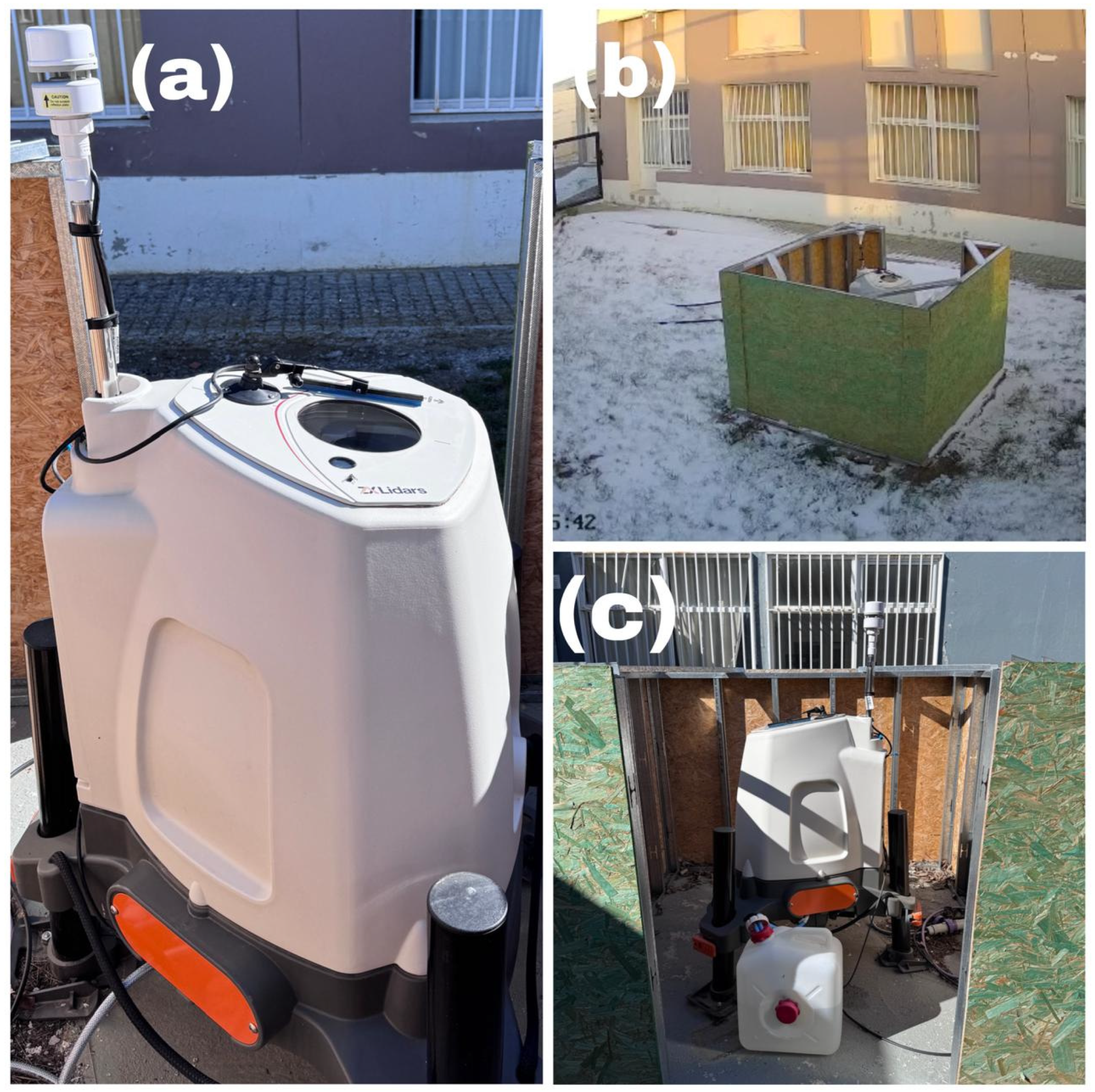
The ZX 300 LiDAR system (Figure 2) is a vertical profiling laser remote sensing instrument specifically designed for wind resource assessment. This system was acquired through the Argentinian federal program Equipar Ciencia, managed by the National Scientific and Technical Research Council (Consejo Nacional de Investigaciones Científicas y Técnicas, CONICET), following a formal request by the Applied Technology Institute (ITA-UARG) of the Río Gallegos Academic Unit. The procurement was driven by the joint research activities of the Alternative Energy Group (Grupo de Energías Alternativas, AEA) and the Optoelectronics Group (Grupo de Optoelectrónica, GIOp), which have worked collaboratively on renewable energy projects since 2018 under several initiatives.
This ZX 300 enables high-precision wind data acquisition across a vertical range from 10 to over 200 m, serving as a modern alternative to conventional meteorological masts. The system complies with IEC 61400-12-1: 2023 [24] and is certified by DNV GL (Det Norske Veritas—Germanischer Lloyd), ensuring that its measurements meet the rigorous requirements for international wind project financing and bankability assessments.
The instrument was delivered to the UNPA-UARG campus in February 2024 through the authorized supplier Provener SRL (Rosario, Argentina), as previously reported by the AEA-GIOp groups [25]. Upon arrival, it underwent a thorough inspection, inventory verification, and documentation review, including calibration certificates and user manuals.

2.3. System Deployment and Power Supply Configuration

The ZX 300 employs a coherent Doppler LiDAR configuration operating at a near-infrared wavelength of 1575 nm to measure wind profiles up to 300 m above ground level with high temporal and spatial resolution.
Key technical features include:
  • Autonomous operation with minimal field intervention
  • Redundant communication options (GSM/GPRS, Ethernet, Iridium/BGAN satellite)
  • Operational temperature range of −40 °C to +50 °C
  • IP67-rated sealed connectors for harsh environments
  • Integrated meteorological station measuring pressure, temperature, and humidity for data correction
  • Dual power supply compatibility (AC/DC) with high-efficiency DC/DC converters
The structural design of the system incorporates carbon fiber adjustable legs for stability and leveling on uneven terrain, an optical window with automated cleaning activation during precipitation, and a modular enclosure system housing both the main electronics and remote communication modules. Configuration and data acquisition are managed through the proprietary Waltz v5.4 software platform.
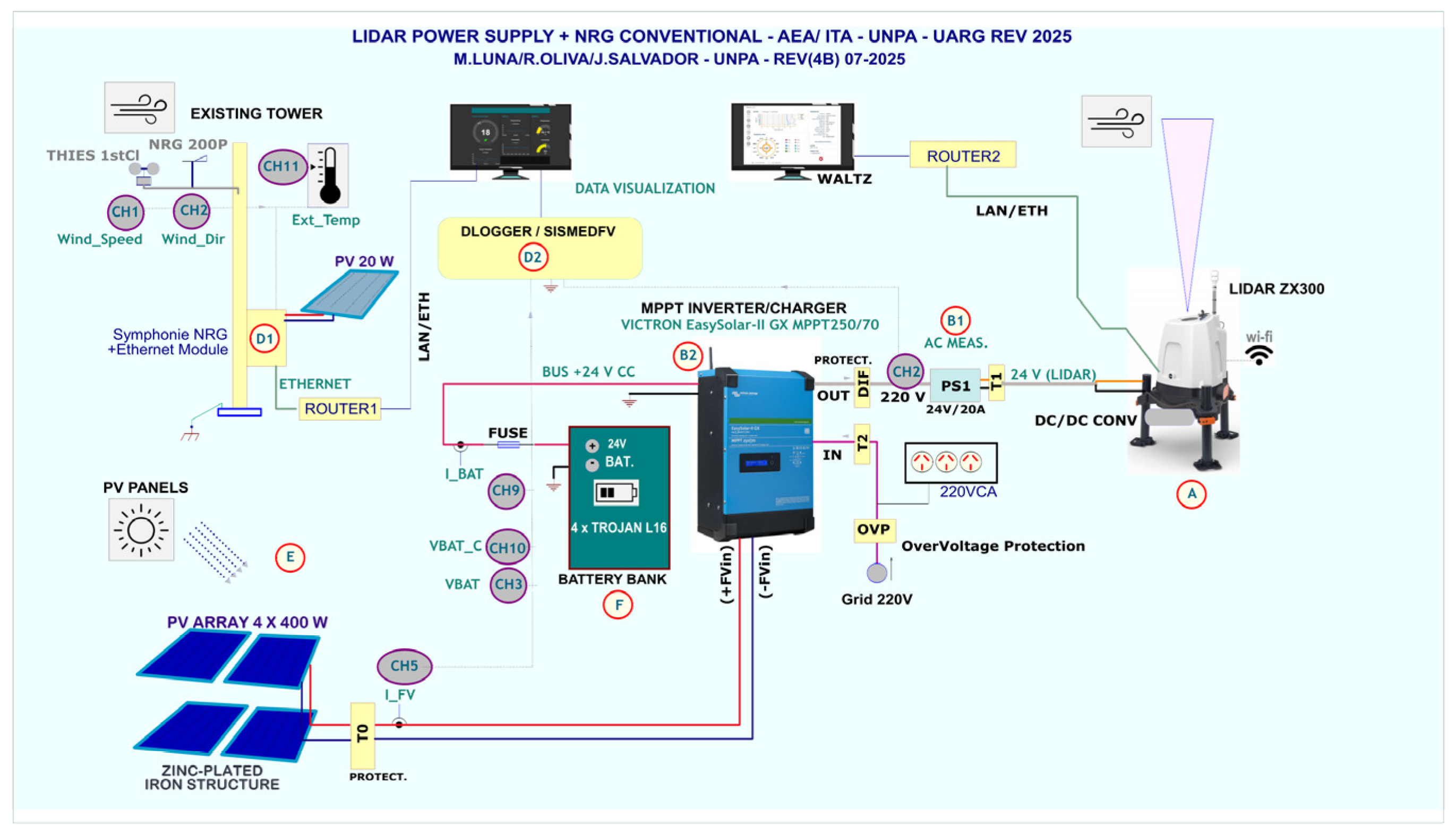
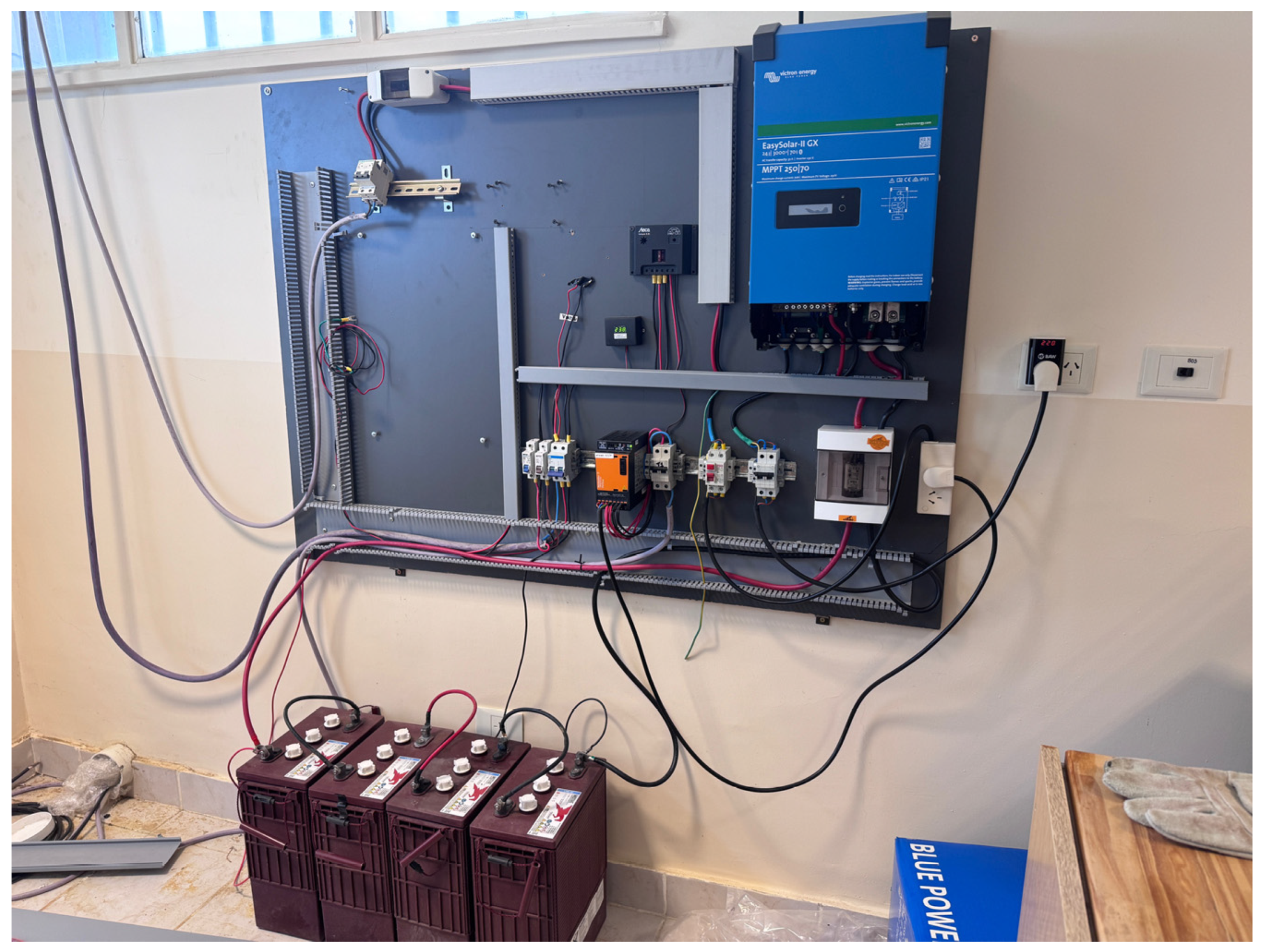
Figure 3 illustrates the hybrid power supply system designed to ensure uninterrupted operation of the ZX300 LiDAR, engineered to meet the specific power requirements of the instrument and local environmental conditions. The LiDAR unit (A) requires a stable 24 V DC supply, with a typical current draw of 3–5 A during normal operation and peak currents exceeding 30 A during system startup or under extreme cold conditions. Power is delivered through a Weidmuller ProTOP1 480 W switching power supply (B1), which is fed from a Victron EasySolar-II inverter/charger (B2). This configuration enables flexible power sourcing: B2 can operate from the campus electrical grid or, during grid interruptions, from a 24 V battery bank (F). The batteries are primarily charged by a photovoltaic array consisting of four 400 Wp panels (E) via an integrated MPPT charge controller. During winter months or periods of limited solar irradiation, the system automatically switches to grid charging while maintaining continuous LiDAR operation, ensuring measurement reliability through redundant power pathways. The electrical control panel that manages this power integration is shown in Figure 4.
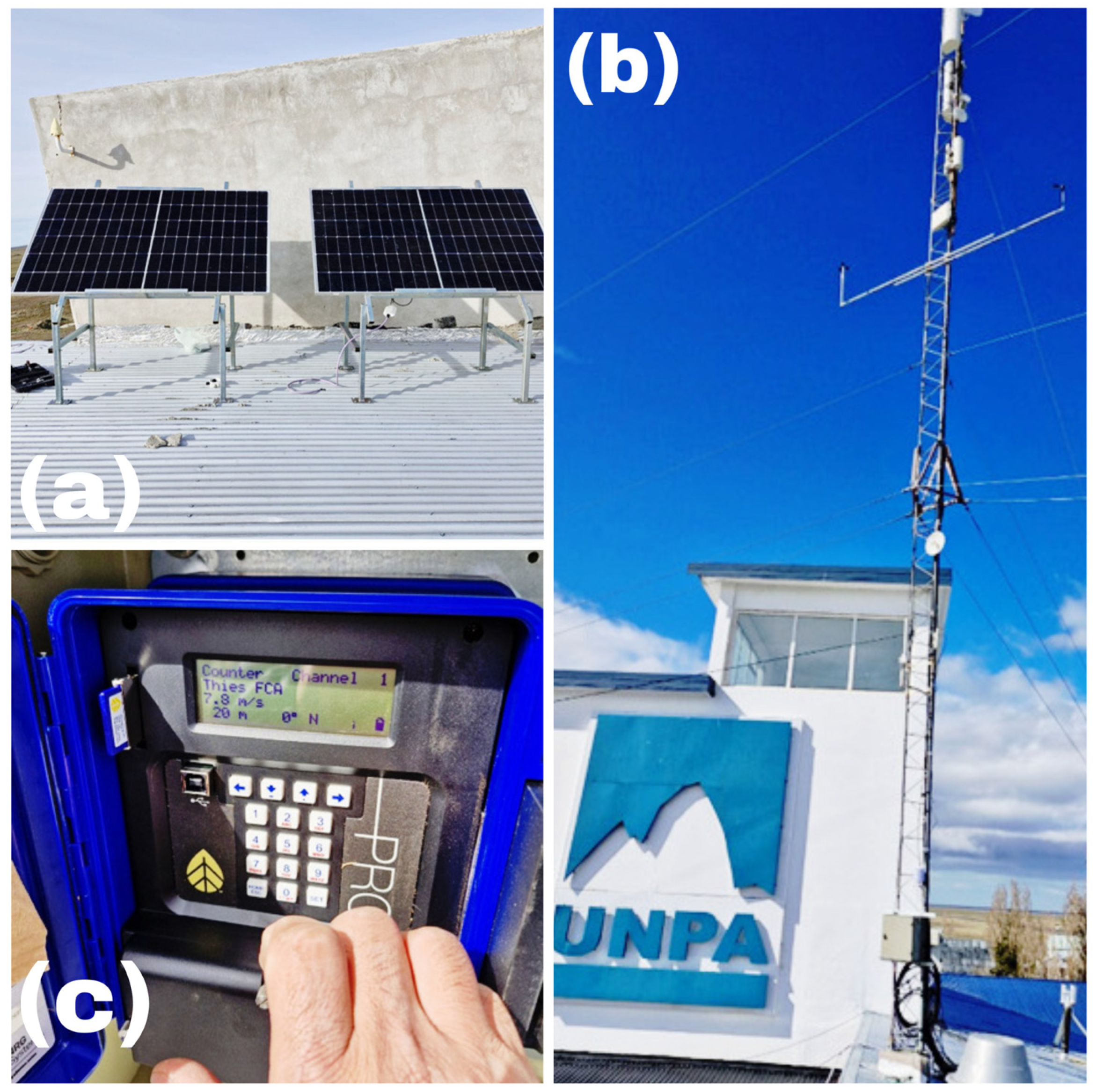
The performance of the power system is monitored through a dedicated subsystem (D2/SISMED-FV) that records key operational parameters, including photovoltaic input current (I_FV/CH5), battery bank voltage (24 V DC nominal), and grid supply status (220 V/50 Hz). This complements the environmental monitoring setup, where a conventional NRG Symphonie Pro data logger (D1) operates independently with a 20 W solar panel (PV20W), acquiring wind speed (Thies FC1 anemometer), direction (NRG 200P wind vane), and temperature data from a communication tower located approximately 70 m from the LiDAR installation, as shown in Figure 5a–c.
Both measurement systems are integrated through the network infrastructure of the university: the conventional station data is transmitted via an NRG-iPack module to a dedicated router (ROUTER1), while the LiDAR system connects through wired LAN to ROUTER2. This dual-path architecture enables synchronized data collection and facilitates comparative analysis between remote sensing and conventional measurement methodologies.

3. Data Analysis

3.1. Software Tools for Data Processing

A comprehensive assessment of wind data in this research relied on an integrated workflow designed for data validation, specialized wind analysis, and algorithmic reproducibility. This study employed the complementary strengths of Waltz v5.4, Windographer v5.3.12, and Python to ensure a robust and transparent transition from raw data to final results.
Primary acquisition and unit management were performed via Waltz, the proprietary suite for the ZX 300 lidar [26]. Following the manufacturer’s protocol, this software facilitated system connection, initial validation, and the export of the primary measurement datasets into standardized formats for downstream analysis [27].
The validated dataset was subsequently analyzed using Windographer (v5.3.12) under a valid academic license. This software was central to the core analyses of this study, including the generation of diurnal wind speed profiles, wind roses, and the fitting of Weibull distributions. Furthermore, its integrated turbine output estimator was employed to model energy production.
Finally, Python scripts were developed to automate processing tasks and generate customized visualizations, ensuring a reproducible workflow. The analysis was conducted within Jupyter Notebooks (v6.5.2), using Pandas v.1.5.3 [28] for data manipulation and Matplotlib [29] for publication-quality graphs. Advanced statistical modeling was implemented through the SciPy v1.10.0 library [30]; specifically, the scipy.stats module was utilized to compute Kernel Density Estimations (KDE) and to fit Lognormal distributions, providing a non-parametric and an alternative parametric validation of the wind speed profiles. In addition, the Windrose v.1.9.2 library [31] was employed for wind rose visualization.

3.2. Data Structure, Conversion and Visualization

The data acquisition and processing workflow involved a structured sequence of format conversions and preprocessing steps to transform raw LiDAR measurements into a curated dataset suitable for analysis and visualization. The process began by downloading the proprietary files in .ZPH format directly from the LiDAR internal datalogger. These files were first converted into the more universal .CSV format using the Waltz software, a necessary step to facilitate data inspection and processing [32]. The datasets were subsequently imported into Windographer for an initial inspection of data completeness and temporal continuity. During this stage, the files were converted into a structured .TXT format. This intermediate step was specifically implemented to ensure header uniformity and facilitate the subsequent data ingestion by the custom Python parsing routines developed for this study. This workflow follows a structured journey through time-domain wind resource assessment, adopting robust data handling practices for meteorological time series within the Python ecosystem [33].
The data quality control process adhered to the stringent protocols of the ZX 300 LiDAR’s integrated and fully automated Quality Control (QC) module, following the manufacturer’s guideline [32] to ensure the delivery of finance-grade (“bankable”) data. This sensor-level processing, applied prior to data averaging, ensures signal integrity at the source by continuously monitoring internal diagnostic and status flags—such as the Threshold flag associated with signal-to-noise ratio—and automatically filtering noisy or unreliable records. Invalid or abnormal measurements are systematically identified and replaced by standardized quality codes embedded in the dataset: values flagged as 9999 correspond to unreliable measurements caused by low wind speeds or beam obscuration; values coded as 9998 indicate adverse atmospheric conditions, such as dense fog; and values flagged as 9992 are used to exclude vertical wind components significantly affected by precipitation events, defined as rainfall impacting more than 1% of the data packets. In addition, the system applies a calm-wind filter of 3 m/s to the 10 min averaged horizontal wind speed in order to remove low-wind measurements that are more susceptible to instrumental offsets. No manual post-processing or additional filtering criteria were introduced, ensuring that the dataset preserved the physical accuracy, traceability, and reproducibility inherent to the manufacturer-certified QC routines. Temporal gaps resulting either from automated data rejection or from brief periods of reduced data availability were explicitly identified during Python-based preprocessing and treated as missing values (NaN). To preserve the statistical integrity of the wind measurements, no gap-filling or interpolation techniques were applied; consequently, all subsequent analyses were performed exclusively on valid, directly observed data that satisfied the LiDAR’s internal quality and availability thresholds.
The daily .TXT files were then accessed through Jupyter Notebook for systematic preprocessing using the Pandas library. The application of Python for processing and analyzing wind data time series is well established in the wind energy literature, providing robust and flexible workflows for resource assessment and forecast validation [34,35,36]. This stage began with cleaning the dataset by standardizing the column headers, eliminating spaces and special characters, and converting the Date column into a datetime object to ensure proper handling of time-series information.
Once the dataset structure was consistent, the processed DataFrames were used to generate a range of visualizations. These comprised time series plots to capture temporal patterns, combined plots to examine monthly variability, and seasonal behavior. All outputs were carefully refined by adjusting axis labels, units, and graphical details. This exploratory visualization stage informed the subsequent statistical modeling of wind speed distributions described in Section 3.3.

3.3. Statistical Modeling of Wind Speed Distributions

Wind speed probability distributions constitute a fundamental descriptor of the wind resource at a given site and form the statistical basis for energy yield estimation [37]. Within the wind energy sector, the two-parameter Weibull distribution remains the industry standard for characterizing wind regimes and is the primary model for Annual Energy Production (AEP) calculations under the IEC 61400-12-1 [24] framework. The 2023 edition of this standard specifies methodologies for power performance assessment and explicitly recognizes the use of remote sensing devices (RSDs), including Doppler LiDAR systems, for wind resource evaluation [24].
However, diverse studies highlight that relying exclusively on a single parametric distribution may oversimplify the representation of site-specific wind regimes, particularly in regions characterized by high mean wind speeds, strong seasonal contrasts, or complex atmospheric dynamics. Exploratory analyses increasingly incorporate complementary statistical approaches—such as the Lognormal distribution and non-parametric methods—to better capture skewness, variability, and potential multi-modal behavior in wind speed datasets [38,39,40]. This trend aligns with recent advances in multiscale and high-accuracy wind data processing methodologies aimed at improving wind resource characterization and power prediction reliability [41].
Accordingly, this study adopts a multi-model statistical framework to characterize the wind resource in Southern Patagonia. Wind speed distributions were analyzed using three complementary approaches: (i) a two-parameter Weibull distribution, fitted via maximum likelihood estimation (MLE) [42,43] which serves as the primary distribution for AEP estimation following industry standards; (ii) a Lognormal distribution, included as an alternative parametric benchmark to assess sensitivity to distribution choice under high-wind, positively skewed regimes; and (iii) Kernel Density Estimation (KDE), employed as a non-parametric, data-driven reference to identify potential complex features (e.g., multimodality) that parametric models might smooth over. All statistical analyses were implemented in Python using the SciPy library, with KDE bandwidth selected according to Scott’s rule to ensure objective smoothing.
This probabilistic characterization provides the statistical foundation for the comparative analysis of distribution shapes and the Weibull-based AEP estimation presented in the following sections.

3.3.1. Parametric and Non-Parametric Modeling of Wind Speed Distributions

Long-term wind behavior differs substantially from short-term measurements and therefore requires probabilistic models capable of describing annual and seasonal variability. Within the wind energy sector, the two-parameter Weibull distribution has been widely adopted as the standard parametric model due to its flexibility in representing positively skewed wind speed data across diverse climatic regimes [38,44]. The Weibull probability density function (PDF) is defined as:
f V = k A V A k 1 e V A k ,
where V is the wind speed, A is the scale parameter in m/s, and k is the dimensionless shape parameter. The mean wind speed ⟨V⟩ is derived from this distribution as:
V = 0 V . f ( V ) d V
Its applicability has been validated in numerous wind climate studies, with the special case of the Rayleigh distribution corresponding to a shape parameter k = 2 [45].
To estimate site-specific Weibull parameters from the measured LiDAR data, numerical optimization methods are required. In this study, the Maximum Likelihood Estimation (MLE) method was implemented using the Windographer software, among the alternative fitting algorithms available (including Least Squares, WAsP, and OpenWind methods). This choice is supported by comparative studies demonstrating that MLE generally provides robust and consistent parameter estimates for wind energy applications, with lower bias and variance compared to alternative methods under typical wind regimes [43,46]. Using a single, well-validated estimation approach ensured methodological consistency across all monthly and seasonal datasets, minimizing algorithm-dependent variability in the derived Weibull parameters.
While the Weibull distribution remains the industry benchmark for AEP estimation, previous studies have shown that alternative parametric models may provide complementary insights into distribution shape, particularly under high-wind or positively skewed regimes. For this reason, a Lognormal distribution was also considered in this study as an alternative parametric benchmark. The Lognormal model has been reported to better represent certain wind regimes at higher measurement heights and under atmospheric conditions characterized by increased stability or skewness [47,48]. Its parameters—mean μ and standard deviation σ of the logarithmically transformed wind speed (ln V)—were estimated using MLE for direct shape comparison with Weibull results.
In addition to parametric approaches, a non-parametric Kernel Density Estimation (KDE) was applied to derive a data-driven reference distribution. KDE does not impose a predefined functional form and is therefore capable of capturing complex features such as multimodality or subtle distributional asymmetries that may be smoothed out by parametric models [49,50]. A Gaussian kernel was employed, with bandwidth selection based on Scott’s rule to ensure objective and reproducible smoothing [51]. This avoids user-dependent tuning, which is particularly suitable for analysis of wind speed distributions.
Together, the Weibull, Lognormal, and KDE models provide a multi-faceted statistical characterization of the site’s wind regime. The Weibull distribution serves as the primary basis for AEP estimation, while the Lognormal and KDE models offer comparative perspectives on distribution shape, enabling a sensitivity analysis of how different statistical representations describe the Patagonian wind resource.

3.3.2. Application to the Patagonian LiDAR Dataset

Following sensor-level quality control, the six-month LiDAR dataset (January–June 2025) was consolidated into a continuous time series. Data selection focused exclusively on the 10 min averaged horizontal wind speed measured at 100 m height. To capture seasonal variability, the dataset was segmented by month, resulting in six subsets—one per month—each containing between 3061 and 4228 valid 10 min records after filtering.
Parameter estimation followed a dual-software workflow:
  • Weibull parameters (A, k) were obtained using Windographer, following the MLE methodology described in Section 3.3.1. These parameters form the primary basis for the subsequent AEP estimation.
  • Lognormal parameters (μ, σ of ln V) and non-parametric Kernel Density Estimates (KDE) were computed in Python using the SciPy library. KDE was implemented with a Gaussian kernel, with bandwidth automatically selected according to Scott’s rule, thereby avoiding user-dependent tuning and ensuring objective smoothing.
All fitted probability density functions—Weibull, Lognormal, and KDE—for each month were normalized and expressed as frequency percentages. This normalization enabled direct visual and quantitative comparison across statistical modeling approaches and seasonal periods, forming the basis for the results presented in Section 4.

3.3.3. From Power Curve to Annual Energy Production (AEP)

The power curve, P(V), defines the instantaneous electrical power output of a wind turbine as a function of the wind speed V. While wind power is fundamentally governed by the cubic dependence of kinetic energy on wind speed, the actual power curve of a commercial turbine is an empirical characteristic provided by the manufacturer and primarily determined by the turbine’s aerodynamic design, control strategy, and operational limits.
According to the IEC 61400-12-1:2023 standard, power performance assessment must account for measured wind speed (using calibrated anemometers or approved remote sensing devices), electrical power output, and air density corrections based on ambient temperature and pressure [24]. The latest edition explicitly validates the use of ground-based and nacelle-mounted Doppler LiDAR systems for power performance testing, provided specific accuracy classes, mounting configurations, and data quality requirements are satisfied.
While the power curve describes instantaneous turbine behavior, the ultimate objective of power performance testing is the estimation of the Annual Energy Production (AEP). Since wind speed V(t) is a stochastic process, the corresponding power output P(t) is also stochastic. Energy production, defined as the time integral of power, must therefore be estimated using statistical methods that combine turbine characteristics with wind speed probability distributions [37].
The total energy E produced over a time period T is given by:
E = 0 T P ( t ) d t
For AEP estimation, where T represents one year, this expression is reformulated by integrating the turbine power curve with the probability density function of wind speed, f(V):
A E P = N 0 P ( V ) . f ( V ) d V
where N is the number of hours in a year (8760), P(V) is the power curve. In this study, Equation (4) is evaluated using the Weibull parameters derived in Section 3.3.2, consistent with IEC-based practice.
The Lognormal and KDE distributions are used to examine how alternative representations of the wind speed probability density influence the shape of the integrand P(V).f(V). This comparison provides qualitative insight into the sensitivity of energy estimation framework to distributional assumptions under high-wind Patagonian conditions, in line with review studies that assess the impact of wind speed distribution selection on wind resource characterization and associated uncertainty [52].

4. Results and Discussion

4.1. Diurnal Wind Profile and LiDAR Performance

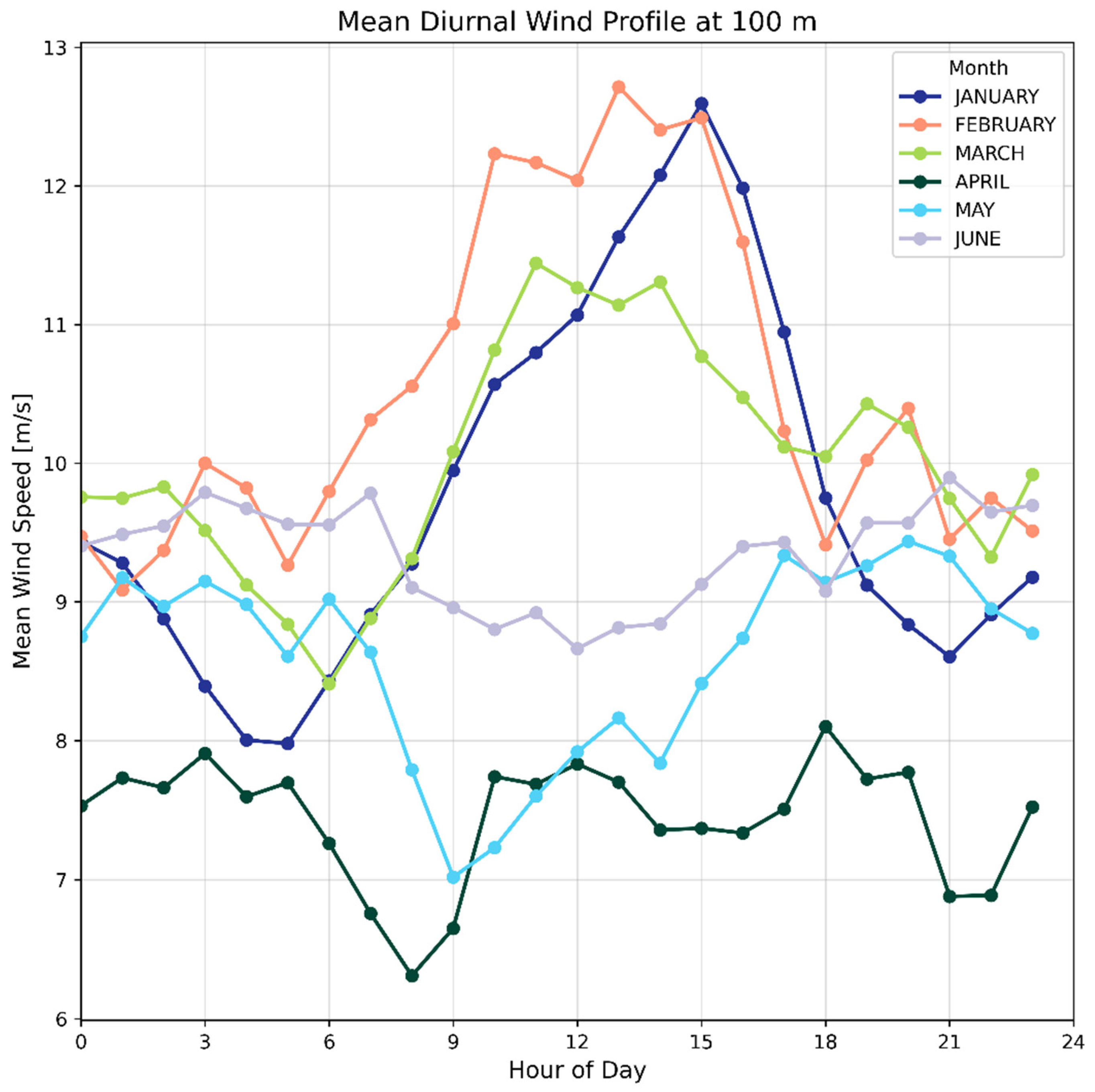
The mean diurnal wind profile at 100 m height (Figure 6) reveals a consistent pattern of intra-daily variability. However, both the shape and magnitude of this cycle exhibit a clear seasonal evolution, differentiating the summer months (January–March) from the autumn months (April–June).
During the summer (January–March), the diurnal profile is more “angular” and dynamic. Morning acceleration is pronounced, with wind speeds rising sharply from around 08:00 h and reaching a well-defined, sharp maximum between 12:00 and 15:00 h. Following this maximum, the decline toward the early-morning minimum is also relatively rapid.
In contrast, the autumn months (April–June) exhibit a more “terraced” diurnal cycle. The period of maximum winds is extended, forming a plateau of high speeds that spans from midday until approximately 19:00 h, rather than a sharp peak. A distinct minimum is observed between 06:00 and 09:00 h during April and May, marking a clearer morning lull compared to the summer months. Overall, wind speeds during autumn remain notably lower than in summer, particularly throughout the 09:00–18:00 h interval, when the summer profile exhibits its sharpest increases and peak values.
These diurnal structures reflect the distinct atmospheric regimes characterizing southern Patagonia across seasons, a pattern consistent with previous climatological studies of the regional wind regime [53]. The summer months (January–February) exhibit a pronounced diurnal cycle, with wind speeds accelerating sharply from morning minima of approximately 9 m/s to afternoon peaks reaching 12–13 m/s—representing an increase of ~3–4 m/s within a 6 h period. This pattern is consistent with strong surface heating and enhanced convective mixing. In contrast, the autumn and early winter period (April–June) shows a markedly different behavior. The diurnal signal becomes progressively attenuated, with mean wind speeds maintaining more consistent values between 8 and 10 m/s throughout the 24 h cycle. While these months display significantly lower peak speeds compared to summer (approximately 21% reduction), they offer greater temporal stability, with the daily amplitude narrowing dramatically to just ~1.2 m/s in June.
Finally, the clarity with which the Doppler LiDAR resolves these nuanced temporal dynamics validates its performance and utility for wind resource assessment in this region. Its capability to capture such high-resolution profiles not only complements but, in this aspect, surpasses the capabilities of traditional met masts, which are often limited in their ability to economically profile the entire lower atmosphere with such detail. This demonstrates the key role of this instrument in exploratory analyses aimed at uncovering complex wind flow characteristics.
While the diurnal cycle establishes the fundamental timing of wind variability at the site, a complete understanding of the resource also requires examining its directional characteristics and their seasonal evolution, which are addressed in the next section.

4.2. Seasonal Dynamics of Prevailing Winds at 100 m

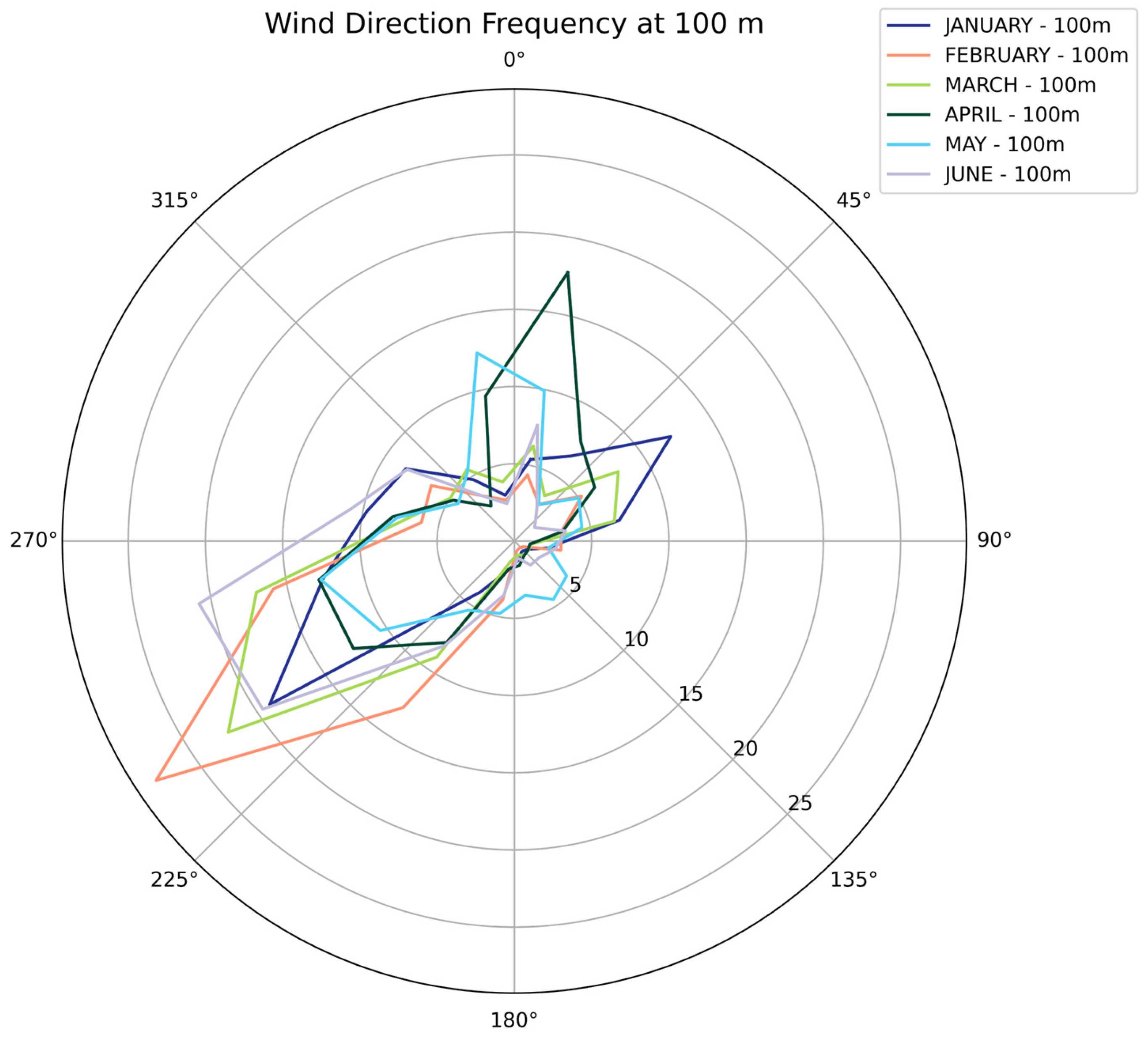
The analysis of wind direction frequencies at 100 m (Figure 7) reveals a well-defined predominance of westerly and southwesterly flows throughout the period of observation. This pattern is consistent with the large-scale circulation features typical of southern Patagonia, for which synoptic systems advect strong winds across the region [9,53]
During the austral summer (January–March), the wind regime is overwhelmingly dominated by persistent winds from the west-southwest (WSW, ~247.5°) to west-northwest (WNW, ~292.5°) sector. This flow is exceptionally concentrated, with these two directions alone accounting for a substantial proportion of the total frequency, indicating a highly channeled and stable atmospheric circulation pattern typical of the Southern Patagonian summer. A distinct transition occurs with the onset of autumn (April–June). While the westerly component (specifically from the WNW (~292.5°)) remains dominant, its frequency concentration decreases noticeably. Concurrently, a significant secondary mode emerges and intensifies from the north-northwest (NNW, ~337.5°). This shift produces a more diversified directional spectrum, with the wind rose evolving from a highly focused summer profile to a more spread-out, bimodal distribution in autumn. This pattern suggests a change in the relative influence of different weather systems, with autumn conditions allowing for more frequent incursions of air masses from the northern quadrant, potentially associated with the passage of frontal systems or a modulation of the regional pressure gradient.
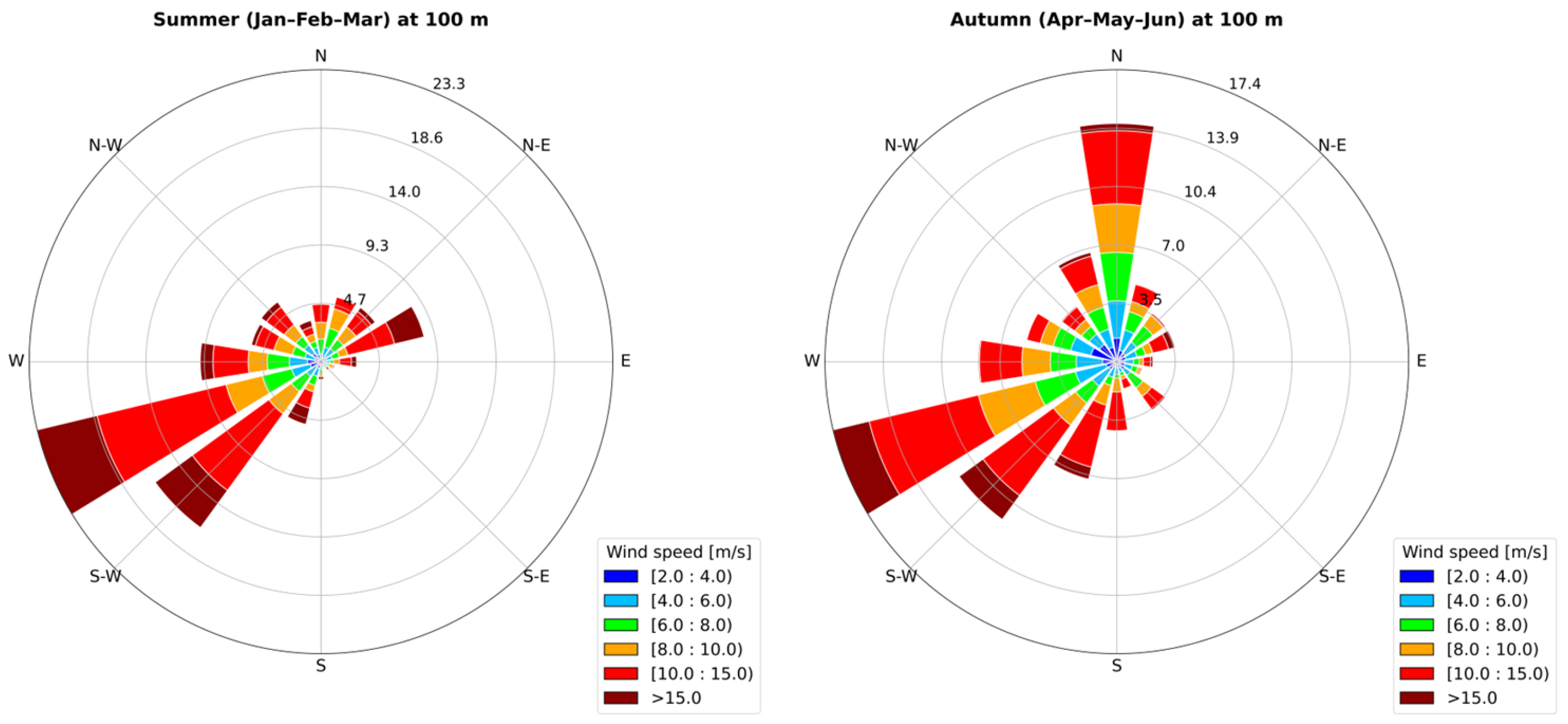
A deeper understanding of the resource quality is provided in Figure 8, the seasonal wind roses that include speed distribution.
The summer wind regime is not only directionally pure, but also energetically superior. The dominant westerly and west-northwesterly sectors are characterized by a very high frequency of strong winds exceeding 10 m/s, with a significant occurrence in the highest bin (>15 m/s). This indicates that the most frequent wind directions are also the most powerful, a highly favorable combination for wind energy production. The strong, high-speed flow is concentrated in a narrow directional arc, underscoring the dominance of a robust and energetic westerly jet. A notable shift in the wind speed structure accompanies the directional broadening observed in autumn. While the westerly sector (WNW) remains a source of strong winds, the overall frequency of the highest wind speeds (>10 m/s and >15 m/s) is visibly reduced compared to summer. The emerging secondary northerly mode (NNW) contributes to the diversified spectrum but is primarily composed of moderate winds in the 6–10 m/s range. Consequently, the autumn period presents a wind resource that is more distributed in direction but generally less intense in speed. The energy potential is spread more evenly across the directional spectrum rather than being concentrated in a single, highly energetic sector.
This analysis reveals a key seasonal trade-off. The summer offers a “high-quality” resource: a concentrated, high-speed westerly flow ideal for maximizing energy yield from a tightly spaced, optimally aligned turbine row. In contrast, autumn presents a “stable but softer” resource: a more distributed directional pattern with lower average speeds, which may lead to a more consistent but overall lower power output. This distinction is crucial for both energy yield forecasting and understanding the seasonal load profile of a potential wind farm at this site.

4.3. Statistical Characterization of Wind Speed Distributions

4.3.1. Weibull Distribution Analysis

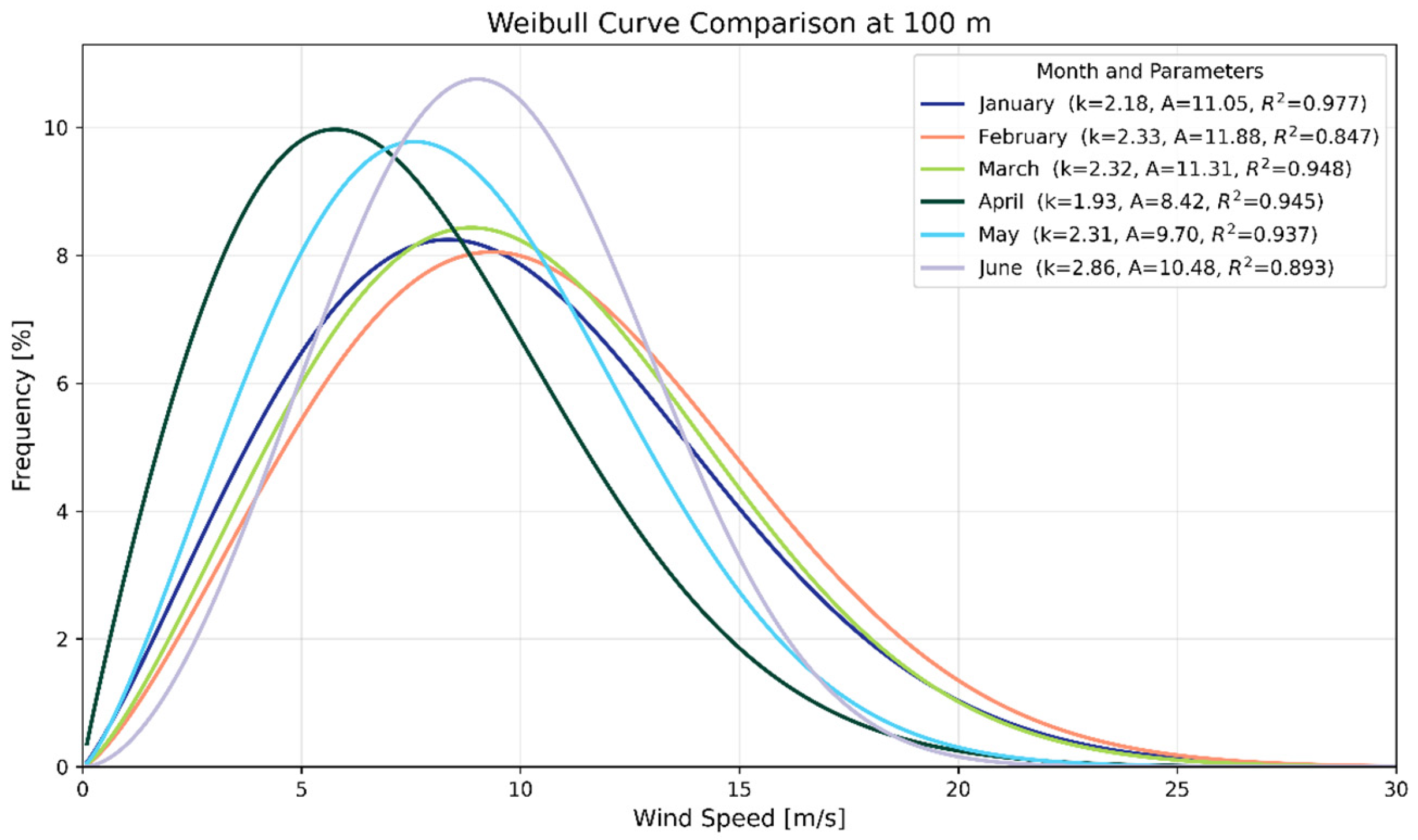
The Weibull analysis provides a statistical quantification of the wind resource, revealing a clear seasonal progression in both the intensity (scale parameter, A) and regularity (shape parameter, k) of the wind regime.
The late summer months (February–March) in Figure 9 represent the period of highest energy potential, characterized by the largest scale parameters (A ≈ 11.9–11.3 m/s). However, the accompanying lower shape factors (k ≈ 2.3) indicate a wind regime with higher variability, aligning with the more dynamic and peak-driven diurnal cycle observed in Section 4.1. April stands out as the least energetic month (A = 8.4 m/s), while June exhibits a fundamental shift in regime character, marked by the highest shape factor (k = 2.86). This high k-value indicates a more stable and regular wind speed distribution [54], corroborating the “broad plateau” observed in the autumn diurnal profile and suggesting a reduction in calms and gustiness, which is beneficial for turbine loading and grid integration.
The consistently high coefficients of determination (R2 > 0.84 for all months) validate the use of the Weibull model for this site. This seasonal alternation—from a high-power but variable summer regime to a more stable yet less intense autumn/winter regime—is a defining characteristic of the wind climate of the site. This pattern is crucial for informing not only annual energy production estimates but also for anticipating seasonal variations in grid feed-in and turbine operational hours.

4.3.2. Lognormal Distribution as an Alternative Parametric Benchmark

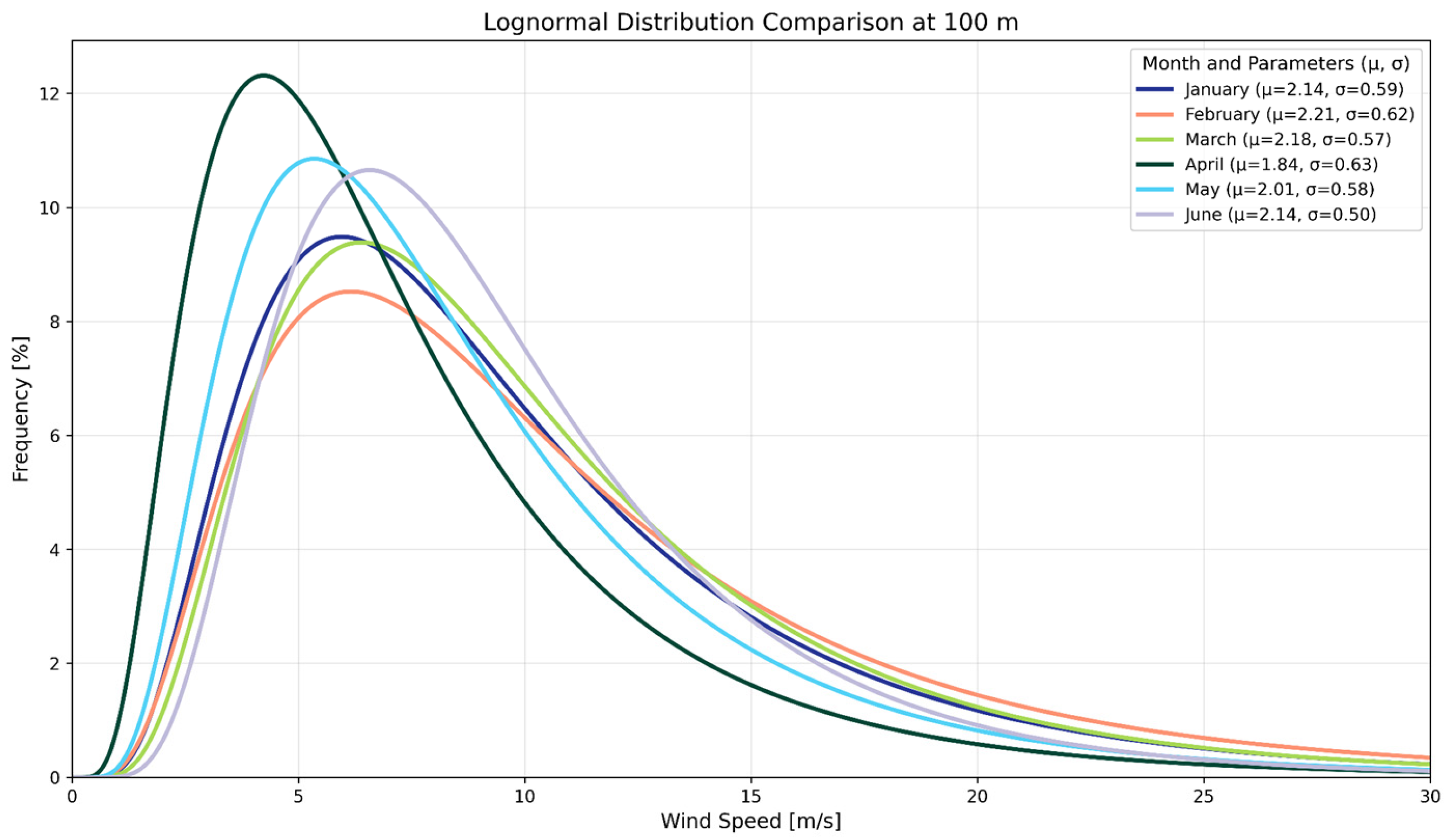
To complement the Weibull-based characterization, a Lognormal distribution was fitted to the monthly wind speed data (Figure 10). Unlike the Weibull model, the Lognormal distribution is particularly sensitive to skewness and tail behavior, making it useful for examining the representation of strong-wind events and asymmetries in the wind speed regime.
In the Lognormal formulation, the parameter μ represents the mean of the logarithmically transformed wind speed (ln V) and is therefore related to the central tendency of the distribution, while σ describes the dispersion of ln V and governs the spread and weight of the upper tail. As shown in Figure 10, summer months (January–March) exhibit higher μ values (e.g., μ = 2.21 in February) and relatively larger σ (σ = 0.62 in the same month), resulting in broader distributions with heavier right tails. This behavior indicates a higher probability of strong wind events and is consistent with the energetic and more variable regime previously identified through the Weibull analysis.
Conversely, the autumn months (April–June) display lower μ values and reduced σ, leading to narrower and more peaked distributions centered at lower wind speeds. This reflects a transition toward a less energetic but more stable wind regime, in agreement with the higher Weibull shape factors observed during this period. April, in particular, stands out with a markedly lower μ (1.84), resulting in the highest frequency peak of the period. At the same time, it maintains a considerable σ (0.63), indicating residual skewness despite the overall reduction in mean wind speeds. This results in a pronounced leftward shift in the distribution peak while preserving a moderate upper tail, reinforcing April’s characterization as the least energetic month of the analyzed period.
While the Lognormal distribution provides a credible representation of the empirical wind speed frequencies—especially in capturing the asymmetry and upper-tail behavior—it was not employed for Annual Energy Production (AEP) estimation in this study. Instead, it serves as a complementary parametric reference that enhances the interpretation of distribution shape and seasonal variability under the high-wind Patagonian regime, supporting the robustness of the Weibull-based energy assessment.

4.3.3. Kernel Density Estimation (KDE): Non-Parametric Reference

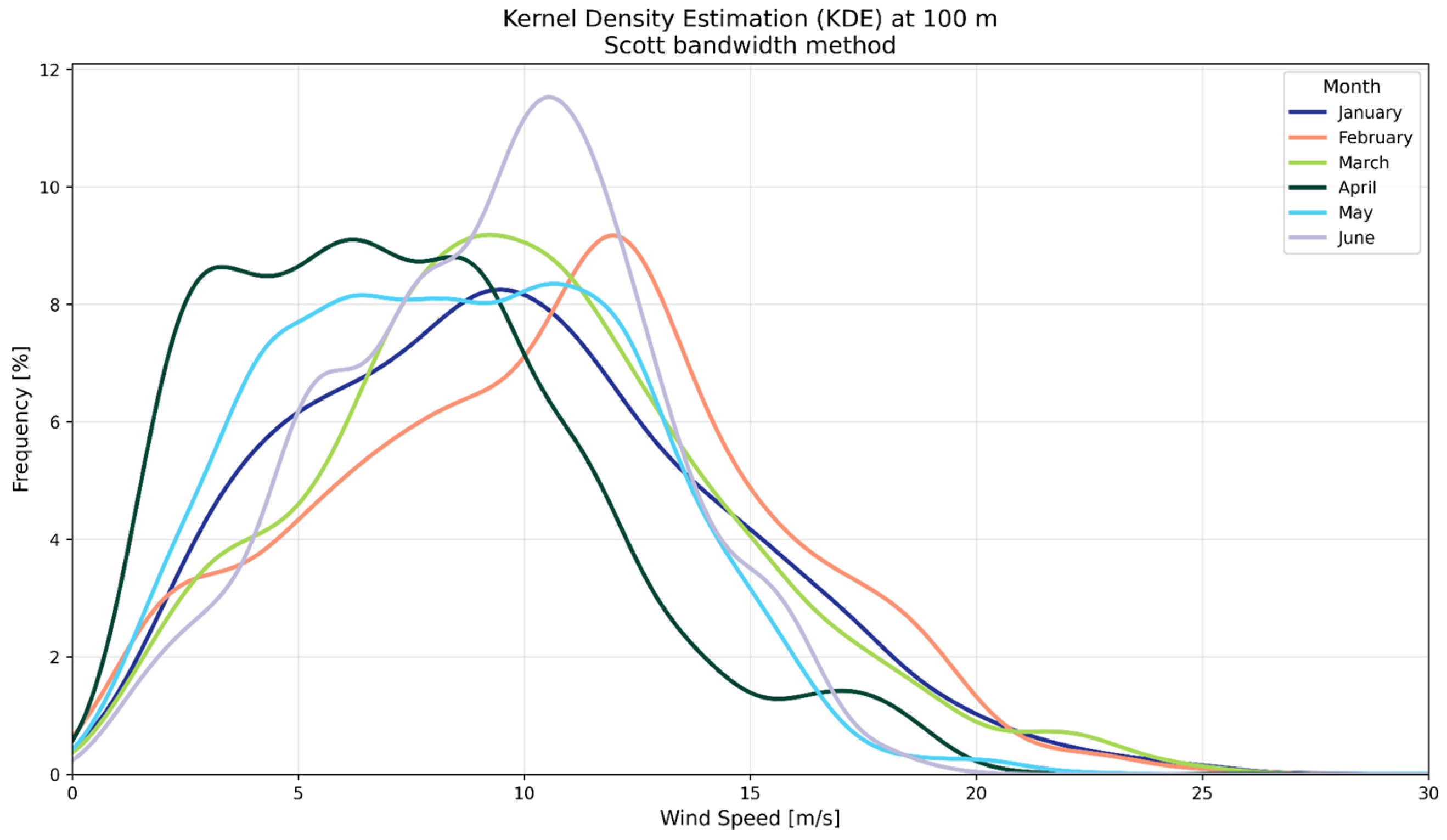
A non-parametric Kernel Density Estimation (KDE) was applied to obtain a fully data-driven representation of the wind speed probability density function at 100 m (Figure 11). Using the Scott bandwidth selection method, this approach does not assume any predefined functional form, allowing the observed wind speed distribution to emerge directly from the LiDAR measurements. This makes KDE particularly suitable for identifying subtle distributional features—such as multi-modality, asymmetries, or irregularities—that may be smoothed out or missed by parametric fitting.
As shown in Figure 11, the KDE curves reproduce the main seasonal contrasts identified in the Weibull and Lognormal analyses. The summer months (January–March) exhibit broader distributions with peaks shifted toward higher wind speeds and extended right tails, reflecting a greater occurrence of strong wind events. In contrast, the autumn months (April–June) display more compact distributions with sharper peaks concentrated at lower wind speeds, consistent with a transition toward a less energetic but more stable wind regime.
Notably, the KDE reveals month-specific features that are largely smoothed over by parametric models. The distributions for April and May exhibit clear multimodal tendencies, characterized by secondary peaks and plateau-like structures in the 3–8 m/s range. This behavior suggests the presence of alternating flow regimes or transitional atmospheric conditions that cannot be fully captured by a single Weibull or Lognormal curve.
In April, the primary KDE peak is particularly narrow and shifted toward lower wind speeds (around 6 m/s), quantitatively reinforcing its characterization as the least energetic month of the analyzed period. Conversely, June exhibits the most pronounced and sharply defined peak near 10 m/s, indicating a highly regular and stable wind regime with reduced dispersion and limited variability.
These localized structures revealed by the KDE—especially within the low-to-mid wind speed range—provide a more nuanced statistical “fingerprint” of the Patagonian wind resource than parametric approximations alone. While such features are not explicitly incorporated into energy yield calculations, they offer valuable insight into the underlying variability and regime transitions captured by the LiDAR measurements.
Taken together, the combined parametric and non-parametric analyses provide a comprehensive statistical description of the wind regime at the site, forming a robust basis for the Weibull-based energy yield assessment presented in the following section.

4.4. From Wind Data to Power Output

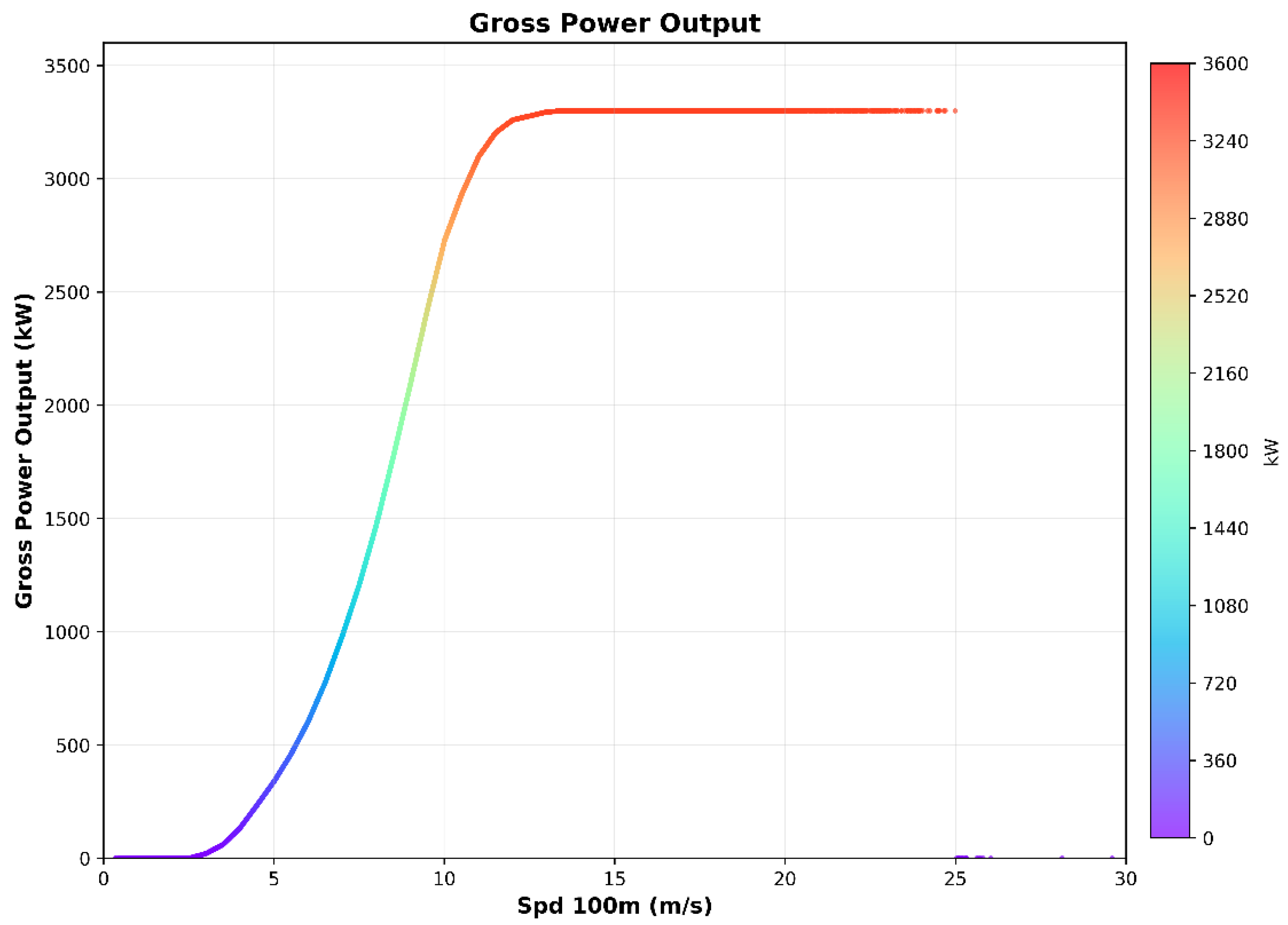
Building on the Weibull-based statistical characterization of the wind resource presented in Section 4.3, an energy production simulation was performed to translate the measured wind conditions into a technology-specific energy yield. The analysis relies on 10 min averaged wind speed measurements recorded by the LiDAR at 100 m height. The estimation was conducted by convolving the manufacturer-provided power curve, P(V), with the derived Weibull probability density function, in strict accordance with IEC-standard practices.
The Vestas V117-3.3 MW turbine (IEC IIA class) was selected for this purpose and evaluated at a hub height of 100 m. This turbine represents a modern design suitable for high-wind environments and provides a relevant benchmark for the investigated site. A total loss factor of 15% was applied to account for realistic operating conditions, including turbine availability, electrical losses, and wake effects.
To place the simulated results in a real-world context, the modeled energy output was compared with operational data from Parque Eólico Bicentenario I and II. This wind farm is located in the same province (Santa Cruz), near the town of Jaramillo along National Route 281, and is therefore subject to a comparable Patagonian wind regime. The park comprises 35 Vestas turbines with a total installed capacity of 126 MW [55]. Although the operational turbines have a nominal capacity of 3.6 MW, the Vestas V117-3.3 MW model was adopted as a conservative and technologically comparable reference, enabling a meaningful validation of the simulated order of magnitude.
Because the available LiDAR dataset spans a six-month period (January–June 2025), the Mean of Monthly Means (MoMM) approach implemented in Windographer was used to extrapolate the measured wind resource to an annual Net AEP [56]. While this method does not substitute a long-term climatological assessment and introduces uncertainty related to seasonal and inter-annual variability, it is widely employed in preliminary wind resource assessments to verify consistency and scale when multi-year data are unavailable [57].
The main simulation outcomes are summarized in Table 2. For comparison purposes, the total annual energy production reported for the Bicentenario wind farm in 2024 was divided by its 35 turbines to estimate the average annual production per turbine [58]. This value was then directly compared with the simulated AEP obtained for the Vestas V117 turbine.
Overall, this methodology—although intentionally simplified—proves robust for validating the order of magnitude and general performance trends, particularly the Capacity Factor. Figure 12 presents the simulated power curve, illustrating the turbine response across the observed wind speed range. The following discussion examines the agreement between the modeled output of a single turbine and the derated performance of an operational fleet under similar regional conditions, highlighting both the limitations and the practical value of this comparative framework for site potential validation.
The simulated Annual Energy Production (AEP) for a single Vestas V117-3.3 MW turbine was 14,320 MWh. This was scaled to the entire fleet of 35 turbines, resulting in a total estimated annual production of ~501,223 MWh.
This result was compared against the official reported annual production for the year 2024, which was 575,200 MWh for the combined PE Bicentenario I and II parks [58]. The analysis shows that the actual production was approximately 14.8% higher than the simulated estimate.
This level of agreement provides an external, real-world validation of the wind resource assessment and the Weibull-based energy estimation framework, demonstrating that the statistical characterization derived from LiDAR measurements is consistent with the observed performance of an operational wind farm under comparable regional conditions. The remaining discrepancy is well within expected margins for such analyses and can be attributed to a combination of factors. The most significant factor is likely the difference in the turbine model, as the simulation was performed for a 3.3 MW turbine, whereas the operational farm uses 3.6 MW turbines. Other contributing factors include inter-annual wind resource variability (the actual wind conditions in 2024 may have been more favorable than the long-term climate dataset used in the model) and potential minor differences in the applied loss assumptions.
This successful correlation between the simulated and operational data not only confirms the robustness of the methodological framework presented in this study—from wind data processing to energy yield estimation—but also provides high confidence in the site’s wind energy potential for future projects. The close agreement, despite the conservative turbine model used, underscores that the primary objective of accurately characterizing the wind resource and predicting its power output has been effectively achieved.

4.5. Limitations and Future Research Directions

Despite the strong agreement observed between the simulated and operational energy production, several limitations inherent to the present analysis should be acknowledged in order to properly contextualize the results and outline directions for future research.
First, the wind resource assessment is based on a six-month LiDAR dataset (January–June). Although the Mean of Monthly Means (MoMM) approach was applied to mitigate seasonal bias and enable an order-of-magnitude validation, this period does not fully capture inter-annual variability. Future studies should therefore incorporate multi-year measurements or long-term reference datasets—such as meteorological reanalysis products—combined with Measure–Correlate–Predict (MCP) techniques to improve climatological representativeness and reduce uncertainty in AEP estimation.
Second, the AEP calculation relies on a Weibull-based statistical framework combined with a manufacturer-provided power curve. While this approach follows industry-standard practice, it does not explicitly account for site-specific atmospheric stability, air density variability, turbulence intensity, or farm-scale wake interactions. The integration of these environmental variables would allow for a more physically grounded and refined power performance modeling, particularly under the extreme and highly energetic wind conditions characteristic of southern Patagonia.
Finally, the multi-model statistical characterization presented in this study—encompassing parametric (Weibull and Lognormal) and non-parametric (KDE) approaches—provides a robust foundation for subsequent engineering stages. These results can directly inform micrositing analyses, wind farm layout optimization, and detailed wake-loss simulations, representing a logical and necessary extension of this work toward the optimal design of high-efficiency wind farms in demanding high-wind environments.

5. Conclusions

This exploratory analysis comprehensively characterized the wind resource in Southern Patagonia and demonstrated the high efficacy of Doppler LiDAR for this purpose. The observed abundance and persistence of strong winds are consistent with the regional geographic and climatic setting, which is dominated by the Southern Hemisphere westerly circulation, a strong latitudinal pressure gradient, and an open, low-roughness landscape with limited orographic shielding. These large-scale drivers promote sustained high wind speeds and well-defined prevailing directions, as reflected in the measured diurnal and seasonal patterns.
The study successfully delineated two distinct seasonal wind regimes. The summer (January–March) is defined by a highly energetic and dynamic pattern, featuring a pronounced diurnal cycle with sharp afternoon peaks exceeding 12 m/s and a remarkably concentrated westerly flow. This regime offers high power density, as confirmed by high Weibull scale parameters (A ≈ 11.9 m/s), but is accompanied by greater variability. In contrast, the autumn/winter period (April–June) transitions to a more stable regime, characterized by a flattened diurnal profile with a narrow amplitude of just ~1.2 m/s and a bimodal directional distribution that includes a significant northerly component. This period, marked by the highest Weibull shape factor (k = 2.86), provides a more consistent and reliable resource, albeit with approximately 21% lower peak speeds. The Doppler LiDAR proved instrumental in resolving these complex temporal and directional dynamics with exceptional clarity. The complementary use of Lognormal and non-parametric KDE analyses further reinforced this interpretation by revealing distributional asymmetries, regime transitions, and multimodal features associated with alternating synoptic conditions, particularly during the autumn months. These features are consistent with the increased influence of frontal passages and transient atmospheric regimes superimposed on the dominant westerly flow.
A key contribution of this work lies in the translation of measured wind data into projected energy yield and its validation against real operational performance. The simulation for a Vestas V117-3.3 MW turbine yielded a Net AEP of 14,320 MWh. When scaled to a hypothetical 35-turbine fleet, the estimated annual production of ~501 GWh showed a strong alignment with the actual 2024 production (~575 GWh) of the nearby PE Bicentenario park, with a difference of only 14.8%. This close correlation, despite the use of a conservative turbine model, provides a high degree of confidence in both the methodological framework—from data acquisition through Weibull analysis to power curve simulation—and the significant wind energy potential of the site. The observed discrepancy is well within expected margins and can be reasonably attributed to the use of a 3.3 MW turbine model versus the park’s 3.6 MW turbines and inter-annual wind variability.
In summary, this study confirms that the site possesses a world-class wind resource characterized by a valuable seasonal complementarity: intense, peaky winds in summer and stable, consistent flows in autumn. This profile is advantageous for grid management, combining high energy yield with periods of reduced intermittency. The successful end-to-end application of the methodology, from LiDAR measurement to validated energy prediction, underscores its reliability for future wind energy development in Southern Patagonia. It firmly establishes that the region is not only windy, but that its wind resource is physically driven by well-understood geographic and climatic mechanisms, resulting in a predictable, high-quality regime suitable for utility-scale wind power generation.

Author Contributions

Conceptualization, M.F.L., R.B.O. and J.O.S.; methodology, M.F.L. and R.B.O.; software, M.F.L.; validation, M.F.L., R.B.O. and J.O.S.; formal analysis, M.F.L.; investigation, M.F.L. and R.B.O.; resources, R.B.O. and J.O.S.; data curation, M.F.L.; writing—original draft preparation, M.F.L.; writing—review and editing, R.B.O. and J.O.S.; visualization, M.F.L.; supervision, R.B.O. and M.F.L.; project administration, J.O.S. and M.F.L. All authors have read and agreed to the published version of the manuscript.

Funding

This research was supported by the National Scientific and Technical Research Council (CONICET) through a doctoral fellowship for M.F.L (Resolution RESOL-2021-2356-APN-DIR#CONICET). The acquisition of the LiDAR equipment was funded by CONICET, with logistical and coordination support provided by the Santa Cruz Research and Technology Transfer Center (CIT Santa Cruz). Additional support was received from research projects at the Institute of Applied Technology (ITA) and the National University of Southern Patagonia, Rio Gallegos Academic Unit (UNPA-UARG) under grants 29/A543-1-ITA and 29/A492-1-ITA.

Institutional Review Board Statement

Not applicable.

Informed Consent Statement

Not applicable.

Data Availability Statement

The data presented in this study are available upon substantiated request from the authors.

Acknowledgments

The authors would like to thank the Computing and Telecommunications Service (SIT) for their administrative support. During the preparation of this work, the authors used AI-assisted tools to improve linguistic fluency and phrasing. After using these tools, the authors reviewed and edited the content as needed and take full responsibility for the content of the publication.

Conflicts of Interest

The authors declare no conflicts of interest.

References

  1. Archer, C.L.; Jacobson, M.Z. Evaluation of Global Wind Power. J. Geophys. Res. 2005, 110, 2004JD005462. [Google Scholar] [CrossRef]
  2. Cacciuttolo, C.; Navarrete, M.; Atencio, E. Renewable Wind Energy Implementation in South America: A Comprehensive Review and Sustainable Prospects. Sustainability 2024, 16, 6082. [Google Scholar] [CrossRef]
  3. OLADE. Manual de Estadística Energética 2017; Organización Latinoamericana de Energía: Quito, Ecuador, 2017.
  4. Secretaría de Planeamiento Energético Estratégico. Balance Energético Nacional 2015; Ministerio de Energía y Minería: Buenos Aires, Argentina, 2016.
  5. Secretaría de Energía de la Nación (Argentina). Balances Nacionales: (PDF y XLS Hasta 2021); PDF and XLS through 2021; National Energy Balances: Ministerio de Economía: Buenos Aires, Argentina, 2021.
  6. Ministerio de Energía y Minería. Argentina Balances Energéticos Provinciales—Notas Metodológicas y Consolidación de La Información; Ministerio de Energía y Minería: Buenos Aires, Argentina, 2017.
  7. Oliva, R. Estudio Diagnóstico e Identificación de Proyectos Energéticos, Etapa I (EDIPE-Etapa I-SC). Final Report (V17-11-23 B3); Consejo Federal de Inversiones (CFI): Buenos Aires, Argentina; Universidad Nacional de la Patagonia Austral (UNPA): Santa Cruz, Argentina, 2023. [Google Scholar]
  8. Parish, T.R.; Bromwich, D.H. Reexamination of the Near-Surface Airflow over the Antarctic Continent and Implications on Atmospheric Circulations at High Southern Latitudes*. Mon. Weather Rev. 2007, 135, 1961–1973. [Google Scholar] [CrossRef]
  9. Barros, V. Evaluación Del Potencial Eólico En La Patagonia. Meteorológica 1983, 14, 473–484. [Google Scholar]
  10. Barros, V. Atlas Del Potencial Eólico Del Sur Argentino; Segunda Edición; Centro Regional de Energía Eólica (CREE)—Centro Nacional Patagónico (CENPAT): Puerto Madryn, Argentina, 1983. [Google Scholar]
  11. Albornoz, C.; Albornoz, S.; Oliva, R. Informe de Relevamiento del Recurso Eólico en Santa Cruz; Servicios Públicos Sociedad del Estado (SPSE), Universidad Nacional de La Patagonia Austral (UNPA): Caleta Olivia, Argentina, 2004. [Google Scholar]
  12. Ministerio de la Producción—Gobierno de Santa Cruz. Gobierno de Santa Cruz 2do Foro de Transición Energética Sostenible Santa Cruz 11 y 12/05/2023; Ministerio de la Producción—Gobierno de Santa Cruz: Santa Cruz, Argentina, 2023.
  13. Courtney, M.; Wagner, R.; Lindelöw, P. Testing and Comparison of Lidars for Profile and Turbulence Measurements in Wind Energy. IOP Conf. Ser. Earth Environ. Sci. 2008, 1, 012021. [Google Scholar] [CrossRef]
  14. Weitkamp, C. Lidar: Range-Resolved Optical Remote Sensing of the Atmosphere; Springer Series in Optical Sciences; Springer: New York, NY, USA, 2005; ISBN 978-0-387-40075-4. [Google Scholar]
  15. Malmqvist, E. From Fauna to Flames: Remote Sensing with Scheimpflug-Lidar. Ph.D. Thesis, Lund University, Lund, Sweden, 2019. [Google Scholar]
  16. Fuji, T.; Fukuchi, T. Doppler LiDAR Fundamentals. In Laser Remote Sensing; CRC Press: Boca Raton, FL, USA, 2005. [Google Scholar]
  17. Veers, P.; Dykes, K.; Lantz, E.; Barth, S.; Bottasso, C.; Carlson, O.; Clifton, A.; Green, J.; Green, P.; Holttinen, H.; et al. Grand Challenges in the Science of Wind Energy. Science 2019, 366, eaau2027. [Google Scholar] [CrossRef]
  18. Suomi, I.; Vihma, T. Wind Gust Measurement Techniques—From Traditional Anemometry to New Possibilities. Sensors 2018, 18, 1300. [Google Scholar] [CrossRef]
  19. Bradley, S. Atmospheric Acoustic Remote Sensing: Principles and Applications; CRC Press: Boca Raton, FL, USA, 2007; ISBN 978-0-429-12623-9. [Google Scholar]
  20. Sathe, A.; Mann, J.; Gottschall, J.; Courtney, M.S. Can Wind Lidars Measure Turbulence? J. Atmos. Ocean. Technol. 2011, 28, 853–868. [Google Scholar] [CrossRef]
  21. IEC 61400-12-1:2017; IEC 61400-12-1:2017—Wind Energy Generation Systems—Part 12-1: Power Performance Measurements of Electricity Producing Wind Turbines. International Electrotechnical Commission (IEC): Geneva, Switzerland, 2017.
  22. Goit, J.P.; Shimada, S.; Kogaki, T. Can LiDARs Replace Meteorological Masts in Wind Energy? Energies 2019, 12, 3680. [Google Scholar] [CrossRef]
  23. Rehman, S.; Mohandes, M.A.; Alhems, L.M. Wind Speed and Power Characteristics Using LiDAR Anemometer Based Measurements. Sustain. Energy Technol. Assess. 2018, 27, 46–62. [Google Scholar] [CrossRef]
  24. IEC 61400-12-1:2023; IEC 61400-12-1:2023—Wind Energy Generation Systems—Part 12-1: Power Performance Measurements of Electricity Producing Wind Turbines. International Electrotechnical Commission (IEC): Geneva, Switzerland, 2023.
  25. Luna, F.; Quiroga, J.; Cortez, N.; Lescano, J.; Triñanes, P.; González, L.; Salvador, J.; Gonzalez, J.F.; Oliva, R.; Sofía, O.; et al. Estudios Básicos e Implementación de Sistemas de Medición Remota Para Relevamiento del Recurso Eólico e Integración y Operación del Equipo Lidar Adquirido. Energías Renov. Medio Ambiente 2024, 54, 47–55. [Google Scholar]
  26. ZX Lidars. ZX 300 Deployment Guide, Issue 3.2; ZX Lidars: Ledbury, UK, 2022.
  27. ZX Lidars. ZX 300/M Configuration Guide, Issue 1.2; ZX Lidars: Ledbury, UK, 2022.
  28. McKinney, W. Data Structures for Statistical Computing in Python; AQR Capital Management: Austin, TX, USA, 2010; pp. 56–61. [Google Scholar]
  29. Hunter, J.D. Matplotlib: A 2D Graphics Environment. Comput. Sci. Eng. 2007, 9, 90–95. [Google Scholar] [CrossRef]
  30. Virtanen, P.; Gommers, R.; Oliphant, T.E.; Haberland, M.; Reddy, T.; Cournapeau, D.; Burovski, E.; Peterson, P.; Weckesser, W.; Bright, J.; et al. SciPy 1.0: Fundamental Algorithms for Scientific Computing in Python. Nat. Methods 2020, 17, 261–272. [Google Scholar] [CrossRef] [PubMed]
  31. Roubeyrie, L.; Celles, S. Windrose: A Python Library for Generating Wind Rose Plots. J. Open Source Softw. 2024, 3, 268. [Google Scholar] [CrossRef]
  32. ZX Lidars. ZX 300/M Data Analysis Guide, Issue 1.21; ZX Lidars: Ledbury, UK, 2023.
  33. Gil-Bardají, M.; Puig, P. The TIMES Series: A Journey Through Time-Domain Wind Resource Assessment. Part 4: TIMES Using Python. Vortex FDC Blog. 2023. Available online: https://vortexfdc.com/blog/the-times-series-python/ (accessed on 23 October 2025).
  34. Ahmed, M.I.; Pan, P.; Kumar, R.; Mandal, R.K. Wind Generation Forecasting Using Python. In Proceedings of the 2020 International Conference on Emerging Frontiers in Electrical and Electronic Technologies (ICEFEET), Patna, India, 10–11 July 2020; IEEE: Patna, India, 2020; pp. 1–5. [Google Scholar]
  35. Tolentino, J.T.; Rejuso, M.V.; Villanueva, J.K.; Inocencio, L.C.; Rosario, M.; Ang, C.O. Development of a Wind Resource Assessment Framework Using Weather Research and Forecasting (WRF) Model, Python Scripting and Geographic Information Systems. World Acad. Sci. Eng. Technol. Int. J. Comput. Syst. Eng. 2015, 9, 1110329. [Google Scholar] [CrossRef]
  36. Lee, J.C.Y.; Draxl, C.; Berg, L.K. Evaluating Wind Speed and Power Forecasts for Wind Energy Applications Using an Open-Source and Systematic Validation Framework. Renew. Energy 2022, 200, 457–475. [Google Scholar] [CrossRef]
  37. Manwell, J.F.; McGowan, J.G.; Rogers, A.L. Wind Energy Explained: Theory, Design and Application; John Wiley & Sons: Hoboken, NJ, USA, 2010; ISBN 978-0-470-68628-7. [Google Scholar]
  38. Carta, J.A.; Mentado, D. A Continuous Bivariate Model for Wind Power Density and Wind Turbine Energy Output Estimations. Energy Convers. Manag. 2007, 48, 420–432. [Google Scholar] [CrossRef]
  39. Katinas, V.; Marčiukaitis, M.; Gecevičius, G.; Markevičius, A. Statistical Analysis of Wind Characteristics Based on Weibull Methods for Estimation of Power Generation in Lithuania. Renew. Energy 2017, 113, 190–201. [Google Scholar] [CrossRef]
  40. Hu, B.; Li, Y.; Yang, H.; Wang, H. Wind Speed Model Based on Kernel Density Estimation and Its Application in Reliability Assessment of Generating Systems. J. Mod. Power Syst. Clean Energy 2016, 5, 220–227. [Google Scholar] [CrossRef]
  41. Li, T.; Ai, L.; Yang, Q.; Zhang, X.; Li, H.; Lu, D.; Shen, H. Short-Term Wind Power Prediction Based on Multiscale Numerical Simulation Coupled with Deep Learning. Renew. Energy 2025, 246, 122951. [Google Scholar] [CrossRef]
  42. Seguro, J.V.; Lambert, T.W. Modern Estimation of the Parameters of the Weibull Wind Speed Distribution for Wind Energy Analysis. J. Wind Eng. Ind. Aerodyn. 2000, 85, 75–84. [Google Scholar] [CrossRef]
  43. Chang, T.P. Performance Comparison of Six Numerical Methods in Estimating Weibull Parameters for Wind Energy Application. Appl. Energy 2011, 88, 272–282. [Google Scholar] [CrossRef]
  44. Rehman, S. Wind Power Resources Assessment at 10 Different Locations Using Wind Measurements at Five Heights. Env. Prog. Sustain. Energy 2022, 41, e13853. [Google Scholar] [CrossRef]
  45. Pobočíková, I.; Sedliačková, Z.; Michalková, M. Application of Four Probability Distributions for Wind Speed Modeling. Procedia Eng. 2017, 192, 713–718. [Google Scholar] [CrossRef]
  46. Teimourian, H.; Abubakar, M.; Yildiz, M.; Teimourian, A. A Comparative Study on Wind Energy Assessment Distribution Models: A Case Study on Weibull Distribution. Energies 2022, 15, 5684. [Google Scholar] [CrossRef]
  47. Carta, J.A.; Ramírez, P.; Velázquez, S. A Review of Wind Speed Probability Distributions Used in Wind Energy Analysis: Case Studies in the Canary Islands. Renew. Sustain. Energy Rev. 2009, 13, 933–955. [Google Scholar] [CrossRef]
  48. Morgan, E.C.; Lackner, M.; Vogel, R.M.; Baise, L.G. Probability Distributions for Offshore Wind Speeds. Energy Convers. Manag. 2011, 52, 15–26. [Google Scholar] [CrossRef]
  49. Han, Q.; Hao, Z.; Hu, T.; Chu, F. Non-Parametric Models for Joint Probabilistic Distributions of Wind Speed and Direction Data. Renew. Energy 2018, 126, 1032–1042. [Google Scholar] [CrossRef]
  50. Houndekindo, F.; Ouarda, T.B.M.J. A Non-Parametric Approach for Wind Speed Distribution Mapping. Energy Convers. Manag. 2023, 296, 117672. [Google Scholar] [CrossRef]
  51. Scott, D.W. Multivariate Density Estimation: Theory, Practice, and Visualization; John Wiley & Sons: Hoboken, NJ, USA, 1992; ISBN 978-0-471-54770-9. [Google Scholar]
  52. Jung, C.; Schindler, D. Wind Speed Distribution Selection—A Review of Recent Development and Progress. Renew. Sustain. Energy Rev. 2019, 114, 109290. [Google Scholar] [CrossRef]
  53. Palese, C.; Lässig, J.L.; Cogliati, M.G.; Bastanski, M.A. Wind Regime and Wind Power in North Patagonia, Argentina. Wind Eng. 2000, 24, 361–377. [Google Scholar] [CrossRef]
  54. Patel, M.R.B. Wind And Solar Power Systems: Design, Analysis, and Operation; CRC PRESS: Boca Raton, FL, USA, 2021; ISBN 978-0-367-47693-9. [Google Scholar]
  55. Rigel Ingeniería. Bicentenario Wind Farm I and II. 2021. Available online: https://www.rigel.com.ar/Proyectos/parque-eolico-del-bicentenario-i-y-ii/ (accessed on 21 October 2025).
  56. UL Solutions. Windographer (v.5.3.12) [Computer software]. Help Manual: Mean of Monthly Means; UL Solutions: Northbrook, IL, USA, 2024.
  57. Kuczyński, W.; Wolniewicz, K.; Charun, H.; Kuczyński, W.; Wolniewicz, K.; Charun, H. Analysis of the Wind Turbine Selection for the Given Wind Conditions. Energies 2021, 14, 7740. [Google Scholar] [CrossRef]
  58. PCR Reporte de Sustentabilidad 2024; PCR. Available online: https://ceads.org.ar/pcr-presento-su-reporte-de-sustentabilidad-2024/ (accessed on 24 October 2025).
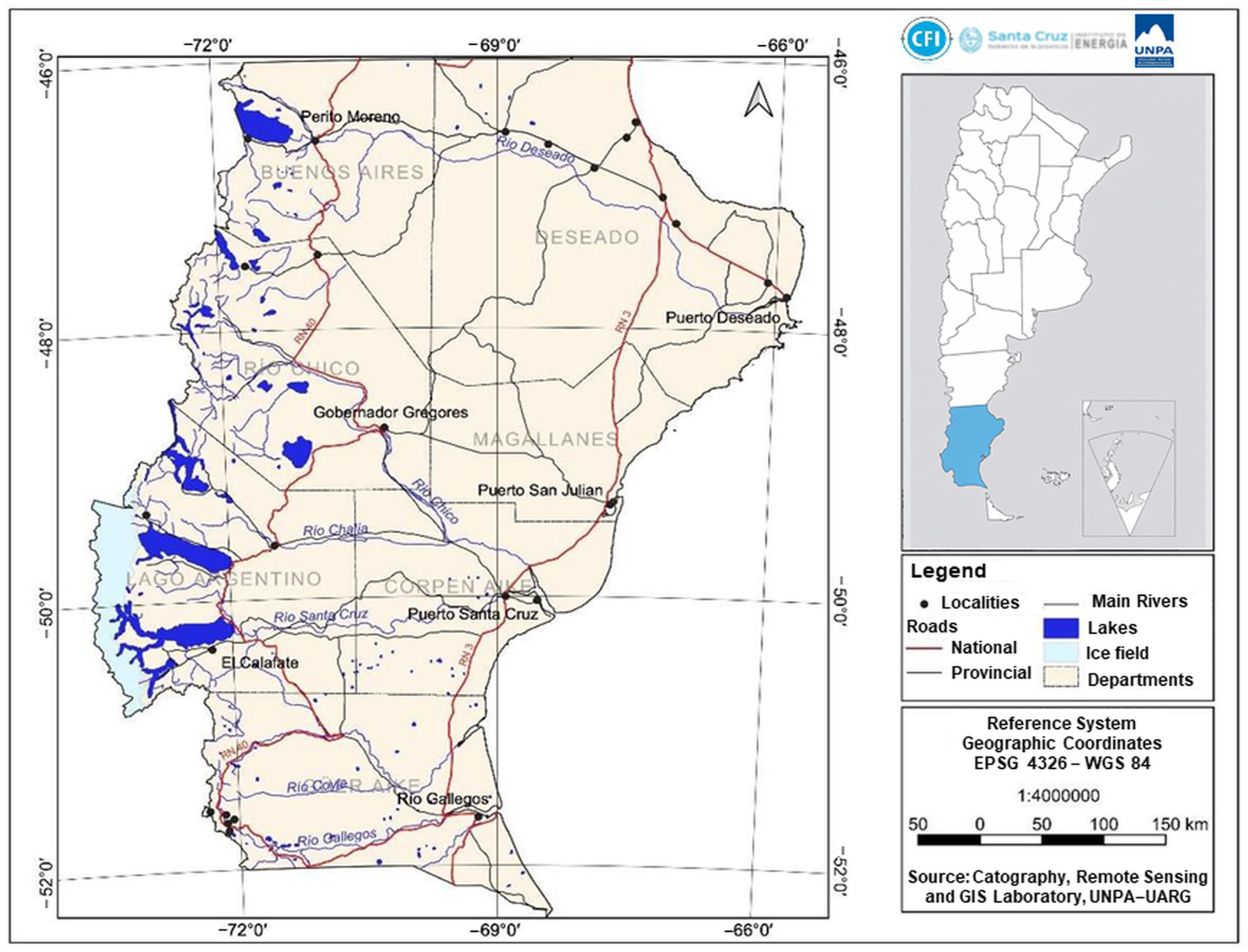
Figure 1. Map of the province of Santa Cruz, Argentina.
Wind 06 00003 g001
Figure 2. (a) Close-up view of the ZX 300 LiDAR unit. (b) Top view showing the protective housing and part of the installation area. (c) View of the LiDAR inside its enclosure.
Wind 06 00003 g002
Figure 3. Diagram of the LIDAR power supply system, illustrating the integration among its key components.
Wind 06 00003 g003
Figure 4. Electrical control panel illustrating part of the power integration for the LiDAR system, including connections with the batteries and photovoltaic supply.
Wind 06 00003 g004
Figure 5. (a) Set of photovoltaic panels (4 × 400 Wp) supplying the LiDAR and conventional NRG measurement system mounted on a tower. (b) View of the meteorological tower. (c) Configuration of the NRG Symphonie Pro data logger.
Wind 06 00003 g005
Figure 6. The data correspond to hourly averages calculated from 10 min records obtained with the LiDAR.
Wind 06 00003 g006
Figure 7. Monthly wind direction frequencies at 100 m height, showing variability in prevailing flow orientation across the January–June period.
Wind 06 00003 g007
Figure 8. (Left): summer (January–March). (Right): autumn (April–June). Colors indicate wind speed classes, highlighting both prevailing directions and intensity distributions.
Wind 06 00003 g008
Figure 9. Weibull comparison at 100 m, based on data recorded between January and June. Each curve represents a monthly fit using the shape parameter k, the scale parameter A, and the coefficient of determination R2, all determined using the Maximum Likelihood Estimation (MLE) method.
Wind 06 00003 g009
Figure 10. Monthly Lognormal distribution fits of wind speed at 100 m height for the January–June period. Each curve represents a monthly Lognormal probability density function characterized by the parameters μ and σ of the logarithmically transformed wind speed (ln V), estimated using the Maximum Likelihood Estimation (MLE) method. The distributions are normalized and expressed as frequency percentages to allow direct comparison across months.
Wind 06 00003 g010
Figure 11. Monthly Kernel Density Estimation (KDE) of wind speed distributions at 100 m height (January–June), computed using a Gaussian kernel with Scott’s bandwidth. The KDE highlights seasonal variability and non-parametric features of the wind speed distributions.
Wind 06 00003 g011
Figure 12. Estimated Power Curve of a Vestas V117-3.3 MW Turbine at 100 m height. The figure shows the manufacturer-based empirical power curve employed in the Annual Energy Production (AEP) assessment, relating gross electrical output to wind speed. The power curve was implemented in Windographer and subsequently post-processed and visualized using Python to ensure consistency with the statistical analyses presented in Section 4.3 and Section 4.4.
Wind 06 00003 g012
Table 1. Comparison of wind measurement technologies commonly used in wind resource assessment.
Measurement TechniqueMeasurement PrincipleTypical Height RangeSpatial/Vertical ResolutionIntrusivenessSuitability for Wind Energy
Meteorological mast (cup/Sonic anemometers)Point measurement of wind speed and directionUp to 80–120 mDiscrete (fixed sensor heights)High (fixed infrastructure)Reference method; limited for modern tall turbines
SODARAcoustic remote sensing using sound wave backscatter~30–200 mModerate (coarser vertical resolution)LowUseful for preliminary assessments; higher uncertainty
Doppler LiDARLaser-based remote sensing using Doppler shift or aerosol backscatter~20–200 m (or higher, model-dependent)High (fine vertical resolution, continuous profiling)Non-intrusiveHigh accuracy; IEC-compliant; well suited for modern wind projects
Table 2. Simulated annual energy performance results for the Vestas V117-3.3 MW turbine model at the project site.
TurbineTurbine OutputPercentage of Time atSimple Mean
Vestas V117-3.3 MW
IEC IIA (100 m)
Valid
Time Steps
Zero
Power
Rated
Power
Net Power (kW)Net AEP (kWh/yr)NCF (%)
21,8755.4416.421634.814,320,64949.54
Disclaimer/Publisher’s Note: The statements, opinions and data contained in all publications are solely those of the individual author(s) and contributor(s) and not of MDPI and/or the editor(s). MDPI and/or the editor(s) disclaim responsibility for any injury to people or property resulting from any ideas, methods, instructions or products referred to in the content.