



Next Issue
Volume 15, November-2
Previous Issue
Volume 15, October-2


Agriculture, Volume 15, Issue 21 (November-1 2025) – 133 articles
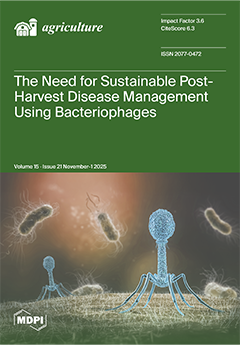
Cover Story (view full-size image): Bacteriophage-based strategies hold great promise for improving post-harvest disease management. But bacterial resistance, regulatory hurdles, and commercial production complexities remain key barriers to large-scale adoption. Phage viability in storage and the field has increased thanks to developments in formulation technologies, such as encapsulation and stabilization. To fully realize the potential of bacteriophage applications, future efforts should focus on enhancing phage stability, optimizing their integration into post-harvest treatment systems, and addressing safety and regulatory concerns. The integration of various microbial biocontrol agents, including PGPR and exopolysaccharide-producing bacteria, supports the development of resilient agroecosystems and complements the use of bacteriophages in sustainable plant protection. View this paper
  • Issues are regarded as officially published after their release is announced to the table of contents alert mailing list.
  • You may sign up for e-mail alerts to receive table of contents of newly released issues.
  • PDF is the official format for papers published in both, html and pdf forms. To view the papers in pdf format, click on the "PDF Full-text" link, and use the free Adobe Reader to open them.
Order results
Result details
Section
Select all
Export citation of selected articles as:
18 pages, 794 KB  
Article
Disrupting Path Dependence: Tariff-Induced Import Substitution in China’s Soybean Market
by Wenhao Song, Liang Chi, Jianzhai Wu, Mengshuai Zhu and Chen Shen
Agriculture 2025, 15(21), 2312; https://doi.org/10.3390/agriculture15212312 - 6 Nov 2025
Viewed by 1193
Abstract
Soybeans are of strategic importance to China, yet the country’s heavy reliance on imports leaves it highly exposed to policy and market disruptions. Existing studies have largely focused on the initial 2018 tariff episode, while the evolving impacts of subsequent and intensified tariff [...] Read more.
Soybeans are of strategic importance to China, yet the country’s heavy reliance on imports leaves it highly exposed to policy and market disruptions. Existing studies have largely focused on the initial 2018 tariff episode, while the evolving impacts of subsequent and intensified tariff measures remain insufficiently explored. This study investigates how tariff shocks transmit through import reduction, structural reallocation, and price pass-through by employing a multi-phase difference-in-differences (DID) framework in combination with a continuous-intensity DID model. Using monthly data from January 2015 to June 2025, the analysis evaluates the effects of tariff escalation on import volumes, source-country shares, and landed import prices, thereby capturing both stage-specific dynamics and intensity-dependent responses. Robustness is verified through event-study parallel trend tests and placebo validations. The results show that (1) import volumes from the United States declined sharply and did not fully revert, indicating that tariffs disrupted long-standing trade path dependence; (2) source-country shares reallocated away from the U.S. toward South American suppliers, reinforcing diversification in China’s supply structure; and (3) tariff costs were asymmetrically passed through to prices, with U.S. soybean prices rising by approximately 43 percent, while non-U.S. prices remained relatively stable. Overall, the findings demonstrate that tariff shocks functioned as structural catalysts rather than temporary disturbances, accelerating China’s transition toward a more diversified and resilient soybean import architecture under heightened geopolitical uncertainty. Full article
(This article belongs to the Section Agricultural Economics, Policies and Rural Management)
Show Figures

Figure 1

15 pages, 1362 KB  
Article
Comprehensive Analysis of Full-Length Transcriptome Profiling, Genetic and Phenotypic Variation in Multiplier Onion (Allium cepa var. aggregatum) Accessions in China
by Huixia Jia, Jiangping Song, Yuru Huang, Tingting Zhang, Mengzhen Wang, Yumin Tan, Jiyan Zang, Xiaohui Zhang, Wenlong Yang, Yanhui Pang, Yanfei Yang and Haiping Wang
Agriculture 2025, 15(21), 2311; https://doi.org/10.3390/agriculture15212311 - 6 Nov 2025
Viewed by 336
Abstract
Multiplier onion (Allium cepa L. var. aggregatum) is an important bulbous vegetable widely utilized for culinary, condimental, and medicinal purposes. However, limited research on its genetic diversity and phenotypic variation has hindered the development and utilization of superior cultivars. In this [...] Read more.
Multiplier onion (Allium cepa L. var. aggregatum) is an important bulbous vegetable widely utilized for culinary, condimental, and medicinal purposes. However, limited research on its genetic diversity and phenotypic variation has hindered the development and utilization of superior cultivars. In this study, we conducted full-length transcriptome profiling to obtain unique transcripts and develop large-scale simple sequence repeat (SSR) markers. Subsequently, we employed integrative analysis to characterize the genetic and phenotypic variation of 263 multiplier onion accessions in China. Full-length transcriptome sequencing utilizing PacBio technology generated 61,108 high-quality non-redundant transcripts with an average length of 1816 bp, from which we developed 4124 SSR markers encompassing 100 motif types. Population structure, principal component analysis, and neighbor-joining phylogenetic analysis classified the 263 multiplier onion accessions into two distinct subpopulations: Pop1, consisting of 236 accessions primarily from Heilongjiang Province, and Pop2, comprising 27 accessions mostly from Shaanxi Province. Phenotypic evaluation demonstrated significant variation in bulb traits, with single bulb weight (SBW) exhibiting the highest variability (0.75–29.94 g; CV = 70.10%), followed by total bulb weight per plant (BW) (5.00–168.83 g; CV = 58.34%), indicating considerable potential for breeding high-yield varieties. Correlation analysis indicated that the SBW and BW had significantly positive correlations with multiple traits, including bulb height, bulb transverse diameter, diameter of basal plate of bulb, diameter of bulb neck, and number of cloves per bulb. Our findings provide a valuable genetic and phenotypic resource for the conservation and utilization of multiplier onion germplasms. Full article
(This article belongs to the Section Crop Genetics, Genomics and Breeding)
Show Figures

Figure 1

20 pages, 3587 KB  
Article
A Low-Rank Coal-Derived Soil Amendment Promotes Plant Growth and Shapes Rhizosphere Microbial Communities of Lettuce (Lactuca sativa)
by Xing-Feng Huang, Paul H. Fallgren, Song Jin and Kenneth F. Reardon
Agriculture 2025, 15(21), 2310; https://doi.org/10.3390/agriculture15212310 - 6 Nov 2025
Viewed by 407
Abstract
Coal-derived soil amendments have been shown to improve soil physicochemical properties and promote plant growth; however, their effects on rhizosphere microbial communities remain insufficiently understood. In this study, a comprehensive assessment of the impacts of a lignite coal-based, microbially processed amendment on lettuce [...] Read more.
Coal-derived soil amendments have been shown to improve soil physicochemical properties and promote plant growth; however, their effects on rhizosphere microbial communities remain insufficiently understood. In this study, a comprehensive assessment of the impacts of a lignite coal-based, microbially processed amendment on lettuce (Lactuca sativa) growth, soil properties, and rhizosphere microbiota was conducted. Application of the coal-based amendment resulted in a more than two-fold increase in plant fresh weight compared to untreated soil. The amendment significantly improved soil organic matter content but did not increase phosphate or potassium levels. Rhizosphere bacterial and fungal communities were profiled using 16S rRNA and ITS gene sequencing. Principal coordinate analysis revealed that the coal-based amendment, commercial organic fertilizer, and raw coal each induced distinct shifts in microbial community structure. Notably, treatment with the coal-based amendment reduced the relative abundance of Proteobacteria while increasing Acidobacteriota and Chloroflexi in the bacterial community. In fungal communities, the amendment decreased Basidiomycota and enriched Ascomycota. These results suggest that the observed enhancement in plant growth is closely linked to changes in rhizosphere microbial composition and soil organic matter content, highlighting the potential of microbially processed coal products as sustainable soil amendments in agriculture. Full article
(This article belongs to the Section Agricultural Soils)
Show Figures

Figure 1

20 pages, 4494 KB  
Article
Plant Desiccation and Root Rot in Rosemary: Insight into Macrophomina phaseolina, Ceratobasidium sp. and Fusarium falciforme Roles in Co-Infection
by Eliana Dell’Olmo, Giovanna Serratore, Alessandro Mataffo, Giovanni Ragosta, Giovanna Napoletano and Loredana Sigillo
Agriculture 2025, 15(21), 2309; https://doi.org/10.3390/agriculture15212309 - 6 Nov 2025
Viewed by 466
Abstract
Rosmarinus officinalis (rosemary) is one of the most cultivated Lamiaceae species because of its medicinal, aromatic and ornamental properties. In the late summer of 2023, symptoms of desiccation were observed in a rosemary field located in southern Italy and the isolation from necrotic [...] Read more.
Rosmarinus officinalis (rosemary) is one of the most cultivated Lamiaceae species because of its medicinal, aromatic and ornamental properties. In the late summer of 2023, symptoms of desiccation were observed in a rosemary field located in southern Italy and the isolation from necrotic roots revealed three different fungal species: Ceratobasidium sp., Fusarium falciforme and Macrophomina phaseolina. All the isolates were morphologically and molecularly identified and Koch’s postulates assays were performed to establish the pathogenicity and the effect of each fungus on the disease incidence and severity. A dual plate method was used to investigate the interaction between Ceratobasidium sp., F. falciforme and M. phaseolina, mixing them in pairs and all together. Similarly, in vivo inoculations with the pathogens in combination were used to verify the role of each isolate in the interaction with the others and the contribution in plant disease expression. The results allowed to identify M. phaseolina and F. falciforme as causal agents of desiccation and root rot of rosemary, with M. phaseolina being the most aggressive between the two. Conversely, Ceratobasidium sp. behavior was influenced by the interaction with the other pathogens and the plant. Notably, this is the first report of M. phaseolina and F. falciforme on rosemary plants worldwide. This disease, caused by multiple pathogens, highlighted the crucial role of the combination of traditional in vivo assays and the use of molecular methods to achieve an accurate diagnosis. Full article
(This article belongs to the Special Issue Exploring Sustainable Strategies That Control Fungal Plant Diseases)
Show Figures

Figure 1

18 pages, 3633 KB  
Article
The Effect of Long-Term Organic Amendments on Soil Organic Carbon Accumulation via Regulating Microbial Traits in a Paddy Soil
by Jing Ye, Zhaoming Chen, Jinchuan Ma, Junwei Ma, Ping Zou, Wanchun Sun, Feng Wang, Qiaogang Yu and Qiang Wang
Agriculture 2025, 15(21), 2308; https://doi.org/10.3390/agriculture15212308 - 6 Nov 2025
Viewed by 705
Abstract
Understanding how organic amendments affect microbial carbon use efficiency (CUE) and necromass C (MNC) is crucial for understanding soil organic C (SOC) formation and accrual in paddy fields, but the underlying mechanisms remain largely unclear. In this study, the microbial CUE, MNC, and [...] Read more.
Understanding how organic amendments affect microbial carbon use efficiency (CUE) and necromass C (MNC) is crucial for understanding soil organic C (SOC) formation and accrual in paddy fields, but the underlying mechanisms remain largely unclear. In this study, the microbial CUE, MNC, and microbial community composition, as well as SOC fractions and chemical composition, were measured under long-term organic amendments: rice straw (RS), green manure (GM), and pig manure (PM) in paddy soils. Four treatments were included: (1) chemical fertilizers (CF); (2) CF plus RS (CF + RS); (2) CF plus GM (CF + GM); and (4) CF plus PM (CF + PM). The CUE, MNC, and microbial community were determined by 18O-H2O incubation, amino sugars levels, and phospholipid fatty acids (PLFAs) content, respectively. Results showed that SOC, particulate organic C (POC), and mineral-associated organic C (MAOC) concentrations were significantly increased by organic amendments compared with chemical fertilization alone. The O-alkyl C decreased, but aromatic C increased with long-term organic amendments, suggesting enhanced SOC hydrophobicity. GM and PM inputs significantly enhanced microbial CUE, but straw return did not affect microbial CUE compared to CF. Microbial growth and C uptake increased by 25.2–42.4% and 19.8–30.0% under organic amendments relative with CF. Microbial respiration was increased by RS and GM amendments. Turnover time was more rapid in CF + RS and CF + GM than in CF and CF + PM. Compared to CF, organic amendments increased the MNC concentration due to the increase in microbial biomass. In addition, CF + RS and CF + GM enhanced the MNC contribution to SOC, but PM had no effect, suggesting that PM contributed more organic C from non-microbial sources. The SOC, POC, and MAOC increased with microbial CUE and MNC, indicating that microbial traits play a crucial role in SOC accrual. Higher microbial CUE and biomass explained the increased MNC accumulation under organic amendments. Our study highlights the crucial role of microbe-mediated processes in SOC accrual under long-term organic amendments in paddy soils. Our findings show that organic amendments are an effective management practice for accumulating more SOC in paddy soils. Full article
(This article belongs to the Topic Recent Advances in Soil Health Management)
Show Figures

Figure 1

15 pages, 3327 KB  
Article
Distinguishing True from False Estrus in Hanwoo Cows Using Neck-Mounted IMU Sensors: Quantifying Behavioral Differences to Reduce False Positives
by Seong-Jin Kim, Xue-Cheng Jin, Rajaraman Bharanidharan and Na-Yeon Kim
Agriculture 2025, 15(21), 2307; https://doi.org/10.3390/agriculture15212307 - 5 Nov 2025
Viewed by 475
Abstract
This study aimed to characterize behavioral differences between true estrus (TE) and false estrus (FE) in cows using neck-mounted six-axis inertial measurement unit sensors to reduce false positives in automated detection systems. A retrospective analysis was conducted on 1464 validated estrus alerts from [...] Read more.
This study aimed to characterize behavioral differences between true estrus (TE) and false estrus (FE) in cows using neck-mounted six-axis inertial measurement unit sensors to reduce false positives in automated detection systems. A retrospective analysis was conducted on 1464 validated estrus alerts from 414 Hanwoo cows across 13 commercial farms in South Korea. Alerts were classified as TE (625 alerts) or FE (839 alerts) based on comprehensive validation criteria, including standing heat observation, artificial insemination records, ovulation confirmation, and pregnancy outcomes. Mounting activity, rumination time, and lying time were analyzed. True estrus exhibited significantly higher (p < 0.0001) total number of mounts and maximum mounting duration compared to FE over the entire observation period. Notably, the maximum number of mounts per hour was higher (p < 0.0001) in FE before alert generation but higher (p < 0.0001) in TE afterward, with FE declining rapidly. Coefficients of variation for rumination and lying time were significantly higher (p < 0.0001) in TE than in FE, indicating greater behavioral disruption. These findings revealed that secondary behavioral signs exhibit distinct quantitative and temporal patterns between TE and FE, suggesting potential criteria that could be integrated into automated detection algorithms to reduce false-positive rates. Full article
Show Figures

Figure 1

26 pages, 7252 KB  
Article
Numerical Simulation Study on Hydraulic Characteristics Experiment and Opening Process of Hydraulically Driven Irrigation Control Valve
by Xiaoyu Yang, Ming Hong, Gengchen Nian, Jiale Wang, Wenxin Yang and Shifeng Fan
Agriculture 2025, 15(21), 2306; https://doi.org/10.3390/agriculture15212306 - 5 Nov 2025
Viewed by 466
Abstract
To address the issue of existing automatic irrigation systems’ excessive reliance on electrical power and communication networks, a one-inlet, four-outlet Hydraulically Actuated Irrigation Control Valve (HAICV) was designed that operates based on water pressure variations. Its hydraulic characteristics and flow field features were [...] Read more.
To address the issue of existing automatic irrigation systems’ excessive reliance on electrical power and communication networks, a one-inlet, four-outlet Hydraulically Actuated Irrigation Control Valve (HAICV) was designed that operates based on water pressure variations. Its hydraulic characteristics and flow field features were investigated through experimental and numerical simulation methods. The results indicated that power–function relationships exist between pressure and flow rate, as well as between flow rate and head loss. The flow coefficient and resistance coefficient were found to range within [77.46, 81.06] and [15.94, 17.46], respectively. Dynamic simulations based on User-Defined Functions (UDF) revealed that during the opening process, the internal pressure of the valve spool remains high, with the primary pressure drop concentrated in the outlet region, and the low-pressure zone shrinks as the opening degree increases. A high-velocity band forms at the outlet, with jet flow and turbulence observed at small to medium openings, while the flow field stabilizes after full opening. The unique spool shape and non-straight flow passage structure of the HAICV result in relatively high energy loss, making it suitable for self-pressure irrigation systems. This study provides a theoretical foundation for evaluating its performance and broader applications. Full article
(This article belongs to the Special Issue Innovative Machinery for Climate-Smart Agriculture)
Show Figures

Figure 1

40 pages, 1100 KB  
Review
European Digital Innovation Hubs and the Agri-Food Sector: A Scoping Review of Current Knowledge and Sectoral Gaps
by Irina Toma-Constantin, Ioan Sebastian Brumă, Oana Coca and Gavril Ștefan
Agriculture 2025, 15(21), 2305; https://doi.org/10.3390/agriculture15212305 - 5 Nov 2025
Viewed by 787
Abstract
The European Digital Innovation Hub (EDIH) network represents the EU’s first program for accelerating digital technology adoption by SMEs and public organizations. However, academic literature on EDIHs remains fragmented with notable sectoral imbalances—particularly underrepresentation of the agri-food sector. This scoping review systematically examines [...] Read more.
The European Digital Innovation Hub (EDIH) network represents the EU’s first program for accelerating digital technology adoption by SMEs and public organizations. However, academic literature on EDIHs remains fragmented with notable sectoral imbalances—particularly underrepresentation of the agri-food sector. This scoping review systematically examines existing EDIH publications to identify knowledge gaps and propose a research agenda. Searches were conducted in Web of Science, Google Scholar, and MDPI databases (Jan–May 2025), complemented by snowballing techniques, identifying 84 publications categorized by methodology, interaction levels, and sectoral relevance. Results reveal uneven distribution across four EDIH interaction levels, with ecosystem-level research dominating while internal dynamics and European network-level coordination remain understudied. Only 1.7% of EDIH beneficiaries receiving services by September 2024 originate from agriculture, confirming the sector’s marginal participation. Most contributions lack empirical validation, relying on theoretical frameworks or isolated case studies with limited geographic scope. As the first comprehensive review addressing EDIHs in agri-food contexts, this study provides timely insights at the end of the first EDIH implementation cycle and outlines priorities for future research to support equitable and evidence-based digital transformation. Full article
(This article belongs to the Section Agricultural Economics, Policies and Rural Management)
Show Figures

Figure 1

27 pages, 4914 KB  
Article
Nominal Evaluation of Automatic Multi-Sections Control Potential in Comparison to a Simpler One- or Two-Sections Alternative with Predictive Spray Switching
by Mogens Plessen
Agriculture 2025, 15(21), 2304; https://doi.org/10.3390/agriculture15212304 - 5 Nov 2025
Viewed by 402
Abstract
Automatic Section Control (ASC) promises to minimize spray overlap areas. The idea is to (i) switch off spray nozzles on areas that have already been sprayed, and (ii) to dynamically adjust nozzle flow rates along the boom bar that holds the spray nozzles [...] Read more.
Automatic Section Control (ASC) promises to minimize spray overlap areas. The idea is to (i) switch off spray nozzles on areas that have already been sprayed, and (ii) to dynamically adjust nozzle flow rates along the boom bar that holds the spray nozzles when velocities of boom sections vary during turn maneuvers. Spraying and the movement of modern wide boom bars are highly dynamic processes with many uncertainty factors. Therefore, an Automatic Multi-Sections Control method is compared to a proposed simpler one- or two-sections alternative that uses a predictive spray switching. The comparison is provided under nominal conditions. Combinations of two area coverage path planning and switching logics as well as three sections-setups are compared. These differ by controlling 48 sections, 2 sections or controlling all nozzles uniformly with the same control signal as one single section. Methods are evaluated on 10 diverse real-world field examples. An economic cost analysis is provided. A preferred method is suggested that (i) minimizes area coverage pathlength, (ii) is suitable for manual driving by following a pre-planned predictive spray switching logic for an area coverage path plan, and (iii) and in contrast to ASC can be implemented sensor-free and therefore at low cost. Surprisingly strong economic arguments are found to not recommend ASC for small farms. Full article
Show Figures

Graphical abstract

21 pages, 1324 KB  
Review
Antifungal Mechanisms of Plant Essential Oils: A Comprehensive Literature Review for Biofungicide Development
by Michel Leiva-Mora, Diana Bustillos, Cristina Arteaga, Kattyta Hidalgo, Deysi Guevara-Freire, Orestes López-Hernández, Luis Rodrigo Saa, Paola S. Padilla and Alberto Bustillos
Agriculture 2025, 15(21), 2303; https://doi.org/10.3390/agriculture15212303 - 5 Nov 2025
Cited by 1 | Viewed by 1399
Abstract
Plant pathogenic fungi pose a persistent global threat to food security, causing severe yield losses in staple crops and increasing dependence on chemical fungicides. However, the ecological and toxicological drawbacks of synthetic fungicides have intensified the search for safer, plant-derived alternatives. This review [...] Read more.
Plant pathogenic fungi pose a persistent global threat to food security, causing severe yield losses in staple crops and increasing dependence on chemical fungicides. However, the ecological and toxicological drawbacks of synthetic fungicides have intensified the search for safer, plant-derived alternatives. This review synthesizes current advances on the antifungal mechanisms of plant essential oils (EOs) and their prospects for biofungicide development. The literature reveals that the antifungal activity of EOs arises from their diverse phytochemical composition, principally terpenes, phenolics, and aldehydes that target multiple fungal cellular sites. These compounds disrupt membrane integrity through ergosterol depletion, inhibit chitin and β-glucan synthesis, interfere with mitochondrial energy metabolism, and induce oxidative stress, leading to lipid peroxidation and cell death. Morphological and transcriptomic evidence confirms that EOs alter hyphal growth, spore germination, and key gene expression pathways associated with fungal virulence. Furthermore, emerging nanotechnological and encapsulation strategies enhance EO stability, bioavailability, and field persistence, addressing major barriers to their large-scale agricultural application. The integration of EO-based biofungicides within sustainable and precision agriculture frameworks offers a promising route to reduce chemical inputs, mitigate resistance development, and promote ecological balance. This review underscores the need for interdisciplinary research linking phytochemistry, nanotechnology, and agronomy to translate EO-based antifungal mechanisms into next-generation, environmentally compatible crop protection systems. Full article
(This article belongs to the Special Issue Exploring Sustainable Strategies That Control Fungal Plant Diseases)
Show Figures

Figure 1

11 pages, 2337 KB  
Article
How Much Area of a Pear Orchard Can One Honey Bee Colony Pollinate?
by Xinying Qu, Xinru Zhang, Rongshen Wang, Yuesen Wang, Qingfang Cheng, Yaxiong Xu, Lingjun Xin, Hanbing Lu and Xiao Chen
Agriculture 2025, 15(21), 2302; https://doi.org/10.3390/agriculture15212302 - 5 Nov 2025
Viewed by 401
Abstract
Pear trees, though self-pollinating, are self-incompatible and depend on insect pollination—primarily by honey bees. The optimal density of honey bee colonies per unit area in pear orchards remains uncertain, hindering scientific pollination management. This study in Zhao County, Hebei, compared honey bee ( [...] Read more.
Pear trees, though self-pollinating, are self-incompatible and depend on insect pollination—primarily by honey bees. The optimal density of honey bee colonies per unit area in pear orchards remains uncertain, hindering scientific pollination management. This study in Zhao County, Hebei, compared honey bee (Apis mellifea ligustica), artificial, and natural pollination effects on pear yield and fruit size. Honey bee pollination achieved a higher, more stable fruit set (inflorescence fruit set rate was 71.52%), increased yield, and significantly improved fruit size—in transverse diameter (90.96 mm), longitudinal diameter (92.48 mm), and single-fruit weight (407.39 g)—compared with natural pollination. Although the fruit set rates and fruit quality of bee-pollinated pears were not significantly higher than those of artificially pollinated pears, the data still demonstrated the advantages of honey bee pollination. One bee colony (containing ~20,000 honey bees) was found to pollinate approximately 3846.5 m2 of a pear orchard. This provides data-supported guidance for the scientific allocation of pollinating honey bee colonies in future pear orchard pollination practices. Full article
(This article belongs to the Section Crop Production)
Show Figures

Figure 1

18 pages, 1131 KB  
Article
Research on the Fallow Compensation Mechanism for Groundwater Overexploitation in the Tarim River Basin Under Bidirectional Collaboration
by Jiaxin Hao, Kangzheng Zhong, Liqiang Shen, Zengyi Cheng and Yuejian Wang
Agriculture 2025, 15(21), 2301; https://doi.org/10.3390/agriculture15212301 - 4 Nov 2025
Viewed by 370
Abstract
Exploring the differentiated fallow compensation (FC) standards in different regions is of great significance for formulating and improving the mechanism of fallow compensation and ensuring the sustainability of policies. The groundwater overexploitation area in the Tarim River Basin was selected as the research [...] Read more.
Exploring the differentiated fallow compensation (FC) standards in different regions is of great significance for formulating and improving the mechanism of fallow compensation and ensuring the sustainability of policies. The groundwater overexploitation area in the Tarim River Basin was selected as the research area; this study breaks through the perspective of a single subject and integrates the “opportunity cost” of the compensated subject and the “ecosystem service value” of the compensating subject into a unified analysis framework to obtain the fallow compensation standard, and the logistic model is used to analyze the influencing factors of farmers’ compensation method selection. The results are as follows: (1) The FC standards exhibit significant spatial heterogeneity. The range of FC standards in various counties is 5540.40 to 7770.53 CNY/hm2 (769.50 to 1079.24 USD/hm2), which is generally lower than the current standard. (2) There are three main compensation methods chosen by farmers, ranked in descending order of selection ratio: monetary compensation (72.06%) > physical compensation (19.37%) > technical compensation (8.57%). (3) The factors influencing the choice of compensation method are quite complex. The dependency ratio is the main influencing factor in the choice of monetary compensation (β = 0.738); the evaluation of economic conditions has a significant negative correlation with the choice of physical compensation (β = −0.562), and nonfarm household income is the main influencing factor for choosing technical compensation (β = 0.747). This study provides a new perspective for determining FC standards and aims to provide a theoretical basis for local governments to improve their fallow policies. Full article
(This article belongs to the Section Agricultural Economics, Policies and Rural Management)
Show Figures

Figure 1

26 pages, 2225 KB  
Article
Enhancing Peanut Crop Quality Under Arsenic Stress Through Agronomic Amendments
by Soledad Martos, Mengchen Ye, Antonio Riofrío, Roser Tolrà and Eliana Bianucci
Agriculture 2025, 15(21), 2300; https://doi.org/10.3390/agriculture15212300 - 4 Nov 2025
Viewed by 317
Abstract
Arsenic (As) contamination poses a major challenge to sustainable crop production, particularly in legumes such as peanut (Arachis hypogaea L.), where it disrupts growth, nodulation, and redox homeostasis. This study evaluated the potential of circular-economy-based amendments derived from spent mushroom substrate (SMS) [...] Read more.
Arsenic (As) contamination poses a major challenge to sustainable crop production, particularly in legumes such as peanut (Arachis hypogaea L.), where it disrupts growth, nodulation, and redox homeostasis. This study evaluated the potential of circular-economy-based amendments derived from spent mushroom substrate (SMS) of Pleurotus djamor and plant growth-promoting bacteria (PGPB) to mitigate As stress in peanut plants. Six growth conditions were tested under 20 µM arsenate, including single and combined inoculations with P. djamor and Pseudomonas fluorescens, as well as a residue-only benchmark (E). Results showed that the unamended control (AP) exhibited the highest As accumulation, oxidative stress (H2O2, TBARs), and biomass loss, whereas SMS-based amendments attenuated these effects. Treatments HB (SMS + P. djamor + PGPB) and B (SMS + PGPB) combined low As translocation with enhanced antioxidant performance (SOD, CAT), maintaining growth and pigment stability. Amendment H (SMS + P. djamor) preferentially activated phytochelatin-related genes (PCS2, CAD1), while E minimized As uptake but lacked circular applicability. Overall, SMS-PGPB interactions promoted As retention in roots and strengthened ROS-scavenging defenses. These findings highlight SMS-based amendments as viable, sustainable strategies to enhance peanut quality and resilience under As stress, supporting their integration into circular agronomic systems. Full article
Show Figures

Figure 1

29 pages, 9203 KB  
Article
Characterization of Citrus Orchard Soil Improved by Green Manure Using the Discrete Element Method
by Chen Ma, Liewang Cao, Jian Zhang, Gaozhen Liang, Chengsong Li, Chunlei Wang and Lihong Wang
Agriculture 2025, 15(21), 2299; https://doi.org/10.3390/agriculture15212299 - 4 Nov 2025
Viewed by 344
Abstract
Accurate determination of soil and contact parameters is crucial for tillage machinery design; however, the interactions among soil, tools, and roots in citrus orchards covered with green manure remain insufficiently defined. This study, therefore, combined physical experiments with DEM simulations to characterize these [...] Read more.
Accurate determination of soil and contact parameters is crucial for tillage machinery design; however, the interactions among soil, tools, and roots in citrus orchards covered with green manure remain insufficiently defined. This study, therefore, combined physical experiments with DEM simulations to characterize these interactions. Using significance analysis and response surface methodology (RSM), the effects of major factors on angle of repose (AoR) and initial slip angle (ISA) at varying soil depths were evaluated, enabling precise calibration of both external (soil–machinery) and internal (particle–particle) parameters. Subsequently, a GA-BP optimization model was constructed to enhance calibration accuracy, yielding optimal values for the soil-to-soil rolling friction coefficient (γ = 0.125–0.136), soil-to-65Mn static friction coefficient (μ′ = 0.431 − 0.540), and soil surface energy (JKR = 0.952 − 1.091 J·m−2). Shear tests using the bonding V2 model were conducted to calibrate the Bonding parameters of green manure stems and roots, while pull-out tests and simulations were used to validate the root–soil parameters. Direct shear tests confirmed the model’s reliability, with errors in internal friction angle and cohesion below 10%. These findings may contribute to improving DEM simulation accuracy for soil improvement under green manure coverage and support the optimization of soil tillage in citrus orchards. Full article
(This article belongs to the Section Agricultural Technology)
Show Figures

Figure 1

32 pages, 3417 KB  
Article
The Innovation Lifecycle of AI-Driven Agriculture: Causal Dynamics in University–Industry–Research Collaboration
by Giani Gradinaru, Madalina Zurini, Bogdan Florin Matei and Ioana-Diana Petre
Agriculture 2025, 15(21), 2298; https://doi.org/10.3390/agriculture15212298 - 4 Nov 2025
Viewed by 678
Abstract
Considering the current prediction from the Food and Agriculture Organization, food production needs an increase of over 70 percent by 2050, and the agriculture sector requires a boost that is also obtained by integrating novelty technologies and methods of the artificial intelligence (AI) [...] Read more.
Considering the current prediction from the Food and Agriculture Organization, food production needs an increase of over 70 percent by 2050, and the agriculture sector requires a boost that is also obtained by integrating novelty technologies and methods of the artificial intelligence (AI) field. This study investigates the innovation lifecycle of AI-driven agriculture through a causal inference analysis within the university–industry–research (UIR) collaboration framework. Using time series data from 1985 to 2023, collected from Web of Science (academic articles), CORDIS (research projects), WIPO (patents), and Crunchbase (start-ups), the study explores the causal dynamics among four key innovation pillars. Results from Granger causality and impulse-response analyses reveal a sequential innovation pathway in which start-up activity precedes research projects, followed by academic publications and patent filings. These findings highlight the interdependence of innovation stages and the evolving role of UIR collaboration in driving agricultural transformation. The study provides quantitative insights for policymakers, investors, and researchers to strategically foster innovation ecosystems in AI-driven agriculture. Full article
(This article belongs to the Special Issue Computers and IT Solutions for Agriculture and Their Application)
Show Figures

Figure 1

26 pages, 15048 KB  
Article
Development of an Intelligent Inspection System Based on YOLOv7 for Real-Time Detection of Foreign Materials in Fresh-Cut Vegetables
by Hary Kurniawan, Muhammad Akbar Andi Arief, Braja Manggala, Hangi Kim, Sangjun Lee, Moon S. Kim, Insuck Baek and Byoung-Kwan Cho
Agriculture 2025, 15(21), 2297; https://doi.org/10.3390/agriculture15212297 - 4 Nov 2025
Viewed by 780
Abstract
Ensuring food safety in fresh-cut vegetables is essential due to the frequent presence of foreign material (FM) that threatens consumer health and product quality. This study presents a real-time FM detection system developed using the YOLO object detection framework to accurately identify diverse [...] Read more.
Ensuring food safety in fresh-cut vegetables is essential due to the frequent presence of foreign material (FM) that threatens consumer health and product quality. This study presents a real-time FM detection system developed using the YOLO object detection framework to accurately identify diverse FM types in cabbage and green onions. A custom dataset of 14 FM categories—covering various shapes, sizes, and colors—was used to train six YOLO variants. Among them, YOLOv7x demonstrated the highest overall accuracy, effectively detecting challenging objects such as transparent plastic, small stones, and insects. The system, integrated with a conveyor-based inspection setup and a Python graphical interface, maintained stable and high detection accuracy confirming its robustness for real-time inspection. These results validate the developed system as an alternative intelligent quality-control layer for continuous, automated inspection in fresh-cut vegetable processing lines, and establish a solid foundation for future robotic-based removal systems aimed at fully automated food safety assurance. Full article
(This article belongs to the Section Artificial Intelligence and Digital Agriculture)
Show Figures

Figure 1

23 pages, 992 KB  
Review
Computer Vision for Site-Specific Weed Management in Precision Agriculture: A Review
by Puranjit Singh, Biquan Zhao and Yeyin Shi
Agriculture 2025, 15(21), 2296; https://doi.org/10.3390/agriculture15212296 - 4 Nov 2025
Viewed by 902
Abstract
Weed management is always a challenge in crop production, exacerbated by the issue of herbicide resistance. Excessive herbicide application not only leads to the development of herbicide resistance weeds but also causes environmental problems. In precision agriculture, innovative weed management methods, especially advanced [...] Read more.
Weed management is always a challenge in crop production, exacerbated by the issue of herbicide resistance. Excessive herbicide application not only leads to the development of herbicide resistance weeds but also causes environmental problems. In precision agriculture, innovative weed management methods, especially advanced remote sensing and computer vision technologies for targeted herbicide applications, i.e., site-specific weed management (SSWM), have recently drawn a lot of attention. Challenges exist in accurately and reliably detecting diverse weed species under varying field conditions. Significant efforts have been made to advance computer vision technologies for weed detection. This comprehensive review provides an in-depth examination of various methodologies used in developing weed detection systems. These methodologies encompass a spectrum ranging from traditional image processing techniques to state-of-the-art machine and deep learning models. The review further discusses the potential of these methods for real-time applications, highlighting recent innovations, and identifying future research hotspots in SSWM. These advancements hold great promise for further enhancing and innovating weed management practices in precision agriculture. Full article
Show Figures

Figure 1

23 pages, 8088 KB  
Article
Research on Wheat Spike Phenotype Extraction Based on YOLOv11 and Image Processing
by Xuanxuan Li, Zhenghui Zhang, Jiayu Wang, Lining Liu and Pingzeng Liu
Agriculture 2025, 15(21), 2295; https://doi.org/10.3390/agriculture15212295 - 4 Nov 2025
Cited by 1 | Viewed by 377
Abstract
With the aim of tuning the complexity of traditional image processing parameters, the automated extraction of spike phenotypes based on the fusion of YOLOv11 and image processing was proposed, with winter wheat in Lingcheng District, Dezhou City, Shandong Province as the research object. [...] Read more.
With the aim of tuning the complexity of traditional image processing parameters, the automated extraction of spike phenotypes based on the fusion of YOLOv11 and image processing was proposed, with winter wheat in Lingcheng District, Dezhou City, Shandong Province as the research object. The keypoint detection of spikes was studied, and the integration of FocalModulation and TADDH modules improved the feature extraction ability, solved the problems of light interference and spike awn occlusion under the complex environment in the field, and the detection accuracy of the improved model reached 96.00%, and the mAP50 reached 98.70%, which were 6.6% and 2.8% higher than that of the original model, respectively. On this basis, this paper integrated morphological processing and a watershed algorithm, and innovatively constructed an integrated extraction method for spike length, spike width, and number of grains in the spike to realize the automated extraction of phenotypic parameters in the spike. The experimental results show that the extraction accuracy of spike length, spike width, and number of grains reached 98.08%, 96.21%, and 93.66%, respectively, which provides accurate data support for wheat yield prediction and genetic breeding research, and promotes the development of intelligent agricultural phenomic technology innovation. Full article
(This article belongs to the Topic Digital Agriculture, Smart Farming and Crop Monitoring)
Show Figures

Figure 1

16 pages, 1929 KB  
Article
Influence of Meteorological Factors and Sowing Dates on Growth and Yield Traits of Summer Maize in Northeastern Sichuan, China
by Yun Long, Yun Yang, Chuan He and Xiaohong Liu
Agriculture 2025, 15(21), 2294; https://doi.org/10.3390/agriculture15212294 - 3 Nov 2025
Viewed by 469
Abstract
This study investigates meteorological factors’ effects on summer maize growth, agronomic traits and yield in northeastern Sichuan, China, under different sowing dates. A five-gradient sowing date experiment was conducted with three varieties from 2023 to 2024. The results showed delayed sowing prolonged total [...] Read more.
This study investigates meteorological factors’ effects on summer maize growth, agronomic traits and yield in northeastern Sichuan, China, under different sowing dates. A five-gradient sowing date experiment was conducted with three varieties from 2023 to 2024. The results showed delayed sowing prolonged total growth period mainly in the joint–tasseling and silking–maturity stages. Early sowing (5th May and 20th May) significantly improved key agronomic traits and increased grain yield, with Xianyu 1171 achieving the highest yield of 9.77 t ha−1 under early sowing. Meteorological factors had limited influence during vegetative growth but strongly affected reproductive growth. Among them, average temperature (AT) and growing degree days (GDDs) were critical throughout the growth cycle, though their effects varied by stage. These findings suggest that adjusting sowing dates to align key growth stages with favorable weather—particularly by avoiding high-temperature stress during flowering and ensuring sufficient warmth during grain filling—can enhance yield stability. This study provides a basis for constructing a climate-resilient cultivation system and promoting stable and high summer maize yields in the hilly areas of northeastern Sichuan. Full article
(This article belongs to the Special Issue Effect of Cultivation Practices on Crop Yield and Quality)
Show Figures

Figure 1

21 pages, 3018 KB  
Article
Estimate the Pre-Flowering Specific Leaf Area of Rice Based on Vegetation Indices and Texture Indices Derived from UAV Multispectral Imagery
by Jingjing Huang, Sunan Wang, Yuexia Pei, Quan Yin, Zhi Ding, Jianjun Wang, Weiling Wang, Guisheng Zhou and Zhongyang Huo
Agriculture 2025, 15(21), 2293; https://doi.org/10.3390/agriculture15212293 - 3 Nov 2025
Viewed by 508
Abstract
Rice ranks among the most significant staple crops worldwide. Precise and dynamic monitoring of specific leaf area (SLA) provides essential information for evaluating rice growth and yield. While previous remote sensing studies on SLA estimation have primarily focused on crops such as wheat [...] Read more.
Rice ranks among the most significant staple crops worldwide. Precise and dynamic monitoring of specific leaf area (SLA) provides essential information for evaluating rice growth and yield. While previous remote sensing studies on SLA estimation have primarily focused on crops such as wheat and soybeans, studies on rice SLA remain limited. This study aims to evaluate the predictive potential of several machine learning algorithms for estimating rice SLA across different growth stages, planting densities, and nitrogen treatments at the pre-flowering stage. By utilizing UAV-based multispectral remote sensing data, a high-precision rice SLA monitoring model was developed. The feasibility of using vegetation indices (VIs), texture indices (TIs), and their combinations to predict rice SLA was explored. VIs and TIs were derived from UAV imagery, and the recursive feature elimination was conducted on these indices individually as well as their combined fusion (VIs + TIs). Four machine learning algorithms were employed to predict SLA values. The results indicate that random forest-based models utilizing VIs, TIs, and their fusion can all predict rice SLA effectively with high accuracy. Among these models, the RF model utilizing the combined variables (VIs + TIs) exhibited the highest performance, with R2 = 0.9049, RMSE = 0.0694 m2/g, RRMSE = 0.1042, and RPD = 3.2419. This study demonstrates that individual VIs can provide effective spectral information for SLA estimation, especially during the crucial pre-flowering growth phase of rice. The fusion of VIs and TIs enhances the model’s adaptability to complex field conditions by integrating both canopy biochemical and structural characteristics, thus improving model stability. This technology offers a swift and efficient approach for monitoring crop growth in the field, offering a theoretical foundation for subsequent crop yield estimation. Full article
(This article belongs to the Special Issue Plant Diagnosis and Monitoring for Agricultural Production)
Show Figures

Figure 1

17 pages, 436 KB  
Article
Comparing the Agronomic and Economic Aspects of Sewage Sludge Composting and Vermicomposting
by Fernando V. Armas-Vega, Irene Gavilanes-Terán, Julio Idrovo-Novillo, Mateo Acosta, Bryan Sánchez-Andrango and Concepción Paredes
Agriculture 2025, 15(21), 2292; https://doi.org/10.3390/agriculture15212292 - 3 Nov 2025
Viewed by 558
Abstract
In recent decades, the urban population of Ecuador has grown, increasing the need for wastewater sanitation in cities. Wastewater treatment in this country generates sewage sludge (SS), which is mainly deposited on land near wastewater treatment plants or in sanitary landfills, generating significant [...] Read more.
In recent decades, the urban population of Ecuador has grown, increasing the need for wastewater sanitation in cities. Wastewater treatment in this country generates sewage sludge (SS), which is mainly deposited on land near wastewater treatment plants or in sanitary landfills, generating significant environmental impacts. In view of this, composting or vermicomposting of SS can be suitable treatments for this waste, and the final materials obtained can be used as organic amendments. The objective of this study was to compare the agronomic and economic aspects of composting and vermicomposting using the same SS mixtures with different plant residues. For this purpose, the evolution of various physicochemical and biological parameters of both processes, the quality of the materials obtained, and the costs of their production were evaluated. The results revealed that all the amendments presented characteristics suitable for safe agricultural use. The vermicomposts had significantly lower levels of salts and higher levels of most macro- and micronutrients than the composts, thus increasing their economic value. However, the average production cost of composts was lower than that of vermicomposts, with faster stabilization of organic matter. All of this indicates that both techniques could be suitable for treating SS, but in order to choose the most appropriate technique for the study area, further studies with other waste mixtures and agricultural validation of the composts and vermicomposts obtained, as well as control of possible contaminants, would be required. Full article
Show Figures

Figure 1

22 pages, 4964 KB  
Article
Effect of Pollination Methods on Fruit Development in Greenhouse Watermelon: Physiological and Molecular Perspectives
by Wenqin Wu, Weihua Ma, Lixin Li, Jia Lei, Huailei Song, Haiying Zhi and Jinshan Shen
Agriculture 2025, 15(21), 2291; https://doi.org/10.3390/agriculture15212291 - 3 Nov 2025
Viewed by 596
Abstract
Different pollination methods can affect the development and quality of watermelon fruit. The physiological changes in the early development of watermelon after using different pollination methods are unclear. In this study, we focused on the effects of hand pollination (H), honeybee pollination (HB), [...] Read more.
Different pollination methods can affect the development and quality of watermelon fruit. The physiological changes in the early development of watermelon after using different pollination methods are unclear. In this study, we focused on the effects of hand pollination (H), honeybee pollination (HB), and bumblebee pollination (BB) at 1 day after pollination (1DAP) on the fruit setting rate, size, and endogenous hormone, gene, and protein expression levels using the transcriptome and proteome in greenhouse watermelon. Thus, we studied the physiological indicators of the final fruit at 40 DAP. At 1 DAP, the fruit setting rate and size of watermelon embryos showed no significant differences between the three groups. The indole-3-acetic acid (IAA) and isopentenyl adenosine (iPA) contents in the H group were highest, followed by the BB group and HB group. The abscisic acid (ABA) and gibberellin (GA3) contents were significantly higher in the BB group than in the H and HB groups. The zeatin (ZT) and carotenoid contents were lowest in the H group. The DEGs in H vs. HB and H vs. BB were mainly involved in plant hormone signal transduction, as well as amino acid and lipid metabolism. Moreover, phenylpropanoid biosynthesis and carotenoid biosynthesis were involved in H vs. HB, and carbohydrate metabolism was involved in H vs. BB. The DEGs in HB vs. BB were mainly involved in pathways including zeatin biosynthesis and photosynthesis. The DEPs in H vs. HB and HB vs. BB were involved in flavonoid biosynthesis, whereas the DEPs in H vs. BB were involved in ribosomes and oxidative phosphorylation. At 40 DAP, bee pollination can promote sugar content and transportation. Functional and pathway changes among key genes and proteins and pheromones may co-regulate plant development. This study provides data support for exploring the effects of pollination techniques on watermelon fruit development under greenhouse conditions. Full article
(This article belongs to the Section Crop Production)
Show Figures

Figure 1

29 pages, 15373 KB  
Article
YOLO11s-RFBS: A Real-Time Detection Model for Kiwiberry Flowers in Complex Orchard Natural Environments
by Zhedong Xie, Yuxuan Liu, Chao Zhang, Yingbo Li, Bing Tian, Yulin Fu, Jun Ai and Hongyu Guo
Agriculture 2025, 15(21), 2290; https://doi.org/10.3390/agriculture15212290 - 3 Nov 2025
Viewed by 473
Abstract
The pollination of kiwiberry flowers is closely related to fruit growth, development, and yield. Rapid and precise identification of flowers under natural field conditions plays a key role in enhancing pollination efficiency and improving overall fruit quality. Flowers and buds are densely distributed, [...] Read more.
The pollination of kiwiberry flowers is closely related to fruit growth, development, and yield. Rapid and precise identification of flowers under natural field conditions plays a key role in enhancing pollination efficiency and improving overall fruit quality. Flowers and buds are densely distributed, varying in size, and exhibiting similar colors. Complex backgrounds, lighting variations, and occlusion further challenge detection. To address these issues, the YOLO11s-RFBS model was proposed. The P5 detection head was replaced with P2 to improve the detection of densely distributed small flowers and buds. RFAConv was incorporated into the backbone to strengthen feature discrimination across multiple receptive field scales and to mitigate issues caused by parameter sharing. The C3k2-Faster module was designed to reduce redundant computation and improve feature extraction efficiency. A weighted bidirectional feature pyramid slim neck network was constructed with a compact architecture to achieve superior multi-scale feature fusion with minimal parameter usage. Experimental evaluations indicated that YOLO11s-RFBS reached a mAP@0.5 of 91.7%, outperforming YOLO11s by 2.7%, while simultaneously reducing the parameter count and model footprint by 33.3% and 31.8%, respectively. Compared with other mainstream models, it demonstrated superior comprehensive performance. Its detection speed exceeded 21 FPS in deployment, satisfying real-time requirements. In conclusion, YOLO11s-RFBS enables accurate and efficient detection of kiwiberry flowers and buds, supporting intelligent pollination robots. Full article
(This article belongs to the Section Artificial Intelligence and Digital Agriculture)
Show Figures

Figure 1

16 pages, 3063 KB  
Article
Alterations in Serum Immune Parameters, Cytokines, Intestinal Permeability, Fecal Microbiota, and Short-Chain Fatty Acids in Healthy and Diarrheic Suckling Calves
by Peiyun Gao, Shaoyang Pang, Yaqin Tang, Qianqian Wang, Qiuyan Li, Wenju Zhang, Cunxi Nie, Junli Niu and Kexun Lian
Agriculture 2025, 15(21), 2289; https://doi.org/10.3390/agriculture15212289 - 3 Nov 2025
Viewed by 462
Abstract
This study compared serum immunological parameters, cytokines, intestinal permeability, fecal microbiota, and short-chain fatty acids (SCFAs) between healthy and diarrheic suckling calves. Serum and facecal samples were analyzed using ELISA kits, 16S rDNA sequencing, and targeted metabolomics. Compared with healthy calves, the serum [...] Read more.
This study compared serum immunological parameters, cytokines, intestinal permeability, fecal microbiota, and short-chain fatty acids (SCFAs) between healthy and diarrheic suckling calves. Serum and facecal samples were analyzed using ELISA kits, 16S rDNA sequencing, and targeted metabolomics. Compared with healthy calves, the serum levels of aspartate aminotransferase, interleukin-1β (IL-1β), tumor necrosis factor-α (TNF-α), endotoxin (ET), and diamine oxidase (DAO) were significantly higher (p < 0.05), whereas the serum levels of immunoglobulin A (IgA), immunoglobulin G (IgG), and interleukin-10 (IL-10) were significantly lower in diarrheic calves (p < 0.05). The contents of propionic acid, butyric acid, and valeric acid significantly decreased in the fecal of diarrheic calves (p < 0.05). Moreover, the Chao1 and observed_features index of fecal microbiota significantly decreased in diarrheic calves (p < 0.05). The relative abundance of Escherichia-Shigella, Clostridium_sensu_stricto_1, and Streptococcus was significantly higher (p < 0.05), whereas Phascolarctobacterium, Ruminococcus torques group, and Faecalibacterium were significantly lower in diarrheic calves (p < 0.05). Escherichia-Shigella abundance was positively correlated with ET, DAO, IL-1β, and TNF-α levels (p < 0.05). Faecalibacterium abundance was significantly positively correlated with IgG, IgA, IL-10, and butyric acid but negatively correlated with ET and DAO levels (p < 0.05). In summary, diarrheic suckling calves exhibited reduced immune function, inflammatory response, and increased intestinal permeability. The relative abundance of fecal microbiota of Escherichia-Shigella and Clostridium_sensu_stricto_1 increased, while propionic acid, butyric acid, and valeric acid concentration were decreased in calves with diarrhea. This underscores the critical interplay between microbiota balance and gut health in diarrhea. Full article
(This article belongs to the Special Issue Research on the Nutrition and Physiology of Dairy and Beef Cattle)
Show Figures

Figure 1

21 pages, 793 KB  
Perspective
Economic Perspectives on Farm Biosecurity: Stakeholder Challenges and Livestock Species Considerations
by Blerta Mehmedi, Anna Maria Iatrou, Ramazan Yildiz, Kate Lamont, Maria Rodrigues da Costa, Marco De Nardi, Alberto Allepuz, Tarmo Niine, Jarkko K. Niemi and Claude Saegerman
Agriculture 2025, 15(21), 2288; https://doi.org/10.3390/agriculture15212288 - 3 Nov 2025
Viewed by 1059
Abstract
Livestock farm biosecurity is crucial for animal health and economic sustainability, however uneven adoption/implementation across diverse livestock species and production systems persists. To improve uptake of biosecurity, it is necessary to identify critical economic behavioural, and systematic barriers, and to outline practical drivers. [...] Read more.
Livestock farm biosecurity is crucial for animal health and economic sustainability, however uneven adoption/implementation across diverse livestock species and production systems persists. To improve uptake of biosecurity, it is necessary to identify critical economic behavioural, and systematic barriers, and to outline practical drivers. Perceived high costs, labour/time burdens, and uncertain benefits can suppress private investment, while poorly designed indemnities can create moral hazard. Conversely, targeted subsidies, risk-based insurance, and market standards (e.g., certification and procurement) can incentivise implementation. Knowledge and trust gaps, especially in smallholder and backyard settings, further limit compliance. Participatory, and context-specific training led by field veterinarians consistently outperforms top–down messaging, with effective element including: simple, low-cost “easy wins”, tiered checklists, and decision-support tools to help embed routines and demonstrate the value of biosecurity. Integrating clear cost–benefit evidence, incentive-based tools, and co-designed training can transform biosecurity from a perceived practical and cost burden into a resilient, profitable practice that delivers public-good benefits for animal health, trade, and One Health across Europe and beyond. Full article
(This article belongs to the Special Issue Biosecurity for Animal Premises in Action)
Show Figures

Graphical abstract

16 pages, 1111 KB  
Article
Two-Stage Machine Learning-Based GWAS for Wool Traits in Central Anatolian Merino Sheep
by Yunus Arzık, Mehmet Kizilaslan, Sedat Behrem, Simge Tütenk and Mehmet Ulaş Çınar
Agriculture 2025, 15(21), 2287; https://doi.org/10.3390/agriculture15212287 - 3 Nov 2025
Viewed by 524
Abstract
Wool traits such as fiber diameter, fiber length, and greasy fleece yield are economically significant characteristics in sheep breeding programs. Traditional genome-wide association studies (GWAS) have identified relevant genomic regions but often fail to capture the non-linear and polygenic architecture underlying these traits. [...] Read more.
Wool traits such as fiber diameter, fiber length, and greasy fleece yield are economically significant characteristics in sheep breeding programs. Traditional genome-wide association studies (GWAS) have identified relevant genomic regions but often fail to capture the non-linear and polygenic architecture underlying these traits. In this study, we implemented a two-stage machine learning (ML)-based GWAS framework to dissect the genetic basis of wool traits in Central Anatolian Merino sheep. Phenotypic records were collected from 228 animals, genotyped with the Illumina OvineSNP50 BeadChip. In the first stage, feature selection was conducted using LASSO, Ridge Regression, and Elastic Net, generating a consensus SNP panel per trait. In the second stage, association modeling with Random Forest and Support Vector Regression (SVR) identified the most predictive models (R2 up to 0.86). Candidate gene annotation highlighted biologically relevant loci: MTHFD2L and EPGN (folate metabolism and keratinocyte proliferation) for fiber diameter; COL5A2, COL3A1, ITFG1, and ELMO1 (extracellular matrix integrity and actin remodeling) for staple length; and FAP, DPP4, PLCH1, and NPTX1 (extracellular matrix remodeling, proteolysis, and sebaceous gland function) for greasy fleece yield. These findings demonstrate the utility of ML-enhanced GWAS pipelines in identifying biologically meaningful markers and propose novel targets for genomic selection strategies to improve wool quality and yield in indigenous sheep populations. Full article
(This article belongs to the Special Issue Genetic Diversity, Adaptation and Evolution of Livestock)
Show Figures

Figure 1

21 pages, 2027 KB  
Article
Sensitivity of Soil Moisture Simulations to Noah-MP Parameterization Schemes in a Semi-Arid Inland River Basin, China
by Yuanhong You, Yanyu Lu, Yu Wang, Houfu Zhou, Ying Hao, Weijing Chen and Zuo Wang
Agriculture 2025, 15(21), 2286; https://doi.org/10.3390/agriculture15212286 - 3 Nov 2025
Viewed by 416
Abstract
Soil moisture simulations in semi-arid inland river basins remain highly uncertain due to complex land–atmosphere interactions and multiple parameterization schemes in land surface models. This study evaluated the ability of the Noah-Multiparameterization Land Surface Model (Noah-MP) to simulate soil moisture at meteorological sites [...] Read more.
Soil moisture simulations in semi-arid inland river basins remain highly uncertain due to complex land–atmosphere interactions and multiple parameterization schemes in land surface models. This study evaluated the ability of the Noah-Multiparameterization Land Surface Model (Noah-MP) to simulate soil moisture at meteorological sites representing the upstream, midstream and downstream regions of a semi-arid inland river basin with contrasting climates. A large physics-ensemble experiment (17,280 simulations per site) combining different parameterization schemes for 10 main physical processes was conducted. Natural selection, Tukey’s test and uncertainty contribution analysis were applied to identify sensitive processes and quantify their contributions to simulation uncertainty. Results indicate that Noah-MP captures soil moisture variability across the basin but with notable biases. Three physical processes—frozen soil permeability, supercooled liquid water in frozen soil and ground resistance to sublimation—were sensitive at all sites, whereas radiation transfer and surface albedo were consistently insensitive. At the upstream and midstream sites, supercooled liquid water contributed about half of the ensemble uncertainty, and at the downstream site ground resistance to sublimation contributed roughly 51%. These findings reveal which physical processes most strongly affect Noah-MP soil moisture simulations in semi-arid basins and provide guidance for improving parameterization schemes to reduce uncertainty. Full article
Show Figures

Figure 1

17 pages, 922 KB  
Article
Urea Supplementation Increases Crude Protein and Alters pH but Does Not Affect Ruminal Degradability of Opuntia Silages
by Fabiola Méndez-Llorente, Marco A. López-Carlos and Jairo I. Aguilera-Soto
Agriculture 2025, 15(21), 2285; https://doi.org/10.3390/agriculture15212285 - 3 Nov 2025
Viewed by 419
Abstract
The nutritional potential of Opuntia forage is limited by its low crude protein (CP) content. Urea supplementation enhances low-quality forages, but its application in Opuntia silage and its influence on ruminal degradability are limited. This study evaluated the effects of urea addition (0, [...] Read more.
The nutritional potential of Opuntia forage is limited by its low crude protein (CP) content. Urea supplementation enhances low-quality forages, but its application in Opuntia silage and its influence on ruminal degradability are limited. This study evaluated the effects of urea addition (0, 20, 40, 60, or 80 g/kg of dry matter (DM)) and ensiling duration (0, 4, 8, 16, 24, or 28 d) on the silage pH and in situ DM degradability of four Opuntia species. Silage pH was influenced by both species and urea level, with greater values observed in silages treated with urea at 80 g/kg DM. The effective degradability of DM (EDDM) was influenced by Opuntia species and was reduced at the highest urea level. In contrast, the ensiling period beyond 12 d did not affect EDDM, and pH stabilized for all treatments after this point. Urea supplementation increases CP content and modifies silage pH but does not improve ruminal degradability. It is recommended that the addition of urea in Opuntia silages should not exceed 60 g/kg DM to avoid reduced fermentative quality. A study limitation is the absence of fermentation end-product data, which would offer a more complete quality assessment. Full article
(This article belongs to the Special Issue Assessment of Nutritional Value of Animal Feed Resources)
Show Figures

Figure 1

23 pages, 2576 KB  
Article
Evaluating Coupling Coordination Between Tea–Culture–Tourism Integration and Rural Revitalization in China
by Hong Zhu, Na Yang, Lei Jiang and Xudan Lin
Agriculture 2025, 15(21), 2284; https://doi.org/10.3390/agriculture15212284 - 2 Nov 2025
Viewed by 747
Abstract
Rural revitalization relies on both industrial upgrading and cultural reinvigoration. Tea-culture–tourism integration has been regarded as a potentially effective route for advancing rural revitalization, yet its interactive relationship and dynamic evolution remain insufficiently understood. Based on provincial-level panel data from 18 major tea-producing [...] Read more.
Rural revitalization relies on both industrial upgrading and cultural reinvigoration. Tea-culture–tourism integration has been regarded as a potentially effective route for advancing rural revitalization, yet its interactive relationship and dynamic evolution remain insufficiently understood. Based on provincial-level panel data from 18 major tea-producing provinces in China between 2013 and 2022, this study constructs two comprehensive evaluation index systems for tea–culture–tourism integration and rural revitalization. It employs the entropy weight method, the coupling coordination degree model, the Dagum Gini coefficient decomposition, and spatial econometric models to measure their coupling coordination degree and analyze its spatiotemporal pattern, regional disparities, and driving factors. The main findings are as follows: (1) Both tea–culture–tourism integration and rural revitalization exhibited upward trends, with the latter being consistently higher. (2) The coupling coordination degree transitioned from dissonance to coordination, spatially forming a gradient progression pattern of “coastal-river-inland”. (3) Regional disparities were primarily dominated by transvariation density and inter-regional differences. (4) Results of spatial econometric models indicated that fiscal conditions exerted a significant positive direct effect, while urban–rural social development, employment structure, and human capital generated significant positive direct and indirect effects. Full article
Show Figures

Figure 1

23 pages, 5331 KB  
Article
Training and Optimization of a Rice Disease Detection Model Based on Ensemble Learning
by Jihong Sun, Peng Tian, Jiawei Zhao, Haokai Zhang and Ye Qian
Agriculture 2025, 15(21), 2283; https://doi.org/10.3390/agriculture15212283 - 2 Nov 2025
Viewed by 484
Abstract
Accurate and reliable detection of rice diseases and pests is crucial for ensuring food security. However, traditional deep learning methods often suffer from high rates of missed and false detections when dealing with complex field environments, especially in the presence of tiny disease [...] Read more.
Accurate and reliable detection of rice diseases and pests is crucial for ensuring food security. However, traditional deep learning methods often suffer from high rates of missed and false detections when dealing with complex field environments, especially in the presence of tiny disease spots, due to insufficient feature extraction capabilities. To address this issue, this study proposes a high-precision rice disease detection method based on ensemble learning and conducts experiments on a self-built dataset of 12,572 images containing five types of diseases and one type of pest. The ensemble learning model is optimized and constructed through a phased approach: First, using YOLOv8s as the baseline, transfer learning is performed with the agriculture-related dataset PlantDoc. Subsequently, a P2 small-object detection head, an EMA mechanism, and the Focal Loss function are introduced to build an optimized single model, which achieves an mAP_0.5 of 0.899, an absolute improvement of 5.5% compared to the baseline YOLOv8s. Then, three high-performance YOLO object detection models, including the improved model mentioned above, are selected, and the Weighted Box Fusion technique is used to integrate their prediction results to construct the final Ensemble-WBF model. Finally, the AP_0.5 and AR_0.5:0.95 of the model reach 0.922 and 0.648, respectively, with absolute improvements of 2.2% and 3.2% compared to the improved single model, further reducing the false and missed detection rates. The experimental results show that the ensemble learning method proposed in this study can effectively overcome the interference of complex backgrounds, significantly improve the detection accuracy and robustness for tiny and similar diseases, and reduce the missed detection rate, providing an efficient technical solution for the accurate and automated monitoring of rice diseases in real agricultural scenarios. Full article
(This article belongs to the Section Artificial Intelligence and Digital Agriculture)
Show Figures

Figure 1

Previous Issue
Back to TopTop
