Skip to Content
  • 3.6
    Impact Factor
  • 5.3
    CiteScore
  • 25 days
    Submission to First Decision
  • 5 days
    Acceptance to Publication

Scientia Pharmaceutica

Scientia Pharmaceutica is an international, peer-reviewed, open access journal related to the pharmaceutical sciences, published quarterly online. It is the official journal of the Austrian Pharmaceutical Society (ÖPhG). Society members receive discounts on the article processing charges.

Get Alerted

Add your email address to receive forthcoming issues of this journal.

All Articles (1,668)

  • Review
  • Open Access

Antimicrobial Peptides as Novel Inhibitors of the Epithelial–Mesenchymal Transition in Cancer Progression

  • Araceli Morales-Hernández,
  • Ana Carolina Tirado-Garibay and
  • Joel Edmundo López-Meza
  • + 1 author

Metastasis is responsible for the majority of cancer-related deaths. During metastasis, cancer cells undergo a series of biological events that allow them to invade surrounding tissues, disseminate through the bloodstream or lymphatic system, and colonize secondary sites. Cancer cells’ phenotypic plasticity facilitates this process by enabling them to adapt to diverse microenvironments. Unlike localized tumors, metastasis is more challenging to treat because it represents a systemic disease that can no longer be managed solely through surgery or radiotherapy. Additionally, specific mechanisms underlying metastasis may contribute to resistance to conventional chemotherapy. Therefore, identifying new therapeutic strategies to regulate the key processes underlying metastasis is essential. In recent years, antimicrobial peptides (AMPs) have garnered increasing interest because of their anticancer properties. AMPs are small molecules that are part of the innate immune system of virtually all living organisms and are characterized by their ability to selectively interact with the cell membranes of pathogens and cancer cells. Diverse AMPs have been shown to induce cancer cell death, inhibit proliferation, and interfere with processes associated with metastasis. This review discusses the potential of AMPs as metastasis modulators, highlighting their proposed mechanisms of action, their advantages over conventional therapeutic approaches, and the conceptual framework governing their dual pro- and anti-metastatic activities.

Sci. Pharm.

15 October 2026
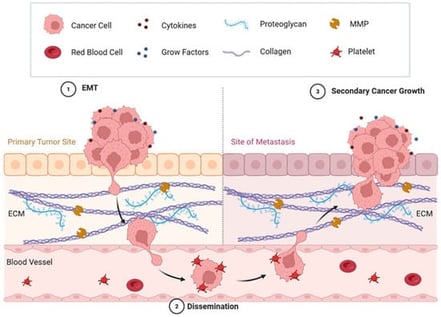
Stages of the metastatic process in cancer. The metastatic process occurs in three main phases: (1) EMT, which involves loss of cell adhesion and apicobasal polarity; in addition, tumor cells invade the extracellular matrix through the action of MMPs. (2) Dissemination, in which tumor cells intravasate into the bloodstream, interact with platelets for protection, and survive in circulation. (3) Secondary cancer growth, which involves extravasation into the extracellular matrix at a distant site and the formation of a new tumor. Figure created with BioRender.com.
  • Article
  • Open Access

Cytotoxicity of the Crude Extracts from Giant Deep-Sea Worm Riftia pachyptila Against Human Glioblastoma Cells

  • Alejandra Yoselin González-Muñiz,
  • Martha Cecilia Rosales-Hernández and
  • Mónica Adriana Torres-Ramos
  • + 5 authors

Hydrothermal vent communities are a source of bioactive compounds; some of these could be a potential anticancer therapy. Riftia pachyptila is a marine invertebrate endemic to hydrothermal vents. The dichloromethane–methanol (1:1) extracts were obtained from the wall (Pa), the trophosome (Tr), and the tube (Tu) of R. pachyptila. The cytotoxic effect of extracts was evaluated on human glioblastoma cell lines U373 and U87 and fibroblast BJ1 cell line by MTT and trypan blue assays. To detect DNA apoptotic fragmentation and tumoral p53 expression by Pa, the TUNEL and immunofluorescence assays were performed, respectively. The extracts were analyzed by gas chromatography–mass spectrometry. The Pa extract produced the most cytotoxicity on U87 and U373 cells, but not on BJ1 cells; furthermore, Pa extract produced apoptosis and cytosolic p53 stabilization. The chemical profile of extracts showed thirty-four natural compounds. This study identifies R. pachyptila extracts as potential source of drugs for glioblastoma.

Sci. Pharm.

14 October 2026

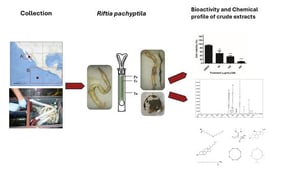
R. pachyptila collection and handling specimens. (A) Map A shows the Guaymas Basin in the Gulf of California, and Map A′ shows the collection point Rebecca’s Roost (27°0.4608′ N, 111°24.5353′ W). Map B shows the East Pacific Rise in the Pacific Ocean, and Map B′ shows the collection point Bio-9 site (9°50.23014′ N, 104°17.49672′ W). The upper-right map shows both collection points. (B) Shows images captured by the Alvin submarine of hydrothermal vents and R. pachyptila colonies. (C) A. Collection using the robotic arms of the submarine and B. handling of the collected organisms by the researchers. (D) Separation of each R. pachyptila into three sections: trophosome (Tr), wall (Pa), and tube (Tu).
  • Article
  • Open Access

Chronic and difficult-to-heal wounds require topical agents that combine reparative activity with favorable local disposition and an acceptable preliminary safety profile. This study evaluated three orotic acid–1,2,4-triazole hybrids (1–3) using an integrated computational and experimental workflow. Accelerated weight histogram simulations were performed in an atomistic human stratum corneum lipid model; acute toxicity was assessed by in silico rat LD50 prediction, 96 h Danio rerio LC50 testing, and OECD 425 oral testing in rats. Compounds selected on the basis of toxicity were incorporated into electrospun polyvinylpyrrolidone K-30 dressings and evaluated in a rat excisional wound model. Compound 1 showed pronounced lipid partitioning and potential intralamellar retention, whereas compounds 2 and 3 encountered broad membrane-interior free-energy barriers. Compound 2 had the least favorable acute-toxicity profile and was excluded. By day 8, wound area decreased by 89.0% with compound 1 and 78.6% with compound 3, versus 70.5% with the drug-free vehicle dressing (p < 0.001 for both comparisons). Neither treatment caused clinically evident deterioration or a consistent biochemical pattern of marked hepatic or renal dysfunction, although hematological and compound-specific biochemical changes were observed. The compound 1-loaded dressing therefore warrants further mechanistic, histological, and longer-term safety evaluation as the lead formulation.

Sci. Pharm.

14 October 2026

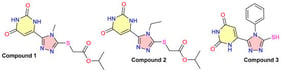
Chemical structures of the orotic acid–1,2,4-triazole hybrids investigated in this study.
  • Article
  • Open Access

Beta-amyloid peptide (Aβ), the key pathogenic factor of Alzheimer’s disease (AD), induces oxidative stress-mediated neuronal damage, eventually leading to death. Madecassic acid (MAD), a natural triterpenoid isolated from Centella asiatica, has been reported for many biological activities, including neuroprotective effects. The low solubility and poor bioavailability of MAD are major limitations; hence, the present study focused on formulating MAD in a nanostructured lipid carrier (NLC-MAD) and evaluating its protective effect against oxidative stress induced by Aβ (25–35) in Neuro-2A cells. NLC-MAD, made of 7.5% total lipid, 50% liquid oil, and 6% surfactant with desirable qualities, was selected for further studies. NLC-MAD exhibited potent free radical scavenging activity (IC50 value 80.20 ± 0.05 μg/mL), reducing power, total antioxidant power, and metal chelating activity (IC50 value 120.12 ± 0.02 µg/mL). NLC-MAD showed a dose-dependent inhibition of acetyl and butyrylcholinesterase with IC50 values of 12.5 ± 0.001 and 30 ± 0.02 µg/mL, respectively. NLC-MAD attenuated Aβ peptide aggregation and disaggregated the preformed mature fibrils. NLC-MAD pretreated Neuro-2A cells attenuated Aβ-induced toxicity dose-dependently and attenuated oxidative stress-mediated toxicity. Safety evaluation studies revealed that NLC-MAD is neither cytotoxic nor hemolytic under in vitro conditions and exhibited no adverse effects under in vivo conditions, indicating a non-toxic nature. The results warrant further studies on the stability of NLC-MAD and preclinical studies before consideration to clinical trials.

Sci. Pharm.

12 October 2026

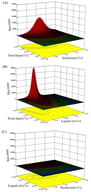
The plot shows the impact of the concentrations of (A) total lipid and surfactant, (B) total lipid and liquid oil, and (C) liquid oil and surfactant on the size of NLC-MAD.

Highly Accessed Articles

News & Conferences

Latest Issues

Open for Submission

Journal Sections

Antitumor Activity of Natural Products and Related Compounds
Reprint

Antitumor Activity of Natural Products and Related Compounds

Editors: Barbara De Filippis, Alessandra Ammazzalorso, Marialuigia Fantacuzzi
XFacebookLinkedIn
Sci. Pharm. - ISSN 2218-0532