



Nutrients 2026, 18(10), 1592; https://doi.org/10.3390/nu18101592 (registering DOI) - 16 May 2026
Abstract
Type 2 diabetes mellitus is a relevant cardio–renal–metabolic disorder in which chronic low-grade inflammation and oxidative stress have a crucial function in linking insulin resistance, endothelial dysfunction, β-cell impairment, and progressive organ injury. In this context, nutrition has emerged as a key modifiable
[...] Read more.
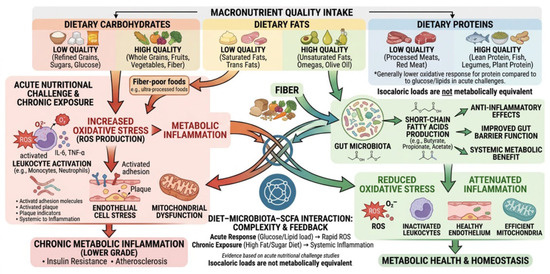
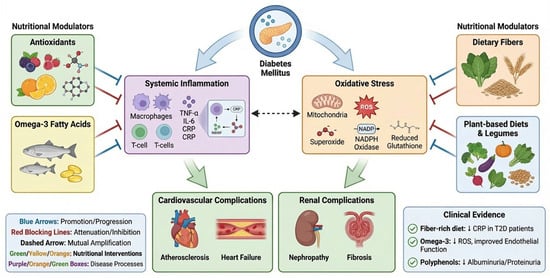
Type 2 diabetes mellitus is a relevant cardio–renal–metabolic disorder in which chronic low-grade inflammation and oxidative stress have a crucial function in linking insulin resistance, endothelial dysfunction, β-cell impairment, and progressive organ injury. In this context, nutrition has emerged as a key modifiable determinant of metabolic homeostasis, capable of influencing inflammatory signalling, redox balance, mitochondrial function, and gut microbiota–host interactions. The objective of this review is to critically summarise the mechanistic connections among inflammation, oxidative stress, and diabetes progression, and to investigate how dietary factors and patterns, as well as nutrition-responsive biomarkers, influence these pathways and their cardiorenal consequences. We discuss the effects of macronutrient quality, dietary fibre, fatty acids, polyphenols, and specific micronutrients, including vitamin C, vitamin E, selenium, zinc, and magnesium, as well as the role of Mediterranean, DASH, and plant-based diets in improving glycaemic control, endothelial function, and cardio-renal risk profiles. We also summarise established and emerging biomarkers of inflammation and oxidative stress that may improve risk stratification and the evaluation of nutrition-based interventions. Overall, current evidence supports a shift from a purely glucose-centred approach toward an integrated model in which dietary modulation of inflammatory and oxidative pathways helps reduce cardiovascular and renal risk. However, heterogeneity of interventions, variability in biomarker assessment, and interindividual differences in dietary response represent major limitations. Future research should focus on biomarker-informed, precision-oriented nutritional approaches integrated within contemporary cardio–renal–metabolic care.
Full article
(This article belongs to the Special Issue Nutrition-Based Modulation of Diabetes and Its Long-Term Complications: Mechanisms, Biomarkers, and Clinical Outcomes)
►
Show Figures
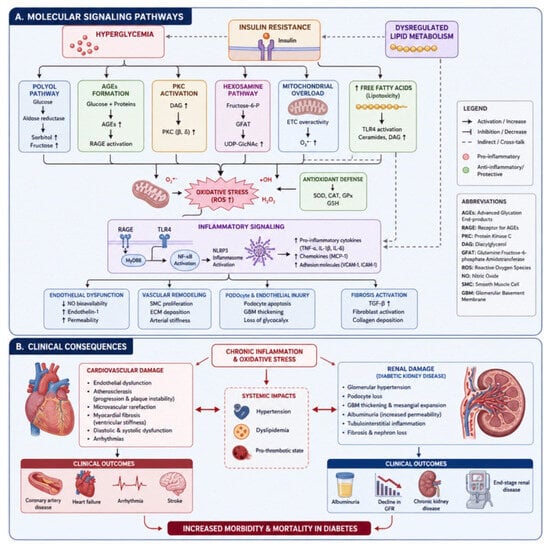
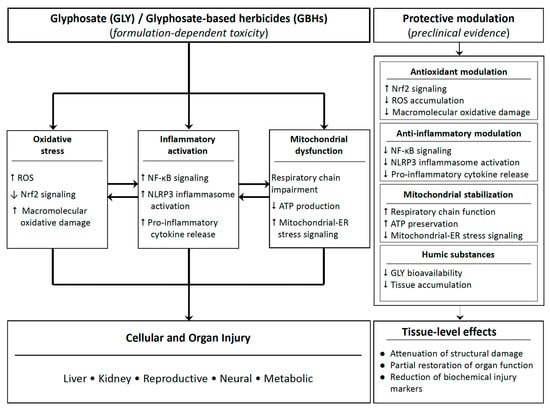
Figure 1