





You are currently on the new version of our website. Access the old version .

Agronomy

Agronomy is an international, peer-reviewed, open access journal on agronomy and agroecology published semimonthly online by MDPI. 
The Spanish Society of Plant Biology (SEBP) is affiliated with Agronomy and their members receive discounts on the article processing charges.
Quartile Ranking JCR - Q1 (Agronomy | Plant Sciences)
All Articles (18,602)

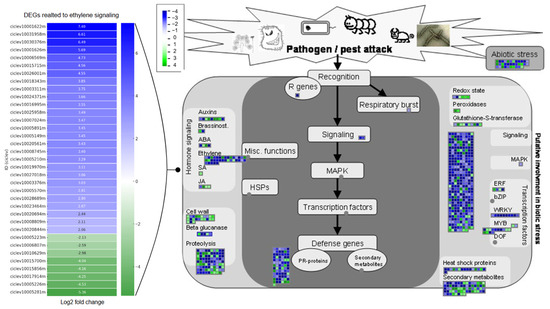
The pepper Bs2 resistance gene confers resistance to susceptible Solanaceae plants against pathogenic strains of Xanthomonas campestris pv. vesicatoria carrying the avrBs2 avirulence gene. Previously, we generated Bs2-transgenic Citrus sinensis plants that exhibited enhanced resistance to citrus canker caused by Xanthomonas citri subsp. citri (Xcc), although the underlying mechanisms remained unknown. To elucidate the molecular basis of the early defense response, we performed a comparative transcriptomic analysis of Bs2-expressing and non-transgenic plants 48 h after Xcc inoculation. A total of 2022 differentially expressed genes (DEGs) were identified, including 1356 up-regulated and 666 down-regulated genes. In Bs2-plants, 36.8% of the up-regulated DEGs were associated with defense responses and biotic stress. Functional annotation revealed major changes in genes encoding receptor-like kinases, transcription factors, hormone biosynthesis enzymes, pathogenesis-related proteins, secondary metabolism, and cell wall modification. Among hormone-related pathways, genes linked to ethylene biosynthesis and signaling were the most strongly regulated. Consistently, endogenous ethylene levels increased in Bs2-plants following Xcc infection, and treatment with an ethylene-releasing compound enhanced resistance in non-transgenic plants. Overall, our results indicate the Bs2 expression activates a complex defense network in citrus and may represent a valuable strategy for controlling canker and other Xanthomonas-induced diseases.

12 January 2026

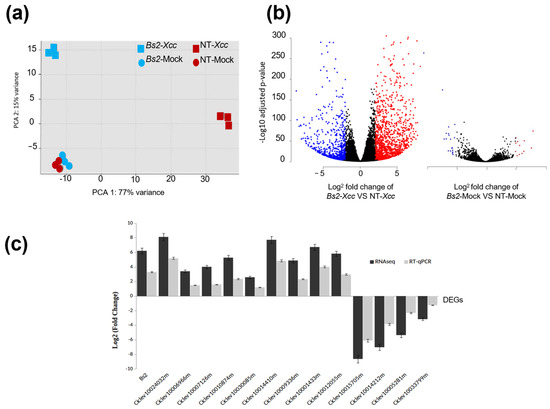
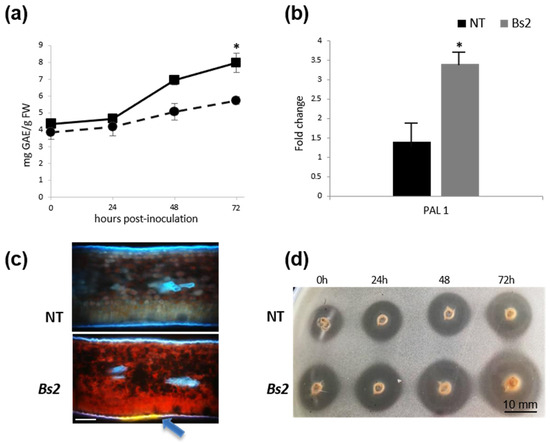
(a) Principal component analysis (PCA) of regularized log-transformed count data showing the first two principal components for Citrus sinensis Bs2- and non-transgenic (NT) plants at 48 h post-inoculation (hpi) with Xanthomonas citri pv. citri (Xcc) or mock-inoculated with 10 mM MgCl2. (b) Volcano plots showing up-regulated (red) and down-regulated (blue) genes in Bs2-plants relative to NT-plants at 48 hpi under Xcc-inoculated (left) and mock (right) conditions. Colored points represent differentially expressed genes (DEGs) with α = 0.05 and log2FC > 2. Black dots represent genes that did not meet these differential expression criteria. The y-axis represents the negative log10 of the false discovery rate (−log10 FDR), and the x-axis shows the log2 fold change (log2FC) derived from RNA-seq data of three independent biological replicates. FC, fold change; FDR, false discovery rate. (c) Comparative analysis between qRT–PCR and RNA-seq expression profiles. Log2-transformed relative mRNA levels of DEGs obtained by RNA-seq were validated by qRT–PCR for defense-related genes in C. sinensis Bs2-plants at 48 hpi with Xcc. The Citrus β-actin transcript was used as an internal reference gene, and non-inoculated Bs2-plants served as calibrators. Values represent means ± standard deviation (SD) from three independent biological replicates. Ciclev IDs and their corresponding annotations are listed in Supplementary Table S2.

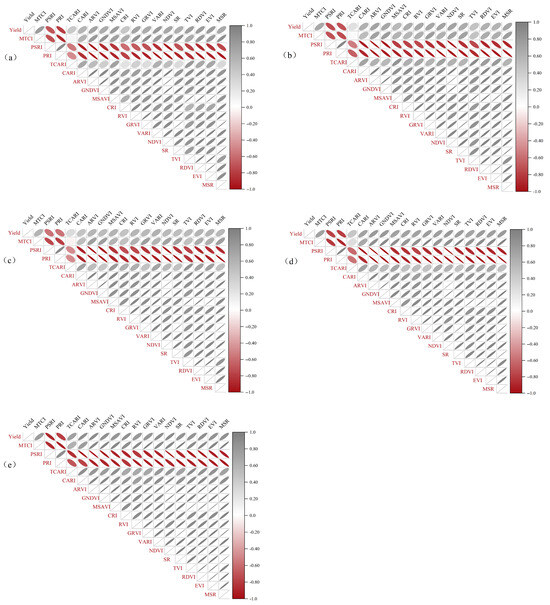
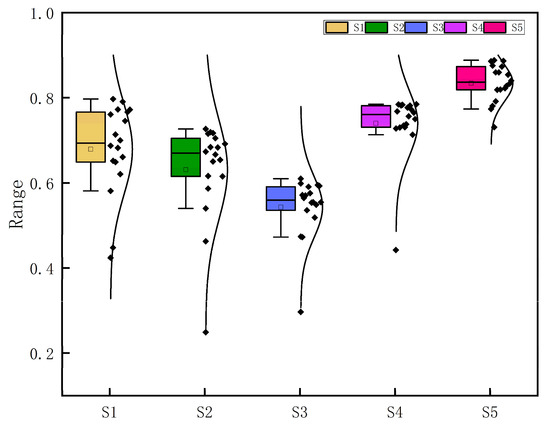
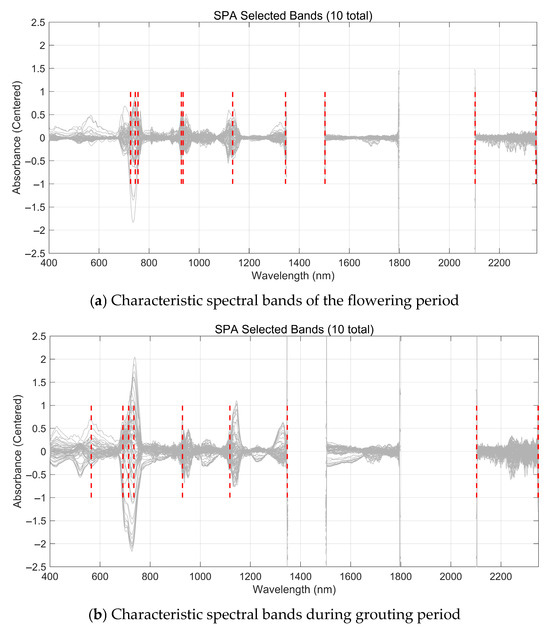
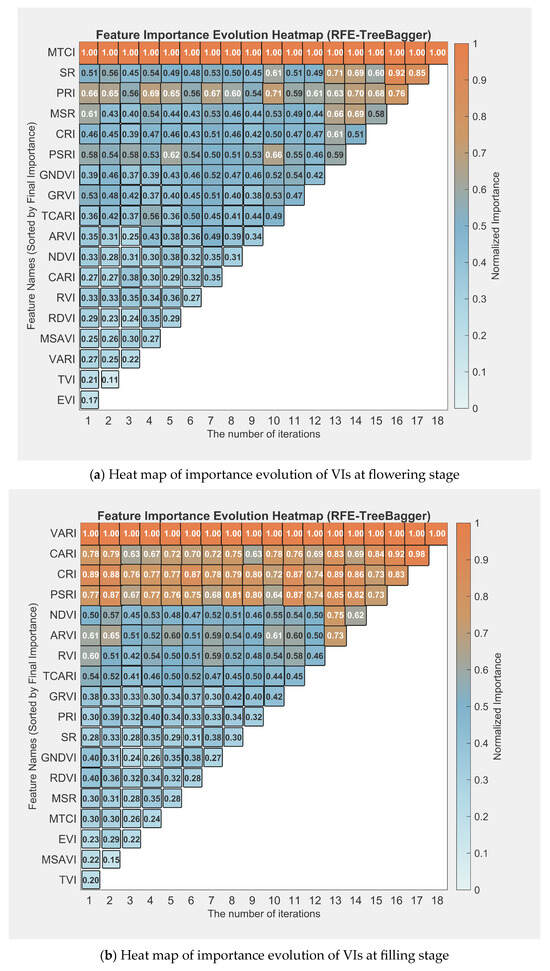
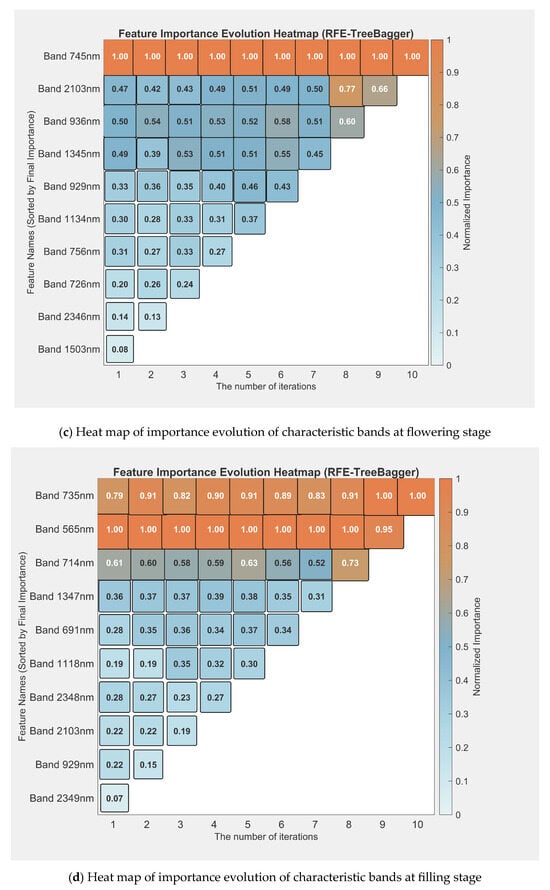
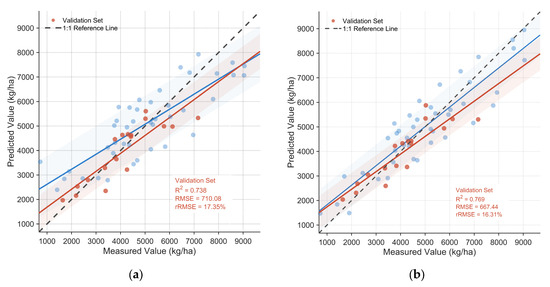
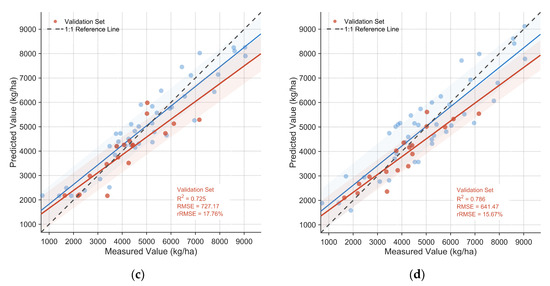
Timely and accurate crop yield estimation is vital for food security and management decision-making. Integrating remote sensing with machine learning provides an effective solution. In this study, based on canopy hyperspectral data collected by an ASD FieldSpec 3 handheld spectrometer during the critical growth stages of winter wheat, 18 vegetation indices (VIs) were systematically calculated, and their correlation with yield was analyzed. At the same time, a continuous projection algorithm, Successive Projections Algorithm (SPA), was used to screen the characteristic bands. Recursive Feature Elimination (RFE) was employed to select optimal features from VIs and characteristic spectral bands, facilitating the construction of a multi-temporal fusion feature set. To identify the superior yield estimation approach, a comparative analysis was conducted among four machine learning models: Deep Forest (DF), Support Vector Regression (SVR), Random Forest (RF), and Gaussian Process Regression (GPR). Performance was evaluated using the coefficient of determination (R2), root mean square error (RMSE), and relative root mean square error (rRMSE). Results indicate that the highest correlations between VIs and grain yield were observed during the flowering and grain-filling stages. Independent analysis showed that VIs reached absolute correlations of 0.713 and 0.730 with winter wheat yield during the flowering and grain-filling stages, respectively, while the SPA further identified key bands primarily in the near-infrared and short-wave infrared regions. On this basis, integrating multi-temporal features through RFE significantly improved the accuracy of yield estimation. Among them, the DF model with the fusion of flowering and filling stage features performed best (R2 = 0.786, RMSE = 641.470 kg·hm−2, rRMSE = 15.67%). This study demonstrates that combining hyperspectral data and VIs from different growth stages provides complementary information. These findings provide an effective method for crop yield estimation in precision agriculture.

12 January 2026

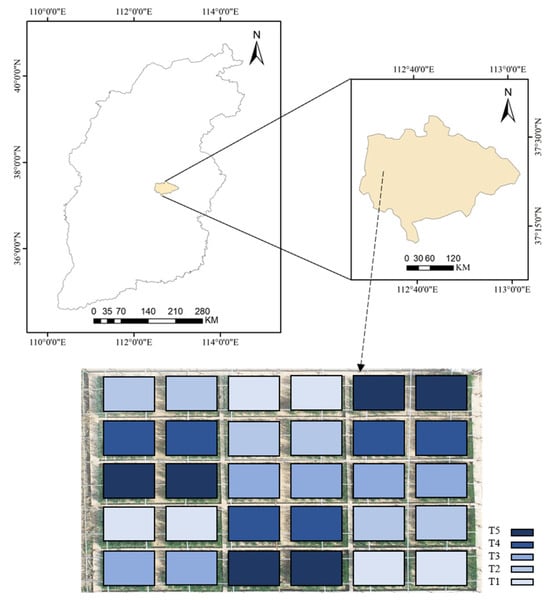
Location Map of the Study Area.

In Guangxi, China, the area used to plant sugarcane is growing in order to meet the Fourteenth Five-Year Plan’s objective of sugar self-sufficiency (2021–2025). Comprehensive soil heavy metal data are necessary for growing area expansion in order to inform farmers and policymakers. Here, we analyzed soil samples from ten sugarcane-growing counties/districts of Guangxi by employing four different risk assessment indices. Our results indicate that the studied soils are moderately to strongly acidic and are deficient in soil organic matter (<6 g/kg). Single-factor pollution index evaluation revealed detectable heavy metal pollution, with Cd present above reference levels in all ten areas, Cr in six, Pb in four, As in two, and Hg in two areas. The Nemerow comprehensive pollution index indicated that the overall soil pollution level was mild, except for Jiangzhou district (moderate). The geo-accumulation index revealed significant anthropogenic enrichment, with severe Cr pollution (Igeo > 3) across all regions and Pb and As contamination ranging from moderate to severe, particularly in Jiangzhou district. Contrastingly, Cd and Hg showed no significant enrichment (Igeo < 0) relative to the local background, though their sources require further investigation. The potential ecological risk assessment showed a high risk, specifically from As in Jiangzhou district, which was the only area showing a moderate comprehensive potential ecological risk. A significant positive correlation was found between the total and bioavailable contents of all five heavy metals, whereas soil pH and organic matter were significantly negatively correlated with the bioavailability of Cr and Pb, but positively correlated with As and Hg. The availability of Cd, however, was independent of pH and OM, suggesting the influence of other, unmeasured geochemical factors. These results highlight specific and localized environmental risks that may require targeted management to ensure agricultural safety, ecosystem health, and sustainable sugarcane production.

12 January 2026

Geographical map of Guangxi showing the ten sampling counties (districts). The intensity of the green color represents the planting area (×10,000 ha). The X- and Y-axes show N and E coordinates.

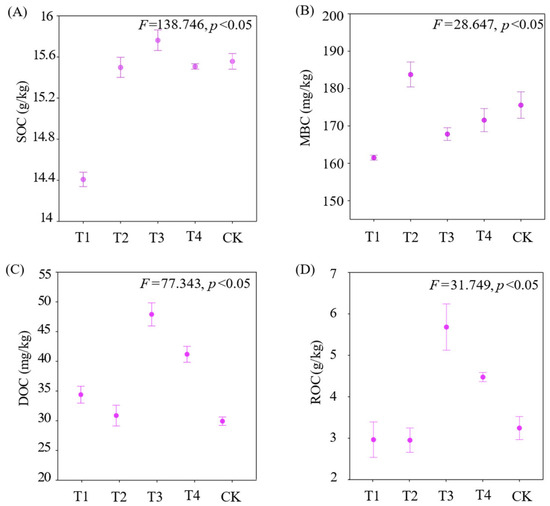
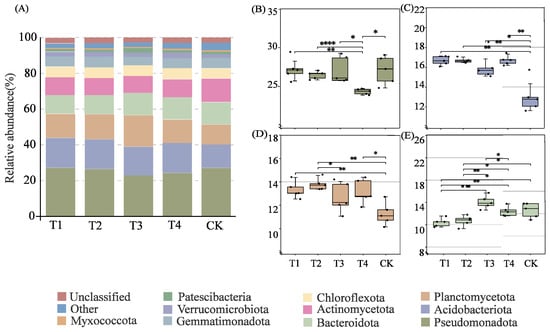
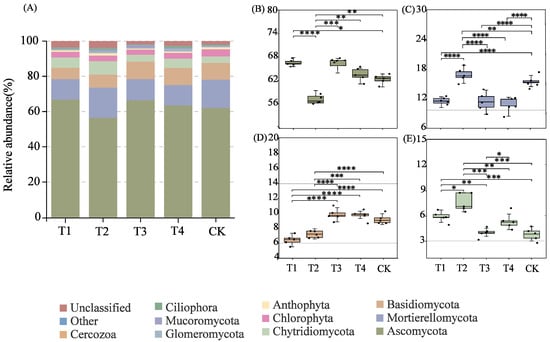
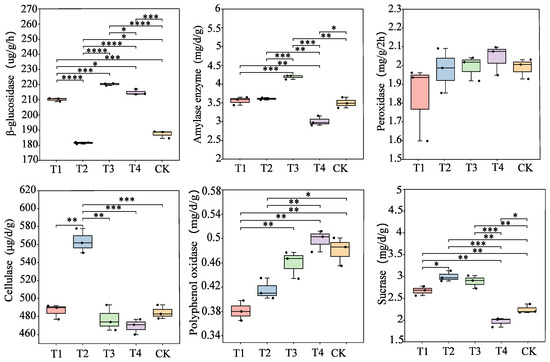
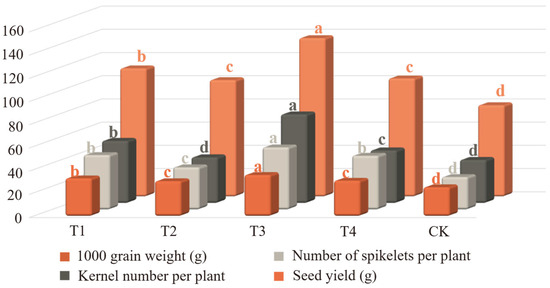
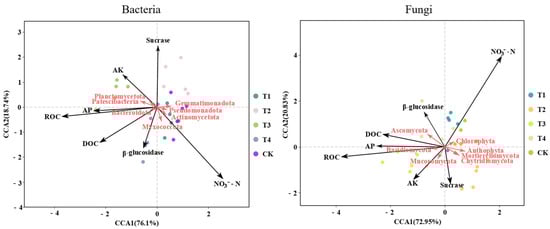
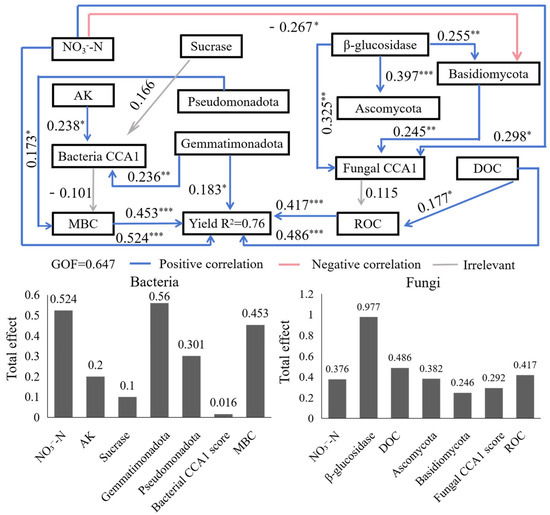
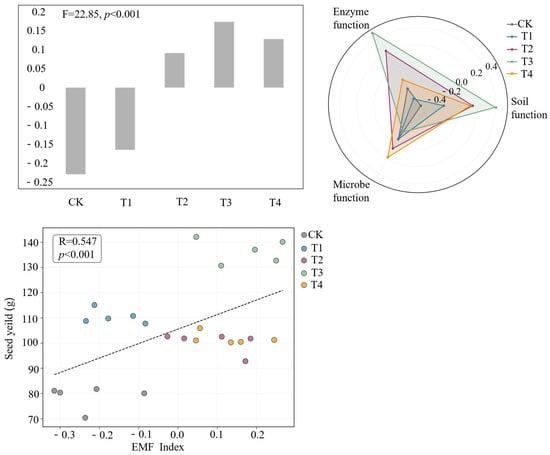
To evaluate the optimal substitution ratio of organic fertilizer for chemical nitrogen fertilizer and its underlying mechanisms, a pot experiment was conducted in the rhizosphere soil of oat (Avena sativa) on the Qinghai–Tibet Plateau. Five treatments were established: CK (control), T1 (chemical fertilizer alone), T2 (100% organic fertilizer substitution for chemical nitrogen fertilizer), T3 (30% organic fertilizer substitution for chemical nitrogen fertilizer), and T4 (60% organic fertilizer substitution for chemical nitrogen fertilizer). We analyzed soil carbon fractions, microbial community structure, carbon-cycling enzyme activities, and yield responses and applied partial least squares–structural equation modeling (PLS-SEM) to identify key regulatory pathways. The results showed that 30% organic substitution (T3) was associated with optimized soil carbon pools, improved microbial community composition, and enhanced carbon-cycling enzyme activities, while reducing the abundance of potentially harmful fungi. Structural equation modeling indicated that β-glucosidase activity and the relative abundance of Proteobacteria were the primary drivers of yield, together explaining 76% of its variation. The ecosystem multifunctionality index (EMF) was significantly and positively correlated with yield. In summary, under the conditions of this experiment, 30% organic fertilizer substitution achieved a favorable balance between soil ecological functions and crop yield, providing a valuable reference for sustainable nutrient management in oat production in high-altitude cold regions.

12 January 2026

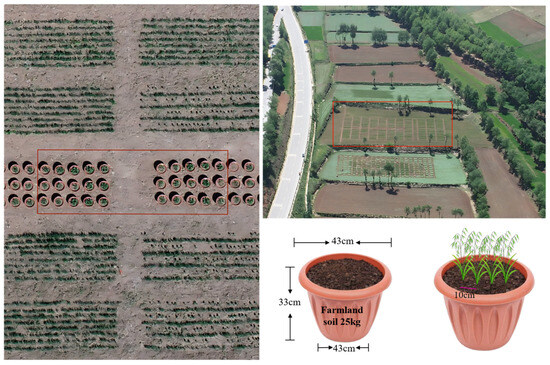
Schematic illustration of pot experiment layout. The red box indicates the experimental site and the potted plant sampling area.

News & Conferences

Issues

Open for Submission

Editor's Choice

Reprints of Collections

Climate Change Impacts and Adaptation
Reprint

Climate Change Impacts and Adaptation

Interdisciplinary Perspectives—Volume II
Editors: Cheng Li, Fei Zhang, Mou Leong Tan, Kwok Pan Chun
Climate Change Impacts and Adaptation
Reprint

Climate Change Impacts and Adaptation

Interdisciplinary Perspectives—Volume I
Editors: Cheng Li, Fei Zhang, Mou Leong Tan, Kwok Pan Chun

Get Alerted

Add your email address to receive forthcoming issues of this journal.

XFacebookLinkedIn
Agronomy - ISSN 2073-4395