Biodegradable Polybutylene Adipate Terephthalate (PBAT) Microplastics Cause More Toxic Effects on Winter Wheat in the Presence of Trichoderma citrinoviride and 2,4-D than Low-Density Polyethylene (LDPE)

 , , ,
, , ,  and
and
Abstract
1. Introduction
2. Materials and Methods
2.1. Reagents
2.2. Soil
2.3. Wheat
2.4. Strain
2.5. Microplastic
2.6. Experimental Design
2.7. Plant Analysis
2.8. Determination of Phospholipids
2.9. Data Acquisition
3. Results
3.1. Wheat Growth and Development After Exposure to LDPE and PBAT MPs
3.1.1. Wheat Seeds Germination and Chlorophyll Content
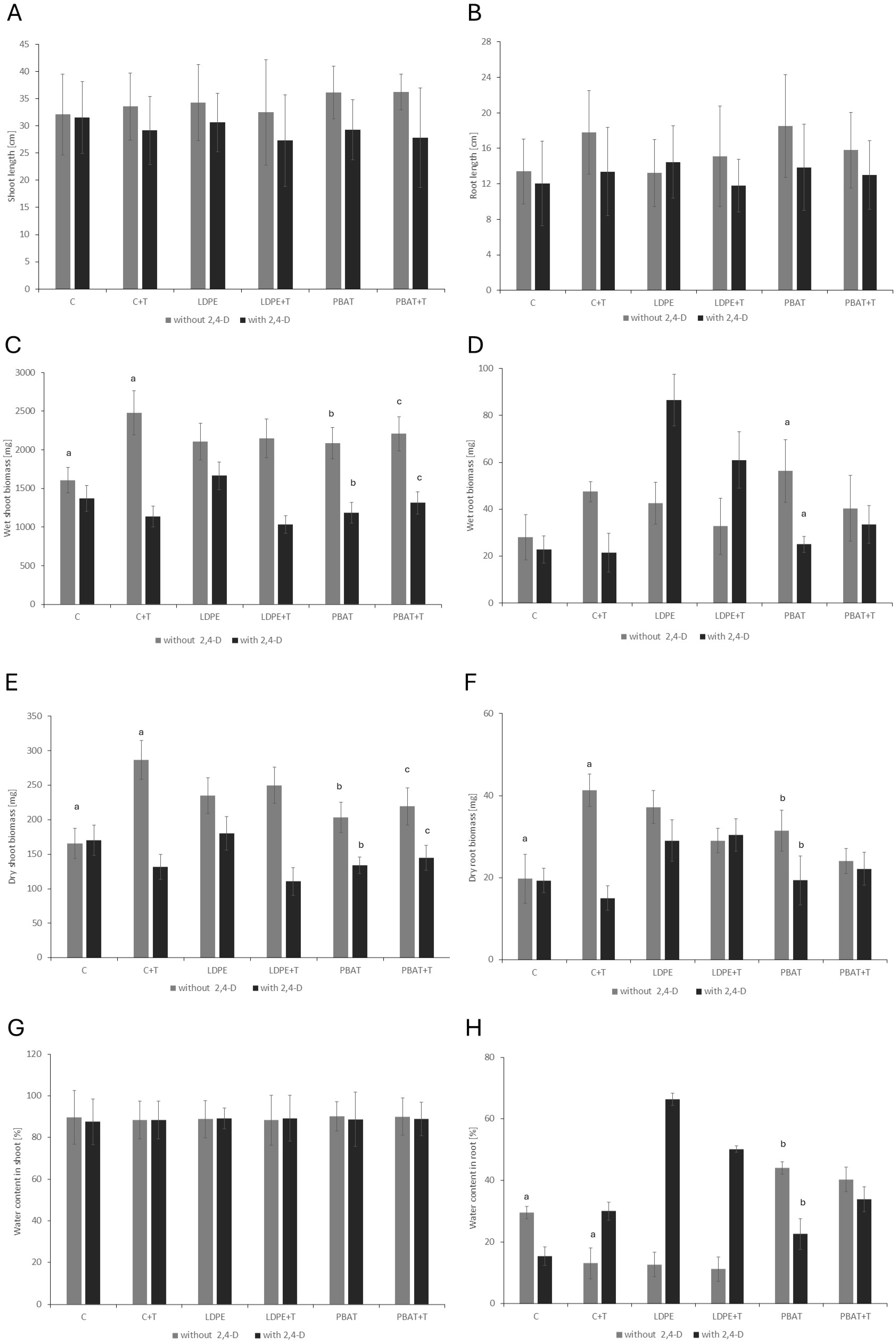
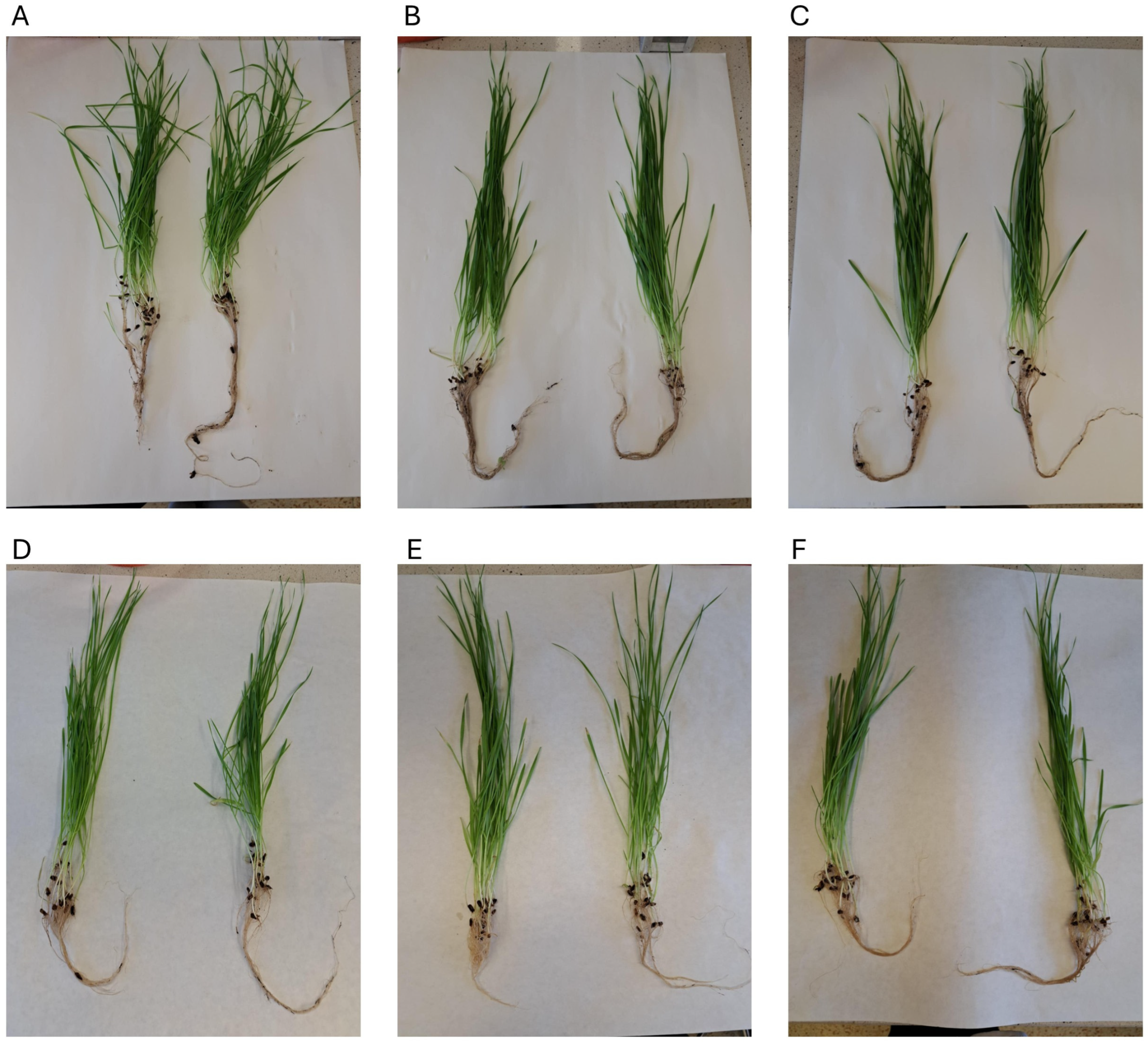
3.1.2. Growth and Physiological Parameters of Wheat Affected by LDPE, PBAT, 2,4-D, and T. citrinoviride
3.2. Lipidomic Responses of Wheat to LDPE and PBAT Microparticles
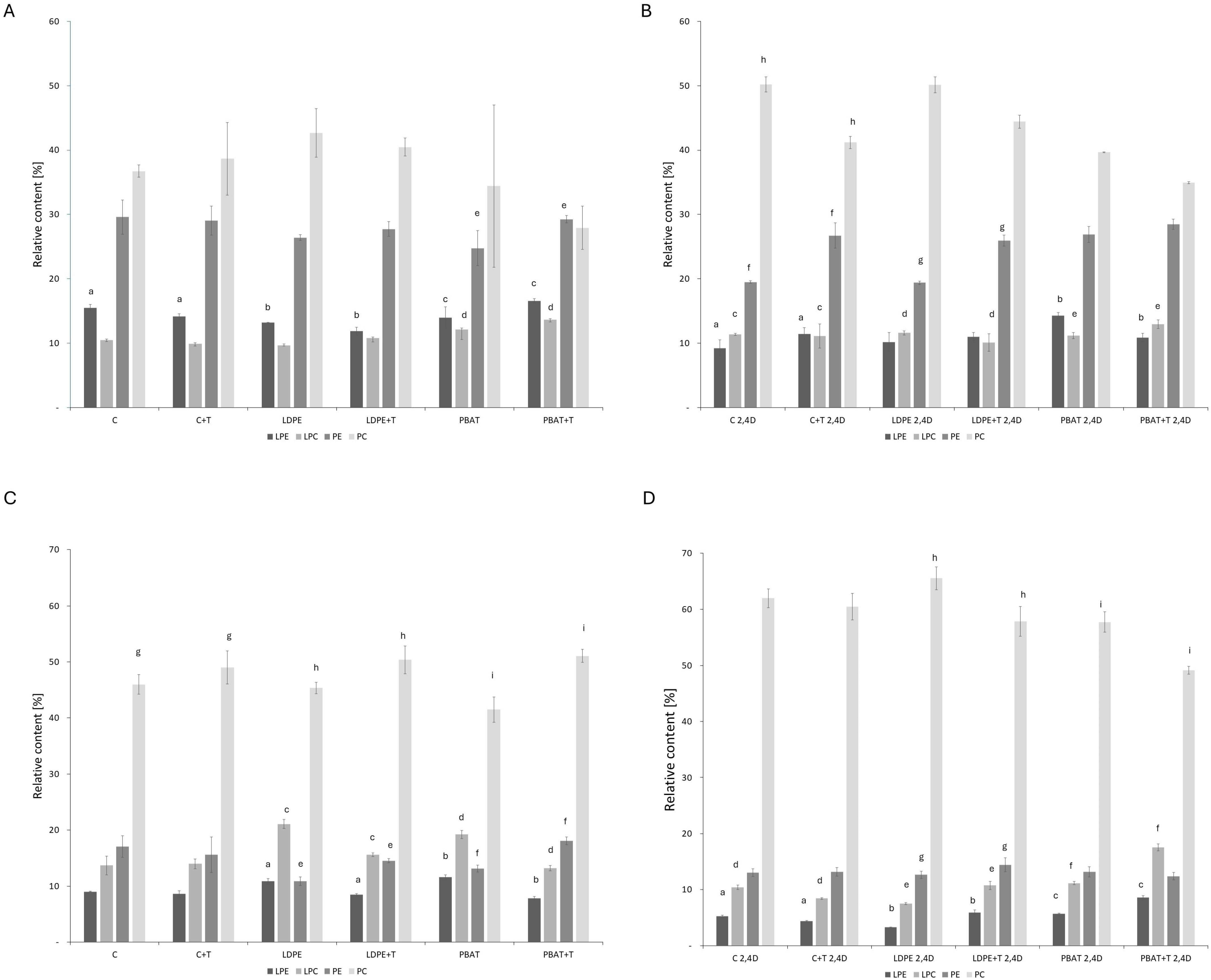
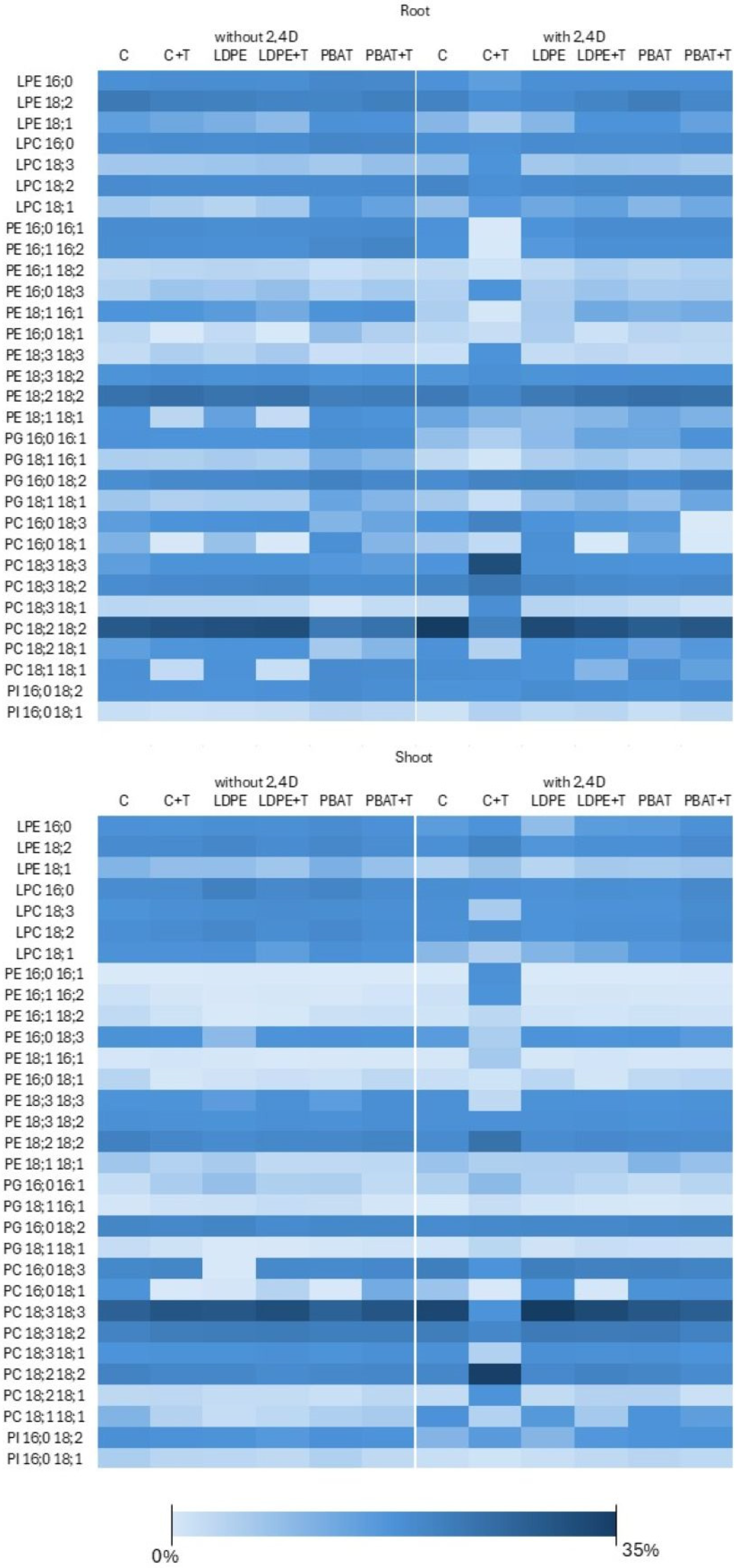
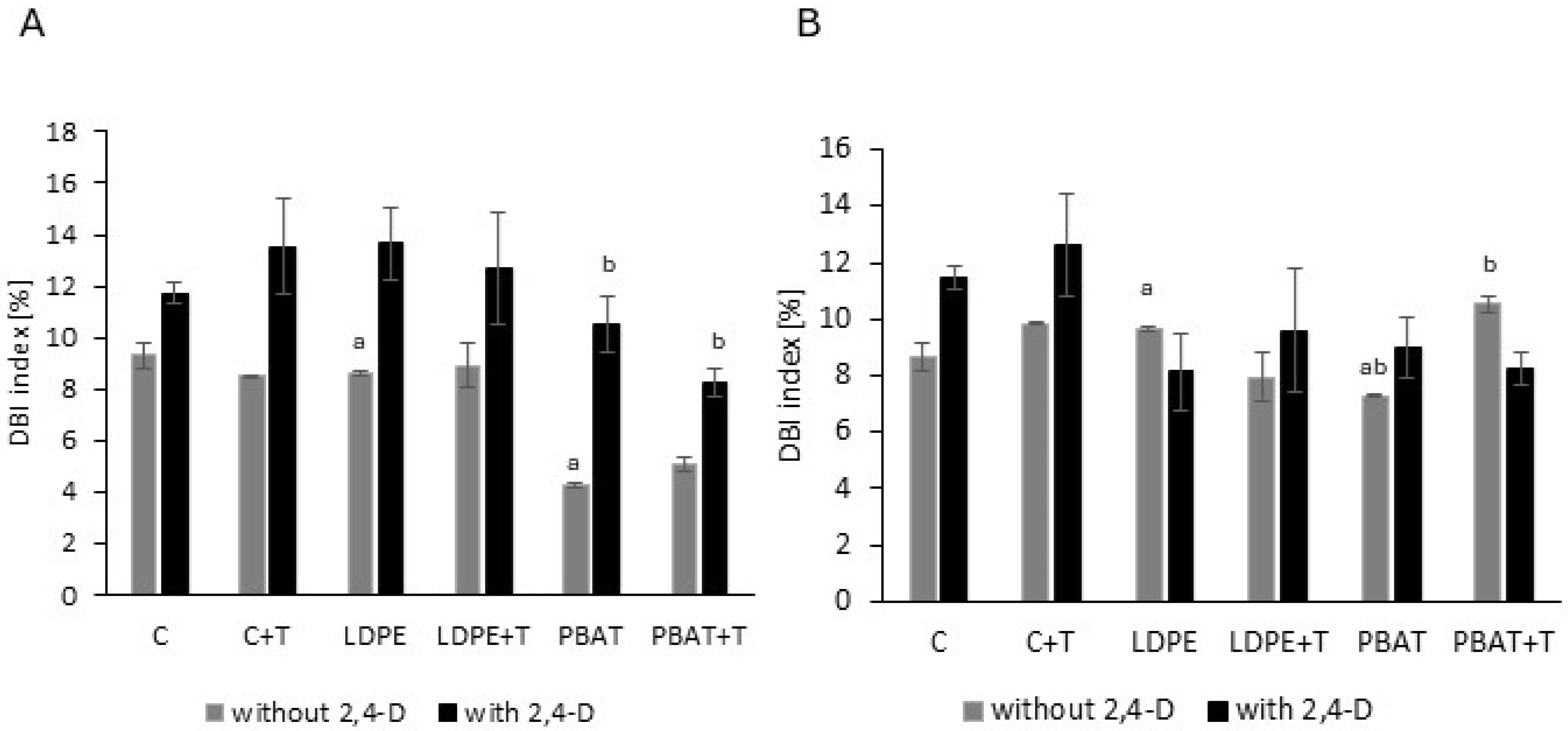
3.2.1. Modifications of Phospholipids in Root and Shoot of Wheat
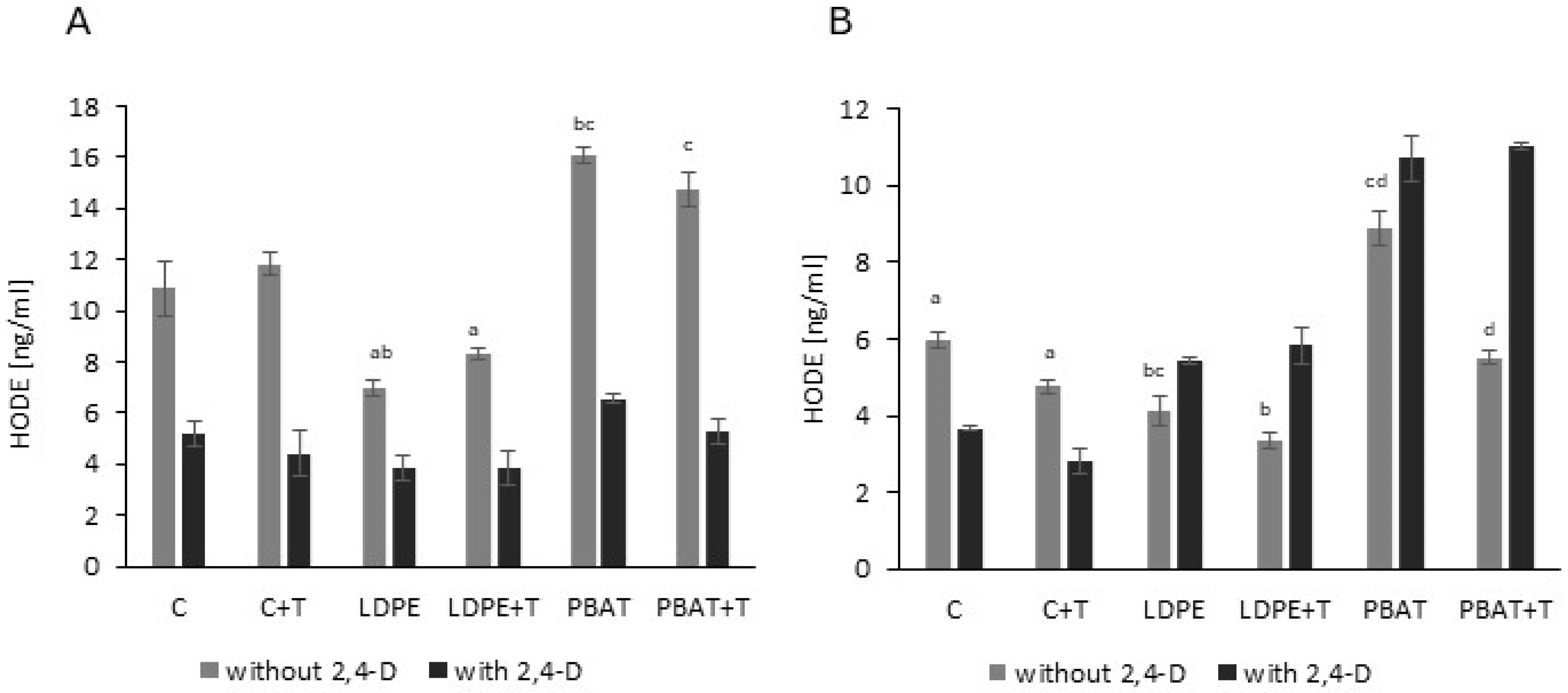
3.2.2. Profiling of Oxylipin as a Marker of Oxidative Stress
3.3. Antioxidant System Response
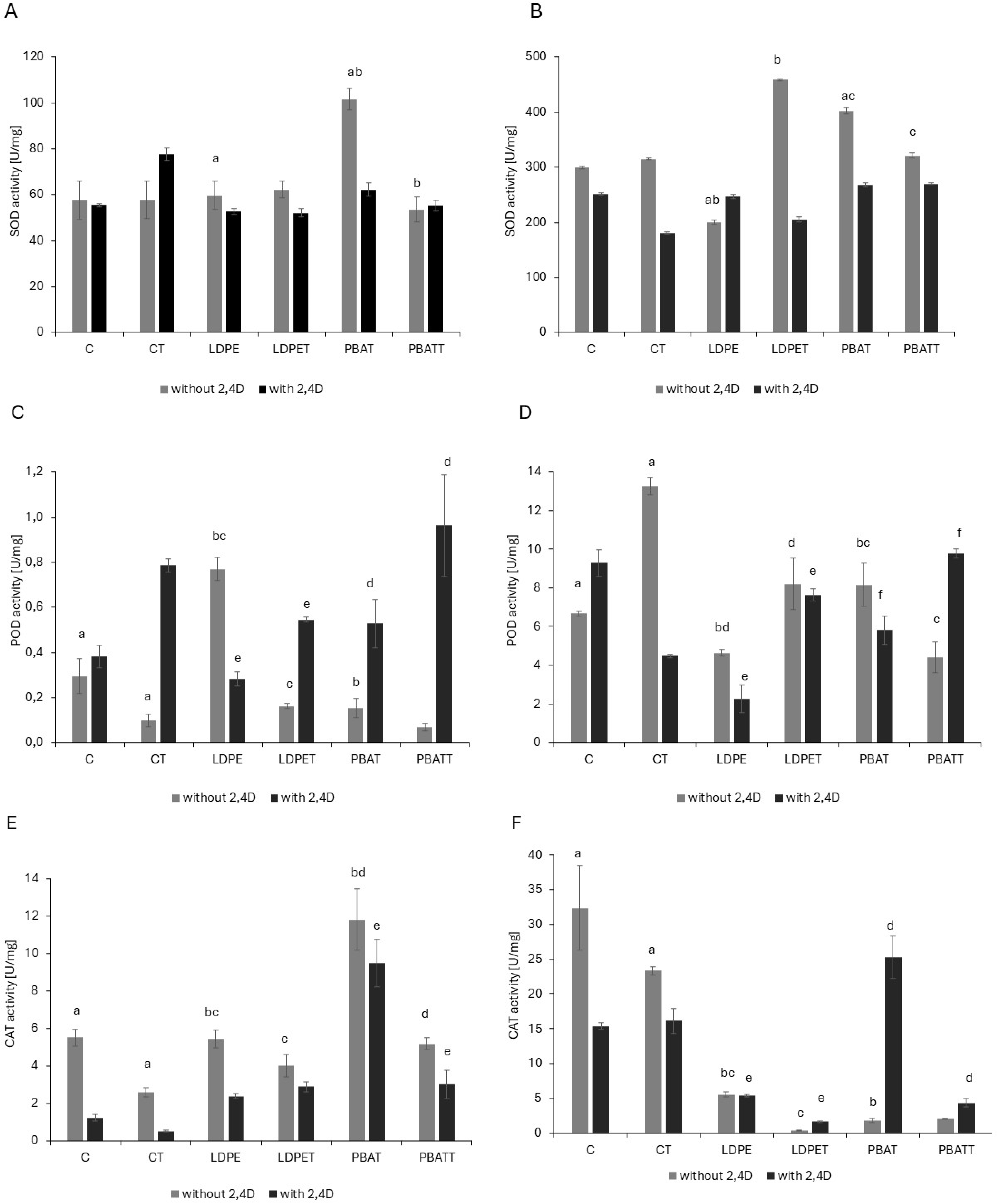
SOD, POD and CAT Activity
4. Discussion
5. Conclusions
Supplementary Materials
Author Contributions
Funding
Data Availability Statement
Acknowledgments
Conflicts of Interest
Abbreviations
| 2,4-D | 2,4-Dichlorophenoxyacetic acid |
| CAT | Catalase |
| CFU | Colony Forming Units |
| DBI | Double Bond Index |
| HODE | Hydroxyoctadecadienoic acid (13-HODE) |
| LDPE | Low-Density Polyethylene |
| LPC | Lysophosphatidylcholine |
| LPE | Lysophosphatidylethanolamine |
| MPs | Microplastics |
| PA | Phosphatidic Acid |
| PBAT | Polybutylene Adipate Terephthalate |
| PC | Phosphatidylcholine |
| PCA | Principal Component Analysis |
| PE | Phosphatidylethanolamine |
| PI | Phosphatidylinositol |
| PLA2 | Phospholipase A2 |
| POD | Peroxidase |
| ROS | Reactive Oxygen Species |
| SOD | Superoxide Dismutase |
| UHPLC | Ultra-High-Performance Liquid Chromatography |
References
- Ng, E.-L.; Lwanga, E.H.; Eldridge, S.M.; Johnston, P.; Hu, H.-W.; Geissen, V.; Deli, C. An overview of microplastic and nanoplastic pollution in agroecosystems. Sci. Total. Environ. 2018, 627, 1377–1388. [Google Scholar] [CrossRef] [PubMed]
- Hossain, A.; Skalicky, M.; Brestic, M.; Maitra, S.; Ashraful Alam, M.; Syed, M.A.; Hossain, J.; Sarkar, S.; Saha, S.; Bhadra, P.; et al. Consequences and Mitigation Strategies of Abiotic Stresses in Wheat (Triticum aestivum L.) under the Changing Climate. Agronomy 2021, 11, 241. [Google Scholar] [CrossRef]
- Jin, T.; Tang, J.; Lyu, H.; Wang, L.; Gillmore, A.B.; Schaeffer, S.M. Activities of microplastics (MPs) in agricultural soil: A review of MPs pollution from the perspective of agricultural ecosystems. J. Agric. Food Chem. 2022, 70, 4182–4201. [Google Scholar] [CrossRef]
- Iqbal, B.; Zhao, T.T.; Yin, W.Q.; Zhao, X.; Xie, Q.J.; Khan, K.Y.; Zhao, X.X.; Nazar, M.; Li, G.L.; Du, D.L. Impacts of soil microplastics on crops: A review. Appl. Soil Ecol. 2023, 181, 104680. [Google Scholar] [CrossRef]
- Sa’adu, I.; Farsang, A. Plastic contamination in agricultural soils: A review. Environ. Sci. Eur. 2023, 35, 13. [Google Scholar] [CrossRef]
- Cusworth, S.J.; Davies, W.J.; McAinsh, M.R.; Gregory, A.S.; Storkey, J.; Stevens, C.J. Agricultural Fertilisers Contribute Substantially to Microplastic Concentrations in UK Soils. Commun. Earth Environ. 2024, 5, 7. [Google Scholar] [CrossRef]
- Wei, R.; Weber, G.; Blank, L.M.; Bornscheuer, U.T. Process insights for harnessing biotechnology for plastic depolymerization. Nat. Chem. Eng. 2025, 2, 110–117. [Google Scholar] [CrossRef]
- Perumal, N.; Sreekantan, S.; Hamid, Z.A.A. Effect of Plasticizer and Compatibilizer on Properties of Polybutylene Adipate-Co-Terephthalate (PBAT) with Acetylated Starch. J. Polym. Environ. 2024, 32, 289–302. [Google Scholar] [CrossRef]
- Ratshoshi, B.K.; Farzad, S.; Görgens, J.F. A techno-economic study of Polybutylene adipate terephthalate (PBAT) production from molasses in an integrated sugarcane biorefinery. Food Bioprod. Process. 2024, 145, 11–20. [Google Scholar] [CrossRef]
- Martínez, A.; Perez-Sanchez, E.; Caballero, A.; Ramírez, R.; Quevedo, E.; Salvador-García, D. PBAT is biodegradable but what about the toxicity of its biodegradation products? J. Mol. Model. 2024, 30, 273. [Google Scholar] [CrossRef] [PubMed]
- Peña, A.; Rodríguez-Liébana, J.A.; Delgado-Moreno, L. Interactions of Microplastics with Pesticides in Soils and Their Ecotoxicological Implications. Agronomy 2023, 13, 701. [Google Scholar] [CrossRef]
- Sahai, H.; García Valverde, M.; Murcia Morales, M.; Hernando, M.D.; Aguilera Del Real, A.M.; Fernández- Alba, A.R. Exploring Sorption of Pesticides and PAHs in Microplastics Derived from Plastic Mulch Films Used in Modern Agriculture. Chemosphere 2023, 333, 138959. [Google Scholar] [CrossRef]
- Romero-Puertas, M.C.; Peláez-Vico, M.Á.; Pazmiño, D.M.; Rodríguez-Serrano, M.; Terrón-Camero, L.; Bautista, R. Insights into ROS-dependent signalling underlying transcriptomic plant responses to the herbicide 2,4-D. Plant. Cell Environ. 2022, 45, 572–590. [Google Scholar] [CrossRef]
- Sousa, R.R.; Vasconcelos, R.B.; Sarmento, R.A.; Pereira, D.H.; Souza, N.L.G.D.; Cavallini, G.S. Interaction between polyethylene microplastic and 2,4-dichlorophenoxyacetic acid (2,4-D): Chemical and ecotoxicological evaluation with Girardia tigrina. Discov. Toxicol. 2025, 2, 18. [Google Scholar] [CrossRef]
- Lisiecka, N.; Woźniak-Karczewska, M.; Parus, A.; Simpson, M.; Frankowski, R.; Zgoła-Grześkowiak, A.; Siwińska-Ciesielczyk, K.; Niemczak, M.; Eberlein, C.; Heipieper, H.J.; et al. Effect of microplastic on sorption, toxicity, and mineralization of 2,4-dichlorophenoxyacetic acid ionic liquids. Appl. Microbiol. Biotechnol. 2024, 108, 523. [Google Scholar] [CrossRef] [PubMed]
- Asghar, W.; Craven, K.D.; Kataoka, R.; Mahmood, A.; Asghar, N.; Raza, T.; Iftikhar, F. The application of Trichoderma spp., an old but new useful fungus, in sustainable soil health intensification: A comprehensive strategy for addressing challenges. Plant Stress 2024, 12, 100455. [Google Scholar] [CrossRef]
- Jiang, M.; Zhao, W.; Liang, Q.; Zhu, L.; Xu, Z.; Wang, C. Advances in physiological and ecological effects of microplastic on crops. J. Soil Sci. Plant Nutr. 2024, 24, 1741–1760. [Google Scholar] [CrossRef]
- Rodrigues, C.; Mendes, N.A.C.; Gorni, P.H.; Peres, G.Q.D.; Reis, A.R.D. Trichoderma atroviride enhances ROS scavenging systems, primary and secondary metabolism increasing the yield of soybean plants. Plant Physiol. Biochem. 2025, 227, 110143. [Google Scholar] [CrossRef]
- Okazaki, Y.; Saito, K. Roles of lipids as signaling molecules and mitigators during stress response in plants. Plant J. 2014, 79, 584–596. [Google Scholar] [CrossRef]
- Zhang, H.; Dong, J.-L.; Wang, J. Research progress in membrane lipid metabolism and molecular mechanism in peanut cold tolerance. Front. Plant Sci. 2019, 10, 838. [Google Scholar] [CrossRef]
- Han, Y.; Teng, Y.; Wang, X.; Wen, D.; Gao, P.; Yan, D.; Yang, N. Biodegradable PBAT microplastics adversely affect Brassica chinensis L. growth and rhizosphere ecology: Focusing on rhizosphere microbial community composition, element metabolic potential, and root exudates. Sci. Total Environ. 2024, 912, 169048. [Google Scholar] [CrossRef] [PubMed]
- Graf, M.; Reay, M.K.; Florent, P.J.; Brown, R.W.; Chadwick, D.R.; Jones, D.L. Differential effects of field-aged versus new LDPE and PLA/PBAT plastic film fragments on soil quality and crop productivity. J. Hazard. Mater. 2025, 496, 139398. [Google Scholar] [CrossRef]
- Rodríguez-Hernández, A.A.; Herrera-Álvarez, M.; Zapata-Sarmiento, D.H.; Martínez, L.M.; García-Pineda, E. Trichoderma asperellum promotes the development and antioxidant activity of white onion (Allium cepa L.) plants. Hortic. Environ. Biotechnol. 2023, 64, 25–39. [Google Scholar] [CrossRef]
- Philip, B.; Behiry, S.I.; Salem, M.Z.M.; El-Hefny, M.; El-Dougdoug, N.K. Trichoderma afroharzianum TRI07 metabolites inhibit Alternaria alternata growth and induce tomato defense-related enzymes. Sci. Rep. 2024, 14, 1874. [Google Scholar] [CrossRef] [PubMed]
- Rusetskaya, V.; Różalska, S.; Słaba, M.; Bernat, P. Degradation ability of Trichoderma spp. in the presence of poly (butylene adipate-co-terephthalate) microparticles. Int. Biodeterior. Biodegrad. 2024, 193, 105829. [Google Scholar] [CrossRef]
- Qi, Y.; Beriot, N.; Gort, G.; Lwanga, H.E.; Gooren, H.; Yang, X.; Geissen, V. Impact of Plastic Mulch Film Debris on Soil Physicochemical and Hydrological Properties. Environ. Pollut. 2020, 266, 115097. [Google Scholar] [CrossRef]
- Hua, Z.; Li, Y.; He, X.; Zhu, F.; Chang, S.; Kong, J.; Zhu, C.; Wang, C.; Li, S.; He, H.; et al. Quantitative analysis of PBAT microplastics and their degradation products in soil by mass spectrometry. Eco-Environ. Health 2025, 4, 100166. [Google Scholar] [CrossRef]
- Qi, Y.; Yang, X.; Pelaez, A.M.; Huerta Lwanga, E.; Beriot, N.; Gertsen, H.; Garbeva, P.; Geissen, V. Macro- and Micro- Plastics in Soil-Plant System: Effects of Plastic Mulch Film Residues on Wheat (Triticum aestivum) Growth. Sci. Total Environ. 2018, 645, 1048–1056. [Google Scholar] [CrossRef]
- Bernat, P.; Jasińska, A.; Niedziałkowska, K.; Słaba, M.; Rożalska, S.; Paraszkiewicz, K.; Sas-Paszt, L.; Heipieper, H.J. Adaptation of the metolachlor-degrading fungus Trichoderma harzianum to the simultaneous presence of low-density polyethylene (LDPE) microplastics. Ecotoxicol. Environ. Saf. 2023, 267, 115656. [Google Scholar] [CrossRef]
- Burgos, A.; Szymanski, J.; Seiwert, B.; Degenkolbe, T.; Hannah, M.A.; Giavalisco, P.; Willmitzer, L. Analysis of short-term changes in the Arabidopsis thaliana glycerolipidome in response to temperature and light. Plant J. 2011, 66, 656–668. [Google Scholar] [CrossRef]
- Jamshidi Goharrizi, K.; Moosavi, S.S.; Amirmahani, F.; Salehi, F.; Nazari, M. Assessment of changes in growth traits, oxidative stress parameters, and enzymatic and non-enzymatic antioxidant defense mechanisms in Lepidium draba plant under osmotic stress induced by polyethylene glycol. Protoplasma 2020, 257, 459–473. [Google Scholar] [CrossRef] [PubMed]
- Concha, E.; Heipieper, H.J.; Wick, L.Y.; Ciudad, G.A.; Navia, R. Effects of limonene, n-decane and n-decanol on growth and membrane fatty acid composition of the microalga Botryococcus braunii. AMB Express 2018, 8, 189. [Google Scholar] [CrossRef]
- Li, C.; Li, Z.; Cui, Q.; Hassan, A.; Zhang, K.; Lu, X.; Zhang, Y. Effect of different additions of low-density polyethylene and microplastics polyadipate/butylene terephthalate on soil bacterial community structure. Environ. Sci. Pollut. Res. 2023, 30, 55649–55661. [Google Scholar] [CrossRef] [PubMed]
- Cheng, Y.; Wang, F.; Huang, W.; Liu, Y. Response of soil biochemical properties and ecosystem function to microplastics pollution. Sci. Rep. 2024, 14, 28328. [Google Scholar] [CrossRef] [PubMed]
- Liu, J.; Wang, P.; Wang, Y.; Zhang, Y.; Xu, T.; Zhang, Y.; Xi, J.; Hou, L.; Li, L.; Zhang, Z.; et al. Negative Effects of Poly(Butylene Adipate-Co-Terephthalate) Microplastics on Arabidopsis and Its Root-Associated Microbiome. J. Hazard. Mater. 2022, 437, 129294. [Google Scholar] [CrossRef]
- Fang, Y.; Lin, C.; Zhao, J.; Gao, Y.; Jia, X. Dosages of Biodegradable Poly(butylene adipate-co-terephthalate) Microplastics Affect Soil Microbial Community, Function, and Metabolome in Plant–Soil System. Agronomy 2025, 15, 990. [Google Scholar] [CrossRef]
- Gao, W.; Lin, Z.; Cai, K.; Pan, W.; Li, H.; Liu, Y.; Peng, D.; Fei, J. Effect of PBAT Biodegradable Mulch Film Extract on Seed Germination and Seedlings Metabolism of Tobacco. Agriculture 2022, 12, 1553. [Google Scholar] [CrossRef]
- Bandopadhyay, S.; Martin-Closas, L.; Pelacho, A.M.; DeBruyn, J.M. Biodegradable Plastic Mulch Films: Impacts on Soil Microbial Communities and Ecosystem Functions. Front. Microbiol. 2018, 9, 819. [Google Scholar] [CrossRef]
- Yang, R.; Chen, M.; Cheng, L.; Cui, Y.; Li, C.; Zhang, Y. Molecular mechanisms underlying microplastics-induced inhibition of lateral root development in tomato (Solanum lycopersicum L.). J. Environ. Manag. 2025, 395, 127848. [Google Scholar] [CrossRef]
- Małkowski, E.; Sitko, K.; Szopiński, M.; Gieroń, Ż.; Pogrzeba, M.; Kalaji, H.M.; Zieleźnik-Rusinowska, P. Hormesis in plants: The role of oxidative stress, auxins and photosynthesis in corn treated with Cd or Pb. Int. J. Mol. Sci. 2020, 21, 2099. [Google Scholar] [CrossRef]
- Salinitro, M.; Mattarello, G.; Guardigli, G.; Odasjiu, M.; Tassoni, A. Induction of hormesis in plants by urban trace metal pollution. Sci. Rep. 2021, 11, 20329. [Google Scholar] [CrossRef]
- Xu, S.; Zhao, R.; Sun, J.; Sun, Y.; Xu, G.; Wang, F. Microplastics change soil properties, plant performance, and bacterial communities in salt-affected soils. J. Hazard. Mater. 2024, 471, 134333. [Google Scholar] [CrossRef] [PubMed]
- Krehl, A.; Schöllkopf, U.; Májeková, M.; Tielbörger, K.; Tomiolo, S. Effects of Plastic Fragments on Plant Performance Are Mediated by Soil Properties and Drought. Sci. Rep. 2022, 12, 17771. [Google Scholar] [CrossRef]
- Mironenka, J.; Różalska, S.; Bernat, P. Potential of Trichoderma harzianum and Its Metabolites to Protect Wheat Seedlings against Fusarium culmorum and 2,4-D. Int. J. Mol. Sci. 2021, 22, 13058. [Google Scholar] [CrossRef] [PubMed]
- Jaroszuk-Ściseł, J.; Tyśkiewicz, R.; Nowak, A.; Ozimek, E.; Majewska, M.; Hanaka, A.; Tyśkiewicz, K.; Pawlik, A.; Janusz, G. Phytohormones (Auxin, Gibberellin) and ACC Deaminase In Vitro Synthesized by the Mycoparasitic Trichoderma DEMTkZ3A0 Strain and Changes in the Level of Auxin and Plant Resistance Markers in Wheat Seedlings Inoculated with this Strain Conidia. Int. J. Mol. Sci. 2019, 20, 4923. [Google Scholar] [CrossRef]
- Li, X.; Shi, F.; Zhou, M.; Su, H.; Liu, X.; Wei, Y.; Wang, F. Arbuscular mycorrhizal fungi change toxic effects of different types of microplastics on Lactuca sativa L. by influencing plant metabolic processes. Ecotoxicol. Environ. Saf. 2025, 307, 119443. [Google Scholar] [CrossRef] [PubMed]
- Pu, Z.-T.; Wang, D.-D.; Song, W.-X.; Wang, C.; Li, Z.-Y.; Chen, Y.-L.; Shimozono, T.; Yang, Z.-M.; Tian, Y.-Q.; Xie, Z.-H. The impact of arbuscular mycorrhizal fungi and endophytic bacteria on peanuts under the combined pollution of cadmium and microplastics. J. Hazard. Mater. 2024, 469, 133934. [Google Scholar] [CrossRef]
- Leifheit, E.F.; Lehmann, A.; Rillig, M.C. Potential effects of microplastic on arbuscular mycorrhizal fungi. Front. Plant Sci. 2021, 12, 626709. [Google Scholar] [CrossRef]
- Helander, M.; Saloniemi, I.; Omacini, M.; Druille, M.; Salminen, J.P.; Saikkonen, K. Glyphosate decreases mycorrhizal colonization and affects plant-soil feedback. Sci. Total Environ. 2018, 642, 285–291. [Google Scholar] [CrossRef]
- Li, W.; Wilkes, R.A.; Aristilde, L. Effects of phosphonate herbicides on the secretions of plant-beneficial compounds by two plant growth-promoting soil bacteria: A metabolomics investigation. ACS Environ. Au 2022, 2, 136–149. [Google Scholar] [CrossRef]
- Sharma, P.; Jha, A.B.; Dubey, R.S.; Pessarakli, M. Reactive Oxygen Species, Oxidative Damage, and Antioxidative Defense Mechanism in Plants under Stressful Conditions. J. Bot. 2012, 2012, 217037. [Google Scholar] [CrossRef]
- Hasanuzzaman, M.; Bhuyan, M.H.M.; Zulfiqar, F.; Raza, A.; Mohsin, S.; Mahmud, J.; Fujita, M.; Fotopoulos, V. Reactive Oxygen Species and Antioxidant Defense in Plants under Abiotic Stress: Revisiting the Crucial Role of a Universal Defense Regulator. Antioxidants 2020, 9, 681. [Google Scholar] [CrossRef]
- Cross, C.E.; Valacchi, G.; Schock, B.; Wilson, M.; Weber, S.; Eiserich, J.; van der Vliet, A. Environmental Oxidant Pollutant Effects on Biologic Systems: A focus on micronutrient antioxidant—Oxidant interactions. Am. J. Respir. Crit. Care Med. 2002, 166, S44–S50. [Google Scholar] [CrossRef]
- Mittler, R. ROS Are Good. Trends Plant Sci. 2017, 22, 11–19. [Google Scholar] [CrossRef]
- Alfiky, A.; Weisskopf, L. Deciphering Trichoderma–Plant–Pathogen Interactions for Better Development of Biocontrol Applications. J. Fungi 2021, 7, 61. [Google Scholar] [CrossRef] [PubMed]
- da Silva, M.A.F.; de Araújo, F.F.; Teixeira, M.A.; de Medeiros, E.V.; Marques, R.V. Compatibility of Trichoderma isolates with pesticides used in lettuce crop. Summa Phytopathol. 2018, 44, 137–142. [Google Scholar] [CrossRef]
- Santoro, P.H.; Gonçalves, F.J.; Guimarães, L.M.S.; Alfenas, A.C.; Mafia, R.G. In vitro sensitivity of antagonistic Trichoderma atroviride to herbicides. Braz. Arch. Biol. Technol. 2014, 57, 238–243. [Google Scholar] [CrossRef]



| Research System | Without 2,4-D | With 2,4-D |
|---|---|---|
| Pure soil control | C | C 2,4D |
| Soil amended with Trichoderma spores | C+T | C+T 2,4D |
| Soil amended with LDPE | LDPE | LDPE 2,4D |
| Soil amended with LDPE and Trichoderma spores | LDPE+T | LDPE+T 2,4D |
| Soil amended with PBAT | PBAT | PBAT 2,4D |
| Soil amended with PBAT and Trichoderma spores | PBAT+T | PBAT+T 2,4D |
| Tested System | Germination Index [%] | Chlorophyll Content |
|---|---|---|
| C | 76.7 ± 3.5 af | 1.46 ± 0.09 |
| C+T | 100.0 ± 0.0 ab | 1.58 ± 0.10 |
| LDPE | 80.0 ± 0.0 cd | 1.43 ± 0.10 |
| LDPE+T | 95.0 ± 3.5 ce | 1.56 ± 0.30 |
| PBAT | 70.0 ± 0.0 d | 1.47 ± 0.13 |
| PBAT+T | 70.0 ± 7.1 be | 1.53 ± 0.14 |
| C 2,4D | 82.5 ± 3.5 fg | 1.48 ± 0.25 |
| C+T 2,4D | 75.0 ± 3.5 | 1.47 ± 0.16 |
| LDPE 2,4D | 85.0 ± 3.5 | 1.34 ± 0.09 |
| LDPE+T 2,4D | 77.5 ± 0.0 | 1.37 ± 0.16 |
| PBAT 2,4D | 77.5 ± 0.0 g | 1.24 ± 0.13 |
| PBAT+T 2,4D | 85.0 ± 3.5 | 1.28 ± 0.09 |
| Ratio | Without 2,4-D | With 2,4-D | ||||||||||
|---|---|---|---|---|---|---|---|---|---|---|---|---|
| C | C+T | LDPE | LDPE+T | PBAT | PBAT+T | C | C+T | LDPE | LDPE+T | PBAT | PBAT+T | |
| PC/PE root | 1.05 | 1.12 | 1.32 | 1.29 | 1.20 | 0.91 | 2.14 | 1.37 | 2.09 | 1.48 | 1.23 | 1.22 |
| PC/PE shoot | 2.29 | 2.60 | 3.05 | 2.87 | 2.46 | 2.48 | 3.96 | 3.93 | 4.60 | 3.37 | 3.66 | 3.17 |
| LPC/PC root | 0.28 | 0.26 | 0.23 | 0.27 | 0.35 | 0.49 | 0.23 | 0.27 | 0.23 | 0.23 | 0.28 | 0.37 |
| LPC/PC shoot | 0.30 | 0.29 | 0.46 | 0.31 | 0.46 | 0.26 | 0.17 | 0.14 | 0.11 | 0.19 | 0.19 | 0.36 |
Disclaimer/Publisher’s Note: The statements, opinions and data contained in all publications are solely those of the individual author(s) and contributor(s) and not of MDPI and/or the editor(s). MDPI and/or the editor(s) disclaim responsibility for any injury to people or property resulting from any ideas, methods, instructions or products referred to in the content. |
© 2026 by the authors. Licensee MDPI, Basel, Switzerland. This article is an open access article distributed under the terms and conditions of the Creative Commons Attribution (CC BY) license.
Share and Cite
Jasińska, A.; Słaba, M.; Różalska, S.; Kubera, A.; Heipieper, H.J.; Bernat, P. Biodegradable Polybutylene Adipate Terephthalate (PBAT) Microplastics Cause More Toxic Effects on Winter Wheat in the Presence of Trichoderma citrinoviride and 2,4-D than Low-Density Polyethylene (LDPE). Agronomy 2026, 16, 182. https://doi.org/10.3390/agronomy16020182
Jasińska A, Słaba M, Różalska S, Kubera A, Heipieper HJ, Bernat P. Biodegradable Polybutylene Adipate Terephthalate (PBAT) Microplastics Cause More Toxic Effects on Winter Wheat in the Presence of Trichoderma citrinoviride and 2,4-D than Low-Density Polyethylene (LDPE). Agronomy. 2026; 16(2):182. https://doi.org/10.3390/agronomy16020182
Chicago/Turabian StyleJasińska, Anna, Mirosława Słaba, Sylwia Różalska, Anastasiia Kubera, Hermann J. Heipieper, and Przemysław Bernat. 2026. "Biodegradable Polybutylene Adipate Terephthalate (PBAT) Microplastics Cause More Toxic Effects on Winter Wheat in the Presence of Trichoderma citrinoviride and 2,4-D than Low-Density Polyethylene (LDPE)" Agronomy 16, no. 2: 182. https://doi.org/10.3390/agronomy16020182
APA StyleJasińska, A., Słaba, M., Różalska, S., Kubera, A., Heipieper, H. J., & Bernat, P. (2026). Biodegradable Polybutylene Adipate Terephthalate (PBAT) Microplastics Cause More Toxic Effects on Winter Wheat in the Presence of Trichoderma citrinoviride and 2,4-D than Low-Density Polyethylene (LDPE). Agronomy, 16(2), 182. https://doi.org/10.3390/agronomy16020182