Article

Cultivar-Specific Responses in Postharvest Strategies to Preserve Phytochemical Profile in Traditional Serbian Peppers (Capsicum annuum L.)


1
Faculty of Agriculture Priština in Lešak, University of Priština in Kosovska Mitrovica, 38219 Lešak, Serbia
2
Institute of Food Technology in Novi Sad, University of Novi Sad, Bulevar cara Lazara 1, 21000 Novi Sad, Serbia
3
Department of Plant Physiology, Institute for Biological Research ‘Siniša Stanković’, National Institute of the Republic of Serbia, University of Belgrade, Bulevar Despota Stefana 142, 11108 Belgrade, Serbia
*
Author to whom correspondence should be addressed.
Agronomy 2026, 16(2), 179; https://doi.org/10.3390/agronomy16020179
Submission received: 17 December 2025 / Revised: 30 December 2025 / Accepted: 7 January 2026 / Published: 10 January 2026

Abstract

Traditional Serbian pepper cultivars ‘Kurtovska ajvaruša’, ‘Grkinja babura’, and ‘Duga bela ljuta’ were stored under different conditions (10 °C, 4 °C, and 4 °C with pre-storage hot water dipping-HWD) for 21 days plus a 3-day shelf life. The main quality parameters measured included mineral content, total soluble solids (TSS), titratable acidity (TA),sugar content (glucose, fructose), organic (ascorbic and citric) acid content, and total phenolic content (TPC). Principal component analysis (PCA) revealed cultivar-specific responses to storage treatments. Cultivar specificity is a crucial determinant in defining optimal conditions for the preservation of phytochemical composition. The cultivar ‘Kurtovska ajvaruša’ showed the highest retention of phenolic compounds when stored at 4 °C following hot water treatment (HWD), whereas ‘Grkinja babura’ should be stored at 4 °C (without hot water treatment, as it provides no additional benefits) for up to 21 days, as this ensures balanced preservation of sugar and organic acid contents while maintaining high sensory quality of the fruit. ‘Duga bela ljuta’ exhibited superior ascorbic acid preservation at 10 °C, reaching 104.4 mg/100 g. Optimizing postharvest storage conditions is essential for maintaining the nutritional quality of traditional pepper cultivars intended for both fresh consumption and processing.

1. Introduction

Serbia is an important regional pepper producer, and this production has an influence on Serbian agriculture and the national export economy [1]. Pepper is recognized as a food of nutritional interest due to its high content of antioxidant compounds, particularly vitamin C [2]. Traditional pepper cultivars represent unique genetic resources that are well-adapted to local environmental conditions, demonstrate higher resistance to pests and diseases, and fully satisfy the taste and aroma preferences of local consumers. In Serbia, the most favored pepper type is ‘Kapija’, followed by ‘Babura’, with red being the most preferred fruit color. Among hot pepper consumers, the highest proportion prefers moderately pungent fruits [3].
Unlike commercial hybrids, traditional peppers are bred for specific culinary uses. Their thin pericarps and high water content make them prone to nutrient loss and spoilage, limiting marketability [4]. Pepper fruits are highly sensitive and perishable after harvest. The storage longevity of pepper fruits depends on several factors, including fruit type, maturity stage, pericarp thickness, presence of natural wax, pre-storage treatments [5], and storage conditions such as temperature and humidity [6], as well as packaging methods [7]. Shelf life was recorded at room temperature for only 3–5 days. Temperature and humidity are critical factors for maintaining the quality of harvested peppers. The recommended postharvest storage temperature and humidity for bell peppers are 7–10 °C and 90–98%, respectively [8]. However, high-humidity atmospheres promote the development of rot, so fruit must be thoroughly cleaned before storage by, for example, using an effective water washer at high pressure to remove microbes and their spores [9]. Peppers stored above 7.5 °C suffer water loss and shriveling. Storage below 7.5 °C is best for a maximum shelf life of 3–5 weeks [10]. At temperatures lower than optimal, pepper fruits can be stored for a longer period, but chilling injury becomes noticeable. The application of hot water treatment reduces the occurrence of CI-related damage [11].
Hot water treatment is a nonchemical and safe postharvest treatment [12]. This method significantly maintains the firmness of the fruit, which is hollow inside, and reduces the occurrence of cracks on the epidermis, improving its stress resistance against chilling injury, and thereby preserving quality during cold storage. The effectiveness of heat treatment depends on the temperature and duration of exposure [13]. Hot water treatments as a pre-storage treatment are also applied to other types of vegetables. In tomato, hot water at 50 °C combined with calcium chloride maintained its firmness and extended its shelf life [14]. For eggplant, treatment at 45 °C for 10 min reduced chilling injury while doubling antioxidant activity and phenolic content [15]. In rock melon, hot water at 55 °C for 1–2 min reduced fungal contamination and extended shelf life from one week to 21 days [16]. Spinach treated at 45 °C for 60 s maintained carotenoid levels but showed mixed effects on overall quality [17]. Root vegetables, including carrots, benefited from hot water and calcium treatments that reduced decay [18], while ginger treated at 45 °C for 5 min reduced browning during low-temperature storage [19].
Despite extensive postharvest research on commercial pepper varieties worldwide, traditional cultivars—particularly those bred for specific culinary applications rather than storage longevity—remain largely unstudied. Most pepper storage studies focus on commercial hybrids optimized for transport and extended shelf life, creating a significant knowledge gap for heritage cultivars with unique morphological characteristics (thin pericarps, high water content) and distinct biochemical profiles. While HWD has been widely applied to commercial bell peppers, its effectiveness for traditional pepper varieties has not been systematically evaluated. This represents both a research opportunity and a practical necessity, as traditional cultivars may respond differently to postharvest treatments due to their genetic backgrounds and selection histories favoring flavor and processing quality over storage traits [4].
Hot water treatment is a nonchemical and safe postharvest treatment [12] that activates multiple physiological defense mechanisms. Recent research by Kantakhoo and Imahori [13] demonstrated that HWD enhances antioxidative enzyme systems in sweet peppers, including superoxide dismutase (SOD), catalase (CAT), and ascorbate peroxidase (APX), while upregulating phenylpropanoid pathway genes responsible for phenolic compound biosynthesis. This method significantly maintains fruit firmness, reduces epidermal cracking, and improves stress resistance against chilling injury, thereby preserving quality during cold storage. The effectiveness of heat treatment depends on the temperature and duration of exposure, with optimal conditions varying by cultivar and physiological maturity stage [13].
Chilling injury (CI) is the major limitation in shelf-life extension and quality conservation of sweet pepper fruits subjected to below-optimum storage temperature (<10 °C) [20]. Our study with the same cultivars demonstrated that HWD effectively reduced CI and fruit decay incidence. Pepper storage at 4 °C with HWD better preserved firmness (lower weight losses) and overall quality compared to 10 °C [4].
Parameters such as soluble solids, sugars, organic acids, and phenolic compounds are critical for nutritional value and consumer acceptance, particularly for the traditional peppers used. The aim of this study was to address this research gap by examining, for the first time, how storage conditions (10 °C, 4 °C, and 4 °C with HWD) impact the nutritional value of traditional Serbian peppers over 21 days, plus 3 days of shelf life. This novel investigation provides cultivar-specific storage protocols for traditional varieties, supporting optimization of postharvest strategies that preserve the cultural heritage and phytochemical and economic value of these unique cultivars.

2. Materials and Methods

2.1. Plant Material and Cultivation

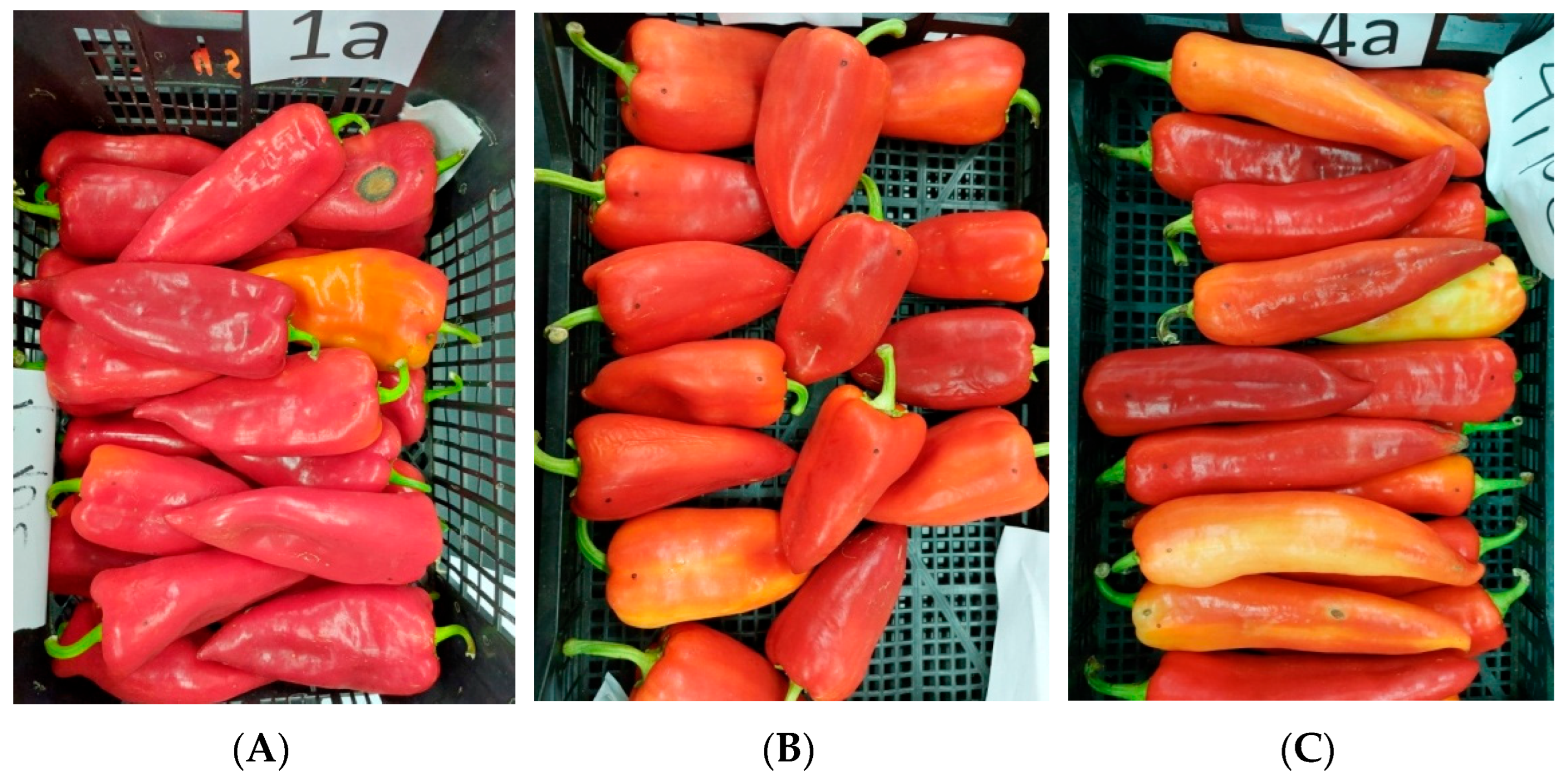
Three traditional Serbian pepper (Capsicum annuum L.) cultivars ‘Kurtovska ajvaruša’, ‘Grkinja babura’, and ‘Duga bela ljuta’ were cultivated in the Aleksinac region (21°42′ E, 43°30′ N, alt. 159 m a.s.l.), South Serbia (Figure 1). Milenković et al. [4] present a detailed account of agrotechnical practices in the cultivation of traditional pepper cultivars encompassing production methods, fertilization regimes, transplanting procedures, crop management, and protection measures during the growing season, as well as the timing and techniques of harvest. For the present study, fruits were selected on 22 September from the continuous harvest when individual fruits of each cultivar had reached their physiological ripening stage. Selection was based on cultivar-specific maturity indicators (typical color development, fruit firmness, and size characteristic of optimal harvest maturity), ensuring uniform physiological maturity across cultivars at the initiation of storage treatments.

2.2. Fruit Selection and Standardization

Fruits were selected based on uniform size standards and the absence of visible damage to ensure experimental consistency across cultivars and treatments. All selected fruits met standardized criteria for shape, size, and surface integrity typical for each cultivar. Only fruits without mechanical damage, disease symptoms, or physiological disorders were included in the experiment.

2.3. Experimental Design

Following this initial assessment, the fruits were randomly selected and assigned to one of three experimental groups: (a) low-temperature storage, held at 4 °C for 21 days; (b) hot water dipping (HWD), treated at 55 °C for 1 min using a large-volume insulated bath (~30 L capacity per batch) with continuous water circulation to minimize temperature fluctuations, followed by storage at 4 °C for 21 days; and (c) usual-temperature storage, held at 10 °C for 21 days. The HWD protocol specifications were as follows: (i) water-to-fruit mass ratio of approximately 10:1 (L/kg) to ensure adequate thermal buffering; (ii) water temperature monitored continuously using a calibrated digital thermometer (±0.1 °C accuracy), with measurements recorded every 10 s during treatment; (iii) batch size limited to 3 kg of fruits per treatment cycle to maintain temperature stability; (iv) fruits completely submerged and gently agitated during the 1 min treatment; and (v) immediate cooling to room temperature (20–22 °C) using ambient air circulation for 15 min before cold storage initiation. This method was designed to be easily implemented under farm conditions without requiring high-tech equipment, following principles established by Fallik [11]. The choice of 55 °C for 1 min represents an optimal compromise, providing sufficient heat exposure to activate beneficial physiological defense mechanisms while avoiding thermal damage. This protocol was validated in our previous study on the same traditional Serbian cultivars, demonstrating effective reduction in chilling injury (to 4.8%) and decay incidence (to 3.1%) while maintaining marketability [4].
Fruits were stored for 21 days in three controlled environment chambers (FRIGOŽIKA, Ruma, Serbia), maintaining precise temperature control at 4 °C or 10 °C with 90–95% relative humidity. Relative humidity was maintained using environmental storage chambers equipped with humidity control systems and monitored daily using digital hygrometers (±2% accuracy). Subsequently, the samples were transferred to shelf-life conditions at 24 ± 2 °C and ambient relative humidity (approximately 60–70%) for an additional 3 days. All analyses were conducted at the beginning of the experiment (0 days), after the periods of cold storage (day 21), and after the subsequent shelf life (day 21 + 3). The experiment followed a 3 × 3 factorial design, comprising three storage treatments (10 °C, 4 °C, and 4 °C with HWD pretreatment) and three evaluation periods (0, 21, and 21 + 3 days), with measurements taken on multiple fruits per treatment. The experiment utilized a 3 × 3 factorial design, comprising three traditional varieties, three storage treatments, and three evaluation periods.

2.4. Sample Preparation

For chemical analyses, quarters from 10 fruits per treatment (without seeds, calyx, or pedicel) were pooled and homogenized together to create a composite sample, which was then transferred to Ziplock bags and frozen with dry ice. Samples were stored at −80 °C until further analysis.
Experimental replication structure: The 10-fruit composite sample represents one biological replicate per cultivar × treatment × time combination. From this biological replicate, all analytical measurements (TSS, TA, sugars, acids, and phenolics) were performed in triplicate, representing three technical replicates (i.e., three independent analytical measurements from the same homogenized composite sample). This design prioritizes analytical precision and treatment effect detection over assessment of fruit-to-fruit biological variability within treatments. Statistical analyses were conducted on n = 3 technical replicates from the composite sample.

2.5. Analytical Methods

2.5.1. Mineral Content

Ash content was determined by thermo-gravimetric analysis using a LECO TGA-701 analyzer (LECO Co., St. Joseph, MI, USA). Approximately 2 g of the homogenized sample was subjected to dry combustion at 550°C until a constant mass was achieved. Ash content was expressed as a percentage of dry matter.

2.5.2. Total Soluble Solids–TSS (°Brix) Content

Total soluble solid (TSS) content was measured in juice extracted from the homogenized composite sample (prepared from 10 pooled fruits per treatment, as described in Section 2.4) using a digital refractometer (Atago PAL-1, Atago Co., Tokyo, Japan) at room temperature. Measurements were performed in triplicate (n = 3 technical replicates).

2.5.3. Titratable Acidity (TA)

Titratable acidity was determined by diluting 10 g of the homogenized composite sample (prepared from 10 pooled fruits per treatment, as described in Section 2.4) in 100 mL of distilled water. The diluted sample was titrated with 0.1 M NaOH to pH 8.1 using a pH meter (Metrohm 827, Metrohm, Herisau, Switzerland). Measurements were performed in triplicate (n = 3 technical replicates), and results were expressed as g malic acid equivalents per 100 g fresh weight.

2.5.4. Glucose and Fructose

Glucose and fructose contents were analyzed in homogenized fruit samples (2 g, 10 fruits per treatment, and n = 3 replicates) following extraction as described by Milenković et al. [4]. Separation was performed using an HPLC system (Agilent 1200 series, Agilent Technologies, Santa Clara, CA, USA) using Zorbax Carbohydrate (4.6 × 250 mm, 5 µm column; Agilent Technologies, Vienna, Austria), along with an evaporative light scattering detector (ELSD G4218A, Agilent Technologies, USA). Mobile phase consisted of acetonitrile and distilled water (65/35, v/v) with a flow rate of 1.1 mL/min. The injection volume was 10 μL, with 15 min of total run time and 1.5 min pause between analyses. Results were expressed as mg per 100 g of fresh weight.

2.5.5. Ascorbic and Citric Acid

Ascorbic and citric acid contents were quantified in homogenized samples (2 g, 10 fruits per treatment, and n = 3 replicates). The same HPLC system was used, equipped with NUCLEOGEL SUGAR 810 H (8–10 μm particle size, 7.8 × 300 mm, Macherey-Nagel, Düren, Germany) column and diode array detector (DAD G1315C, Agilent Technologies, USA) set at 254 nm for ascorbic acid and 210 nm for citric acid. Mobile phase was 0.005 M H2SO4 at a flow rate of 0.6 mL/min, with 10 μL injection volume, and the total analysis time was 25 min, with a 1.5 min pause between analyses. Results were expressed as mg/100 g fresh weight.

2.5.6. Total Phenolic Content (TPC)

Homogenized fruit samples (2 g, from 10 fruits per treatment, and n = 3 replicates) were extracted with methanol: distilled water (1:1, v/v). Extracts were mixed with Folin–Ciocalteu reagent and sodium carbonate, while absorbance was measured at 765 nm using a spectrophotometer (Shimadzu UV-1800, Shimadzu, Kyoto, Japan). Results were expressed as mg of gallic acid equivalents (GAE) per 100 g fresh weight.

2.5.7. Statistical Analysiswith Comprehensive PCA Details

Principal component analysis (PCA) was performed to explore multivariate relationships among measured quality parameters and visualize cultivar-specific responses to storage treatments. PCA methodology: Data matrices were constructed separately for each cultivar, with rows representing individual observations (cultivar × treatment × time combinations; n = 27 observations per cultivar: 3 treatments × 3 time points × 3 technical replicates) and columns representing seven measured variables (TSS, TA, glucose, fructose, ascorbic acid, citric acid, and TPC).
Prior to PCA, all variables were standardized (mean-centered and scaled to unit variance) to ensure equal weighting regardless of measurement units. PCA was performed using correlation matrices rather than covariance matrices to account for different variable scales. The first two principal components (PC1 and PC2) were retained for interpretation based on the eigenvalue > 1 criterion, and cumulative variance was explained (>80%). Biplots display both sample scores (cases) showing treatment clustering patterns and variable loadings (arrows) indicating parameter contributions to principal components. Loading vectors pointing in similar directions indicate positive correlation; opposite directions indicate negative correlation. Statistical analyses were conducted using TIBCO Data Science Workbench (version 14, TIBCO Software Inc., San Ramon, CA, USA, 2020). Significance was set at p < 0.05 and p < 0.01.

3. Results

3.1. Mineral Content at Harvest

Mineral content, including ash and macro- and microelements, was determined at harvest for the three pepper cultivars (Table 1).
Ash content was lowest in ‘Kurtovska ajvaruša’ (1.05%) and highest in ‘Duga bela ljuta’ (1.56%), with no significant differences among cultivars. Significant differences were observed for most elements, except Zn. ‘Grkinja babura’ exhibited the highest concentrations of K (1819), Na (248.4), Mg (103.2), Cu (2.24), and Mn (0.60). ‘Kurtovska ajvaruša’ had the highest Ca (155.5) and Fe (10.0), while ‘Duga bela ljuta’ showed intermediate values for most elements, with K at 1758 and Ca at 134.4. Zn content ranged from 2.60 (‘Duga bela ljuta’) to 3.53 (‘Kurtovska ajvaruša’).
Fruit color changes during storage were comprehensively analyzed and reported in our previous companion study on these same cultivars [4], which focused on physicochemical properties, including color parameters, firmness, weight loss, chilling injury, and decay incidence.

3.2. Total Soluble Solids (TSS) and Titratable Acidity (TA)

Total soluble solid (TSS) content and titratable acidity (TA) varied significantly across cultivars, storage conditions, and time points (Table 2).
Total soluble solid (TSS) content and titratable acidity (TA) varied significantly across cultivars, storage conditions, and time points (Table 2). TSS generally increased during storage across all cultivars and treatments, with the most pronounced changes observed during the shelf-life phase (day 21 + 3). ‘Kurtovska ajvaruša’ showed the greatest TSS increase under 10 °C storage (9.1°Brix at day 21 + 3 vs. 8.2°Brix initially), while ‘Grkinja babura’ maintained more stable TSS levels. HWD treatment had minimal effects on TSS compared to storage temperature alone.
TA patterns were cultivar-dependent: ‘Kurtovska ajvaruša’ showed slight TA increases during storage, particularly under 4 °C + HWD treatment (0.22 g/100 g at day 21). In contrast, ‘Grkinja babura’ and ‘Duga bela ljuta’ exhibited stable or slightly declining TA values throughout storage. The three-way interaction (T × D ×V) was significant for both parameters, reflecting these cultivar-specific temporal responses to storage treatments.

3.3. Sugar Content

Glucose and fructose contents showed significant variation across cultivars, treatments, and time points. In ‘Kurtovska ajvaruša’, glucose increased from 73.5 mg/100 g at harvest to 86.9 (10 °C, 21 days), then decreased to 54.1 (10 °C, 21 + 3 days); fructose followed a similar trend, peaking at 81.7 (4 °C HWD, 21 + 3 days) and dropping to 55.1 (4 °C HWD, 21 days). ‘Grkinja babura’ exhibited the highest glucose (92.3) and fructose (86.7) at 10 °C after 21 days, but both declined sharply to 49.7 and 47.4, respectively, after shelf life. ‘Duga bela ljuta’ maintained relatively stable glucose (46.1–80.0) and fructose (48.7–82.2) across treatments, with the highest values at 80.0 (glucose, 10 °C, 21 + 3 days) and 82.2 (fructose, 10 °C, 21 + 3 days) (Table 3).

3.4. Organic (Ascorbic and Citric) Acid Content

For ‘Kurtovska ajvaruša’, ascorbic acid increased from 93.9 mg/100 g at harvest to 98.3 (10 °C, 21 days), then decreased to 65.5 (4 °C, 21 + 3 days); citric acid peaked at 29.9 (4 °C HWD, 21 + 3 days), dropping to 18.9 (10 °C, 21 + 3 days). ‘Grkinja babura’ had the lowest ascorbic acid (52.1 mg/100 g, 4 °C HWD, 21 days), increasing to 75.6 (10 °C, 21 days); citric acid peaked at 27.9 (4 °C HWD, 21 days), declining to 18.1 (10 °C, 21 + 3 days). ‘Duga bela ljuta’ showed the highest ascorbic acid (104.4 mg/100 g, 10 °C, 21 + 3 days), with the lowest at 58.1 (4 °C HWD, 21 days); citric acid ranged from 19.5 (4 °C HWD, 21 + 3 days) to 26.5 (4 °C, 21 days).The significant three-way interaction (T × D × V, p < 0.01) indicates that storage treatment effectiveness varies by both cultivar and time. For example, ‘Duga bela ljuta’ showed continued ascorbic acid increase at 10 °C during shelf life (63.7→104.4 mg/100 g), while ‘Kurtovska ajvaruša’ peaked at 21 days and then declined, demonstrating that optimal harvest timing depends on both variety and treatment (Table 4).

3.5. Total Phenolic Content (TPC)

In ‘Kurtovska ajvaruša’, TPC increased from 148.0 mg/100 g at harvest to 191.2 mg/100 g (4 °C HWD, 21 + 3 days). ‘Grkinja babura’ TPC rose from 142.6 mg/100 g to a peak of 185.9 mg/100 g (10 °C, 21 + 3 days), with the lowest value at 144.8 mg/100 g (4 °C HWD, 21 + 3 days). ‘Duga bela ljuta’ maintained stable TPC, ranging from 166.8 mg/100 g (day 0) to 177.6 mg/100 g (4 °C HWD, 21 days), with no significant treatment effects. The significant three-way interaction (T × D × V, p < 0.05) reveals that HWD effectiveness depends on cultivar and storage duration. ‘Kurtovska ajvaruša’ showed progressive TPC enhancement with HWD over time (148.0–191.2 mg/100 g), while ‘Grkinja babura’ peaked earlier and then declined, indicating variety-specific optimal treatment timing (Table 5).
The present study was deliberately designed to complement that work by examining nutritional quality and phytochemical composition (minerals, sugars, organic acids, ascorbic acid, and phenolic compounds) during storage—parameters not covered in the previous publication. This division allows for in-depth analysis of both aspects while avoiding redundancy. Together, these two studies provide a comprehensive characterization of postharvest quality changes in traditional Serbian pepper cultivars. For readers’ reference, the color analysis results from our previous work demonstrated that 4 °C storage with HWD better preserved color parameters (L*, a*, b*, hue angle, and chroma) compared to storage at 10 °C, supporting the storage recommendations derived from the nutritional data presented in the current manuscript.

3.6. Interpretation of Treatment × Day × Variety Interactions

The significant three-way interactions (T × D ×V) observed for ascorbic acid, citric acid, and total phenolic content reveal complex cultivar-specific temporal responses to storage treatments that have important practical implications.For ascorbic acid, the interaction reflects divergent cultivar strategies: ‘Duga bela ljuta’ maintained the highest retention at 10 °C throughout storage (104.4 mg/100 g at day 21 + 3), whereas ‘Kurtovska ajvaruša’ showed progressive degradation at all temperatures. This pattern suggests cultivar differences in ascorbate oxidase activity and regeneration capacity through the ascorbate–glutathione cycle [12]. The protective effect of lower temperatures in ‘Duga bela ljuta’ aligns with reduced enzymatic degradation rates, while HWD treatment showed minimal benefit for ascorbic acid preservation across all cultivars, which is consistent with findings that heat shock primarily activates phenolic rather than ascorbate biosynthetic pathways [13].
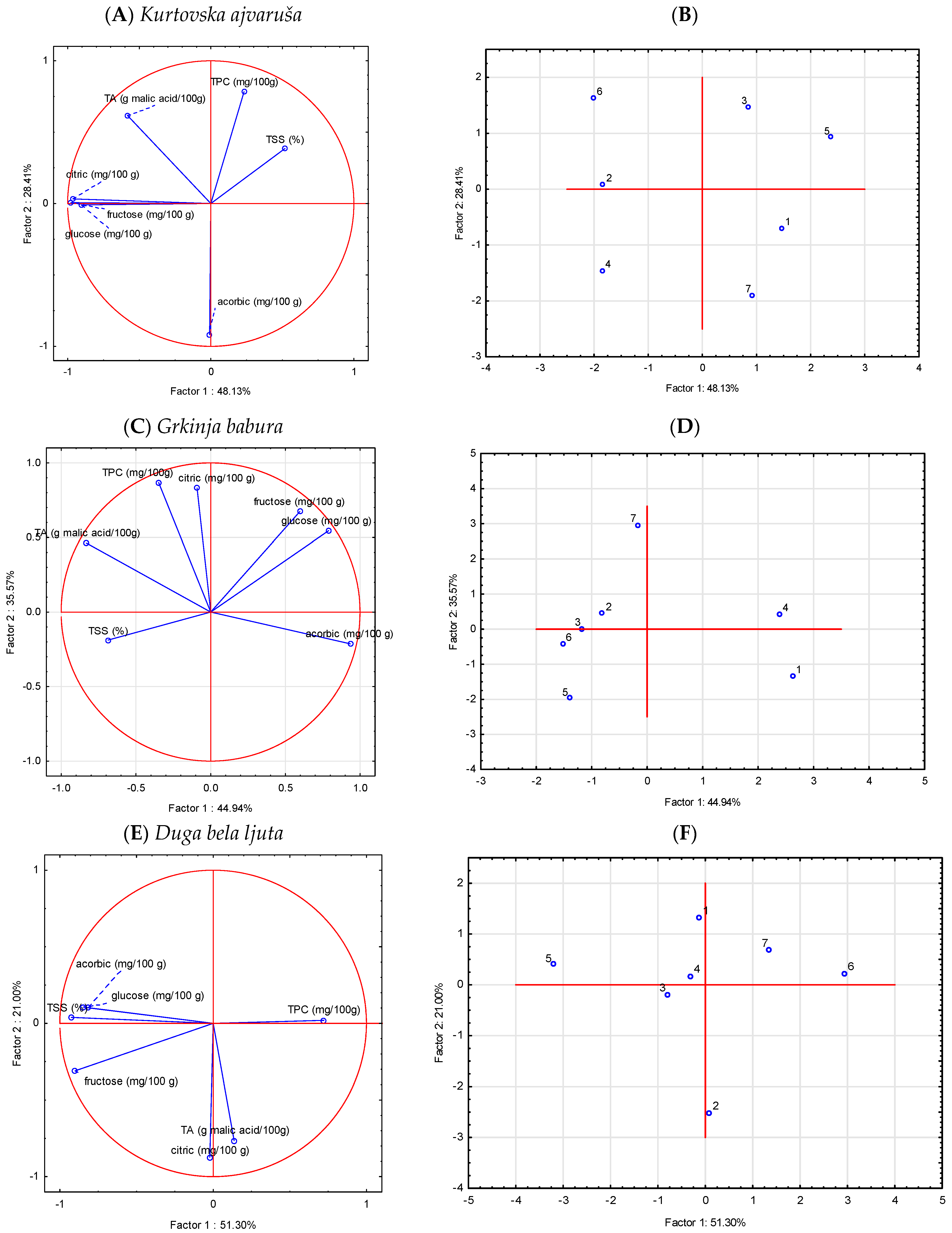
For total phenolic content, ‘Kurtovska ajvaruša’ uniquely responded to HWD with sustained phenolic accumulation (191.2 mg/100 g at day 21 + 3 under 4 °C + HWD), representing a 17% increase over initial values. This cultivar-specific response likely reflects HWD-induced upregulation of phenylalanine ammonia-lyase (PAL) and other phenylpropanoid pathway enzymes, as documented by Kantakhoo and Imahori [13] in commercial peppers. In contrast, ‘Grkinja babura’ and ‘Duga bela ljuta’ maintained stable or slightly declining phenolic levels regardless of treatment, suggesting lower PAL inducibility in these genotypes (Figure 2).
The citric acid interaction pattern demonstrates that HWD effects are time-dependent: benefits emerged primarily during the shelf-life phase (day 21 + 3) rather than the cold storage phase (day 21), particularly in ‘Kurtovska ajvaruša’. This delayed response suggests HWD primes stress-response mechanisms that become fully expressed under subsequent temperature transition stress, which is consistent with hormetic stress theory [11].
Practical implications for storage protocol selection:
Kurtovska ajvaruša’: 4 °C + HWD recommended for applications prioritizing antioxidant capacity (ajvar processing, functional foods).
Duga bela ljuta’: 10 °C without HWD optimal for the fresh market, emphasizing vitamin C content.
Grkinja babura’: 4 °C alone provides balanced quality maintenance without HWD investment.
These interaction effects underscore that universal storage protocols are inappropriate for heritage cultivars with distinct genetic backgrounds and metabolic capacities.

4. Discussion

Hot water treatments applied before storage are used to preserve the quality of pepper fruits during storage [20]. Such treatments exert their effects through both direct and indirect mechanisms. Directly, heat can inactivate or suppress pathogens located on the surface of fresh produce or within the outer two to three cell layers beneath the epidermis. Indirectly, exposure to heat can stimulate a series of physiological and biochemical defense responses within the produce, enhancing its natural resistance to infection and thereby slowing or preventing subsequent pathogen development [21]. Moreover, the efficiency of these treatments depends on factors such as the temperature regime, exposure time, and the type and physiological state of the commodity, all of which must be carefully optimized to achieve effective pathogen control without compromising produce quality.
This study expands on our previous study by showing the effects of storage conditions on the nutrition of traditional Serbian pepper cultivars work [4]. Cultivar differences in weight loss and marketability were observed among traditional peppers, likely due to variations in morphological traits. HWD at 55 °C for 1 min enhances the postharvest quality of traditional pepper cultivars by reducing CI and decay during cold storage [4]. Comparative analysis with alternative postharvest technologies demonstrates HWD’s competitive advantages for traditional pepper cultivars. While modified atmosphere packaging (MAP) can extend bell pepper shelf life to 2–3 weeks at 5–8°C with optimal gas compositions (2–5% O2, 2–5% CO2), studies show variable effectiveness depending on film permeability and cultivar sensitivity [22].
From a technology-adoption perspective, HWD may offer advantages for resource-limited producers compared to sophisticated alternatives such as controlled atmosphere storage or modified atmosphere packaging (MAP), which require specialized equipment, continuous monitoring, and specific infrastructure investments. However, a formal economic feasibility analysis comparing HWD operational costs (energy, labor, and equipment) against alternative technologies across different production scales would be necessary to validate these potential advantages. Such analysis should incorporate capital investment requirements, training needs, energy consumption patterns, and quality-adjusted market returns to provide evidence-based adoption guidance for traditional pepper producers. The nutritional quality achieved through optimized storage positions Serbian traditional peppers for functional food markets beyond local consumption. With vitamin C levels exceeding 100 mg/100 g and phenolic content reaching 191.2 mg GAE/100 g, these cultivars offer competitive nutritional density for European export markets that are increasingly demanding authentic, health-promoting products. The storage protocols enable consistent quality maintenance during international distribution, supporting export potential for premium ajvar and specialty pepper products targeting functional foods consumers.
From a dietary perspective, a 100 g serving of optimally stored ‘Duga bela ljuta’ provides 104–116% of the recommended daily vitamin C intake for adults (90–75 mg/day for men/women), significantly exceeding the nutritional contribution of commercial varieties under similar storage conditions. Similarly, the enhanced phenolic content in HWD-treated ‘Kurtovska ajvaruša’ (191.2 mg GAE/100 g) represents a substantial source of dietary antioxidants, comparable to levels found in recognized functional foods. These nutritional advantages position traditional Serbian peppers as valuable contributors to daily antioxidant and vitamin C requirements when appropriate storage protocols are applied. HWD is more practical for small-scale Serbian pepper producers, particularly when ajvar processing rather than extended fresh market storage is the primary objective.
Vitamin C content decreased significantly with storage period (p < 0.05). In research by Kaynas and Salkadas [23], postharvest treatments were found to be effective for preventing vitamin C degradation during storage, with significant (p < 0.05) differences determined after 30 days of storage. Thus, HWD at 40 and 50°C preserved vitamin C during the whole storage period, with no significant difference between these treatments.
The observed mineral content variations at harvest highlight the nutritional diversity of these traditional varieties. ‘Grkinja babura’ exhibited elevated K (1819), Na (248.4), and Mg (103.2 mg/kg), while ‘Kurtovska ajvaruša’ was rich in Ca (155.5 mg/100 g) and Fe (10.0 mg/kg). These differences, likely influenced by genetic factors and pericarp morphology (e.g., cuticle thickness noted in our histological analysis) [4] align with findings from Kosovo pepper landraces (K: 1851 mg/100 g) [24].
Sensory attributes, driven by total soluble solids (TSS), titratable acidity (TA), and sugars, showed significant cultivar-specific responses. TSS in ‘Duga bela ljuta’ increasedto 7.36% (10 °C, 21 + 3 days), suggesting enhanced sweetness, which is critical for ajvar production, while ‘Grkinja babura’ is high initial TSS (6.62%) and TA peak (1.036 g/100 g, 4 °C, 21 days), indicating a robust flavor profile. However, ‘Grkinja babura’s sharp glucose (49.7 mg/100 g) and fructose (47.4 mg/100 g) decline post-shelf life reflects accelerated sugar metabolism. Lahbib et al. [25] similarly reported cultivar-dependent TSS fluctuations linking them to fruit position and ripening stage. These trends complement our previously reported data on quinic and succinic acids, reinforcing the importance of storage optimization for sensory quality [4].
This study did not directly compare traditional Serbian cultivars against commercial hybrids; therefore, conclusions are limited to cultivar-specific responses within the heritage germplasm evaluated. However, the observed nutritional retention patterns (17% phenolic increase in ‘Kurtovska ajvaruša’, and stable ascorbic acid in ‘Duga bela ljuta’) demonstrate that traditional cultivars possess significant phytochemical preservation capacity when storage protocols are appropriately matched to genotype. Future research directly comparing traditional and commercial cultivars under identical storage conditions would clarify the relative performance and economic competitiveness of heritage varieties. HWD’s role in stabilizing citric acid (e.g., 29.9 mg/100 g in ‘Kurtovska ajvaruša’) enhances both nutritional and sensory attributes. TPC increases, particularly in ‘Kurtovska ajvaruša’ (191.2 mg/100 g, 4 °C HWD, 21 + 3 days), exceed levels typically reported for commercial bell peppers under similar HWD treatments (145–165 mg GAE/100 g) and approach values found in specialized antioxidant-rich pepper varieties, positioning Serbian cultivars competitively for functional food applications [4]. These findings underscore HWD’s potential to boost antioxidant capacity, which is critical for health-promoting properties. The distinct storage responses observed in Serbian traditional cultivars highlight fundamental differences from commercial variety paradigms established in international research. While commercial bell peppers demonstrate relatively uniform optimal storage at 7.5 °C with 90–95% humidity for a maximum 3-week shelf life [26], traditional varieties exhibit cultivar-specific requirements that deviate significantly from these standards. This divergence reflects breeding priorities: commercial varieties prioritize transport tolerance and uniform appearance, while traditional cultivars evolved for specific culinary applications and local environmental adaptation. The superior nutritional retention observed in Serbian cultivars compared to commercial varieties in parallel studies suggests that traditional cultivars may require specialized postharvest protocols to realize their full potential, supporting arguments for cultivar-specific rather than standardized storage approaches in heritage variety preservation programs.
Our findings can be contextualized within broader pepper storage research. Previous work on commercial bell peppers (‘Selika’-red, ‘Dynamo’-yellow, and ‘Sympathy’-orange) stored at 7°C showed stable hydrophilic antioxidant activity and modest ascorbic acid changes [27], contrasting with the more dynamic phenolic responses observed in traditional Serbian cultivars under HWD treatment. This suggests that heritage varieties may exhibit greater metabolic plasticity in response to postharvest stress treatments compared to commercially bred cultivars selected primarily for shipping tolerance rather than biochemical responsiveness
Heat treatments activate multiple stress-response pathways in pepper fruits. Endo et al. [12] demonstrated that hot water treatment enhances the ascorbate–glutathione cycle in commercial sweet peppers, increasing activities of ascorbate peroxidase, dehydroascorbate reductase, and glutathione reductase. However, our results show this protective mechanism operates with cultivar-specific efficiency: ‘Duga bela ljuta’ maintained ascorbic acid under temperature optimization alone (10 °C), whereas ‘Kurtovska ajvaruša’ required phenolic pathway activation (HWD) for antioxidant preservation, suggesting varietal differences in primary vs. secondary metabolite stress responses. While short hot water treatments generally enhance phenolic content through stress-induced biosynthesis [13], some studies report reductions with prolonged heat exposure or in sensitive cultivars [27,28]. Our results with 55 °C/1 min treatment align with the former, but the cultivar-specific magnitude of response (17% increase in ‘Kurtovska ajvaruša’ vs. stability in other cultivars) emphasizes genotypic variation in heat stress tolerance and secondary metabolite regulation. In research by López-Velázquez et al. [29], hot water treatment applied for 1 min (53 °C) represents an effective approach for inducing chilling injury tolerance in bell pepper, with this tolerance being closely associated with changes in phenolic composition that may mitigate oxidative stress during storage under chilling conditions.
From a technology-transfer perspective, HWD offers significant practical advantages compared to alternative postharvest technologies evaluated in international pepper research. Unlike controlled atmosphere storage systems requiring specialized equipment and continuous monitoring, or MAP systems demanding specific film properties and gas composition management, HWD requires only basic hot water infrastructure and temperature monitoring capabilities accessible to small-scale producers. Economic analysis from commercial pepper operations suggests HWD operational costs (energy, labor) remain substantially lower than sophisticated storage systems, while achieving comparable or superior quality maintenance for traditional varieties. The 4 °C storage optimization identified for HWD-treated Serbian peppers aligns with existing cold storage infrastructure in European agricultural regions, facilitating adoption without major infrastructure investments.
Integration with our original study reveals synergies between HWD’s chilling injury (CI) reduction and biochemical stability. HWD’s mitigation of CI, linked to membrane integrity, likely contributes to TPC and citric acid retention, as seen in ‘Kurtovska ajvaruša’. ‘Grkinja babura’s high initial TSS and moisture retention [4] correlate with its robust organic acid profiles, suggesting structural adaptations enhance quality preservation. These cultivar-specific responses highlight the need for tailored postharvest strategies.
Practically, our results inform storage recommendations: 4 °C with HWD maximizes TPC and citric acid in ‘Kurtovska ajvaruša’, while 10 °C optimizes ascorbic acid in ‘Duga bela ljuta’. Such strategies enhance the marketability of Serbian peppers, supporting local farmers and processors in preserving traditional cultivars for culinary applications like ajvar. These storage protocols are supported by sensory evaluation data demonstrating that HWD treatment preserves general appearance scores above marketable thresholds (>3.0) for ‘Kurtovska ajvaruša’ and ‘Duga bela ljuta’ during 21-day storage, while maintaining visual quality parameters critical for consumer acceptance [4]. The sensory validation confirms that nutritional quality preservation achieved through optimized storage translates to maintained consumer acceptability.
Principal component analysis (PCA) provided insights into the multivariate relationships among quality parameters, highlighting cultivar-specific responses to storage conditions. For ‘Kurtovska ajvaruša’, PC1 distinguished samples with high ascorbic acid and sugars at harvest and 10 °C (21 days) from those with elevated TA and TSS, while PC2 emphasized TPC and citric acid increases under 4 °C HWD (21 + 3 days), aligning with HWD’s enhancement of antioxidants observed in our prior ASTA data [4]. In ʹGrkinja baburaʹ, PC1 separated high sugar and citric acid content at 10 °C (21 days) from TSS-driven samples at 10 °C (21 + 3 days), with PC2 contrasting TPC and TA with ascorbic acid, reflecting rapid ascorbic acid degradation [6]. For ‘Duga bela ljuta’, PC1 underscored TSS sugars and ascorbic acid at 10 °C (21 + 3 days) against TPC at 4 °C HWD (21 days), while PC2 highlighted citric acid and TA, which is consistent with stable acid profiles. These patterns confirm HWD’s role in boosting TPC and citric acid across cultivars, supporting Kantakhoo and Imahori [13], and highlight ʹDuga bela ljutaʹs ascorbic acid retention, similar to bell peppers. PCA thus reinforces the need for tailored storage strategies to optimize sensory and nutritional quality. These PCA patterns enable evidence-based storage selection. For fresh markets prioritizing vitamin C, use 10 °C without HWD (optimizes PC1-negative traits in ‘Duga bela ljuta’). For functional foods requiring antioxidants, apply 4 °C with HWD (targets PC2 enhancement in ‘Kurtovska ajvaruša’, PC1-positive in ‘Duga bela ljuta’). ‘Grkinja babura’ requires 4 °C alone to balance competing quality demands. Variable correlations confirm that sugar-preserving treatments maintain sweetness, while vitamin C and antioxidant optimization require separate protocols. From a practical perspective, PCA-guided protocols enable market differentiation: ‘Duga bela ljuta’ suits premium vitamin C applications, ‘Kurtovska ajvaruša’ serves dual-purpose markets, and ‘Grkinja babura’ targets niche heritage products. This strategic approach enhances economic viability while preserving genetic diversity through optimized postharvest management.

Study Limitations and Future Direction

Several methodological constraints should be acknowledged when interpreting these findings. First, the single-batch experimental design, while enabling robust treatment comparisons under controlled conditions by eliminating between-batch variability, limits generalizability across different growing seasons, harvest years, and agroecological conditions. Environmental factors during fruit development (temperature, water availability, and solar radiation) can significantly influence initial phytochemical composition and subsequent storage responses [29]. Multi-season validation studies incorporating fruits from at least three consecutive harvest years would strengthen confidence in cultivar-specific storage recommendations and enable quantification of genotype × environment × storage treatment interactions. Second, the sample pooling strategy (10 fruits per composite sample) prioritizes treatment effect detection over biological variability assessment. While technically appropriate for analytical precision, this approach concentrates statistical power on mean differences rather than variance structure. Future studies employing individual fruit tracking would enable mixed-effects modeling accounting for fruit-level variability within treatments. Third, the 21 + 3 day evaluation period captures early-to-medium-term storage dynamics but may not reflect quality changes during extended storage (4–8 weeks), which is relevant for some commercial applications or traditional preservation methods. Longer-term studies would clarify whether the phenolic accumulation observed in ‘Kurtovska ajvaruša’ under HWD represents sustained biosynthesis or a temporary stress response. Fourth, while our companion study [4] documented sensory quality maintenance during these storage treatments, direct sensory–nutritional integration (e.g., correlating phenolic profiles with bitterness perception, or ascorbic acid levels with sourness) was not performed. Comprehensive consumer acceptance testing integrating analytical and sensory data would strengthen practical storage protocol recommendations. Fifth, this study examined only three cultivars from the broader diversity of traditional Serbian pepper germplasm. Expanding evaluation to additional landraces (e.g., ‘Novosadska rotunda’, ‘Aleksinačka turšijara’, and‘Lokošnička’) would clarify whether observed patterns represent general heritage cultivar traits or are specific to the studied genotypes.
Future research priorities include the following: (1) multi-season field validation with replicated harvest batches; (2) metabolomic and transcriptomic profiling to elucidate molecular mechanisms underlying cultivar-specific HWD responses; (3) commercial-scale pilot studies assessing economic feasibility, infrastructure requirements, and farmer adoption barriers; (4) evaluation of combined treatments (HWD + modified atmosphere packaging, HWD + biocontrol agents) for synergistic quality preservation; and (5) development of decision-support tools integrating cultivar identity, market destination, and available infrastructure to optimize storage protocol selection for individual producers.

5. Conclusions

This study demonstrates that hot water dipping effectiveness for traditional Serbian pepper storage is highly cultivar-specific, with treatment benefits varying substantially among genotypes. The key practical finding is that HWD investment can only be justified for certain cultivars targeting specific markets.
Among the three cultivars evaluated, only Kurtovska ajvaruša showed clear responsiveness to HWD treatment. When treated at 55 °C for one minute and stored at 4 °C, this cultivar exhibited substantial phenolic content increases and enhanced citric acid retention compared to storage without treatment. This response makes HWD economically justifiable for Kurtovska ajvaruša when targeting ajvar processing or antioxidant-focused applications.
In contrast, HWD provided no measurable improvements for the other cultivars. Grkinja babura maintained balanced sugar and organic acid profiles equally well under 4 °C storage alone, while Duga bela ljuta achieved optimal ascorbic acid retention at 10 °C without heat pretreatment. For these cultivars, producers should focus on optimized temperature management rather than investing in heat treatment infrastructure.Principal component analysis confirmed that HWD effects primarily activate phenolic biosynthetic pathways rather than preserving ascorbic acid or modifying sugar metabolism, explaining why treatment benefits are cultivar-dependent.
Important limitations constrain these findings. The study evaluated only three cultivars from a single growing season using a single-batch experimental design, limiting inference to broader pepper diversity and multi-year variability. Given these constraints, HWD implementation should be approached as a cultivar-specific strategy rather than a universal protocol. Producers with HWD-responsive varieties targeting processed products may justify treatment investment, while those with non-responsive cultivars should prioritize temperature optimization alone. Multi-season validation across expanded cultivar collections remains essential before recommending widespread HWD adoption for traditional Serbian pepper production.

Author Contributions

Conceptualization, L.M.; methodology, L.M. and L.Š.; software, Ž.K.; data curation, Ž.K. and R.K.; formal analysis, D.U. and L.T.; investigation, R.K., D.U., and L.T.; validation, L.Š. and B.Ć.; writing—original draft preparation, Ž.K.; writing—review and editing, Z.S.I.; project administration, B.Ć.; supervision, Z.S.I. All authors have read and agreed to the published version of the manuscript.

Funding

This research was funded by the Ministry of Science, Technological Development and Innovation of the Republic of Serbia. Grant Nos. 451-03-136/2025-03/200189, 451-03-136/2025-03/200222 and 451-03-136/2025-03/200007.

Data Availability Statement

The original contributions presented in this study are included in the article. Further inquiries can be directed to the corresponding author.

Conflicts of Interest

The authors declare no conflicts of interest.

References

  1. Ministry of Agriculture, Forestry and Water Management of the Republic of Serbia. 2024. Available online: https://www.minpolj.gov.rs/wp-content/uploads/2025/06/ZK-2024-II-knjiga.pdf (accessed on 16 December 2025).
  2. Sánchez, E.; Hellín, P.; Rodríguez-Burruezo, A.; Gomariz, J.; Garrido, I.; Cava, J.; Molina, M.V.; Fenoll, J.; Flores, P. Evaluation of traditional genotypes of pepper (Capsicum annuum) for vitamin C content. Acta Hortic. 2018, 1194, 979–984. [Google Scholar] [CrossRef]
  3. Danojević, D.; Glogovac, S.K.; Moravčević, Ð.; Medić-Pap, S.S. Preferences of Serbian consumers towards different pepper fruits. Food Feed Res. 2021, 48, 155–163. [Google Scholar] [CrossRef]
  4. Milenković, L.; Ilić, Z.S.; Kevrešan, Ž.; Tubić, L.; Ubiparip-Samek, D.; Đerić, M.; Kovač, R. Postharvest quality maintenance of traditional Serbian peppers: The impact of heat treatment and storage temperature. Horticulturae 2025, 11, 1048. [Google Scholar] [CrossRef]
  5. Kissinger, M.; Tuvia-Alkalai, S.; Shalom, Y.; Fallik, E.; Elkind, Y.; Jenks, M.A.; Goodwin, M.S. Characterization of physiological and biochemical factors associated with postharvest water loss in ripe pepper fruit during storage. J. Am. Soc. Hortic. Sci. 2005, 130, 735–741. [Google Scholar] [CrossRef]
  6. Afolabi, A.S.; Choi, I.-L.; Lee, J.H.; Kwon, Y.B.; Kang, H.-M. High-relative-humidity storage reduces the chilling injury symptoms of red sweet peppers in the breaker stage. Horticulturae 2023, 9, 116. [Google Scholar] [CrossRef]
  7. Ilić, Z.S.; Trajković, R.; Pavlović, R.; Alkalai-Tuvia, S.; Perzelan, Y.; Fallik, E. Effect of heat treatment and individual shrink packaging on quality and nutritional value of bell pepper stored at suboptimal temperature. Int. J. Food Sci. Technol. 2012, 47, 83–90. [Google Scholar] [CrossRef]
  8. El-Ramady, H.R.; Domokos-Szabolcsy, É.; Abdalla, N.A.; Taha, H.S.; Fári, M. Postharvest management of fruits and vegetables storage. In Sustainable Agriculture Reviews; Lichtfouse, E., Ed.; Springer: Cham, Switzerland, 2015; pp. 65–152. [Google Scholar] [CrossRef]
  9. Donoghue, E.M.; Brummell, D.A.; McKenzie, M.J.; Hunter, D.A.; Lill, R.E. Sweet capsicum: Postharvest physiology and technologies. N. Z. J. Crop Hortic. Sci. 2018, 46, 269–297. [Google Scholar] [CrossRef]
  10. Adewoyin, O.; Famaye, A.; Ipinmoroti, R.; Ibidapo, A.; Fayose, F. Postharvest handling methods, processes and practices for pepper. In Capsicum—Current Trends and Perspectives; Yllano, O.B., Ed.; IntechOpen: London, UK, 2023. [Google Scholar] [CrossRef]
  11. Fallik, E.; Alkalai-Tuvia, S.; Chalupowicz, D. Hot water rinsing and brushing of fresh produce as an alternative to chemical treatment after harvest—The story behind the technology. Agronomy 2021, 11, 1653. [Google Scholar] [CrossRef]
  12. Endo, H.; Miyazaki, K.; Ose, K.; Imahori, Y. Hot water treatment to alleviate chilling injury and enhance ascorbate-glutathione cycle in sweet pepper fruit during postharvest cold storage. Sci. Hortic. 2019, 257, 108715. [Google Scholar] [CrossRef]
  13. Kantakhoo, J.; Imahori, Y. Antioxidative responses to pre-storage hot water treatment of red sweet pepper (Capsicum annuum L.) fruit during cold storage. Foods 2021, 10, 3031. [Google Scholar] [CrossRef]
  14. Hao, W.J.; Nawi, I.H.M.; Idris, N.I.M. Effect of hot water treatment with calcium dips on postharvest quality of tomato. Malays. Appl. Biol. 2020, 49, 71–77. [Google Scholar] [CrossRef]
  15. Kantakhoo, J.; Ose, K.; Imahori, Y. Effects of hot water treatment to alleviate chilling injury and enhance phenolic metabolism in eggplant fruit during low temperature storage. Sci. Hortic. 2022, 304, 111325. [Google Scholar] [CrossRef]
  16. Abubakar, M.M.; Norida, M.; Rafii, M.Y.; Nakasha, J.J. Effects of post-harvest hot water treatments on the fungi contamination, physiology and quality of rock melon fruit. Aust. J. Crop Sci. 2020, 14, 1081–1087. [Google Scholar] [CrossRef]
  17. Glowacz, M.; Mogren, L.M.; Reade, J.P.; Cobb, A.H.; Monaghan, J.M. Can hot water treatments enhance or maintain postharvest quality of spinach leaves? Postharvest Biol. Technol. 2013, 81, 23–28. [Google Scholar] [CrossRef]
  18. Mirani, B.N.; Chattha, S.H.; Soomro, S.A.; Wagan, B.; Dahri, I.A.; Khan, Z.A.; Zahid, G.; Ansari, B.M. Effect of post-harvest treatments on quality characteristics of carrots during storage. RADS J. Biol. Res. Appl. Sci. 2022, 13, 45–51. [Google Scholar] [CrossRef]
  19. Shukor, N.I.A.; Misran, A.; Saari, N.; Ahmad, S.H.; Mahmud, T.M.M. Postharvest quality evaluation on the hot water-dipped Zingiber officinale rhizomes stored at low-temperature storage. Food Res. 2023, 7, 240–250. [Google Scholar] [CrossRef] [PubMed]
  20. Rehman, R.N.U.; Malik, A.U.; Khan, A.S.; Hasan, M.U.; Anwar, R.; Ali, S.; Haider, M.W. Combined application of hot water treatment and methyl salicylate mitigates chilling injury in sweet pepper (Capsicum annuum L.) fruits. Sci. Hortic. 2021, 283, 110113. [Google Scholar] [CrossRef]
  21. Fallik, E. Hot water treatments of fruit and vegetables for postharvest storage. In Horticultural Reviews; John Wiley and Sons: Hoboken, NJ, USA, 2010; Volume38, pp. 191–212. [Google Scholar] [CrossRef]
  22. Manolopoulou, H.; Xanthopoulos, G.; Douros, N.; Lambrinos, G. Modified atmosphere packaging storage of green bell peppers: Quality criteria. Biosyst. Eng. 2010, 106, 535–543. [Google Scholar] [CrossRef]
  23. Sakaldaş, M.; Kaynaş, K. Biochemical and quality parameters changes of green sweet bell peppers as affected by different postharvest treatments. Afr. J. Biotechnol. 2010, 9, 8174–8181. [Google Scholar] [CrossRef]
  24. Aliu, S.A.; Rusinovci, I.; Fetahu, S.; Kaçiu, S.; Zeka, D. Assessment of morphological variability and chemical composition of some local pepper (Capsicum annuum L.) populations on the area of Kosovo. Acta Agric.Slov. 2017, 109, 205–213. [Google Scholar] [CrossRef][Green Version]
  25. Lahbib, K.; Bnejdi, F.; Pandino, G.; Lombardo, S.; El-Gazzah, M.; El-Bok, S.; Dabbou, S. Changes in yield-related traits, phytochemical composition, and antioxidant activity of pepper (Capsicum annuum) depending on its variety, fruit position, and ripening stage. Foods 2023, 12, 3948. [Google Scholar] [CrossRef] [PubMed]
  26. Cantwell, M.; Suslow, T. Bell Pepper: Recommendations for Maintaining Postharvest Quality; Postharvest Technology Research and Information Center, University of California: Davis, CA, USA, 2002. [Google Scholar]
  27. Ilić, Z.S.; Šunić, L.; Mirecki, N.; Fallik, E. Cultivars differences in keeping quality and bioactive constituents of bell pepper fruit during prolonged storage. J. Adv. Biotechnol. 2014, 4, 313–318. [Google Scholar] [CrossRef]
  28. Jayasundara, J.M.D.N.; Sawbhagya, L.H.N.; Kumarihami, H.M.P.C.; Kramchote, S.; Fallik, E. A comprehensive review of hot water treatments of fruits and vegetables for postharvest quality management. J. Postharvest Technol. 2024, 13, 1–36. [Google Scholar]
  29. López-Velázquez, J.G.; Delgado-Vargas, F.; López-Ángulo, G.; García-Armenta, E.; López-López, M.E.; Ayón-Reyna, L.; Díaz-Corona, D.A.; Vega-García, M.O. Phenolic profile associated with chilling tolerance induced by the application of a hot water treatment in bell pepper fruit. J. Food Sci. 2020, 85, 2080–2089. [Google Scholar] [CrossRef]
Figure 1. Fruits characteristics of the pepper cultivars ‘Kurtovska ajvaruša’ (A), ‘Grkinja babura’ (B) and ‘Duga bela ljuta’ (C).
Agronomy 16 00179 g001
Figure 2. Principal component analysis (PCA) biplots for three Serbian pepper cultivars showing cultivar-specific quality responses to storage treatments.Left panels show sample score plots (cases) with data points representing individual cultivar × treatment × day combinations. Symbols indicate storage treatments: ○ = 10 °C; △ = 4 °C; □ = 4 °C + HWD. Colors distinguish sampling times: black = day 0 (harvest), blue = day 21 (end of cold storage), and red = day 21 + 3 (after shelf life).Right panels show variable loading plots displaying the contribution of measured quality parameters (TSS, TA, glucose, fructose, ascorbic acid, citric acid, and TPC) to principal components. Arrow length indicates variable contribution magnitude; arrow direction shows correlation with PC axes. (A,B) ‘Kurtovska ajvaruša’: PC1 (57.2% variance) separates high ascorbic acid/sugars (harvest, 10 °C day 21) from elevated TA/TSS samples; and PC2 (28.9% variance) emphasizes TPC and citric acid increases under 4 °C + HWD. (C,D) ‘Grkinja babura’: PC1 (51.8% variance) distinguishes high sugar/citric acid content (10 °C day 21) from TSS-driven samples (10 °C day 21 + 3); and PC2 (34.2% variance) contrasts TPC/TA with ascorbic acid. (E,F) ‘Duga belal juta’: PC1 (55.4% variance) underscores TSS/sugars/ascorbic acid at 10 °C (day 21 + 3) against TPC at 4 °C + HWD (day 21); and PC2 (30.8% variance) highlights citric acid and TA patterns.
Agronomy 16 00179 g002
Table 1. Ash (%) and mineral content (mg/kg) in traditional pepper cultivars.
Ash (%)KCaNaMg
Kurtovska ajvaruša1.05 ± 0.1041494 ± 2.02 a155.5 ± 2.51 c185.4 ± 0.39 a74.6 ± 0.958 a
Grkinja babura1.54 ± 0.1541819 ± 5.82 c147.2 ± 2.34 b248.4 ± 3.09 c103.2 ± 1.306 c
Duga bela ljuta1.56 ± 0.1551758 ± 15.6 b134.4 ± 1.58 a229.0 ± 7.44 b89.9 ± 1.967 b
NS********
FeZnCuMn
Kurtovska ajvaruša 10.0 ± 0.161 a3.53 ± 0.3531.43 ± 0.001 a0.32 ± 0.011 a
Grkinja babura 8.2 ± 0.141 b2.80 ± 0.3592.24 ± 0.086 b0.60 ± 0.003 c
Duga bela ljuta 7.4 ± 0.236 b2.60 ± 0.2591.53 ± 0.013 a0.51 ± 0.030 b
*NS****
Different superscript letters indicate significant differences within each column (p < 0.05, Duncan’s test). Statistical significance for effects: * p < 0.05; ** p < 0.01; and NS = not significant.
Table 2. Changes in total soluble solid (TSS °Brix) content and titratable acidity (TA) of three traditional Serbian pepper cultivars during storage at different temperatures and after hot water dipping treatment.
°Brix TSS Titratable Acidity (TA) (g/100 g)
Treatment (T)10 °C4 °C4 °C + HWD10 °C4 °C4 °C + HWD
Variety (V)
Kurtovska ajvaruša
Day(D)05.98 a–c0.518 a
216.19 b–h6.08 b–e6.32 c–h0.670 a–c0.802 b–f0.904 d–g
21 + 36.58 f–i6.51 f–i6.26 c–h0.764 b–e0.786 b–f0.873 c–g
Grkinja babura
06.62 h–i0.868 b–g
216.02 a–d5.78 ab6.15 b–f0.823 b–f1.036 g0.988 fg
21 + 36.25 c–h6.46 e–h5.81 ab0.785 b–f0.938 e–g0.698 a–d
Duga bela ljuta
06.34 c–h0.668 a–c
216.63 hi6.41 d–h5.64 a0.791 b–f0.970 f–g0.869 b–g
21 + 37.36 j6.89 i6.55 f–i0.851 b–g0.869 b–g0.890 d–g
Treatment (T)** **
Day (D)****
Variety (V)****
T × D**
T × V****
D × V****
T × D × V****
Different superscript letters indicate significant differences within each column (p < 0.05, Duncan’s test).Statistical significance for effects: * p < 0.05; ** p < 0.01. Measurements were performed at three sampling points: 0 (at harvest), 21 (after 21 days of storage), and 21 + 3 (after 21 days of storage plus 3 days of shelf life). Storage conditions included 10 °C, 4 °C, and 4 °C + HWD (pre-storage hot water dipping followed by storage at 4 °C). Significance of effects was tested for treatment (T), day (D), variety (V), and their interactions (T × D, T × V, D × V, T × D × V).
Table 3. Glucose and fructose changes in three Serbian traditional pepper cultivars during storage at different temperatures and after hot water dipping treatment.
Glucose (mg/100 g)Fructose (mg/100 g)
Treatment (T)10 °C4 °C4 °C + HWD10 °C4 °C4 °C + HWD
Variety (V)
Kurtovska ajvaruša
Day (D)073.5 fg69.3 fg
2186.9 hi59.8 b–d54.4 ab75.8 gh57.0 cd55.1 b–d
21 + 354.1 ab64.3 c–e80.4 g–h55.6 b–d66.9 ef81.7 hi
Grkinja babura
052.3 ab44.7 a
2192.3 i69.2 ef86.7 hi86.7 i81.6 i86.2 i
21 + 349.7 a54.4 ab52.4 ab47.4 a56.8 cd59.0 cd
Duga bela ljuta
67.6 d–f59.9 de
2173.1 fg59.7 b–d49.6 a74.6 f–h71.5 fg48.7 ab
21 + 380.0 gh59.1 bc46.1 a82.2 hi70.1 fg51.8 a–c
Treatment (T)** **
Day (D)****
Variety (V) ****
T × D**
T × V****
D × V****
T × D × V****
Different superscript letters indicate significant differences within each column (p < 0.05, Duncan’s test). Statistical significance for effects: * p < 0.05; ** p < 0.01. Measurements were performed at three sampling points: 0 (at harvest), 21 (after 21 days of storage), and 21 + 3 (after 21 days of storage plus 3 days of shelf life). Storage conditions included 10 °C, 4 °C, and 4 °C + HWD (pre-storage hot water dipping followed by storage at 4 °C). Significance of effects was tested for treatment (T), day (D), variety (V), and their interactions (T × D, T × V, D × V, T × D × V).
Table 4. Ascorbic acid and citric acid content in traditional Serbian pepper cultivars under different storage conditions and time points.
Ascorbic Acid (mg/100 g)Citric Acid (mg/100 g)
Treatment (T)10 °C4 °C4 °C + HWD10 °C4 °C4 °C + HWD
Variety (V)
Kurtovska ajvaruša
Day (D)093.9 i20.6 c
2198.3 j70.2 e72.5 ef26.0 i28.3 k27.4 j
21 + 371.6 ef65.5 d69.6 e18.9 b21.9 de29.9 l
Grkinja babura
072.3 ef22.6 f–h
2175.6 g69.8 e52.1 a26.7 i27.5 j27.9 jk
21 + 361.9 c55.8 b71.7 ef18.1 a23.1 h21.8 de
Duga bela ljuta
063.7 cd21.7 de
2164.0 cd66.5 d58.1 b22.1 efg26.5 i21.2 cd
21 + 3104.4 k79.2 h74.2 fg20.5 c21.8 de19.5 b
Treatment (T)** **
Day (D)****
Variety (V) ****
T × D****
T × V****
D × V****
T × D × V****
Different superscript letters indicate significant differences within each column (p < 0.05, Duncan’s test). Statistical significance for effects: ** p < 0.01. Measurements were performed at three sampling points: 0 (at harvest), 21 (after 21 days of storage), and 21 + 3 (after 21 days of storage plus 3 days of shelf life). Storage conditions included 10 °C, 4 °C, and 4 °C + HWD (pre-storage hot water dipping followed by storage at 4 °C). Significance of effects was tested for treatment (T), day (D), variety (V), and their interactions (T × D, T × V, D × V, T × D × V).
Table 5. Total phenolic content in traditional Serbian pepper cultivars under different storage conditions and time points.
TPC (mg/100 g)
Treatments (T) 10 °C4 °C4 °C + HWD
Variety (V)
Kurtovska ajvaruša
Day(D)0148 a–d
21155.9 a–d172.2 a–f155.3 a–d
21 + 3154.3 a–d173.5 b–f191.2 f
Grkinja babura
0142.6 a
21146.5 a–c161.3 a–e165.1 a–f
21 + 3185.9 e–f166.3 a–f144.8 ab
Duga bela ljuta
0166.8 a–f
21174.9 c–f170.0 a–f177.6 d–f
21 + 3168.4 a–f168.9 a–f174.2 b–f
Treatment (T)NS
Day (D)**
Variety (V) **
T × DNS
T × VNS
D × VNS
T × D × V*
Different superscript letters indicate significant differences within each column (p < 0.05, Duncan’s test).Statistical significance for effects: * p < 0.05; ** p < 0.01; and NS = not significant. Measurements were performed at three sampling points: 0 (at harvest), 21 (after 21 days of storage), and 21 + 3 (after 21 days of storage plus 3 days of shelf life). Storage conditions included 10 °C, 4 °C, and 4 °C + HWD (pre-storage hot water dipping followed by storage at 4 °C). Significance of effects was tested for treatment (T), day (D), variety (V), and their interactions (T × D, T × V, D × V, T × D × V).
Disclaimer/Publisher’s Note: The statements, opinions and data contained in all publications are solely those of the individual author(s) and contributor(s) and not of MDPI and/or the editor(s). MDPI and/or the editor(s) disclaim responsibility for any injury to people or property resulting from any ideas, methods, instructions or products referred to in the content.