Skip to Content

Fermentation, Volume 9, Issue 8

2023 August - 82 articles

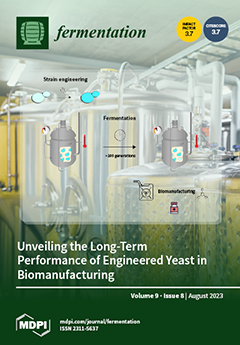
Cover Story: Baker’s yeast stands as an extensively characterized and versatile microorganism pivotal in biomanufacturing diverse specialty molecules, including enzymes, biofuels, chemicals and pharmaceuticals. Despite its genetic tractability, the evaluation of its sustained production prowess has remained understudied. Here, we introduced a fluorescent reporter gene on select genomic loci to monitor fluorescence levels across a span of over 100 generations. A clear decline in fluorescence over time was observed, yet what the underlying causes were warrants further investigation. Alongside this pioneering testament to the evolutionary dynamics of engineered yeast strains, we propose several new and strain-specific parameters to expedite microbial cell factory construction. View this paper
  • Issues are regarded as officially published after their release is announced to the table of contents alert mailing list .
  • You may sign up for email alerts to receive table of contents of newly released issues.
  • PDF is the official format for papers published in both, html and pdf forms. To view the papers in pdf format, click on the "PDF Full-text" link, and use the free Adobe Reader to open them.

Articles (82)

  • Review
  • Open Access
20 Citations
5,229 Views
34 Pages

This review paper provides an overview of various types of photobioreactors (PBRs) that could be used for the production of polyhydroxyalkanoates (PHAs) using anoxygenic photoheterotrophs, with a focus on the design and operation of these systems. Th...

  • Article
  • Open Access
9 Citations
2,259 Views
17 Pages

Effects of Different Cutting Stages and Additives on the Fermentation Quality and Microbial Community of Sudangrass (Sorghum sudanense Stapf.) Silages

  • Qiang Yu,
  • Mengxin Li,
  • Yu Zhang,
  • Jinyi Xu,
  • Ping Li,
  • Hong Sun,
  • Yixiao Xie,
  • Rui Dong,
  • Yulong Zheng and
  • Chao Chen

(1) Background: Previous studies have indicated that ferulic acid esterase (FAE), cellulase and xylanase have synergistic effects in lignocellulose degradation, and the cutting stage has a major impact on silages. Whether these additives affect the s...

  • Communication
  • Open Access
1 Citations
2,098 Views
9 Pages

Research on the Promotion of Sludge Anaerobic Fermentation with Sodium Citrate under Low Concentrations of Polyaluminum Chloride

  • Puli Zhu,
  • Yilin Wang,
  • Hui Bai,
  • Jing Feng,
  • Rui Zhang,
  • Duo Bu,
  • Zeng Dan,
  • Wei Li and
  • Xuebin Lu

Polyaluminum chloride (PAC) is used widely and increasingly in wastewater treatment plants, resulting in its inevitably high production in sludge. Previous studies have indicated that the production of short-chain fatty acids (SCFAs) is inhibited by...

  • Article
  • Open Access
4 Citations
3,282 Views
21 Pages

Co-Fermentation of Glucose–Xylose–Cellobiose–XOS Mixtures Using a Synthetic Consortium of Recombinant Saccharomyces cerevisiae Strains

  • Ning Yan,
  • Tao Luan,
  • Mengqi Yin,
  • Yaping Niu,
  • Longhao Wu,
  • Shuo Yang,
  • Zailu Li,
  • Hongxing Li,
  • Jianzhi Zhao and
  • Xiaoming Bao

The efficient conversion of cellulosic sugars is vital for the economically viable production of biofuels/biochemicals from lignocellulosic biomass hydrolysates. Based on comprehensive screening, Saccharomyces cerevisiae RC212 was chosen as the chass...

  • Article
  • Open Access
6 Citations
3,363 Views
16 Pages

Design and Construction of a New Reactor for Flexible Biomethanation of Hydrogen

  • Kevin Hoffstadt,
  • Dheeraja Cheenakula,
  • Marcell Nikolausz,
  • Simone Krafft,
  • Hauke Harms and
  • Isabel Kuperjans

The increasing share of renewable electricity in the grid drives the need for sufficient storage capacity. Especially for seasonal storage, power-to-gas can be a promising approach. Biologically produced methane from hydrogen produced from surplus el...

  • Article
  • Open Access
8 Citations
3,423 Views
18 Pages

Yeast assimilable nitrogen (YAN), besides the oenological parameters (sugar content, titratable acidity, and pH) in grape musts of sixteen native and international varieties of Vitis vinifera cultivated in six regions of Northern Greece, was assessed...

  • Article
  • Open Access
3 Citations
2,772 Views
18 Pages

Traditional Chinese strong-aroma baijiu (CSAB) fermentation technology has been used for thousands of years. Microbial communities that are enriched in continuous and uninterrupted fermentation pits (FPs) are important for fermentation. However, chan...

  • Article
  • Open Access
21 Citations
9,783 Views
14 Pages

Single-Cell Protein Production from Industrial Off-Gas through Acetate: Techno-Economic Analysis for a Coupled Fermentation Approach

  • Elodie Vlaeminck,
  • Evelien Uitterhaegen,
  • Koen Quataert,
  • Tom Delmulle,
  • Stoilas-Stylianos Kontovas,
  • Nikiforos Misailidis,
  • Rafael G. Ferreira,
  • Demetri Petrides,
  • Karel De Winter and
  • Wim K. Soetaert

Third-generation (3G) biorefineries harnessing industrial off-gases have received significant attention in the transition towards a sustainable circular economy. However, uncertainties surrounding their techno-economic feasibility are hampering wides...

  • Article
  • Open Access
10 Citations
2,828 Views
15 Pages

Polyphenol oxidase and its isoenzymes are crucial enzymes in the tea tree that catalyze the synthesis of theaflavins. In this study, tea tree polyphenol oxidase was used as the research object, and various protein sequence treatments, such as TrxA fu...

  • Article
  • Open Access
2,044 Views
18 Pages

This study evaluates the potential to synthesize an adsorbent for wastewater remediation applications from an anaerobic digestion by-product synthesized using biomaterials and a less energy-intensive process. The synthesized sludge-based granular act...

  • Article
  • Open Access
8 Citations
2,594 Views
15 Pages

Light Induction of Seed Culture Accelerates Lutein Accumulation in Heterotrophic Fermentation of Chlorella protothecoides CS-41

  • Yunlei Fu,
  • Lanbo Yi,
  • Shufang Yang,
  • Xue Lu,
  • Bin Liu,
  • Feng Chen,
  • Junchao Huang,
  • Kawing Cheng,
  • Han Sun and
  • Xiaolei Wu

Microalgae are recognized as a promising and valuable source of lutein. However, the current two-stage method for lutein production has drawbacks, such as complex operations and a long cultivation time. Additionally, utilizing heterotrophic fermentat...

  • Review
  • Open Access
2 Citations
6,983 Views
11 Pages

Scientific and Pharmaceutical Aspects of Christensenella minuta, a Promising Next-Generation Probiotic

  • Ágota Pető,
  • Dóra Kósa,
  • Zoltán Szilvássy,
  • Pálma Fehér,
  • Zoltán Ujhelyi,
  • Gabriella Kovács,
  • István Német,
  • István Pócsi and
  • Ildikó Bácskay

Christensenella minuta (C. minuta), a member of a recently described bacterial family, is one of the most heritable next-generation probiotics. Many observational studies confirmed that the relative abundance of C. minuta is associated with lean body...

  • Communication
  • Open Access
1 Citations
5,716 Views
11 Pages

A Randomized, Double-Blind, Placebo-Controlled Trial to Evaluate the Cholesterol-Lowering Effect of BBR 4401 in Adults with Moderate Hypercholesterolemia

  • Mincheol Kim,
  • Minjee Lee,
  • Min-Goo Kim,
  • Hayoung Kim,
  • Boyoung Choi,
  • Seongsik Kim,
  • Won-Yeong Bang,
  • Yong-Jin Kim,
  • Jungwoo Yang and
  • Hyun-Jae Kang

A randomized, double-blind, placebo-controlled trial was designed to assess the efficacy of the parabiotic Bifidobacterium breve IDCC 4401, named BBR 4401, for lowering cholesterol levels. The 66 subjects (per protocol set, n = 60) with low-density l...

  • Review
  • Open Access
20 Citations
9,300 Views
14 Pages

Lactic acid plays an important role in industrial applications ranging from the food industry to life sciences. The growing demand for lactic acid creates an urgent need to find economical and sustainable substrates for lactic acid production. Agricu...

  • Communication
  • Open Access
2 Citations
3,647 Views
11 Pages

Biosynthesis of Glucaric Acid by Recombinant Strain of Escherichia coli Expressing Two Different Urinate Dehydrogenases

  • Xinchao Yang,
  • Linlin Niu,
  • Chunjiang Ye,
  • Yuanxiu Wang,
  • Yuehui Liu,
  • Fang Wang and
  • Naxin Sun

D-glucaric acid is an important bio-based building block of polymers and is a high value-added chemical that can be used in a variety of applications. In the present study, the Udh target genes from Pseudomonas putida and Pseudomonas syringae were us...

  • Article
  • Open Access
6 Citations
3,415 Views
14 Pages

Kinetics of Formation of Butyric and Pyroglutamic Acid during the Shelf Life of Probiotic, Prebiotic and Synbiotic Yoghurt

  • Alessandra Aiello,
  • Lucia De Luca,
  • Fabiana Pizzolongo,
  • Gabriella Pinto,
  • Francesco Addeo and
  • Raffaele Romano

Butyric acid (C4) and pyroglutamic acid (pGlu) exert significant beneficial effects on human health. In this study, the influence of probiotics (Lactobacillus acidophilus and Bifidobacteria) and/or prebiotics (1 and 3% inulin and fructo-oligosacchari...

  • Review
  • Open Access
3 Citations
3,844 Views
22 Pages

Exploring the Fermentation-Driven Functionalities of Lactobacillaceae-Originated Probiotics in Preventive Measures of Alzheimer’s Disease: A Review

  • Anjali Tripathi,
  • Vinay Kumar Pandey,
  • Vivek Tiwari,
  • Rashi Mishra,
  • Kshirod Kumar Dash,
  • Endre Harsányi,
  • Béla Kovács and
  • Ayaz Mukarram Shaikh

Alzheimer’s disease (AD) is an ascending, neurodegenerative disorder that attacks the brain’s nerve cells, i.e., neurons, resulting in loss of memory, language skills, and thinking and behavioural changes. It is one of the most common cau...

  • Article
  • Open Access
7 Citations
3,069 Views
16 Pages

Lignocellulose Degrading Weizmannia coagulans Capable of Enantiomeric L-Lactic Acid Production via Consolidated Bioprocessing

  • Punnita Pamueangmun,
  • Aliyu Dantani Abdullahi,
  • Md. Humayun Kabir,
  • Kridsada Unban,
  • Apinun Kanpiengjai,
  • Joachim Venus,
  • Kalidas Shetty,
  • Chalermpong Saenjum and
  • Chartchai Khanongnuch

Second-generation lactic acid production requires the development of sustainable and economically feasible processes and renewable lignocellulose biomass as a starting raw material. Weizmannia coagulans MA42 was isolated from a soil sample in Chiang...

  • Article
  • Open Access
12 Citations
3,897 Views
14 Pages

In the present study, a total of eight Enterococcus faecium (OQ940301, OQ940302, OQ940303, OQ940304, OQ940305, OQ940308, OQ940309, and OQ940310) were isolated from soybean paste, a traditional Korean fermented food, and evaluated for their probiotic...

  • Article
  • Open Access
7 Citations
6,999 Views
20 Pages

The Effect of Yeast Inoculation Methods on the Metabolite Composition of Sauvignon Blanc Wines

  • Farhana R. Pinu,
  • Lily Stuart,
  • Taylan Topal,
  • Abby Albright,
  • Damian Martin and
  • Claire Grose

Evidence from the literature suggests that different inoculation strategies using either active dry yeast (ADY) or freshly prepared yeast cultures affect wine yeast performance, thus altering biomass and many primary and secondary metabolites produce...

  • Article
  • Open Access
2 Citations
3,583 Views
21 Pages

Optimization of the Ginkgo Wine Fermentation Process and Influence of Fermentation Starter Types on the Brewing Flavor

  • Bolin Chen,
  • Fang Zhang,
  • Zhifan Li,
  • Yaping Hu,
  • Qirong Guo,
  • Erzheng Su and
  • Fuliang Cao

Ginkgo biloba seed (GBS) contains rich nutrients, such as starch, protein, oil, and trace components, such as flavonoids and terpene lactones. Due to its high protein content, it can be used as a raw material for fermentation and brewing. In this stu...

  • Article
  • Open Access
9 Citations
3,443 Views
16 Pages

Non-Saccharomyces Yeast Strains, Aromatic Compounds and Sensory Analysis of Italy and Negra Criolla Pisco from the Moquegua Region of Peru

  • César Augusto Napa-Almeyda,
  • Celia Criado,
  • Jhony Mayta-Hancco,
  • Marcial Silva-Jaimes,
  • Luis Condezo-Hoyos and
  • María Ángeles Pozo-Bayón

In this study, we aimed to isolate and phenotypically characterize non-Saccharomyces yeast strains (NSYSs) from the skin of aromatic (Italy) and non-aromatic (Negra Criolla) grapes from vineyards in Moquegua, Peru, typically used for the production o...

  • Article
  • Open Access
6 Citations
3,106 Views
14 Pages

Effect of Microbial Reinforcement on Polyphenols in the Acetic Acid Fermentation of Shanxi-Aged Vinegar

  • Peng Du,
  • Yingqi Li,
  • Chenrui Zhen,
  • Jia Song,
  • Jiayi Hou,
  • Jia Gou,
  • Xinyue Li,
  • Sankuan Xie,
  • Jingli Zhou and
  • Min Wang
  • + 2 authors

Polyphenols are important functional substances produced in the acetic acid fermentation (AAF) of Shanxi aged vinegar (SAV). Previous studies have shown that the metabolic activity of microorganisms is closely related to polyphenol production and acc...

  • Review
  • Open Access
77 Citations
13,635 Views
35 Pages

Modern society is characterised by its outstanding capacity to generate waste. Lignocellulosic biomass is most abundant in nature and is biorenewable and contains energy sources formed via biological photosynthesis from the available atmospheric carb...

  • Review
  • Open Access
10 Citations
3,050 Views
21 Pages

Every year, seafood waste produced globally contains about 10 million tons of wasted crab, shrimp and lobster shells, which are rich in chitin resources. The exploitation and utilization of chitin resources are of great significance to environmental...

  • Article
  • Open Access
9 Citations
2,713 Views
14 Pages

This study aimed to investigate the effects of ultra-long-term fermentation on the formation of non-volatile metabolites of Chinese solid-fermented kohlrabies. Liquid chromatography-mass spectrometry/mass spectrometry (LC-MS/MS) based non-targeted me...

  • Article
  • Open Access
9 Citations
2,483 Views
13 Pages

Removal of Quinolone Antibiotics from Wastewater by the Biochar-Based Sludge Adsorbent

  • Yaoyu Zhang,
  • Yiwei Gong,
  • Gang Shi,
  • Xiping Liu,
  • Maifan Dai and
  • Lingyun Ding

Antibiotics have been detected in tiny environmental matrices all over the world, which caused a lot of concern. To solve this problem, biological treatment can be a low-cost and high-efficiency way. The use of biochar adsorbents made from the residu...

  • Article
  • Open Access
7 Citations
3,329 Views
19 Pages

With the current increase in demand for animal and agricultural products, management of agrowaste has become critical to avoid greenhouse gas emissions. The present article investigates the applicability of ammonium bicarbonate synthesis via flash di...

  • Article
  • Open Access
5 Citations
2,285 Views
14 Pages

Changes in the Concentration of Amino Acids and Bacterial Community in the Rumen When Feeding Artemisia absinthium and Cobalt Chloride

  • Vitaly Ryazanov,
  • Ekaterina Tarasova,
  • Galimzhan Duskaev,
  • Vladimir Kolpakov and
  • Ivan Miroshnikov

The aim of the study was to analyze the effect of a plant feed additive based on Artemisia absinthium and the metal trace element CoCl2 (cobalt chloride II) on the metabolism of amino acids closely related to the energy of feed and the bacterial comm...

  • Article
  • Open Access
14 Citations
3,231 Views
16 Pages

Formulation of a Gluten-Free Carob-Based Bakery Product: Evaluation of Glycemic Index, Antioxidant Activity, Rheological Properties, and Sensory Features

  • Donatella Restuccia,
  • Luigi Esposito,
  • Umile Gianfranco Spizzirri,
  • Maria Martuscelli,
  • Paolino Caputo,
  • Cesare Oliviero Rossi,
  • Maria Lisa Clodoveo,
  • Roberta Pujia,
  • Elisa Mazza and
  • Francesca Aiello
  • + 2 authors

A baked gluten-free pastry was formulated using milk kefir, rice, and different amounts of carob pulp flour, i.e., 20% (B1) and 40% (B2). In all cases, B2 showed the most remarkable antioxidant properties in terms of total phenolic, phenolic acid, an...

  • Article
  • Open Access
9 Citations
3,892 Views
17 Pages

Characterization of a Metallic-Ions-Independent L-Arabinose Isomerase from Endophytic Bacillus amyloliquefaciens for Production of D-Tagatose as a Functional Sweetener

  • Hoda M. Shehata,
  • Mohamed N. Abd El-Ghany,
  • Salwa A. Hamdi,
  • Mosleh M. Abomughaid,
  • Khaled I. Ghaleb,
  • Zeinat Kamel and
  • Mohamed G. Farahat

D-Tagatose is a low-calorie sugar substitute that has gained increased attention as a functional sweetener owing to its nutraceutical and prebiotic properties. Traditionally, D-tagatose is produced via the enzymatic conversion of L-galactose to D-tag...

  • Article
  • Open Access
12 Citations
4,231 Views
11 Pages

Sensory Analysis Coupled with Gas Chromatography/Mass spectrometry Analysis in Craft Beer Evaluation

  • Kristina Habschied,
  • Ivana Ćosić,
  • Goran Šarić,
  • Vinko Krstanović and
  • Krešimir Mastanjević

The beer market today shows extremely diverse styles and offers many possibilities for consumers to try new aromas and tastes. Most modern breweries have a similar technology and equipment and use quality raw materials, but the differences between be...

  • Article
  • Open Access
7 Citations
2,971 Views
15 Pages

The Influence of Trctf1 Gene Knockout by CRISPR–Cas9 on Cellulase Synthesis by Trichoderma reesei with Various Soluble Inducers

  • Yudian Chen,
  • Yushan Gao,
  • Zancheng Wang,
  • Nian Peng,
  • Xiaoqin Ran,
  • Tingting Chen,
  • Lulu Liu and
  • Yonghao Li

Knockout of the transcriptional repressor Trctf1 is known to enhance the yield of cellulose-induced cellulase synthesis in Trichoderma reesei. However, different inducers possess distinct induction mechanisms, and the effect of Trctf1 on cellulase sy...

  • Article
  • Open Access
6 Citations
5,739 Views
11 Pages

Cheese Fermented with Human-Derived Limosilactobacillus reuteri DSM 17938 and Mushroom Powders: A Novel Psychobiotic Food with Enhanced Bioactivity and Sensory Acceptability

  • Marina Jovanović,
  • Petar Vojvodić,
  • Dina Tenji,
  • Nina Tomić,
  • Jovana Nešić,
  • Dragana Mitić-Ćulafić and
  • Jelena Miočinović

Fermented foods containing psychobiotics are of growing interest among food scientists. Human-derived Limosilactobacillus reuteri DSM 17938, a gut symbiont and potential psychobiotic strain, has been shown to exhibit the following health benefits: an...

  • Article
  • Open Access
4 Citations
2,713 Views
12 Pages

The current study investigated the feasibility of developing and adopting a few state-of-the-art fermentation techniques to maximize the efficiency of the lignocellulosic waste bioconversion. There have been various efforts towards utilizing the ferm...

  • Article
  • Open Access
9 Citations
3,638 Views
18 Pages

High-Efficient Production of Cellulosic Ethanol from Corn Fiber Based on the Suitable C5/C6 Co-Fermentation Saccharomyces cerevisiae Strain

  • Menglei Li,
  • Fadi Xu,
  • Yuping Zhao,
  • Dongming Sun,
  • Jiao Liu,
  • Xiaolong Yin,
  • Zailu Li,
  • Jianzhi Zhao,
  • Hongxing Li and
  • Xiaoming Bao

As a potential alternative to fossil-based fuels, cellulosic ethanol has attracted much attention due to its great benefit to energy sustainability and environmental friendliness. However, at present, the industrial competitiveness of cellulosic etha...

  • Review
  • Open Access
11 Citations
5,157 Views
23 Pages

Current Applications and Future Trends of Dehydrated Lactic Acid Bacteria for Incorporation in Animal Feed Products

  • Ana F. Moretti,
  • Natalia S. Brizuela,
  • Bárbara M. Bravo-Ferrada,
  • Emma E. Tymczyszyn and
  • Marina A. Golowczyc

Several lactic acid bacteria (LAB) species have been recognized as probiotics and are of considerable interest due to their potential ability to confer health benefits upon consumption. In the animal feed sector, probiotics offer an alternative to th...

  • Article
  • Open Access
11 Citations
3,189 Views
14 Pages

The aim of this study comprises the effect of fermented grape pomace (FGP) in experimental total mixed rations (TMR) at different rates (0, 7.5%, 15%, and 22.5%) on the in vitro cumulative gas production (6th, 12th, 18th and 24th hours), methane prod...

  • Article
  • Open Access
7 Citations
5,266 Views
17 Pages

Impact of Lactobacillus acidophilus—La5 on Composition and Metabolism of the Intestinal Microbiota of Type 2 Diabetics (T2D) and Healthy Individuals Using a Microbiome Model

  • Mateus Kawata Salgaço,
  • Fellipe Lopes de Oliveira,
  • Adilson Sartoratto,
  • Victoria Mesa,
  • Marcia Pinto Alves Mayer and
  • Katia Sivieri

Type 2 diabetes is characterized by dysbiosis in the gut, which may lead to systemic inflammation. Therefore, the use of probiotics may help to achieve a balanced microbiota and improve glycemic control. The aim of this study was to verify the impact...

  • Article
  • Open Access
2 Citations
1,896 Views
12 Pages

(1) Background: Previous studies have indicated that proteolysis is inhibited by the condensed tannins (CTs) that are present during sainfoin ensiling. Whether inhibiting this effect of CTs on proteolysis is functional during aerobic exposure is stil...

  • Review
  • Open Access
7 Citations
17,190 Views
16 Pages

Auto-brewery syndrome (ABS), also called gut fermentation syndrome, is an extremely infrequent but also underrecognized disorder where ethanol is produced endogenously, similar to a typical bioreactor. The reliability of forensic alcohol analysis res...

  • Review
  • Open Access
7 Citations
5,885 Views
25 Pages

Metabolic Engineering of Microorganisms to Produce L-Aspartate and Its Derivatives

  • Aiqin Shi,
  • Yan Liu,
  • Baolei Jia,
  • Gang Zheng and
  • Yanlai Yao

Metabolic engineering is a promising strategy to realize green synthesis of valued chemicals derived from petroleum. According to the literature, cell factories for producing L-aspartate and its derivatives (β-alanine, ectoine, 3-hydroxypropiona...

  • Article
  • Open Access
3 Citations
3,735 Views
15 Pages

The Microbial Community in a Substrate of Solid-State Fermentation by Lentinula edodes: A Preliminary Study

  • Lill Eilertsen,
  • Malin Hultberg,
  • Natuschka Lee,
  • Paramjeet Saroj,
  • Mark Swaine,
  • Feng Chen and
  • Shaojun Xiong

Edible-fungal-based solid-state fermentation holds promise for sustainable food and biofuel production. Understanding the role of microbial communities in fungal substrates is crucial. Birch-based substrates were treated with autoclaving (121 °C,...

  • Article
  • Open Access
2 Citations
2,659 Views
18 Pages

Edible fungi are renowned for producing biologically active secondary metabolites that possess anti-tumor activity, protect the liver and have other benefits. The cultivation of truffle mycelia through submerged fermentation has gained interest in th...

  • Article
  • Open Access
19 Citations
4,281 Views
15 Pages

Sour bamboo shoot is a Chinese fermented vegetable with unique flavors and is favored by local consumers. In this study, at different fermentation times, the texture of bamboo shoots and the changing rules of pH, titratable acid (TA), reduced sugar,...

  • Article
  • Open Access
6 Citations
3,791 Views
16 Pages

Lignocellulosic biomass is a promising feedstock for added value compound production in biotechnological processes such as solid-state fermentation (SSF). Although these solid materials can be directly used as substrates in fermentations in a solid s...

  • Article
  • Open Access
12 Citations
2,896 Views
14 Pages

Pennycress, as an annual cover crop in North America, has around 30–36% of oil and 20–25% of crude protein. Pennycress oil can be converted into biodiesel, while pennycress meal (PM) has limited use in animal nutrition, mainly due to the...

  • Article
  • Open Access
3 Citations
2,379 Views
18 Pages

Exploring the Possibility of Enriching Fermented Milks with Young Barley Leaves Powder Preparation

  • Mariola Kozłowska,
  • Małgorzata Ziarno,
  • Dorota Zaręba and
  • Iwona Ścibisz

Barley (Hordeum vulgare L.) is one of the first cereals that humans began to cultivate. This study aimed to investigate the possibility of enriching fermented dairy products, using fermented milk as an example, with young barley leaves powder (YBLP)...

  • Review
  • Open Access
3 Citations
7,437 Views
18 Pages

Advances in Synthetic Biology Techniques and Industrial Applications of Corynebacterium glutamicum

  • Yujue Wang,
  • Qiang Wang,
  • Aobo Sha,
  • Kexin Ren,
  • Mengkai Hu,
  • Meijuan Xu,
  • Xian Zhang and
  • Zhiming Rao

Corynebacterium glutamicum is a Gram-positive bacterium (non-spore-forming) that has been wildly used for amino acid production. Due to its stable protein secretion, low extracellular hydrolase activity, and non-toxicity, the application field of C. ...

  • Article
  • Open Access
1 Citations
2,485 Views
10 Pages

The objective of the study was to evaluate the effects of dietary supplementation of a microencapsulated blend of organic acids and pure botanicals (mOAPBs) on the solid- and liquid-associated microenvironment (SAM and LAM, respectively) of the rumin...

of 2

Get Alerted

Add your email address to receive forthcoming issues of this journal.

XFacebookLinkedIn
Fermentation - ISSN 2311-5637