



Next Issue
Volume 14, January
Previous Issue
Volume 13, November


Systems, Volume 13, Issue 12 (December 2025) – 87 articles
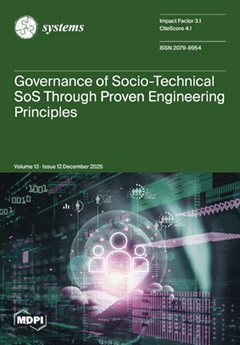
Cover Story (view full-size image): Healthcare’s greatest challenge may no longer be medicine but coherence. As digital platforms, insurers, providers, and suppliers expand in capability and autonomy, the system meant to serve patients increasingly behaves as an ungoverned collective. This paper reframes healthcare as a socio-technical system of systems and asks a deceptively simple question: what if governance were designed with the same rigor as engineered systems? Drawing lessons from proven engineering principles, the study introduces a governance architecture that enables coordination without centralization. By treating governance as an interface rather than an override, the work offers a new way to think about autonomy, accountability, and systemic performance in complex healthcare ecosystems. View this paper
  • Issues are regarded as officially published after their release is announced to the table of contents alert mailing list.
  • You may sign up for e-mail alerts to receive table of contents of newly released issues.
  • PDF is the official format for papers published in both, html and pdf forms. To view the papers in pdf format, click on the "PDF Full-text" link, and use the free Adobe Reader to open them.
Order results
Result details
Section
Select all
Export citation of selected articles as:
21 pages, 523 KB  
Article
Cultivating Risk-Response Capability: The Impact of Partner Compatibility and Supply Chain Collaboration
by Su Kyong Cho, Pyoungsoo Lee and Dawoon Jung
Systems 2025, 13(12), 1130; https://doi.org/10.3390/systems13121130 - 18 Dec 2025
Viewed by 261
Abstract
Supply chains operate in increasingly volatile environments, making it essential to understand the mechanisms through which partner characteristics shape risk-response capability. This study examines how compatibility between supply chain partners promotes collaboration and, in turn, strengthens robustness and resilience. Using survey data from [...] Read more.
Supply chains operate in increasingly volatile environments, making it essential to understand the mechanisms through which partner characteristics shape risk-response capability. This study examines how compatibility between supply chain partners promotes collaboration and, in turn, strengthens robustness and resilience. Using survey data from 219 managers in South Korea, the study develops a conceptual model grounded in congruence theory and the dynamic capability view, and tests it through partial least squares path modeling. The results show that compatibility enhances collaboration, which subsequently improves risk-response capability and mediates the effect of compatibility on robustness and resilience. These findings provide empirical support for a capability-building mechanism in which inter-organizational compatibility enables more effective collaborative practices that enhance a supply chain’s ability to withstand and recover from disruptions. The study extends prior research by shifting the discussion of compatibility from interpersonal or person–organization settings to the inter-organizational domain and by demonstrating its critical role in cultivating dynamic capabilities in supply chain risk management. Full article
Show Figures

Figure 1

19 pages, 550 KB  
Article
Bridging People and Technology: The Influence of AI-Driven HRM Empathy on Workplace Outcomes
by Ahsan Ali and Abdul Hameed Pitafi
Systems 2025, 13(12), 1129; https://doi.org/10.3390/systems13121129 - 18 Dec 2025
Cited by 1 | Viewed by 366
Abstract
Artificial intelligence (AI) integration into human resource management (HRM) in recent years has revolutionized HRM processes, thus affecting employee job behavior and turnover intentions. While much of the existing research has focused on the decision-making capabilities of AI, how and when AI-driven HRM [...] Read more.
Artificial intelligence (AI) integration into human resource management (HRM) in recent years has revolutionized HRM processes, thus affecting employee job behavior and turnover intentions. While much of the existing research has focused on the decision-making capabilities of AI, how and when AI-driven HRM empathy influences employee behavior and performance remains unclear. This study draws on organizational commitment theory to investigate how AI-driven HRM empathy affects employee outcomes, including job and organizational engagement, job satisfaction, employee performance, and turnover intentions. A time-lagged survey design was employed to collect data from 359 employees in China. Structural equation modeling was used to analyze the relationships among the constructs. The findings revealed that AI-driven HRM empathy enhances employee engagement, which subsequently improves job satisfaction, enhances job performance, and decreases turnover intentions. This research advances understanding of how employees experience workplace technologies by highlighting the novel role of empathy as a human-like quality that is embedded in AI-enabled HRM systems. The findings suggest that organizations must develop targeted solutions for their AI-driven HRM workplace strategies. This research makes a valuable contribution to the developing knowledge about AI in human resources by demonstrating how AI-driven HRM empathy influences workplace participation and employee retention. Full article
(This article belongs to the Section Systems Practice in Social Science)
Show Figures

Figure 1

28 pages, 466 KB  
Article
Measuring the Complexity of SysML Models
by Anoushka Bhatnager, Lakshmi Bhargav Gullapalli, Pierre de Saqui-Sannes and Rob A. Vingerhoeds
Systems 2025, 13(12), 1128; https://doi.org/10.3390/systems13121128 - 17 Dec 2025
Viewed by 361
Abstract
Model-Based Systems Engineering (MBSE) is employing systems analysis, design, and development on models of these systems, bringing together different viewpoints, with a step-by-step increase of detail. As such, it replaces traditional document-centric approaches with a methodology that uses structured domain models for information [...] Read more.
Model-Based Systems Engineering (MBSE) is employing systems analysis, design, and development on models of these systems, bringing together different viewpoints, with a step-by-step increase of detail. As such, it replaces traditional document-centric approaches with a methodology that uses structured domain models for information exchange and system representation throughout the engineering lifecycle. MBSE comprises different languages, each with distinct features and approaches. SysML is a widely used language in MBSE, and many tools exist for it. This paper is interested in the complexity of SysML models, as it may yield useful quantitative indicators to assess and predict the complexity of systems modeled in SysML, and, by extension, the complexity of their subsequent development. Two avenues are explored: objective structural metrics applied to the SysML model and assessment of the team experience. The proposed approach is implemented as a Java prototype. Although simpler models are easier to comprehend and modify, they may fail to capture the full scope of system functionality. Conversely, more complex models, though richer in detail, require greater development effort and pose challenges for maintenance and stakeholder communication. Technical and environmental factors are integrated into the complexity assessment to reflect real-world project conditions. A drone-based image acquisition system serves as a case study. Full article
(This article belongs to the Special Issue Advanced Model-Based Systems Engineering)
Show Figures

Figure 1

24 pages, 988 KB  
Article
Rethinking Resource Usage in the Age of AI: Insights from Europe’s Circular Transition
by Anca Antoaneta Vărzaru
Systems 2025, 13(12), 1127; https://doi.org/10.3390/systems13121127 - 17 Dec 2025
Viewed by 393
Abstract
The rising presence of artificial intelligence (AI) across European industries is gradually reshaping how societies manage resources, reduce waste, and pursue long-term sustainability. While researchers widely acknowledge the economic and social implications of AI, they have not yet sufficiently explored its contribution to [...] Read more.
The rising presence of artificial intelligence (AI) across European industries is gradually reshaping how societies manage resources, reduce waste, and pursue long-term sustainability. While researchers widely acknowledge the economic and social implications of AI, they have not yet sufficiently explored its contribution to advancing a circular economy. This study examines how varying levels of AI adoption across EU Member States relate to material footprint, resource productivity, waste generation, and recycling performance. The analysis draws on harmonized Eurostat data from 2023, the most recent year for which complete and comparable indicators are available, enabling a coherent cross-sectional perspective that reflects the period when AI began to exert a more visible influence on economic and environmental practices. By combining measures of AI uptake with key circular economy indicators and applying factor analysis, neural network modelling, and cluster analysis, the study identifies underlying patterns and country-specific profiles. The results suggest that higher AI adoption is often associated with greater resource productivity and more efficient material use. However, its effects on waste generation and recycling remain uneven across Member States. These findings indicate that AI can support circular economy objectives when embedded in coordinated national strategies and supported by robust institutional frameworks. Strengthening the alignment between digital innovation and sustainability goals may help build more resilient, resource-efficient economies across Europe. Full article
Show Figures

Figure 1

20 pages, 408 KB  
Article
A Systems Perspective on the Embeddedness of Foreign-Invested Enterprises and Functional Upgrading in Manufacturing: The Threshold Effect of Industry Chain Centrality
by Yanzhe Zhang and Yushun Han
Systems 2025, 13(12), 1126; https://doi.org/10.3390/systems13121126 - 17 Dec 2025
Viewed by 253
Abstract
This study adopts a systems perspective to explain why the embeddedness of foreign-invested enterprises (FIEs) generates divergent effects across countries—promoting upgrading in some while inducing low-end lock-in in others. Based on complex network theory, we construct an industry chain centrality indicator and examine [...] Read more.
This study adopts a systems perspective to explain why the embeddedness of foreign-invested enterprises (FIEs) generates divergent effects across countries—promoting upgrading in some while inducing low-end lock-in in others. Based on complex network theory, we construct an industry chain centrality indicator and examine how the embeddedness of FIEs affects functional upgrading in manufacturing, as well as the threshold effect created by industry centrality. Using panel data on manufacturing sectors of 42 economies from 2003 to 2020, we employ a panel threshold model to analyse the nonlinear impact of FIEs embeddedness. The results show a significant single threshold. When industry centrality is low, the positive effect of FIE embeddedness on functional upgrading is not significant; once the threshold is crossed, the effect strengthens markedly. This pattern indicates that industries occupying hub positions in global production networks can better absorb and amplify knowledge and technology spillovers generated by FIEs, promoting upgrading of high value-added functions such as R&D, management, and marketing. Robustness checks confirm these findings, and heterogeneity analysis shows that different types of functional upgrading exhibit distinct threshold levels. Overall, the study highlights that the impact of FIEs depends critically on an industry’s structural position within the global network. Full article
(This article belongs to the Section Complex Systems and Cybernetics)
Show Figures

Figure 1

27 pages, 4084 KB  
Article
An Integrated Optimization for Resilient Wildfire Evacuation System Design: A Case Study of a Rural County in Korea
by Kyubin Kwon, Yejin Kim and Jinil Han
Systems 2025, 13(12), 1125; https://doi.org/10.3390/systems13121125 - 16 Dec 2025
Viewed by 366
Abstract
Wildfires increasingly threaten the operation and stability of regional socio-economic systems, where infrastructure, population, and environmental conditions are tightly interconnected. To enhance operational efficiency and strengthen community resilience, this study develops an integrated optimization framework for wildfire evacuation system design based on mixed-integer [...] Read more.
Wildfires increasingly threaten the operation and stability of regional socio-economic systems, where infrastructure, population, and environmental conditions are tightly interconnected. To enhance operational efficiency and strengthen community resilience, this study develops an integrated optimization framework for wildfire evacuation system design based on mixed-integer programming. The model simultaneously determines the locations of primary and secondary shelters and establishes both main and backup evacuation linkages, forming a dual-stage structure that ensures continuous accessibility even under disrupted conditions such as road blockages or fire spread. Wildfire risk indices derived from topographic and environmental data are incorporated to support risk-aware and balanced shelter allocation. A case study of Uiryeong County, South Korea, demonstrates that the proposed framework effectively improves evacuation efficiency and system reliability, producing spatially coherent and adaptive evacuation plans under diverse disruption scenarios. The findings highlight how operation optimization can enhance socio-economic system resilience and sustainability when facing large-scale environmental disruptions. Full article
Show Figures

Figure 1

37 pages, 3312 KB  
Article
MIRA: An LLM-Driven Dual-Loop Architecture for Metacognitive Reward Design
by Weiying Zhang, Yuhua Xu and Zhixin Sun
Systems 2025, 13(12), 1124; https://doi.org/10.3390/systems13121124 - 16 Dec 2025
Viewed by 522
Abstract
A central obstacle to the practical deployment of Reinforcement Learning (RL) is the prevalence of sparse rewards, which often necessitates task-specific dense signals crafted through costly trial-and-error. Automated reward decomposition and return–redistribution methods can reduce this burden, but they are largely semantically agnostic [...] Read more.
A central obstacle to the practical deployment of Reinforcement Learning (RL) is the prevalence of sparse rewards, which often necessitates task-specific dense signals crafted through costly trial-and-error. Automated reward decomposition and return–redistribution methods can reduce this burden, but they are largely semantically agnostic and may fail to capture the multifaceted nature of task performance, leading to reward hacking or stalled exploration. Recent work uses Large Language Models (LLMs) to generate reward functions from high-level task descriptions, but these specifications are typically static and may encode biases or inaccuracies from the pretrained model, resulting in a priori reward misspecification. To address this, we propose the Metacognitive Introspective Reward Architecture (MIRA), a closed-loop architecture that treats LLM-generated reward code as a dynamic object refined through empirical feedback. An LLM first produces a set of computable reward factors. A dual-loop design then decouples policy learning from reward revision: an inner loop jointly trains the agent’s policy and a reward-synthesis network to align with sparse ground-truth outcomes, while an outer loop monitors learning dynamics via diagnostic metrics and, upon detecting pathological signatures, invokes the LLM to perform targeted structural edits. Experiments on MuJoCo benchmarks show that MIRA corrects flawed initial specifications and improves asymptotic performance and sample efficiency over strong reward-design baselines. Full article
(This article belongs to the Topic Agents and Multi-Agent Systems)
Show Figures

Figure 1

25 pages, 16135 KB  
Article
Environmental Perception Method for Unmanned Surface Vehicles Based on Sea–Sky Line Detection
by Qingze Yu, Ronghua Huang and Guangnian Li
Systems 2025, 13(12), 1123; https://doi.org/10.3390/systems13121123 - 15 Dec 2025
Viewed by 310
Abstract
This paper is dedicated to solving the environmental perception system problem of unmanned surface vehicles (USVs) experiencing adverse sea conditions and complex mission scenarios. First, the functionalities and characteristics of each subsystem in the USV environmental perception system under different mission scenarios are [...] Read more.
This paper is dedicated to solving the environmental perception system problem of unmanned surface vehicles (USVs) experiencing adverse sea conditions and complex mission scenarios. First, the functionalities and characteristics of each subsystem in the USV environmental perception system under different mission scenarios are analyzed, and an efficient and stable environmental perception system is designed. Second, the static and dynamic characteristics of the sea–sky line are investigated, along with the impacts on each subsystem of the environmental perception system when the USV experiences six-degree-of-freedom motion on the sea surface. Based on the above analysis, a sea–sky line detection method based on the radar–electro-optical system is designed. This method utilizes the features of the radar and electro-optical subsystems to redefine the region of interest, effectively suppressing interference from non-sea–sky line edges, thereby improving detection efficiency and accuracy. Furthermore, a sea–sky line-based target detection algorithm is proposed, which confines the search area to the vicinity of the detected sea–sky line, significantly reducing false detections caused by sea clutter and noise. Sea trials demonstrate that the proposed method enhances the accuracy and real-time performance of USV environmental perception. The proposed systematic approach offers a practical solution for improving the robustness of USV environmental perception in complex marine environments. Sea trials have shown that the method improves the effectiveness of target information by 3.61%. Full article
Show Figures

Figure 1

27 pages, 6271 KB  
Article
A Method for Identifying Critical Control Points in Production Scheduling for Crankshaft Production Workshop by Integrating Weighted-ARM with Complex Networks
by Luwen Yuan, Ge Han and Peng Dong
Systems 2025, 13(12), 1122; https://doi.org/10.3390/systems13121122 - 15 Dec 2025
Viewed by 237
Abstract
In smart manufacturing environments, production scheduling is highly susceptible to multi-source disruptions. However, traditional methods often struggle to accurately characterize the complex interdependencies between control points and disruptions, along with their systemic propagation effects, thereby constraining the proactivity and precision of scheduling optimization. [...] Read more.
In smart manufacturing environments, production scheduling is highly susceptible to multi-source disruptions. However, traditional methods often struggle to accurately characterize the complex interdependencies between control points and disruptions, along with their systemic propagation effects, thereby constraining the proactivity and precision of scheduling optimization. This paper proposes a novel data-driven approach that integrates Weighted Association Rule Mining (WARM) with a two-layer directed weighted complex network to achieve precise identification of critical control points in production scheduling. First, a production loss function integrating delay duration and resource idle cost is constructed, and the max-pooling method is applied to map control point weights, thereby quantifying their intrinsic importance. Subsequently, under the constraint that association rule antecedents are restricted to control points, an improved Apriori algorithm is employed to mine directed “Control Point-Disruption” association rules. These rules are then used to construct a two-layer directed weighted complex network. Furthermore, by combining weighted PageRank and edge betweenness centrality analyses, critical control points and high-risk propagation paths are identified from the dual dimensions of node influence and path propagation capability. A case study conducted in a crankshaft production workshop demonstrates that the proposed method effectively identifies low-frequency yet high-impact hidden nodes often overlooked by traditional rules. The resulting scheduling optimization scheme reduces the occurrence rate of high-impact disruptions by 53% and significantly improves key performance indicators such as on-time delivery rate and equipment utilization. This research provides new theoretical support and a technical pathway for manufacturing enterprises to suppress system disturbances through flexible interventions targeting high-betweenness paths. Full article
(This article belongs to the Special Issue Scheduling and Optimization in Production and Transportation Systems)
Show Figures

Figure 1

20 pages, 1274 KB  
Article
The Future of ESG in Multinationals: How Digital Twin Technologies Enable Strategic Value Creation
by Eliza Ciobanu
Systems 2025, 13(12), 1121; https://doi.org/10.3390/systems13121121 - 15 Dec 2025
Viewed by 386
Abstract
This study examines the role of Digital Twin technologies in advancing Environmental, Social, and Governance performance within multinational corporations. Grounded in socio-technical systems theory and stakeholder theory, the research investigates how digital twins facilitate the integration of organizational capabilities with external accountability mechanisms. [...] Read more.
This study examines the role of Digital Twin technologies in advancing Environmental, Social, and Governance performance within multinational corporations. Grounded in socio-technical systems theory and stakeholder theory, the research investigates how digital twins facilitate the integration of organizational capabilities with external accountability mechanisms. A multi-method research design is employed, comprising in-depth case studies, capital market event analysis, and machine learning-assisted regression to capture both qualitative and empirical insights. Case evidence from Siemens, Unilever, Tesla, and BP reveals that DT adoption is associated with measurable ESG gains, including reduced emissions, improved safety, enhanced supplier compliance, and accelerated reporting cycles. Event study findings show statistically significant abnormal returns following ESG-oriented DT announcements, while regression analysis confirms a positive association between DT adoption and ESG performance. Governance structures are explored as potential moderators of this relationship. The findings underscore DTs as strategic enablers of ESG value creation, beyond their technical utility. By enhancing transparency, auditability, and stakeholder trust, DTs contribute to both internal transformation and external legitimacy. This research advances the discourse on ESG digitalization and offers actionable implications for corporate leaders and policymakers seeking to foster sustainable, technology-driven governance in complex global value chains. However, because the quantitative component relies on cross-sectional data, the relationships identified should be interpreted as associations rather than definitive causal effects. Full article
Show Figures

Figure 1

27 pages, 1020 KB  
Article
Path Exploration of Artificial Intelligence-Driven Green Supply Chain Management in Manufacturing Enterprises: A Study Based on Random Forest and Dynamic QCA Under the TOE Framework
by Yifei Cao, Lingfeng Hao, Zihan Zhang and Hua Zhang
Systems 2025, 13(12), 1120; https://doi.org/10.3390/systems13121120 - 14 Dec 2025
Viewed by 490
Abstract
Artificial intelligence (AI) technology is gradually integrating into the entire process of green supply chain management (GSCM), providing a systematic solution for enterprises to improve productivity and performance. This paper focuses on Chinese manufacturing enterprises, aiming to explore the multi-factor synergistic mechanism influencing [...] Read more.
Artificial intelligence (AI) technology is gradually integrating into the entire process of green supply chain management (GSCM), providing a systematic solution for enterprises to improve productivity and performance. This paper focuses on Chinese manufacturing enterprises, aiming to explore the multi-factor synergistic mechanism influencing differences in GSCM levels from a temporal perspective under the drive of AI. Based on 2019–2023 panel data of enterprises, this paper innovatively integrates the random forest algorithm with dynamic qualitative comparative analysis (QCA) to reveal the configurational effects of technological, organizational, and environmental factors in enterprises’ GSCM practices. The findings demonstrate that no single factor is a necessary condition for enterprises to implement GSCM; configurational analysis identifies two driving models: “AI technology innovation-driven (Configuration 1 and Configuration 2)” and “strategic resource-driven (Configuration 3)”; Configuration 1 combines research and development (R&D) investment and green awareness among executives with the enabling role of government subsidies; Configuration 2 couples R&D Investment with strong funding capacity, again facilitated by the presence of government subsidies; Configuration 3 combines AI technology adoption and green awareness among executives, supported by the necessary funding capacity and government subsidies. Additionally, inter-group analysis reveals no significant temporal effect among configurations but shows phased evolutionary characteristics. This paper has thoroughly explored the complex paths for enhancing GSCM of manufactory enterprises under the influence of AI. It is recommended that the government refine and strengthen targeted subsidy policies to better support the adoption and integration of AI in advancing GSCM within the manufacturing sector. Concurrently, manufacturers must align technology, organizational structure, and external factors, specifically through core AI technology improvements, enhanced executive green awareness, and the mobilization of government and external funding. These advancements have led to high-level GSCM within enterprises, allowing them to achieve high-quality and sustainable development. Full article
(This article belongs to the Special Issue Innovation Management and Digitalization of Business Models)
Show Figures

Figure 1

34 pages, 3145 KB  
Review
Cybersecurity in Smart Grids: A Domain-Centric Review
by Sahithi Angara, Laxima Niure Kandel and Raju Dhakal
Systems 2025, 13(12), 1119; https://doi.org/10.3390/systems13121119 - 14 Dec 2025
Viewed by 752
Abstract
The modern power grid is considered a Smart Grid (SG) when it relies extensively on technologies that integrate traditional power infrastructure with Information and Communication Technologies (ICTs). The dependence on Internet of Things (IoT)-based communication systems to operate physical power devices transforms the [...] Read more.
The modern power grid is considered a Smart Grid (SG) when it relies extensively on technologies that integrate traditional power infrastructure with Information and Communication Technologies (ICTs). The dependence on Internet of Things (IoT)-based communication systems to operate physical power devices transforms the grid into a complex system of systems (SoS), introducing cybersecurity vulnerabilities across various SG layers. Several surveys have addressed SG cybersecurity, but none have correlated recent developments with the NIST seven-domain framework, a comprehensive model covering all major SG domains and crucial for domain-level trend analysis. To bridge this gap, we systematically review and classify studies by impacted NIST domain, threat type, and methodology (including tools/platforms used). We note that the scope of applicability of this study is 60 studies (2011–2024) selected exclusively from IEEE Xplore. Unlike prior reviews, this work maps contributions to the NIST domain architecture, examines temporal trends in research, and synthesizes cybersecurity defenses and their limitations. The analysis reveals that research is unevenly distributed: the Operations domain accounts for ~35% of all studies, followed by Generation ~25% and Distribution ~14%, while domains like Transmission (~9%) and Service Provider (5%) are comparatively under-studied. We find a heavy reliance on simulation-based tools (~46% of studies) such as MATLAB/Simulink, and False Data Injection (FDI) attacks are predominantly studied, comprising approximately 36% of analyzed attacks. The broader objective of this work is to guide researchers and SG stakeholders (e.g., utilities, policy-makers) toward understanding and coordinating strategies for improving system-level cyber-resilience, which is crucial for future SGs, while avoiding any overstatement of findings beyond the reviewed evidence. Full article
(This article belongs to the Section Systems Engineering)
Show Figures

Figure 1

26 pages, 11658 KB  
Article
Integrated Subjective–Objective Weighting and Fuzzy Decision Framework for FMEA-Based Risk Assessment of Wind Turbines
by Zhiyong Li, Yihan Wang, Yu Xu, Yunlai Liao, Qijian Liu and Xinlin Qing
Systems 2025, 13(12), 1118; https://doi.org/10.3390/systems13121118 - 12 Dec 2025
Viewed by 400
Abstract
Accurate fault risk assessment is essential for maintaining wind turbine reliability. Traditional failure modes and effects analysis (FMEA)-based approaches struggle to handle the fuzziness, uncertainty, and conflicting nature of multi-criteria evaluations, which may lead to delayed fault detection and increased maintenance risks. To [...] Read more.
Accurate fault risk assessment is essential for maintaining wind turbine reliability. Traditional failure modes and effects analysis (FMEA)-based approaches struggle to handle the fuzziness, uncertainty, and conflicting nature of multi-criteria evaluations, which may lead to delayed fault detection and increased maintenance risks. To address these limitations, this paper proposes an enhanced risk assessment framework that integrates subjective-objective weighting and fuzzy decision-making. First, a combined subjective–objective weighting (CSOW) model with adaptive fusion is developed by integrating the analytic hierarchy process (AHP) and the entropy weight method (EWM). The CSOW model optimizes the weighting of severity (S), occurrence (O), and detection (D) indicators by balancing expert knowledge and data-driven information. Second, a fuzzy decision-making model based on interval-valued intuitionistic fuzzy numbers and VIKOR (IVIFN-VIKOR) is established to represent expert evaluations and determine risk rankings. Notably, the overlap rate between the top 10 failure modes identified by the proposed method and a fault-tree-based Monte Carlo simulation incorporating mean time between failures (MTBF) and mean time to repair (MTTR) reaches 90%, substantially higher than other methods. This confirms the superior performance of the framework and provides enterprises with a systematic approach for risk assessment and maintenance planning. Full article
(This article belongs to the Section Complex Systems and Cybernetics)
Show Figures

Figure 1

33 pages, 3370 KB  
Article
AIP-Urban: Edge-Enabled Deep Learning Framework for Predictive Maintenance and Anomaly Detection in Urban Traffic Infrastructure
by Wajih Abdallah and Mansoor Alghamdi
Systems 2025, 13(12), 1117; https://doi.org/10.3390/systems13121117 - 11 Dec 2025
Viewed by 436
Abstract
Urban traffic infrastructures like traffic signals, surveillance cameras, and embedded sensors play an essential role in providing sustainable mobility but are also susceptible to malfunctions, data drift, and degradation from environmental conditions. In this study, we propose AIP-Urban, an edge AI-enabled predictive maintenance [...] Read more.
Urban traffic infrastructures like traffic signals, surveillance cameras, and embedded sensors play an essential role in providing sustainable mobility but are also susceptible to malfunctions, data drift, and degradation from environmental conditions. In this study, we propose AIP-Urban, an edge AI-enabled predictive maintenance framework that employs deep spatio-temporal learning with continuous anomaly detection for smart transportation systems. Our framework integrates IoT sensing, computer vision, and time-series analytics to identify and forecast infrastructure failures before they occur. For visual and numerical anomalies (e.g., traffic signal outage, abrupt congestion, sensor disconnection), we employ a hybrid CNN–Transformer model, while we utilise a Temporal LSTM predictor to estimate a degradation trend to predict maintenance events within 24 h. The models are deployed on Jetson Nano edge devices to enable real-time processing under energy constraints. Extensive simulation studies using datasets from SUMO, CityCam, and UA-DETRAC show that AIP-Urban achieved 94% accuracy for anomaly detection (F1 = 0.94), with RMSE = 0.11 for failure prediction and an edge inference latency of 72 ms, while power consumption remained below 7.8 W. Statistical tests (Wilcoxon p < 0.05) show goodness-of-fit compared to baseline models of CNN, LSTM, and Transformer only. This study shows promise in improving the reliability, safety, and sustainability of urban traffic using proactive, explainable, and energy-aware AI at the edge. AIP-Urban serves as a reproducible reference architecture for future AI-driven transportation maintenance systems that is aligned with intelligent and resilient smart cities principles. Full article
Show Figures

Figure 1

35 pages, 2751 KB  
Article
Research on the Configurational Paths of Collaborative Performance in the Innovation Ecosystem from the Perspective of Complex Systems
by Xin Li, Haiyun Xu, Robin Haunschild, Zehua Tong and Chunjiang Liu
Systems 2025, 13(12), 1116; https://doi.org/10.3390/systems13121116 - 11 Dec 2025
Viewed by 557
Abstract
This study integrates complex systems theory and innovation ecosystem theory to develop a unified framework encompassing the innovation environment, innovation actors, and innovation networks. Using fsQCA and NCA, it examines the impact of cross-layer interactions and the coupling of multiple factors on collaborative [...] Read more.
This study integrates complex systems theory and innovation ecosystem theory to develop a unified framework encompassing the innovation environment, innovation actors, and innovation networks. Using fsQCA and NCA, it examines the impact of cross-layer interactions and the coupling of multiple factors on collaborative performance. Empirical analysis in the field of natural language processing (NLP) demonstrates that no single factor is sufficient to serve as a necessary condition for achieving high-innovation collaboration performance. Innovation actors, as endogenous evolutionary drivers, play a central and catalytic role in the collaboration process. Moreover, under specific conditions, the relationship between the innovation environment and innovation networks exhibits a substitutive effect, with certain capabilities enabling this dynamic. This study extends the theoretical understanding of collaboration pathways within innovation ecosystems and offers practical recommendations for fostering innovation cooperation across different industries and organizations. It achieves this by constructing a “situational type–configuration path” matrix, decision tree, and innovation collaboration performance realization model. Full article
(This article belongs to the Section Complex Systems and Cybernetics)
Show Figures

Figure 1

31 pages, 2597 KB  
Article
Dark Markets for Bright Futures? Unveiling the Shadow Economy’s Influence on Economic Development
by Oana-Ramona Lobonț, Andreea-Florentina Crăciun, Sorana Vătavu, Ana-Cristina Nicolescu and Marian Pompiliu Cristescu
Systems 2025, 13(12), 1115; https://doi.org/10.3390/systems13121115 - 11 Dec 2025
Viewed by 478
Abstract
This paper examines the changes in the level of informal and shadow economy, mapping their evolution within the EU and measuring their implications on economic growth. The study also addresses the issue of conceptual differences in the methodology for measuring these phenomena. We [...] Read more.
This paper examines the changes in the level of informal and shadow economy, mapping their evolution within the EU and measuring their implications on economic growth. The study also addresses the issue of conceptual differences in the methodology for measuring these phenomena. We used a two-dimensional methodological approach, combining theoretical and empirical analysis. Initially, the bibliometric analysis—conducted exclusively on the Web of Science Core Collection to ensure methodological rigour, international comparability, and high-quality, standardised data—reveals the evolution of the subject and the inconsistencies in the conceptualisation and measurement of phenomena associated with the shadow economy. Subsequently, the normative analysis highlighted the most relevant norms, directives, and projects developed and applied at the European Union level to prevent and combat tax evasion activities. Finally, the empirical dimension of this study was conducted through structural equation modelling and fixed and random effects regressions, using data from the EU 27 member states for the period 2000–2022. Our results reveal a potential relationship between the level of scientific research and the prevalence of the shadow economy within EU countries and indicate a negative effect of the informal economy on economic growth, as undeclared work produces goods and services that are consumed in the informal economy and hinders economic growth. Since the level of the shadow economy has not decreased proportionally with the increase in the GDP per capita, we conclude that the efforts to combat the shadow economy are insufficient, and tax administration needs to be more drastic and efficient. Full article
(This article belongs to the Section Systems Practice in Social Science)
Show Figures

Figure 1

38 pages, 3361 KB  
Systematic Review
Data-Driven Decision-Making in Marketing: A Systematic Literature Review of Emerging Themes and Research Gaps
by Rui Nunes Cruz and Albérico Travassos Rosário
Systems 2025, 13(12), 1114; https://doi.org/10.3390/systems13121114 - 10 Dec 2025
Viewed by 1490
Abstract
This study assesses how Data-Driven Decision-Making (DDDM) impacts marketing practices and research. Using the PRISMA 2020 protocol, this research conducted systematic reviews of 94 peer-reviewed articles and utilized bibliometric and thematic analyses. From this, four major themes emerged: improvement in the customer experience [...] Read more.
This study assesses how Data-Driven Decision-Making (DDDM) impacts marketing practices and research. Using the PRISMA 2020 protocol, this research conducted systematic reviews of 94 peer-reviewed articles and utilized bibliometric and thematic analyses. From this, four major themes emerged: improvement in the customer experience via the personalization of marketing; marketing driven by innovation through data resource versatility, Machine Learning, analytics, and Artificial Intelligence; performance enhancement through the optimal allocation of resources; and the data governance and ethical use of such resources, and the use of such data resources. This study illustrates how the combination of multi-level theory and methodical stricture accounts for the systemic influence of DDDM in marketing. This study adds to these theories by proposing a cohesive and synthesized understanding of the interplay of the technological, organizational, and governance elements in data-driven marketing. This research provides organizations with actionable guidance aimed at increasing effective analytics-driven decision-making, while also ensuring the responsible use of data. Full article
(This article belongs to the Special Issue Data-Driven Insights with Predictive Marketing Analysis)
Show Figures

Figure 1

29 pages, 1944 KB  
Article
Towards Governance of Socio-Technical System of Systems: Leveraging Lessons from Proven Engineering Principles
by Mohamed Mogahed and Mo Mansouri
Systems 2025, 13(12), 1113; https://doi.org/10.3390/systems13121113 - 10 Dec 2025
Viewed by 599
Abstract
Healthcare delivery systems operate as complex socio-technical Systems-of-Systems (SoS), where autonomous entities—hospitals, insurers, laboratories, and technology vendors—must coordinate to achieve collective outcomes that exceed individual capabilities. Despite substantial investment in interoperability standards and regulatory frameworks, persistent fragmentation undermines care quality, operational efficiency, and [...] Read more.
Healthcare delivery systems operate as complex socio-technical Systems-of-Systems (SoS), where autonomous entities—hospitals, insurers, laboratories, and technology vendors—must coordinate to achieve collective outcomes that exceed individual capabilities. Despite substantial investment in interoperability standards and regulatory frameworks, persistent fragmentation undermines care quality, operational efficiency, and systemic adaptability. This fragmentation stems from a fundamental governance paradox: how can independent systems retain operational autonomy while adhering to shared rules that ensure systemic resilience? This paper addresses this challenge by advancing a governance-oriented architecture grounded in Object-Oriented Programming (OOP) principles. We reinterpret core OOP constructs—encapsulation, modularity, inheritance, polymorphism, and interface definition—as governance mechanisms that enable autonomy through principled constraints while fostering structured coordination across heterogeneous systems. Central to this framework is the Confluence Interoperability Covenant (CIC), a socio-technical governance artifact that functions as an adaptive interface mechanism, codifying integrated legal, procedural, and technical standards without dictating internal system architectures. To validate this approach, we develop a functional proof-of-concept simulation using Petri Nets, modeling constituent healthcare systems as autonomous entities interacting through CIC-governed transitions. Comparative simulation results demonstrate that CIC-based governance significantly reduces fragmentation (from 0.8077 to 0.1538) while increasing successful interactions fivefold (from 68 to 339 over 400 steps). This work contributes foundational principles for SoS Engineering and offers practical guidance for designing scalable, interoperable governance architectures in mission-critical socio-technical domains. Full article
(This article belongs to the Special Issue Governance of System of Systems (SoS))
Show Figures

Figure 1

21 pages, 956 KB  
Article
How to Harness LLMs in Project-Based Learning: Empirical Evidence for Individual Autonomy and Moderate Constraints in Engineering Education
by Xiaoyu Yi, Wenkai Feng, Yali He and Fei Wang
Systems 2025, 13(12), 1112; https://doi.org/10.3390/systems13121112 - 10 Dec 2025
Viewed by 335
Abstract
The integration of large language models (LLMs) into project-based learning (PBL) holds significant potential for addressing enduring pedagogical challenges in engineering education, such as providing scalable, personalized support during complex problem-solving. Grounded in Self-Determination Theory (SDT), this study investigates how different LLM usage [...] Read more.
The integration of large language models (LLMs) into project-based learning (PBL) holds significant potential for addressing enduring pedagogical challenges in engineering education, such as providing scalable, personalized support during complex problem-solving. Grounded in Self-Determination Theory (SDT), this study investigates how different LLM usage strategies impact student learning within a blended engineering geology PBL context. A one-semester quasi-experiment (N = 120) employed a 2 (usage mode: individual/shared) × 2 (interaction restriction: restricted/unrestricted) factorial design. Mixed-methods data, including surveys, interaction logs, and reflective reports, were analyzed to assess learning engagement, psychological needs satisfaction, cognitive interaction levels, and project outcomes. Results demonstrate that the individual use strategy significantly outperformed shared use in enhancing engagement, needs satisfaction, higher-order cognitive interactions, and final project scores. The restricted interaction strategy effectively served as a metacognitive scaffold, optimizing the learning process by promoting deliberate planning. Notably, individual autonomy did not undermine collaboration but enhanced it by improving the quality of individual contributions to group work. Students also developed robust critical verification habits to navigate LLM “hallucinations.” This research identifies “individual autonomy” as the core mechanism and “moderate constraint” as a crucial design principle for LLM integration, providing an empirically supported framework for harnessing generative AI to foster both motivational and cognitive outcomes in engineering PBL. Full article
Show Figures

Figure 1

38 pages, 916 KB  
Systematic Review
Integrating Business Intelligence and Operations Research for Sustainable Supply Chain Systems: A Systematic Review
by Rui Pedro Marques and Dorabella Santos
Systems 2025, 13(12), 1111; https://doi.org/10.3390/systems13121111 - 10 Dec 2025
Viewed by 625
Abstract
This systematic review explores how business intelligence (BI) and operations research (OR) help organizations ensure sustainable practices in supply chain management (SCM). Drawing on 56 peer-reviewed studies, this review synthesizes how BI tools support sustainability by transforming large and complex datasets into actionable [...] Read more.
This systematic review explores how business intelligence (BI) and operations research (OR) help organizations ensure sustainable practices in supply chain management (SCM). Drawing on 56 peer-reviewed studies, this review synthesizes how BI tools support sustainability by transforming large and complex datasets into actionable insights, enhancing transparency, improving forecasting, optimizing production and inventory, reducing waste, and enabling circular economy practices. Complementarily, OR provides methodological rigor through optimization models, simulation, and multicriteria decision-making, enabling organizations to balance economic, environmental, and social objectives in supply chain design and operations. The findings reveal that BI and OR jointly contribute to 11 of the 17 United Nations Sustainable Development Goals (SDGs), demonstrating their strategic relevance for global sustainable development. This paper’s contribution is twofold: it consolidates fragmented academic research through an integrative framework clarifying how BI and OR reinforce sustainability within SCM, and it provides practitioners with evidence of how these tools can generate both operational efficiency and a competitive advantage while meeting environmental and social responsibilities. Future research should focus on bridging existing gaps in the literature and advancing the practical applications of these technologies. Full article
Show Figures

Figure 1

30 pages, 3843 KB  
Article
Structure and Evolution of the Global Financial Services Greenfield FDI Network: Complex System Analysis Based on the TERGM Model
by Guoli Zhang, Ruxiao Qu, Lujian Wang and Fang Lu
Systems 2025, 13(12), 1110; https://doi.org/10.3390/systems13121110 - 9 Dec 2025
Viewed by 355
Abstract
Cross-border greenfield investment in the financial services sector is increasingly understood not as isolated flows, but as a complex, dynamic global system. This systemic perspective is essential for understanding its holistic structure and evolution amidst globalisation and digital transformation. This paper utilises financial [...] Read more.
Cross-border greenfield investment in the financial services sector is increasingly understood not as isolated flows, but as a complex, dynamic global system. This systemic perspective is essential for understanding its holistic structure and evolution amidst globalisation and digital transformation. This paper utilises financial services greenfield investment projects from 100 major economies from 2003 to 2021 to construct the Global Financial Services Greenfield FDI Network (GFS-GFN). By combining Social Network Analysis (SNA) and Temporal Exponential Random Graph Models (TERGMs), we systematically investigate its dynamic evolutionary features and endogenous mechanisms. The findings reveal the following: (1) System-wide, the network exhibits persistent expansion, “small-world” properties, and a pronounced “rich club” effect among source countries. (2) Nodally, the structure has evolved from a US-UK “dual-core” to a multipolar configuration, as emerging hubs like China, the UAE, and Singapore rapidly approach the traditional centres. (3) Structurally, the network has fragmented from Euro-American dominance into five major communities, forming a diverse, complementary pattern. Network evolution is primarily driven by endogenous mechanisms. Investment relationships widely exhibit reciprocity, preferential attachment, transitive closure, and marked path dependence. Full article
(This article belongs to the Section Systems Practice in Social Science)
Show Figures

Figure 1

15 pages, 720 KB  
Article
Validation of a Patient Prioritization Tool: Addressing Decision-Support Tools’ Development in Complex Systems
by Ana Tereza Lopes Pécora, Marie-Eve Lamontagne, Angel Ruiz, José Roberto Frega, Julien Déry, José Eduardo Pécora Junior and Rogério de Fraga
Systems 2025, 13(12), 1109; https://doi.org/10.3390/systems13121109 - 9 Dec 2025
Viewed by 337
Abstract
As times to access health services have significantly increased worldwide in recent years, strategies and tools to better manage patients’ waiting lists have gained research interest. Computer-Based Patient Prioritization Tools (PPT) aim to manage access to care by ranking patients on waiting lists [...] Read more.
As times to access health services have significantly increased worldwide in recent years, strategies and tools to better manage patients’ waiting lists have gained research interest. Computer-Based Patient Prioritization Tools (PPT) aim to manage access to care by ranking patients on waiting lists equitably and rigorously so that higher-priority patients are treated ahead of those with lower priority, regardless of when they were added to the list. However, healthcare systems are inherently complex, involving multiple stakeholders, dynamic interactions, and contextual constraints that make the implementation of such tools challenging. The development of decision-support tools in such environments follows an iterative life cycle that includes design, implementation, verification, validation, and deployment. Among these stages, validation is critical to ensure that the tool not only meets its intended specifications but also produces improved outcomes without unintended consequences when integrated into real-world workflows. Although the literature devoted to PPT is rich, works describing the transition of research prototypes to real-world applications within these complex systems are relatively scarce. This paper presents and discusses the validation process of a PPT, illustrating how this step contributes to improving the tool, building future users’ confidence, and providing insights into the challenges and difficulties related to expert evaluation in complex healthcare environments. Full article
(This article belongs to the Special Issue Project Management of Complex Systems (Manufacturing and Services))
Show Figures

Figure 1

31 pages, 3544 KB  
Article
Strategic Architecture of Sustainable System Development for ESG Transformation in Large Multi-Purpose Sports Venues
by Min-Ren Yan, Chien-Heng Chou and Hui-Lan Chi
Systems 2025, 13(12), 1108; https://doi.org/10.3390/systems13121108 - 9 Dec 2025
Viewed by 611
Abstract
This paper proposes a strategic architecture of sustainable system development (SSD) for ESG enterprise transformation, demonstrating its application through a real-world case study on large multi-purpose sports venues (LMPSVs). The research integrates systems thinking, computer-aided dynamic business modeling and digital technologies to support [...] Read more.
This paper proposes a strategic architecture of sustainable system development (SSD) for ESG enterprise transformation, demonstrating its application through a real-world case study on large multi-purpose sports venues (LMPSVs). The research integrates systems thinking, computer-aided dynamic business modeling and digital technologies to support ESG enterprise transformation strategies and business operations. An ESGI (environmental, social, governance, and innovation) framework is proposed to demonstrate the transformation process through empirical data and scenario analysis. Furthermore, this study develops an integrated strategic enterprise architecture (ISEA) to integrate strategic planning with enterprise execution, wherein strategic architecture (SA) takes precedence over enterprise architecture (EA). The SSD-driven SA provides directional strategic guidance integrated with EA. This study prioritizes the construction of SA required for enterprise ESG transformation, serving as a research blueprint for future construction of EA at the technical implementation level. The findings indicate that LMPSVs must adopt integrated transformation strategies, strengthen digital capabilities, and embed ESGI as a core concept to sustain a competitive advantage in volatile environments. The framework offers a systematic and dynamic approach emphasizing inclusive growth, operational resilience, value creation, and sustainable development goals. The study’s originality lies in the SSD-based ESGI framework, which translates conceptual ideas into advanced operational models for scientific management and performance improvement. By integrating cross-disciplinary knowledge, the framework provides a systematic, dynamic, and multi-value-oriented analytical tool that bridges the gap in the existing literature, offering significant value for both theoretical development and practical application. Full article
Show Figures

Figure 1

32 pages, 3530 KB  
Article
Empowering Service Designers with Integrated Modelling Tools: A Model-Driven Approach
by Francisco Javier Pérez-Blanco, Juan Manuel Vara, Cristian Gómez-Macías, David Granada and Carlos Villarrubia
Systems 2025, 13(12), 1107; https://doi.org/10.3390/systems13121107 - 8 Dec 2025
Viewed by 445
Abstract
Service design often involves using diverse business and process modelling notations to represent strategic and operational aspects of services. Although complementary, no modelling environment currently enables integrated use of these notations. This paper addresses this gap by proposing a model-driven solution that supports [...] Read more.
Service design often involves using diverse business and process modelling notations to represent strategic and operational aspects of services. Although complementary, no modelling environment currently enables integrated use of these notations. This paper addresses this gap by proposing a model-driven solution that supports multiple modelling notations within a unified environment. The research is guided by the following question: To what extent can a modelling environment that integrates multiple business and process modelling notations benefit service designers? To answer it, the study adopts Design Science Research (DSR) methodology and develops a prototype integrating several graphical Domain-Specific Languages (DSLs), along with mechanisms for model transformation, traceability, and validation. The prototype was evaluated through a two-phase process: (1) a laboratory case study applying the double diamond model of service design to a real-world scenario, and (2) an empirical study involving nine service design professionals who assessed the usability of the tool, efficiency, and completeness of generated models. Results show that integrating heterogeneous modelling notations through Model-Driven Engineering (MDE) can reduce modelling effort by up to 36.4% and generate models with up to 97.7% completeness, demonstrating not only technical benefits but also contributions to the well-being of designers by reducing cognitive load, fostering consistency, and improving communication among the stakeholders involved in the designing process. Full article
(This article belongs to the Section Systems Practice in Social Science)
Show Figures

Figure 1

20 pages, 523 KB  
Article
From Pathology to Purchase: Compulsive Short Video Use and Socio-Technical Moderation in E-Commerce
by Rob Kim Marjerison, Jin Young Jun and Jong Min Kim
Systems 2025, 13(12), 1106; https://doi.org/10.3390/systems13121106 - 8 Dec 2025
Viewed by 449
Abstract
Short-video platforms such as TikTok, Douyin, and Instagram Reels have transformed digital consumption into an immersive, algorithmically mediated commerce ecosystem. This study examines how compulsive short video use (CSV), a maladaptive pattern linked to diminished self-regulation, shapes purchase intention (PI). Drawing on compulsive [...] Read more.
Short-video platforms such as TikTok, Douyin, and Instagram Reels have transformed digital consumption into an immersive, algorithmically mediated commerce ecosystem. This study examines how compulsive short video use (CSV), a maladaptive pattern linked to diminished self-regulation, shapes purchase intention (PI). Drawing on compulsive consumption theory, dual-process perspectives, and socio-technical systems theory (STST), we estimate a structural equation model using survey data from 542 active short-video users. The results show that CSV exerts a strong and consistent positive effect on PI, indicating that compulsive engagement functions as a commercially consequential psychological state. This relationship is contingent on socio-technical conditions: technical support and platform familiarity substantially amplify the CSV–PI pathway, social belonging provides weaker but positive reinforcement, and social interaction attenuates the effect by redirecting attention away from transactional cues. These findings position CSV as both a form of digital pathology and a commercially activating mechanism within socio-technical environments. The study also offers guidance for platform managers seeking to balance monetization with ethical responsibility in short-video commerce ecosystems. Full article
Show Figures

Figure 1

22 pages, 2591 KB  
Article
Analyzing the Correlation Between the Growth of University Science and Technology Innovation Parks (USTIPs) and Regional Economic Development in Yangtze River Delta, China
by Yue Wu, Siyuan Zhang, Auwalu Faisal Koko and Zexu Han
Systems 2025, 13(12), 1105; https://doi.org/10.3390/systems13121105 - 8 Dec 2025
Viewed by 424
Abstract
The rapid growth of University Science and Technology Innovation Parks (USTIPs) have recently been vital to China’s innovation-driven development. However, contributions to regional economic growth remains understudied. The Yangtze River Delta (YRD), given its economic foundation, concentration of higher institutions, and innovation policy [...] Read more.
The rapid growth of University Science and Technology Innovation Parks (USTIPs) have recently been vital to China’s innovation-driven development. However, contributions to regional economic growth remains understudied. The Yangtze River Delta (YRD), given its economic foundation, concentration of higher institutions, and innovation policy emphasis, provides an ideal context for such study. This paper examines the relationship between USTIPs and regional economic development in the YRD. A multivariate regression analysis across 41 cities revealed that a 1% increase in USTIP quantity corresponds to a 0.122% rise in GDP, a 0.096% increase in high-tech industrial output, and a 0.087% improvement in land use efficiency. These effects are weaker than those of other Science and Technology Innovation Parks (STIPs), which contribute a 0.595% GDP increase, 0.106% growth in high-tech output, and 0.289% improvement in land use efficiency. A comparative analysis further showed that 12 USTIPs employ 21,325 staff with a registered capital of USD 2.12 billion, substantially lower than 123 STIPs that employed 226,055 staff with USD 24.09 billion capital. Despite these limitations, USTIPs are established as long-term drivers of innovation ecosystems and regional competitiveness. These findings serve as empirical evidence linking USTIPs to economic growth, providing valuable insights for optimizing regional innovation policies. Full article
(This article belongs to the Section Systems Practice in Social Science)
Show Figures

Figure 1

33 pages, 4124 KB  
Article
Reimagining Commercial Health Insurance in India: A System-Dynamics Approach to Complex Stakeholder Incentives and Policy Outcomes
by Nachiket Mor, Aakriti Gupta and Rahul Roy
Systems 2025, 13(12), 1104; https://doi.org/10.3390/systems13121104 - 8 Dec 2025
Viewed by 537
Abstract
Most low- and middle-income governments are unwilling and unable to adequately fund their health systems using tax resources. Despite this route’s popularity in public discourse, it is neither a feasible nor a desirable route for financing Universal Health Coverage (UHC), given competing public [...] Read more.
Most low- and middle-income governments are unwilling and unable to adequately fund their health systems using tax resources. Despite this route’s popularity in public discourse, it is neither a feasible nor a desirable route for financing Universal Health Coverage (UHC), given competing public finance priorities and limited citizen demand, among other challenges. It thus becomes essential to study the underlying mechanisms behind commercial health insurance and offer citizens the best possible product, which ensures that they not only receive a high degree of protection from health and financial risk on a sustained basis but also find reasonable access and support to improve their health outcomes. In this paper, we build a system-dynamics model that simulates the aggregate behavior of the Indian health-insurance industry, with interacting feedbacks between decisions by stakeholders such as the insurer, healthy and chronically ill populations, and the regulator to outcomes like insurance penetration among segments, overall coverage, health status over the long run, a mechanism of market-discovered premium, and financial viability of the private insurer. We then investigate policy choices and scenarios to explore contrast between design choices and ideal or targeted states of this market, such as a market with 100% enrollment, risk selection by insurers, group insurance models, and managed care, and study the impact on our outcomes of interest, i.e., insurance penetration and pricing, the financial sustainability of the insurers, and the population’s health outcomes. The simulations show that even while insurers and the different population segments optimize for their respective near-term objectives, the best outcomes for all come from the managed-care policy option, which has greater insurance penetration, lower premiums, higher profitability for insurers, and better long-term health outcomes. All other choices and scenarios yield suboptimal, imbalanced systemic outcomes. We thus recommend managed care as a desirable policy alternative for low-income countries intending to improve UHC by leveraging commercial health insurance. Full article
(This article belongs to the Special Issue System Dynamics Modeling and Simulation for Public Health)
Show Figures

Figure 1

17 pages, 3758 KB  
Article
Propagation of Damages in a Complex Resilience Model: Drivers of Social Conflict in Resilience and Security Contexts
by Juan Pablo Cárdenas, Miguel Fuentes, Isaías Ferrer, Carolina Urbina, Gastón Olivares, Gerardo Vidal, Soledad Salazar, Rosa M. Benito and Eric Rasmussen
Systems 2025, 13(12), 1103; https://doi.org/10.3390/systems13121103 - 8 Dec 2025
Viewed by 363
Abstract
In an increasingly interconnected world, the capacity of societies to withstand, adapt to, and recover from crises is a central challenge for security and sustainable development. Yet, despite extensive research on resilience, the mechanisms through which systemic vulnerabilities emerge and propagate across social [...] Read more.
In an increasingly interconnected world, the capacity of societies to withstand, adapt to, and recover from crises is a central challenge for security and sustainable development. Yet, despite extensive research on resilience, the mechanisms through which systemic vulnerabilities emerge and propagate across social domains remain poorly understood. This paper addresses this gap by proposing a network-based framework: the Complex Analysis for Socio-Environmental Adaptation (CASA), which models resilience as a graph-structured system. Each node in CASA represents a social or infrastructural component whose resistance is derived from indicators of installed capacities, while edges capture interdependencies among sectors. We formalize a damage propagation model in which the loss of capacity in one node dynamically affects connected components, revealing the topological patterns that drive systemic fragility. Comparative simulations demonstrate that CASA’s topology amplifies the impact of highly connected nodes, rendering them crucial for resilience planning. An application to a real-world case demonstrates how initial disruptions in access to drinking water cascade into governance, economic, and social instabilities. The results provide both theoretical and operational insights, highlighting that resilience depends not only on the strength of individual components but also on the network architecture that links them. CASA thus offers a replicable and data-informed approach for identifying drivers of social conflict and guiding anticipatory resilience strategies in complex territorial systems. Full article
Show Figures

Figure 1

23 pages, 696 KB  
Article
From Strategic Congruence to Modeling and Simulation Ambidextrous Innovation: Evidence from Maritime Logistics
by Xinchen Wang, Mingjie Fang and Jia Shen
Systems 2025, 13(12), 1102; https://doi.org/10.3390/systems13121102 - 8 Dec 2025
Viewed by 367
Abstract
In highly dynamic and information-intensive logistics environments, understanding how firms achieve modeling and simulation ambidextrous innovation (MSAI) through strategic alignment is crucial. Drawing on organizational information processing theory (OIPT), we develop an integrative framework that links strategic congruence with capability development and innovation [...] Read more.
In highly dynamic and information-intensive logistics environments, understanding how firms achieve modeling and simulation ambidextrous innovation (MSAI) through strategic alignment is crucial. Drawing on organizational information processing theory (OIPT), we develop an integrative framework that links strategic congruence with capability development and innovation outcomes. The study examines (1) whether buffering–bridging congruence (B–B congruence) exists and how it enhances MSAI through operational stability, financial flexibility, and knowledge management capability; (2) how these three capabilities shape the differentiated pathways toward exploitative and explorative simulation innovation; and (3) how firms may leverage a simulation-driven decision framework to achieve strategic–capability alignment in the highly dynamic maritime logistics environment. The framework is empirically tested using polynomial regression models based on survey data from Chinese maritime logistics firms, analyzed with SPSS 27.0 and STATA 15. Our empirical results indicate that, regardless of the level of buffering strategy or bridging strategy, the firm’s operational stability, financial flexibility, and knowledge management capabilities are always higher when buffering and bridging strategy are congruent. The results also show that the three capabilities influence MSAI differently. Specifically, knowledge management capability exerts positive effects on both exploitative and exploratory modeling innovation. Financial flexibility mainly promotes exploitative innovation, while its influence on exploratory innovation is not significant. In contrast, operational stability does not enhance exploitative innovation but unexpectedly shows a positive effect on exploratory innovation. The findings advance OIPT’s theoretical application in simulation-intensive settings and offer guidance for firms seeking to align capabilities and strategy in complex systems, providing both theoretical and practical insights. Full article
Show Figures

Figure 1

29 pages, 1450 KB  
Article
Resilient and Sustainable Restaurant Supply Chain Operations Considering Multi-Brand Strategies
by Sangjoon Lee, Byeongmo Kang and Seung Ho Yoo
Systems 2025, 13(12), 1101; https://doi.org/10.3390/systems13121101 - 5 Dec 2025
Viewed by 576
Abstract
This study analyzes the performance and strategic implications of multi-brand kitchen restaurants from a supply chain perspective. Multi-brand kitchens are increasingly adopted in franchise systems as they enhance resilience by pooling demand risks and enabling substitution across brands. They also promote environmental sustainability [...] Read more.
This study analyzes the performance and strategic implications of multi-brand kitchen restaurants from a supply chain perspective. Multi-brand kitchens are increasingly adopted in franchise systems as they enhance resilience by pooling demand risks and enabling substitution across brands. They also promote environmental sustainability by integrating operations and reducing land use. However, limited research has examined how such models perform under different supply chain structures and contract types. To address this gap, we develop analytical models comparing five configurations that vary by brand scope (single- vs. multi-brand) and integration level (centralized vs. decentralized). We examine how optimal pricing, brand portfolio, and royalty structures influence profits across franchisors, franchisees, and the overall chain under diverse market environments. Our findings reveal that multi-brand strategies improve profitability, particularly under high demand and favorable market potential. However, decentralized systems show greater profit fluctuations, highlighting the need for alignment between contracts and operations. Theoretically, this study contributes to the restaurant supply chain literature by modeling coordination across organizational boundaries. Practically, it offers actionable insights for franchisors and restaurant operators on when and how to implement multi-brand kitchen strategies for resilient and sustainable supply chain operations. Full article
Show Figures

Figure 1

Previous Issue
Next Issue
Back to TopTop
