



Next Issue
Volume 13, December
Previous Issue
Volume 13, October


Systems, Volume 13, Issue 11 (November 2025) – 115 articles
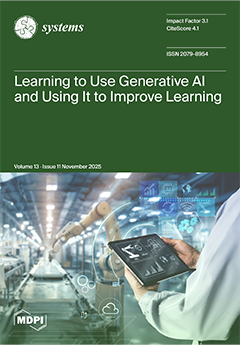
Cover Story (view full-size image): Generative artificial intelligence (GenAI) presents a contradiction: teaching cutting-edge tools while deepening disciplinary knowledge. This case study of a systems engineering seminar applied an integrated, ASIT-inspired solution. Students engaged in a GenAI-assisted drone design challenge. The study hypothesized that GenAI engagement improves proficiency (H1) and strengthens disciplinary understanding (H2). The evidence strongly supports both findings. GenAI enabled time-prohibitive project-based learning tasks, allowing students to internalize advanced material through application. Students progressed to sophisticated skills, including building custom GenAI tools for specialized MBSE modeling. Integrating GenAI serves as a valuable aid in developing engineering skills, creativity, and critical thinking, providing an "antifragile" model for engineering education. View this paper
  • Issues are regarded as officially published after their release is announced to the table of contents alert mailing list.
  • You may sign up for e-mail alerts to receive table of contents of newly released issues.
  • PDF is the official format for papers published in both, html and pdf forms. To view the papers in pdf format, click on the "PDF Full-text" link, and use the free Adobe Reader to open them.
Order results
Result details
Section
Select all
Export citation of selected articles as:
35 pages, 1398 KB  
Article
Considering Consumer Quality Preferences, Who Should Offer Trade-in Between Manufacturer and Retail Platform?
by Deqing Ma, Di Hu and Jinsong Hu
Systems 2025, 13(11), 1043; https://doi.org/10.3390/systems13111043 - 20 Nov 2025
Viewed by 487
Abstract
The trade-in service can enhance product sales and increase consumer loyalty; however, heterogeneity in consumer quality preferences significantly influences the provision and implementation of trade-in activities. By constructing a dynamic dual-supply chain model, this study examines the optimal choices for trade-in providers and [...] Read more.
The trade-in service can enhance product sales and increase consumer loyalty; however, heterogeneity in consumer quality preferences significantly influences the provision and implementation of trade-in activities. By constructing a dynamic dual-supply chain model, this study examines the optimal choices for trade-in providers and the impact of consumer quality preferences on mode selection. The findings indicate that the decision of who should provide the trade-in service largely depends on the product’s quality decay rate. When the quality decay rate is low, collaboration between the manufacturer and the retail platform favors manufacturer-led trade-in service. Conversely, when the quality decay rate is high, both parties tend to fall into a prisoner’s dilemma, each preferring to dominate the trade-in process independently. Notably, as the share of pragmatic consumers increases, both sides of the supply chain are more inclined to prefer the manufacturer offering trade-in service. In our extended research, we found that the influence of government subsidies on mode selection primarily depends on the price discounts provided by the dominant party in trade-in arrangements within each mode. We also considered scenarios with asymmetric net residual values of recovered products, and the results robustly validate the stability of our core findings. Full article
(This article belongs to the Section Supply Chain Management)
Show Figures

Figure 1

19 pages, 2711 KB  
Article
Beyond Physical Barriers: The Perception of Accessibility as the Main Driver of User Satisfaction in the Valparaíso Railway System
by Daniel Vega, Sebastian Seriani, José Antonio Tello, Vicente Aprigliano, Alvaro Peña, Ivan Bastias and Cristian Alejandro Muñoz
Systems 2025, 13(11), 1042; https://doi.org/10.3390/systems13111042 - 20 Nov 2025
Viewed by 241
Abstract
This study examines the influence of perceived inclusion and accessibility dimensions on user satisfaction within the Valparaíso Metro system in Chile. The research focuses on a quantitative survey conducted with 192 regular passengers along the Limache–Puerto corridor of the EFE Valparaíso railway network. [...] Read more.
This study examines the influence of perceived inclusion and accessibility dimensions on user satisfaction within the Valparaíso Metro system in Chile. The research focuses on a quantitative survey conducted with 192 regular passengers along the Limache–Puerto corridor of the EFE Valparaíso railway network. A structured questionnaire comprising 58 Likert-scale items assessed perceived accessibility, inclusion, intermodality, safety, environmental effectiveness, and overall satisfaction. Data were analyzed using Confirmatory Factor Analysis (CFA) with the WLSMV estimator based on polychoric correlations, followed by multiple linear regression with robust standard errors. Results show that the proposed model explains 72% of the variance in overall satisfaction (Adjusted R2 = 0.71). Among the five predictors, perceived inclusion emerged as the most influential factor (β = 0.64, p < 0.001), surpassing perceived accessibility (β = 0.18, p < 0.01) and intermodality (β = 0.11, p < 0.05). Safety and environmental conditions showed weaker but significant associations. These findings provide empirical evidence that inclusive perceptions—rather than merely physical or operational aspects—constitute the primary driver of satisfaction in urban railway systems. The study contributes to accessibility research by integrating psychosocial and perceptual dimensions into the evaluation of public transport performance. It also offers actionable implications for inclusive design, passenger communication, and service management strategies in metropolitan rail systems, particularly in Latin American contexts undergoing infrastructure expansion and modernization. Full article
(This article belongs to the Special Issue Sustainable Urban Transport Systems)
Show Figures

Figure 1

21 pages, 1623 KB  
Article
Sustainability-Related Rural Credit Policy Implementation and Effectiveness in Brazil
by Arone Alves, José Eustáquio Ribeiro Vieira Filho and Manuel Castelo Branco
Systems 2025, 13(11), 1041; https://doi.org/10.3390/systems13111041 - 19 Nov 2025
Viewed by 633
Abstract
This study examines Brazil’s rural credit policy from four perspectives: productive sustainability, credit financing, regulatory impact, and strategic policies. It is an exploratory study based on qualitative analysis through in-depth, semi-structured interviews with 14 rural credit managers from a Brazilian financial institution. The [...] Read more.
This study examines Brazil’s rural credit policy from four perspectives: productive sustainability, credit financing, regulatory impact, and strategic policies. It is an exploratory study based on qualitative analysis through in-depth, semi-structured interviews with 14 rural credit managers from a Brazilian financial institution. The findings suggest that environmental policy had a particularly significant impact on small- and medium-sized producers, with consequences for their income and regional development. The study also demonstrates that deforestation is not a widespread practice among Brazilian rural producers. This study contributes to the literature by helping to understand the restriction of rural credit in areas with deforestation occurrences. The limitations of the study include those of being conducted solely with managers from a single financial institution. This study can help the federal government identify areas for improvement and policy adjustments, as well as financial institutions and managers to proactively act within their competencies and strategic goals in the execution of regulatory measures. Full article
Show Figures

Figure 1

13 pages, 1609 KB  
Article
Simplified and Adjustable Graph Diffusion Neural Networks
by Ji Cheol Kang and Nam-Wook Cho
Systems 2025, 13(11), 1040; https://doi.org/10.3390/systems13111040 - 19 Nov 2025
Viewed by 762
Abstract
Graph Convolutional Networks (GCNs) have become a widely used framework for learning from graph-structured data due to their efficiency and performance in tasks such as node classification and link prediction. However, conventional GCNs are limited by a small receptive field, typically restricted to [...] Read more.
Graph Convolutional Networks (GCNs) have become a widely used framework for learning from graph-structured data due to their efficiency and performance in tasks such as node classification and link prediction. However, conventional GCNs are limited by a small receptive field, typically restricted to 1–2 hops, which prevents them from capturing long-range dependencies. Graph diffusion methods address this limitation by integrating multi-hop information, but they often introduce high computational costs and over-smoothing issues. To overcome these challenges, we propose a Simplified and Adjustable Graph Diffusion model. Our method employs a predefined diffusion stage and introduces two adaptive parameters: a distance parameter that specifies the diffusion depth and a diffusion control parameter that dynamically adjusts edge weights based on inter-node distances. This approach reduces computational overhead while enabling more effective information propagation. Extensive experiments on benchmark datasets demonstrate that our model achieved an average improvement of 1.9 percentage points in AUC for link prediction and 2.2 percentage points in accuracy for semi-supervised classification tasks. The improvements are particularly significant when leveraging structural information from distant nodes. The proposed framework strikes a balance between accuracy and efficiency, offering a practical alternative for scalable graph learning applications. Full article
(This article belongs to the Special Issue Data-Driven Analysis of Industrial Systems Using AI)
Show Figures

Figure 1

27 pages, 1761 KB  
Article
Veteran Suicide Prevention in the USA: Evaluating Strategies and Outcomes Within Face the Fight
by Karim J. Chichakly, Katherine A. Dondanville, Brooke A. Fina, Hannah C. Tyler and David C. Rozek
Systems 2025, 13(11), 1039; https://doi.org/10.3390/systems13111039 - 19 Nov 2025
Viewed by 421
Abstract
Veteran suicide remains a critical public health crisis in the United States, with rates nearly twice those of the general population. Addressing this challenge requires multiple evidence-based interventions across settings. This paper presents a system dynamics model developed within the Face the Fight™ [...] Read more.
Veteran suicide remains a critical public health crisis in the United States, with rates nearly twice those of the general population. Addressing this challenge requires multiple evidence-based interventions across settings. This paper presents a system dynamics model developed within the Face the Fight™ veteran suicide prevention initiative to evaluate and optimize strategies from 2022 to 2032. The model integrates peer-reviewed evidence on intervention effectiveness, subject-matter expert calibration, and annual updates from Veterans Affairs and grantee data to estimate the potential population-level impact of suicide prevention. The model organizes veterans by levels of suicide distress and estimates the impact of interventions in an initial three target areas aligned with a public health approach to suicide prevention: creating protective environments (e.g., secure firearm storage), strengthening access and delivery of suicide care (e.g., suicide-specific clinical programs), and identifying and supporting people at risk (e.g., suicide screening). Model results indicate that focusing solely on high-distress veterans is insufficient to reduce suicide rates to those of the general population, while balanced portfolios combining clinical, community, and firearm-safety approaches yield the greatest projected benefit. Sensitivity analyses demonstrate the model’s responsiveness to population distress distributions and intervention capacities, underscoring the need for a balanced, scalable strategy. Evaluating suicide-prevention impact is inherently challenging, but the model provides a dynamic and transparent framework for assessing investment effectiveness, refining strategies, and forecasting long-term outcomes. Its adaptability ensures ongoing insights to guide funding priorities, informs data-driven policy, and extends to other populations and public health challenges where multiple interventions interact to influence outcomes. Full article
(This article belongs to the Special Issue System Dynamics Modeling and Simulation for Public Health)
Show Figures

Figure 1

27 pages, 858 KB  
Article
Digital Adoption and Productivity in Rentier Economies: Evidence from the GCC
by Abdullah Sultan Al Shammre
Systems 2025, 13(11), 1038; https://doi.org/10.3390/systems13111038 - 19 Nov 2025
Viewed by 342
Abstract
Gulf Cooperation Council (GCC) economies are investing heavily in digital infrastructure to diversify beyond hydrocarbons, yet the productivity returns from these investments remain uncertain. This study examines whether digital adoption enhances labor productivity in GCC economies (2000–2023). We construct a Composite Digital Index [...] Read more.
Gulf Cooperation Council (GCC) economies are investing heavily in digital infrastructure to diversify beyond hydrocarbons, yet the productivity returns from these investments remain uncertain. This study examines whether digital adoption enhances labor productivity in GCC economies (2000–2023). We construct a Composite Digital Index (CDI) from broadband subscriptions, internet use, and mobile penetration. Interpreting the Gulf economies as socio-technical systems, we frame digital adoption, productivity, and investment (measured by GCF) as a reinforcing loop, with government effectiveness amplifying the cycle and oil rents dampening it. Using panel data methods, including fixed-effects and long-run estimators, we find that digital adoption yields persistent productivity gains. In the long run, a one-point increase in CDI is associated with a 12.6 percentage point rise in labor productivity growth (p < 0.05). This effect triples—to approximately 38.5 percentage points—when moderated by strong government effectiveness (CDI × Governance interaction: +26.3; p < 0.01). Conversely, the productivity payoff declines significantly with oil-rent dependence: for every 10 percentage-point rise in oil rents, the marginal effect of digital adoption drops by 3.4 points. These gains are significantly larger where government effectiveness is stronger, while oil dependence weakens them. The findings imply that infrastructure adoption alone is insufficient: institutions and fiscal structures condition whether digital adoption translate into sustained productivity growth. Policy priorities should focus on institutional reform, fiscal diversification, and enabling firm-level digital absorption—particularly in high-rent economies—so that adoption translates into broad-based productivity dividends. Full article
(This article belongs to the Section Systems Practice in Social Science)
Show Figures

Figure 1

27 pages, 10437 KB  
Article
China’s Energy Risk Spillover Networks Under Major Events and External Uncertainty Shocks: An Analysis Based on LASSO-VAR-DY and TVP-SV-VAR Models
by Tao Xu, Lei Wang, Tingqiang Chen and Xin Zheng
Systems 2025, 13(11), 1037; https://doi.org/10.3390/systems13111037 - 19 Nov 2025
Viewed by 793
Abstract
Major events and external uncertainty shocks have made energy risk connectedness increasingly complex. This paper applies a LASSO-regularized VAR combined with the Diebold-Yilmaz connectedness framework (LASSO-VAR-DY) to trace how China’s energy risk spillover effects evolve under major event shocks and to quantify sectoral [...] Read more.
Major events and external uncertainty shocks have made energy risk connectedness increasingly complex. This paper applies a LASSO-regularized VAR combined with the Diebold-Yilmaz connectedness framework (LASSO-VAR-DY) to trace how China’s energy risk spillover effects evolve under major event shocks and to quantify sectoral risk spillover inflows. We then employ a TVP-SV-VAR model to further examine the impulse responses of energy sectors to external uncertainties. The results show that the energy system exhibits a high overall level of risk connectedness with pronounced stage-wise variation and is sensitive to different external uncertainty shocks. Major-event shocks intensify sector-level risk connectedness—the clean-energy sector consistently acts as a net risk receiver. In contrast, other sectors switch between net transmitters and net receivers across shocks. Different major events operate through heterogeneous mechanisms—the COVID-19 pandemic and the official launch of the national carbon market primarily strengthen node-to-node connectedness. In contrast, the Russia-Ukraine conflict chiefly amplifies spillover intensity between nodes. The effects of uncertainty index shocks differ markedly: economic policy uncertainty (EPU) has the most substantial impact, followed by climate policy uncertainty (CPU), while geopolitical risk (GPR) is the weakest. Full article
(This article belongs to the Section Systems Practice in Social Science)
Show Figures

Figure 1

19 pages, 3089 KB  
Article
Trajectory Prediction for Powered Two-Wheelers in Mixed Traffic Scenes: An Enhanced Social-GAT Approach
by Longxin Zeng, Fujian Chen, Jiangfeng Li, Haiquan Wang, Yujie Li and Zhongyi Zhai
Systems 2025, 13(11), 1036; https://doi.org/10.3390/systems13111036 - 19 Nov 2025
Viewed by 265
Abstract
In mixed traffic scenarios involving both motorized and non-motorized participants, accurately predicting future trajectories of surrounding vehicles remains a major challenge for autonomous driving. Predicting the motion of powered two-wheelers (PTWs) is particularly difficult due to their abrupt behavioral changes and stochastic interaction [...] Read more.
In mixed traffic scenarios involving both motorized and non-motorized participants, accurately predicting future trajectories of surrounding vehicles remains a major challenge for autonomous driving. Predicting the motion of powered two-wheelers (PTWs) is particularly difficult due to their abrupt behavioral changes and stochastic interaction patterns. To address this issue, this paper proposes an enhanced Social-GAT model with a multi-module architecture for PTW trajectory prediction. The model consists of a dual-channel LSTM encoder that separately processes position and motion features; a temporal attention mechanism to weight key historical states; and a residual-connected two-layer GAT structure to model social relationships within the interaction range, capturing interactive features between PTWs and surrounding vehicles through dynamic adjacency matrices. Finally, an LSTM decoder integrates spatiotemporal features and outputs the predicted trajectory. Experimental results on the rounD dataset demonstrate that our model achieves an outstanding ADE of 0.28, surpassing Trajectron++ by 9.68% and Social-GAN by 69.2%. It also attains the lowest RMSE values across 0.4–2.0s prediction horizons, confirming its superior accuracy and stability for PTW trajectory prediction in mixed traffic environments. Full article
(This article belongs to the Section Artificial Intelligence and Digital Systems Engineering)
Show Figures

Figure 1

28 pages, 1789 KB  
Article
Cross-Layer Influence of Multiple Network Embedding on Venture Capital Networks in China: An ERGM-Based Analysis
by Yuge Gao, Yongping Xie and Yanping Yang
Systems 2025, 13(11), 1035; https://doi.org/10.3390/systems13111035 - 19 Nov 2025
Viewed by 380
Abstract
Despite the underdeveloped formal institutional system in China’s capital market, the venture capital (VC) industry has continued to grow rapidly, exhibiting a clear trend of network formation. To better understand the formation of VC networks, this study systematically analyzes factors from three dimensions: [...] Read more.
Despite the underdeveloped formal institutional system in China’s capital market, the venture capital (VC) industry has continued to grow rapidly, exhibiting a clear trend of network formation. To better understand the formation of VC networks, this study systematically analyzes factors from three dimensions: endogenous network structures, multidimensional relational networks among VC firms, and informal networks of venture capitalists. Using data from the Wind database and other sources, networks are constructed based on 1317 investment events involving 157 VC firms. An exponential random graph model is applied to assess the effects of multiple network embeddings on VC network formation. The results reveal that, among endogenous structural factors, triad closure structures are more likely to be embedded in VC networks than two-path structures with brokerage functions. In terms of exogenous factors, the geographic distance network among VC firms exerts a negative effect on VC network formation, while knowledge proximity networks—i.e., those based on industry, investment stage, and region—positively influence VC networks formation. Informal networks of venture capitalists increase the probability of VC network formation. Compared with previous studies, this research is based on self-organization, market-oriented, and relational logics, integrating multiple factors—including endogenous network structures, venture capital firm characteristics, and venture capitalists—and introduces a cross-network perspective to build a novel multilevel network embedding ERGM framework to examine VC network formation. Furthermore, the study reveals how informal ties substitute for formal institutions in China’s VC network formation. Full article
(This article belongs to the Special Issue Data Analytics for Social, Economic and Environmental Issues)
Show Figures

Figure 1

21 pages, 4319 KB  
Article
Capturing Dynamic User Preferences: A Recommendation System Model with Non-Linear Forgetting and Evolving Topics
by Hao Ding, Weiwei Zhu, Guangwei Hu and Zhan Bu
Systems 2025, 13(11), 1034; https://doi.org/10.3390/systems13111034 - 19 Nov 2025
Viewed by 427
Abstract
Though recommendation systems can help users save time while shopping online, their performance is significantly limited by sparse user data and the inability to capture temporal dynamics of user preferences, such as interest forgetting and topic evolution in reviews. Existing studies primarily focus [...] Read more.
Though recommendation systems can help users save time while shopping online, their performance is significantly limited by sparse user data and the inability to capture temporal dynamics of user preferences, such as interest forgetting and topic evolution in reviews. Existing studies primarily focus on static user–item interactions or partial temporal signals (e.g., rating timestamps) but fail to comprehensively model two critical aspects: the non-linear decay of user interests over time, where users gradually forget historical preferences, and the semantic evolution of review topics, which reflects implicit shifts in user preferences across different periods. To address these limitations, we propose a Temporal Dynamic Latent Review-aware Preference Model with Matrix Factorization. Our model integrates an adaptive forgetting-weight function to simulate users’ interest decay and a multi-interval latent topic model to extract evolving preference features from review semantics. Specifically, we design a joint optimization framework that dynamically weights user ratings based on temporal forgetting patterns and decomposes review texts into latent topic factors to alleviate data sparsity. Finally, the experiments employ five baseline methods on six datasets to test the recommendation performance, validating its effectiveness in tracking users’ temporal interest drift and improving recommendation accuracy. Full article
Show Figures

Figure 1

35 pages, 10120 KB  
Article
Machine Learning-Powered Dynamic Fleet Routing Towards Real-Time Fuel Economy with Smart Weight Sensing and Intelligent Traffic Reasoning
by Jianyuan (Jeremy) Peng, Roger J. Jiao and Fan Zhang
Systems 2025, 13(11), 1033; https://doi.org/10.3390/systems13111033 - 18 Nov 2025
Viewed by 556
Abstract
Reducing greenhouse gas (GHG) emissions and fuel consumption remains a critical objective in courier fleet management. Dynamic routing, which continuously updates delivery routes in response to real-time conditions, offers a promising solution. However, its implementation is hindered by challenges in real-time data analytics [...] Read more.
Reducing greenhouse gas (GHG) emissions and fuel consumption remains a critical objective in courier fleet management. Dynamic routing, which continuously updates delivery routes in response to real-time conditions, offers a promising solution. However, its implementation is hindered by challenges in real-time data analytics and intelligent decision-making. This study addresses two underexplored, yet impactful, variables in dynamic fleet routing: (1) the changing weight of delivery trucks due to unloading at each stop and (2) traffic conditions on local roads, where most deliveries occur. We propose a machine learning-driven smart rerouting system that integrates real-time data analytics into a dynamic routing optimization framework focused on minimizing fuel consumption. Our approach consists of two key components. First, trucks are equipped to collect continuous real-time data on vehicle weight, which are analyzed using frequency domain techniques, and traffic conditions, which are interpreted via neural networks. Second, these data inform an optimization model that explicitly captures the relationship between fuel consumption, emissions, vehicle weight, and traffic dynamics. This model surpasses conventional capacitated vehicle routing approaches by embedding real-time reasoning into route planning. Extensive simulation studies demonstrate that the proposed system significantly reduces both GHG emissions and fuel consumption compared to traditional routing models, highlighting its potential for sustainable and cost-effective fleet operations. Full article
Show Figures

Figure 1

19 pages, 754 KB  
Article
From Roadmap to Ecosystem: A Comprehensive Framework for Implementing Business Intelligence in Higher Education Institutions
by Romeu Sequeira, Arsénio Reis, Frederico Branco and Paulo Alves
Systems 2025, 13(11), 1032; https://doi.org/10.3390/systems13111032 - 18 Nov 2025
Viewed by 324
Abstract
Higher Education Institutions (HEIs) face increasing pressure to transform fragmented information environments into cohesive, data-driven ecosystems that support strategic and operational decision-making. This study proposes a comprehensive framework for implementing Business Intelligence (BI) in HEIs, evolving from a validated roadmap to an integrated [...] Read more.
Higher Education Institutions (HEIs) face increasing pressure to transform fragmented information environments into cohesive, data-driven ecosystems that support strategic and operational decision-making. This study proposes a comprehensive framework for implementing Business Intelligence (BI) in HEIs, evolving from a validated roadmap to an integrated ecosystem perspective. Grounded in the Design Science Research methodology, the work combines a systematic literature review, the design of a flexible BI architecture, and an in-depth case study at the University of Trás-os-Montes and Alto Douro (UTAD). The framework addresses critical factors such as strategic alignment, data governance, and system interoperability, and demonstrates how dashboards and analytics can enhance institutional intelligence and evidence-based management. Results from the UTAD case confirm the framework’s capacity to overcome technical and organisational barriers, enabling the transition from isolated systems to intelligent, interconnected data infrastructures. This research contributes to the literature by bridging theoretical guidelines and practical implementation, providing a scalable reference model to guide BI-driven digital transformation in higher education. It also demonstrates the tangible institutional value of integrated BI ecosystems in supporting more informed, timely, and efficient decision-making. Full article
(This article belongs to the Special Issue Data-Driven Insights with Predictive Marketing Analysis)
Show Figures

Figure 1

24 pages, 527 KB  
Article
Utilizing Autonomous Vehicles to Reduce Truck Turn Time in Ports with Application for Port of Montréal
by Mina Nikdast and Anjali Awasthi
Systems 2025, 13(11), 1031; https://doi.org/10.3390/systems13111031 - 18 Nov 2025
Viewed by 584
Abstract
Port congestion, particularly excessive truck turn time (TTT), disrupts supply chains, increases costs, and contributes to environmental impacts. This study evaluates the potential of integrating autonomous vehicles (AVs) into port operations to reduce TTT, using the Port of Montreal’s Viau Terminal as a [...] Read more.
Port congestion, particularly excessive truck turn time (TTT), disrupts supply chains, increases costs, and contributes to environmental impacts. This study evaluates the potential of integrating autonomous vehicles (AVs) into port operations to reduce TTT, using the Port of Montreal’s Viau Terminal as a case study. A discrete event simulation (DES) with agent-based logic was developed to model landside processes, including gate, yard, and staging operations, while differentiating between human-driven vehicles (HDVs) and AVs. Four scenarios were tested: Baseline indicating current operations, Truck Appointment System (TAS), partial AV integration (35% AVs) with shared resources, and AVs with dedicated staging areas and cranes. Model inputs were informed by port publicly available data and validated against observed TTT metrics. Results show that TAS reduced average TTT from 88.2 to 78.37 min; partial AV integration lowered it further to 55.91 min, with AVs averaging 45.33 min; dedicated AV infrastructure yielded the lowest AV TTT (32.86 min) but slightly increased overall TTT due to HDV delays. Findings suggest that combining AV adoption with demand management and targeted infrastructure investments can substantially improve efficiency. The study offers quantitative evidence and strategic recommendations to support port authorities in planning for automation while ensuring balanced resource allocation. Full article
Show Figures

Figure 1

28 pages, 1666 KB  
Article
Digitalization as a Systemic Enabler: Expanding the Geographic Scope of Global Supplier Networks in Chinese Firms
by Waner Xu and Daojuan Wang
Systems 2025, 13(11), 1030; https://doi.org/10.3390/systems13111030 - 18 Nov 2025
Viewed by 504
Abstract
Geographically dispersed supplier networks represent a crucial strategy for firms to mitigate supply chain dependencies. This study investigates how the digitalization of enterprises enables firms to expand their global supplier base. Grounded in resource dependence theory, we argue that digitalization helps firms identify [...] Read more.
Geographically dispersed supplier networks represent a crucial strategy for firms to mitigate supply chain dependencies. This study investigates how the digitalization of enterprises enables firms to expand their global supplier base. Grounded in resource dependence theory, we argue that digitalization helps firms identify suitable suppliers worldwide and manage complex multinational networks. We utilize a multidimensional digitalization index covering six dimensions: strategic leadership, digital outputs, technology drive, organizational enablement, digital application, and environmental support. Using data on Chinese listed companies from 2011 to 2023, our findings reveal that digitalization significantly expands suppliers’ geographic scope, especially under high economic policy uncertainty, world trade uncertainty, and geopolitical risks. Further analyses indicate that process and technological innovations are the primary drivers within digitalization, and that geographic expansion occurs mainly into Asia, Europe, and America. These findings position digitalization as a systemic enabler for building global supplier networks and a strategic response to external uncertainty. Our study extends resource dependence theory by demonstrating how digitalization facilitates the management of dependencies at the network level. Full article
(This article belongs to the Section Supply Chain Management)
Show Figures

Figure 1

31 pages, 2406 KB  
Article
Modeling Blockchain Investment in Data-Intensive Supply Chains: A Game-Theoretic Analysis of Power Structures
by Zhengbo Li, Juan He and Qian Xue
Systems 2025, 13(11), 1029; https://doi.org/10.3390/systems13111029 - 17 Nov 2025
Viewed by 534
Abstract
This study advances the hypothesis that supply chain power structure is a critical contingency factor for realizing investment value from integrating blockchain and big data. We develop a game-theoretic model of a two-tier supply chain to analyze investment decisions. The model examines cost–benefit [...] Read more.
This study advances the hypothesis that supply chain power structure is a critical contingency factor for realizing investment value from integrating blockchain and big data. We develop a game-theoretic model of a two-tier supply chain to analyze investment decisions. The model examines cost–benefit dynamics under supplier-led, manufacturer-led, and balanced power structures and proposes a coordination mechanism to align incentives. Results demonstrate that power structure determines pricing and profit distribution, allowing the dominant party to capture a larger benefit share. Furthermore, power structure systematically interacts with technological performance: profitability increases with customer heterogeneity satisfaction and demand enhancement but can be eroded by a high technology cost coefficient that triggers disproportionate investment. We identify a critical investment cost threshold for achieving Pareto improvement. Finally, the demand premium from enhanced transparency ensures economic viability even when adoption increases prices. These insights offer strategic frameworks for blockchain investment tailored to specific power distributions. Full article
(This article belongs to the Section Supply Chain Management)
Show Figures

Figure 1

26 pages, 1497 KB  
Article
How Competing Retailers Invest in ESG: Strategic Behavior Under Heterogeneous Consumer Preferences
by Yumei Jiang and Wanda Ge
Systems 2025, 13(11), 1028; https://doi.org/10.3390/systems13111028 - 17 Nov 2025
Viewed by 308
Abstract
As environmental and social sustainability become an increasingly critical concern, retailers are under rising pressure from both eco-conscious consumers and evolving regulatory frameworks to enhance the environmental, social, and governance (ESG) performance of their supply chains. Given that most ESG-related violations originate from [...] Read more.
As environmental and social sustainability become an increasingly critical concern, retailers are under rising pressure from both eco-conscious consumers and evolving regulatory frameworks to enhance the environmental, social, and governance (ESG) performance of their supply chains. Given that most ESG-related violations originate from upstream suppliers, downstream retailers are compelled to invest in promoting responsible practices beyond their immediate operations. To capture this dynamic, we develop a two-tier supply chain model in which a single supplier distributes products to multiple retailers engaged in Cournot competition. Each retailer independently determines its level of investment aimed at improving the supplier’s ESG outcomes while accounting for heterogeneous consumer preferences between supplier-driven and retailer-driven sustainability efforts. Our findings reveal that retailers are only incentivized to invest when the number of market participants falls below a critical threshold. We further extend the analysis to an asymmetric setting, where only a subset of retailers engage in ESG investments and pay a premium wholesale price. In contrast to the baseline scenario, this structure may encourage higher investment levels among participating retailers when more of them are involved. Moreover, under conditions of strong consumer preference heterogeneity, a larger number of investing retailers can incentivize the supplier to reduce the wholesale price, thereby reinforcing investment incentives and facilitating improved ESG performance across the supply chain. In summary, the results provide valuable managerial implications for retailers, suppliers, and policymakers seeking to foster coordinated and sustainable ESG investment within supply chains. Full article
Show Figures

Figure 1

32 pages, 1520 KB  
Article
Cooperative Collection Mode Selection in the Closed-Loop Supply Chain: A Differential Game Approach
by Zongsheng Huang, Chen Zhang, Yuan Zhang and Lingkang Zeng
Systems 2025, 13(11), 1027; https://doi.org/10.3390/systems13111027 - 17 Nov 2025
Viewed by 321
Abstract
The retrieval of end-of-life products is a critical component of closed-loop supply chain (CLSC) remanufacturing, yet achieving efficient recycling remains challenging due to coordination barriers between supply chain members. To address this issue, this study investigates the collaboration problem in end-of-life product collection [...] Read more.
The retrieval of end-of-life products is a critical component of closed-loop supply chain (CLSC) remanufacturing, yet achieving efficient recycling remains challenging due to coordination barriers between supply chain members. To address this issue, this study investigates the collaboration problem in end-of-life product collection within a CLSC consisting of a manufacturer and a retailer. The retailer is responsible for collecting end-of-life products, while the manufacturer may provide support through two alternative cooperation modes: fund cooperative and labor cooperative. Using the differential game approach, we develop equilibrium strategies under three scenarios—non-cooperation, fund-assistance cooperation, and labor-assistance cooperation. The analytical results show that cooperative collection strategies not only increase the recycling rate but also yield Pareto improvements, benefiting both the manufacturer and the retailer. Among the two cooperation modes, the labor cooperative achieves higher collection rates and greater joint profits than the fund cooperative. When considering heterogeneous collection costs between the manufacturer and retailer, the fund-assistance mode becomes more favorable for the manufacturer only when its collection cost substantially exceeds that of the retailer. Furthermore, we explore the combined implementation of fund and labor cooperative programs, revealing their potential to further enhance collection efficiency and overall profitability. This study contributes to the CLSC literature by introducing a dynamic differential game framework to model cooperative collection behaviors and provides actionable managerial implications for promoting manufacturer participation in used-product retrieval and fostering coordinated development across CLSC enterprises. Full article
(This article belongs to the Topic Digital Technologies in Supply Chain Risk Management)
Show Figures

Figure 1

24 pages, 2622 KB  
Article
Hybrid Supply Chain Model for Wheat Market
by Yulia Otmakhova, Dmitry Devyatkin and He Zhou
Systems 2025, 13(11), 1026; https://doi.org/10.3390/systems13111026 - 17 Nov 2025
Viewed by 283
Abstract
Accurate modeling of wheat supply chains is of great importance. The methods for forecasting them can be utilized as strategic planning tools to manage sustainable and balanced supply chains, ensuring a high level of food security, economic growth, and social development. In this [...] Read more.
Accurate modeling of wheat supply chains is of great importance. The methods for forecasting them can be utilized as strategic planning tools to manage sustainable and balanced supply chains, ensuring a high level of food security, economic growth, and social development. In this paper, we focus on wheat international trade indicators, and a regression model is a crucial component for the chain modeling. Trade indicators in the wheat market are inherently complex and exhibit significant stochasticity and non-stationarity due to the intricate interplay of various trade flows and factors, which pose challenges for accurate market forecasting. We proposed a novel hybrid recurrent and graph-transformer-based model to tackle these challenges. We collected and combined data from international providers such as UN FAOSTAT and UN Comtrade for all the world’s wheat exporters. The experiments show that the proposed model can accurately predict wheat export levels. We have also analyzed how the proposed model can be utilized to predict exports in the case of some pre-defined trade limitations. In the future, the proposed model could be naturally extended to various derivative products of wheat, supporting real-world grain chain models. Our forecasting methods could be used to create an analytical tool to support strategic decision-making in cognitive situation centers, taking into account the national interests and priorities of actors in the international wheat market. Full article
(This article belongs to the Section Supply Chain Management)
Show Figures

Figure 1

25 pages, 2250 KB  
Article
Experience and Word-of-Mouth—Breaking the Servitization Paradox from the Perspective of Matching Hidden Demands
by Guojun Ji, Chang Liu and Kim Hua Tan
Systems 2025, 13(11), 1025; https://doi.org/10.3390/systems13111025 - 16 Nov 2025
Viewed by 401
Abstract
Manufacturing firms may lose profits after a servitization transition due to a mismatch between service offerings and demand, causing them to fall into the servitization paradox. The purpose of this paper is to address the reality of the mismatch between the heterogeneous needs [...] Read more.
Manufacturing firms may lose profits after a servitization transition due to a mismatch between service offerings and demand, causing them to fall into the servitization paradox. The purpose of this paper is to address the reality of the mismatch between the heterogeneous needs of consumers and the levels of services provided by firms. This paper constructs a two-stage game model and proposes a servitization pricing strategy based on consumers’ willingness to pay. The results show that a premium pricing strategy yields optimal profits; a value-for-money pricing strategy is preferred only when consumers’ willingness to pay is extremely high. Further, we propose to optimize the level of demand matching by matching hidden demand. Considering the characteristics of services, this paper proposes programs based on experience and word-of-mouth marketing to achieve hidden demand matching. It was verified that based on Nash equilibria, the level of supply–demand matching and the profit of firms were improved. In practice, this research provides firms with guidance on servitization pricing strategies and offers a reference path to break the servitization paradox. Full article
(This article belongs to the Section Supply Chain Management)
Show Figures

Figure 1

13 pages, 4166 KB  
Perspective
A Systems Thinking Approach to Workforce Planning: The Need to Focus on the System’s Purpose
by Joachim P. Sturmberg
Systems 2025, 13(11), 1024; https://doi.org/10.3390/systems13111024 - 15 Nov 2025
Viewed by 339
Abstract
Healthcare workforce planning continues to face entrenched challenges arising from the complex adaptive nature of health systems and the ongoing misalignment between workforce capabilities and system purpose. This paper introduces a conceptual meta-system framework grounded in systems and complexity thinking, positioning patient-centred care [...] Read more.
Healthcare workforce planning continues to face entrenched challenges arising from the complex adaptive nature of health systems and the ongoing misalignment between workforce capabilities and system purpose. This paper introduces a conceptual meta-system framework grounded in systems and complexity thinking, positioning patient-centred care as the core system purpose and the guiding principle for workforce design. Drawing on the vortex model to visualise the nested layers of a health system—from individual care to national policy—the framework integrates interdependent domains, including system-level workforce needs. By synthesising global examples and varied planning strategies, the paper critiques the limitations of traditional linear forecasting and advocates for whole-system, needs-based approaches that embed dynamic feedback and stakeholder collaboration. It underscores the importance of strong partnerships between education and practice and highlights the role of adaptive leadership in aligning workforce planning with organisational purpose. Rather than offering prescriptive solutions, the framework serves as a catalyst for critical reflection, encouraging policymakers and healthcare leaders to tailor workforce strategies to their specific contexts. Ultimately, this conceptual approach seeks to enhance system resilience, improve health outcomes, and reduce future care demands through genuine alignment between workforce planning and the evolving needs of patients and health systems. Full article
(This article belongs to the Special Issue Innovative Systems Approaches to Healthcare Systems)
Show Figures

Figure 1

22 pages, 321 KB  
Article
Cross-Ownership System and Innovation Efficiency from a Corporate Sustainability Perspective
by Jia Li, Hangbo Liu and Dachen Sheng
Systems 2025, 13(11), 1023; https://doi.org/10.3390/systems13111023 - 15 Nov 2025
Viewed by 391
Abstract
In this study, the effects of horizontal and vertical cross-ownership on innovation are examined, along with the influence of controlling parties on innovation incentives in cross-ownership firms. Since state-owned enterprises (SOEs) have better resources, the focus question of the study is to understand [...] Read more.
In this study, the effects of horizontal and vertical cross-ownership on innovation are examined, along with the influence of controlling parties on innovation incentives in cross-ownership firms. Since state-owned enterprises (SOEs) have better resources, the focus question of the study is to understand if SOE-controlled cross-ownership firms have stronger innovation incentives and possess higher efficiency. By using regression methods to analyze the firms listed in Chinese market, the results show that horizontal cross-ownership increases innovation incentives, but vertical cross-ownership decreases them. When firms with cross-ownership are controlled by non-SOE institutions, investments in innovation decrease. However, the environmental protection score of such a firm is higher. Lower investment and greater environmental protection indicate greater efficiency, and cross-ownership provides greater synergy in terms of sustainability. When the firms are SOEs, there is no such effect, indicating a less efficient synergy. However, SOEs attract more research visits from financial institutions. This study provides significant value for understanding the cross-ownership business system in the Chinese market. It demonstrates that the controlling party of cross-ownership can impact the efficiency of joint research and innovation, which is crucial for transitioning from a push-based, digitalization-focused Industry and Society 4.0 to a more pull-based, human-centered Industry and Society 5.0 era. The results show that policymakers should consider initiating policy revisions to further support business sustainability and change SOEs’ leading business norms to support innovation. Full article
25 pages, 6557 KB  
Article
Assessing the Impact of Socioeconomic and Environmental Indicators on the Consumption Footprint Using Statistical and Neural Network Analyses
by Constantin Ilie, Margareta Ilie, Cristina Duhnea and Andreea-Daniela Moraru
Systems 2025, 13(11), 1022; https://doi.org/10.3390/systems13111022 - 14 Nov 2025
Viewed by 347
Abstract
Understanding the factors that influence the Consumption Footprint (CF) is essential for advancing sustainable development within the European Union. This study investigates the most impactful indicators affecting CF, aligning the analysis with the 17 Sustainable Development Goals (SDGs), which are grouped into five [...] Read more.
Understanding the factors that influence the Consumption Footprint (CF) is essential for advancing sustainable development within the European Union. This study investigates the most impactful indicators affecting CF, aligning the analysis with the 17 Sustainable Development Goals (SDGs), which are grouped into five thematic clusters: economic conditions, globalization, health, environmental awareness, and cultural factors. To identify key drivers, the research employs a dual-method approach: Graphical representations and correlation analyses and machine learning via Artificial Neural Networks (ANNs), supported by statistical analysis using non-parametric tests. Data from Romania (2012–2023) were used to evaluate the influence of variables such as Gross Domestic Product (GDP), Price Level Indices (CPI), Unemployment Rate (UNE), and Circular Material Use Rate (CMU) on CF. The results reveal that GDP and CPI are the most influential variables, together accounting for over 64% of the impact on CF, followed by UNE and CMU. The study concludes that economic indicators play a dominant role in shaping consumption-related environmental impact. The proposed framework is replicable and adaptable, offering valuable insights for policymakers and researchers aiming to accelerate progress toward EU sustainability targets. Full article
Show Figures

Figure 1

2 pages, 179 KB  
Correction
Correction: Huang et al. Exploring Influential Factors of Industry–University Collaboration Courses in Logistics Management: An Interval-Valued Pythagorean Fuzzy WASPAS Approach. Systems 2025, 13, 713
by Shupeng Huang, Kun Li, Chuyi Teng, Manyi Tan and Hong Cheng
Systems 2025, 13(11), 1021; https://doi.org/10.3390/systems13111021 - 14 Nov 2025
Viewed by 161
Abstract
In the original publication [...] Full article
(This article belongs to the Section Systems Practice in Social Science)
28 pages, 1266 KB  
Article
Contextual Effects of Technological Distance on Innovation in International R&D Networks: The Mediating Role of Technological Diversification
by Xinyue Hu, Shuyu Wang and Yongli Tang
Systems 2025, 13(11), 1020; https://doi.org/10.3390/systems13111020 - 13 Nov 2025
Viewed by 491
Abstract
Amid intensified global technological competition and increasing restrictions on cross-border knowledge transfer, enhancing the ability to identify, integrate, and recombine diverse technological knowledge has become a critical strategy for strengthening the innovation capabilities of multinational enterprises (MNEs). Based on multidimensional proximity theory and [...] Read more.
Amid intensified global technological competition and increasing restrictions on cross-border knowledge transfer, enhancing the ability to identify, integrate, and recombine diverse technological knowledge has become a critical strategy for strengthening the innovation capabilities of multinational enterprises (MNEs). Based on multidimensional proximity theory and dynamic capability theory, this study takes R&D units within Huawei’s global R&D network as the research object. It constructs a cross-border collaboration framework under the dual boundaries of organization-geography to explore the differences in the role of technological distance on the innovation performance of R&D units in different cooperation scenarios. This study also introduces technological diversification as a mediating variable to reveal the conversion path from heterogeneous knowledge input to innovation output. The findings indicate: (1) A nonlinear relationship exists between technological distance and innovation performance. In local-internal and international-internal collaborations, this relationship follows an inverted U-shaped pattern, whereas in local-external collaborations, it shows a significant positive effect. (2) In international-external collaboration, due to the dual absence of geographical and organizational proximity, the positive effect of technological distance on innovation performance is not significant. (3) The technological diversification capability of R&D units is a crucial mediating factor in the process by which technological distance affects innovation performance, thereby fostering the efficiency of heterogeneous knowledge absorption and recombination. The study examines the micro-mechanisms underlying cross-border collaborations and capability building in MNEs’ R&D units from dual perspectives of contextual fit and capability development, providing theoretical support and practical guidance for MNEs to optimize international technological collaboration mechanisms and improve innovation performance. Full article
Show Figures

Figure 1

41 pages, 485 KB  
Article
F-DeNETS: A Hybrid Methodology for Complex Multi-Criteria Decision-Making Under Uncertainty
by Konstantinos A. Chrysafis
Systems 2025, 13(11), 1019; https://doi.org/10.3390/systems13111019 - 13 Nov 2025
Viewed by 262
Abstract
In the modern business environment, where uncertainty and complexity make decision-making difficult, the need for robust, transparent and adaptable support tools is highlighted. The proposed method, named Flexible Decision Navigator for Evaluating Trends and Strategies (F-DeNETS), offers a complementary perspective to classic Artificial [...] Read more.
In the modern business environment, where uncertainty and complexity make decision-making difficult, the need for robust, transparent and adaptable support tools is highlighted. The proposed method, named Flexible Decision Navigator for Evaluating Trends and Strategies (F-DeNETS), offers a complementary perspective to classic Artificial Intelligence (AI), Big Data and Multi-Criteria Decision-Making (MCDM) tools. Despite their broad use, these methods frequently suffer from critical sensitivities in the weighting of criteria and the handling of uncertainty, leading to compromised reliability and limited practical utility in environments with limited data availability. To bridge this gap, F-DeNETS integrates intuition and uncertainty into a transparent and statistically grounded process. It introduces a balanced approach that combines statistical evidence with human judgment, extending the boundaries of classic AI, Big Data and MCDM methods. Classic MCDM methods, although useful, are sometimes limited by subjectivity, staticity and dependence on large volumes of data. To fill this gap, F-DeNETS, a hybrid framework combining Fuzzy Decision-Making Trial and Evaluation Laboratory (DEMATEL), Non-Asymptotic Fuzzy Estimators (NAFEs) and Fuzzy Technique for Order of Preference by Similarity to Ideal Solution (TOPSIS), transforms expert judgments into statistically sound fuzzy quantifications, incorporates dynamic adaptation to new data, reduces bias and enhances reliability. A numerical application from the shipping industry demonstrates that F-DeNETS offers a flexible and interpretable methodology for optimal decisions in environments of high uncertainty. Full article
24 pages, 787 KB  
Article
Healthcare Organizations and Performance: The Role of Environment, Strategic Orientation, and Organizational Structure
by Simona Cătălina Ștefan, Ion Popa and Andreea Breazu
Systems 2025, 13(11), 1018; https://doi.org/10.3390/systems13111018 - 13 Nov 2025
Viewed by 651
Abstract
This research analyzes the relationships among environmental factors, organizational structure, strategic orientation, and organizational performance within the Romanian medical system, addressing a theoretical gap in this context. A quantitative approach was applied, analyzing data from 502 employees in the Romanian medical sector. The [...] Read more.
This research analyzes the relationships among environmental factors, organizational structure, strategic orientation, and organizational performance within the Romanian medical system, addressing a theoretical gap in this context. A quantitative approach was applied, analyzing data from 502 employees in the Romanian medical sector. The study used a dual framework, integrating gestalt theory and mediation to examine the environment–structure–strategy–performance relationship. Two-stage cluster analysis, one-way analysis of variance, and partial least squares structural equation modeling tested direct and mediated effects among the variables. From a gestalt perspective, five distinct clusters demonstrated the interplay between environment, structure, and strategy. Romanian healthcare organizations align their structural elements and strategic decisions coherently and distinctly, considering contextual constraints, with implications for several performance dimensions, including patient satisfaction, financial stability, innovation, and internal process improvement. From a mediation perspective, both direct and mediated relationships indicate that organizational structure and strategic orientation positively affect organizational performance and suppress the negative contextual effects. This study contributes theoretically by extending contingency and gestalt theories to the Romanian healthcare context, showing that contextual fit, rather than structural uniformity, determines performance variation. Practically, the findings guide healthcare managers and policymakers in attenuating contextual shocks and improving organizational performance through strategic alignment and flexible structural design. Full article
Show Figures

Figure 1

25 pages, 1318 KB  
Article
Anatomizing Resilience: The Multi-Dimensional Evolution and Drivers of Regional Collaborative Innovation Networks
by Zhimin Liu, Tianbo Tang, Jiawei Pan and Gang Han
Systems 2025, 13(11), 1017; https://doi.org/10.3390/systems13111017 - 13 Nov 2025
Viewed by 367
Abstract
In an era of intensifying global technological competition and systemic disruptions, the resilience of metropolitan innovation networks has emerged as a cornerstone of sustainable regional development. Based on joint invention patents, this study employs a multi-method analytical framework integrating social network analysis, network [...] Read more.
In an era of intensifying global technological competition and systemic disruptions, the resilience of metropolitan innovation networks has emerged as a cornerstone of sustainable regional development. Based on joint invention patents, this study employs a multi-method analytical framework integrating social network analysis, network motif analysis, a random walk algorithm, and the Exponential Random Graph Model (ERGM) to trace the evolution of resilience across node, structural, and community levels in the Shanghai Metropolitan Area (2011–2020). Our findings reveal a significant trajectory of strengthening resilience, marked not only by a shift from a monocentric to a polycentric structure at the node level but also by a qualitative change in collaborative patterns at the structural level, and enhanced integration at the community level. ERGM analysis identifies policy coordination and industrial upgrading as the most potent drivers of this evolution, with a pivotal finding being that digital connectivity, measured by information proximity, has superseded geographic proximity in facilitating collaboration. This study develops and applies a multi-scale resilience framework, while also extending proximity theory by highlighting the growing importance of policy and information dimensions over geographic distance. It offers actionable insights for building resilient innovation ecosystems in policy-driven metropolitan regions. Full article
Show Figures

Figure 1

23 pages, 7166 KB  
Article
Evolutionary Characteristics and Robustness Analysis of the Global Aircraft Trade Network System
by Yilin Ma, Jianming Yao, Changzhen Chen and Peiwen Zhang
Systems 2025, 13(11), 1016; https://doi.org/10.3390/systems13111016 - 13 Nov 2025
Viewed by 267
Abstract
In the context of escalating geopolitical tensions, recurring aircraft safety incidents, and frequent unforeseen events, the security of aircraft supply faces significant challenges. This research employs complex network theory to analyze the evolutionary characteristics of three global aircraft trade network (GATN) systems from [...] Read more.
In the context of escalating geopolitical tensions, recurring aircraft safety incidents, and frequent unforeseen events, the security of aircraft supply faces significant challenges. This research employs complex network theory to analyze the evolutionary characteristics of three global aircraft trade network (GATN) systems from 2015 to 2024. It then applies the entropy-weighted TOPSIS method to assess node importance within the network and finally conducts a robustness analysis based on the node importance ranking. The results indicate that the number of participating countries has declined post-pandemic, while trade concentration has increased. Analysis of the node’s importance reveals that the United States holds the most critical role in the GATN. The global medium aircraft trade network is characterized by one dominant player alongside several strong competitors, whereas the global large aircraft trade network features multiple major players coexisting. Regarding network robustness, targeted node attacks cause significantly more disruption than random node attacks. After removing 10% of key nodes, the global small aircraft trade network’s average connectivity fell to 0.6, and efficiency dropped to 0.1. Similar patterns were observed in the medium and large aircraft networks, with connectivity decreasing to 0.4 and efficiency to 0.05. Under targeted attacks, the global small aircraft trade network is more robust than the medium and large ones. This study provides quantitative insights to help optimize aircraft trade strategies. Full article
(This article belongs to the Section Systems Practice in Social Science)
Show Figures

Figure 1

18 pages, 294 KB  
Article
Development of the Procedural Waste Index (PWI): A Framework for Quantifying Waste in Manufacturing Standard Operating Procedures
by Jomana A. Bashatah
Systems 2025, 13(11), 1015; https://doi.org/10.3390/systems13111015 - 12 Nov 2025
Viewed by 204
Abstract
Standard operating procedures (SOPs) serve as critical control mechanisms in manufacturing systems, yet systematic approaches for quantifying procedural inefficiencies remain theoretically underdeveloped. Unlike traditional qualitative SOP analysis methods that rely on expert intuition and subjective assessment, current procedural optimization approaches lack the systematic [...] Read more.
Standard operating procedures (SOPs) serve as critical control mechanisms in manufacturing systems, yet systematic approaches for quantifying procedural inefficiencies remain theoretically underdeveloped. Unlike traditional qualitative SOP analysis methods that rely on expert intuition and subjective assessment, current procedural optimization approaches lack the systematic rigor applied to physical process improvement. While lean manufacturing principles have demonstrated effectiveness in physical process optimization, their systematic application to procedural analysis represents an unexplored theoretical domain with significant potential for manufacturing systems improvement. This research addresses this gap by developing the Procedural Waste Index (PWI) framework, which establishes the first systematic theoretical integration of lean waste identification principles with procedural analysis. The framework extends the seven wastes of lean manufacturing to procedural analysis through systematic mapping to procedural elements identified via the extended Procedure Representation Language (e-PRL), creating a quantitative approach that enables the objective measurement of procedural efficiency where only subjective assessment methods previously existed. The PWI framework provides the following three key advantages over existing approaches: (1) systematic waste identification using proven lean principles rather than ad hoc improvement methods, (2) quantitative measurement capability enabling objective assessment and statistical process control, and (3) multi-perspective analytical framework through three complementary calculation methodologies (weighted aggregation, maximum constraint identification, and root mean square analysis) providing comprehensive analytical perspectives on procedural waste across discrete manufacturing contexts. The theoretical framework demonstrates practical applicability through a systematic analysis of a respirator fit testing procedure, revealing inventory waste as the primary inefficiency (70.0% waste score). This represents the first quantitative procedural waste assessment in the manufacturing literature, contributing to the foundational theory for systematic procedural optimization while establishing a methodology for future empirical validation studies. Full article
26 pages, 987 KB  
Article
Predictive Model as Screening Tool for Early Warning of Corporate Insolvency in Risk Management: Case Study from Slovak Republic
by Jaroslav Mazanec and Marián Filip
Systems 2025, 13(11), 1014; https://doi.org/10.3390/systems13111014 - 12 Nov 2025
Viewed by 444
Abstract
Bankruptcy prediction in Slovakia’s industrial manufacturing sector is vital due to its significant role in the national economy. This study aims to develop a predictive model for forecasting corporate bankruptcy within the industrial manufacturing sector in Slovakia. The novelty of this study lies [...] Read more.
Bankruptcy prediction in Slovakia’s industrial manufacturing sector is vital due to its significant role in the national economy. This study aims to develop a predictive model for forecasting corporate bankruptcy within the industrial manufacturing sector in Slovakia. The novelty of this study lies in developing a model tailored to crisis conditions, validated using COVID-19 data, and adapted to the Central European context for greater accuracy and relevance. The model is constructed using financial data extracted from the Orbis database, based on company financial statements from 2020 and 2021, and encompasses firms of various sizes. Employing backwards binary logistic regression, five statistically significant predictors were identified, enabling the model to forecast impending bankruptcy with a one-year lead time. The model was trained on a sample of 1305 companies and achieves an overall prediction accuracy of 83.78%, with an AUC (Area Under the Curve) value of 91.7%, indicating strong discriminative power. The resulting model demonstrates robust predictive capability and may serve as a practical decision-support tool for managers, investors, creditors, and other stakeholders assessing the financial health of firms. Full article
(This article belongs to the Special Issue Business Process Management Based on Big Data Analytics)
Show Figures

Figure 1

Previous Issue
Next Issue
Back to TopTop
