You are currently viewing a new version of our website. To view the old version click .
Systems
  • Article
  • Open Access

8 December 2025

Reimagining Commercial Health Insurance in India: A System-Dynamics Approach to Complex Stakeholder Incentives and Policy Outcomes


,
and
1
Banyan Academy of Leadership in Mental Health, Chennai 600037, India
2
Sloan School of Management, Massachusetts Institute of Technology, Cambridge, MA 02139, USA
3
Indian Institute of Management Calcutta, Kolkata 700104, India
*
Authors to whom correspondence should be addressed.
This article belongs to the Special Issue System Dynamics Modeling and Simulation for Public Health

Abstract

Most low- and middle-income governments are unwilling and unable to adequately fund their health systems using tax resources. Despite this route’s popularity in public discourse, it is neither a feasible nor a desirable route for financing Universal Health Coverage (UHC), given competing public finance priorities and limited citizen demand, among other challenges. It thus becomes essential to study the underlying mechanisms behind commercial health insurance and offer citizens the best possible product, which ensures that they not only receive a high degree of protection from health and financial risk on a sustained basis but also find reasonable access and support to improve their health outcomes. In this paper, we build a system-dynamics model that simulates the aggregate behavior of the Indian health-insurance industry, with interacting feedbacks between decisions by stakeholders such as the insurer, healthy and chronically ill populations, and the regulator to outcomes like insurance penetration among segments, overall coverage, health status over the long run, a mechanism of market-discovered premium, and financial viability of the private insurer. We then investigate policy choices and scenarios to explore contrast between design choices and ideal or targeted states of this market, such as a market with 100% enrollment, risk selection by insurers, group insurance models, and managed care, and study the impact on our outcomes of interest, i.e., insurance penetration and pricing, the financial sustainability of the insurers, and the population’s health outcomes. The simulations show that even while insurers and the different population segments optimize for their respective near-term objectives, the best outcomes for all come from the managed-care policy option, which has greater insurance penetration, lower premiums, higher profitability for insurers, and better long-term health outcomes. All other choices and scenarios yield suboptimal, imbalanced systemic outcomes. We thus recommend managed care as a desirable policy alternative for low-income countries intending to improve UHC by leveraging commercial health insurance.

1. Introduction

Protecting households against large healthcare-related expenditures and ensuring good health outcomes are important policy goals for any country. The proportion of total health expenditures that its citizens spend out of pocket is both an outcome indicator  [1] because of its link to the impoverishment of populations, as well as an essential input to the delivery of health outcomes [2] because, among other things, it is a measure of the financial barriers that citizens face in accessing healthcare services. There is strong global evidence that the best way to offer this protection is to give every citizen free healthcare, with the government paying for all health expenditures using tax-based resources [2,3]. However, many countries, including India, do not offer the required degree of financial protection using tax-based resources. Citizens are forced to rely on other tools, such as commercial insurance, if they wish to protect themselves against health shocks [4], making it essential to ensure that such products are made available to them in a well-designed manner.
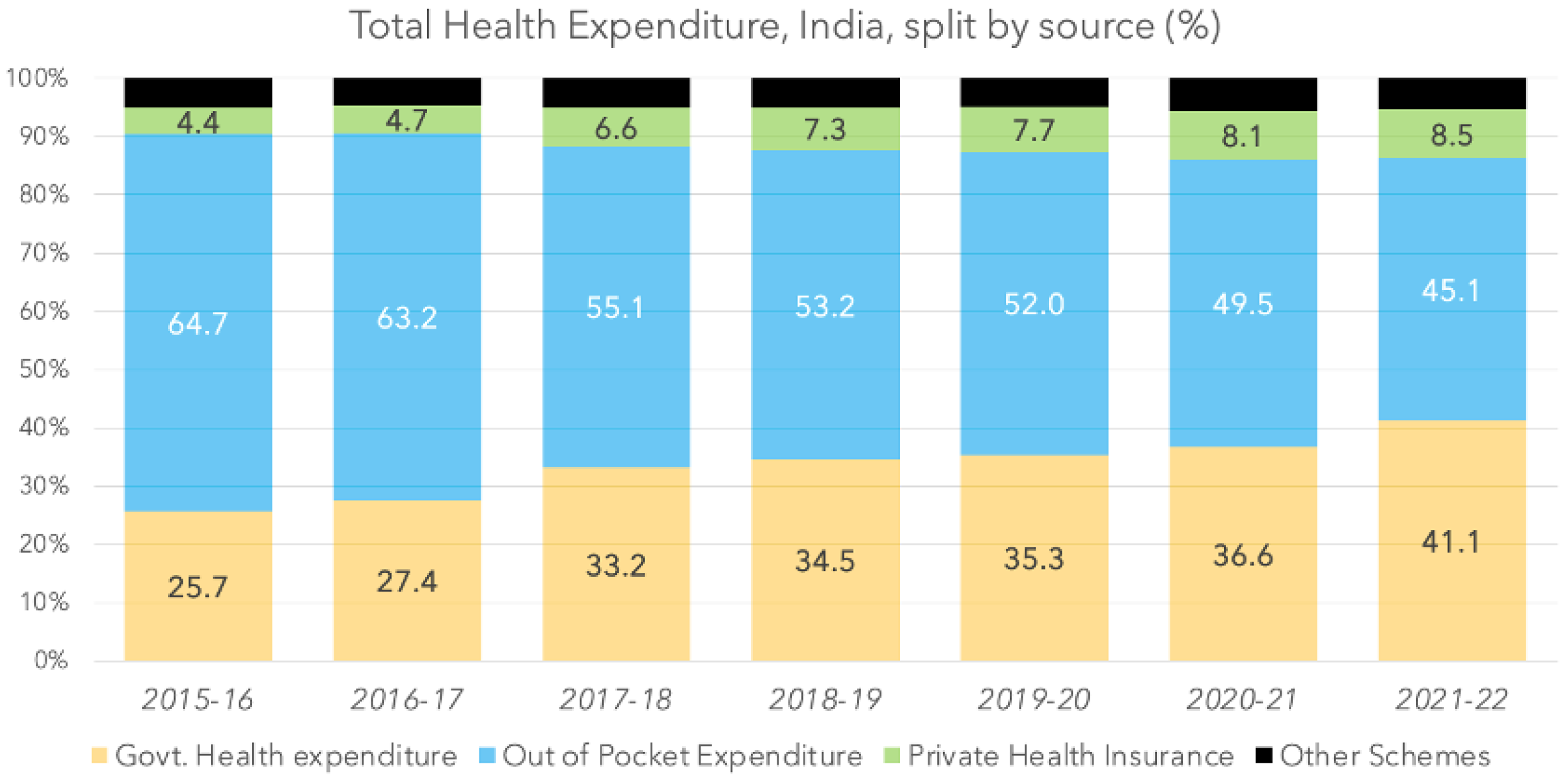
In the Indian context, government health expenditures (GHE) have contributed less than 50% of the total health expenditure (THE) and, consequently, Out-of-pocket expenditures (OOP) have remained above 50% [5,6,7,8,9,10,11], suggesting that health insurance has not played a significant role in offering financial protection to Indians and has failed to fill the large gap left by the government. Even in the longer run, as countries and states increase their contributions towards health and progress towards Universal Health Coverage (UHC) and reduce the extent of OOP, there will be a need for top-up commercial insurance that allows consumers to access and pay for services outside the UHC benefits package [12] and does not unleash inflationary pressures that can derail the entire country’s UHC journey [13].
Given this reality, it becomes essential to study the underlying mechanisms behind insurance and offer citizens the best possible product, which ensures that they not only receive a high degree of protection on a sustained basis but also receive the help they need to improve their health outcomes. As mentioned earlier, there is also the concern that if the commercial health-insurance market is not well-organized, it could spark a high rate of inflation in the healthcare market [13], which could have a negative feedback effect on the quest for UHC for a low- and middle-income country (LMIC) like India. In this paper, we study these behavioral regularities—low penetration, rising premiums, and underwriting losses—and test alternative policies using a dynamic model capable of reproducing these patterns and stress-testing counterfactuals.

2. Methods

Using data published by the Insurance Regulatory and Development Authority of India (IRDAI), we first attempt to capture the aggregate performance of the health-insurance sector in India. We examine both the wholesale and retail components of the market. As a next step, we use a system-dynamics approach [14] and build a representative insurance market model that seeks to replicate the aggregate behavior of the industry using multiple parameters. Having demonstrated that our model replicates the aggregate behavior of the insurance industry in India, we assume that our model parameters capture the most critical elements of the insurance industry and go on to simulate the behavior of the insurance industry under different scenarios by varying the values of these parameters so that we may arrive at some policy options that could alter the performance of the health-insurance industry in India.

2.1. System-Dynamics Approach

System dynamics (SD) is a methodology for understanding and improving decision-making in complex, dynamic systems. Rather than focusing on static outcomes or optimization, SD emphasizes the structural feedback, delays, and accumulations that drive behavior over time. Its visual and intuitive modeling language makes it accessible across disciplines—from medicine and environmental science to public policy and economics. Our study reimagines commercial health insurance in India by surfacing how stakeholder incentives, policy levers, and structural feedback interact to produce persistent performance challenges, and examines design alternatives that hold potential to shift those dynamics.

2.2. Aggregate Behavior of the Health-Insurance Sector in India

In the Indian context, the share of health-insurance premium in total health expenditure (THE) has remained consistently below 10% (Figure 1) and the number of lives covered is less than 20% of the population (Table 1) despite more than 30 years of the existence of the industry.
Figure 1. Health expenditure split for India (2015–2022).
Additionally, although the underwriting losses associated with the health-insurance business are not available separately, the overall underwriting losses of general (non-life) insurers have continued to increase every year. In the last year, these losses increased from Systems 13 01104 i001318 billion to Systems 13 01104 i001328 billion [15]. The situation is also similar for each of the five largest specialized health insurers (Table 2). It is also important to note that:
  • Retail (individual) commercial insurance covered 28.7 million lives in 2015–2016, a mere 2.3% of the total estimated population of 1.3 billion in 2016 [16], and grew at 9% per annum over the last seven years (Table 3), reaching covered lives of 52.9 mn by 2022–2023 [15]—covering 3.6% of the Indian population of 1.4 billion in 2023. Over this period, the retail insurance premium per covered life also grew at the rate of 9% per annum, with the average premium growing by 82% from a level of Systems 13 01104 i0013600 in 2015–2016 to Systems 13 01104 i0016600 in 2022–2023 (Table 3).
  • For group insurance, the customer base grew from a level of 57 million covered lives in 2015–2016 [17] to 199 million in 2022–2023 [15]—a growth rate of almost 20% per annum, albeit on a low base (Table 4). However, the average premium per covered life barely changed from around Systems 13 01104 i0012000 to Systems 13 01104 i0012300, representing an annual growth rate of only 2% per annum (Table 4).
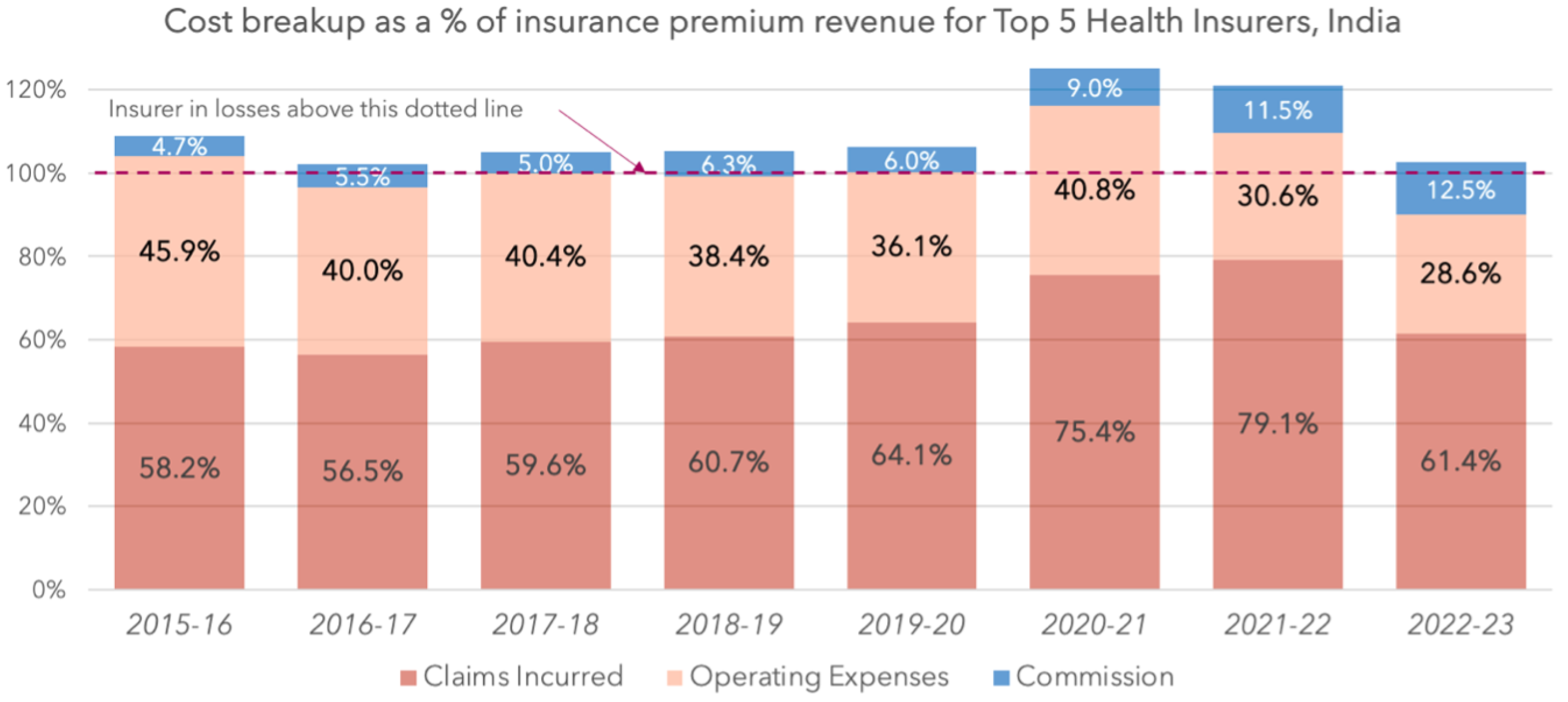
  • The health-insurance industry in India has unusually high operating costs. This can be seen from the fact that, despite a limit of 35% for operating costs, a large number of insurers in India (17 of the 31 private insurers) are non-compliant and have operating costs over this limit [15]. In contrast, the Taiwanese single-payer health-insurance system has operating costs of under 2% [18]. In OECD countries, for social security schemes, the average administrative costs are about 4.2%. And while for private health-insurance plans, administrative costs are about three times higher [19], they are still significantly lower than those for India (Figure 2).
    Figure 2. Cost breakup of the top 5 largest standalone health insurers in India.
  • Incurred-claims ratios of public sector insurers have consistently remained above 100% from 2018–2019 to 2022–2023 [15], and the largest specialized private health insurers have consistently reported underwriting losses (Table 2).
  • As can be seen from Table 1, despite these high operating costs and adverse selection experience, there appears to have been no significant change in aggregate insurance premium per life over this period, even though retail health-insurance premiums (primarily in the private sector) have increased substantially each year (Table 3). This is because group insurance premiums (primarily offered by the public sector) have essentially remained unchanged over the last several years (Table 4). The Comptroller and Auditor General of India, in their recent review, remarked that the losses of the health-insurance business of PSU (public sector) insurers either wiped out/decreased the profits of other lines of business or increased the overall losses and, among other things, the cumulative losses of Systems 13 01104 i001263 billion for the last five years were incurred due to non-loading of premium for adverse claim experience [20].

Table 1. Total health-insurance premiums, growth, and national health expenditures.
Year2015–20162016–20172017–20182018–20192019–20202020–20212021–20222022–20232015–2023
PRMSystems 13 01104 i0010.22 tnSystems 13 01104 i0010.27 tnSystems 13 01104 i0010.33 tnSystems 13 01104 i0010.39 tnSystems 13 01104 i0010.46 tnSystems 13 01104 i0010.54 tnSystems 13 01104 i0010.67 tnSystems 13 01104 i0010.81 tn
Growth 24.25%21.05%18.62%16.93%17.69%24.15%20.96%20%
Lives0.09 bn0.10 bn0.12 bn0.12 bn0.14 bn0.17 bn0.21 bn0.25 bn
Growth 19.60%19.71%−6.28%18.91%25.66%24.49%17.94%17%
PPRMSystems 13 01104 i0012564Systems 13 01104 i0012664Systems 13 01104 i0012693Systems 13 01104 i0013409Systems 13 01104 i0013352Systems 13 01104 i0013140Systems 13 01104 i0013131Systems 13 01104 i0013211
Growth 3.88%1.12%26.56%−1.66%−6.34%−0.27%2.56%3%
Source[17][17][17][17][21][22][23][15]
Table, PgI.55–56, 48–49I.55–56, 48–49I.55–56, 48–49I.55–56, 48–49I.51, 58I.46, 53I.38, 36I.23, 40
THESystems 13 01104 i0015.28 tnSystems 13 01104 i0015.81 tnSystems 13 01104 i0015.67 tnSystems 13 01104 i0015.96 tnSystems 13 01104 i0016.56 tn
GHESystems 13 01104 i0011.62 tnSystems 13 01104 i0011.88 tnSystems 13 01104 i0012.31 tnSystems 13 01104 i0012.42 tnSystems 13 01104 i0012.72 tn
Source[7] [8] [9] [10] [11]
Pg552733
Ratio to THE
PRM4.16%4.70%5.83%6.57%6.99%
GHE30.63%32.36%40.78%40.61%41.41%
TPE34.79%37.06%46.62%47.18%48.39%
Note: PRM: Total Insurance Premium (excluding government-business); PPRM: Total Insurance Premium Per Life = P R M / L i v e s ; THE: Total Health Expenditure; GHE: Government Health Expenditure; TPE: Total Pooled Expenditure.
Table 2. Total profits of five of the largest standalone health insurers (Systems 13 01104 i001 bn) [24].
Year2015–20162016–20172017–20182018–20192019–20202020–20212021–20222022–2023
Insurance Premiums ( A 1 )30.4142.3656.7878.28100.3489.87160.87208.12
Profit on Sale of Investments ( A 2 )0.160.280.180.160.480.101.160.22
Interest, Dividend & Rent ( A 3 )1.451.852.413.314.544.887.039.63
Other Income - Other Expenses ( A 4 )0.020.020.033.186.295.767.6813.42
Total Income ( A = A 1 + A 2 + A 3 + A 4 )32.0444.5259.3984.93111.65100.62176.74231.39
Claims Incurred ( B 1 )17.7023.9233.8347.5064.3567.79127.19127.87
Commission ( B 2 )1.432.342.864.906.068.0718.4225.98
Operating Expenses ( B 3 ) 13.9716.9622.9230.0936.2036.6349.2559.55
Premium Deficiency ( B 4 )0.030.01−0.040.000.241.11−1.360.00
Total Expense ( B = B 1 + B 2 + B 3 + B 4 )33.1343.2359.5782.49106.85113.61193.50213.41
Total Profit ( C = A B )−1.091.28−0.182.444.80−12.99−16.7617.98
Underwriting Profits ( D = A 1 B )−2.72−0.87−2.79−4.22−6.51−23.74−32.63−5.29
Investment Profits ( E = A 2 + A 3 + A 4 )1.632.152.616.6611.3110.7515.8723.27
Note: The five insurers are Aditya Birla, Care Health, Manipal Cigna, Niva Bupa, and Star Health.
Table 3. Retail health-insurance premiums and growth.
Year2015–20162016–20172017–20182018–20192019–20202020–20212021–20222022–20232015–2023
PRMSystems 13 01104 i0010.10 tnSystems 13 01104 i0010.13 tnSystems 13 01104 i0010.15 tnSystems 13 01104 i0010.18 tnSystems 13 01104 i0010.20 tnSystems 13 01104 i0010.26 tnSystems 13 01104 i0010.30 tnSystems 13 01104 i0010.35 tn
Growth 22%22%15%14%29%16%16%19%
Lives0.03 bn0.03 bn0.03 bn0.04 bn0.04 bn0.050.05 bn0.05 bn
Growth 11%4%26%3%23%−3%2%9%
PPRMSystems 13 01104 i0013607Systems 13 01104 i0013933Systems 13 01104 i0014592Systems 13 01104 i0014163Systems 13 01104 i0014617Systems 13 01104 i0014863Systems 13 01104 i0015828Systems 13 01104 i0016573
Growth 9%17%−9%11%5%20%13%9%
Source [17] [17] [17] [17] [21] [22] [23] [15]
Table, PgI.55–56, 48–49I.55–56, 48–49I.55–56, 48–49I.55–56, 48–49I.51, 58I.46, 53I.38, 36I.23, 40
Note: PRM: Retail Insurance Premium; PPRM: Retail Insurance Premium Per Life = P R M / L i v e s .
Table 4. Group health-insurance premiums and growth.
Year2015–20162016–20172017–20182018–20192019–20202020–20212021–20222022–20232015–2023
PRMSystems 13 01104 i0010.12 tnSystems 13 01104 i0010.15 tnSystems 13 01104 i0010.18 tnSystems 13 01104 i0010.22 tnSystems 13 01104 i0010.26 tnSystems 13 01104 i0010.28 tnSystems 13 01104 i0010.37 tnSystems 13 01104 i0010.46 tn
Growth 27%21%22%19%9%31%25%22%
Lives0.06 bn0.07 bn0.09 bn0.07 bn0.09 bn0.12 bn0.16 bn0.20 bn
Growth 24%27%−18%28%27%37%23%20%
PPRMSystems 13 01104 i0012039Systems 13 01104 i0012088Systems 13 01104 i0011986Systems 13 01104 i0012973Systems 13 01104 i0012768Systems 13 01104 i0012368Systems 13 01104 i0012273Systems 13 01104 i0012319
Growth 2%−5%50%−7%−14%−4%2%2%
Source [17] [17] [17] [17] [21] [22] [23] [15]
Table, PgI.55–56, 48–49I.55–56, 48–49I.55–56, 48–49I.55–56, 48–49I.51, 58I.46, 53I.38, 36I.23, 40
Note: PRM: Group Insurance Premium; PPRM: Group Insurance Premium Per Life = P R M / L i v e s .

2.3. Model Structure

2.3.1. Conceptual Model

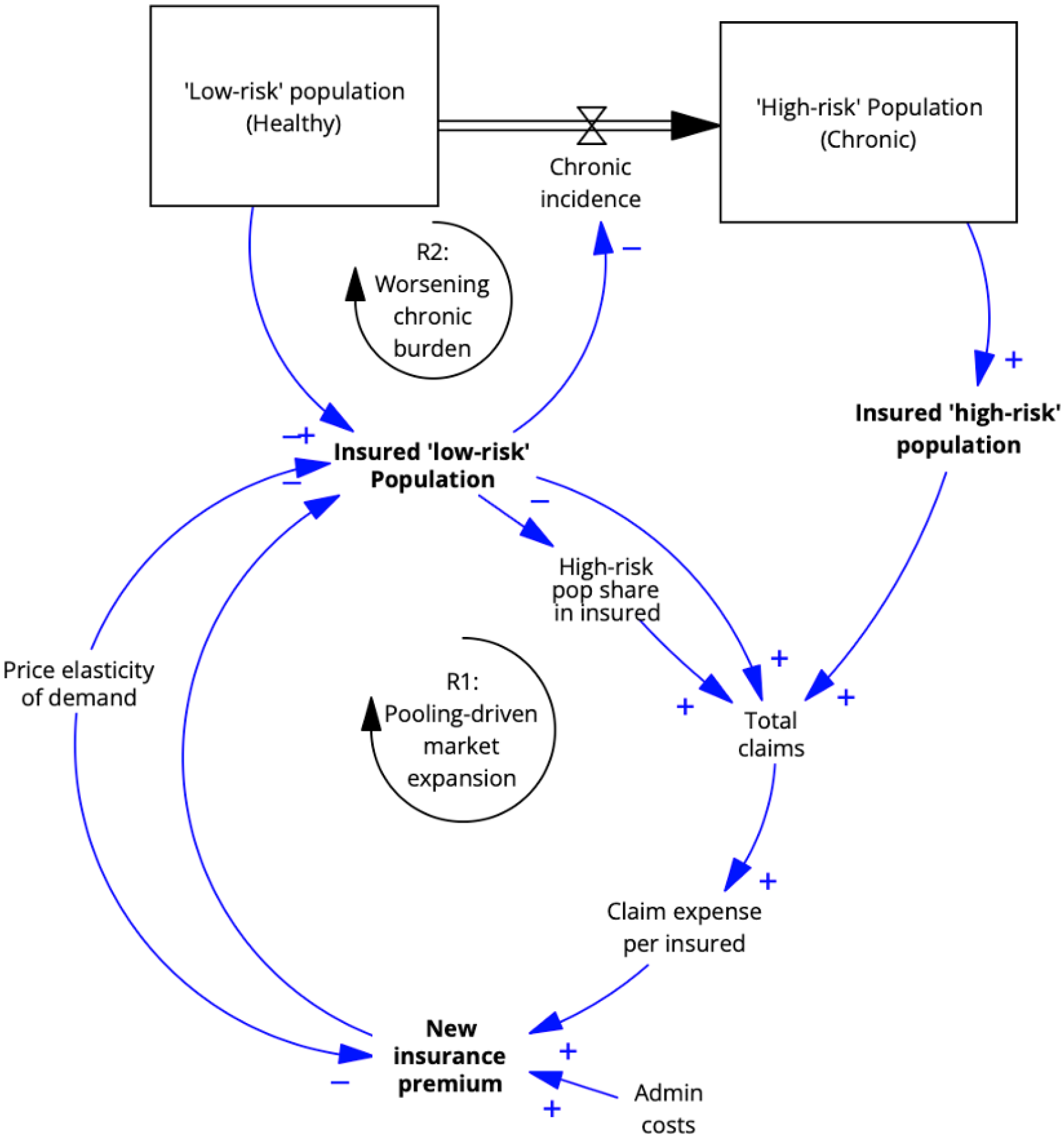
The conceptual model in Figure 3 is a simplified diagram of our system-dynamics model. It depicts the dynamics of an insurance system where a population is divided into two groups, reflecting the individuals’ health status: the low-risk or healthy population and the high-risk, chronic population. The chronic incidence rate governs the transition from a healthy or low-risk population to a chronic status or high-risk population, reflecting the percentage of healthy individuals who develop chronic conditions in a given period. The upper part of the model tracks population health, and the lower half tracks market dynamics of health insurance. Our model has a 30-year run time, with insurance policies being bought and claims raised on an annual basis: at the end of each year, the insurance lapses and needs further renewal, creating a fresh market dynamic every year. This long-term perspective allows for observing trends across the fast-changing insurance market dynamics and their interaction with population health. The flow between the health status is unidirectional, from healthy/low risk to chronic. The insurer in the model represents the health-insurance industry, governed by market demand from low-risk and high-risk populations, and is driven by a profit maximization mechanism which determines the price of insurance, as described in Section 2.3.3. For our policy comparisons, we model a population of 1000 individuals and compare runs over 30 years. Initially, 90% of the people are healthy, while 10% of the people suffer from chronic conditions.
Figure 3. This conceptual diagram, with a two-stock structure, depicts core model interactions (before policy interventions).
The healthy or low-risk population and chronic or high-risk population each have a portion of insured individuals: The insured ‘low-risk’ population represents the number of healthy people with insurance, and the insured ‘high-risk’ population represents the insured portion of people who have chronic conditions. The size of each insured group drives claims generation. Claims by low-risk, non-chronic populations are based on the number of insured healthy individuals, with the claim amount determined by an average claim value, a composite of both incidence and value of claims raised, to get an average claim per person insured.
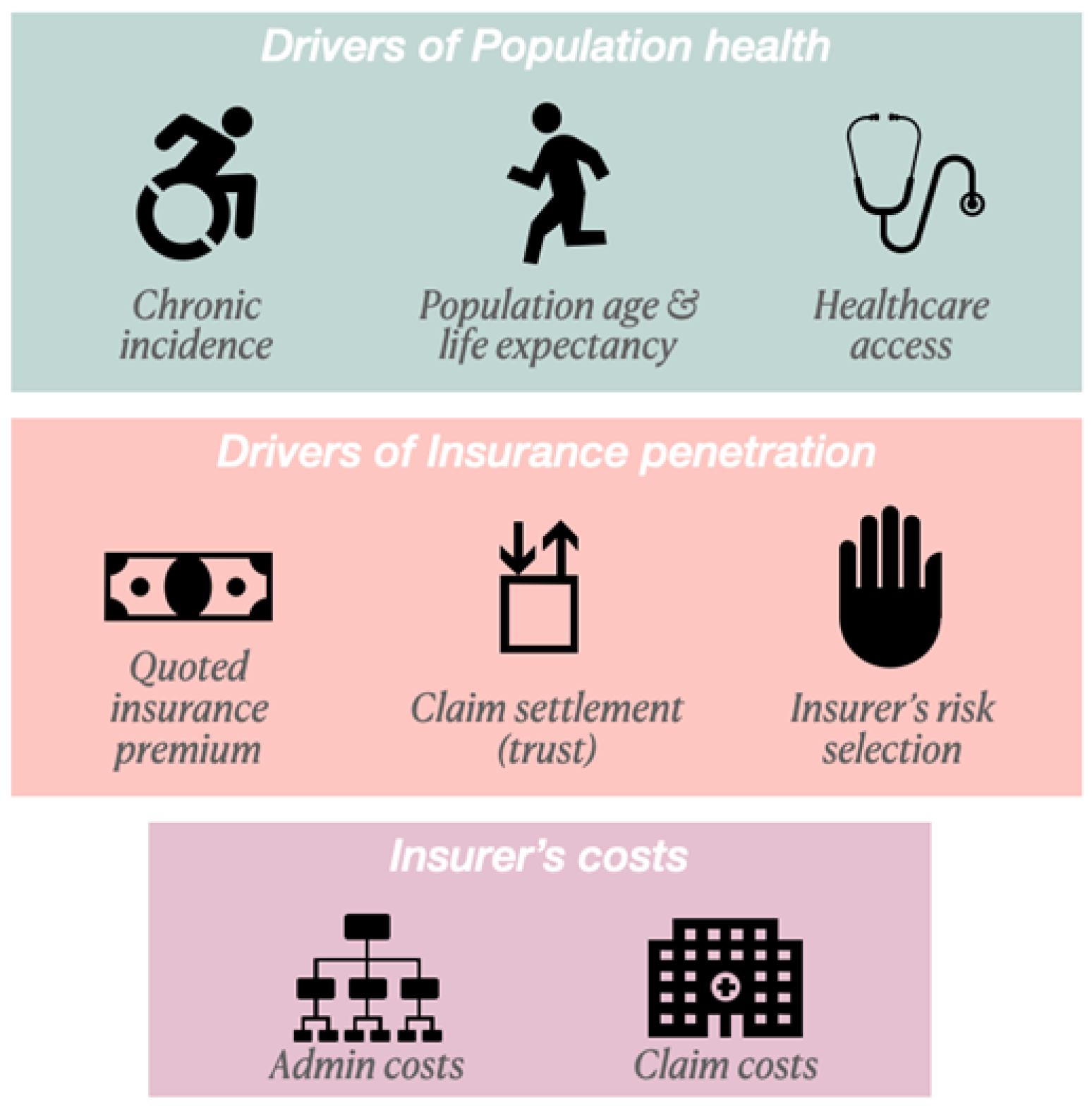
For the chronic population, claims are significantly higher due to more frequent and expensive healthcare needs. This difference is driven by a multiplier, as a composite, accounting for both the elevated claim frequency and the higher cost of care for people with chronic conditions. These claims together contribute to the total claims expense. An increase in the insured ‘low-risk’ population drives a reduction in the ‘high-risk’ share of insured, which impacts the value of total claims. From here, a claim expense per insured and administrative costs determine the price floor for the insurance premium in this market. The determination of the actual premium is driven by the price elasticity of demand for the ‘low-risk’ population. The key variables contributing to the dynamics are listed in Figure 4, and the entire set of variables and equations that drive the model are listed in Appendix A.
Figure 4. Simulation model variables.

2.3.2. Modeling Assumptions

To maintain clarity while capturing key dynamics, we adopt the following modeling assumptions:
  • Only two health states are modeled (low-risk or healthy, high-risk or chronic), excluding short-term invalidation, acute illnesses, or temporary communicable diseases or conditions.
  • We have births flowing directly into the healthy, low-risk population stock for simplicity and as a reasonable simplification for our consideration. We apply age-adjusted mortality rates across low- and high-risk populations, avoiding the structural complexity of explicit ageing chains. Births enter the healthy population at a rate of 1.5% of the total population per year, while deaths occur at an age-adjusted global average mortality rate [25], with a base mortality for ‘low-risk’ population at 0.7%, and with chronic (high-risk) mortality three times as high as that of the healthy population [26].
  • The ‘low-risk’ or healthy insured population is derived from a stock of ‘low-risk fraction insured’, with flows governed by price sensitivity (elasticity) and adjusted yearly based on insurance price dynamics.
  • Elasticity is treated as exogenous and defined as a step function, with higher elasticity when the insured fraction is low, and tapering off as coverage increases. This reflects saturation effects usually observed in the demand for insurance.
  • The chronic insured population is modeled as an auxiliary, assuming 100% interest in insurance irrespective of price (i.e., the chronic population is price-inelastic). This allows the model to remain parsimonious while capturing the key dynamics.
These assumptions are elaborated further in the section on Limitations and provide a transparent boundary for interpreting model outcomes.

2.3.3. Price Discovery Mechanism

The model incorporates a price discovery mechanism that combines a price floor, a price ceiling, and a hill-climbing algorithm to identify an optimal premium that improves insurer profits:
  • The premium floor is dynamically computed based on total claim costs and administrative costs from the previous period, with a 10% margin to ensure minimum viability. This price floor is disabled for group insurance.
  • The premium ceiling is fixed at Systems 13 01104 i00120,000—8 times the initial quoted premium—to prevent unsustainable increases, growing at 1% each year to allow an inflationary margin.
  • Within these bounds, the model uses a hill-climbing algorithm guided by total profits. If a change in premium in the previous period improved the total profit pool, the algorithm continues adjusting in that direction. If it reduced profits, the direction is reversed. The adjustment magnitude is fixed at a 1% margin per time step.
  • Importantly, this mechanism interacts with insurance premium elasticity of the healthy population—higher premiums risk drop-offs in low-risk population enrollment, especially in the absence of managed care. This dynamic creates a feedback loop where premium increases can reduce the insured base of the low-risk population pool, in turn affecting future profits.
  • The resulting quoted premium is a product of this feedback and is updated annually based on performance and population response from the previous period.

3. Stakeholders, Objectives and Strategies

3.1. Stakeholders and Objectives

The model simulates and optimizes the health-insurance system from the perspective of three primary stakeholders: the insurer, the population (low-risk or healthy and high-risk or chronic), and the regulator. Each stakeholder has distinct objectives and control levers, which create dynamic tensions within the system as they influence outcomes differently.

3.1.1. Insurer

For the insurer, the primary objective is to maximize profits, reflected by a total profit pool. This can be achieved in multiple ways, including:
(a)
expanding insurance penetration to increase total revenue, although this is constrained by the price sensitivity of the healthy population;
(b)
limiting high-risk population from entering pool to reduce costs and boost profitability;
(c)
lowering the Claim Settlement Ratio, which controls post-insurance costs by managing the number of claims paid. This is used in two ways: (1) it is tightened when profits become negative due to higher claims, and (2) it accompanies risk-selection efforts by limiting claim payout when undisclosed chronic risk rises; and
(d)
increasing the insurance premium rapidly to account for higher claims, although this may reach a point where either the regulator steps in to restrict further increases or even the high-risk population stops buying insurance, or claims rise faster than the ability of the insurers to increase premiums.

3.1.2. Population

Overall, the population seeks affordable premiums. The two customer segments leverage different mechanisms discussed below:
  • The low-risk or healthy population shows relatively higher price sensitivity compared to the high-risk population and may drop out of the insured pool if premiums rise—a dynamic governed by price elasticity.
  • The chronic population, facing higher medical costs, prioritizes maintaining coverage. Their primary concern is avoiding exclusion from insurance due to risk selection, and they may withhold health information to bypass restrictions.

3.1.3. Regulator

The regulator plays a balancing role, seeking both to keep the insurance market attractive for insurers and to ensure high insurance coverage across the population. Its objectives for the population include ensuring equitable access to insurance and lowering the financial risks from the lack of insurance coverage, achieved through control of insurance premiums. At the same time, it is interested in maintaining financial viability for insurance providers. The regulator tracks premiums and insurance coverage via the ‘low-risk’ fraction insured, representing the insured proportion of the low-risk population, which is essential for determining how well the population is covered in terms of health-related financial risks.

3.2. Strategies and Stakeholder Interactions

The behavior of the health-insurance system is shaped by a total of six (R1 to R6) feedback loops that govern the interactions between the insurer, the population (healthy and chronic), and the regulator. These loops illustrate how changes in premiums, population health, and market dynamics evolve over time. By understanding the stakeholders’ interactions and decision-making, we surface inherent conflicts in the objectives of different stakeholders and identify opportunities to improve outcomes.

3.2.1. Base Scenario

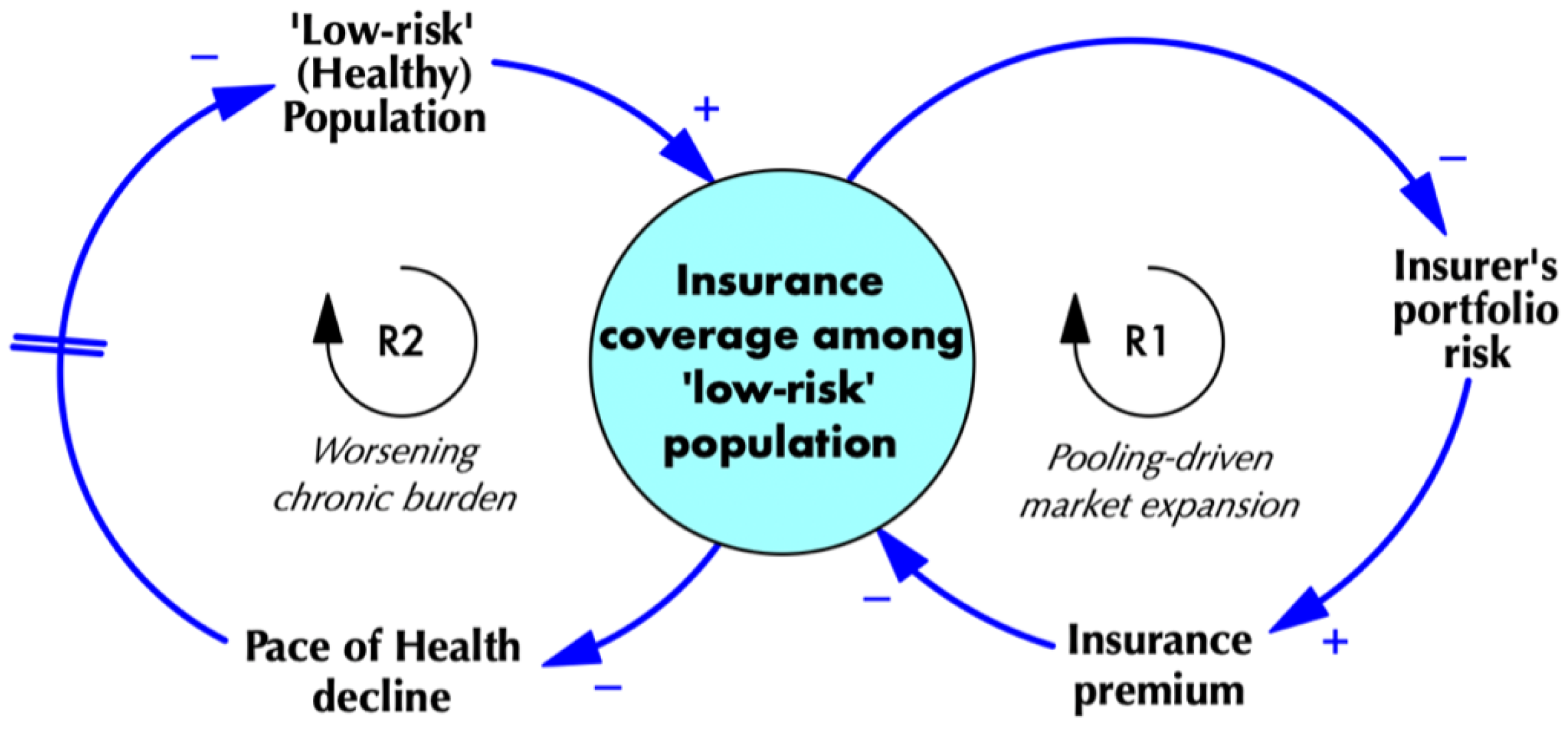
At the core of the insurance system’s dynamics are two main feedback loops:
1.
Insurance Market expansion (or contraction) [R1]: This reinforcing loop (Figure 5) demonstrates how the initial size of the low-risk (healthy) insured pool influences premiums. When more healthy individuals are insured, the insurer can spread risk more effectively, keeping premiums lower, which in turn attracts or retains more healthy individuals in the pool. However, if fewer low-risk, non-chronic individuals are insured initially, the insurer’s portfolio risk increases, driving up premiums. This leads to even more healthy individuals leaving the insured pool due to their higher elasticity.
Figure 5. Core feedback structure in the base insurance market, highlighting the reinforcing loops of population coverage (R1) and chronic burden progression (R2).
2.
Population’s chronic burden [R2]: This reinforcing loop (Figure 5) focuses on the overall health of the population. When insurance penetration among the low-risk, non-chronic population is low, fewer individuals access timely care or diagnosis. This accelerates health deterioration, pushing more people into chronic conditions and shrinking both the overall and the insured share of the low-risk, non-chronic population.
With commercial health insurance covering less than 10% of India’s population and out-of-pocket spending accounting for nearly half of total health expenditures, households face significant financial vulnerability. Meanwhile, private insurers continue to experience rising premiums, a limited risk pool, and sustained underwriting losses (see Figure 2), reflecting the effects of adverse selection. Realizing the benefits of risk pooling will require activating the reinforcing loop R1 to improve risk distribution and stabilize market premiums.
Table 4 shows a parallel development in the corporate group insurance market. Driven by statutory requirements under labor laws, the group insurance market, dominated by public sector insurers, has expanded rapidly, from 57 million covered lives in 2015–2016 to 199 million in 2022–2023, following the 2020 mandate for employee health insurance. Yet, stagnant premiums and weak cost control have produced persistent losses. Public insurers have limited flexibility to adjust pricing or manage the health risks of their insured population, eroding the financial sustainability of this segment. However, this model has two advantages: (1) limited risk of adverse selection, and (2) lower administrative costs (than our next scenario), as underwriting and claims administration processes are greatly simplified.

3.2.2. Risk Selection

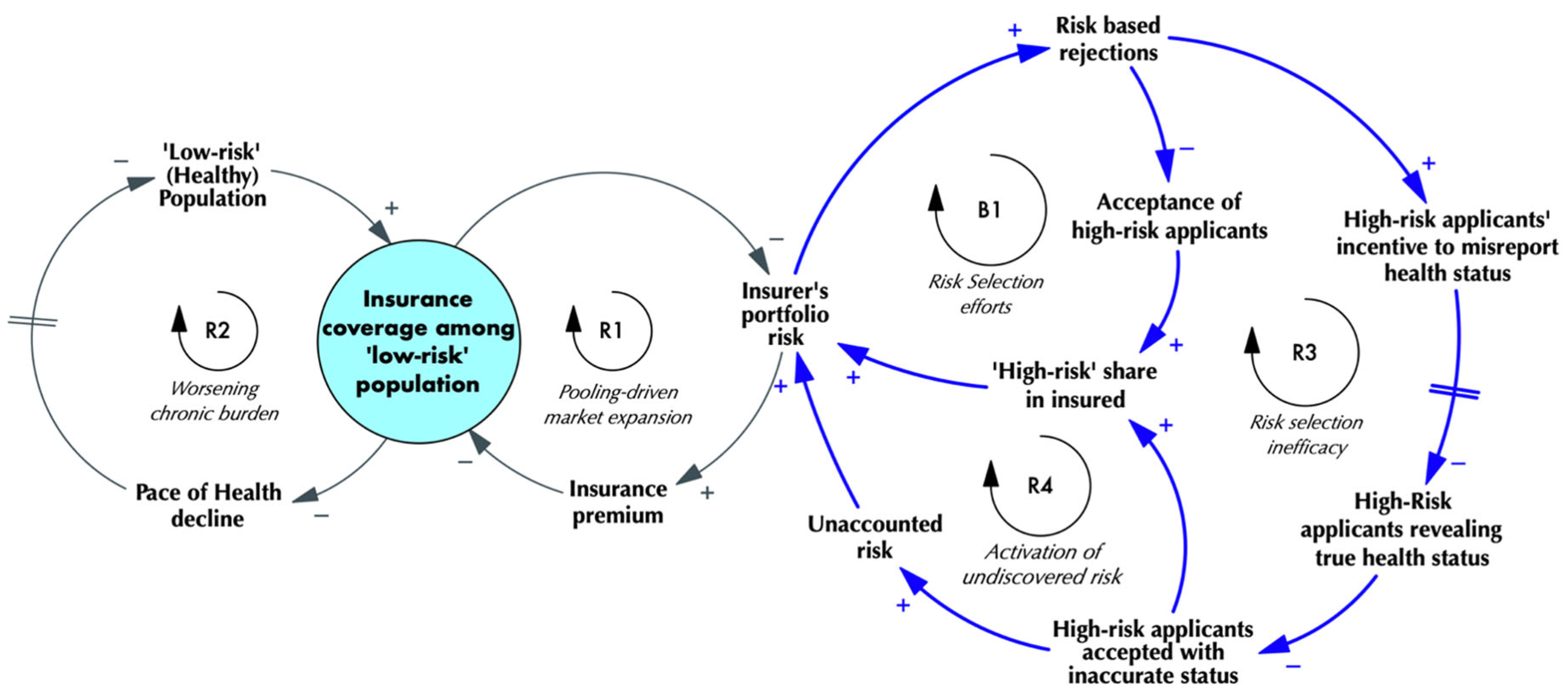
In markets like India, where insurers routinely reject applicants based on their declared chronic status, an escalation in insurer costs induces insurers to seek risk-selection strategies and attempt to reject high-risk individuals (particularly chronic patients). This introduces additional feedback as the insurer initiates intervention and the chronic population adjusts to it. These feedback loops are shown in Figure 6.
Figure 6. CLD depicting feedback structure under risk selection, showing insurer’s risk-selection effort (B1), applicant adaptation (R3), and activation of undiscovered risk (R4).
3.
Risk Selection Efforts [B1]: Insurers aim to reduce claims costs by rejecting individuals with chronic conditions. By focusing on low-risk populations, insurers attempt to lower their portfolio risk. They expect to reduce the share of the higher-risk population with chronic conditions in their portfolios to balance the risk.
4.
Risk-selection inefficacy [R3]: In response to insurers’ risk-selection efforts, high-risk or chronically ill applicants, who have a stronger incentive to obtain coverage, often attempt to bypass this rejection process by concealing their true health status once they learn about this risk-selection process. Because insurers lack independent access to medical information beyond what is voluntarily disclosed, many high-risk individuals are accepted into the pool under misrepresented health conditions.
5.
Activation of undiscovered risk [R4]: By concealing health risks, chronic patients enter the insurance pool while insurers underwrite the risk based on declared health status. This introduces an element of unaccounted risk into the underwritten pool, which further increases the portfolio risk of the insurer, as it has even less visibility than before into the expected volume and value of claims generated by the insured pool.
Risk selection may appear to lower immediate costs for the insurer but introduces hidden feedback, as the insurance applicants adapt to the policy, undermining the insurer’s efforts to manage portfolio risk. Over time, as the hidden liabilities of the ’high-risk’ applicants accepted with an inaccurate status surface through an unexpected increase in volume and value of claims, insurers respond with tighter screening and higher premiums, and trigger further feedback where the insurer seeks to increase risk selection as the only tool it has for controlling portfolio risk.
India’s health-insurance providers use this approach to control risk. However, despite their best efforts, insurers have consistently seen underwriting losses over the entire period of 2015–2023 (see Table 2). The limited success of risk-selection mechanisms has also spawned the use of proxies such as age and demographics to forecast true health status (and to drive rejections). This mechanism is also rife with issues, as it worsens financial protection for vulnerable groups and sows distrust in the market. The expanding losses due to unaccounted risk also push insurers to lean on claim rejection to reduce costs, which has the long-term effect of reducing the reliability of health insurance as a financial protection measure and a future contract.

3.2.3. Managed Care

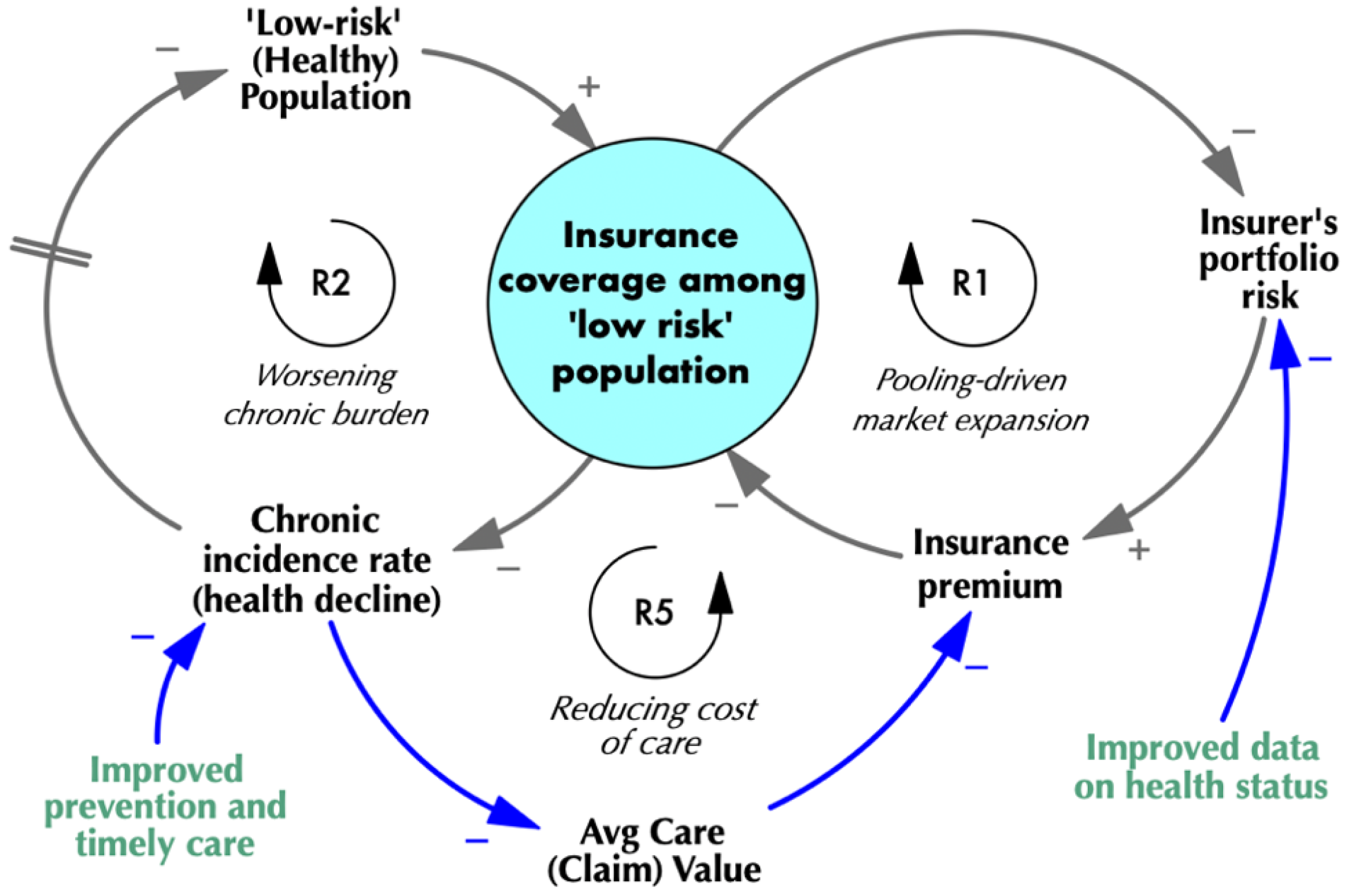
The managed-care model introduces preventive healthcare measures, early diagnosis, and improved health data for the insured population. This model is not yet present in the Indian market. Conceptually, the proposed configuration aligns with integrated managed-care models offered under Health Maintenance Organizations (HMOs) and Accountable Care Organizations (ACOs), where insurers or affiliated networks assume partial responsibility for care coordination and data management. By offering coverage for outpatient and preventive services such as consultations, basic examinations, and vaccinations, this model reduces the cognitive and financial barriers that delay care-seeking. These feedback loops are shown in Figure 7.
Figure 7. CLD depicting managed-care feedback: improved prevention and better information weaken adverse reinforcing loops, improving system health, and introduce a cost-reduction loop (R5).
6.
Reducing cost of care [R5]: The managed-care model reduces the incidence of chronic conditions over time by reducing the delay in care-seeking through improved primary care and preventive services. It also improves the attractiveness of the insurance product for low-risk and healthy buyers, due to its value-added offering, further attracting the low-risk population into the insured pool. The reduced chronic incidence for the insured pool allows the average cost of care to decline over time (due to reduced frequency and value of claims), although these benefits typically emerge after a lag of 7–8 years.
This model ensures tighter coupling between insurer and population, enhancing visibility into population health, enabling better risk assessment, pricing accuracy, and portfolio management. In a new market, such arrangements can be quickly expanded as bundled products through employer-based group insurance, provider partnerships, and digital primary care networks, which allow a managed-care provider to act as a custodian of care within an already covered pool.

4. Results

Using the above model, we conducted five simulations to examine how these feedback loops play out under different market conditions. The five scenarios are: base case, universal-coverage benchmark scenario (as an idealized benchmark), group insurance, and risk-selection strategy and managed-care policy, both introduced in Year 5. We summarize key scenarios and their expected outcomes below, focusing on how each configuration impacts insurance penetration (or coverage rate), insurer profitability (profit pool size), and insurance affordability (premium levels).

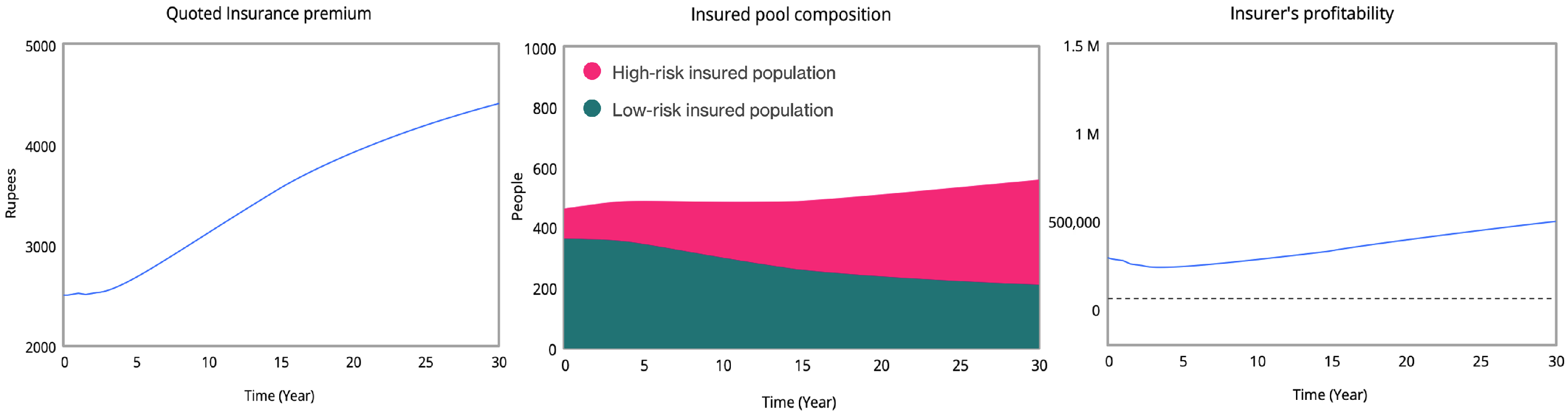
4.1. Base Case

The base case (Figure 8) reflects the results of the model with no interventions. The insurer operates with a cost-plus pricing (a modest fixed margin). Initially, insurance penetration among low-risk populations is at 40% (e.g., only a fraction of healthy individuals with lower risk buy insurance), and 100% of the chronic population is in the pool. Over the 30-period simulation, we observe premiums steadily rising and coverage either stagnating or declining. Healthy people drop out as premiums climb, which worsens the pool’s risk profile (with a higher chronic share), driving costs and premiums even higher. This scenario results in persistent low market penetration and a profit pool that stays relatively small. In fact, the insurer’s profit in the base case can plateau or deteriorate in later periods as the chronic incidence remains high due to poor financial coverage for healthy individuals, worsening the overall population’s chronic incidence. The base case serves as a benchmark for comparison for subsequent scenarios.
Figure 8. Base case: (left to right) Insurance premium, Composition of the insured pool, Insurer profits.

4.2. Universal-Coverage Scenario (Benchmark)

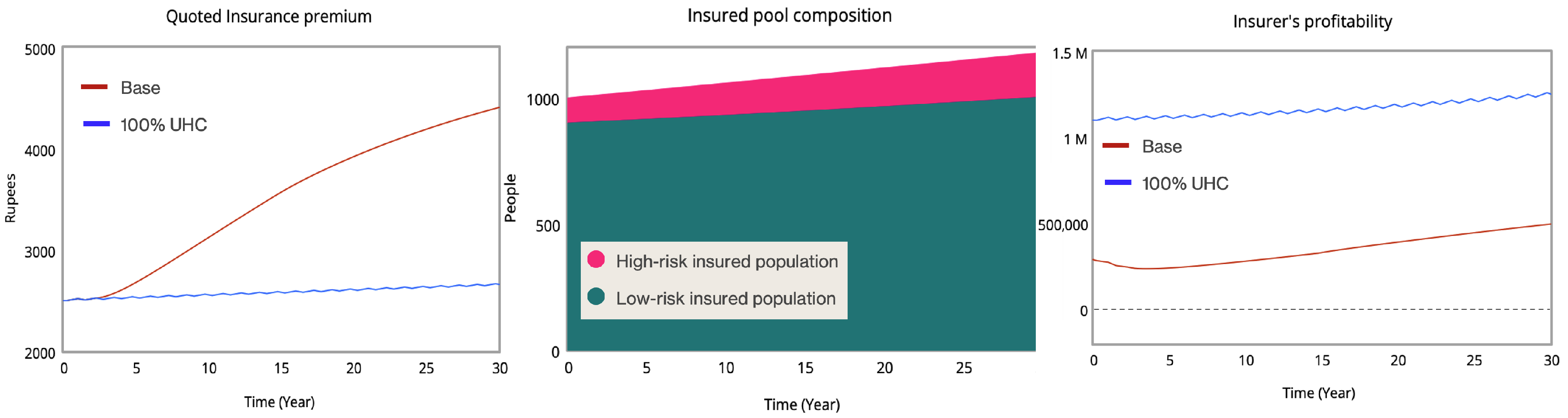
This is a hypothetical case in which 100% of the population, both low-risk and high-risk populations, is insured. Figure 9 shows that the fully insured population flattens premium growth, as the large base of low-risk population allows price elasticity to strongly constrain upward adjustments. Chronic incidence slows, and thus the proportion of high-risk insured stays low. Profits increase in this case as long as births introduce new people in the pool faster than chronic incidence makes them high-risk. This scenario is not intended as a realistic policy state for India’s present market structure. This scenario serves as a theoretical benchmark that clarifies the magnitude of financial opportunity foregone due to persistently low insurance penetration in a country with a large, young, low-risk population.
Figure 9. Universal coverage scenario: (left to right) Insurance premium, Composition of the insured pool, Insurer profits.

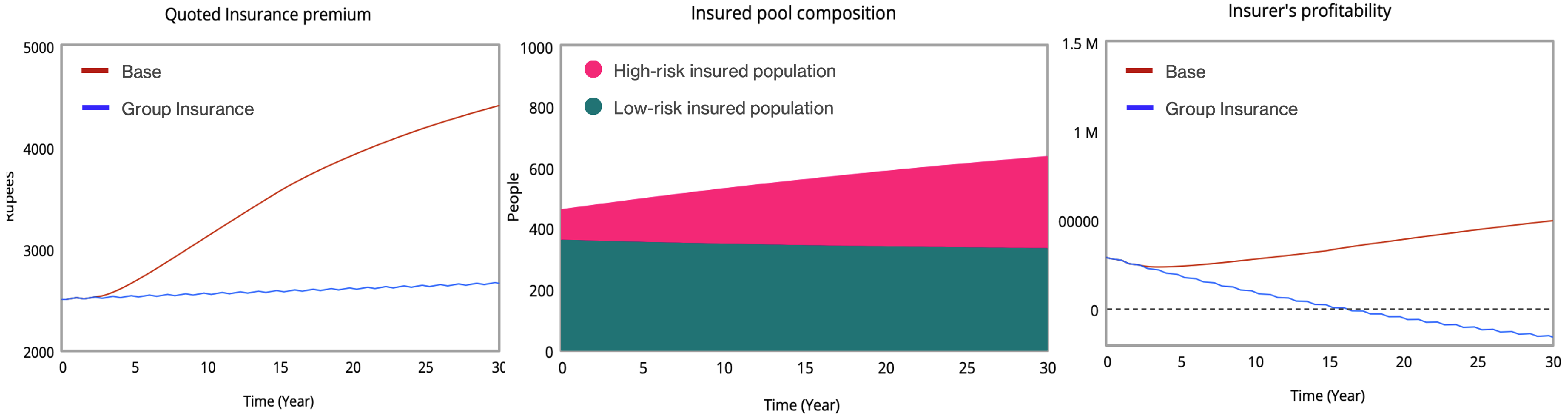
4.3. Group Insurance (Insurer as Price Taker)

This scenario (Figure 10) represents a context where the insurer is a price taker, such as a tightly regulated market or an employer-provided group insurance setting. Here, the insurer cannot freely adjust premiums for profit; instead, the premium is kept close to the underlying cost (for instance, regulations might cap the allowed margin, or competitive bidding for a group contract forces the margin down). We simulate this by limiting the insurer’s ability to set a price floor. The outcome is increased affordability and coverage compared to the base case. Premiums in this scenario grow slowly or remain flat, since the insurer absorbs cost increases or operates on a minimal margin (or at a loss). The price-taker scenario achieves the regulator’s and population’s goals (broad coverage and affordability), but it does so at the expense of the insurer’s long-term viability.
Figure 10. Group insurance scenario: (left to right) Insurance premium, Composition of insured pool, Insurer profits.

4.4. Risk Selection (Introduced in Year 5)

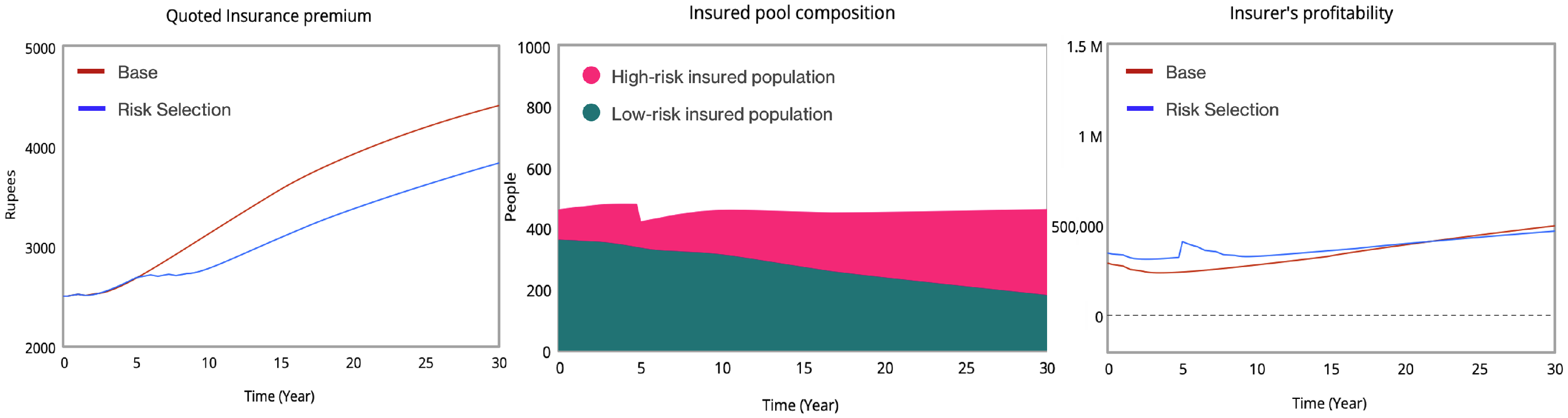
In this scenario (Figure 11), initially, the insurer reduces costs by rejecting high-risk individuals and sees a small jump in profits. However, as chronic patients adjust by concealing their health risks, undiscovered risk rises and erodes the profit. Over time, the premium increase crowds out low-risk insurance buyers, leading to the lowest overall coverage and lowest participation of lower-risk population. Overall profit is also trending lower than the base in the long run.
Figure 11. Risk selection strategy: (left to right) Insurance premium, Composition of the insured pool, Insurer profits.

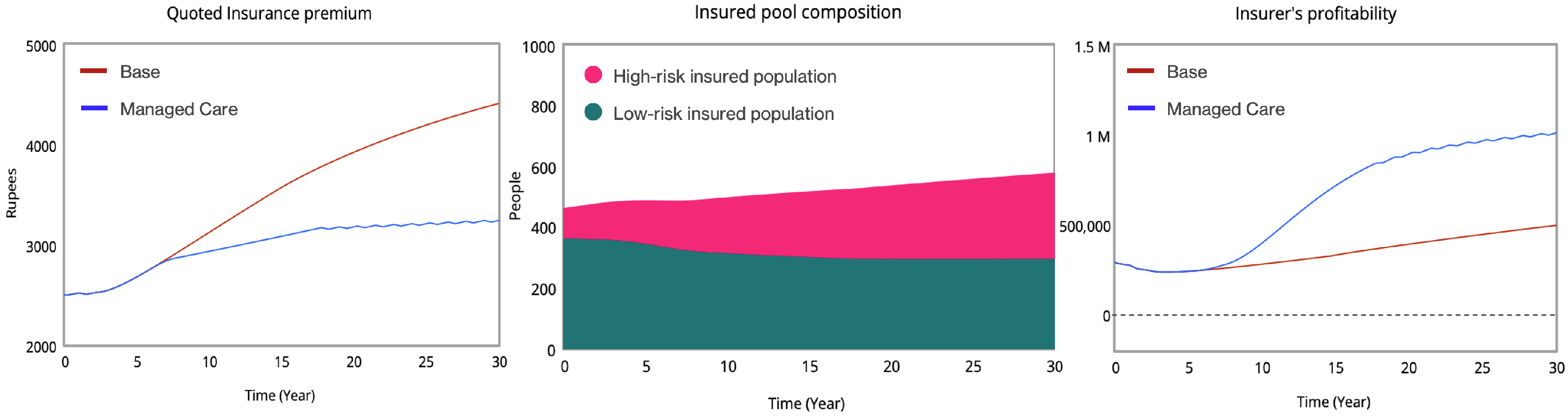
4.5. Managed Care (Introduced in Year 5)

The managed-care policy is introduced in Year 5 over the base run, with lagged effects visible in the next 8 years. This scenario (Figure 12) reduces the pace of chronic incidence, lowers claim costs through early diagnosis and prevention, and retains low-risk buyers in the insured pool. After the transition to managed care, premiums stabilize, and the insurer retains profitability of reduced incidence by not passing cost savings immediately and retaining the generated market surplus.
Figure 12. Managed care policy: (left to right) Insurance premium, Composition of the insured pool, Insurer profits.

5. Additional Analyses

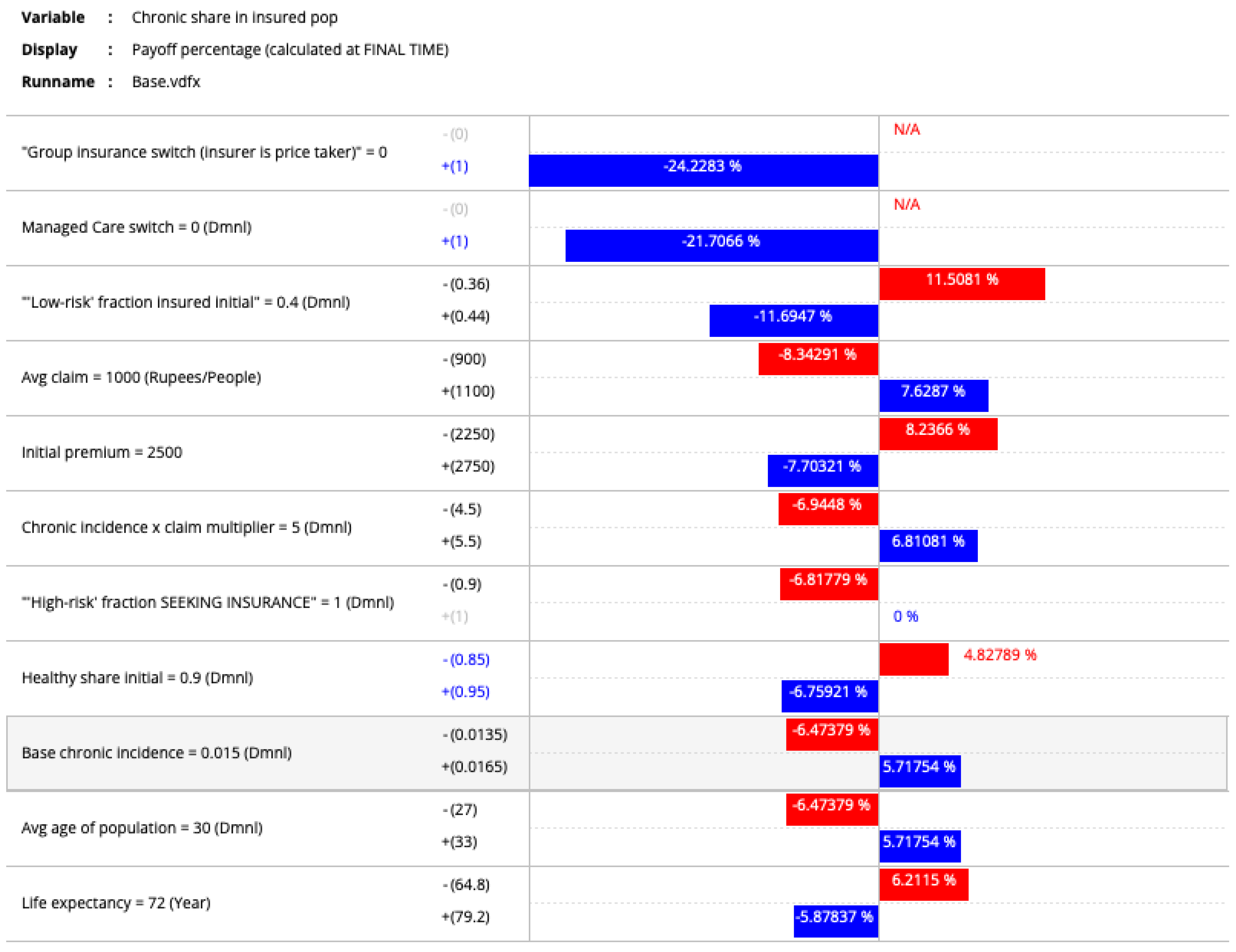
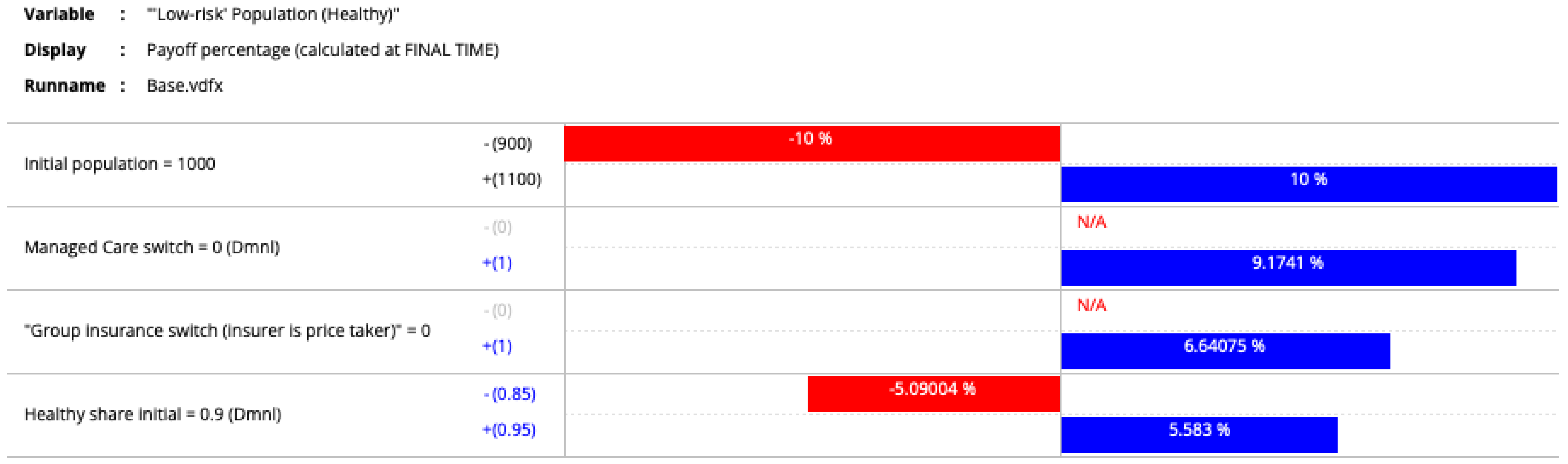
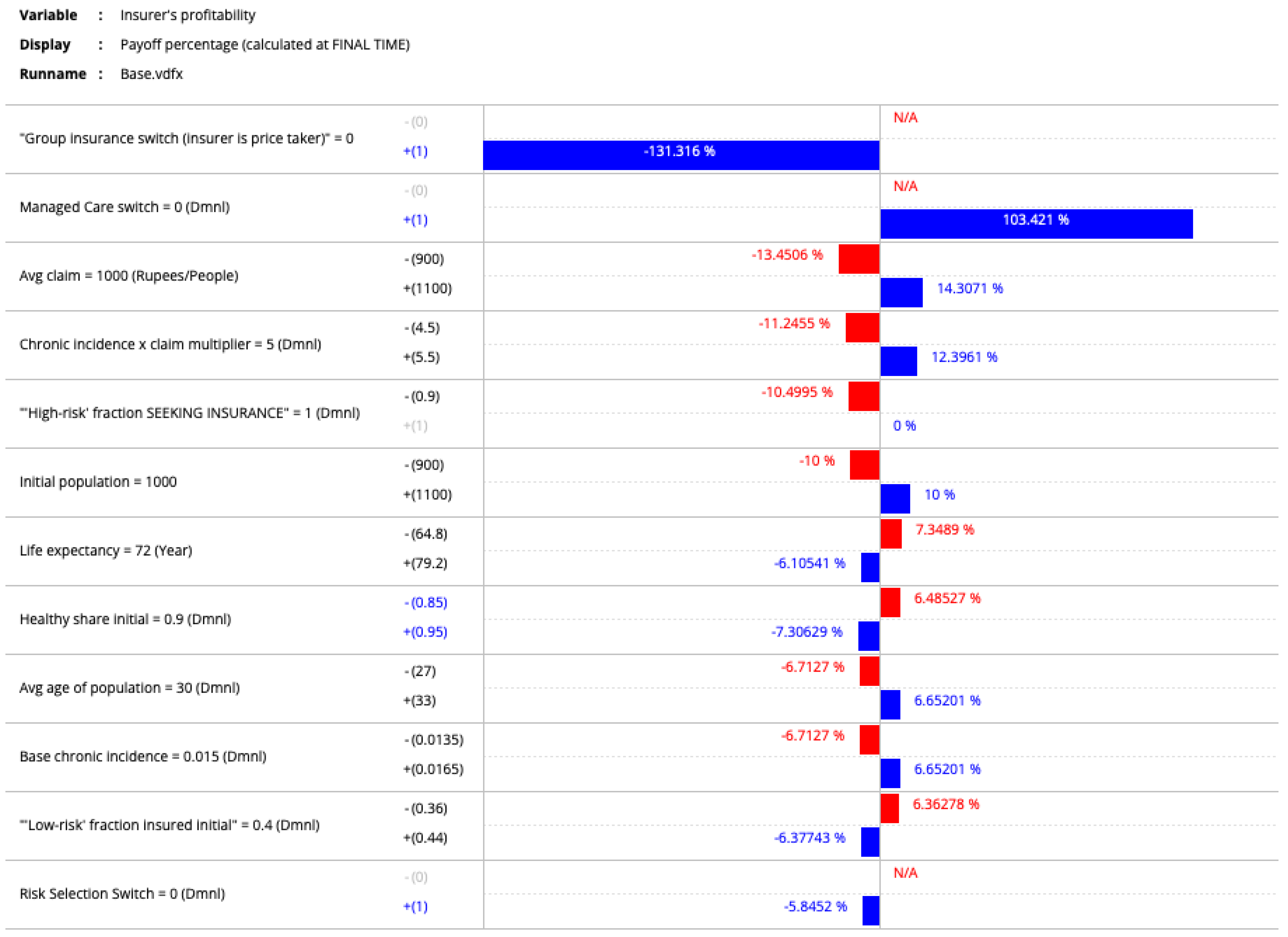
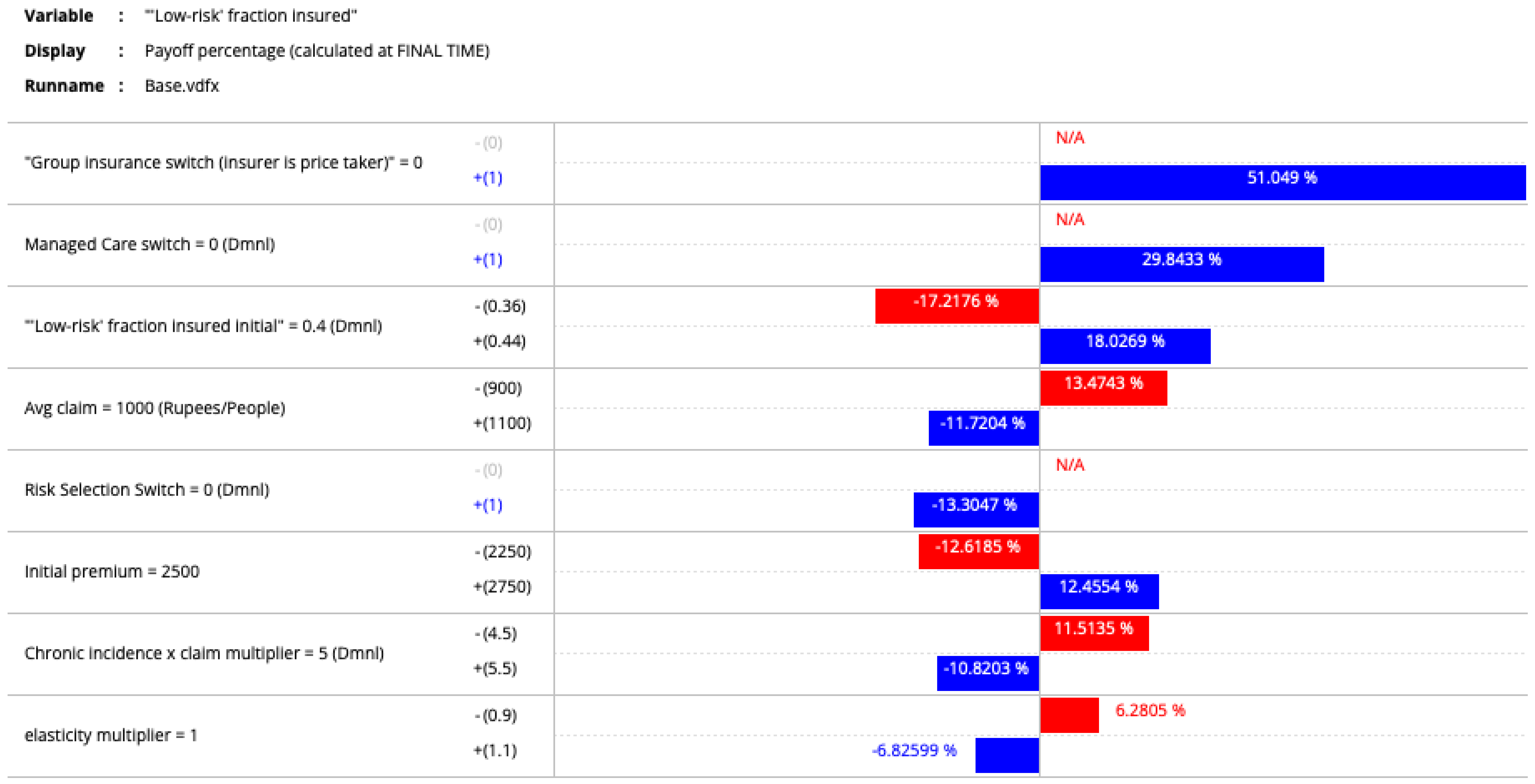
In addition to running the multiple scenarios described above, we conducted further analyses to assess the robustness of our model and the sensitivity of our input parameters and resulting recommendations. The robustness checks include validating behavior by varying time steps and changing integration methods to evaluate whether these changes affect our results. The results of these checks give us confidence that the model is robust to these numerical choices. We also test whether the model can handle a different market structure under the universal-coverage scenario, with an initialized extreme value of 100% insurance penetration, and note the significant change in chronic progression and pricing dynamics, while maintaining expected behavioral fit (limited pricing flexibility due to elasticity’s impact on profits). We performed a one-way sensitivity analysis on all key non-policy parameters, varying each by ±10% around its base value and computing the percentage change in outcome values at Year 30. This gave us key parameters that have the most significant impact on our five core outcomes (insurance premium, insurer profits, chronic share in insured, ‘low-risk’ population healthy, ‘low-risk’ fraction insured). For each outcome, we display tornado diagrams in Appendix B that rank parameters by their leverage.

6. Discussion

The following discussion compares how each modeled scenario affects the insurer, population, and regulator. The universal-coverage scenario is excluded as it serves only as a theoretical benchmark.

6.1. Insurer

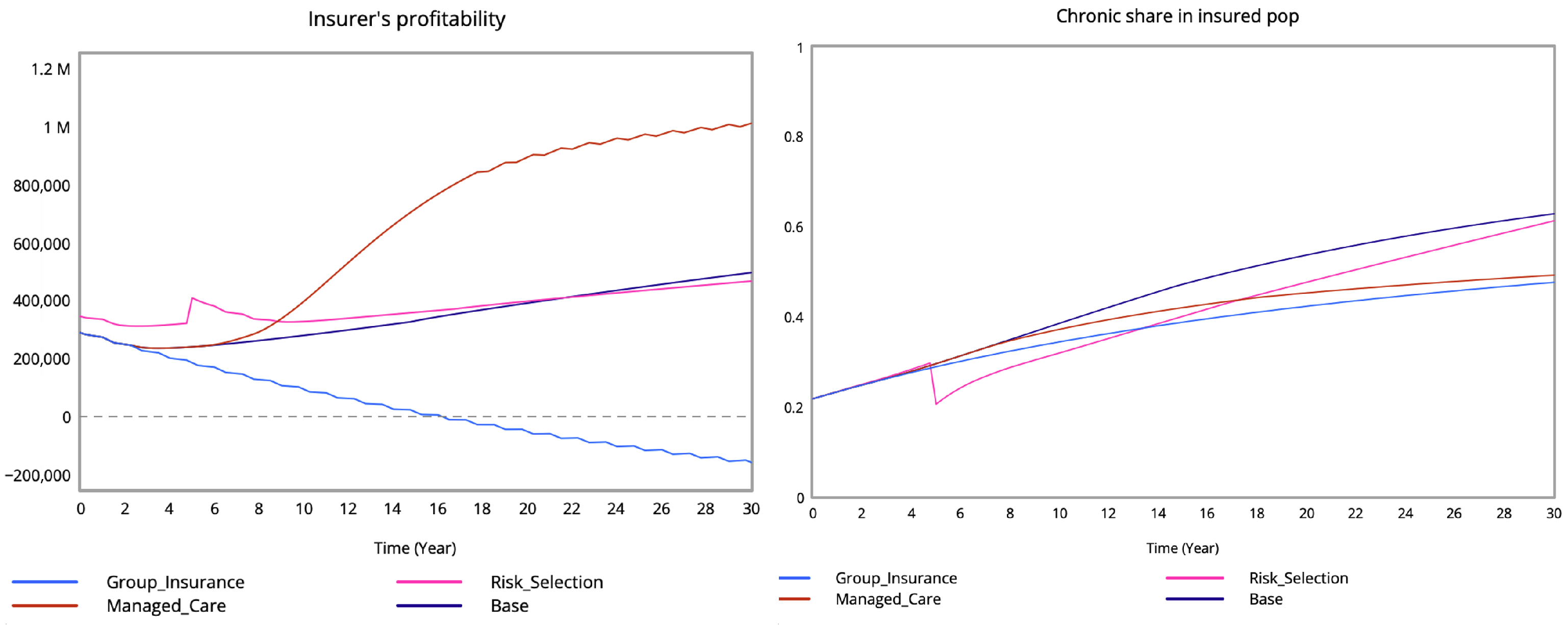
It can be seen from Figure 13 that the highest profits for the insurer accrue from the managed-care policy, with the base scenario and risk-selection strategy being almost the same in terms of profits. On the portfolio front, we see the lowest share of high-risk population in the group insurance and managed-care model. Thus, the most attractive scenario for the insurer is the managed-care model, while the worst is group insurance, which is loss-making.
Figure 13. Only managed care shows sustained profit growth; others plateau or decline. Insurer simulation results with (left) Insurer’s profits and (right) Chronic share in insured pool (indicative of portfolio risk).

6.2. Population

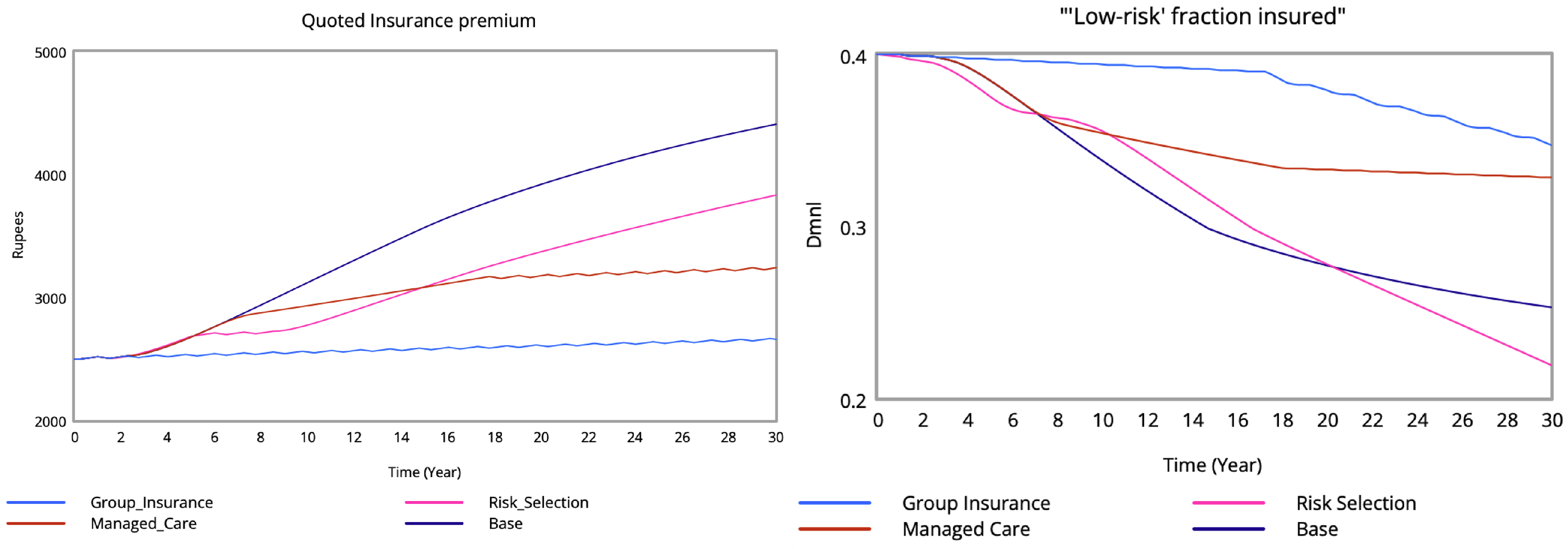
While group insurance offers a lower premium and enables a larger share of low-risk population to receive coverage, this is at a cost of massive losses incurred by the insurer (Figure 13), which typically affect claim settlements post-purchase of insurance. Figure 14 shows that managed care introduced in Year 5 enables a moderate and stable premium at an improved value that encourages greater participation by the low-risk population. The best results for the two population segments are thus obtainable from the managed-care approach on all parameters, except the insurance premium, which is lower in the case of group insurance.
Figure 14. Managed care shows gains in coverage and health; group insurance poses a trade-off against insurer viability. Outcomes for the population with (left) Insurance premium and (right) Low-risk population fraction insured (indicative of coverage).

Regulator

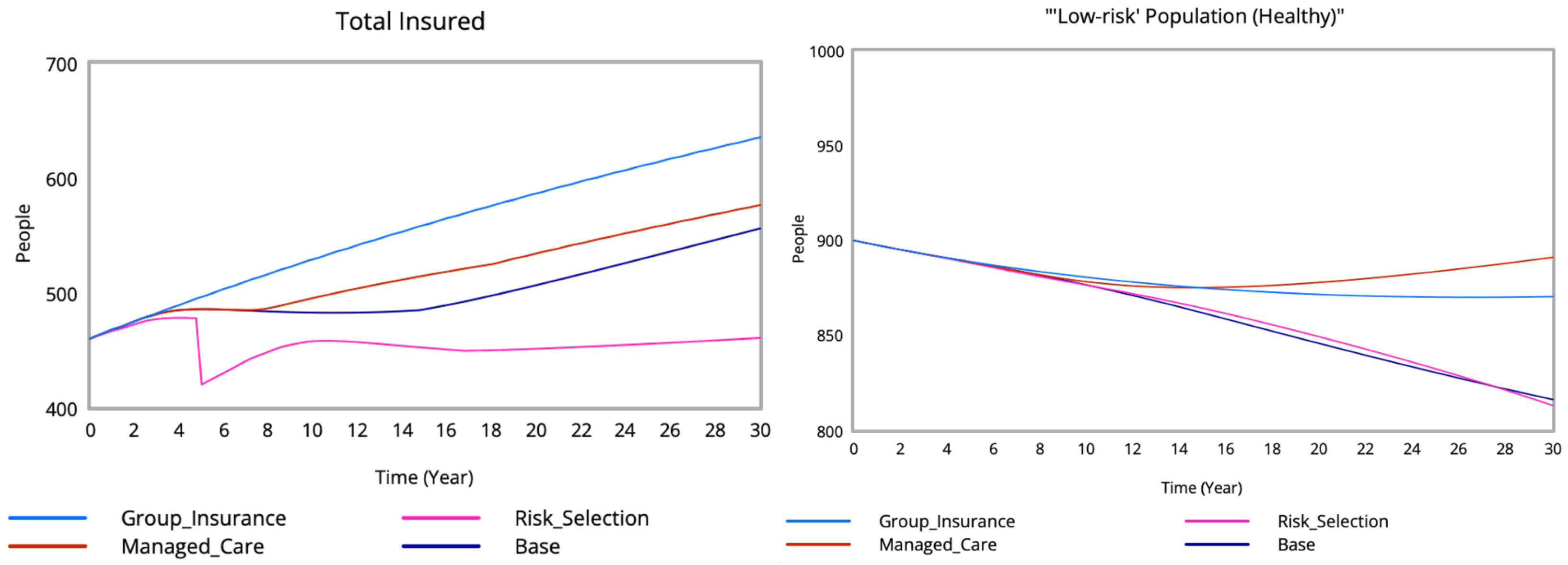
From the regulator’s perspective, group insurance essentially ends up damaging the industry because of the massive losses that result from it. On the other hand, risk selection allows the insurer to earn a minimal level of profits (by increasing the insurance premium), but it does not do much in terms of coverage levels, as the price increase crowds out attractiveness for the low-risk population segment. Managed care delivers a significantly improved coverage for both segments (Figure 12) at a reasonable level of premium and profits. It can be seen from Figure 13 and Figure 14 that the best results, from the regulator’s perspective, emerge from the managed-care model. This policy configuration also delivers the best health outcomes, as seen in the higher end-of-run count of healthy individuals compared to other scenarios (Figure 15).
Figure 15. Managed care aligns the regulator’s goals of coverage and market viability. Outcomes for regulator with (left) Total insured (coverage) and (right) overall population health.

6.3. Recommendation

Across scenarios, the structure of the insurance market consistently produces reinforcing dynamics that escalate premiums unless either risk composition improves or underlying morbidity declines. Risk selection yields temporary relief but induces adaptation among chronic applicants, increasing undisclosed risk and destabilizing the insurer’s portfolio. Group insurance lowers premiums but compresses margins, reproducing the losses seen in the Indian market. Managed care is the only configuration that simultaneously reduces morbidity, improves predictability of risk, and stabilizes premiums. These results highlight how insurer, regulator, and population incentives intersect to shape market performance and why policy instruments focused solely on pricing or selection cannot resolve structural instability.

7. Limitations

This model employs several simplifications. First, the health status of an entire population is represented using only low-risk (healthy) and high-risk (chronic) states, omitting transitional, acute, or multi-morbidity states. We do not model differing risk states based on ageing progression. Parameter values, including elasticity, are not empirically estimated but chosen to illustrate plausible system behaviors. While chronic incidence, average claim, chronic claim multiplier, and other parameters are based on a realistic range drawn from literature and expert input, and do reflect observed prevalence in comparable populations, calibrated parameters could enhance this model’s fit with observed behavior.

8. Conclusions

It is clear from the aggregate statistics of the insurance industry that the share of health insurance in filling the large gaps left in financial protection has been small—less than 10% of total health expenses. Given the dominance of the corporate group insurance market and the public sector insurers, health-insurance premiums have seen only modest increases, but as a direct consequence, aggregate losses among these insurers have been high. In the retail segment, one in which the private sector has a more significant presence, while there have been virtually no profits, driven by sharp annual increases in health-insurance premiums, aggregate losses have been modest, but there has also been only a very slow growth in the number of lives covered, reaching a mere 3.6% of the population by 2022–2023, despite over 30 years of existence of the industry.
Working with our system-dynamics model, we replicate the aggregate behavior of the health-insurance industry and, based on the model, argue that the principal drivers of this poor performance are repeated but structurally ineffective attempts at risk selection in the retail market and, despite having access to a well-balanced pool, the inability of group insurers to have any impact on the underlying disease burden and, therefore, claims ratios. Models without risk selection are distinctly superior to ones in which there is, because the former allows the insurers to have greater clarity on the true risk profile of the insured pool and to take steps to both equalize risk between insurers as well as work with their customers to help reduce the disease burden. A desirable option is one in which insurers and healthcare providers are permitted to operate in an integrated manner without risk selection—this produces the best outcomes from an insurance penetration perspective, the profit pool for insurers, and the health outcomes of those insured.
If we move away from the simplifying assumption of a single insurer and allow for multiple insurance companies to emerge, without risk selection, the risk levels of insured persons may differ significantly between individual insurers. Countries, such as Germany, Switzerland, and the Netherlands that do not allow insurers to risk select and require uniform insurance premiums to be charged have built risk equalization schemes, a system of risk-adjusted equalization payments to and from (and within) the insurers that can be considered to be risk-adjusted subsidies from low-risk enrollees to high-risk enrollees [27]. India stands out in its willingness to allow insurers to risk select, and as a result, as discussed above, it has ended up with a market that has low insurance penetration, poor profitability of insurers, and suboptimal health outcomes.
Our findings highlight the structural tension between insurer profitability, population health outcomes, and regulatory objectives. The health insurance market has been under increasing scrutiny due to this fundamental tension, which often prioritizes business viability at a cost to population health outcomes. Risk selection (and claim rejection) may yield short-term financial gains but undermine coverage and generate unstable portfolios. In contrast, managed care improves both system-level performance and health outcomes by integrating prevention, data, and pricing alignment.
From a theoretical standpoint, this paper demonstrates the utility of system dynamics in surfacing delayed and nonlinear effects in insurance markets. This study reveals pathways for policy and business model design that resonate with the definition of sustainable development, which integrates economic viability (insurer profits), social inclusion (coverage equity), and long-term population health (chronic burden reduction). Regulators seeking to balance these objectives may consider enabling care-integrated insurance designs and constraining risk-selection incentives in commercial insurance markets.

Author Contributions

N.M. conceptualized the study and wrote the first draft. A.G. built the system-dynamics model, completed all the simulation runs, and wrote the first draft of the associated text. R.R. provided overall mentorship and guidance on the modeling and policy aspects of the paper. All authors have read and agreed to the published version of the manuscript.

Funding

The authors have received no outside funding to support this work.

Data Availability Statement

All quantitative data used in the study have been sourced from publicly and freely available data sources. Detailed references have been provided in the manuscript text and the References section. All the other data used in the report have been drawn from existing literature. Detailed references have been provided in the manuscript text and the References section.

Conflicts of Interest

Nachiket Mor is an independent board member of NAVI general insurance. Health insurance is its principal product offering. He is also associated as an independent board member with Narayana Health, a large full-service health care provider with multiple hospitals and clinics in India and abroad that has recently launched an effort to build a managed-care offering. None of these organizations has played any role in this study. The other authors declare that they have no known competing financial interests or personal relationships that could have influenced the work reported in this paper.

Appendix A. Model Documentation

Appendix A.1. Model Equations

The following table details the equations, units, and descriptions used in the system-dynamics model.
Table A1. Model Eequations and variable definitions.
Variable/EquationUnitsDescription
‘High-risk’ applicant fraction rejected by insurer
= Risk Rejection fraction × Risk Selection effect
Dmnl [0, 1]The fraction of chronic status applicants rejected by the insurance company as part of its risk-selection strategy.
‘High-risk’ applicants concealing health status
= IF THEN ELSE ( High-risk applicant fraction rejected by insurer > 0 , DELAY 1 ( High-risk applicant fraction rejected by insurer × ( 1 Chronics Truth ratio ) , 2 ) , 0 )
1Percentage of ‘chronic status’ applicants able to circumvent risk-based rejections.
‘High-risk’ fraction SEEKING INSURANCE
= 1
Dmnl [0, 1]Fraction of chronic status population seeking insurance.
‘High-risk’ pop insured
= ( High-risk fraction SEEKING INSURANCE High-risk applicant fraction rejected by insurer + High-risk applicants concealing health status ) × High-risk Population ( Chronic )
PeopleTotal number of chronic status people with insurance.
‘High-risk’ Population (Chronic)
= INTEG ( Chronic incidence in period Deaths of High-risk pop per yr , Initial population × ( 1 Healthy share initial ) )
PeopleTotal population with chronic ailments.
‘Low-risk’ buyers dissatisfied by low claim settlement
= ( 1 Claim settlement ratio ) × 0.02
undefined
‘Low-risk’ fraction insured initial
= 0.4
Dmnl
‘Low-risk’ fraction insured
= INTEG ( Change in low-risk frac insured , low-risk fraction insured initial )
Dmnl [0, 1]Fraction of healthy population with health insurance.
‘Low-risk’ pop insured
= low-risk fraction insured × low-risk Population ( Healthy )
People
‘Low-risk’ Population (Healthy)
= INTEG ( Births per yr Chronic incidence in period Deaths of low-risk pop per yr , Healthy share initial × Initial population )
PeopleTotal healthy or low-risk population.
Admin cost
= IF THEN ELSE ( Risk Selection Switch = 0 , 0.15 , 0.25 )
undefinedRisk-selection policy increases admin cost to 25% of claim cost from 15%.
Age-adjusted base mortality rate
= 0.007
DmnlMortality rate for the healthy population.
Avg age of population
= 30
Dmnl
Avg claim
= 1000
Rupees/People
Base chronic incidence
= 0.015
Dmnl [0, 1]% of the population becoming chronically ill every year.
Births per yr
= Total pop × 0.015
undefined
Change in ‘low-risk’ frac insured
= IF THEN ELSE ( Premium change percentage > 0 , Price elasticity for low-risk pop × Premium change percentage × ( 1 Managed Care effect ) , Price elasticity for low-risk pop × Premium change percentage × ( 1 + Managed Care effect ) ) low-risk buyers dissatisfied by low claim settlement
undefined
Change in premium
= IF THEN ELSE ( Time = 0 , 0 , MAX ( Premium floor Quoted Insurance premium , MIN ( Premium ceiling Quoted Insurance premium , ( Profit motivated premium 1 ) × Quoted Insurance premium ) ) )
Rupees/Year
Chronic incidence in period
= MIN ( Chronic incidence rate , 0.1 ) × low-risk Population ( Healthy )
People/YearPeople who have chronic concerns during the period.
Chronic incidence rate
= Base chronic incidence × ( 1 / ( low-risk fraction insured + 0.1 ) ) × ( Avg age of population / Life expectancy ) × ( 1 Managed Care effect )
Dmnl [0, 1]Rate of chronic incidence for the healthy population every year.
Chronic incidence x claim multiplier
= 5
Dmnl [0, 15]
Chronic mortality rate
= Age-adjusted base mortality rate × 3
undefined
Chronic share in insured pop
= High-risk pop insured / Total Insured
Dmnl
Chronics’ Truth ratio
= 0.5
Dmnl [0, 1]Percentage of ‘chronic status’ applicants misrepresented as ‘healthy status’.
Claim cost per insured
= Claims settled / Total Insured
Rupees/People
Claim settlement ratio
= IF THEN ELSE ( Risk Selection Switch = 0 , 1 , ( 1 Chronic share in insured pop × 0.3 ) )
Dmnl [0, 1]
Claims from chronic pop
= Avg claim × Chronic incidence x claim multiplier × High-risk pop insured × ( 1 Managed Care effect × 2 )
Rupees
Claims from low-risk pop
= Avg claim × low-risk pop insured × ( 1 Managed Care effect × 2 )
Rupees
Claims settled
= ( Claims from chronic pop + Claims from low-risk pop ) × Claim settlement ratio
Rupees
Deaths of High-Risk pop per yr
= High-risk Population ( Chronic ) × Chronic mortality rate
People/Year
Deaths of low-risk pop per yr
= Age-adjusted base mortality rate × Low-risk Population ( Healthy )
People/Year
Group insurance switch (insurer is price taker)
= 0
undefined [0, 1, 1]
Healthy share initial
= 0.9
DmnlFraction of the total population that is healthy at the start.
Initial population
= 1000
undefinedTotal population in the system.
Initial premium
= 2500
undefined
Insurer profitability trend
= IF THEN ELSE ( ABS ( ( Insurer s profitability Last year s profitability ) / Insurer s profitability ) < 0.05 , 0 , IF THEN ELSE ( Insurer s profitability > Last year s profitability , 1 , 1 ) )
undefined
Insurer Revenue
= Quoted Insurance premium × Total Insured
RupeesTotal revenue earned by the insurance company.
Insurer’s profitability
= Insurer Revenue Claims settled
undefined
Intervention Time Step
= 5
undefinedThe year in which policy decisions are rolled out.
Last year’s insurance premium
= DELAY FIXED ( Quoted Insurance premium , 1 , 0 )
Rupees/Year
Last year’s profitability
= DELAY FIXED ( Insurer s profitability , 1 , 0 )
undefined
Life expectancy
= 72
Year
Managed-care effect
= Managed Care switch × DELAY 3 ( STEP ( Managed Care Incidence reduction , Intervention Time Step ) , MC effect time delay )
undefined
Managed-care incidence reduction
= 0.25
Dmnl [0, 1, 0.05]% by which chronic incidence reduces as a result of managed care.
Managed-care switch
= 0
Dmnl [0, 1, 1]Toggles Managed Care (1 = On, 0 = Off).
Margin of change
= 0.01
undefined
MC effect time delay
= 8
undefined [4, 15, 1]Years for managed care to reduce chronic incidence rates.
Minimum viable margin
= 0.1
undefined
Premium ceiling
= 20,000 × ( 1 + Margin of change ) Time
undefined
Premium change percentage
= IF THEN ELSE ( Last year s insurance premium = 0 , 0 , ( Quoted Insurance premium / Last year s insurance premium ) 1 )
Dmnl
Premium direction
= IF THEN ELSE ( Quoted Insurance premium > Last year s insurance premium , 1 , 1 )
undefined
Premium floor
= ( Claim cos t per insured × ( 1 + Admin cos t ) ) × ( 1 + Minimum viable margin ) × ( 1 Group insurance switch ( insurer is price taker ) )
Rupees/PeopleMinimum premium charged to cover costs and margin.
Price elasticity for ‘low-risk’ pop
= IF THEN ELSE ( low-risk fraction insured > 0.5 , 0.4 , IF THEN ELSE ( low-risk fraction insured > 0.3 , 0.3 , IF THEN ELSE ( low-risk fraction insured > 0.1 , 0.2 , 0.1 ) ) )
undefinedDemand sensitivity for insurance by the healthy population.
Profit motivated premium
= ( 1 + Viable Premium direction × Margin of change )
undefined
Quoted Insurance premium
= INTEG ( Change in premium , Initial premium )
RupeesPremium quoted by the company.
Risk Rejection fraction
= 0.4
Dmnl% of ‘chronic status’ applicants sharing true status that are rejected.
Risk-selection effect
= STEP ( Risk-Selection Switch × ( 1 Managed Care switch ) , Intervention Time Step )
DmnlActivates risk selection unless managed care is on.
Risk-selection switch
= 0
Dmnl [0, 1, 1]Toggles Risk Selection (1 = On, 0 = Off).
Total Insured
= High-risk pop insured + low-risk pop insured
PeopleTotal covered people.
Total pop
= High-risk Population ( Chronic ) + low-risk Population ( Healthy )
PeopleTotal Population.
Viable Premium direction
= IF THEN ELSE ( Insurer profitability trend > 0 , IF THEN ELSE ( Premium direction 0 , 1 , 1 ) , IF THEN ELSE ( Premium direction 0 , 1 , 1 ) )
undefined

Appendix A.2. Scenario Setup

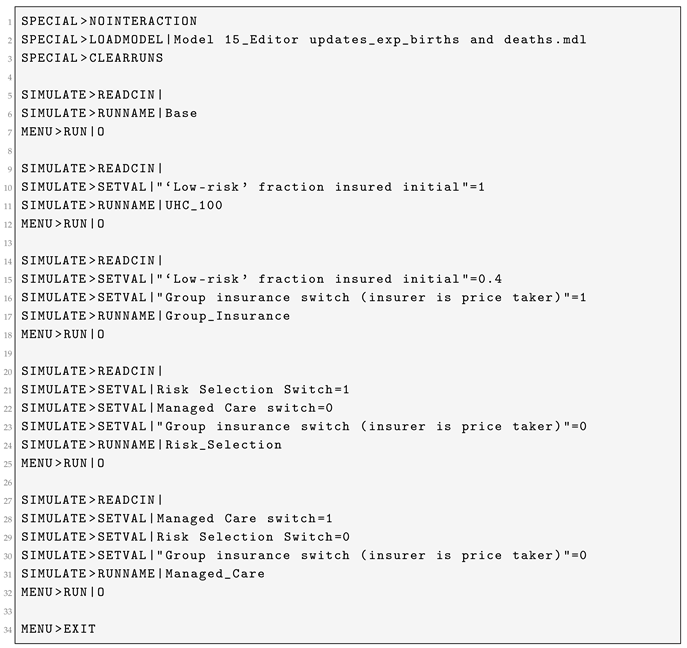
The following Vensim command scripts detail the setup for the simulation runs.
Systems 13 01104 i002

Appendix B. Sensitivity Analysis Results

Appendix B.1. Sensitivity of Various Outcomes of Interest

The following tornado diagrams illustrate the relative impact of varying model parameters by a fixed percentage ( ± 10 % ) on the outcome variable’s final value (calculated at FINAL TIME, Year 30) compared to the base case run.

Appendix B.1.1. Insurance Premium

Figure A1. Tornado graph of insurance premium.

Appendix B.1.2. Low-Risk (Healthy) Population

Figure A2. Tornado graph of the low-risk (healthy) population.

Appendix B.1.3. Insurer Profitability

Figure A3. Tornado graph of Insurer profitability.

Appendix B.1.4. Low-Risk Fraction Insured

Figure A4. Tornado graph of low-risk fraction insured.

Appendix B.1.5. Chronic Share in Insured
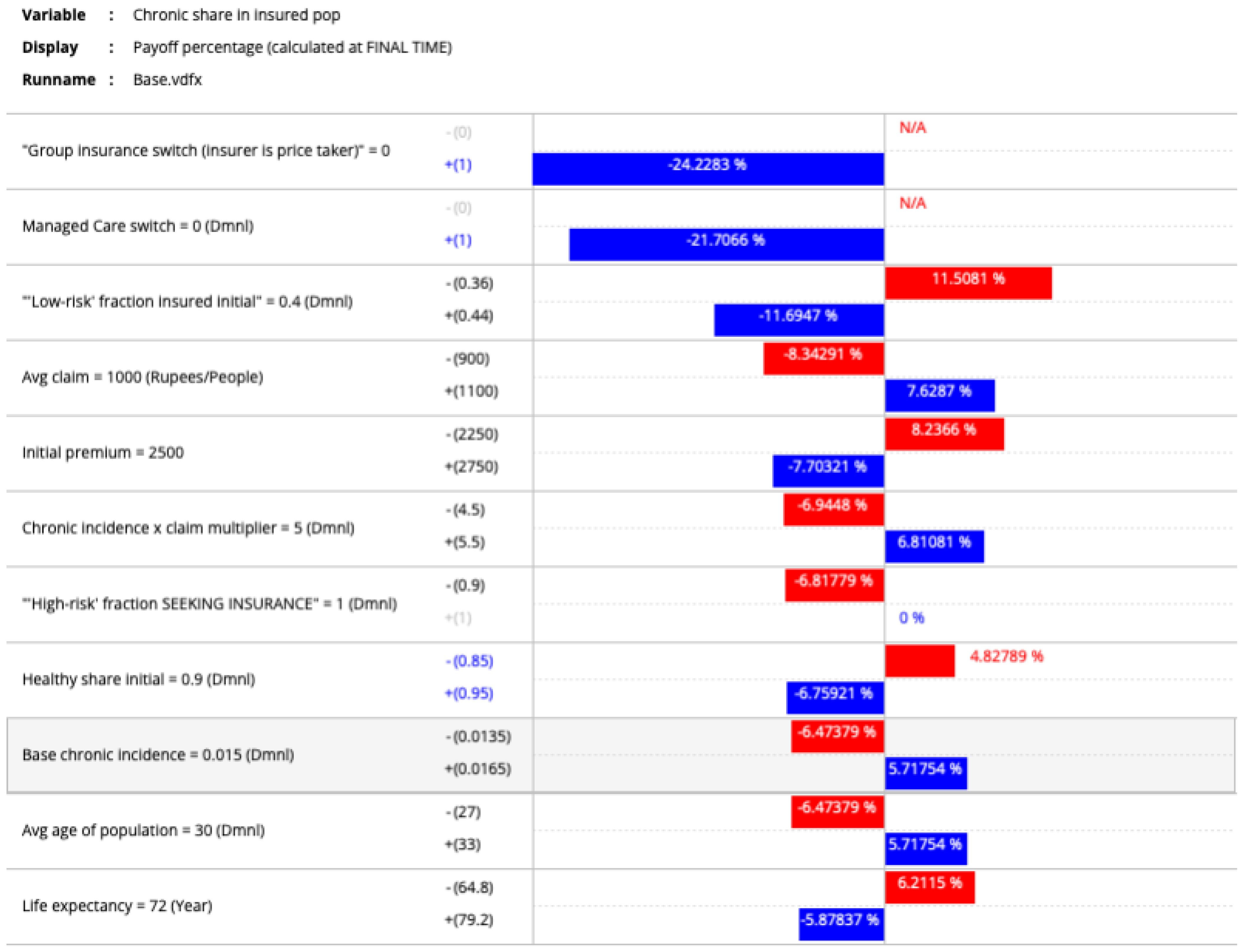
Figure A5. Tornado graph of chronic share in insured.

References

  1. Roberts, M.J.; Hsiao, W.; Berman, P.; Reich, M.R. Getting Health Reform Right: A Guide to Improving Performance and Equity; Oxford University Press: Oxford, UK, 2004. [Google Scholar]
  2. Mor, N. Lessons for Developing Countries From Outlier Country Health Systems. Front. Public Health 2022, 10, 870210. [Google Scholar] [CrossRef] [PubMed]
  3. Yazbeck, A.S.; Soucat, A.L.; Tandon, A.; Cashin, C.; Kutzin, J.; Watson, J.; Thomson, S.; Nguyen, S.N.; Evetovits, T. Addiction to a bad idea, especially in low- and middle-income countries: Contributory health insurance. Soc. Sci. Med. 2023, 320, 115168. [Google Scholar] [CrossRef] [PubMed]
  4. Mor, N.; Ashraf, H. Is contributory health insurance indeed an addiction to a bad idea? A comment on its relevance for low- and middle-income countries. Soc. Sci. Med. 2023, 320, 115918. [Google Scholar] [CrossRef] [PubMed]
  5. NHSRC. Household Health Expenditures in India (2013–14); Technical Report; National Health Systems Resource Centre (NHSRC): New Delhi, India, 2016; Volume 12. [Google Scholar]
  6. NHSRC. National Health Accounts: Estimates for India 2014–15; Technical Report; National Health Systems Resource Centre (NHSRC): New Delhi, India, 2017; Volume 10. [Google Scholar]
  7. NHSRC. National Health Accounts Estimates for India (2015–16); Technical Report; National Health Systems Resource Centre (NHSRC): New Delhi, India, 2018. [Google Scholar]
  8. NHSRC. National Health Accounts Estimates for India (2016–17); Technical Report; National Health Systems Resource Centre (NHSRC): New Delhi, India, 2019; Volume 10. [Google Scholar]
  9. NHSRC. National Health Accounts Estimates for India (2017–18); Technical Report; National Health Systems Resource Centre (NHSRC): New Delhi, India, 2021; Volume 10. [Google Scholar]
  10. NHSRC. National Health Accounts Estimates for India (2018–19); Technical Report; National Health Systems Resource Centre (NHSRC): New Delhi, India, 2022; Volume 9. [Google Scholar]
  11. NHSRC. National Health Accounts Estimates for India 2019–20; Technical Report; National Health Systems Resource Centre (NHSRC): New Delhi, India, 2023; Volume 4. [Google Scholar]
  12. Foubister, T.; Richardson, E. United Kingdom. In Voluntary Health Insurance in Europe: Country Experience; Sagan, A., Thomson, S., Eds.; European Observatory on Health Systems and Policies: Copenhagen, Denmark, 2016; Chapter 34. [Google Scholar]
  13. Hsiao, W.C. Why is a Systemic View of Health Financing Necessary? Health Aff. 2007, 26, 950–961. [Google Scholar] [CrossRef] [PubMed]
  14. Darabi, N.; Hosseinichimeh, N. System dynamics modeling in health and medicine: A systematic literature review. Syst. Dyn. Rev. 2020, 36, 29–73. [Google Scholar] [CrossRef]
  15. IRDAI. Annual Report 2022–2023; Insurance Regulatory and Development Authority of India (IRDAI): Mumbai, India, 2023. [Google Scholar]
  16. MoHFW. Population Projections for India and States 2011–2036; Technical Report; Technical Group on Population Projections, Ministry of Health & Family Welfare: New Delhi, India, 2020; Volume 7. [Google Scholar]
  17. IRDAI. IRDAI Annual Report 2018–19; Technical Report; Insurance Regulatory and Development Authority of India (IRDAI): Hyderabad, India, 2019; Volume 11. [Google Scholar]
  18. Wu, T.Y.; Majeed, A.; Kuo, K.N. An overview of the healthcare system in Taiwan. Lond. J. Prim. Care 2010, 3, 115–119. [Google Scholar] [CrossRef] [PubMed]
  19. Mathauer, I.; Nicolle, E. A global overview of health insurance administrative costs: What are the reasons for variations found? Health Policy 2011, 102, 235–246. [Google Scholar] [CrossRef] [PubMed]
  20. CAG. Report of the Comptroller and Auditor General of India on Compliance Audit of Third Party Administrators in Health Insurance business of Public Sector Insurance Companies Union Government (Commercial) Ministry of Finance (Department of Financial Services); Technical Report; Comptroller and Auditor General of India (CAG): New Delhi, India, 2022. [Google Scholar]
  21. IRDAI. Annual Report 2019–20; Technical Report; Insurance Regulatory and Development Authority of India (IRDAI): Hyderabad, India, 2020; Volume 12. [Google Scholar]
  22. IRDAI. IRDAI Annual Report 2020–21; Technical Report; Insurance Regulatory and Development Authority of India (IRDAI): Hyderabad, India, 2021; Volume 11. [Google Scholar]
  23. IRDAI. Annual Report 2021–22; Insurance Regulatory and Development Authority of India (IRDAI): Hyderabad, India, 2021; Volume 11. [Google Scholar]
  24. IRDAI. Handbook on Indian Insurance Statistics 2022–2023; Technical Report; Insurance Regulatory and Development Authority of India (IRDAI): Hyderabad, India, 2023. [Google Scholar]
  25. World Bank. Crude Death Rate (per 1000 People). World Development Indicators. 2025. Available online: https://data.worldbank.org/indicator/SP.DYN.CDRT.IN (accessed on 23 February 2025).
  26. World Health Organization. Noncommunicable Diseases. 2025. Available online: https://www.who.int/news-room/fact-sheets/detail/noncommunicable-diseases (accessed on 23 February 2025).
  27. Ven, W.V.; Hamstra, G.; Kleef, R.v.; Reuser, M.; Stam, P. The goal of risk equalization in regulated competitive health insurance markets. Eur. J. Health Econ. 2023, 24, 111–123. [Google Scholar] [PubMed]
Disclaimer/Publisher’s Note: The statements, opinions and data contained in all publications are solely those of the individual author(s) and contributor(s) and not of MDPI and/or the editor(s). MDPI and/or the editor(s) disclaim responsibility for any injury to people or property resulting from any ideas, methods, instructions or products referred to in the content.

Article Metrics

Citations

Article Access Statistics

Multiple requests from the same IP address are counted as one view.