You are currently viewing a new version of our website. To view the old version click .
Systems
  • Article
  • Open Access

9 December 2025

Strategic Architecture of Sustainable System Development for ESG Transformation in Large Multi-Purpose Sports Venues


,
and
1
College of Education, National Chengchi University, No. 64, Sec. 2, Zhinan Rd., Taipei 11605, Taiwan
2
Department of International Business Administration, Chinese Culture University, No. 55, Huagang Road, Yangmingshan, Taipei 11114, Taiwan
*
Author to whom correspondence should be addressed.
These authors contributed equally to this work.

Abstract

This paper proposes a strategic architecture of sustainable system development (SSD) for ESG enterprise transformation, demonstrating its application through a real-world case study on large multi-purpose sports venues (LMPSVs). The research integrates systems thinking, computer-aided dynamic business modeling and digital technologies to support ESG enterprise transformation strategies and business operations. An ESGI (environmental, social, governance, and innovation) framework is proposed to demonstrate the transformation process through empirical data and scenario analysis. Furthermore, this study develops an integrated strategic enterprise architecture (ISEA) to integrate strategic planning with enterprise execution, wherein strategic architecture (SA) takes precedence over enterprise architecture (EA). The SSD-driven SA provides directional strategic guidance integrated with EA. This study prioritizes the construction of SA required for enterprise ESG transformation, serving as a research blueprint for future construction of EA at the technical implementation level. The findings indicate that LMPSVs must adopt integrated transformation strategies, strengthen digital capabilities, and embed ESGI as a core concept to sustain a competitive advantage in volatile environments. The framework offers a systematic and dynamic approach emphasizing inclusive growth, operational resilience, value creation, and sustainable development goals. The study’s originality lies in the SSD-based ESGI framework, which translates conceptual ideas into advanced operational models for scientific management and performance improvement. By integrating cross-disciplinary knowledge, the framework provides a systematic, dynamic, and multi-value-oriented analytical tool that bridges the gap in the existing literature, offering significant value for both theoretical development and practical application.

1. Introduction

Against the backdrop of increasing environmental challenges and social responsibility requirements worldwide, LMPSVs are not only centers of athletic competition and entertainment but are also frontline locations for sustainable practices. With the growing global concern over climate change, resource utilization and social responsibility, there is an urgent need for LMPSVs to transform their operations to meet the new sustainability requirements.

1.1. Research Motivation

The UN 2030 Agenda for Sustainable Development states that LMPSVs must undergo comprehensive transformation and systematic innovation in environmental, social and economic aspects to achieve sustainable development goals [1]. This requires top-down policy guidance and bottom-up institutional innovation to achieve a win-win situation of economic growth, social inclusion and environmental friendliness through multi-stakeholder collaboration. LMPSVs increasingly demonstrate environmental sustainability through green buildings, waste reduction and alternative transportation, serving as educational leaders and extending beyond service provision to broader sustainability responsibility [2]. Despite global consensus on sustainable development, there is limited systematic exploration of how to achieve this goal in LMPSVs. While existing literature focuses on sustainable building design or energy efficiency, a knowledge gap exists in integrating ESGI strategies into a comprehensive transformation framework. This gap limits decision-making efficiency and effectiveness for LMPSV managers and policymakers facing sustainability challenges. Existing sports venue sustainability studies focus on individual dimensions such as environmental or social impacts, lacking holistic perspectives on systemic transformation [3]. Understanding sports organizations’ motivations for sustainability initiatives is critical for driving meaningful industry transformation [4].
United Nations has promoted the principles of sustainable development and sustainable development goals (SDGs) that drive large-scale educational innovations and business transformation in the global communities and economic system. As the world transitions to a more sustainable system, systems thinking and frontier competencies for sustainable development have been recognized by UN and global leaders. It is important to facilitate the transformation of LMPSVs towards a more sustainable business model through a systems approach, implementing an ESGI business transformation strategy based on the framework of Sustainable System Development (SSD).

1.2. Research Objectives

Exploring the ESG business transformation for LMPSVs from the perspectives of sustainable system development, this study confronts a highly complex and multi-dimensional problem domain. This complexity arises from several sources, including the fact that LMPSVs require the integration and implementation of cross-disciplinary knowledge and skills related to ESG, as well as the need to continually adapt and update the sustainability strategy in response to dynamic changes in the external environment, such as social, economic, environmental, and technological shifts. Furthermore, the implementation of the ESG transformation strategy involves a wide range of organizational change management, including management concepts, organizational structure, operational processes, and corporate culture. Therefore, the management of implementing these changes is a complex process in itself.
This study explores the application potential and practice path of SSD in LMPSVs. It constructs a strategic framework for ESG enterprise transformation and provides a systematic decision-making reference for sustainable development. It also reveals the opportunities, challenges and strategies for sustainable transformation, expanding new paradigms and innovative ideas for LMPSV management. Thus, it enriches academic exploration in the field of sustainability.

2. SSD and ESGI Enterprise Transformation

The rise of global sustainability concerns has necessitated a transformation in LMPSV operations and management. Historically focused on commercial efficiency and audience experience, LMPSVs now face pressure to integrate environmental protection, social responsibility and governance alongside economic efficiency in response to ESG principles and SDGs. This study adopts SSD as its theoretical foundation, which emphasizes balanced development of environment, society and economic systems through innovation as a dynamic and adaptive approach supporting organizational learning and sustainable development [5]. As important public facilities hosting sporting, cultural and entertainment activities, LMPSVs must meet stakeholder expectations for continuous improvement. Integrating SSD and ESGI concepts enables comprehensive understanding of environmental protection, social responsibility, governance structures and innovative practices, ensuring long-term sustainability and positive community impacts. The SSD approach integrates cross-disciplinary knowledge and engages multiple stakeholders, providing systematic solutions that help organizations effectively address sustainability challenges and achieve long-term environmental, social and economic benefits aligned with SDGs.

2.1. From Systems Thinking to Sustainable System Development

Systems thinking is a holistic approach that focuses on the interconnectedness of elements, in contrast to linear causality [6]. Systems thinking emphasizes understanding interconnections and dynamic feedback among system elements, enabling enterprises to grasp transformation complexity and formulate effective strategies [7]. Systems thinking allows us to identify feedback loops and delays in a system, which is critical to understanding sustainability challenges [8]. Systems thinking enables understanding how environmental, social and economic factors interact and affect sustainable performance and strategy development of sports venues [9].
System dynamics (SD) is a computer-based simulation methodology for understanding and predicting the behavior of complex systems, particular in the design and evaluation of sustainability strategies. SD can be used to emphasize its value in developing and evaluating sustainability strategies [10]. In the context of sports stadiums, SD can help managers understand how different decisions affect the environmental and social performance of the stadium and predict the long-term effects of these decisions.
Sustainable System Development (SSD) is an emerging paradigm linking systems thinking with practical sustainable development solutions. It provides analytical and planning tools for LMPSVs’ ESG transformation, enabling organizations to identify challenges, design strategies, and model impacts for informed decision-making toward sustainability. SSD guides LMPSVs through green building concepts and energy-efficient technologies to enhance environmental performance and support sustainable development [11]. Implementing energy conservation management to optimize the energy systems of venues and reduce operating costs [12]. Improving the service functions of venues increases the social value of venues and meets diverse social needs [13]. The social inclusiveness of venues is enhanced through public participation mechanisms that involve community residents in the planning, design, and management decisions of the venues [14]. By regularly evaluating the usage and satisfaction of the venue, areas for improvement are identified and timely adjustments are made [15]. Comprehensive assessment frameworks such as LEED or BREEAM evaluate and certify venues’ sustainable performance [16]. Through the application of SSD, LMPSVs can achieve long-term sustainable development, provide quality services and create economic value while considering social responsibility and environmental protection for cities and communities.

2.2. SSD-Based ESGI Goals and Scope

SSD provides a comprehensive framework for integrating ESGI dimensions to achieve sustainable development. SDGs are widely recognized a common language that unites a global commitment to shifting trajectory in social, economic, and environmental development issues. Although not explicitly mentioned in the SDGs or their related targets, sport has been widely accepted and promoted as a means of enabling social change and a mechanism for strategically mapping and measuring commitments to sustainability [17]. Sport facilities have a major environmental impact in addition to a strong public profile and social responsibility [18]. These large facilities consume significant resources like energy, water, and materials over their life cycles, and also require transport, leading to substantial environmental, social, and economic impacts. Sustainability has become a core focus in the management of sports facilities, encompassing a wide range of aspects such as energy efficiency, water management, solid waste reduction and social responsibility. These studies highlight the importance of implementing green building standards and operational practices to mitigate the environmental impacts of LMPSVs.
ESG can be understood as a set of principles that investors hoping to demonstrate social responsibility with right investment for a company’s operations [19]. The consensus-level strategic priorities for sustainable development from the perspective of decision-makers responsible for governing international sport were explored, and they were found to cluster within the framework for strategic sustainable development [20]. The highest ranked item was normative change, in which sustainability is prioritized throughout all organizational strategies and actions. Moreover, planned efforts that are part of a long-term strategy and embedding sustainability requirements at the bidding phase of sport events were considered with high priority. The aforementioned ideas supported the importance on setting ESGI goals and scope for enterprise transformation.

2.3. Strategic Architecture and Enterprise Architecture for Transformation

Strategic architecture (SA) is a roadmap that identifies which core competencies need to be built for the future [21], representing the intangible intellectual, philosophical, and normative DNA that guides and provides consistency to all important business decisions [22]. SA can be viewed as a blueprint for the future that identifies which core competencies need to be established, and can also represent the intangible intelligence, philosophy, and even normative frameworks that support nearly all critical business decisions [21,22]. By viewing modeling techniques and simulation as fundamental elements supporting management decision-making and operations research, Management Flight Simulators (MFSs) are defined as simulations of complex operational and strategic issues in enterprises and other organizations [23]. Simulation-based Strategic Decision Support Systems (SSDSS) can serve as MFSs to support the simulation of complex operational and strategic issues in enterprises and other organizations [24,25]. To improve IT-enabled operations management, research has proposed a Knowledge-based Management Decision Support System (KMDSS) [26] that supports analyzing changes in business performance over time, as well as analyzing the impact of strategic resource management decisions on organizational dynamic capabilities from a systems perspective. The visualization of these models can be viewed as learning tools and knowledge creation mechanisms, allowing managers to experiment with diverse strategies and learn from simulated decisions in well-designed learning environments. As an enterprise-wide high-level blueprint for deploying new functionalities, acquiring new capabilities or migrating existing capabilities, and reconfiguring customer interfaces, strategic architecture’s core characteristics represent the fundamental logic of how organizations create sustained value, thereby forming the foundation of organizational competitiveness.
Enterprise architecture (EA) is the fundamental organizational structure of a system, embodied in its components, the relationships between components and with the environment, and the principles governing its design and evolution [27]. EA provides various perspectives from technical and business viewpoints, adopts a disciplined approach to manage enterprise IT and business systems, defines applicable selection constraints, and its core components include frameworks, methodologies, and tools. TOGAF (The Open Group Architecture Framework) is the primary framework and standard for enterprise architecture, providing a standardized methodology for practicing enterprise architecture. Through the systematic Architecture Development Method (ADM), it “organizes the development process, reduces errors, maintains timelines, and controls budgets,” enabling IT and business units to coordinate and produce high-quality results [28]. TOGAF provides a consistent view of architectural artifacts for all stakeholders within the organization, with the purpose of optimizing the fragmented legacy of processes across the entire enterprise, transforming them into an integrated environment that is responsive to change and supports the delivery of business strategy [29].
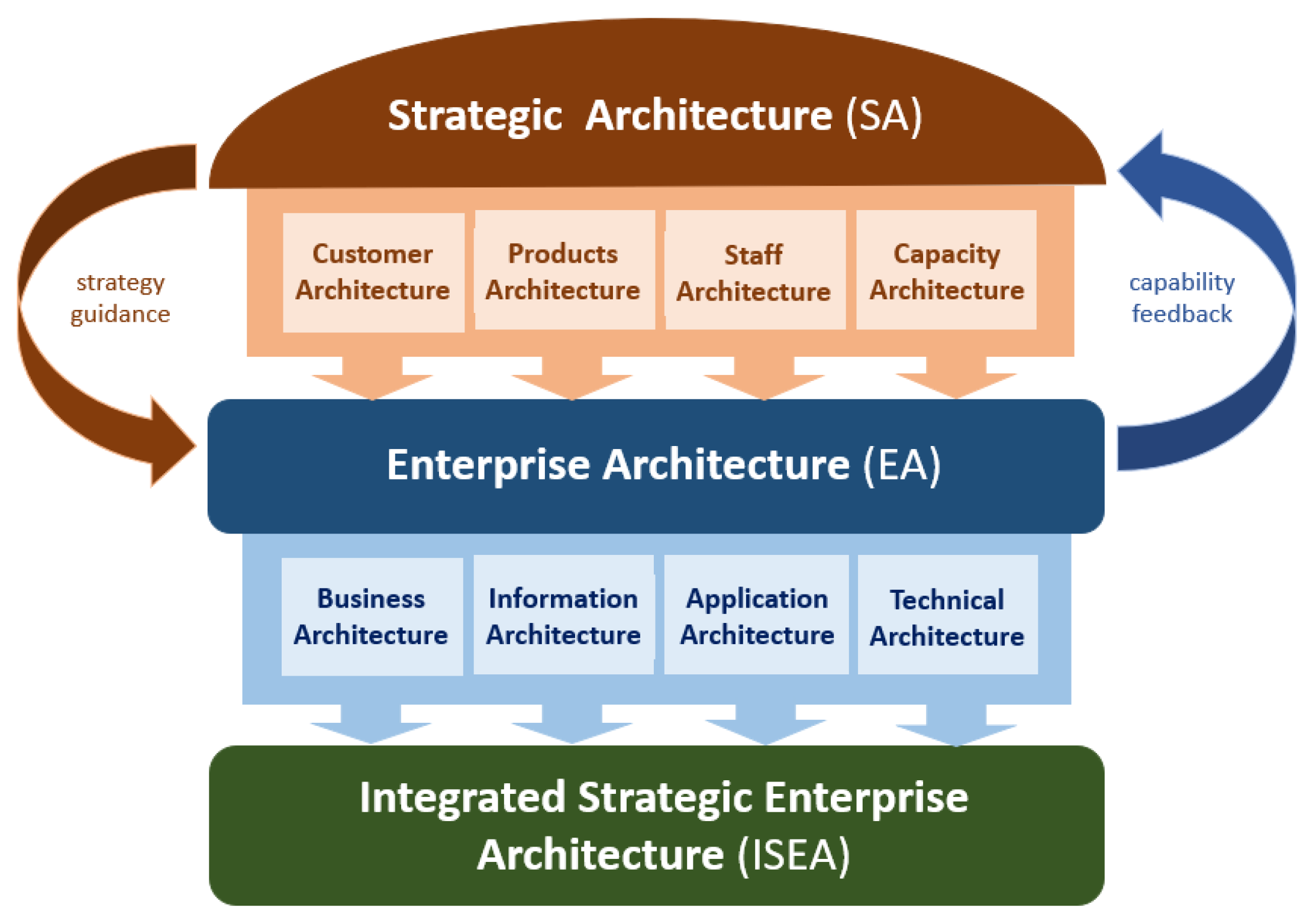
The Integrated Strategic Enterprise Architecture (ISEA) framework (Figure 1) adopts a three-layer structure that integrates strategic planning and enterprise execution. The top layer, Strategic Architecture (SA), encompasses four strategic dimensions: customer, products, staff, and capacity. The middle layer, Enterprise Architecture (EA), includes TOGAF standard domains such as business, information, application, and technology. The SA layer and EA layer are tightly connected through a bidirectional cycle: strategic architecture provides “strategy guidance” downward to ensure EA development aligns with organizational strategic objectives, while enterprise architecture feeds back “capability feedback” upward, conveying practical considerations such as technical feasibility, execution capability, and resource constraints to the strategy layer. This dynamic synergy mechanism breaks the traditional unidirectional planning model, forming a continuously optimized closed-loop system that ultimately integrates at the bottom layer into a complete ISEA framework, achieving alignment between strategic intent and technical practice. This model is particularly suitable for large-scale multi-purpose sports venues promoting ESGI transformation, where both clear sustainable development strategic direction and consideration of existing IT systems, operational capabilities, and resource allocation realities are needed. Through the ISEA framework, these diverse requirements can be systematically integrated.
Figure 1. The Integrated Strategic Enterprise Architecture (ISEA) framework.
Strategic Architecture (SA), like a brain, provides directional guidance for the entire enterprise architecture, while EA supports SA. SA defines organizational vision and objectives, guiding enterprise architecture downward, where business architecture transforms strategic intent into concrete business directions and further guides the development of data architecture, application architecture, and technology architecture. This relationship exhibits dynamic bidirectional interaction characteristics, with strategic architecture guiding the development of each architectural layer top-down while obtaining feedback from the execution level to adjust strategic direction. If an organization rashly constructs enterprise architecture before clearly defining customer value propositions, product-service portfolios, human resource strategies, and operational capacity objectives, it will face the serious “technology-driven” trap, resulting in IT system, application, and technology infrastructure investments lacking business alignment, ultimately evolving into resource waste of technology for technology’s sake. SA determines fundamental issues such as organizational positioning, target customer segments, and core competencies, and these key elements directly guide the construction priorities of EA. Taking LMPSVs as an example, if the strategic positioning is regional premier concert venue, the enterprise architecture needs to prioritize building robust ticketing systems, VIP customer management, and large event coordination capabilities; if positioned as a community multi-purpose activity center, it needs to develop flexible space reservation systems, community membership management, and diversified fee mechanisms. Constructing EA before strategy is clarified will lead to misallocated investments and the development of systems that do not meet actual needs.
The failure of sustainability transformation in large organizations often stems not from a lack of technical capabilities or IT systems, but from the absence of systemic thinking at the strategic level, leading to ESG objectives being decoupled from core business operations and sustainability initiatives becoming superficial efforts. Therefore, this research adopts SSD as the theoretical framework, prioritizing the construction of the strategic architecture layer required for enterprise ESGI transformation, to serve as a research blueprint for future construction of enterprise architecture at the technical implementation level.
Strategic enterprise transformation is a sustainable and feedback process that requires systematic changes in strategy, structure, processes, and people to adapt to the ever-evolving internal and external environment [30]. In this paper, we examine different strategies and approaches proposed in existing studies that aim to guide the effective implementation of SSD-based ESGI transformation in LMPSVs. A decision-making model is proposed to facilitate the construction of a field of action for the transformation of enterprises towards sustainable development, enabling the determinations of how to implement sustainable actions based on value management [31]. An effective framework for strategic enterprise transformation is the key to achieving the goal of sustainable development. This not only requires clear strategic planning, but also emphasizes cross-departmental cooperation, innovative thinking, and flexibility to external changes. In addition, a successful transformation strategy should include staff training and development, as well as an effective monitoring and evaluation mechanism to ensure the realization of sustainable development objectives.

2.4. Life Cycle Sustainability Assessment (LCSA)

Life cycle sustainability assessment (LCSA) is a methodology for evaluating the environmental impacts of a product or service across its entire life cycle, encompassing stages from raw material acquisition to production, manufacturing, use and final disposal [32].
Current life cycle environmental assessments typically focus on maintenance, repair, replacement and operational energy consumption during use, but often overlook the impacts of future refurbishments. Life cycle assessment should be used more frequently as a decision-making tool to guide the design of a sustainable transformation [33]. This study synthesizes state-of-the-art stadium design and construction methods and initiatives that can be applied to improve environmental sustainability outcomes. Energy and materials are the most widely focused environmental sustainability categories in stadium design and construction [34]. The building stakeholders cannot easily quantify the environmental impacts of buildings as they accrue during construction. The goal of this work is to demonstrate a method to measure and manage the cradle-to-gate life cycle environmental impacts by linking environmental targets with modern construction management methods, enabling buildings to meet sustainable target values (STV) [35]. The construction and operation of large stadiums is an important factor affecting the sustainable development of cities. The stadium sustainability assessment in the pre-design stage directly affects the decision-making of architectural design parameters [36].
By analyzing the existing literature in detail, we can see that the application of ESGI principles throughout a business’s life cycle is crucial for achieving sustainable development goals.

2.5. CRISP-DM Life Cycle Assessment

Cross-industry Standard Process for Data Mining (CRISP-DM) provides a structured approach to planning, implementing, and evaluating data mining projects. It covers the phases of business understanding, data understanding, data preparation, modeling, evaluation, and deployment [37]. CRISP-DM is a widely accepted process model for data mining and knowledge discovery, aiming to offer an industry-agnostic approach to guide data analytics projects.
In recent years, sports events and sports teams have adopted the Big Data architecture CRISP-DM technology tool to facilitate their business activities, aiming for greater profitability and better understanding of their customers’ needs [38]. With the development of the stadium, combined with modern artificial intelligence technology to establish a more scientific and efficient information management system is very practical significance. Based on the decision tree algorithm in artificial intelligence technology, the power system and information management system and the hardware system of the stadium were upgraded [39].
CRISP-DM provides a structured framework that helps organizations systematically apply data analytics to support their ESGI transformation strategies. By following each step of the process—from business understanding to deployment—organizations can more effectively identify and implement sustainability strategies and actions. This approach not only improves environmental and social performance but also supports the achievement of long-term business success and competitive advantage.

2.6. Dynamic Strategic Management and Business Innovation

Corporate innovation management requires a dynamic and integrated strategic framework that considers technological, market, and organizational factors to continuously optimize innovation processes and outcomes [40]. SSD-based business innovation and dynamic management strategies aim to achieve sustainable development goals by responding to rapidly changing environmental and social challenges through adaptive management and continuous improvement.
Drawing on engineering control theory and the modern theory of nonlinear dynamical systems, SD often involves developing formal models and management flight simulators to capture complex dynamics and create an environment for learning and policy design [14]. The dynamic capabilities architecture analyzes the sources and methods of wealth creation and capture by private enterprise firms operating in environments of rapid technological change.

2.7. ESGI Enterprise Transformation Framework

In the context of SSD, enterprises need to reshape their organizational structures, establish cross-departmental collaboration mechanisms, and promote integration and synergy among ESGI [5,41]. ESGI architecture involves integrating these principles into the organizational architecture and operations of a business to promote sustainable development and long-term value creation.
ESGI enterprise transformation framework highlights the importance of integrating environmental, social, governance and innovation principles to achieve sustainable development. By strengthening environmental and social responsibility, implementing good governance practices, promoting innovation, fostering ESGI-supportive organizational culture and leadership, and enhancing cross-sectoral collaboration and stakeholder engagement, businesses can effectively address social and environmental challenges while promoting economic growth.

2.8. Digital Business Operations and Decision-Making Information Flow System

Digital business operations and decision-making information flow are integral parts of an organization’s transformation strategy, enabling it to remain competitive in a rapidly changing market environment. Through the effective use of digital technology, enterprises can not only optimize their internal operations, but also enhance customer experience, thereby achieving sustainable growth and development.
With the in-depth application of digital transformation, enterprises need to establish efficient digital business operations and decision support systems, integrate internal and external information flows, and achieve real-time monitoring and optimization [42]. Digital transformation has become a key strategy for enterprises to improve efficiency and enhance competitiveness. Digitalization has not only changed the way products and services are delivered but also reshaped the interaction mode and value creation process between enterprises and their customers. By integrating advanced digital technologies such as big data, cloud computing, Internet of Things (IoT) and artificial intelligence (AI), enterprises can achieve more efficient operation management and more accurate decision support systems.
Digital transformation systems generate a substantial volume of data, creating opportunities for innovation, particularly those driven by artificial intelligence [43]. This work emphasizes the key pillars essential for fostering AI-powered innovation, including monitoring performance measurement to leverage current capabilities, continuous learning and innovation, data analytics and insights, predictive analytics, and innovative product development. Decision support system (DSS) can efficiently support companies and enterprises in managing promotional and marketing campaigns across multiple social media channels. DSS continuously monitors multiple social channels. The DSS continuously monitors these channels by collecting social media users’ comments on promotions, products, and services. By analyzing this data, the DSS estimates the reputation of brands associated with specific companies and provides feedback on digital marketing campaigns [44].

3. Research Design

This study utilized a mixed-methods research design, incorporating case study with systems analysis. First, the theoretical basis and key factors of ESGI enterprise transformation were identified through a literature review. This was followed by expert interviews and empirical investigations to gather practical experiences and perspectives from experienced LMPSVs managers and stakeholders.
This study focuses on the SSD application of the ESGI enterprise transformation for LMPSVs to achieve sustainable operations and strategic management of LMPSVs. The rationale for adopting qualitative research methodology is that the sustainable transformation of venues is a complex and systemic issue involving multiple dimensions, such as environment, society, governance, and innovation. This complexity requires an in-depth understanding of the interactions and dynamic evolutionary patterns among different elements, which qualitative research can effectively address [45]. Differences in the institutional environment, resource conditions, interest patterns and other contextual factors of different venues affect the choice of transformation paths and the effectiveness of implementation. Qualitative research contributes to identifying new problems, refining theories, summarizing new experiences, and developing a deeper understanding of the situational contexts and behavioral logics involved in transitions [46,47]. There is a relative lack of domestic and international research on the sustainable transformation of venues; in particular, the practical exploration of introducing SSD and ESGI frameworks into the field of LMPSVs is rare.

3.1. Research Methods

This study adopts a qualitative research methodology, utilizing tools such as in-depth interviews, participant observation, document analysis and thorough exploration of the sustainable transformation practices of ESGI framework in LMPSVs (Table 1).
Table 1. Focus contents and main results of the qualitative research.
For the in-depth interviews, semi-structured interviews were conducted with stakeholders, such as venue managers, staff, and service objects, to gain a deeper understanding of their subjective feelings and meaning construction on the causes, processes, and effects of transformation, and to uncover the key events and typical cases of transformation [48]. In-depth interviews are valuable for obtaining the subjective feelings, cognitive logic and behavioral motives of the research object through face-to-face communication. Through participant observations, the researcher delved deeply into the transformation practice of LMPSVs, closely observing the key aspects of formulating, implementing, and evaluating the transformation strategies. This was achieved through site visits, observing meetings, and participating in activities, allowing the capture of critical details of the transformation process [49]. Additionally, the research team immersed themselves in the venues’ operation and management practices by conducting site visits, field surveys, participating in major events, routine meetings, and training exercises, meticulously observing and recording their findings. The research also involved a comprehensive document analysis, where various textual data such as strategic plans, annual reports, meeting minutes, and news reports were collected and analyzed. This enabled the uncovering of the institutional logic, discourse system, and power relations underlying the venues’ transformation [50].
By integrating the above qualitative research tools, this study comprehensively collects and analyzes first-hand information on the sustainable transformation of LMPSVs from the perspectives of managers, employees, and users. These data provide rich and in-depth insights into the influencing factors and mechanisms of the sustainable transformation of venues, laying a solid foundation for the construction of the ESGI framework, and ensuring the comprehensiveness, relevance, and operability of the cases.

3.2. Case Selection

This paper presents a case study of the characteristics of BOT public works construction. The methodology aligns with the scientific study of the management of LMPSVs. Venue cases and research participants can provide rich information, such as benchmark venues leading transformation practices and insights from key stakeholders, to obtain high quality qualitative data [51].
Kaohsiung Dome is selected for the case study, which is the first modernized integrated stadium in Kaohsiung City built under the Dome BOT project in Taiwan. Kaohsiung Dome is a representative example of the Kaohsiung City Government’s success in utilizing the Public-Private Partnerships (PPP) model. This model has enabled community participation in the public construction of LMPSVs. After the completion of the hardware facilities of the PPP projects, the private sector must inject new business concepts into the management of the projects. PPP not only reduce the government’s financial and budgetary expenditures, but also enhances the socio-economic outlook, increases employment opportunities, and promotes district prosperity. The most important outcome is the public’s ability to enjoy and utilize well-designed public spaces and facilities, creating a mutually beneficial scenario for the public sector, private enterprises, and the public, thereby realizing private business objectives and urban development goals.
Kaohsiung Dome plays a significant role in promoting local economic development and social engagement through its support of large-scale multi-purpose sports and entertainment. The stadium has not only provided Kaohsiung with numerous jobs opportunities, but also has fostered the integration of the local sports, cultural and tourism industries. By hosting international sporting events and cultural activities, the stadium enhances Kaohsiung City’s international image and competitiveness, and serves as an important bridge connecting the local community to the international community.
The motivation for investigating Kaohsiung Dome stems from its potential and challenges in realizing sustainable development. Through an in-depth study of the potential and challenges that Kaohsiung Dome faces in realizing sustainable development, this study aims to provide illustrative insights and strategies that can serve as references for the sustainable development and transformation of other sports stadiums and similar public facilities.

3.3. Research Framework

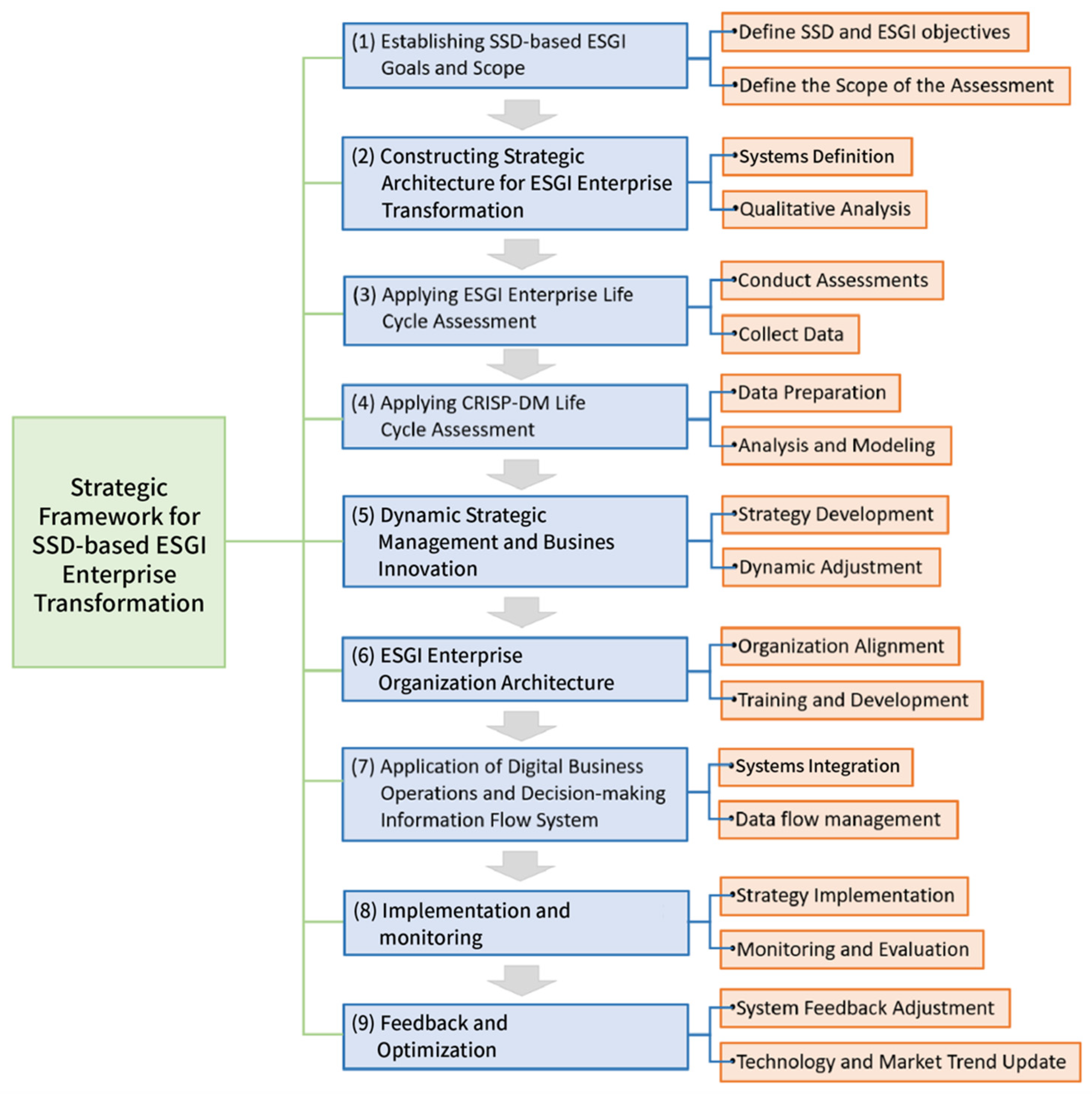
As shown in Figure 2, the strategic framework of ESGI enterprise transformation for LMPSVs is a comprehensive system designed to guide the stadiums towards sustainable development.
Figure 2. Strategic framework of SSD-based ESGI enterprise transformation for LMPSVs.
The following analysis demonstrates the relationship between the key factors, as well as the steps and processes involved in the implementation of the entire framework:
I.
Establishing SSD-based ESGI goals and scope
The implementation of the framework begins by identifying the long-term goals and scope of the transformation. At this stage, the environmental impacts, social responsibility, governance structure and innovation capacity of the sports venues must be considered collectively to establish measurable and specific ESGI targets.
II.
Constructing strategic architecture for ESGI enterprise transformation
To design a strategic architecture based on the identified objectives and scope. This stage requires cross-departmental collaboration and integration of resources to ensure a comprehensive and executable strategy. The strategic architecture should incorporate a specific action plan, resource allocation, and timeline.
III.
Applying ESGI enterprise life cycle sustainability assessment
By examining the organization through ESGI lenses, we can assess the current state of an organization’s life cycle, including the maturity and effectiveness of its environmental, social, governance and innovation dimensions. This assessment helps identify the strengths and weaknesses of existing strategies and practices, providing a basis for strategy refinement.
IV.
Applying cross-industry standard process for data mining
This framework applies a cross-industry standard process for data mining as a data acquisition model to evaluate data management and analytical capabilities, support data-driven decision making, and optimize operations as well as enhance innovation efficiency.
V.
Dynamic strategic management and business innovation
Drawing on the SSD principles, we can develop dynamic management strategies to respond to changes in the external environment and internal operational needs. This includes strategies to flexibly adjust resource allocation, respond to market changes, and adopt new technologies.
VI.
ESGI enterprise organization architecture
Design and adjust the corporate organizational structure to support the implementation of the ESGI strategy. This may include establishing a dedicated sustainability department, adjusting the allocation of responsibilities, optimizing decision-making processes, etc.
VII.
Application of digital business operations and decision-making information flow system
Optimizing business operations and information flow with digital technology can improve efficiency and transparency. This includes digitization of operational processes, establishment of data-driven decision-making mechanisms, and so on.
VIII.
Implementation and monitoring of ESGI enterprise transformation
Implementing transformation strategies and continuously evaluating their effectiveness through monitoring is crucial. The monitoring process should track key performance indicators (KPIs) and promptly address any identified issues.
IX.
Feedback and optimization of ESGI enterprise transformation
Based on monitoring results and external feedback, the transformation strategy is regularly evaluated and optimized. This phase is a continuous feedback process aimed at continually improving the effectiveness and sustainability outcomes of the transformation strategy.
The factors are interconnected, forming a feedback-driven, iterative process. Each segment supports and informs the next, while also being influenced by the feedback and adjustments of the subsequent segments. Through such an integrated and dynamic framework, LMPSVs can effectively transform towards sustainability. The proposed 9-pillar framework and processes provide a strategic approach for ESGI enterprise transformation, facilitating the environmental, social, governance, and innovation values of LMPSVs. This strategic framework offers a comprehensive guide for ESGI assessment and improvement, helping LMPSVs remain competitive and relevant in a modern environment that increasingly emphasizes sustainability.

4. Implementation of Strategic Architecture

This study systematically analyzes the process, motivation, challenges, and outcomes of implementing the strategic architecture for ESGI enterprise transformation in LMPSVs. It first analyzes how the strategic architecture is developed, including the initial stages of strategic planning, the integration of environment, society, governance, and innovation, and the process of developing a specific action plan. Furthermore, it describes in detail the specific steps of the strategic framework from planning to implementation, analyze the mechanisms used to monitor progress and evaluate the effectiveness of the strategy implementation. Additionally, the study explores how the strategy and action plan can be adjusted through periodic review.

4.1. Establishing Goals and Scope of ESGI Enterprise Transformation

A series of achievements promote the development and maturity of the environmental, social, and governance factors. These include the establishment of ESG evaluation systems, disclosure standards, and index systems. These factors are constantly building a new pattern of sustainable development [52,53]. ESG factors are traditionally non-financial or non-material and are usually qualitative in nature, and subject to changing regulations and policies. The objectives and scope of ESG factors vary by industry sector. When establishing the goals and scope of LMPSVs under the SSD-based ESGI transformation strategic architecture, the first step is to define the SSD-based ESGI goals. This involves the environmental, social, governance and innovation sustainability goals that LMPSVs wishes to achieve.
The scope of the assessment is defined, identifying all phases of LMPSV operations to be covered by the life cycle assessment, and providing a comprehensive assessment of the environmental impacts, socially responsible practices, governance structures and innovation capabilities of current LMPSVs. Furthermore, based on the results of the assessment, areas for improvement are identified. Setting specific and measurable targets for each focus area, developing detailed action plans, and establishing a monitoring system to track progress and regularly assess the achievement of targets. Based on the monitoring results and feedback, necessary adjustments and improvements are made to continually drive the implementation and development of the ESGI strategy. Through these steps, LMPSVs can make substantial progress on the road to sustainable development, improving their operational efficiency and market competitiveness, while also contributing to society and the environment.

4.2. Constructing Strategic Architecture for Enterprise Transformation

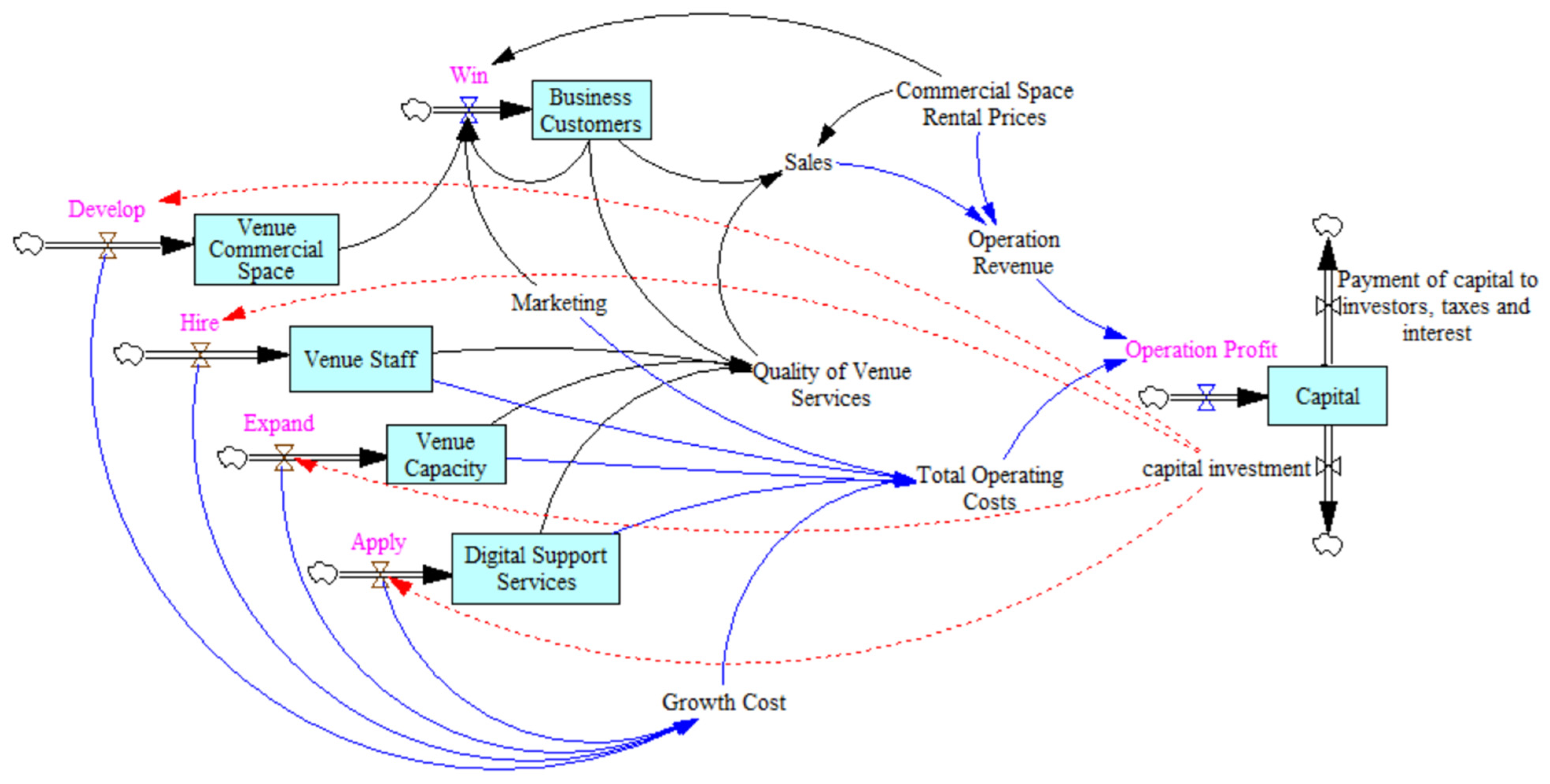
Enterprise Core Strategic Architecture (Figure 3) serves as the central brain of an enterprise. It provides clear directional guidance for the organization’s vision, mission, and long-term objectives, and establishes a bridging link from strategic planning to actual execution. These can ensure that top-level strategic intent can be effectively transformed into concrete business processes, system configurations, and operational activities. Strategic Architecture is not a static document but a dynamic system that forms a continuous improvement cycle of “strategic planning-execution-evaluation-adjustment” through feedback loops. It enables enterprises to adjust strategic direction based on execution results and environmental changes, thereby enhances decision-making quality and risk management capabilities. More importantly, SA must precede the construction of EA because strategy determines direction. Only under the guidance of a clear SA can the development of EA be purposeful and targeted, avoiding blind technology investments and system construction, ultimately creating systematic, dynamic, and multifaceted value for the organization. In Figure 3, five core resource stocks have identified: business customers, venue commercial space, venue staff, venue capacity, digital support services, and capital. The blue lines represent the resource flows driving operation profit, while the red lines represent the organization’s capital investment as the feedbacks to drive resource flows. The feedback mechanism is a sustainable system making the organization more capable for sustainable development.
Figure 3. Enterprise Core Strategic Architecture.
The innovative business management strategy for LMPSVs, based on SD approach, applies strategic architecture to venue management across customer management, commercial space rental, marketing, human resources, venue capacity, and digital support services. This involves identifying key variables such as customer satisfaction, occupancy rates, marketing effectiveness, employee performance, and service utilization, while analyzing their interactions and feedback loops for strategic decision-making. Figure 3 demonstrates this enterprise core strategic architecture’s system dynamics structure. The core positive reinforcement loop increases operational revenue through winning customers, enhances profits, accumulates capital, and reinvests for growth. Five major strategic investment dimensions influence venue service quality, which directly affects operational revenue and customer satisfaction, creating a feedback mechanism linking satisfaction to repeat attendance and rentals. The cost balance loop provides negative feedback, where investments increase operating costs and reduce profits, ensuring balance between growth and financial health, while the capital flow cycle balances investor returns with reinvestment. The overall architecture presents a dynamic “investment-capacity building-service quality-revenue-profit-reinvestment” system, with positive loops driving growth and negative loops providing regulation. This framework reveals how strategic decisions generate leverage effects through systematic interactions, providing managers an analytical tool for formulating dynamic strategies to enhance customer experience, optimizing space utilization, strengthen marketing, improve efficiency, and expand capacity and digital services.
Constructing a dynamic model to represent the interdependencies between the components of a system allows for a more complete understanding of the past and better prediction of the future. Management of the enterprise architecture has become increasingly recognized as a crucial part of both business and IT management [54]. A significant number of organizations continually face difficulties in putting strategy into practice and suffer from a lack of structure and transparency in corporate Strategic Management. Innovation waves force organizational transformation, making current business models potentially irrelevant and unprepared. Business architecture practice significantly increases transformation success by aligning needs, approaches and internal context [55]. Enterprise architecture represents the strategic application of capabilities to govern business transformation, providing a high-level abstraction of a business’s structure that helps organize planning and improve decision-making [56].
In its exalted conceptualization, EA provides the link between strategy and execution driven by strategic considerations such as business transformation and business agility. The SD-based strategic architecture for enterprise transformation is an approach that utilizes SD to support and guide the decision-making process of an enterprise facing significant change. It covers identifying key variables in enterprise systems, modeling their interactions, simulating strategy impacts, and developing transformation strategies accordingly. With SD modelling, the strategic architecture should include key stocks (e.g., capital, human resources), flows (e.g., revenues, costs), and feedback loops, validated and calibrated to ensure that the model accurately reflects reality, and adjusted as necessary [57,58].
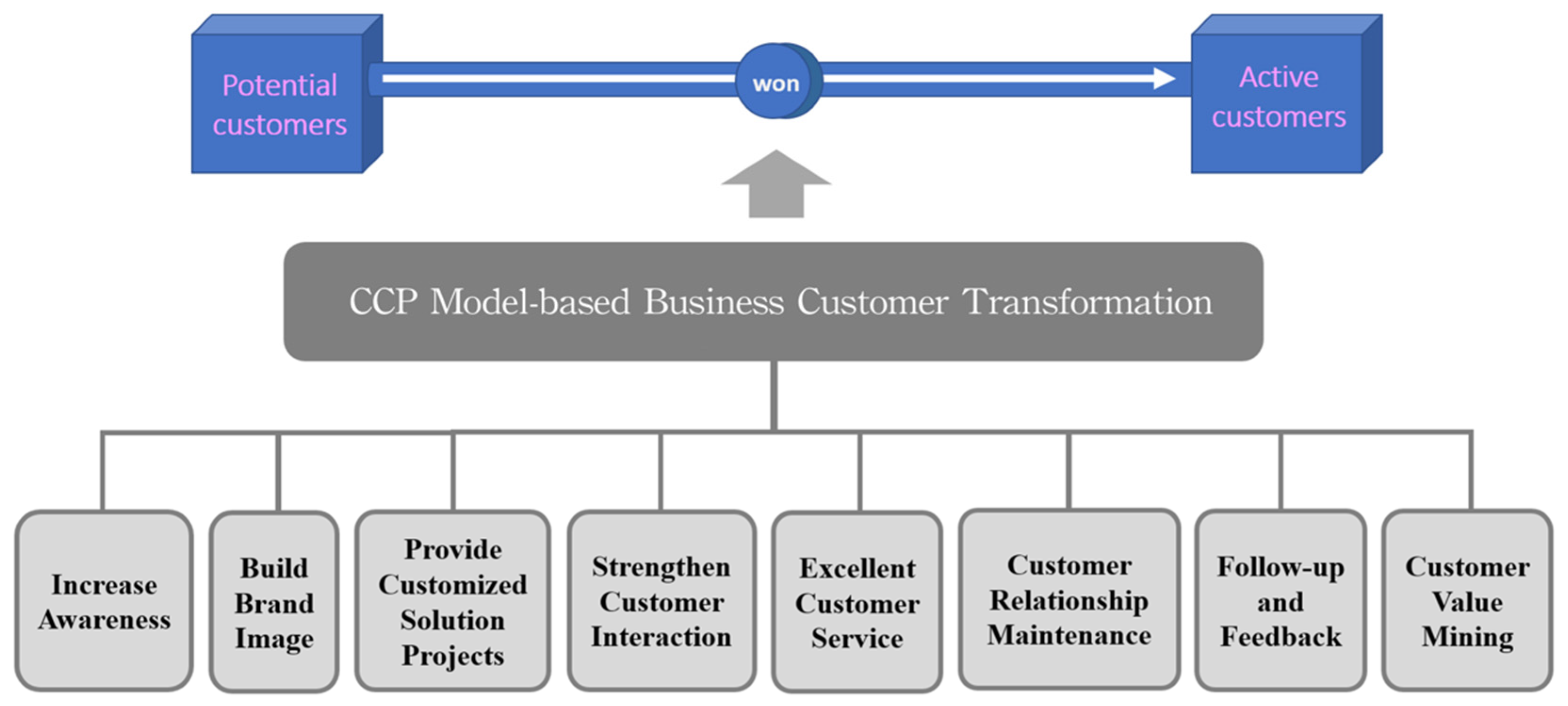
The strategic architecture for ESGI enterprise transformation (Figure 3) uses SD modeling to guide and optimize transformation by providing specific goals and directions in environment, society, governance and innovation. Based on ESGI objectives, the architecture is constructed with relevant variables and feedback loops, identifying positive and negative interactions among ESGI domains. By integrating ESGI into strategic architecture, organizations can comprehensively understand operational complexity and develop transformation strategies that balance environmental protection, social responsibility, good governance and continuous innovation, achieving long-term sustainable development while pursuing economic benefits. Each enterprise function can be used either independently or as part of the overall architecture. Taking the business customers in the strategic architecture as an example, we extend the relationship between the application of strategic business innovation management with the customer choice pipeline (CCP) model. This extension illustrates the strategic goal of transforming potential business customers into active business customers for LMPSVs (Figure 4).
Figure 4. Transformation strategic Architecture goals for LMPSVs based on the Customer Choice Pipeline (CCP) model for potential business customers.
Figure 4 illustrates how LMPSVs can transform potential business customers into active ones through strategic developments such as increasing awareness, building brand image, providing customized solutions, strengthening customer interaction, excellent customer service, maintaining customer relationships, conducting follow-up and feedback, and mining customer value [25]. The main advantage of using the CCP model is that it provides a clear strategic framework, helping LMPSVs understand the customer’s decision-making process and guide them from awareness to consumption, leading to a more effective marketing strategy. Additionally, this approach emphasizes the importance of building long-term relationships with customers to ensure sustained business performance and revenue. The conversion logic of the customer choice pipeline (CCP) model needs to be transformed into concrete business processes, including customer touchpoint management, conversion path design, service delivery processes, etc., which provides clear process blueprints and operational models for the Business Architecture layer.

4.3. ESGI Enterprise Life Cycle Sustainability Assessment

With the increasing popularity of ESG reporting, concerns about the reliability and completeness of ESG disclosures are also growing. Those concerns may be alleviated by Life Cycle Assessment (LCA), a widely used approach for a thorough and comprehensive evaluation of environmental impacts [59]. Sustainability assessment should encompass all three dimensions (environmental, economic, and social) using a life cycle perspective. The life cycle sustainability assessment (LCSA) thus becomes a more comprehensive and challenging framework to apply for product/services assessment. LCA is used to assess environmental footprint, whereas life cycle costing (LCC) is employed for assessing economic comparisons [60]. In this work, we assessed the impact of environmental protection, social responsibility, corporate governance, and innovation strategy in the case of LMPSVs, covering the entire process of construction, operation, and dismantling of the venue. When undertaking an LCSA, it is important to consider the potential direct and indirect impacts of LMPSVs at all stages of the life cycle and to seek a balance between the various aspects to achieve true sustainability.
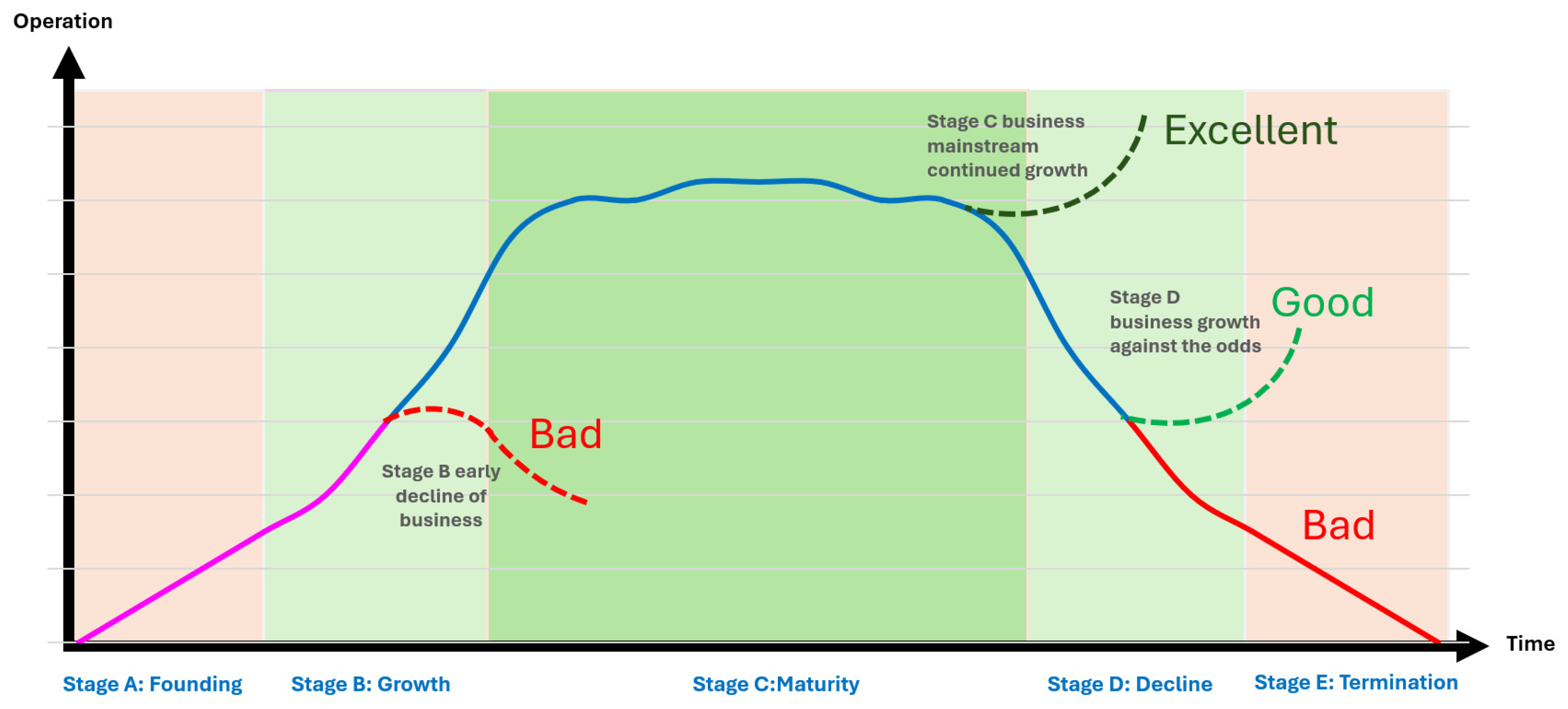
Corporate leadership and culture must align with market realities to ensure the long-term success of a firm. As companies form, grow, and mature, the management of the enterprises also must evolve throughout the business lifecycle. What works in the introduction stage may not be effective for a mature company [61]. The relationship between LCSA and ESGI for LMPSVs is reflected in the venue’s sustained attention and investment in environmental, social, governance and innovation from inception to growth, maturity and even decline. Different life-cycle-based sustainability assessment methods must adopt a harmonized approach in defining functional units and using consistent (ideally identical) system boundaries. To establish a complete framework, applying a life cycle thinking lens is essential to explore the longitudinal dimension of the impacts and possible indirect effects across environmental, social, and economic levels. The definition of an integrated life cycle sustainability assessment framework is currently an ongoing journey [62]. An ESGI sustainability assessment is conducted at each life cycle stage of the LMPSVs, identifying key impacts and risk points and gathering information related to environmental, social, governance and innovation to ensure that the LMPSVs achieve sustainability throughout its life cycle. A generic representation of the ESGI sustainability assessment for each stage for LMPSVs is shown as Figure 5. The purple line represents the early growing stage; the blue line represents the majority of an organization’s development; the red line represents the declining to termination stage.
Figure 5. ESGI life cycle sustainability assessment for LMPSVs.
In summary, a life cycle sustainability assessment of LMPSVs should integrate environmental, social, corporate governance and innovation strategies to ensure that the venue achieves sustainability at every stage, minimizes adverse environmental and social impacts, and ensures corporate compliance and long-term growth.

4.4. Application of CRISP-DM Life Cycle Assessment

The CRISP-DM project proposed a comprehensive process model for conducting data mining projects. The process model is independent of both the industry sector and the technology used. The CRISP-DM serves as both a methodology and a program model, offering a structured approach to solving data-related problems and providing an excellent guide for initiating a data mining program. The generic CRISP-DM process model is useful for planning, communication within and outside the project team, and documentation [63]. The CRISP-DM life cycle can be utilized by LMPSVs when applying techniques such as data analytics and machine learning for project development and management. This involves collecting data and organizing it for and modeling using the CRISP-DM data mining process. LMPSVs can apply this framework to create SSD management models that effectively utilize data to support perpetuity goals.
The benefit of applying CRISP-DM to SSD management modeling is that more accurate and reliable decisions can be driven based on actual data. Continuous improvement of LMPSVs’ sustainability performance is achieved through regular analysis and model updating, comprehensively addressing all aspects affecting the venue’s sustainability, including economic, environmental and social factors. By applying CRISP-DM, LMPSVs can build a data-based SSD management model that effectively supports their sustainability goals. This approach not only improves operational efficiency and reduces costs but also enhances the venue’s positive impact in terms of ESGI.

4.5. Dynamic Strategic Management and Business Innovation in Practices

In seeking to build and sustain competitive advantage, managers need to develop strategies that account for likely future changes—and that can themselves evolve in response to changing circumstances [64]. SSD-based dynamic management strategy is based on the insights of ESGI and CRISP-DM to develop a flexible and innovative management strategy. By dynamically adjusting based on continuous data analysis and market feedback, organizations can better understand and respond to changes in the external environment, ensuring ongoing internal improvement and innovation to achieve long-term sustainability.
SSD-based strategic architecture for dynamic management is an adaptive, flexible, and innovative management approach designed to ensure that organizations continue to thrive amid changing environmental and market challenges. The dynamic management strategy for corporate innovation in LMPSVs has a significant positive impact on the sustainable operation of the venues. It can help LMPSVs realize SDGs and innovative strategies, thereby improving their competitiveness and long-term development potential. An SSD-based ESGI enterprise transformation strategy is not only a pathway to sustainability for modern LMPSVs, but also key to improving competitiveness, increasing market appeal and ensuring long-term operational success. Through the implementation of these strategies, LMPSVs can excel in environmental protection, social responsibility, good governance and innovation, staying ahead in today’s rapidly changing business and social environment.

4.6. ESGI Enterprise Organization Architecture

The way to adopt the principles of corporate sustainability is through the adoption of a sustainability-oriented organizational culture, where enterprise transformation may involve new value propositions or changes in the internal structure of the enterprise. While more directors and executives are recognizing the importance of sustainability to their financial success strategies, enterprises still struggle to integrate sustainability into their core business practices and overall organizational design. For a sustainability strategy to be effective and successful, it must be aligned with an enterprise’s structure, capabilities, and culture [65]. Sustainable business model innovation and organization design in large multinational corporations are increasingly seen as a key driver of competitive advantage and corporate sustainability [66].
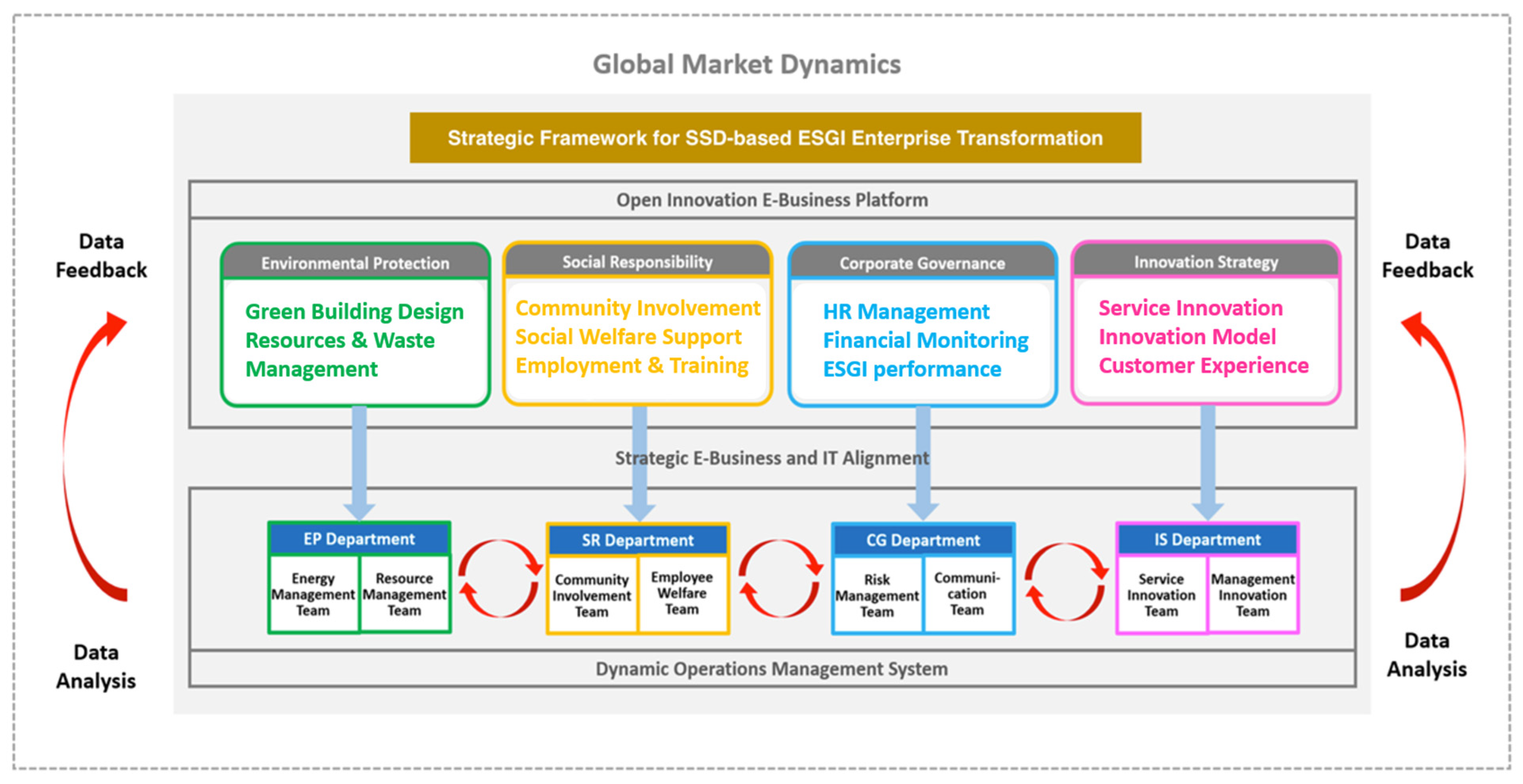
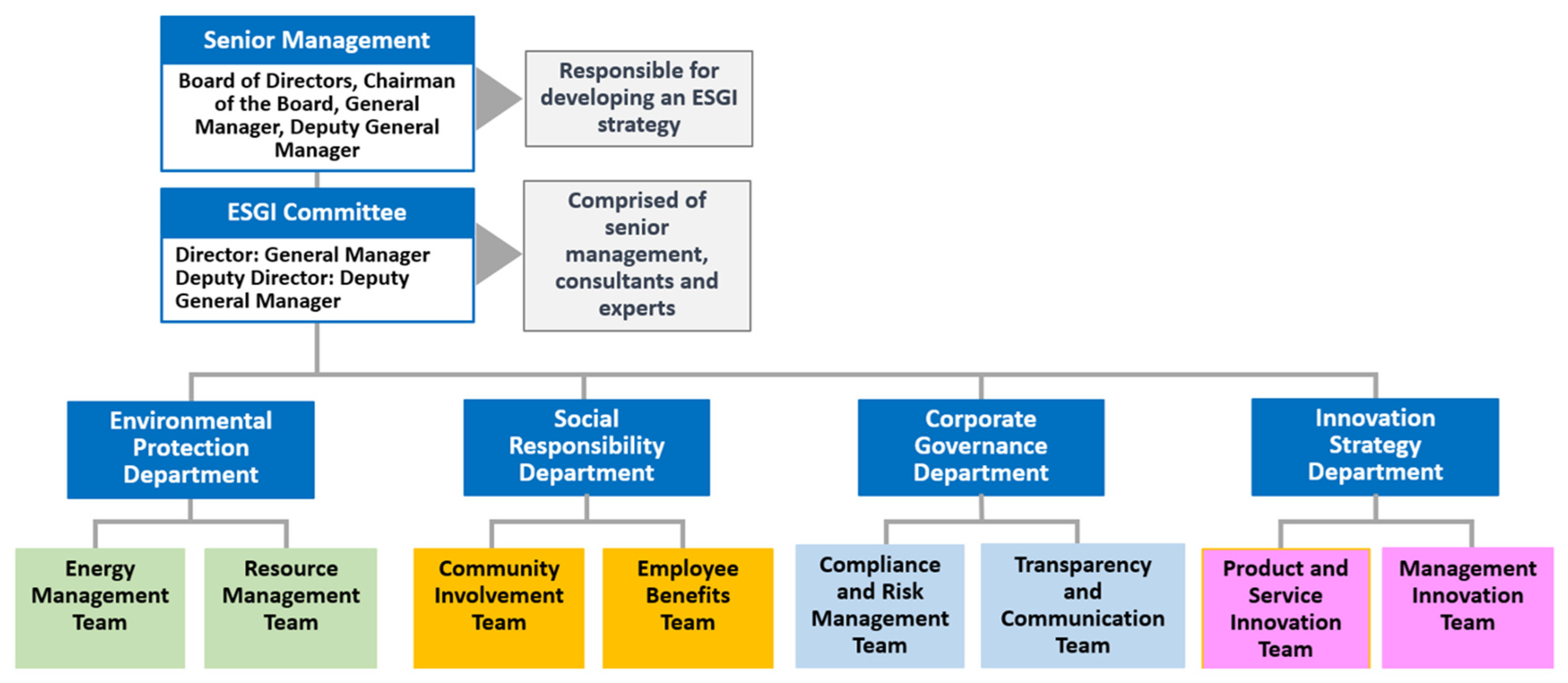
Organizational components also face the need to enhance performance over time, such as improving service quality, accelerating product development or reducing staff turnover [56]. Implementing organizational restructuring to ensure that the organizational structure supports the achievement of ESGI goals, as well as training and career development for employees. Fulfilling the enterprise’s ESGI metrics requires a synergistic division of labor across multiple departments to ensure the overall management and monitoring of the enterprise’s ESGI performance. LMPSVs can be structured according to ESGI to ensure enterprise sustainability and long-term value creation. The organizational structure of the ESGI Committee can be adapted to the size and needs of specific venues, and close cooperation among the various departments and groups is necessary to achieve the best overall results in achieving the ESGI objectives. The following is an example of an ESGI-based enterprise organization structure for LMPSVs (Figure 6):
Figure 6. An example of SSD-based ESGI Enterprise Organization Architecture for LMPSVs.
When implementing the coordinated operation of various departments within the ESGI enterprise organization structure, management should develop clear ESGI goals and strategies. They should ensure that all departments understand the relevance of these goals to their daily work, promoting cross-departmental cooperation, regular communication and meetings. Conduct performance evaluations of each department’s performance in achieving ESGI goals with feedback, coaching, and staff training and development opportunities provided to enhance employees’ ability to implement ESGI strategies. It is through this coordinated operation that LMPSVs can effectively implement ESGI strategies and improve overall operational efficiency and sustainability.

4.7. Application of Digital Business Operations and Decision-Making Information Flow System

Across a wide range of companies spanning diverse industries and sectors, digital technologies are fundamentally transforming business strategies, business processes, firm capabilities, products and services, and key interfirm relationships in extended business networks. Operations management system (OMS) with open e-business platform and information technology (IT) facilitation supports business operations and information flow for decision-making in the organization. It establishes an integrated digital platform to enhance the effectiveness and timeliness of business operations and decision-making processes. Business infrastructure has been digitized as the interconnectivity of products, processes and services has increased. In many companies across different industries and sectors, digital technologies are fundamentally changing business strategies, business processes, company capabilities, products and services, as well as key inter-firm relationships in extended business networks [67,68]. An open e-business platform typically requires diverse products and different types of information technology to support the visual presentation of related tasks, such as writing programs, computer graphics design, processing and editing. Each type of task can be supported simultaneously by a variety of IT teams within or across organizations. As a result, the performance of the teams, as well as the IT support program and operations management, is affected by the workflow of related tasks maintained by other teams, and their own performance affects the success of those related tasks [5]. The decision information flow system identifies decision analysis factors to characterize the decision-making process, and then constructs a generic data flow diagram (DFD) that describes the “data-to-decision” flow of information, providing illustrative examples of models in the form of DFDs for strategic, tactical, and operational decisions.
Taking the example of LMPSVs (Figure 7), the application of a digital business operations and decision-making information flow system can help fulfill the ESGI goals of sustainable development. E-business service platforms are usually diversified to present knowledge visualization of innovation services and various IT support tasks, covering areas such as environmental protection, social responsibility, corporate governance, and innovation strategy. Each of the SDGs is considered as a type of project task. Within the dynamic OMS, each type of projects can be supported simultaneously by various departments, both within and across organizations. As a result, the performance of each department and the IT Support Sustainability program will be affected by the work processes of related tasks maintained by other departments, and the department’s own performance will affect the achievement of those related tasks. Most importantly, the IT sustainability department should ensure not only its capacity to fulfill the volume of tasks, but also the quality of sustainability project tasks to meet the needs, as well as the overall strategic alignment, of e-business and IT processes.
Figure 7. Digital business operation and decision-making information flow system for LMPSVs.
Nowadays, business IT alignment has become a priority in most large organizations. It involves aligning the information system on the business strategies of the organization [69,70]. Strategic Business IT Alignment is one of the main goals to be achieved by implementing EA in an organization. EA helps organizations define business, information systems, and technology architectures that enable the alignment of business strategies with the IT organization by developing business models, business strategies, business processes, and organizations that are aligned with the infrastructure, applications, and IT organization [71]. There is a correlation between the demand for e-business platform services and the supply of dynamic IT sustainability project management. Open and innovative e-business platforms and dynamic operational management systems can be mutually reinforcing. This initiates the feedback structure of the digital business operations and decision-making information flow system, where data analyzed from the dynamic OMS feeds back into the e-business service platform, creating a positive feedback relationship. Aligning the information system with the organization’s business strategies increases the practical value of the information system, making it a strategic asset [64].
Overall, utilizing an SSD-based digital business operations and decision-making information flow system to promote and execute ESGI not only improves the sustainability of the LMPSVs, but also improves the venue’s business performance. Through this integrated strategy, LMPSVs can balance social responsibility, environmental protection and economic performance, further enhancing their competitiveness in the market.

4.8. Implementation and Monitoring of ESGI Enterprise Transformation

A strategic planning model for developing, monitoring and evaluating digital and perpetual transformation programs in organizations, which aims to provide useful tools for managers and practitioners in the field of digital transformation [72]. The key steps in the implementation and monitoring of ESGI enterprise transformation for LMPSVs are elaborated as follows:
(1)
Strategy implementation:
Implement SSD-based ESGI transformation strategies and systems within the venue’s operations, integrate ESGI objectives into daily operations and decision-making processes, and develop specific action plans for each ESGI area, such as energy-saving measures, community involvement programs, governance structure improvements, and the application of innovative technologies. Ensure that the team understands and participates in the ESGI objectives through staff training and incentives, encourage staff to apply these strategies in their daily work, and ensure that sufficient resources (e.g., funding, technology, and human resource) are available to support the implementation of the strategies.
(2)
Monitoring and evaluation:
Continuously monitor the effectiveness of the implementation through data analysis and numerical results, set key performance indicators (KPIs), and specific performance indicators for each ESGI area, such as reduced carbon emissions, participation in community activities, and specific indicators for governance improvement and innovation strategies. Regularly collect and analyze relevant data, such as energy consumption, employee and customer satisfaction survey results, to assess the effectiveness of the strategy and the progress of its implementation. Based on the monitoring results, make necessary adjustments and improvements to the strategy, to ensure that it continues to move towards the goal.

4.9. Feedback and Optimization of ESGI Enterprise Transformation

Current computer vision systems, especially those using machine learning techniques, require large amounts of data and typically perform well only when dealing with previously seen patterns. As an alternative, cognitive systems combine current machine learning algorithms with a broad range of cognitive task capabilities. The study proposes an approach based on the combination of human–computer interaction and knowledge discovery, in which feedback discovers knowledge by enabling the user to interactively explore and recognize useful information. This interaction allows the system to be continually trained to acquire previously unknown knowledge and generate new insights to improve human decision-making [73]. The key steps for feedback and optimization include:
(1)
System feedback adjustment:
Optimization and adjustment based on system feedback. Regularly review the effectiveness of the implementation of each ESGI strategy and make necessary adjustments and improvements using evaluation results and feedback from employees, customers, and communities.
(2)
Update of technology and market trends:
Adopt the latest sustainable technology and innovative solutions, such as intelligent energy-saving systems and renewable energy utilization. Update strategies to maintain competitiveness in response to market and industry trends, enabling LMPSVs to continuously enhance their sustainability and ensure long-term environmental, social, and economic benefits.
By synthesizing and analyzing the above aspects, it is possible to gain in-depth insights that reveal the complexity and dynamics of LMPSVs in the process of implementing the proposed strategic architecture for ESG enterprise transformation. The results of the analysis not only help to understand the actual experiences and challenges of the Kaohsiung Dome during the transformation process, but also provide valuable strategic guidance and practical references for other sports stadiums or similar organizations.

4.10. Integration of Business Processes of LMPSVs with ESGI

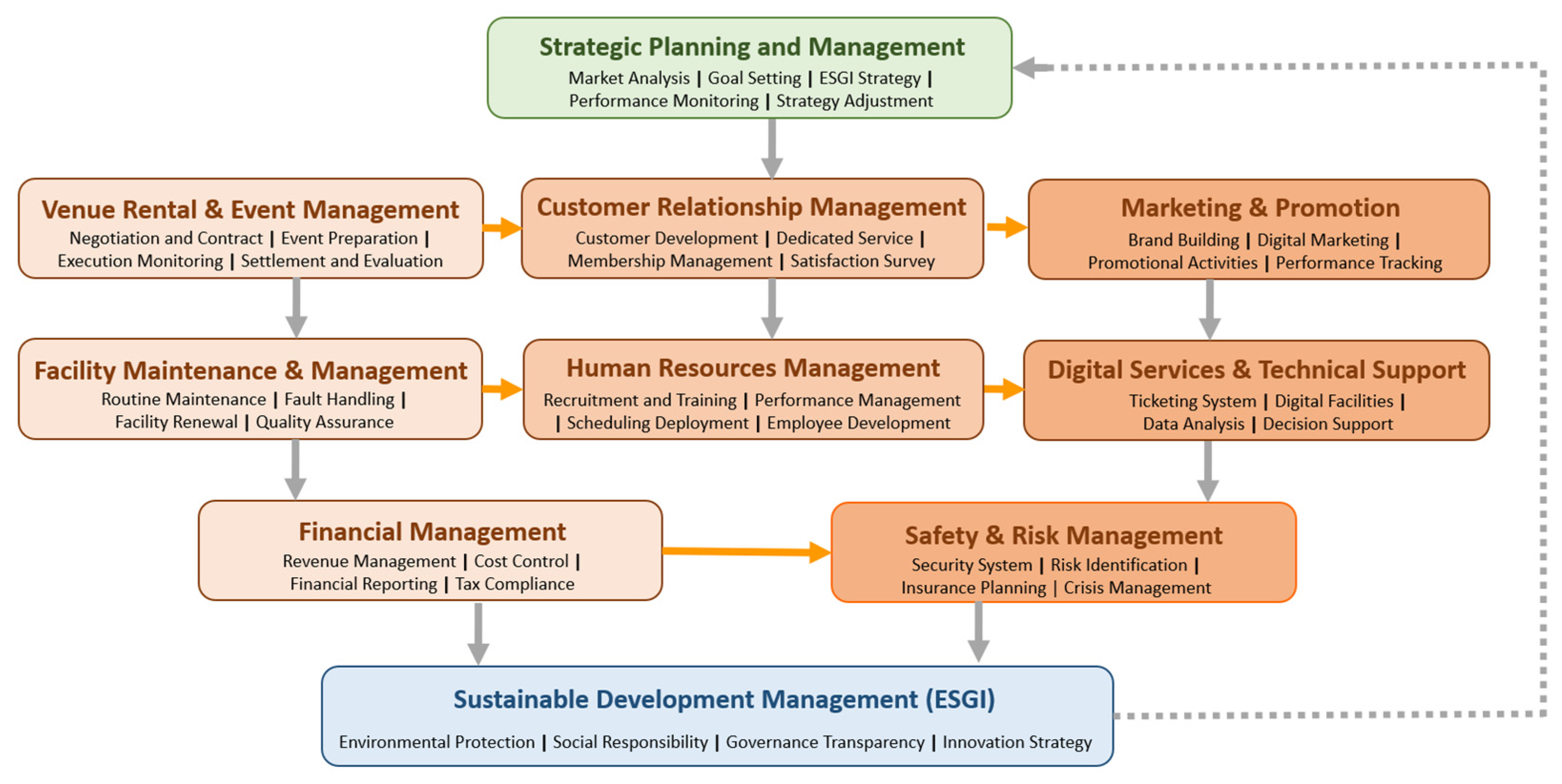
The business process of a large-scale multi-purpose sports venue is a highly integrated system, encompassing everything from strategic planning to daily operations. Management must adopt an SSD-based strategic architecture framework to analyze market trends, set operational goals, and formulate an ESGI strategy. These strategies must be adjusted promptly through performance metrics, financial analysis, and satisfaction evaluations. As Taiwan’s first modern multi-purpose sports venue, the Kaohsiung Arena’s business processes adhere to the business process framework proposed in this study (Figure 8). The current state of the Kaohsiung Dome’s business processes is described below.
Figure 8. Kaohsiung Dome’s Business Process Architecture.
The Kaohsiung Dome’s business processes are centered around venue rental and event management, spanning application evaluation, site surveys, and contract negotiations. The event planning phase involves venue configuration and technical support coordination, and the execution phase involves venue preparation and contingency management. Finally, the venue restoration, cost settlement, and feedback collection are completed. Customer relationship management fosters long-term relationships by developing leads and providing customized solutions. Membership recruitment, benefits protection, and data analysis foster loyalty. Marketing and promotion encompass brand maintenance, digital marketing, and promotional initiatives, reaching target audiences through diverse channels and optimizing strategies. Facility maintenance maintains optimal condition through regular inspections and preventive maintenance, ensuring prompt troubleshooting. Aging facilities are regularly assessed and updated. Human resources management encompasses recruitment and training, performance appraisals, and career development, as well as scheduling tailored to event needs and ensuring regulatory compliance. Financial management encompasses the management and control of ticketing, rentals, sponsorships, and ancillary commercial revenue, ensuring financial health through cost monitoring, report preparation, and budget analysis. Safety and risk management mitigates risk through security systems, fire equipment inspections, contingency drills, risk identification, insurance planning, and regulatory compliance. Digital services enhance the customer experience through online ticketing platforms, mobile applications, and digital payment systems, while enabling precise decision-making through data analysis and predictive modeling. Sustainable development management integrates energy conservation, waste reduction, community engagement, and the introduction of innovative technologies to ensure that venues achieve a balanced development of environmental protection, social responsibility, and good governance while pursuing economic benefits.
These business processes are tightly integrated through cross-departmental coordination mechanisms, enterprise resource planning systems, and data analytics platforms. Service excellence is ensured through ISO certification, quality monitoring, and a continuous improvement cycle. A feedback optimization mechanism ensures continuous improvement through customer feedback and data-driven decision-making. Through these integrated and interconnected business processes, Kaohsiung Arena is able to effectively manage operations, provide high-quality service, achieve sustainable development goals, and maintain a competitive advantage in the market.

5. Performance Evaluation

5.1. Kaohsiung Dome Business Performance

Through an integrated research design combining literature review, data collection and in-depth interviews, this study demonstrates that the implementation of ESGI enterprise transformation strategies can effectively contribute to the sustainable development of LMPSVs.
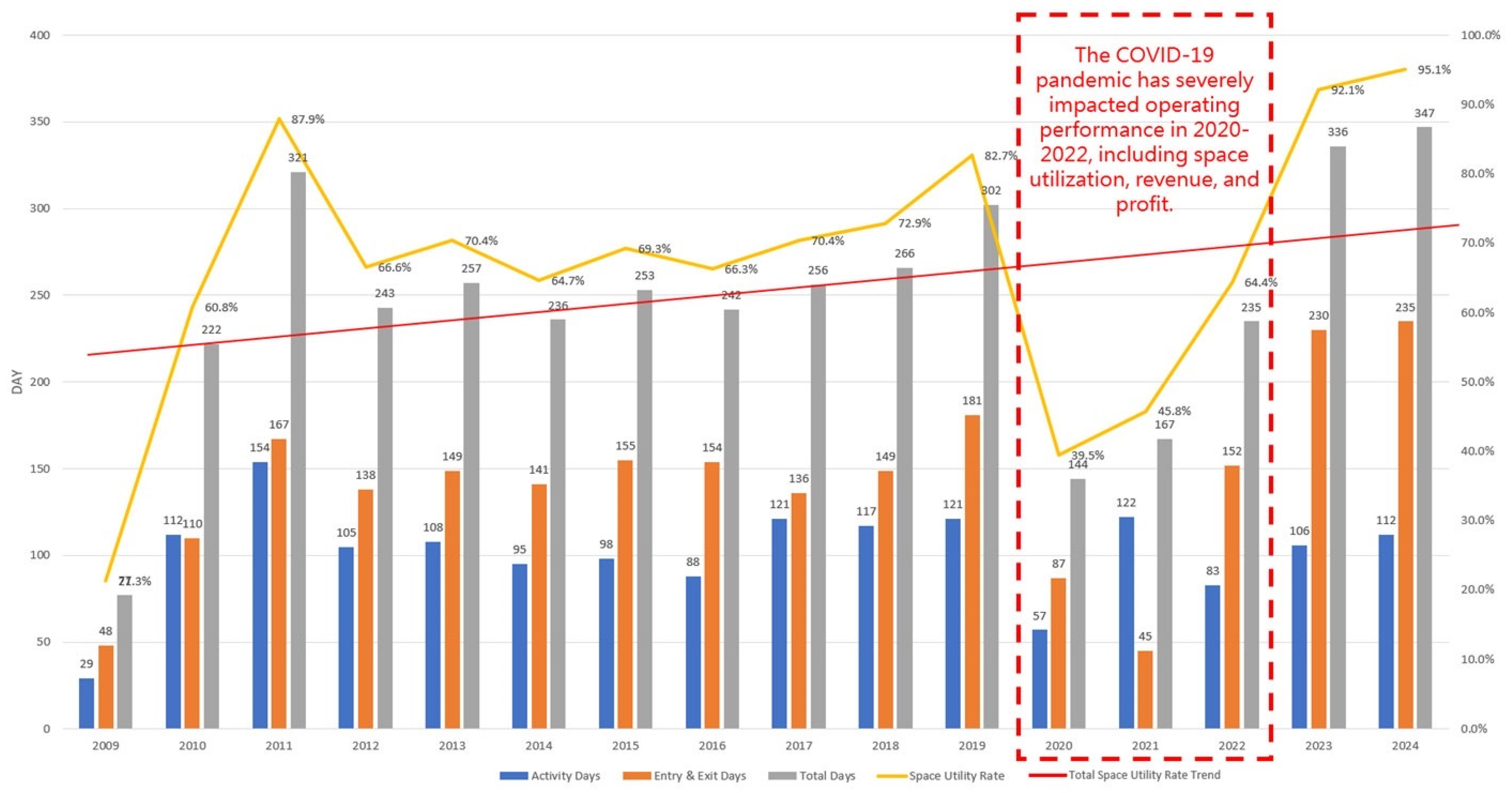
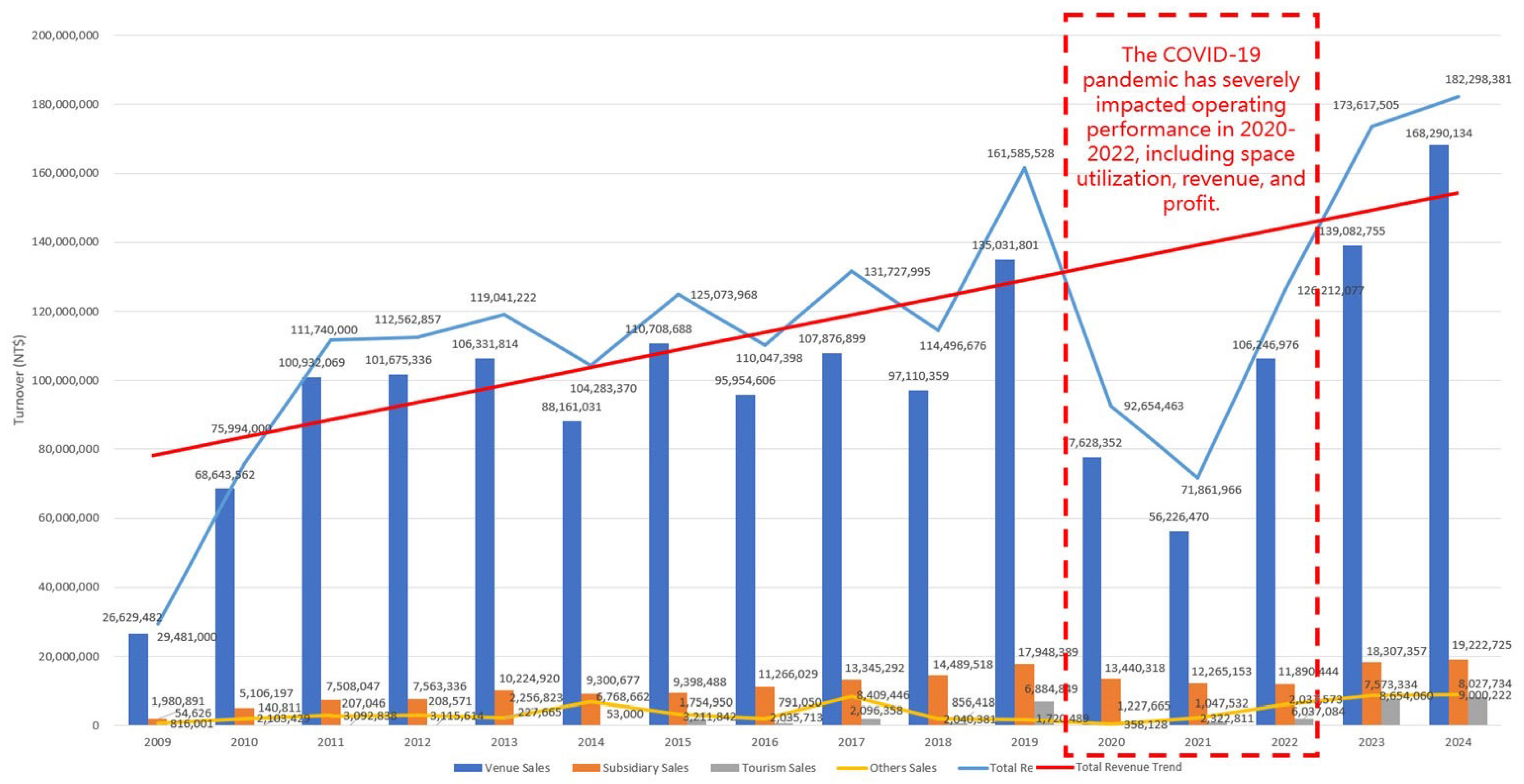
The case illustrates that Kaohsiung Dome’s fulfillment rate of relevant sustainable development goals in terms of environmental protection, social responsibility, corporate governance, and innovation strategy. The LMPSVs’ performance has improved year by year with the strategic architecture of sustainable system development for ESG enterprise transformation. Although the impact of the COVID-19 epidemic from 2019–2021 has seriously affected the business performance, including the utilization rate of the relevant space, revenue and profit, Kaohsiung Dome continued to adhere to the ESGI’s SDGs by employing SSD principles during this challenging period. Therefore, from FY2022 onwards, the operational and financial data disclosed by the Kaohsiung Dome shows that the performance of the Kaohsiung Dome has a significant improvement trend, with even more substantial performance gains in FY2023 (Figure 9 and Figure 10). In conclusion, the SSD-based ESGI enterprise transformation for LMPSVs can provide the operational management norms for new domed venues, helping them achieve their SDGs and improve operational performance. The lessons learned from Kaohsiung Dome can serve as a model for the operation and management standards for new LMPSVs, especially the Dome, to help them achieve SDGs and ensure efficient operation and management.
Figure 9. Kaohsiung Dome space utilization rate, 2009–2024.
Figure 10. Kaohsiung Dome business composition, 2009–2024.
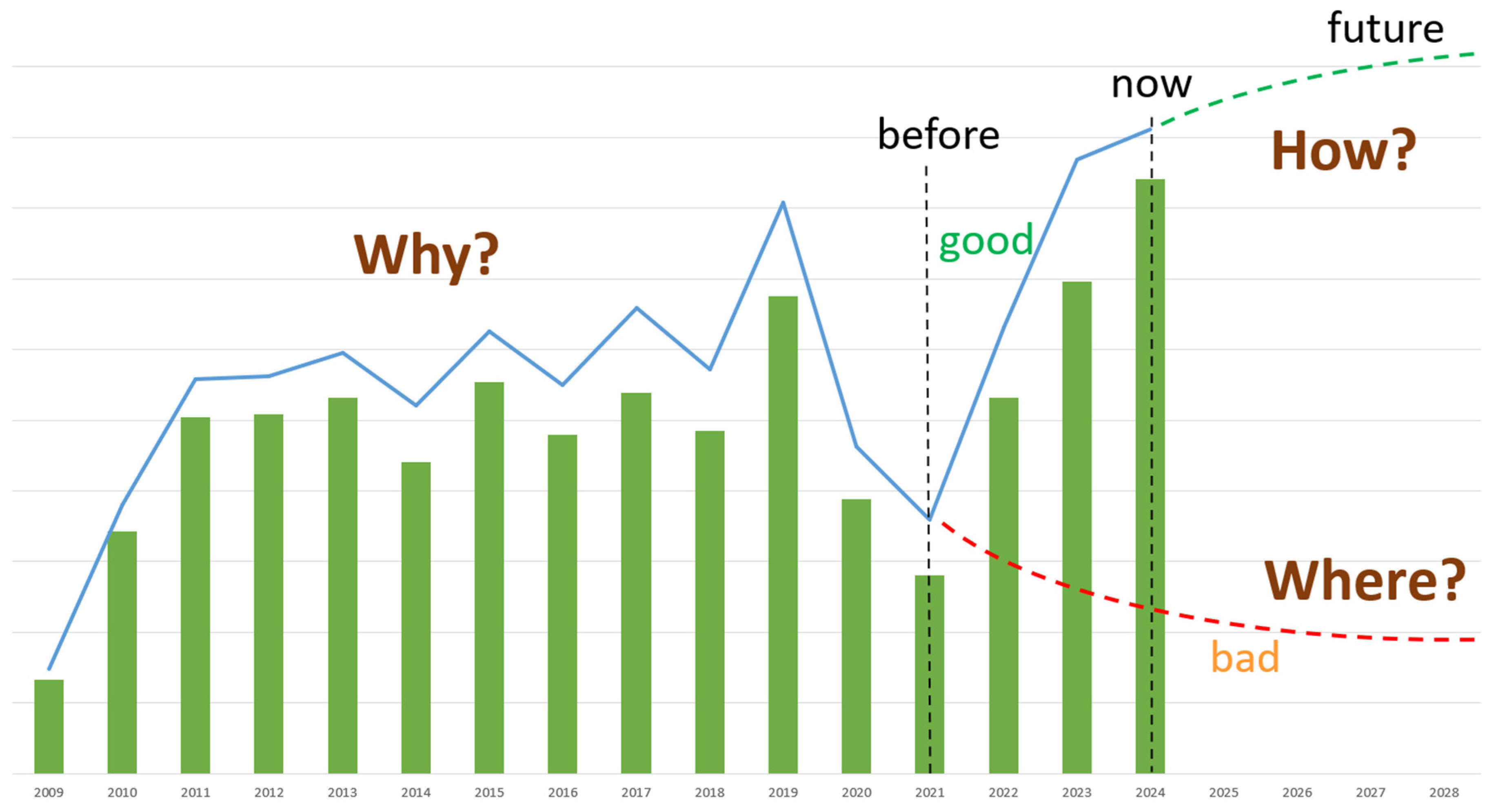
Comparing with Figure 5 above, the operation rules for each stage of ESGI life cycle sustainability assessment for LMPSVs are shown in Figure 11, which fully aligns with the life cycle curve of Figure 5. Figure 10 shows the 15-year operational life cycle of Kaohsiung Dome, highlighting its historical performance (green bar for historical data and blue line represents the trend). The figure represents the stable growth factors of Kaohsiung Dome in the early stage (explain WHY), including diversified activity strategies, good brand image, active and effective marketing, government support and resources. The figure also helps to explain the anticipated future trend (WHERE) and HOW it can happen. The case study identifies factors that may lead to a decline in the performance of Kaohsiung Dome, including the impact of the new coronary pneumonia epidemic, increased market competition, and aging facilities. It also reflects Kaohsiung Dome’s current situation and future vision. Kaohsiung Dome’s persistence with SSD transformation during the period of sharp performance decline has enabled it to turn its operating performance from a loss to a profit in the shortest possible time. The future vision is to achieve an ideal operating performance of 100% per year, thereby realizing continuous growth in total revenue.
Figure 11. The operational life cycle of Kaohsiung Dome.
The Kaohsiung Dome, due to its scale and versatility, significantly contributes to the economic prosperity and community development of the surrounding area. Key factors include promoting tourism and increased consumption, creating employment opportunities within the arena and surrounding businesses, promoting infrastructure development and urban regeneration, increasing commercial and property tax revenues, hosting community engagement and cultural and sports events, fostering business and brand integration, and enhancing the city’s international image and attractiveness.
This study further analyzes how the Kaohsiung Dome has dramatically boosted the economic prosperity and community development of the surrounding area. According to the statistics from Taiwan’s Ministry of the Interior’s Real Estate Transaction Register, the market price of real estate around the Kaohsiung Dome area has risen by 18.5% in the last three years (2021–2023) and 41.7% in the last five years (2018–2023), while the overall increase in the administrative area over the past three years has been only 5.5%. Kaohsiung Dome, as an LMPSV, is surrounded by connecting roads and public transportation facilities that facilitate evacuation and ensure convenient access. Data shows that the area around the Kaohsiung Dome is a hot spot for real estate, primarily because it combines a sports stadium with a large-scale exhibition venue, hosting numerous exhibitions and driving the development the surrounding business district, making it attractive for corporate investment. Moreover, the Kaohsiung Dome adopts a comprehensive sports park plan, with large department store annexes, greatly enhancing its leisure function, which is particularly appealing to family-oriented homebuyers.
In conclusion, fulfilling ESGI objectives can positively impact the operational performance of LMPSVs and enhance their competitiveness and long-term development potential. When LMPSVs implement the ESGI objectives, the benefits can include increased employee satisfaction and loyalty through the promotion of social responsibility and the creation of inclusive work environments, which lead to higher productivity and reduced turnover. Furthermore, as investors and funding agencies increasingly focus on the sustainability performance of businesses, LMPSVs that pursuit ESGI objectives may be more likely to attract investment and receive financial support. By implementing ESGI objectives, LMPSVs will not only enhance their operational efficiency and market competitiveness, but also establish a solid foundation for long-term sustainable development.
The research results suggest that LMPSVs can effectively promote their sustainable development through the adoption of ESGI strategies. This strategic architecture enables LMPSV managers to achieve multiple objectives of economic efficiency, social responsibility, environmental protection and good governance.

5.2. Qualitative Research Methodology of Kaohsiung Dome’s Historical Operational Performance

Based on the historical operational data of Kaohsiung Dome presented in Figure 9 and Figure 10, this study employs a case study method, using Kaohsiung Dome as a representative case of LMPSV. Through a longitudinal research design, 15 years (2009–2024) of historical data were collected and analyzed to track the trends of key indicators such as space utilization rate, revenue structure, and business composition, providing an empirical foundation for constructing system dynamics models. The study collected official operational reports, financial data, activity records, and other materials through document analysis methods, and employed contextual analysis to specifically examine the impact of the COVID-19 pandemic (2020–2022) on venue operations. The red dashed box in the figures clearly indicates the severe impact of the pandemic on space utilization, revenue, and profit, revealing the necessity for venue sustainability transformation. The study combined multiple data sources and indicators for triangulation, visualized long-term data trends for pattern recognition, and these operational patterns and structural changes provided empirical support for constructing causal relationships and feedback loops in the system dynamics model. The study adopted a theory-driven data interpretation approach, interpreting quantitative data within the framework of sustainable system development (SSD) theory and ESGI; for example, the operational difficulties during the pandemic highlighted the need for venues to develop diversified revenue sources, enhance digital capabilities, and strengthen operational resilience. This mixed methods approach combines the objectivity of quantitative data with the depth of qualitative analysis, providing a solid empirical foundation for developing strategic architecture (SA) and enterprise architecture (EA).

5.3. A Critical Comparison of the ESG Framework and Traditional Competitive Models for LMPSVs

The Strategic Architecture Development System (STAS) is built upon an ESG framework. A critical comparison of the ESG framework for LMPSVs with traditional competitive models reveals both strengths and limitations. The ESG framework emphasizes environmental sustainability, social responsibility, and transparent governance, focusing on long-term value creation, stakeholder balance, and sustainable development. It is particularly well-suited to modern society’s expectations for corporate social responsibility and can enhance venue brand image, reduce environmental risks, and strengthen social recognition. However, its challenges lie in the difficulty of quantifying performance indicators, the lack of clear short-term financial benefits, and the need for cross-departmental integration and cultural transformation.
In contrast, traditional competitive models such as Porter’s Five Forces Analysis and Value Chain Analysis focus on market competition, cost-effectiveness, and profitability, providing clear competitive positioning and strategic direction. Their performance indicators are clear and easily measurable, but they tend to overlook environmental sustainability and social impact. Overemphasizing short-term financial performance can sacrifice long-term development, and they rarely consider the diverse needs of stakeholders. The strategic framework development system is built based on the ESG framework, attempting to integrate the advantages of both, incorporating environmental protection, social responsibility and good governance while pursuing economic performance. Through a balanced scorecard or multi-dimensional performance indicator system, ESG factors are combined with traditional financial indicators, enabling sports venues to maintain competitiveness while achieving sustainable development goals, creating triple value in the economy, the environment and society. However, the challenge of this integrated framework is that it requires a more complex management system, higher resource investment and a determination for organizational change.

6. ESG Transformation and Management Implications

This study provides a comprehensive framework for transformation by integrating the four dimensions of environment, society, governance and innovation. Compared with the traditional stadium management, this study centers on the application of the ESGI enterprise transformation for the implementation of sustainable operation and innovative strategy management of LMPSVs. The following key findings were made:
First, the strategic architecture of SSD provides new perspectives and pathways for the sustainable transformation of venues. Systems thinking, cross-disciplinary integration, and multi-participation are highly compatible with the inherent requirements of sustainable transformation of venues.
Second, the ESGI framework provides a comprehensive and systematic approach for the sustainable transformation of venues. This framework overcomes the limitations of existing studies that focus on one-dimensional, static analyses, and provides a comprehensive, systematic, and dynamically optimized top-level design solution for venue transformation [74].
Third, multi-stakeholder engagement is one of the key components in the sustainable transformation of venues. The study found that the collaborative participation of multiple stakeholders, including government, community, partners, and the public, plays an indispensable role in promoting the sustainable transformation of venues. The establishment of an open, transparent, and shared stakeholder participation mechanism can help to stimulate the subjectivity of all parties, gather diversified resources and wisdom, overcome difficulties, and create a new situation for transformation and development [75].
Fourth, building a sustainable system with SSD principles is a driving mechanism of the core competitiveness of venues in the new era: Sustainable development is increasingly becoming a key indicator of a venue’s core competitiveness. Environmental protection, social responsibility, corporate governance, and innovation strategies have become strategic focal points for modern venues [76]. The concept of sustainable development has led to profound changes in the management model of venues, which is significant for pioneering the development of venues of high quality in the new era.
Lastly, systematic institutional support and top-down design are among the critical factors in the sustainable transformation of venues: The government should play the key roles of institutional support and strategic leadership to create a favorable policy environment and industrial ecology to encourage various types of venues to adopt the concept of sustainable development and accelerate their transformation and upgrading.
In summary, this study applied the SSD concept and the ESGI framework to systematically explore the sustainable transformation path of LMPSVs, yielding new findings and insights. These findings have enriched and developed the theoretical knowledge in the related fields, providing an action guide for the practice of venue transformation, and have reference value for optimizing the governance system and improving the policy supply. At the practical level, this study has important implications for LMPSV managers and policy makers. The proposed strategic architecture for ESGI enterprise transformation offers specific operational guidelines that help LMPSVs adjust their operation and management strategies to better meet the challenges of global sustainable development and promote the realization of social responsibility.

7. Conclusions

This study proposes a strategic architecture of sustainable system development and examines how LMPSVs can implement ESGI enterprise transformation through a comprehensive analysis and empirical research. The findings clearly demonstrate that by adopting the ESGI approach, LMPSVs can achieve environmental protection, enhance social responsibility, strengthen governance transparency, and stimulate innovation while promoting economic efficiency, thereby contributing to the achievement of SDGs.
The significance of this study lies in providing clear guidance on ESGI transformation strategies for LMPSVs, filling a knowledge gap in the existing literature, and providing valuable insights and recommendations for stadium managers, policy makers, and sustainability researchers. Through this study, relevant stakeholders will be able to gain a deeper understanding of how LMPSVs can achieve a balance and integration of multiple ESG objectives through transformation strategies. These findings suggest the need to re-examine the pathways and approaches to sustainable transformation from several perspectives. The significance of this study lies in the following aspects:
(1) Theoretical contribution:
This study integrates the principles of SSD and proposes the ESGI framework with real-world applications to the sustainable transformation of LMPSVs, enriching the theoretical connotation of sustainable development of sports venues. It provides clear ESGI strategic guidance for the sustainable transformation of LMPSVs, filling the knowledge gap in the existing literature. The study has deepened the academic community’s understanding of the rules and paths of sustainable transformation of venues. Additionally, it has provided new theoretical perspectives and analytical frameworks for future research [71], thereby contributing to theoretical advances in related research areas.
(2) Practical guidance:
The research reveals the challenges and constraints encountered during the implementation of the ESGI strategy, such as resource allocation, technological innovation, and differences in the understanding of the concept of sustainability, providing valuable insights and recommendations for venue managers, decision-makers, and sustainability researchers. This helps them re-examine the paths and methods of sustainable transformation from multiple perspectives. The ESGI transformation strategy framework and best practices examined in this study can provide knowledge and action guidelines for venues in planning sustainable development blueprints, optimizing operation and management modes, innovating service and product supply lines, and deepening social resource integration. This can inspire more high-quality and replicable transformation practices to promote the industry’s transformation and upgrading.
(3) Stakeholder participation:
This study emphasizes the need for joint participation and continuous efforts of all stakeholders in the sustainable transformation process of LMPSVs. The case analysis helps to enhance stakeholders’ understanding and recognition of how LMPSVs can balance and integrate social, economic, and environmental objectives through transformation strategies under the current global sustainability challenges, promoting multi-party collaboration and forming synergy.
(4) Policy implications:
The driving factors and mechanisms of the sustainable transformation of venues analyzed in this study offer valuable insights to improve the relevant legal system, optimize the provision of public services, and innovate the mode of social governance [77]. In particular, the study highlights the importance of collaborative participation among the government, the market and society, which can provide useful insights for the government departments to formulate supportive policies for the sustainable development of venues and create a favorable industrial ecological environment.
This study offers comprehensive perspectives on the effective implementation of ESGI enterprise transformation strategies in LMPSVs, while also identifying practical challenges and future research directions. It underscores that achieving sustainable LMPSV development requires a strategic architecture supporting systematic planning, implementation, joint participation and continuous efforts of all stakeholders.
Despite the case study’s characteristics and limitations, the systematic exploration of SSD theory and the ESGI framework in LMPSV transformation has made important theoretical and practical contributions. The research results inspire us to further explore how to overcome these challenges and how to utilize new technologies and management concepts to promote the sustainable development of LMPSVs, providing important references and inspiration for future research in related fields. Future research can further deepen the integration of SSD and ESGI, expand the diversified construction paths of sustainable venues, and distill richer and more robust theoretical knowledge through multi-dimensional perspectives and cross-contextual comparisons. It empowers the systematic and overall changes in the governance system and governance capacity of sports venues and contributes academic strength to the comprehensive construction of a strong sports nation and the promotion of high-quality development.

Author Contributions

M.-R.Y., conceptualization, methodology, investigation, supervision, writing, review and editing; C.-H.C., conceptualization, methodology, investigation and supervision; H.-L.C., investigation, project administration, data collection, writing, review and editing. All authors have read and agreed to the published version of the manuscript.

Funding

This research received no external funding.

Data Availability Statement

Data is unavailable due to privacy and ethical restrictions.

Acknowledgments

We would like to thank Kaohsiung Dome for supporting on-site visit and investigations with detailed information and empirical data.

Conflicts of Interest

The authors declare no conflicts of interest.

Abbreviations

The following abbreviations are used in this manuscript:
ADMArchitecture Development Method
BREEAMBuilding Research Establishment Environmental Assessment Method
CRISP-DMCross-Industry Standard Process for Data Mining
DFDData Flow Diagram
DSSDecision Support System
EAEnterprise Architecture
EAMEnterprise Architecture Management
ESGIEnvironmental, Social, Governance, Innovation
ITInformation Technology
KPIsKey Performance Indicators
LCSALife Cycle Sustainability Assessment
LEEDLeadership in Energy and Environmental Design
LMPSVsLarge Multi-Purpose Sports Venues
OMSOperations management system
PPPPublic-Private Partnerships
SAStrategic Architecture
SDSystem Dynamics
SDGsSustainable Development Goals
SSDSustainable System Development
STASStrategic Architecture Development System
TOGAFThe Open Group Architecture Framework

References

  1. United Nations. Transforming Our World: The 2030 Agenda for Sustainable Development; Department of Economic and Social Affairs, United Nations: New York, NY, USA, 2015; Volume 1, p. 41. [Google Scholar]
  2. Kellison, T.; Trendafilova, S.; McCullough, B. Considering the social impact of sustainable stadium design. Int. J. Event Manag. Res. 2015, 10, 63–83. [Google Scholar]
  3. Casper, J.M.; McCullough, B.P.; Pfahl, M.E. Examining environmental fan engagement initiatives through values and norms with intercollegiate sport fans. Sport Manag. Rev. 2020, 23, 348–360. [Google Scholar] [CrossRef]
  4. Sartore-Baldwin, M.L.; McCullough, B. Equity-based sustainability and ecocentric management: Creating more ecologically just sport organization practices. Sport Manag. Rev. 2018, 21, 391–402. [Google Scholar] [CrossRef]
  5. Yan, M.J. Handbook of Sustainable System Development for Strategic Management and Business Innovation, 2nd ed.; Vital Wellspring Group: Singapore, 2022; ISBN 978-986-06857-1-8. [Google Scholar]
  6. Sterman, J. Business Dynamics: Systems Thinking and Modeling for a Complex World; McGraw-Hill Education: Columbus, OH, USA, 2000. [Google Scholar]
  7. Senge, P. The necessary revolution: How individuals and organisations are working together to create a sustainable world. Manag. Today 2008, 24, 54–57. [Google Scholar]
  8. Meadows, D.H. Thinking in Systems; Chelsea Green Publishing: White River Junction, VT, USA, 2008. [Google Scholar]
  9. Swanson, J. Business dynamics—Systems thinking and modeling for a complex world. J. Oper. Res. Soc. 2002, 53, 472–473. [Google Scholar] [CrossRef]
  10. Hjorth, P.; Bagheri, A. Navigating towards sustainable development: A system dynamics approach. Futures 2006, 38, 74–92. [Google Scholar] [CrossRef]
  11. Kellert, S.R.; Heerwagen, J.; Mador, M. Biophilic Design: The Theory, Science and Practice of Bringing Buildings to Life; John Wiley & Sons: Hoboken, NJ, USA, 2011. [Google Scholar]
  12. Agarwal, R.; Chandrasekaran, S.; Sridhar, M. Imagining Construction’s Digital Future; McKinsey & Company: Chicago, IL, USA, 2016; Volume 24, pp. 1–13. [Google Scholar]
  13. Fried, G.; Kastel, M. Managing Sport Facilities; Human Kinetics: Champaign, IL, USA, 2020. [Google Scholar]
  14. Arnstein, S.R. A ladder of citizen participation. J. Am. Inst. Plan. 1969, 35, 216–224. [Google Scholar] [CrossRef]
  15. Hu, K.H.; Chen, F.H.; Tzeng, G.H. Evaluating the improvement of sustainability of sports industry policy based on MADM. Sustainability 2016, 8, 606. [Google Scholar] [CrossRef]
  16. Cole, R.J. Building environmental assessment methods: Redefining intentions and roles. Build. Res. Inf. 2005, 33, 455–467. [Google Scholar] [CrossRef]
  17. Morgan, H.; Bush, A.; McGee, D. The contribution of sport to the sustainable development goals: Insights from commonwealth games associations. J. Sport Dev. 2021, 9, 14–29. [Google Scholar]
  18. Lucas, S.; Pinheiro, M.D.; de la Cruz Del Río-Rama, M. Sustainability Performance in Sport Facilities Management. In Sports Management as an Emerging Economic Activity: Trends and Best Practices; Springer Nature: Cham, Switzerland, 2017; pp. 113–138. [Google Scholar]
  19. Kuzmina, J.; Lindemane, M. ESG Investing: New challenges and new opportunities. J. Bus. Manag. 2017, 14, 85–98. [Google Scholar]
  20. Glibo, I.; Misener, L.; Koenigstorfer, J. Strategic sustainable development in international sport organisations: A Delphi study. Sustainability 2022, 14, 9874. [Google Scholar] [CrossRef]
  21. Hamel, G.; Prahalad, C.K. The core competence of the corporation. Harv. Bus. Rev. 1990, 68, 79–91. [Google Scholar]
  22. Kiernan, M.J. The new strategic architecture: Learning to compete in the twenty-first century. Acad. Manag. Perspect. 1993, 7, 7–21. [Google Scholar] [CrossRef]
  23. Sterman, J.D. Interactive web-based simulations for strategy and sustainability: The MIT Sloan learningedge management flight simulators, Part I. Syst. Dyn. Rev. 2014, 30, 89–121. [Google Scholar] [CrossRef]
  24. Yan, M.R. Project-based competition and policy implications for sustainable developments in building and construction sectors. Sustainability 2015, 7, 15423–15448. [Google Scholar] [CrossRef]
  25. Yan, M.R. Improving entrepreneurial knowledge and business innovations by simulation-based strategic decision support system. Knowl. Manag. Res. Pract. 2018, 16, 173–182. [Google Scholar] [CrossRef]
  26. Yan, M.R.; Tran-Danh, N.; Hong, L.Y. Knowledge-based decision support system for improving e-business innovations and dynamic capability of IT project management. Knowl. Manag. Res. Pract. 2019, 17, 125–136. [Google Scholar] [CrossRef]
  27. Saha, P. Enterprise Architecture for Connected E-Government: Practices and Innovations; Information Science Reference: Hershey, PA, USA, 2012. [Google Scholar]
  28. Malyzhenkov, P.; Ivanova, M. An Enterprise Architecture-Based Approach to the IT-Business Alignment: An Integration of SAM and TOGAF Framework. In Workshop on Enterprise and Organizational Modeling and Simulation; Springer Nature: Cham, Switzerland, 2017; pp. 159–173. [Google Scholar]
  29. The Open Group. TOGAF® Standard, version 9.2; Van Haren Publishing: Hertogenbosch, The Netherlands, 2018. Available online: https://www.opengroup.org/togaf (accessed on 1 December 2025).
  30. Kotter, J.P. Leading change: Why transformation efforts fail. In Museum Management and Marketing; Routledge: Abingdon, UK, 2007; pp. 20–29. [Google Scholar]
  31. Müller, A.L.; Pfleger, R. Business transformation towards sustainability. Bus. Res. 2014, 7, 313–350. [Google Scholar] [CrossRef]
  32. ISO 14040; Environmental Management-Life Cycle Assessment-Principles and Framework. International Standard Organization: Vernier, Switzerland, 1997.
  33. Vandenbroucke, M.; Galle, W.; De Temmerman, N.; Debacker, W.; Paduart, A. Using life cycle assessment to inform decision-making for sustainable buildings. Buildings 2015, 5, 536–559. [Google Scholar] [CrossRef]
  34. Francis, A.E.; Webb, M.; Desha, C.; Rundle-Thiele, S.; Caldera, S. Environmental sustainability in stadium design and construction: A systematic literature review. Sustainability 2023, 15, 6896. [Google Scholar] [CrossRef]
  35. Russell-Smith, S.V.; Lepech, M.D. Cradle-to-gate sustainable target value design: Integrating life cycle assessment and construction management for buildings. J. Clean. Prod. 2015, 100, 107–115. [Google Scholar] [CrossRef]
  36. Tang, S.; Fan, Z.; Zong, X.; Zhang, D.; Liu, M. A Sustainability Evaluation Approach for the Operation Cycle of Stadiums by Integrating Multidimensional Data. 2022. Available online: http://ssrn.com/abstract=4172103 (accessed on 1 December 2025).
  37. Chapman, P.; Clinton, J.; Kerber, R.; Khabaza, T.; Reinartz, T.; Shearer, C.; Wirth, R. CRISP-DM 1.0: Step-by-Step Data Mining Guide; SPSS Inc: Chicago, IL, USA, 2000; p. 10. [Google Scholar]
  38. Garcia de Baquedano, G. Data-Driven Decisions in Sports. Master’s Thesis, Luleå University of Technology, Luleå, Sweden, 2023. [Google Scholar]
  39. Shi, H. Application of artificial intelligence technology in the information management of sports venues. Rev. Ibérica Sist. E Tecnol. Inf. 2015, 16, 150. [Google Scholar]
  40. Yan, H.; Yan, M.R.; Zhang, Y.; Cong, Z.; Li, J.; Lin, Z. Managing knowledge of dynamic capability for business excellence: A transformative systems approach. Knowl. Manag. Res. Pract. 2025, 1–15. [Google Scholar] [CrossRef]
  41. Doppelt, B. Leading Change Toward Sustainability: A Change-Management Guide for Business, Government and Civil Society; Routledge: Abingdon, UK, 2017. [Google Scholar]
  42. Westerman, G.; Bonnet, D.; McAfee, A. Leading Digital: Turning Technology into Business Transformation; Harvard Business Press: Brighton, MA, USA, 2014. [Google Scholar]
  43. Aldoseri, A.; Al-Khalifa, K.N.; Hamouda, A.M. AI-Powered Innovation in Digital Transformation: Key Pillars and Industry Impact. Sustainability 2024, 16, 1790. [Google Scholar] [CrossRef]
  44. Ducange, P.; Fazzolari, M.; Petrocchi, M.; Vecchio, M. An effective Decision Support System for social media listening based on cross-source sentiment analysis models. Eng. Appl. Artif. Intell. 2019, 78, 71–85. [Google Scholar] [CrossRef]
  45. Yin, R.K. Qualitative Research from Start to Finish; Guilford Publications: New York, NY, USA, 2015. [Google Scholar]
  46. Eisenhardt, K.M.; Graebner, M.E. Theory building from cases: Opportunities and challenges. Acad. Manag. J. 2007, 50, 25–32. [Google Scholar] [CrossRef]
  47. Edmondson, A.C.; McManus, S.E. Methodological fit in management field research. Acad. Manag. Rev. 2007, 32, 1246–1264. [Google Scholar] [CrossRef]
  48. Kvale, S.; Brinkmann, S. Interviews: Learning the Craft of Qualitative Research Interviewing; Sage Publications: London, UK, 2009. [Google Scholar]
  49. DeWalt, K.M.; DeWalt, B.R. Participant Observer: A Guide for Fieldworkers; Rowman Altamira: Lanham, MD, USA, 2011. [Google Scholar]
  50. Bowen, G.A. Document analysis as a qualitative research method. Qual. Res. J. 2009, 9, 27–40. [Google Scholar] [CrossRef]
  51. Patton, M.Q. Qualitative Research Evaluation Methods: Integrating Theory and Practice; Sage Publications: London, UK, 2014. [Google Scholar]
  52. Li, T.T.; Wang, K.; Sueyoshi, T.; Wang, D.D. ESG: Research progress and future prospects. Sustainability 2021, 13, 11663. [Google Scholar] [CrossRef]
  53. Korhonen, J.J.; Molnar, W.A. Enterprise architecture as capability: Strategic application of competencies to govern enterprise transformation. In Proceedings of the 2014 IEEE 16th Conference on Business Informatics, Geneva, Switzerland, 14–17 July 2014; Volume 1, pp. 175–182. [Google Scholar]
  54. Simon, D.; Fischbach, K.; Schoder, D. An exploration of enterprise architecture research. Commun. Assoc. Inf. Syst. 2013, 32, 1. [Google Scholar] [CrossRef]
  55. Hendrickx, H.H. Business architect: A critical role in enterprise transformation. J. Enterp. Transform. 2015, 5, 1–29. [Google Scholar] [CrossRef]
  56. Kitsios, F.; Kamariotou, M. Business strategy modelling based on enterprise architecture: A state of the art review. Bus. Process Manag. J. 2019, 25, 606–624. [Google Scholar] [CrossRef]
  57. Yan, M.R.; Hong, L.Y.; Warren, K. Integrated knowledge visualization and the enterprise digital twin system for supporting strategic management decision. Manag. Decis. 2022, 60, 1095–1115. [Google Scholar] [CrossRef]
  58. Yan, M.R.; Yan, H.; Han, F.M.; Zhang, Y.; Yan, X. Evaluation of Digital Transformation Strategies Through Dynamic Business Modeling and Scenario Analysis. Eval. Rev. 2025; early view. [Google Scholar]
  59. Jiang, L.; Gu, Y.; Yu, W.; Dai, J. Blockchain-Based Life Cycle Assessment System for ESG Reporting. 2022. Available online: http://ssrn.com/abstract=4121907 (accessed on 1 December 2025).
  60. Kalbar, P.P.; Das, D. Advancing life cycle sustainability assessment using multiple criteria decision making. In Life Cycle Sustainability Assessment for Decision-Making; Elsevier: Amsterdam, The Netherlands, 2020; pp. 205–224. [Google Scholar]
  61. Koplyay, T.; Chillingworth, L.; Mitchell, B. Corporate lifecycles: Modelling the dynamics of innovation and its support infrastructure. Technol. Innov. Manag. Rev. 2013, 3, 22–29. [Google Scholar] [CrossRef]
  62. Zanni, S.; Awere, E.; Bonoli, A. Life cycle sustainability assessment: An ongoing journey. Life Cycle Sustain. Assess. Decis.-Mak. 2020, 57–93. [Google Scholar]
  63. Wirth, R.; Hipp, J. CRISP-DM: Towards a standard process model for data mining. In Proceedings of the 4th International Conference on the Practical Application of Knowledge Discovery and Data Mining, Manchester, UK, 11–13 April 2000; Volume 1, pp. 29–39. [Google Scholar]
  64. Warren, K. The dynamics of strategy. Bus. Strategy Rev. 1999, 10, 1–16. [Google Scholar] [CrossRef]
  65. Gutterman, A.S. Managing Sustainability; Routledge: Abingdon, UK, 2020. [Google Scholar]
  66. Bocken, N.M.; Geradts, T.H. Barriers and drivers to sustainable business model innovation: Organization design and dynamic capabilities. Long Range Plan. 2020, 53, 101950. [Google Scholar] [CrossRef]
  67. Warren, K. Strategic Management Dynamics; John Wiley & Sons: Hoboken, NJ, USA, 2008. [Google Scholar]
  68. Bharadwaj, A.; El Sawy, O.A.; Pavlou, P.A.; Venkatraman, N.V. Digital business strategy: Toward a next generation of insights. MIS Q. 2013, 37, 471–482. [Google Scholar] [CrossRef]
  69. Yan, M.R.; Hong, L.Y.; Hu, R.R. Benchmarking knowledge management practices and digital empowerment for business excellence in Asia. Knowl. Manag. Res. Pract. 2025, 1–15. [Google Scholar] [CrossRef]
  70. Yan, M.R.; Shajek, A.; Hartmann, E.A. Digital Work in East Asia. In New Digital Work: Digital Sovereignty at the Workplace; Springer Nature: Cham, Switzerland, 2023; pp. 171–194. [Google Scholar]
  71. Kurniawan, N.B. Enterprise Architecture design for ensuring strategic business IT alignment (integrating SAMM with TOGAF 9.1). In Proceedings of the 2013 Joint International Conference on Rural Information & Communication Technology and Electric-Vehicle Technology (rICT & ICeV-T), Bandung, Indonesia, 26–28 November 2013; pp. 1–7. [Google Scholar]
  72. Santarsiero, F. Developing a strategic planning model for developing, monitoring and evaluating digital transformation initiatives: A soft system approach. Meas. Bus. Excell. 2023, 27, 449–459. [Google Scholar] [CrossRef]
  73. de Oliveira, C.S.; Sanin, C.; Szczerbicki, E. Human Feedback and Knowledge Discovery: Towards Cognitive Systems Optimization. Procedia Comput. Sci. 2020, 176, 3093–3102. [Google Scholar] [CrossRef]
  74. Madsen, H.L.; Ulhøi, J.P. Sustainable visioning: Re-framing strategic vision to enable a sustainable corporate transformation. J. Clean. Prod. 2021, 288, 125602. [Google Scholar] [CrossRef]
  75. Kuenkel, P.; Kuenkel, P. Stewarding Sustainability Transformations in Multi-Stakeholder Collaboration: An Emerging Theory and Practice of SDG Implementation; Springer: Berlin/Heidelberg, Germany, 2019; pp. 141–205. [Google Scholar]
  76. McCullough, B.P.; Orr, M.; Watanabe, N.M. Measuring externalities: The imperative next step to sustainability assessment in sport. J. Sport Manag. 2019, 34, 393–402. [Google Scholar] [CrossRef]
  77. Cornelissen, S.; Bob, U.; Swart, K. Towards redefining the concept of legacy in relation to sport mega-events: Insights from the 2010 FIFA World Cup. Dev. South. Afr. 2011, 28, 307–318. [Google Scholar] [CrossRef]
Disclaimer/Publisher’s Note: The statements, opinions and data contained in all publications are solely those of the individual author(s) and contributor(s) and not of MDPI and/or the editor(s). MDPI and/or the editor(s) disclaim responsibility for any injury to people or property resulting from any ideas, methods, instructions or products referred to in the content.

Article Metrics

Citations

Article Access Statistics

Multiple requests from the same IP address are counted as one view.