
Journal Description
Wind
Wind
is an international, peer-reviewed, open access journal on wind-related technologies, environmental and sustainability studies published quarterly online by MDPI.
- Open Access— free for readers, with article processing charges (APC) paid by authors or their institutions.
- High Visibility: indexed within ESCI (Web of Science), Scopus, and other databases.
- Journal Rank: CiteScore - Q2 (Engineering (miscellaneous))
- Rapid Publication: manuscripts are peer-reviewed and a first decision is provided to authors approximately 23.7 days after submission; acceptance to publication is undertaken in 9.6 days (median values for papers published in this journal in the first half of 2026).
- Recognition of Reviewers: APC discount vouchers, optional signed peer review, and reviewer names published annually in the journal.
- Journal Cluster of Energy and Fuels: Energies, Batteries, Hydrogen, Biomass, Electricity, Wind, Fuels, Gases, Solar, ESA, Bioresources and Bioproducts and Methane.
Impact Factor:
2.7 (2025);
5-Year Impact Factor:
2.6 (2025)
Latest Articles
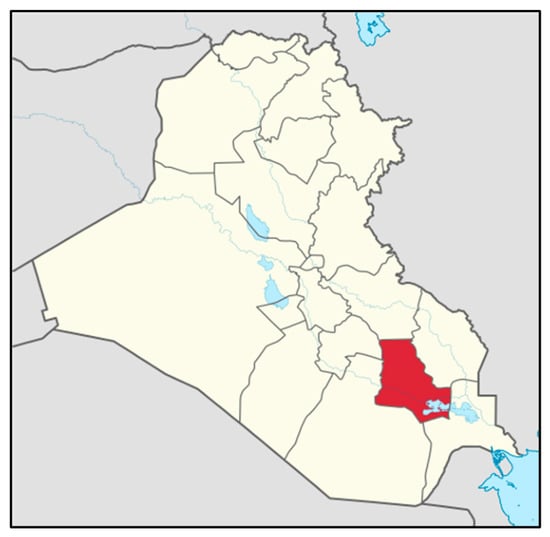
Wind Characteristics and Energy Evaluation at Nasiriya International Airport, Iraq
Wind 2026, 6(3), 35; https://doi.org/10.3390/wind6030035 (registering DOI) - 6 Jul 2026
Abstract
►
Show Figures
In order to reduce aviation’s negative environmental effects and support international efforts to battle climate change, the International Civil Aviation Organization (ICAO) seeks to cut greenhouse gas (GHG) emissions. About 2–3% of the world’s CO2 emissions come from aviation, and at high
[...] Read more.
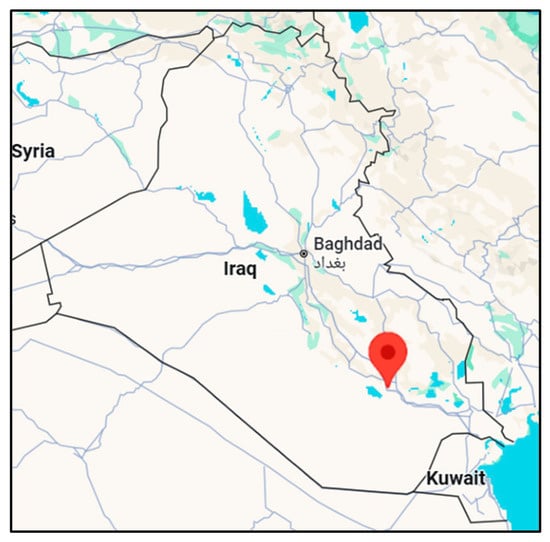
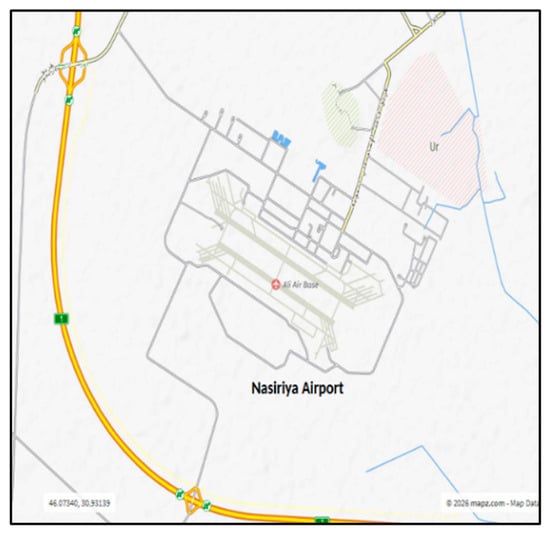
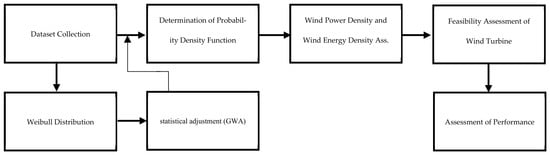
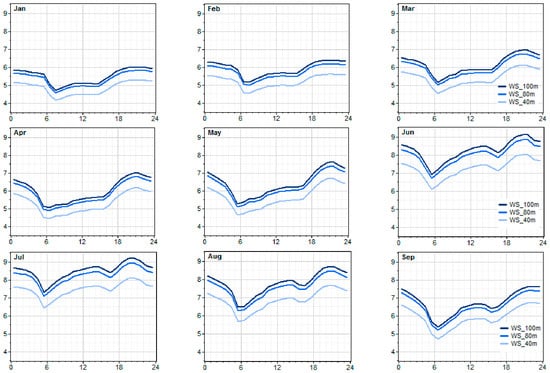
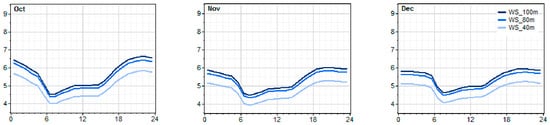
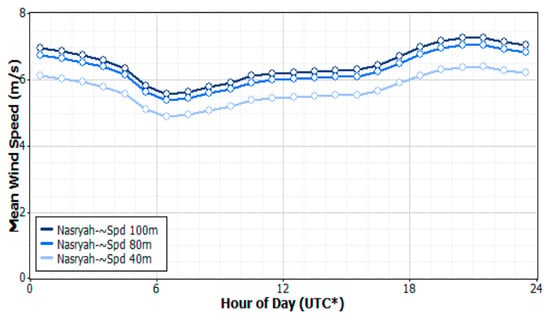
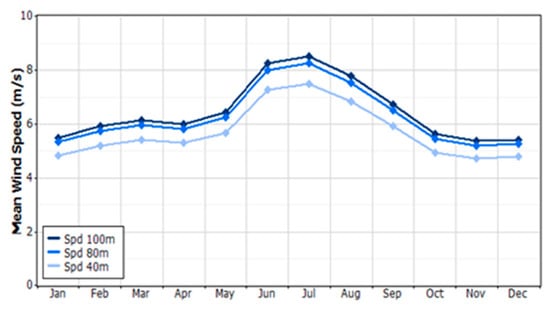
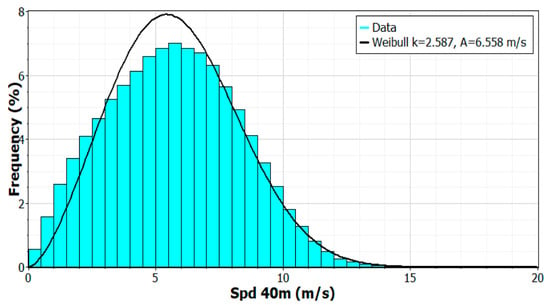
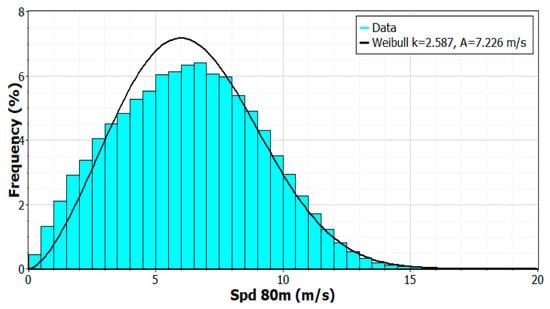
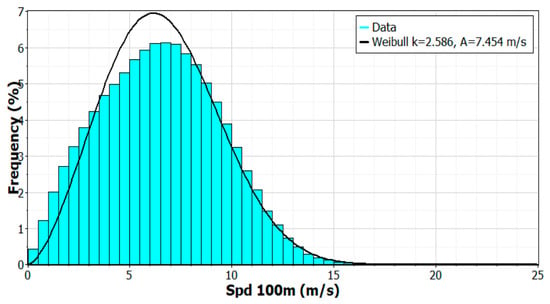
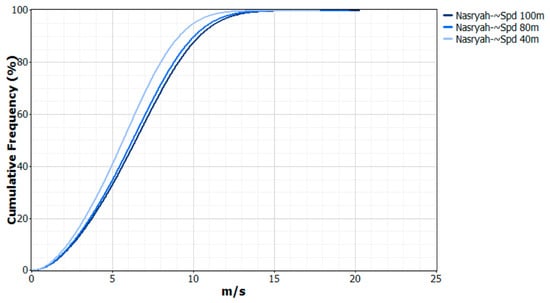
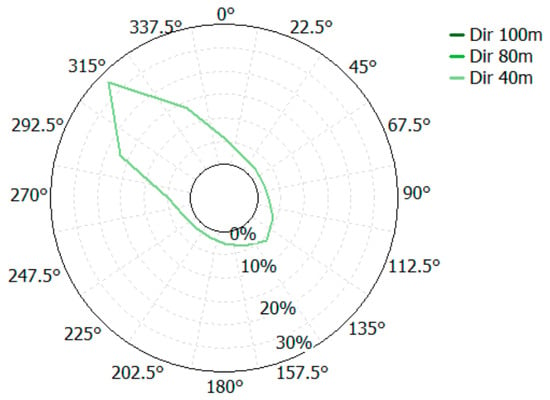
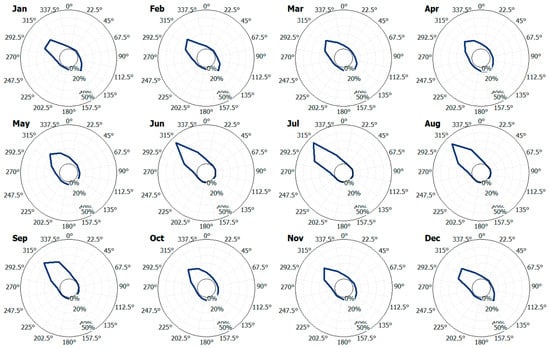
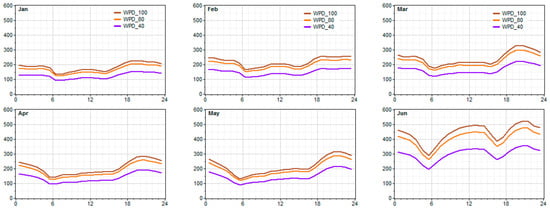
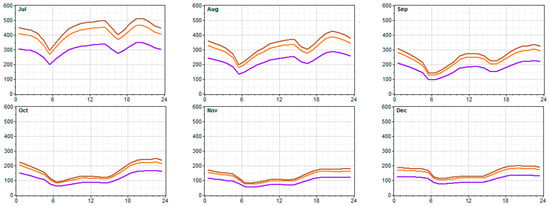
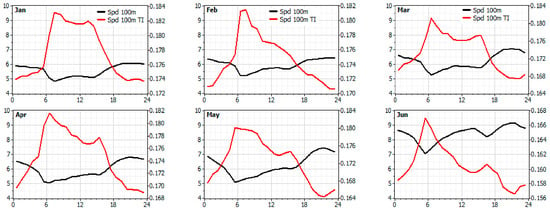
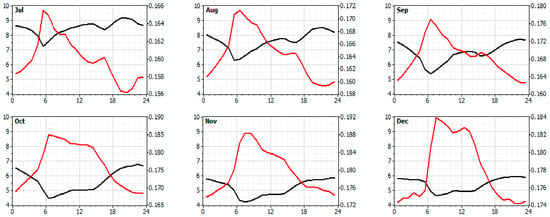
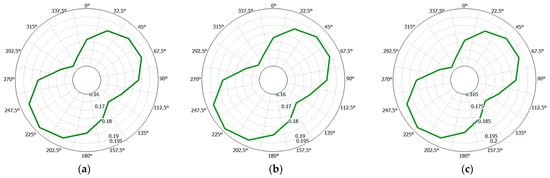
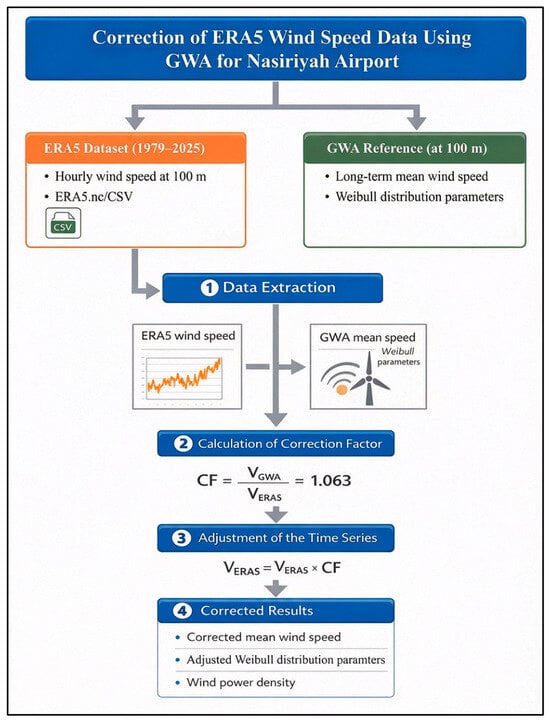
In order to reduce aviation’s negative environmental effects and support international efforts to battle climate change, the International Civil Aviation Organization (ICAO) seeks to cut greenhouse gas (GHG) emissions. About 2–3% of the world’s CO2 emissions come from aviation, and at high altitudes, the fraction of other GHGs that significantly alter the atmosphere is considerably greater. In this study, hourly wind speed data at 100 m height from ECMWF’s fifth-generation reanalysis (ERA-5) were used over a period of 40 years (1985–2025). Hourly assessments of wind speeds at 40 m and 80 m heights are conducted in ERA-5, with biases at specific ground locations rectified via the Global Wind Atlas (GWA). This research estimates and analyzes many factors, including Weibull statistical parameters, daily and monthly wind speed variations, cumulative distribution function (CDF), and atmospheric turbulence intensity. The energy generation from several wind turbine types at different elevations was assessed. The findings indicate that the examined location revealed fair potential for the construction of large-capacity wind energy units at heights equal to or above 80 m. Turbines that are less than 50 m tall are spread out at least 10 km around the airport runway. While turbines that are less than 150 m tall are spread out at least 15 km away from the airport runway.
Full article
Open AccessArticle
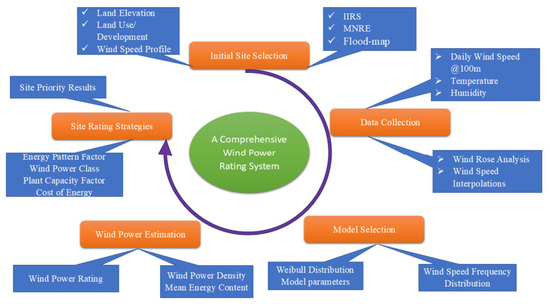
A Comprehensive Analysis of Wind Availability and Power Rating System for Prioritization of Potential Sites Across the Indian States
by
Shafiqur Rehman, Mangottiri Vasudevan, Narayanan N. Salghuna and Narayanan Natarajan
Wind 2026, 6(3), 34; https://doi.org/10.3390/wind6030034 - 3 Jul 2026
Abstract
The success of wind energy projects depends on reliable site selection and cost-effective operation. Existing studies largely focus on either resource potential or standalone economic feasibility, while a unified wind power rating framework for site prioritization across India remains lacking. This study proposes
[...] Read more.
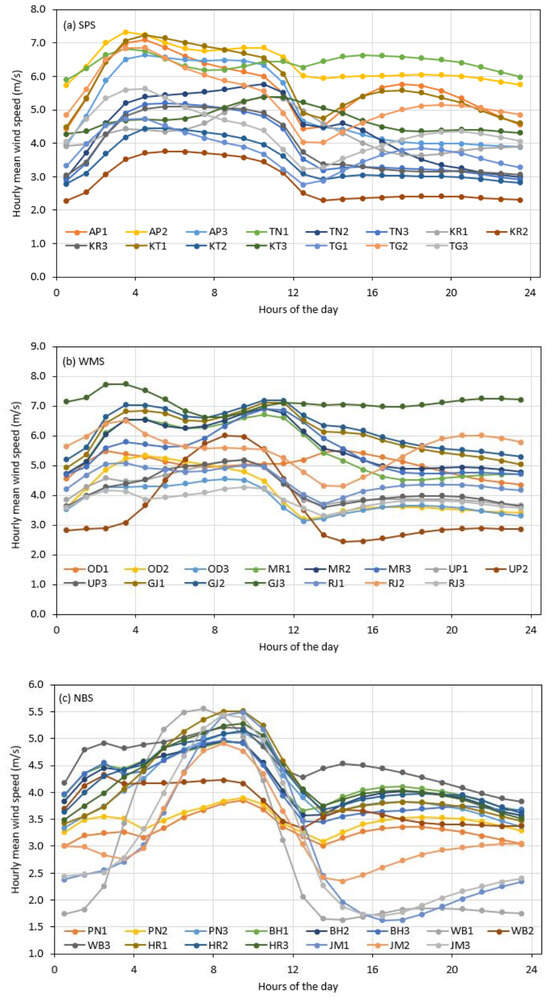
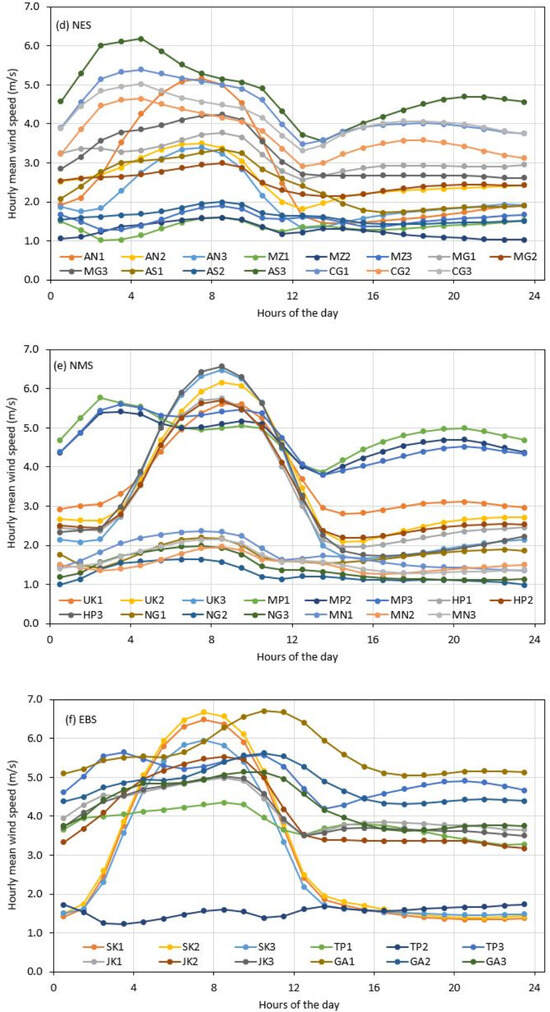
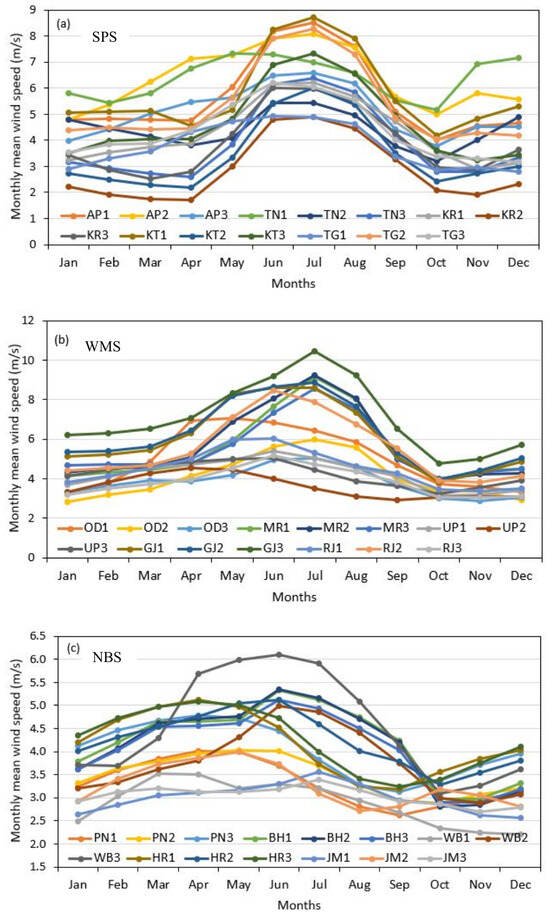
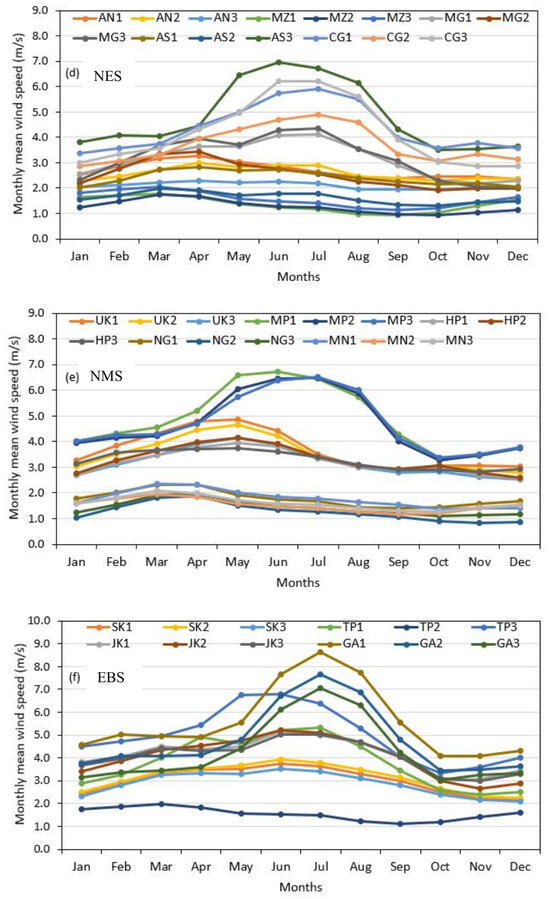
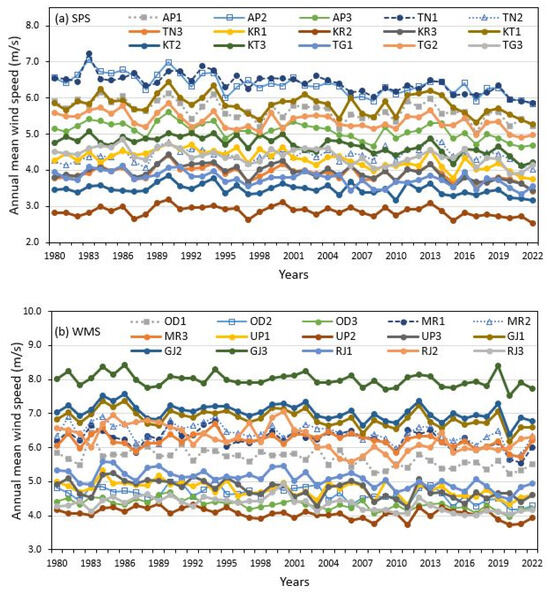
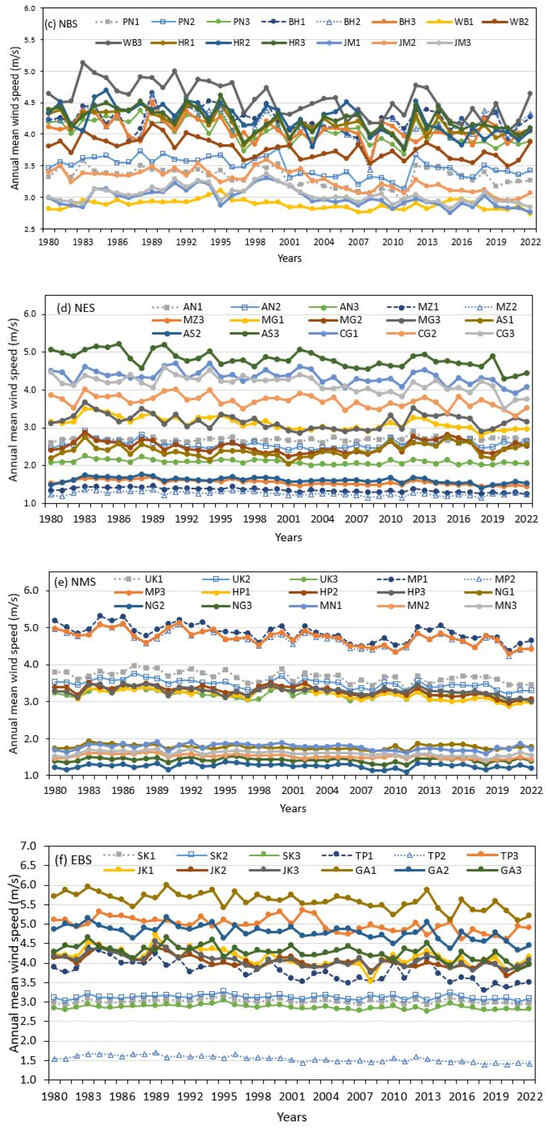
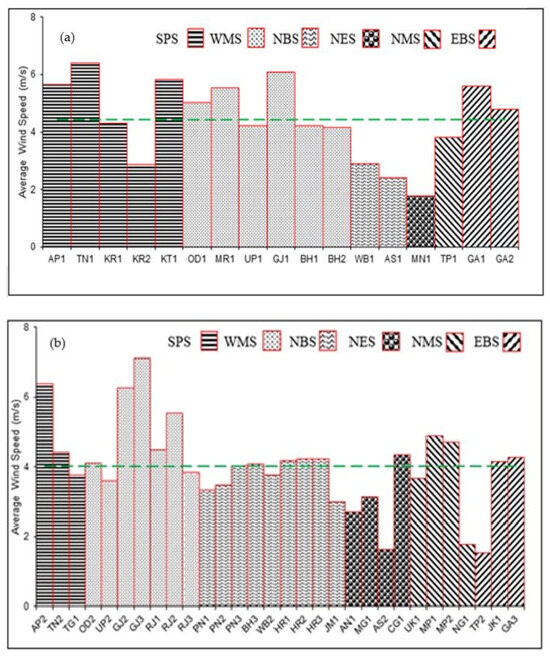
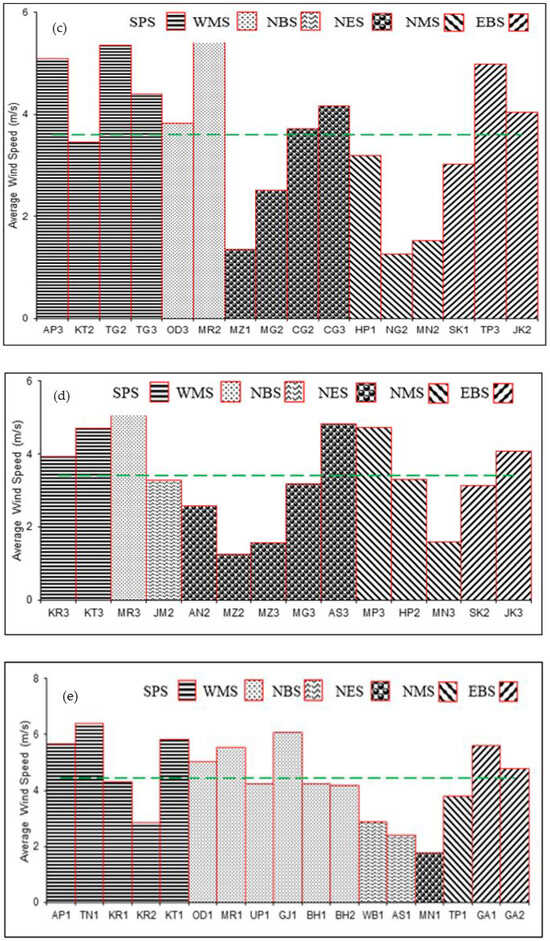
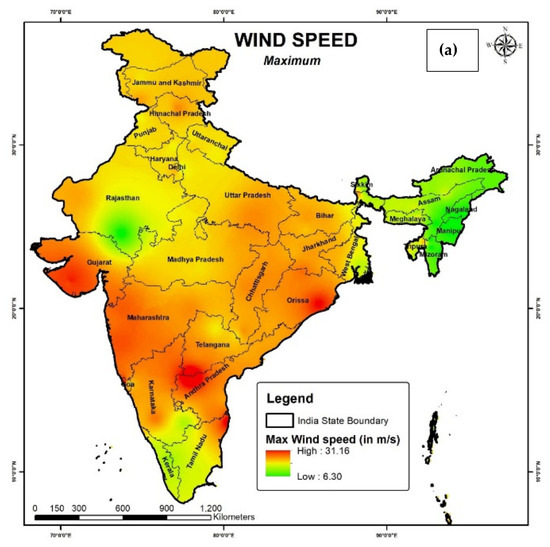
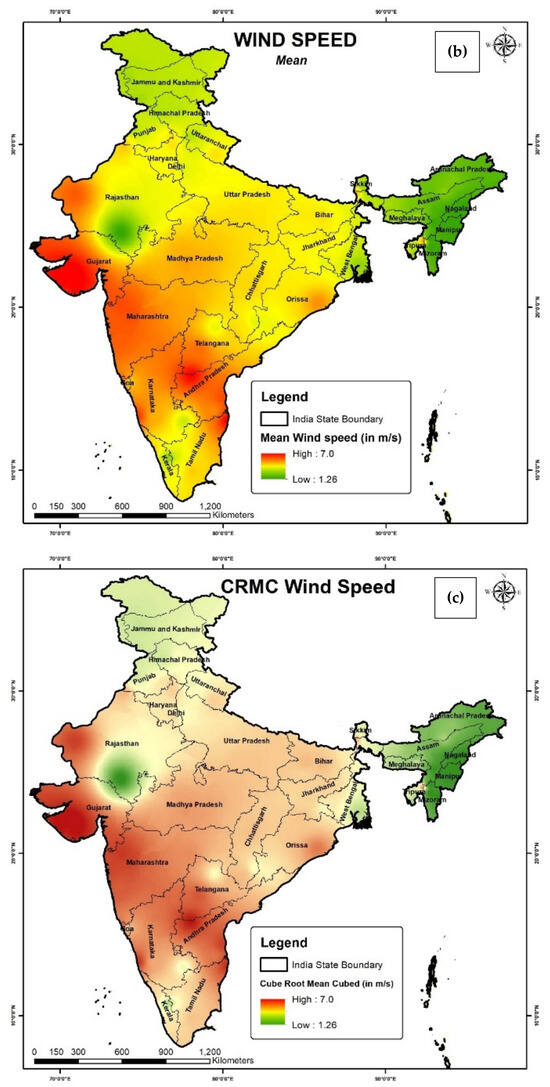
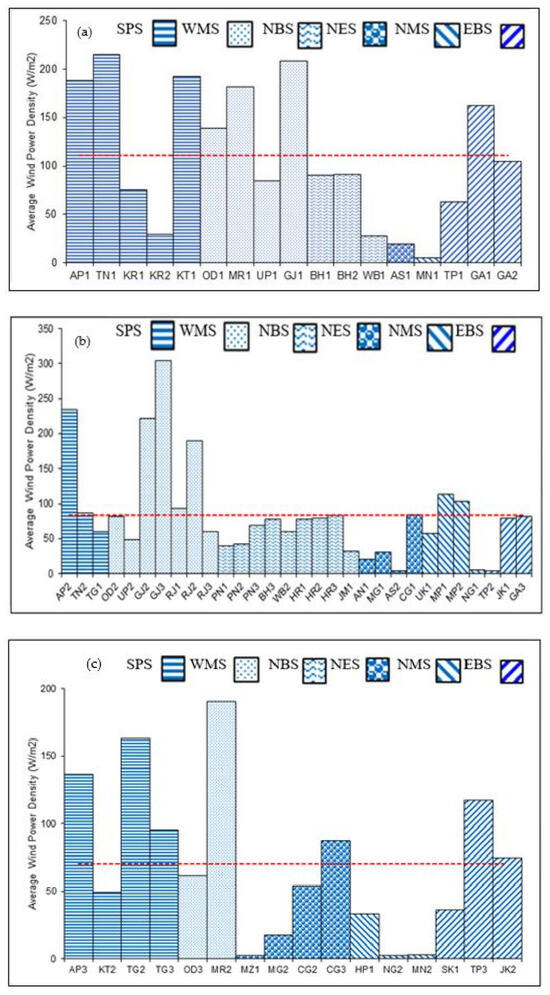
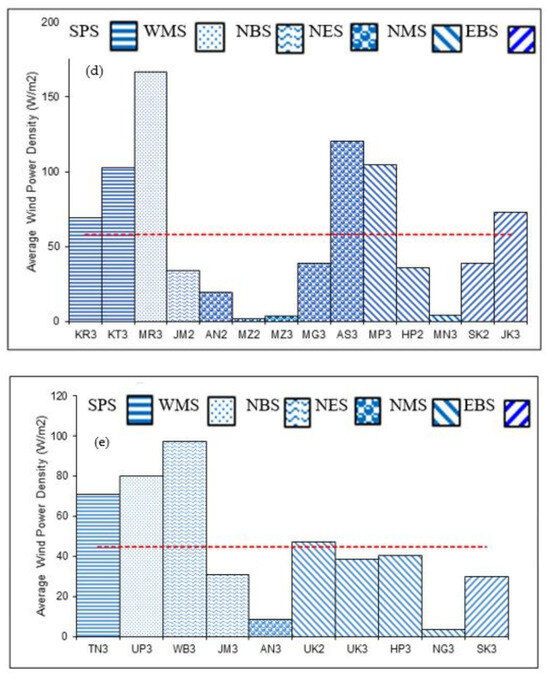
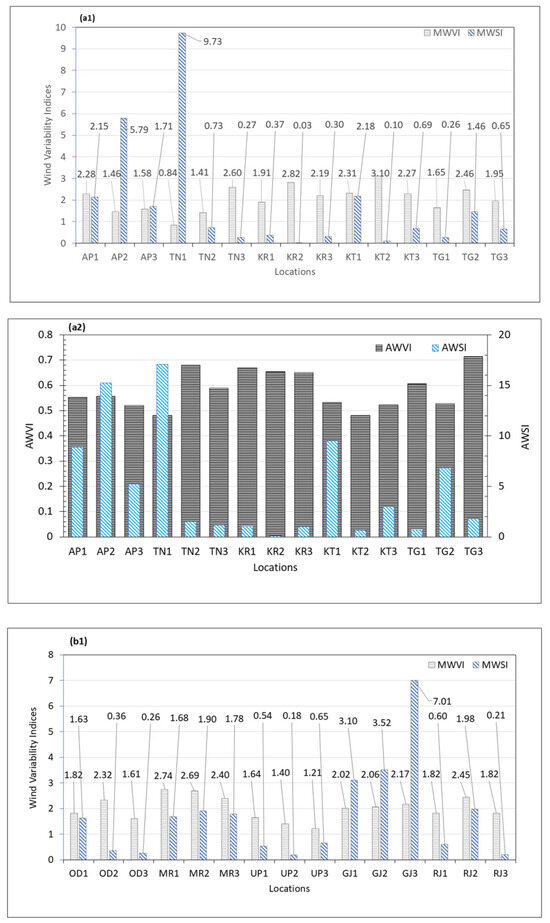
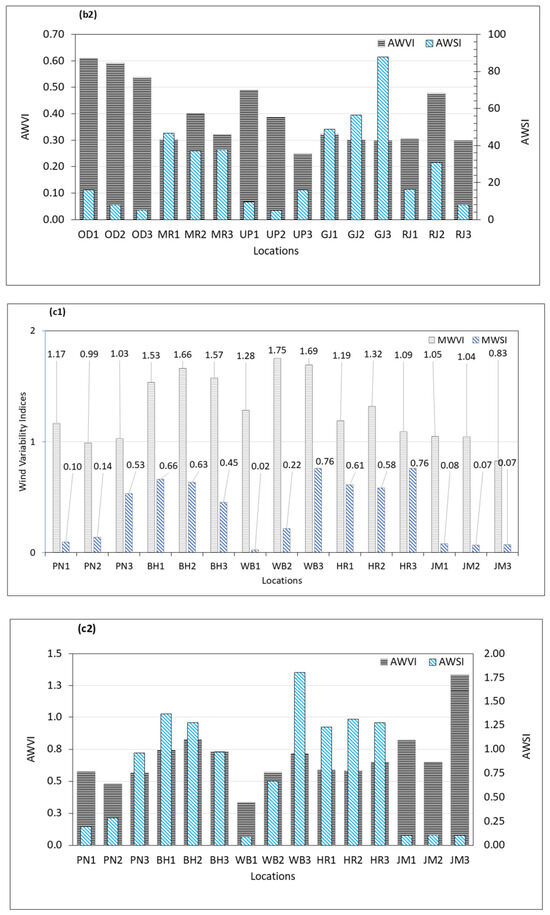
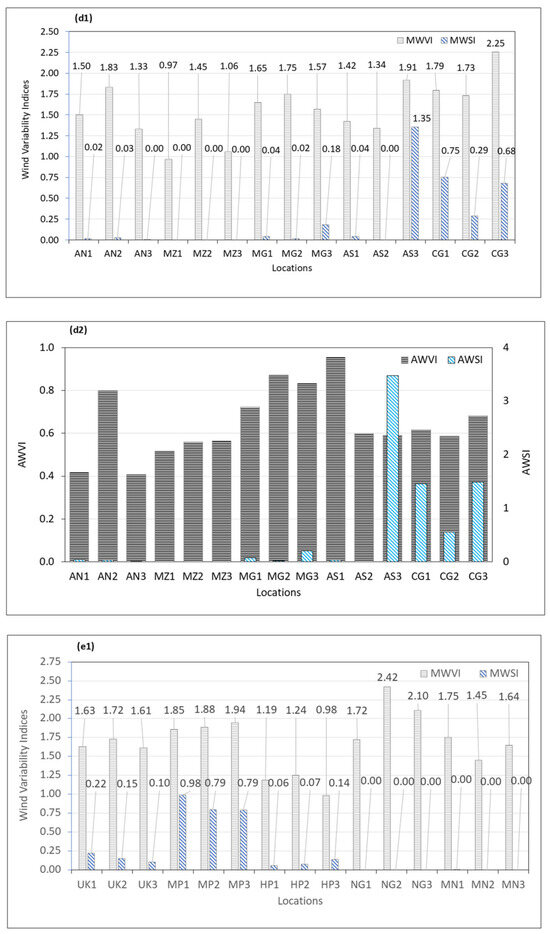
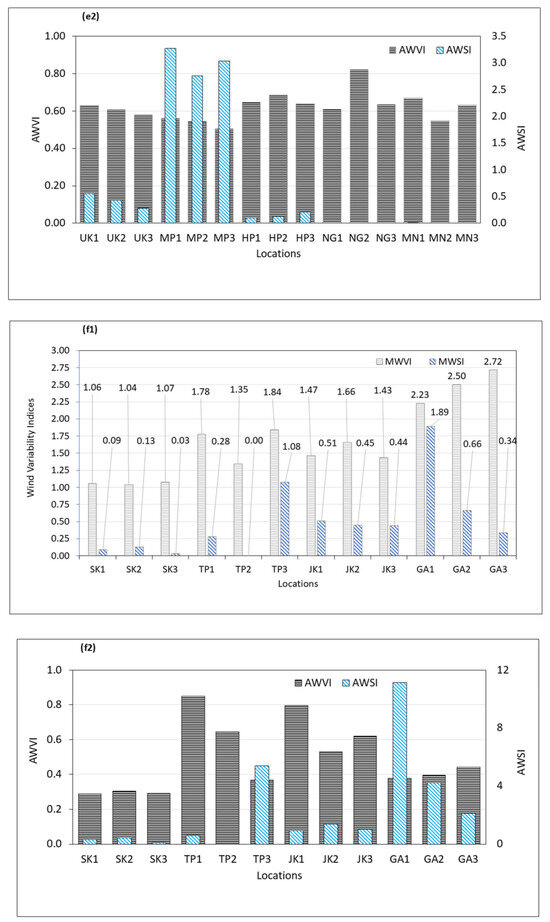
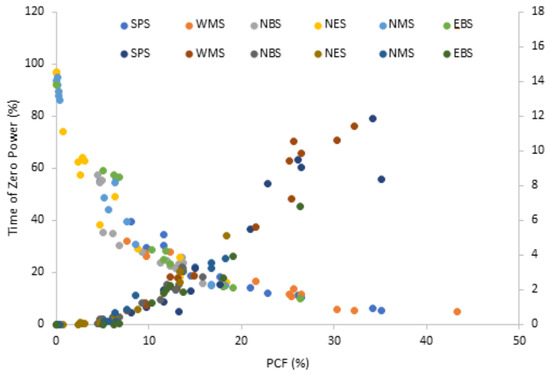
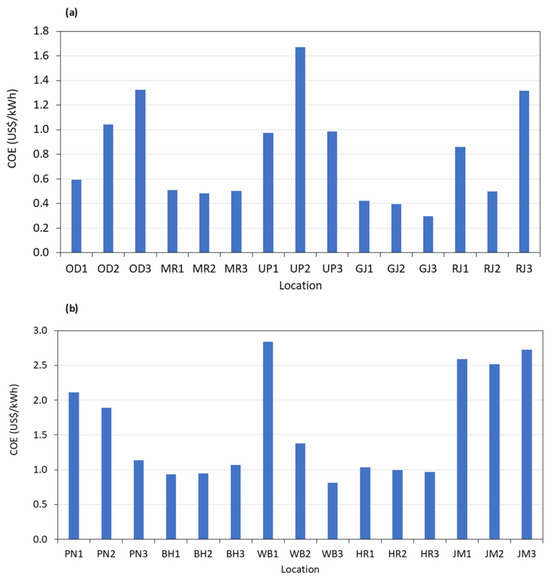
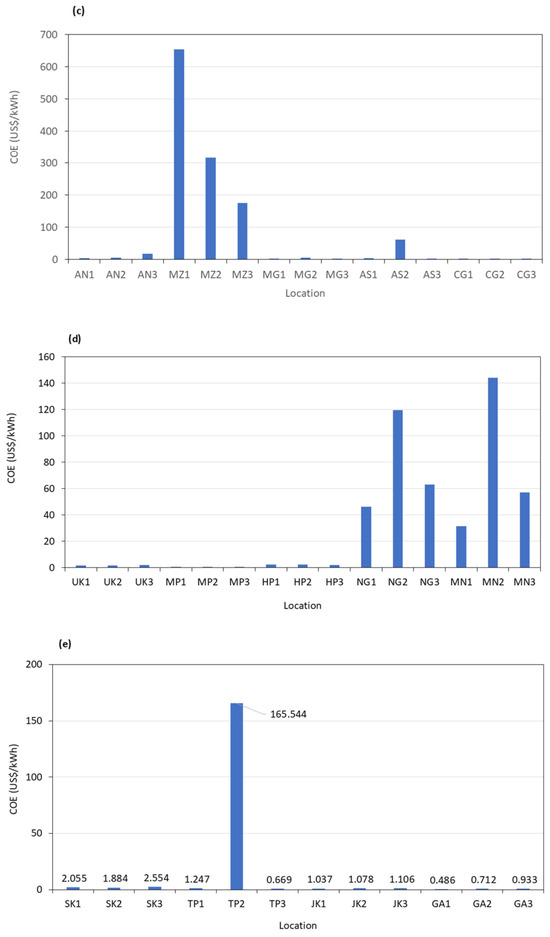
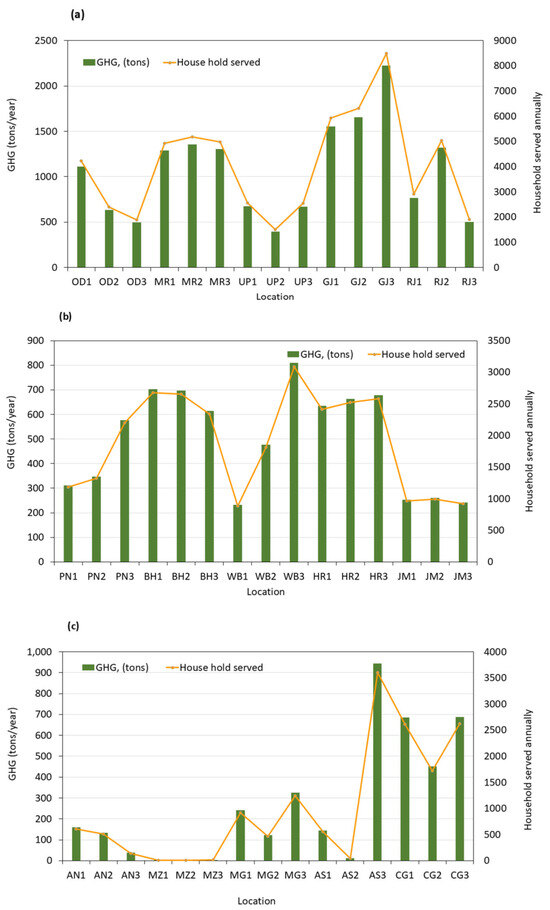
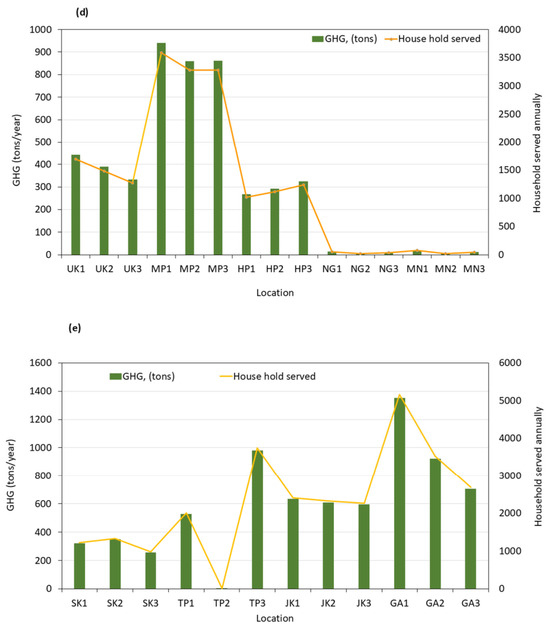
The success of wind energy projects depends on reliable site selection and cost-effective operation. Existing studies largely focus on either resource potential or standalone economic feasibility, while a unified wind power rating framework for site prioritization across India remains lacking. This study proposes a multi-criteria wind power assessment framework and investigates the spatial and scale-dependent variability of wind speed (WS) and wind power density (WPD) over six major regions of India. Hourly WS data were at diurnal, monthly and annual scales to capture atmospheric and seasonal influences. The results reveal significant temporal variabilities in WS and WPD, especially over the southern and western coastal and high-altitude regions during the monsoon months (June–August). The spatial analysis revealed a non-linearly increasing trend for WS with altitude, contrary to the simplifying assumptions. Regions such as the Southern Peninsular States (SPSs) and western middle states (WMSs) show high suitability for large-scale deployment, whereas the Northeastern States (NESs) and parts of northern border states (NBS) exhibit lower potential. The site suitability is further evaluated using wind variability indices such as the wind variability index (WVI) and Windy Site Identifier (WSI), along with the plant capacity factor (PCF), cost of energy (COE), and greenhouse gas (GHG) emissions, enabling a comprehensive and decision-oriented framework for wind energy planning.
Full article
Open AccessArticle
Validation of Dual Scanning LiDAR for Wind Field Reconstruction Under Coastal Atmospheric Conditions
by
Giannis Kissas, George Droukas and Ioannis Panourgias
Wind 2026, 6(3), 33; https://doi.org/10.3390/wind6030033 - 1 Jul 2026
Abstract
This study presents the results of a one-month validation campaign focused on wind field reconstruction using a dual-scanning LiDAR configuration. The measurement campaign was conducted inland, approximately 6 km from the Thracian Sea coast in northeastern Greece, and involved the deployment of two
[...] Read more.
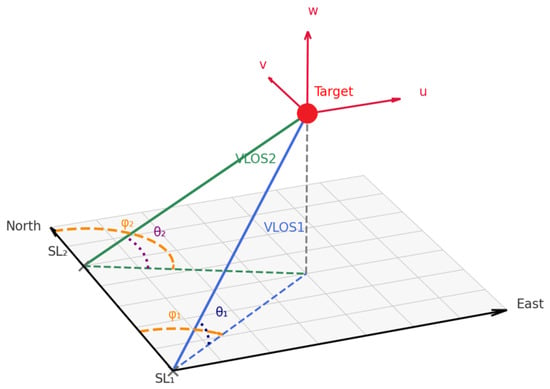
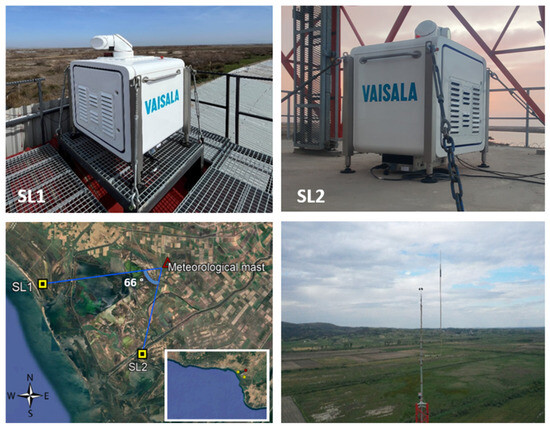
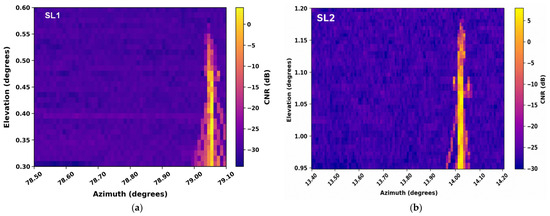
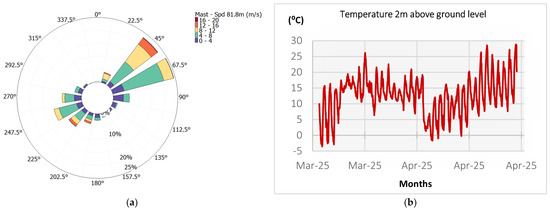
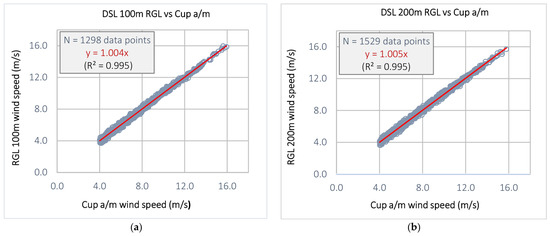
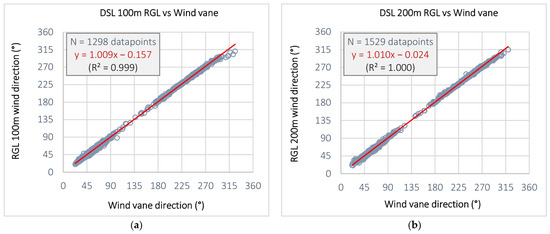
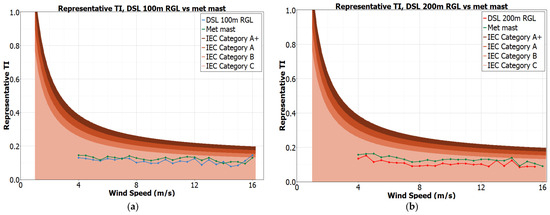
This study presents the results of a one-month validation campaign focused on wind field reconstruction using a dual-scanning LiDAR configuration. The measurement campaign was conducted inland, approximately 6 km from the Thracian Sea coast in northeastern Greece, and involved the deployment of two scanning LiDAR units alongside a reference meteorological mast. Wind conditions were measured at 82 m above ground level, enabling spatially resolved reconstruction of horizontal wind speed and direction. To investigate the sensitivity of wind field reconstruction to probe volume effects, two range gate length configurations—100 m and 200 m—were systematically alternated during the campaign. This alternating strategy enabled a direct comparison under identical atmospheric conditions. The reconstructed wind speed and direction data exhibited excellent agreement with the reference measurements, achieving a coefficient of determination greater than 0.99, and showed negligible systematic bias. Analysis of turbulence characteristics revealed that the dual-scanning LiDAR system underestimated turbulence intensity compared to the reference meteorological mast. These findings underscore the effectiveness of this technology as a cost-efficient and accurate method for coastal wind characterization. Owing to its ability to reliably reconstruct wind fields over long distances, the system holds strong potential for near-shore and offshore applications.
Full article
(This article belongs to the Special Issue Wind Energy Resource Development and the Sustainable Environment)
►▼
Show Figures

Figure 1
Open AccessArticle
Wind–Solar Resource Assessment and Optimal Siting in Desert–Gobi–Wilderness Regions: A Case Study of the Badain Jaran and Kumtag Deserts
by
Bo Wang, Wenqian Xu, Shijie Hu, Mengke Wang, Haoyuan Ma, Xu Zhang and Hongqing Wang
Wind 2026, 6(3), 32; https://doi.org/10.3390/wind6030032 - 1 Jul 2026
Abstract
With the advancement of China’s “dual carbon” targets, Desert–Gobi–Wilderness (DGW) regions have become strategic areas for large-scale renewable energy deployment. However, the intermittency and variability of wind and solar resources pose challenges to power system stability, necessitating systematic evaluation of their characteristics and
[...] Read more.
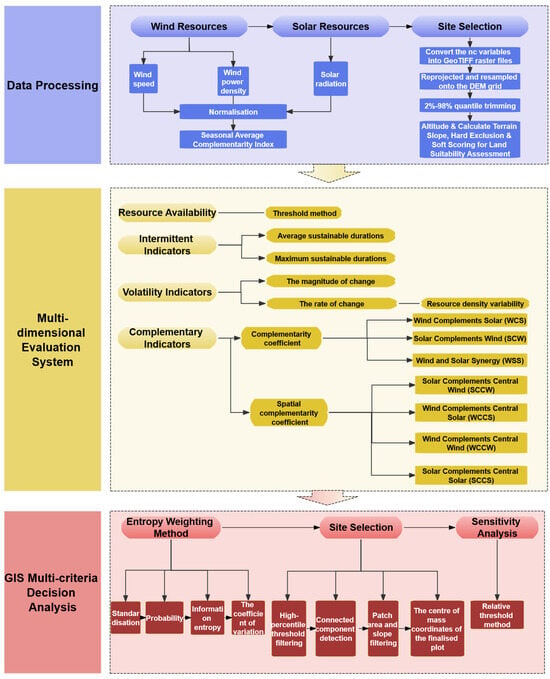
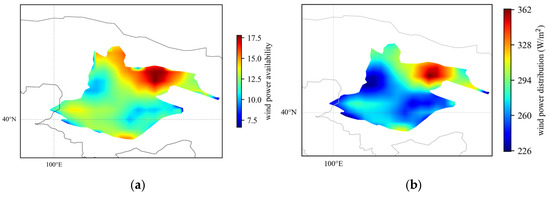
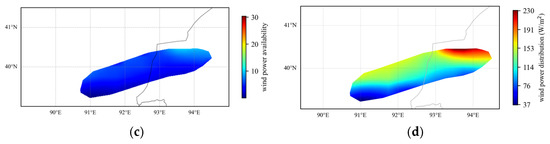
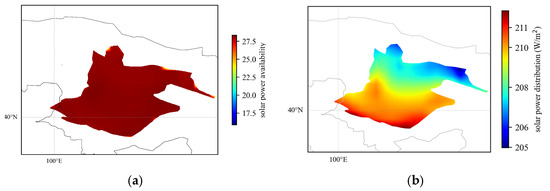
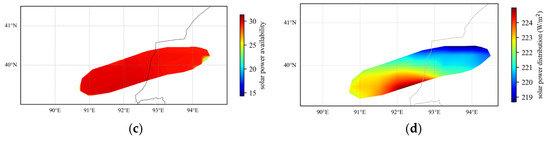
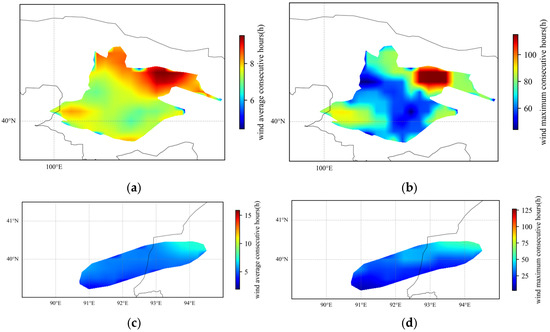
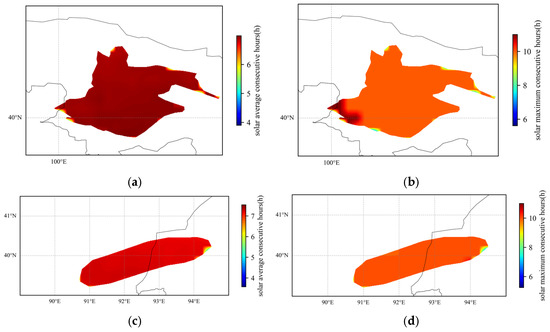
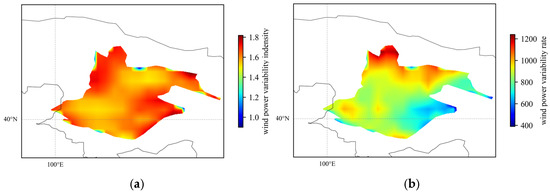
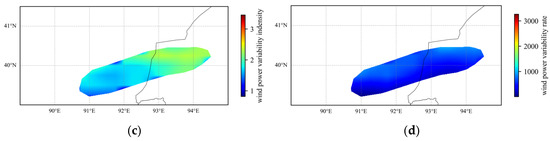
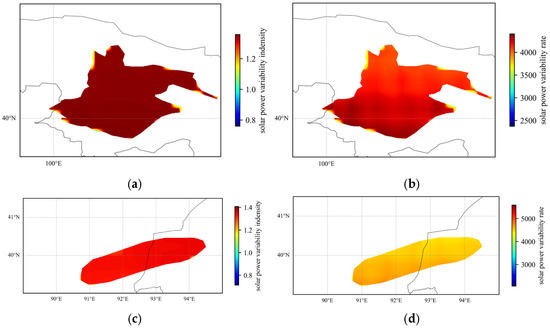
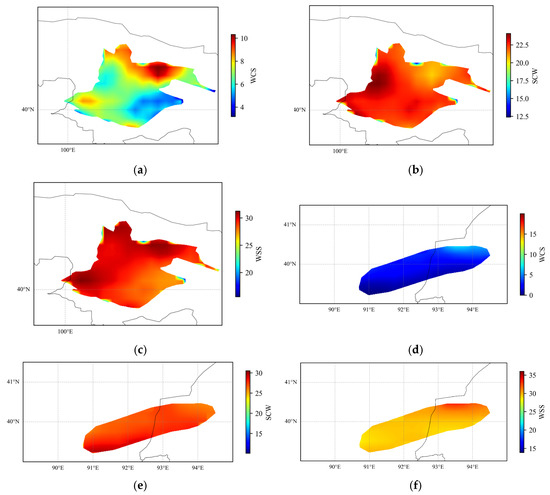
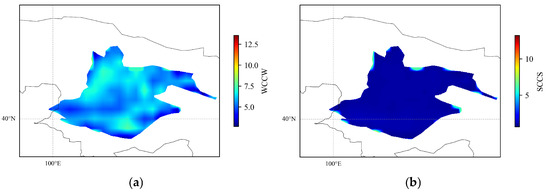
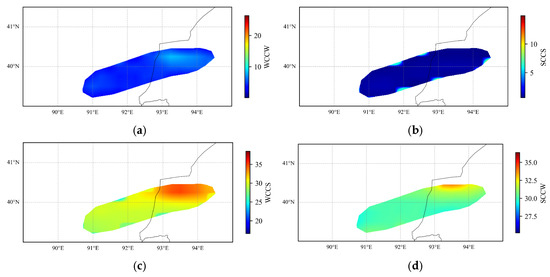
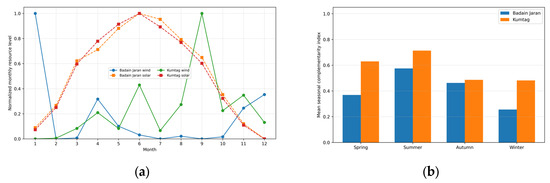
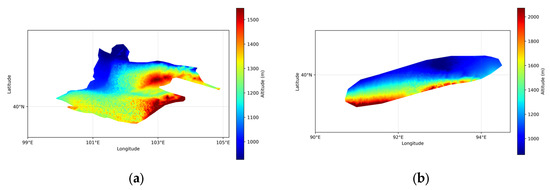
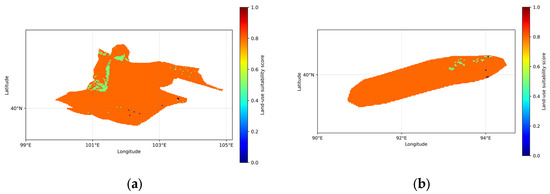
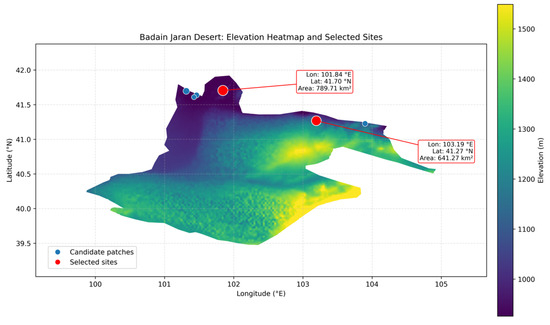
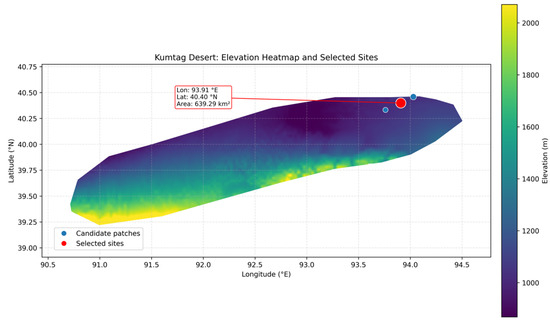
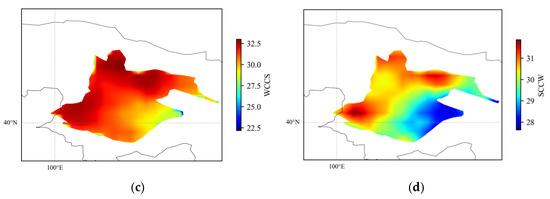
With the advancement of China’s “dual carbon” targets, Desert–Gobi–Wilderness (DGW) regions have become strategic areas for large-scale renewable energy deployment. However, the intermittency and variability of wind and solar resources pose challenges to power system stability, necessitating systematic evaluation of their characteristics and complementarity. This study uses ERA5 reanalysis data (2013–2023) to assess wind and solar resources in the Badain Jaran and Kumtag Deserts. A multi-dimensional framework is developed, incorporating availability, intermittency, variability, and complementarity, and a GIS-based multi-criteria decision-making method is applied for site selection. Results show that the Badain Jaran Desert is characterised by strong wind resources (average wind power density: 235.16 W/m2) and is suitable for wind-dominated development, whereas the Kumtag Desert exhibits superior solar resources (221.08 W/m2), favouring photovoltaic deployment. Significant wind–solar complementarity is identified, particularly in the central-western Badain Jaran and northeastern Kumtag regions. Three high-suitability sites were identified, including two in the Badain Jaran Desert and one in the Kumtag Desert, all characterised by favourable topographic conditions and high engineering feasibility. This study provides a scientific basis and a methodological framework for the planning of wind–solar hybrid systems and coordinated ecological development in DGW regions.
Full article
(This article belongs to the Special Issue Wind Energy Resource Development and the Sustainable Environment)
►▼
Show Figures

Figure 1
Open AccessArticle
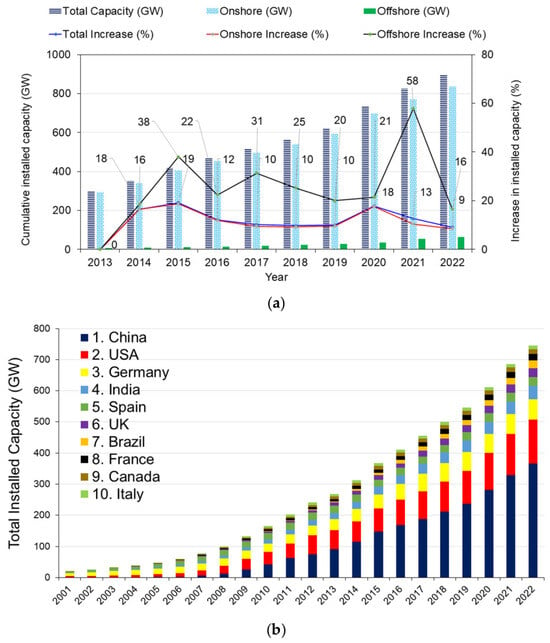
Offshore Wind Development in Brazil: International Drivers, National Challenges, and the Impact of Regulatory Distortions
by
Gustavo Pires da Ponte, Nivalde J. de Castro and Erik Rego
Wind 2026, 6(3), 31; https://doi.org/10.3390/wind6030031 - 1 Jul 2026
Abstract
Offshore wind is expanding globally, driven by energy security and decarbonization goals. Brazil’s world-class potential for this resource is challenged by its unique context: an already clean electricity matrix and abundant, low-cost onshore alternatives, which reduce the immediate urgency for deployment. This paper
[...] Read more.
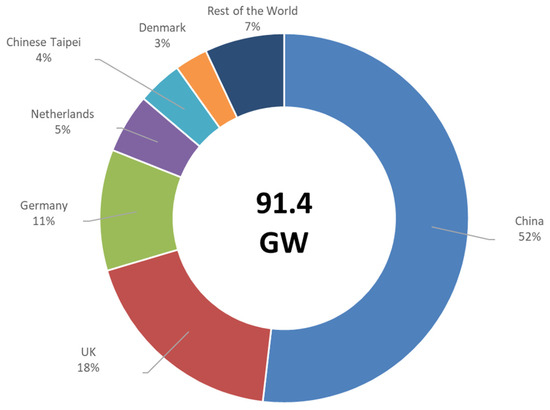
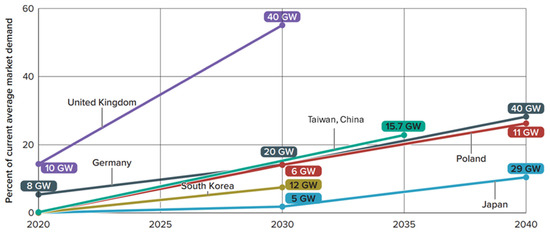
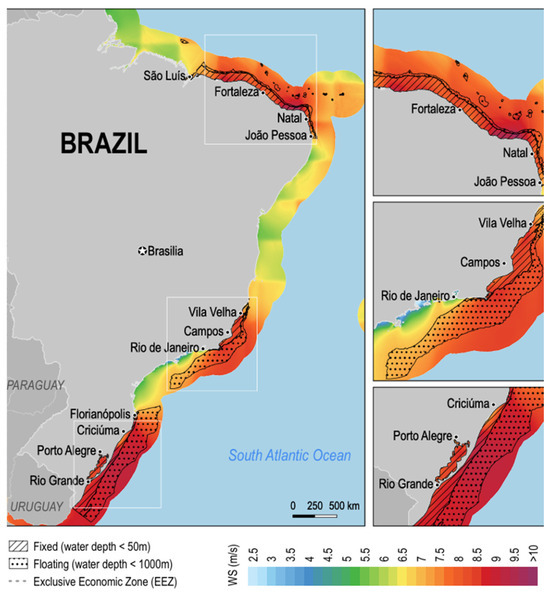
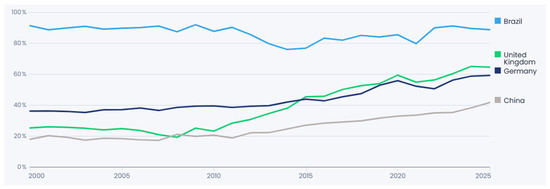
Offshore wind is expanding globally, driven by energy security and decarbonization goals. Brazil’s world-class potential for this resource is challenged by its unique context: an already clean electricity matrix and abundant, low-cost onshore alternatives, which reduce the immediate urgency for deployment. This paper starts with a global offshore wind market analysis, understanding why the main countries pursue this technology, in contrast with Brazil’s already high share of renewable generation. The following examination focuses on Brazil’s recently approved new offshore wind framework and the governance-related issues, revealing that the legislative process was distorted by unrelated riders mandating costly, non-competitive energy procurement. These riders threatened to absorb future market growth, undermining competition and jeopardizing the emergence of the entire offshore wind industry. While presidential vetoes of these riders were essential to preserve this opportunity, remaining market distortions still favor mature technologies. The study concludes that Brazil’s primary barrier to offshore wind is not technical or resource-based but institutional: the need for stable, transparent governance to foster a truly competitive and predictable policy environment.
Full article
(This article belongs to the Special Issue Wind Energy Resource Development and the Sustainable Environment)
►▼
Show Figures

Figure 1
Open AccessArticle
Development in Surrogate-Based Polynomial Chaos with Adaptive Sobol Sensitivity Analysis for Uncertainty Quantification and Offshore 15 MW Wind Turbine Performance Prediction: Comparative, Icing, and Wind Farm Optimization Studies
by
Mohamed Haris Baghli, Tewfik Baghdadli and Zakarya Ziani
Wind 2026, 6(2), 30; https://doi.org/10.3390/wind6020030 - 10 Jun 2026
Abstract
Accurate performance prediction for large offshore wind turbines requires a principled treatment of uncertainty in both the wind resource and the rotor design parameters. In the present work, we develop a surrogate-based, multi-level uncertainty quantification (UQ) framework coupling a physics-based Blade Element Momentum
[...] Read more.
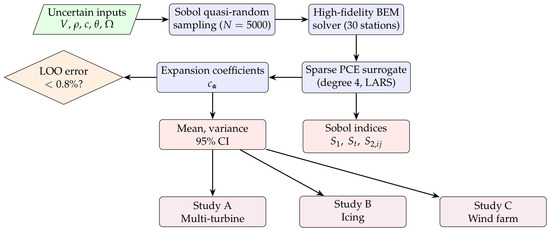
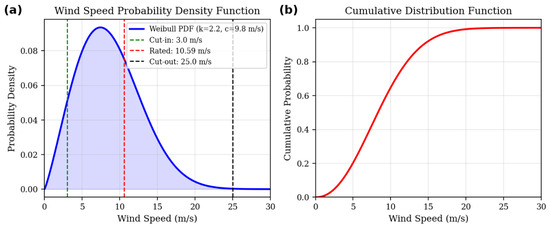
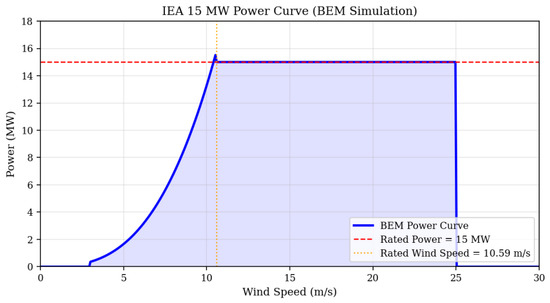
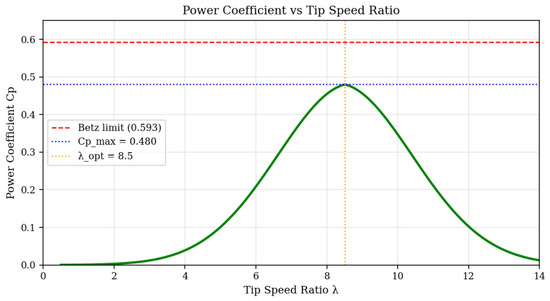
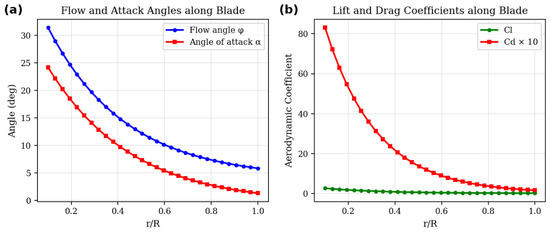
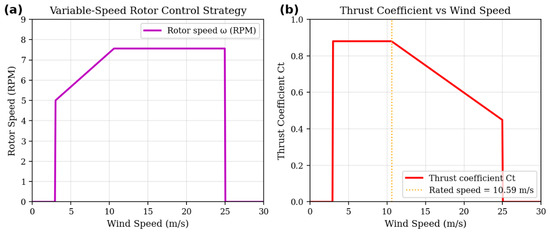
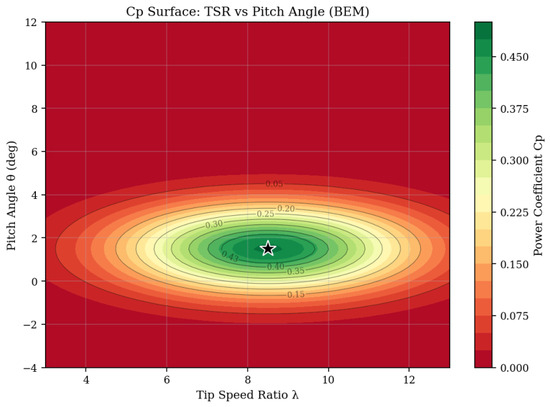
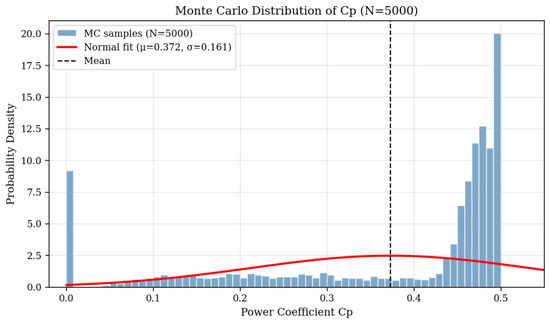
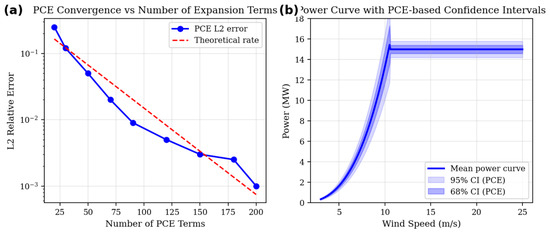
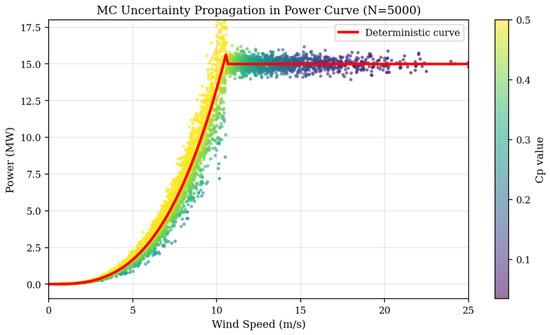
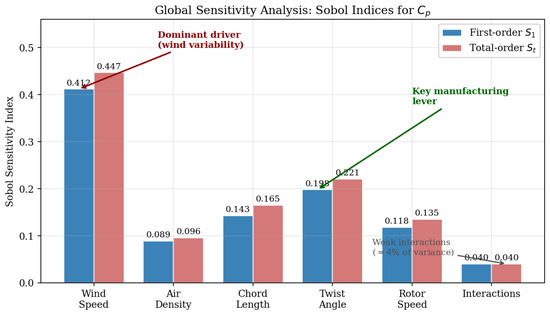
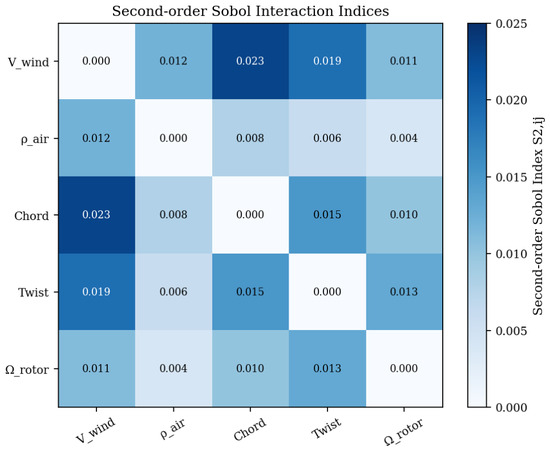
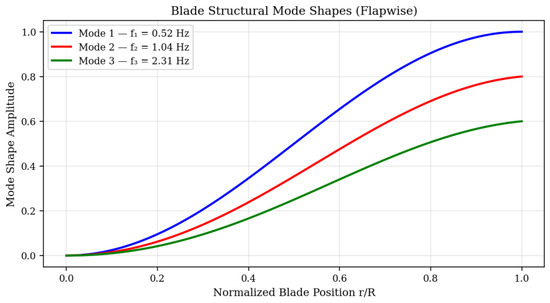
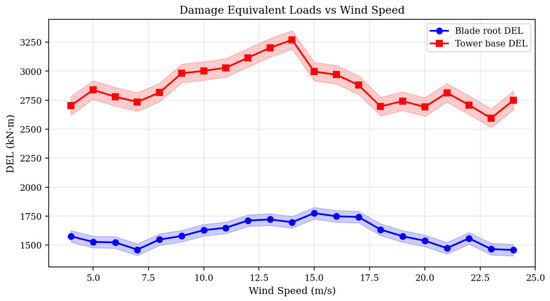
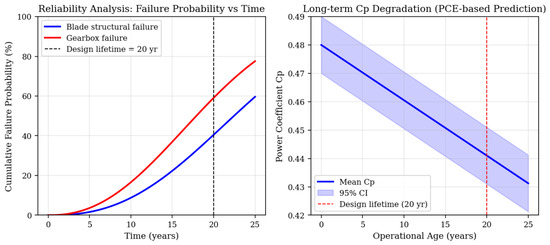
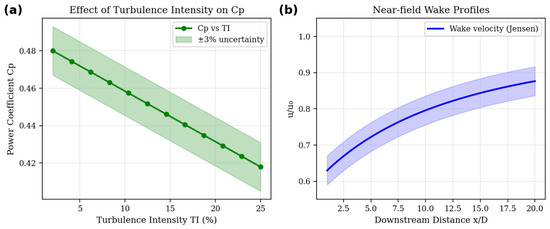
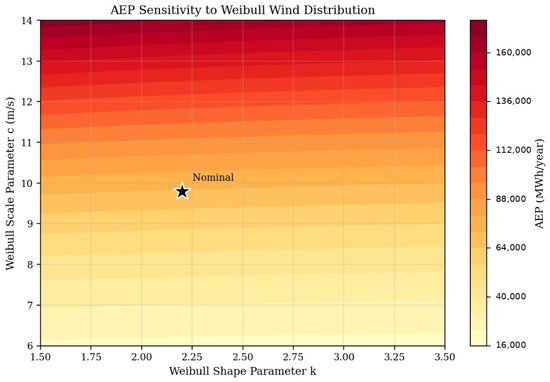
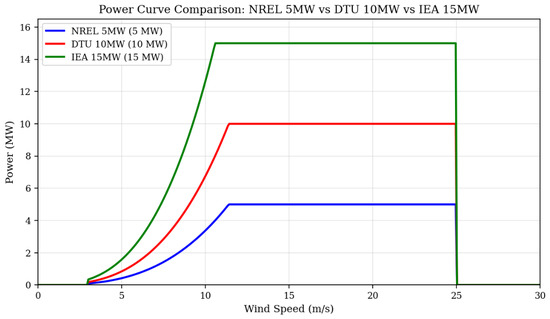
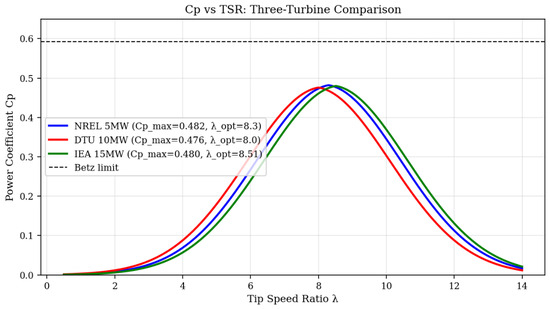
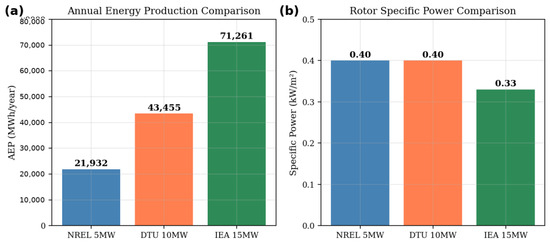
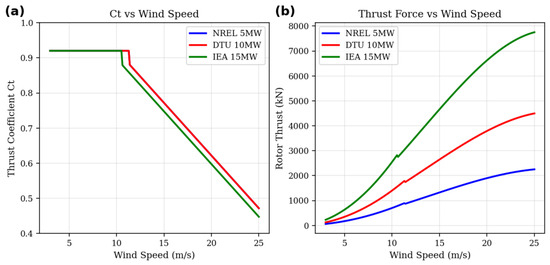
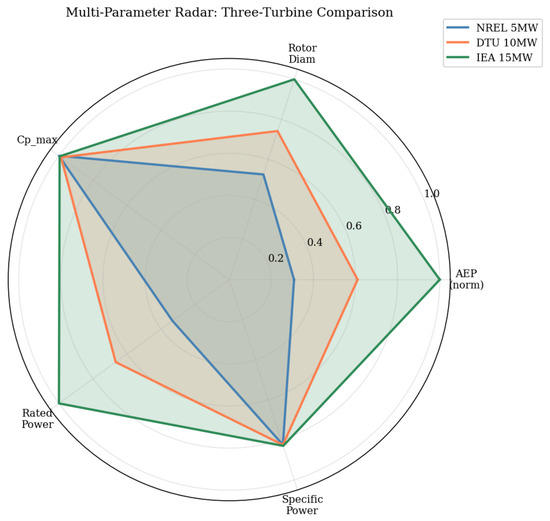
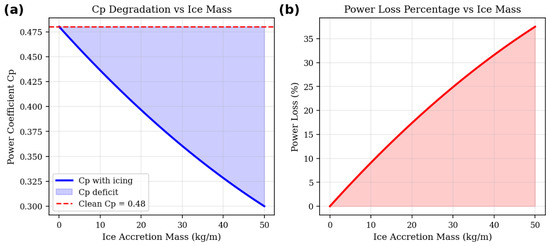
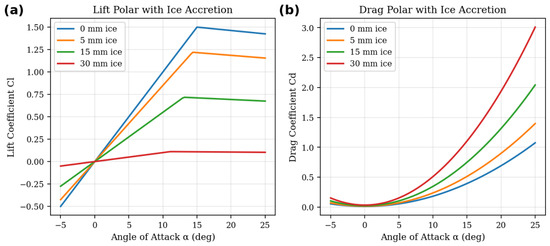
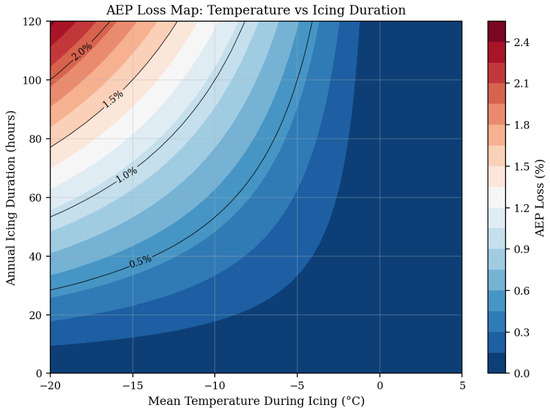
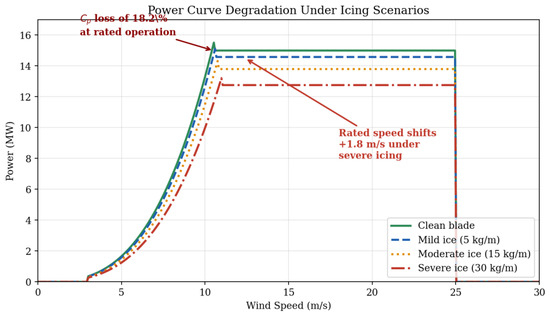
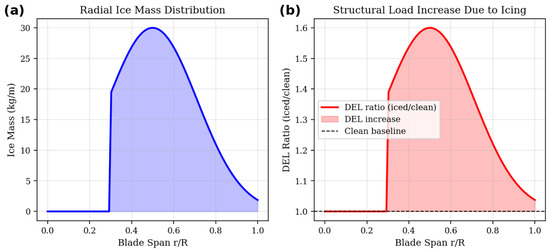
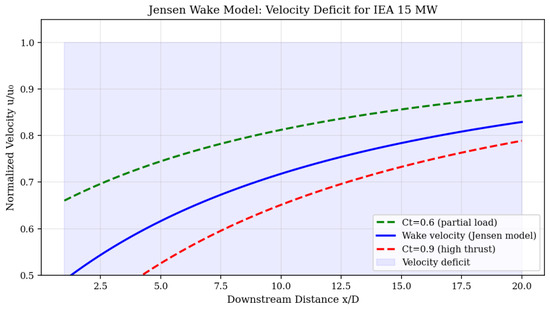
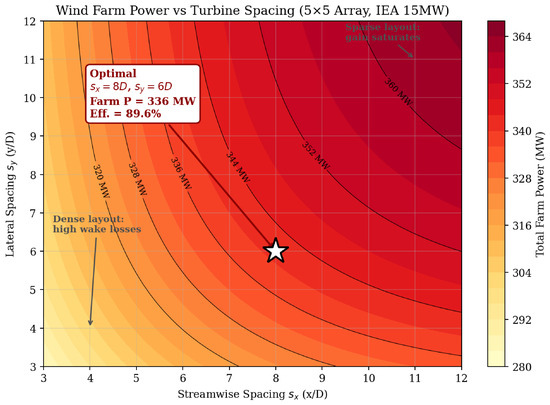
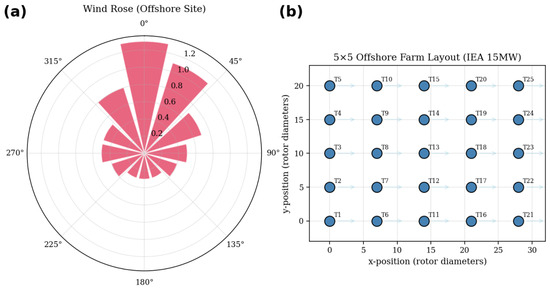
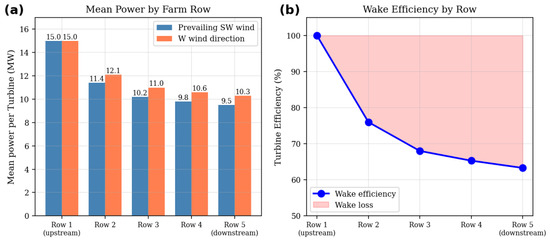
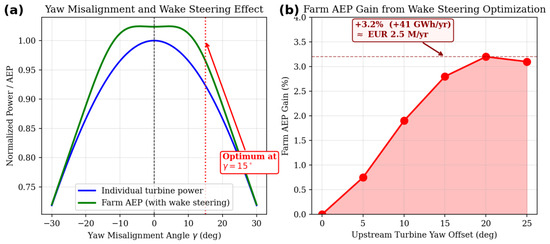
Accurate performance prediction for large offshore wind turbines requires a principled treatment of uncertainty in both the wind resource and the rotor design parameters. In the present work, we develop a surrogate-based, multi-level uncertainty quantification (UQ) framework coupling a physics-based Blade Element Momentum (BEM) solver with a spectral Polynomial Chaos Expansion (PCE) surrogate that replaces the expensive Monte Carlo loop and apply it to the IEA 15 MW offshore reference wind turbine. The framework is completed by Sobol variance-based global sensitivity analysis. The contribution is methodological rather than algorithmic: although each individual ingredient (PCE, Sobol, BEM, and Jensen) is well established, their joint deployment in a single, internally consistent, end-to-end probabilistic workflow that simultaneously delivers (i) aerodynamic–structural UQ with analytical Sobol ranking, (ii) a like-for-like cross-comparison of three reference turbines, (iii) a quantitative leading-edge icing degradation study, and (iv) a farm-level wake-steering optimization on the same IEA 15 MW reference rotor yields a unified probabilistic envelope from which manufacturing tolerances, cold-climate investment thresholds, and farm-layout/control trade-offs can be read off consistently. Five input parameters are treated as random variables: hub-height wind speed (Weibull, k = 2.2, c = 9.8 m/s), air density, blade chord length, twist angle, and rotor speed. A degree-4 sparse PCE is built by non-intrusive spectral projection using N = 5000 Sobol quasi-random realizations, which allows the Sobol indices to be recovered analytically from the expansion coefficients at essentially no extra cost. Three parallel engineering studies complement the core UQ analysis: (A) a head-to-head comparison of the NREL 5 MW, DTU 10 MW, and IEA 15 MW reference turbines; (B) a quantitative assessment of leading-edge ice accretion at four severity levels; and (C) a Jensen-based wake optimization for a 25-turbine offshore array with static wake steering. The main results are as follows: the turbine reaches Cp,max = 0.480 at λopt = 8.51, and an annual energy production (AEP) of 71,261 MWh/year (PCE: 70,840 ± 2,140 MWh/year, 95% CI). Wind speed emerges as the dominant driver of Cp variance (S1 = 0.412), followed by blade twist (0.198) and chord (0.143). Severe icing (30 kg/m) reduces Cp by 18.2% and increases the blade-root Damage Equivalent Load (DEL) by 18.5%. For the array, the optimal spacing (sx = 8D, sy = 6D) gives a farm efficiency of 89.6% and 1296 GWh/year, and a 15° wake-steering offset adds a further +3.2% to farm AEP. Compared with plain Monte Carlo, the sparse PCE delivers the same statistics with about 36% fewer model evaluations and a relative error below 0.8%.
Full article
(This article belongs to the Topic Advances in Hydraulic, Wind, and Photovoltaic Power Generation Systems)
►▼
Show Figures

Figure 1
Open AccessArticle
Optimization of Hybrid Energy Storage for Split-Shaft Wind Systems
by
Rasoul Akbari and Afshin Izadian
Wind 2026, 6(2), 29; https://doi.org/10.3390/wind6020029 - 9 Jun 2026
Abstract
►▼
Show Figures
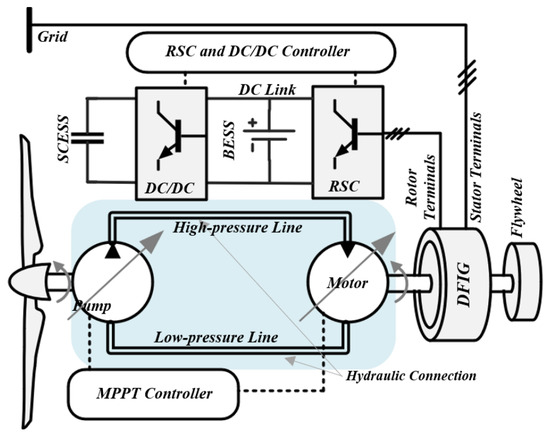
This paper introduces a new combination of hybrid energy storage in a split-shaft wind energy conversion system based on a hydraulic transmission system. In the hybrid energy storage, a flywheel, supercapacitor, and battery are integrated into the wind energy conversion system with minimal
[...] Read more.
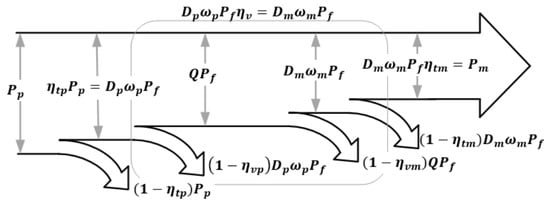
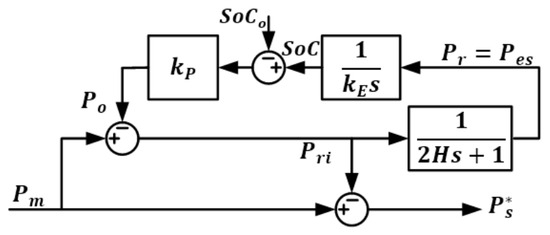
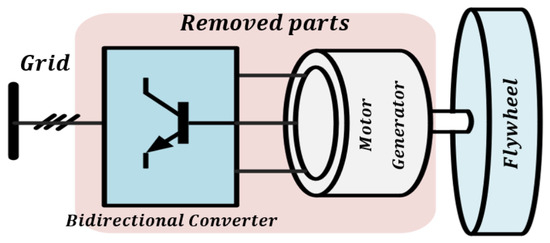
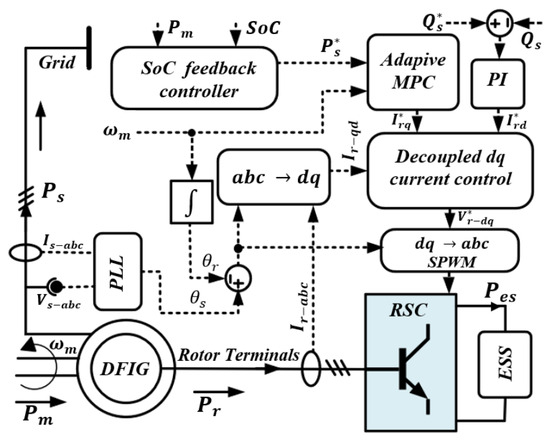
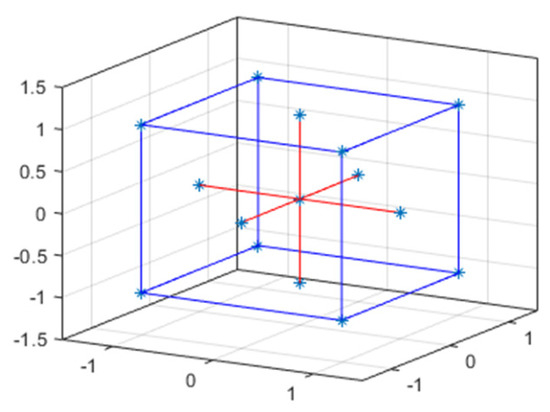
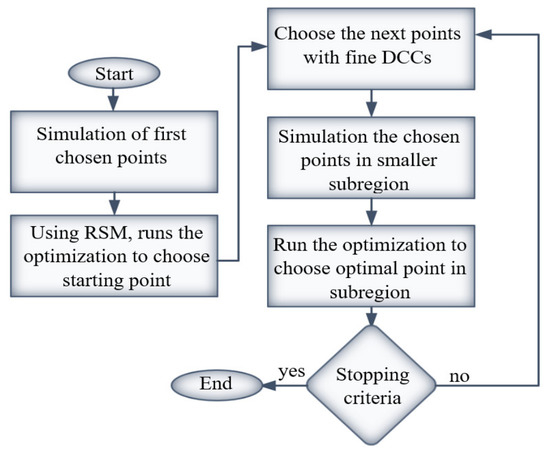
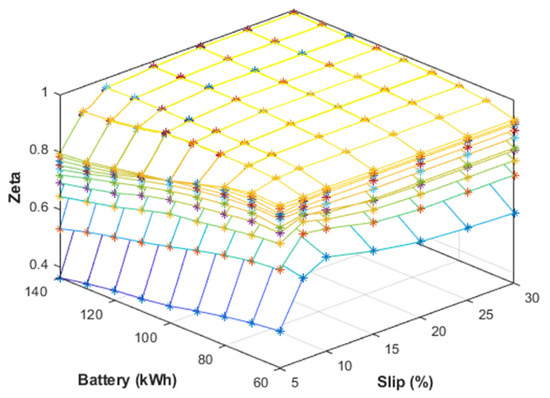
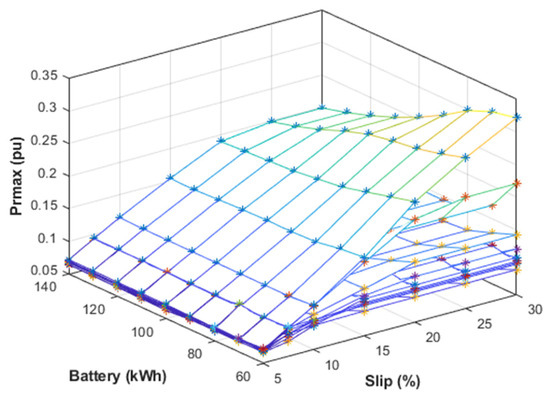
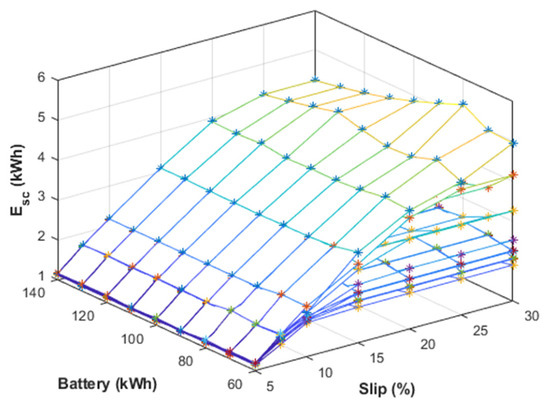
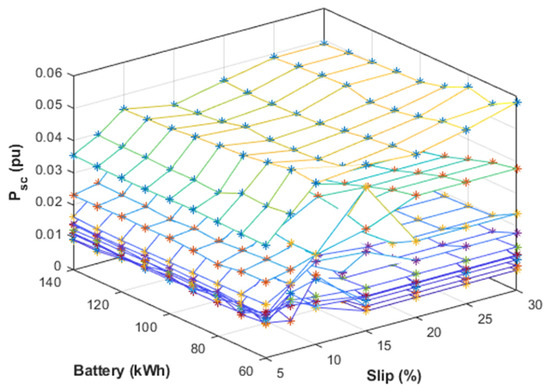
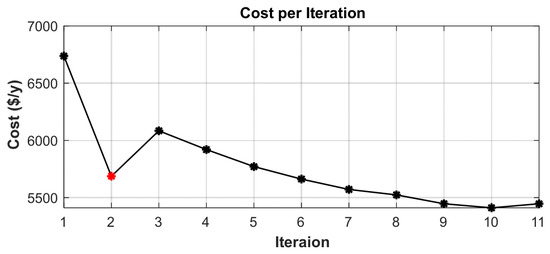
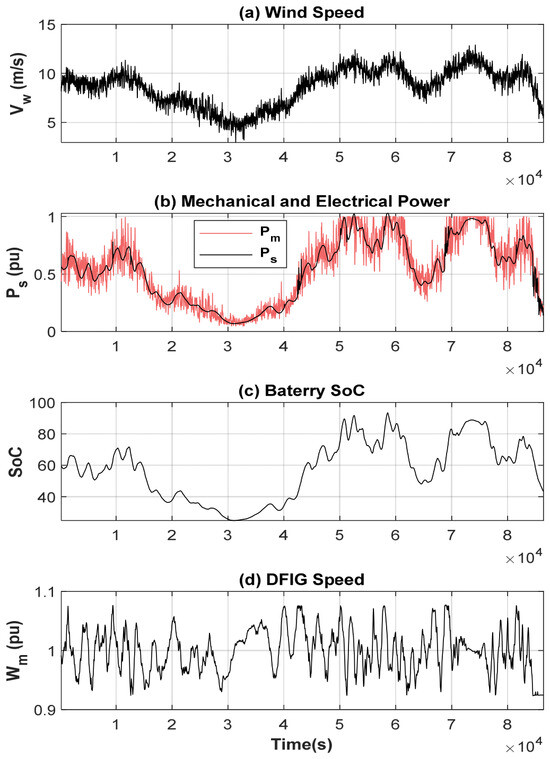
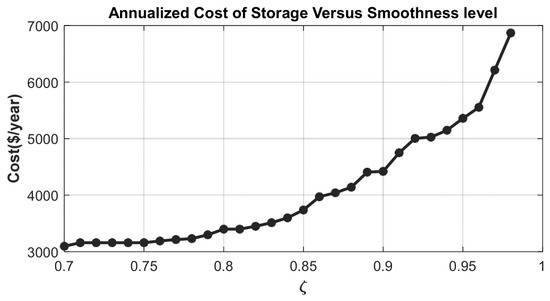
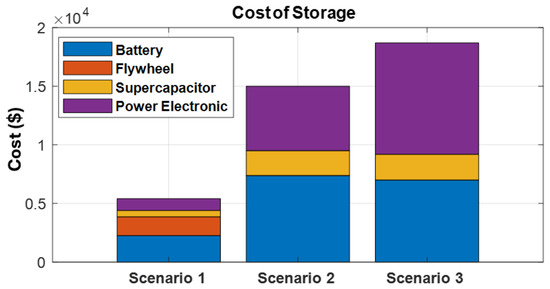
This paper introduces a new combination of hybrid energy storage in a split-shaft wind energy conversion system based on a hydraulic transmission system. In the hybrid energy storage, a flywheel, supercapacitor, and battery are integrated into the wind energy conversion system with minimal additional supporting hardware. The split-shaft configuration allows the direct connection of the flywheel to the doubly fed induction generator (DFIG) shaft without a power electronic converter. The principal operation and minimization of this hybrid storage, as well as the energy management strategy, are explained. The goal is to smooth out output power fluctuations using the response surface method. A 1.5 MW hydraulic wind turbine is simulated in Matlab 23, and the hybrid storage is configured and optimized. The direct connection of the flywheel facilitates reaching a suitable level of smoothness at a reasonable cost. The proposed configuration is compared with conventional storage, and the results demonstrate that the integrated hybrid energy storage reduces the annualized storage cost by 71%.
Full article

Figure 1
Open AccessArticle
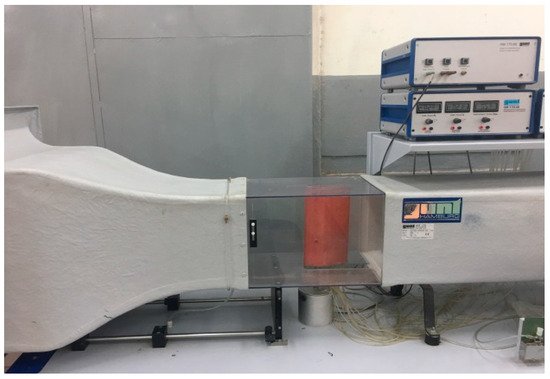
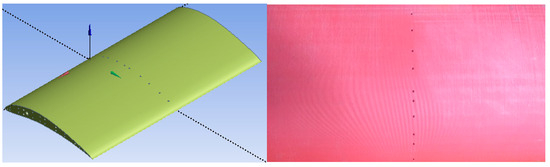
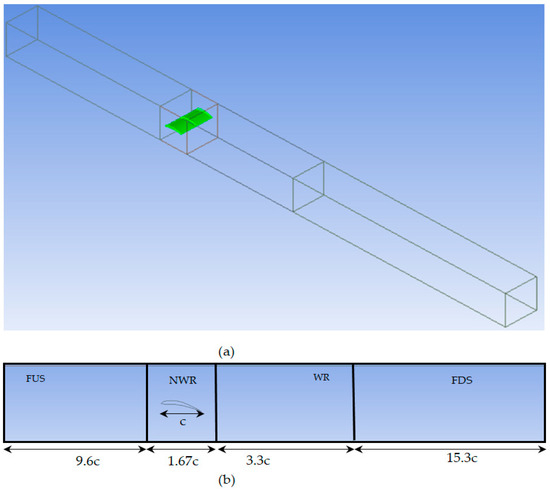
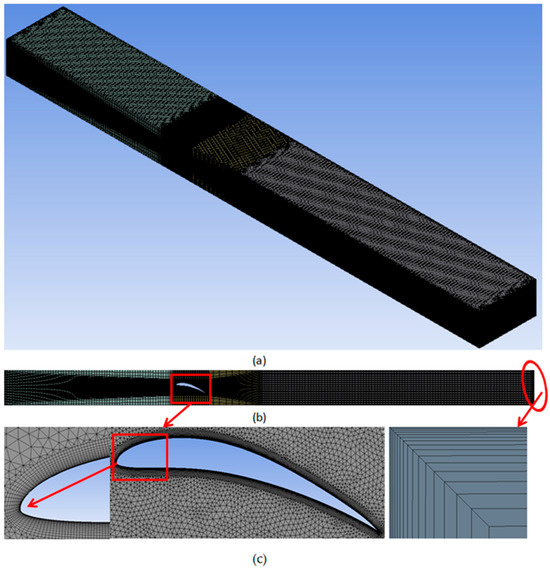
Multi-Model Assessment and Experimental Validation of a Custom High-Camber Airfoil for Wind-Lens Technology Application
by
Ayalew Bekele Demie, Venkata Ramayya Ancha and Mulu Bayray Kahsay
Wind 2026, 6(2), 28; https://doi.org/10.3390/wind6020028 - 9 Jun 2026
Abstract
►▼
Show Figures
Diffusers in diffuser-augmented wind turbines (DAWTs) require high-camber airfoils operating at low Reynolds numbers (Re), and their laminar separation bubbles (LSB) significantly complicate aerodynamic predictions. No prior study has experimentally validated XFOIL, k-ω SST, and γ-Re_θ models against simultaneous lift, drag, and chord-wise
[...] Read more.
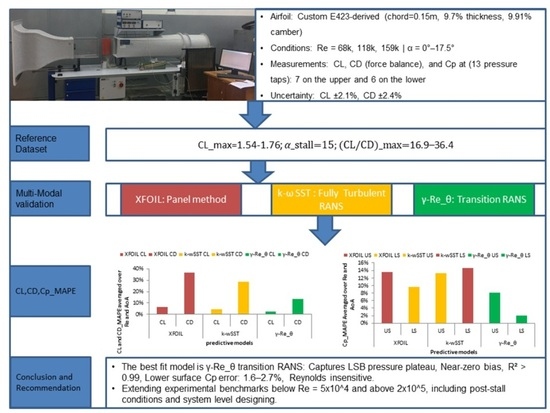
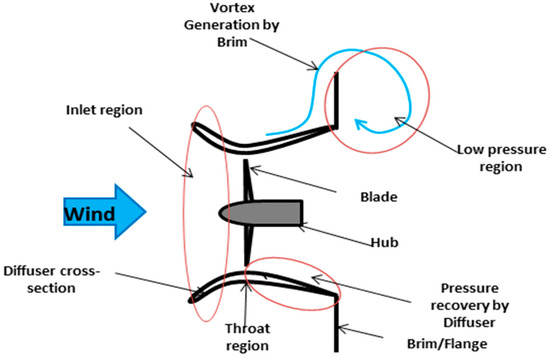
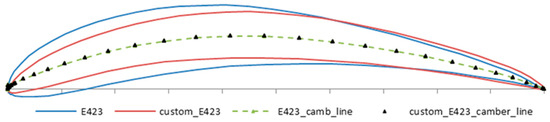
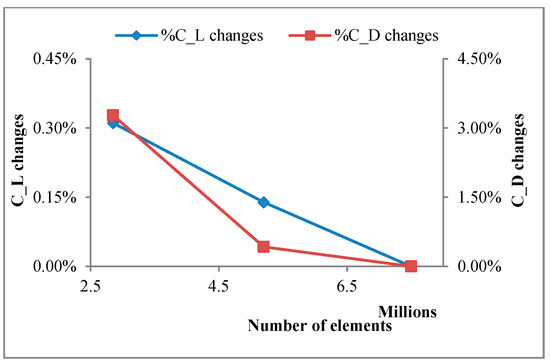
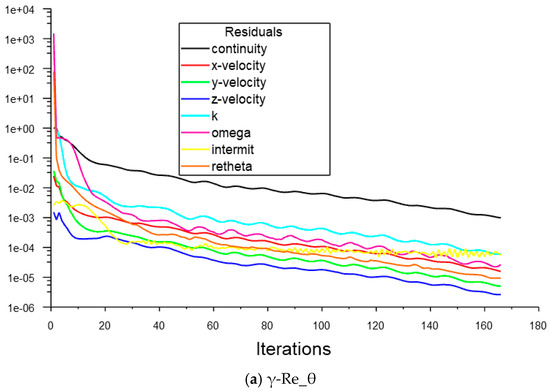
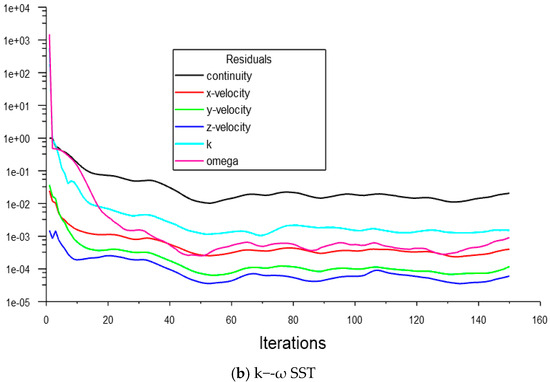
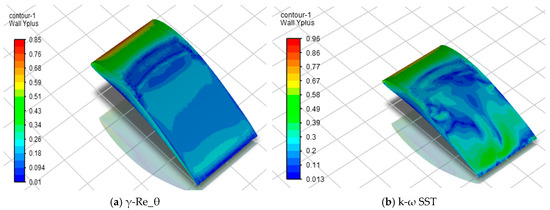
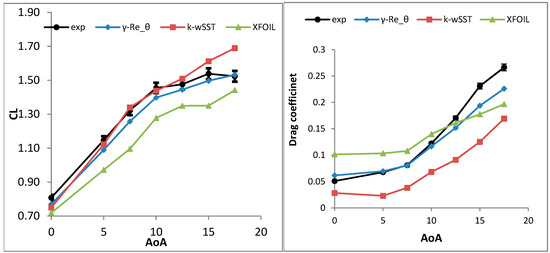
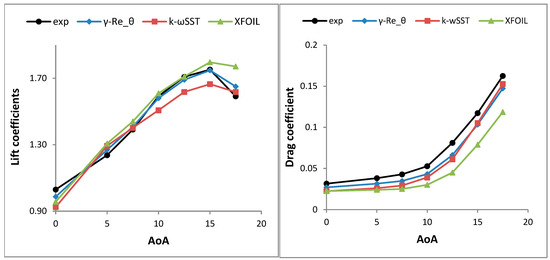
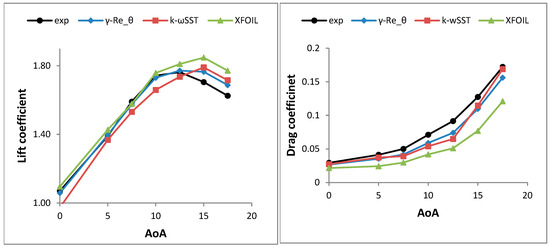
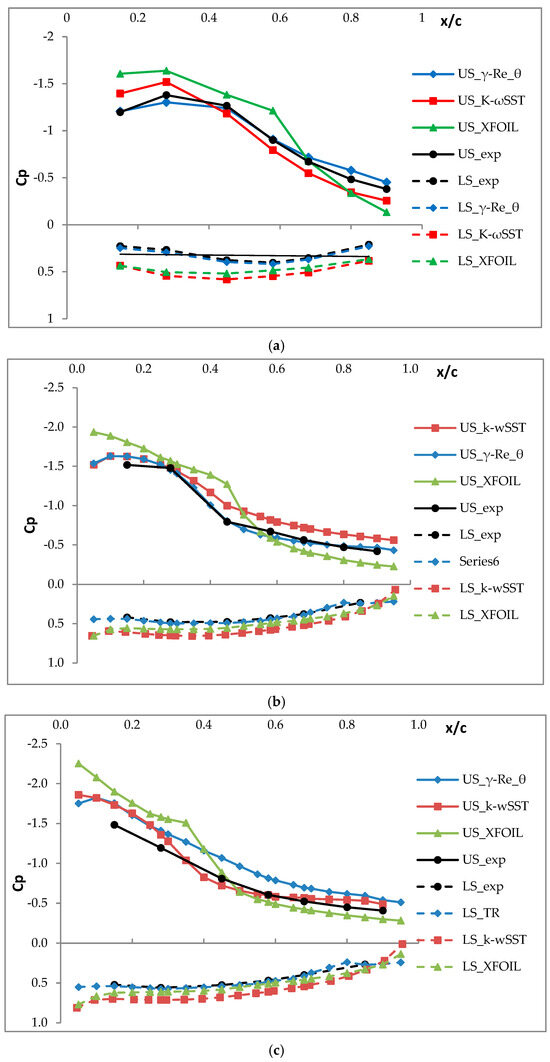
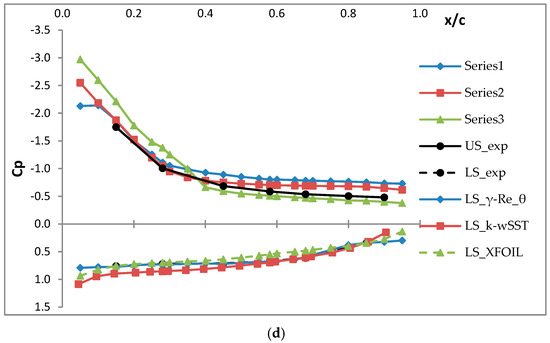
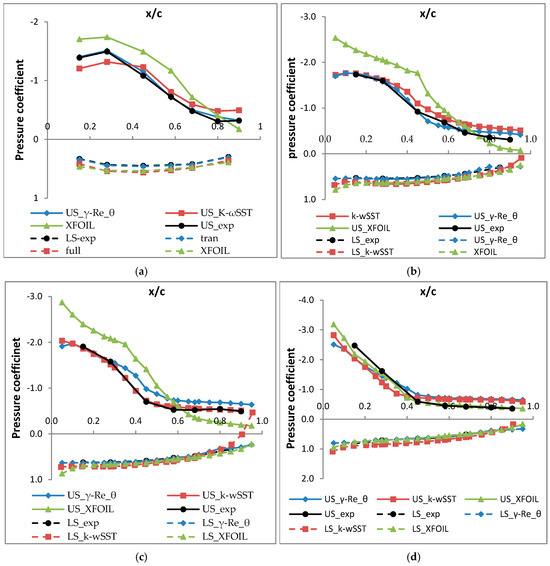
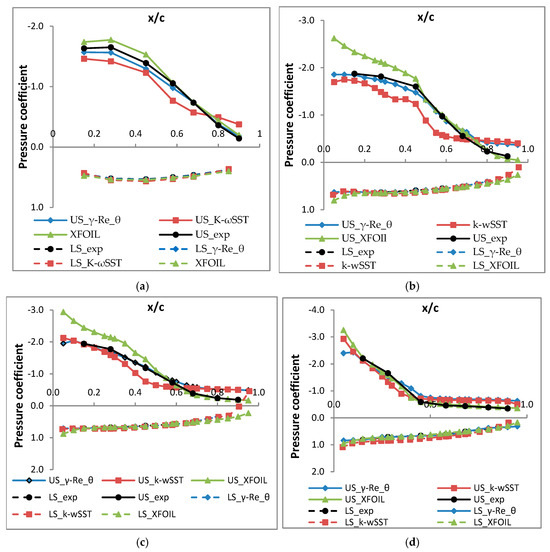
Diffusers in diffuser-augmented wind turbines (DAWTs) require high-camber airfoils operating at low Reynolds numbers (Re), and their laminar separation bubbles (LSB) significantly complicate aerodynamic predictions. No prior study has experimentally validated XFOIL, k-ω SST, and γ-Re_θ models against simultaneous lift, drag, and chord-wise pressure coefficient (Cp) measurements for the customized high-camber airfoil at Re = 68,000 (68k), 118,000 (118k), and 159,000 (159k). Lift, drag, and Cp distributions were measured experimentally. The γ-Re_θ model demonstrated superior performance, achieving a lift maximum absolute percent error of 1.6–3.4%, near-zero bias, and a coefficient of determination >0.99. It accurately captured the LSB pressure plateau at mid-chord, with mean gross-averaged Cp percent errors of 8.1% and 2.1% for upper and lower surfaces, respectively. The k-ω SST model overpredicted lift by up to +9.8% at Re = 68k and underpredicted drag by up to 66%. XFOIL is unreliable specifically for separated transitional flows at Re < 118k, but improves at Re = 159k. The experimental dataset and validated transition-sensitive RANS approach provide a foundation for low-Re airfoil and DAWT diffuser design. Future work should extend measurements below Re = 50k and above 200k, including post-stall conditions, and system-level design of DAWT.
Full article

Graphical abstract
Open AccessArticle
Exploring the Prospects for Wind Energy Development as Sustainable Energy Production in Tafila, Jordan
by
Mohammad Ahmad Al Zubi and Mohamad Najib Ibrahim
Wind 2026, 6(2), 27; https://doi.org/10.3390/wind6020027 - 8 Jun 2026
Abstract
►▼
Show Figures
Energy plays an essential role in economic advancement for any nation. However, escalating worldwide energy demands coupled with environmental and climate change issues resulting from the excessive consumption of conventional energy sources highlight the importance of identifying sustainable energy resource alternatives. Jordan, with
[...] Read more.
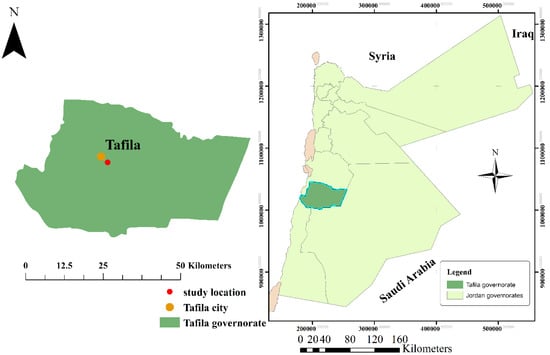
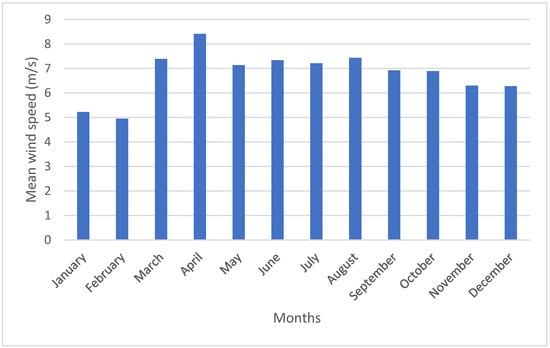
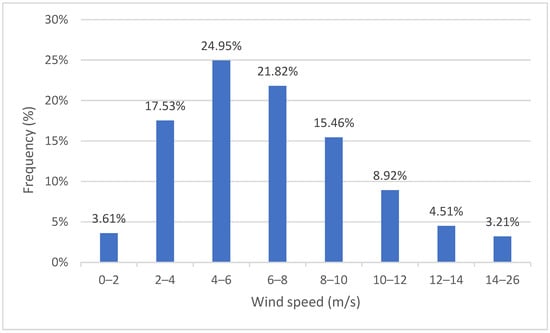
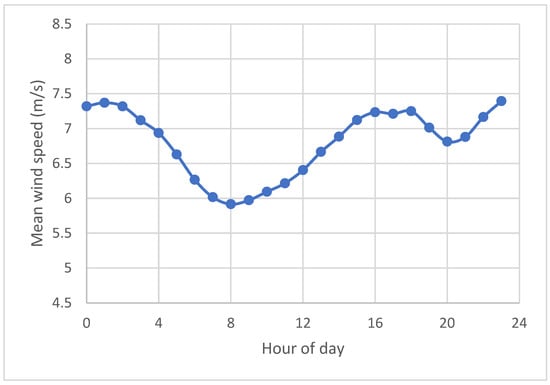
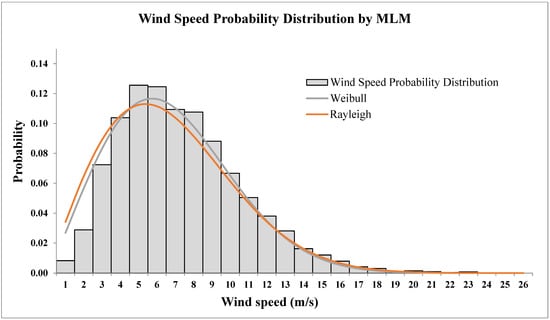
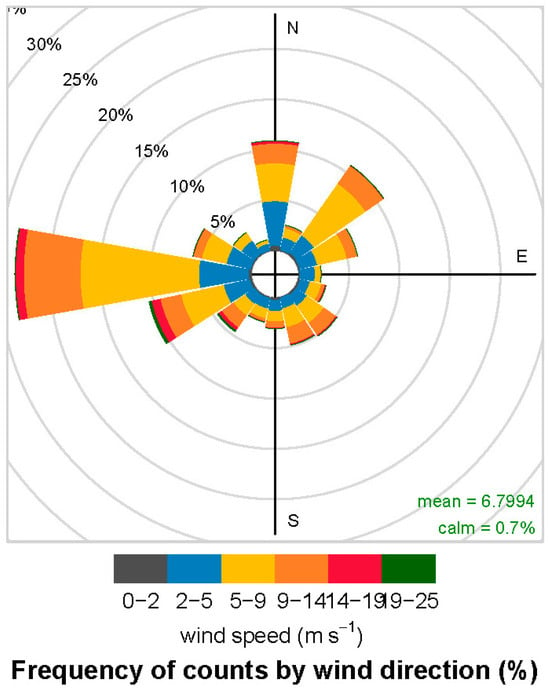
Energy plays an essential role in economic advancement for any nation. However, escalating worldwide energy demands coupled with environmental and climate change issues resulting from the excessive consumption of conventional energy sources highlight the importance of identifying sustainable energy resource alternatives. Jordan, with its very limited fossil-fuel resources, is actively expanding its energy mix by investing in renewable sources, particularly wind energy. Therefore, the current work provides an evaluation of the wind power potential of Gharandal town within Tafila governorate, in southern Jordan, using hourly wind data recorded at 90 m elevation within a one-year monitoring period. The investigation reveals that the Weibull distribution more accurately models the wind speed in Tafila compared to the Rayleigh distribution based on parameters estimated through the maximum likelihood approach. The investigation at 90 m also shows that the annual wind power is 296 W/m2, indicating that Tafila has marginal suitability for wind potential (Class 2) under the Pacific Northwest Laboratory classification system and has fairly good and suitable conditions for installing a wind farm per the European Wind Energy Association classification system. Most of the time, the prevailing winds at Tafila originate from the west direction (i.e., 270°), accounting for 23% of all occurrences. Finaly, the Tafila region contains promising areas for wind energy generation, particularly with the implementation of modern wind turbine technologies.
Full article

Figure 1
Open AccessArticle
Performance Assessment of a Double-Stator Wound-Field Flux-Switching Machine for Large-Scale Direct-Drive Wind Power Generator Applications
by
Ziphilele S. Mngomezulu, Oreoluwa I. Olubamiwa, Udochukwu B. Akuru and Olawale M. Popoola
Wind 2026, 6(2), 26; https://doi.org/10.3390/wind6020026 - 4 Jun 2026
Abstract
►▼
Show Figures
Synchronous machines used in wind turbines typically use rare earth permanent magnets (PMs) due to the possibility of high power densities and efficiencies. However, alternative non-PM topologies are gaining popularity due to the cost and supply volatility of PMs. Wound-field flux-switching machines (WFFSMs),
[...] Read more.
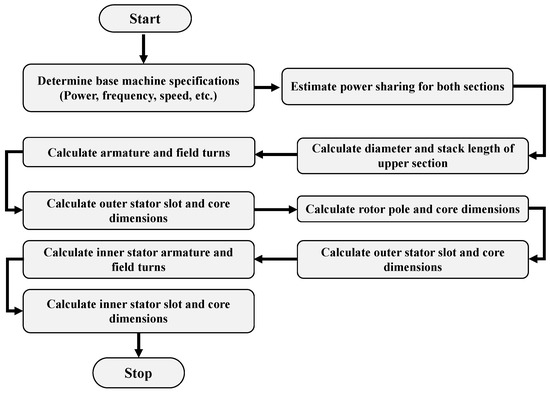
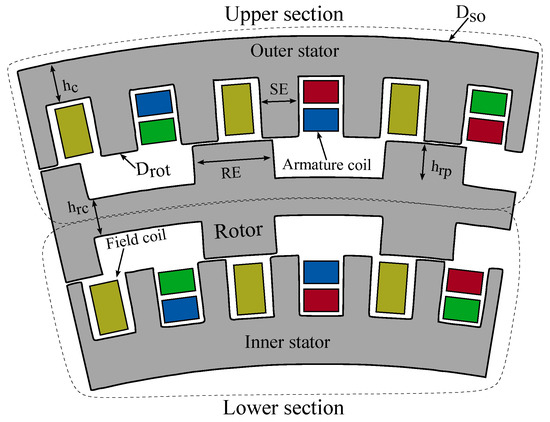
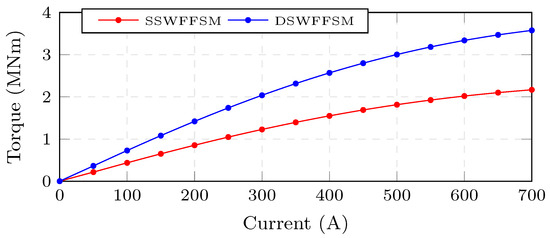
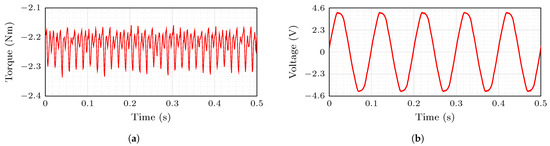
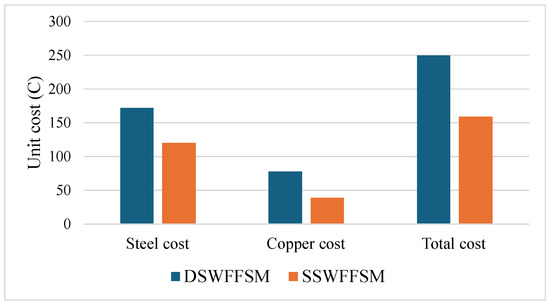
Synchronous machines used in wind turbines typically use rare earth permanent magnets (PMs) due to the possibility of high power densities and efficiencies. However, alternative non-PM topologies are gaining popularity due to the cost and supply volatility of PMs. Wound-field flux-switching machines (WFFSMs), although boasting high torque densities and being PM-free, have lower power densities than PM machines. However, a double-stator wound-field flux-switching machine (DSWFFSM) exemplifies even greater power density. This study investigates the application of DSWFFSMs for direct-drive wind applications. Furthermore, the performance of an optimized 3 MW DSWFFSM design is compared with a single-stator WFFSM design. Both designs are based on the volume of a single-stator PM flux-switching machine from the literature. Although the torque per weight for the DSWFFSM and the single-stator WFFSM are similar, the torque per volume for the DSWFFSM is shown to be significantly exceptional. The torque ripple in the DSWFFSM is also smaller, but the efficiency is slightly lower than the single-stator WFFSM. The DSWFFSM design, which is shown to be comparable to PM-based topologies in terms of power density, highlights a low-cost, sustainable, clean energy generator topology.
Full article

Figure 1
Open AccessArticle
Contribution Analysis of WRF Physics in the Wind Dynamics of Super Typhoon Mangkhut (2018)
by
Jiayao Wang and Sunwei Li
Wind 2026, 6(2), 25; https://doi.org/10.3390/wind6020025 - 2 Jun 2026
Abstract
►▼
Show Figures
Accurate simulation of landfalling typhoons is essential for urban resilience in the densely populated Pearl River Delta. Using Super Typhoon Mangkhut (2018) as a case study, this paper evaluates the Weather Research and Forecasting (WRF) model through a contribution analysis designed to disentangle
[...] Read more.
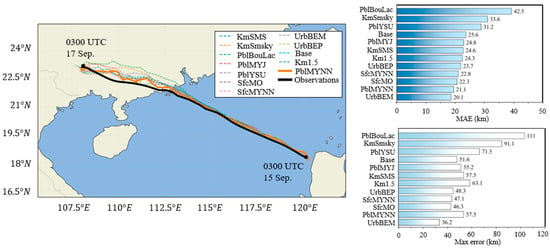
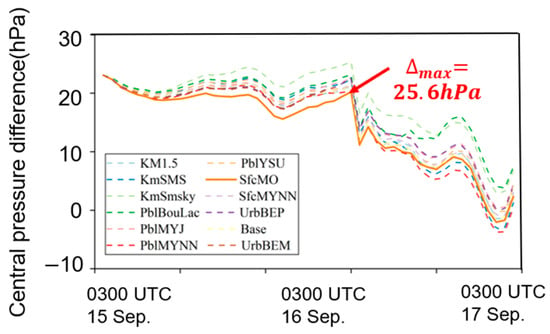
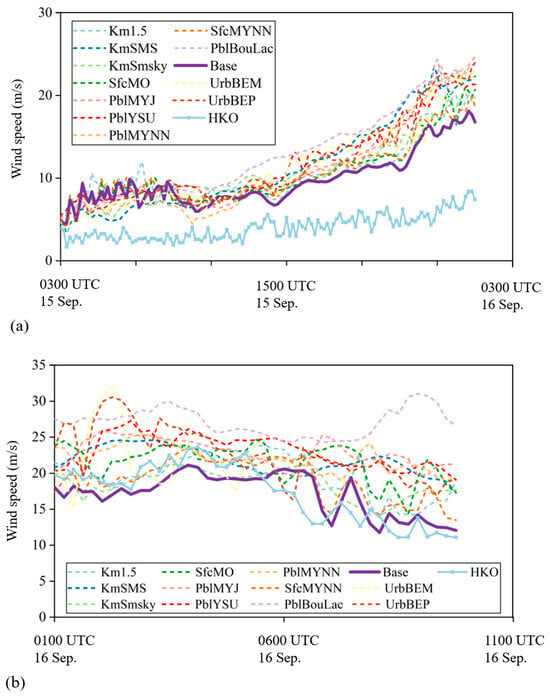
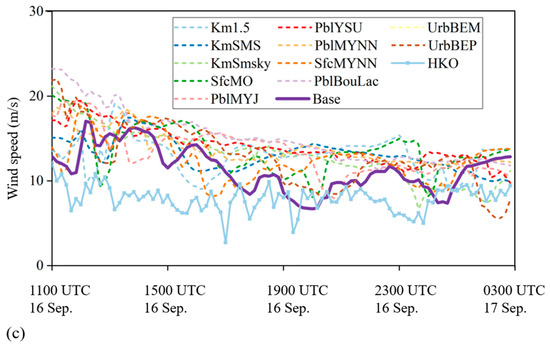
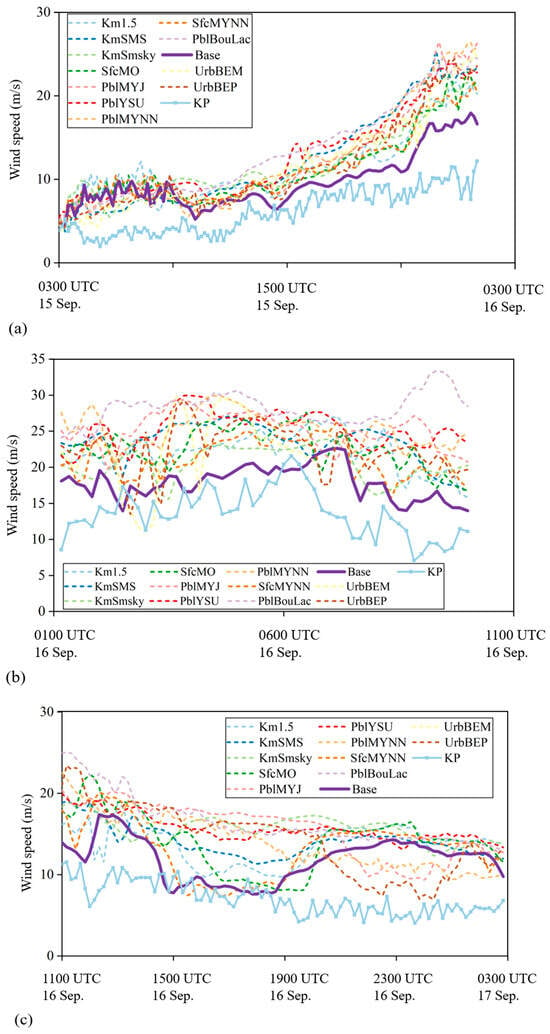
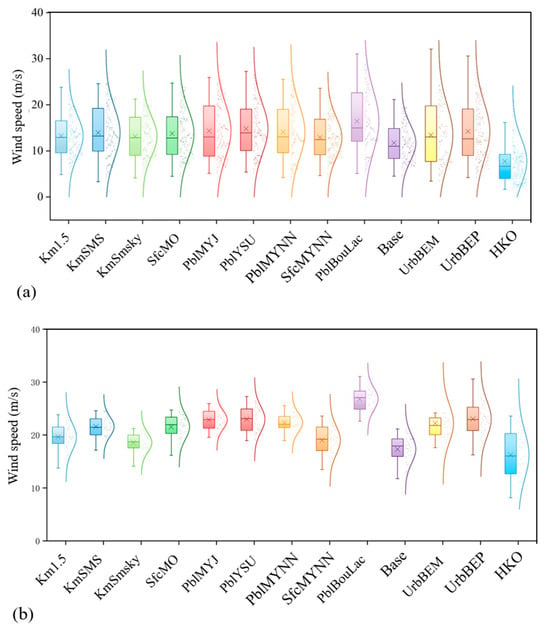
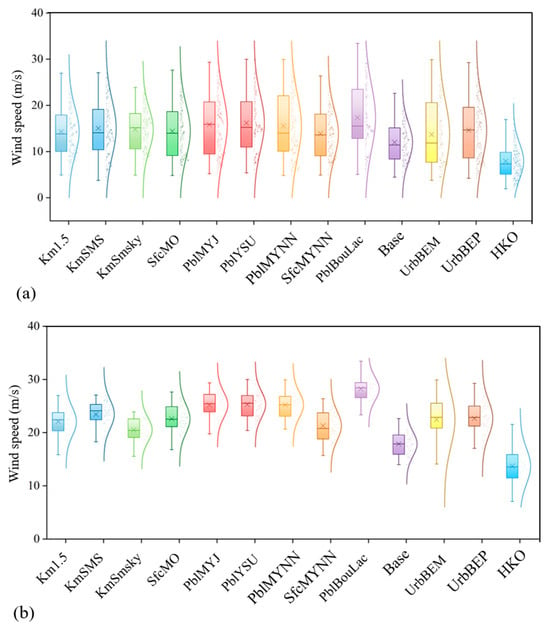
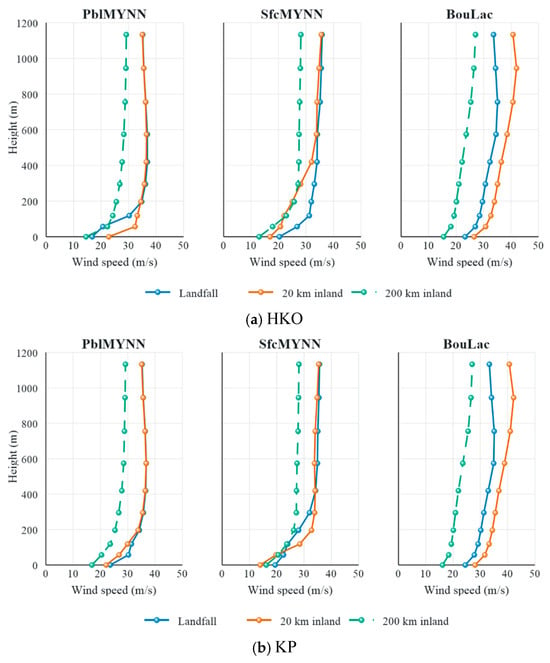
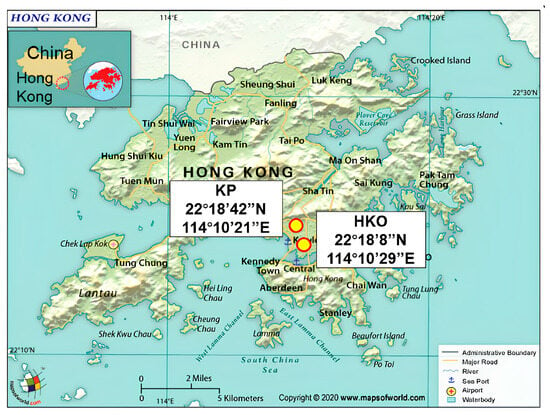
Accurate simulation of landfalling typhoons is essential for urban resilience in the densely populated Pearl River Delta. Using Super Typhoon Mangkhut (2018) as a case study, this paper evaluates the Weather Research and Forecasting (WRF) model through a contribution analysis designed to disentangle the roles of surface layer, planetary boundary layer (PBL), urban canopy model (UCM), and eddy-coefficient/diffusion closure parameterizations in wind-hazard prediction. Model results are validated against observations at the Hong Kong Observatory headquarters (HKO) and King’s Park (KP) stations, demonstrating that the hierarchy of physical controls is strongly metric-dependent. Substantial and structured spread is found among the tested configurations. Controlled comparisons show that PBL selection is the primary driver of variability in peak timing and high-wind persistence, whereas surface-layer formulation and diffusion closure exert secondary but systematic influences by shifting distributional centers and reshaping variability and upper tails. Urban canopy effects are comparatively weaker in aggregate but become more apparent during the impact and recovery phases. Overall, the results confirm that no single parameterization is consistently optimal across all metrics and motivate a multi-objective physics-selection strategy, in which multi-physics ensembles are used to better represent uncertainty in wind-event duration and associated loading risks in complex urban environments.
Full article

Figure 1
Open AccessArticle
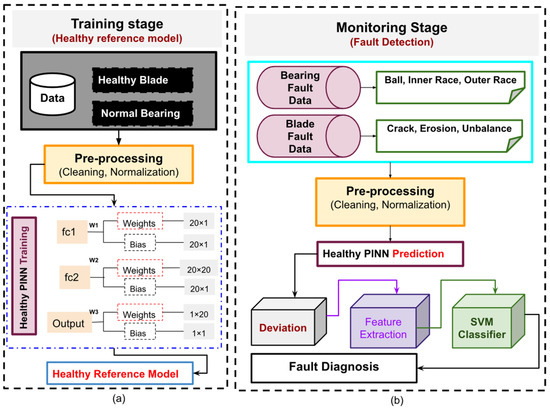
A Novel Wind Turbine Fault Diagnosis Method via Deviation-Dynamic Regime Features and Physics-Informed Neural Network
by
Medha Haque and Wenyi Liu
Wind 2026, 6(2), 24; https://doi.org/10.3390/wind6020024 - 29 May 2026
Abstract
►▼
Show Figures
Effective fault diagnosis of wind turbine blades and rotating machinery is critical for ensuring operational reliability and reducing maintenance costs. This study introduces a healthy-reference modeling framework that combines physics-informed neural network (PINN) with deviation-based dynamic regime features for systematic fault detection. At
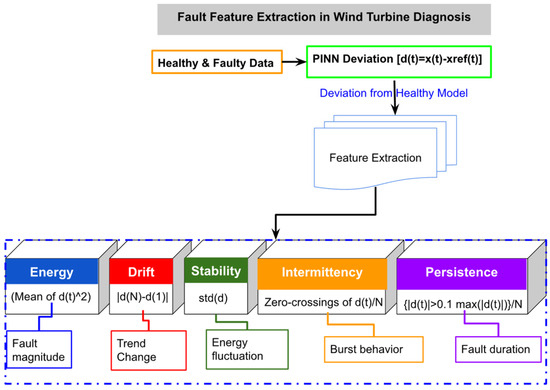
[...] Read more.
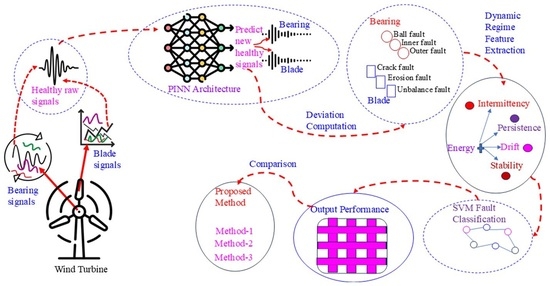
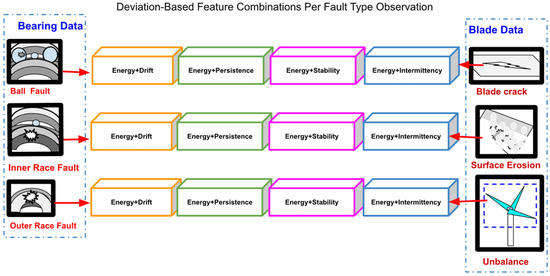
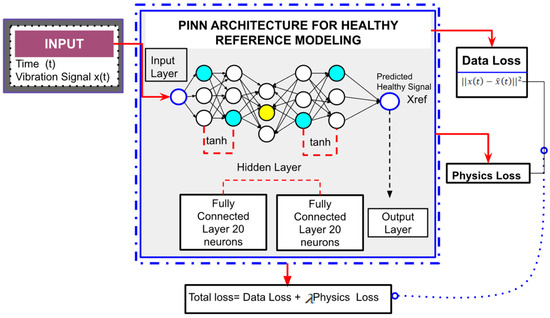
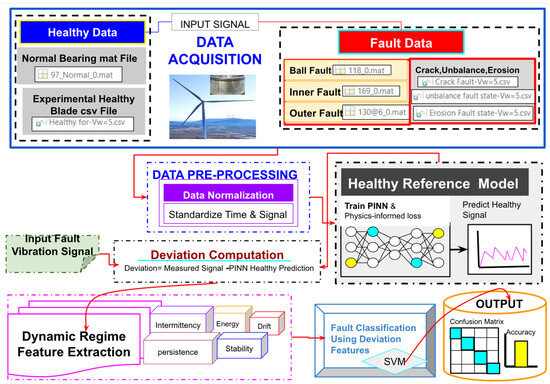
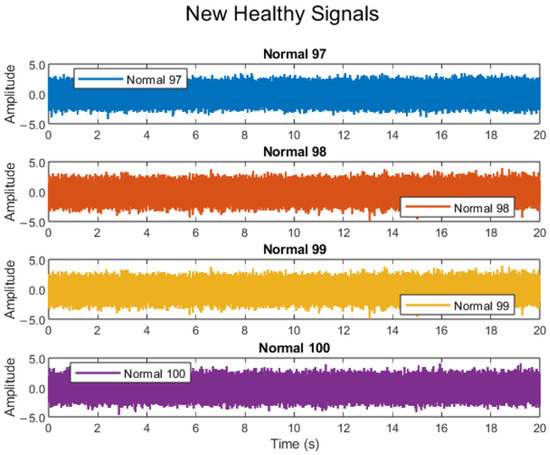
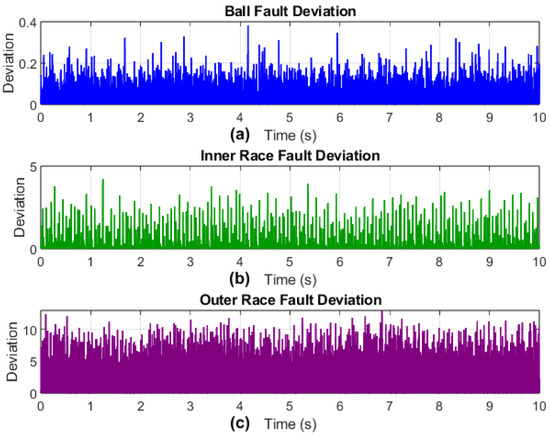
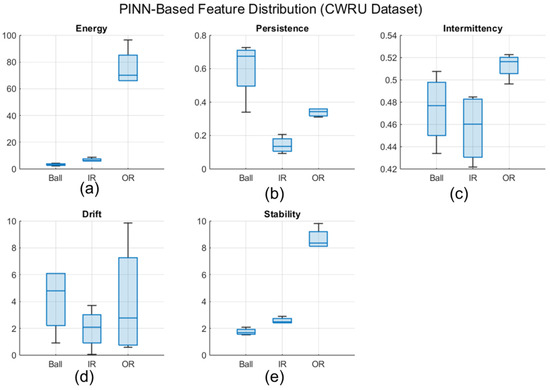
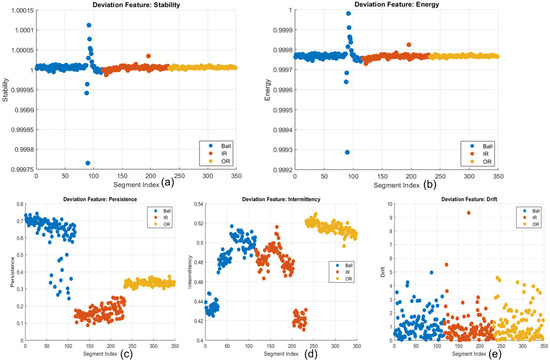
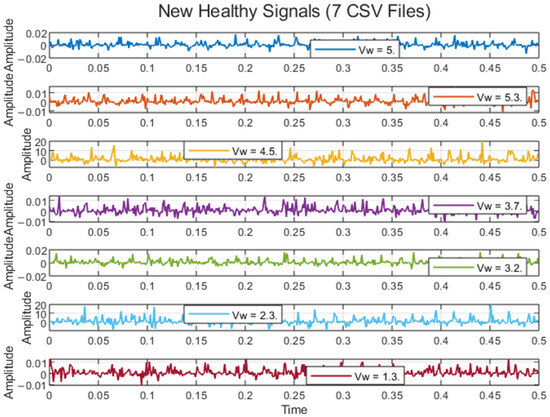
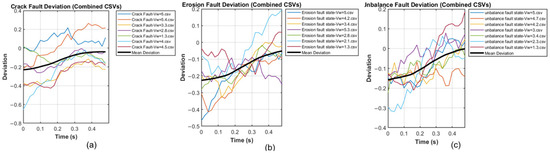
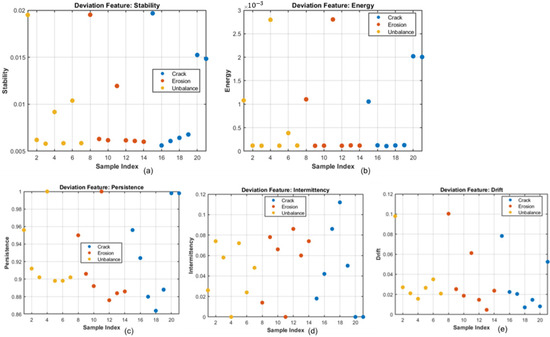
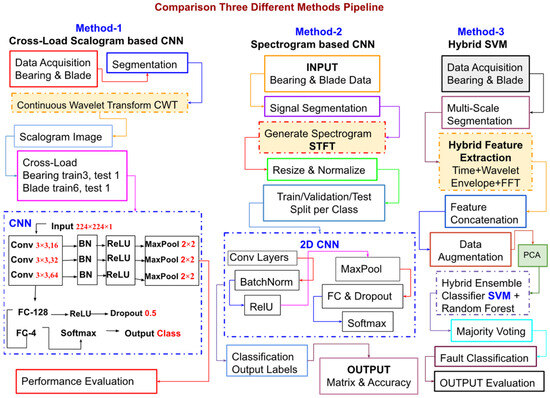
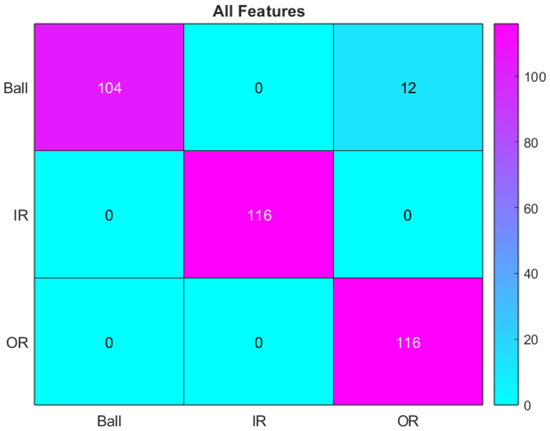
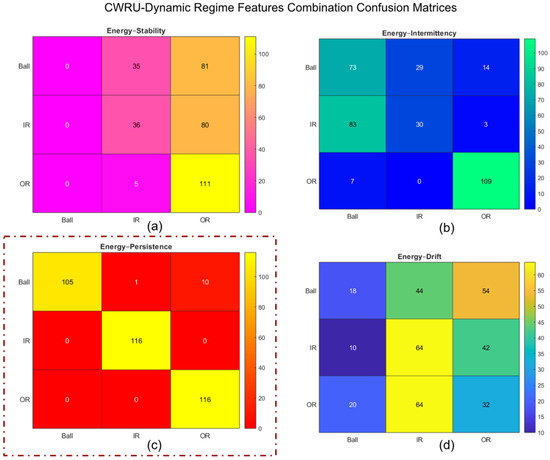
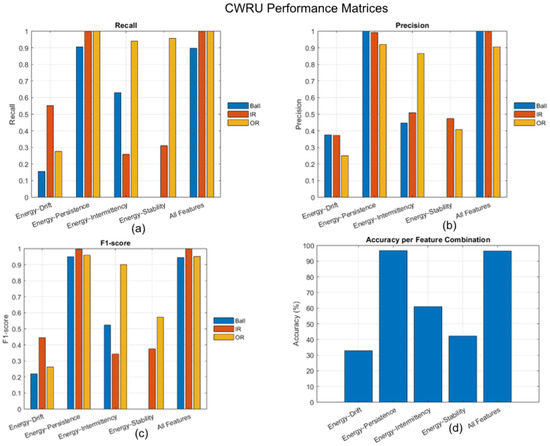
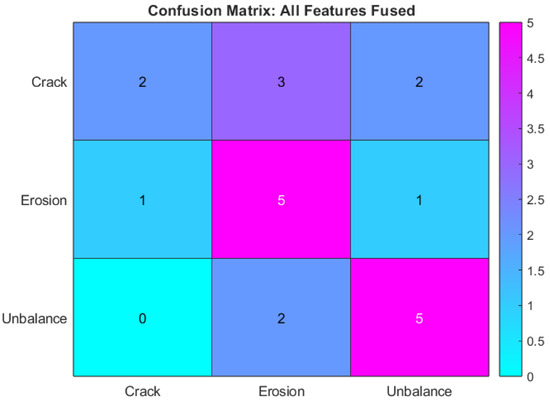
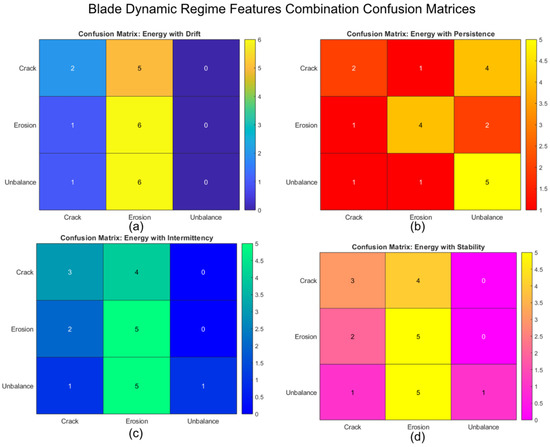
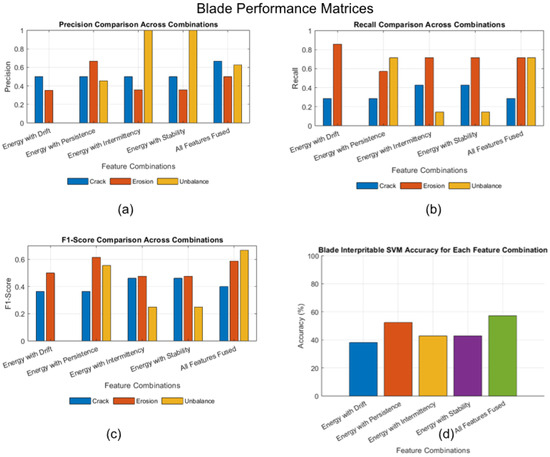
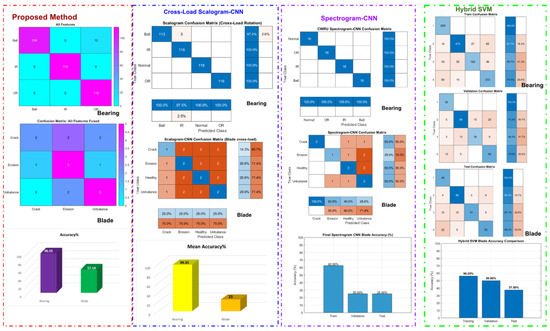
Effective fault diagnosis of wind turbine blades and rotating machinery is critical for ensuring operational reliability and reducing maintenance costs. This study introduces a healthy-reference modeling framework that combines physics-informed neural network (PINN) with deviation-based dynamic regime features for systematic fault detection. At first, healthy and faulty data are normalized, then PINN is trained solely on healthy data, creating a reference model that predicts normal behavior. Deviations between measured signals and the healthy-reference predictions are then analyzed to extract key dynamic regime features, including energy, stability, drift, intermittency, and persistence, capturing subtle variations caused by faults. An interpretable Support Vector Machine (SVM) classifier uses these features to identify fault types such as ball, inner race, outer race, crack, erosion, and unbalance. Classification is performed using dynamic feature combinations while energy is often used as the base feature. The result shows energy with persistence combination performance is better than other feature combinations, and fused features achieved higher accuracy for both datasets. The approach is validated on both bearing data and an experimental blade dataset, demonstrating strong performance across different mechanical systems. Comparative evaluation with three different approaches, including Cross-load Scalogram-based CNN, Spectrogram-based CNN, and Hybrid SVM, highlights that the proposed healthy reference framework offers a data-efficient, interpretable, and robust solution for fault detection. This work highlights the importance of modeling healthy dynamics before classification, capturing both how strong a fault is and how it behaves over time, which offers a practical approach for wind turbine condition monitoring with limited data.
Full article

Graphical abstract
Open AccessArticle
CFD Analysis and Performance Evaluation of an Interlocked (Negative-Gap) Savonius Dual-Rotor Configuration
by
Konrad M. Hartung, Marvin Stumpe and Karsten Oehlert
Wind 2026, 6(2), 23; https://doi.org/10.3390/wind6020023 - 18 May 2026
Abstract
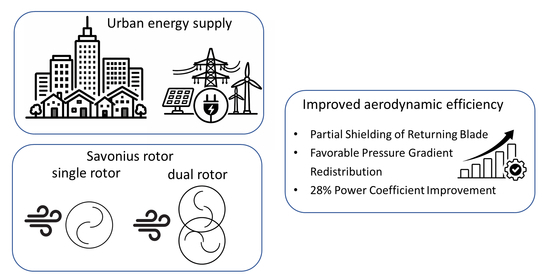
This study investigates whether aerodynamic interaction effects in an interlocked (negative-gap) counter-rotating dual Savonius rotor configuration can improve the efficiency of drag-based vertical-axis wind turbines in urban wind conditions. Two-dimensional Computational Fluid Dynamics (CFD) simulations were performed in ANSYS Fluent 2025 R2 using
[...] Read more.
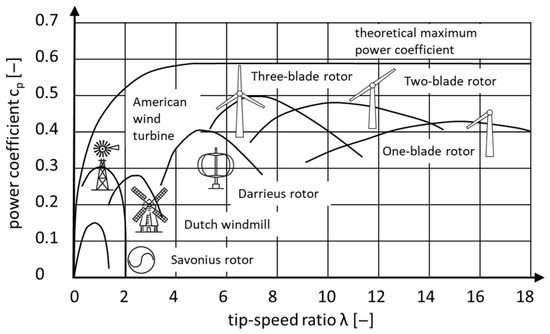
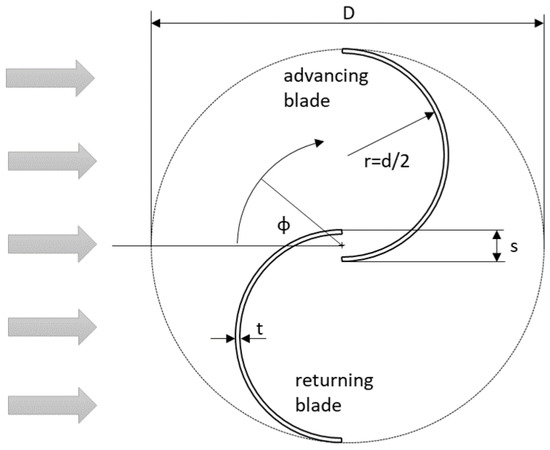
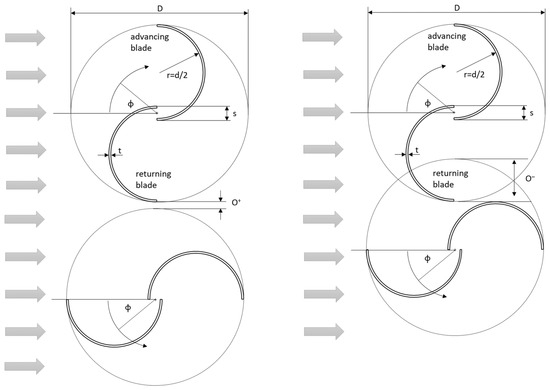
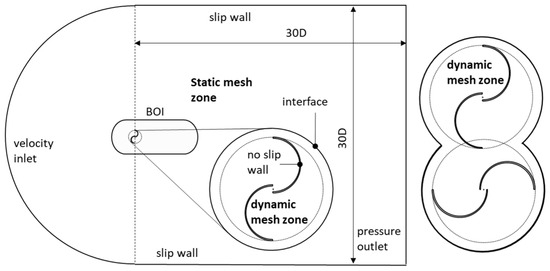
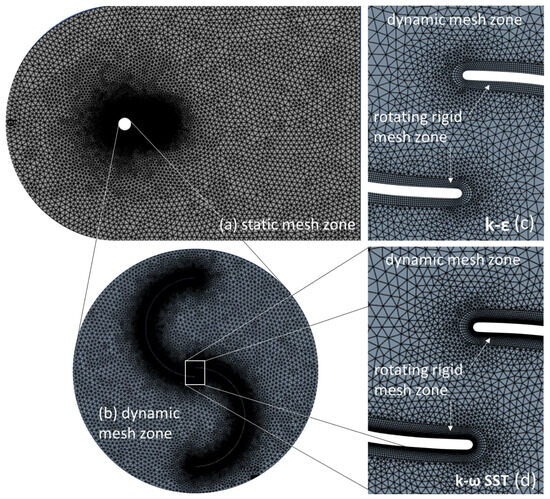
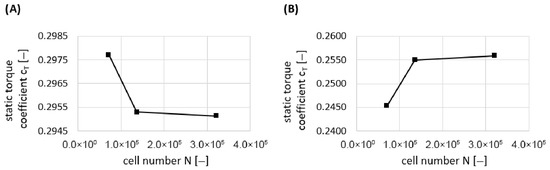
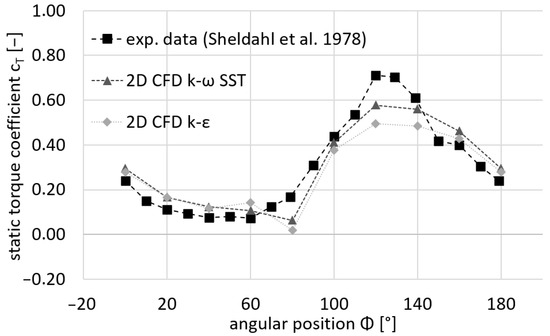
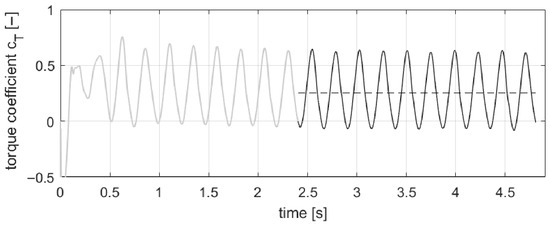
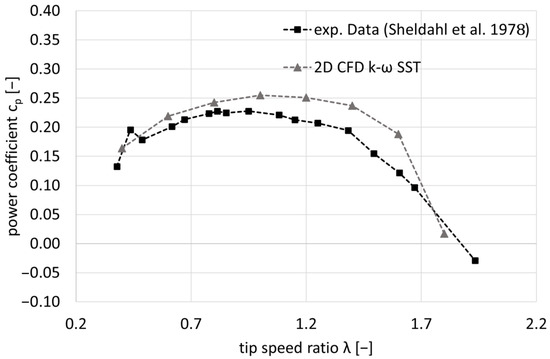
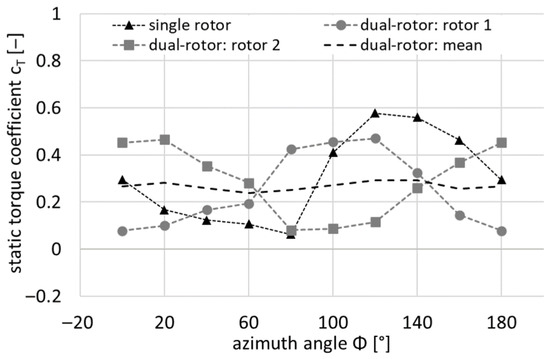
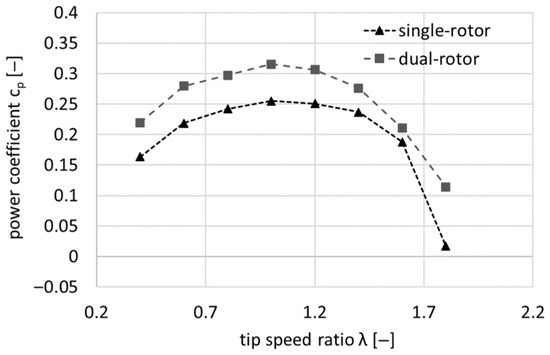
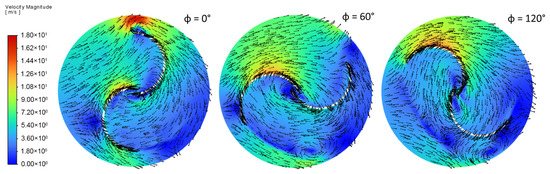
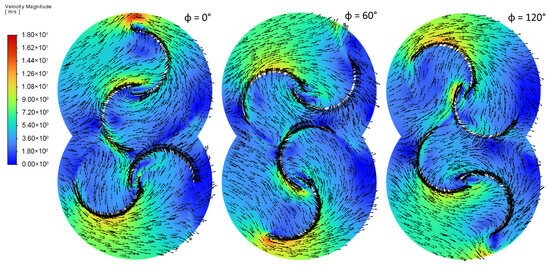
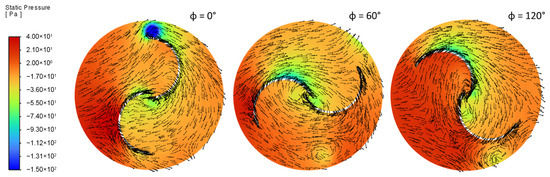
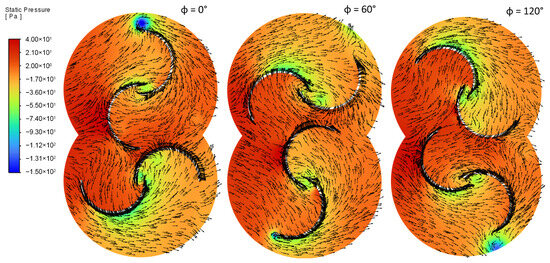
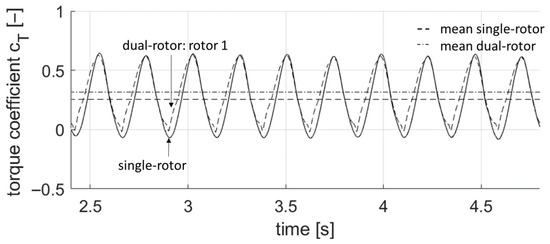
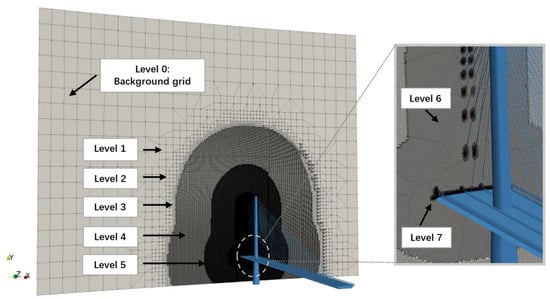
This study investigates whether aerodynamic interaction effects in an interlocked (negative-gap) counter-rotating dual Savonius rotor configuration can improve the efficiency of drag-based vertical-axis wind turbines in urban wind conditions. Two-dimensional Computational Fluid Dynamics (CFD) simulations were performed in ANSYS Fluent 2025 R2 using both steady and unsteady RANS approaches, including dynamic meshing to enable collision-free rotation in the interlocked overlap region. The numerical setup was first validated for a single two-bucket reference rotor against published experimental data of torque and power coefficients and subsequently applied to dual-rotor configurations with negative gap distances. The results show that the dual-rotor arrangement redistributes torque production over the azimuth angle and yields a smoother and consistently positive mean static torque coefficient, indicating improved self-starting behavior compared to the single rotor. Under transient operation, the dual-rotor configuration yields higher power coefficient values across the entire investigated tip-speed ratio range. The highest performance gain is observed at a tip-speed ratio of , where the peak power coefficient increases from (single-rotor) to (dual-rotor), corresponding to an improvement of the power coefficient of about .
Full article
(This article belongs to the Topic Advances in Hydraulic, Wind, and Photovoltaic Power Generation Systems)
►▼
Show Figures

Graphical abstract
Open AccessArticle
On the Aerodynamic Characterisation and Modelling of Porous Screens for Building Applications
by
Marcello Catania, Giulia Pomaranzi, Paolo Schito and Alberto Zasso
Wind 2026, 6(2), 22; https://doi.org/10.3390/wind6020022 - 9 May 2026
Abstract
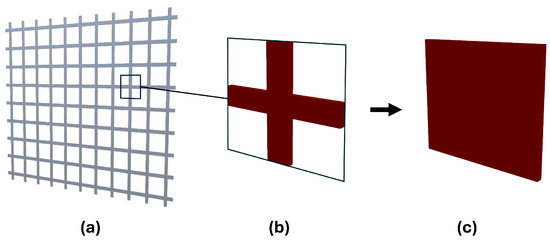
The aerodynamic behaviour of buildings equipped with porous outer envelopes is governed by the interaction between millimetre-scale geometric features and building-scale flow structures. Explicitly resolving these scales in numerical simulations is computationally prohibitive, making homogenised porous-medium formulations a practical alternative. Among them, the
[...] Read more.
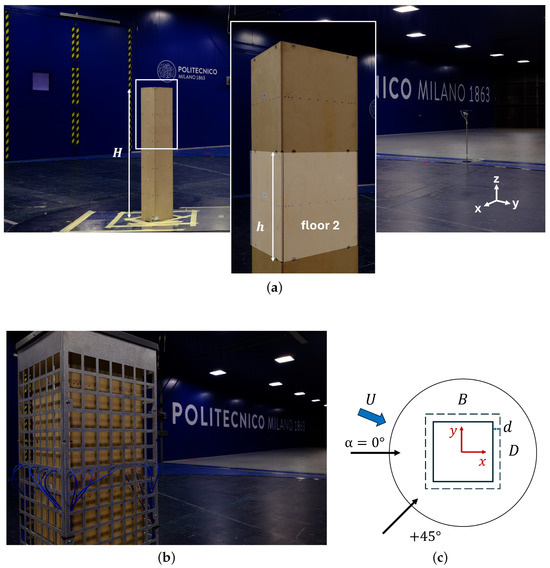
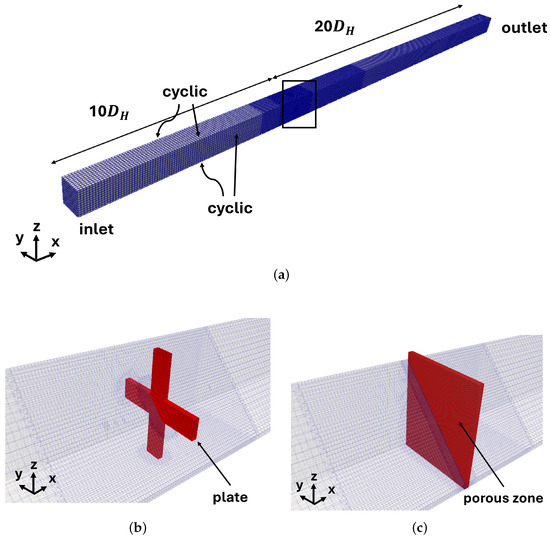
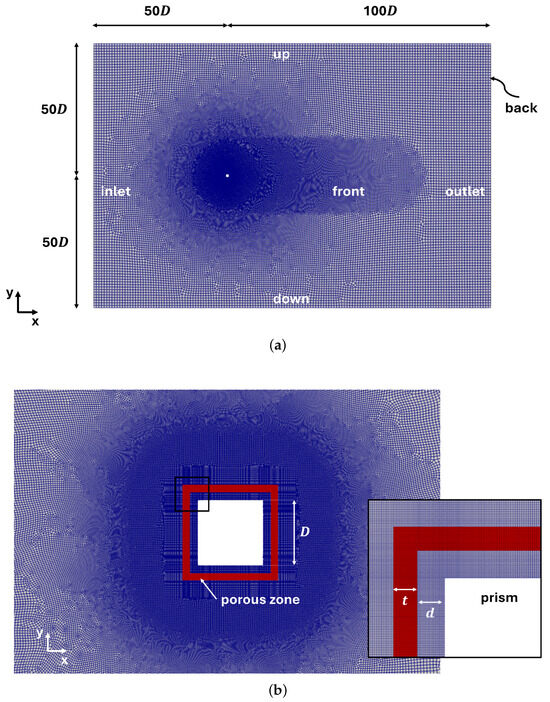
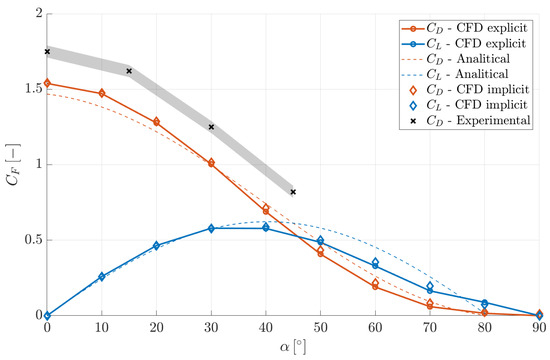
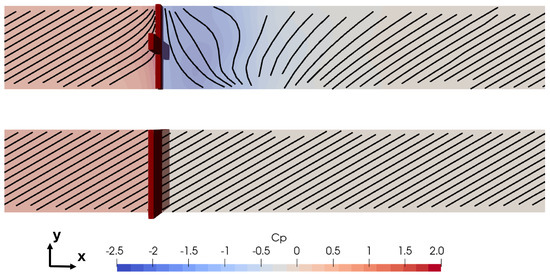
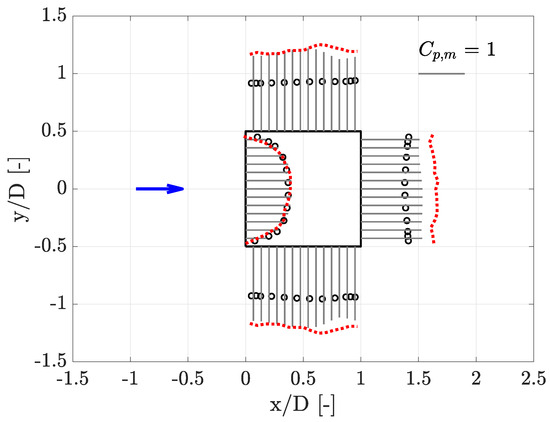
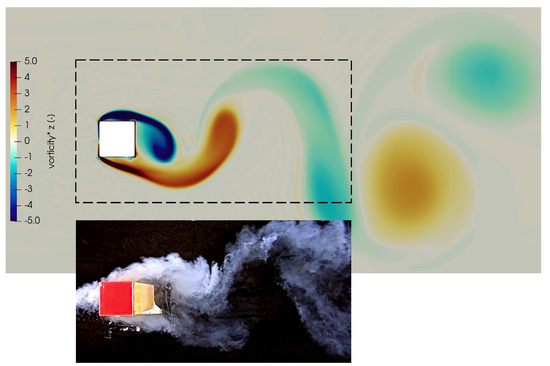
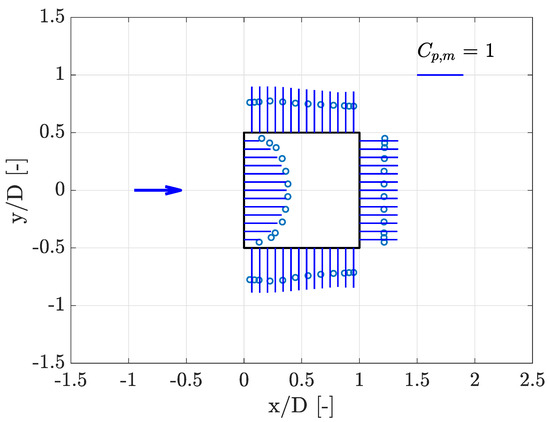
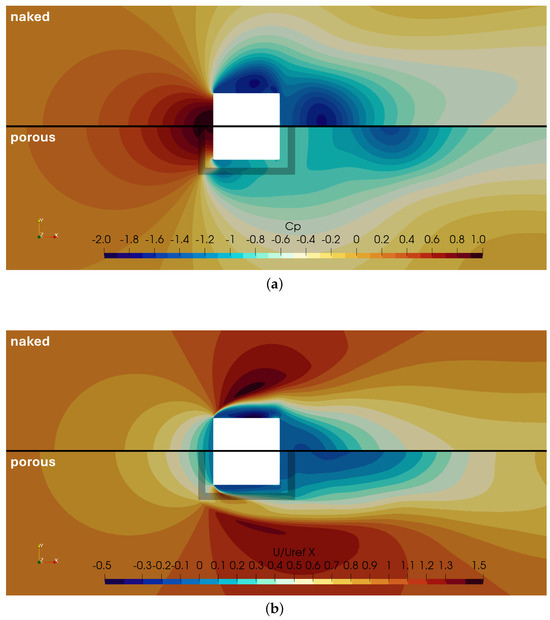
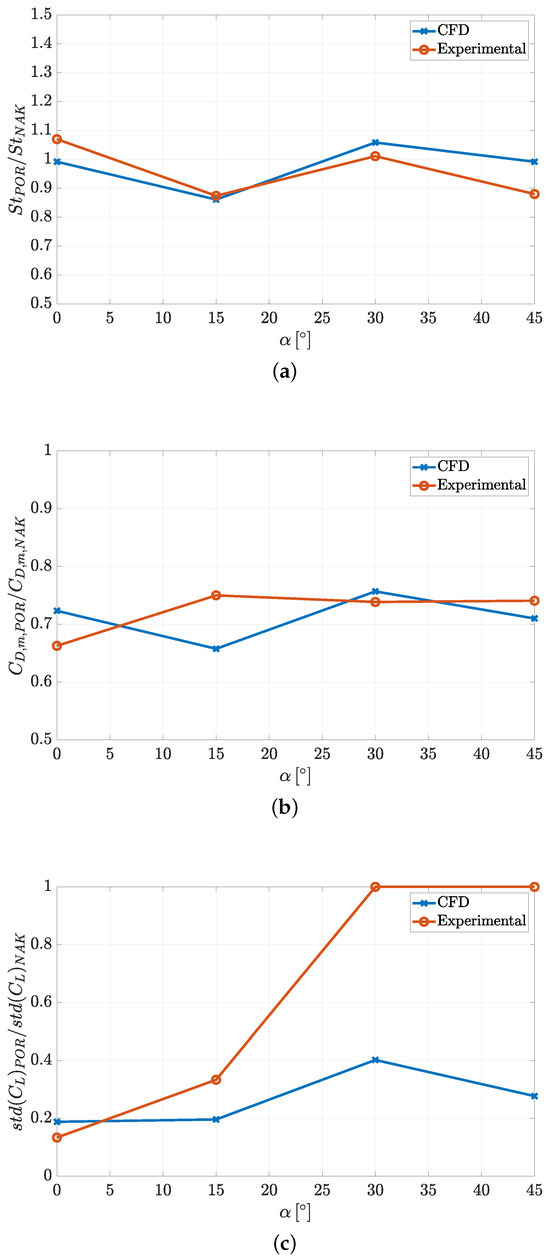
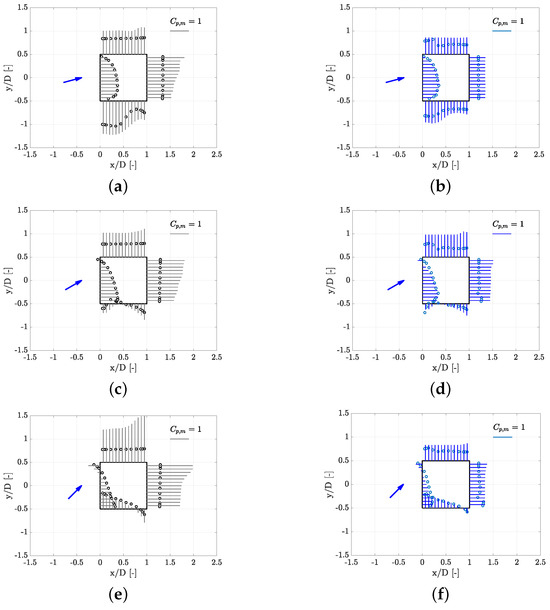
The aerodynamic behaviour of buildings equipped with porous outer envelopes is governed by the interaction between millimetre-scale geometric features and building-scale flow structures. Explicitly resolving these scales in numerical simulations is computationally prohibitive, making homogenised porous-medium formulations a practical alternative. Among them, the Darcy–Forchheimer (D–F) model is widely adopted; however, the reliability of building-scale predictions critically depends on how its resistance coefficients are identified and validated. This study proposes and assesses a consistent procedure for the determination and application of D–F coefficients for porous screens used in double-skin façade systems. Porous elements are first characterised at the element scale through an analytical derivation based on aerodynamic force coefficients, from fully resolved CFD simulations of representative periodic modules. The resulting D–F coefficients are cross-compared and validated against available wind tunnel data at local Reynolds numbers . Secondly, the calibrated homogenised model is applied to a building-scale double-skin façade configuration. The porous layer is represented as a finite-thickness porous region governed by the identified D–F parameters and analysed through unsteady Reynolds-averaged Navier–Stokes simulations. The model’s capability to reproduce global aerodynamic loads, local pressure distributions, and wake characteristics is evaluated against experimental data. The results demonstrate that a properly calibrated D–F formulation provides an accurate and computationally efficient representation of porous façade systems, bridging element-scale characterisation and structural-scale aerodynamic performance.
Full article
(This article belongs to the Special Issue Novel Research on Permeable and Porous Elements in Wind Engineering)
►▼
Show Figures

Figure 1
Open AccessArticle
Exploring the Use of Passive Compliant Coatings to Address Wind Turbine Noise
by
Rohith Giridhar, Ray Taghavi and Saeed Farokhi
Wind 2026, 6(2), 21; https://doi.org/10.3390/wind6020021 - 6 May 2026
Abstract
Wind is a significant contributor to global energy requirement, with technological advancements in this industry enabling its rapid growth over the last few decades. The rise in demand for clean energy provides the driving factor to make wind more efficient and widespread. One
[...] Read more.
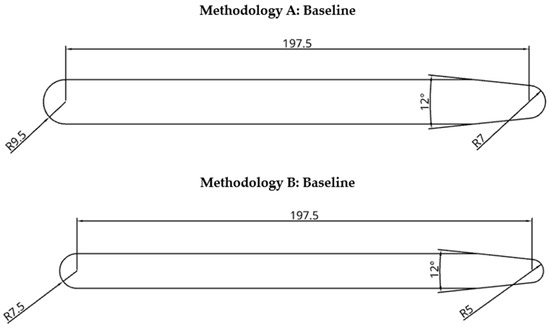
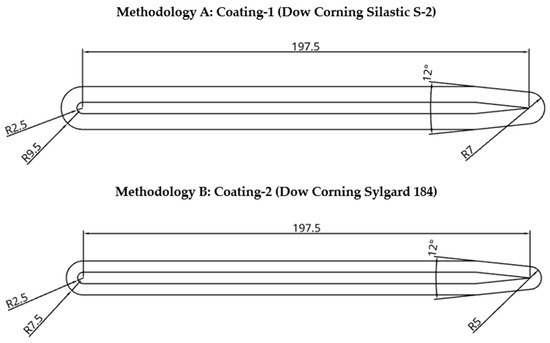
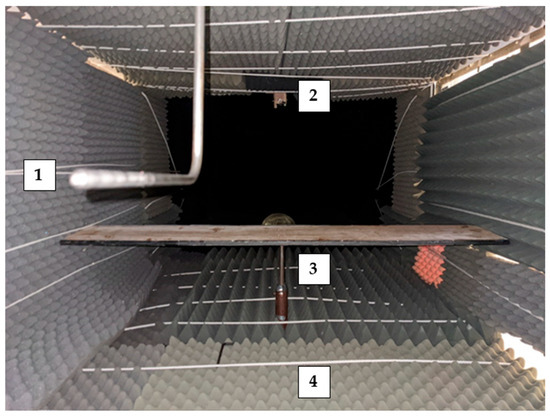
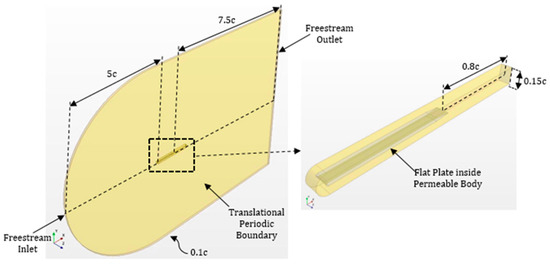
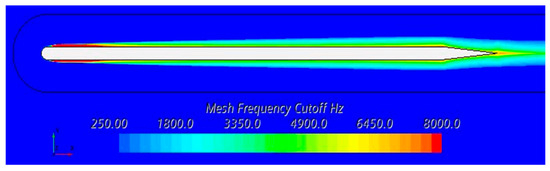
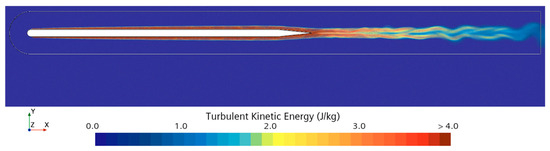
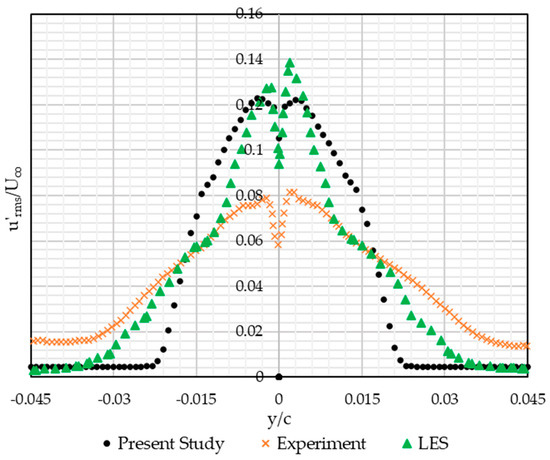
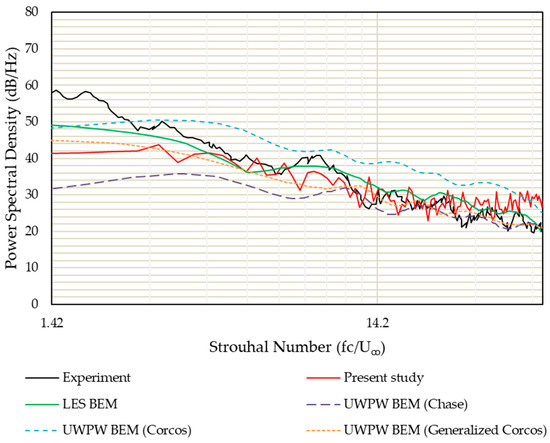
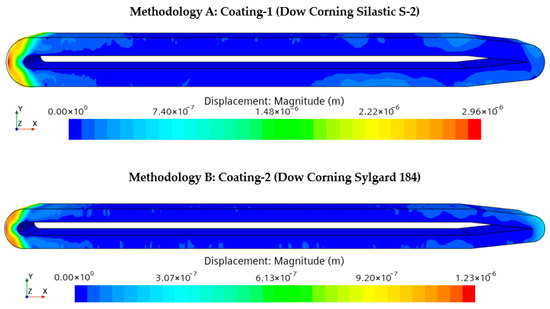
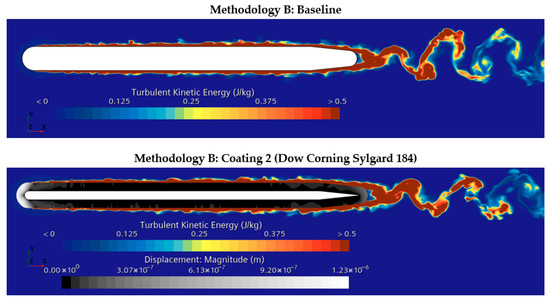
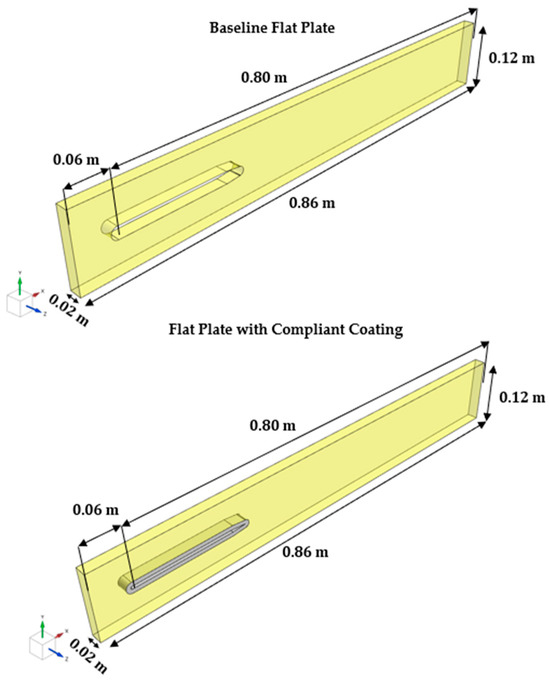
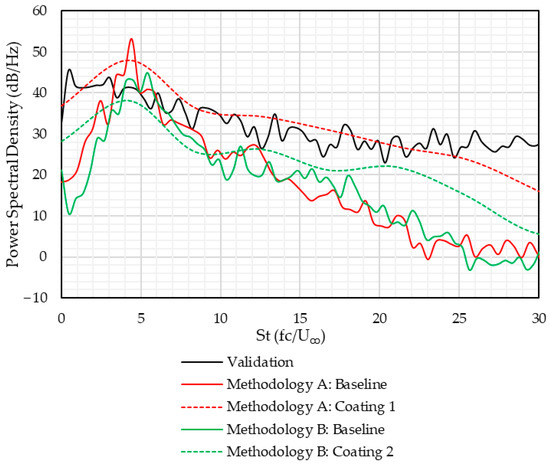
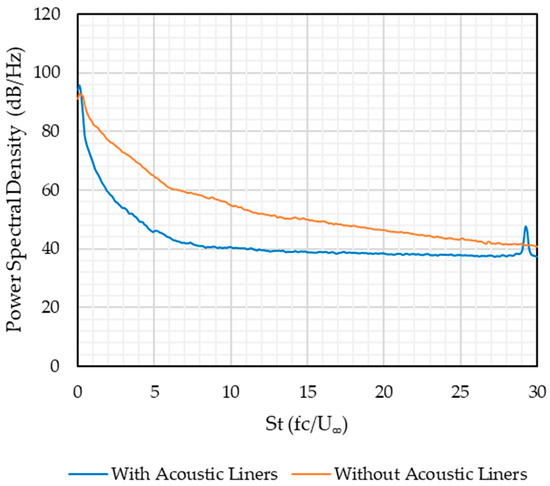
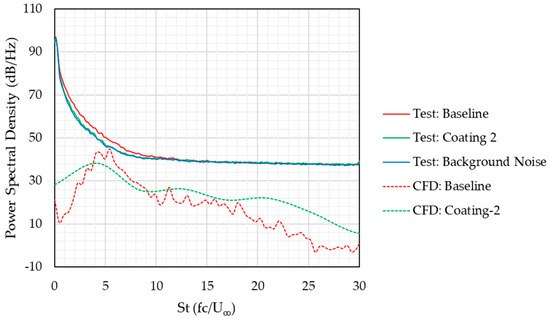
Wind is a significant contributor to global energy requirement, with technological advancements in this industry enabling its rapid growth over the last few decades. The rise in demand for clean energy provides the driving factor to make wind more efficient and widespread. One such solution involves mitigating the aerodynamic noise of wind turbine rotors to harness untapped energy and improve turbine efficiency. Quieter wind turbines gain community acceptance, promoting their widespread application. This article explores passive compliant coatings applied to a flat plate under fully turbulent conditions through Computational Fluid Dynamics (CFD) and wind tunnel testing. It extends prior flat plate investigations by evaluating the noise mitigation potential of passive compliant coatings in the context of wind turbine trailing edge (TE) noise. Two coatings with distinct material properties were investigated through Computational Aeroacoustics Analysis (CAA) and Fluid–Structure Interaction (FSI). While coating-1 (Dow Corning Silastic S-2) increased the overall sound pressure level (OASPL) by 2.89 dB, coating-2 (Dow Corning Sylgard 184) reduced TE noise by 2–4 dB/Hz between 600 and 1575 Hz and lowered the OASPL by 1.85 dB. Within the two configurations investigated, the differences in noise mitigation characteristics may be attributed to variations in coating stiffness and geometric compliance. Based on these simulations, wind tunnel tests were conducted to record noise measurements using coating-2 which revealed a 3.23 dB OASPL reduction, suggesting its suitability for wind turbine noise mitigation applications.
Full article
(This article belongs to the Topic Advances in Aeroacoustics Research in Wind Engineering)
►▼
Show Figures

Figure 1
Open AccessArticle
Design Optimization of a Low Reynolds Number Airfoil SG6043 for Small Horizontal Axis Wind Turbines
by
Arif Ali Rind, Muhammad Ramzan Luhur, Abdul Latif Manganhar, Sher Muhammad Ghoto and Sajjad Bhangwar
Wind 2026, 6(2), 20; https://doi.org/10.3390/wind6020020 - 6 May 2026
Abstract
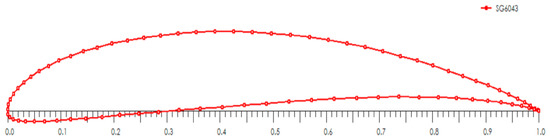
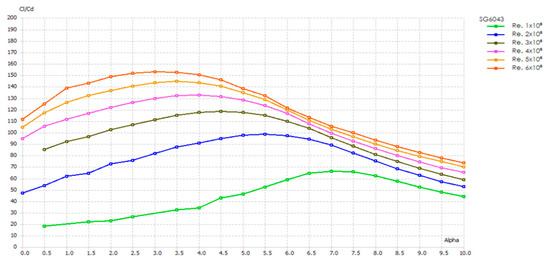
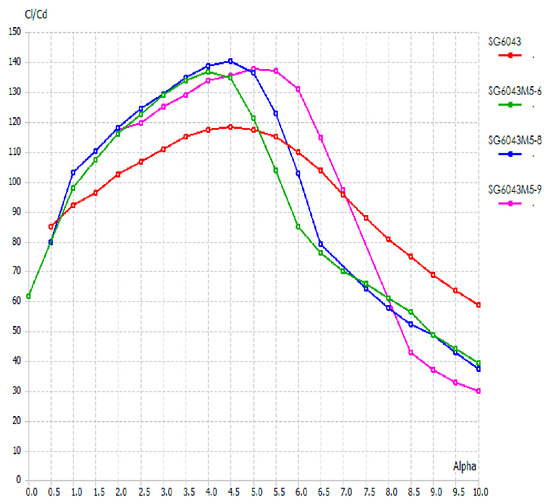
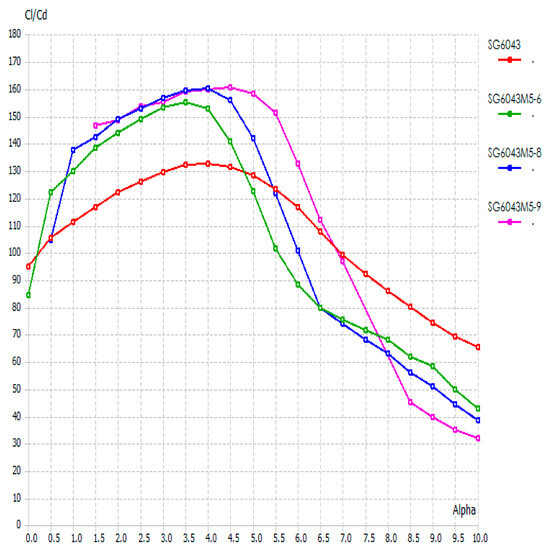
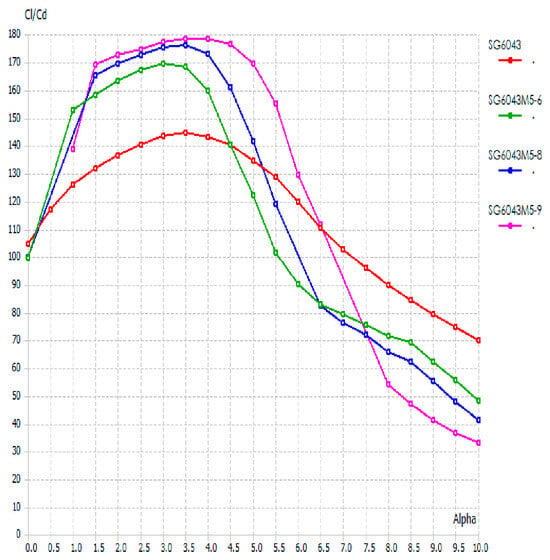
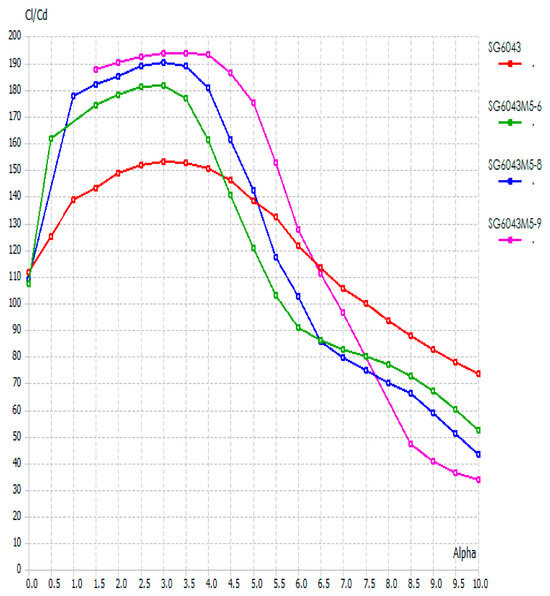
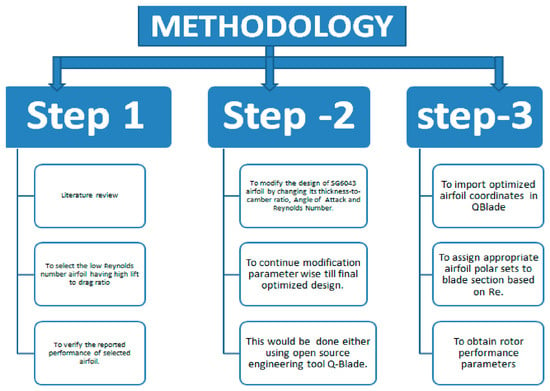
This study focuses on the aerodynamic performance optimization of the SG6043 airfoil for application in small horizontal axis wind turbines (HAWTs) operating under low-Reynolds-number conditions. Recognizing the critical role of lift-to-drag ratio (Cl/Cd) in maximizing turbine power output, the research investigates the performance
[...] Read more.
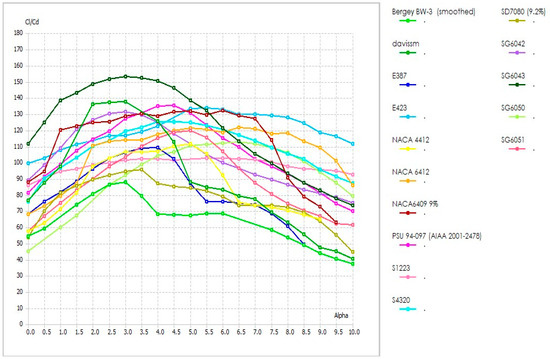
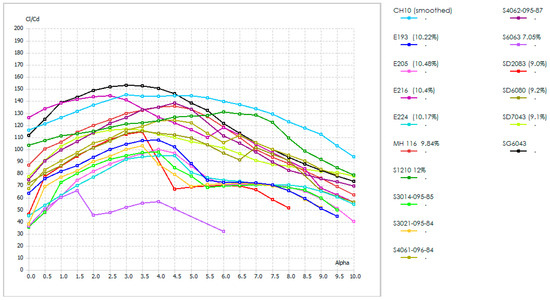
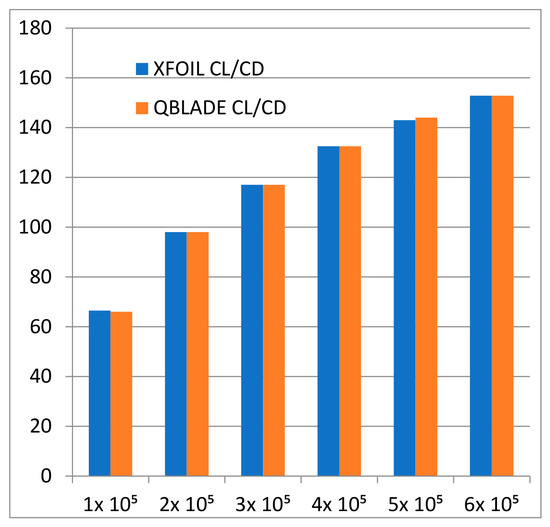
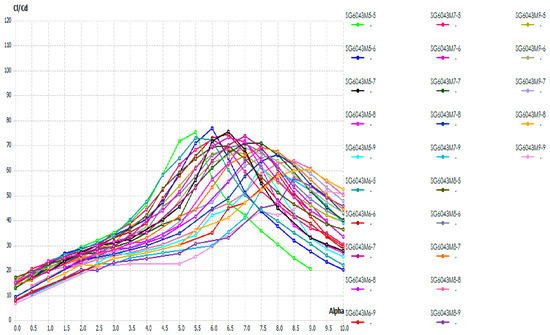
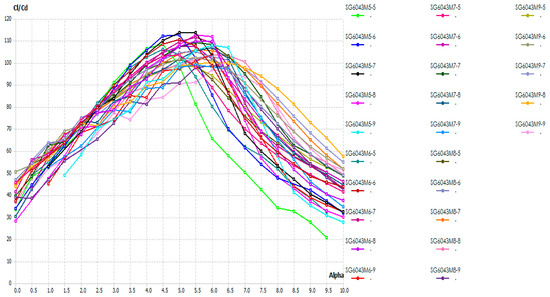
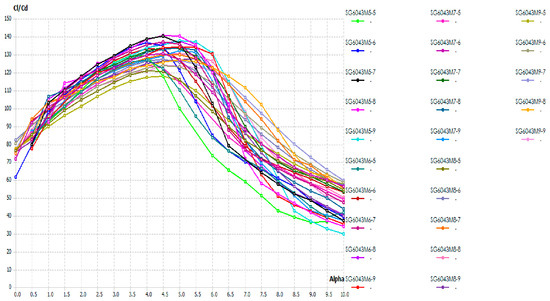
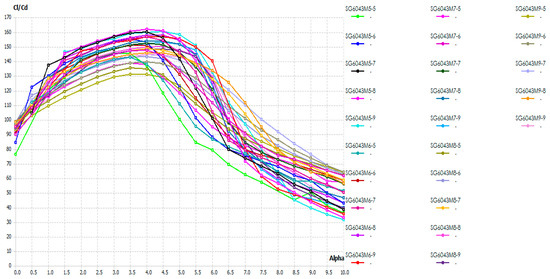
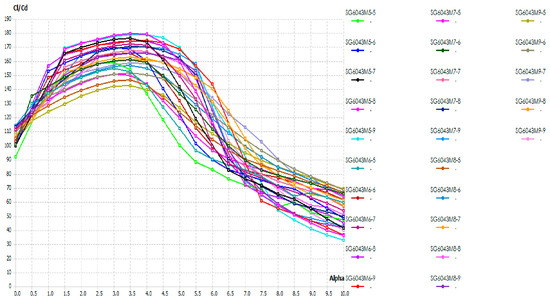
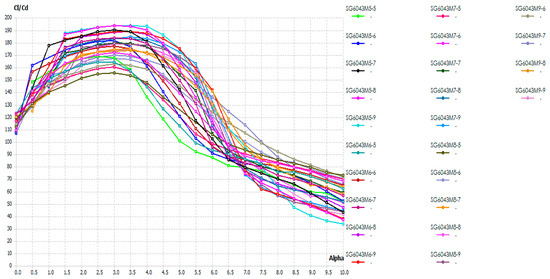
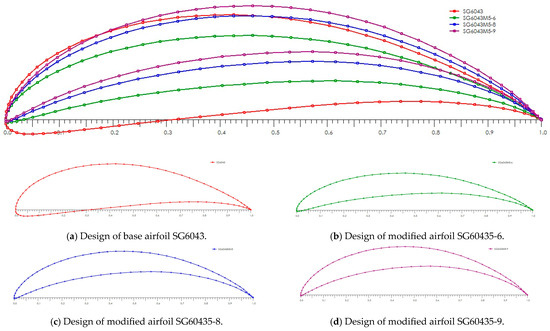
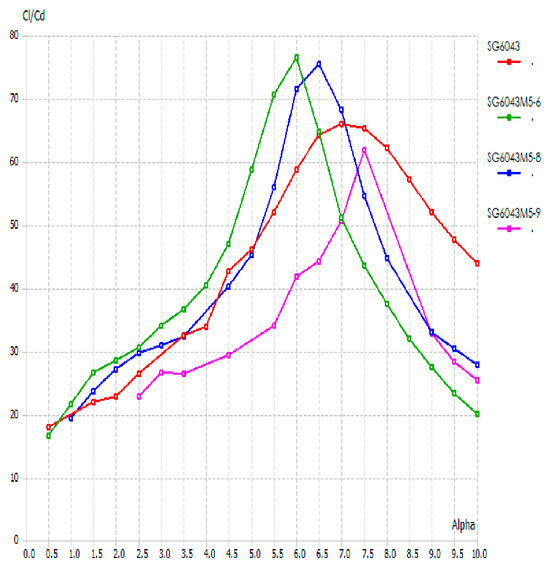
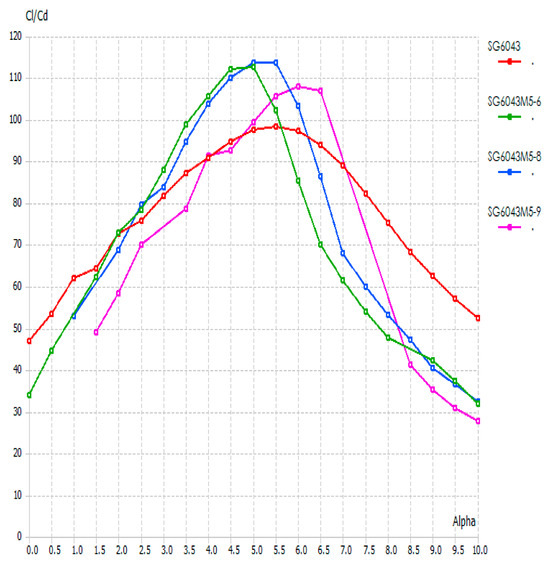
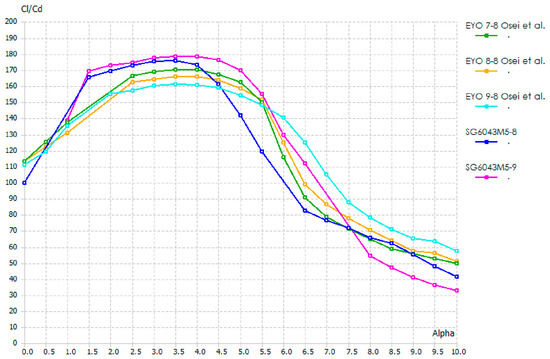
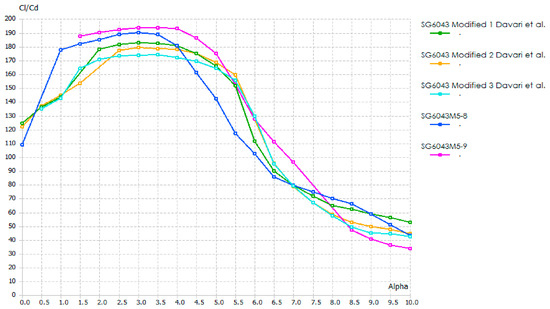
This study focuses on the aerodynamic performance optimization of the SG6043 airfoil for application in small horizontal axis wind turbines (HAWTs) operating under low-Reynolds-number conditions. Recognizing the critical role of lift-to-drag ratio (Cl/Cd) in maximizing turbine power output, the research investigates the performance of SG6043 through design modifications and computational analysis. Initially, the baseline airfoil’s aerodynamic characteristics were verified using simulation tools like QBlade v0.96.3 software, confirming its previously reported performance. Subsequently, the airfoil was systematically modified by varying key parameters including thickness-to-camber ratio and angle of attack (AOA), operating at different Reynolds numbers. Among the modified versions, SG6043M5-7, SG6043M5-8, and SG6043M5-9 showed significant aerodynamic performance improvement, with SG6042M5-9 achieving the highest Cl/Cd ratio of 193.44 at Re = 6 × 10⁵ and AOA = 3.5°. The results demonstrated that a reduced thickness (5%) combined with moderate to high camber (7–9%) enhances the aerodynamic performance.
Full article
(This article belongs to the Topic Advances in Aeroacoustics Research in Wind Engineering)
►▼
Show Figures

Figure 1
Open AccessArticle
Aerodynamic Effect of Gurney Flaps on NREL Phase VI Wind Turbine Blade
by
Asaad Hanoon, Ziaul Huque, Raghava Rao Kommalapati, Mst Sumaiya Akter Snigdha, Khadiza Akter Keya and Kenneth Oluwatobi Fadamiro
Wind 2026, 6(2), 19; https://doi.org/10.3390/wind6020019 - 21 Apr 2026
Abstract
►▼
Show Figures
As the population increases, the demand for power continues to rise. As fossil fuel resources reduce, wind energy emerges as a sustainable alternative and helps address adverse effects of global warming and environmental pollution caused by fossil fuels. Thus, this study focuses on
[...] Read more.
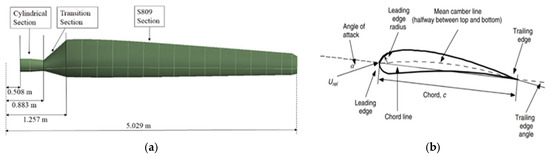
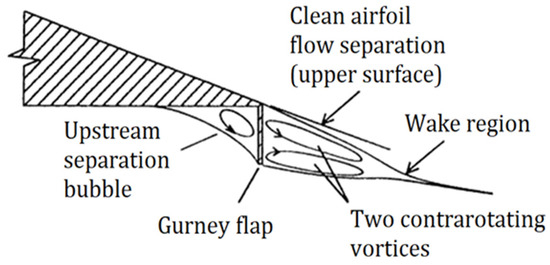
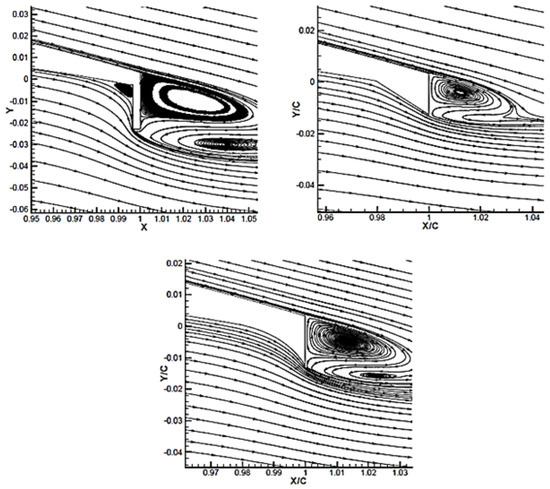
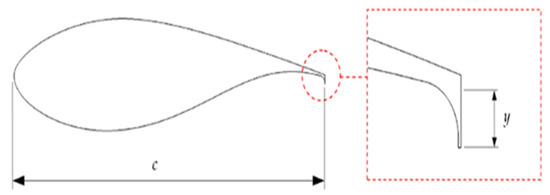
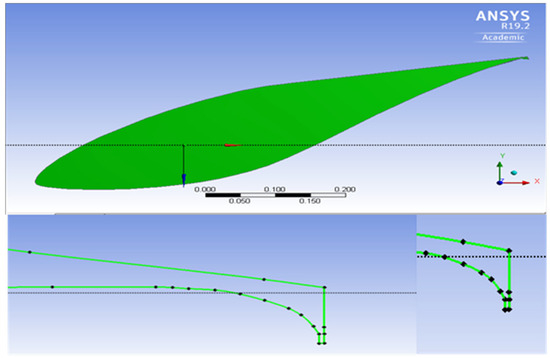
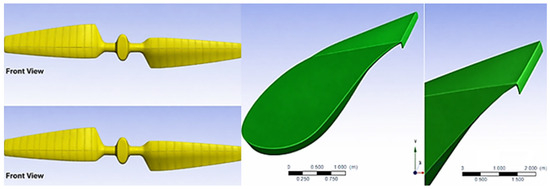
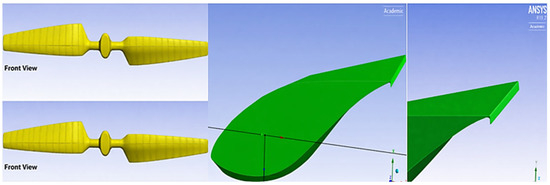
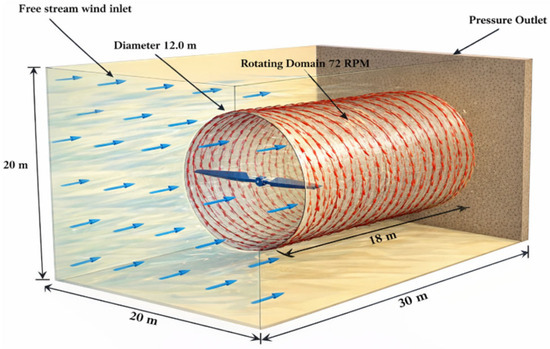
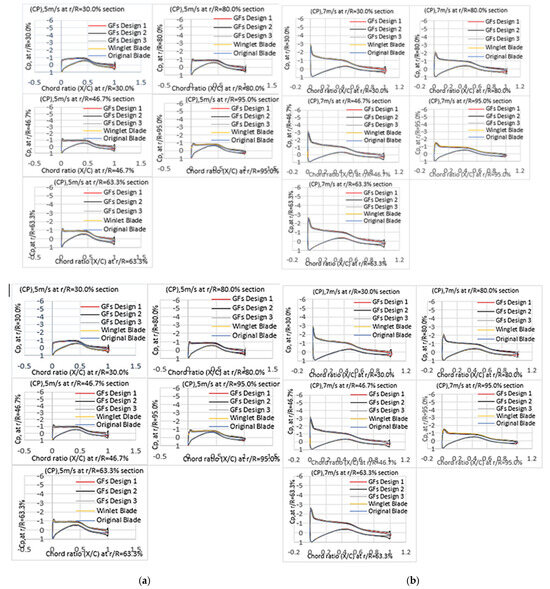
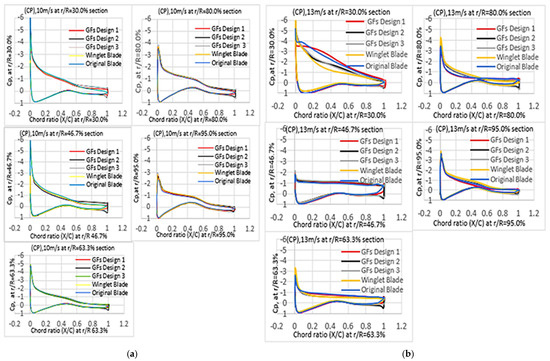
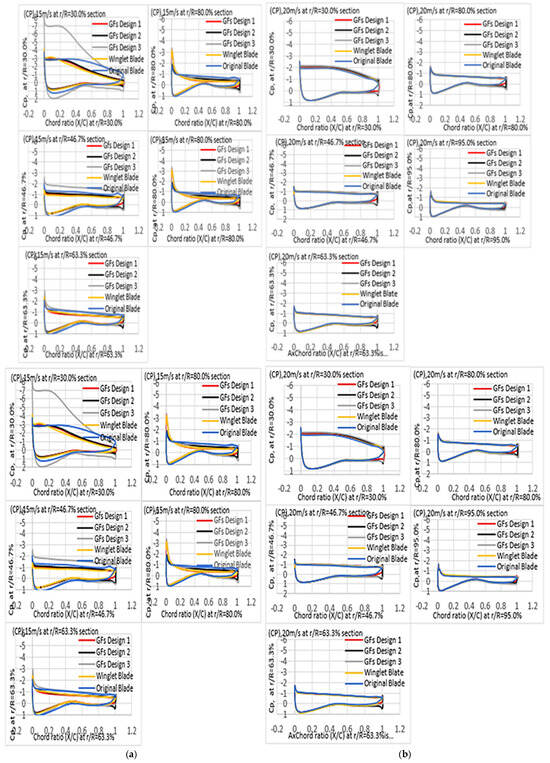
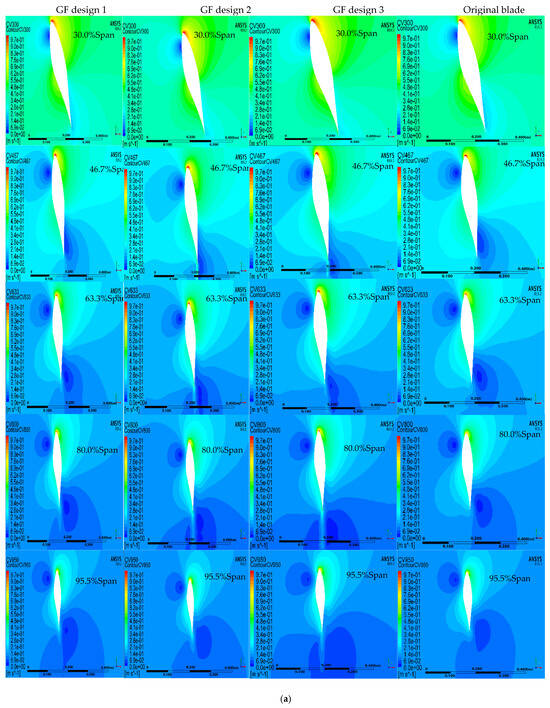
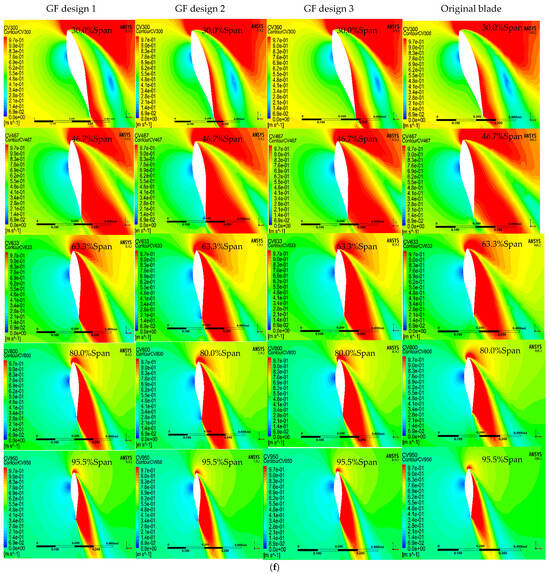
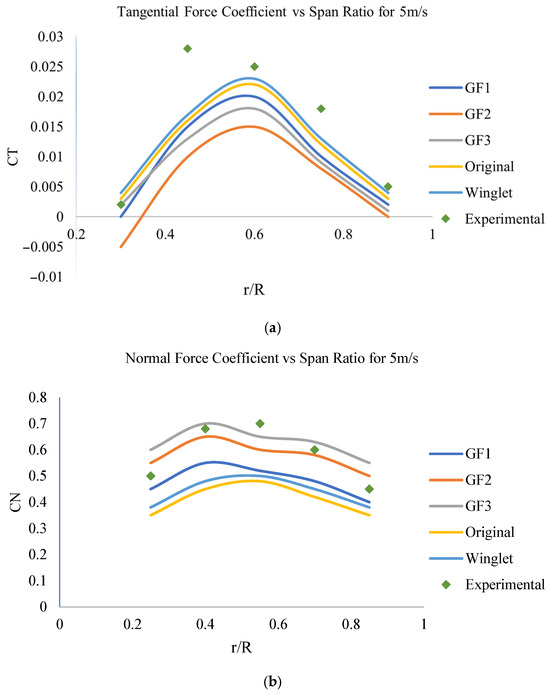
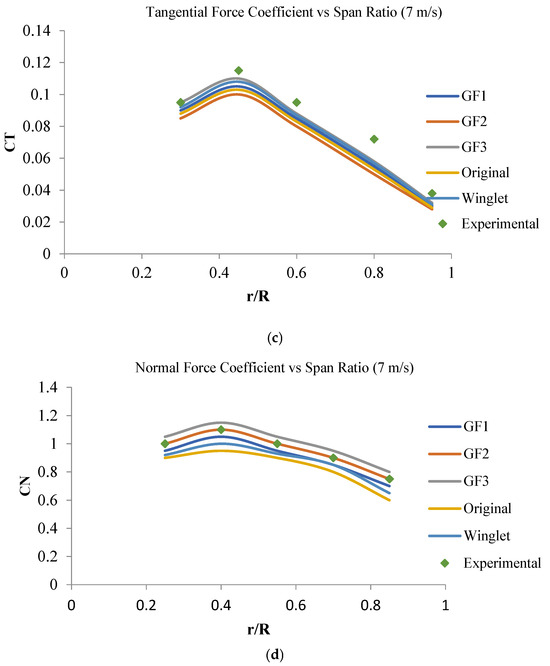
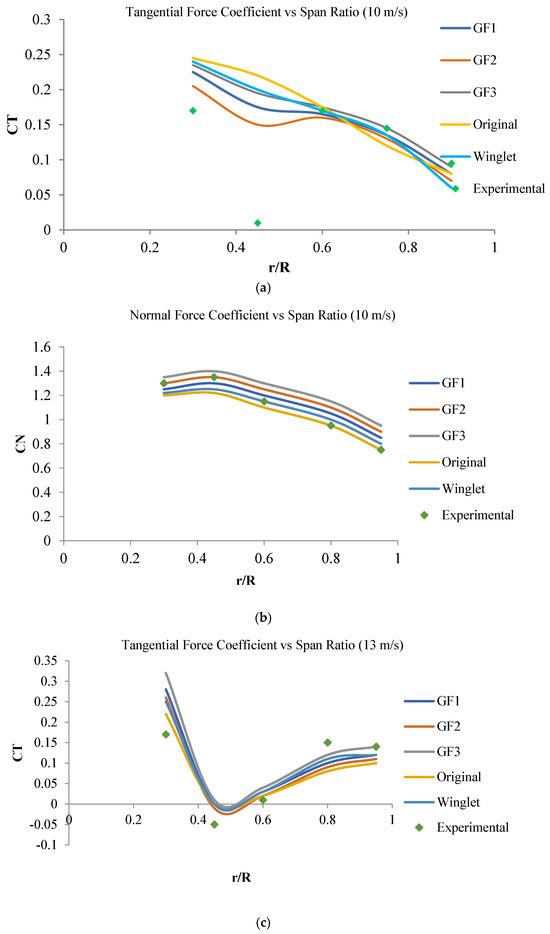
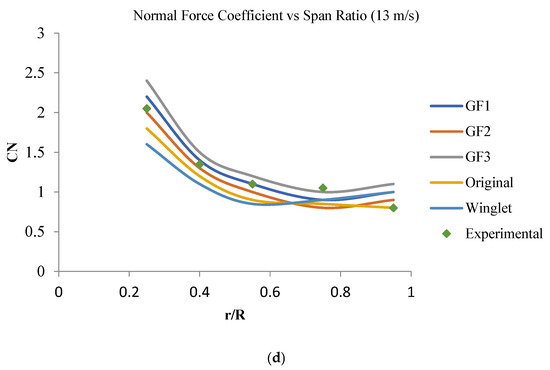
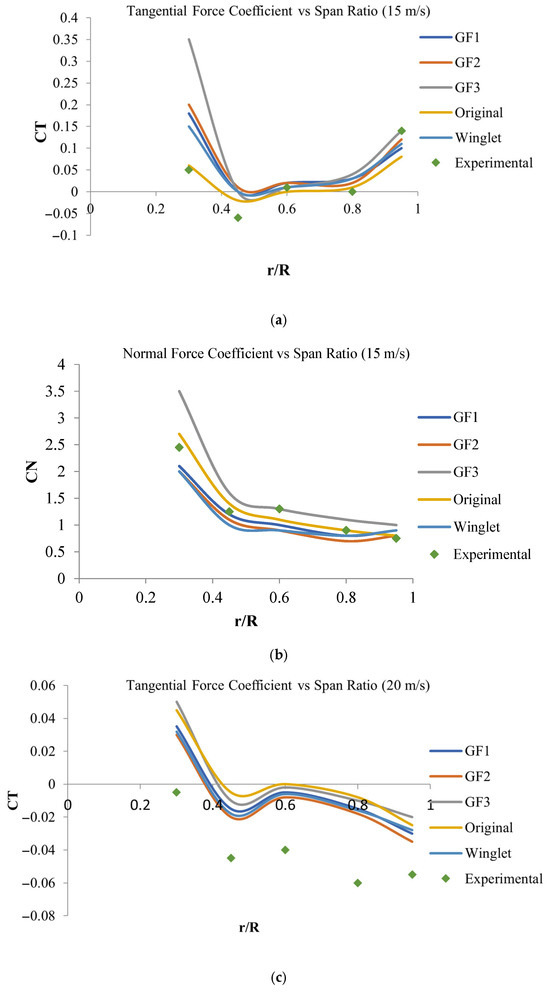
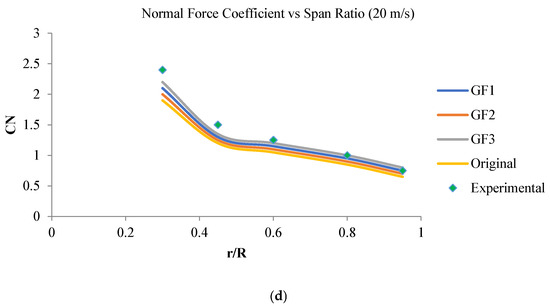
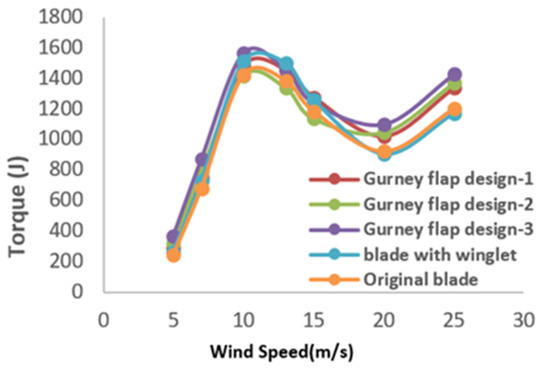
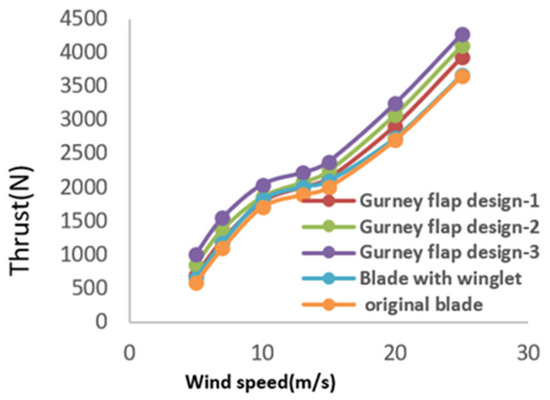
As the population increases, the demand for power continues to rise. As fossil fuel resources reduce, wind energy emerges as a sustainable alternative and helps address adverse effects of global warming and environmental pollution caused by fossil fuels. Thus, this study focuses on increasing the efficiency of wind turbines by improving their energy conversion. In this study, the NREL Phase VI wind turbine blade was modified by adding a Gurney flap at trailing edge along the entire span. Computational fluid dynamics simulations using ANSYS CFX 19.2 were performed on the modified blades to evaluate their aerodynamic performance. Three different flap lengths were investigated with six wind speeds varying from 5 m/s to 20 m/s. The results obtained were compared with those from NREL Phase VI original shape and a blade equipped with a winglet. Computational domain was divided into a rotating cylindrical region and a stationary rectangular part. The aerodynamic parameters calculated include torque, thrust, and normal and tangential forces coefficients. At low velocities, the addition of a Gurney flap had an insignificant impact on torque and thrust, whereas at medium to high wind speeds, significant increases were observed on torque, indicating more power production.
Full article

Figure 1
Open AccessArticle
Computational Fluid Dynamics Analysis of Aerodynamic Characteristics in a Small-Scale Horizontal-Axis Wind Turbine
by
Faisal Mahmuddin, Syerly Klara, Andi Ardianti, Balqis Shintarahayu, Zinzaisal Bakri and Audrye Kezya Nathania Rampo
Wind 2026, 6(2), 18; https://doi.org/10.3390/wind6020018 - 20 Apr 2026
Abstract
►▼
Show Figures
In various parts of Indonesia, particularly in coastal areas, wind energy can be used as a source of electricity, using wind turbines, whose energy depends on wind speed. Basically, the number of blades in a wind turbine affects the overall turbine performance. This
[...] Read more.
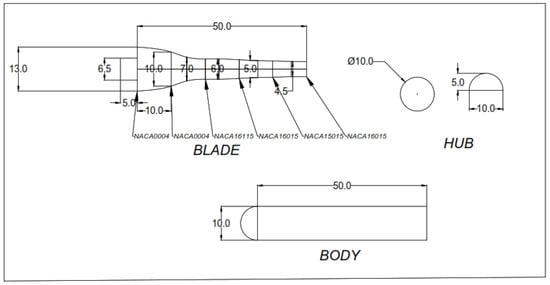
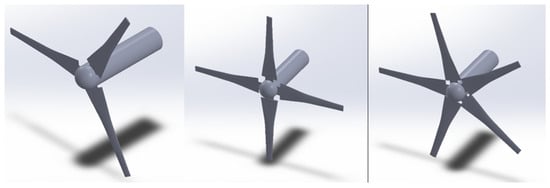
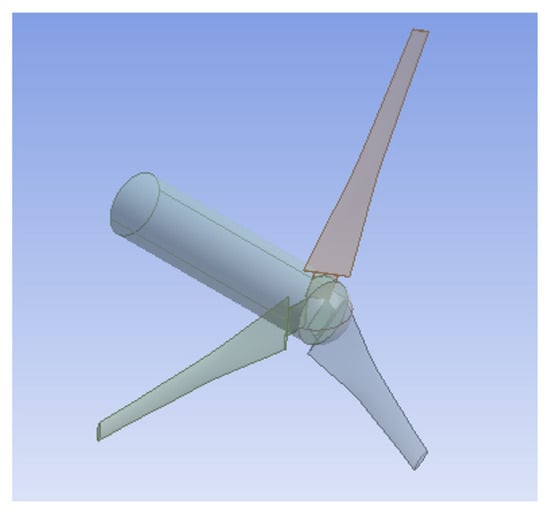
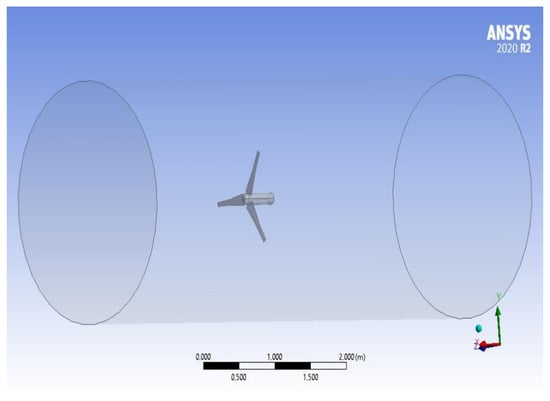
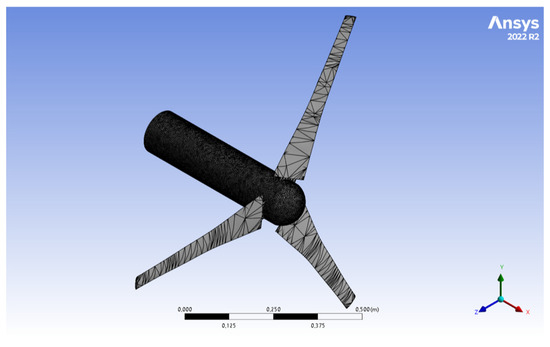
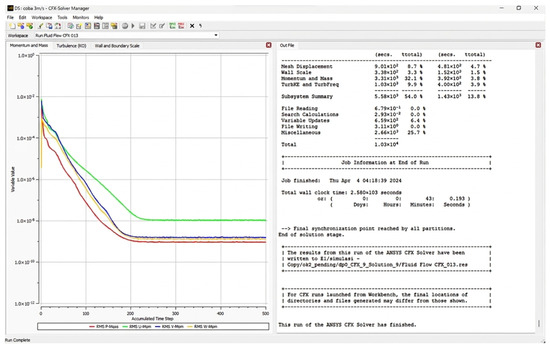
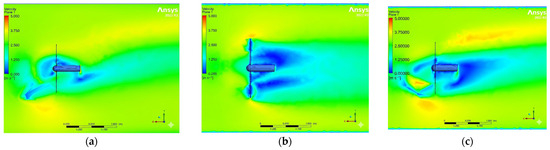
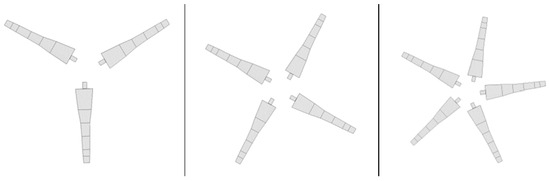
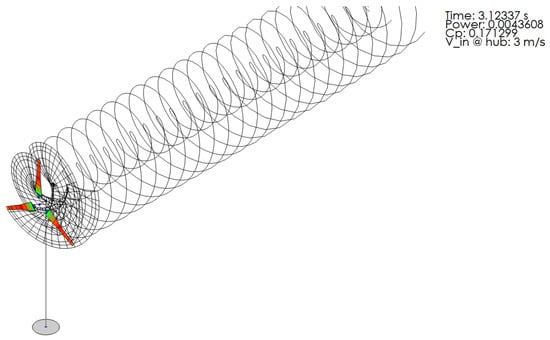
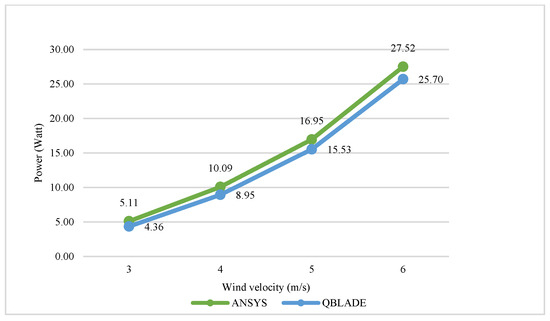
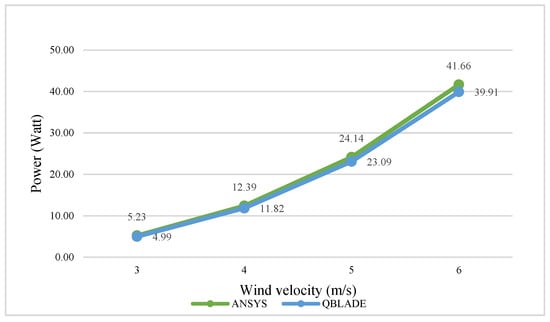
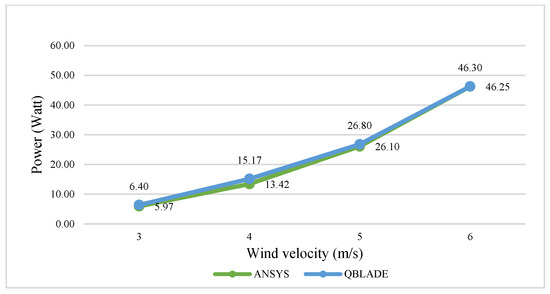
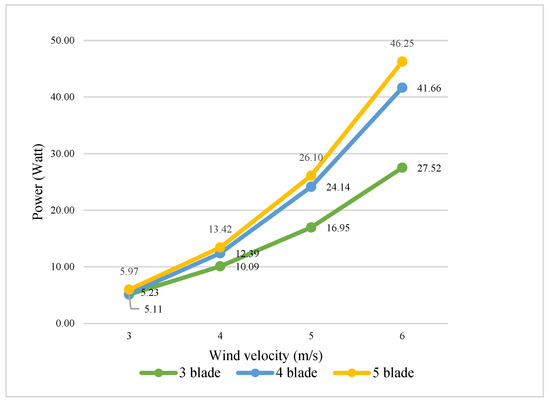
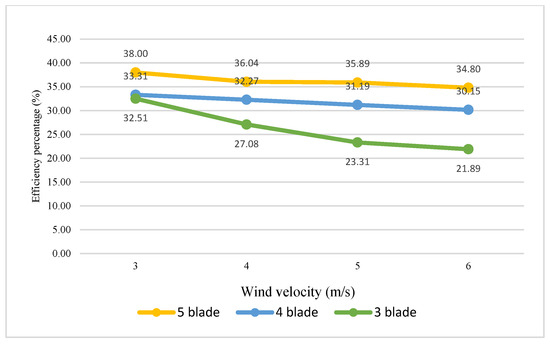
In various parts of Indonesia, particularly in coastal areas, wind energy can be used as a source of electricity, using wind turbines, whose energy depends on wind speed. Basically, the number of blades in a wind turbine affects the overall turbine performance. This research analyzes the influence of the blade number on the performance of a small-scale horizontal-axis wind turbine using experimental measurements and Computational Fluid Dynamics (CFD) simulations. The CFD simulations were conducted using ANSYS 2022 R2 software on a small-scale horizontal-axis wind turbine with variations in the number of blades, specifically three, four, and five blades, conducted at various wind speeds. It should be noted that due to the setup limitation in the experiment, only the RPM of the three-bladed turbine was measured. Other variables such as torque and power were derived from CFD simulations. The results of this research indicate that an increase in the number of turbine blades tends to result in higher power output, where the highest output obtained was 46.25 Watts. Furthermore, as the number of turbine blades increases, the turbine efficiency also tends to increase, but as wind speed increases, the efficiency decreases. This is demonstrated by the research results, where a wind turbine with five blades achieved the highest efficiency at a speed of 3 m/s, at 38.00%, while at a speed of 6 m/s, the efficiency was 34.80%. Overall, through experiments and cross-validation of CFD and QBlade version 0.963.1, the present study could confirm the significant effect of the number of blades on the power produced by a small-scale horizontal-axis wind turbine under low-speed conditions.
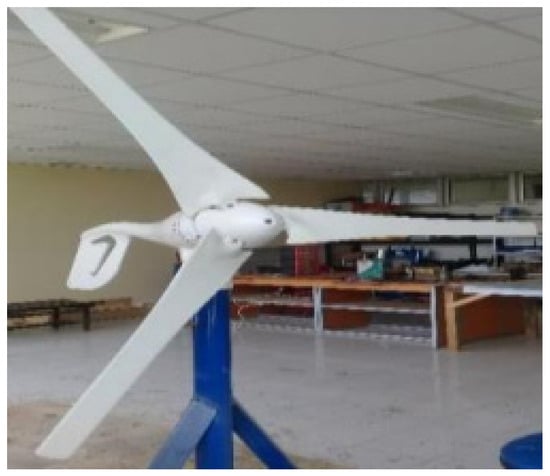
Full article

Figure 1
Open AccessArticle
A Support Process for Early-Stage Wind Farm Repowering Decisions Using Constrained Optimization Techniques to Address Uncertainty
by
Heather Norton, Lindsay Miller and Marianne Rodgers
Wind 2026, 6(2), 17; https://doi.org/10.3390/wind6020017 - 16 Apr 2026
Abstract
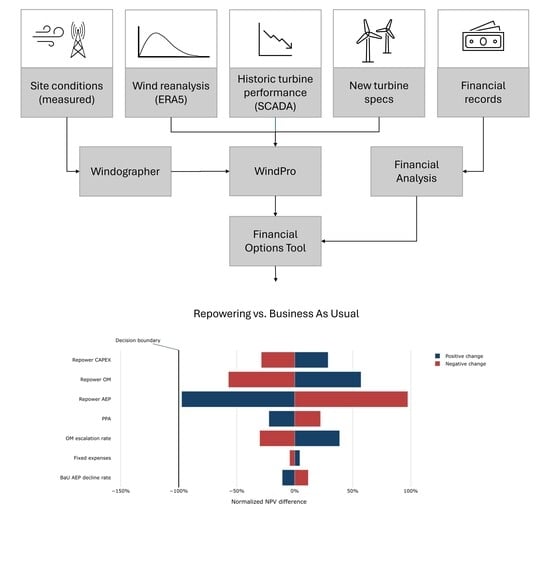
As wind farms in North America near the end of their design life, different end-of-life options need to be considered. Common options include decommissioning, lifetime extension, and repowering. In this research, a methodology to support early-stage repowering decisions is presented. Performance decline and
[...] Read more.
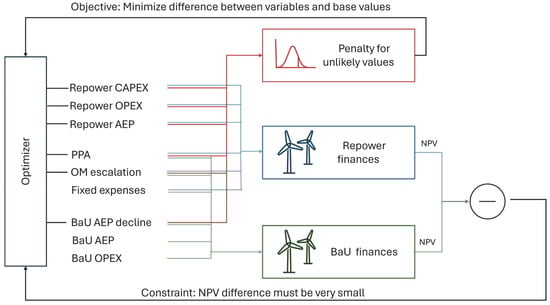
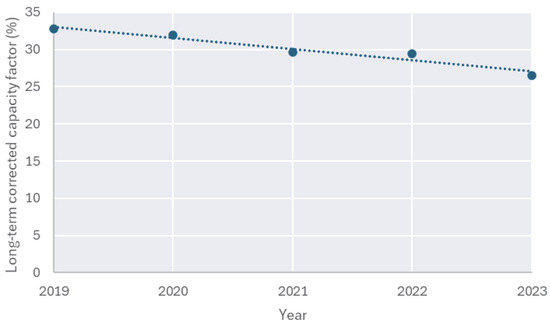
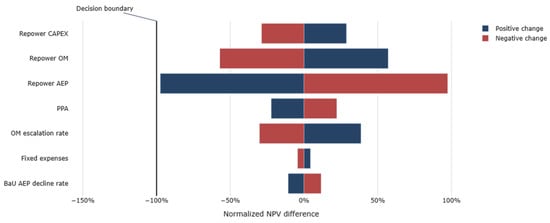
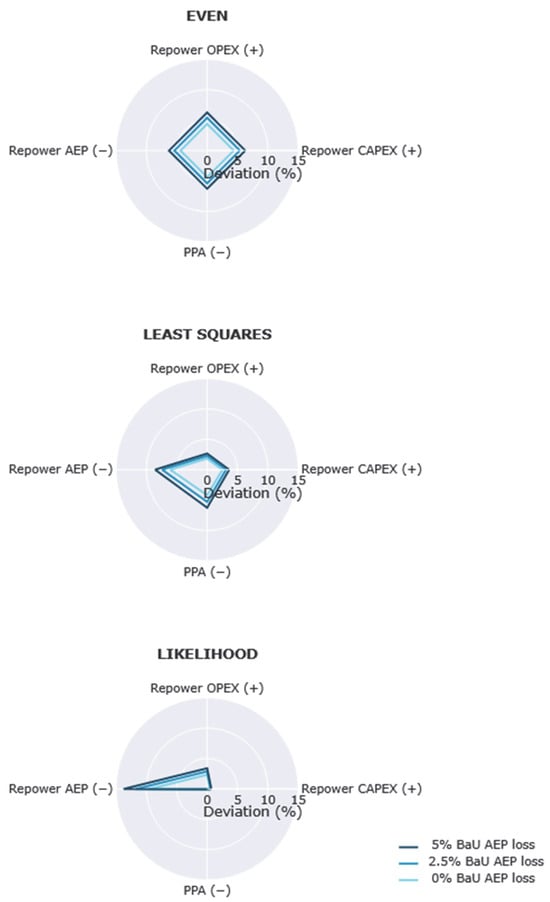
As wind farms in North America near the end of their design life, different end-of-life options need to be considered. Common options include decommissioning, lifetime extension, and repowering. In this research, a methodology to support early-stage repowering decisions is presented. Performance decline and repowering forecasts are obtained by combining analysis of past performance data and preliminary site plans for new turbines with turbine performance models from windPRO software. Financial metrics are computed using a simple techno-economic model with parameters informed by historical financial records. Repowering decisions are often sensitive to assumptions on key parameters, such as capital cost of repowering, which are poorly defined at the beginning of the process and subject to change quickly. This makes it difficult to provide guidance that will remain relevant as more information is obtained during future project planning stages. In this work, constrained optimization methods are used to identify sets of the key inputs that lie on the break-even point at which repowering is more profitable than continuing operation. Using this approach, which is novel in this context, the client gains an intuition for the ‘envelope’ within which the recommended guidance still holds. This decision-making process is applied to a case study using performance data and cost ranges from a real, anonymous wind farm.
Full article
(This article belongs to the Special Issue Canadian Wind Energy Research)
►▼
Show Figures

Graphical abstract
Open AccessArticle
Wind Effects of Surrounding Structures in an Urban Area on a High-Rise Building by Computational Fluid Dynamics
by
Citlali Villalobos-García, Luis Francisco Pérez-Moreno, Iván Fermín Arjona-Catzim and Enrique Rico-García
Wind 2026, 6(2), 16; https://doi.org/10.3390/wind6020016 - 2 Apr 2026
Abstract
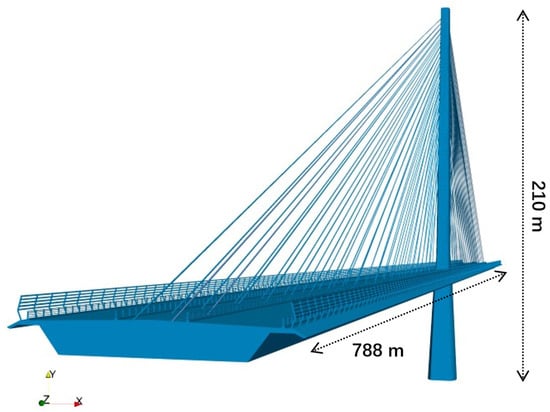
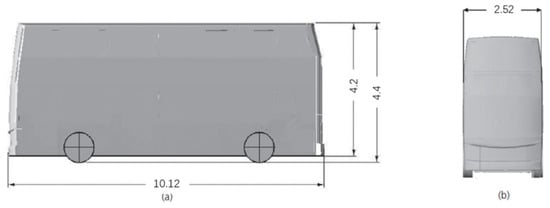
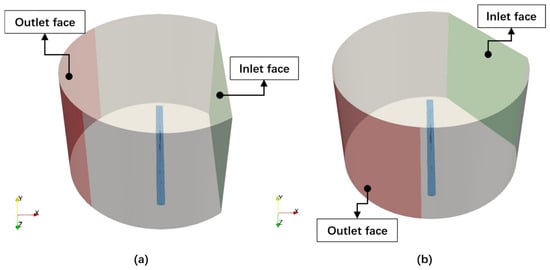
Wind design aims to ensure the stability, safety, and durability of a structure exposed to wind forces. This comparative study using Computational Fluid Dynamics (CFD) was conducted to evaluate the effects of surrounding structures in wind building design. Two scenarios were analyzed: the
[...] Read more.
Wind design aims to ensure the stability, safety, and durability of a structure exposed to wind forces. This comparative study using Computational Fluid Dynamics (CFD) was conducted to evaluate the effects of surrounding structures in wind building design. Two scenarios were analyzed: the first, in which the building was exposed to an open field, and the second, in which the building was surrounded by other buildings of equal or lower height. A CFD model, previously calibrated with experimental data, was used to simulate wind behavior. The results obtained showed significant differences between the two scenarios, confirming that nearby structures have a considerable impact on the distribution of wind pressures on the building. Therefore, the importance of considering surrounding buildings is highlighted. CFD could be a useful complementary tool for obtaining pressure coefficients and for detailed analyses of wind behavior, which could improve the design and safety of buildings under wind loads.
Full article
(This article belongs to the Special Issue Wind Effects on Civil Infrastructure)
►▼
Show Figures

Figure 1
Highly Accessed Articles
Latest Books
E-Mail Alert
News
Topics
Topic in
Applied Sciences, Energies, Forecasting, Solar, Wind, Batteries
Solar and Wind Power and Energy Forecasting, 2nd Edition
Topic Editors: Emanuele Ogliari, Alessandro Niccolai, Sonia LevaDeadline: 31 July 2026
Topic in
Applied Sciences, Energies, J. Compos. Sci., JMSE, Machines, Wind, Fluids
Advancements in Cost-Effective and Reliable Floating Offshore Wind Technologies: From Innovative Design to System Integration
Topic Editors: Yanfei Deng, Mingming Zhang, Xiaowei DengDeadline: 30 November 2026
Topic in
Applied Sciences, Energies, JMSE, Sustainability, Wind
Advances in Structural Wind-Resistant Analysis and Disaster Mitigation
Topic Editors: Tianyou Tao, Haojun Tang, Fei DingDeadline: 31 December 2026
Topic in
Aerospace, Applied Sciences, Energies, Machines, Wind
Advances in Aeroacoustics Research in Wind Engineering
Topic Editors: Firoz Alam, Yingai Jin, Xingjun HuDeadline: 15 February 2027
Special Issues
Special Issue in
Wind
Wind Effects on Civil Infrastructure
Guest Editor: Mihail IancoviciDeadline: 31 August 2026
Special Issue in
Wind
Novel Research on Permeable and Porous Elements in Wind Engineering
Guest Editors: Mao Xu, Yukio Tamura, Jingxue Wang, Luca PatrunoDeadline: 31 October 2026
Special Issue in
Wind
Canadian Wind Energy Research
Guest Editor: Marianne RodgersDeadline: 30 November 2026
Special Issue in
Wind
New Fluid Mechanics Research in Wind Engineering
Guest Editors: Costin Cosoiu, Horia HanganDeadline: 31 December 2026