
Skip to Content
  • 3.6
    Impact Factor
  • 5.3
    CiteScore
  • 25 days
    Submission to First Decision
  • 5 days
    Acceptance to Publication

Scientia Pharmaceutica

Scientia Pharmaceutica is an international, peer-reviewed, open access journal related to the pharmaceutical sciences, published quarterly online. It is the official journal of the Austrian Pharmaceutical Society (ÖPhG). Society members receive discounts on the article processing charges.

Get Alerted

Add your email address to receive forthcoming issues of this journal.

All Articles (1,672)

  • Review
  • Open Access

Intranasal Dry Powders as Dosage Forms: Formulation Aspects and Pharmacokinetic Evaluation Techniques

  • Carmen Schoeman,
  • Suzanne Elaine van Niekerk and
  • Josias Hamman
  • + 2 authors

Intranasal dry powder dosage forms have attracted interest in the last decade due to their advantages over liquid nasal dosage forms. These advantages include increased residence time in the nasal cavity, greater chemical stability and improved bioavailability for some drugs. Particle properties (e.g., particle size and morphology) of intranasal dry powder formulations play a vital role in the aerodynamic behaviour and consequently the deposition site of particles in the nasal cavity, which impacts drug delivery efficiency. Furthermore, the device used to administer the intranasal dry powder should be carefully selected, as it can influence particle deposition and ultimately therapeutic outcome. Certain challenges exist when evaluating the pharmacokinetic properties of intranasal dry powder formulations using in vitro and ex vivo models, such as uneven coverage of the epithelial surface and maintenance of membrane integrity. Furthermore, due to anatomical differences, some in vivo animal models may overestimate the drug delivery performance of intranasally administered dry powders (especially nose-to-brain drug delivery) and therefore have limited translational value. Although regulatory criteria for intranasal dry powders are available, specific and harmonised guidance on the formulation and evaluation of these dosage forms is still lacking. This review provides insights into key aspects of intranasal dry powder dosage forms, including formulation aspects, particle engineering strategies, the role of dry powder delivery devices, regulatory aspects and models available for the evaluation of the pharmacokinetic properties of intranasal dry powder dosage forms.

Sci. Pharm.

30 October 2026
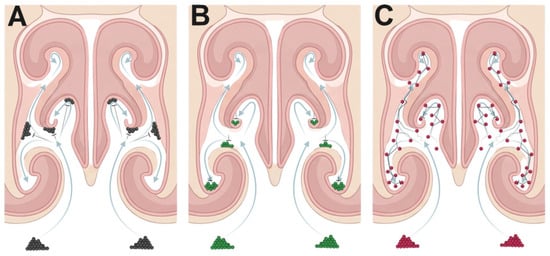
A graphical representation of the cross-sectional view of the nasal cavity, where (A) illustrates deposition of dry powder particles (black) by means of inertial impaction; (B) illustrates the deposition of dry powder particles (green) by means of gravitational sedimentation; and (C) illustrates the deposition of dry powder particles (red) by means of Brownian diffusion in the nasal cavity as a result of continuous, fast and colliding movement (created in BioRender. Schoeman, C. (2026) https://BioRender.com/mmh7d03) based on the descriptions of the mechanisms of deposition in Sun et al. [13]).
  • Article
  • Open Access

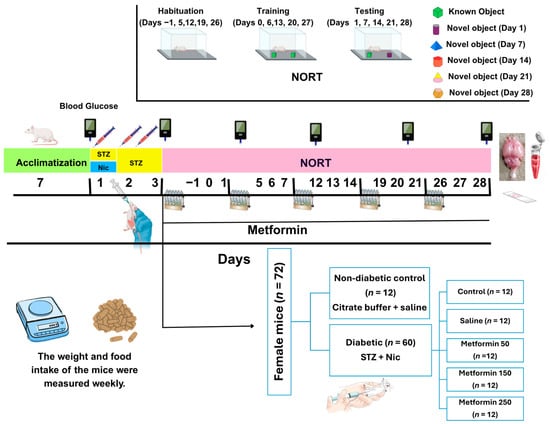
Type 2 diabetes mellitus (T2DM) has been associated with cognitive impairment and an increased risk of dementia in women. This study examined the effects of subchronic metformin treatment on recognition memory and brain pathology in female diabetic mice. T2DM was induced by streptozotocin and nicotinamide injections. Then, the mice received metformin (50, 150, or 250 mg/kg) orally for 28 days. Recognition memory was assessed using the Novel Object Recognition Test (n = 72). Biochemical analyses of whole-brain homogenates evaluated insulin, tau, and insoluble Aβ42 (n = 4). Histological analyses evaluated neuronal damage and amyloid-like deposits in the hippocampal Cornu Ammonis 1 (CA1) region, cerebral cortex, and cerebellum (n = 4). The diabetic mice exhibited hyperglycemia, hyperinsulinemia, dyslipidemia, impaired recognition memory, and neuronal damage. Metformin reduced blood glucose levels and improved recognition memory. Metformin also normalized serum and brain insulin levels and reduced neuronal damage in the CA1 region, cortex, and cerebellum. Metformin reduced cerebellar Congo red-positive amyloid-like deposits and decreased insoluble Aβ42 levels in whole-brain homogenates. However, at 250 mg/kg, metformin increased total and phosphorylated tau levels. These results suggest that metformin mitigates recognition memory deficits, attenuates neuronal damage, and reduces cerebellar amyloid-like deposits in female mice.

Sci. Pharm.

21 October 2026

Schematic representation of the experimental protocol. STZ: streptozotocin; Nic: nicotinamide; NORT: Novel object recognition test. Metformin was administered orally (mg/kg).
  • Article
  • Open Access

Accumulating evidence indicates extensive crosstalk between prostaglandin- and histamine-mediated signaling pathways. Histamine has been shown to induce COX-2 (Cyclooxygenase-2) expression and stimulate prostaglandin synthesis, whereas prostaglandins potentiate the vascular and inflammatory effects of histamine, creating a positive feedback loop that sustains inflammation. Based on these considerations, in silico molecular docking study of interaction of new cytisine and TGIQ (tetrahydroisoquinoline) derivatives with COX-2 and the histamine H1 receptor was performed. Among the synthesized compounds, compound 1 exhibited the highest binding affinity toward Cyclooxygenase-2 (COX-2). Within the binding pocket of the human H1 histamine receptor, the binding affinity profile differed markedly from that observed for COX-2, with compound 4 exhibiting the highest therapeutic potential and the strongest binding affinity, surpassing all reference compounds. The high anti-inflammatory efficacy of the studied compounds was confirmed in formalin- and histamine rat models. THIQ derivatives were shown to possess a higher anti-inflammatory index than cytisine derivatives. Comparative evaluation of the anti-inflammatory activity of isoquinoline and quinolizidine derivatives revealed that the isoquinoline derivatives possess marked anti-inflammatory properties combined with low toxicity, making them promising candidates for the development of novel, highly effective and safe anti-inflammatory agents for both oral and topical administration.

Sci. Pharm.

20 October 2026

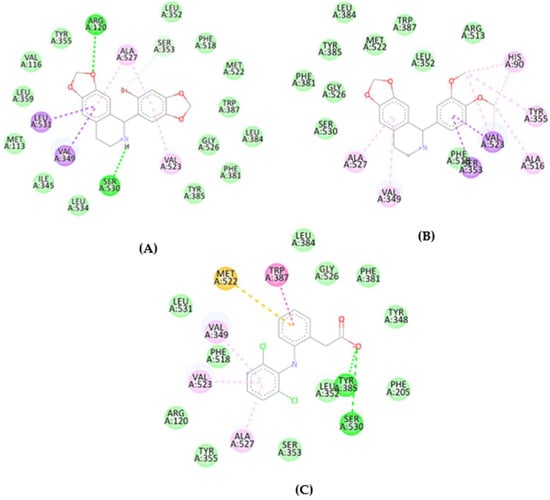
2D interaction profiles of selected ligands with amino acid residues in the active site of COX-2 (PDB ID: 1PXX). (A) Compound 1 (−9.2 kcal/mol), (B) Compound 2 (−8.2 kcal/mol), and (C) Diclofenac (−8.9 kcal/mol). Color coding of intermolecular interactions: conventional hydrogen bond, green; carbon–hydrogen bond, light green; π–sigma interaction, dark purple; π–π T-shaped and stacked interactions, pink; alkyl and π–alkyl interactions, light pink; π–sulfur interaction, dark orange. Dashed lines indicate interactions between the ligand and amino acid residues.
  • Article
  • Open Access

Antiviral Activity of Metabolites from Macrophomina phaseolina Against Herpes Simplex Virus 1

  • Javier E. Barúa,
  • Guadalupe Cantero-González and
  • Pablo H. Sotelo
  • + 6 authors

Macrophomina phaseolina, a necrotrophic fungus with global distribution, has emerged as a source of bioactive natural products. This study evaluated the antiviral potential of metabolites from M. phaseolina against herpes simplex virus 1 (HSV-1). A crude extract of M. phaseolina was obtained from the culture medium, and the secreted metabolites were purified using chromatographic techniques. Major metabolites were identified using NMR and HRMS techniques. The antiviral activity of these metabolites was assessed using Vero cells and virus quantitation through qPCR. In addition, a viral gene expression and intracellular genome quantification was performed using qPCR. Six metabolites were isolated: (−)-botryodiplodin, mellein, hydroxymellein, acetylphomalactone, asperlin, and isoasperlin. Their structures were elucidated through NMR and HRMS. Most metabolites showed limited antiviral efficacy; however, (−)-botryodiplodin demonstrated potent activity, with an EC50 of 2.44 µg/mL and a selectivity index of 4.79. In addition, acyclovir was included as a control, demonstrating >97% antiviral inhibition. Mechanistic studies showed that (−)-botryodiplodin inhibited HSV-1 production, reduced viral genome levels, and suppressed immediate–early, early, and late viral gene expressions. These findings demonstrate that (−)-botryodiplodin acts as an early-stage inhibitor of HSV-1 prior to viral transcription, establishing this natural metabolite as a promising chemical scaffold for the rational design of novel antiviral agents.

Sci. Pharm.

20 October 2026

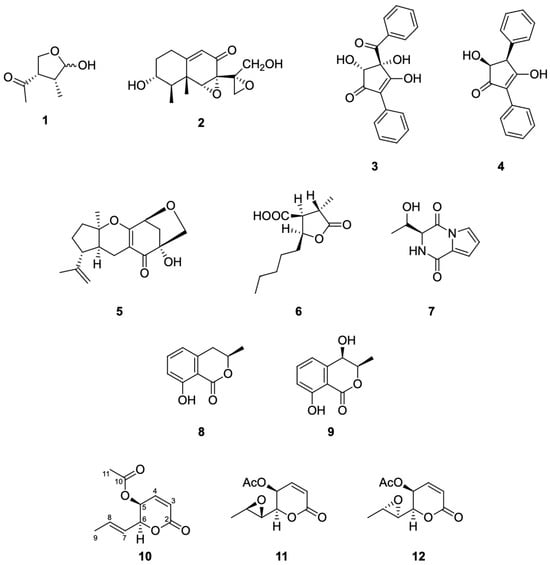
Structure of some previously reported metabolites from Macrophomina phaseolina. (−)-botryodiplodin (1), phaseolinone (2), phaseocyclopentenones A and B (3,4), guignardone A (5), phaseolinic acid (6), macrophominol (7), mellein (8), hydroxymellein (9), acetylphomalactone (10), asperlin (11) and isoasperlin (12).

Highly Accessed Articles

News & Conferences

Latest Issues

Open for Submission

Journal Sections

XFacebookLinkedIn
Sci. Pharm. - ISSN 2218-0532