


Journal Menu
► ▼ Journal Menu-
- Mathematics Home
- Aims & Scope
- Editorial Board
- Reviewer Board
- Topical Advisory Panel
- Early Career Editorial Board
- Instructions for Authors
- Special Issues
- Topics
- Sections & Collections
- Article Processing Charge
- Indexing & Archiving
- Editor’s Choice Articles
- Most Cited & Viewed
- Journal Statistics
- Journal History
- Journal Awards
- Society Collaborations
- Conferences
- Editorial Office
Journal Browser
► ▼ Journal BrowserNeed Help?
Announcements
31 July 2026
Ursula Röthlisberger Receives the Inaugural Michele Parrinello Award
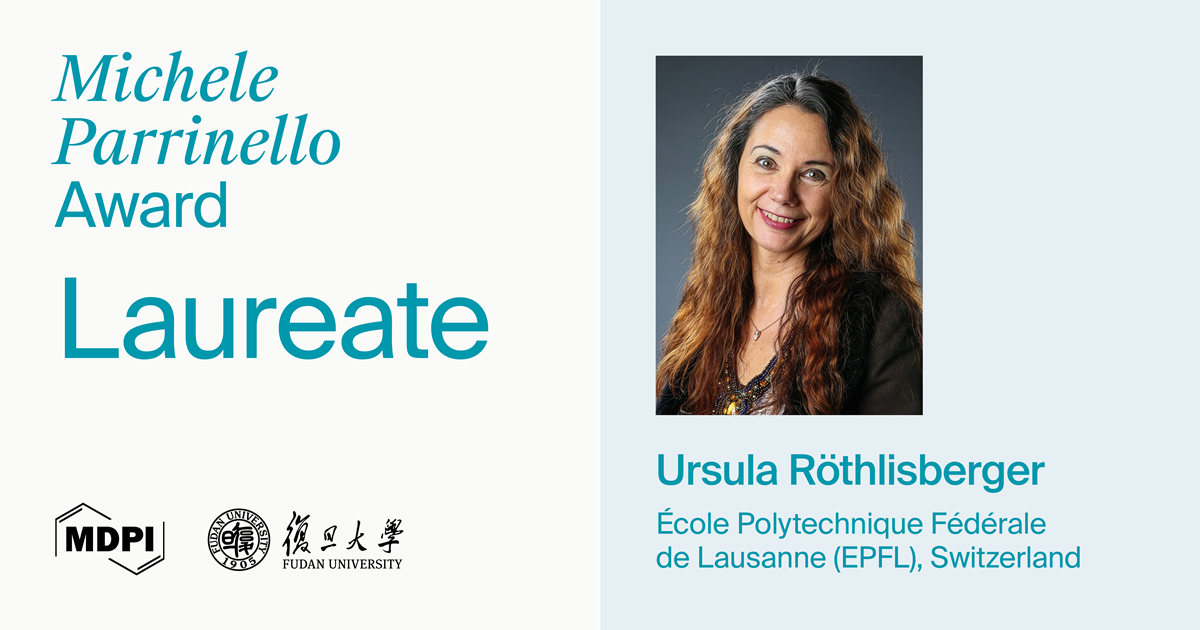
We are pleased to announce that the inaugural Michele Parrinello Award has been conferred upon Prof. Ursula Röthlisberger, in recognition of her outstanding contributions to computational chemistry and molecular simulation, particularly through her pioneering work in ab initio molecular dynamics and QM/MM multiscale simulation methods. This award celebrates researchers whose work embodies the spirit of scientific innovation and rigor that Professor Parrinello has championed throughout his career. We warmly congratulate Prof. Röthlisberger on this well-deserved recognition.
The achievements of Prof. Ursula Röthlisberger highlight the profound impact of computational methods on our understanding of complex chemical, biological, and materials systems. We invite the global scientific community to join us in celebrating her outstanding contributions to computational science.
“Professor Ursula Röthlisberger has been recognized by the 2026 Michele Parrinello Award Committee as an exceptional leader in computational chemistry and molecular simulation. Her innovative research has significantly advanced the predictive modeling of complex chemical and biological systems and has created lasting impact across multiple scientific disciplines. Through her outstanding scientific achievements, dedication to education, and leadership in the international research community, she has played a vital role in shaping the development of modern computational science.”
—Prof. Dr. Xin-Gao Gong, Chair of the Award Committee
2026 Michele Parrinello Award Laureate
|
Ursula Röthlisberger |
Prof. Ursula Röthlisberger is a professor at the Institute of Chemical Sciences and Engineering, EPFL, Switzerland, where she leads the Laboratory of Computational Chemistry and Biochemistry. Her research focuses on developing computational methods for molecular simulation, including ab initio molecular dynamics and quantum mechanical/molecular mechanical (QM/MM) multiscale approaches, to study complex chemical, biological, and materials systems. Her work has contributed to the advancement of computational frameworks for understanding molecular processes at the atomic level. She has also applied computational approaches to investigate next-generation photovoltaic materials, including dye-sensitized and perovskite solar cells, providing insights into material properties, stability, and performance through collaboration with experimental researchers. |

2026 Award Committee
Committee Chair:
- Prof. Dr. Xin-Gao Gong, Fudan University, China.
Committee Members (listed in alphabetical order):
- Prof. Alessandro Laio, Scuola Internazionale Superiore di Studi Avanzati, Italy;
- Prof. Michiel Sprik, University of Cambridge, UK;
- Prof. David J. Srolovitz, the University of Hong Kong, China;
- Prof. Mark E. Tuckerman, New York University, USA;
- Prof. Su-Huai Wei, Eastern Institute of Technology, Ningbo, China.
Note: The 2026 Award Committee comprises six members, including one anonymous member.
2026 Award Ceremony
The inaugural Michele Parrinello Award Ceremony will take place on 7 November 2026, at the Southern University of Science and Technology (SUSTech) in Shenzhen, China, as part of the 2026 MDPI Materials Science Conference. Further information and updates will be available on the official Michele Parrinello Award website.
About the Michele Parrinello Award
The Michele Parrinello Award was established in November 2025 to honor Professor Michele Parrinello’s enduring legacy in advancing computational science. This biennial international award recognizes senior researchers who have made outstanding contributions to computational physical sciences, encompassing physics, chemistry, and materials science. The recipient will receive a monetary prize of 50,000 EUR, a commemorative medal, and a certificate.
For further information about the award and the laureate, please visit the Michele Parrinello Award website.
20 August 2026
Mathematics | Highly Cited Review Papers in 2024–2025 (II)

1. “A Review of Fractional-Order Chaotic Systems of Memristive Neural Networks”
by Chunhua Wang, Yufei Li, Gang Yang and Quanli Deng
Mathematics 2025, 13(10), 1600; https://doi.org/10.3390/math13101600
Available online: https://www.mdpi.com/2227-7390/13/10/1600
2. “A Review of Fractional Order Calculus Applications in Electric Vehicle Energy Storage and Management Systems”
by Vicente Borja-Jaimes, Jorge Salvador Valdez-Martínez, Miguel Beltrán-Escobar, Alan Cruz-Rojas, Alfredo Gil-Velasco and Antonio Coronel-Escamilla
Mathematics 2025, 13(18), 2920; https://doi.org/10.3390/math13182920
Available online: https://www.mdpi.com/2227-7390/13/18/2920
3. “The Role of Fractional Calculus in Modern Optimization: A Survey of Algorithms, Applications, and Open Challenges”
by Edson Fernandez, Victor Huilcapi, Isabela Birs and Ricardo Cajo
Mathematics 2025, 13(19), 3172; https://doi.org/10.3390/math13193172
Available online: https://www.mdpi.com/2227-7390/13/19/3172
4. “Fractional Calculus in Physics: A Brief Review of Fundamental Formalisms”
by Cresus Fonseca de Lima Godinho and Ion Vasile Vancea
Mathematics 2025, 13(22), 3643; https://doi.org/10.3390/math13223643
Available online: https://www.mdpi.com/2227-7390/13/22/3643
5. “Going Next after “A Guide to Special Functions in Fractional Calculus”: A Discussion Survey”
by Virginia Kiryakova and Jordanka Paneva-Konovska
Mathematics 2024, 12(2), 319; https://doi.org/10.3390/math12020319
Available online: https://www.mdpi.com/2227-7390/12/2/319
6. “Review about the Permutation Approach in Hypothesis Testing”
by Stefano Bonnini, Getnet Melak Assegie and Kamila Trzcinska
Mathematics 2024, 12(17), 2617; https://doi.org/10.3390/math12172617
Available online: https://www.mdpi.com/2227-7390/12/17/2617
7. “Domain Generalization Through Data Augmentation: A Survey of Methods, Applications, and Challenges”
by Junjie Mai, Chongzhi Gao and Jun Bao
Mathematics 2025, 13(5), 824; https://doi.org/10.3390/math13050824
Available online: https://www.mdpi.com/2227-7390/13/5/824
8. “Selective Reviews of Bandit Problems in AI via a Statistical View”
by Pengjie Zhou, Haoyu Wei and Huiming Zhang
Mathematics 2025, 13(4), 665; https://doi.org/10.3390/math13040665
Available online: https://www.mdpi.com/2227-7390/13/4/665
9. “The Shapley Value in Data Science: Advances in Computation, Extensions, and Applications”
by Lei Qin, Yingqiu Zhu, Shaonan Liu, Xingjian Zhang and Yining Zhao
Mathematics 2025, 13(10), 1581; https://doi.org/10.3390/math13101581
Available online: https://www.mdpi.com/2227-7390/13/10/1581
10. “Persistent Topological Laplacians—A Survey”
by Xiaoqi Wei and Guo-Wei Wei
Mathematics 2025, 13(2), 208; https://doi.org/10.3390/math13020208
Available online: https://www.mdpi.com/2227-7390/13/2/208
11. “Graph Convolutional Network for Image Restoration: A Survey”
by Tongtong Cheng, Tingting Bi, Wen Ji and Chunwei Tian
Mathematics 2024, 12(13), 2020; https://doi.org/10.3390/math12132020
Available online: https://www.mdpi.com/2227-7390/12/13/2020
12. “Hallucination Mitigation for Retrieval-Augmented Large Language Models: A Review”
by Wan Zhang and Jing Zhang
Mathematics 2025, 13(5), 856; https://doi.org/10.3390/math13050856
Available online: https://www.mdpi.com/2227-7390/13/5/856
13. “Survey of Quantum Generative Adversarial Networks (QGAN) to Generate Images”
by Mohammadsaleh Pajuhanfard, Rasoul Kiani and Victor S. Sheng
Mathematics 2024, 12(23), 3852; https://doi.org/10.3390/math12233852
Available online: https://www.mdpi.com/2227-7390/12/23/3852
14. “Watermarking for Large Language Models: A Survey”
by Zhiguang Yang, Gejian Zhao and Hanzhou Wu
Mathematics 2025, 13(9), 1420; https://doi.org/10.3390/math13091420
Available online: https://www.mdpi.com/2227-7390/13/9/1420
15. “A Survey of Loss Functions in Deep Learning”
by Caiyi Li, Kaishuai Liu and Shuai Liu
Mathematics 2025, 13(15), 2417; https://doi.org/10.3390/math13152417
Available online: https://www.mdpi.com/2227-7390/13/15/2417
19 August 2026
9th MDPI Guest Editor Club Webinar 2026 | Computer Science & Mathematics Session, 24 August 2026

The MDPI Guest Editor Club Webinar Series brings together Guest Editors to exchange ideas and showcase research published through Special Issues. This session, focused on research in Computer Science & Mathematics, discusses publication quality and the insights of a Guest Editor through the experience sharing of two experienced Guest Editors in the subject.
Register now and join us!
Date: 24 August 2026
Time: 4:00 p.m. CEST | 10:00 a.m. EDT
Webinar ID: 842 9120 6832
Webinar Secretariat: webinar@mdpi.com
Register now for free!

Program:
|
Speaker/Presentation |
Time in CEST |
Time in EDT |
|
MDPI Host |
4:00–4:05 p.m. |
10:00–10:05 a.m. |
|
Prof. Dr. Darren A. Narayan |
4:05–4:25 p.m. |
10:05–10:25 a.m. |
|
Prof. Dr. Tao Liu |
4:25–4:45 p.m. |
10:25–10:45 a.m. |
|
Dr. Pradip Debnath |
4:45–5:05 p.m. |
10:45–11:05 a.m. |
|
Q&A Session |
5:05–5:20 p.m. |
11:05–11:20 a.m. |
|
MDPI Host |
5:20–5:30 p.m. |
11:20–11:30 a.m. |
After registering, you will receive a confirmation email outlining how to join this webinar. Registrations with academic institutional email addresses will be prioritized.
Unable to attend? Register anyway, and we will let you know when the recording is available to watch.
Webinar Speakers:
- Prof. Dr. Darren A. Narayan, School of Mathematics and Statistics, College of Science, Rochester Institute of Technology, USA;
- Prof. Dr. Tao Liu, College of Sciences, Northeastern University, China;
- Dr. Pradip Debnath, Department of Mathematical Sciences, Tezpur University, India.
19 August 2026
Mathematics | Highly Cited Review Papers in 2024–2025 (I)

1. “Recent Advances in Optimization Methods for Machine Learning: A Systematic Review”
by Xiaodong Liu, Huaizhou Qi, Suisui Jia, Yongjing Guo and Yang Liu
Mathematics 2025, 13(13), 2210; https://doi.org/10.3390/math13132210
Available online: https://www.mdpi.com/2227-7390/13/13/2210
2. “A Review of Intelligent Airfoil Aerodynamic Optimization Methods Based on Data-Driven Advanced Models”
by Liyue Wang, Haochen Zhang, Cong Wang, Jun Tao, Xinyue Lan, Gang Sun and Jinzhang Feng
Mathematics 2024, 12(10), 1417; https://doi.org/10.3390/math12101417
Available online: https://www.mdpi.com/2227-7390/12/10/1417
3. “A Survey of Approximation Algorithms for the Universal Facility Location Problem”
by Hanyin Xiao, Jiaming Zhang, Zhikang Zhang and Weidong Li
Mathematics 2025, 13(7), 1023; https://doi.org/10.3390/math13071023
Available online: https://www.mdpi.com/2227-7390/13/7/1023
4. “Machine Learning for Enhancing Metaheuristics in Global Optimization: A Comprehensive Review”
by Antonio Bolufé-Röhler and Dania Tamayo-Vera
Mathematics 2025, 13(18), 2909; https://doi.org/10.3390/math13182909
Available online: https://www.mdpi.com/2227-7390/13/18/2909
5. “Truck Appointment Scheduling: A Review of Models and Algorithms”
by Maria D. Gracia, Julio Mar-Ortiz and Manuel Vargas
Mathematics 2025, 13(3), 503; https://doi.org/10.3390/math13030503
Available online: https://www.mdpi.com/2227-7390/13/3/503
6. “Optimizing Electricity Markets Through Game-Theoretical Methods: Strategic and Policy Implications for Power Purchasing and Generation Enterprises”
by Lefeng Cheng, Pengrong Huang, Mengya Zhang, Ru Yang and Yafei Wang
Mathematics 2025, 13(3), 373; https://doi.org/10.3390/math13030373
Available online: https://www.mdpi.com/2227-7390/13/3/373
7. “A Survey on Solving the Matrix Equation AXB = C with Applications”
by Qing-Wen Wang, Lv-Ming Xie and Zi-Han Gao
Mathematics 2025, 13(3), 450; https://doi.org/10.3390/math13030450
Available online: https://www.mdpi.com/2227-7390/13/3/450
8. “Advancements in Physics-Informed Neural Networks for Laminated Composites: A Comprehensive Review”
by Salman Khalid, Muhammad Haris Yazdani, Muhammad Muzammil Azad, Muhammad Umar Elahi, Izaz Raouf and Heung Soo Kim
Mathematics 2025, 13(1), 17; https://doi.org/10.3390/math13010017
Available online: https://www.mdpi.com/2227-7390/13/1/17
9. “Modeling Wave Packet Dynamics and Exploring Applications: A Comprehensive Guide to the Nonlinear Schrödinger Equation”
by Natanael Karjanto
Mathematics 2024, 12(5), 744; https://doi.org/10.3390/math12050744
Available online: https://www.mdpi.com/2227-7390/12/5/744
10. “Numerical Analysis of Damage in Composites: From Intra-Layer to Delamination and Data-Assisted Methods”
by Alireza Taherzadeh-Fard, Alejandro Cornejo, Sergio Jiménez and Lucia G. Barbu
Mathematics 2025, 13(10), 1578; https://doi.org/10.3390/math13101578
Available online: https://www.mdpi.com/2227-7390/13/10/1578
11. “Review of Experimental, Theoretical and Numerical Advances in Multi-Crack Fracture Mechanics”
by Zhao-Wei Wang, D. M. Li, Yi-Fan Zhong, Yi-Kung Liu and Yu-Nong Shao
Mathematics 2024, 12(24), 3881; https://doi.org/10.3390/math12243881
Available online: https://www.mdpi.com/2227-7390/12/24/3881
12. “Physics-Informed Neural Networks for Higher-Order Nonlinear Schrödinger Equations: Soliton Dynamics in External Potentials”
by Leonid Serkin and Tatyana L. Belyaeva
Mathematics 2025, 13(11), 1882; https://doi.org/10.3390/math13111882
Available online: https://www.mdpi.com/2227-7390/13/11/1882
13. “Complex Dynamics and Intelligent Control: Advances, Challenges, and Applications in Mining and Industrial Processes”
by Luis Rojas, Víctor Yepes and José Garcia
Mathematics 2025, 13(6), 961; https://doi.org/10.3390/math13060961
Available online: https://www.mdpi.com/2227-7390/13/6/961
14. “Compliant Force Control for Robots: A Survey”
by Minglei Zhu, Dawei Gong, Yuyang Zhao, Jiaoyuan Chen, Jun Qi and Shijie Song
Mathematics 2025, 13(13), 2204; https://doi.org/10.3390/math13132204
Available online: https://www.mdpi.com/2227-7390/13/13/2204
15. “PID vs. Model-Based Control for the Double Integrator Plus Dead-Time Model: Noise Attenuation and Robustness Aspects”
by Mikulas Huba, Pavol Bistak, Damir Vrancic and Mingwei Sun
Mathematics 2025, 13(4), 664; https://doi.org/10.3390/math13040664
Available online: https://www.mdpi.com/2227-7390/13/4/664
18 August 2026
Mathematics Exceptional Reviewers List 2026

We are thrilled to share the updated Exceptional Reviewers List 2026. This program was established to recognize and honor scholars who have consistently delivered exceptional review reports to our journal. Committed to fostering rigorous research and promoting knowledge exchange, Mathematics acknowledges the vital role that our reviewers play in maintaining the quality and integrity of the articles that we publish. According to surveys conducted in 2025, 93% of our authors rated the peer-review process as good or excellent, reflecting the strength and effectiveness of our reviewer community.
We would like to express our appreciation to all reviewers who have volunteered their time and expertise to support Mathematics’s peer-review process. Their dedication and attention to detail in evaluating manuscripts, offering valuable feedback, and contributing to academic rigor are commendable.
The Exceptional Reviewers List was introduced in 2026. Each quarter, we will select a group of outstanding reviewers and introduce them here.
Q1
Name: Dr. Duc Pham
Affiliation: Hung Yen University of Technology and Education, Vietnam
Name: Dr. Vladica Stojanović
Affiliation: University of Criminal Investigation and Police Studies, Serbia
Name: Prof. Ennis Rosas
Affiliation: Universidad De Oriente, Colombia
Name: Prof. Antanas Laurincikas
Affiliation: Vilnius University, Lithuania
Name: Dr. Viet-Thanh Pham
Affiliation: Industrial University of Ho Chi Minh City, Vietnam
Name: Prof. Snezhana Hristova
Affiliation: University of Plovdiv, Bulgaria
Name: Dr. Mariyan Milev
Affiliation: Sofia University, Bulgaria
Name: Dr. Linhe Zhu
Affiliation: Jiangsu University, China
Name: Prof. Shigeru Kanemitsu
Affiliation: AW&B Institute, Japan
Name: Dr. Canyi Chen
Affiliation: University of Michigan, USA
Name: Prof. Raul Matsushita
Affiliation: Universidade de Brasília, Brazil
“Peer review is essential to ensure scientific rigor, transparency, and the continuous improvement of research. I am honored to contribute to this process.”
Name: Dr. Jiabin Zuo
Affiliation: Guangzhou University, China
“It is my pleasure to contribute to the peer-review process of Mathematics. I always try my best to give objective, detailed comments to help authors polish their mathematical research and improve the quality of manuscripts. I will keep devoting my time to reviewing manuscripts in the future.”
Name: Dr. Nhieu Luong
Affiliation: University of Economics Ho Chi Minh, Vietnam
“Reviewing for Mathematics has been a rewarding opportunity to support rigorous scholarship, engage with emerging ideas, and contribute constructively to the advancement of mathematical research.”
14 August 2026
Interview with Dr. Chaoqian Wang—Winner of the Mathematics Best PhD Thesis Award

The journal Mathematics (ISSN 2227-7390) is proud to present the 2025 Mathematics Best PhD Thesis Award to Dr. Chaoqian Wang.
Name: Dr. Chaoqian Wang
Doctoral institution: George Mason University, USA
Current affiliation: School of Mathematics and Statistics, Nanjing University of Science and Technology, China
Interests: evolutionary dynamics; opinion dynamics; epidemic dynamics
The following is a short interview with Dr. Chaoqian Wang:
1. Could you please give us a brief overview of your research topic? What motivated you to pursue this research topic?
My current research topic is evolutionary dynamics on networks. It investigates the origin of prosocial behaviors in selfish human nature.
During my PhD, I used mathematical techniques to study evolutionary games on structured populations, that is, on graphs, to obtain analytical solutions for the dynamics of strategy evolution on graphs. Now I continue in this direction, but I also regard the emergence of cooperation as a form of collective intelligence.
My motivation dates back to my undergraduate career. I received my Bachelor of Science degree in Applied Physics. When I entered university, I studied physics, but I am also interested in humanities and social sciences. I wanted to combine physics and social dynamics. People call this direction sociophysics.
In the third year of my undergraduate studies, I joined the research group of Professor Qiuhui Pan, who also worked on social physics. After that, I wanted to pursue a higher degree in this field, so I applied for a PhD program in computational social science in the United States.
I joined George Mason University, where people use computational tools to study social sciences. I met my advisor, Hamdi Kavak, who encourages me to continue this research.
2. What was the most significant challenge you faced during your PhD research, and how did you overcome it?
My PhD thesis consisted of only one published paper. This is unusual because people usually use three or more published papers, but I used only one. That paper was published in Nature Communications.
Before that publication, I had published many papers, twenty or more, but I wanted to leave my comfort zone, so I tried to study a new mathematical technique for higher-level research. The most challenging part of this process was that people at George Mason University could not fully teach me that technique because it had been developed by researchers at Harvard and other top research groups.
My advisor encouraged me to connect with people who could help me. I connected with a few people in Europe, and we published the paper together. This is actually the ability that a PhD should have, that is, to solve problems alone and find necessary help independently.
3. As an author, what aspects of a journal do you value most when choosing a journal to publish your academic work? Mathematics is an open access (OA) journal, what is your perspective on the open access publishing model?
It depends on the scenario. In most cases, what I value most is reputation. There is no qualitative measure because, in academic circles, it is important what people believe. People have opinions about which journals are good. A journal’s citation score may be low, but it can still have a high reputation.
I think the fundamental problem of open access journals is that they put the conflict directly in front of the authors. Regular journals also want to make money, but they charge university libraries rather than authors. Therefore, authors generally prefer regular journals because they do not have to pay the money themselves.
The key point is that the authors are the main people working in academia, so there will be a large voice in the academic community that advises against open access journals.
I think the situation would improve if open access journals avoided direct conflict with authors and instead found a way to charge universities. Then authors would not disagree in the same way.
Some open access journals have discount policies to help authors save money, but I think these discounts are meaningless for people who already have funding. Those who have no funding will still be unable to publish papers even with a discount.
4. Many doctoral students experience pressure to publish papers and worry about delaying graduation. What advice do you have for doctoral students who have not yet graduated?
It is hard for me to answer this question because I did not encounter this problem. This is not because of my academic skill, but because my advisor is a very democratic person who allows me to do my idea in my way.
I have a lot of PhD friends across the world, and they all have the same difficulty, that their advisors stop them from publishing the so-called lower-tier papers. I think this is the main reason why many doctoral students experience pressure. There is no actual difficulty in publishing papers. They can publish papers that meet the requirements for graduation, but their advisors have higher academic taste.
My personal suggestion is to move forward bravely and not wait for your advisor. This is also the ability that a PhD should have, to think independently. However, it remains an art in coordinating with the advisor during this process.
5. How do you plan to continue building on your research in the future, and what are your long-term career goals?
I am currently an associate professor. I want to build my own research group and lead my students to conduct research efficiently. I want to react to everything instantly. I believe this is the first thing that should be guaranteed in scientific collaboration.
My research topic will still be evolutionary dynamics, but I may introduce human experimental methods to leave my comfort zone and challenge myself, as I did when I published the Nature Communications paper.
6. How does it feel to receive this recognition for your work? As the winner of this award, is there something you want to express or someone you wish to thank most?
I was surprised because there is only one award worldwide.
I guess the number of applicants was small. There must have been someone else with a better thesis than mine at those top research groups. Maybe they did not know about this award, so they did not apply.
I would like to encourage fellow researchers to be confident in their research and not hesitate to apply for awards like this.
Do not think that you may not win the award. Apply first, so you will not regret it, whether you are successful or not.
5 August 2026
MDPI INSIGHTS: The CEO’s Letter #37 – Canada Summit, Sciforum Relaunch, 30 Years of Impactful Research & ISPRS 2026

Welcome to the MDPI Insights: The CEO's Letter.
In these monthly letters, I will showcase two key aspects of our work at MDPI: our commitment to empowering researchers and our determination to facilitating open scientific exchange.
Opening Thoughts

Reflections from the MDPI Canada Summit 2026 in Toronto (9–10 July)
As part of this year’s MDPI Summit events, we were delighted to host Editors-in-Chief (EiCs) and Editorial Board Members (EBMs) in Toronto for the MDPI Canada Summit 2026 this July.
Across the two days, we presented on topics including research integrity, editorial leadership, artificial intelligence, peer review, and the evolving role of the EiC. More importantly, the Summit created space for feedback and conversations with the academic community: these engagements continue play and important role in shaping how MDPI develops its journals and services.
Why Canada?
Canada has become one of the world’s leading Open Access (OA) nations. In 2025, 68% of Canadian research publications were published OA, with more than 73,000 OA articles produced during the year. Over the past five years alone, Canadian researchers have published more than 526,000 scholarly articles, showing both the scale and quality of Canadian research.
MDPI Toronto Office

“Canada has become one of the world’s leading Open Access nations”
Since opening in 2019, our Toronto office has grown to more than 85 colleagues supporting editorial operations, research integrity, marketing, societies, conferences, indexing, author services, and many other functions across North America. It was great to spend time with the team, see first-hand the energy and enthusiasm they bring to their work, and recognize the significant role they play in building relationships with the Canadian research community and delivering events such as this Summit.
MDPI and Canada
Today, Canada is an important part of the MDPI community:
- More than 53,800 articles from Canadian institutions published with MDPI since 1996
- More than 5,800 MDPI publications from Canadian researchers in 2025
- Nearly 1,900 Canadian Editorial Board Members, including 24 Editors-in-Chief; 49 Section Editors-in-Chief
- More than 30 Institutional Open Access Partnerships (IOAP) with universities across Canada

“The academic community is at the center of everything we do”
These numbers reflect the long-term partnerships with researchers, reviewers, editors, and institutions who continue to place their trust in MDPI.
Summit Program
Throughout the Summit, we presented and discussed topics against the following agenda:
- MDPI at 30: Introduction, Reflections and the Road Ahead – Stefan Tochev (CEO)
- Engagement with Academic Community and Society Partnerships – Karen Irwin (Associate Editorial Engagement Manager) and Carla Aloè (Head of Societies and Acquisition)
- Latest Developments in the Editorial Process – Summer Huggard (Operations Manager)
- Research Integrity and Publication Ethics – Renato Merki (Research Integrity Specialist)
- AI and Technology in Publishing – Dr. Barnaby Crook (Regional Engagement Editor)
- Panel Discussion – Bob Vrooman (Head of Business Development / Operations Manager, USA), Summer Huggard, Renato Merki, and myself

These presentations reinforce something we often say at MDPI: The academic community is at the center of everything we do. Each session concluded with a Q&A, allowing for discussions throughout the Summit to engage directly with our EiCs and EBMs.
Further Reading
I also had the opportunity to be interviewed by University Affairs about the evolving landscape of scholarly publishing, Open Access, and the importance of engaging with the research community. If you’re interested, you can read the interview in:
- English: University Affairs – MDPI Toronto Summit 2026: Bringing Together Leaders to Shape the Future of Scholarly Publishing
- Français: Affaires universitaires – Sommet MDPI de Toronto 2026
Thank You
As OA continues to grow around the world, events such as the MDPI Canada Summit remind us of the importance of meeting with our academic community in person. Listening to feedback, exchanging ideas, and building relationships are essential to ensuring that MDPI continues to evolve alongside the researchers, editors, reviewers, and institutions we serve.

Impactful Research

Five Journals, Five Different Stories of Success
Each year, the release of the Journal Citation Reports (JCR) provides an opportunity to look at the progress of our journal portfolio and, more importantly, the achievements of the research communities behind it.
A recent MDPI Blog article from Tommy Lax (Content Specialist, MDPI) highlights five journals whose 2025 Journal Impact Factor results show that success can take many forms – from achieving a first Impact Factor, to steady long-term growth, to leadership within highly competitive disciplines.
The featured journals include:
- Machine Learning & Knowledge Extraction (MAKE) – Among the 330 MDPI journals which received an Impact Factor in 2025, MAKE (ISSN 2504-4990) holds the accolade of having the highest rating of 8.4. The journal, which provides an advanced forum for the study of machine learning and its applications, is placed in Q1 for three subject categories: Computer science, artificial intelligence; Computer science, interdisciplinary applications; and Engineering, electrical & electronic.
- Antioxidants – Continuing its strong position across multiple scientific disciplines, Antioxidants (ISSN 2076-3921) was awarded an exceptional Impact Factor of 8.2. In addition, the journal was placed in Q1 in three subject categories: Biochemistry & molecular biology; Chemistry, medicinal; and Food science & technology.
- Biomass – This year, Biomass (ISSN 2673-8783) was recognized in the JCR for the first time, with a strong debut Impact Factor of 6.7. What makes this achievement even more impressive is the journal’s placement in Q1 of the category Engineering, chemical.
- Analytica – Remaining with the theme of growth, Analytica (ISSN 2673-4532), which provides an advanced forum for all aspects of fundamental and applied analytical chemistry, recorded one of the largest year-on-year increases in Journal Impact Factor, with a 7.4 – an astounding 3.8-point increase from its 2024 rating of 3.6.
- Batteries – Indexed in SCIE, Batteries (ISSN 2313-0105) received an updated Impact Factor of 6.3 this year, representing an increase of 1.5 versus last year, demonstrating consistent growth and increasing visibility over several years.
While citation metrics provide one perspective on journal performance, they tell only part of the story. Every milestone reflects the dedication of Editors-in-Chief, Editorial Board Members, reviewers, authors, and colleagues across MDPI who work together to uphold rigorous editorial standards and support high-quality research.
As a signatory of the Declaration on Research Assessment (DORA), MDPI supports a balanced approach to research evaluation. Journal-level metrics should be viewed alongside article-level indicators and the broader scientific and societal impact of published research.
Thank you to everyone whose commitment continues to strengthen our journals and advance Open Access across the global research community.
Inside MDPI

Building Better Tools for the Research Community: The Relaunch of Sciforum
Innovation at MDPI extends beyond journals. Over the past decade, we have continued to invest in products that support researchers, conference organizers, editors, reviewers, and institutions throughout the research lifecycle. As part of this ongoing investment, our Product and Engineering teams have been modernizing several of MDPI’s digital platforms. One important milestone in that journey is the relaunch of Sciforum, our conference management platform.
Read More: Sciforum Relaunch: Empowering Science through Seamless Event Management
Rather than simply updating an existing system, our product and engineering teams have rebuilt Sciforum, using a modern architecture designed to improve the user experience, support future growth, and continue to strengthen our position in the conference management market.
“Scalable technology is essential to delivering a high-quality experience”
Why We Rebuilt Sciforum
Technology must continue evolving alongside the needs of our users. The previous platform had served MDPI well for many years but had become difficult to extend and maintain. The new platform introduces a modular architecture that enables faster development, more flexibility, and a scalable foundation for future work.
Major improvements include:
- Simplified submission workflows
- Role-based dashboards
- A modern website builder
- Flexible pricing options
- Permanent data hosting
- A scalable architecture for future development

Supporting Our Conference Community
Sciforum is more than a software platform: it supports researchers, conference organizers, reviewers, speakers, and attendees by helping them organize, participate in, and share scientific meetings more efficiently. As MDPI continues to expand its conference activities worldwide, investing in modern, scalable technology is essential to delivering a high-quality experience for both our external partners and our internal teams.
Looking Ahead
The relaunch represents the beginning Sciforum’s next chapter. Planned improvements include: the Program Builder, Communication Hub, expanded payment options, Zoom integration, and a mobile application. These will continue to enhance the platform over the coming months.
Coming Together for Science

Highlights from ISPRS Congress 2026 – Toronto, Canada
In early July, I had the pleasure of attending the XXV ISPRS Congress in Toronto, one of the world’s leading gatherings for the geospatial and remote sensing research community. It was a great opportunity to meet researchers, editors, society leaders, and collaborators, while gaining insights into some of the latest developments in geospatial science and technology.
Over several days, I had the privilege of presenting the Jack Dangermond Award; speaking about MDPI’s approach to AI in publishing and our 30-year journey in Open Access publishing; participating in Editorial Board meetings; and engaging with members of the ISPRS community.
Below is a summary of these activities:
Celebrating excellence in research
One of the highlights of the week was presenting the Jack Dangermond Award for the best paper published in the ISPRS International Journal of Geo-Information (IJGI). Sponsored by MDPI and ESRI, the award recognizes an outstanding paper published over a four-year period and includes an ISPRS certificate together with a USD 10,000 prize.

Awards such as these remind us that journals are much more than publication platforms: they celebrate research that advances knowledge, inspires future work, and delivers meaningful impact for both science and society.
Presentations at ISPRS
I also had the pleasure to give two presentations during the congress:

1. The AI Revolution in Publishing: Challenges, Innovations, and MDPI’s Vision
The development of AI continues to transform scholarly publishing. During this session, I shared how MDPI is integrating AI responsibly, not to replace editorial judgement or peer review, but to support our staff by improving efficiency while maintaining scientific quality and research integrity.
2. MDPI: 30 Years of Open Access Publishing
I also had the opportunity to share MDP’s 30-year journey from a small publishing initiative to becoming a global Open Access publisher serving millions of researchers worldwide. As part of this session, my colleague Carla Aloè (Head of Societies and Acquisitions) introduced the ISPRS International Journal of Geo-Information (IJGI), sharing its development and contribution to the geospatial research community.

Meeting with Our Editorial Boards
Another rewarding aspect of the congress was meeting with the Editorial Boards of two of our journals:
- Remote Sensing
- ISPRS International Journal of Geo-Information
These discussions went beyond journal metrics. We heard ideas about editorial quality and emerging research areas, and we discussed reviewer engagement, diversity within editorial boards, and how journals can continue serving their communities for the future. These conversations are a great way to connect directly to the scientists who help shape our journals.


“One of our core missions has always been to make high-quality research openly accessible”
Partnerships matter
Scientific publishing is built on collaboration. Throughout the congress, our team welcomed researchers to the MDPI booth, met with authors and editors, and discussed opportunities for collaboration across our journals and society partnerships.
Special thanks to our MDPI colleagues who were present throughout the ISPRS congress supporting our Editorial Board meetings and the MDPI booth: Andy Tran, Carla Aloè, Carlo Cunanan, Diana Ribeiro Tosato, and Elena Duan.

Thank you to ISPRS for organizing this congress, to the researchers who shared their work, to our Editorial Board members, and to MDPI colleagues whose dedication continues to shape the journals and communities we support.
Closing Thoughts

Insights Into 30 Years of Impactful MDPI Research
As we celebrate 30 years of MDPI, it’s worth reflecting on the impact that the research we publish has on society. One of our core missions has always been to make high-quality research openly accessible so that it can inform new discoveries, public policy, education and innovation around the world.
A recent article on the MDPI Blog highlights several examples of MDPI publications that have gone beyond academic citations to help inform governments, international organizations and public policy discussions.
Research Creating Real-World Impact
The MDPI blog article features research that has contributed to topics including:
- protecting the Amazon rainforest through satellite mapping
- understanding climate change and urban heat inequality
- encouraging more young women to pursue STEM careers
- tackling obesity through healthier food environments
- shaping sustainable urban planning through the “15-minute city” concept
These examples remind us that publishing research is not only about producing articles: it is about helping knowledge reach the people who can use it to improve lives and address global challenges.
Thirty Years of Open Access
MDPI’s 30th Anniversary is also an opportunity to recognize the collective contribution of everyone across MDPI. Every manuscript processed, every review coordinated, every system developed, every conference organized, every partnership established and every article published contributes to a much larger purpose: helping scientific knowledge move further and faster.
You can explore the full article here: 30 Years of Impactful MDPI Research
You can also visit our 30th Anniversary page to learn more about MDPI’s journey over the past three decades.
Chief Executive Officer
MDPI AG
4 August 2026
Meet Us at the 2026 Annual Conference on Quantum Cryptography of the Chinese Cryptography Society (CryptoQC 2026), 14–16 August 2026, Shanghai, China

Conference: 2026 Annual Conference on Quantum Cryptography of the Chinese Cryptography Society (CryptoQC 2026)
Date: 14–16 August 2026
Place: Shanghai, China
We are pleased to announce that MDPI will attend the 2026 Annual Conference on Quantum Cryptography of the Chinese Cryptography Society as an exhibitor. This meeting will be held in Shanghai, China, from 14 to 16 August 2026.
The purpose of CryptoQC 2026 is to bring together domestic experts, scholars, engineers, technicians, and graduate students engaged in research related to the field of quantum cryptography. It will focus on the frontier progress and integrated applications of quantum key distribution (QKD), actively facilitate exchanges on standardization and application promotion, conduct in-depth discussions on the opportunities and challenges ahead, and promote academic and technological exchange and collaboration in the field of quantum cryptography.
The following MDPI journals will be presenting at the conference:
- Cryptography;
- Entropy;
- Axioms;
- AppliedMath;
- JCP;
- Network;
- Computers;
- Information;
- Quantum Reports;
- Mathematics;
- Future Internet.
If you are planning to attend the conference, please feel free to start a conversation with us. Our delegates look forward to meeting you in person and answering any questions that you may have. For more information about the conference, please visit the following website: https://www.cacrnet.org.cn/site/content/1736.html.
3 August 2026
Mathematics Webinar | Mathematical Modeling in Solar System Dynamics, 14 August 2026

A welcome message from the Chair:
I am pleased to invite you to attend the following webinar “Mathematical Modeling in Solar System Dynamics”. We are excited to hold three talks on new results pertaining to the size of our solar system and the mechanisms by which objects from interstellar space are captured into it using dynamical systems/chaos modeling, in addition to exploring how objects moving within it can eventually escape using random walk and Arnold diffusion. In addition, we will discuss how the size of the solar system is far larger than previously thought, extending far beyond the Oort cloud. Gravitational models for dark matter in our galaxy play a key role in modeling. The capture mechanism we discuss is called ‘weak capture’, which utilizes hyperbolic manifolds in the phase space about our Sun. We also address the following question: What can be captured into our solar system?
The first speaker is Dr. James Green, former Chief Scientist of NASA, who will discuss the size of our solar system, the objects captured into it, and what could actually be captured, and the second speaker is Prof. Marian Gidea, Chair of Yeshiva Univ.’s mathematics department, who will discuss how instabilities can occur from seemingly stable orbits via Arnold diffusion.
Date: 14 August 2026, 1:00 p.m. EDT | 7:00 p.m. CEST
Webinar ID: 863 5940 9100
Register now for free!

Program:
|
Speaker/Presentation |
Time in CEST |
|
Prof. Edward Belbruno (Chair) |
7:00–7:05 p.m. |
|
Dr. James Green |
7:05–7:35 p.m. |
|
Prof. Marian Gidea |
7:35–8:05 p.m. |
|
Q&A Session |
8:05–8:20 p.m. |
|
Prof. Edward Belbruno |
8:20–8:25 p.m. |
After registering, you will receive a confirmation email containing information on how to join the webinar. Registrations with email addresses from academic institutions will be prioritized.
Unable to attend? Register anyway and we will let you know when the recording is available to watch.
Webinar Chair and Keynote Speakers:
- Prof. Edward Belbruno, Yeshiva University, New York, USA;
- Dr. James Green, Space Science Endeavors (Former Chief Scientist of NASA);
- Prof. Marian Gidea, Dept. of Mathematical Sciences, Yeshiva University, New York, USA.
31 July 2026
Announcing the Award Committee for the Inaugural Michele Parrinello Award

MDPI is pleased to announce the Award Committee for the inaugural Michele Parrinello Award, presented alongside the announcement of the 2026 laureate.
Established in 2025 in honor of Prof. Michele Parrinello’s pioneering contributions to atomistic simulation and computational science, the Michele Parrinello Award is presented biennially to recognize distinguished senior scientists who have made significant contributions to computational physical sciences, encompassing physics, chemistry, and materials science, with particular emphasis on fundamental research.
To ensure the highest standards of evaluation, the Award Committee brings together internationally recognized experts whose expertise spans computational physical sciences, including physics, chemistry, and materials science. Chaired by a distinguished scientist in the field, the committee provides independent perspectives to evaluate nominations based on rigor, integrity, and academic excellence.
Committee Chair:
|
|
Prof. Dr. Xin-Gao Gong |

Committee Members:
|
|
Prof. Alessandro Laio |
|
|
Prof. Michiel Sprik |
|
|
Prof. David J. Srolovitz |
|
|
Prof. Mark E. Tuckerman |
|
|
Prof. Su-Huai Wei |


Note: The 2026 Award Committee comprises six members, including one anonymous member.
We sincerely thank the committee members for their valuable contributions and dedication to the Michele Parrinello Award. Their expertise and commitment are essential to maintaining the academic excellence and integrity of this international award.
For more information about the Michele Parrinello Award, please visit the official award website: https://mparrinelloaward.org/.
