

-
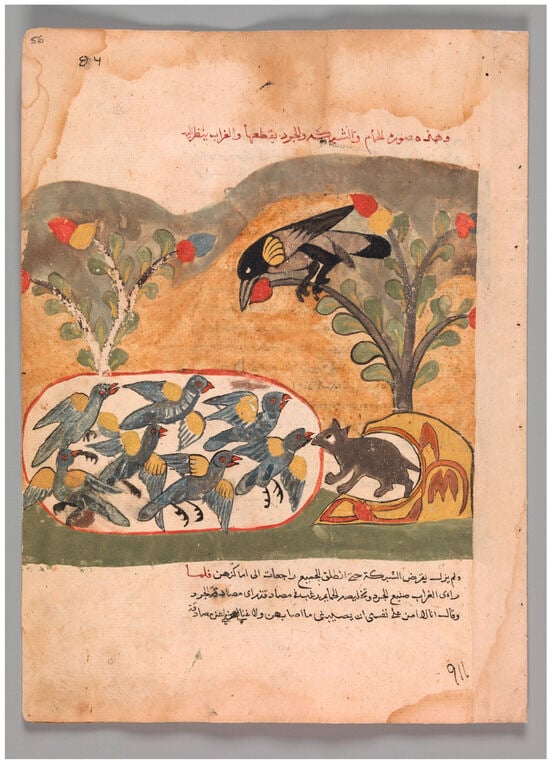
Winners and Losers: The Analysis of a Contemporary Tattoo in Light of Aby Warburg’s Work -
From Africa Palace to AfricaMuseum -
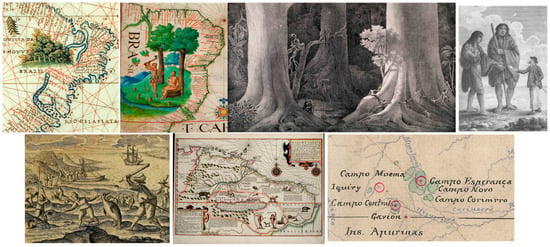
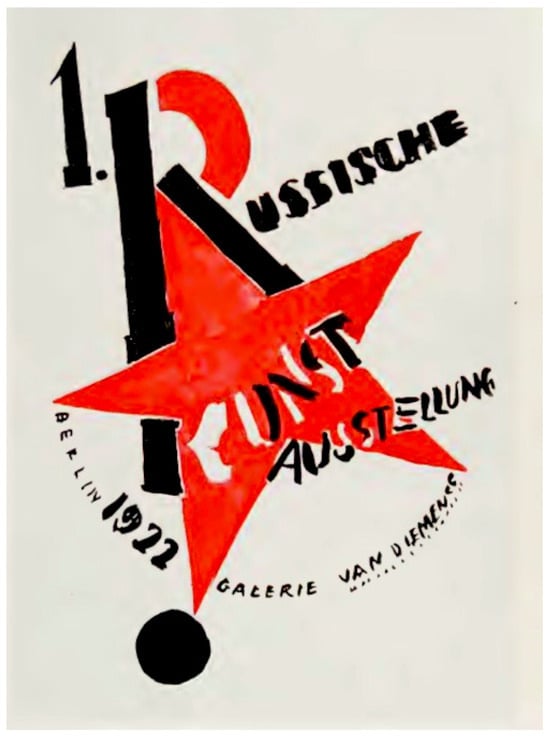
Nicolas Poussin’s Realm of Flora: The Botanical Renaissance and the Mysteries of the Flower, Sign, Circle and Ellipse -
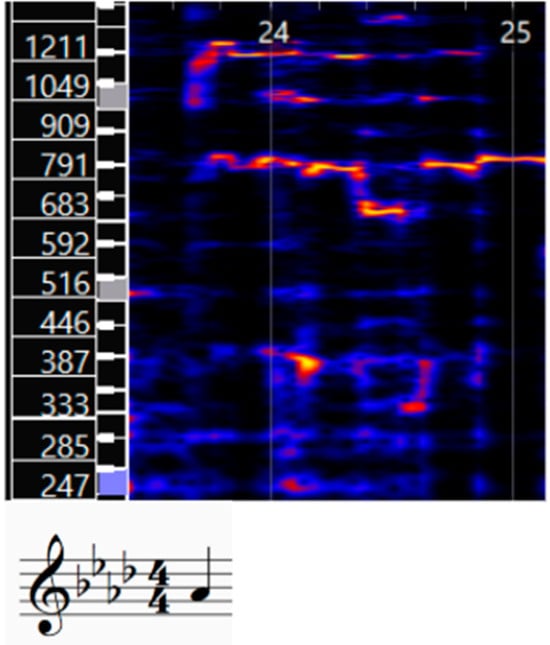
Holy AI? Unveiling Magical Images via Photogrammetry -
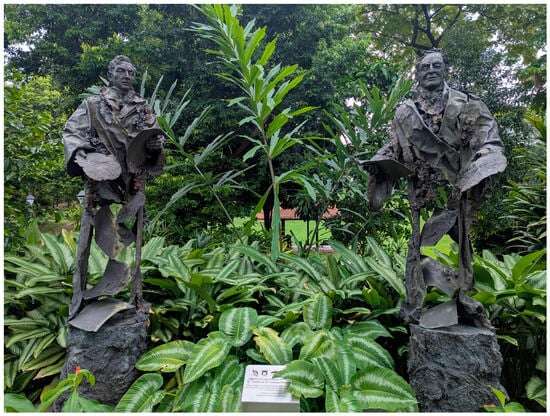
Travelling into the Dark: The Circumpolar North, Indigenous Art, and Settler Aesthetics of Remoteness
Journal Description
Arts
Arts
is an international, peer-reviewed, open access journal promoting significant research on all aspects of the visual and performing arts, published monthly online by MDPI.
- Open Access— free for readers, with article processing charges (APC) paid by authors or their institutions.
- High Visibility: indexed within ESCI (Web of Science), and other databases.
- Rapid Publication: manuscripts are peer-reviewed and a first decision is provided to authors approximately 30.8 days after submission; acceptance to publication is undertaken in 5.9 days (median values for papers published in this journal in the second half of 2025).
- Recognition of Reviewers: reviewers who provide timely, thorough peer-review reports receive vouchers entitling them to a discount on the APC of their next publication in any MDPI journal, in appreciation of the work done.
Impact Factor:
0.3 (2024)
Latest Articles
The Body Remembers: Embodied Trauma, Resilience, and Matrilineal Healing in Contemporary Art
Arts 2026, 15(4), 83; https://doi.org/10.3390/arts15040083 - 15 Apr 2026
Abstract
This paper explores the intersection of embodied trauma, resilience, and healing as represented in contemporary art, focusing on a case study analysis of the autoethnographic practice as a reflexive methodology that integrates personal lived experience with cultural, political, and artistic analysis of the
[...] Read more.
This paper explores the intersection of embodied trauma, resilience, and healing as represented in contemporary art, focusing on a case study analysis of the autoethnographic practice as a reflexive methodology that integrates personal lived experience with cultural, political, and artistic analysis of the works of Zlatar. Central to this study is examining the notion of rematriation, which calls for the reclamation of women’s histories and the restoration of knowledge passed down through generations. Through a series of her paintings, including works from her series A Serbian Renaissance, Refuge For the Oppressed Body, and The Minotaur Came and I Surrendered, Zlatar interrogates the transmission of trauma across generations of women, from Balkan origins, focusing on issues such as gender-based violence, displacement, and identity formation. These works challenge dominant narratives by centring women’s experiences not through externalized indicators or representations of healing, but mediating how mind–body relationships have dialogue, and her art employs this concept as spaces for memory, survival, and meaning-making. Drawing on feminist philosophy, artwork analysis and trauma studies, this paper situates Zlatar’s art to address historical inequities in women’s healing and the ongoing struggle for women’s agency and safety in contemporary society.
Full article
(This article belongs to the Special Issue Contemporary Visual Culture in Conflict Zones and Contested Territories)
Open AccessArticle
Patricia Johanson’s Radical Garden Proposals (1969)—Then and Now
by
Emily Eliza Scott
Arts 2026, 15(4), 82; https://doi.org/10.3390/arts15040082 - 15 Apr 2026
Abstract
This essay focuses on a series of radical, never-built “garden” designs from 1969 by the artist-turned-landscape-architect Patricia Johanson (1940–2024), which proposed sites in and around New York City that would confront the public with complex human–ecological interrelationships of the day, often posing thorny
[...] Read more.
This essay focuses on a series of radical, never-built “garden” designs from 1969 by the artist-turned-landscape-architect Patricia Johanson (1940–2024), which proposed sites in and around New York City that would confront the public with complex human–ecological interrelationships of the day, often posing thorny questions about them. In all, she composed 150 drawings and 7 related essays, sparked by a misguided commission from House & Garden magazine, which envisioned everything from skyscrapers retrofitted with plant trellises to filter water; to the conversion of a highway interchange into a clover field for honey production; fissures sliced into asphalt to allow the release and observation of subterranean steam; and a river dyed to highlight, rather than conceal, ongoing industrial pollution. I revisit this ambitious, multidisciplinary body of work not only in relation to its original context, when a modern ecology movement was gaining momentum, American cities were becoming ever more privatized, and a number of fellow artists began making large-scale outdoor artworks that would come to dominate art historical accounts of land and environmental art, but also, through the lens of its continued, and arguably heightened, relevance in our own moment of spiraling climate breakdown, corporate geo-engineering schemes, and further enclosures of various commons, as well as an ever-growing field of eco-art history, to which this special journal issue is a testament.
Full article
(This article belongs to the Special Issue Rethinking Art History and Culture: Defining an Ecological Approach)
►▼
Show Figures

Figure 1
Open AccessArticle
The ABC of Avante-Garde Bridge Construction, or, How Henry Miller & Vladimir Mayakovsky’s Bridges Were Built
by
Andrey Astvatsaturov and Feodor Dviniatin
Arts 2026, 15(4), 81; https://doi.org/10.3390/arts15040081 - 15 Apr 2026
Abstract
The article discusses contexts of Henry Miller’s works (“Black Spring”, Tropic of Capricorn”) and the poem Brooklyn Bridge by Vladimir Mayakovsky, which have in common the theme and imagery of a Bridge and the avant-garde era of creation. The authors of the article
[...] Read more.
The article discusses contexts of Henry Miller’s works (“Black Spring”, Tropic of Capricorn”) and the poem Brooklyn Bridge by Vladimir Mayakovsky, which have in common the theme and imagery of a Bridge and the avant-garde era of creation. The authors of the article analyze not so much the “intersection” as the “union” of Miller and Mayakovsky, that is, not so much coincidences and closeness as complements that allow us to trace the entire breadth of the avant-garde literary project. In Henry Miller’s works the semantics of the image of a bridge referring to Nietzche’s Thus Spake Zarathustra is primarily noted and analyzed. In the analysis of Mayakovsky’s poem, special attention is paid to the verse and thematic composition of the text; metaphors; sound repetitions and echoes and their semantics; the specific historicism; and an important concept of reconstruction from traces, remains, and reflexes, turning to which Mayakovsky comes closer to, the unknown to him, Charles S. Peirce (abduction) and Carlo Ginzburg (keys), who was not yet born in the year the text was written.
Full article
(This article belongs to the Special Issue The European Avant-Garde(s) and Technologies: Unfinished Modernity and the Idea of Tékhnē—the One Hundred Years’ Revolution, 1850–1950)
Open AccessArticle
Bubbles of the Dying: Geography and Displacement, History and Erasure
by
Nikos Papastergiadis
Arts 2026, 15(4), 80; https://doi.org/10.3390/arts15040080 - 14 Apr 2026
Abstract
In this article, I will use the ecological approach to explore the recent videos of Pinar Öğrenci. I will focus on two works: Agit (2022) and Cemetery of the Nameless (2025). In the latter work, there is a complex examination of the interplay
[...] Read more.
In this article, I will use the ecological approach to explore the recent videos of Pinar Öğrenci. I will focus on two works: Agit (2022) and Cemetery of the Nameless (2025). In the latter work, there is a complex examination of the interplay between the precarious paths taken by refugees and the climate change crisis. She also explores the multiple layers of history and memorialization in sites that have been scarred by genocide. In Cemetery of the Nameless (2025), Pinar establishes an analogy between missing bodies and the contamination of the water of Lake Van. However, this connection is not linear and there is no direct cause and effect; Lake Van was meant to be a transit zone for the refugees, not a cemetery. I will argue that the function of analogy is in its suggestion of comparisons, rather than the establishment of equivalence. Öğrenci thereby puts the analogy to work in a dual manner—it both amplifies and concentrates our attention. We listen to the narratives of migration while looking at the scenes caused by climate change. The image broadens the horizon of the narrative, and the voice sucks the gaze into a dark hole. In this manner, Öğrenci’s art of witnessing, which both combines and separates voice and image, amplifies and concentrates the transfer of information. I will also frame this commentary on the artworks with a broader discussion on the politics of care and memorialization.
Full article
(This article belongs to the Special Issue Rethinking Art History and Culture: Defining an Ecological Approach)
►▼
Show Figures

Figure 1
Open AccessArticle
In the Texture of Things: Collage as a Site of Material Constraint and Possibility
by
molly rosabelle ackhurst
Arts 2026, 15(4), 79; https://doi.org/10.3390/arts15040079 - 14 Apr 2026
Abstract
This article explores the affective and material complexities of creating arts-based artefacts to explore and represent sexual violence. It does so through attending to both the materials used and the embodied practices of those making them. Focusing on collage, it examines how the
[...] Read more.
This article explores the affective and material complexities of creating arts-based artefacts to explore and represent sexual violence. It does so through attending to both the materials used and the embodied practices of those making them. Focusing on collage, it examines how the physical properties of materials mediate what can be imagined, simultaneously enabling expression and constraining it within familiar visual vocabularies often shaped by state, security, and punitive logics. I argue that materiality operates not only through objects but through the bodies, gestures, and decisions of makers, shaping what can be imagined. Through engagement with Nancy Naples’ (2003) formative work on survivor discourse alongside novel empirical data and cultural texts, the article makes the subtle yet significant contention that attending to these entangled materialities—of both maker and medium—reveals how friction between imaginative intent and material affordances can generate methodological insights, open alternative futures, and disrupt dominant discourses.
Full article
(This article belongs to the Special Issue From Craft to Code and Back Again: Rethinking Art, Materiality and Exhibition Practices in the 21st Century)
Open AccessArticle
Technē of the Scriptor: Graphomania as Technique: Lebiadkin, Khlebnikov, Limonov, and Others
by
Alexander Zholkovsky
Arts 2026, 15(4), 78; https://doi.org/10.3390/arts15040078 - 14 Apr 2026
Abstract
The paper examines the poetics of graphomania as a productive aesthetic device within the Russian literary tradition, focusing primarily on Velimir Khlebnikov and extending the analysis to figures such as Fedor Dostoevsky’s Captain Lebyadkin and real authors such as Eduard Limonov, Dmitrii Prigov,
[...] Read more.
The paper examines the poetics of graphomania as a productive aesthetic device within the Russian literary tradition, focusing primarily on Velimir Khlebnikov and extending the analysis to figures such as Fedor Dostoevsky’s Captain Lebyadkin and real authors such as Eduard Limonov, Dmitrii Prigov, and Sasha Sokolov. Building on the article’s central insight that Khlebnikov’s “bad writing,” stylistic shifts, and violations of canonical norms constitute not a defect but a sui generis artistic strategy, the study situates these techniques within broader historical and theoretical frameworks, including the Formalist concepts of parody, junior branch, and heteroglossic subcodes of poetic culture. The article traces the way Khlebnikov’s dynamic alternation of heterogeneous linguistic, prosodic, and generic registers produces a complex, unstable but grandstanding authorial “I” aligned with the traditional figure of the poet-as-character and the culturally embedded myth of the Poet–Tsar. Furthermore, it maps a genealogy of “graphomaniac” writing from the avant-garde to postmodernism, demonstrating how later authors transform Khlebnikov’s innovations—alternately amplifying, parodying, or ironizing them. Through close readings and extensive intertextual contextualization, the article argues that graphomania functions as a critical mechanism for destabilizing aesthetic orthodoxies, exposing, performing and producing literary authority, and redefining the boundaries between norm and deviation, author and character, poetic freedom and canonical constraint.
Full article
(This article belongs to the Special Issue The European Avant-Garde(s) and Technologies: Unfinished Modernity and the Idea of Tékhnē—the One Hundred Years’ Revolution, 1850–1950)
Open AccessArticle
Velimir Khlebnikov and the Fourth Dimension
by
Willem G. Weststeijn
Arts 2026, 15(4), 77; https://doi.org/10.3390/arts15040077 (registering DOI) - 13 Apr 2026
Abstract
The developments in mathematics in the nineteenth century, in particular non-Euclidean geometry, which was not concerned with flat space, but with curvature, led at the end of the century and the beginning of the next one to much discussion of and experiments with
[...] Read more.
The developments in mathematics in the nineteenth century, in particular non-Euclidean geometry, which was not concerned with flat space, but with curvature, led at the end of the century and the beginning of the next one to much discussion of and experiments with the fourth dimension. The idea of a fourth dimension played a major role in the arts. In literature the Symbolists were convinced that there existed a “higher” reality behind the visible one and tried to suggest it in their poetry. In pictorial art and sculpture completely new forms emerged that distorted reality and in that way showed that one had to look at the world in a different way; there was something beyond the usual three dimensions. Many artists consciously tried to visualize this “beyondness”, the fourth dimension. The followers of the idea of a higher reality considered the fourth dimension as time, most artists as space. Much influence in the discussion about the fourth dimension had Charles Howard Hinton and, especially in Russia, Pyotr Ouspensky; both wrote a book entitled The Fourth Dimension (1904 and 1909, respectively), in which they propagated their ideas. The Futurist poet Velimir Klebnikov did not explicitly mention the fourth dimension in his work, but in view of his scientific interests (he studied mathematics at the University of Kazan, one of whose most celebrated scientists was Nikolai Lobachevsky, the founder of non-Euclidean geometry) and his close ties with the avant-garde painters, he was undoubtedly aware of the ideas about the fourth dimension in his time. Khlebnikov compared himself with Lobachevsky and used his geometry in his own description of the cities of the future. With his experiments with language and numerals he tried to find a new meaning behind the usual ones, and he made endless calculations to determine the laws of time: there must be some principle that rules the continuous stream of events. Establishing this principle, one might transcend history and ultimately find a solution for fate and death. His entire work is devoted to the search of a new dimension.
Full article
(This article belongs to the Special Issue The European Avant-Garde(s) and Technologies: Unfinished Modernity and the Idea of Tékhnē—the One Hundred Years’ Revolution, 1850–1950)
►▼
Show Figures

Figure 1

Open AccessArticle
Panel Painting to JPEG: The Ontological Failure of Artificial Intelligence Generated Icons
by
Karen Phan
Arts 2026, 15(4), 76; https://doi.org/10.3390/arts15040076 - 13 Apr 2026
Abstract
This thesis examines the theological status of artificial intelligence-generated religious imagery through Byzantine icon theory, asking whether such images can participate in the material, devotional, and communal, definitions traditionally ascribed to icons. Situating AI within an intellectual lineage beginning with iconoclasm debates and
[...] Read more.
This thesis examines the theological status of artificial intelligence-generated religious imagery through Byzantine icon theory, asking whether such images can participate in the material, devotional, and communal, definitions traditionally ascribed to icons. Situating AI within an intellectual lineage beginning with iconoclasm debates and then turning to Alan Turing’s “Computing Machinery and Intelligence”, this project places contemporary image generation models such as DALL·E and Midjourney in dialog with late antique and Byzantine debates on representation, likeness, and mediation. Drawing on St Theodore the Studite’s defense of icons as relational images grounded in the Incarnation, this thesis argues that AI-generated portraits cannot be understood as icons in a theological or art historical sense. Icons depend upon an embodied triad between maker, prototype, and worshiping community, sustained through liturgical practice, ascetic discipline, and intentional craft. Adding Aristotle’s account of deliberation further clarifies this distinction: algorithmic production lacks the ethical agency and purposive choice intrinsic to sacred image-making. While engaging the scholarship of Robin Cormack, Charles Barber, Bissera V. Petcheva, and many others, this study reasserts the Christological foundations of icon theory while situating AI imagery within contemporary political economies of data extraction, militarism, and environmental cost. AI may attempt to reproduce religious imagery, but it cannot generate objects of real veneration.
Full article
(This article belongs to the Special Issue The Art of the Brain: Unlocking the Power of Neuroaesthetics in the Age of Artificial Intelligence)
►▼
Show Figures

Figure 1
Open AccessArticle
In the Shadow of the Eclipse (2 June 1509): Giulio Campagnola’s The Astrologer, Venice, and the Science of Stars
by
Matteo Soranzo
Arts 2026, 15(4), 75; https://doi.org/10.3390/arts15040075 - 11 Apr 2026
Abstract
This article provides a new interpretation of Giulio Campagnola’s 1509 engraving, The Astrologer, by situating its innovative punteggiato technique and enigmatic iconography within the precise astrological and political climate of Renaissance Venice. By identifying the numerical data on the astrologer’s disc as
[...] Read more.
This article provides a new interpretation of Giulio Campagnola’s 1509 engraving, The Astrologer, by situating its innovative punteggiato technique and enigmatic iconography within the precise astrological and political climate of Renaissance Venice. By identifying the numerical data on the astrologer’s disc as a reference to the lunar eclipse of 2 June 1509, the author argues that the composition—featuring a scholar, a monstrous reptile, and a distant city—represents a visual projection of the eclipse’s predicted impact. Framed by the political crisis following the Battle of Agnadello, the engraving emerges as a prophetic defense of Venetian resilience, a message further reinforced by a comparative analysis of a recently rediscovered astrological sonnet attributed to Campagnola.
Full article
(This article belongs to the Section Visual Arts)
►▼
Show Figures

Figure 1

Open AccessArticle
Consumption as a Lens for Viewing the Complexities of Medieval Mediterranean Art
by
James G. Schryver
Arts 2026, 15(4), 74; https://doi.org/10.3390/arts15040074 - 9 Apr 2026
Abstract
The Mediterranean is being recognized as a helpful frame of reference for scholarship in various academic disciplines focusing on that area of the world. Some of these focus on the sea, while others focus on the countries surrounding it. Proponents laud the commonalities
[...] Read more.
The Mediterranean is being recognized as a helpful frame of reference for scholarship in various academic disciplines focusing on that area of the world. Some of these focus on the sea, while others focus on the countries surrounding it. Proponents laud the commonalities and unities that such an approach foregrounds, as well as the new ways of looking at related cultures and cultural products. At the same time, however, scholars recognize a number of challenges that come with this approach, particularly regarding the balance of micro and macro levels of analysis. Given these challenges, as well as the importance of local contexts for understanding aspects of time and agency in most works of art and architecture, how useful might such a lens be for scholars of medieval art and architecture in the region? How might we capitalize on the benefits of a Mediterranean frame of reference while also allowing for its challenges to be addressed? In response to these questions, consumption is suggested as a framework of analysis. Scholars of certain aspects of consumption have sought to balance similar tensions and their studies provide useful insights into how the local and the regional, the micro and the macro, might be effectively balanced. Such a consciously multiscale approach has the potential to help us see how the local and the Mediterranean are intertwined. In this way, thinking about certain aspects of medieval Mediterranean art via a lens of consumption can help us to make sense of how it reflects some of the complexities of the region.
Full article
(This article belongs to the Special Issue Art from the Medieval Mediterranean: A Critical View)
►▼
Show Figures

Figure 1
Open AccessArticle
Controlling the Art School: Ideologies of Materials and a Speculative Vision for Hybrid Arts Education
by
Dylan Yamada-Rice
Arts 2026, 15(4), 73; https://doi.org/10.3390/arts15040073 - 8 Apr 2026
Abstract
In responding to the special issue’s call to examine the shifting space of materiality, this article uses creative writing, hand-drawn comics, and speculative fiction/design as a form of research by practice to critique changes in UK Higher Arts Education in relation to art
[...] Read more.
In responding to the special issue’s call to examine the shifting space of materiality, this article uses creative writing, hand-drawn comics, and speculative fiction/design as a form of research by practice to critique changes in UK Higher Arts Education in relation to art materials. It shows how embedded neoliberal structures that have been documented to negatively impact HE staff and the arts in general, also now extend to prioritising and excluding some art materials over others. A speculative vision is offered as an alternative in which a nomadic higher arts education is put forward, one that encourages the use of hybrid art materials. The means chosen to make the arguments presented are analogue methods of drawing, cutting, printing, sewing and writing to strengthen the point that digital materials are currently prioritised in UK arts education due to HE’s entanglement with agendas entwinned with Big Tech and most recently the military. The format is also deliberately experimental to move away from common ways of presenting research and theory that have become formulaic as academics are pushed to meet the ideals of the Research Excellence Framework, another neoliberal rubric.
Full article
(This article belongs to the Special Issue From Craft to Code and Back Again: Rethinking Art, Materiality and Exhibition Practices in the 21st Century)
►▼
Show Figures

Figure 1
Open AccessReview
Title Integrating Digital Technologies in Theatre/Drama Education: A Systematic Literature Review
by
Vassilis Zakopoulos, Panagiota Xanthopoulou and Agoritsa Makri
Arts 2026, 15(4), 72; https://doi.org/10.3390/arts15040072 - 7 Apr 2026
Abstract
This study aims to investigate and analyze the factors that affect the adoption of digital technologies in theatre/drama education by reviewing existing literature. This study employed the Scopus and Google Scholar databases to conduct a systematic literature review (SLR), as well as a
[...] Read more.
This study aims to investigate and analyze the factors that affect the adoption of digital technologies in theatre/drama education by reviewing existing literature. This study employed the Scopus and Google Scholar databases to conduct a systematic literature review (SLR), as well as a bibliometric analysis. The results showed that using digital tools in theatre/drama education makes students more engaged, helps with creative exploration, and facilitates the teaching of sustainability concepts using new methods. The most discussed determinants referred to accessibility issues with infrastructure and technological resources, as well as the presence of digital skills and a related digital culture within the educational environment. The thematic analysis produced key themes, such as training, digital skills, access, and interactivity, showing that the main challenge for digital technology integration in theatre education remains the lack of appropriate digital skills, educators’ training, and infrastructure. The findings can be useful for various groups, including theatre educators, faculty members, education researchers, theatre practitioners, and policymakers. This study adds to the existing literature by highlighting how digital technologies can enhance theatre/drama education, while emphasizing challenges such as accessibility and digital literacy, and the need to keep traditional theatre/drama methods alive in the digital world.
Full article
(This article belongs to the Section Musical Arts and Theatre)
►▼
Show Figures

Figure 1
Open AccessFeature PaperArticle
The Techne of Decoding Alexei Chicherin’s Construemes
by
Andrey A. Rossomakhin
Arts 2026, 15(4), 71; https://doi.org/10.3390/arts15040071 - 7 Apr 2026
Abstract
This paper is the first attempt to interpret the visual ‘construemes’ by the constructivist poet Alexei N. Chicherin, published in the anthology Mena vsekh which appeared in Moscow in1924. ‘Construemes’ can be considered the most enigmatic artifacts of the Russian avant-garde. Although ‘construemes’
[...] Read more.
This paper is the first attempt to interpret the visual ‘construemes’ by the constructivist poet Alexei N. Chicherin, published in the anthology Mena vsekh which appeared in Moscow in1924. ‘Construemes’ can be considered the most enigmatic artifacts of the Russian avant-garde. Although ‘construemes’ can be easily confused with meaningless visual zaum (‘the transrational’), Chicherin’s actions and the very nature of his personality prevent one from interpreting ‘construemes’ as actionist endeavors to scandalize or a ‘play on nonsense’. Analysis of the poet’s treatise Kan-Fun published in Moscow in 1926 required finding the key to deciphering the ‘construemes’, reveals the positivist nature of Chicherin’s visual–phonological exercises. In the treatise, the poet argues for the primacy of the eye and vision. He illustrates synthetic ‘signs’ or ‘pictograms’ with the quotidian example of propaganda posters, capable of influencing millions more effectively than words alone. The study emphasizes the enigmatic nature of the titles of Chicherin’s books, the Nietzschean subtexts of his self-presentation, encrypted allusions to the esoteric and magical tradition of the Tarot, and religious symbolism. Sixteen illustrations help the understanding of Chicherin’s logic behind the creation of his four ‘construemes’, including the most mysterious composition called ‘Raman’ (‘the shortest Kan-Fun Novel in the world’). The structure of this text synthesizes the verbal, visual–graphic, acoustic (phonological symbols) and musical (notes) levels. The article also examines Chicherin’s proven techniques: the appropriation of the sacred dimension and self-presentation as an actor possessing genuine knowledge and capable of competing alone with the entire literary environment.
Full article
(This article belongs to the Special Issue The European Avant-Garde(s) and Technologies: Unfinished Modernity and the Idea of Tékhnē—the One Hundred Years’ Revolution, 1850–1950)
►▼
Show Figures

Figure 1
Open AccessArticle
Flying Objects or Architectural Projects of Russian Avant-Garde Suprematism
by
Kornelija Icin
Arts 2026, 15(4), 70; https://doi.org/10.3390/arts15040070 - 3 Apr 2026
Abstract
The study reconsiders the architectural production associated with Russian Suprematism (which was speaking of “the supremacy of pure artistic sensation” rather than the veritable figurative depiction of real-life subjects) in the early Soviet period as a coherent and conceptually rigorous mode of speculative
[...] Read more.
The study reconsiders the architectural production associated with Russian Suprematism (which was speaking of “the supremacy of pure artistic sensation” rather than the veritable figurative depiction of real-life subjects) in the early Soviet period as a coherent and conceptually rigorous mode of speculative world-making rather than as a marginal or unrealized appendix to avant-garde art history and theory. By examining the architectural propositions articulated by Kazimir Malevich and then elaborated by his younger colleagues Lazar Khidekel, Ilya Chashnik, and Nikolai Suetin, the study advances the claim that Russian Suprematist architecture constituted an epistemic experiment aimed at redefining the very ontological premises of architecture. Far from functioning as a mere transposition of abstract pictorial language into three-dimensional form, Suprematist planits, architectons, and aerocentric projects operated as instruments for thinking spatiality beyond terrestrial gravity, anthropocentric utility, and historical typology. Situating these projects within the intellectual horizon of Russian cosmism and early aerospace thought, the article demonstrates how Suprematist architecture intersected with contemporary philosophical, scientific, and technological discourses that envisioned humanity’s active participation in the reorganization of cosmic space. The architectural imagination of Suprematism emerges here as inseparable from broader debates on excitation, non-objectivity, transformation of matter, and the reconfiguration of human corporeality. Through close analysis of formal strategies, pedagogical frameworks, and theoretical writings, the paper reveals the internal plurality of avant-garde Suprematist architectural inquiry, ranging from ecological proto-urbanism and hovering settlements to magnetic and cruciform spatial systems. Ultimately, the paper argues that the historical non-realization of these projects should not be interpreted as a failure but as an intrinsic feature of their speculative methodology. Suprematist architecture is thus redefined as an anticipatory practice whose unresolved propositions continue to resonate with contemporary discussions on space habitation, planetary design, ecological responsibility, and post-human architectural thought, challenging inherited assumptions about the scope and function of architecture as such.
Full article
(This article belongs to the Special Issue The European Avant-Garde(s) and Technologies: Unfinished Modernity and the Idea of Tékhnē—the One Hundred Years’ Revolution, 1850–1950)
►▼
Show Figures

Figure 1
Open AccessArticle
Symbiotic Intelligence: Rethinking AI with Mycelium
by
John Wild and Shira Wachsmann
Arts 2026, 15(4), 69; https://doi.org/10.3390/arts15040069 - 1 Apr 2026
Abstract
Symbiotic Intelligence (SI) rethinks dominant evolutionary narratives within Western artificial intelligence (AI) development through a practice-led research methodology centred on co-creating with mycelium. This research investigates how living mycelium can inform and reframe prevailing AI narratives, particularly those shaped by evolutionary logics. These
[...] Read more.
Symbiotic Intelligence (SI) rethinks dominant evolutionary narratives within Western artificial intelligence (AI) development through a practice-led research methodology centred on co-creating with mycelium. This research investigates how living mycelium can inform and reframe prevailing AI narratives, particularly those shaped by evolutionary logics. These narratives, found in developer manifestoes and futurological discourse, often frame intelligence within competitive, deterministic paradigms rooted in social Darwinism and invoke eugenicist ideas such as the g-factor in intelligence. Through the creation of responsive art installations, the project positions mycelium as a material and conceptual collaborator, opening new spaces for dialogue. This article inverts the curatorial strategy of incorporating AI technology into artistic practices. Instead, we show how arts-led ‘making’ practices can generate new narratives that propose alternative ethical frameworks and sustainable directions for technological development. We argue that a direct, generative but non-deterministic relationship exists between AI narratives and the technical actualisation of AI. Specifically, SI contends that: (i) evolutionary narratives underpin Western AI imaginaries; (ii) these often reflect reductive social Darwinist models; (iii) counter-narratives grounded in collective assemblage and symbiotic intelligence are essential for shaping more complex and sustainable AI futures.
Full article
(This article belongs to the Special Issue From Craft to Code and Back Again: Rethinking Art, Materiality and Exhibition Practices in the 21st Century)
►▼
Show Figures

Figure 1
Open AccessArticle
Beyond the ‘Yellow Sand’ and Toward Cultural Agency: Sinologism and Cross-Cultural Communication in Black Myth: Wukong
by
Nuozhou Chen, Jiaqi Li and Chenheng Deng
Arts 2026, 15(4), 68; https://doi.org/10.3390/arts15040068 - 1 Apr 2026
Abstract
►▼
Show Figures
While recent game research explores culture and Orientalism, a significant gap remains regarding Sinologism. Gu proposed Sinologism based on Orientalism, laying the theoretical foundation for this study. Utilizing the analytical framework of Chapman and Šisler, this study examines the characteristics of Sinologism within
[...] Read more.
While recent game research explores culture and Orientalism, a significant gap remains regarding Sinologism. Gu proposed Sinologism based on Orientalism, laying the theoretical foundation for this study. Utilizing the analytical framework of Chapman and Šisler, this study examines the characteristics of Sinologism within and outside the game, including its scenes, characters, items, abilities, skills, and narrative style. The cultural practice of Black Myth: Wukong exemplifies the complex dynamics described by “Sinologism.” Operating within the globalized framework of the video game industry, it negotiates with Western perspectives while, to a certain extent, challenging established Orientalist modes of representation. However, this study argues that its success is not a result of “complicit” strategies that merely replicate dominant paradigms. Instead, it represents a reconstruction of “cultural subjectivity.” By combining high production values with familiar ARPG conventions, the game makes culturally dense elements more legible to international audiences, encouraging engagement with indigenous cultural logic rather than defaulting to externally imposed interpretive frames. Accordingly, Black Myth: Wukong stands as a paradigmatic case, illustrating how Chinese developers attempt to negotiate agency within an asymmetrical Sino-Western structure to seek autonomous expression amidst structural constraints.
Full article

Figure 1
Open AccessArticle
Tarrying with Failure: Film Form and the Horizon of Abolition in Svetlana Baskova’s For Marx…
by
Zachary Hicks
Arts 2026, 15(4), 67; https://doi.org/10.3390/arts15040067 - 1 Apr 2026
Abstract
Released in 2012, Svetlana Baskova’s Za Marksa… (For Marx…) poses the question of the abolition of capitalism through workers’ struggle—that is, the question of revolution in decidedly non-revolutionary times. A follow-up to her activist documentary Odno reshenie—soprotivlenie (The Only Solution
[...] Read more.
Released in 2012, Svetlana Baskova’s Za Marksa… (For Marx…) poses the question of the abolition of capitalism through workers’ struggle—that is, the question of revolution in decidedly non-revolutionary times. A follow-up to her activist documentary Odno reshenie—soprotivlenie (The Only Solution Is Resistance, 2011), For Marx… can be read as a post-Soviet return to Sergei Eisenstein’s Stachka (Strike, 1925), one that confronts the historical afterlife of the revolutionary proletariat following the rapid decomposition of the industrial working class once positioned at the center of the socialist imaginary. Borrowing its title from Louis Althusser and situating itself within an international genealogy of left debates on form and revolution—running from the Soviet avant-garde through Brechtian estrangement, militant cinema of 1968, and the collapse of “actually existing socialism”—the film mobilizes inherited models of committed art only to expose their historical limits. I argue that For Marx… does not revive earlier oppositional forms but stages their failure under contemporary capitalism. Montage, estrangement, and documentary realism appear as sedimented forms that no longer cohere into an operative revolutionary praxis. By foregrounding the exhaustion of political form, For Marx… reframes abolition—not only of the police or the carceral state but of capitalism itself—as a horizon that persists precisely where inherited aesthetic strategies break down. The film’s success lies in its refusal to offer closure, keeping the question of political transformation open.
Full article
(This article belongs to the Special Issue Arts of Abolition and Liberation)
►▼
Show Figures

Figure 1

Open AccessArticle
The Quiet Arts: Silence, Shadow, and Alternative Archives for Recovering Women’s Silenced Histories
by
Tinka Harvard
Arts 2026, 15(4), 66; https://doi.org/10.3390/arts15040066 - 29 Mar 2026
Abstract
This article investigates how women’s relative absence from medieval textual archives can be reconsidered through the study of visual and material culture. Focusing on Mongol and Yuan China and read in relation to The Travels of Marco Polo, it argues that women’s artistic
[...] Read more.
This article investigates how women’s relative absence from medieval textual archives can be reconsidered through the study of visual and material culture. Focusing on Mongol and Yuan China and read in relation to The Travels of Marco Polo, it argues that women’s artistic production functioned as a form of embedded counter-archive that preserves traces of participation obscured in narrative sources. Drawing on Black feminist epistemology as a heuristic framework and employing critical fabulation and poetic inquiry as analytical methods, the study interprets silence as a meaningful historical trace rather than a void, and considers silence not as absence but as a structured condition of archival production. Four case studies—Guan Daosheng’s literati bamboo painting, the handscroll tradition associated with Lady Su Hui, imperial phoenix embroidery, and Silk Road textile fragments—demonstrate distinct modes through which women’s presence becomes materially legible: mediated visibility, formal containment, infrastructural anonymity, and circulatory displacement. These “quiet arts” reveal how women’s labour and creativity persisted within and alongside patriarchal inscriptional systems even when textual attribution receded. In dialogue with the shadow silhouettes of contemporary artist Kara Walker, the article further situates these premodern archives within a broader visual language of absence and recovery. Rather than reconstructing lost biographies, it proposes a transdisciplinary method—integrating art history, feminist theory, theology, and poetic inquiry—for reading material culture as a site where historical silence becomes structurally legible. It proposes a transdisciplinary approach that expands art historical methods for interpreting gender, authorship, and archival silence in medieval visual culture.
Full article
(This article belongs to the Special Issue Artistic Imagination and Social Imaginaries–Polysemous Readings of Historical Travelling Accounts)
►▼
Show Figures

Figure 1
Open AccessEditorial
Introduction: What Art Does: Power and Performativity
by
Alisée Devillers and Kathlyn M. Cooney
Arts 2026, 15(4), 65; https://doi.org/10.3390/arts15040065 - 26 Mar 2026
Abstract
Art creates power1—for the commissioner, the depicted, as well as for the creator [...]
Full article
(This article belongs to the Special Issue Ancient Egyptian Art Studies: Art in Motion, a Social Tool of Power and Resistance)
Open AccessArticle
Cruel Optimism and Gender Identity: A Case Study of Jawani Phir Nahi Ani and Oye Motti in Contemporary Lollywood
by
Muhammad Sohail Ahmad, Amina Malik and Rana Yassir Hussain
Arts 2026, 15(3), 64; https://doi.org/10.3390/arts15030064 - 20 Mar 2026
Abstract
This paper examines how Pakistani popular cinema reproduces a cruelly optimistic attachment to gender identity and thinness, where weight loss is imagined as the key to love, success, and social acceptance. Rather than surveying the entire industry, this study focuses on two emblematic
[...] Read more.
This paper examines how Pakistani popular cinema reproduces a cruelly optimistic attachment to gender identity and thinness, where weight loss is imagined as the key to love, success, and social acceptance. Rather than surveying the entire industry, this study focuses on two emblematic case studies—Jawani Phir Nahi Ani (2015) and Oye Motti (2021)—to show how Lollywood normalises fatphobia through comic ridicule, makeover tropes, and exclusionary casting practices. The analysis reveals how fatness is framed not as an identity but as a flaw to be corrected, rendering overweight characters undesirable despite their talents or personalities. Thus, fatness is usually treated as an obstacle to social acceptance, marriage, and personal happiness; the very hope of inclusion becomes an instrument of exclusion, exemplifying Berlant’s concept of cruel optimism. In Berlant’s terms, cruel optimists always struggle to achieve unattainable fantasies of a better life that promise upward mobility.
Full article
(This article belongs to the Special Issue On Screen Arts—the Arts of the Past in Contemporary Mass Media)
Highly Accessed Articles
Latest Books
E-Mail Alert
News
Topics
Topic in
Arts, Genealogy, Histories, Philosophies, Religions
Reimagining Totemism: Mystical Experience, Life Values, and Contemporary Art Practices
Topic Editors: Zhilong Yan, Lidija Stojanović, Aixin ZhangDeadline: 31 October 2026
Topic in
AI, Arts, Computers, MTI
Artificial Intelligence and the Future of Art
Topic Editors: Ahmed Elgammal, Marian MazzoneDeadline: 31 October 2027
Special Issues
Special Issue in
Arts
Technology and Scenography in Film and Television: Crafting Visual Worlds
Guest Editor: Geraint D'ArcyDeadline: 30 April 2026
Special Issue in
Arts
Artist-Led Practice: Bridging Art and Life
Guest Editor: Julie CrawshawDeadline: 30 April 2026
Special Issue in
Arts
Ecocritical Lens: Photography, Environment, and the Anthropocene
Guest Editor: Karla McManusDeadline: 15 May 2026
Special Issue in
Arts
Aesthetics in Contemporary Cities
Guest Editors: Maciej Lasocki, Martina Koll-Schretzenmayr, Antonella Contin, Claudia Westermann, Aura Luciana Istrate, Álvaro Clua UcedaDeadline: 30 May 2026