Review

Title Integrating Digital Technologies in Theatre/Drama Education: A Systematic Literature Review


by
Vassilis Zakopoulos
1,
Panagiota Xanthopoulou
2,3,* and
Agoritsa Makri
3
1
Faculty of Theatre Studies, School of Philosophy, University Campus, National and Kapodistrian University of Athens (NUA), 15784 Ilissia, Greece
2
Department of Business Administration, University of West Attica, Petrou Ralli & Thivon 250, 12244 Egaleo, Greece
3
School of Humanitites, Hellenic Open University, Aristotelous 11, 54624 Thessaloniki, Greece
*
Author to whom correspondence should be addressed.
Arts 2026, 15(4), 72; https://doi.org/10.3390/arts15040072
Submission received: 5 February 2026 / Revised: 10 March 2026 / Accepted: 19 March 2026 / Published: 7 April 2026
(This article belongs to the Section Musical Arts and Theatre)

Abstract

This study aims to investigate and analyze the factors that affect the adoption of digital technologies in theatre/drama education by reviewing existing literature. This study employed the Scopus and Google Scholar databases to conduct a systematic literature review (SLR), as well as a bibliometric analysis. The results showed that using digital tools in theatre/drama education makes students more engaged, helps with creative exploration, and facilitates the teaching of sustainability concepts using new methods. The most discussed determinants referred to accessibility issues with infrastructure and technological resources, as well as the presence of digital skills and a related digital culture within the educational environment. The thematic analysis produced key themes, such as training, digital skills, access, and interactivity, showing that the main challenge for digital technology integration in theatre education remains the lack of appropriate digital skills, educators’ training, and infrastructure. The findings can be useful for various groups, including theatre educators, faculty members, education researchers, theatre practitioners, and policymakers. This study adds to the existing literature by highlighting how digital technologies can enhance theatre/drama education, while emphasizing challenges such as accessibility and digital literacy, and the need to keep traditional theatre/drama methods alive in the digital world.

1. Introduction

This study investigates how digital technologies can be integrated into theatre/drama education in order to expand drama teachers’ pedagogical practices and enhance students’ learning experiences by fostering creativity and imagination. Using systematic literature review and bibliometric analysis, the study examines the factors influencing the adoption and implementation of digital technologies in theatre/drama education. In addition, it presents the theoretical background of digital technology integration in theatre education, aiming to provide a comprehensive understanding of its potential to enhance teaching and learning processes. The review focuses on studies published in English-language academic journals indexed in Scopus and Google Scholar. As a result, the reviewed literature primarily reflects research produced in Anglophone and internationally published contexts, including countries such as the United States, the United Kingdom, Australia, and other regions where English-language scholarship predominates.
The novelty of this study lies in its focus on identifying the key factors that influence the integration of digital technologies in theatre education through the use of a systematic literature review and bibliometric analysis, offering both qualitative and quantitative perspectives. While previous research on digital technologies in education has been conducted, research on theatre education remains under-explored and is limited to descriptive research and/or the use of qualitative methods or ethnographic analysis (Briones et al. 2022). This study seeks to contribute to this field by providing useful insights into how universities can better support and nurture the integration and successful use of digital technologies in theatre education, which contributes to the broader development of digital competencies and creative skills within contemporary educational systems. Furthermore, by examining these factors, researchers can gain insight into how culture, digital skills, collaboration, etc., can promote or hinder the development of a digital mindset in theatre education and teaching.
It is therefore important to synthesize the literature to get the holistic picture and contribute towards this research field (Kuckertz and Block 2021). The current study combines a systematic literature review with bibliometric analysis to maximise the benefits of both quantitative and qualitative research methodologies. While systematic reviews offer a critical study of the content and caliber of empirical data, bibliometric methods help to identify and visualize the structural features of the research network (Soh et al. 2023). By highlighting key themes and trends and critically analyzing the breadth and validity of study contributions, this combination deepens our understanding. The combination of integrative methods with methodological rigor ensures depth of analysis. Bibliometric analysis, combined with a methodical evaluation of the literature, was utilized to guarantee a thorough exploration of the field. This dual method ensures a well-informed and thorough view of the subject.
The structure of this paper is follows: In the next section, we provide a brief review of the theoretical concepts that make up the content of the paper, Section 3 discusses the research methodology, and Section 4 presents the results of our analysis. This paper concludes with a discussion and presentation of the main conclusions and suggestions for future research.

2. Background and Related Work

Many researchers (Papavassiliou-Alexiou and Zourna 2016; Zakopoulos and Xanthopoulou 2024; Idogho 2013) referred to the pedagogical, didactic, and educational value of theatre and theatrical performances in enriching and strengthening the learning process. According to Courtney (1989), theatre education promotes cultural, social, and especially humanistic values, and aims to activate students’ cooperative abilities that contribute to their linguistic, mental, and spiritual development. Integrated into the educational system, theatre education contributes to the consolidation of humanistic principles and values, fundamental concepts, social knowledge and skills, and personal experiences, which together promote, cultivate, and shape the mental and spiritual worlds of students (Kitchen and Irish 2023). It also creates conditions for young people to get to know, contact, and deepen their knowledge of the works of domestic and world theatre literature in a pleasant and entertaining way, thus contributing to the development of theatre and artistic culture (Briones et al. 2022).
Theatre education, through its various forms, can be used not only for theatrical performance but also for theatrical events and dramatization, theatre games, and storytelling or digital storytelling (Prendergast 2008). According to Peng (2025), student creativity is sought after in arts and theatre in education and is also an avenue for the assimilation of cognitive domains and skills of learning, life, mind and technology, and science (Abed 2024; Kovacs 2014; Zakopoulos and Xanthopoulou 2024)
Drama/theatre education involves the application of pedagogical strategies, methods, and techniques to train students in the cultivation of drama and theatrical skills. It involves not only performing but also planning drama-based activities (Kovacs 2014; Abed 2024). Through drama activities, school institutions encourage students to participate in the process of dramatic experience and expression while also enabling them to feel the sensation of being on stage, contributing to children’s all-round development. Activities planned and embedded within drama-based educational contexts offer multiple stimuli, and most importantly students interact and develop the skills of active listening, empathy, respect for other peers, and other social and emotional skills (Cawthon and Dawson 2009; Zakopoulos and Xanthopoulou 2024).
The rapid development of digital technologies and technological innovation that has been taking place for years has had an impact on almost all areas of education (Watermeyer et al. 2023), so theatre in education cannot remain unaffected. This is also reflected in the new curriculum for the subject of theatre education. Education requires modernized curricula and should focus not only on the emergence of a theatre culture, but also on the development of skills and competencies of students, which meet the digital demands and needs of the 21st century. These include the development of critical thinking and content analysis; problem solving; how to search, evaluate, and manage information; and the development of social skills such as interaction, cooperation, and communication (Lubis et al. 2022). The introduction of Information and Communication Technologies (ICTs) and, more specifically, Web 2.0 digital tools in education, as mentioned earlier, has had a significant impact on the way students learn and teachers teach. Many past studies have highlighted the value of the application and use of digital technology in the educational process and the multiple learning benefits it can bring (Cawthon and Dawson 2009; Karaosmanoglu et al. 2022; Kovacs 2014). This “digitalization” of education has also significantly influenced theatre/drama education, with a rapid transition from performances conducted in physical, face-to-face classroom environments to online learning spaces. This is not only a digital space for performing actions but also a space where performance happens entirely digitally.
The adoption of digital technologies in education has been widely examined through established theoretical models. The Technology Acceptance Model (TAM) emphasizes perceived usefulness and ease of use as key determinants of technology adoption by educators (Marangunić and Granić 2015). Similarly, the Unified Theory of Acceptance and Use of Technology (UTAUT) highlights factors such as performance expectancy, effort expectancy, social influence, and facilitating conditions (Ahmad et al. 2024). Rogers’ Diffusion of Innovations theory further explains adoption as a social process influenced by innovation characteristics, communication channels, and contextual factors (Thomas and Rogers 1998). These models provide a useful lens for interpreting the factors that influence theatre/drama teachers’ engagement with digital technologies.
Online drama/theatre education occurs through the use of interactive technologies in online learning environments (Karaosmanoglu et al. 2022). In this sense, students now have the opportunity to be in fully immersive environments through the use of virtual, augmented, or mixed-reality technologies, which require interactions between students and the audience. The technologies used to address the needs of performance require specific digital skills and abilities to engage in live drama experiences. Such new trends and technologies in the field of digital dramatic performance include innovative emerging technologies such as gaming platforms, virtual and augmented reality, motion capture technology, artificial intelligence/robotics, smartphone applications, and other digital media techniques (Karaosmanoglu et al. 2022). The pedagogical strategies discussed in theatre/drama education are grounded in experiential and constructivist learning theories, which emphasize active participation, collaboration, and meaning-making through experience. Drama-based learning aligns closely with constructivist approaches, as students construct knowledge through embodied and social interaction. In digitally enriched contexts, frameworks such as TPACK highlight the interplay between content knowledge, pedagogy, and technology, while connectivist perspectives emphasize learning through networks and digital environments (Karaosmanoglu et al. 2022). These theoretical perspectives frame the pedagogical use of digital technologies in drama education. However, the increasing adoption of digital tools in theatre/drama education has also introduced practical challenges related to accessing online learning platforms and effectively using technological tools in educational contexts. At the same time as this technological synergy, new concepts and terms are emerging in the wider theatrical field through the multimodality and multidisciplinarity of new uses and applications, many of which have appeared even before the outbreak of the pandemic. Many of these terms have emerged depending on the nature or mode of intervention of technology in theatrical events, which has resulted in their overlap. They are digital drama/theater, online drama, online drama performance forms (online drama performance), virtual drama/theater, interactive drama life, multimedia performances, creative online drama, and hybrid theatre (Mulatsih 2023). A. P. Jensen’s (2011) study discusses a new “convergence culture,” resulting from young people’s continuous engagement with digital tools, which leads to new ways of interacting and communicating that contemporary theatre education teachers are increasingly called upon to adopt.
In theatre education, human interaction, contact, participation, and communication are all vital, but although technology will always be present, it will never replace face-to-face human interactivity, as this is a unique element of the collaborative nature of theatre teaching (Zakopoulos and Xanthopoulou 2024). Similarly, Carroll et al. (2006), while acknowledging the fact that theatre educators need to be focused and committed to teaching the art they teach in an interpersonal way, state that if they do not try to realize this “cultural convergence” with the digital lifestyles of young people, they risk “losing” them. Next, K. B. Jensen (2022) points out that, in the fine and performing arts, teachers now are beginning to embrace digital technologies and seek commonalities and ways of connecting between digital media and their art forms to enhance and strengthen their students’ educational experience. Many of the educational scenarios currently being created by teachers, incorporate various forms of digital media and programs to further enrich their students’ learning experiences.
Research has highlighted the role of Web 2.0 and social media tools in supporting reflective and creative practices in theatre/drama education (Cameron and Anderson 2022). In this context, blogs and similar asynchronous reflection tools (e.g., digital journals, discussion boards, shared portfolios) have been used to encourage students’ reflective writing, narrative development, and critical engagement with theatrical practice (Flintoff 2009; Raphael et al. 2022). Such tools extend reflective processes beyond the physical classroom and support creativity, self-criticism, and meaning-making, which are central to drama education.
However, recent developments in digital theatre education increasingly emphasize more complex and immersive technologies. Artificial intelligence, virtual and augmented reality, and immersive digital environments enable new forms of embodied learning, interactive performance, and audience engagement. These technologies allow students to co-create theatrical experiences, experiment with digital scenography, avatars, and virtual spaces, and participate in hybrid performances that blend physical and digital presence. As a result, contemporary digital drama education is shifting from primarily text-based and reflective tools toward multimodal, immersive, and intelligent systems that more closely align with the embodied, collaborative, and performative nature of theatre (Mokoena and Van Vuuren 2023).
During the COVID-19 crisis, theatre teachers were forced to adopt different pedagogical strategies and methods to cope with the demands of this particular period. The literature examining theatre education during the COVID-19 pandemic consistently highlights a strong reliance on synchronous digital communication tools in order to maintain instructional continuity (Li et al. 2021; Vlachava 2022; Zakopoulos and Xanthopoulou 2024). Previous studies suggest that videoconferencing platforms became central to online theatre/drama education, as they support real-time interaction, collaboration, and performative engagement, which are fundamental to theatre pedagogy (Vlachava 2022; Zakopoulos and Xanthopoulou 2024). In addition, the literature indicates that a range of Web 2.0 and collaborative digital tools have been used to support assessment, feedback, and student engagement in online drama learning environments (Li et al. 2021). More broadly, existing research suggests that the adoption of digital tools in emergency remote theatre education prioritized immediacy, communication, and collaborative interaction, reflecting the playful and participatory nature of drama-based educational activities.
The results of Huang et al. (2024) showed that the majority of teachers in theatre/drama education are satisfied with the integration of dramatic art and interactive devices, which makes the drama process more dynamic, increases its entertaining character, enriches the sense of image, and makes children quickly enter the learning state. Of course, according to the same researchers, due to the young age of students, appropriate guidance from teachers is required; otherwise, children cannot work cooperatively, reducing their enthusiasm for learning, and thus leading to unsatisfactory results of dramatic activities. In addition, through role-playing, students are offered the opportunity to interpret real-life situations from different perspectives and create new understanding. In recent studies (Walan 2021; Zakopoulos and Xanthopoulou 2024) it was shown that combining the use of technology and drama activities through experiential activities can also contribute to the development of 21st century skills and ecological awareness of students.
According to Webb and Layton (2023) a three-level digital skills framework for drama education can include: specific technical skills related to the application of digital technologies, devices, systems, software and web media solutions for performance, basic transferable digital skills, which are transferable to collaborative work; and digital aesthetic identity, related to digital construction of the self. Theatre/drama education has the potential to create learning communities in which knowledge is embodied and performed. Creativity and imagination are increasingly promoted among students, encouraging them to seek new, innovative solutions. Digital drama appears to enhance cognitive, psychomotor, and emotional skills, such as critical thinking, problem solving, creativity and imagination, independent thinking and decision making, awareness, and clear expression of emotions.
More generally, the integration of digital technologies in theatre education seems to be important for multiple reasons, and time and space barriers in theatre education can be overcome through the utilization and use of digital technologies. Through these different digital tools, students can experiment with different forms of digital storytelling, multimedia elements, and interactive media experiences, allowing for innovative approaches to theatrical visuals and expressions (Boh and Adoka 2023). Digital technologies facilitate collaboration and communication among theatre professionals, teachers, and students. Virtual platforms, videoconferencing tools, and shared online spaces enable remote collaboration, real-time discussions, and resource sharing, thereby promoting interdisciplinary and global connections in theatre education. The integration of digital technologies in theatre education fosters digital literacy and 21st century skills that are essential in today’s technology-driven world. Students learn to navigate and critically evaluate digital resources, collaborate online, solve technical challenges, and creatively use digital tools, all valuable skills that can be applied beyond the theatre context (Webb and Layton 2023).
Overall, digital technologies in theatre/drama education can bridge the gap between traditional theatre practices and the modern digital culture. It allows students to explore the intersections of traditional theatre techniques with digital storytelling, multimedia performance, and new ways of engaging audiences and creating dynamic and relevant theatre experiences. The integration of digital technologies enhances the learning experience and equips students with essential skills for the digital age; however, there are still challenges in the adoption of digital technologies in theatre/drama education, related to digital skills of students and teachers, as well as the need for digital training, to obtain hard (technological) skills but also soft (collaboration, participation, interaction) skills.

3. Results

3.1. Bibliometrics

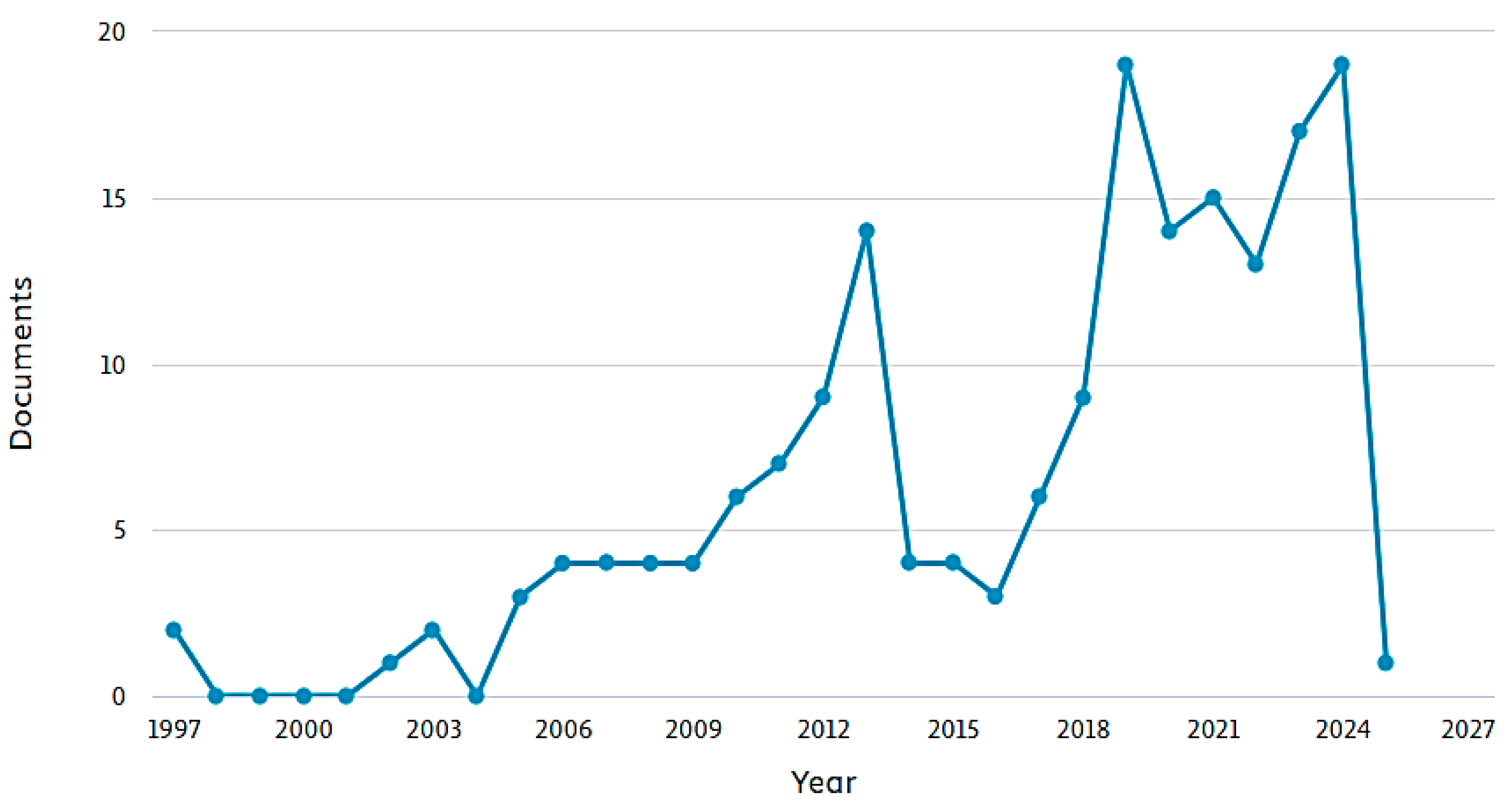
Since Smith’s contribution in 1997, the first work on digital practices in the arts and scientific production has increased. Figure 1 illustrates that few studies have been conducted on this issue between 1997 and 2025. The line chart shows the number of articles published between 1997 and 2027. Initially, between 1997 and 2005, there was little interest in this topic, with only a few research articles. Following 2006, a gradual increase indicated an increased interest in the subject. This trend peaked around 2012, indicating an increase in research productivity. However, there was a noticeable fall after that, with much fewer publications between 2013 and 2015, indicating a break in the research effort. In 2016, this trend resumed, with a strong and consistent increase in published studies. The Figure 1 shows a period of strong expansion from 2017, with notable peaks in 2018 and 2024. This suggests that the issue has gained traction in academia, but there is still an obvious need for further study in the field. Between 2021 and 2024, there is a steadily high number of articles indicating continued interest and activity.
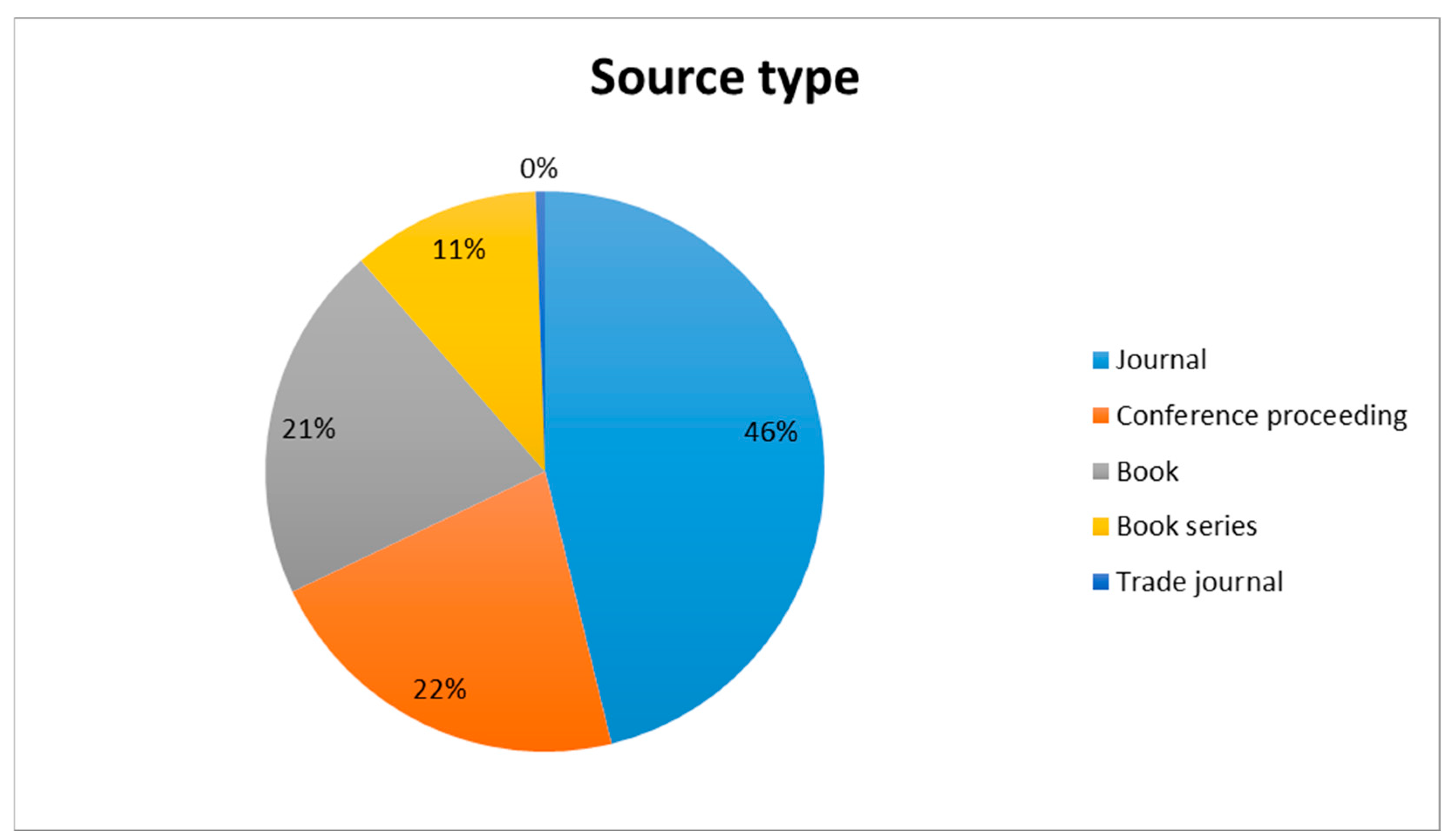
Next, Figure 2 depicts the origin of the articles depending on the number of papers published in Scopus as well as in Google Scholar. The most prevalent source type was journals, which accounted for 46% of all publications on the topic. Subsequently, conference proceedings accounted for 22% of all the publications.
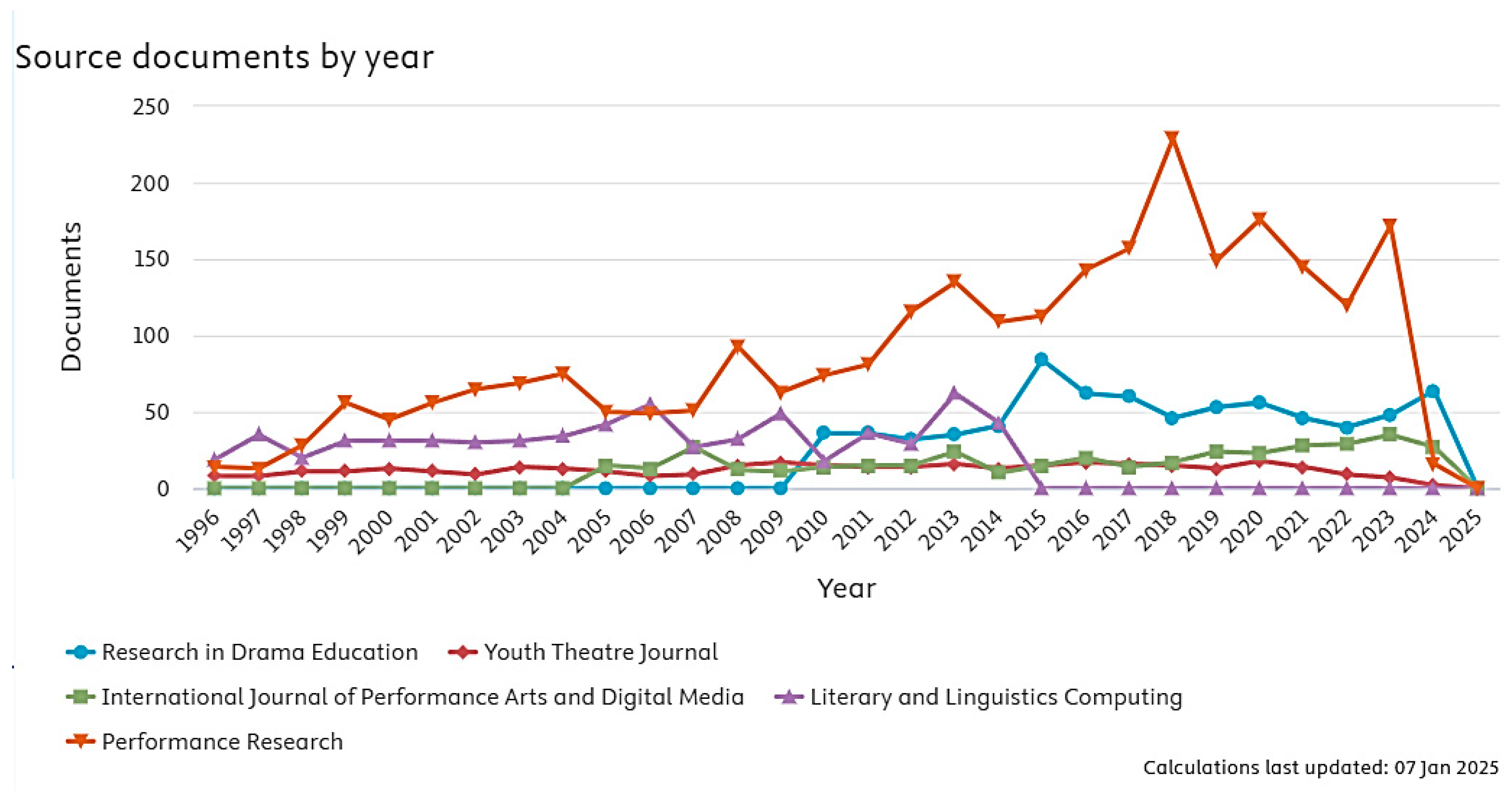
The analysis of CiteScore trends revealed distinct trajectories for journals in theatrical education and related fields. Research in Drama Education has consistently grown, from 0.2 in 2011 to 1.3 in 2023, with the greatest increase from 2021 (0.6) to 2023 (1.3), indicating a growing academic focus. The International Journal of Performance Arts and Digital Media saw significant growth, growing from 0.8 in 2021 to 1.7 in 2023, showing an increasing influence. On the other hand, the Youth Theatre Journal has had ups and downs, peaking at 0.5 in 2015–2016 and gradually rising to 0.6 in 2023, indicating a revived interest. Performance Research has been relatively constant, with CiteScores ranging from 0.1 to 0.3, indicating consistent but modest academic activity. Meanwhile, Literary and Linguistic Computing showed a strong early trajectory, with a CiteScore of 1.0 in 2011, increasing to 1.6 by 2015. In 2015, the journal was renamed Digital Scholarship in the Humanities, and subsequent metrics are reported under the new title. In general, rising CiteScores for some journals, particularly in the last five years, indicate increased academic interest in drama education, theatre research, and digital performance, with journals such as Research in Drama Education and the International Journal of Performance Arts and Digital Media gaining prominence in their respective fields.
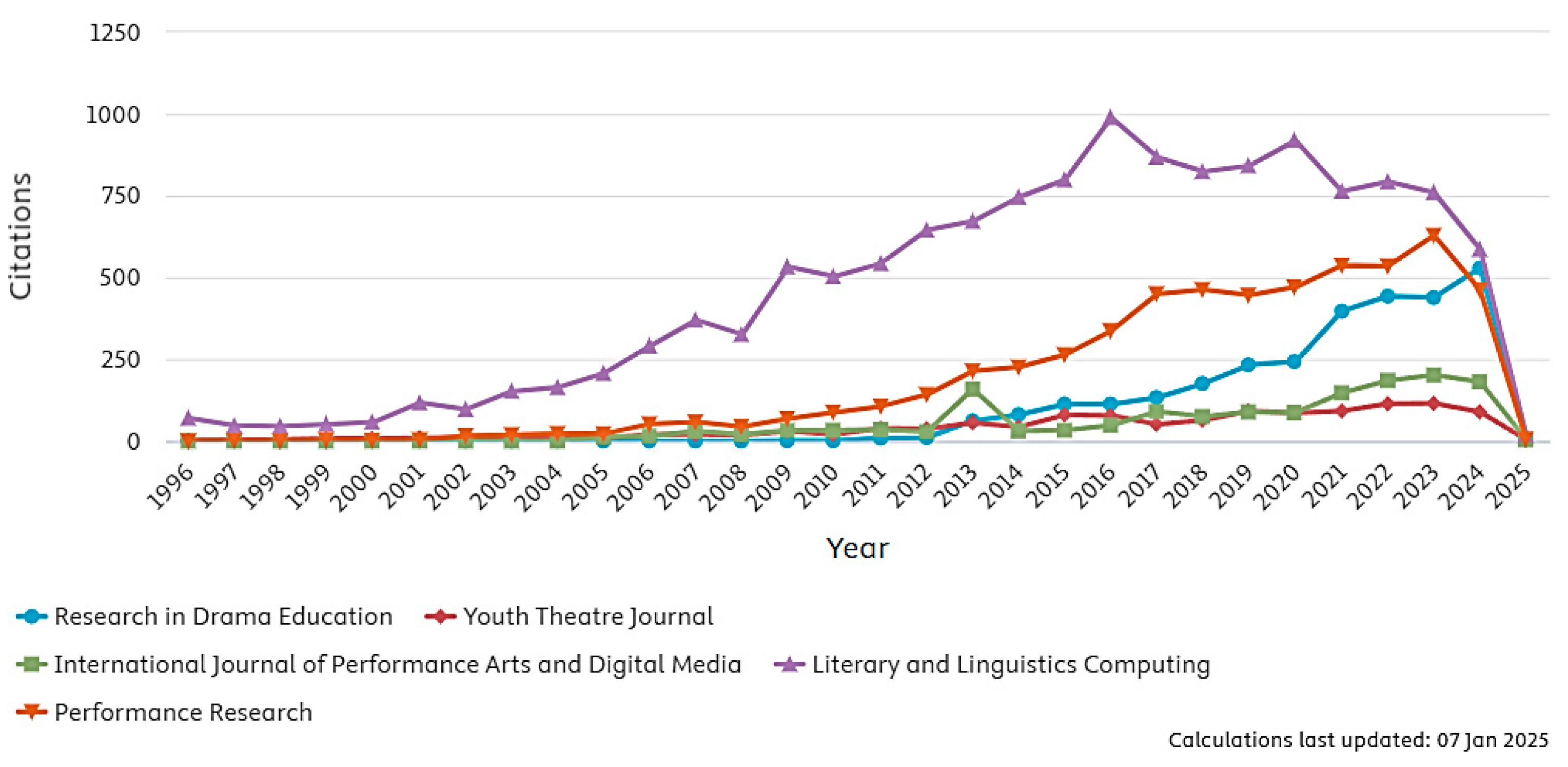
Figure 3 shows the number of times sources were cited each year for the five journals examined in the CiteScore trends. The data support important points, especially the large rise in citations for Research in Drama Education and the International Journal of Performance Arts and Digital Media in the last few years. Youth Theatre Journal and Performance Research have changing trends, with the Youth Theatre Journal coming back after 2020. On the other hand, Literary and Linguistics Computing had a strong citation rate in the early 2010s, hitting a high rate around 2015. However, it dropped, which matched the lack of CiteScore data after that time. There is a clear drop in citations for all journals in 2025, probably because the data for that year are incomplete. This graph reinforces the growing interest in drama education, theatre, and digital media research, with some journals showing continued growth while others maintain a steady but lower level of impact.
Figure 4 shows the number of source documents published each year for the five journals. This provides information on their publishing tendencies. Performance Research produced the most documents, with significant increases between 2018 and 2021, followed by ups and downs in recent years. The number of documents in Drama Education is continually increasing, which corresponds to an increase in CiteScore and Citations. The International Journal of Performance Arts and Digital Media and the Youth Theatre Journal have consistent but reduced publication rates, which means they continue to publish, but in lesser volumes. Literary and Linguistics Computing had average publication numbers until about 2015, which goes along with its earlier peak in citations before it stopped appearing in recent data. There is a big drop in all journals by 2025, probably because of missing data for that year. This graph shows the link between publication volume and citation impact, indicating that journals with steady or increasing output, such as Research in Drama Education, usually have more academic influence.
Table 1 shows information on the five academic journals for the year 2024, including their Source Documents, Citations, and Total Link Strength. Performance Research leads to the most documents published (120) and citations (600), showing strong academic interest. Research in Drama Education has the next highest number, with 50 documents and 450 citations, highlighting its increasing influence. The International Journal of Performance Arts and Digital Media has moderate reach, with 30 documents and 300 citations. Youth Theatre Journal and Literary and Linguistics Computing have the least output, with 20 and 10 documents and citations of 150 and 100, respectively. The Total Link Strength, which estimates influence, coincides with citation trends, showing that journals with more published works also receive more citations and have a greater impact.
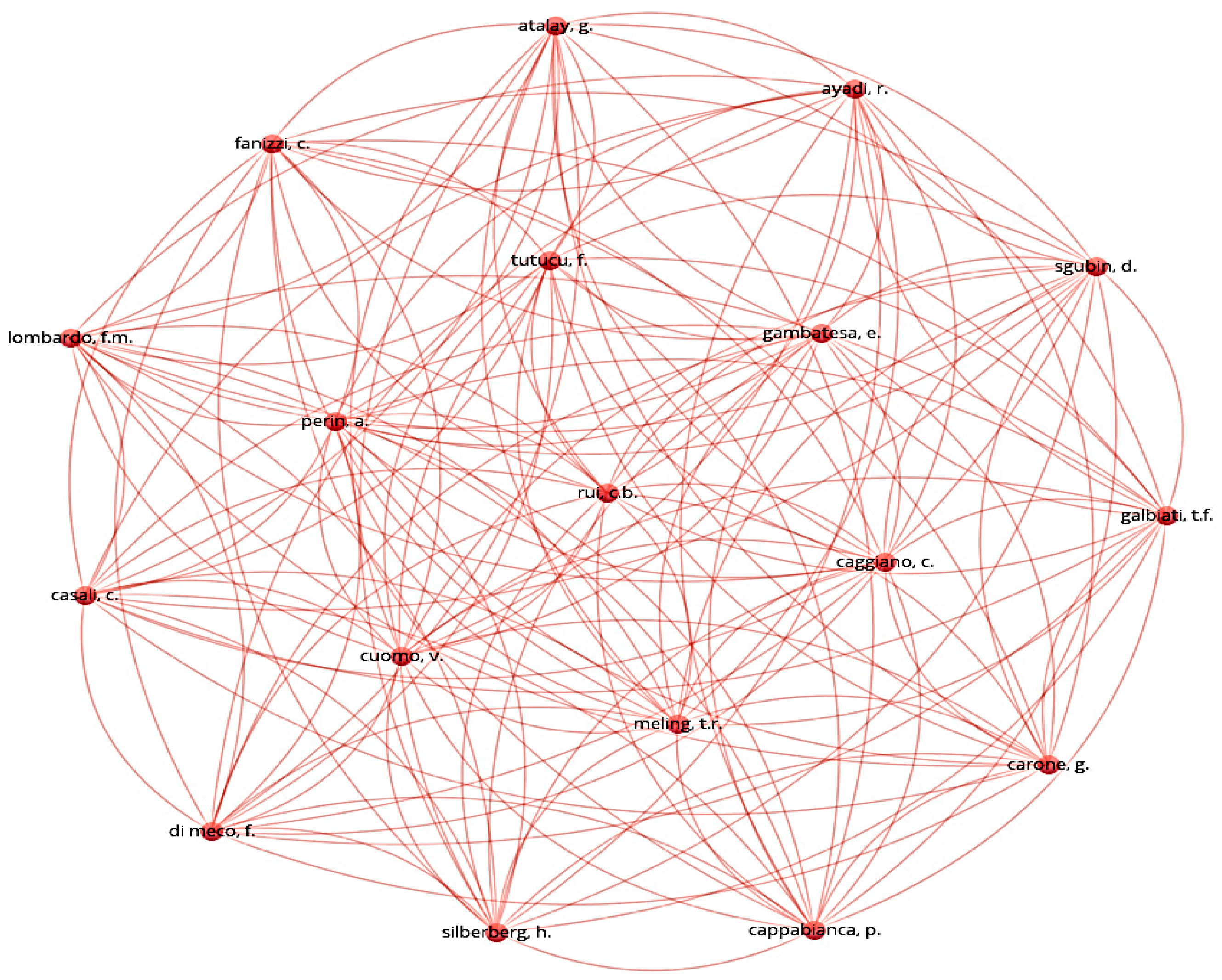
Further bibliometric information that should be discussed is the co-authorship network, which provides relationships among researchers on the field. Specifically, Figure 5 below shows the co-authorship network graph which depicts how researchers collaborate with each other. Each point represents an author, whereas the lines indicate joint publications. Important personalities such as Culiberg, Li, and Jackson have several connections, indicating that they interconnect various research teams. Authors with fewer relationships such as J. C. Hiatt and J. Ersoz worked independently. The thickness of the lines indicates how strong the co-authorship relationships are, with stronger lines indicating more frequent collaborations. The network depicts a linked research community with strong emphasis on multidisciplinary studies and information sharing through cooperation.
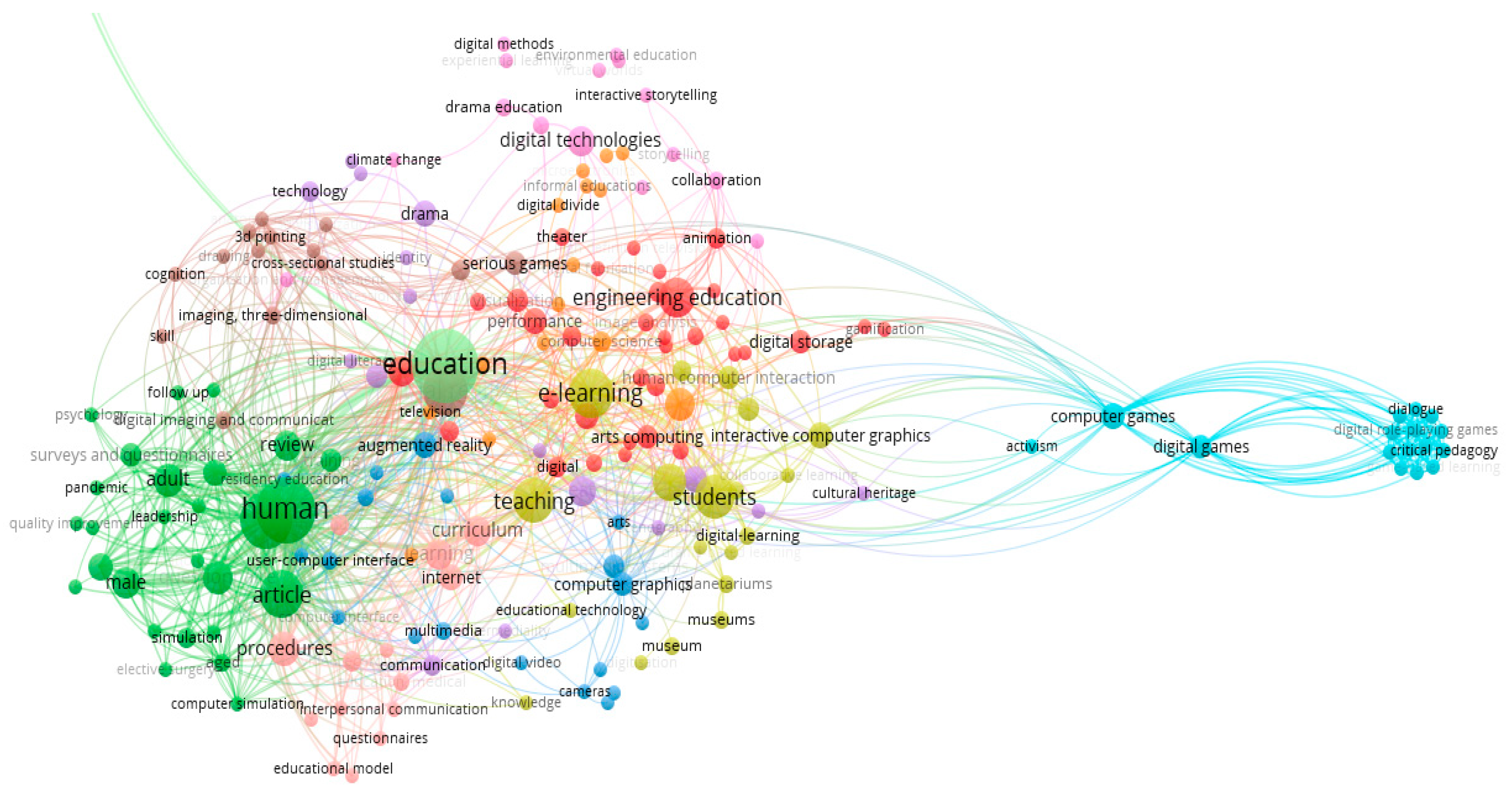
The co-occurrence network (Figure 6) illustrates strong connections between digital technologies, theatre education, immersive environments, multimedia systems, and e-learning, highlighting the interdisciplinary nature of technology-enhanced practices within the performing arts and education domains. These findings highlight the significance of digital technologies in theatre education, underlining their usefulness for interactive videos, digital storytelling, performance training, and immersive learning.
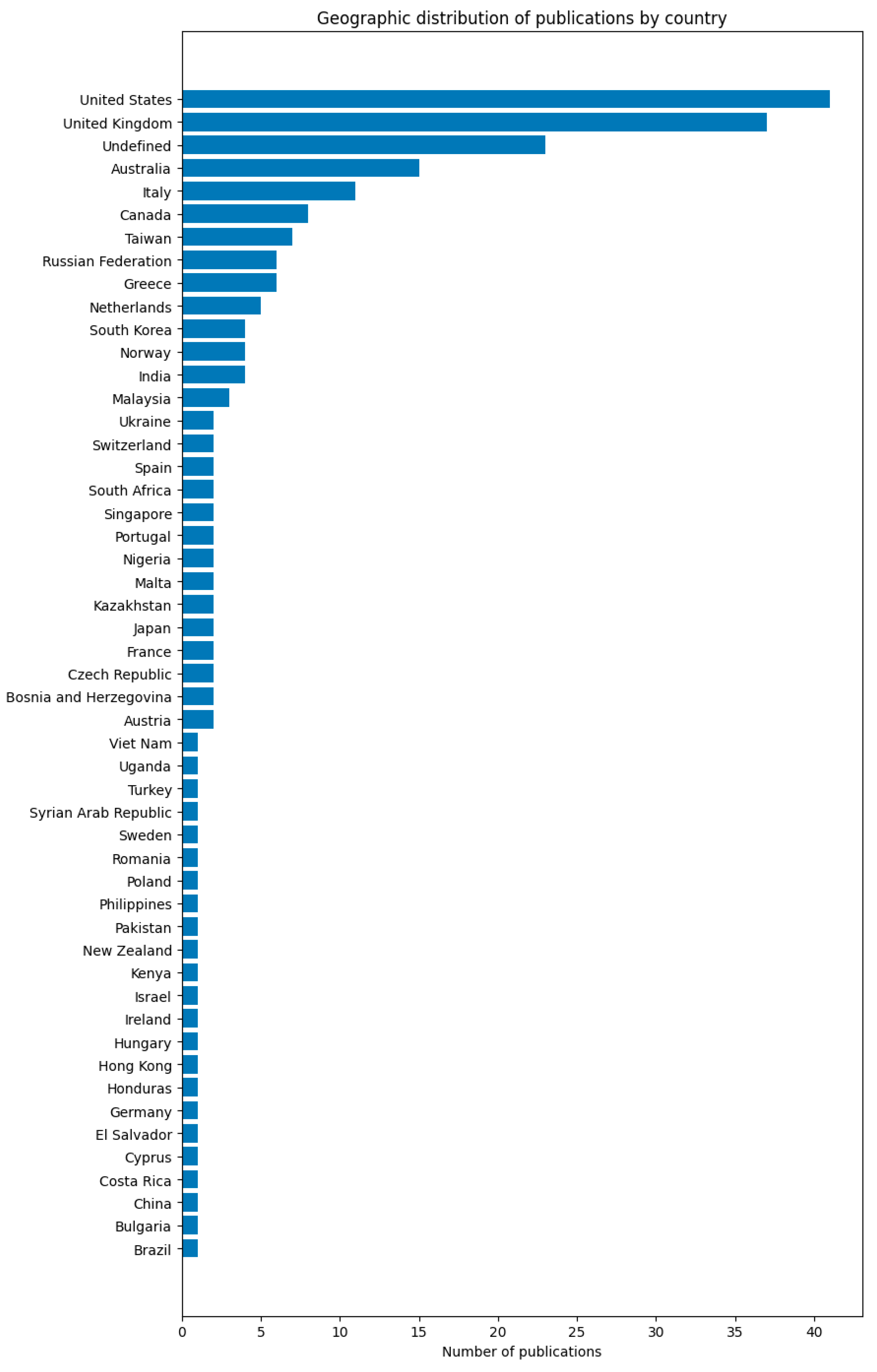
Figure 7 below shows that the United States and the United Kingdom have the most publications on this issue, with Australia coming in third but far behind. These nations most likely have strong research institutes, financing, and government or academic interests. Italy, Canada, and Russia provide in-between contributions, but Taiwan, Greece, the Netherlands, and India publish the least, implying that they may have less engagement or resources. The dominating position of English-speaking nations may also indicate trends in accessibility and collaboration in global research.
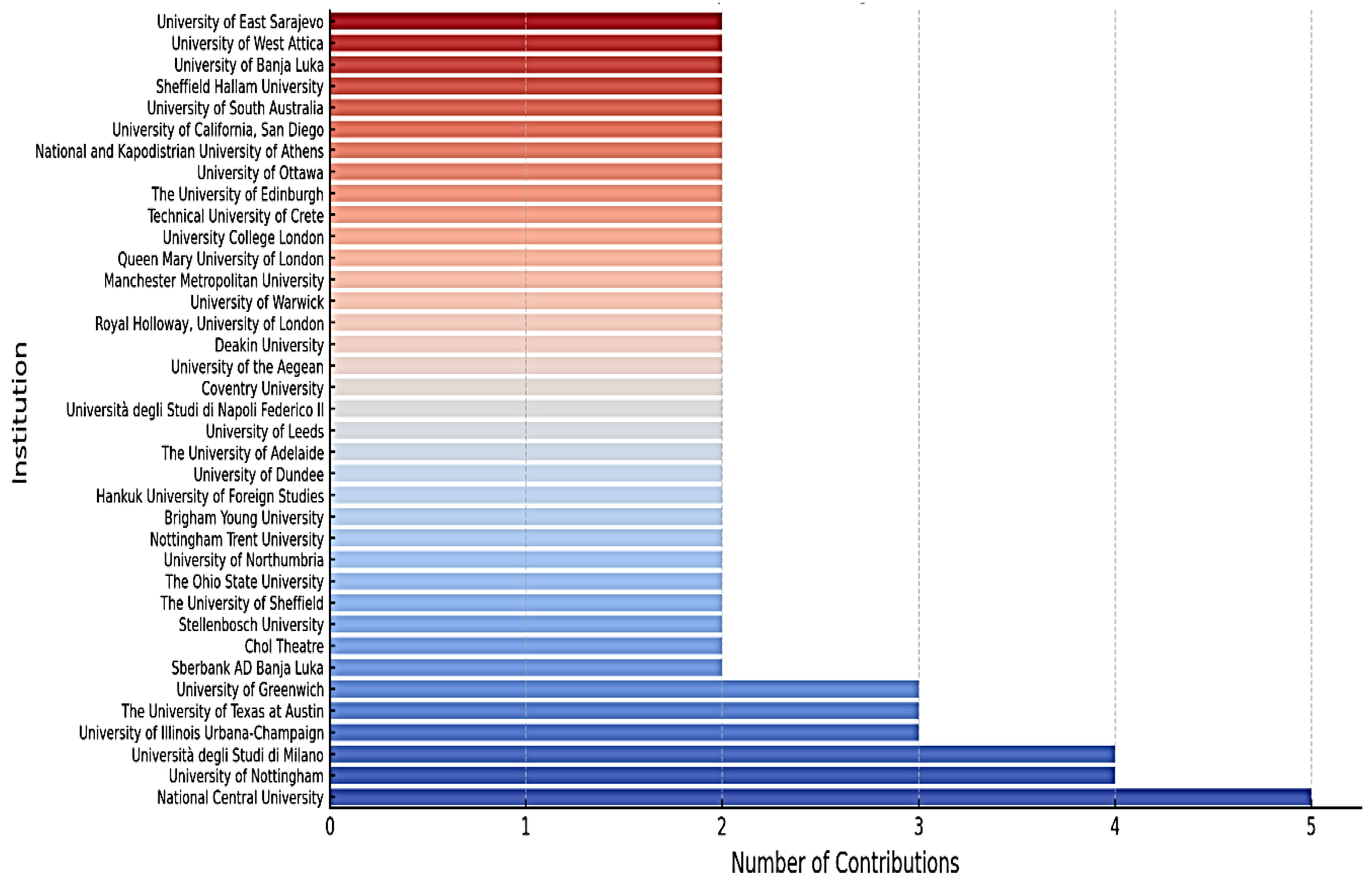
Regarding the top contributing institutions, it is observed that National Central University has the largest number of contributions in the field, leading at 5, followed by University of Nottingham and Università degli Studi di Milano with 4 each. Several universities contributed 2 or 3 times, showing a diverse range of institutional involvement (Figure 8).
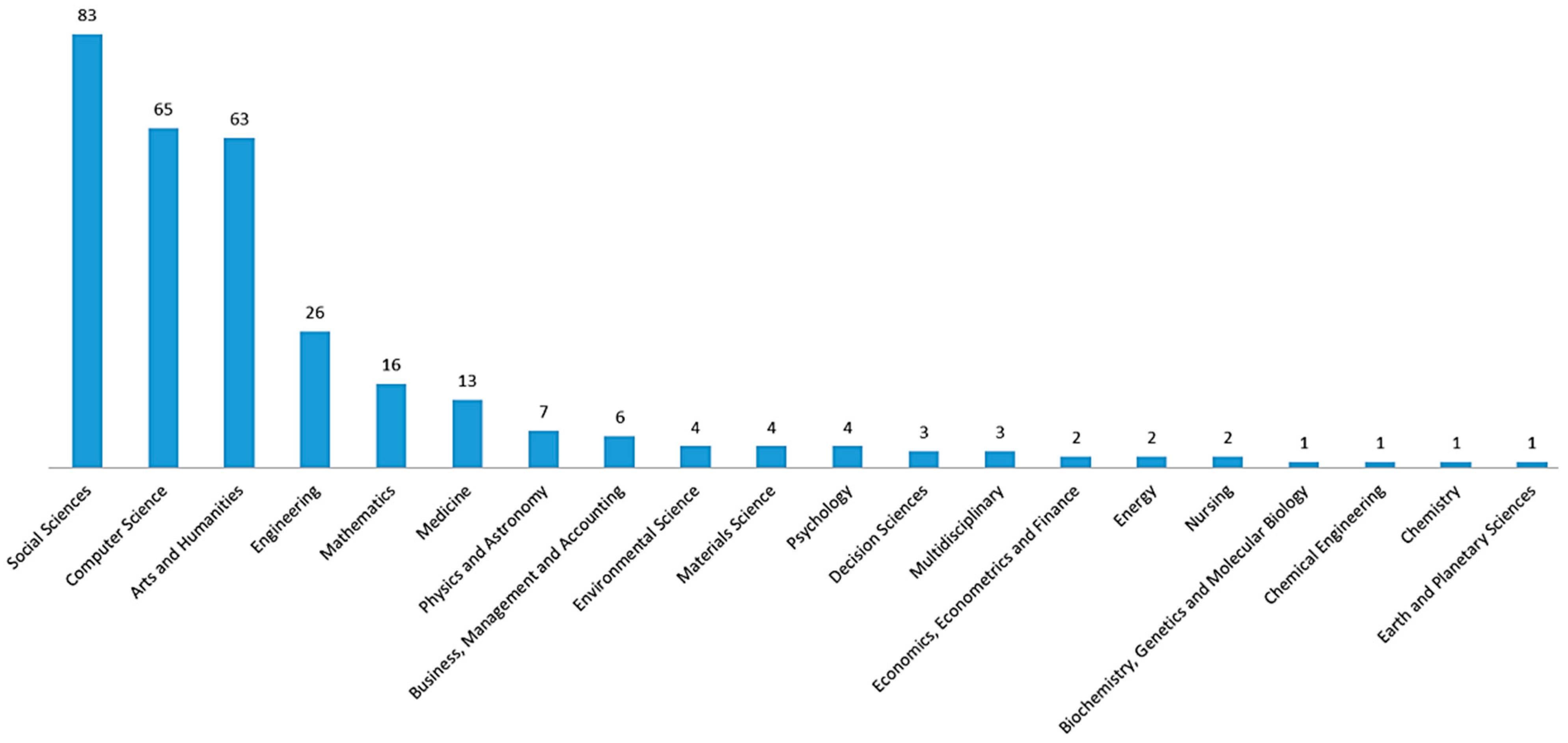
Finally, Figure 9 depicts how papers are organized by topic area, highlighting the fields that received the greatest investigation. Social Sciences have 83 documents, followed by Computer Science (65) and the Arts and Humanities (63). This demonstrates that these topics require significant investigation. Engineering has 26, mathematics has 16, and medicine has 13, all of which are significant but to a lesser extent. Physics and Astronomy had seven, while Environmental Science had six, indicating considerable research. Other areas, such as Economics, Nursing, Chemistry, and Earth Sciences, contain fewer papers, indicating that they are more specialized. This distribution indicates the dataset’s primary academic interests, which are primarily in the social sciences, technology, and the humanities.

3.2. Systematic Literature Review

This section presents the findings of the systematic literature review on the integration of digital technologies in theatre education. The thematic synthesis of the selected studies revealed five key determinants influencing the adoption of digital technologies in theatre/drama education. The following discussion organizes the reviewed studies according to these five themes:
(1)
Digital technology use in learning environments;
(2)
Digital skills and training of teachers and students;
(3)
Accessibility and technological infrastructure;
(4)
Education and teaching methods;
(5)
Teamwork and student engagement.
These determinants emerged through the coding process conducted with NVivo software and provide a conceptual framework that structures the analysis of the reviewed studies presented in the following subsections.
Specifically, it focuses on how digital tools fit contemporary theatre, their importance in adult learning, and how innovation ties into technology within theatre education. The main aim is to analyze the factors that impact the adoption or implementation of digital technologies in theatre or drama education. Table A1 in Appendix A presents the final sample of the papers used and analyzed for the systematic literature review. The research draws on a variety of studies, examining their findings and the larger implications of digital technologies in theatrical instruction. The literature consistently highlights the positive impact of digital technologies on learning outcomes and student engagement in theatre education. Studies indicate that the integration of digital theatre practices can enhance learners’ linguistic, digital, and cultural skills, particularly in adult and non-formal education contexts (Delikonstantinidou 2021). Similarly, research examining innovation and technology in drama education emphasizes that digital tools support interactive and participatory learning environments, fostering creativity and active student involvement (Anderson et al. 2015). Beyond learning benefits, prior research also underscores the importance of pedagogical design and teacher preparedness in the effective use of digital technologies. Several studies point to challenges such as the persistence of traditional teaching approaches, teachers’ hesitation toward adopting new digital tools, and reduced student engagement when technology is not meaningfully integrated into classroom practice (Kenwright 2020). These findings suggest that the educational value of digital technologies in theatre education depends not only on the tools themselves but also on how they support experiential, collaborative, and practice-based learning processes. These points suggest that the effective use of digital technology in theatre education depends on how it adds to the practical and teamwork aspects of learning about theatre.

3.2.1. Resource Access and Technological Infrastructure

The implementation of digital technologies in theatre education remains a contemporary research subject; however, there are several studies, such as those by Ridley and Flynn (2024), Zdriluk (2016), and Zhou and Li (2019), which provide useful insights into the topic. Scholars such as (Ridley and Flynn 2024; Akay 2018) found that digital theatre methods (such as forum theatre) can work well in online learning, while (Zdriluk 2016) examined the benefits and technical issues of digital theatre projects, confirming the findings of (Zakopoulos and Xanthopoulou 2024). Overall, these researchers support the idea that digital theatre education can improve accessibility and participation issues through the use of digital technologies; however, there is still a need for careful planning to maintain both artistic and educational quality. Other studies agree that digital technologies can enhance theatre education, but they point out that their successful use depends on matching teaching methods, interactive elements, and accessibility for everyone (Manero et al. 2015; O’Mara 2015; Sumners et al. 2008; Akay 2018; Marlatt 2020; Zhou and Li 2019). In addition, Kuksa (2009) study examined Virtual Reality (VR) in theatre education and, more specifically, the researcher aimed to investigate how new technology is used in set design, lighting, and performance, suggesting that VR could be a valuable tool in education and theatre. Although this study does not directly focus on educational issues, it reveals that these virtual learning tools enable students to interact with 3D. Another well-discussed determinant is the need for investment and technological support, alongside new teaching practices, for effective implementation. While it is commonly accepted that digital technologies provide innovative ways to learn and engage, there are challenges, such as the lack of teachers’ training in technology use, the lack of infrastructure and accessibility, and the absence of a digital culture to welcome new media.

3.2.2. Digital Skills

Researchers like Piriyaphokanont and Sriswasdi (2022) indicated that using drama in education is an effective approach for personal growth and change; however, they pointed out that the main factor affecting the use of digital tools in drama/theatre education is teachers/educators, who need good communication, creativity, and digital skills. Through a qualitative case study method, Davis (2011) found that digital technology could boost students’ creativity and create new ways of collaboration. However, there are ongoing challenges such as cultural issues regarding theatre and blending technology with traditional storytelling.
The current pandemic has offered grounds for research in many fields, especially in the field of education. At this point, Rixon et al. (2021) examined how COVID-19 made theatres go online, suggesting a new way to teach virtual performances. Others like Mokoena and Van Vuuren (2023) examined how drama and theatre training moved online during the COVID-19 pandemic. The Drama for Life Department at the University of Witwatersrand conducted research using ethnographic methods and transition data. The findings again showed that accessibility to technology affects online theatre education, making collaboration difficult. However, they concluded that the main educational goals of applied dramas can continue through adjusted methods and the use of available digital resources.

3.2.3. Teachers’ Training and Professional Development

Another study of Clark-Fookes (2023) introduced a new teaching technique for the digital arts that focuses on aesthetic experiences and interactive technology in theatrical education. This technique employs the TPAACK paradigm (Technological, Pedagogical, Aesthetic, and Content Knowledge) as a comprehensive approach to art instruction. These findings suggest that employing technology might promote aesthetic learning by allowing students to interact with things in novel ways. Mastrothanasis et al. (2024) researched utilizing artificial intelligence to establish teams in digital drama. The findings suggest that this strategy improves cooperation and creativity in digital theaters, providing a new perspective on education. Augmented reality (AR) in music and theatrical instruction, was examined by Michkov (2023) in specifically applications that combine physical and digital stages. Case studies have explored how augmented reality can improve traditional theatrical techniques. Zhou and Li (2019) investigated blended mobile learning in theatre arts at universities, showing that mobile devices in theatre classes can enhance students’ engagement, interaction, and resource access, thus improving their learning. In their study, Mokoena and Van Vuuren (2023) confirmed the challenges encountered, such as the lack of hands-on learning, limitations on physical presence, and the digital divide impacting connectivity and access. The results suggest that although some aspects of theatre teaching are less effective online, targeted efforts to address access issues and continuous changes in teaching methods can promote a more lasting use of digital technology in theatre education.
Literature shows how digital technologies are transforming theatre education through new interaction, learning, and creative methods. Despite progress, challenges, such as teachers’ technological skills, access to resources, and maintaining artistic integrity, remain significant. Future studies should examine how to combine digital technology with traditional theatre practices for valuable and balanced education. The application of digital tools in theatre education has become a central focus of applied theatre research.

3.2.4. Teamwork and Collaboration

Current research examines how blogging, virtual reality, artificial intelligence, and mobile learning can improve theatre education, encourage artistic expression, and boost drama inclusiveness. Moreover, Busby et al. (2024) investigated immersive technology in Kenyan teaching using theaters and archaeology. Their strategy combines case studies and ethnography with theatrical workshops and digital art, serving as hands-on learning tools to enhance awareness of climate change. The findings demonstrated that students gained a greater grasp of their cultural background and the ramifications of climate change and that digital technologies improved teamwork and critical thinking. However, this study emphasizes issues, such as access to technology and the need for further teacher training.
Additionally, Hassoulas et al. (2023) proposed a blended learning technique (PEBIL) that incorporated digital technologies into theatrical teaching. They collected information from 179 students via surveys regarding their experience with e-learning and hybrid education. The findings revealed that 77% of the participants had a good attitude toward digital technologies, whereas 66% preferred studying at their own speed. However, challenges in meeting the diverse requirements of students and managing the time for online work have been identified. Also, Poveda and Montoya (2021) investigated how digital manufacturing and theatre might help build social skills in young people with autism spectrum disorder. Their action research included theatrical workshops and digital seminars in which participants created performance items using 3D printing. The findings indicated improved communication, self-regulation, and collaborative abilities, as well as high levels of involvement. Nonetheless, it has been proposed that teaching be tailored to the individual needs of each learner. Next, Boiko et al. (2023) explored the influence of digital technologies on modern theatre, with an emphasis on digital scenography and VR. Through an examination of theory and history, they aimed to understand how digital technology alters theatre. They found that digital tools have transformed traditional methods and have presented new opportunities for directors and actors. Nevertheless, the need for technical skills remains. An interesting study of Bell and Borsuk (2020) on implementing digital approaches to teach Shakespeare in universities combined text analysis and case studies with global data on Shakespeare education through digital tools. The findings revealed that integrating digital methods enhanced learning by making texts more engaging and accessible. However, they emphasized that educators require training to obtain the necessary digital skills. Ahmad et al. (2024) explored interactive learning as an alternative to digital acting training (DAT) in Malaysia. Their study merged survey data with the interviews. The outcomes revealed that interactive learning enhances students’ communication, emotional intelligence, and performance insights, whereas technology aids in acting education.

3.2.5. Digital Culture in Theatre Education

Most studies have identified important themes despite the adoption of a variety of techniques. According to Bell and Borsuk (2020) and Boiko et al. (2023), technology can improve learning; however, teaching techniques must be changed to reflect this. Also, Ahmad et al. (2024) emphasize the value of participation in theatrical instruction. On the other hand, Camilleri (2015) and Prior et al. (2011) expressed concerns about the difficulty of using digital technologies, including the lack of technical training for instructors and the potential influence on theatre authenticity. Furthermore, Xanthopoulou and Svarna (2022) and Rubtsova (2021) contend that digital technologies promote engagement and cooperation, thereby facilitating artistic expression and learning. However, Rixon et al. (2021), Mokoena and Van Vuuren (2023) and Busby et al. (2024) found that access to resources and technology is crucial, especially in areas with limited technical infrastructure or during online scenarios. Studies like Ahmad et al. (2024), Poveda and Montoya (2021) and Thompson (2019) concluded that while technology in theatre education cannot replace face-to-face experiences, it can offer insights into deepening education and artistic work.
Despite these shared conclusions, there are notable differences between research methods. Qualitative approaches, as discussed by Xanthopoulou and Svarna (2022) Camilleri (2015) and Bell and Borsuk (2020), include interviews, case studies, and discourse evaluations. In contrast, Ahmad et al. (2024) and Hassoulas et al. (2023) utilized quantitative methods employing surveys and statistical techniques to evaluate the impact of digital tools. Some studies such as those by Prior et al. (2011), Rixon et al. (2021) and Ahmad et al. (2024) combined qualitative and quantitative data to gain a comprehensive view. Ethnographic methods appear in the works of Mokoena and Van Vuuren (2023), who observed student and teacher engagement with technology through active participation.
Although many studies have asserted that technology can boost learning, they vary in effectiveness and applicability. Specifically, Ahmad et al. (2024), Bell and Borsuk (2020) and Boiko et al. (2023) argue that technology improves drama education by enhancing collaboration and learning processes. However, Camilleri (2015) raised concerns about losing face-to-face interactions and how digital tools may compromise the authenticity of theatrical experiences. A study by Rixon et al. (2021) indicates that, while digital tools are beneficial for remote education, they can also present challenges regarding access and technical support.
In conclusion, the analysis of these studies reveals the complexities of integrating digital technologies into theatre education. Although digital tools have considerable potential, their successful implementation depends on factors such as teacher training, maintaining theatre authenticity, accessing technology, and adapting teaching practices. Future research should focus on developing educational frameworks that merge technological tools with traditional theatre methods to create a comprehensive and impactful learning experience. As mentioned, the main research question of this study was to identify the determinants that impact the adoption of digital technologies in theatre and drama education. The literature review reveals five essential factors affecting the successful adoption of digital technologies in theatre education.
These findings have important implications for both educational practice and future research. First, they highlight that the successful integration of digital technologies in theatre education depends not only on the availability of technological tools but also on the development of digital pedagogical competencies among educators. Second, the findings indicate that institutional support and technological infrastructure play a crucial role in enabling meaningful digital theatre practices. Finally, the emphasis on collaboration and engagement suggests that digital technologies should be implemented in ways that preserve the interactive and embodied nature of theatre learning. Future research should therefore focus on developing pedagogical frameworks that effectively combine traditional theatre practices with emerging digital technologies, ensuring that technological innovation enhances rather than replaces the core experiential dimensions of theatre education.
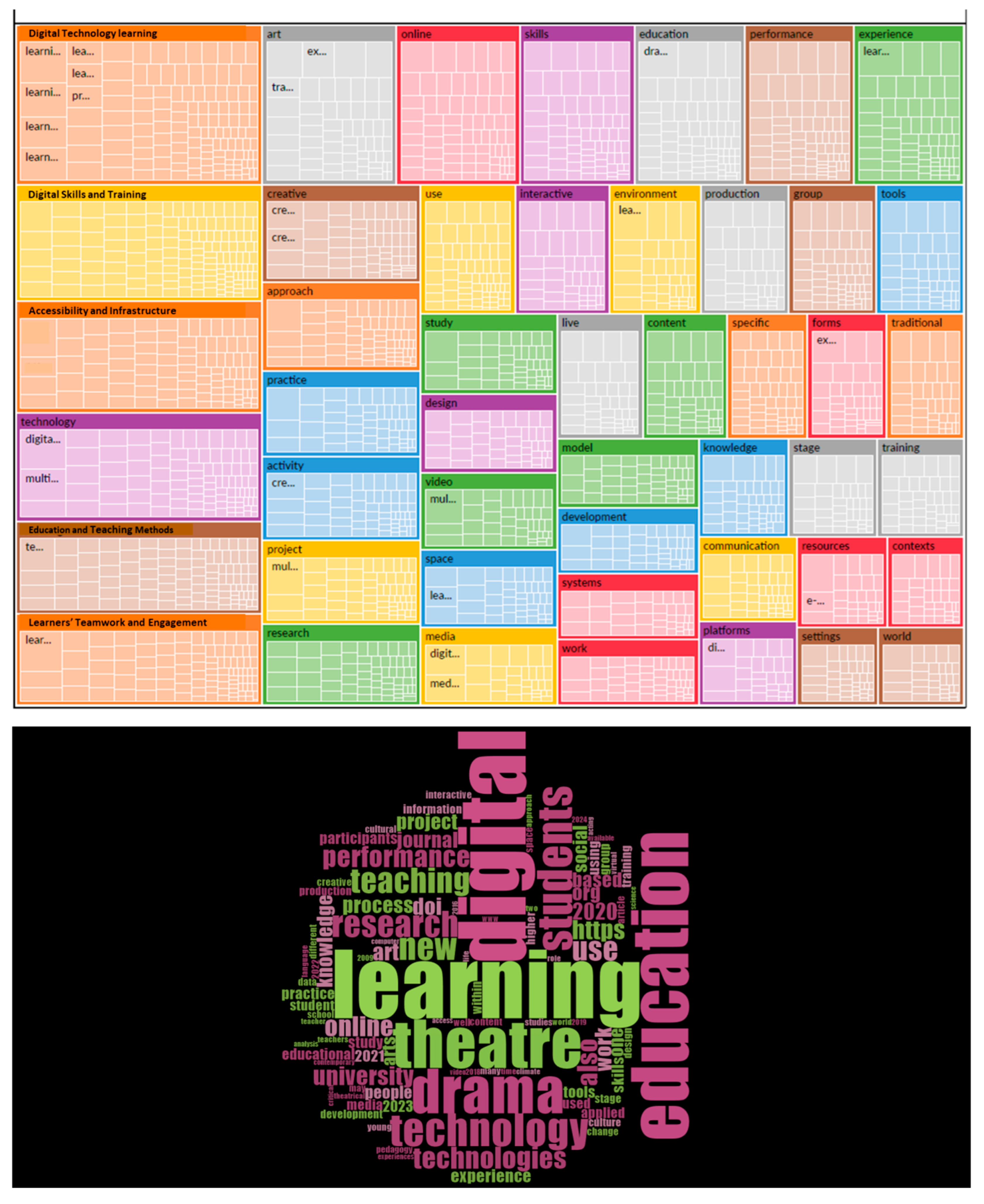
After reviewing the above-mentioned studies, the free version of NVivo 12 software tool was used to perform coding for describing the determinants of the adoption of digital technologies in theatre/drama education. According to Xanthopoulou and Svarna (2022), NVIVO 12 software is useful for organizing, keeping, and getting qualitative data, often used for qualitative content analysis. NVivo software was used to support the coding process and facilitate the thematic synthesis of the qualitative findings included in the systematic literature review (Zakopoulos and Xanthopoulou 2024). Coding helped to identify, name, categorize, and explain the important contents in the texts. These thematic categories also provide a conceptual structure for interpreting the literature reviewed in this section. The six main categories (1. Digital technology, 2. Digital Skills and Training, 3. Accessibility and Infrastructure, 4. Technology (which was further combined with category 1-digital technology, leading to five main categories), 5. Education and Teaching Methods, 6. Learners’ Teamwork and Engagement), referred to as “codes”, are shown in Figure 10 below.
More specifically:
  • Digital technology learning
The term ‘digital’ comes up a lot in the review, showing it is key in today’s theatre studies. Research from Boiko et al. (2023) and Camilleri (2015) points out that using digital tools in theatre goes beyond just tech updates; it transforms art and teaching methods. Tools like interactive videos, virtual reality, and digital platforms are changing performance and theatre education. However, studies indicate that technology works best in education when paired with good teaching methods and proper integration.
2.
Digital Skills and Training of Teachers and Students
The word “skills” is crucial, showing that building digital skills is vital for using technology. Ahmad et al. (2024) and Hassoulas et al. (2023) noted that teachers often lack technical training, which limits new tool usage. At the same time, Rubtsova (2021) stated that students need to develop their tech skills for hands-on tasks. This emphasizes the need for training both teachers and students in using digital tools efficiently.
3.
Accessibility and Infrastructure
The word “access” is commonly discussed, pointing out the need for proper technological infrastructure and systems. Specifically, Mokoena and Van Vuuren (2023) and Rixon et al. (2021) noted that access to technology is not fair in many cases, especially in areas and organizations with few resources. This means that digital technologies can only improve theatre education if everyone can use these tools and resources equally.
4.
Education and Teaching Methods
The term “training” is often used, indicating that teaching resources must change for better results. Bell and Borsuk (2020) claimed that there is a need for new teaching methods that connect old methods with digital features.
5.
Teamwork and Engagement
Research shows that “collaboration” and “interaction” are key determinants, indicating that using digital technologies depends on students’ collaboration and the ability to use digital tools. Studies by Zakopoulos and Xanthopoulou (2024), and Prior et al. (2011) demonstrate that team-based platforms, such as blogs and online rehearsal spaces, improve connections between students and teachers. However, these tools can be challenging because they require more technological assistance and time to learn.
In summary, the systematic review of the literature revealed that the successful adoption and implementation of digital technologies in theatre education depends on various determinants such as resource access, digital skills, teachers’ training to enhance their digital and technological skills, and teamwork or collaboration among students and educators. There is also a need for an innovative digital culture in theatre/drama teaching.

4. Materials and Methods

4.1. Data Collection

This study suggests a combination of bibliometric analysis and systematic literature review (SLR).
The research question of the present study is: “Which factors affect the integration of digital technologies in theatre/drama education?”
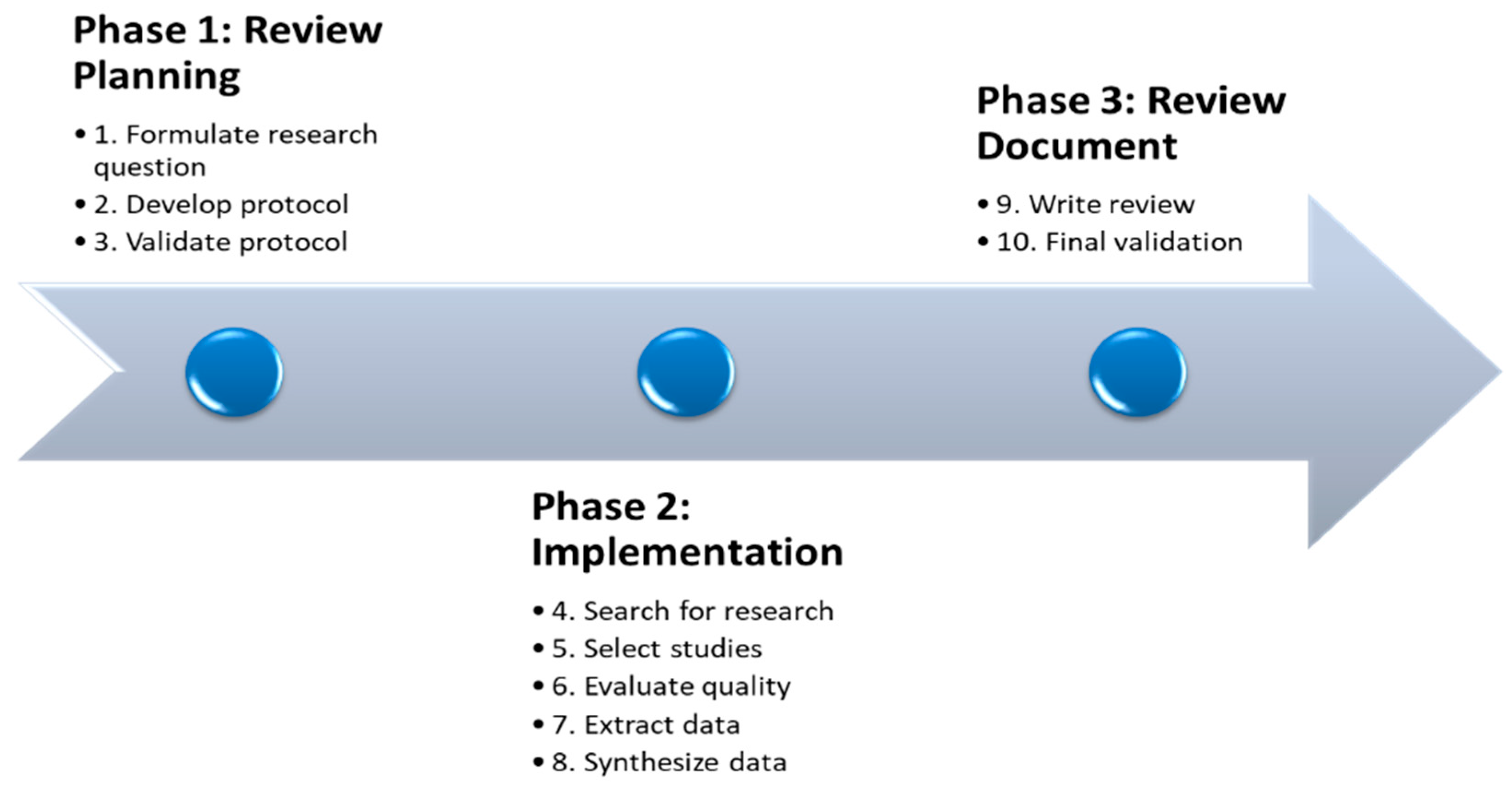
Despite growing discussion about the value of digital technologies in various fields, research on theatre and drama education is sparse and mostly based on narrative evaluations, with no systematic literature studies (Thorpe et al. 2005). The authors of this study conducted a systematic literature review (SLR) as, according to Thorpe et al. (2005), this method provides transparency, clarity, equality, accessibility, unification, and a detailed emphasis on a specific field. Furthermore, SLR provides a more holistic perspective as it unifies previously unrelated findings (Pittaway and Cope 2007). SLR is typically performed in various steps, which vary based on the study and research aims. There are several ways to communicate the findings of systematic literature reviews; thus, researchers in particular have many options for presenting their findings, such as software tools and bibliographic mapping approaches. When hundreds of papers are published on a given issue, visualization can assist in identifying those that have a substantial influence on the study’s aims (Linnenluecke et al. 2020). The current study followed the phases outlined by Kitchenham and Brereton (2013), as shown in Figure 11.
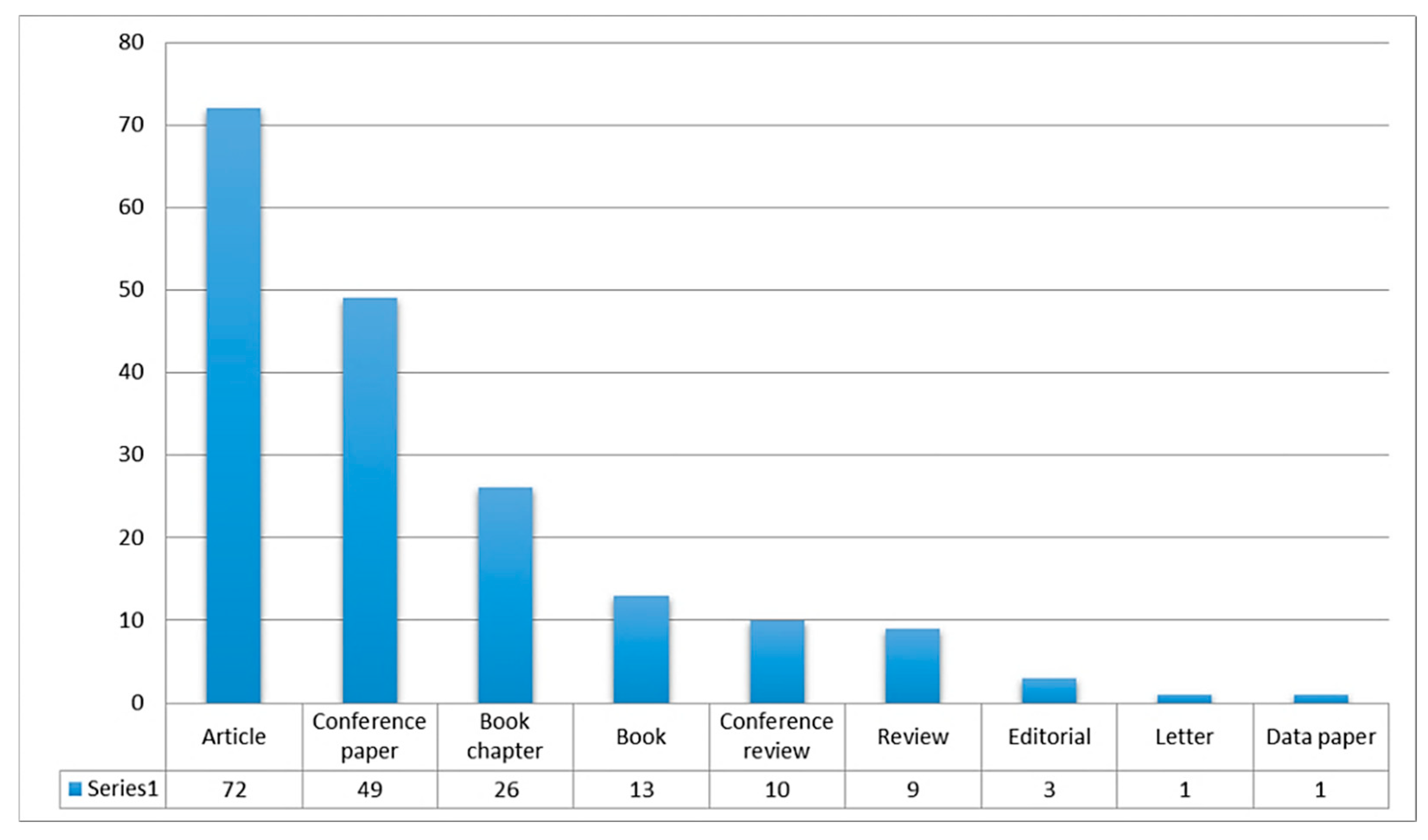
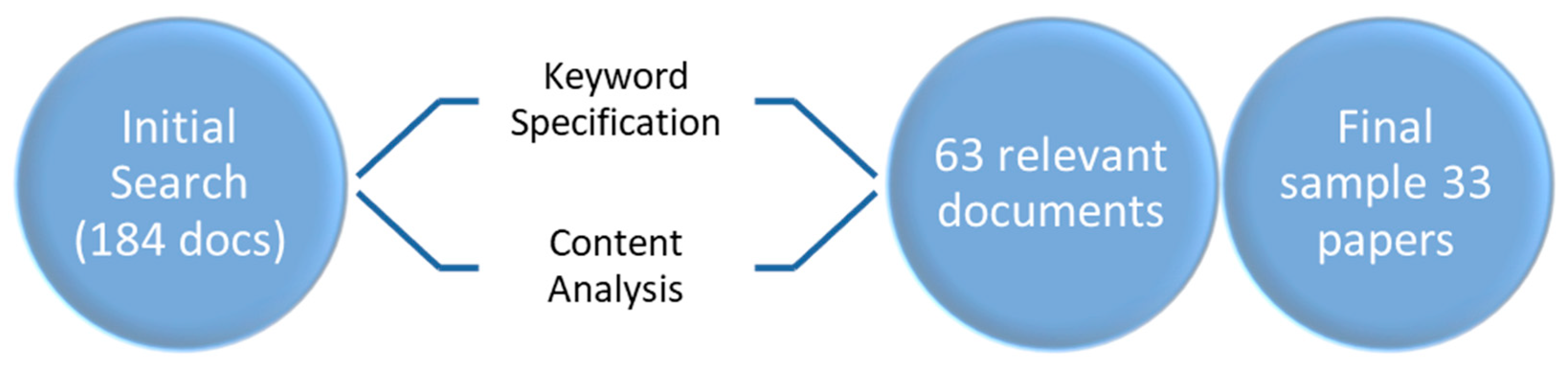
Next, a subject search was conducted to locate publications that addressed digital technology and theatre/drama education in their titles, abstracts, and keywords. The initial search reached the 184 papers (Article: 72; Conference paper: 49; Book chapter: 26; Book: 13; Conference review: 10; Review: 9; Editorial: 3; Letter: 1; Data paper: 1) during the period from 1997 to 2025 (see Figure 12).
The research was further filtered for articles written in English, yielding to 70 articles. The authors chose to analyze peer-reviewed journal papers, while books, press publications, conference proceedings and theses were excluded. In addition, the search was limited to English-language publications. Consequently, the dataset mainly includes studies conducted in Anglophone or internationally oriented research contexts, rather than focusing on a single national drama education system. As mentioned, the Scopus and Google Scholar databases were used to search published research from 1997 to 2024 containing the terms presented in Table 2 (Cornelius et al. 2006). To avoid ambiguity arising from the dual meaning of the term “theatre,” medical and surgical education studies referring to operating theatres were explicitly excluded from the dataset prior to the analysis.
A structured search strategy was employed to identify relevant and unique entries, combining multiple keywords and phrases related to digital technologies and theatre/drama education. The search queries incorporated key terms such as “digital technologies,” “theatre/theater,” and “education/teaching,” using Boolean logic to balance precision and coverage. Searches were limited to English-language publications, and exclusion criteria were applied to remove literature review studies. Wildcard operators were used to account for variations in terminology (e.g., “theatre*,” “education*”). The complete search strategy and keyword combinations are presented in Table 1.
Several researchers such as Akçayır et al. (2020), Dolhey (2019) and Maheshwari et al. (2023) recommended the Scopus database for a comprehensive literature review in comparison with other available databases. For instance, van Eck and Waltman (2017) after comparing WoS and Scopus, they mentioned that Scopus provided more comprehensive coverage of the literature than WoS, with an average overlap of 86% between the two databases. The same researchers also mentioned that Scopus indexes a wider range of papers and conference proceedings, making it easier to find the relevant content. The same opinion is shared by Mongeon and Paul-Hus (2016), who support that Scopus was updated more often than WoS, with a shorter gap between publication and database inclusion. They also point out that WoS covers natural sciences and engineering thoroughly, whereas Scopus covers the human and social sciences more extensively. Finally, according to Govender (2025), numerous journals that are included in the IEEE Xplore, Web of Science, ProQuest, and ERIC databases are also covered by Google Scholar. To make it easier to retrieve peer-reviewed articles, the library was connected to the Google Scholar settings.
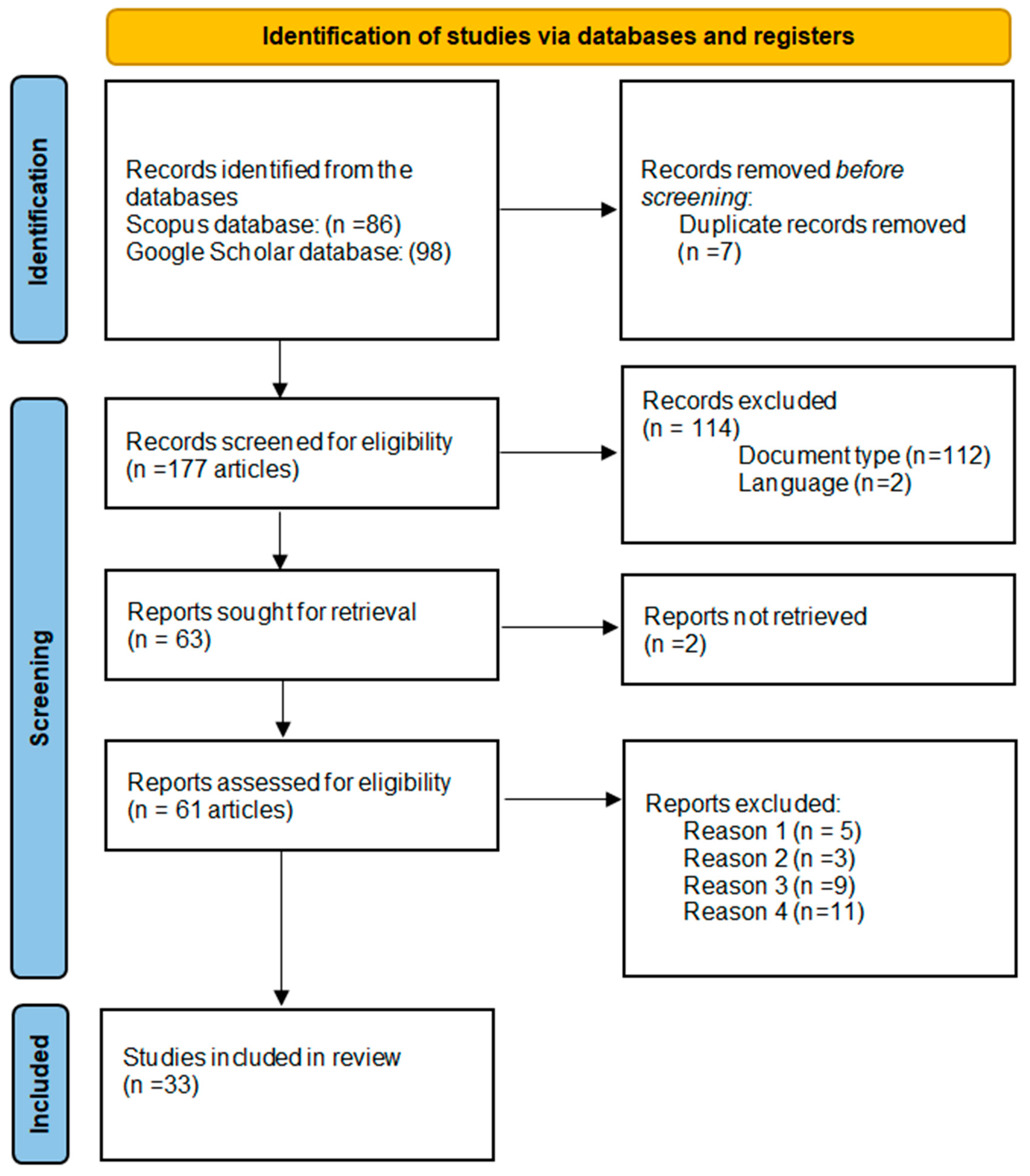
The initial search resulted in 184 documents. After deleting duplicate records (n = 7), 177 were evaluated for eligibility. During this stage, 114 documents were rejected owing to document type (n = 112) and language constraints (n = 3). A total of 63 reports were requested for retrieval, of which two could not be located. Then, 61 reports were evaluated for their eligibility. During the eligibility examination, additional exclusions were made for a variety of reasons, including methodological flaws, inadequate data, and lack of emphasis on important themes. Finally, 33 studies were included in this review. The document-selection process is illustrated in Figure 13.
Figure 13 shows that the initial findings of the research papers are 184. At this time, the criteria for inclusion and exclusion were created to narrow down the search results. The abstract, keywords, introduction, and conclusion of each database were reviewed to refine the outcomes. The inclusion criteria were as follows:
  • The paper is peer reviewed.
  • The study should be conducted in English and be relevant to the search parameters.
  • Implemented an empirical investigation rather than a narrative or systematic literature review.
  • When determining the relevancy of each paper screened, the authors additionally incorporated four exclusion criteria to reinforce the evidence search procedure.
  • Studies that do not address digital technologies in theatre/drama education as a main focus of the research (relevance).
  • Studies that do not define or describe the digital technologies in theatre/drama education (relevance).
  • Studies that conducted literature reviews, both systematic and descriptive (methodology), about digital technologies in theatre/drama education.
  • Studies that were written in languages other than English (language).
  • Studies that were not open to reach their content (accessibility).
The protocol was based on the PRISMA 2020 statement (Page et al. 2021). The PRISMA flow diagram, shown in Figure 14, provides a clear visual representation of the steps involved in conducting a systematic review and meta-analysis.
The reasons for not including reports were mainly relevance and scope (reason 1), language of publication (reason 2), research method (reason 3), and lack of access to the full-text version of the study (reason 4). The authors removed articles that used systematic or descriptive reviews, which led to the exclusion of five for reasons 1, three for reason 2, ten for reason 3, and 11 for reason 4. Five papers were excluded because they did not directly address the research question of this study. Additionally, three studies in languages other than English (specifically, Russian, Portuguese, and German) were removed. Nine articles employing systematic or descriptive literature review methods were excluded, since this study aimed to synthesize empirical research findings rather than review the literature, ensuring that the analysis used primary data and direct investigations in the field. During the full-text screening phase, 11 studies met the inclusion criteria but could not be fully assessed due to limited access to their full-text versions. As the abstracts of these studies did not provide sufficient information for content analysis, they were not included in the final synthesis. Owing to limited research on this topic, the publication time criterion was not applied. The authors also found it useful to compare data from older and newer studies to show changes in trends and insights regarding the use of digital technology in theatre/drama education.

4.2. Data Analysis

This study suggests a combination of systematic literature review and bibliometrics. Bibliometrics refers to a quantitative analysis of bibliographic data to create co-authorship, co-citation, or keyword co-occurrence networks and investigate the links between authors, publications, keywords, and countries, allowing for an in-depth analysis of scientific literature across various fields (Modak et al. 2020). Bibliometrics can also be employed in the SLR process to minimize human effort, reduce costs and time, and improve the efficiency and effectiveness of the research process (Pulsiri and Vatananan-Thesenvitz 2018). The combination of these two methods is vital in academic research as they present and analyze information from existing knowledge (Linnenluecke et al. 2020). More specifically:
Bibliometric Analysis: An initial analysis of the literature helped identify key phrases for research on digital technology in theatre/drama education from 1997 to 2025. The Scopus and Google Scholar databases were used for this study. The authors employed co-authorship network analysis to understand how researchers and institutions collaborate. Keyword co-occurrence analysis tracked central themes and their development in this field, while citation analysis highlighted influential papers and research trends. VosViewer was implemented to display bibliometric data, aiding the identification of key research clusters and connections.
Systematic Literature Review: This detailed literature review examined the significance and practical use of the study findings in this area. The authors performed a comprehensive literature search using the Scopus and Google Scholar databases and refined keywords using a step-by-step approach. In the screening and selection phases, the researchers evaluated the quality of each selected study using standard checklists based on inclusion/exclusion criteria, such as publication language, methodological standards, and relevance. Key details from each study, including aims, methods, findings, and theoretical contributions, were collected and combined. Thematic synthesis was then applied to identify recurring patterns and challenges, resulting in a narrative that described gaps and the current knowledge level in the field. NVivo software assisted to store and classify qualitative data, facilitating quick theme identification and data synthesis.
The findings of the bibliometric analysis and systematic literature review were merged to form a clear view of the subject area. The bibliometric data focused on the structural and numerical features of the research landscape, whereas the systematic review examined the qualitative substance of the publications. This combination illustrates the progression of study development and consolidates the ideas on the topic.

5. Conclusions

The integration of digital technologies into theatre and drama education presents both significant opportunities and substantial challenges. The aim of this study was to systematically review the existing literature in order to identify the determinants affecting the adoption and implementation of digital technologies in this field.
With regard to the findings of the bibliometric analysis, interesting quantitative trends emerged in the field of research on digital technologies in theater/drama education. More specifically, limited scientific activity was observed until the mid-2000s, followed by a gradual increase and strong growth after 2016, peaking in recent years. This increased research focus in this field is largely linked to the broader digitization of education and the acceleration of the adoption of digital tools, especially after the COVID-19 pandemic. At the country level, the United States and the United Kingdom emerge as the main contributors to research output, indicating strong academic ecosystems and research infrastructures in the English-speaking world. At the same time, journals such as Research in Drama Education and the International Journal of Performance Arts and Digital Media are gaining scientific influence, contributing to the gradual consolidation of the field. In conclusion, the bibliometric analysis confirms that research on digital technologies in theater education is in a stage of dynamic development, offering a solid quantitative foundation that complements and reinforces the qualitative conclusions of this systematic review.
The bibliometric findings also reveal several important directions for future research in this field. First, the geographical distribution of publications indicates a strong concentration of research in English-speaking countries, particularly the United States and the United Kingdom. Future studies could therefore explore the integration of digital technologies in theatre education in underrepresented regions, including developing countries and diverse cultural contexts. Second, the interdisciplinary distribution of publications across social sciences, computer science, and the arts suggests opportunities for stronger collaboration between technological and artistic disciplines. Future research could investigate how emerging technologies such as artificial intelligence, virtual reality, and immersive media can be more systematically integrated into theatre education. Finally, given the relatively limited number of empirical studies identified in the field, there is a need for more longitudinal and comparative research examining the pedagogical impact of digital technologies on theatre education practices.
The findings of Systematic Literature Review revealed that while digital tools can significantly enhance creativity, engagement, and innovative teaching methods, their effective integration requires overcoming various obstacles. According to the literature findings, the primary factors which impact on the integration of digital technologies in theatre/drama education are related to the existence or non-existence of digital skills and training, the accessibility and infrastructure, as well as the development of a digital culture within educational environments.
For technology-based teaching approaches to be used successfully, both teachers and students must possess digital abilities. Numerous studies highlighted that one of the biggest problems still facing educators is their lack of digital literacy. Programs for professional development that emphasize the development of digital skills are therefore crucial. Accessibility to technology infrastructure is still a significant obstacle, particularly in areas with limited funding or resources. For digital drama education to become inclusive and widely used, it is imperative that digital inequality be addressed. However, the effective pedagogical shift toward digital integration requires not only technical resources, but also a change in teaching methods. Integrating digital tools with traditional drama practices must be done thoughtfully to preserve the essence of theatrical education while leveraging modern technology. Furthermore, it’s critical to use digital platforms to promote cooperation and teamwork between students and teachers. Learning results and student engagement may be improved by developing encouraging digital spaces that promote communication and innovation. In conclusion, even if digital technologies have the potential to revolutionize theatre and drama education, their successful implementation necessitates bridging the digital literacy divide, guaranteeing fair access to technology, and adopting innovative teaching practices. To promote a positive digital culture in theatre education, stakeholders—including educators, legislators, and educational institutions—must cooperate.

6. Limitations of the Study and Future Research Directions

Despite the comprehensive nature of this literature review, there are also limitations that should be mentioned. Most of the reviewed studies were conducted in developed countries, leading to potential geographical bias, as developing countries may face distinct challenges in integrating digital technologies. Additionally, while the thematic synthesis was systematic, potential biases related to the interpretation of themes and determinants cannot be completely ruled out, while the focus on peer-reviewed articles may exclude relevant findings from unpublished studies.
A limitation of this study concerns the exclusion of 11 potentially relevant included studies due to restricted access to their full-text versions. Although these studies met the inclusion criteria based on title and abstract screening, their full texts could not be retrieved, which may have limited the comprehensiveness of the synthesis. As a result, it cannot be excluded that these studies contained findings that might have complemented or contrasted with the results reported in this review.
Based on these limitations, there are suggested areas of future research, in order to increase the understanding of digital integration in theatre and drama education. First, longitudinal studies could be implemented to evaluate the long-term effects of digital technologies on theatre and drama education, particularly how they impact students’ learning outcomes and creativity over time, for example, through the use of longitudinal qualitative tracking. Studies comparing conventional and digitally enhanced theatre teaching approaches may be able to measure their efficacy and pinpoint optimal practices. Furthermore, teachers’ and students’ attitudes and opinions regarding digital integration in theatre and drama education can be better understood by applying technology acceptance frameworks. A comparison among different cultures and countries will provide useful data on how cultural differences impact the adoption and perception of digital technologies in theatre and drama education. Finally, taking into consideration the rapid development of advanced technologies, such as artificial intelligence (AI) and augmented reality (AR), the research could focus on their role in theatre and drama education, which is essential to determine how these tools influence both teaching methods and students’ engagement.
Overall, the review of these studies emphasizes the growing importance of digital technologies in theatre education and practice. Tools such as interactive technologies, virtual and augmented reality, and machine translation are creating innovative ways to learn and express art. However, challenges such as training teachers in technology, digital resource accessibility, and adapting tools to meet student needs still exist. Future research could focus on creating blended teaching models that integrate technology with conventional theatre methods for balanced education.

Author Contributions

Conceptualization, P.X. and V.Z.; methodology, P.X.; software, P.X.; validation, P.X., V.Z. and A.M.; formal analysis, P.X.; investigation, P.X.; resources, V.Z.; data curation, P.X.; writing—original draft preparation, P.X.; writing—review and editing, P.X., V.Z. and A.M.; visualization, P.X.; supervision, V.Z.; project administration, P.X.; funding acquisition, V.Z. All authors have read and agreed to the published version of the manuscript.

Funding

This research was funded by National and Kapodistrian University of Athens, School of Philosophy, Department of Theatre Studies.

Data Availability Statement

Data available upon request.

Conflicts of Interest

The authors declare no conflict of interest.

Abbreviations

The following abbreviations are used in this manuscript:
AIArtificial Intelligence
ARAugmented Reality
CMCComputer-Mediated Communication
ICT/ICTsInformation and Communication Technology/Technologies
NVivoNVivo Qualitative Data Analysis Software
PRISMAPreferred Reporting Items for Systematic Reviews and Meta-Analyses
SLRSystematic Literature Review
TAMTechnology Acceptance Model
TPACKTechnological Pedagogical Content Knowledge
TPAACKTechnological, Pedagogical, Aesthetic, and Content Knowledge
UTAUTUnified Theory of Acceptance and Use of Technology
VRVirtual Reality
WoSWeb of Science

Appendix A

Table A1. Sample of the papers used for SLRTitle.
Author(s)MethodologyFindings
  • An application of Computational Intelligence in group formation for digital drama education
Mastrothanasis et al. (2024)Algorithm-based approach with Fuzzy LogicCI-based group formation enhances collaboration in virtual drama education
2.
Innovation, Technology and Converging Practices in Drama Education and Applied Theatre
Anderson et al. (2015)Theoretical and case study analysisTechnology enhances drama education, but implementation varies by context
3.
Transformative Learning Streams Running Through Digital Theatre in Adult Education
Delikonstantinidou (2021)Qualitative study using transformative learning frameworkDigital theatre enhances adult education and cultural literacy
4.
Using Technology and Drama in Education to Enhance the Learning Process
Piriyaphokanont and Sriswasdi (2022)Conceptual overview and qualitative analysisDramatic Science can be an effective method for learning integration
5.
Lessons learnt from teaching an Applied Drama and Theatre pedagogy online in a digitally divided South Africa
Mokoena and Van Vuuren (2023)Ethnographic study tracking adaptation of drama pedagogyDigital divide impacts online drama education; strategies needed for inclusivity
6.
Virtual reality in theatre education and design practice—new developments and applications
Kuksa (2009)Technology evaluation and qualitative researchVirtual reality aids scenography training and immersive learning
7.
Aesthetic Approaches to Digital Pedagogy in Arts Education
Clark-Fookes (2023)Technology integration model analysis (TPAACK)Technology integration in arts requires aesthetic and pedagogical considerations
8.
Exploring the efficacy of forum theatre and online high-fidelity simulation to challenge unconscious bias
Ridley and Flynn (2024)Qualitative study using thematic analysisForum theatre and online simulation effectively improve understanding of unconscious bias in healthcare
9.
Augmented Reality Technologies in Music, Art, and Education
Michkov (2023)Theoretical analysis and case studiesAR and VR can enhance music education and engagement
10.
Blended Mobile Learning in Theatre Arts Classrooms in Higher Education
Zhou and Li (2019)Qualitative and survey-based analysisBlended mobile learning improves student engagement in theatre arts education
11.
Digital Drama—Toolkits, Dilemmas and Preferences
Davis (2011)Case study and content analysisDigital drama requires specific toolkits and training for successful integration
12.
Reimagining Production Pedagogy in Response to COVID-19: A New Pedagogical Model for Creating Virtual Online Performance
Rixon et al. (2021)Experimental design with student engagement in digital theatreVirtual production pedagogy provides viable alternatives for traditional theatre education
13.
Developing a Personalised, Evidence-Based, and Inclusive Learning (PEBIL) Model of Blended Learning
Hassoulas et al. (2023)Cross-sectional survey evaluating digital learning approachesPersonalized and blended learning approaches increase student engagement and inclusivity
14.
Digital Tools in Contemporary Theatre Practice
Boiko et al. (2023)Comparative and historical method in theatre studiesTheatre education benefits from structured digital tools but requires adaptation
15.
Experimenting with Roles in Adolescence: Applying Drama for Constructing the Zone of Proximal Development
Rubtsova (2021)Drama-based intervention using Vygotsky’s Zone of Proximal DevelopmentRole-playing in drama enhances adolescent social and cognitive development
16.
Moving Memory Dance Theatre Company
Thompson (2019)Ethnographic research on dance theatre practicesOlder women benefit from digital tools in theatre engagement
17.
Towards the Study of Actor Training in an Age of Globalised Digital Technology
Camilleri (2015)Comparative study of traditional vs. digital actor training methodsDigital training complements but does not replace traditional actor training
18.
Interacting through Blogs in Theatre/Drama Education: A Greek Case Study
Zakopoulos and Fanouraki (2023)Case study on blogging practices in Greek drama educationBlogs enhance interactivity and digital skill development in drama education
19.
Kenyan Rock Art: Protecting the Past, Facilitating the Future through Immersive Technologies, Archaeology, and Drama Education
Busby et al. (2024)Multidisciplinary applied theatre researchImmersive technologies support cultural heritage preservation
20.
Teaching Shakespeare: Digital Processes
Bell and Borsuk (2020)Global survey of digital Shakespeare pedagogyDigital tools enhance Shakespeare pedagogy but require adaptation
21.
‘Facebooked: Romeo and Juliet’ as Educational Theatre: An Improbable Fiction?
Zdriluk (2016)Case study of a drama project integrating social media as a presentation mediumSocial media integration in drama fosters digital citizenship and interactive learning
22.
Translating Ulyssei@s: Work in Progress Between General and Specialised Translation in Light of NMT
Bacquelaine and Galvão (2024)Project-based translation study using human and machine translation methodsStudents enhanced translation skills through digital collaboration, glossary-making, and post-editing NMT
23.
Digital Fabrication and Theatre for Autism Spectrum Disorder
Poveda and Montoya (2021)Action research with observation guides assessing skill development in ASD youthTheatre and digital fabrication positively impact social skills and technological literacy in ASD individuals
24.
The Impact of Interactive Acting Learning as an Alternative to Digital Acting Teaching in Malaysian Art School
Ahmad et al. (2024)Hybrid teaching model integrating digital interactivityInteractive learning methods improve engagement and acting performance
25.
Blended mobile learning in theatre arts classrooms in higher education
Zhou and Li (2019)Qualitative: Surveys and Interviews
The study describes the development and implementation of a blended mobile learning environment in three theater arts courses at a university in Macau. The methodology is based on a combination of different forms of education: the use of mobile devices (mobile learning), blended learning, and a combination of traditional face-to-face and online lectures. Data were collected through surveys and interviews with students to evaluate the effectiveness of the approach.
The responses to the surveys and interviews showed that, despite the challenges that arose, the multi-channel approach to education (including blended mobile learning alongside online and face-to-face teaching) significantly improved the educational experience for both teachers and students.
26.
Indonesian Performing Arts in the Era of COVID-19: Digitizing Campus Theatre
Meilinda et al. (2024)Qualitative, Case Study Approach
The study examines three Indonesian digital theatre projects through qualitative content analysis. It is based on theoretical frameworks from Causey (digital performance), Bay-Cheng (dramaturgy of distortion), and Auslander (mediatized performance and liveness).
Digital theatre productions redefined actor-audience relationships and time–space interactions during the pandemic. The study identifies challenges in transitioning to online platforms but also highlights the benefits of digital performances in sustaining theatre education.
27.
E-Learning through Digital Theatre
Prior et al. (2011)Mixed Methods, Case Study, Cross-Cultural Exchange
The study investigates a cross-cultural digital theatre collaboration between Australian and Dutch students using Computer-Mediated Communication (CMC) tools like Skype and videoconferencing.
Findings indicate that digital theatre enhances cross-cultural collaboration, language learning, and intercultural awareness. The study demonstrates how technology can overcome geographical barriers in theatre education.
28.
When Digital Technologies Rule the Lecture Theatre
Kenwright (2020)Qualitative, Case Study, Technology-Based Approach
This study explores how augmented reality (AR) and interactive learning platforms influence higher education in theatre.
Findings indicate that AR-enhanced theatre education improves engagement and provides a more immersive learning experience. However, it also emphasizes the need for digital literacy training for theatre educators.
29.
Learning in an Immersive Digital Theatre
Sumners et al. (2008)Quantitative, Experimental Design
The study evaluates student learning outcomes in portable digital theatres through an external independent evaluator.
Results show statistically significant knowledge gains in Earth and Space science education. Multimodal instruction (hearing, seeing, discussion, and immersion) was found to be most effective for digital theatre-based learning.
30.
Can Educational Video Games Increase High School Students’ Interest in Theatre?
Manero et al. (2015)Mixed Methods, Experimental Design
The study measures student engagement through pre-tests and post-tests, comparing video-game-based theatre learning to traditional teaching and actor-led classes.
The educational video game increased students’ interest in classical theatre more than traditional classes but was slightly less effective than professional actor-led teaching.
31.
Process Drama and Digital Games in Virtual Worlds
O’Mara (2015)Qualitative, Case Study Approach
The study is based on three case studies within an Australian Research Council-funded project.
The research found that process drama can be an effective tool for interactive learning. Digital gaming and theatre enhance multimodal literacy development.
32.
Digital Drama vs. Digital Story in EFL Teacher Training
Akay (2018)Quantitative, Quasi-Experimental Study
The study compares digital drama and digital storytelling applications in EFL teacher training.
Digital storytelling had a stronger impact on instructional technology attitudes, while both approaches improved material development skills.
33.
Connected Learning and Shakespeare in Drama Teacher Education
Marlatt (2020)Qualitative, Connected Learning Framework
Students used multimodal digital tools to explore Shakespeare’s works through interactive essays and assessments.
Findings show that technology-driven Shakespearean studies enhance engagement and digital literacy among future drama educators.

References

  1. Abed, Murtadha Atewa. 2024. The role of theatrical activities in the emotional and social development of fifth and sixth grade students. The American Journal of Social Science and Education Innovations 6: 17–27. [Google Scholar] [CrossRef] [Scilit]
  2. Ahmad, Muhammad Faisal, Muchammad Bayu Tejo Sampurno, Mardiana Ismail, Abdul Walid Ali, and Nor Shuradi Nor Hashim. 2024. The Impact of Interactive Acting Learning as an Alternative to Digital Acting Teaching in Malaysian Art School: A Comprehensive Review. Journal of Advanced Research in Applied Sciences and Engineering Technology 2: 313–27. [Google Scholar]
  3. Akay, Cenk. 2018. Digital Drama versus Digital Story: Do They Really Affect Pre-Service EFL Teachers’ Attitudes towards Instructional Technologies and Material Developing Skills. Croatian Journal of Education/Hrvatski Časopis za Odgoj i Obrazovanje 20: 431–62. [Google Scholar]
  4. Akçayır, Gökhan, Ugur Demiray, and Murat Akçayır. 2020. Factors Influencing Entrepreneurial Intention among University Students: A Study in Turkey. Sustainability 12: 2083. [Google Scholar]
  5. Anderson, Michael, David Cameron, and Paul Sutton. 2015. Innovation, Technology and Converging Practices in Drama Education and Applied Theatre. Abingdon: Routledge. [Google Scholar]
  6. Bacquelaine, Françoise, and Elena Zagar Galvão. 2024. Translating Ulyssei@s: Work in progress between general and specialised translation in light of NMT. Cadernos de Tradução 44: 1–16. [Google Scholar] [CrossRef] [Scilit]
  7. Bell, Henry, and Amy Borsuk. 2020. Teaching Shakespeare: Digital Processes. Research in Drama Education: The Journal of Applied Theatre and Performance 25: 1–7. [Google Scholar] [CrossRef] [Scilit]
  8. Boh, Aondowase, and Terkimbi Adoka. 2023. Artistic creativity, digital technologies and theatrical sustainability: Integrating new media in theatre practice. Nigeria Theatre Journal (A Journal of the Society of Nigeria Theatre Artists) 23: 27–37. [Google Scholar] [CrossRef] [Scilit]
  9. Boiko, Tetiana, Maryna Tatarenko, Kateryna Iudova-Romanova, Yuliya Tsyvata, and Yaroslav Lanchak. 2023. Digital tools in contemporary theatre practice. Journal on Computing and Cultural Heritage 16: 27. [Google Scholar] [CrossRef] [Scilit]
  10. Briones, Elena, Teresa Gallego, and Raquel Palomera. 2022. Creative Drama and Forum Theatre in initial teacher education: Fostering students’ empathy and awareness of professional conflicts. Teaching and Teacher Education 117: 103809. [Google Scholar] [CrossRef] [Scilit]
  11. Busby, Selina, Max Dean, Peter Mwashi Litonde, and Paul Sutton. 2024. Kenyan Rock Art: Protecting the Past, Facilitating the Future through Immersive Technologies, Archaeology, and Drama Education. Research in Drama Education 29: 259–77. [Google Scholar] [CrossRef] [Scilit]
  12. Cameron, David, and Michael Anderson. 2022. Evolution, diffusion and disturbance: Drama, education and technology. In The Routledge Companion to Drama in Education. Edited by Mary McAvoy and Peter O’Connor. Abingdon: Routledge, pp. 513–23. [Google Scholar]
  13. Camilleri, Frank. 2015. Towards the Study of Actor Training in an Age of Globalised Digital Technology. Theatre, Dance and Performance Training 6: 16–29. Available online: https://www.tandfonline.com/doi/full/10.1080/19443927.2014.985334 (accessed on 14 March 2024). [CrossRef] [Scilit]
  14. Carroll, John, Michael Anderson, and David Cameron. 2006. Real Players? Drama, Technology and Education. Stoke-on-Trent: Trentham Books. [Google Scholar]
  15. Cawthon, Stephanie, and Katheyn Dawson. 2009. Drama for schools: Impact of a drama-based professional development program on teacher self-efficacy and authentic instruction. Youth Theatre Journal 23: 144–61. [Google Scholar] [CrossRef] [Scilit]
  16. Clark-Fookes, Tricia. 2023. Aesthetic approaches to digital pedagogy in arts education. International Journal of Education & the Arts 24: 1–18. [Google Scholar]
  17. Cornelius, Barbara, Hans Landström, and Olle Persson. 2006. Entrepreneurial studies: The dynamic research front of a developing social science. Entrepreneurship Theory and Practice 30: 375–98. [Google Scholar] [CrossRef] [Scilit]
  18. Courtney, Richard. 1989. Play, Drama & Thought: The Intellectual Background to Dramatic Education. Toronto: Dundurn. [Google Scholar]
  19. Davis, Susan. 2011. Digital drama—Toolkits, dilemmas, and preferences. Youth Theatre Journal 25: 103–19. [Google Scholar] [CrossRef] [Scilit]
  20. Delikonstantinidou, Aikaterini. 2021. Transformative Learning Streams Running Through Digital Theatre in Adult Education: The Case of a Second Chance Education School. Journal of Transformative Learning 8: 81–99. [Google Scholar]
  21. Dolhey, Shivam. 2019. A bibliometric analysis of research on entrepreneurial intentions from 2000 to 2018. Journal of Research in Marketing and Entrepreneurship 21: 180–99. [Google Scholar] [CrossRef] [Scilit]
  22. Flintoff, Kim. 2009. Second life/simulation: Online sites for generative play. In Drama Education with Digital Technology. Edited by Michael Anderson, John Carroll and David Cameron. London: Continuum International Publishing Group, pp. 202–21. [Google Scholar]
  23. Govender, Irene. 2025. Digital Literacy and STEM Skills–What is the Connection? A Systematic Review. Technology, Knowledge and Learning 1: 1–22. [Google Scholar] [CrossRef] [Scilit]
  24. Hassoulas, Athanasios, Andreia De Almeida, Hannah West, Mohamed Abdelrazek, and Marcus Coffey. 2023. Developing a personalised, evidence-based and inclusive learning (PEBIL) model of blended learning: A cross-sectional survey. Education and Information Technologies 28: 14187–204. [Google Scholar] [CrossRef] [Scilit]
  25. Huang, Chiu-Hsia, Ya-Ling Chen, and Holger Haas. 2024. Investigating Pre-Service Teachers’ Satisfaction of Integrating Drama-Based Activities into Practical Science Teaching. European Journal of STEM Education 9: 5. [Google Scholar] [CrossRef] [Scilit]
  26. Idogho, Joseph Agofure. 2013. Drama/theatre in education and theatre as an academic discipline: A question of nomenclature, techniques and effects. AFRREV IJAH: An International Journal of Arts and Humanities 2: 228–48. [Google Scholar]
  27. Jensen, Amy Petersen. 2011. Convergence culture, learning, and participatory youth theatre performance. Youth Theatre Journal 25: 146–58. [Google Scholar] [CrossRef] [Scilit]
  28. Jensen, Klaus Bruhn. 2022. Media Convergence: The Three Degrees of Network, Mass, and Interpersonal Communication. Abingdon: Routledge. [Google Scholar]
  29. Karaosmanoglu, Gökhan, İhsan Metinnam, Zeki Özen, and Ömer Adigüzel. 2022. Can Drama Lessons Be Given Online? Perspectives of Drama Teachers during the COVID-19. International Online Journal of Education and Teaching 9: 1249–72. [Google Scholar]
  30. Kenwright, Benjamin. 2020. When Digital Technologies Rule the Lecture Theater. IEEE Potentials 39: 27–30. [Google Scholar] [CrossRef] [Scilit]
  31. Kitchen, Julie, and Tamsin Irish. 2023. Teaching and Learning Shakespeare Through Theatre-Based Practice. London: Bloomsbury Academic. [Google Scholar]
  32. Kitchenham, Barbara, and Pearl Brereton. 2013. A systematic review of systematic review process research in software engineering. Information and Software Technology 55: 2049–75. [Google Scholar] [CrossRef] [Scilit]
  33. Kovacs, Gabriella. 2014. Applied drama and theatre–Drama techniques in teaching English for specific purposes. Acta Universitatis Sapientiae, Philologica 6: 391–409. [Google Scholar] [CrossRef] [Scilit]
  34. Kuckertz, Andreas, and Joern Block. 2021. Reviewing systematic literature reviews: Ten key questions and criteria for reviewers. Management Review Quarterly 71: 519–24. [Google Scholar] [CrossRef] [Scilit]
  35. Kuksa, Ieva. 2009. Virtual reality in theatre education and design practice—New developments and applications. Art, Design & Communication in Higher Education 7: 73–89. [Google Scholar]
  36. Li, Qing, Zheng Li, and Jing Han. 2021. A hybrid learning pedagogy for surmounting the challenges of the COVID-19 pandemic in the performing arts education. Education and Information Technologies 26: 7635–55. [Google Scholar] [CrossRef] [Scilit] [PubMed]
  37. Linnenluecke, Martina, Maurizio Marrone, and Abhay Singh. 2020. Conducting systematic literature reviews and bibliometric analyses. Australian Journal of Management 45: 175–94. [Google Scholar] [CrossRef] [Scilit]
  38. Lubis, Muhammad Syukri Albani, Endang Fatmawati, Endah Yulia Riani Pratiwi, Joko Sabtohadi, and Agus Damayanto. 2022. Understanding curriculum transformation towards educational innovation in the era of all-digital technology. Nazhruna: Jurnal Pendidikan Islam 5: 526–42. [Google Scholar] [CrossRef] [Scilit]
  39. Maheshwari, Greeni, Khanh Linh Kha, and Anantha Raj A. Arokiasamy. 2023. Factors affecting students’ entrepreneurial intentions: A systematic review (2005–2022) for future directions in theory and practice. Management Review Quarterly 73: 1903–70. [Google Scholar] [CrossRef] [Scilit]
  40. Manero, Borja, Javier Torrente, Ángel Serrano, Iván Martínez-Ortiz, and Baltasar Fernández-Manjón. 2015. Can educational video games increase high school students’ interest in theatre? Computers & Education 87: 182–91. [Google Scholar] [CrossRef] [Scilit]
  41. Marangunić, Nikola, and Andrina Granić. 2015. Technology acceptance model: A literature review from 1986 to 2013. Universal Access in the Information Society 14: 81–95. [Google Scholar] [CrossRef] [Scilit]
  42. Marlatt, Rick. 2020. Connected Learning and Shakespeare in Drama Teacher Education. Research in Drama Education 25: 103–8. [Google Scholar] [CrossRef] [Scilit]
  43. Mastrothanasis, Konstantinos, Konstantinos Zervoudakis, and Maria Kladaki. 2024. An application of Computational Intelligence in group formation for digital drama education. Iran Journal of Computer Science 7: 551–63. [Google Scholar] [CrossRef] [Scilit]
  44. Meilinda, Sita, Sigit Wibawa, and Setyo Irawan. 2024. Indonesian Performing Arts in the Era of COVID-19: Digitizing Campus Theatre. Asiascape: Digital Asia 11: 85–101. [Google Scholar] [CrossRef] [Scilit]
  45. Michkov, Alexander Pavlovich. 2023. Tekhnologii dopolnennoj real’nosti v muzykal’nom iskusstve i obrazovanii [Augmented Reality Technologies in Music Art and Education]. Muzykal’noe Iskusstvo i Obrazovanie (Musical Art and Education) 11: 54–65. [Google Scholar] [CrossRef] [Scilit]
  46. Modak, Nikunja Mohan, Sudipta Sinha, Alok Raj, Shibaji Panda, José M. Merigó, and Ana Beatriz Lopes de Sousa Jabbour. 2020. Corporate social responsibility and supply chain management: Framing and pushing forward the debate. Journal of Cleaner Production 273: 122981. [Google Scholar] [CrossRef] [Scilit]
  47. Mokoena, Martha, and Petrus Van Vuuren. 2023. Lessons learnt from teaching an Applied Drama and Theatre pedagogy online in a digitally divided South Africa. Perspectives in Education 41: 103–18. [Google Scholar]
  48. Mongeon, Philippe, and Adèle Paul-Hus. 2016. The journal coverage of Web of Science and Scopus: A comparative analysis. Scientometrics 106: 213–28. [Google Scholar] [CrossRef] [Scilit]
  49. Mulatsih, Maria Veronika. 2023. Teaching Drama in a hybrid class. International Journal of Indonesian Education and Teaching 7: 61–71. [Google Scholar] [CrossRef] [Scilit]
  50. O’Mara, Joanne. 2015. Process drama and digital games as text and action in virtual worlds: Developing new literacies in school. Research in Drama Education 17: 517–34. [Google Scholar] [CrossRef] [Scilit]
  51. Page, Matthew, Joanne McKenzie, Patrick Bossuyt, Isabelle Boutron, Tamara Hoffmann, Cynthia Mulrow, and David Moher. 2021. The PRISMA 2020 statement: An updated guideline for reporting systematic reviews. BMJ 372: N71. [Google Scholar] [CrossRef] [Scilit]
  52. Papavassiliou-Alexiou, Ioanna, and Christina Zourna. 2016. Teachers’ professional competences: What has Drama in Education to offer? An empirical study in Greece. Professional Development in Education 42: 767–86. [Google Scholar] [CrossRef] [Scilit]
  53. Peng, Rui. 2025. Enhancing creativity in music education through VR: Development of convergent and divergent thinking. Interactive Learning Environments 33: 4874–88. [Google Scholar] [CrossRef] [Scilit]
  54. Piriyaphokanont, Pattanapong, and Supasorn Sriswasdi. 2022. Using Technology and Drama in Education to Enhance the Learning Process: A Conceptual Overview. International Journal of Information and Education Technology 12: 678–84. [Google Scholar] [CrossRef] [Scilit]
  55. Pittaway, Luke, and Jason Cope. 2007. Entrepreneurship education: A systematic review of the evidence. International Small Business Journal 25: 479–510. [Google Scholar] [CrossRef] [Scilit]
  56. Poveda, Ana Sofía, and Daniel Montoya. 2021. Digital Fabrication and Theater: Developing Social Skills in Young Adults with Autism Spectrum Disorder. Frontiers in Psychology 12: 615786. [Google Scholar] [CrossRef] [Scilit] [PubMed]
  57. Prendergast, Monica. 2008. From guest to witness: Teaching audience studies in postsecondary theatre education. Theatre Topics 18: 95–106. [Google Scholar] [CrossRef] [Scilit]
  58. Prior, Yoni, Louise Johnson, and Rose van der Zwaard. 2011. e-Learning through Digital Theatre: Breaking Down the Tyranny of Distance and Limits of Location. Ubiquitous Learning: An International Journal 3: 37–50. Available online: http://hdl.handle.net/10536/DRO/DU:30034563 (accessed on 12 May 2025). [CrossRef] [Scilit]
  59. Pulsiri, Nattapong, and Rassameethes Vatananan-Thesenvitz. 2018. Improving systematic literature review with automation and bibliometrics. Paper presented at the 2018 Portland International Conference on Management of Engineering and Technology (PICMET 2018), Portland, OR, USA, August 4; pp. 1–8. [Google Scholar]
  60. Raphael, Jo, Edwin Creely, and Julianne Moss. 2022. Developing a drama-based inclusive education workshop about disability for pre-service teachers: A narrative inquiry after Scheler and Levinas. Educational Review 74: 978–91. [Google Scholar] [CrossRef] [Scilit]
  61. Ridley, Alice, and David Flynn. 2024. Exploring the efficacy of forum theatre and online high-fidelity simulation to challenge unconscious bias. Journal of Applied Learning and Teaching 7: 332–41. [Google Scholar]
  62. Rixon, Tessa, Alex Brumpton, and Cecily O’Neill. 2021. Reimagining production pedagogy in response to COVID-19: A new pedagogical model for creating virtual online performance. Critical Stages/Scènes Critiques 2021: 1–19. [Google Scholar]
  63. Rubtsova, Olga. 2021. Experimenting with Roles in Adolescence: Applying Drama for Constructing the Zone of Proximal Development. Cultural-Historical Psychology 17: 105–13. Available online: https://psyjournals.ru/en/journals/chp/archive/2021_n2/Rubtsova (accessed on 3 July 2022). [CrossRef] [Scilit]
  64. Soh, Ann-Ni, Chin-Hong Puah, and Mohammad Affendy Arip. 2023. A bibliometric analysis on tourism sustainable competitiveness research. Sustainability 15: 1035. [Google Scholar] [CrossRef] [Scilit]
  65. Sumners, Carolyn, Patricia Reiff, and Wolfgang Weber. 2008. Learning in an immersive digital theater. Advances in Space Research 42: 1848–54. [Google Scholar] [CrossRef] [Scilit]
  66. Thomas, Elizabeth, and Everett Rogers. 1998. Diffusion of innovations theory and work-site AIDS programs. Journal of Health Communication 3: 17–28. [Google Scholar] [CrossRef] [Scilit]
  67. Thompson, James. 2019. Moving Memory Dance Theatre Company. Performance Research 24: 115–21. [Google Scholar] [CrossRef] [Scilit]
  68. Thorpe, Richard, Robin Holt, Allan Macpherson, and Luke Pittaway. 2005. Using knowledge within small and medium-sized firms: A systematic review of the evidence. International Journal of Management Reviews 7: 257–81. [Google Scholar] [CrossRef] [Scilit]
  69. van Eck, Nees Jan, and Ludo Waltman. 2017. Citation-based clustering of publications using CitNetExplorer and VOSviewer. Scientometrics 111: 1053–70. [Google Scholar] [CrossRef] [Scilit]
  70. Vlachava, Dimitra. 2022. Distance theatre education in Greek primary school during COVID-19 through the eyes of the theatre teachers. European Journal of Education Studies 9: 263–76. [Google Scholar] [CrossRef] [Scilit]
  71. Walan, Susanne. 2021. The dream performance–a case study of young girls’ development of interest in STEM and 21st century skills, when activities in a makerspace were combined with drama. Research in Science & Technological Education 39: 23–43. [Google Scholar]
  72. Watermeyer, Richard, Hanna Shapiro, and Chengxuan Zan. 2023. The digital evolution of higher education: From high-cost failures to high-risk futures. In Digital Futures of Work Research Programme. Working Paper 9. Leeds: Digital Futures of Work, pp. 1–47. [Google Scholar]
  73. Webb, Alex, and Jonathan Layton. 2023. ‘It’s not just about technology!’: Creativity as a driving force for nurturing the development of skills for digital performance. International Journal of Performance Arts and Digital Media 19: 386–404. [Google Scholar] [CrossRef] [Scilit]
  74. Xanthopoulou, Panagiota, and Stamatia Svarna. 2022. Open, distance education and self-directed learning of teachers during COVID-19 pandemic crisis. Διεθνές Συνέδριο για την Aνοικτή and εξ Aποστάσεως Εκπαίδευση 11: 151–61. [Google Scholar]
  75. Zakopoulos, Vassilis, and Clio Fanouraki. 2023. Interacting through Blogs in Theatre/Drama Education: A Greek Case Study. Journal of Interactive Media in Education 2023: 2. [Google Scholar] [CrossRef] [Scilit]
  76. Zakopoulos, Vassilis, and Panagiota Xanthopoulou. 2024. Overcoming barriers to openness: The transformative role of digital technologies in the case of theatre education. International Journal of Economics & Business Administration (IJEBA) 12: 149–69. [Google Scholar]
  77. Zdriluk, Hanahh. 2016. ‘Facebooked: Romeo and Juliet’ as Educational Theatre: An Improbable Fiction? Research in Drama Education 21: 373–84. [Google Scholar] [CrossRef] [Scilit]
  78. Zhou, Ming, and Zhen Li. 2019. Blended mobile learning in theatre arts classrooms in higher education. Innovations in Education and Teaching International 56: 307–17. [Google Scholar] [CrossRef] [Scilit]
Figure 1. Research development over the years.
Arts 15 00072 g001
Figure 2. Source type.
Arts 15 00072 g002
Figure 3. Source citations by year.
Arts 15 00072 g003
Figure 4. Documents by year in different journals.
Arts 15 00072 g004
Figure 5. Co-authorship network.
Arts 15 00072 g005
Figure 6. Co-occurrence network (VOS viewer).
Arts 15 00072 g006
Figure 7. Documents by country/territory.
Arts 15 00072 g007
Figure 8. Top contributing institutions.
Arts 15 00072 g008
Figure 9. Subject area documents.
Arts 15 00072 g009
Figure 10. Key Determinants of Digital Technology Adoption in Theatre/Drama Education (Coding Categories from NVivo 12 Analysis).
Arts 15 00072 g010
Figure 11. The stages of SLR based on Kitchenham and Brereton (2013).
Arts 15 00072 g011
Figure 12. Documents by type.
Arts 15 00072 g012
Figure 13. Document selection process for the SLR.
Arts 15 00072 g013
Figure 14. Flowchart indicating identification and selection of studies used in the present analysis following PRISMA statement guidelines.
Arts 15 00072 g014
Table 1. Publications by sources.
JournalSource DocumentsCitationsTotal Link Strength
Research in Drama Education5045030
Youth Theatre Journal2015010
International Journal of Performance Arts and Digital Media3030025
Literary and Linguistics Computing101005
Performance Research12060050
Table 2. Key terms, keywords, and Boolean expressions.
TITLE-ABS-KEY (“digital AND “technologies*” AND (“theatre*” OR “theater*”)) AND TITLE-ABS-KEY (“education*” OR “teaching*” OR “learning*”) AND ALL (“method” OR “research” OR “study” OR “analysis”) AND ALL (“creative arts*” OR “performing arts*” OR “drama education*”) AND NOT ALL (“literature review” OR “systematic review” OR “meta-analysis”) AND NOT ALL (“surgery” OR “surgical” OR “medical” OR “nursing” OR “clinical” OR “operating room”) AND LIMIT-TO (LANGUAGE, English)
Disclaimer/Publisher’s Note: The statements, opinions and data contained in all publications are solely those of the individual author(s) and contributor(s) and not of MDPI and/or the editor(s). MDPI and/or the editor(s) disclaim responsibility for any injury to people or property resulting from any ideas, methods, instructions or products referred to in the content.