
Topic Editors

Prof. Dr. Zhilong Yan
Shanghai Theatre Academy, Shanghai 200040, China,
Prof. Dr. Lidija Stojanović
Department of Folklore Studies and Ethnoteathrology, Marko Cepenkov Institute of Folklore, Ss. Cyril and Methodius University in Skopje, 1000 Skopje, North Macedonia
Dr. Aixin Zhang
Shanghai Theatre Academy, Shanghai 200040, China

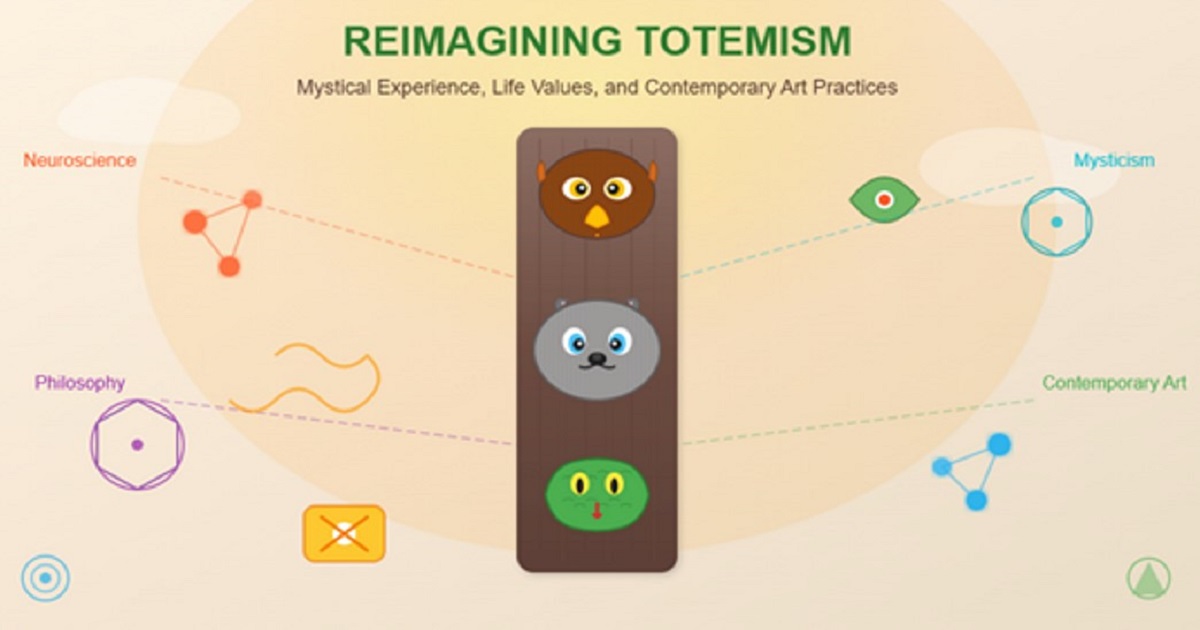
Reimagining Totemism: Mystical Experience, Life Values, and Contemporary Art Practices
Abstract submission deadline
31 August 2026
Manuscript submission deadline
31 October 2026
Viewed by
6355

Topic Information

Dear Colleagues,

This topic reconsiders the evolutionary path of totemism from early ritual customs to modern cultural phenomena, financing a radical redefinition of the concept in the age of the “ontological turn” (Philippe Descola) in the humanities. We deliberately move beyond traditional functionalist and structuralist approaches upon which the analyses of, for example, Durkheim and Lévi-Strauss are based. Our ultimate goal is a paradigm shift, to transform totems from mere "cultural symbols" in social systems to potent spiritual vehicles linking human consciousness to mystical reality. This latter approach redeems totemic practices as vigorous modes of ecological relationship, problematising the deep-seated nature-culture binary.

Our study is the outcome of interdisciplinary and dedicated research that brings together the neurophenomenology of mysticism and theology, and contemporary art, with contributions not only from anthropology and ethnography, but also from history. As religious scholars we interrogate totemic systems as sacred mediators between immanent and transcendent spheres, rendering them comparatively across indigenous spiritualities, mystical traditions, and modern theological thought. We follow totems in historical flow—from the early founders of the subject in the 19th century, such as McLennan, up through modern neuroscientific inclinations toward spiritual consciousness. This historical–methodological dimension seeks to criticise the way in which totemic knowledge has been conserved and conveyed. This study especially seeks to elucidate how totemism represents conceptual and material entities in symbolic forms and how totemic activities reflect deep religious attitudes beyond denominational distinctions, envisioning the common feature of human pursuit of the sacred. We value indigenous cosmologies, oral history methodologies, and prioritise and co-create knowledge from non-Western perspectives.

With an examination of the current-day artistic practice of “reconstructed totems” by artists such as Joseph Beuys, this topic considers how ancient signs found platforms in the experience of philosophy and mystical regeneration in Western society. Adopting comparative religious methodologies, we explore the ways that contemporary totemic reimaginings function as vehicles for post-secular spirituality, providing new means for engaging religious signification in a rapidly pluralising world. We are directly confronting the spiritual alienation crisis of our times by recasting the reimagining of totems as symbolic acts of spiritual reclamation and salutogenic contributions to human flourishing.

We would particularly invite contributions that participate in this cross-disciplinary conversation, whether through comparative historical analysis, religious comparative study, or specific case studies. Contributors should consider the philosophical, theological, and aesthetic implications of totemism and how totemic practice connects material culture to transcendent experience. The proposed topic seeks to draw on the spiritual thread between past and present, by mapping ancient traditions onto a contemporary register, which we render motive in our pluralist age.

Prof. Dr. Zhilong Yan
Prof. Dr. Lidija Stojanović
Dr. Aixin Zhang
Topic Editors

Keywords

  • totemism
  • contemporary art
  • mystical experience
  • spiritual practice
  • animal symbolism
  • neuroscience and consciousness
  • post-humanism
  • religious art history
  • life philosophy
  • interdisciplinary studies

Participating Journals

Journal Name Impact Factor CiteScore Launched Year First Decision (median) APC
Arts
arts
0.3 - 2012 30.8 Days CHF 1400 Submit
Genealogy
genealogy
0.6 0.7 2017 25.1 Days CHF 1400 Submit
Histories
histories
0.2 - 2021 36.8 Days CHF 1200 Submit
Philosophies
philosophies
0.7 1.4 2016 37.5 Days CHF 1400 Submit
Religions
religions
0.6 1.3 2010 24.5 Days CHF 1800 Submit

Preprints.org is a multidisciplinary platform offering a preprint service designed to facilitate the early sharing of your research. It supports and empowers your research journey from the very beginning.

MDPI Topics is collaborating with Preprints.org and has established a direct connection between MDPI journals and the platform. Authors are encouraged to take advantage of this opportunity by posting their preprints at Preprints.org prior to publication:

  1. Share your research immediately: disseminate your ideas prior to publication and establish priority for your work.
  2. Safeguard your intellectual contribution: Protect your ideas with a time-stamped preprint that serves as proof of your research timeline.
  3. Boost visibility and impact: Increase the reach and influence of your research by making it accessible to a global audience.
  4. Gain early feedback: Receive valuable input and insights from peers before submitting to a journal.
  5. Ensure broad indexing: Web of Science (Preprint Citation Index), Google Scholar, Crossref, SHARE, PrePubMed, Scilit and Europe PMC.

Published Papers (3 papers)

Order results
Result details
Journals
Select all
Export citation of selected articles as:
28 pages, 9309 KB  
Article
Finding a Way Back: Reimagining Ritual and Trance in Post-Soviet Russia
by Thomas P. Riccio
Arts 2026, 15(3), 62; https://doi.org/10.3390/arts15030062 - 19 Mar 2026
Viewed by 796
Abstract
This article documents and analyzes a three-month intercultural performance collaboration with Metamorphosis Theatre in St. Petersburg, Russia, during the summer of 1992—a pivotal moment following the dissolution of the Soviet Union. Drawing on the author’s fieldwork methodology developed through decades of collaboration with [...] Read more.
This article documents and analyzes a three-month intercultural performance collaboration with Metamorphosis Theatre in St. Petersburg, Russia, during the summer of 1992—a pivotal moment following the dissolution of the Soviet Union. Drawing on the author’s fieldwork methodology developed through decades of collaboration with Indigenous communities in Alaska, Southern Africa, and Siberia, the project employed trance techniques, rhythm-based training, and ritual archaeology to reconstruct pre-Christian Slavic performance practices. The resulting production, Shadows from the Planet Fire, emerged through a process that positioned ritual not as nostalgic revival but as a living technology for addressing cultural trauma and existential displacement. This account contributes to performance studies, applied theatre, and cultural heritage discourse by demonstrating how cosmocentric Indigenous methodologies can be adapted to address the spiritual and psychological wounds of post-industrial, post-colonial societies. The work establishes foundational principles for what the author terms “Techdigenous” practice—the synthesis of Indigenous wisdom traditions with contemporary performance contexts—and argues for ritual as a necessary consciousness technology in an era of ecological crisis and cultural fragmentation. Full article
Show Figures

Figure 1

27 pages, 7688 KB  
Article
Divine Talisman Writing: A Study on the Spiritual Power Sources of Daoist Fulu Writing and Its Revelatory Significance for Contemporary Calligraphic Art Creation
by Zhilong Yan and Manyi Pei
Arts 2026, 15(3), 59; https://doi.org/10.3390/arts15030059 - 17 Mar 2026
Viewed by 1423
Abstract
Daoism is an important indigenous religion of China that emerged from ancient totemic worship and shamanic practices, encompassing mysterious ritual arts known as fulu (talismans and registers). Daoist fulu writing constitutes an important content and manifestation of Daoist spiritual calligraphy, representing a significant [...] Read more.
Daoism is an important indigenous religion of China that emerged from ancient totemic worship and shamanic practices, encompassing mysterious ritual arts known as fulu (talismans and registers). Daoist fulu writing constitutes an important content and manifestation of Daoist spiritual calligraphy, representing a significant embodiment of Daoist sacred knowledge and mystical power. This paper presents the first in-depth investigation into the sources of the mysterious numinous power inherent in Daoist fulu writing. We conclude that the spiritual power of fulu writing derives from three distinct yet interconnected levels: external divine spiritual power, innate primordial qi spiritual power, and the fundamental Dao spiritual power. These three sources are not mutually exclusive but rather work in coordination. Only through the integration of the fundamental Dao spiritual power at the primordial level with the High Master’s own innate primordial qi spiritual power can external divine spiritual power be mobilized and utilized. This unity of subject and object, essence and application, forms a complete cycle that maximizes the spiritual efficacy of the talismans. Furthermore, to apply these research findings to promote contemporary artistic creation and enhance the mystical and innovative dimension of contemporary art at the visual level, the authors, drawing upon their personal Daoist cultivation experiences and fulu writing artistic practice, will further discuss the revelatory significance of fulu writing for contemporary calligraphic art creation. Full article
Show Figures

Figure 1

12 pages, 236 KB  
Article
The Sacredness of Pampapu as a Religious Healing Ritual in the Andean Worldview
by Edgar Gutiérrez-Gómez, Nilda Quispe-Flores, Roly Auccatoma-Tinco, Sonia Beatriz Munaris-Parco, Rubén Darío Alania-Contreras and Daniela Isabel Dayan Ortega-Révolo
Religions 2026, 17(3), 358; https://doi.org/10.3390/rel17030358 - 13 Mar 2026
Viewed by 671
Abstract
This work focuses on the study of traditional Andean therapeutic knowledge of spirituality, understood as current practices that articulate health, territory, and sacredness. In a setting invaded by modernity and conventional medicine, Pampapu survives as a healing ritual that expresses a symbolic and [...] Read more.
This work focuses on the study of traditional Andean therapeutic knowledge of spirituality, understood as current practices that articulate health, territory, and sacredness. In a setting invaded by modernity and conventional medicine, Pampapu survives as a healing ritual that expresses a symbolic and spiritual relationship with the Earth and Andean deities. The objective is to understand the religious, cultural, and symbolic meanings that the inhabitants attribute to this ritual. It was carried out using qualitative research methods with an ethnographic and interpretive approach, based on participant observation and in-depth interviews with traditional healers, older adults, and patients’ families. Thematic and hermeneutic analysis confirmed categories such as sacredness, illness of the Earth, generational transmission, and religious syncretism. The results show that the ritual fulfills therapeutic functions, identity, and social cohesion, and is transmitted through generations. It is concluded that this practice constitutes a living expression of the Andean religious worldview and an essential component of intangible cultural heritage. Full article
Back to TopTop
