
Skip to Content
  • 2.5
    Impact Factor
  • 4.8
    CiteScore
  • 19 days
    Submission to First Decision
  • 3 days
    Acceptance to Publication

Aerospace

Aerospace is a peer-reviewed, open access journal of aeronautics and astronautics, published monthly online by MDPI. The European Aerospace Science Network (EASN) and ECATS International Association are affiliated with Aerospace and their members receive a discount on the article processing charges.

Get Alerted

Add your email address to receive forthcoming issues of this journal.

All Articles (6,080)

  • Article
  • Open Access

In multi-hop UAV ad hoc networks, three-dimensional high mobility, strong line-of-sight interference and a hard saturation constraint on control-plane broadcasting distinguish the channel load estimation problem from its terrestrial counterpart: the HELLO broadcast interval cannot be shortened arbitrarily, so the channel occupancy statistics (COS) required by the statistical priority-based multiple access (SPMA) protocol must be inferred from observations that are asynchronous and separated by long idle gaps. The existing SMA-KF filtering method adopts a first-order random-walk prediction model and lacks trend-tracking capability, and thus easily produces systematic lag when the channel load changes with a trend; directly introducing data-driven compensation, in turn, brings the risk of closed-loop estimation divergence under long gaps. To this end, this paper proposes a residual-corrected variable-interval Kalman filtering (RC-VKF) method for channel load estimation. The method builds a closed-loop recursive framework with the variable-interval Kalman filter while retaining the capability to quantify state uncertainty; it constructs residual labels only from the node’s local packet observations and adopts recursive least squares to perform incremental online training of the corrector, without any offline ground-truth dataset; it designs a confidence gating mechanism driven by the gap duration, under which the correction term gradually withdraws when the gap is extra long and the algorithm automatically degenerates into a covariance-bounded Kalman filter, thereby guaranteeing the stability of the closed-loop estimation at the architectural level. Closed-loop simulation results of a multi-hop network show that, compared with SMA-KF, the proposed RC-VKF method achieves a consistent improvement in estimation accuracy under different traffic intensities and HELLO broadcast periods; meanwhile, it can effectively suppress the large estimation errors in the 95th-percentile tail and improve the reliability of the SPMA transmission decision; when observations become extremely sparse, the correction term is withdrawn by the confidence gate and the estimator degrades gracefully to the filtering kernel; within the bounded gap range assumed in the stability analysis, its accuracy is essentially that of the filtering kernel, and beyond that range, the estimate reduces to the hold-based prediction instead of diverging.

Aerospace

5 November 2026
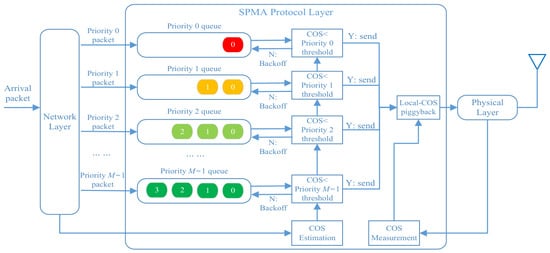
Working mechanism of the SPMA protocol.
  • Article
  • Open Access

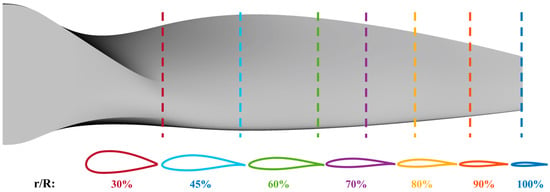
Discovering design rules is essential for advancing interpretable and intelligent propeller design. This paper proposes a knowledge–data hybrid-driven method for discovering design rules for high-efficiency propellers, with the aim of expanding the pool of comparable design data while reducing the search space for candidate rule parameters. Based on the propeller ideal efficiency theory, an efficiency factor is introduced to address the lack of comparability among performance data caused by differences in propeller loading, thereby enabling all designs in the database to be used for data mining. Dimensionless composite features are then constructed using the principle of dimensional homogeneity and screened through correlation analysis within a knowledge–data hybrid-driven framework. Six characteristic load ratios are identified as rule parameters, yielding the following design rule: a propeller has a high efficiency factor when all six ratios lie within their respective optimal ranges. Finally, the rule is validated on 12 independent designs, including three designs of a different propeller. The proposed knowledge–data hybrid-driven feature-engineering framework provides a viable approach to design-rule discovery and may support inverse design and intelligent propeller design.

Aerospace

5 November 2026

Baseline propeller geometry and airfoil sections.
  • Article
  • Open Access

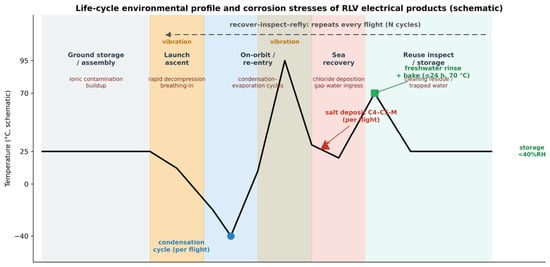
Electrical products of reusable launch vehicles (RLVs) face corrosion problems that expendable rockets never encounter: sea/land recovery introduces salt-fog and damp-heat exposure; repeated flights bring thermal-cycling-driven “breathing” condensation; and the “recover–refurbish–refly” mode makes corrosion damage accumulate across missions. Current standards (e.g., the salt-fog/damp-heat tests of GJB 150 and MIL-STD-810) target single-stress qualification of expendable products and lack reuse-oriented cumulative-damage criteria. This paper proposes a life-cycle corrosion prevention and control system for RLV electrical products covering five phases—design, manufacturing, testing, operation, and maintenance—including exposure-class-driven finish/coating/sealing selection, ionic-contamination control, combined-stress testing, post-recovery desalting, corrosion-specific inspection, and SCC screening of metallic housings and fasteners. A mechanism-specific state-model framework is then introduced: each corrosion mechanism is assigned its own drivers and inspectable state variable, state limits are converted to normalized life-consumption fractions, and failure/limit life is distinguished from operationally allowable life. Connector fretting corrosion is modeled with an environmental acceleration factor that preserves mechanical wear in dry enclosures. A flight-heritage data-acquisition board is used only as a case-study application, not as flight validation of corrosion behavior. The illustrative calculation shows how contact-resistance data, vibration-derived cycle counts, and operational thresholds can be linked, while Monte Carlo uncertainty propagation demonstrates the sensitivity of absolute life estimates and precludes a definitive mechanism ranking. The main contribution is therefore a reproducible method and calibration pathway for incorporating corrosion into RLV reuse decisions; product-specific test and inspection data remain necessary for validated life predictions.

Aerospace

5 November 2026

Life-cycle environmental profile of RLV electrical products and the corrosion stress evolution across the five phases; the recovery phase introduces repeated salt-fog exposure (Esalt) that accumulates with flight count N.
  • Article
  • Open Access

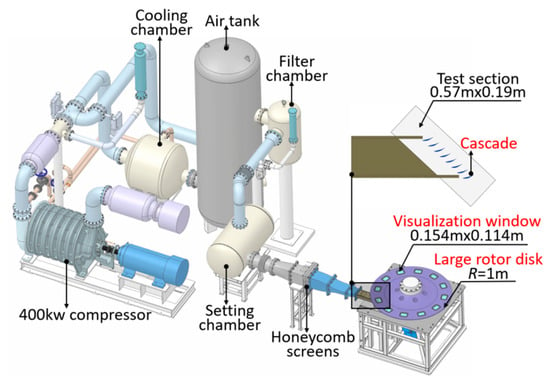
Future commercial engines require higher bypass ratios and smaller cores, leading to open tip clearances exceeding 4% (s/H ≥ 4%) in rear stages. The resulting leakage flows show strong three-dimensional unsteady features that challenge numerical prediction, while experimental data inside open clearances with moving endwalls remain limited. In this study, a Stereo Particle Image Velocimetry (SPIV) system was applied to a high-speed moving-endwall cascade test rig. Measurements were conducted for a Controlled Diffusion Airfoil (CDA) cascade at Mach 0.3, an endwall speed of 900 r/min, and a relative clearance of 7.14%. Velocity fields were obtained on two spanwise planes, 2 mm (MP1) and 3.5 mm (MP2) from the endwall. Results show that the tip leakage vortex develops continuously along the span but differs between planes. In MP2, dominated by blade pressure difference, the leakage jet forms a broader high-velocity region and a more compact vortex, with higher blockage, shear gradient, and turbulent kinetic energy than in MP1. In MP1, endwall shear stretches the leakage flow pitchwise, reducing blockage and weakening mixing. This work demonstrates the feasibility of dual-camera SPIV measurements inside moving-endwall clearances and provides benchmark data for numerical validation.

Aerospace

4 November 2026

The SJTU wind tunnel system with a high-speed rotating endwall cascade.

Highly Accessed Articles

News & Conferences

Latest Issues

Open for Submission

Journal Sections

XFacebookLinkedIn
Aerospace - ISSN 2226-4310