



Fire, Volume 8, Issue 11 (November 2025) – 41 articles
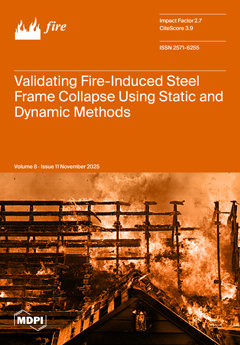
Cover Story (view full-size image):
This study presents a validated computational approach for predicting the fire-induced collapse of steel moment-resisting frames using static general and dynamic explicit analyses. The models use both beam and shell elements and are checked against real fire tests. The results show that both methods can predict critical temperature and the collapse pattern with good accuracy. The static general approach provides a smooth post-buckling response with far less computational time, offering an efficient and reliable option for performance-based structural fire design. View this paper
- Issues are regarded as officially published after their release is announced to the table of contents alert mailing list.
- You may sign up for e-mail alerts to receive table of contents of newly released issues.
- PDF is the official format for papers published in both, html and pdf forms. To view the papers in pdf format, click on the "PDF Full-text" link, and use the free Adobe Reader to open them.
Previous Issue
Next Issue
