

A Study on Fire Prevention Strategies for Bamboo-Wood Frames and Natural Vegetation Roofs in Southwest China Based on FDS: A Case Study of Wengding Village, Yunnan

Abstract
1. Introduction
- (1)
- Quantifying the fire spread behavior of bamboo-wood framed buildings with thatched roofs;
- (2)
- Evaluating the feasibility of combining traditional fire prevention methods with modern technologies;
- (3)
- Establishing an assessment model for retrofit effectiveness that ensures both heritage authenticity and safety.
2. Literature Review
2.1. Fire Prevention Measures for Ancient Chinese Architecture
2.2. Review and Development of Modern Fire Research Methods
2.3. Application of FDS in Fire Protection of Ancient Chinese Buildings
- (1)
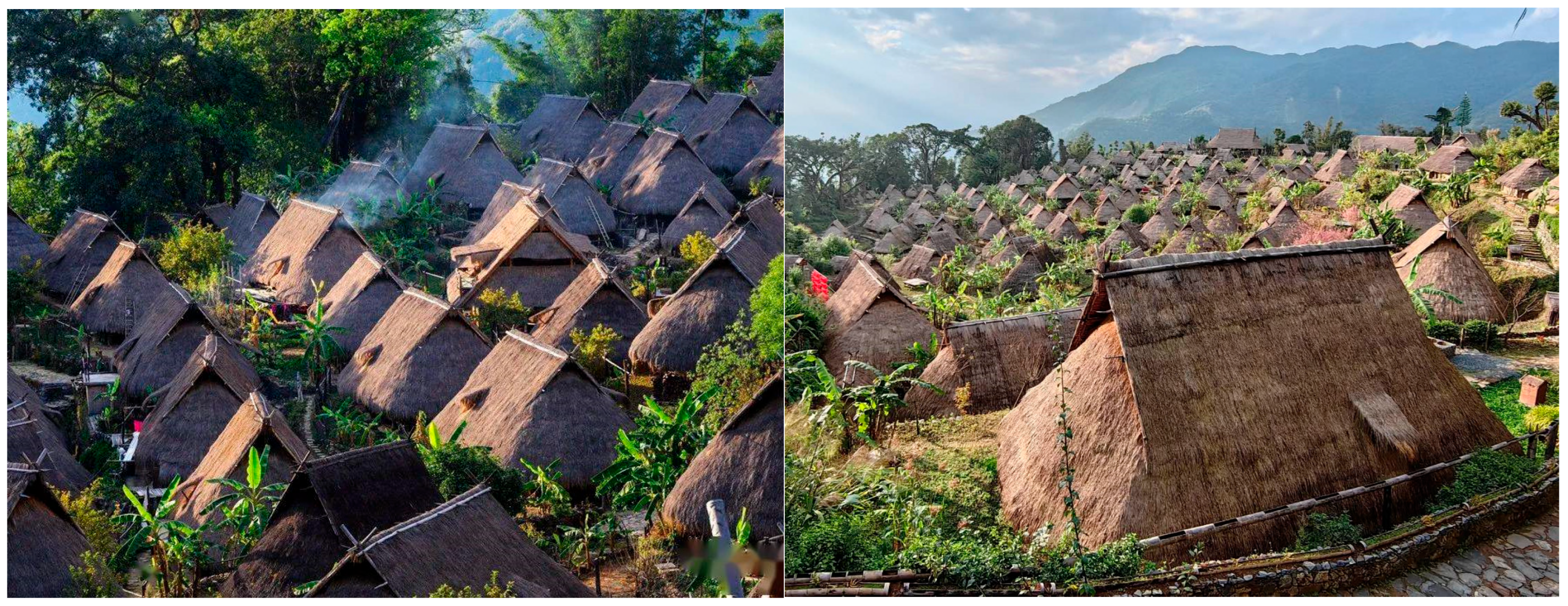
- In the field of architecture, the application of fire simulation software has mainly focused on timber-frames with tiled roofs and brick–wood frames with tiled roofs buildings. These studies have provided the authors with insights into fire protection for ancient buildings. However, there has been little research on bamboo-wood frames with vegetated roofs. Due to the characteristics of the materials, these buildings are more susceptible to fire, which often spreads at an alarming speed once breaks out. Therefore, fire research on these types of buildings is crucial.
- (2)
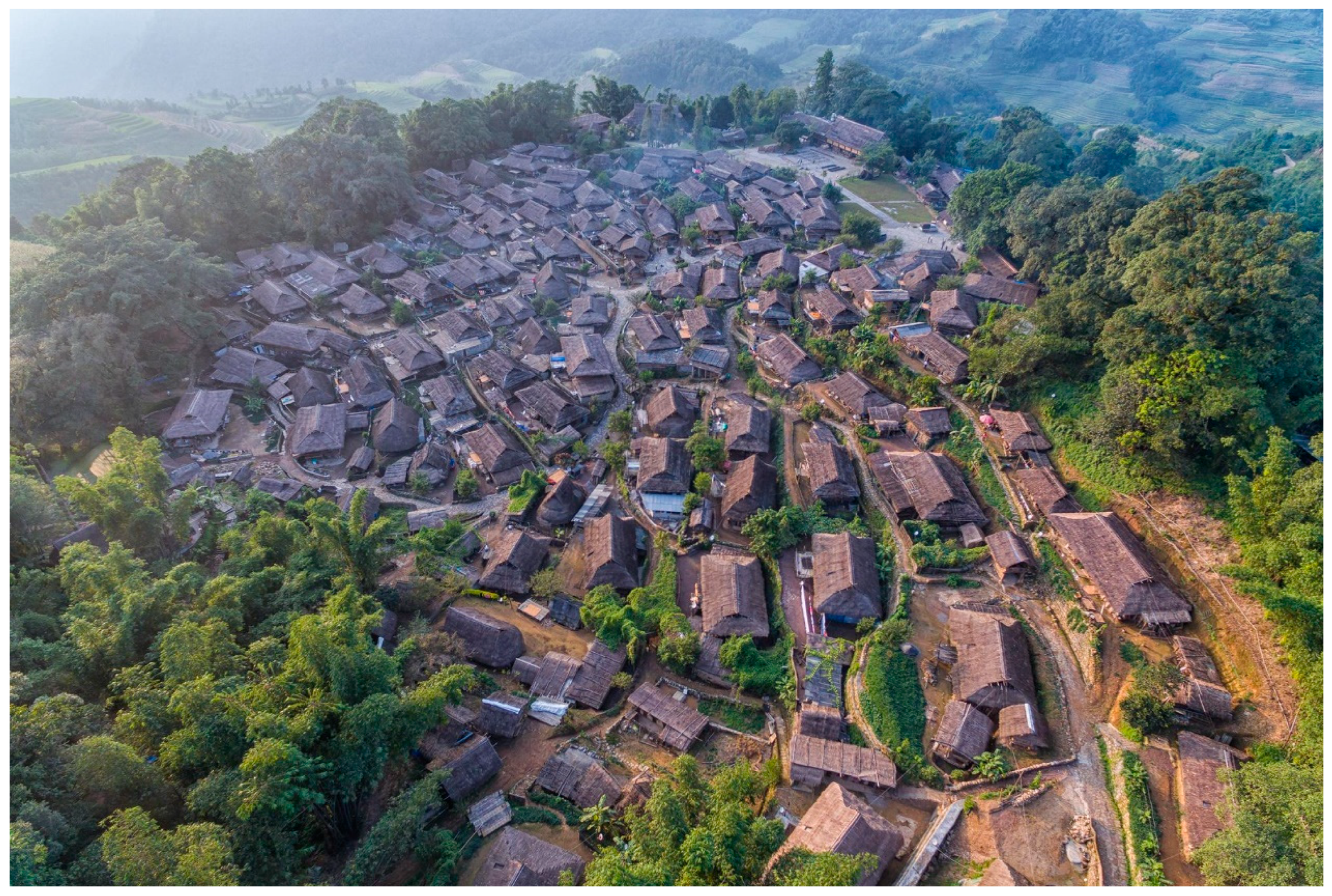
- Wengding village, among architectural remains with bamboo-wood frames and natural vegetation roofs, which are small in number per se, serves as an ideal research subject. Fire protection research in Wengding village is relatively scarce, and studies using fire simulation software are particularly limited. This indicates that there is still a lot of room for development in fire protection research in this specific area. Therefore, this study fills this research gap by carrying out a study on fire protection for buildings with bamboo-wood frames and natural vegetation roofs, using Wengding village as an example.
- (3)
- Currently, research based on fire simulation software primarily focuses on fire risk assessment, with limited emphasis on the building itself as a key variable, whose effectiveness in fire protection shall be taken into account. Furthermore, due to the unique characteristics of the Wengding village case, studies on fire spread behavior in such types of buildings remain relatively scarce. This paper intends to dig deeper in this direction, aiming to enhance the understanding of buildings’ dynamic response mechanisms during fires and to provide references for optimizing fire protection strategies for ancient structures.
3. Materials and Methods
3.1. Field Investigation
3.1.1. Location of the Ancient Village
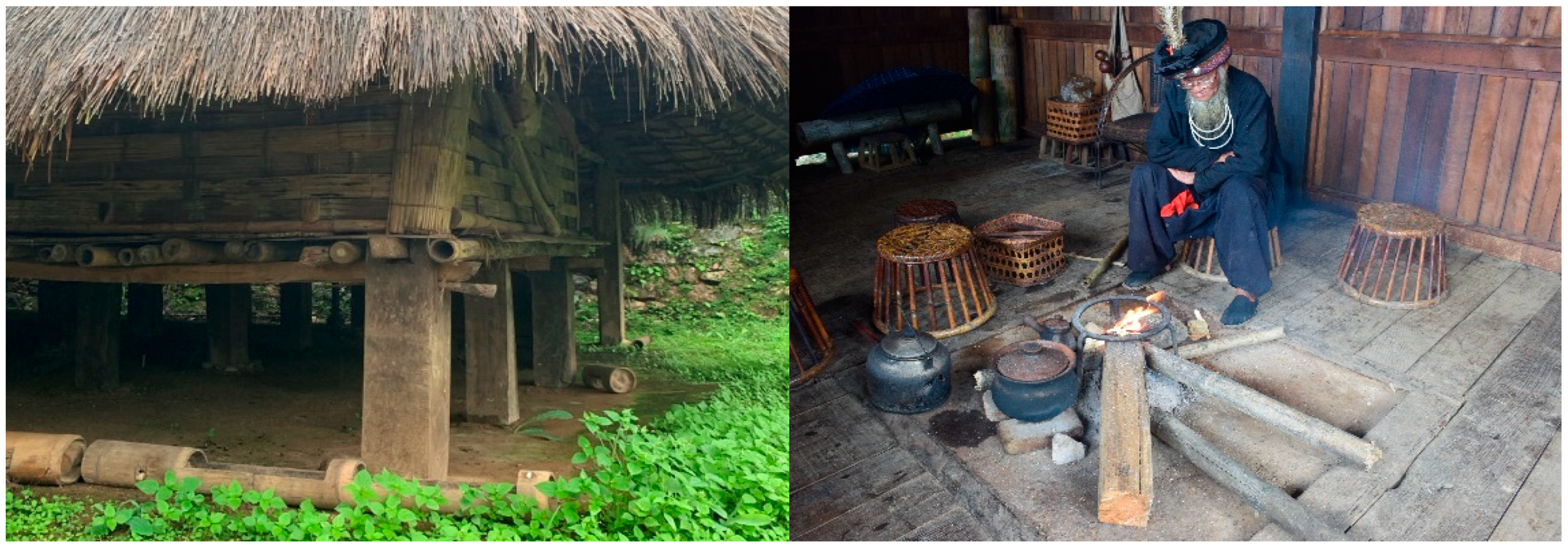
3.1.2. Structure and Characteristics of the Dwellings of the Wa Ethnic Group
3.1.3. Fire-Related Local Customs and Practices
3.2. Software Simulations
3.2.1. Simulation Model
3.2.2. Simulation Parameters: Fire Source Setting
3.2.3. Slice and Measurement Points Parameters
- (1)
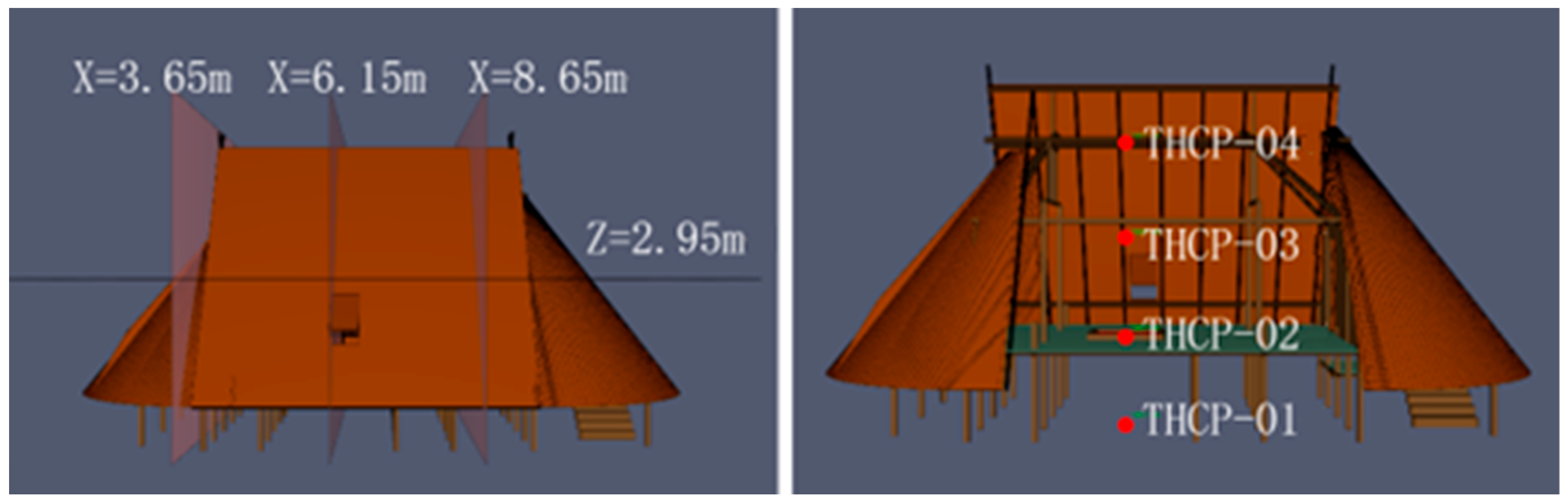
- At the ground level (0 m), the temperature at the base of the fire spread is captured.
- (2)
- At a height of 1.4 m, corresponding to the combustion plane of the sacred hearth located in the upper part of the dwelling.
- (3)
- At 2.95 m height, representing the breathing zone of an adult in an upright posture (with the combination of the 1.35 m elevated stilted house layer and average human height).
- (4)
- At 4.5 m height, the point touches the lower bamboo purlin structure of the sloped roof, used to analyze the heat damage caused by the roof jet flow on building components.
- (5)
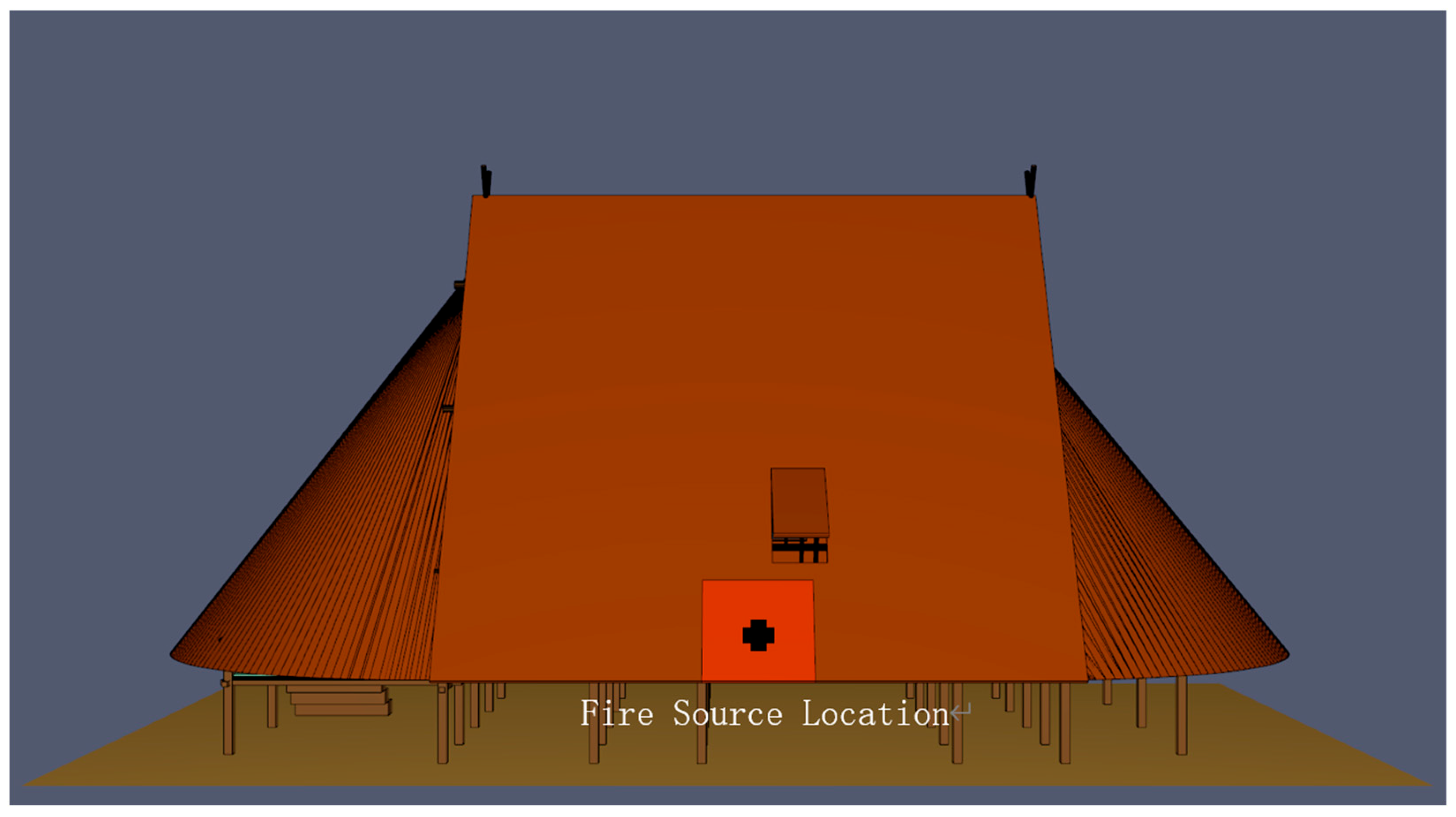
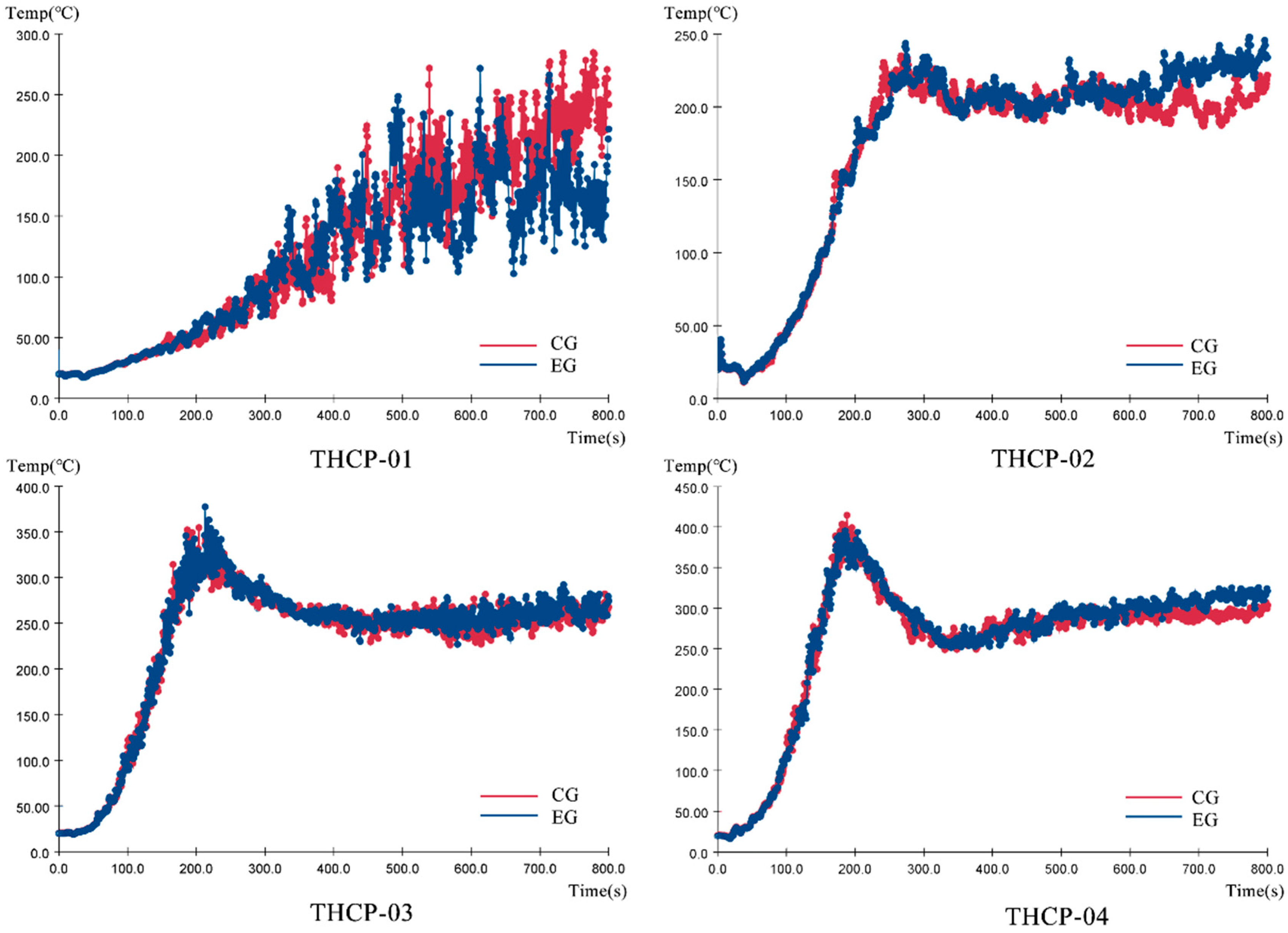
- The locations of these measurement points are shown in Figure 9. Through these points, temperature changes of gases during the fire process can be carefully recorded, providing scientific data for formulating fire prevention and control measures. The setup of these slices and measurement points helps to comprehensively understand the fire spread characteristics and temperature variation patterns inside the dwelling, offering critical data support for future fire prevention and control research.
3.3. Strategy Research

4. Results and Discussion
4.1. Survey Result
4.1.1. Design Features of Wengding Village
4.1.2. Structure and Characteristic of Wa Dwellings
4.1.3. Fire-Involved Cultural Practices of the Wa People
- Sacred hearth
- The New Fire Festival
4.2. Simulation Results
4.2.1. Burning Behavior
4.2.2. Parameter Changes in Slices and Measurement Points
4.3. Mitigation Strategies
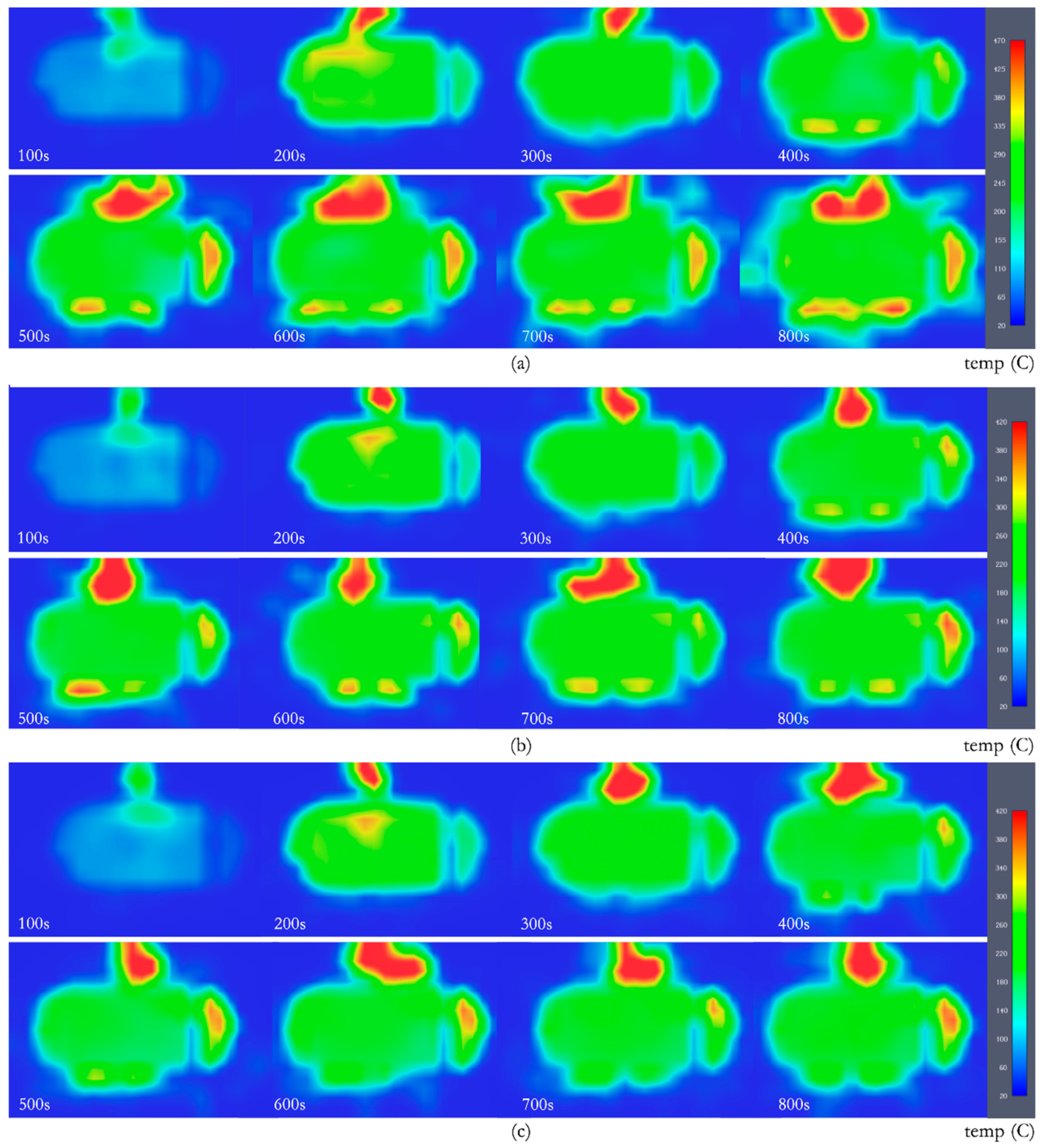
4.3.1. Comparison of Burning Behavior Under Different Fire Prevention Strategies
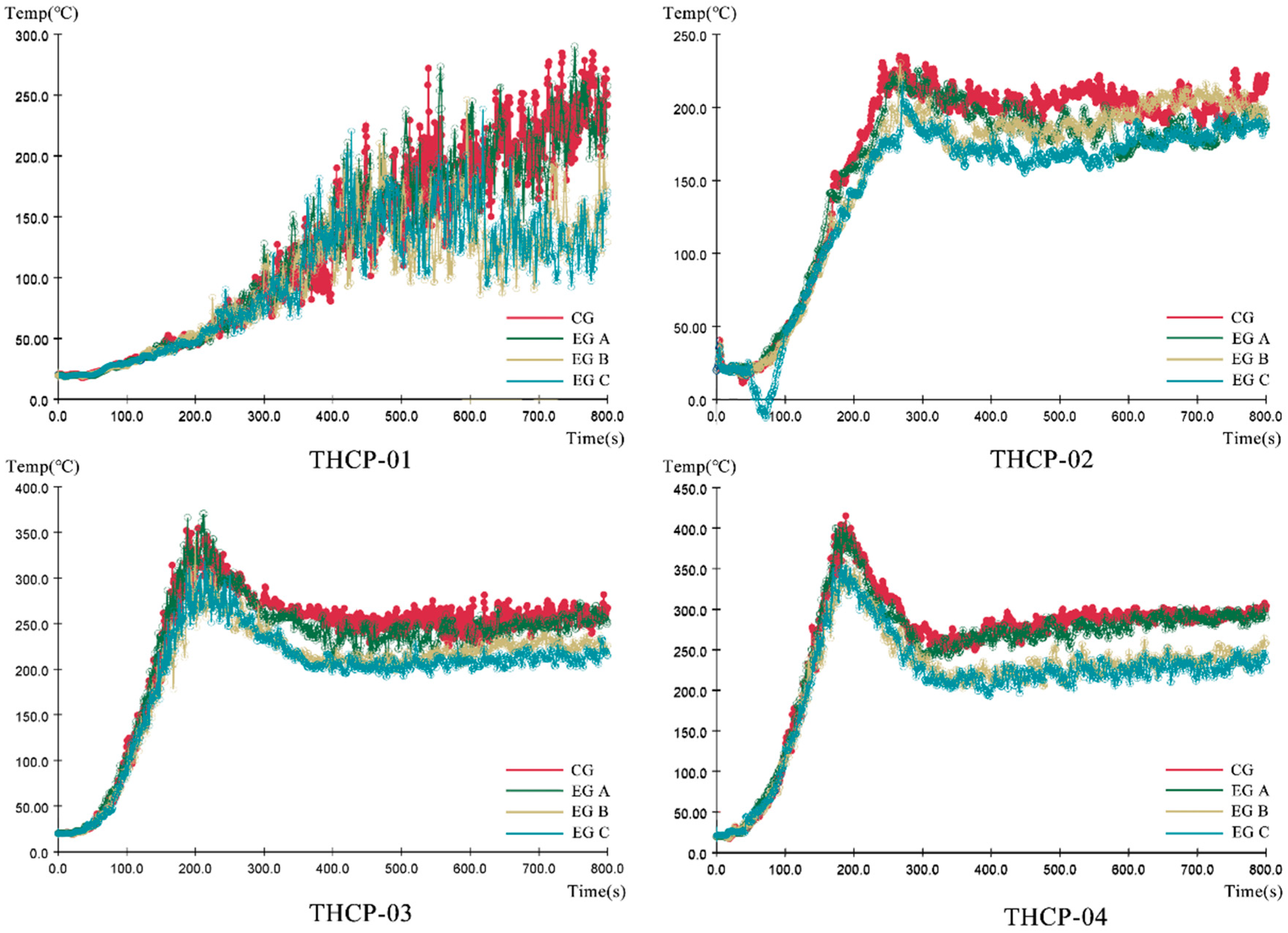
4.3.2. Comparison of Temperature Transfer Under Different Fire Prevention Strategies
- Group A
- Group B
- Group C
5. Conclusions
- (1)
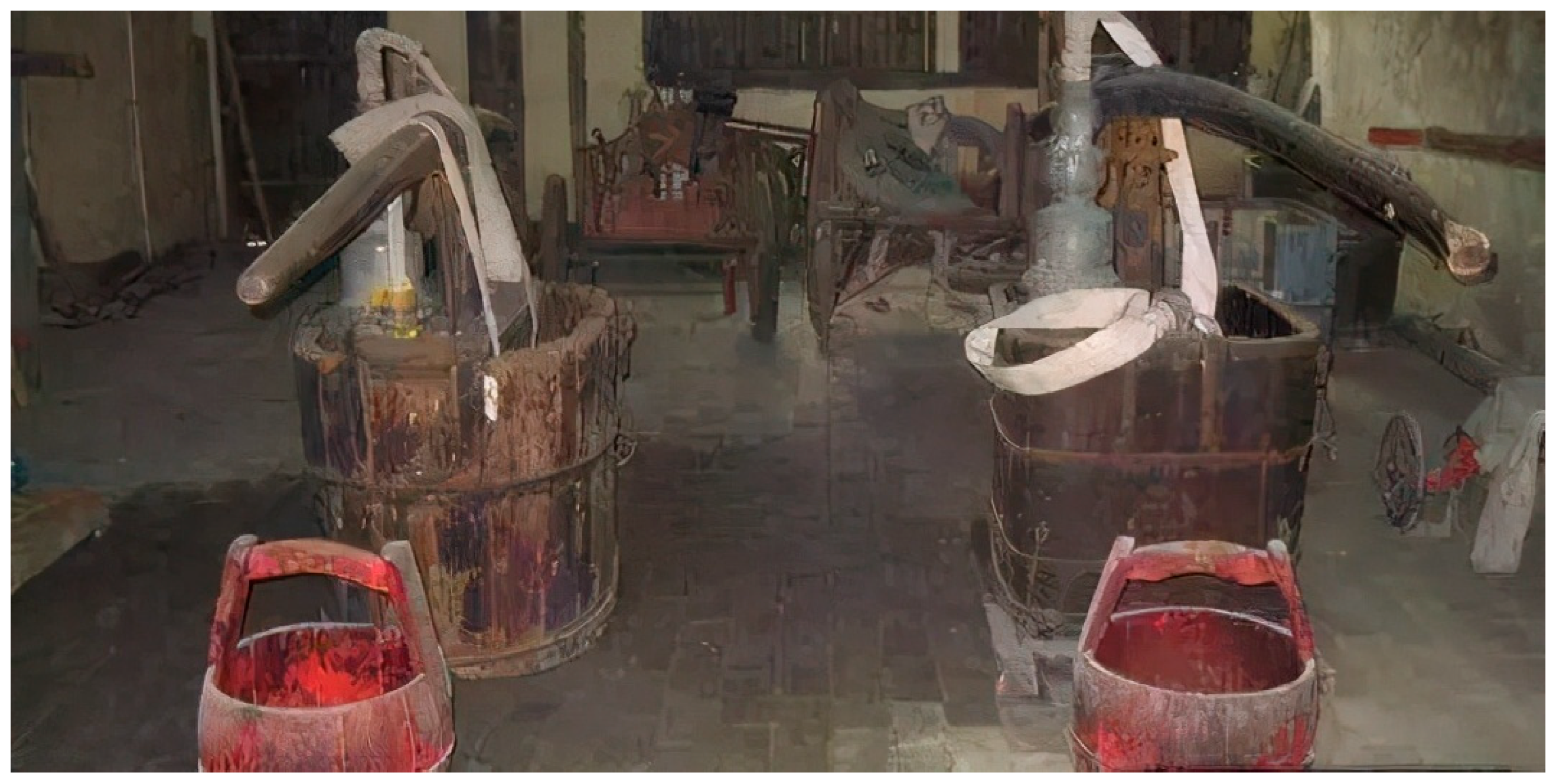
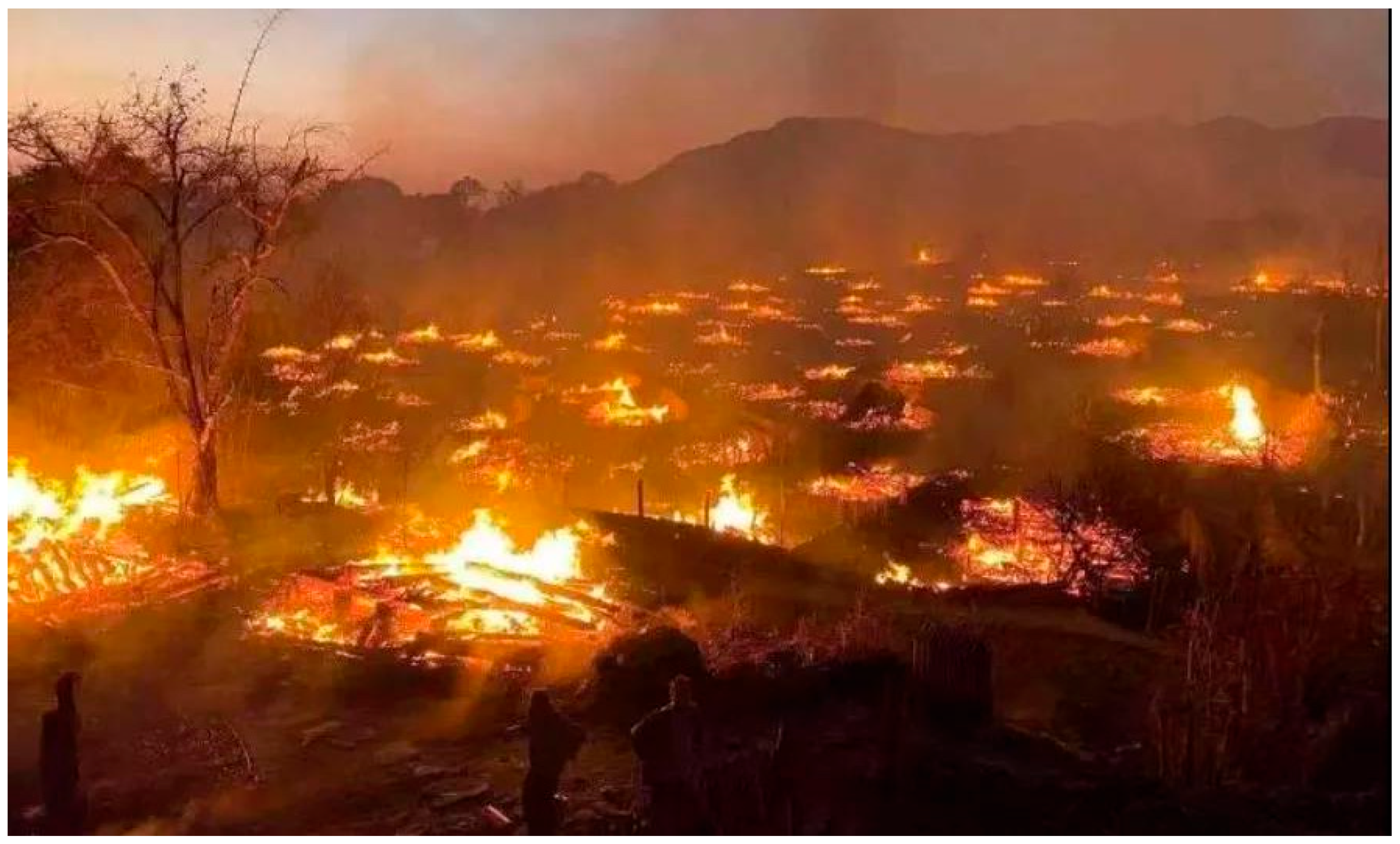
- The investigation shows that the traditional dwellings in Wengding village are at high risk of fire. Wood and thatch, the primary building materials, are fire-prone when exposed to the natural environment. Additionally, the Wa people’s fire-related customs, such as the New Fire Festival and sacrificial activities, lead to increasing fire risks. Once a fire breaks out, the surrounding forests and dwellings are likely to be engulfed, causing severe damage.
- (2)
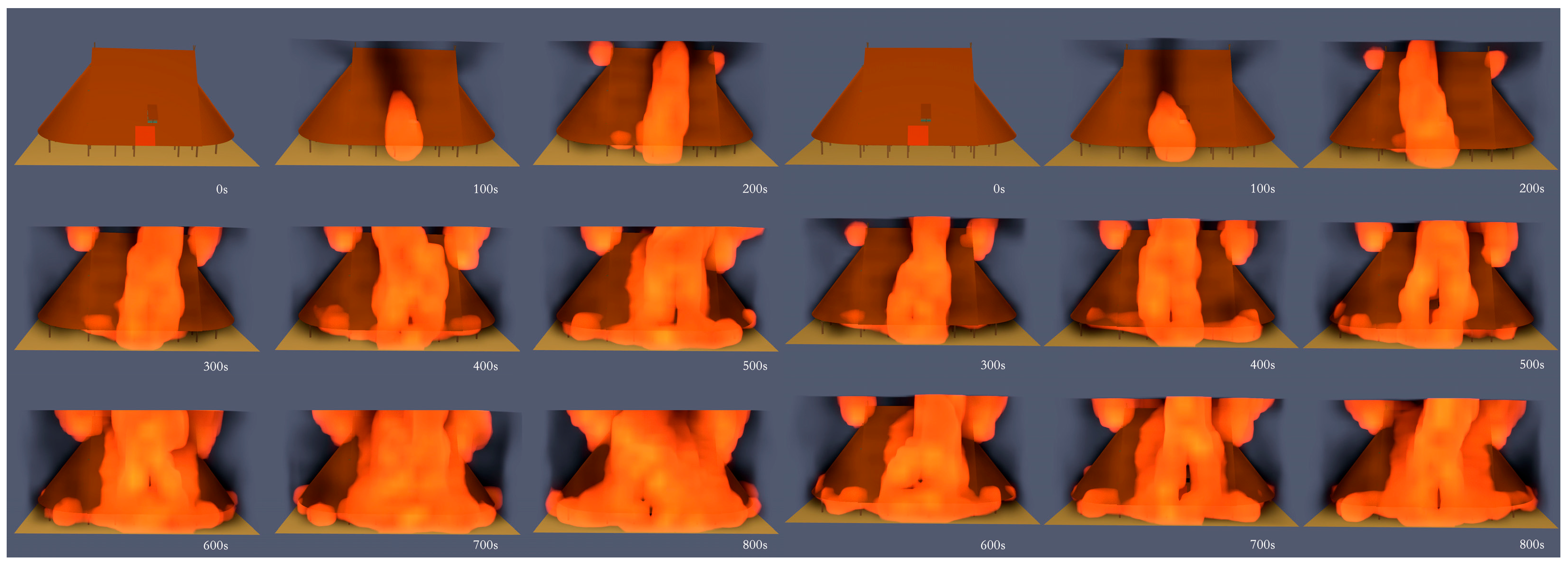
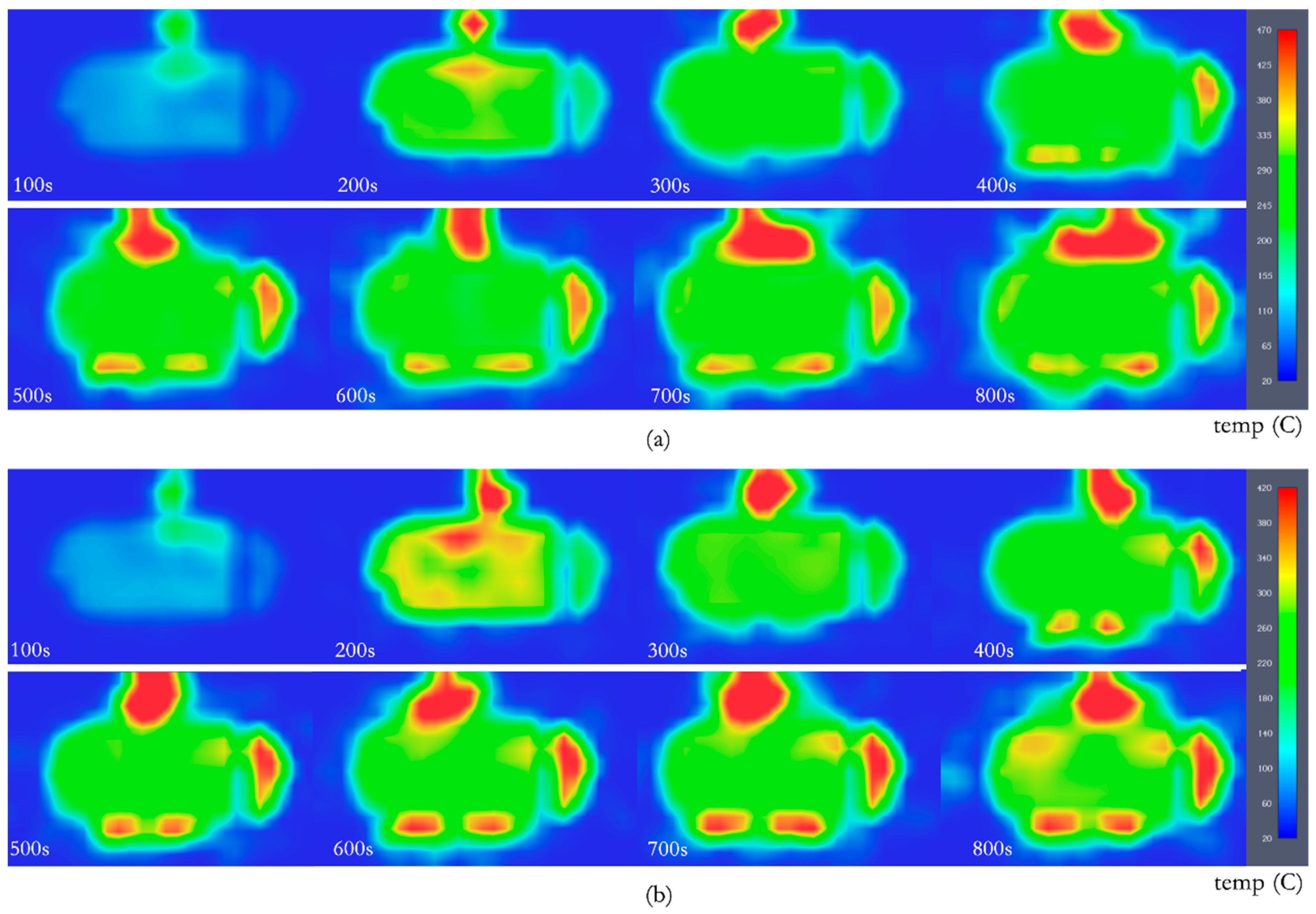
- Fire simulation indicates that the traditional dwellings in Wengding village are highly susceptible to damage in the event of a fire. Through experimentation, we found that the current roof sprinkling system is not effective enough to control the rapid spread of fire once it breaks out.
- (3)
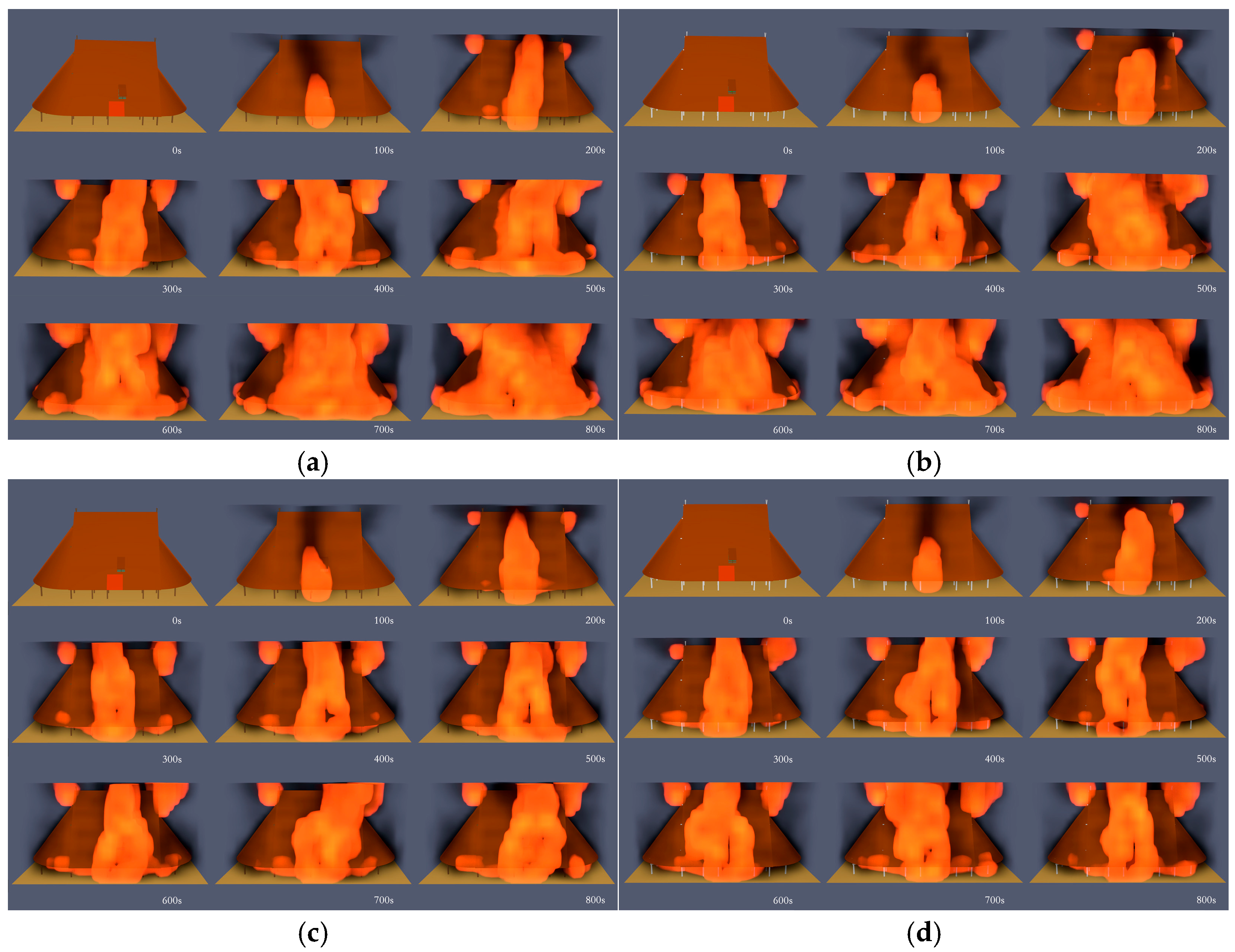
- To address these issues and in consideration of the features of traditional dwellings in Wengding village, this study proposes three fire prevention strategies (Table 6): ① the application of fire-resistant coatings; ② the use of synthetic thatch roofing materials; and ③ a combination of both.
Author Contributions
Funding
Institutional Review Board Statement
Informed Consent Statement
Data Availability Statement
Conflicts of Interest
References
- Zong, L. Thoughts on Fire in Traditional Villages. Urban Rural Dev. 2021, 5, 32–35. [Google Scholar]
- Zhao, L.; Wang, X.; Wang, T.; Gyergyák, J. Joint participation: Protection and development of ancient villages. Pollack Period. 2023, 18, 160–165. [Google Scholar] [CrossRef]
- Xinhua. China Brings 8,155 Traditional Villages Under State Protection. Xinhuanet. 27 April 2023. Available online: https://english.news.cn/20230427/cc0dd4feac3b43e68708923f60035f1a/c.html (accessed on 6 May 2024).
- Zheng, Y. Analysis on the Application and Technology of the Five Elements in Chinese Ancient Buildings. Forest Chem. Rev. 2022, 4, 1260–1268. [Google Scholar]
- Hegazi, Y.S.; Tahoon, D.; Abdel-Fattah, N.A.; El-Alfi, M.F. Socio-Spatial Vulnerability Assessment of Heritage Buildings Through Using Space Syntax. Heliyon 2022, 8, e09028. [Google Scholar] [CrossRef] [PubMed]
- Li, H.F.; He, Y.R.; Tang, X.Y.; Li, Y.S. Study on the Fire Prevention Wisdom of Timber Buildings in Chinese Traditional Villages. China For. Prod. Ind. 2020, 57, 60–64. [Google Scholar]
- Hietaniemi, J.; Hostikka, S.; Vaari, J. FDS Simulation of Fire Spread: Comparison of Model Results with Experimental Data; VTT Working Papers No. 4; VTT: Espoo, Finland, 2004; Available online: https://sarjaweb.vtt.fi/pdf/workingpapers/2004/W4.pdf (accessed on 20 October 2025).
- Pang, M. Why Did the Traditional Chinese Village Yunnan Wengding Old Village Be Destroyed by a Fire? Xinhuanet. 20 February 2021. Available online: https://www.xinhuanet.com/politics/2021-02/20/c_1127120137.htm (accessed on 20 October 2025).
- Ding, X.L.; Guo, S.D.L. Discussion on the Reconstruction of Primitive Villages Under the Context of Wengding Village Fire. Yanhuang Geogr. 2022, 8, 71–73. [Google Scholar]
- ICOMOS. Charter on the Built Vernacular Heritage; ICOMOS CIAV: Paris, France, 1999. [Google Scholar]
- Zhou, H.B.; Fei, B.H.; Ren, H.Q. Development of Wood Structural Building in China. Shanxi Archit. 2005, 31, 10–11. [Google Scholar]
- Yao, L.H.; Wang, X.M.; Fei, B.H.; Zhang, Y.W. Present Status of Fireproofing for Wooden Buildings. Wood Ind. 2007, 21, 29–31. [Google Scholar]
- Weng, W.G.; Fan, W.C. Fire Safety in Chinese Ancient Architecture. In Proceedings of the 5th AOSFST, Newcastle, Australia, 3–6 December 2001. [Google Scholar]
- Zhu, X. The Book of Changes; National Taiwan University Press: Taipei, Taiwan, 2016. [Google Scholar]
- Liu, B.; Wang, C.; Deng, Q.T. The Rites of Zhou; Nanjing University Press: Nanjing, China, 2014. [Google Scholar]
- Ni, G.J. Brief Discussion on Fire Administration in Zhou Dynasty. J. Catastrophol. 1989, 4, 76–78. [Google Scholar]
- Shen, Z.N. Take an Examination of Art Circles Remit; Zhonghua Book Company: Beijing, China, 1988. [Google Scholar]
- Gao, H.P. The Philosophical Works of Han Feizi; Beijing Book Co. Inc.: Beijing, China, 2019. [Google Scholar]
- Tian, Y. Study on the Interactive Relationship Between Water Environment and Urban Development in Luoyang During Sui and Tang Dynasties. Master’s Thesis, Shaanxi Normal University, Xi’an, China, 2008. [Google Scholar]
- Sun, S.Q. How People in the Tang Dynasty Conducted Fire Prevention. Firefight. World (Electron. Ed.) 2019, 5, 52–53. [Google Scholar]
- Du, Y. A Research on Tu-yu and His Work; Taiwan Commercial Press: Taipei, Taiwan, 1994. [Google Scholar]
- Cheng, L. The Summary Reviews of Yingzaofashi Study History; Tianjin University Press: Tianjin, China, 2010. [Google Scholar]
- Chang, K.X. Informal Discussion on Firefighting in the Song Dynasty. Firefight. World (Electron. Ed.) 2019, 5, 50–51. [Google Scholar]
- Li, J. Yingzao Fashi; Chongqing Publishing House: Chongqing, China, 2018. [Google Scholar]
- Mao, X.M. Emperor Yongzheng Paying Much Attention to the Fire Prevention Measures in the Imperial Palace. Forbid. City 1990, 6, 40–42. [Google Scholar]
- Zeng, G.L.; Ding, D. Wujing Zongyao, Photocopy ed.; Zhonghua Book Company: Beijing, China, 1959. [Google Scholar]
- Wang, Z.; Deng, Y.H. Illustrated Treatise on Extraordinary Machines of the Far West, Block-printed ed.; Late Ming Dynasty: Beijing, China, 1627. [Google Scholar]
- Lu, F.T.; Chen, J. Discussion on the Fire Prevention Role of ‘Chiwen’ in Ancient Architecture. Fire Sci. 1998, 7, 29–31. [Google Scholar]
- Zhou, Y.J.; Liu, F.Y. Fire-Fighting Organisations and Equipment in the Qing Dynasty. Palace Mus. J. 2002, 6, 1–7. [Google Scholar]
- Ou, Z.T.; Zhao, R.J. Using the Youngest Science to Solve Humanity’s Oldest Challenge—Interview with Prof. Fan Weicheng, Director of the State Key Laboratory of Fire Science. In USTC Fire Research News; University of Science and Technology of China: Hefei, China, 2013. [Google Scholar]
- Fan, W.C.; Liu, N.A. Fire Safety Science—A Promising and Interdisciplinary Engineering Scientific Field. Strateg. Study CAE 2001, 3, 6–14. [Google Scholar]
- Australian Building Codes Board. Building Code of Australia–1996; Australian Government: Canberra, Australian, 1996.
- Liu, J.; Liu, M.; Zhi, H.Q.; Sun, P. Fundamental Theory and Application Techniques of FDS Fire Simulation. Safety 2006, 27, 6–9. [Google Scholar]
- Yang, R.; Jiang, Y.; Ji, J.; Zhong, M. Field Composite Numerical Model Based on Large Eddy Simulation in Building Fire and Its Application. Ph.D. Thesis, University of Science and Technology of China, Hefei, China, 2003. [Google Scholar]
- Yu, Q.; Liu, C.; Zhang, L. Analysis on Fire Simulation and Application Based on FDS. J. Water Resour. Archit. Eng. 2008, 6, 124–126. [Google Scholar]
- Friday, P.A.; Mowrer, F.W. Comparison of FDS Model Predictions with FM/SNL Fire Test Data; National Institute of Standards and Technology: Gaithersburg, MD, USA, 2001.
- Chen, L.; Luo, C.; Lua, J. FDS and Abaqus Coupling Toolkit for Fire Simulation and Thermal and Mass Flow Prediction. Fire Saf. Sci. 2011, 10, 1465–1477. [Google Scholar] [CrossRef][Green Version]
- Zhang, X.L.; Hou, D.B.; Zhang, C.C.; Yan, S.H. Design of MPCANet Fire Image Recognition Model for Deep Learning. Infrared Laser Eng. 2018, 47, 49–54. [Google Scholar] [CrossRef]
- Chen, C.; Ren, A.Z.; Zhang, X. A Building Fire Simulation System Based on Virtual Reality. J. Nat. Disasters 2007, 16, 55–60. [Google Scholar]
- Nadkarni, R.R.; Puthuvayi, B. A Comprehensive Literature Review of Multi-Criteria Decision-Making Methods in Heritage Buildings. J. Build. Eng. 2020, 32, 101814. [Google Scholar] [CrossRef]
- Liu, A.H.; Shi, S.L.; Wu, C. The Index System Design of the High Building Fire Hazard Assessment. China Eng. Sci. 2006, 9, 90–94. [Google Scholar]
- Huai, C.; Xie, J.; Liu, F.; Li, M. Experimental and Numerical Analysis of Fire Risk in Historic Chinese Temples: A Case in Beijing. Int. J. Archit. Herit. 2022, 16, 1844–1858. [Google Scholar] [CrossRef]
- Zhang, F.; Shi, L.; Liu, S.; Lu, Y.; Jiang, J. CFD-Based Framework for Fire Risk Assessment of Contiguous Wood-Frame Villages in the Western Hunan Region. J. Build. Eng. 2022, 54, 104607. [Google Scholar] [CrossRef]
- Wu, Y.; Hua, B.; Chen, S.; Lin, H.; Han, J.; Wu, X. FDS-Based Study of the Fire Performance of Huizhou Fire Seal Walls in Traditional Residential Buildings in Southern China. Fire 2023, 6, 388. [Google Scholar] [CrossRef]
- Liu, Z.; Li, Z.; Lin, X.; Li, Z.; Shi, L. Study on Fire Prevention in Dong Traditional Villages in the Western Hunan Region: A Case Study of Gaotuan Village. Fire 2023, 6, 334. [Google Scholar] [CrossRef]
- Li, Y.X. Exploring the Primitive Ancient Village—Wengding Village. Farm. Book House 2015, 5, 33–35. [Google Scholar]
- Guo, W.; Yang, G.H. Sacred Space Production on the Evolution of Ethnic Tourism Village Ritual Practices: Based on the Observation of Wengding Va Villagers’ Daily Life. Tour. Trib. 2018, 33, 78–88. [Google Scholar]
- Shi, T. Research on Pile-Dwelling of the South China and Transition. Master’s Thesis, South China University of Technology, Guangzhou, China, 2013. [Google Scholar]
- Li, Z.X. On the Importance of Rational Spatial Planning Layout in Rural Areas—Lessons from the Wengding Old Village Fire in Yunnan: A Case Analysis from the New Lujiao Edition Geography Compulsory II Urban–Rural Spatial Structure. Teach. Exam. 2021, 27, 36–38. [Google Scholar]
- Wang, F.G.; Ouyang, Z.Q.; Zhang, L. Ecological Security Structure Evaluation in Traditional Villages: Taking Wengding Wa Nationality Village in Chinese Yunnan Province as an Example. J. Shenyang Jianzhu Univ. (Soc. Sci. Ed.) 2016, 18, 453–458. [Google Scholar]
- McGrattan, K.B.; Baum, H.R.; Rehm, R.G.; Hamins, A.; Forney, G.P. Fire Dynamics Simulator—Technical Reference Guide; National Institute of Standards and Technology, Building and Fire Research Laboratory: Gaithersburg, MD, USA, 2000.
- GB 51251-2017; Technical Standard for Smoke Management Systems in Buildings. Sichuan Fire Research Institute of MPS. China Planning Press: Beijing, China, 2018.
- Lin, M.; Yang, Q.X.; Rao, J.P.; Lu, Y.; Lin, J.G.; Zhu, J. Derivation of a New Expression for Wood Thermophysics Parameters and Comparison to Experimental Value. J. Fujian Agric. For. Univ. (Nat. Sci. Ed.) 2015, 44, 646–650. [Google Scholar]
- Xu, Z.; Xia, Q.; Guo, J. Regional Specialties and Construction Causes of Traditional Wengding Village Dwellings in Wa Nationality Autonomous County of Cangyuan. Shanxi Archit. 2018, 44, 13–16. [Google Scholar]
- Zhang, C.M.; Su, L. Traditional Wa Dwellings on the Border of China and Myanmar: A Case Study of Weng Ding Village in Cangyuan Wa Autonomous County. Art Educ. 2017, Z1, 214–215. [Google Scholar]
- Yang, C.M. An Analysis of Ethnic Minority Architectural Culture in Southeast Asia and Southwest China; Tianjin University Press: Tianjin, China, 2004. [Google Scholar]
- Zhou, Q.; Tang, L.Z.; Sun, J.Y. Study on the Evolution of the Wooden Frame of the Wengding Wa Waist. Res. Heritages Preserv. 2017, 2, 127–134. [Google Scholar]
- Düşünceli, N.; Çolak, O.U. High density polyethylene (HDPE): Experiments and modeling. Mech. Time Depend. Mater. 2006, 10, 331–345. [Google Scholar] [CrossRef]
- Xie, R.D. A Preliminary Study on the Causes and Countermeasures of Frequent Fire Disasters in Wa Villages (1959–1986). J. Baoshan Univ. 2019, 38, 22–29. [Google Scholar]
- Yang, Y.Y. Disaster Transformation and Aversion of Fire Risk: A Case from Wengding Village. Master’s Thesis, Yunnan University, Kunming, China, 2023. [Google Scholar]






| Growth Type | A (kW/s2) | Typical Combustible Materials |
|---|---|---|
| Superhigh speed | 0.18760 | Oil pool fire, flammable decorative home |
| High speed | 0.04689 | Wooden shelf pallets, foam |
| Medium speed | 0.01172 | Cotton and polyester items, wooden offices |
| Low speed | 0.00293 | Heavy wood products |
| Typical Fire Locations | Maximum Heat Release Rate /MW (MJ/s) |
|---|---|
| Shopping malls with sprinklers | 5 |
| Offices and guest rooms with sprinklers | 1.5 |
| Public places with sprinklers | 2.5 |
| Supermarkets and warehouses with sprinklers | 4 |
| Offices and rooms without sprinklers | 6 |
| Public places without sprinklers | 8 |
| Supermarkets and warehouses without sprinklers | 20 |
| Experimental Projects | Variant | Practical Method |
|---|---|---|
| Control group | Normal state | Maintain the roof thatch at ≤8 per cent moisture content |
| Experimental group | Sprinkler intervention | Simulation of daily firefighting operations to increase the water content of the roof thatch to 35 per cent |
| Experimental Projects | Variant | Practical Method |
|---|---|---|
| Experimental group A | Timber frame | Painting of timber frames of dwellings with fireproofing material |
| Experimental group B | Roofing material | Replacement of roof thatching material with synthetic Class A fireproof thatching material (Figure 10) |
| Experimental group C | Timber framing and roofing materials | Painting of timber frames of dwellings with fire-resistant materials, while replacing roof thatch materials with synthetic Class A fire-resistant thatch materials |
| Material | Density (kg/m3) | Specific Heat (kJ (kg·K)) | Conductivity (W/(m·K)) | Emissivity |
|---|---|---|---|---|
| Schima wallichii [53] | 742 | 1.76 | 0.18 | 0.8 |
| Moso bamboo | 780 | 1.26 | 0.2 | 0.9 |
| Thatch | 300 | 1.3 | 0.05 | 0.9 |
| Artificial thatch (HDPE) | 950 | 2.3 | 0.4 | 0.9 |
| Fire Prevention Strategies | Effect |
|---|---|
| Fire-resistant coatings | Poor |
| The use of synthetic thatch roofing materials | Good |
| Combination of both | Good |
Disclaimer/Publisher’s Note: The statements, opinions and data contained in all publications are solely those of the individual author(s) and contributor(s) and not of MDPI and/or the editor(s). MDPI and/or the editor(s) disclaim responsibility for any injury to people or property resulting from any ideas, methods, instructions or products referred to in the content. |
© 2025 by the authors. Licensee MDPI, Basel, Switzerland. This article is an open access article distributed under the terms and conditions of the Creative Commons Attribution (CC BY) license (https://creativecommons.org/licenses/by/4.0/).
Share and Cite
Huang, X.; Li, Y.; Huang, X. A Study on Fire Prevention Strategies for Bamboo-Wood Frames and Natural Vegetation Roofs in Southwest China Based on FDS: A Case Study of Wengding Village, Yunnan. Fire 2025, 8, 449. https://doi.org/10.3390/fire8110449
Huang X, Li Y, Huang X. A Study on Fire Prevention Strategies for Bamboo-Wood Frames and Natural Vegetation Roofs in Southwest China Based on FDS: A Case Study of Wengding Village, Yunnan. Fire. 2025; 8(11):449. https://doi.org/10.3390/fire8110449
Chicago/Turabian StyleHuang, Xiyao, Yinghan Li, and Xinyi Huang. 2025. "A Study on Fire Prevention Strategies for Bamboo-Wood Frames and Natural Vegetation Roofs in Southwest China Based on FDS: A Case Study of Wengding Village, Yunnan" Fire 8, no. 11: 449. https://doi.org/10.3390/fire8110449
APA StyleHuang, X., Li, Y., & Huang, X. (2025). A Study on Fire Prevention Strategies for Bamboo-Wood Frames and Natural Vegetation Roofs in Southwest China Based on FDS: A Case Study of Wengding Village, Yunnan. Fire, 8(11), 449. https://doi.org/10.3390/fire8110449