
Skip to Content

Marine Drugs, Volume 21, Issue 7

2023 July - 52 articles

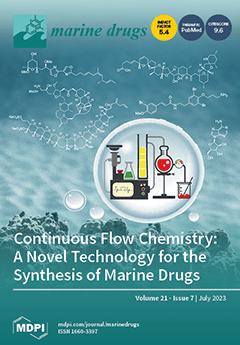
Cover Story: In this review, we provide comprehensive information about how flow chemistry has contributed to the development of marine drugs in recent decades. This novel synthetic technology has facilitated difficult synthetic pathways in a more efficient and safer manner, increasing the benefits of using this technique over the batch mode. Thus, a plethora of organic reactions with promising biological activities have been achieved in a wide range of marine drug-like molecules. View this paper
  • Issues are regarded as officially published after their release is announced to the table of contents alert mailing list .
  • You may sign up for email alerts to receive table of contents of newly released issues.
  • PDF is the official format for papers published in both, html and pdf forms. To view the papers in pdf format, click on the "PDF Full-text" link, and use the free Adobe Reader to open them.

Articles (52)

  • Review
  • Open Access
19 Citations
5,011 Views
20 Pages

Marine Microbial Polysaccharides: An Untapped Resource for Biotechnological Applications

  • Rajesh Jeewon,
  • Aadil Ahmad Aullybux,
  • Daneshwar Puchooa,
  • Nadeem Nazurally,
  • Abdulwahed Fahad Alrefaei and
  • Ying Zhang

24 July 2023

As the largest habitat on Earth, the marine environment harbors various microorganisms of biotechnological potential. Indeed, microbial compounds, especially polysaccharides from marine species, have been attracting much attention for their applicati...

  • Article
  • Open Access
4 Citations
3,632 Views
16 Pages

Exopolysaccharide Production from Marine-Derived Brevundimonas huaxiensis Obtained from Estremadura Spur Pockmarks Sediments Revealing Potential for Circular Economy

  • Marta Catalão,
  • Mafalda Fernandes,
  • Lorena Galdon,
  • Clara F. Rodrigues,
  • Rita G. Sobral,
  • Susana P. Gaudêncio and
  • Cristiana A. V. Torres

23 July 2023

Marine environments represent an enormous biodiversity reservoir due to their numerous different habitats, being abundant in microorganisms capable of producing biomolecules, namely exopolysaccharides (EPS), with unique physical characteristics and a...

  • Article
  • Open Access
10 Citations
4,111 Views
13 Pages

Functional Characterization of Lycopene β- and ε-Cyclases from a Lutein-Enriched Green Microalga Chlorella sorokiniana FZU60

  • Hong Fang,
  • Junjie Liu,
  • Ruijuan Ma,
  • Yiping Zou,
  • Shih-Hsin Ho,
  • Jianfeng Chen and
  • Youping Xie

23 July 2023

Lutein is a high-value carotenoid with many human health benefits. Lycopene β- and ε-cyclases (LCYB and LCYE, respectively) catalyze the cyclization of lycopene into distinct downstream branches, one of which is the lutein biosynthesis p...

  • Review
  • Open Access
13 Citations
4,644 Views
37 Pages

Extracellular Matrix of Echinoderms

  • Igor Yu. Dolmatov and
  • Vladimir A. Nizhnichenko

22 July 2023

This review considers available data on the composition of the extracellular matrix (ECM) in echinoderms. The connective tissue in these animals has a rather complex organization. It includes a wide range of structural ECM proteins, as well as variou...

  • Feature Paper
  • Article
  • Open Access
9 Citations
5,750 Views
26 Pages

Identification of Marine Biotechnology Value Chains with High Potential in the Northern Mediterranean Region

  • Ana Rotter,
  • Antonia Giannakourou,
  • Jesús E. Argente García,
  • Grazia Marina Quero,
  • Charlène Auregan,
  • George Triantaphyllidis,
  • Amalia Venetsanopoulou,
  • Roberta De Carolis,
  • Chrysa Efstratiou and
  • Cristian Chiavetta
  • + 22 authors

22 July 2023

Marine (blue) biotechnology is an emerging field enabling the valorization of new products and processes with massive potential for innovation and economic growth. In the Mediterranean region, this innovation potential is not exploited as well as in...

  • Article
  • Open Access
17 Citations
6,679 Views
29 Pages

21 July 2023

Cladostephus spongiosus was harvested once a month during its growing season (from May to August) from the Adriatic Sea. Algal volatile organic compounds (VOCs) were obtained by headspace solid-phase microextraction (HS-SPME) and hydrodistillation (H...

  • Article
  • Open Access
11 Citations
3,485 Views
21 Pages

Kinetic Extraction of Fucoxanthin from Undaria pinnatifida Using Ethanol as a Solvent

  • Catarina Lourenço-Lopes,
  • Aurora Silva,
  • Paula Garcia-Oliveira,
  • Anton Soria-Lopez,
  • Javier Echave,
  • Clara Grosso,
  • Lucia Cassani,
  • Maria Fatima Barroso,
  • Jesus Simal-Gandara and
  • Miguel A. Prieto
  • + 1 author

21 July 2023

Fucoxanthin (Fx) has been proven to exert numerous biological properties, which makes it an interesting molecule with diverse industrial applications. In this study, the kinetic behavior of Fx was studied to optimize three variables: time (t—3...

  • Perspective
  • Open Access
8 Citations
3,622 Views
25 Pages

Case Studies in Molecular Network-Guided Marine Biodiscovery

  • Shamsunnahar Khushi,
  • Angela A. Salim and
  • Robert J. Capon

20 July 2023

In reviewing a selection of recent case studies from our laboratory, we revealed some lessons learned and benefits accrued from the application of mass spectrometry (MS/MS) molecular networking in the field of marine sponge natural products. Molecula...

  • Article
  • Open Access
41 Citations
3,481 Views
20 Pages

1,3,4-Oxadiazole and 1,3,4-Thiadiazole Nortopsentin Derivatives against Pancreatic Ductal Adenocarcinoma: Synthesis, Cytotoxic Activity, and Inhibition of CDK1

  • Daniela Carbone,
  • Camilla Pecoraro,
  • Giovanna Panzeca,
  • Geng Xu,
  • Margot S. F. Roeten,
  • Stella Cascioferro,
  • Elisa Giovannetti,
  • Patrizia Diana and
  • Barbara Parrino

19 July 2023

A new series of nortopsentin analogs, in which the central imidazole ring of the natural lead was replaced by a 1,3,4-oxadiazole or 1,3,4-thiadiazole moiety, was efficiently synthesized. The antiproliferative activity of all synthesized derivatives w...

  • Article
  • Open Access
9 Citations
4,957 Views
15 Pages

Scenedesmus rubescens Heterotrophic Production Strategies for Added Value Biomass

  • Gonçalo Espírito Santo,
  • Ana Barros,
  • Margarida Costa,
  • Hugo Pereira,
  • Mafalda Trovão,
  • Helena Cardoso,
  • Bernardo Carvalho,
  • Maria Soares,
  • Nádia Correia and
  • Joana L. Silva
  • + 2 authors

19 July 2023

Microalgae attract interest worldwide due to their potential for several applications. Scenedesmus is one of the first in vitro cultured algae due to their rapid growth and handling easiness. Within this genus, cells exhibit a highly resistant wall a...

  • Article
  • Open Access
28 Citations
7,963 Views
14 Pages

19 July 2023

Nerve damage caused by accumulated oxidative stress is one of the characteristics and main mechanisms of Alzheimer’s disease (AD). Previous studies have shown that phosphatidylserine (PS) rich in eicosapentaenoic acid (EPA) and docosahexaenoic...

  • Article
  • Open Access
6 Citations
3,032 Views
17 Pages

19 July 2023

Metabolic syndrome (MetS) is a global health problem, and EPA/DHA-enriched phospholipids (EPA/DHA-PLs) have been found to have positive effects on MetS improvement. Currently, research on EPA/DHA-PL mainly focuses on special and rare seafood, such as...

  • Article
  • Open Access
6 Citations
2,983 Views
20 Pages

Characterization of Some Dermato-Cosmetic Preparations with Marine Lipids from Black Sea Wild Stingray

  • Magdalena Mititelu,
  • Monica Licu,
  • Carmen Elena Lupu,
  • Sorinel Marius Neacșu,
  • Gabriel Olteanu,
  • Gabriela Stanciu,
  • Doina Drăgănescu,
  • Carmen-Nicoleta Oancea,
  • Ștefan Sebastian Busnatu and
  • Dumitru Lupuleasa
  • + 2 authors

19 July 2023

The traditional knowledge about the therapeutic and nutritional value of fish has been unanimously recognized among the population since ancient times. So, thanks to the therapeutic virtues of these marine animals, it was possible to develop therapie...

  • Review
  • Open Access
4 Citations
2,121 Views
18 Pages

19 July 2023

This review provides information on the synthesis and revision of the structures of natural dimeric (poly)hydroxynaphthazarins, metabolites of echinoderms and lichens, and on the refinement of the direction and mechanism of reactions in the synthesis...

  • Review
  • Open Access
10 Citations
4,343 Views
17 Pages

18 July 2023

The blood-brain barrier (BBB) is a dynamic barrier separating neurocytes and brain tissues from blood that is extremely sealed and strictly regulated by transporters such as aquaporin-4 (AQP-4), glucose transporter (GLUT), and specialized tight junct...

  • Article
  • Open Access
9 Citations
2,835 Views
11 Pages

Jejucarbosides B–E, Chlorinated Cycloaromatized Enediynes, from a Marine Streptomyces sp.

  • Ji Hyeon Im,
  • Yern-Hyerk Shin,
  • Eun Seo Bae,
  • Sang Kook Lee and
  • Dong-Chan Oh

18 July 2023

Four new chlorinated cycloaromatized enediyne compounds, jejucarbosides B–E (14), were discovered together with previously-identified jejucarboside A from a marine actinomycete strain. Compounds 14 were identified as new chlorinat...

  • Article
  • Open Access
25 Citations
3,705 Views
25 Pages

Enhanced Expression of p53 and Suppression of PI3K/Akt/mTOR by Three Red Sea Algal Extracts: Insights on Their Composition by LC-MS-Based Metabolic Profiling and Molecular Networking

  • Nouran M. Fahmy,
  • Mariam I. Gamal El-Din,
  • Maha M. Salem,
  • Sarah H. Rashedy,
  • Gyu Sung Lee,
  • Yoon Seo Jang,
  • Ki Hyun Kim,
  • Chung Sub Kim,
  • Mohamed El-Shazly and
  • Shaimaa Fayez

17 July 2023

Brown algae comprise up to 2000 species with wide dissemination in temperate zones. A comprehensive untargeted metabolic profiling guided by molecular networking of three uninvestigated Red-Sea-derived brown algae, namely Sirophysalis trinodis, Polyc...

  • Article
  • Open Access
13 Citations
4,934 Views
21 Pages

Promoting Heme and Phycocyanin Biosynthesis in Synechocystis sp. PCC 6803 by Overexpression of Porphyrin Pathway Genes with Genetic Engineering

  • Kai Cao,
  • Xiaodong Wang,
  • Fengjie Sun,
  • Hao Zhang,
  • Yulin Cui,
  • Yujiao Cao,
  • Qingshou Yao,
  • Xiangyu Zhu,
  • Ting Yao and
  • Zhengquan Gao
  • + 2 authors

13 July 2023

Due to their unique biochemical and spectroscopic properties, both heme and phycocyanobilin are widely applied in the medical and food industries. Synechocystis sp. PCC 6803 contains both heme and phycocyanin, and is capable of synthesizing phycocyan...

  • Article
  • Open Access
8 Citations
2,161 Views
16 Pages

13 July 2023

Anabaenopeptins are common metabolites of cyanobacteria. In the course of reisolation of the known aeruginosins KT608A and KT608B for bioassay studies, we noticed the presence of some unknown anabaenopeptins in the extract of a Microcystis cell mass...

  • Review
  • Open Access
9 Citations
9,560 Views
21 Pages

Continuous Flow Chemistry: A Novel Technology for the Synthesis of Marine Drugs

  • Laura F. Peña,
  • Paula González-Andrés,
  • Lucía G. Parte,
  • Raúl Escribano,
  • Javier Guerra,
  • Asunción Barbero and
  • Enol López

13 July 2023

In this perspective, we showcase the benefits of continuous flow chemistry and photochemistry and how these valuable tools have contributed to the synthesis of organic scaffolds from the marine environment. These technologies have not only facilitate...

  • Article
  • Open Access
3 Citations
3,280 Views
17 Pages

Light-Mediated Transformation of Renieramycins and Semisynthesis of 4′-Pyridinecarbonyl-Substituted Renieramycin-Type Derivatives as Potential Cytotoxic Agents against Non-Small-Cell Lung Cancer Cells

  • Suwimon Sinsook,
  • Koonchira Buaban,
  • Iksen Iksen,
  • Korrakod Petsri,
  • Bhurichaya Innets,
  • Chaisak Chansriniyom,
  • Khanit Suwanborirux,
  • Masashi Yokoya,
  • Naoki Saito and
  • Supakarn Chamni
  • + 2 authors

13 July 2023

The semisynthesis of renieramycin-type derivatives was achieved under mild and facile conditions by attaching a 1,3-dioxole-bridged phenolic moiety onto ring A of the renieramycin structure and adding a 4′-pyridinecarbonyl ester substituent at...

  • Review
  • Open Access
55 Citations
14,589 Views
18 Pages

The Effect of Omega-3 Fatty Acids on Sarcopenia: Mechanism of Action and Potential Efficacy

  • Atiporn Therdyothin,
  • Nacharin Phiphopthatsanee and
  • Masoud Isanejad

13 July 2023

Sarcopenia, a progressive disease characterized by a decline in muscle strength, quality, and mass, affects aging population worldwide, leading to increased morbidity and mortality. Besides resistance exercise, various nutritional strategies, includi...

  • Article
  • Open Access
25 Citations
5,187 Views
13 Pages

10 July 2023

Neuroinflammation induced by microglial and astrocyte polarizations may contribute to neurodegeneration and cognitive impairment. Omega (n)-3 polyunsaturated fatty acids (PUFAs) have anti-inflammatory and neuroprotective effects, but conflicting resu...

  • Article
  • Open Access
30 Citations
4,019 Views
18 Pages

Valorisation of the Invasive Macroalgae Undaria pinnatifida (Harvey) Suringar for the Green Synthesis of Gold and Silver Nanoparticles with Antimicrobial and Antioxidant Potential

  • Noelia González-Ballesteros,
  • Mário Fernandes,
  • Raúl Machado,
  • Paula Sampaio,
  • Andreia C. Gomes,
  • Antonella Cavazza,
  • Franca Bigi and
  • Maria Carmen Rodríguez-Argüelles

9 July 2023

Bacterial and fungal infections are a challenging global problem due to the reported increasing resistance of pathogenic microorganisms to conventional antimicrobials. Nanomaterials are a promising strategy to fight infections caused by multidrug-res...

  • Article
  • Open Access
7 Citations
3,477 Views
17 Pages

Brevetoxin versus Brevenal Modulation of Human Nav1 Channels

  • Rocio K. Finol-Urdaneta,
  • Boris S. Zhorov,
  • Daniel G. Baden and
  • David J. Adams

7 July 2023

Brevetoxins (PbTx) and brevenal are marine ladder-frame polyethers. PbTx binds to and activates voltage-gated sodium (Nav) channels in native tissues, whereas brevenal antagonizes these actions. However, the effects of PbTx and brevenal on recombinan...

  • Article
  • Open Access
8 Citations
2,558 Views
15 Pages

The Structural Characteristics and Bioactivity Stability of Cucumaria frondosa Intestines and Ovum Hydrolysates Obtained by Different Proteases

  • Qiuting Wang,
  • Gongming Wang,
  • Chuyi Liu,
  • Zuli Sun,
  • Ruimin Li,
  • Jiarun Gao,
  • Mingbo Li and
  • Leilei Sun

6 July 2023

The study aimed to investigate the effects of alcalase, papain, flavourzyme, and neutrase on the structural characteristics and bioactivity stability of Cucumaria frondosa intestines and ovum hydrolysates (CFHs). The findings revealed that flavourzym...

  • Article
  • Open Access
7 Citations
3,816 Views
15 Pages

Chitosan/Virgin-Coconut-Oil-Based System Enriched with Cubosomes: A 3D Drug-Delivery Approach

  • Simone S. Silva,
  • Luísa C. Rodrigues,
  • Emanuel M. Fernandes,
  • Diana Soares da Costa,
  • Denise G. Villalva,
  • Watson Loh and
  • Rui L. Reis

6 July 2023

Emulsion-based systems that combine natural polymers with vegetable oils have been identified as a promising research avenue for developing structures with potential for biomedical applications. Herein, chitosan (CHT), a natural polymer, and virgin c...

  • Article
  • Open Access
9 Citations
3,196 Views
17 Pages

Quantification of Xylanolytic and Cellulolytic Activities of Fungal Strains Isolated from Palmaria palmata to Enhance R-Phycoerythrin Extraction of Palmaria palmata: From Seaweed to Seaweed

  • Yoran Le Strat,
  • Margaux Mandin,
  • Nicolas Ruiz,
  • Thibaut Robiou du Pont,
  • Emilie Ragueneau,
  • Alexandre Barnett,
  • Paul Déléris and
  • Justine Dumay

5 July 2023

R-phycoerythrin (R-PE) can be enzymatically extracted from red seaweeds such as Palmaria palmata. This pigment has numerous applications and is notably known as an antioxidant, antitumoral or anti-inflammatory agent. Enzymes secreted by P. palmata as...

  • Article
  • Open Access
11 Citations
4,153 Views
19 Pages

Impact of Harvest Month and Drying Process on the Nutritional and Bioactive Properties of Wild Palmaria palmata from Atlantic Canada

  • Bétina Lafeuille,
  • Éric Tamigneaux,
  • Karine Berger,
  • Véronique Provencher and
  • Lucie Beaulieu

3 July 2023

The macroalga Palmaria palmata could be a sustainable and nutritional food resource. However, its composition may vary according to its environment and to processing methods used. To investigate these variations, wild P. palmata from Quebec were harv...

  • Article
  • Open Access
22 Citations
3,282 Views
13 Pages

Protective Effect of Fucoxanthin on Zearalenone-Induced Hepatic Damage through Nrf2 Mediated by PI3K/AKT Signaling

  • Rebai Ben Ammar,
  • Hamad Abu Zahra,
  • Abdulmalek Mohammad Abu Zahra,
  • Manal Alfwuaires,
  • Sarah Abdulaziz Alamer,
  • Ashraf M. Metwally,
  • Thnaian A. Althnaian and
  • Saeed Y. Al-Ramadan

3 July 2023

Hepatotoxic contaminants such as zearalenone (ZEA) are widely present in foods. Marine algae have a wide range of potential applications in pharmaceuticals, cosmetics, and food products. Research is ongoing to develop treatments and products based on...

  • Article
  • Open Access
2 Citations
2,426 Views
11 Pages

29 June 2023

Recombinant peptide synthesis allows for large-scale production of peptides with therapeutic potential. However, access to dicarba peptidomimetics via sidechain-deprotected sequences becomes challenging with exposed Lewis basicity presented by amine...

  • Article
  • Open Access
1 Citations
2,268 Views
15 Pages

Peptidomics Analysis Reveals the Buccal Gland of Jawless Vertebrate Lamprey as a Source of Multiple Bioactive Peptides

  • Yaocen Wang,
  • Feng Sun,
  • Zhuoying Wang,
  • Xuyuan Duan,
  • Qingwei Li,
  • Yue Pang and
  • Meng Gou

29 June 2023

Various proteins with antibacterial, anticoagulant, and anti-inflammatory properties have been identified in the buccal glands of jawless blood-sucking vertebrate lampreys. However, studies on endogenous peptides in the buccal gland of lampreys are l...

  • Article
  • Open Access
2 Citations
2,424 Views
22 Pages

A Blend Consisting of Agaran from Seaweed Gracilaria birdiae and Chromium Picolinate Is a Better Antioxidant Agent than These Two Compounds Alone

  • Yara Campanelli-Morais,
  • Cynthia Haynara Ferreira Silva,
  • Marina Rocha do Nascimento Dantas,
  • Diego Araujo Sabry,
  • Guilherme Lanzi Sassaki,
  • Susana Margarida Gomes Moreira and
  • Hugo Alexandre Oliveira Rocha

29 June 2023

A blend refers to the combination of two or more components to achieve properties that are superior to those found in the individual products used for their production. Gracilaria birdiae agaran (SPGb) and chromium picolinate (ChrPic) are both antiox...

  • Review
  • Open Access
10 Citations
2,605 Views
11 Pages

29 June 2023

Bioprospecting of the marine environment for drug development has gained much attention in recent years owing to its massive chemical and biological diversity. Drugs for the treatment of skin and soft tissue infections have become part of the search,...

  • Article
  • Open Access
17 Citations
3,840 Views
15 Pages

29 June 2023

Fish is an important source of antimicrobial peptides. This study aimed to identify and screen antibacterial peptides with excellent antibacterial activity derived from sturgeon spermary peptides (SSPs) and to analyze their antibacterial activity and...

  • Feature Paper
  • Article
  • Open Access
21 Citations
10,177 Views
32 Pages

29 June 2023

Marine macroalgae, such as Padina boergesenii, are gaining recognition in the cosmetics industry as valuable sources of natural bioactive compounds. This study aimed to investigate the biochemical profile of P. boergesenii and evaluate its potential...

  • Article
  • Open Access
14 Citations
4,654 Views
18 Pages

Galdieria sulphuraria: An Extremophilic Alga as a Source of Antiviral Bioactive Compounds

  • Annalisa Ambrosino,
  • Annalisa Chianese,
  • Carla Zannella,
  • Simona Piccolella,
  • Severina Pacifico,
  • Rosa Giugliano,
  • Gianluigi Franci,
  • Antonino De Natale,
  • Antonino Pollio and
  • Massimiliano Galdiero
  • + 2 authors

28 June 2023

In the last decades, the interest in bioactive compounds derived from natural sources including bacteria, fungi, plants, and algae has significantly increased. It is well-known that aquatic or terrestrial organisms can produce, in special conditions,...

  • Review
  • Open Access
69 Citations
8,140 Views
30 Pages

28 June 2023

Seaweeds are abundant sources of diverse bioactive compounds with various properties and mechanisms of action. These compounds offer protective effects, high nutritional value, and numerous health benefits. Seaweeds are versatile natural sources of m...

  • Article
  • Open Access
10 Citations
2,349 Views
13 Pages

Cytosporin Derivatives from Arctic-Derived Fungus Eutypella sp. D-1 via the OSMAC Approach

  • Hao-Bing Yu,
  • Zhe Ning,
  • Bo Hu,
  • Yu-Ping Zhu,
  • Xiao-Ling Lu,
  • Ying He,
  • Bing-Hua Jiao and
  • Xiao-Yu Liu

28 June 2023

A chemical investigation of the Arctic-derived fungus Eutypella sp. D-1 based on the OSMAC (one strain many compounds) approach resulted in the isolation of five cytosporin polyketides (compounds 13 and 1112) from rice medium and eight...

  • Article
  • Open Access
7 Citations
6,794 Views
31 Pages

Tissue Extract from Brittle Star Undergoing Arm Regeneration Promotes Wound Healing in Rat

  • Alireza Afshar,
  • Arezoo Khoradmehr,
  • Fariborz Nowzari,
  • Neda Baghban,
  • Masoud Zare,
  • Maryam Najafi,
  • Seyedeh Zahra Keshavarzi,
  • Fatemeh Zendehboudi,
  • Gholamhossein Mohebbi and
  • Amin Tamadon
  • + 10 authors

28 June 2023

This study set out to evaluate the wound healing properties of brittle star extracts in vitro and in vivo. Due to the great arm regeneration potential of the brittle star, Ophiocoma cynthiae, the present study aimed to evaluate the wound healing effe...

  • Article
  • Open Access
6 Citations
2,709 Views
19 Pages

Harnessing the Value of Tripolium pannonicum and Crithmum maritimum Halophyte Biomass through Integrated Green Biorefinery

  • Laura Sini Sofia Hulkko,
  • Tanmay Chaturvedi,
  • Luísa Custódio and
  • Mette Hedegaard Thomsen

27 June 2023

Bioactive extracts are often the target fractions in bioprospecting, and halophyte plants could provide a potential source of feedstock for high-value applications as a part of integrated biorefineries. Tripolium pannonicum (Jacq.) Dobrocz. (sea aste...

  • Article
  • Open Access
11 Citations
3,754 Views
15 Pages

27 June 2023

We examined the effect of a dietary seaweed extract—sulfated xylorhamnoglucuronan (SXRG84)—on individuals with inflammatory skin conditions. A subgroup analysis of a larger trial was undertaken, where 44 participants with skin conditions...

  • Article
  • Open Access
8 Citations
2,900 Views
12 Pages

27 June 2023

Marine cyanobacteria are a rich source of bioactive natural products. Here, we report the isolation and structure elucidation of the previously reported iezoside (1) and its C-31 O-demethyl analogue, iezoside B (2), from a cyanobacterial assemblage c...

  • Article
  • Open Access
5 Citations
2,861 Views
13 Pages

Effect of Ishophloroglucin A Isolated from Ishige okamurae on In Vitro Osteoclastogenesis and Osteoblastogenesis

  • Su-Hyeon Cho,
  • Hyun-Soo Kim,
  • Hye-Yeon Jung,
  • Jae-Il Park,
  • You-Jee Jang,
  • Juhee Ahn and
  • Kil-Nam Kim

26 June 2023

The balance between bone-resorbing osteoclasts and bone-forming osteoblasts is essential for the bone remodeling process. This study aimed to investigate the effect of Ishophloroglucin A (IPA) isolated from Ishige okamurae on the function of osteocla...

  • Article
  • Open Access
11 Citations
3,203 Views
12 Pages

25 June 2023

The use of functional foods and their bioactive components is receiving increasing attention as a complementary and alternative therapy for chronic ulcerative colitis (UC). This study explored the protective effect and mechanisms of Eckol, a seaweed-...

  • Article
  • Open Access
10 Citations
3,471 Views
22 Pages

Effect of Chitosan on Rheological, Mechanical, and Adhesive Properties of Pectin–Calcium Gel

  • Sergey Popov,
  • Nikita Paderin,
  • Elizaveta Chistiakova,
  • Dmitry Ptashkin,
  • Fedor Vityazev,
  • Pavel A. Markov and
  • Kirill S. Erokhin

25 June 2023

In the present study, chitosan was included in the pectin ionotropic gel to improve its mechanical and bioadhesive properties. Pectin–chitosan gels P–Ch0, P–Ch1, P–Ch2, and P–Ch3 of chitosan weight fractions of 0.00, 0.2...

  • Article
  • Open Access
26 Citations
4,211 Views
14 Pages

Fucoidan from Sargassum autumnale Inhibits Potential Inflammatory Responses via NF-κB and MAPK Pathway Suppression in Lipopolysaccharide-Induced RAW 264.7 Macrophages

  • N. M. Liyanage,
  • Hyo-Geun Lee,
  • D. P. Nagahawatta,
  • H. H. A. C. K. Jayawardhana,
  • Kyung-Mo Song,
  • Yun-Sang Choi,
  • You-Jin Jeon and
  • Min-Cheol Kang

25 June 2023

Fucoidans are sulfate-rich polysaccharides with a wide variety of beneficial biological activities. The present study aimed to highlight the anti-inflammatory activity of fucoidan from the brown seaweed Sargassum autumnale (SA) against lipopolysaccha...

  • Article
  • Open Access
2 Citations
2,009 Views
14 Pages

Synthesis of the Isodityrosine Moiety of Seongsanamide A–D and Its Derivatives

  • Yang Xie,
  • Zhou Xu,
  • Pei Hu,
  • Xiao-Ting Tian,
  • Yi-Hong Lu,
  • Hao-Dong Jiang,
  • Cheng-Gang Huang and
  • Zhi-Cai Shang

25 June 2023

The concise and highly convergent synthesis of the isodityrosine unit of seongsanamide A–D and its derivatives bearing a diaryl ether moiety is described. In this work, the synthetic strategy features palladium-catalyzed C(sp3)–H function...

  • Article
  • Open Access
39 Citations
4,860 Views
25 Pages

Study of the Phytochemical Composition, Antioxidant Properties, and In Vitro Anti-Diabetic Efficacy of Gracilaria bursa-pastoris Extracts

  • Safae Ouahabi,
  • El Hassania Loukili,
  • Nour Elhouda Daoudi,
  • Mohamed Chebaibi,
  • Mohamed Ramdani,
  • Ilyesse Rahhou,
  • Mohamed Bnouham,
  • Marie-Laure Fauconnier,
  • Belkheir Hammouti and
  • Mohammed Ramdani
  • + 3 authors

24 June 2023

In this study, a comparison was made of the chemical makeup of different extracts obtained from Gracilaria bursa-pastoris, a type of red seaweed that was gathered from the Nador lagoon situated in the northern part of Morocco. Additionally, thei...

  • Article
  • Open Access
4 Citations
2,887 Views
16 Pages

Ircinia ramosa Sponge Extract (iSP) Induces Apoptosis in Human Melanoma Cells and Inhibits Melanoma Cell Migration and Invasiveness

  • Benedetta Romano,
  • Daniela Claudia Maresca,
  • Fabio Somma,
  • Peni Ahmadi,
  • Masteria Yunovilsa Putra,
  • Siti Irma Rahmawati,
  • Giuseppina Chianese,
  • Carmen Formisano,
  • Angela Ianaro and
  • Giuseppe Ercolano

24 June 2023

Marine compounds represent a varied source of new drugs with potential anticancer effects. Among these, sponges, including those belonging to the Irciniidae family, have been demonstrated to exert cytotoxic effects on different human cancer cells. He...

of 2

XFacebookLinkedIn
Mar. Drugs - ISSN 1660-3397