
- Review

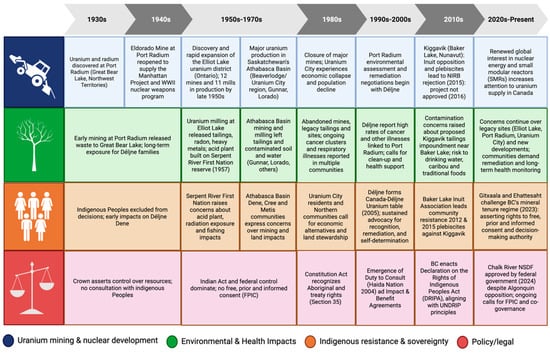
Uranium mining in Canada has been central to global nuclear development, from its early role in weapons production during World War II to its current use in nuclear energy and medical applications. This review examines the historical and contemporary effects of uranium mining on Indigenous Peoples in Canada. A narrative review was conducted using peer-reviewed databases and Indigenous-led advocacy and knowledge platforms. Grey literature and community testimonies were also included to capture Indigenous perspectives, which are often absent from academic discourse. Overall, uranium mining has produced widespread and enduring consequences for Indigenous communities and their lands. Historical operations exposed workers and families to radiation, contributing to elevated rates of cancer and chronic disease. Contemporary projects continue to generate environmental contamination, food insecurity, and cultural disruption, while economic benefits remain inequitably distributed. Regulatory frameworks such as the Duty to Consult and Impact and Benefit Agreements have evolved but often fail to ensure free, prior, and informed consent. Indigenous activism and governance initiatives have driven policy shifts, yet gaps in health equity, environmental remediation, and recognition of sovereignty persist. These struggles mirror broader global patterns where Indigenous communities face disproportionate burdens of resource extraction to this day.
24 November 2026