


Highlights
Public health relevance—How does this work relate to a public health issue?
- •
- Uranium mining in Canada exposed Indigenous workers, families, and communities to radiation and to contaminated land, water, and country foods, with elevated cancer and chronic disease reported in affected regions.
- •
- Historical uranium mining operations, active mining activities, and proposed uranium developments in Ontario, Saskatchewan, the Northwest Territories, and Nunavut provide distinct contexts for examining occupational exposures, legacy environmental contamination, Indigenous health, and resource governance. Contemporary uranium production is concentrated in Saskatchewan, while the other regions examined primarily illustrate historical mining impacts or proposed development.
Public health significance—Why is this work of significance to public health?
- •
- The review draws together peer-reviewed evidence, grey literature, and community testimony to show how colonial land and resource policy functions as a structural determinant of Indigenous health.
- •
- It shows that unremediated contamination and inequitable distribution of economic benefit sustain health inequities long after operations end, matching patterns documented for Indigenous Peoples in other uranium-producing countries.
Public health implications—What are the key implications or messages for practitioners, policy makers and/or researchers in public health?
- •
- Existing mechanisms such as the Duty to Consult and Impact and Benefit Agreements do not reliably deliver Free, Prior, and Informed consent, pointing to the need for enforceable consent standards, funded remediation of legacy sites, and co-governance with Indigenous nations.
- •
- Practitioners and researchers should treat Indigenous knowledge and community-held observations as primary evidence in exposure assessment, environmental monitoring, and health surveillance rather than as supplementary context.
Abstract
Uranium mining in Canada has been central to global nuclear development, from its early role in weapons production during World War II to its current use in nuclear energy and medical applications. This review examines the historical and contemporary effects of uranium mining on Indigenous Peoples in Canada. A narrative review was conducted using peer-reviewed databases and Indigenous-led advocacy and knowledge platforms. Grey literature and community testimonies were also included to capture Indigenous perspectives, which are often absent from academic discourse. Overall, uranium mining has produced widespread and enduring consequences for Indigenous communities and their lands. Historical operations exposed workers and families to radiation, contributing to elevated rates of cancer and chronic disease. Contemporary projects continue to generate environmental contamination, food insecurity, and cultural disruption, while economic benefits remain inequitably distributed. Regulatory frameworks such as the Duty to Consult and Impact and Benefit Agreements have evolved but often fail to ensure free, prior, and informed consent. Indigenous activism and governance initiatives have driven policy shifts, yet gaps in health equity, environmental remediation, and recognition of sovereignty persist. These struggles mirror broader global patterns where Indigenous communities face disproportionate burdens of resource extraction to this day.
1. Introduction
Uranium mining on Indigenous land in Canada is both a historical and contemporary issue, reflecting a complex interplay between resource extraction, Indigenous land rights, and environmental justice. Therefore, an exploration of these interconnected issues through an emphasis on Indigenous voices and perspectives from communities whose lands have been and continue to be primary sites of uranium extraction and mining, is of critical importance.
Before western colonialism, Indigenous communities lived on ancestral territories, developing spiritual, cultural, and subsistence connections to the land. However, the onset of colonization disrupted these connections. The treaties that were created between Indigenous Peoples and colonial governments served as a means to displace Indigenous Peoples, culture, and traditions, or limit their control over land use and rights. Uranium mining is a continuing example of western economic practices deeply rooted in colonialism that exacerbates the challenges for Indigenous communities, encroaching upon traditional hunting, fishing, and sacred areas critical to Indigenous life [1]. Similar to policies in other sectors, many early land rights policies, including those concerned with uranium mining, ignored Indigenous sovereignty. Instead, these policies prioritized resource extraction and financial gain over traditional Indigenous practices and environmental stewardship [2].
Driven by the global race for nuclear armament, uranium mining became popular in Canada during World War II. Canada’s uranium reserves, located in Saskatchewan’s Athabasca Basin, Nunavut, and Northern Ontario, became strategic military assets at the expense of Indigenous communities residing on these lands. Mining activities during this period prioritized economic and strategic interests, neglecting the environmental and social repercussions on Indigenous populations and their land [1]. The toxic biological and social legacy of these operations, including increased cancer risks and environmental degradation, continues to affect these communities today [3].
In recent years, we have seen a surge of resilience in the form of Indigenous activism, with movements like Idle No More advocating for environmental justice, Indigenous sovereignty, and the protection of Indigenous lands. Furthermore, Indigenous governance has emphasized the need for meaningful and direct consultation with Indigenous communities before resource development projects commence [3].
This advocacy reflects a strong push from Indigenous communities to influence policies affecting their lands, exemplified by British Columbia’s 2019 Declaration on the Rights of Indigenous Peoples Act (DRIPA). DRIPA aimed to align BC’s laws with the United Nations Declaration on the Rights of Indigenous Peoples (UNDRIP), committing to free, prior, and informed consent (FPIC) from Indigenous groups on projects affecting their territories [4,5]. This step demonstrates how Indigenous activism is fostering new policies that recognize Indigenous rights to manage their land and participate in decision-making, a crucial aspect of reconciling past injustices. However, a recent 2023 decision by the BC Supreme Court clarified that DRIPA does not legally enforce UNDRIP within provincial law. Instead, DRIPA is only considered aspirational as it mandates consultation and cooperation with Indigenous communities but does not impose binding obligations on the province to amend existing laws, like the Mineral Tenure Act, to fully reflect UNDRIP principles [6]. Despite its limitations, DRIPA allows for UNDRIP to serve as an interpretive tool in legal contexts, shaping how courts approach Indigenous rights and land claims, collectively reflecting both the progress and challenges in enacting policies that support Indigenous sovereignty.
Although uranium mining in Canada is often framed as a historical issue associated with Cold War weapons production, contemporary energy and security dynamics have renewed interest in nuclear systems and, by extension, uranium supply chains. In climate and energy policy debates, nuclear power is frequently positioned as a low-carbon electricity source capable of supporting decarbonization goals, prompting renewed attention to nuclear expansion pathways [7,8]. Within this landscape, small modular reactors (SMRs) have emerged as a prominent proposed technology, with a growing literature evaluating their claimed advantages and the practical constraints that may shape deployment [9,10]. SMR proposals are often linked to remote and northern applications, which can intersect with Indigenous territories and governance contexts, raising equity and legitimacy concerns when energy transitions are pursued without structurally meaningful Indigenous authority in decision-making; qualitative case studies in northern Indigenous contexts demonstrate complexities around sustainable energy pathways and community participation [11]. This “nuclear-as-climate-solution” framing has also been critiqued for the way it can obscure or reproduce colonial power relations in environmental governance. Empirical analyses of Canadian environmental assessment (EA) practice and Indigenous knowledge integration point to persistent tensions around how and whether Indigenous voices are meaningfully included in federal assessment regimes, with scholars documenting structural limits to incorporating Indigenous epistemologies in EA processes [12,13]. These limitations are especially consequential for uranium and related nuclear infrastructure because health, environmental, social, and cultural impacts may extend across long time horizons, while many regulatory decision points are concentrated early in industrial project lifecycles.
The Government of Canada’s contemporary policy framework supports nuclear energy as a component of its clean electricity, energy security, and economic development strategies. In June 2026, Natural Resources Canada released the Nuclear Energy Strategy for Canada, which identifies nuclear generation expansion, uranium resource development, nuclear fuel supply chains, and international exports as federal priorities [14]. The strategy also emphasizes Indigenous economic participation, environmental protection, and the recognition of Indigenous rights in nuclear development. Uranium mining and milling are regulated federally by the Canadian Nuclear Safety Commission (CNSC) under the Nuclear Safety and Control Act, with requirements concerning licensing, occupational radiation protection, environmental monitoring, and decommissioning [15]. Provincial and territorial governments retain responsibilities for mineral exploration and other aspects of resource development within their jurisdictions. Consequently, Canada’s current approach combines support for nuclear energy and uranium production with regulatory oversight and commitments concerning environmental protection and Indigenous participation [14,15]. The implementation of these commitments, particularly in relation to Indigenous decision-making authority and long-term environmental responsibilities, remains an important subject of evaluation.
Central to evaluating whether contemporary uranium and nuclear initiatives represent a departure from historic extractive patterns is an explicit definition of Indigenous sovereignty. In this review, Indigenous sovereignty refers to Indigenous Peoples’ inherent authority and jurisdiction over their lands and governance systems, including decision-making power regarding land stewardship and development pathways. The literature on Indigenous governance and sovereignty in resource contexts consistently highlights the importance of Indigenous jurisdiction and self-determination in land and resource governance frameworks [16]. A key operational expression of this authority in contemporary policy debates is free, prior, and informed consent (FPIC), articulated in the United Nations Declaration on the Rights of Indigenous Peoples (UNDRIP) and widely analyzed in peer-reviewed Canadian scholarship as a standard that goes beyond procedural consultation toward meaningful consent and negotiated authority [16,17].
Collectively, based on this initial background search, the following narrative review seeks to integrate peer-reviewed literature, government reports, and Indigenous perspectives to present a holistic understanding of uranium mining for the purposes of nuclear development and its impact on Indigenous communities in Canada. It examines the historical context of uranium extraction, the effectiveness of current Canadian policies (e.g., CEAA, CNSC), and comparative case studies of Canadian Indigenous communities impacted by uranium mining. Overall, with the gathered information, our aim is to highlight how uranium mining has affected Indigenous communities in Canada across the health, environmental, socioeconomic, and policy spheres, and what lessons this offers for efforts toward reconciliation and future governance.
Existing systematic and scoping reviews have examined the relationships between resource extraction, environmental change, Indigenous well-being, and participation in impact assessment, both in Canada and internationally. For example, Myette and Riva (2021) examined the social-ecological pathways linking resource extraction to Indigenous health in Canada [18], while Leyton-Flor and Sangha (2024) synthesized evidence concerning mining-related impacts on Indigenous communities across broader international contexts [19]. More recently, Majumdar et al. (2026) considered uranium mining through an international environmental justice framework [20]. Building on this literature, the present review offers a focused synthesis of uranium mining in Canada, integrating occupational and environmental health evidence with historical accounts, socioeconomic analyses, regulatory developments, and Indigenous-authored scholarship. Its contribution lies in examining how these dimensions intersect across distinct Canadian contexts. In particular, the structured narrative approach enables the contextual integration of heterogeneous evidence, including community testimony and Indigenous organizational perspectives that may not be captured adequately by reviews restricted to peer-reviewed empirical studies.
1.1. Historical Context
Uranium mining in Canada is intricately linked to global nuclear development, resulting in significant impacts on Indigenous Peoples and lands [21]. During World War II, Canada emerged as a key player in the nuclear arms race, contributing to the Manhattan Project by providing uranium from mines in the Northwest Territories and northern Saskatchewan. These lands were repurposed for mining operations without meaningful consultation or compensation for the Indigenous communities that relied on them for traditional practices such as hunting, fishing, and cultural ceremonies [2]. In current society, uranium mining has left profound environmental and social scars, creating long-term consequences that Indigenous communities continue to grapple with today.
During the 1940s, the discovery of large uranium deposits in Saskatchewan’s Athabasca Basin and northern Ontario placed Canada at the forefront of nuclear development [1]. The global demand for uranium surged during the Cold War, further intensifying mining operations across Canada. Despite the economic benefits promised to local populations, Indigenous communities were largely excluded from the decision-making processes governing the use of their lands [3]. While many Indigenous communities were employed in mining operations, they often worked in hazardous conditions with little to no protective equipment and were not involved in the governance or planning of these projects. Indigenous workers in mining and extraction also faced significant exploitation and wage inequities, a trend that continues to shape the industry today [22]. However, this wage growth exists alongside structural inequalities and persistent barriers. Structural barriers, like limited career progression and discrimination, prevent long-term economic empowerment for many Indigenous workers despite higher wages and increased representation in resource roles compared to government sectors [22,23].
These historical patterns of limited Indigenous participation in mining-related decisions provide important context for the subsequent development of consultation and regulatory frameworks, examined in Section 3.5.
This lack of involvement in land governance reflected the broader colonial policies of the time that prioritized resource extraction over Indigenous rights [3]. The historical evolution of uranium development in Canada, alongside its environmental and health consequences, Indigenous responses, and changes in legal and regulatory frameworks, is summarized in Figure 1.
Figure 1.
Historical evolution of uranium mining and nuclear development in Canada and its intersections with Indigenous health, environmental impacts, resistance, and governance. The timeline highlights major developments from the establishment of uranium extraction at Port Radium through Cold War expansion, mine closures and legacy contamination, Indigenous resistance to proposed developments, and contemporary shifts toward Indigenous rights and consent-based governance. It gives readers a chronological overview of how uranium and nuclear development in Canada has intersected with Indigenous Peoples’ health, lands and rights since the 1930s. By placing selected milestones in development beside environmental impacts, health concerns, Indigenous responses, and legal and policy change, it shows that formal recognition of Aboriginal and treaty rights (1982) and the Crown’s duty to consult (2004) came decades after extraction began, and that what consultation and consent require remains contested in recent disputes. Created in BioRender. Butt, A. (2026) https://BioRender.com/wmajbtn (accessed on 17 November 2026) [24].
1.2. Historical Versus Contemporary Uranium Mining
Uranium mining practices in Canada have changed over time. Table 1 summarizes these changes in occupational and environmental protection, licensing, and Indigenous participation.
The Canada-Déline Uranium study concludes that Eldorado’s practices at Port Radium (uranium mining 1942 to 1960) generally complied with the requirements of the time but would be unacceptable under today’s Canadian standards [25]. Federal transport rules introduced in 1946 did not cover the workers who carried ore, and the study found no evidence that they were warned of the hazards. The Atomic Energy Control Board began regulating uranium mines and mills only in 1975 [26], and current regulations limit nuclear energy workers to 50 mSv per year and 100 mSv per five-year dosimetry period [27]. From 2000, the Nuclear Safety and Control Act required licences for historic sites with uranium tailings; by 2006, all had been licensed except Port Radium, the Lorado mill, and Gunnar, which were licensed for remediation in 2007, 2013, and 2015, respectively [26,28]. When Port Radium closed in 1960, decommissioning required only securing the entrances [25]; new sites must now plan closure, remediation, and decommissioning before opening and provide financial guarantees for these costs. Indigenous Nations now receive participant funding to review regulatory performance [29,30], and collaboration agreements were signed with northern communities in 2012, 2013, and 2016 [31].
Legacy burdens from early operations remain. The Gunnar mine (1955 to 1964) closed with little decommissioning, leaving 4.4 million tonnes of tailings, and was later included with the Lorado mill and 35 satellite mine sites in the Project CLEANS cleanup [32]. In 2018, Saskatchewan estimated its remediation at $280 million, noted a federal contribution of $1.13 million, and issued a statement of claim against Canada [33].
Current operations also have documented shortcomings. In 2023, the highest individual radiation exposure was 18.92 mSv (38% of the annual allowed limit), most of it from a single unplanned exposure at Cigar Lake [34]. Non-compliances found in CNSC inspections numbered 11 to 31 per year from 2018 to 2021, then 79, 93, and 114 in 2022 to 2024 [34,35], although CNSC staff rated the 2024 findings as low safety significance and attributed their higher number mainly to changes in inspection methods [35].
Table 1.
Indigenous-led organizations and governing bodies searched in two tiers, national (Tier 1) and provincial/territorial (Tier 2), to capture policy perspectives, governance frameworks, and community-specific experiences relevant to uranium mining in Canada.
2. Methods
A structured narrative review design was selected due to the interdisciplinary nature of the research question and the heterogeneity of available evidence concerning uranium mining and Indigenous Peoples in Canada. The review aimed to integrate epidemiological and environmental research with historical accounts, socioeconomic analyses, legal and policy literature, and Indigenous knowledge and community experiences. Unlike a scoping review, which primarily seeks to systematically map the extent and characteristics of existing literature, the present review sought to critically interpret relationships among these different bodies of evidence and contextualize their implications for Indigenous health, environmental justice, and sovereignty. The methodological approach was informed by the Scale for the Assessment of Narrative Review Articles (SANRA), particularly its emphasis on clearly defined objectives, transparent literature identification, appropriate referencing, scientific reasoning, and evidence presentation [36].
Peer-reviewed literature was identified primarily through Google Scholar, PubMed (MEDLINE), and Scopus, focusing on four predefined thematic domains: (1) health, (2) environmental, (3) socioeconomic, and (4) governance and policy impacts. The initial literature search was conducted between September 2025 and November 2025, without publication-date restrictions. Boolean combinations of uranium-related, Indigenous population, and geographical terms guided the searches. The following search expression was reported for the databases: (“uranium*”) AND (“Indigenous*” OR “Aboriginal*” OR “First Nation*” OR “Inuit*” OR “Metis*” OR “Métis*”) AND (“Canada” OR “Ca” OR “Alberta” OR “AB” OR “British Columbia” OR “BC” OR “Manitoba” OR “MB” OR “New Brunswick” OR “NB” OR “Newfoundland and Labrador” OR “NL” OR “Nova Scotia” OR “NS” OR “Ontario” OR “ON” OR “Prince Edward Island” OR “PEI” OR “Quebec” OR “QC” OR “Saskatchewan” OR “SK” OR “Nunavut” OR “NU” OR “Northwest Territories” OR “NT” OR “Yukon” OR “YT”).
Targeted searches of government websites, Indigenous organizations, and other relevant sources supplemented the database searches, including site-restricted Google queries (e.g., site.gc.ca uranium mines Indigenous). Indigenous-led publications and organizational materials were identified through searches of national (Tier 1) and provincial/territorial (Tier 2) organizations and governing bodies, as summarized in Table 1. Reference lists of relevant publications were also examined to identify additional sources.
The review’s primary geographical scope was Canada, with literature from across the country considered eligible. Four regions were selected for more detailed case-study analysis: Serpent River First Nation and the Elliot Lake uranium mining region in Ontario; Cree, Dene, and Métis communities associated with the Athabasca Basin in northern Saskatchewan; Délı̨nę and the historical Port Radium mine in the Northwest Territories; and Baker Lake (Qamani’tuaq) and the proposed Kiggavik uranium development in Nunavut. These cases illustrate distinct historical, contemporary, and proposed uranium developments. Selected international studies, particularly from Australia and Brazil, were incorporated for contextual comparison rather than as part of the review’s primary geographical scope.
Sources were eligible if they addressed uranium mining, associated activities, or mine tailings in Canada and contributed to understanding their health, environmental, socioeconomic, or governance implications for Indigenous Peoples. Both peer-reviewed publications and relevant grey literature were considered, including government and regulatory reports, theses, Indigenous-authored scholarship, organizational publications, historical accounts, oral histories, and publicly documented community testimony. Materials were considered in English or French, including those available in translation. Sources unrelated to uranium development or its broader implications for Indigenous communities were excluded from the principal synthesis, although selected international research and broader occupational studies were retained where they provided relevant comparative or contextual evidence. News articles, NGO publications, and advocacy materials were not automatically excluded by publication type; instead, their inclusion depended on their relevance, attribution, and evidentiary purpose.
Both authors independently conducted literature searches and assessed potentially relevant publications through titles and abstracts, where available. References were subsequently combined into a shared citation collection and used by both authors when developing their assigned manuscript sections. Selection was guided by relevance to the predefined thematic domains rather than a formal dual-reviewer screening and adjudication process. As a structured narrative review, the study did not maintain a comprehensive record-by-record log of retrieved, excluded, and duplicate records. Consequently, reliable counts for each screening stage and individual exclusion reasons are unavailable. This limitation is acknowledged rather than retrospectively reconstructing a systematic-review screening process.
Following a reference-level audit, the preliminary evidence and contextual bibliography comprised 94 unique sources, including 33 journal publications, eight scholarly books or book chapters, 16 government, regulatory, or intergovernmental publications, 19 Indigenous-led organizational or community publications, and 18 additional sources, including theses, historical materials, news reporting, industry publications, and other grey literature. Each publication was assigned to one primary source category to avoid double counting. Indigenous oral histories and community testimony were primarily incorporated through published documents rather than collected as independent primary research records; therefore, individual testimonies were not counted separately from their source publications.
Given the heterogeneity of the evidence, sources were interpreted according to their methodological characteristics, provenance, and intended purpose. Epidemiological studies were considered in relation to study design, population characteristics, exposure measurement, potential confounding, and generalizability. Environmental studies were examined for their sampling procedures, geographical coverage, and interpretation of contaminant measurements, recognizing that environmental contamination does not independently establish individual disease causation. Government and regulatory reports were considered in relation to their institutional mandates, reporting scope, and methodological transparency, while NGO and advocacy publications were assessed for attribution, factual documentation, and distinctions between empirical findings and organizational positions. Indigenous-authored accounts, oral histories, and community testimony were considered important sources of lived experience, historical knowledge, cultural perspectives, and community-defined concerns rather than population-level estimates of disease incidence. These considerations were consistent with principles of source-sensitive critical appraisal, although a formal standardized risk-of-bias assessment or numerical quality scoring of individual studies was not undertaken. SANRA informed the overall narrative review approach rather than serving as a study-level risk-of-bias instrument.
The inclusion and interpretation of Indigenous knowledge were also informed by the ethical considerations outlined in Chapter 9 of the Tri-Council Policy Statement: Ethical Conduct for Research Involving Humans (TCPS2) and the First Nations principles of ownership, control, access, and possession (OCAP) [37]. These frameworks were relevant given the historical exclusion of Indigenous communities from research and decision-making concerning their health, environments, and traditional territories. OCAP was recognized as a First Nations-specific framework rather than a universal framework for all Indigenous Peoples. Although this study relied exclusively on publicly available and published materials and did not involve direct community recruitment or the collection of community-held data, these principles informed the attention given to Indigenous authorship, source context, community knowledge, and respectful interpretation. Indigenous scholarship and organizational publications were intentionally incorporated as primary sources of Indigenous perspectives because conventional epidemiological and regulatory literature may not adequately represent the cultural, historical, relational, and governance dimensions of uranium mining. These sources were interpreted according to their evidentiary purpose and were not treated as independently establishing causal exposure–outcome relationships.
Finally, findings were synthesized narratively across the four thematic domains, with the Canadian case studies providing geographical and historical context. The synthesis examined relationships among occupational and environmental exposures, health outcomes, socioeconomic conditions, Indigenous governance, and historical and contemporary regulatory developments. Particular attention was given to distinguishing historical occupational evidence from community-level health observations, identifying convergence and differences among source types, and separating empirical findings from community-reported experiences and policy interpretations. Given the diversity of study designs, outcomes, and source characteristics, quantitative pooling was not undertaken.
Author Positionality and Reflexivity
The authors approach this review from academic backgrounds in medicine and public health, with an interest in environmental exposures, structural determinants of health, and health equity. We recognize that our disciplinary perspectives may emphasize forms of evidence commonly used in biomedical research while not fully capturing the historical, cultural, and relational dimensions of Indigenous experiences with uranium mining. Accordingly, we sought to incorporate Indigenous-authored scholarship and publicly available community perspectives alongside epidemiological, environmental, and regulatory evidence. We acknowledge that synthesizing published Indigenous knowledge does not confer authority to speak on behalf of the communities represented, nor does it substitute for direct community engagement or Indigenous-led research. The findings should therefore be understood as a secondary synthesis of published evidence rather than a representation of the collective positions of affected Indigenous Nations. Future research would benefit from Indigenous leadership in defining research questions, interpreting findings, and governing community-related information.
3. Results
3.1. Health Impacts
To understand the health impacts of uranium mining in Canada, there is a need to consider it within the broader contexts of environmental injustice and colonial exploitation. Historically, uranium mining has occurred on or near Indigenous land, with few examples of meaningful consultation or informed consent with the communities most impacted by uranium mining. As a result, Indigenous Peoples have disproportionately faced health impacts from occupational exposures to uranium mining, from the subsequent contaminants present in the environment due to mining, and from the barriers to accessing healthcare services in remote communities. These impacts reflect direct exposures and broader structural inequities affecting Indigenous communities.
As previously mentioned, uranium mining in Canada began primarily for the purposes of supporting wartime nuclear development during the middle 20th century, when there was little regulation or worker protection [2,38]. Consequently, Indigenous workers and their families were generally included in mining economies based on terms and conditions that provided them with little information regarding the potential dangers of radiation exposure to the workers or to the surrounding public. Workers involved in early uranium and radium mining operations were seldom advised about the hazards of contact with radioactive materials nor were adequate safety precautions or protective equipment made available to employees working along transportation routes [25]. These exposures had long-term impacts on both workers and surrounding communities and reflect broader structural determinants of health.
The health evidence reviewed in this section encompasses two distinct, although potentially overlapping, populations: workers occupationally exposed during uranium mining and associated activities, and residents of communities located near historical or contemporary uranium mining sites. Occupational studies typically evaluate exposure to radon progeny and other mining-related hazards using employment histories, workplace measurements, and dose estimates, whereas community-level investigations examine potential environmental exposure pathways, biomonitoring findings, health surveillance data, and reported lived experiences. Although Indigenous individuals may be represented in both populations, the available occupational epidemiological studies generally do not report findings stratified by Indigenous identity. Consequently, occupational exposure–outcome associations should not be interpreted as direct estimates of disease risk among surrounding Indigenous communities.
3.1.1. Occupational Radiation Exposure and Worker Health
During both World Wars and the Cold War, uranium mining rapidly expanded in Canada. Early mines that opened were located in the North and/or very remote areas of the country, such as the Northwest Territories (NWT) and Northern Saskatchewan, home to many Indigenous communities. Indigenous people from these communities were hired to work in uranium mines without being adequately informed of the associated dangers [2,25]. These conditions resulted in substantial exposure to uranium and radon gas [26]. The long hours that miners worked and the lack of regulatory oversight over the early years of uranium mining enhanced the problem.
Historical accounts from Dene communities of the Sahtú region describe how workers would transport large amounts of radioactive ore with little protection or understanding of the health effects of this exposure [2,39]. In the Délı̨nę First Nation, the toll of the illnesses and premature death experienced by the families of those who mined was so high that those affected were referred to as the Village of Widows in Peter Blow’s 1999 documentary, which documented the intergenerational impact on the community; this is also well-documented in both historical documents and community records [40].
3.1.2. Community-Level Exposure and Environmental Pathways
While occupational exposure among miners represents one pathway of risk, uranium mining also generates environmental contamination that can affect entire communities. Radioactive materials released during mining and milling operations contaminate surrounding ecosystems, including water sources, soils, and traditional Indigenous food systems. Specifically, uranium mining generates large amounts of mine tailings and waste rocks that contain radioactive materials; if left unattended or improperly cleaned after the completion of mining operations, these materials become susceptible to the effects of weathering processes, leaching radioactive materials into the environment through direct contact with the ground (i.e., infiltration), surface water flow (i.e., runoff), and airborne particulate matter generated during mining.
Consumption of the consequently contaminated water is particularly concerning among Indigenous people residing adjacent to uranium mining sites. Assessment of water quality at the national level has shown uranium concentration rates above recommended values for drinking water in certain First Nations communities, indicating continuing public health concerns regarding access to safe drinking water and disparities in community-based water and sewage infrastructure [41]. In addition, environmental monitoring studies have indicated high levels of uranium contamination around abandoned uranium exploration sites in Labrador [42].
Traditional Indigenous foods, from areas such as northern Canada, represent another concerning pathway of contamination. In northern ecosystems, radioactive materials move from contaminated soil and atmosphere through the lichen–caribou–human food chain: Lichens absorb radioactive materials from contaminated soil and atmospheric deposits that are then ingested by caribou; the caribou are subsequently consumed by Indigenous people as an important component of their traditional diet [43].
Radiation exposure also occurs indoors, with radon gas levels in residences in northern Indigenous communities found to be higher than recommended safety limits because of geological factors and further worsened by inadequate ventilation. In particular, approximately 28% of homes in Nunatsiavut, NL, had radon gas levels above the recommended Canadian safety threshold for radon, indicating a possibility for chronic indoor radiation exposure [44].
Biomonitoring data provide additional support. Elevated uranium levels have been detected in biological samples from exposed populations. Data collected on the extent of environmental contamination at historical mine sites provides context to current concerns regarding continued exposure. A Délı̨nę study of Port Radium (2005) has provided a comprehensive overview of both the environmental contamination spread throughout the area and reports of illnesses experienced by the Délı̨nę First Nation people associated with proximity to mining activities [25]. Other jurisdictions have conducted similar studies of communities surrounding abandoned hard rock mines and indicate similarly increased concentrations of uranium and associated metals in adults, newborns, and children alike; most concerning, researchers note that these contaminated sites will likely remain unremediated for generations [45].
Local studies have been conducted to demonstrate the relationship between environmental exposure and resultant health issues. For instance, studies conducted on drinking water contamination within the Kitigan Zibi Anishinabeg First Nation community of Quebec showed an association between renal tubular dysfunction and uranium levels in drinking water [46]. The findings of this research have greater relevance due to an even broader body of literature indicating the link between uranium consumed from drinking water and subclinical kidney damage at the population level, which we explore further below [47]. Elevated levels of uranium and other metals have also been detected in Indigenous communities located proximal to abandoned mines in the western U.S., persisting across multiple generations, and made worse due to lack of remediation [45].
3.1.3. Physical Health Outcomes
Historical uranium mining has been associated with several adverse health outcomes, particularly among workers exposed to elevated concentrations of radon progeny, radioactive dust, and other occupational hazards. The strongest epidemiological evidence concerns lung cancer, with Canadian uranium miner cohorts consistently demonstrating positive exposure–response relationships between cumulative occupational radon exposure and lung cancer incidence and mortality. An analysis of the Eldorado uranium worker cohort (n = 16,752), which included workers from Port Radium, Beaverlodge, and Port Hope, identified a statistically significant association between cumulative radon progeny exposure and lung cancer incidence, with an excess relative risk (ERR) of 0.61 per 100 working level months (WLM; 95% confidence interval [CI]: 0.39–0.91) [48]. Similarly, Navaranjan et al. (2016), examining a cohort of 28,546 male Ontario uranium miners, reported that workers with cumulative exposures exceeding 100 WLM had nearly twice the lung cancer incidence of unexposed workers (relative risk [RR] = 1.89; 95% CI: 1.43–2.50), with an ERR of 0.64 per 100 WLM (95% CI: 0.43–0.85) [49]. These findings demonstrate the considerable occupational hazards associated with historical underground uranium mining, particularly during earlier periods when radiation protection measures were less developed. However, the Ontario cohort did not identify statistically significant associations between cumulative radon exposure and other investigated cancer sites, including stomach cancer, leukemia, and kidney cancer, or cardiovascular mortality. This distinction is important to avoid generalizing established lung cancer risks to other diseases for which epidemiological evidence remains inconclusive.
Beyond lung cancer, historical uranium mining has been associated with non-malignant respiratory diseases, including pneumoconioses, silicosis, and chronic obstructive pulmonary disease (COPD). Occupational exposure to silica-containing dust and other airborne particulates contributes substantially to these outcomes, making it difficult to attribute all respiratory disease specifically to uranium or radon exposure. A retrospective cohort study of 757 Navajo uranium miners in the United States documented increased mortality from pneumoconioses and other respiratory diseases (standardized mortality ratio [SMR] = 2.6; 95% CI: 1.6–4.0), with an estimated relative risk of 2.1 associated with five years of underground mining employment compared with no such employment [50]. More recent research involving 4021 male underground uranium miners from the Colorado Plateau identified markedly elevated mortality from silicosis (SMR = 41.4; 95% CI: 30.9–54.3) and other pneumoconioses (SMR = 39.6; 95% CI: 29.6–52.3) [51]. Nevertheless, the investigators emphasized that occupational co-exposures, particularly silica dust, previous mining employment, and potential diagnostic misclassification complicate the interpretation of exposure–response relationships. These studies provide important evidence of historical occupational respiratory hazards but cannot establish equivalent disease risks among surrounding Indigenous communities.
Uranium also exhibits chemical toxicity independently of its radiological properties, with the kidneys, particularly the proximal renal tubules, recognized as important targets of exposure. Occupational and environmental investigations have examined associations between chronic uranium exposure and altered renal biomarkers, including indicators of tubular dysfunction. However, the epidemiological evidence concerning clinically significant long-term kidney impairment remains inconsistent. A systematic review and meta-analysis of uranium-exposed populations found insufficient consistent evidence to establish a clear association between uranium exposure and the evaluated measures of kidney dysfunction, noting limitations related to sample size, exposure characterization, study heterogeneity, and the predominance of occupational populations [52]. Accordingly, although the nephrotoxic potential of uranium is biologically established, claims of increased chronic kidney disease incidence among Indigenous communities affected by uranium mining require population-specific epidemiological substantiation.
Emerging epidemiological research has also raised concerns regarding potential cardiovascular effects of chronic uranium exposure. In the United States, the Strong Heart Family Study examined urinary uranium concentrations and cardiovascular outcomes among American Indian participants. A prospective analysis involving 1453 participants found that individuals in the highest quartile of urinary uranium concentration had a greater risk of incident hypertension than those in the lowest quartile (adjusted RR = 1.44; 95% CI: 1.04–1.99) [53]. A related investigation involving 1332 participants identified an association between urinary uranium concentration and left ventricular hypertrophy at follow-up, with an adjusted odds ratio of 1.25 (95% CI: 1.06–1.48) per doubling of urinary uranium concentration [54]. While these findings suggest potentially important cardiovascular consequences of chronic uranium exposure, they remain observational and do not independently establish causality or demonstrate that mining activities were the source of exposure. Furthermore, the applicability of these findings to Canadian Indigenous populations is uncertain without comparable exposure assessments and longitudinal health studies.
Importantly, the epidemiological findings described above must be interpreted according to the populations and exposure settings investigated. Canadian uranium worker cohorts provide strong evidence of associations between historical occupational radon exposure and lung cancer risk; however, these studies generally do not report Indigenous-specific risk estimates and cannot be directly extrapolated to communities residing near uranium mining operations. Occupational exposures typically involve inhalation of radon progeny, silica-containing dust, and other airborne contaminants, whereas community-level exposures may occur through different environmental pathways, including drinking water, soil, airborne dust, and traditional food systems. Moreover, historical exposure conditions differ substantially from those of contemporary licensed uranium mining operations, which are subject to more extensive occupational radiation protection, environmental monitoring, and regulatory oversight.
Within this context, Indigenous communities, including Serpent River First Nation in Ontario, Délı̨nę in the Northwest Territories, and communities associated with uranium development in northern Saskatchewan, have documented concerns regarding cancer, premature mortality, respiratory illness, and other chronic health conditions following historical mining activities. These accounts are important sources of community experience and historical knowledge but should not be interpreted as independently demonstrating statistically elevated cancer incidence or causal associations between uranium exposure and reported illnesses. For example, the Canada–Délı̨nę Uranium Table investigated historical exposures, environmental conditions, and community health concerns related to the Port Radium mine. Although the investigation documented historical mining activities and acknowledged community experiences of illness and loss, it concluded that the available evidence could not establish whether an individual illness or death was directly attributable to radiation exposure [25]. Similarly, regional patterns of cancer and chronic disease must be distinguished from mining-attributable outcomes, as broader population-level observations cannot establish causation without appropriate exposure assessment, comparison populations, and consideration of confounding factors such as smoking, occupational histories, socioeconomic conditions, and other environmental exposures.
Taken together, the available evidence demonstrates a well-established association between historical occupational radon exposure and lung cancer among uranium miners, alongside documented occupational respiratory hazards and emerging but less conclusive evidence concerning renal and cardiovascular outcomes. In contrast, the magnitude of uranium mining-attributable cancer and chronic disease burden among surrounding Indigenous communities remains uncertain because of limited Indigenous-specific epidemiological data, incomplete historical exposure records, and difficulties distinguishing occupational from community-level exposure pathways. These limitations should not diminish the significance of Indigenous community experiences and documented environmental concerns, but rather underscore the need for Indigenous-led longitudinal epidemiological research, improved environmental exposure characterization, and sustained community-informed health surveillance.
3.1.4. Mental Health and Psychosocial Impacts
Apart from the physical health impact, it is important to consider the significant psychosocial impacts, which are core aspects of health often excluded in purely physical health-focused discussions. Contamination of Indigenous lands, water, and foods, together with the loss of traditional activities has led to increased anxiety, grief, and stress. According to both Indigenous and non-Indigenous scholars, uranium contamination of the land and water that support many of the activities crucial to Indigenous Peoples, like hunting, fishing and gathering, causes disruptions of daily life practices, and consequently affects the identities of Indigenous individuals and communities [55,56]. When Serpent River First Nation community members discussed the suffering associated with uranium mining in the region, in addition to respiratory disease and miscarriages, they also reported loss of food systems [56]. The experience of uranium mining and its continued impact over time has created intergenerational trauma and continues to create chronic stress in these communities as they live with the ongoing environmental contamination and past exploitation. The perceived risk to the environment can cause additional psychological distress. The fear of cancer or consuming contaminated foods, as well as lack of knowledge of environmental safety, leads to chronic stress in communities impacted by uranium mining [39]. In an oral narrative from the Sahtú region of NWT, the shared stories of illness and early mortality experienced by uranium mine workers created a (valid) negative and traumatic narrative about uranium mining among the community.
3.1.5. Healthcare Access and Structural Health Inequities
Inequities in access to healthcare worsen the negative health impacts. Uranium mining activity has historically been located in remote and northern parts of Canada. These are also characterized by poor healthcare systems, with many communities having to travel long distances to see a healthcare provider and facing difficulties in receiving specialty care, collectively serving as significant barriers to diagnosis and appropriate treatment. Additionally, in remote and resource-poor areas, it may be difficult to screen chronic conditions, such as lung cancer and renal disease, prior to onset. Many screening and diagnostic tests are rarely available in remote locations, resulting in delayed diagnoses and treatments for those who do develop chronic illness. Mental health services are also underfunded in Indigenous communities despite the well-documented psychosocial impacts of environmental pollution in the literature. Shortages of mental health professionals, high rates of staff turnover, long waiting lists for service, and geographic and cultural inappropriateness of service delivery in remote, rural, and Indigenous communities have been identified as persistent barriers that demand attention from our governments and healthcare systems [57,58].
Lingering exposure to radioactivity from closed mining sites in Indigenous communities is evident even several decades later [45]. Community-based studies (e.g., Délı̨ne) highlight ongoing concerns regarding long-term environmental contamination and associated illness [25]. Exposure to uranium mining radioactivity adds significant cumulative exposures for surrounding communities long-term. Diseases associated with this also typically have extended latency periods before the pathological symptoms manifest. As a result, along with the aforementioned existing inequities in healthcare access, the delayed impact can create ongoing cycles of health inequities in Indigenous communities.
3.1.6. A Highlight on the Broader Canadian Population
Although this review primarily examines the impacts of uranium mining on Indigenous Peoples, occupational epidemiological studies provide broader evidence regarding health outcomes among uranium workers in Canada. The Eldorado cohort study followed 17,660 workers employed between 1932 and 1980, primarily at the Port Radium and Beaverlodge mines and the Port Hope refinery [59]. Similarly, Navaranjan et al. (2016) examined 28,546 male Ontario uranium miners identified through the Ontario Mining Master File and National Dose Registry [49]. Both studies identified positive associations between cumulative occupational exposure to radon progeny and lung cancer risk. However, neither reported findings stratified by Indigenous identity, limiting the ability to distinguish outcomes among Indigenous and non-Indigenous workers.
More recently, the Canadian Radiation Workers (CANRAD) cohort was developed by integrating historical occupational cohorts with the National Dose Registry and linking workers to population-based health records [60]. Although this approach expands opportunities to investigate long-term radiation-related health outcomes, the available sociodemographic information remains insufficient for establishing Indigenous-specific exposure and disease patterns. Historical employment records also excluded certain Indigenous workers involved in uranium transportation and associated activities. For example, Délı̨nę Dene ore carriers were not directly employed by Eldorado, and the destruction of historical transportation records further limited retrospective exposure assessment [25]. Consequently, existing occupational cohorts provide important evidence concerning uranium-related health risks across the Canadian workforce, but cannot reliably establish differences between Indigenous and non-Indigenous populations.
Available public-opinion research suggests that attitudes toward uranium development vary according to the activity being considered, geographical context, and survey methodology. In a 2013 telephone survey of 1355 Saskatchewan adults, more than 82% of respondents expressing an opinion supported continued uranium mining, compared with over 70% supporting nuclear power generation, while approximately 60% opposed spent nuclear fuel storage within the province [61]. Respondents identifying as First Nations, Inuit, or Métis were somewhat more likely to oppose uranium-related activities, although the comparison group included both non-Indigenous respondents and individuals who did not report their Indigenous identity.
More recent industry-commissioned polling reported similarly high levels of support for uranium extraction. In 2025, a survey conducted for Cameco and Orano Canada found that 83% of Saskatchewan respondents supported continued uranium mining, increasing to 86% among northern respondents [62]. However, these findings were not stratified by Indigenous identity. In contrast, Saskatchewan’s 2009 public consultation process documented substantial opposition among individuals who voluntarily submitted feedback, with approximately 70% of 519 responses concerning uranium exploration and mining expressing opposition [63]. Because these submissions were self-selected, they cannot be interpreted as representative estimates of provincial public opinion.
Collectively, these findings indicate that uranium mining has received substantial support among respondents to Saskatchewan opinion surveys, while public consultations have also documented significant opposition and concerns regarding environmental protection and nuclear waste management. Differences in sampling methods and survey populations limit direct comparisons across studies. Importantly, the available evidence does not establish a uniform position among either Indigenous or non-Indigenous Canadians. Only the 2013 survey provided a comparison by Indigenous identity, while the occupational epidemiological studies did not report health outcomes separately for these populations. These limitations highlight the need for future research examining the distinct experiences and perspectives of Indigenous and non-Indigenous communities affected by uranium development.
3.2. Socioeconomic Impacts
While uranium mining and processing have had an impact on the regional economy in terms of job creation and infrastructure, the economic benefits from uranium mining are distributed inequitably and are often concentrated outside the Indigenous communities whose lands host these projects. Historically, resource-based industries operate in extractive frontier economies [38], which are characterized by economies that are highly dependent upon a single commodity and are largely driven by external capital and industrial demand. While such economies have the potential generate wealth at the national and corporate level, the long-term benefits to the local community are often tenuous. Graetz points out that a significant proportion of uranium reserves are found on or near Indigenous land, yet the communities that host uranium mining and processing projects experience great environmental and social costs [64]. This reflects a broader pattern in which local benefits remain limited relative to externalized gains. The extent of the structural disadvantage associated with uranium mining is particularly evident in northern Canada, where economy-building activities are limited.
3.2.1. Distribution of Economic Benefits
A direct way uranium mining contributes to Indigenous economies is by providing competitive wage packages to workers. Indigenous workers working in the oil and gas extraction sector in Canada earn ~$140,000 annually, while those who work in mining earn ~$93,600 annually; in constrast, the national Indigenous income average across all industries is ~$51,000 per year [23]. Cameco, a northern Saskatchewan mining company, reports that approximately 50–51% of its uranium mine workforce are Indigenous workers [65]. Indigenous employment in the northern mining sector has been increasing as companies like Cameco are increasingly creating partnerships and training Indigenous workers [66]. These wage increases and inclusion of Indigenous communities generate substantial short-term economic growth (although these benefits are limited in scope and do not extend broadly across communities).
The difference in revenue produced by uranium mining and that retained by the local community is also significant, with the amount retained by local communities being much smaller than the total amount produced overall by mining activities. In 2022, Natural Resource Canada reported that uranium mine production in Canada produced ~$1.1 billion [67]. In addition, uranium sales in Saskatchewan totalled ~$2.6 billion in 2024 [68]. However, only a small fraction of this revenue is retained within Indigenous communities [66]. This disparity reflects the broader structure of extractive industries, where revenues accrue primarily to corporate and state actors.
Impact and benefit agreements (IBAs) are a primary method of distributing economic benefits. In this situation, these are typically agreements made directly between mining companies, like Cameco, and Indigenous communities on how economic returns will be shared from resource development projects. Components include local hiring requirements, education, training programmes, and cash disbursements. While projects have typically provided payments of ~1% of mine site revenues, there are many examples of projects paying less than 0.01%, well below the mining industry standard [69]. Examples of more equitable IBAs include the Mary River iron mine project in Nunavut, where community benefits were modelled at 2.1% of discounted life-of-mine revenues [70]. Even though IBAs function to share economic returns to communities involved, their effectiveness has been limited: many agreements are merely compensation agreements and do not represent an opportunity for economic structural change in the economy, with IBAs prioritizing compensation over long-term structural transformation, and failing to address broader structural inequalities [71].
Uranium mines also promote hierarchies and limited job growth opportunities for members of Indigenous communities, who are typically hired into lower-paying jobs like equipment operation or maintenance, but rarely get opportunities to be hired into management and technical roles [72]. A result is income inequality in Indigenous communities impacted. The associated systemic barriers to upward career movement that exist with the jobs provided make it difficult to experience job growth or promotion. Compounding this problem, in some instances, government funding for Indigenous communities is reduced to support the financial benefits generated by the partnership with mining companies. Specifically, money given to Indigenous communities from the federal government to help support development is decreased if the community’s economy grows due to mining partnerships in some cases [73], further limiting the potential economic benefits.
3.2.2. Boom–Bust Economic Cycles and Fly-In/Fly-Out Effects
Mining-based cyclical economies imply that job numbers and local economic activity follow commodity price fluctuations and production cycles at mines. As such, in many northern communities, mining has been the main source of employment income for residents, and local economies are sensitive to changes in the global commodity markets. Economists call this phenomenon single-industry dependence because the local economy is largely dependent upon one extraction industry for jobs and revenue [38]. Even though an active mine operation will produce rapid economic growth when there is strong demand for its products, these gains are often followed by significant downturns as production declines or ceases. The structural uncertainty associated with this type of single-industry dependence limits the potential of mining-dependent communities to develop locally based, diversified and sustainable local economies.
The rise and fall of Uranium City in Saskatchewan is a very clear example of the boom–bust cycle associated with uranium mining. Uranium City was established to support the Cold War from the 1950s until the late 1970s through uranium mining; during this time, it was a major mining community. At its height in the early 1980s, Uranium City had about 2500 people living in it along with essential community services such as schools, healthcare, and roadways [74]. When the local uranium mines closed in 1982, the economy collapsed dramatically, and in four years, the number of residents in Uranium City dropped from 2500 down to less than 200, as most of the former miners moved away to find work [74]. As former residents moved away to find work, the former residents lost access to the essential services they once had such as schools, hospitals and other municipal services. The water and sewage services in Uranium City were cut off from 1982 to 1985. The local hospital was also moved in 2003. Today, Uranium City has a very low resident count and is a remote location as the decline of uranium mining has shown the effects of resource-based economies on communities. The decline of mining towns, like Uranium City, following mine closures demonstrates the vulnerability of communities dependent on extractive industries. Mine closures frequently result in rapid job loss and long-term economic instability.
In addition to the boom–bust cycle, fly-in-fly-out (FIFO) labour systems are a common practice to allow mine operators to operate in remote locations without having to build permanent communities or settlements. However, this type of labour system fragments the community and decreases the opportunity for sustainable economic growth through local spending; scholarly research indicates the use of FIFO labour systems leading to community fragmentation and a lack of opportunity for sustained economic development at the local level [72]. Additionally, most employees, rather than being recruited from surrounding communities, like those from Indigenous reserves, travel into the area from larger cities; thus, a majority of the money generated is accumulating outside of the region in which the extraction takes place, evident with Indigenous mines in northern Saskatchewan [75].
3.2.3. Socialization of Environmental Liabilities
Perhaps the most significant challenges associated with uranium mining are related to cleanup, remediation, and restoration after the cessation of mining activities, all of which are associated with high costs; compounding this is the fact that the financial obligation to fund such efforts is not always shouldered by the companies/organizations responsible for project startup and operations, which usually fall short of being sufficient for complete restoration. When mining companies do not accept complete responsibility for the environmental restoration of their former mine, they are essentially passing on these costs to the taxpayers through the government. For example, the cleanup of the former Gunnar uranium mine in northern Saskatchewan is anticipated to cost ~$280 million, with a large portion of the necessary funding provided by the provincial and federal government [76]. The public financing of remediation at the former Gunnar uranium mine illustrates how the costs of addressing legacy environmental liabilities may be borne by governments, even where economic benefits from historical extraction accrued to private or commercial entities.
Table 2 illustrates how mining creates economic vulnerability on Indigenous lands it occurs on. While mining generates employment and income, these benefits are unevenly distributed and short term. These economies are further shaped by volatility and limited opportunities for long-term workforce integration. Mining also generates long-term environmental and financial liabilities, with the potential for long-term economic burden post-closure highlighted in Table 2. Many Indigenous leaders and policymakers see these dynamics as evidence of why the focus needs to move away from just resource extraction to create sustainable economic development in Indigenous communities. Achieving this requires investment in diversified economies and governance systems that support long-term sustainability.
Table 2.
Economic imbalances of uranium mining in Canada. Short-term economic gains offered to Indigenous communities during mining operations (e.g., wages, community payments, employment, infrastructure) compared with long-term burdens after closure (e.g., corporate profit disparities, environmental remediation costs, job loss, and service decline).
3.3. Environmental Impacts
Uranium mining across Canada has left a profound and enduring legacy of environmental degradation in Indigenous territories. From the contaminated waters of the Serpent River watershed in Ontario, to polluted soils and wildlife in Saskatchewan’s Athabasca Basin, to the tailings-laden shores of Great Bear Lake in the Northwest Territories, and the threatened caribou habitats of Baker Lake in Nunavut, Indigenous lands have consistently borne the environmental costs of uranium extraction.
The Serpent River First Nation experienced severe health and environmental consequences from uranium mining operations at Elliot Lake between the 1950s and 1990s. During peak operations in 1959, ten mills processed 34,000 tons of ore daily, with 99.8% of the milled material discharged as waste directly into the Serpent River Watershed, resulting in greater water acidity and the emission of dangerous radioactive contaminants [78]. Radium-226 concentrations in the Serpent River reached approximately 1 Bq/L more than 20 km downstream from tailings ponds, surpassing the present Canadian guideline for drinking water of 0.5 Bq/L, while upstream lakes such as McCabe Lake experienced concentrations as high as 3.75 Bq/L [79]. These discharges caused devastating impacts to the ecosystem extending over tens of kilometres for approximately 30 years, contributing to major decreases in fish populations and rendering traditional fishing practices unsafe until 1977, leading to profound ecological effects that stretched tens of kilometres and continued for around three decades [79].
Uranium extraction in the Athabasca Basin of Saskatchewan traces back to the early 1930s, following the initial discovery of ore deposits along Lake Athabasca’s northern shoreline [32]. The region is home to Cree, Dene, and Métis communities whose proximity to mining operations has placed them at the centre of the industry’s environmental consequences [32,80]. The Canadian government established Eldorado Mining and Refining Limited as a Crown corporation, and much of the industry’s rapid postwar growth was driven by contracts supplying U.S. nuclear weapons laboratories [32]. By 1959, the region hosted 23 operational mines and 19 treatment facilities, with Canadian uranium exports valued at $330 million, surpassing all other mineral commodities. Among the sites developed during this boom were the Gunnar and Lorado operations near Crackingstone Point, which began production in the mid-1950s. Gunnar ceased operations in 1964 and was abandoned, with little effort made to contain its waste; tailings were allowed to drain into nearby bays of Lake Athabasca, and the site remains under active cleanup decades later through the Project CLEANS initiative. Across the broader region, roughly three dozen Cree, Dene, and Métis communities have been recognized as affected by uranium development [32]. Research conducted in the late 1980s identified elevated radionuclide concentrations in whitefish from Langley Bay, near the abandoned Gunnar and Lorado sites [81]. Health advisories warning against fishing, swimming, and consuming untreated water from these areas have remained in place [32]. More recent studies have documented higher-than-expected uranium levels in Indigenous adults and children living in the Athabasca Basin, pointing to ongoing exposure to radioactive contamination [72].
Environmental assessments conducted by the Canada-Déline Uranium Table (2005) at Port Radium reveal spatially variable contamination across the mine site and adjacent Great Bear Lake [25]. Metal concentrations in the lake are highest near the shoreline but remain below thresholds harmful to aquatic life. On-site, buried tailings are the most contaminated medium but are largely immobile, while surface runoff exceeds safety guidelines for several metals. Soil and vegetation analyses confirm elevated uranium, chromium, and arsenic in impacted areas, with gamma radiation identified as the primary exposure pathway. Arsenic levels in the McDonough Lake Tailings Containment Area exceed aquatic toxicity benchmarks for some species, though impacts are geographically contained. At the wildlife level, arsenic poses potential risks to fox, duck, and hare through ingestion of contaminated vegetation and soil, while elevated cobalt and uranium in localized drainage areas raise further concern for hare. Caribou showed no adverse impacts—an important finding given their role as a critical food source for Dene communities [25].
Sarkar et al. (2019) examined environmental contamination surrounding the Kitts adit, an abandoned uranium exploration site located approximately 20 km southwest of the Inuit community of Makkovik in the Central Mineral Belt of Northern Labrador [42]. When development ceased in the 1980s, radioactive rock piles and underground tunnels were left inadequately contained within the surrounding boreal forest. Uranium and lead levels were measured across water, soil, sediments, vegetation, fish, and clams. Water samples collected across the site were generally within acceptable ranges for both uranium and lead, though one sample taken directly at the adit recorded a uranium concentration of 249.32 µg/L, more than twelve times Canada’s drinking water guideline of 20 µg/L [82], indicating localized but significant contamination at the source. Lead concentrations in water were largely below detection limits across most sites. Soil and sediment results were more consistently concerning, with uranium levels at some locations reaching as high as 214.46 mg/kg and lead concentrations peaking at 26.75 mg/kg. Plant species growing near the site, including water sedge and sweet gale, also showed elevated uptake of both contaminants compared to unaffected control areas, suggesting that contamination has moved beyond the immediate site into the surrounding ecosystem. These findings carry serious implications for local Inuit populations, who routinely move through the surrounding lands and waterways for subsistence activities such as hunting, fishing, and trapping. As country foods, including caribou, rabbit, berries, and fish, form a central part of their diet and are consumed in considerable amounts, the presence of radioactive contaminants in the surrounding environment creates multiple exposure pathways into the traditional food system, placing both the physical health and cultural practices of the Inuit communities of Makkovik and Postville at significant risk.
3.4. Governance Policy Impacts
A recurring concern in the reviewed legal, institutional, and community-based literature relates to limitations in the effectiveness of Canadian regulatory and participatory frameworks in addressing Indigenous rights and involvement in uranium development. Several studies identify discrepancies between formal consultation requirements and the extent of Indigenous influence over project-level decisions. Scholars examining these frameworks from legal, institutional, and community-based perspectives consistently find that existing policy mechanisms, while formally inclusive, fail in practice to give Indigenous participation meaningful decision-making power.
The first phase of Canadian uranium extraction unfolded without any dedicated nuclear or radiological regulation. Federal regulation of radioactive material transport was introduced in 1946 but, critically, did not extend to workers handling uranium ore [25]. At Port Radium on Great Bear Lake, where the Sahtú Dene community of Délįnę supplied transport labour along what became known as the Northern Transportation Route, the mine operated under sustained secrecy driven by its economic value and military strategic importance. Dene workers were never informed about the radiological hazards of the materials they handled. When Port Radium ceased operations in 1960, no formal decommissioning requirements existed for uranium mines anywhere in Canada [25]. The same regulatory void shaped the rapid abandonment of the Gunnar (1964) and Lorado uranium operations on the north shore of Lake Athabasca, where tailings were discharged directly into the lake system [32].
The Atomic Energy Control Board, established under the 1946 Atomic Energy Control Act, did not have a legislative mandate to regulate uranium mines and mills during this entire period. The board only began to regulate the uranium mining sector in 1975. Throughout these decades, Indigenous Peoples adjacent to these operations were not consulted, did not participate in decision-making, and in many cases were not even informed about what was happening on their territories [25,32].
Following the 1975 shift, regulatory development continued at both federal and provincial levels. Saskatchewan’s provincial government rolled out an integrated framework for environmental assessment (EA) and enforcement of uranium operations during the early 1980s, and beginning in 1991, new mine and mill proposals in the northern part of the province were directed to a joint federal–provincial review body, the Panel on Uranium Mining Developments. The consultations conducted by this panel surfaced two main concerns from northern communities: a desire for stronger economic returns from mining activity, and a demand for more meaningful involvement in environmental oversight. These concerns led to the establishment of the Northern Saskatchewan Environmental Quality Committee (NSEQC) in 1995 [32].
The modern doctrine of Crown consultation with Indigenous Peoples on resource decisions emerged only later, beginning with the Supreme Court’s recognition of Aboriginal title in Calder (1973) and consolidating through Delgamuukw (1997) and Haida Nation (2004) [83]. Yet scholarly evaluations of how these consultation processes operated in practice have been markedly critical. Even where consultation existed on paper, Indigenous peoples lacked meaningful authority over outcomes [84,85]. Under the Yukon Umbrella Final Agreement, for instance, co-management boards hold only advisory roles with no power to enforce their recommendations. Traditional Knowledge was selectively included where it could be expressed in scientifically legible terms, in what Nadasdy (1999) called “distillation” and Agrawal (2002) termed “particularisation.” [84,86] In one case Nadasdy (1999) documents, Kluane First Nation hunters argued that killing mature full-curl rams disrupted sheep social structure by removing the animals who taught younger rams, an argument biologists simply ignored because it could not be expressed quantitatively. Stevenson (1996) and Houde (2007) describe a similar pattern: Indigenous peoples are often invited to participate, but rarely given real decision-making power [85,87].
Udofia et al. (2017) carried out a qualitative study to explore practical challenges affecting Indigenous communities’ participation in environmental assessment (EA) processes related to uranium exploration and mining in northwest Saskatchewan [88]. Based on semi-structured interviews with 29 participants across government, industry, EA practitioners, and Indigenous community representatives, including members of the Clearwater River Dené Nation and the municipality of La Loche, the authors identified ten dominant themes that persistently undermine both the quality and efficiency of Indigenous participation in EA processes.
A central finding of the study was the significant ambiguity surrounding the distinction between the roles and responsibilities of government bodies, the mining industry, and the legal duty to consult. Many participants highlighted that the unclear separation between Indigenous participation in EA processes and the government’s duty to consult undermines both the quality and efficiency of engagement. As governments increasingly delegate consultation obligations to project proponents, Indigenous community members reported that neither meaningful participation nor the Duty to Consult was being adequately fulfilled. While there was broad agreement on the need for clearly defined roles and shared expectations among government, industry, and Indigenous communities, these responsibilities are frequently misunderstood and applied inconsistently across projects. Additionally, communities argued that consultation is triggered far too late, only once a formal EA application is submitted, rather than at the point when the Crown first contemplates resource development—a timing failure that structurally excludes communities from upstream decision-making [88].
The scope of EA processes further limits their utility: rigid response to notification timelines of 21 to 45 days, the exemption of small exploration projects from assessment requirements, and the absence of any strategic-level regional assessment collectively produce what community participants described as a procedural “tick box” exercise rather than a meaningful venue for influence. Notably, EA remains the only institutional space available for communities to raise Treaty rights and land claims concerns, yet its narrow project-specific mandate precludes substantive engagement with these broader issues [88].
These procedural problems are compounded by the selective incorporation of Traditional Knowledge within governance institutions. Haalboom (2016) conducted a case study of the Northern Saskatchewan Environmental Quality Committee (NSEQC), with representatives from 32 northern communities, approximately 85% Indigenous, primarily Cree, Dene, and Métis. Drawing on participant observation, document analysis, and a focus group with 14 Indigenous representatives, the study found that despite its formal mandate, the NSEQC reproduced the same power asymmetries it was designed to address [32]. Indigenous ethical objections, such as concerns about fish tagging grounded in the understanding of fish as sentient beings, were dismissed in favour of scientific protocols. Indigenous observations of environmental change, including reports of sick and disoriented moose near mine sites, were withheld out of fear they would be ignored or misappropriated. Most strikingly, focus group participants described how Traditional Knowledge is selectively incorporated to create the appearance of Indigenous agreement with industry decisions, rather than to genuinely inform them.
At the level of constitutional and international law, Göcke (2014) identifies a structural gap between Canada’s domestic consultation framework and the consent-based standards required under international law [83]. Canada’s Duty to Consult provides procedural protections but does not require Indigenous agreement before development proceeds. This limitation is especially consequential in Saskatchewan, where uranium mines are concentrated entirely within territories covered by historical cession treaties, meaning Aboriginal title protections and their associated consultation requirements do not apply. The Comprehensive Land Claims process embeds a similar paradox: communities gain secure ownership over small portions of their territories but effectively relinquish enforceable rights over the larger areas they traditionally occupied, opening those lands to resource extraction without consent requirements. The United Nations Declaration on the Rights of Indigenous Peoples (UNDRIP), adopted by Canada without qualification in 2016 and legislated through Bill C-15 in 2021, requires Free, Prior, and Informed Consent (FPIC) before approving mineral exploitation on Indigenous lands, and Article 29(2) specifically prohibits the storage of hazardous materials on those lands without FPIC [5]. Given that uranium mining invariably produces radioactive waste stored near mine sites for thousands of years, Göcke (2014) concludes that FPIC is not merely aspirational but legally mandatory for uranium projects under international law, a threshold that existing Canadian mechanisms including CNSC licensing and Impact Benefit Agreements appear unlikely to meet [83].
Collectively, these studies identify limitations of procedural consultation and suggest that governance approaches incorporating more substantive Indigenous decision-making authority warrant further consideration. Consent-based and co-governance arrangements represent potential responses to the institutional limitations identified in the reviewed literature, although their implementation and effectiveness may vary across jurisdictions. Taken together, the reviewed studies identify differences between formal consultation requirements and the degree of Indigenous decision-making authority observed in practice. These findings provide a basis for examining Indigenous-led governance responses and proposals for consent-based arrangements, discussed in Section 3.6.
3.5. Canadian Indigenous Voices
Across Canada, Indigenous communities have documented severe environmental contamination, heightened health risks, and persistent struggles for justice in the wake of uranium mining operations. The four case studies examined in this review span Ontario, Saskatchewan, the Northwest Territories, and Nunavut and encompass both historical uranium-producing regions and proposed contemporary developments. Figure 2 situates these communities geographically in relation to major historical, active, and proposed uranium operations in Canada, and Table 3 provides a synthesis of the communities discussed.
Figure 2.
Geographic distribution of uranium development and Indigenous case-study communities examined in this review. The map identifies major historical uranium mining districts, selected active and proposed uranium operations, and the four Canadian Indigenous case-study regions discussed in the review: Serpent River First Nation in Ontario, Dene, Cree, and Métis communities of the Athabasca Basin in Saskatchewan, Délı̨nę Dene in the Northwest Territories, and Baker Lake Inuit (Qamani’tuaq) in Nunavut. Provincial and territorial boundaries shown do not represent Indigenous traditional territorial boundaries. Dashed lines connect Indigenous communities affected by mining operations. Note: Provincial boundaries, as shown in the figure, do not represent traditional territorial boundaries. Created in BioRender. Butt, A. (2026) https://BioRender.com/wmajbtn (accessed on 17 November 2026) [24].
Table 3.
Summary of Canadian Indigenous communities affected by uranium mining: highlighting the environmental, health, social, and cultural impacts of extraction activities, as well as community-led responses and advocacy efforts.
3.5.1. Serpent River First Nation (Ontario)—Elliot Lake Mines
Uranium mining around Elliot Lake during the 1950s and 1960s left a toxic legacy for the Serpent River First Nation [89]. A sulfuric acid extraction plant was constructed on reserve land to process uranium ore, leading to contamination of the Serpent River watershed [90]. Even decades after the mines were shut down, community members continued to report that they “are still unable to eat the fish in our rivers, and use the land set aside for us to use” due to the ongoing contamination [90]. The pollution has resulted in severe health effects, with Serpent River First Nation recording some of the highest cancer rates in the province and shortened life spans for residents.
Community testimonies further reveal how local children who swam in polluted waters emerged with rashes and burning eyes, while workers at the acid plant suffered from facial burns and persistent respiratory issues [89]. Lianne Leddy, an Anishinaabe scholar from Serpent River, has documented how Elders fought for cleanup efforts, including her grandmother’s plea to “[g]et the acid plant cleaned up really well! … At least the young people should have someplace to call home” [89]. Due to sustained community pressure, the abandoned acid plant was finally remediated in 1988; however, no financial compensation has been provided to the Serpent River First Nation for the long-term damage.
3.5.2. Athabasca Basin (Northern Saskatchewan)
Northern Saskatchewan’s Athabasca Basin has been a major uranium mining zone since the mid-20th century. Dene, Cree, and Métis communities live in proximity to these mining sites, and they have endured severe environmental and health consequences as a result [80]. Large-scale uranium mining and milling have significantly polluted the region’s soils and water, affected traditional livelihoods such as fishing, hunting, and trapping, and increased food insecurity. Studies have documented higher-than-expected uranium levels in Indigenous adults and children living in the Athabasca Basin, indicating continued exposure to radioactive contamination. Frustration over these impacts is evident in local activism. In 2013, at an Idle No More rally in northern Saskatchewan, a Dene Elder voiced concern: “I look at my grandchildren and wonder… Where will they get clean water once the industries have pulled out, leaving our people in a toxic wasteland?... How do we stop this from happening for the sake of our grandchildren’s future?” [80]. This reflects the widespread fear that the economic benefits of uranium mining do not outweigh the irreversible environmental and intergenerational health costs. Though some mining companies have established community benefit agreements, the power imbalances still persist [72].
3.5.3. Délı̨ne, Northwest Territories—“Village of Widows”
The Délı̨ne Dene community on Great Bear Lake faced one of the earliest and most devastating impacts of uranium mining. From the 1940s to the 1960s, Délı̨ne (formerly Fort Franklin) served as the service centre for the Port Radium mine which provided uranium for the Manhattan Project [91].
The health consequences were catastrophic. Many Dene men were employed to haul high-grade uranium ore, unknowingly exposing themselves and their families to lethal radiation. The effects became devastatingly clear decades later—“Fourteen of the 30 Dene who worked at the Port Radium… uranium mine have died of cancer” [91]. This tragic reality led to the community being nicknamed the “Village of Widows.”
A 1990s health study confirmed that Délı̨ne had illness rates 2× higher than other First Nations. Elders recall that neither the mining company nor the Canadian government ever warned them about radiation risks. As resident Shirley Baton-Modest lamented: “I think my people were used as guinea pigs. They were never informed of the dangers” [91].
In addition to its devastating human toll, the Port Radium mine contaminated Great Bear Lake, leading to radioactive fish and wildlife [92]. For generations, the Dene relied on the lake for sustenance, and its contamination represented both a food security crisis and a profound cultural loss. Community members recall how Elders had warned of a “sickness” from the shiny black rock, yet these warnings were tragically ignored [91].
Starting in the 1990s, Délı̨ne leaders established the Dene Uranium Committee demanding government recognition, health studies, and cleanup efforts [91]. These efforts resulted in a federal action plan to remediate Port Radium by 2005 and a formal apology in 2016 for government negligence [93,94]. The community’s advocacy has since contributed to stronger radiation protection laws and reinforced calls for free, prior, and informed consent (FPIC) in all future mining projects on Indigenous lands.
3.5.4. Baker Lake (Nunavut)
Inuit residents of Baker Lake (Qamani’tuaq) have actively opposed uranium mining to protect their fragile Arctic ecosystem and sacred caribou herds. The proposed Kiggavik uranium mine, first introduced in the 1980s and revisited in the 2000s, faced strong resistance due to its threats to caribou migration and land contamination [95]. Inuit hunters and residents feared that exploration and road traffic would disturb caribou populations, endangering their subsistence lifestyle and food security [1].
While mining companies promised economic benefits, Inuit leaders noted that these benefits were often short-lived or accrued mainly to non-Indigenous workers, while environmental destruction was permanent. Baker Lake Inuit, led by Joan Scottie and the Baker Lake Concerned Citizens Committee, fought the Kiggavik project through public meetings and a community plebiscite [1,96]. Their activism resulted in a 90% local vote against the mine, effectively halting the project—twice over two separate proposals. In 2016, Nunavut’s Impact Review Board refused to approve the Kiggavik mine, aligning with Inuit concerns that the project lacked a clear development timeline [96].
3.5.5. Cross-Case Synthesis and International Comparative Analysis
The Canadian and international case studies reveal several recurring patterns that demonstrate how uranium and other extractive industries disproportionately affect Indigenous communities regardless of geographic location. Across all cases, environmental contamination emerged as the most consistent consequence of resource extraction. In Canada, contamination of waterways, soils, fish, and wildlife was documented among the Serpent River First Nation, Délı̨ne Dene, and communities in the Athabasca Basin [80,90,91]. Similar patterns were observed internationally, where mercury contamination among the Yanomami in Brazil and radioactive pollution in Australian Indigenous territories disrupted ecosystems and traditional food systems [19,97,98]. Despite differences in the specific contaminants involved, the outcome was comparable: degradation of Indigenous lands and reduced access to safe traditional food sources.
Another recurring theme was the disproportionate burden of adverse health outcomes. Canadian communities reported elevated rates of cancer, respiratory disease, kidney dysfunction, hypertension, and other chronic illnesses linked to uranium exposure [72,91]. Internationally, Indigenous populations experienced mercury poisoning, increased malaria transmission associated with mining-related environmental changes, and concerns regarding cancer and kidney disease resulting from radioactive contamination [19,97]. While the specific health outcomes varied according to local environmental conditions and mining practices, all cases demonstrated how Indigenous populations often bear the long-term health costs of resource extraction while receiving limited benefits.
The case studies also highlighted common disruptions to traditional livelihoods and cultural practices. In Canada, contamination of hunting, trapping, fishing, and caribou habitats undermined food security and cultural continuity [1]. Similar effects were evident among the Yanomami, whose agricultural and fishing practices were disrupted by environmental destruction, and among Indigenous Australians whose connections to traditional hunting grounds and culturally significant landscapes were threatened [19,98]. These findings suggest that mining impacts extend beyond environmental and physical health consequences to affect cultural identity, Indigenous knowledge systems, and intergenerational relationships with the land.
Despite these similarities, important differences emerged across geographic and governance contexts. Canadian cases demonstrate a gradual shift toward greater recognition of Indigenous rights through mechanisms such as environmental review processes, community benefit agreements, remediation initiatives, and formal government acknowledgements of harm, as seen in Délı̨ne and Baker Lake [91,96]. However, many communities continue to report inadequate consultation and unequal decision-making power. In contrast, the Yanomami experience reflects challenges associated with illegal mining operations and weak regulatory enforcement [97], while Australian cases reveal tensions between formal legal protections and the practical exclusion of Indigenous Peoples from meaningful participation in mining decisions [19]. These differences suggest that stronger governance structures may improve accountability and remediation efforts, but they do not necessarily eliminate underlying power imbalances.
A further distinction relates to community responses and outcomes. Several Canadian communities achieved measurable successes through sustained advocacy, including remediation of contaminated sites, government recognition of historical harms, and the rejection of proposed mining projects [91,96,99]. International examples demonstrate similar resistance efforts but often face greater challenges due to ongoing illegal extraction activities or weaker enforcement mechanisms [19,97]. Nevertheless, across all cases, Indigenous communities have consistently demonstrated resilience and leadership in environmental stewardship, public health advocacy, and the protection of cultural heritage.
Collectively, these findings suggest that the impacts of uranium and mineral extraction on Indigenous communities are not isolated incidents but part of a broader global pattern of environmental injustice. Although the specific historical, political, and regulatory contexts differ, recurring themes of contamination, health inequities, cultural disruption, limited participation in decision-making, and Indigenous resistance appear across both Canadian and international settings. These recurring themes suggest that Indigenous participation in resource governance, mechanisms for implementing FPIC, and long-term environmental and health monitoring are relevant areas for further policy evaluation. Differences in legal frameworks, historical exposures, and community priorities should be considered when assessing the applicability of governance approaches across jurisdictions.
3.6. Indigenous Resistance, Sovereignty, and the Reshaping of Uranium Governance
Beginning with local protest against uranium mining in Canada, Indigenous resistance has developed into a multi-scaled governance movement that focuses on sovereignty, health across generations, and caring for the environment. Across First Nations, Inuit, and Métis lands, uranium mining is typically seen as more than just an extractive industry; it is a smaller part of the broader nuclear cycle which presents long-term ecological, cultural, and health impacts beyond the immediate impact of mining activities. Indigenous communities are responding through litigation, policy development, regulation, direct action, land-based self-governance, and negotiated agreements, shaping debate about uranium development and its governance. In this section, we highlight these effects directly through a search of Indigenous-led national and provincial organizations.
3.6.1. National Indigenous Governance and Anti-Nuclear Framing
The Assembly of First Nations (AFN), at the national level, has been advocating for environmental protection, responsible resource development, and the implementation of Free Prior Informed Consent (FPIC), outlined in the United Nations Declaration on the Rights of Indigenous Peoples (UNDRIP) [3]. The AFN is using its resolutions and environmental policy discussions to draw attention to the environmental and health impacts of mining and to demand greater oversight and scrutiny of federal regulatory systems that affect the lands and communities of Indigenous Peoples. Additionally, the Indigenous Environmental Network (IEN) identifies uranium mining as part of an anti-nuclear continuum and links uranium mining to broader nuclear weapon and energy production and associated radioactive waste storage and management [100]. The Indigenous anti-nuclear summit declaration calls for the cessation of uranium mining on Indigenous lands while promoting Indigenous self-determination and protecting the environment within the context of Indigenous decision-making regarding nuclear issues. In addition, the Violence on the Land, Violence on Our Bodies framework, codeveloped by Women’s Earth Alliance and the Native Youth Sexual Health Network, views extractive industries—including uranium mining—as manifestations of both colonial and gendered violence that are associated with land dispossession, environmental degradation, contamination, and health disparities among Indigenous Peoples [101].
3.6.2. Legal Precedent and Uranium Moratoria
In Eeyou Istchee (Quebec), the Cree Nation Government has opposed uranium exploration through years of political activism and legal action. In August 2012, the Cree Nation declared a permanent moratorium on uranium exploration on their traditional lands due to environmental, cultural, and intergenerational health concerns [102]. Prior to this, the Cree had been working to inform the public about potential uranium exploration in their area. This created a basis for subsequent regulatory and legal decisions regarding uranium mining in the region. The proposed Strateco Matoush uranium mine was also denied operations in Quebec after Cree opposition. In November 2013, the Quebec Minister of the Environment decided against issuing a certificate of authorization for the Matoush uranium mining project, citing a lack of social acceptability, as defined by the Cree Nation of Mistissini. When the Supreme Court of Canada chose not to hear Strateco’s appeal, the decision of the Quebec Court of Appeal was allowed to stand and the decision of the Quebec government to deny permits was upheld [102], illustrating how political mobilization, legal processes, and the exercise of Indigenous jurisdiction create opportunities for regulatory decisions concerning uranium mining.
3.6.3. Inuit Governance
In Nunavut, Inuit governing organizations created uranium-related policy instruments that recognized uranium as a high-risk mineral requiring special scrutiny and control. Nunavut Tunngavik Incorporated (NTI), the legal representative of the Inuit of Nunavut for the purposes of Inuit treaty rights and treaty negotiation, has a uranium policy based on the Nunavut Land Claims Agreement (NLCA), emphasizing Inuit involvement in decision making and strict environmental assessment of uranium mines [103,104]. An NTI background paper references a number of other issues, such as radioactive persistence, long-term waste management, and negative environmental and health impacts from uranium mining [105]. Similarly, Makivvik Corporation and the Kativik Regional Government expressed opposition to uranium mining in Nunavik due to potential environmental impacts on the Arctic ecosystem and wildlife and to potential adverse effects on Inuit food systems, with uranium mining specifically seen as being incompatible with Inuit stewardship obligations and the protection of the environment over time [106]. Inuit governance approaches frame uranium as an exceptional mineral requiring region-specific policy and stewardship-based decision-making.
3.6.4. Métis Nuclear Governance
Métis governments are engaging with federal nuclear regulatory processes. The Manitoba Métis Federation (MMF) is filing formal intervention requests to the Canadian Nuclear Safety Commission (CNSC) on uranium mines and mills that have been part of regulatory processes. In these filings, the MMF emphasizes a need for greater recognition of Métis Rights, improved environmental monitoring, and a stronger recognition of Indigenous perspectives in the context of nuclear regulatory oversight processes [107]. This model of Indigenous engagement in regulatory institutions is an example of active engagement of Indigenous Peoples with regulation, furthering the overall progress of Indigenous involvement in environmental monitoring and regulatory decision making. Furthermore, the Federation of Sovereign Indigenous Nations (FSIN) emphasizes the need for First Nations to be recognized as rights holders in the context of critical minerals and resource extraction [108]. While the FSIN’s statement is broad regarding critical minerals and not exclusive to uranium mining (although inclusive to it), the governance issues are particularly important in Saskatchewan, as previously mentioned as accounting for the majority of uranium produced in Canada.
Not all Indigenous Peoples and organizations frame uranium mining as negative, however, with the Métis Nation–Saskatchewan (MN-S) in Northern Saskatchewan accepting an IBA offer from the uranium mining company NexGen Energy for the proposed Rook I uranium mine project in the uranium-rich district of the southwestern area of the Athabasca Basin, Saskatchewan [109]. Contrarily, MN-S have recently expressed concerns regarding the lack of environmental protection and regulatory oversight of uranium mines on their land, displaying cautious engagement with such initiatives [110].
3.6.5. Treaty-Based Nuclear Education and Grassroots Mobilization
Ontario’s Grand Council Treaty #3 established the Nuclear 101 Guidebook, an educational resource that builds on a combination of scientific knowledge, traditional teachings, and the principles of Anishinaabe Law (i.e., Manito Aki Inakonigaawin) to define land and water responsibilities and build community knowledge and capacity in nuclear-related decision-making processes for the Treaty #3 territory [111]. This was developed in response to a Chiefs’ assembly mandate for the Treaty #3 Chiefs to develop an educational resource to support informed community input regarding large-scale nuclear developments within the treaty area and to support informed participation in resource governance. The Anishinabek Nation Mining Report identifies many of the same concerns in relation to consultation processes and environmental protection, and emphasizes the need for greater Indigenous involvement in decision-making around resource development on Anishinaabe lands, reflecting growing institutional capacity for Indigenous-led nuclear governance [112].
The results of community-led activism have been realized in terms of environmental impacts as well. Serpent River First Nation has been involved in more than a decade of advocacy for environmental hearings and community mobilization in regard to uranium tailings and associated pollution in the area. In 1986, Serpent River First Nation community members relocated contaminated uranium tailings to the roadside of the Trans-Canada Highway, prompting public awareness and pressure from the federal government, eventually contributing to federal commitments for cleanup and environmental remediation funding in the region [56,113].
3.6.6. Implications for Policy Reform
The initiatives described above demonstrate the diversity of Indigenous responses to uranium development, including opposition to proposed projects, engagement with regulatory institutions, negotiated agreements, and Indigenous-led policy development. These approaches reflect distinct community priorities and governance strategies rather than a uniform position toward uranium mining. Their implications for future resource governance are considered in the Discussion.
4. Discussion
The findings of this review highlight the complex relationships between uranium development, Indigenous health, environmental conditions, socioeconomic outcomes, and resource governance in Canada. Across the historical and contemporary cases examined, recurring concerns include the distribution of economic benefits and environmental liabilities, the adequacy of consultation mechanisms, and the extent of Indigenous participation in decisions affecting traditional territories. However, these experiences are not uniform, and the available evidence reflects substantial variation in regulatory conditions, community priorities, and the historical circumstances of individual mining projects. In particular, the reviewed literature identifies both opportunities for economic development and persistent concerns regarding long-term environmental responsibilities and Indigenous decision-making authority. These findings provide a basis for considering potential policy responses, including strengthened co-governance arrangements, Indigenous-led environmental monitoring, improved remediation accountability, and mechanisms supporting economic self-determination. The recommendations summarized in Table 4 represent evidence-informed policy considerations rather than established outcomes, and their implementation would require further evaluation of jurisdictional feasibility, effectiveness, and community-specific priorities. To improve the policy relevance of the synthesis, Table 4 identifies five priority areas for consideration and outlines the principal governmental and non-governmental actors involved in their implementation. These priorities are informed by the recurring themes identified in the reviewed literature but should be interpreted as proposed policy directions rather than formally ranked interventions with established comparative effectiveness.
Table 4.
Evidence-informed policy recommendations and proposed implementation priorities for uranium mining governance affecting Indigenous communities in Canada. Recommendations are organized by policy domain, with five areas identified for priority policy consideration based on the recurring concerns and opportunities identified in this narrative review. Lead jurisdictions and implementing actors are identified to distinguish federal, provincial/territorial, Indigenous governmental, and industry responsibilities. Proposed priorities reflect the authors’ synthesis rather than a formal comparative assessment of policy effectiveness or feasibility. The recommendations are considered in relation to the Truth and Reconciliation Commission (TRC) Calls to Action, the United Nations Declaration on the Rights of Indigenous Peoples (UNDRIP), and free, prior, and informed consent (FPIC). Implementation would require jurisdiction-specific assessment and collaboration with affected Indigenous Nations. N.B. Priority designations are proposed by the authors on the basis of recurring findings and identified policy gaps; they do not represent a formal multicriteria ranking or quantitative assessment of policy effectiveness. Responsibilities vary according to the relevant legislation, jurisdiction, project status, and Indigenous governance arrangements. The recommended actions should be interpreted as potential policy approaches requiring further feasibility assessment and engagement with affected Indigenous Nations.
An important contribution of this review is the identification of relationships among historical occupational exposure, persistent environmental liabilities, socioeconomic conditions, and Indigenous participation in resource governance. Examining these domains together reveals how the consequences of uranium extraction may extend beyond the operational lifespan of individual mines and how their interpretation depends on both measurable environmental and health outcomes and community-defined experiences. The integration of Indigenous-authored accounts and organizational perspectives alongside scientific and regulatory evidence also highlights differences between the outcomes traditionally measured in occupational or environmental studies and the broader cultural, historical, and governance concerns documented by affected communities. These findings illustrate the value of an interdisciplinary narrative synthesis for interpreting the multifaceted consequences of uranium mining in Canada, while recognizing that the review does not provide a comprehensive systematic mapping or quantitative assessment of the available literature.
Limitations
The findings of this review should be interpreted in light of the heterogeneity and varying methodological strengths of the available evidence. Although occupational cohort studies provide evidence of associations between historical radiation exposure and specific health outcomes, these findings cannot necessarily be extrapolated to Indigenous communities or contemporary mining operations, particularly when Indigenous identity is not reported separately or exposure conditions differ. Similarly, environmental monitoring and ecological observations may identify contamination and potential exposure pathways but cannot independently establish individual disease causation. Community testimony and oral histories provide essential insights into lived experiences, cultural impacts, historical events, and community-defined concerns; however, these sources do not necessarily provide population-level estimates of disease incidence or exposure-related risk.
Grey literature, including government reports, organizational publications, and advocacy materials, also varies in methodological transparency, independent verification, and institutional perspective. Furthermore, limited availability of Indigenous-specific epidemiological data, incomplete historical exposure records, and differences in reporting across regions constrain the strength and generalizability of some conclusions. As a structured narrative review without a formal risk-of-bias assessment, the synthesis is additionally susceptible to source-selection and interpretive bias. Nevertheless, integrating these diverse sources provides a broader understanding of the health, environmental, socioeconomic, and governance dimensions of uranium mining than would be possible through consideration of epidemiological evidence alone.
Although several occupational epidemiological studies provide quantitative estimates of radon-related lung cancer risk, comparable population-level data remain limited for Indigenous communities affected by historical uranium mining. Incomplete exposure histories, small community populations, limited Indigenous-specific stratification, and potential confounding constrain the interpretation of reported cancer clusters and regional disease patterns. Consequently, community-reported health concerns and ecological observations should not be interpreted as establishing statistically elevated disease incidence or causal relationships without corroborating population-based evidence.
5. Conclusions
The legacy of uranium mining in Canada has had profound and far-reaching impacts on Indigenous communities, affecting their health, culture, and the environment. This review illustrates the historical and ongoing challenges faced by Indigenous Peoples, stemming from systemic exclusion from decision-making, inadequate consultation processes, and a prioritization of economic gains over environmental and cultural preservation. These issues are rooted in colonial policies that disregarded Indigenous land rights and contributed to the widespread environmental degradation.
Despite modern legal frameworks, such as the Duty to Consult and environmental assessment regulations, significant gaps persist in protecting Indigenous communities. Additionally, comparative analyses reveal that Indigenous communities worldwide face similar challenges when it comes to uranium and other forms of mining. The consistent patterns of health risks, cultural disruptions, and inadequate consultation suggest that there is a pressing need for international standards to uphold Indigenous rights and ensure sustainable resource management.
To address these issues, future policy directions must centre on reconciliation and respect for Indigenous sovereignty. This includes strengthening co-governance models, integrating Indigenous knowledge into environmental planning, and implementing restorative justice measures. Policies should prioritize not only local and long-term economic development but also the restoration of ecosystems and the well-being of affected communities. Only by fostering genuine partnerships and embedding Indigenous perspectives into all stages of mining projects can Canada move closer to rectifying historical injustices and ensuring current and future practices are rooted in sustainability, equity, and safety.
Author Contributions
The authors confirm their contributions to this paper as follows: Conceptualization, A.B.; methodology, A.B.; investigation, A.B. and H.V.; writing—original draft preparation, A.B. and H.V.; writing—review and editing, A.B. and H.V.; visualization, A.B. and H.V. All authors have read and agreed to the published version of the manuscript.
Funding
This research received no external funding.
Institutional Review Board Statement
Not applicable.
Informed Consent Statement
Not applicable.
Data Availability Statement
No new data were created or analyzed in this study. Data sharing is not applicable to this article.
Acknowledgments
The authors thank International Physicians for the Prevention of Nuclear War Canada (IPPNWC), particularly members John Guilfoyle, Nancy Covington, Erica Frank, Lia Holla, and Daria Lissus for their helpful feedback on the first draft of this manuscript.
Conflicts of Interest
The authors declare no conflicts of interest.
References
- Scottie, J.; Bernauer, W.; Hicks, J. I Will Live for Both of Us: A History of Colonialism, Uranium Mining, and Inuit Resistance; University of Manitoba Press: Winnipeg, MB, Canada, 2022. [Google Scholar]
- Anker, P. Two Prophecies: A History of Uranium Mining in Canada. J. Am. Stud. Italy 2023, 8, 5–23. [Google Scholar] [CrossRef]
- Assembly of First Nations (AFN). Addressing Impacts from Mining Activities. 2023. Available online: https://afn.bynder.com/m/6371ab66fb68864c/original/50-2023-Addressing-Impacts-from-Mining-Activities.pdf (accessed on 31 August 2026).
- Province of British Columbia. Declaration on the Rights of Indigenous Peoples Act. Available online: https://www2.gov.bc.ca/gov/content/governments/indigenous-people/new-relationship/united-nations-declaration-on-the-rights-of-indigenous-peoples (accessed on 31 August 2026).
- United Nations. United Nations Declaration on the Rights of Indigenous Peoples. 2007. Available online: https://www.un.org/development/desa/indigenouspeoples/wp-content/uploads/sites/19/2018/11/UNDRIP_E_web.pdf (accessed on 31 August 2026).
- Hoekstra, A.J.A. BCSC Finds UNDRIP Not Implemented into BC Law. Cassels. Available online: https://cassels.com/insights/bcsc-finds-undrip-not-implemented-into-bc-law/ (accessed on 31 August 2026).
- IAEA. Climate Change and Nuclear Power 2020; Non-Serial Publication; IAEA: Vienna, Austria, 2020. [Google Scholar]
- Taylor, R.; Bodel, W.; Banford, A.; Butler, G.; Livens, F. Sustainability of Nuclear Energy—A Critical Review from a UK Perspective. Sustainability 2024, 16, 10952. [Google Scholar] [CrossRef] [Scilit]
- Liou, J. What Are Small Modular Reactors (SMRs)? Available online: http://www.iaea.org/newscenter/news/what-are-small-modular-reactors-smrs (accessed on 31 August 2026).
- Momin, R. Physics-Driven Cost Optimization and Advanced Research & Development (R&D) Strategies for Small Modular Reactors (SMRs) in Leading Nuclear Energy Nations. arXiv 2023, arXiv:2307.12989. [Google Scholar] [CrossRef] [Scilit]
- Iakovleva, M. Connecting Technology with Communities: The Case of Small Modular Reactors. 2023. Available online: https://hdl.handle.net/10388/15114 (accessed on 31 August 2026).
- Arsenault, R.; Bourassa, C.; Diver, S.; McGregor, D.; Witham, A. Including Indigenous Knowledge Systems in Environmental Assessments: Restructuring the Process. Glob. Environ. Polit. 2019, 19, 120–132. [Google Scholar] [CrossRef] [Scilit]
- Eckert, L.E.; Claxton, N.X.; Owens, C.; Johnston, A.; Ban, N.C.; Moola, F.; Darimont, C.T. Indigenous knowledge and federal environmental assessments in Canada: Applying past lessons to the 2019 impact assessment act. FACETS 2020, 5, 67–90. [Google Scholar] [CrossRef] [Scilit]
- Government of Canada. Nuclear Energy Strategy for Canada. Available online: https://natural-resources.canada.ca/energy-sources/nuclear-energy-uranium/nuclear-energy-strategy-canada (accessed on 8 November 2026).
- Canadian Nuclear Safety Commission. Uranium Mines and Mills. Available online: https://www.nuclearsafety.gc.ca/eng/uranium/mines-and-mills/ (accessed on 8 November 2026).
- Papillon, M.; Rodon, T. Proponent-Indigenous agreements and the implementation of the right to free, prior, and informed consent in Canada. Environ. Impact Assess. Rev. 2017, 62, 216–224. [Google Scholar] [CrossRef] [Scilit]
- Warnock, J. Interpreting UNDRIP: Exploring the Relationship Between FPIC, Consultation, Consent, and Indigenous Legal Traditions. Master’s Thesis, The University of Western Ontario, London, ON, Canada, 2021. [Google Scholar]
- Myette, E.; Riva, M. Surveying the complex social-ecological pathways between resource extraction and Indigenous Peoples’ health in Canada: A scoping review with a realist perspective. Extr. Ind. Soc. 2021, 8, 100901. [Google Scholar] [CrossRef] [Scilit]
- Leyton-Flor, S.A.; Sangha, K. The socio-ecological impacts of mining on the well-being of Indigenous Australians: A systematic review. Extr. Ind. Soc. 2024, 17, 101429. [Google Scholar] [CrossRef] [Scilit]
- Majumdar, K.; Chhandama, L.; Pal, S.; Prakash, S. Uranium mining, health risks and environmental injustice. Discov. Public Health 2026, 23, 717. [Google Scholar] [CrossRef] [Scilit]
- Wagner, A. Canada and the Atom Bomb. Available online: https://hiroshimadaycoalition.ca/data/uploads/canada-and-the-atom-bomb.pdf (accessed on 31 August 2026).
- Bainton, N. Mining and Indigenous Peoples. In Oxford Research Encyclopedia of Anthropology; Aldenderfer, M., Ed.; Oxford University Press: Oxford, UK, 2020. [Google Scholar] [CrossRef] [Scilit]
- Indigenous Resource Network. More Indigenous Representation in Resource Sector than in Ottawa. Indigenous Resource NETWORK. Available online: https://www.indigenousresourcenetwork.ca/more_indigenous_representation_in_resource_sector_than_in_ottawa (accessed on 31 August 2026).
- BioRender. Available online: https://app.biorender.com/illustrations/601394330e8cd900a64f46a3 (accessed on 7 October 2021).
- Délįne First Nation. Canada-Déline Uranium Table. August 2005. Available online: https://assembly.nu.ca/library/Edocs/2005/001195-e.pdf (accessed on 31 August 2026).
- CNSC. Health Risks of Past Mining Activity. 2014. Available online: https://voute.bape.gouv.qc.ca/dl/?id=00000644045 (accessed on 1 September 2026).
- Government of Canada. Consolidated Federal Laws of Canada, Radiation Protection Regulations. Available online: https://laws-lois.justice.gc.ca/eng/regulations/sor-2000-203/FullText.html (accessed on 8 November 2026).
- Impact Assessment Agency of Canada. Former Gunnar Mine Site Rehabilitation Project—News Release—CNSC Accepts Environmental Assessment Report and Issues Licence for the Gunnar Remediation Project. Available online: https://iaac-aeic.gc.ca/050/evaluations/proj/30100/document/101186 (accessed on 8 November 2026).
- Government of Canada. PFP 2024 UMM ROR ERFN. Available online: https://search.open.canada.ca/grants/record/cnsc-ccsn%2C058-2024-2025-Q2-00067%2Ccurrent (accessed on 8 November 2026).
- Government of Canada. PFP 2024 UMM ROR MMF. Available online: https://search.open.canada.ca/grants/record/cnsc-ccsn%2C058-2024-2025-Q3-00003%2Ccurrent (accessed on 8 November 2026).
- Community Engagement. canada.orano. Available online: https://www.orano.group/canada/en/our-commitments/community-engagement (accessed on 8 November 2026).
- Haalboom, B. Pursuing openings and navigating closures for aboriginal knowledges in environmental governance of uranium mining, Saskatchewan, Canada. Extr. Ind. Soc. 2016, 3, 1010–1017. [Google Scholar] [CrossRef] [Scilit]
- Government of Saskatchewan. Province Issues Statement of Claim Against the Federal Government to Honour Commitment to Clean Up Uranium Mine in Northern Saskatchewan. Available online: https://www.saskatchewan.ca/government/news-and-media/2018/november/28/gunnar-mine-cleanup (accessed on 12 September 2026).
- English River First Nation. Regulatory Oversight Report for Uranium Mines, Mills, Historic and Decommissioned Sites in Canada: 2023. 2025. Available online: https://api.cnsc-ccsn.gc.ca/dms/digital-medias/CMD25-M4-4.pdf/object (accessed on 8 November 2026).
- Alderville First Nation. Regulatory Oversight Report for Uranium Mines and Mills in Canada: 2024. 2026. Available online: https://api.cnsc-ccsn.gc.ca/dms/digital-medias/CMD26-M3-5.pdf/object (accessed on 8 November 2026).
- Baethge, C.; Goldbeck-Wood, S.; Mertens, S. SANRA—A scale for the quality assessment of narrative review articles. Res. Integr. Peer Rev. 2019, 4, 5. [Google Scholar] [CrossRef] [Scilit]
- Interagency Advisory Panel on Research Ethics Government of Canada. Tri-Council Policy Statement: Ethical Conduct for Research Involving Humans—TCPS 2 (2022)—Chapter 9: Research Involving the First Nations, Inuit, and Métis Peoples of Canada. Available online: https://ethics.gc.ca/eng/tcps2-eptc2_2022_chapter9-chapitre9.html (accessed on 8 November 2026).
- Sandlos, J.; Keeling, A. Mining and Communities in Northern Canada: History, Politics, and Memory; University of Calgary Press: Calgary, AB, Canada, 2015. [Google Scholar]
- Gray-Cosgrove, C. Bedrock Stories: A Critical Geography of Radium and Uranium Mining in the Sahtu Region, Northwest Territories. August 2015. Available online: https://hdl.handle.net/20.500.14783/12305 (accessed on 1 September 2026).
- van Wyck, P. The Highway of the Atom; McGill-Queen’s University Press: Montreal, QC, Canada, 2010; p. 271. [Google Scholar] [CrossRef] [Scilit]
- Schwartz, H.; Marushka, L.; Chan, H.M.; Batal, M.; Sadik, T.; Ing, A.; Fediuk, K.; Tikhonov, C. Metals in the drinking water of First Nations across Canada. Can. J. Public Health 2021, 112, 113–132. [Google Scholar] [CrossRef] [Scilit]
- Sarkar, A.; Wilton, D.H.C.; Fitzgerald, E.; Sharma, A.; Sharma, A.; Sathya, A.J. Environmental impact assessment of uranium exploration and development on indigenous land in Labrador (Canada): A community-driven initiative. Environ. Geochem. Health 2019, 41, 939–949. [Google Scholar] [CrossRef] [Scilit]
- Thomas, P.A.; Gates, T.E. Radionuclides in the lichen-caribou-human food chain near uranium mining operations in northern Saskatchewan, Canada. Environ. Health Perspect. 1999, 107, 527–537. [Google Scholar] [CrossRef]
- Sarkar, A.; Wilton, D.H.; Fitzgerald, E. Indoor Radon in Microgeological Setting of an Indigenous Community in Canada: A Pilot Study for Hazard Identification. Int. J. Occup. Environ. Med. 2017, 8, 69–79. [Google Scholar] [CrossRef] [Scilit]
- Lewis, J.; Hoover, J.; MacKenzie, D. Mining and Environmental Health Disparities in Native American Communities. Curr. Environ. Health Rep. 2017, 4, 130–141. [Google Scholar] [CrossRef] [Scilit]
- Zamora, M.L.L.; Zielinski, J.M.; Moodie, G.B.; Falcomer, R.A.F.; Hunt, W.C.; Capello, K. Uranium in drinking water: Renal effects of long-term ingestion by an aboriginal community. Arch. Environ. Occup. Health 2009, 64, 228–241. [Google Scholar] [CrossRef] [Scilit]
- Kurttio, P.; Auvinen, A.; Salonen, L.; Saha, H.; Pekkanen, J.; Mäkeläinen, I.; Väisänen, S.B.; Penttilä, I.M.; Komulainen, H. Renal effects of uranium in drinking water. Environ. Health Perspect. 2002, 110, 337–342. [Google Scholar] [CrossRef] [Scilit]
- Zablotska, L.B.; Lane, R.S.D.; Randhawa, K. Association between exposures to radon and γ-ray radiation and histologic type of lung cancer in Eldorado uranium mining and milling workers from Canada. Cancer 2022, 128, 3204–3216. [Google Scholar] [CrossRef] [Scilit]
- Navaranjan, G.; Berriault, C.; Do, M.; Villeneuve, P.J.; Demers, P.A. Cancer incidence and mortality from exposure to radon progeny among Ontario uranium miners. Occup. Environ. Med. 2016, 73, 838–845. [Google Scholar] [CrossRef] [Scilit]
- Roscoe, R.J.; Deddens, J.A.; Salvan, A.; Schnorr, T.M. Mortality among Navajo uranium miners. Am. J. Public Health 1995, 85, 535–540. [Google Scholar] [CrossRef] [Scilit]
- Kelly-Reif, K.; Bertke, S.; Daniels, R.D.; Richardson, D.B.; Schubauer-Berigan, M.K. Nonmalignant respiratory disease mortality in male Colorado Plateau uranium miners, 1960–2016. Am. J. Ind. Med. 2022, 65, 773–782. [Google Scholar] [CrossRef] [Scilit]
- Horvit, A.M.; Molony, D.A. A systematic review and meta-analysis of mortality and kidney function in uranium-exposed individuals. Environ. Res. 2024, 248, 118224. [Google Scholar] [CrossRef] [Scilit]
- Patterson, K.P.; Gold, A.O.; Spratlen, M.J.; Umans, J.G.; Fretts, A.M.; Goessler, W.; Zhang, Y.; Navas-Acien, A.; Nigra, A.E. Uranium Exposure, Hypertension, and Blood Pressure in the Strong Heart Family Study. Prev. Chronic Dis. 2025, 22, E16. [Google Scholar] [CrossRef] [Scilit]
- Lieberman-Cribbin, W.; Martinez-Morata, I.; Domingo-Relloso, A.; Umans, J.G.; Cole, S.A.; O’lEary, M.; Grau-Perez, M.; Pichler, G.; Devereux, R.B.; Nigra, A.E.; et al. Relationship Between Urinary Uranium and Cardiac Geometry and Left Ventricular Function. JACC Adv. 2024, 3, 101408. [Google Scholar] [CrossRef] [Scilit]
- Heber, R.W. Indigenous Knowledge, Resources Use, and the Dene of Northern Saskatchewan. Can. J. Dev. Stud. 2005, 26, 247–256. [Google Scholar] [CrossRef] [Scilit]
- Leddy, L. Webinar: Pathways to Indigenous Health—Cold War Uranium Mining and Its Impact on Land, Water, and Anishinaabe Wellness. 2024. Available online: https://www.nccih.ca/Publications/lists/Publications/2024-Leddy-webinar-transcript-PDF-EN.pdf (accessed on 1 September 2026).
- Boksa, P.; Joober, R.; Kirmayer, L.J. Mental wellness in Canada’s Aboriginal communities: Striving toward reconciliation. J. Psychiatry Neurosci. 2015, 40, 363–365. [Google Scholar] [CrossRef] [Scilit]
- Horrill, T.; McMillan, D.E.; Schultz, A.S.H.; Thompson, G. Understanding access to healthcare among Indigenous peoples: A comparative analysis of biomedical and postcolonial perspectives. Nurs. Inq. 2018, 25, e12237. [Google Scholar] [CrossRef] [Scilit]
- Lane, R.S.D.; Frost, S.E.; Howe, G.R.; Zablotska, L.B. Mortality (1950–1999) and cancer incidence (1969–1999) in the cohort of Eldorado uranium workers. Radiat. Res. 2010, 174, 773–786. [Google Scholar] [CrossRef] [Scilit]
- Lane, R.S.D.; Prendergast, T.; Rodriguez-Villamizar, L.A.; Prince, P.; Zablotska, L.B. Cohort methods: The CANadian RADiation workers (CANRAD) cohort. Int. J. Radiat. Biol. 2026, 1–11. [Google Scholar] [CrossRef] [Scilit]
- Doraty, K. An Empirical Analysis of Knowledge, Trust, Emotions, and Worldviews as Predictors of Attitudes and Risk Perceptions Towards the Nuclear Sector in Saskatchewan. Available online: https://dspace.library.uvic.ca/server/api/core/bitstreams/88d970ec-391f-41dd-91d6-d15af83fc808/content (accessed on 8 November 2026).
- Cameco Corporation. Annual Public Opinion Survey Results—Situation Summary. December 2025. Available online: https://www.cameconorth.com/sites/default/files/documents/CCO-Polling-Summary-2025.pdf (accessed on 8 November 2026).
- Perrins, D. Report on the Future of Uranium Public Consultation Process in Saskatchewan. September 2009. Available online: https://canadacommons.ca/artifacts/1218889/future-of-uranium-public-consultation-process/1771965/ (accessed on 8 November 2026).
- Graetz, G. Uranium mining and First Peoples: The nuclear renaissance confronts historical legacies. J. Clean. Prod. 2014, 84, 339–347. [Google Scholar] [CrossRef] [Scilit]
- Cameco. Cameco Releases 2023 Sustainability Report. June 2024. Available online: https://www.cameco.com/media/news/cameco-releases-2023-sustainability-report (accessed on 4 September 2026).
- Coates, K.; Holroyd, C.; Baumann, B. Indigenous Peoples and the uranium mining sector in northern Saskatchewan. In Local Communities and the Mining Industry; Routledge: Oxfordshire, UK, 2023. [Google Scholar]
- NR Can. Energy Fact Book 2023–2024. 2023. Available online: https://energy-information.canada.ca/sites/default/files/2023-10/energy-factbook-2023-2024.pdf (accessed on 4 September 2026).
- Government of Saskatchewan. Saskatchewan Uranium Production and Sales Reach All Time Highs. Available online: https://www.saskatchewan.ca/government/news-and-media/2025/april/23/saskatchewan-uranium-production-and-sales-reach-all-time-highs (accessed on 4 September 2026).
- Dolan, B. Why Does One of Canada’s Largest Miners Pay So Little to Indigenous Communities? IBA Info. Available online: https://ibainfo.org/commentary/why-does-canadas-largest-miner-pay-so-little-to-indigenous-communities/ (accessed on 4 September 2026).
- Adebayo, E.; Werker, E. How much are benefit-sharing agreements worth to communities affected by mining? Resour. Policy 2021, 71, 101970. [Google Scholar] [CrossRef] [Scilit]
- Meerveld, D. Assessing Value: A Comprehensive Study of Impact Benefit Agreements on Indigenous Communities of Canada. Graduate Thesis, University of Ottawa, Ottawa, ON, Canada, March 2016. [Google Scholar]
- Jensen, T.; Sandström, J. Fly-in/fly-out and the fragmentation of communities: A case study of a uranium mine on indigenous land. J. Rural Stud. 2020, 78, 78–86. [Google Scholar] [CrossRef] [Scilit]
- Mahmoud, F. Uranium Mining: Unveiling the Impacts on Indigenous Communities. Spheres of Influence. Available online: http://spheresofinfluence.ca/uranium-mining-unveiling-the-impacts-on-indigenous-communities/ (accessed on 4 September 2026).
- McBain, L. Uranium City. Encyclopedia of Sasketchewan. Available online: https://esask.uregina.ca/entry/uranium_city.html (accessed on 4 September 2026).
- Storey, K. Fly-in/Fly-out: Implications for Community Sustainability. Sustainability 2010, 2, 1161–1181. [Google Scholar] [CrossRef] [Scilit]
- World Nuclear News. Saskatchewan Files Suit over Mine Remediation Costs. Available online: https://world-nuclear-news.org/articles/saskatchewan-files-suit-over-mine-remediation-cost (accessed on 4 September 2026).
- Government of Canada. Census Profile, 2021 Uranium City. Available online: https://www12.statcan.gc.ca/census-recensement/2021/dp-pd/prof/details/page.cfm?Lang=E&SearchText=Uranium%20City&DGUIDlist=2021A0006470239&GENDERlist=1&STATISTIClist=1&HEADERlist=0 (accessed on 4 September 2026).
- Mellor, R. 9. A Comparative Case Study of Uranium Mine and Mill Tailings Regulation in Canada and the United States. In Mining North America; University of California Press: Oakland, CA, USA, 2019; pp. 256–279. Available online: https://www.degruyterbrill.com/document/doi/10.1525/9780520966536-012/html?lang=en (accessed on 8 September 2026).
- Canadian Nuclear Safety Commission. History of Uranium Mining in the Elliot Lake Region of Ontario and Associated Effects on Water Quality and Fish Intended for Human Consumption. 2015. Available online: https://voute.bape.gouv.qc.ca/dl/?id=00000644060 (accessed on 8 September 2026).
- Mihalicz, D. Indigenous Protests Against Uranium Mining, Nuclear Waste Dumping and Industrial Abuse in Saskatchewan, Canada—Nuclear Heritage. Available online: https://www.nuclear-heritage.net/index.php/Indigenous_protests_against_uranium_mining,_nuclear_waste_dumping_and_industrial_abuse_in_Saskatchewan,_Canada (accessed on 8 September 2026).
- Waite, D.T.; Joshi, S.R.; Sommerstad, H. The effect of uranium mine tailings on radionuclide concentrations in Langley Bay, Saskatchewan, Canada. Arch. Environ. Contam. Toxicol. 1988, 17, 373–380. [Google Scholar] [CrossRef] [Scilit]
- Health Canada. Guidelines for Canadian Drinking Water Quality Summary Table. September 2020. Available online: https://www.canada.ca/content/dam/hc-sc/migration/hc-sc/ewh-semt/alt_formats/pdf/pubs/water-eau/sum_guide-res_recom/summary-table-EN-2020-02-11.pdf (accessed on 8 September 2026).
- Göcke, K. Indigenous Peoples in the Nuclear Age: Uranium Mining on Indigenous’ Lands. In Nuclear Non-Proliferation in International Law—Volume I; Black-Branch, J.L., Fleck, D., Eds.; T.M.C. Asser Press: The Hague, The Netherlands, 2014; pp. 199–223. [Google Scholar] [CrossRef] [Scilit]
- Nadasdy, P. The Politics of Tek: Power and the ‘Integration’ of Knowledge. In Hunters and Bureaucrats: Power, Knowledge, and Aboriginal-State Relations in the Southwest Yukon; University of British Columbia Press: Vancouver, BC, Canada, 1999; Volume 36, pp. 1–18. [Google Scholar]
- Stevenson, M.G. Indigenous Knowledge in Environmental Assessment. ARCTIC 1996, 49, 278–291. [Google Scholar] [CrossRef] [Scilit]
- Agrawal, A. Indigenous knowledge and the politics of classification. Int. Soc. Sci. J. 2002, 54, 287–297. [Google Scholar] [CrossRef] [Scilit]
- Houde, N. The Six Faces of Traditional Ecological Knowledge: Challenges and Opportunities for Canadian Co-Management Arrangements. Ecol. Soc. 2007, 12, 34. Available online: https://www.jstor.org/stable/26267900 (accessed on 8 September 2026). [CrossRef] [Scilit]
- Udofia, A.; Noble, B.; Poelzer, G. Meaningful and efficient? Enduring challenges to Aboriginal participation in environmental assessment. Environ. Impact Assess. Rev. 2017, 65, 164–174. [Google Scholar] [CrossRef] [Scilit]
- Leddy, L.C. Serpent River Resurgence: Confronting Uranium Mining at Elliot Lake; University of Toronto Press: Toronto, ON, Canada, 2022. [Google Scholar]
- Knibbs, L. Serpent River First Nation Still Feeling Effects of Acid Plant, a Simmering Mistrust. Anishinabek News. Available online: https://anishinabeknews.ca/2021/11/serpent-river-first-nation-still-feeling-effects-of-acid-plant-a-simmering-mistrust/ (accessed on 8 September 2026).
- Nikiforuk, A. Echoes of the Atomic Age: Cancer Kills 14 Aboriginal Uranium Workers. Calgary Herald. 14 March 1998. Available online: https://www.ccnr.org/deline_deaths.html (accessed on 8 September 2026).
- Sahtú Renewable Resources Board. Minerals and Mining, Port Radium. Available online: https://www.srrb.nt.ca/102-sahtu-atlas/resources-and-development/201-uranium-and-the-sahtuot-ine (accessed on 8 September 2026).
- Contaminants and Remediation Directorate and the Canada-Déline Uranium Team. PORT Radium Mine Remediation Plan. Available online: https://lwb-registry-867.s3.ca-central-1.amazonaws.com/Documents/S06D-004/S06D-004%20-%20Port%20Radium%20Mine%20Remediation%20Plan%201%20-%20Sep-01_05.pdf (accessed on 12 September 2026).
- Government of Canada. Statement of Apology for the Relocation of the Sayisi Dene. Available online: https://www.rcaanc-cirnac.gc.ca/eng/1471286774906/1542900850824 (accessed on 12 September 2026).
- Lochead, D. Uranium Exploration Plan in Thelon Basin Draws Some Concerns. Nunatsiaq News. Available online: https://nunatsiaq.com/stories/article/uranium-exploration-plan-in-thelon-basin-draws-some-concerns/ (accessed on 8 September 2026).
- Kulchyski, P. The Indigenous Fight to Stop Uranium Mining in Canada’s North. Canadian Dimension. Available online: https://canadiandimension.com/articles/view/the-indigenous-fight-to-stop-uranium-mining-in-canadas-north (accessed on 8 September 2026).
- Martins-Filho, P.R.; Damascena, N.P.; Araujo, A.P.D.; Silva, M.C.; Santiago, B.M.; Deitos, A.R.; Machado, C.E.P. The devastating impact of illegal mining on indigenous health: A focus on malaria in the Brazilian Amazon. EXCLI J. 2023, 22, 400–402. [Google Scholar] [CrossRef] [Scilit]
- Mataveli, G.; Chaves, M.; Guerrero, J.; Escobar-Silva, E.V.; Conceição, K.; de Oliveira, G. Mining Is a Growing Threat within Indigenous Lands of the Brazilian Amazon. Remote Sens. 2022, 14, 4092. [Google Scholar] [CrossRef] [Scilit]
- Schoenherr, D. Book Documents Uranium Pollution of First Nation Community. Great Lakes Echo. Available online: https://greatlakesecho.org/2023/10/03/serpent-river-resurgence-documents-uranium-pollution-of-first-nation-community/ (accessed on 8 September 2026).
- Indigenous Environmental Network. Indigenous Anti-Nuclear Summit Declaration. Available online: https://www.ienearth.org/indigenous-anti-nuclear-summit-declaration/ (accessed on 12 September 2026).
- Women’s Earth Alliance and Native Youth Sexual Health Network. Violence on The Land, Violence, on Our Bodies—Building an Indigenous Response to Environmental Violence. Available online: http://landbodydefense.org/uploads/files/VLVBReportToolkit2016.pdf (accessed on 12 September 2026).
- The Grand Council of the Crees (Eeyou Istchee). The Cree Nation Applauds the Supreme Court of Canada’s Refusal to Consider Strateco’s Appeal. Available online: https://www.cngov.ca/the-cree-nation-applauds-the-supreme-court-of-canadas-refusal-to-consider-stratecos-appeal/ (accessed on 12 September 2026).
- Nunavut Tunngavik Incorporated. Policy Concerning Uranium Mining in Nunavut. September 2007. Available online: https://www.tunngavik.com/documents/publications/2007-09-11-Uranium-Policy.pdf (accessed on 12 September 2026).
- Nunavut Tunngavik Incorporated. NTI Board of Directors Approves Uranium Policy. Available online: https://www.tunngavik.com/news/nti-board-of-directors-approves-uranium-policy/ (accessed on 12 September 2026).
- Nunavut Tunngavik Incorporated. Background Paper on the NTI Uranium Policy. November 2006. Available online: https://www.tunngavik.com/documents/publications/2006-11-00-Background-Paper-on-the-Uranium-Policy.pdf (accessed on 12 September 2026).
- Makivvik. Makivvik and the KRG Oppose Uranium Development in Nunavik. Available online: https://www.makivvik.ca/makivik-krg-oppose-uranium-development-nunavik/ (accessed on 12 September 2026).
- Manitoba Métis Federation. 2023 Regulatory Oversight Report for Uranium Mines and Mills. 2024. Available online: https://www.mmf.mb.ca/wcm-docs/docs/ei_federal/mmf_2023_cnsc_ror_for_uranium_mines_and_mills_2024.12.10.pdf (accessed on 12 September 2026).
- The Federation of Sovereign Indigenous Nations. FIRST NATIONS LAY CLAIM TO ALL CRITICAL MINERALS AND RARE EARTH ELEMENTS IN SASKATCHEWAN. FSIN.ca. Available online: https://www.fsin.ca/post/first-nations-lay-claim-to-all-critical-minerals-and-rare-earth-elements-in-saskatchewan (accessed on 12 September 2026).
- Métis Nation–Saskatchewan. A Historic Agreement Signed Between MN–S, Northern Region II, and NexGen. Available online: https://mns.ca/news/news-and-stories/216 (accessed on 12 September 2026).
- Métis Nation–Saskatchewan. Métis Nation–Saskatchewan Calls on Governments to Reject Approvals for Fission Uranium Corp.’s PLS Uranium Project. 2024. Available online: https://mns.ca/uploads/wp-content/uploads/2024/08/MNS-Fission-release-Aug.-14.pdf (accessed on 12 September 2026).
- Grand Council Treaty #3. Grand Council Treaty #3 Nuclear 101 Guidebook. January 2022. Available online: https://gct3.ca/wp-content/uploads/2024/08/GCT3-Nuclear-101-Guidebook-2022-FNL-1.pdf (accessed on 12 September 2026).
- Anishinabek. Anishinabek Minerals and Mining. 2011. Available online: https://www.anishinabek.ca/wp-content/uploads/2016/07/MiningReport.pdf (accessed on 12 September 2026).
- Serpent River First Nation. Serpent River First Nation Mining Report. Available online: https://www.anishinabek.ca/wp-content/uploads/2016/07/SRFN-Mining-Report.pdf (accessed on 12 September 2026).
- Commission of Canada. Truth and Reconciliation Commission of Canada: Calls to Action. 2015. Available online: https://www2.gov.bc.ca/assets/gov/british-columbians-our-governments/indigenous-people/aboriginal-peoples-documents/calls_to_action_english2.pdf (accessed on 12 September 2026).
- Government of Canada. Indigenous Knowledge Under the Impact Assessment Act. Available online: https://www.canada.ca/en/impact-assessment-agency/services/policy-guidance/practitioners-guide-impact-assessment-act/indigenous-knowledge-under-the-impact-assessment-act.html (accessed on 12 September 2026).
- Government of Canada. National Inventory of Orphaned and Abandoned Mines. Available online: https://osdp-psdo.canada.ca/dp/en/search/metadata/NRCAN-FGP-1-330ec960-cc52-47d9-840b-d93470347ab4 (accessed on 12 September 2026).
- Government of Canada. Northern Contaminated Sites Program. Available online: https://www.rcaanc-cirnac.gc.ca/eng/1100100035301/1537371472183 (accessed on 12 September 2026).
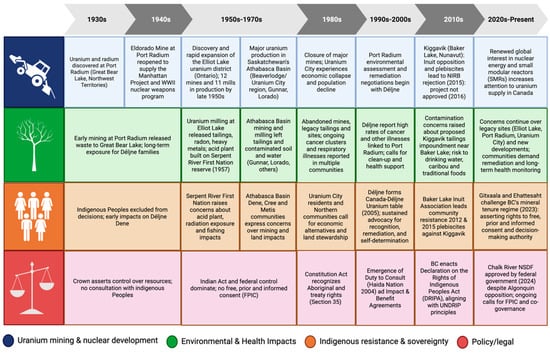
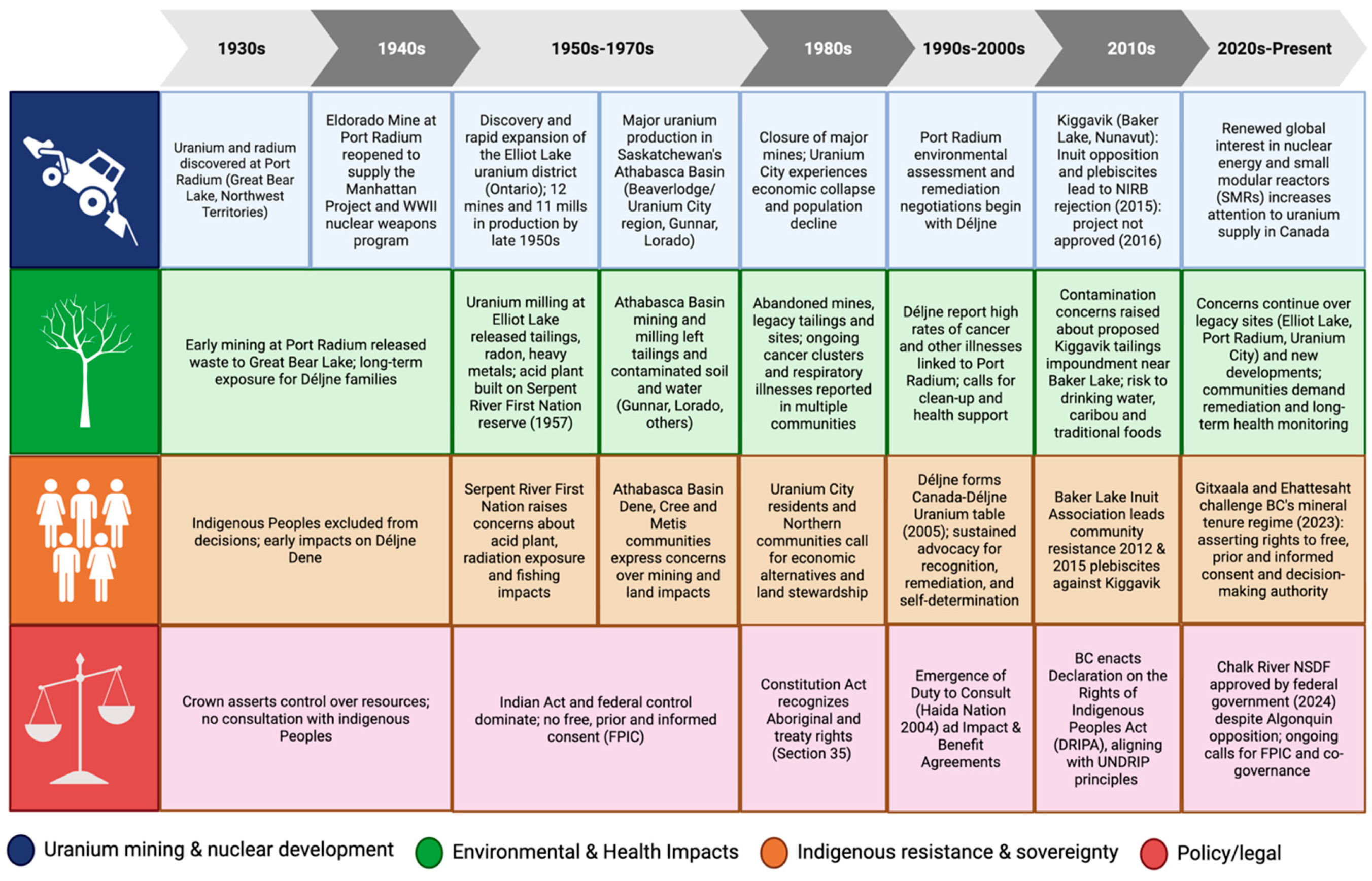
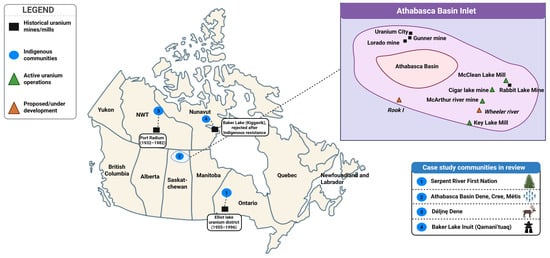
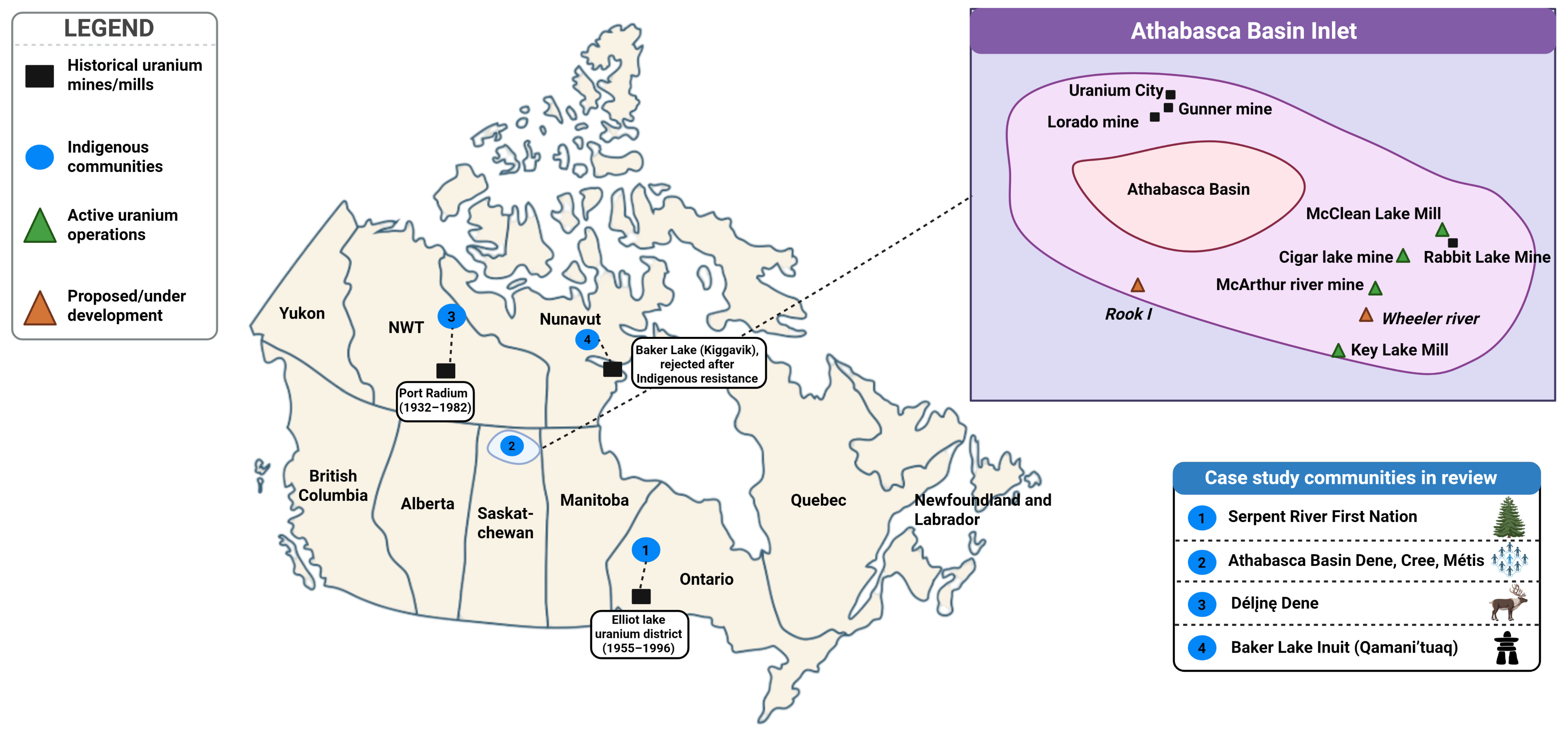

Disclaimer/Publisher’s Note: The statements, opinions and data contained in all publications are solely those of the individual author(s) and contributor(s) and not of MDPI and/or the editor(s). MDPI and/or the editor(s) disclaim responsibility for any injury to people or property resulting from any ideas, methods, instructions or products referred to in the content. |
© 2026 by the authors. Licensee MDPI, Basel, Switzerland. This article is an open access article distributed under the terms and conditions of the Creative Commons Attribution (CC BY) license.