




Journal Menu
► ▼ Journal Menu-
- Entropy Home
- Aims & Scope
- Editorial Board
- Reviewer Board
- Topical Advisory Panel
- Video Exhibition
- Instructions for Authors
- Special Issues
- Topics
- Sections & Collections
- Article Processing Charge
- Indexing & Archiving
- Editor’s Choice Articles
- Most Cited & Viewed
- Journal Statistics
- Journal History
- Journal Awards
- Society Collaborations
- Conferences
- Editorial Office
Journal Browser
► ▼ Journal Browser-
arrow_forward_ios
Forthcoming issue
arrow_forward_ios Current issue - Vol. 28 (2026)
- Vol. 27 (2025)
- Vol. 26 (2024)
- Vol. 25 (2023)
- Vol. 24 (2022)
- Vol. 23 (2021)
- Vol. 22 (2020)
- Vol. 21 (2019)
- Vol. 20 (2018)
- Vol. 19 (2017)
- Vol. 18 (2016)
- Vol. 17 (2015)
- Vol. 16 (2014)
- Vol. 15 (2013)
- Vol. 14 (2012)
- Vol. 13 (2011)
- Vol. 12 (2010)
- Vol. 11 (2009)
- Vol. 10 (2008)
- Vol. 9 (2007)
- Vol. 8 (2006)
- Vol. 7 (2005)
- Vol. 6 (2004)
- Vol. 5 (2003)
- Vol. 4 (2002)
- Vol. 3 (2001)
- Vol. 2 (2000)
- Vol. 1 (1999)
Need Help?
Announcements
22 January 2026
“Do Not Be Afraid of New Things”: Prof. Michele Parrinello on Scientific Curiosity and the Importance of Fundamental Research

In atomic and molecular simulation, researchers have long-needed efficient ways to predict material properties in order to focus on the most promising real laboratory tests instead of redundant work. Addressing this challenge, Prof. Michele Parrinello introduced two transformative methods that have redefined the field: the Car–Parrinello method, which serves as a “virtual lab” for studying reactions and electronic properties, and the Parrinello–Rahman method, a cornerstone for crystal phase transition studies. His work has reshaped the way that we study atomic systems, earning him the status of one of the most cited scholars in his field.
To honor his enduring legacy and continued impact, MDPI has established the Michele Parrinello Award. This award celebrates innovation and recognizes senior scientists who have made outstanding contributions to computational physical sciences, spanning the fields of physics, chemistry, and materials science.
We had the great honor of speaking with Prof. Parrinello in an exclusive interview, where he shared his perspectives on his current research focus, personal scientific experiences, support for basic research, and his advice for global researchers.
Access the full interview to hear his insights in this conversation.
5 June 2026
MDPI Canada | Summary of the MDPI Subject Workshop—Crossing Boundaries: Transdisciplinarity in the Humanities
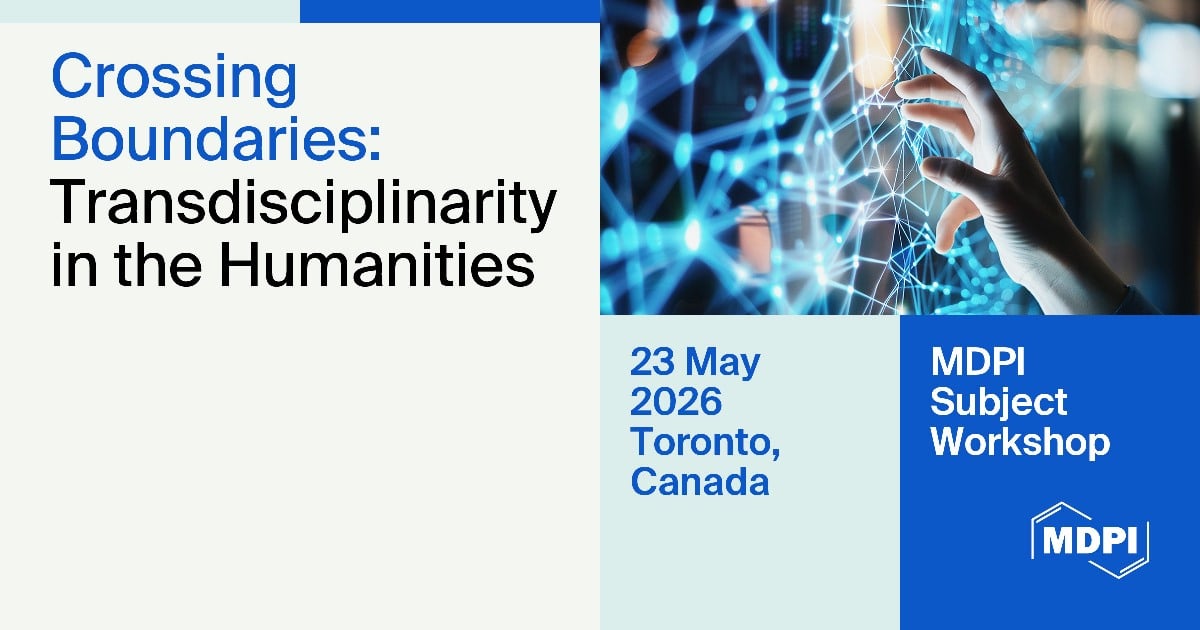
On 23 May 2026, MDPI Canada hosted their third North American subject workshop entitled “Crossing Boundaries: Transdisciplinarity in the Humanities”. This event brought together nearly 30 students and experts in the field of humanities to explore innovative, cross-disciplinary research shaping the future of the field. This meeting, held at the Sheraton Centre Toronto Hotel, located in downtown Toronto, provided a platform for in-depth scientific exchange.
Our workshop host, Summer Huggard, Operations Manager of MDPI Canada, opened the event with an introduction to our conference chair, Prof. Dr. Albrecht Classen of the University of Arizona. Prof. Dr. Classen welcomed our attendees to the event, outlining three subtopics of the workshop: AI and data in the humanities; environmental humanities; and humanities, literature, and identity. These topics emphasize the importance of interdisciplinary collaboration in addressing the direction of the humanities in our rapidly changing world. MDPI Canada’s Operating Director, Elvis Wang, then thanked all contributors and spoke about MDPI’s core principles of transparency, trusted service, integrity, and role in promoting excellence and advancing open science.
 |
 |
 |
The day’s presentations were full of exciting discussion as eleven speakers spoke about their research findings. These eleven presenters included Dr. Michael Bryson, Prof. Dr. Ahmed Elgammal, Prof. Dr. Avi Friedman, Prof. Dr. Nancy S. Steinhardt, Prof. Dr. Tom Roeper, Prof. Dr. Salikoko S. Mufwene, Dr. Lindsay Stern, Prof. Dr. Jeffrey R. Di Leo, Prof. Dr. Albrecht Classen, Dr. Ronald B. Brown, and Dr. Robert Brazeau.
The reports given covered many interesting topics, including the following: AI and data in the humanities; environmental humanities; and humanities, literature, and identity. The talks covered hot topics such as the state of the humanities with the growing prevalence of AI, architecture and urban planning as a tool to understand globalization and exercise habits, the critical role of literature studies in language development, and environmental and health studies.
 |
 |
 |
 |
 |
 |
 |
 |
 |
 |
 |
 |
 |
The second half of the day began with presentations covering the value of the humanities from a philosophical lens, literature and health study to analyze environmental protection, and concluded with an in-depth analysis of the new interconnected approach to human health studies post-pandemic.Dr. Barnaby Crook, Regional Engagement Editor at MDPI, introduced MDPI, market dynamics, and discussed relevant publishing trends in the humanities field. His presentation allowed audience members to gain greater insight into how MDPI’s journals can support researchers whose work falls within this subject and provided transparency regarding MDPI’s practices.
 |
 |
During the day’s proceedings, multiple Q&A sessions were held, allowing valuable engagement between speakers and attendees to occur. During these discussions, attendees could further develop conversations around addressing the influence of culture on human health, the effect of politics on environmental care, the benefits of open access publishing, and more. These sessions were a highlight of the event and helped build a platform for meaningful scientific exchange.
 |
 |
 |
 |
Looking Ahead
The MDPI 2026 Toronto Subject Workshop Crossing Boundaries: Transdisciplinarity in the Humanities was a successful collaboration between MDPI and local academics. We are thankful to all attendees for their part in making this event possible and for contributing to its success.
 |
 |
We have received positive feedback regarding this event and look forward to continuing to host these subject workshops, with the next being the Montreal Subject Workshop “Microelectronics, Microsystems, Sensors, and Their Applications” in September. For more updates regarding this event and other upcoming workshops, follow MDPI Canada on LinkedIn and Facebook.
4 June 2026
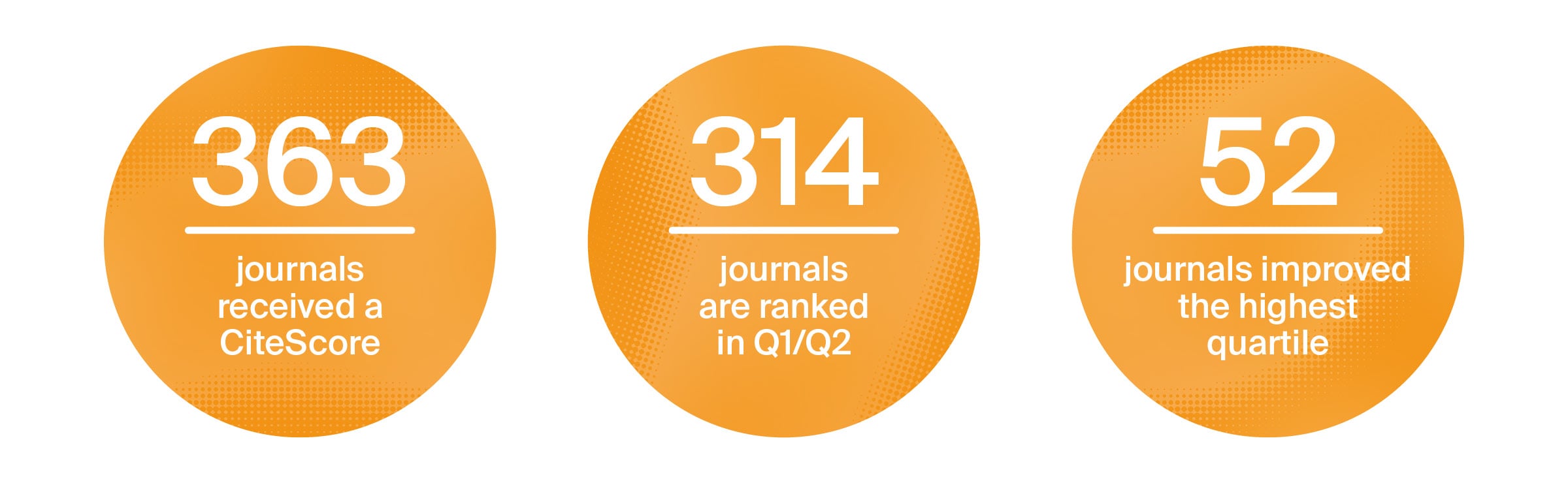
Open Access, Broadly Recognized: 363 MDPI Journals Receive CiteScores for 2025
The 2025 CiteScore metrics have been officially released by Scopus, and the results confirm what has become a consistent pattern for MDPI's journal portfolio: broad recognition across disciplines, steady improvement across the majority of ranked titles, and a growing presence at the top of subject category rankings.
CiteScore, published annually by Elsevier's Scopus database, measures the average citations received by articles published in a journal over a four-year window. As a complement to the Journal Impact Factor, which uses a two-year window based on the Web of Science database, CiteScore provides an alternative, long-term perspective on citation performance.
The 365 MDPI journals in Scopus (as of May 2026) are indexed across a wide range of subject categories, ensuring that open access research remains highly discoverable to a global readership through one of the most widely used platforms in academic publishing.
Data Summary (2025 CiteScores)
- New Additions: 41 MDPI journals received a CiteScore for the first time.
- Trending Upward: 234 of 322 previously ranked journals (73%) saw an increase in their CiteScore compared to last year.
- High Visibility: 314 journals (86%) rank in Q1 or Q2 in at least one subject category.
- Elite Performance: 42 journals rank in the top 10% of their subject categories.
Portfolio Performance
Among the 322 journals that held a CiteScore in 2024, 234 saw an increase this year. Quartile improvements outnumbered declines across the portfolio, with 52 journals moving to a higher quartile and only 20 seeing a decline. Furthermore, no previously ranked journals were removed. The 42 journals now ranked in the top 10% of their subject categories are drawn from a strong foundation of 178 journals holding a Q1 position.
With the large majority of our indexed portfolio ranked in the top half of research fields, researchers can confidently choose MDPI to meet funder mandates for high-quality, fully compliant Open Access publishing.
Exceptional Achievements for Foods and Life
Notably, both Foods and Life achieved a 99th percentile ranking in their respective subject categories for the 2025 CiteScores. This outstanding placement positions them as leading journals in their fields and highlights the high visibility and global impact of the open access research they publish.
Journal Metrics and Beyond
Journal-level metrics describe outlets, not individual articles. An increasing number of funders and institutions—including signatories of DORA and the Coalition for Advancing Research Assessment—now explicitly encourage evaluation at the article level rather than by the journal in which research appears. MDPI supports this direction: we report CiteScore alongside the Journal Impact Factor, Journal Citation Indicator, and article-level usage data because no single number captures the full reach and contribution of published research.
Thank You
These results reflect the sustained effort of thousands of editors-in-chief, editorial board members, reviewers, and authors across every field MDPI serves. The metrics are the outcome; the work is yours.
3 June 2026
Interview with Prof. Augusto Smerzi—Plenary Speaker of the 1st International Conference on Modern Mathematical Physics (ICMMP 2026), 30 October–3 November 2026, Hangzhou, China
Quantum metrology has long promised measurement precision beyond classical limits. Yet as quantum technologies move closer to real-world applications, a deeper question emerges: what kind of entanglement is actually useful?
Few researchers have shaped this field more profoundly than Prof. Augusto Smerzi, whose pioneering work on quantum phase estimation and quantum Fisher information has helped define the modern foundations of quantum-enhanced sensing.
As a plenary speaker at the 1st International Conference on Modern Mathematical Physics (ICMMP 2026), to be held in Hangzhou, China, from 30 October to 3 November 2026, Prof. Augusto Smerzi will join leading researchers from across quantum information, field theory, AMO physics, and mathematical physics for discussions on the future of modern theoretical physics.
Ahead of the conference, we invited Prof. Smerzi to share his perspectives on quantum metrology, the challenges facing young researchers, and why scientific understanding matters more than publication itself.
Speaker introduction:
|
|
Prof. Augusto Smerzi is Chair Professor at Shenzhen Technology University (SZTU) and recipient of the CJJX Distinguished Talent Award. He works on quantum metrology, entanglement theory, and the foundations of quantum parameter estimation. He has made pioneering contributions to the quantum theory of phase estimation and to the use of Fisher information as a quantitative tool for multipartite entanglement and ultimate precision bounds. His research spans nonlinear and distributed interferometry, quantum sensing networks, and the dynamics of coherent matter waves. |

Session 3. Quantum Information and Quantum Metrology
Presentation title: “Unveiling Useful Entanglement: Quantum Advantage in Sensing and Metrology”
1. You have helped bring the theoretical limits of quantum sensing — from the standard quantum limit to the Heisenberg bound — into experimental practice. What is the next major milestone for quantum metrology that you believe will arrive in the next five years?
I think the next milestone is to move from beautiful demonstrations to useful quantum sensors. We already know that entanglement can improve sensitivity in principle. The hard question is whether this advantage survives in real conditions: noise, losses, finite time, imperfect control, and limited information.
In the next five years I expect important progress in quantum-enhanced clocks, sensing applied to bio-physical and health monitoring sensors, and distributed sensor networks.
For me, the real success will be when quantum metrology will evolve from the theoretical quantum information framework to become a practical way to design better sensors.
2. Since joining Shenzhen Technology University, you have mentored and collaborated with young Chinese researchers. What impressions have they left on you, and what advice would you give to those who wish to pursue a career in quantum science?
My impression is very positive. I have met young Chinese researchers who are extremely motivated, technically strong, and willing to work very hard. They are also very aware that quantum science is not only an academic subject, but a frontier technology with real strategic importance.
My advice I give to all my students, regardless of whether they are Chinese or not, is to build a deep foundation. One needs a solid understanding of quantum mechanics, many-body physics, and experimental reality.
My second advice is: do not confuse publication with understanding. Publications are important, of course. They are how we communicate results. But the deepest result of science is not the paper itself. It is a clearer understanding of something that was not clear before. A good paper should be the natural consequence of this understanding. So, I would tell young researchers: do not start only from the question “Where can I publish this?”, start with the question “What is the real problem, and what can I understand that others have not yet understood?”
I would also emphasize communication. Science is not only doing good work; it also explains why the work matters. Young researchers should learn to write clearly, give clear talks, and become comfortable communicating in presence of large audiences. This is not a secondary skill. It is part of becoming an independent scientist.
Finally, I would encourage young scientists to be ambitious, but not only in the conventional way. Do not be afraid to explore directions where few people are going. Many important discoveries begin as strange questions. Curiosity, courage, and patience are still essential in science.
3. In your experience, what role do international conferences play in fostering collaborations that lead to real scientific breakthroughs?
International conferences are very important because science is not made only by papers. Papers communicate results, but conferences create trust, intuition, and sometimes friendship. Very often, a real collaboration starts from a simple conversation after a talk or during a coffee break.
For me, the best conferences are not only places where people present finished work. They are places where new questions are born. Sometimes the most important outcome of a conference is not a result, but a new direction.
4. Your plenary talk at ICMMP 2026 in Hangzhou is titled “Unveiling Useful Entanglement”. What do you hope the audience will take away from your talk?
The main message is simple: not all entanglement is equally useful. Entanglement is one of the most beautiful and mysterious features of quantum mechanics, but for quantum technologies we must ask a further operational question: what can this entanglement do?
In quantum metrology, useful entanglement is entanglement that helps us distinguish physical signals better. It allows a sensor to extract more information from the same system, or to reach a precision that would be impossible with separable states.
In my talk I will discuss how this usefulness can be identified and measured, especially through quantities such as the quantum Fisher information. I hope the audience will take away the idea that entanglement is not only an abstract mathematical property. It becomes truly meaningful when it gives us a new capability.
5. What is your one-sentence wish for this first International Conference on Modern Mathematical Physics?
My wish is that this conference becomes a place where deep mathematical ideas, physical intuition, and scientific curiosity meet, and where young researchers feel encouraged to explore questions that are not yet on the standard map.
Meet Prof. Augusto Smerzi at ICMMP 2026
Join us in Hangzhou this October to explore the latest developments in quantum metrology, entanglement theory, and modern mathematical physics together with leading researchers from around the world.
Conference location: Hangzhou, China
Conference date: 30 October–3 November 2026
Submit your work by 10 July 2026: https://sciforum.net/user/submission/create/1507.
Register now for early bird prices: https://sciforum.net/event/ICMMP2026?section=#registration.
Conference website: https://sciforum.net/event/ICMMP2026.
For any inquiries, please contact us at icmmp2026@mdpi.com.
1 June 2026
MDPI INSIGHTS: The CEO’s Letter #35 – 30 Years of Open Science, Open Access Policies, Spain Summit, MMCS 2026 & Antibiotics 2026

Welcome to the MDPI Insights: The CEO's Letter.
In these monthly letters, I will showcase two key aspects of our work at MDPI: our commitment to empowering researchers and our determination to facilitating open scientific exchange.
Opening Thoughts

30 Years of Open Science, Built Together
This month, we officially launched MDPI’s 30th Anniversary campaign and dedicated anniversary website, marking an important milestone in our journey as an open access publisher. What began in 1996 with a single journal and the simple belief that scientific knowledge should be shared openly and freely has grown into a global publishing organization supporting more than 500 journals, 68,000 Editorial Board Members, and millions of researchers worldwide.
The anniversary page, entitled 30 Years of Open Science, Built Together, reflects on the people, milestones, and partnerships that have shaped MDPI over the past three decades. It includes a retrospective of our development, key moments in the evolution of open access, landmark research articles, journal anniversaries, an interview with the CEO, and perspectives from colleagues and partners who have contributed to our success.

Looking back, one of the most striking aspects of our journey is not simply our growth, but the broader transformation of scholarly publishing itself.
Open access has moved from a niche concept to a widely adopted publishing model, helping make research more accessible, discoverable, and impactful for researchers, institutions, policymakers, and society.
MDPI has been part of this transition and continues to invest in the people, technology, partnerships, and research integrity infrastructure needed to support high-quality open science at scale.
While anniversaries naturally encourage reflection, they are also an opportunity to look ahead. The challenges facing scholarly publishing today, including research integrity, artificial intelligence, accessibility, and global participation in science, will require continued collaboration across the research ecosystem. As we celebrate 30 years of publishing, our focus remains on supporting researchers, strengthening trust in open science, and helping shape the future of scholarly communication together.
I encourage you to visit the anniversary page, explore the milestones, and take a moment to reflect on the role each of us has played in contributing to MDPI’s story.
Thank you for being part of this journey.
Impactful Research

Highlights from MMCS 2026 in Beijing (14-17 May)
From 14–17 May, MDPI hosted The 5th Molecules Medicinal Chemistry Symposium (MMCS 2026) in Beijing, China, bringing together academia and industry to explore advances in chemical biology, medicinal chemistry, and drug discovery.
The conference hosted more than 230 attendees from 37 countries and regions, alongside 257 submissions and 145 accepted abstracts. With a significant increase in attendance – up by 100 participants compared with the previous edition – the popularity of MMCS continues to grow in terms of its international profile and scientific relevance within this rapidly evolving field.

The scientific program covered seven themes:
- Chemical Biology for Drug Discovery
- Medicinal Chemistry Research Progress
- Natural Products in Drug Discovery
- AI-enabled Drug Discovery
- GPCR & Ion Channel Targeted Drug Development
- Innovative Proximity-Based Drug Modalities
- Biocatalysis for Natural Product & Drug Synthesis
The event featured three plenary speakers, 14 keynote speakers, 35 selected oral presentations, and 98 poster presentations, creating opportunities for open scientific exchange and collaboration. Conference Chair Prof. Dr. Diego Muñoz-Torrero described this edition as one of the most successful MMCS events to date.
|
|
|


Thanks to our Sponsors
MMCS 2026 secured sponsorship support from 12 industrial partners, 11 of which set up on-site exhibition booths. Covering biopharmaceutical R&D, life science supplies, pharmaceutical experimental instruments, and industrial service sectors, exhibitors were able to connect their businesses directly with attendees and make connections at the conference.

30th Anniversary Celebration of Molecules
During the conference, we also celebrated the 30th anniversary of Molecules, one of MDPI’s flagship journals. The celebration brought together Section Editors-in-Chief, Editorial Board Members, MDPI leadership, and editorial colleagues to reflect on the journal’s development, achievements, and continued future growth.

Events such as MMCS 2026 highlight the important role conferences play in creating scientific exchange and collaboration, and in connecting our research communities in person.
They also reflect the continued development of MDPI’s conference portfolio and our commitment to supporting academic engagement beyond publishing alone. Thanks to everyone involved in organizing and contributing to the success of this event.
Inside MDPI

Open Access Policies Continue to Accelerate Globally
One of the clearest indicators of the continued momentum behind open access is the growing number of national and institutional policies supporting, and increasingly requiring, open dissemination of research.
Around the world, governments, funding agencies, and universities are building their open access mandates, with increasing focus on transparency, rights retention, and public accessibility of publicly funded research. While these policies vary across regions, the broader direction is clear: expectations around openness and compliance continue to accelerate.
For researchers, navigating these evolving requirements can be complex and time-consuming. Supporting the research community therefore means not only publishing high-quality open access content but also helping stakeholders better understand changing requirements and emerging opportunities. At MDPI, we see this as an important part of our role within scholarly communication.
“Expectations around openness and compliance continue to accelerate”
Through the MDPI Blog, our Content team continues to publish monthly articles overviewing different countries’ relationships with open access, exploring their histories, policies, opportunities, and statistics. All this information is centralized into an article which contains brief summaries of each country, with links to all the full articles, and is updated monthly.
Recent Policy Developments
South Africa
In 2026, South Africa’s Department of Science and Innovation introduced the South African Open Science Policy. The policy states that: “Open access shall be required for publications arising from publicly funded research, and desirable for research from all sources of funding.”
The policy envisions a coordinated and broad approach to open science that will sustainably and ethically drive socio-economic development by increasing the practice of open science through policy, training, incentivization, and infrastructure.
Canada
In Canada, the Tri-Agency OA Policy on Publications was revised, removing the 12-month embargo for research that must be deposited in a repository with an open license and with author rights retained.
The Agencies argue that “societal advancement is made possible through widespread and barrier-free access to cutting-edge research and knowledge.”
Chile
Chile is a collaborative and engaged member of the global open access movement.
The National Research and Development Agency (Agencia Nacional de Investigación y Desarrollo, or ANID) is Chile’s main funding agency for R&D. It mandates that all beneficiaries must deposit the final version of their published scientific output, with an embargo period of up to 12 months, into a repository.
ANID also supports the InES Open Science funding program, which allows universities to request funding for capacity and infrastructure building. Further, Chile is an active participant in various international initiatives, such as Redalyc, SciELO, and Red de Repositorios Latinoamericanos.
Openness Beyond Research
At MDPI, openness remains one of our core values, ensuring that research outputs are freely accessible to anyone. This commitment also extends to sharing knowledge about the scholarly publishing landscape itself, which we practice on the MDPI Blog through various topics, including open access, recent advances in science, and opportunities for researchers.
As the open access landscape continues to evolve, helping researchers, institutions, editors, and partners navigate these changes will remain an important priority for us.

Thank You
I would like to thank Jack McKenna (Senior Content Specialist, MDPI) from our Content team for his ongoing work on the MDPI Blog series covering global open access policy developments. Initiatives such as this help make complex policy discussions more accessible and useful to the wider research community.
Coming Together for Science

Reflections from the MDPI Spain Summit 2026 in Valencia (21 May)

On 21 May, we hosted the MDPI Spain Summit 2026 in Valencia.
The Summit brought together 30 Editorial Board Members and MDPI colleagues for a discussions on the future of publishing, research integrity, peer review, artificial intelligence, and the evolving research landscape in Spain.
We hosted participants from leading Spanish institutions and spoke on the importance of Spain as a major contributor to global open access (OA) research. In 2025 alone, Spain ranked among the leading countries worldwide for OA publishing, with more than 85% of publications made openly accessible. MDPI also continues to play a significant role within the Spanish research ecosystem.
MDPI in Spain
Spain remains one of MDPI's most important academic markets and a leading contributor to OA research globally. Ever since our Barcelona office opened in 2016 (Happy 10th Anniversary!), MDPI Spain has been actively supporting researchers, institutions, societies, and academic partners across the country. Today, the office plays an important role in creating engagement with the Spanish scholarly community through editorial support, partnerships, conferences, training initiatives, and outreach activities.
A cluster of high-level indicators highlight both the strength of the local research ecosystem and MDPI’s role within it:
- 43,218 total publications in Spain in 2025, of which 35,728 (83%) were open access (49% Gold OA).
- 211,200+ total publications (2021–2025), with 84% published open access.
- 13,444 MDPI publications from Spanish institutions in 2025, representing 14% of all open access publications in Spain.
- More than115,100 MDPI publications from Spanish institutions since 1996.
- More than 4,500 Editorial Board Members from Spain, including more than 150 Chief Editors and 57 Associate Editors.
- 42 institutional partners participating in MDPI’s Institutional Open Access Program (IOAP).
- Spain ranks second globally for MDPI society affiliations, with 26 affiliated society agreements currently in place.
Program Overview
What made this summit special was the openness of the discussions around the research landscape in Spain and the role MDPI plays within the market. General topics of the presentations included:
- MDPI Introduction – Stefan Tochev (CEO).
- Engagement with the Academic Community – Dr. Marta Colomer (External Affairs Lead).
- Latest Developments in the Editorial Process – Dr. Jordi Martinez (Deputy Managing Editor).
- Research integrity and Publication Ethics – Slavomir Nikodijevic (Research Integrity Specialist).
- A 360 View of Academic Publishing – Prof. Dr. Luis Angel Ruiz Fernandez (EBM of Remote Sensing).
|
|
|
|
|
|
|
|


Panel Discussion
We also hosted a panel discussion moderated by Marta, entitled “The Future of Academic Publishing” with Prof. Luis Ruiz, Prof. Marta Feliz (EBM of the journal Catalysts), Dr. Enric Sayas (Product Owner, AI & Technology Innovation), and myself. The discussion looked at the evolving role of editors, the future of peer review, and the growing importance of maintaining trust, ethics, and research integrity in an era increasingly influenced by artificial intelligence.
|
|
|
|


Themes from the Summit
Several themes emerged throughout the discussions, reflecting broader conversations taking place across publishing:
- The academic community values efficient publishing workflows, but expectations around scientific quality and editorial rigor continue to rise.
- Reviewer fatigue and long-term sustainability of peer review remain major challenges across the industry.
- AI is rapidly changing scholarly communication and requires transparent and responsible governance.
- Reputation and trust continue to depend on long-term engagement, transparency, and quality-focused decision-making.
“Maintaining an open dialogue with researchers, editors, reviewers, and institutions remains a priority for MDPI”
It was constructive to see the willingness of participants to engage directly and candidly with us. These conversations provide insights that help inform how we continue to develop our editorial processes, engagement activities, and support for the research community. While certain discussions included concerns, there was also recognition that open dialogue between publishers and the research community is essential if we want to improve scholarly communication together.
|
|
|
|


Events such as this are increasingly important for MDPI. They allow us to present our perspective, to listen to the experiences, expectations, and concerns of editors, reviewers, and researchers, and to address these accordingly.
Thank You
Thank you to our Barcelona Office and all colleagues involved in organizing the summit, as well as all participants for contributing to these thoughtful and constructive discussions.
|
|
|
|
|
|
|
|


As publishing continues to evolve, maintaining an open dialogue with researchers, editors, reviewers, and institutions remains an important priority for MDPI. Events such as the Spain Summit play an important role in helping us to build relationships, foster trust, and better understand the needs of our community.
Closing Thoughts

Highlights from Antibiotics 2026 in Barcelona (11–14 May)
This week, MDPI hosted the Antibiotics 2026 — Advances in Antimicrobial Action and Resistance conference in Barcelona, bringing together academics and industry experts to discuss one of the most important scientific and public health challenges of our time: antimicrobial resistance.
The conference welcomed 145 attendees from 42 different countries and territories, alongside 265 submissions and 127 accepted abstracts, showing the international reach of the event and the strong scientific interest in this rapidly evolving field.

Scientific Exchange on a Global Challenge
Antimicrobial resistance continues to be a global concern, creating collaboration across disciplines, institutions, and regions. The conference program focused on a range of topics including:
- Antimicrobial resistance mechanisms
- One Health approaches to antimicrobial stewardship
- Discovery of novel antimicrobial agents
- Innovation in clinical strategies and treatment approaches
- Ethnopharmacology and emerging therapies
Through keynote plenaries, invited lectures, oral presentations, and poster sessions, the conference created a platform for dialogue and scientific exchange.
|
|
|


International Participation and Collaboration
One of the highlights of the event was the diversity of participation across both geography and expertise. Researchers and speakers from Europe, North America, Asia, Africa, Australia, and Latin America took part in discussions throughout the conference, highlighting the global nature of both the challenge and the scientific response.
The scientific program included:
- 2 keynote speakers
- 10 invited speakers
- 36 selected talks
- 78 posters
The conference brought together perspectives from academia, healthcare, and industry, helping facilitate interdisciplinary collaboration around future approaches to antimicrobial research and resistance management.
|
|
|
|


The Role of Conferences in Scholarly Communication
Conferences are an important platform for collaboration, scientific exchange, and community-building. Events such as Antibiotics 2026 show the value of bringing researchers together in person to discuss emerging challenges, share new findings, and strengthen international networks across disciplines and regions.

Thank You
I would like to thank the conference chairs, speakers, participants, sponsors, and the entire MDPI conference team for their work in making this event a success. The engagement and positive feedback from attendees highlight the importance of our events in addressing some of the most pressing scientific challenges facing society today.

Chief Executive Officer
MDPI AG
28 May 2026
Entropy Webinar | Information-Theoretic Perspectives of Integrated Sensing and Communication, 15 June 2026

It is our great pleasure to invite you to the webinar “Information-Theoretic Perspectives of Integrated Sensing and Communication”.
This webinar aims to bring together researchers and experts to discuss recent advances in integrated sensing and communication (ISAC) systems. This session is a platform for the sharing of insights on fundamental limits, AI-enabled methodologies, and emerging system design strategies for future wireless networks.
By connecting information theory, estimation theory, and statistical learning, the webinar aims to foster scientific exchange and encourage discussions on efficient, scalable, and robust ISAC architectures.
We hope that this webinar will stimulate insightful discussions and inspire future collaborations.
Date: 15 June 2026
Time: 9:00 a.m. EDT | 3:00 p.m. CEST | 9:00 p.m. CST Asia
Webinar ID: 817 2433 0634
Website: https://sciforum.net/event/Entropy-5
Register for free now!

Program:
|
Speaker/Presentation |
Time in EDT |
Time in CEST |
|
Prof. Jun Chen |
9:00–9:10 a.m. |
3:00–3:10 p.m. |
|
Prof. Fan Liu |
9:10–9:30 a.m. |
3:10–3:30 p.m. |
|
Prof. Kai Wan |
9:30–9:50 a.m. |
3:30–3:50 p.m. |
|
Prof. Michele Wigger |
9:50–10:10 a.m. |
3:50–4:10 p.m. |
|
Prof. Hamdi Joudeh |
10:10–10:30 a.m. |
4:10–4:30 p.m. |
|
Q&A Session |
10:30–10:45 a.m. |
4:30–4:45 p.m. |
|
Prof. Jun Chen |
10:45–10:50 a.m. |
4:45–4:50 p.m. |
After registering, you will receive a confirmation email with instructions to join the webinar. Registrations with academic institutional email addresses will be prioritized.
Unable to attend? Register anyway, and we will let you know when the recording is available for viewing.
Webinar Chair and Keynote Speakers:
- Prof. Jun Chen, Department of Electrical and Computer Engineering, McMaster University, Hamilton, Canada;
- Prof. Fan Liu, National Mobile Communications Research Laboratory, School of Information Science and Engineering, Southeast University, China;
- Prof. Kai Wan, School of Electronic Information and Communications, Huazhong University of Science and Technology, China;
- Prof. Michele Wigger, L2S, CentraleSupélec, Université Paris-Saclay, France;
- Prof. Hamdi Joudeh, Department of Electrical Engineering, Eindhoven University of Technology, the Netherlands.
25 May 2026
Meet Us at the 5th CCF Quantum Computing Conference, 2–5 August 2026, Shenzhen, China
Conference: The 5th CCF Quantum Computing Conference
Organization: China Computer Federation
Date: 2–5 August 2026
Place: Shenzhen, China
MDPI journals will participate in the 5th CCF Quantum Computing Conference as an exhibitor. The conference will take place in Shenzhen, China, from 2 to 5 August 2026.
The following MDPI journals will be represented at the symposium:
- Entropy;
- Quantum Reports;
- Information;
- BDCC;
- Physics;
- AI;
- AppliedMath;
- Foundations;
- Algorithms;
- Computers;
- Cryptography.
If you are planning to attend this conference, please feel free to start a conversation with us. Our delegates look forward to meeting you in person and answering any questions you may have.
For more information about the conference, please visit https://ccf.org.cn/CQCC2026.
22 May 2026
Entropy Webinar | Information Theory and Data Compression, 27 May 2026

Data compression has long been an intersection point for information theory, algorithms, and practical systems. This seminar explores several emerging directions in compression, spanning information theoretic limits, schemes implementable under computational constraints, and the rapidly evolving field of learned compression. In the first talk, the foundational Kraft inequality is revisited through the lens of finite-state encoders, developing generalized forms that shed light on the structural constraints imposed by finite-memory coding systems. The second talk examines how neural compression can serve not only as a tool for compact representation, but also as a framework for information-theoretically-sound inference and denoising under model uncertainty. The final talk surveys the state of learned compression, tracing landmark developments over the past decade, highlighting real-world deployments, and identifying the barriers left to overcome before learned compressors can be deployed at scale.
Date: 27 May 2026 at 7:00 p.m. CEST | 1:00 p.m. EDT
Webinar webpage: https://sciforum.net/event/Entropy-6?subscribe
Register now for free!

Program:
| Speaker | Presentation Title | Time in CEST | Time in EDT |
| Prof. Dr. Tsachy Weissman | Chair Introduction | 7:00–7:10 p.m. | 1:00–1:10 p.m. |
| Prof. Neri Merhav | Generalized Forms of the Kraft Inequality for Finite-State Encoders | 7:10–7:30 p.m. | 1:10–1:30 p.m. |
| Prof. Dr. Shirin Jalali | Neural Compression for Information Theoretic Inference | 7:30–7:50 p.m. | 1:30–1:50 p.m. |
| Dr. Kedar Tatwawadi | State of Learned Compression: Past, Present & Future | 7:50–8:10 p.m. | 1:50–2:10 p.m. |
| Q&A Session | 8:10–8:25 p.m. | 2:10–2:25 p.m. | |
| Prof. Dr. Tsachy Weissman | Closing of Webinar | 8:25–8:30 p.m. | 2:25–2:30 p.m. |
After registering, you will receive a confirmation email containing information on how to join the workshop. Registrations with academic institutional email addresses will be prioritized.
Unable to attend? Register and we will let you know when the recording is available to watch.
Webinar Chair and Keynote Speakers:
- Prof. Dr. Tsachy Weissman, Department of Electrical Engineering, Stanford University, USA;
- Prof. Neri Merhav, The Viterbi Faculty of ECE, Technion – Israel Institute of Technology, Israel;
- Prof. Dr. Shirin Jalali, Electrical and Computer Engineering, Rutgers University, USA
- Dr. Kedar Tatwawadi, Apple Inc., USA.
Relevant Special Issue:
“Information Theory and Data Compression”
Guest Editor: Prof. Dr. Tsachy Weissman
Deadline for manuscript submissions: 15 December 2026
22 May 2026
Meet Us at Entropy 2026: Exploring Complexity and Information in Science, 1–3 July 2026, Barcelona, Spain

Date: 1–3 July 2026
Place: Barcelona, Spain
Website: https://sciforum.net/event/Entropy2026
We are pleased to announce that Entropy 2026: Exploring Complexity and Information in Science will be held in Barcelona, Spain, from 1 to 3 July 2026.
Organized by MDPI’s open access journal Entropy (ISSN: 1099-4300; IF: 2.0), this international conference will bring together researchers and practitioners working across complex systems, information theory, artificial intelligence, statistical physics, quantum information, thermodynamics, and related interdisciplinary fields. We are delighted to see strong academic engagement, with submissions from institutions such as the University of Cambridge, Princeton University, and Eindhoven University of Technology.
Join an inspiring international community, attend high-level scientific presentations, and engage with the latest advances at the forefront of research in complexity and information science.
Conference Chairs:
- Prof. Dr. Miguel Rubi, University of Barcelona;
- Prof. Dr. Kevin H. Knuth, University at Albany.
Keynote Speakers:
- Prof. Dr. Ariel Caticha, University at Albany;
- Prof. Dr. Bernardo Spagnolo, University of Palermo;
- Prof. Dr. David Reguera, Universitat de Barcelona;
- Prof. Dr. Eli Barkai, Bar-Ilan University;
- Prof. Dr. Ginestra Bianconi, Queen Mary University of London;
- Prof. Dr. Hong Qian, Westlake University;
- Prof. Dr. José Fernando F. Mendes, University of Aveiro;
- Prof. Dr. Jose M.G. Vilar, University of the Basque Country;
- Prof. Dr. Juan F. Pedraza, UAM/CSIC;
- Prof. Dr. Karl Heinz Hoffmann, Technical University Chemnitz;
- Prof. Dr. Kevin H. Knuth, University at Albany;
- Prof. Dr. Marta Sales Pardo, University of Rovira i Virgili;
- Prof. Dr. M. Ángeles Serrano, ICREA and University of Barcelona;
- Prof. Dr. Olivier Rioul, Institut Polytechnique de Paris;
- Dr. Péter Ván, Wigner Research Centre for Physics;
- Prof. Dr. Ralf Metzler, University of Potsdam;
- Prof. Dr. Signe Kjelstrup, Norwegian University of Science and Technology;
- Prof. Dr. Stefano Mancini, University of Camerino and INFN Sezione di Perugia;
- Prof. Dr. Syed Ejaz Ahmed, Brock University.
Topics of Interest:
S1. Complex Systems and Network Science;
S2. Information Theory, Data Science, and Artificial Intelligence;
S3. Quantum Information and Quantum Computing;
S4. Thermodynamics and Energy Systems;
S5. Non-Equilibrium Systems and Entropy Production;
S6. Statistical Physics and Stochastic Processes;
S7. Soft and Living Matter;
S8. Applications of Entropy in Science and Engineering.
The Program Overview has been published. We encourage participants to review the schedule and plan their attendance in advance: https://sciforum.net/event/Entropy2026?section=#ProgamOverview.
Secure your participation by completing your registration before 15 June 2026: https://sciforum.net/event/Entropy2026?section=#registration.
The Late-Breaking Poster Submission is still open. We welcome additional contributions and invite you to take advantage of this opportunity to present your work during the poster sessions: https://sciforum.net/user/submission/create/1433.
For any enquiries regarding the event, please contact entropy2026@mdpi.com.
We look forward to welcoming you to Entropy 2026 in Barcelona and to an engaging and stimulating scientific exchange.
15 May 2026
Meet Us at the 71st Summer School for Young Researchers in Condensed Matter Physics (CMPSS 2026), 17–21 August 2026, Kumamoto, Japan

MDPI will attend the 71st Summer School for Young Researchers in Condensed Matter Physics (CMPSS 2026), which will take place from 17–21 August 2026 (Booth time: 19–20 August), Kumamoto, Japan. It will be held at Aso Plaza Hotel and organized by Young Researchers in Condensed Matter Physics.
This conference focuses on advancing education, academic exchange, and network building for the next generation of researchers in condensed matter physics. As one of Japan’s major summer schools, covering a broad range of rapidly developing areas in condensed matter science, it provides a platform for graduate students, early career scientists, and young professionals to learn from leading researchers, present their own work, and exchange ideas across different specialties.
The program covers both fundamental and advanced topics in condensed matter physics, including theoretical and experimental approaches, emerging research themes, and the connection between basic science and cutting-edge applications. Through lectures, intensive seminars, oral and poster presentations, group discussions, and networking activities, the summer school aims to broaden participants’ academic perspectives, encourage interdisciplinary collaboration, and support the development of future researchers in the field.
The following MDPI journals will be represented:
- Condensed Matter;
- Crystals;
- Magnetochemistry;
- Atoms;
- QuBS;
- Quantum Reports;
- Magnetism;
- Physics;
- Entropy.
If you plan to attend this event, we encourage you to visit our booth and speak to our representatives. We are eager to meet you in person and assist you with any queries that you may have.
For more information about the conference, please visit the official website.
