
Journal Description
Cosmetics
Cosmetics
is an international, scientific, peer-reviewed, open access journal on the science and technology of cosmetics published bimonthly online by MDPI.
- Open Access— free for readers, with article processing charges (APC) paid by authors or their institutions.
- High Visibility: indexed within Scopus, ESCI (Web of Science), CAPlus / SciFinder, and other databases.
- Journal Rank: JCR - Q1 (Dermatology) / CiteScore - Q1 (Surgery)
- Rapid Publication: manuscripts are peer-reviewed and a first decision is provided to authors approximately 20.1 days after submission; acceptance to publication is undertaken in 4.7 days (median values for papers published in this journal in the second half of 2025).
- Recognition of Reviewers: reviewers who provide timely, thorough peer-review reports receive vouchers entitling them to a discount on the APC of their next publication in any MDPI journal, in appreciation of the work done.
Impact Factor:
3.2 (2024);
5-Year Impact Factor:
3.9 (2024)
Latest Articles
Novel Vegan Exosome-like Biomimetic Vesicles for Skin and Hair Follicle Protection and Rejuvenation: Structural and Functional Characterization and Placebo-Controlled Clinical Efficacy Studies
Cosmetics 2026, 13(3), 120; https://doi.org/10.3390/cosmetics13030120 - 13 May 2026
Abstract
Exosomes are revolutionizing skincare as natural messengers for cell communication, yet their transition into cosmetics is often limited by the ethical and regulatory hurdles of their animal or human sourcing. This study describes the development and validation of vegan exosome-like biomimetic vesicles (EBVs)
[...] Read more.
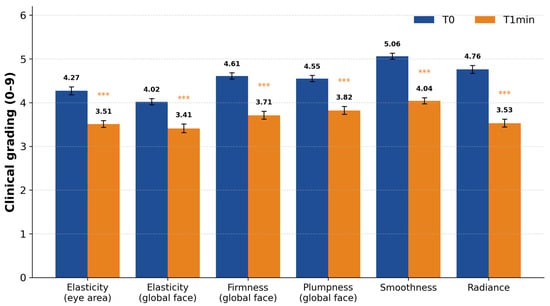
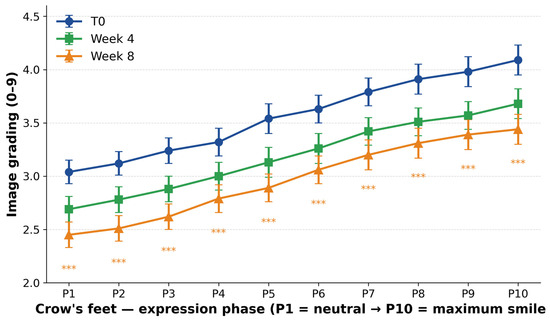
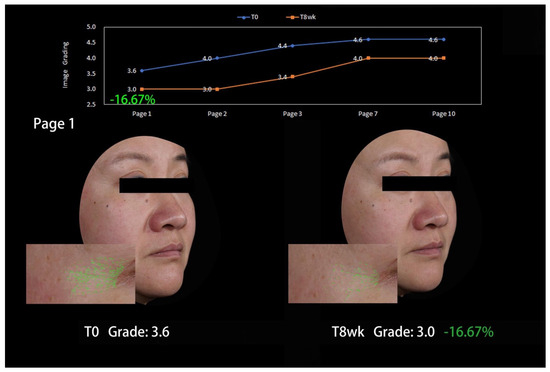
Exosomes are revolutionizing skincare as natural messengers for cell communication, yet their transition into cosmetics is often limited by the ethical and regulatory hurdles of their animal or human sourcing. This study describes the development and validation of vegan exosome-like biomimetic vesicles (EBVs) generated from the microalgae Chlamydomonas reinhardtii that reproduce the structural and functional logic of mammalian exosomes. Their structural biomimetism was confirmed through physical, lipidomic, and proteomic characterizations, revealing bilamellar vesicles (average diameter ~160 nm) containing 109 membrane lipids and 1369 proteins. Their functional biomimetism was assessed via 3′ mRNA sequencing, which showed that the EBVs induced transcriptional responses in human fibroblasts functionally analogous to human-derived exosomes in matrix-remodeling and anti-aging pathways. In vitro, the EBVs showed a 166.7% higher dermal delivery bias than standard liposomes and accelerated wound healing. Ex vivo, 2% EBVs protected skin explants against UV-A stress, showing 92% protective efficacy for excessive melanin production upon oxidative stress. Furthermore, the EBVs supported hair follicle anagen markers and follicle stem cell metabolism, significantly upregulating SOX9 (p = 0.0022). A 56-day placebo-controlled clinical study confirmed significant improvements in wrinkle depth (−12.2%), elasticity (+4.9%), and radiance (+20.0%). These results position EBVs as a scalable, high-performance alternative for next-generation anti-aging cosmetic applications.
Full article
(This article belongs to the Special Issue Feature Papers in Cosmetics in 2026)
►
Show Figures
Open AccessArticle
The Effects of Bio-Based Succinic Acid vs. Salicylic Acid on Stratum Corneum Desquamation and Human Skin Barrier Function
by
Géraldine Louvet-Pommier, Yuanyuan Fang, Qian Zhang, Mengxue Gao, Xiaowei Chang, Daniel Wils and Damien Truffin
Cosmetics 2026, 13(3), 119; https://doi.org/10.3390/cosmetics13030119 - 13 May 2026
Abstract
Bio-based succinic acid (bSU) has emerged as a promising mild exfoliating agent, yet its effects on desquamation pathways, barrier-related protein regulation, and irritation potential remain insufficiently characterized in human-relevant skin models. Therefore, this study systematically evaluated bSU against salicylic acid (SA) using reconstructed
[...] Read more.
Bio-based succinic acid (bSU) has emerged as a promising mild exfoliating agent, yet its effects on desquamation pathways, barrier-related protein regulation, and irritation potential remain insufficiently characterized in human-relevant skin models. Therefore, this study systematically evaluated bSU against salicylic acid (SA) using reconstructed human epidermis and human skin explants to assess irritation profile and desquamation-related biological responses. Our findings reveal that bSU facilitates controlled corneocyte shedding by modulating the targets LEKTI, KLK, and CDSN. Moreover, bSU demonstrated a favorable ability to maintain physiological skin surface acidity, all while minimizing inflammatory activation. These results position bSU as a balanced exfoliating bioactive that effectively promotes stratum corneum renewal while preserving cutaneous barrier homeostasis, providing mechanistic insights to support its development in advanced mild exfoliation formulations.
Full article
(This article belongs to the Section Cosmetic Dermatology)
Open AccessReview
Chronic Hand Eczema: From Nosological Ambiguity to Therapeutic Identity in the Era of Targeted Topical JAK Inhibition
by
Martina Burlando and Emanuele Claudio Cozzani
Cosmetics 2026, 13(3), 118; https://doi.org/10.3390/cosmetics13030118 - 11 May 2026
Abstract
Chronic hand eczema (CHE) is a persistent and relapsing inflammatory dermatosis characterized by substantial functional impairment, psychosocial distress, and occupational disability. Although epidemiologically common and clinically burdensome, CHE has long suffered from nosological ambiguity, frequently interpreted as a localized manifestation of atopic dermatitis,
[...] Read more.
Chronic hand eczema (CHE) is a persistent and relapsing inflammatory dermatosis characterized by substantial functional impairment, psychosocial distress, and occupational disability. Although epidemiologically common and clinically burdensome, CHE has long suffered from nosological ambiguity, frequently interpreted as a localized manifestation of atopic dermatitis, psoriasis, allergic contact dermatitis, or cumulative irritant dermatitis. The recent regulatory approval of topical delgocitinib, a pan-Janus kinase (JAK) inhibitor specifically indicated for moderate-to-severe CHE inadequately controlled by topical corticosteroids, has reshaped both therapeutic strategy and conceptual framing of the disease. The introduction of a targeted therapy dedicated to CHE has reinforced its clinical identity while simultaneously highlighting its internal biological heterogeneity. Beneath the umbrella term “chronic hand eczema” lie distinct phenotypes characterized by variable barrier dysfunction, immune polarization, and environmental interaction. This review integrates current knowledge on epidemiology, pathophysiology, diagnostic stratification, therapeutic algorithms, phase III registrative evidence, emerging real-world data, and the central role of barrier restoration. Particular attention is devoted to the hand as a specialized barrier organ and to the interplay between inflammation and epidermal structural integrity. In the era of targeted therapy, precise diagnostic framing and barrier-oriented management are indispensable to optimize outcomes.
Full article
(This article belongs to the Special Issue Innovations in Cosmetology: Bridging Scientific Evidence and Clinical Practice)
►▼
Show Figures

Figure 1
Open AccessEditorial
Editorial for “Feature Papers in Cosmetics in 2026”
by
Enzo Berardesca
Cosmetics 2026, 13(3), 117; https://doi.org/10.3390/cosmetics13030117 - 9 May 2026
Abstract
As we conclude this Special Issue of Cosmetics, we reflect on a remarkable journey through the current landscape of cosmetic science [...]
Full article
(This article belongs to the Special Issue Feature Papers in Cosmetics in 2025)
Open AccessArticle
Combined Treatment of Nicotinamide Mononucleotide and Hyaluronic Acid Attenuates Reactive Oxygen Species and MAPK Signaling in TNF-α-Induced Human Epidermal Keratinocytes
by
Yea Jung Choi, Moonseok Kang, Doeun Kim, Dong-Wook Kim, Dayeon Ham, Gabsik Yang, Sullim Lee and Ki Sung Kang
Cosmetics 2026, 13(3), 116; https://doi.org/10.3390/cosmetics13030116 - 6 May 2026
Abstract
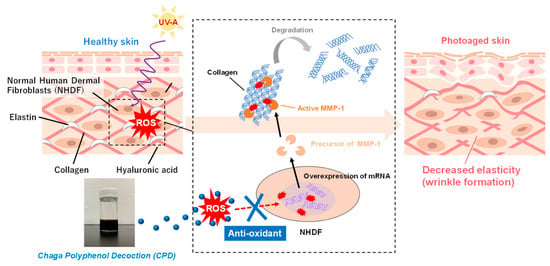
The accumulation of oxidative damage and inflammation, induced by internal and external factors, represents a major mechanism underlying the aging of skin. Excessive reactive oxygen species (ROS) trigger mitogen-activated protein kinase (MAPK) pathways, upregulating matrix metalloproteinase (MMP) expression and facilitating extracellular matrix degradation.
[...] Read more.
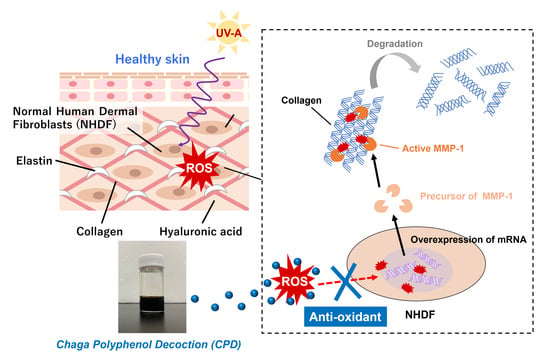
The accumulation of oxidative damage and inflammation, induced by internal and external factors, represents a major mechanism underlying the aging of skin. Excessive reactive oxygen species (ROS) trigger mitogen-activated protein kinase (MAPK) pathways, upregulating matrix metalloproteinase (MMP) expression and facilitating extracellular matrix degradation. Although nicotinamide mononucleotide (NMN) and hyaluronic acid (HA) possess antioxidant and dermoprotective properties, their potential combinational effects remain largely obscure. This study evaluated the impact of NMN and HA co-treatment on ROS production, MAPK signaling, MMP-1 secretion, and type I collagen secretion in TNF-α-stimulated human epidermal keratinocytes. ROS levels were assessed via DCFDA assay, while MMP-1 and COL1A1 secretion were quantified using ELISA. Additionally, the regulatory effects on ERK, JNK, and p38 phosphorylation were determined by Western blot. Synergy prediction was analyzed using the SynergyFinder platform via Highest Single Agent and Loewe models. While NMN and HA individually attenuated TNF-α-induced ROS and MMP-1 levels, co-treatment provided superior suppression and exhibited combinational interactions at specific concentrations. These findings suggest that NMN and HA combination treatment effectively modulates oxidative stress and skin-aging-related responses by regulating ROS levels and MAPK signaling pathways.
Full article
(This article belongs to the Topic Oxidative Stress and Inflammation, 3rd Edition)
►▼
Show Figures

Graphical abstract
Open AccessArticle
The Impact of Diet Composition on the Reduction of Acne Vulgaris: A Crossover Study
by
Magdalena Daszkiewicz, Dorota Różańska and Bożena Regulska-Ilow
Cosmetics 2026, 13(3), 115; https://doi.org/10.3390/cosmetics13030115 - 6 May 2026
Abstract
Introduction: Many studies suggest that dietary factors may significantly influence the development and severity of acne lesions. Objective: The aim of this study was to evaluate the effect of an anti-inflammatory diet on acne severity in patients with acne vulgaris. Methods: This study
[...] Read more.
Introduction: Many studies suggest that dietary factors may significantly influence the development and severity of acne lesions. Objective: The aim of this study was to evaluate the effect of an anti-inflammatory diet on acne severity in patients with acne vulgaris. Methods: This study included 92 participants who followed an individualized dietary intervention tailored to their energy requirements. Acne severity was assessed at baseline and after four weeks of dietary intervention using the Investigator’s Static Global Assessment scale. Results: After four weeks, a reduction in acne severity was observed in 68 of 92 participants (73.91%). The mean acne severity score decreased from 3.3 ± 0.6 to 2.4 ± 0.7 points. The dietary intervention also resulted in statistically significant reductions in body weight (p < 0.0001), body mass index (p < 0.0001), fat mass (p < 0.0001), visceral fat (p = 0.0386), and metabolic age (p = 0.0004). Conclusions: The balanced diet characterized by a low glycemic index and anti-inflammatory properties, combined with reduced intake of saturated fatty acids, sugar, and salt, as well as the elimination of dairy products and highly processed and high glycemic index foods, presumably through the synergistic effect of all the components of the diet, was found to be effective in the reduction of acne severity in the study group. This study supports the feasibility of the applied dietary pattern and suggests possible benefit for patients with acne. Considering the promising results obtained in this study, further research conducted in larger patient populations would be valuable.
Full article
(This article belongs to the Section Cosmetic Dermatology)
►▼
Show Figures

Figure 1
Open AccessArticle
Ex Vivo Assessment of Heat and Humidity Effects on Human Skin and Potential Protection by Kombucha Tea Extract
by
Julien Chlasta, Gaël Runel, Manon Boussard, Tiphaine Pele-Joly, Kristell Lazou, Karl Pays, Carine Nizard, Nivea Dias Amoedo, Rodrigue Rossignol and Anne-Laure Bulteau
Cosmetics 2026, 13(3), 114; https://doi.org/10.3390/cosmetics13030114 - 6 May 2026
Abstract
Human skin homeostasis relies on the delicate equilibrium between epidermal stem cell renewal, dermoepidermal junction (DEJ) architecture, and environmental interactions. With aging and exposure to external stressors, this equilibrium becomes disrupted, leading to reduced regenerative capacity. In this study, we established an ex
[...] Read more.
Human skin homeostasis relies on the delicate equilibrium between epidermal stem cell renewal, dermoepidermal junction (DEJ) architecture, and environmental interactions. With aging and exposure to external stressors, this equilibrium becomes disrupted, leading to reduced regenerative capacity. In this study, we established an ex vivo human skin model to examine the impact of dry and tropical (hot and humid) environmental conditions on epidermal homeostasis and to evaluate the protective potential of Kombucha tea extract, a fermented tea known for its antioxidant and regenerative properties. Histological analyses revealed that tropical conditions induced pronounced epidermal thickening (+157%) and disruption of the normal undulating architecture of the DEJ. Atomic force microscopy demonstrated a loss of mechanical contrast between dermal papillae and epidermal ridges, indicative of junctional flattening (−61 and −81%). At the molecular level, heat and humidity upregulated a stem cell marker (+85%) and collagen VII (+39%), reflecting an adaptive but potentially destabilizing activation of basal keratinocytes and matrix reorganization. Topical application of Kombucha tea extract counteracted these effects. Together, these results highlight the sensitivity of epidermal stem cell niches to heat and humidity stress and identify Kombucha tea extract as a promising bioactive agent to preserve epidermal homeostasis under challenging climatic conditions.
Full article
(This article belongs to the Section Cosmetic Formulations)
►▼
Show Figures

Graphical abstract
Open AccessReview
Zinc Oxide as a UV-Filter: A Review of Environmental Risks & Exposure Scenarios in Marine Environments
by
Kracke Inola and Moraine Thibault
Cosmetics 2026, 13(3), 113; https://doi.org/10.3390/cosmetics13030113 - 6 May 2026
Abstract
Zinc oxide (ZnO) is widely utilized as a mineral UV filter in sunscreen formulations due to its broad-spectrum efficacy, photostability, and acceptance by natural cosmetic certification bodies. Despite its growing use, the environmental impact of ZnO on marine ecosystems remains under debate. While
[...] Read more.
Zinc oxide (ZnO) is widely utilized as a mineral UV filter in sunscreen formulations due to its broad-spectrum efficacy, photostability, and acceptance by natural cosmetic certification bodies. Despite its growing use, the environmental impact of ZnO on marine ecosystems remains under debate. While zinc is an essential micronutrient for aquatic organisms, excessive concentrations of Zn compounds, particularly in nanoparticulate form, have been thought to have detrimental effects, including coral bleaching, oxidative stress, and disruptions in metabolic and reproductive functions in marine species. This review synthesizes the current peer-reviewed literature on the ecotoxicological effects of ZnO, with particular emphasis on coral reef health, bioaccumulation, and trophic transfer pathways. Furthermore, real-world exposure scenarios are evaluated, incorporating field data from densely visited coastal regions and modeled environmental concentrations under worst-case use conditions. The aim of this study is to provide a comprehensive risk assessment of ZnO in sunscreen applications, balancing its recognized safety in human use with potential long-term impacts on aquatic ecosystems, thereby informing future regulatory decisions and sustainable product development.
Full article
(This article belongs to the Special Issue Sunscreen Advances and Photoprotection Strategies in Cosmetics)
Open AccessArticle
Assessing the Impact on Barrier Function of Black Soldier Fly Larvae Lipids-Based Nanoparticles
by
Cíntia Almeida, Margarida Gingado, Carolina Santos, Carla Turiel, Thalita Cândido, Ana Júlio, Catarina Pereira-Leite and Catarina Rosado
Cosmetics 2026, 13(3), 112; https://doi.org/10.3390/cosmetics13030112 - 5 May 2026
Abstract
Epidermal barrier dysfunction, driven by disorganization and altered composition of the stratum corneum (SC) lipid matrix, underlies multiple inflammatory dermatoses, namely atopic dermatitis (AD). The lipid fraction derived from Black Soldier Fly larvae (BSFL) biomass has emerged as a promising biomaterial for skin
[...] Read more.
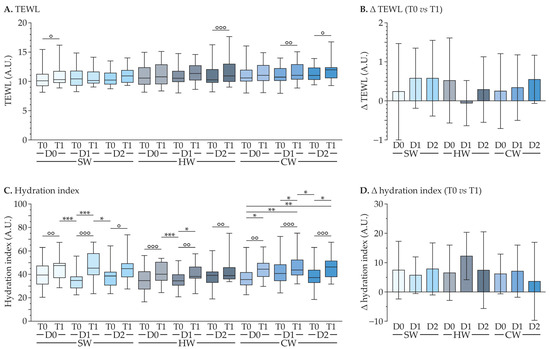
Epidermal barrier dysfunction, driven by disorganization and altered composition of the stratum corneum (SC) lipid matrix, underlies multiple inflammatory dermatoses, namely atopic dermatitis (AD). The lipid fraction derived from Black Soldier Fly larvae (BSFL) biomass has emerged as a promising biomaterial for skin health applications, particularly for restoring barrier function. Following previous work on the development of solid lipid nanoparticles (SLNs) incorporating BSFL lipid extract, the present study focused on the mechanistic evaluation of the occlusive, moisturizing and skin reinforcement potential of these nanoformulations (NFs), by exploring both in vitro and in vivo models. The compatibility assays showed no adverse effects after patch testing on healthy or atopic individuals, nor alterations on skin hydration, transepidermal water loss (TEWL), or redness. In vitro studies confirmed the ability of these NFs to form an occlusive lipid film, hampering moisture loss, with 39% reduction of water loss compared to the control. Efficacy assays in human volunteers revealed a statistically significant improvement in epidermal conditions at treated sites, evidenced by enhanced SC hydration. The plastic occlusion stress test (POST) revealed a trend toward a reduced evaporation half-life, suggesting a modulation of the epidermal water dynamics, although the effect did not reach statistical significance. Overall, BSFL-based lipid nanoparticles emerge as emollient agents with broad potential for incorporation into next-generation cosmetic and pharmaceutical products for the management of AD.
Full article
(This article belongs to the Special Issue Feature Papers in Cosmetics in 2026)
►▼
Show Figures

Graphical abstract
Open AccessReview
Phytochemical-Loaded Nanotherapeutics in Cosmetic Surgery Wound Healing: A Narrative Review
by
Bhagavathi Sundaram Sivamaruthi, Natarajan Suganthy, Periyanaina Kesika, Khontaros Chaiyasut, Rungaroon Waditee-Sirisattha, Wandee Rungseevijitprapa and Chaiyavat Chaiyasut
Cosmetics 2026, 13(3), 111; https://doi.org/10.3390/cosmetics13030111 - 3 May 2026
Abstract
Wound healing in cosmetological and aesthetic surgery extends beyond tissue closure to achieving rapid regeneration, minimal scarring, and restoration of functional skin architecture. However, conventional wound care strategies inadequately regulate the complex wound microenvironment required for optimal cosmetic outcomes, leading to prolonged healing
[...] Read more.
Wound healing in cosmetological and aesthetic surgery extends beyond tissue closure to achieving rapid regeneration, minimal scarring, and restoration of functional skin architecture. However, conventional wound care strategies inadequately regulate the complex wound microenvironment required for optimal cosmetic outcomes, leading to prolonged healing times and suboptimal aesthetic results, which can negatively impact patient satisfaction and increase the risk of complications. Phytochemicals exhibit multifunctional bioactivities, such as antioxidant, anti-inflammatory, antimicrobial, and pro-regenerative effects, but their clinical translation faces obstacles due to poor solubility, stability, and bioavailability. Nanotechnology-based delivery systems have emerged as a critical enabling strategy to overcome these limitations. This narrative review provides an updated, mechanistically integrated synthesis of phytochemical-loaded nanotherapeutics, including polymeric nanoparticles, nanohydrogels, nanofibers, and lipid- and vesicle-based systems, with a specific focus on their roles in modulating key wound-healing pathways, such as inflammation resolution, angiogenesis, collagen remodelling, and re-epithelialization. Evidence from preclinical studies consistently demonstrates that nano-enabled phytochemicals enhance therapeutic efficacy, improve skin penetration, and contribute to superior cosmetic outcomes, particularly by reducing fibrosis and scar formation. However, critical gaps remain, including limited high-quality clinical evidence, a lack of standardized formulation design, variability in reported outcomes, and unresolved concerns regarding long-term safety and regulatory translation. Taken together, the key insight of this review is that phytochemical-loaded nanotherapeutics represent a promising but still transitional strategy, biologically compelling at the preclinical level yet clinically under-validated. Bridging this gap requires rigorously designed clinical trials, quantitative outcome reporting, and balanced regulatory frameworks. Advancing these areas will be essential to translate nano-enabled phytochemicals from experimental systems into reliable, evidence-based solutions for cosmetological wound management.
Full article
(This article belongs to the Section Cosmetic Formulations)
►▼
Show Figures

Graphical abstract
Open AccessArticle
Clinical and Instrumental Evaluation of a Topical Cream Containing 4% Aliophen® in Women with Facial Skin Aging: A 56-Day Exploratory Open-Label Study
by
Alessandro Colletti, Carmela Spagnuolo, Gloria Roveda, Marzia Pellizzato, Eva Adabbo, Gian Luigi Russo and Giancarlo Cravotto
Cosmetics 2026, 13(3), 110; https://doi.org/10.3390/cosmetics13030110 - 3 May 2026
Abstract
Background: Facial skin aging is a multifactorial process characterized by wrinkles, pigmentary alterations, reduced elasticity, and dermal structural changes, in which oxidative stress and low-grade inflammation play key roles. Polyphenols have gained interest in cosmetic science due to their antioxidant and skin-protective properties.
[...] Read more.
Background: Facial skin aging is a multifactorial process characterized by wrinkles, pigmentary alterations, reduced elasticity, and dermal structural changes, in which oxidative stress and low-grade inflammation play key roles. Polyphenols have gained interest in cosmetic science due to their antioxidant and skin-protective properties. Objective: We evaluated the antioxidant activity, clinical–instrumental performance, and tolerability of a topical cream containing 4% w/w Aliophen®, a polyphenol-rich malt–hop extract, after 56 days of twice-daily application. Methods: Antioxidant activity was assessed in HaCaT keratinocytes exposed to tert-butyl hydroperoxide (tBHP, 500 μM), with intracellular reactive oxygen species (ROS) measured by DCFH-DA assay after Aliophen® treatment (4–16 mg/mL). A prospective, single-center, open-label study included 20 women aged 45–65 years with facial aging signs. Instrumental assessments included wrinkle depth (PrimosCR SF), pigmentation (ITA°), skin biomechanics (Cutometer® R0, R2), and dermal echogenicity (50 MHz ultrasound) at baseline, Day 28, and Day 56. A small subgroup with mild-to-moderate atopic skin (N = 5) was descriptively monitored using SCORAD. Results: Aliophen® significantly reduced ROS in a dose-dependent manner. Wrinkle depth decreased at Day 28 (−8.1%; p = 0.003) and Day 56 (−15.9%; p < 0.001). ITA° increased (+11.5% and +18.2%; p ≤ 0.003). Skin biomechanics improved (R0 −5.3%; R2 +5.5%; p ≤ 0.004). Dermal echogenicity increased at Day 56 (+1.38; p = 0.002). SCORAD showed descriptive improvement. No serious adverse events occurred. Conclusions: A topical cream containing 4% Aliophen® improved instrumental markers of facial aging with good tolerability, supporting further randomized, vehicle-controlled studies.
Full article
(This article belongs to the Section Cosmetic Formulations)
►▼
Show Figures

Figure 1

Open AccessReview
Agro-Industrial Side Streams in Cosmetics: From Raw Materials to Scale-Up and Life Cycle Assessment Within a Circular Economy Framework
by
Malvina Hoxha, Visar Malaj, Maria Manconi and Maria Letizia Manca
Cosmetics 2026, 13(3), 109; https://doi.org/10.3390/cosmetics13030109 - 2 May 2026
Abstract
The cosmetic industry represents a major sector of the global economy and is expected to significantly grow in the coming years. To enhance consumer acceptance and address increasing sustainability concerns, cosmetic companies are actively seeking innovative solutions to mitigate their environmental, economic, and
[...] Read more.
The cosmetic industry represents a major sector of the global economy and is expected to significantly grow in the coming years. To enhance consumer acceptance and address increasing sustainability concerns, cosmetic companies are actively seeking innovative solutions to mitigate their environmental, economic, and social impacts. In accordance with this, several scientific studies focus on the development, scale-up, and life cycle assessment of sustainable cosmetic products, especially those derived from side streams in accordance with circular economy principles. Various reviews have addressed this topic; however, they typically cover one or two of these dimensions, providing only a partial perspective. In particular, existing studies mainly analyze the types of side streams used and the resulting products, often lacking a comprehensive framework that can effectively support the translation of these approaches into industrial-scale production. The aim of the present review is to address this gap by providing a comprehensive analysis of the maturity level of development, scale-up processes, and life cycle assessment of cosmetic products based on agro-industrial side streams. This analysis is intended to support companies in the transition towards more sustainable practices by reducing carbon footprint and limiting the intensive extraction of virgin raw materials. The different approaches and methodologies proposed for the development and scale-up of sustainable cosmetic products from agro-industrial side streams are also analyzed, considering whether life cycle assessment has been performed. Furthermore, the most suitable business models will be selected as innovative and sustainable value chains capable of generating economic benefits, fostering local development, and enhancing resource efficiency and supply security.
Full article
(This article belongs to the Special Issue Useful from Useless: Development of Cosmetics from Agri-Food By-Products)
Open AccessArticle
Growth Phenology of Tubers and Accumulation of Metabolite Compounds on Two Accessions of Jicama (Pachyrhizus erosus L.)
by
Fetti Andriyani Kurniya Ningsih, Yulia Rahmah, Youngkwan Cho and Ani Kurniawati
Cosmetics 2026, 13(3), 108; https://doi.org/10.3390/cosmetics13030108 - 30 Apr 2026
Abstract
Jicama (Pachyrhizus erosus L.) is a tropical tuber crop that has potential not only as a food source but also as a natural active ingredient in the cosmetics industry. This study aims to evaluate the phenology of tuber development and the content
[...] Read more.
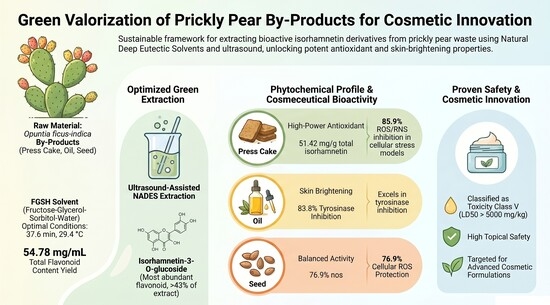
Jicama (Pachyrhizus erosus L.) is a tropical tuber crop that has potential not only as a food source but also as a natural active ingredient in the cosmetics industry. This study aims to evaluate the phenology of tuber development and the content of primary and secondary metabolites of two jicama accessions (Bogor and Kebumen) at three tuber ages (3, 4, and 5 months). The parameters observed included tuber weight, starch yield, total soluble solids (TSS), total titratable acidity (TTA), vitamin C, total phenols, total flavonoids, and antioxidant activity (% inhibition). For data analysis, we used the T-test to compare differences between accessions. The results showed that tuber weight and starch yield increased significantly up to 5 months of age, while secondary metabolite content (phenols, flavonoids, antioxidant activity) was higher in young tubers (3–4 months). This study shows a trade-off between productivity (starch and vitamin C) and bioactive metabolite content (phenols, flavonoids, antioxidants) as the tubers age. The Bogor accession has a more stable vitamin C content, phenol levels, and antioxidant activity, while the Kebumen accession shows higher flavonoid levels in young tubers. The optimal tuber age and accession recommended to obtain a balance between productivity and secondary metabolite content is the Bogor accession at 4 months of age. This supports the potential use of jicama in the cosmetics industry as a brightening agent (vitamin C), humectant (sugar), anti-aging agent (phenols, flavonoids), and base ingredient for natural starch-based formulations. This study provides the first integrated evaluation of tuber phenology, primary metabolites, and secondary metabolite dynamics of two Indonesian jicama accessions in relation to cosmetic functionality. The results highlight a clear trade-off between productivity and bioactive compound accumulation, offering a scientific basis for selecting optimal harvest age and accession for cosmetic raw materials This study provides the first integrated evaluation of tuber phenology, primary metabolites, and secondary metabolite dynamics of two Indonesian jicama accessions in relation to cosmetic functionality. The results highlight a clear trade-off between productivity and bioactive compound accumulation, offering a scientific basis for selecting the optimal harvest age and accession for cosmetic raw materials.
Full article
(This article belongs to the Special Issue Advanced Cosmetic Sciences: Sustainability in Materials and Processes)
Open AccessArticle
Investigation of Microwave-Assisted Extraction Method on Chemical Profiling and Anti-Tyrosinase Activities of Equisetum ramosissimum Desf. subsp. debile (Roxb. ex Vaucher) Hauk for Potential Cosmetic Applications by LC-MS/MS and Molecular Docking Analysis
by
Natapornchanok Kanbut, Kamonpan Sanachai, Jirada Pluemjai, Sarunya Tuntiyasawasdikul, Sakda Daduang, Bodee Nutho and Jringjai Areemit
Cosmetics 2026, 13(3), 107; https://doi.org/10.3390/cosmetics13030107 - 28 Apr 2026
Abstract
Equisetum ramosissimum Desf. Subsp. debile (Roxb. ex Vaucher) Hauk (E. ramosissimum), exhibits anti-tyrosinase and antioxidant activities. However, identifying the key compounds exhibiting anti-tyrosinase effects and establishing effective protocols for their extraction have not been accomplished. Herein, we investigate and establish an
[...] Read more.
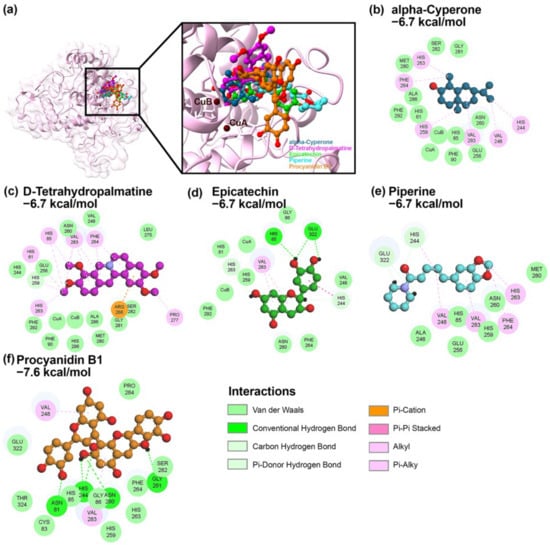
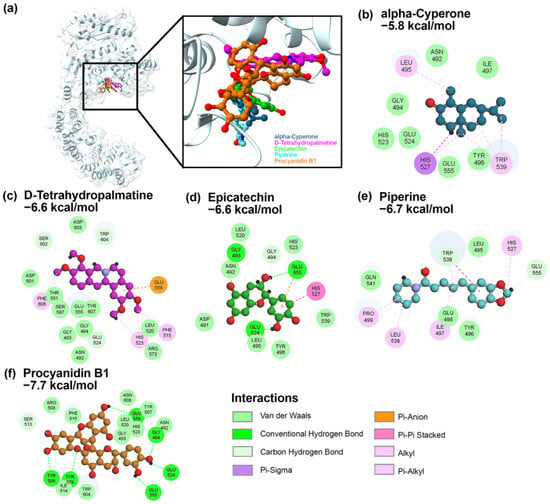
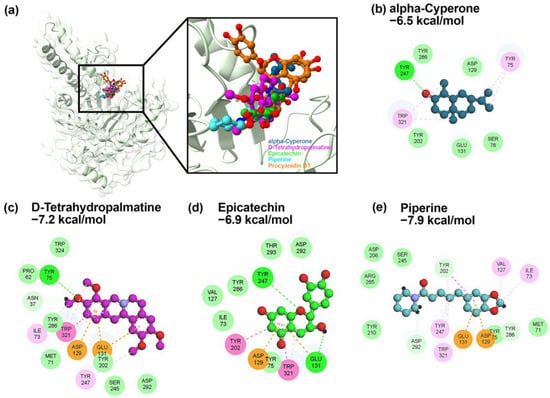
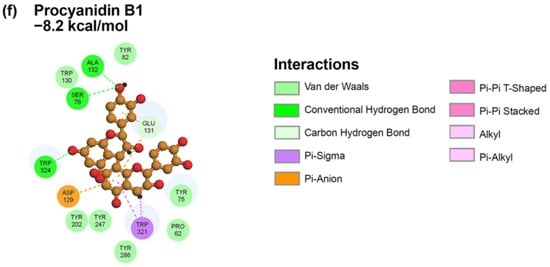
Equisetum ramosissimum Desf. Subsp. debile (Roxb. ex Vaucher) Hauk (E. ramosissimum), exhibits anti-tyrosinase and antioxidant activities. However, identifying the key compounds exhibiting anti-tyrosinase effects and establishing effective protocols for their extraction have not been accomplished. Herein, we investigate and establish an effective extraction method and identify the key bioactive compounds responsible for tyrosinase inhibition. E. ramosissimum was extracted using the microwave-assisted extraction (MAE) method. The MCW4 extract exhibited the highest antioxidant activity (IC50: 90.96 ± 0.515 µg/mL) and TPC (27.23 ± 1.180 mg of GAE/g-crude extract), while the MCW5 extract showed the strongest anti-tyrosinase activity (IC50: 126.48 ± 6.668 µg/mL). LC-MS/MS analysis identified resveratrol isomers, protocatechuic acid, cis-ETRA acid, KF-3-GBS, 1-16:0-lysoPC, and 1-16:0-lysoPE as potential anti-tyrosinase compounds, detected only in MCW4 and MCW5 under the applied extraction and analytical conditions. Molecular docking indicated favorable predicted binding toward human tyrosinase (hTyr) for resveratrol isomers, KF-3-GBS, and 1-16:0-lysoPE. KF-3-GBS was uniquely detected in MCW5. These results suggest that MAE using a solid-to-solvent ratio of 1:16 at 40 °C for 15 min produced an E. ramosissimum extract that exhibited strong tyrosinase inhibitory activity. Kaempferol-3-gentiobioside (KF-3-GBS) demonstrated favorable binding to hTyr in molecular docking analysis, supporting its potential role as a direct tyrosinase inhibitor.
Full article
(This article belongs to the Section Cosmetic Formulations)
►▼
Show Figures

Graphical abstract
Open AccessArticle
Design and Development of a Shampoo with Dark Semi-Permanent Dyes for Gradual Gray Hair Coverage
by
Erika Paredes-Sulca, Felix Castillo-Morales, Adil Barrientos-Amau, Lucy Quispe-Rodriguez, Alison Zanabria-Santos, Dula Balbin-Inga, Gabriela Solano-Canchaya, Norma Ramos-Cevallos, Américo Castro-Luna and Bertran Santiago-Trujillo
Cosmetics 2026, 13(3), 106; https://doi.org/10.3390/cosmetics13030106 - 28 Apr 2026
Abstract
Canities results from a progressive decline in melanocyte activity and melanin synthesis and is commonly associated with aesthetic concerns that motivate the use of cosmetic products for hair color correction. Shampoo, due to its frequent use, represents a suitable vehicle for the gradual
[...] Read more.
Canities results from a progressive decline in melanocyte activity and melanin synthesis and is commonly associated with aesthetic concerns that motivate the use of cosmetic products for hair color correction. Shampoo, due to its frequent use, represents a suitable vehicle for the gradual deposition of pigments on the hair fiber. This study aimed to design and develop a shampoo containing dark synthetic semi-permanent dyes for the gradual coverage of gray hair. Four shampoo formulations were developed and evaluated through in vitro tests using bleached hair tresses to assess color deposition and performance. The selected formulation was subsequently subjected to accelerated stability studies and color sustainability evaluation. The results showed that the formulation maintained organoleptic, physicochemical, microbiological, and functional stability. Color sustainability assays indicated that the gray–black coloration persisted on hair tresses containing approximately 90% canities after eight washing cycles. The formulation incorporating the semi-permanent dyes Basic Blue 124, Basic Yellow 87, Basic Orange 31, and Basic Red 51 achieved a gradual gray–black tonal effect. In conclusion, the developed shampoo demonstrated stability and effectiveness for the gradual cosmetic coverage of gray hair.
Full article
(This article belongs to the Special Issue Feature Papers in Cosmetics in 2026)
►▼
Show Figures

Graphical abstract
Open AccessArticle
Biological Composition of Commercial Caviar Extracts: Proteomic Insights and a Cell Culture Alternative
by
Bianka Grunow, Mariola Aleksandra Dietrich, Valeria Di Leonardo, Martin Pšenička and Kenneth Benning
Cosmetics 2026, 13(3), 105; https://doi.org/10.3390/cosmetics13030105 - 28 Apr 2026
Abstract
Caviar extract is widely used in luxury cosmetics and is generally defined as a homogeneous ingredient derived exclusively from sturgeon eggs. However, its molecular composition remains inadequately characterised. In this study, proteomic analyses were performed on 14 commercial caviar samples from different sturgeon
[...] Read more.
Caviar extract is widely used in luxury cosmetics and is generally defined as a homogeneous ingredient derived exclusively from sturgeon eggs. However, its molecular composition remains inadequately characterised. In this study, proteomic analyses were performed on 14 commercial caviar samples from different sturgeon species and geographical origins, examined independently in two laboratories. Across three single-origin samples (Germany, Poland, China), 1437 protein groups and 3452 unique peptides were identified, with consistent overlaps with sturgeon ovarian fluid (≥25–38 proteins). Extending this analysis across multiple species confirmed the presence of ovarian fluid-associated proteins in all examined groups, including 69 in Acipenser baerii, 61 in A. gueldenstaedtii, 55 in A. schrenckii, and 49 in H. huso. The results showed that ovarian fluid is consistently co-extracted during standard roe harvesting processes due to its strong egg surface adhesion, making this co-extraction intrinsic rather than incidental. Proteomic profiling revealed a complex mixture of egg- and ovarian fluid-derived proteins, including zona pellucida glycoproteins, immunoglobulins, complement components, proteases, coagulation factors, and antioxidant enzymes. Many of these proteins influence skin biology, suggesting that the functional effects attributed to caviar extract may partially originate from ovarian fluid constituents rather than yolk-derived nutrients alone. At the same time, the presence of immune-active and enzymatic proteins raises important questions regarding safety assessment and regulatory oversight. Species-specific proteomic clustering also indicates considerable composition heterogeneity, challenging assumptions of ingredient standardisation. Together, these results highlight a discrepancy between current definitions and the molecular reality and underscore the need for improved molecular characterisation, updated regulatory definitions, and the consideration of alternative, cell-based production strategies for cosmetic applications.
Full article
(This article belongs to the Section Cosmetic Formulations)
►▼
Show Figures

Figure 1
Open AccessArticle
The Influence of Thickeners on Shampoo Properties
by
Urte Bernatonyte and Dalia Marija Kopustinskiene
Cosmetics 2026, 13(3), 104; https://doi.org/10.3390/cosmetics13030104 - 27 Apr 2026
Abstract
The performance of shampoo is determined by complex interactions between surface active agents (SAAs), polymers, and formulation modifiers, which directly influence consumer-relevant properties. However, the formulation principles governing these interactions and their impact on product quality remain insufficiently characterized. Therefore, the aim of
[...] Read more.
The performance of shampoo is determined by complex interactions between surface active agents (SAAs), polymers, and formulation modifiers, which directly influence consumer-relevant properties. However, the formulation principles governing these interactions and their impact on product quality remain insufficiently characterized. Therefore, the aim of this study was to evaluate the formulation principles underlying the interaction between thickeners and surfactant systems in shampoo formulations and to assess how these interactions influence the overall performance and quality of the final product. For this purpose, two groups of shampoo formulations containing identical surfactant systems but different thickeners (acrylate copolymer and guar gum) were prepared and evaluated in terms of pH, cleansing power (wool thread method), foam volume and stability, and texture profile. The results demonstrated that pH values ranged from 6.52 to 7.23 in acrylate copolymer-based formulations and from 4.71 to 6.09 in guar gum-based formulations. Cleansing power reached up to approximately 35%, depending on surfactant composition and thickener type. Foam volume was higher in acrylate copolymer systems, with a maximum value of 161 mL, whereas guar gum-based formulations exhibited lower but more variable foam characteristics. Texture analysis revealed that guar gum formulations were more sensitive to changes in surfactant composition, whereas acrylate copolymer provided more consistent and controllable texture characteristics.
Full article
(This article belongs to the Section Cosmetic Formulations)
Open AccessReview
Poly-L-lactic Acid (Sculptra®): A Regenerative Aesthetic Treatment
by
Sabrina G. Fabi, Alessandra Haddad, Luiz Avelar, Michael Somenek, Katie Beleznay, Steven Dayan, Kathryn Taylor-Barnes, Jeff Huang, Alan D. Widgerow, Matthew Meckfessel and Daniel Bråsäter
Cosmetics 2026, 13(3), 103; https://doi.org/10.3390/cosmetics13030103 - 27 Apr 2026
Abstract
Regenerative medicine aims to restore the structure and function for improved tissue health; reduced tissue health can arise from causes such as aging, which results in the ongoing degradation of the extracellular matrix (ECM) of the skin. Replacement of a single biological component
[...] Read more.
Regenerative medicine aims to restore the structure and function for improved tissue health; reduced tissue health can arise from causes such as aging, which results in the ongoing degradation of the extracellular matrix (ECM) of the skin. Replacement of a single biological component is not sufficient for an esthetic treatment to be described as regenerative; it is the relative amounts, ratios, types and organization of stimulated components that are important in a treatment’s regenerative potential. Regenerative aesthetics aims to recapture the youthful structure and function of tissue by exploiting the body’s own systems. Poly-L-lactic acid (PLLA-SCA; Sculptra®), an injectable, biodegradable, non-permanent biostimulator, induces a combination of mechanotransductional/mechanical stimulation and foreign body reaction response and promotes ECM remodeling via the production of collagen through the upregulation of cytokines interleukin-1b and CXCL6, elastin, proteoglycans and multiadhesive glycoproteins. In addition, PLLA-SCA stimulates adipocyte rejuvenation/adipogenesis and increases the thickness of the dermis and adipose layers. Hence, PLLA-SCA stimulates endogenous pathways, and the array of biostimulatory effects should not be considered individually but as interlinked with the overall goal of improvement in skin health. These effects manifest clinically as long-term improvements in the mechanical properties of the skin, the restoration of volume and elasticity, improvements in skin quality and thickness, and dermal remodeling.
Full article
(This article belongs to the Special Issue Feature Papers in Cosmetics in 2026)
►▼
Show Figures

Figure 1

Open AccessReview
Neurocosmetics and the Skin–Brain Axis from a Psychological and Psychiatric Standpoint
by
Giuseppe Marano, Oksana Di Giacomi, Marco Lanzetta, Camilla Scialpi, Antonio Sottile, Gianandrea Traversi, Osvaldo Mazza, Claudia d’Abate, Eleonora Gaetani and Marianna Mazza
Cosmetics 2026, 13(3), 102; https://doi.org/10.3390/cosmetics13030102 - 24 Apr 2026
Abstract
The skin–brain axis constitutes a complex, bidirectional network integrating cutaneous sensory, immune, and neuroendocrine systems with central neural circuits involved in emotion regulation, stress responsivity, and social cognition. Advances in psychodermatology and cosmetic science have progressively extended this framework to the emerging field
[...] Read more.
The skin–brain axis constitutes a complex, bidirectional network integrating cutaneous sensory, immune, and neuroendocrine systems with central neural circuits involved in emotion regulation, stress responsivity, and social cognition. Advances in psychodermatology and cosmetic science have progressively extended this framework to the emerging field of neurocosmetics, which explores how topical formulations, sensorial properties, and cutaneous neuromodulators may influence psychological well-being, affective states, and perceived stress. The aim of this narrative review is to synthesize current evidence on the biological foundations of the skin–brain axis and to critically examine the implications of these mechanisms for neurocosmetic interventions from a psychological and psychiatric perspective. It describes the biological substrates underlying skin–brain communication, including the cutaneous hypothalamic–pituitary–adrenal axis, neuropeptides, neurotrophins, transient receptor potential channels, and endocannabinoid signaling, and examines how these pathways are targeted by neurocosmetic interventions. Particular attention is devoted to neuroactive compounds, such as peptides, cannabinoids, botanicals, and aromatherapeutic molecules, as well as to sensorial strategies involving texture, temperature, and olfactory cues, which may modulate mood, anxiety, and self-perception through peripheral mechanisms. From a psychological and psychiatric perspective, the review discusses the intersection between stress-related skin conditions, body image disturbances, and emotional dysregulation, highlighting how cosmetic practices may influence subjective well-being beyond purely aesthetic outcomes. Methodological limitations of the existing literature, including the heterogeneity of study designs and outcome measures, as well as ethical considerations related to mood- and stress-related claims in cosmetic products, are critically examined. Finally, future research directions are outlined, and a translational framework is proposed to integrate dermatology, neuroscience, and mental health within next-generation cosmetic science.
Full article
(This article belongs to the Special Issue Feature Papers in Cosmetics in 2026)
►▼
Show Figures

Figure 1
Open AccessArticle
Analysis of UV Filters in Sunscreen Products on the Lithuanian Pharmacy Market
by
Ula Levanaityte, Giedre Kasparaviciene, Nijole Savickiene and Jurga Bernatoniene
Cosmetics 2026, 13(3), 101; https://doi.org/10.3390/cosmetics13030101 - 22 Apr 2026
Abstract
Ultraviolet (UV) radiation is a recognized human carcinogen, and topical sunscreens remain the primary strategy for photoprotection. As community pharmacies represent trusted sources of skincare products, evaluating the composition of sunscreens distributed through this channel is particularly relevant. This cross-sectional market analysis investigated
[...] Read more.
Ultraviolet (UV) radiation is a recognized human carcinogen, and topical sunscreens remain the primary strategy for photoprotection. As community pharmacies represent trusted sources of skincare products, evaluating the composition of sunscreens distributed through this channel is particularly relevant. This cross-sectional market analysis investigated UV filters used in sunscreen products available in Lithuanian community pharmacies in November–December 2025. Products were identified through online pharmacy catalogs and assessed for labeled Sun Protection Factor (SPF), number and type of UV filters, and filter combinations in accordance with Regulation (EC) No 1223/2009. A total of 467 products from 98 brands were included, and 26 distinct UV filters were identified. Triazine derivatives predominated, particularly bis-ethylhexyloxyphenol methoxyphenyl triazine (64.67%) and ethylhexyl triazone (58.03%). Most products (61.67%) were labeled SPF ≥ 50 and contained multiple UV filters (mean 4.29 ± 1.66), with significantly more filters in SPF ≥ 50 formulations (p < 0.001). These results indicate that sunscreen products available in Lithuanian pharmacies are dominated by high-SPF formulations and selective multi-filter systems, providing region-specific insights relevant to regulatory oversight and consumer exposure assessment.
Full article
(This article belongs to the Special Issue Sunscreen Advances and Photoprotection Strategies in Cosmetics)
►▼
Show Figures

Figure 1
Highly Accessed Articles
Latest Books
E-Mail Alert
News
Topics
Topic in
Antioxidants, Biomedicines, IJMS, Life, Oxygen, Cosmetics, Nutraceuticals
Oxidative Stress and Inflammation, 3rd Edition
Topic Editors: Maria Letizia Manca, Amparo Nacher, Matteo Perra, Ines Castangia, Mohamad AllawDeadline: 31 July 2026
Special Issues
Special Issue in
Cosmetics
The Function of Extracellular Matrix for Skin Health and Beauty
Guest Editor: Maria Aparecida Silva PinhalDeadline: 31 May 2026
Special Issue in
Cosmetics
Innovations in Cosmetology: Bridging Scientific Evidence and Clinical Practice
Guest Editor: Josipa BukićDeadline: 20 June 2026
Special Issue in
Cosmetics
Skin Care and Innovation from the Perspective of Molecular Dermatology
Guest Editors: Ewa Markiewicz, Olusola Idowu, Jacek SzepietowskiDeadline: 30 June 2026
Special Issue in
Cosmetics
Bio-Innovation and Inclusion: Scientific Advances in Dermocosmetics, Hair, and Skin Care Derived from Brazilian Sources
Guest Editor: André Rolim BabyDeadline: 30 June 2026
Topical Collections
Topical Collection in
Cosmetics
Editorial Board Members' Collection Series: "Sustainability in Materials and Processes in Cosmetic Science"
Collection Editors: Pierfrancesco Morganti, Alina Sionkowska
Topical Collection in
Cosmetics
Editorial Board Members' Collection Series: "Novel Delivery Systems for Dermocosmetic Applications"
Collection Editors: Elisabetta Esposito, Debora Santonocito