


Abstract
The performance of shampoo is determined by complex interactions between surface active agents (SAAs), polymers, and formulation modifiers, which directly influence consumer-relevant properties. However, the formulation principles governing these interactions and their impact on product quality remain insufficiently characterized. Therefore, the aim of this study was to evaluate the formulation principles underlying the interaction between thickeners and surfactant systems in shampoo formulations and to assess how these interactions influence the overall performance and quality of the final product. For this purpose, two groups of shampoo formulations containing identical surfactant systems but different thickeners (acrylate copolymer and guar gum) were prepared and evaluated in terms of pH, cleansing power (wool thread method), foam volume and stability, and texture profile. The results demonstrated that pH values ranged from 6.52 to 7.23 in acrylate copolymer-based formulations and from 4.71 to 6.09 in guar gum-based formulations. Cleansing power reached up to approximately 35%, depending on surfactant composition and thickener type. Foam volume was higher in acrylate copolymer systems, with a maximum value of 161 mL, whereas guar gum-based formulations exhibited lower but more variable foam characteristics. Texture analysis revealed that guar gum formulations were more sensitive to changes in surfactant composition, whereas acrylate copolymer provided more consistent and controllable texture characteristics.
1. Introduction
Shampoos are widely used hair care products that represent complex sensory systems, where properties such as texture, foaming, and ease of use are essential for consumer acceptance, in addition to cleansing performance. In particular, interactions between thickeners and surfactants play a key role in determining essential properties such as texture, cleansing power, foaming, and pH value. Therefore, this study aims to provide a systematic comparison of acrylate copolymer and guar gum-based formulations, focusing on their interactions with surfactant systems and their combined impact on pH, cleansing power, foam properties, and texture.
SAAs ensure the main function of shampoo—the removal of dirt—while also contributing to foaming, solubilization of active ingredients, and viscosity control [1,2]. However, their interactions with thickeners play a crucial role in determining formulation properties. Previous studies have shown that acrylate-based polymers interact with both nonionic and anionic surfactants, and that these interactions influence viscosity and polymer conformation [3,4]. Depending on surfactant type and concentration, polymer–surfactant interactions may either promote network formation or lead to a decrease in viscosity due to structural changes in the polymer system [5]. Therefore, changes in viscosity, structure, and stability are governed not only by polymer concentration, but also by the nature of polymer–surfactant interactions. Previous studies have shown that the incorporation of polymers into surfactant systems can significantly modify flow behavior, leading to increased viscosity and the development of viscoelastic networks due to the formation of polyelectrolyte–surfactant complexes [5].
Such systems typically exhibit non-Newtonian flow behavior, including pseudoplasticity, which can be described using rheological models such as the power-law model. In these systems, surfactants primarily influence the consistency index, while the flow behavior index tends to remain relatively stable [6]. The observed rheological changes are closely related to microstructural transformations, including polymer chain coiling at low concentrations and the formation of three-dimensional networks at higher concentrations, as well as micellar entanglement contributing to pronounced viscoelastic properties [7]. These findings highlight the importance of rheological approaches in elucidating polymer–surfactant interactions and their contribution to the overall performance of formulation systems.
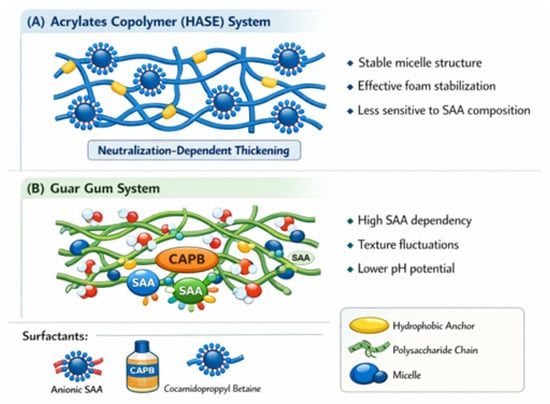
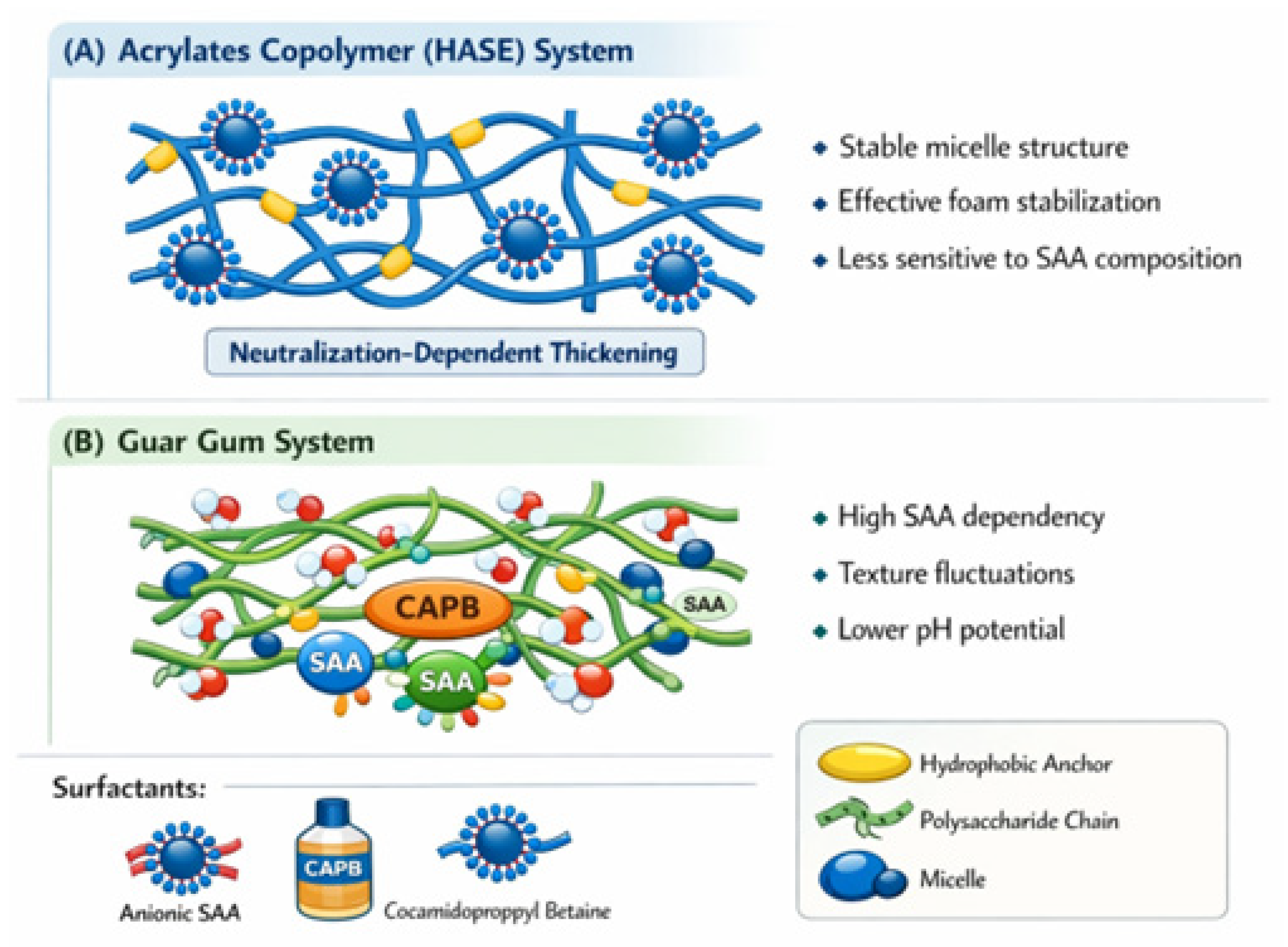
Thickeners play a crucial role in determining the texture and viscosity of shampoos and contribute to the development of a final functional product that is acceptable to consumers. There is a wide range of thickeners suitable for use in shampoo formulations on the market: electrolyte thickeners, polymer thickeners, or a combination of these thickeners. This study examines the influence of two different types of thickeners on shampoo properties: acrylate copolymer and guar gum. Acrylate copolymer is classified as a synthetic polymeric thickener, whereas guar gum is classified as a natural polysaccharide thickener (Figure 1).
Figure 1.
Schematic representation of thickener–surfactant interactions in shampoo formulations. The figure was drawn by hand, then digitalized and refined using the AI-assisted design tool FigureLabs (https://figurelabs.ai). (A) Schematic representation of acrylates copolymer (HASE) thickening system. (B) Schematic representation of guar gum thickening system. Red sphere—oxygen atom, white spheres—hydrogen atoms in water molecules In (B) panel, colorful dots on surface acting agent (SAA) molecules represent their amphiphilic properties: polar heads that interact with water (and guar gum) and nonpolar tails that can associate with other hydrophobic parts. CAPB—cocamidopropyl betaine.
These thickeners differ in their mechanisms of action: acrylate copolymers exhibit associative thickening driven by hydrophobic interactions with surfactant micelles, whereas guar gum relies primarily on hydrogen bonding and polymer chain entanglement. These interactions are influenced by pH, as changes in pH can modify polymer ionization, conformation, and micellar organization, thereby affecting the overall structure and performance of the formulation. The effect of pH on these systems differs depending on the thickener type. In acrylate copolymer systems, neutralization is required to induce polymer ionization, and acrylate copolymer typically requires a pH of 6.5 to 7.0 to become functional, resulting in chain expansion and the formation of associative networks with surfactant micelles. In contrast, guar gum thickening is primarily governed by hydrogen bonding and chain entanglement, making it less sensitive to pH changes, although pH may still influence hydration and interactions with surfactants.
From an application perspective, pH is also critical for hair condition: slightly alkaline pH values can disrupt disulfide bonds and damage the hair cuticle, whereas mildly acidic conditions promote cuticle smoothing and improved hair appearance [8,9]. Since the physiological pH of the scalp is approximately 5.5, the most favorable pH for shampoos is generally considered to be below 5.5 [10]. Therefore, the formulation of shampoos requires balancing optimal polymer performance while maintaining a pH compatible with hair and scalp physiology. However, this presents a formulation challenge, as acrylate copolymer typically requires a pH of 6.5 to 7.0 to become functional.
Acrylate copolymer belongs to the HASE (Hydrophobically Modified Alkali-Swellable Emulsions) class of synthetic polymers. The hydrophobic groups in the chain of polymers belonging to this class determine the hydrophobic interaction which forms intermolecular networks [11]. Their formation contributes to increased viscosity and improved structural stability. In addition, when used in combination with surface-active substances, synergy is possible and the foaming properties of this thickener are enhanced. However, if the concentration of acrylate copolymer is too low or the proportions of SAAs and this thickener are not selected correctly, the hydrophobic interactions necessary to maintain stable viscosity may be disrupted.
Guar gum is a water-soluble polysaccharide called galactomannan, obtained from the endosperm of Cyamopsis tetragonolobus, a plant belonging to the legume family Leguminosae [12]. Guar gum is widely used in various industries due to its low cost and ability to form highly viscous solutions even at low concentrations [13]. In cosmetics, guar gum is used in the production of shampoos because it allows the creation of products with high foam stability [14]. As a thickener, guar gum is useful for increasing the flowability of a product, making it easier to squeeze out of the packaging. Native guar gum is a non-ionic polysaccharide and forms hydrogen bonds with water molecules, while its thickening properties arise from the overlap and entanglement of polymer chains. Although cationic guar derivatives may exhibit positive charge and electrostatic interactions with negatively charged hair surfaces, such effects were not considered in this study, as native guar gum was used [15].
Guar gum exhibits shear-thinning behavior in aqueous solutions, meaning that viscosity decreases under shear and recovers when shear is removed [16]. In fully hydrated systems, it may also show thixotropic behavior, contributing to time-dependent structural recovery. These rheological properties make guar gum a suitable thickener in shampoo formulations, allowing the product to remain viscous at rest while flowing easily during application. In addition, guar gum has been reported to improve hair smoothness and slip, with polymer charge playing a key role in this effect [15].
Although individual properties of shampoo formulations have been widely studied, there is limited information on how polymer–surfactant interactions simultaneously influence multiple performance parameters within the same system. Therefore, the aim of this study was to systematically evaluate the influence of different types of thickeners on the physicochemical and performance properties of shampoo formulations, with particular focus on their interactions with surfactant systems. To achieve this, two model thickening systems—acrylate copolymer (Viscolam® GD 19, Lamberti S.p.A., Gallarate (VA), Italy) and guar gum—were incorporated into shampoo formulations containing different combinations of SAAs at defined concentrations. The experimental design involved the preparation of two groups of formulations with identical surfactant compositions but different thickeners, allowing a direct comparison of thickener-dependent effects. The resulting formulations were evaluated in terms of pH, cleansing power, foam volume and stability, and texture profile, in order to identify formulation-dependent differences and establish relationships between thickener type, surfactant interactions, and final product performance. It was hypothesized that differences in thickening mechanisms between synthetic acrylate copolymer and native guar gum would lead to distinct effects on formulation properties, particularly in terms of texture, foaming behavior, and pH.
2. Materials and Methods
2.1. Materials
2.1.1. Sodium Coco-Glucoside Tartrate
Sodium coco-glucoside tartrate (commercial name: EUCAROL® AGE/ET MB; INCI: Sodium Coco-Glucoside Tartrate) was supplied by Lamberti S.p.A. (Gallarare (VA), Italy). It is a mild anionic surfactant provided as a clear aqueous solution with a slight characteristic odor and brownish-yellow color. The active matter content of the raw material is approximately 30%, with a water content of about 70%. The pH of a 2% aqueous solution is approximately 5.
This surfactant is readily soluble in water and compatible with anionic, nonionic, and amphoteric surfactants. Due to its excellent skin tolerance and low irritation potential, it is commonly used as a primary surfactant in shampoo and other personal care formulations.
2.1.2. Disodium Laureth Sulfosuccinate
Disodium laureth sulfosuccinate (commercial name: SPOLION® POA; INCI: Disodium Laureth Sulfosuccinate) was supplied by ENASPOL a.s. (Rtyně nad Bílinou, Czech Republic). It is an anionic surfactant provided as a clear, colorless to slightly yellow aqueous solution. The active matter content of the raw material is approximately ≥31%, with a dry matter content of ≥38%. The product exhibits a density of approximately 1.10 g/cm3 and a pH of 4.0–7.5 (10% aqueous solution).
The surfactant is readily soluble in water and compatible with anionic, nonionic, and amphoteric surfactants. Due to its mildness and low irritation potential, it is commonly used as a primary or secondary surfactant in shampoo formulations.
2.1.3. Disodium Cocoyl Glutamate
Disodium cocoyl glutamate (commercial name: EUCAROL® AGL 612 MB; INCI: Disodium Cocoyl Glutamate) was supplied by Lamberti S.p.A. (Gallarate (VA), Italy). It is a mild anionic surfactant provided as a clear to slightly hazy aqueous solution with a pale yellow color and characteristic odor. The active matter content of the raw material is approximately 35%. The product is supplied as a water-based solution.
2.1.4. Cocamidopropyl Betaine
CAPB (commercial name: Cocamidopropyl Betaine 40%; INCI: Cocamidopropyl Betaine) was supplied by Lerochem (Klaipeda, Lithuania). It is provided as a clear to slightly yellow aqueous solution and is widely used in surfactant-based formulations. The raw material acts as an amphoteric surfactant, functioning as a co-surfactant that enhances foaming properties, improves foam stability, and reduces the irritation potential of primary anionic surfactants.
Due to its amphoteric nature, CAPB is compatible with anionic, nonionic, and cationic surfactants and contributes to improved formulation mildness and sensory properties. It can also increase formulation viscosity and improve conditioning performance, facilitating easier application and better hair feel. The typical usage level of the raw material in shampoo formulations ranges from approximately 2–10% (as supplied).
2.1.5. Acrylate Copolymer
Acrylate copolymer (commercial name: VISCOLAM® GD19; INCI: Acrylates Copolymer) was supplied by Lamberti S.p.A. (Gallarate (VA), Italy). It is provided as a pre-dispersed, low-viscosity aqueous emulsion with a solid content of approximately 30%, designed for use in surfactant-based systems. The polymer acts as an efficient thickening, stabilizing, and suspending agent, imparting desirable rheological properties to cosmetic formulations.
VISCOLAM® GD19 requires neutralization with an alkali to develop its thickening properties, typically at pH 6.5–7.0. The recommended usage level of the raw material is generally in the range of 5–10% (as supplied).
2.1.6. Guar Gum
Guar gum (commercial name: Guar Gum; INCI: Cyamopsis tetragonoloba gum) was supplied by Lerochem (Klaipeda, Lithuania). The material used in this study was native guar gum. It is provided as an off-white powder obtained from the endosperm of Cyamopsis tetragonoloba seeds and is classified as a natural polysaccharide (galactomannan). The raw material acts as a thickening and stabilizing agent in surfactant-based formulations, forming viscous, shear-thinning aqueous systems and improving texture and product stability. It is compatible with a wide range of cosmetic ingredients and is commonly used in shampoo formulations. The typical usage level is approximately 0.1–2% (as supplied).
2.1.7. NV Redensifier
NV Redensifier (INCI: Aqua, Glycerin, Hydrolyzed Pea Protein, Sodium Benzoate, Potassium Sorbate, Symphytum Officinale Leaf Extract, Sodium Hyaluronate, Allium Cepa Bulb Extract) was supplied by Nanovetores (Florianópolis (Santa Catarina), Brazil). It is a complex of active ingredients incorporated into shampoo formulations to enhance hair strength.
2.1.8. Glycerol
Glycerol (INCI: Glycerin; other names: glycerine, glycerol, 1,2,3-propantriol) was supplied by Lerochem (Klaipeda, Lithuania). It is a clear, colorless, and odorless liquid used as a humectant in cosmetic formulations. The raw material had a purity of approximately 99.8%, with a water content of 0.073%.
2.1.9. Phenoxyethanol
Phenoxyethanol (INCI: Phenoxyethanol) was supplied by Lerochem (Klaipeda, Lithuania). It is a liquid preservative widely used in cosmetic formulations. The raw material had a purity of 99.9%.
2.1.10. Triethanolamine
Triethanolamine (INCI: Triethanolamine) was supplied by Lerochem (Klaipeda, Lithuania). It is a clear, colorless to pale yellow liquid used as a pH-adjusting agent and neutralizer in cosmetic formulations. The raw material had a purity of 99.5%. Prior to use, triethanolamine was diluted with purified water to obtain a 30% (w/w) aqueous solution. This dilution was performed to ensure more precise and controlled pH adjustment during formulation, as well as to facilitate uniform distribution within the system and prevent localized over-neutralization of the acrylates copolymer.
2.1.11. Citric Acid
Citric acid (INCI: Citric Acid) was supplied by Lerochem (Klaipeda, Lithuania). It is an organic weak acid provided as a white crystalline powder with a purity of approximately 99.9%. Citric acid is highly soluble in water and is widely used in cosmetic formulations as a pH-adjusting agent and chelating agent. It stabilizes formulation pH and can form complexes with metal ions, thereby improving product stability and preventing undesirable interactions between formulation components. In this study, citric acid was used in guar gum-based formulations as a pH modifier to adjust the final pH to values more compatible with hair and scalp physiology.
2.2. Formulation of Shampoo Samples
A formula for a shampoo that strengthens and restores hair was developed. Ten shampoo samples were prepared and divided into two groups: group A samples contained acrylate copolymer as a thickener (Table 1), while group B samples contained guar gum (Table 2). Each formulation was prepared at a laboratory scale with a total batch size of 400 mL. Each group contained 5 samples, one of which (K1, K2) was a control sample (without SAAs), while the others contained different concentrations of SAAs. The SAA concentrations used in both group A and group B samples were the same. Triethanolamine was used as a pH and viscosity modifier in the samples of group A, while citric acid was used in group B.
Table 1.
Samples of group A—acrylate copolymer thickener (% w/w).
Table 2.
Group B samples—guar gum thickener (% w/w).
The concentrations of thickeners were selected based on their typical usage ranges and functional differences. Acrylate copolymer was used at 10%, corresponding to the upper limit of the manufacturer’s recommended range (2–10%) to ensure sufficient network formation and measurable texture properties. In contrast, guar gum was used at 2% due to its higher thickening efficiency and lower typical usage levels in shampoo formulations. The use of fixed concentrations allowed a controlled comparison of thickener–surfactant interactions and their effect on formulation performance.
The need for different viscosity modifiers in groups A and B is related to the properties of thickeners: acrylate copolymer maintains a gel-like consistency at a pH of around 7 according to the manufacturer’s specifications, while guar gum is less sensitive to pH; therefore, citric acid is used as a thickener to achieve a lower pH that is more favorable for hair condition.
Shampoo samples were prepared in room temperature (25 ± 2 °C) by mixing the ingredients in a predefined order. Initially, the ingredients were mixed manually, and after all components were incorporated, the formulations were mixed using an electric stirrer at 100 rpm for 5 min. The shampoo base was first prepared by combining purified water, thickener, and surfactants. The required amount of thickener was dispersed in water and mixed thoroughly; in the case of guar gum, the dispersion was allowed to hydrate until a homogeneous viscous system was obtained. The guar gum was gradually dispersed under continuous stirring to prevent the formation of agglomerates. Surfactants were then added in decreasing concentration order (primary, secondary anionic, and secondary amphoteric), followed by glycerol, active ingredients, and preservative, with continuous mixing. For formulations containing acrylates copolymer, a 30% triethanolamine solution was added dropwise (typically in the range of approximately 1–2 mL per batch). In guar gum-based formulations, citric acid solution was used for pH adjustment (approximately 0.5–1 mL per batch). The exact amount varied slightly depending on the formulation composition. Triethanolamine was selected as a pH modifier in acrylate copolymer-based formulations to enable neutralization and achieve a pH close to neutral, which is required for the activation of its thickening properties. In contrast, citric acid was used in guar gum-based formulations solely for pH adjustment to values more compatible with hair and scalp physiology. The final formulations were mixed until uniform and exhibited a slightly yellowish appearance. All measurements were performed immediately after preparation.
2.3. Determination of pH
A pH meter (inoLabⓇ pH/ION 7320, Weilheim, Germany) was used to determine the pH. A 10% aqueous solution of shampoo was prepared using purified water as a solvent [17]. The measuring cylinder was rotated to mix the shampoo with the water, but not shaken to avoid foaming. The pH measurement was performed at a temperature of 25 ± 2 °C. The measurement was performed three times (n = 3). After each measurement, the electrodes are rinsed with purified water. The results are presented as the arithmetic mean of the three measurements.
2.4. Foam Volume and Stability
Foam volume and stability are evaluated according to the modified Blender-Foam Density/Stability/Lubricacy (1967) method, omitting the evaluation of density and lubricity [18]. The test was performed at a temperature of 29 ± 0.5 °C. A 1% shampoo solution (50 mL; solvent—purified water) was prepared. The test shampoo solution was mixed for 60 s with an electric mixer (IKA Eurostar 200 digital, Staufen im Breisgau, Germany) at 400 rpm. The resulting foam mixture was immediately poured into a 250 mL measuring cylinder, where the initial foam volume (H0) was immediately measured. Foam stability was assessed by measuring the volume after 5 min and after 10 min. Each test was repeated 3 times.
2.5. Cleansing Power
Woolen yarns were used to evaluate cleansing power. An amount of 5 g of yarn was immersed in oil and then shaken for 4 min (approximately 50 times per minute) with a shampoo solution prepared from 200 mL of purified water and 1 g of shampoo. The water temperature of the shampoo solution was maintained at 35 °C [19]. Each test was performed 3 times (n = 3). Purified water was used as the control solution. The cleansing power was calculated using the following formula:
DP—shampoo cleansing power percentage; C—mass of yarns washed with the control solution; and T—mass of yarns washed with the shampoo solution.
2.6. Texture Analysis
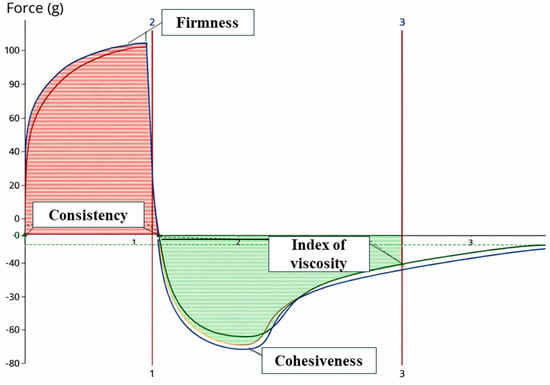
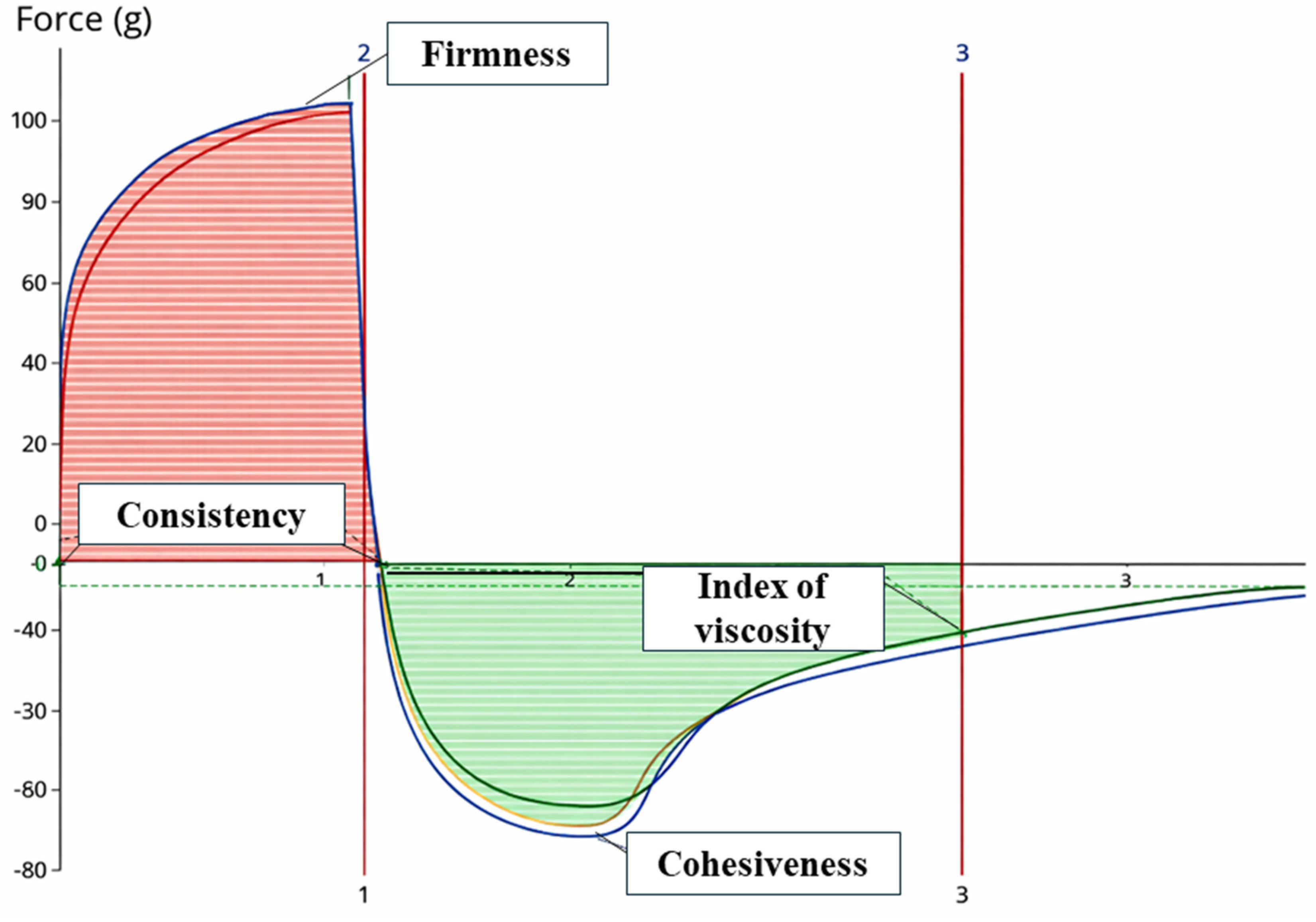
The texture analysis of the prepared samples from groups A and B was performed using a TA.XT plus texture analyzer (Stable Mycrosystems, Surrey, UK). It was used to evaluate the following texture properties: firmness (g), consistency (g × s), cohesiveness (g), and viscosity index (g × s) (Figure 2).
Figure 2.
Schematic representation of the back extrusion test used for texture analysis of shampoo formulations.
The measurements were performed at a temperature of 25 ± 2 °C. The Exponent program was used for texture analysis, the Back extrusion test was selected, the A/BE probe was used, the penetration depth was set at 5 mm, and the penetration speed was set at 2 mm/s [20]. For analysis, the samples were placed in a cylindrical container with a diameter of 6 cm. The analysis of the shampoo samples was performed immediately after preparation. During probe (diameter 4 cm) penetration into the sample, the parameters of firmness and consistency were evaluated, whereas during withdrawal, the parameters of cohesiveness and viscosity index were measured. Each test was performed 3 times (n = 3).
2.7. Statistical Analysis
The results are presented as means ± S.E. Statistical analysis was performed by one-way analysis of variance (ANOVA) followed by Dunnett’s (when comparing with control) or Tukey’s (when comparing between groups) multiple comparison tests using GraphPad Prism v.11.0.0 for Windows, GraphPad Software, Boston, MA, USA. A value of p < 0.05 was taken as the level of significance.
2.8. Figures
Figure 1 was drawn by hand then digitalized and refined using the AI-assisted design tool FigureLabs (https://figurelabs.ai). All result figures were drawn using GraphPad Prism v.11.0.0 for Windows, GraphPad Software, Boston, MA, USA.
3. Results
3.1. pH Value
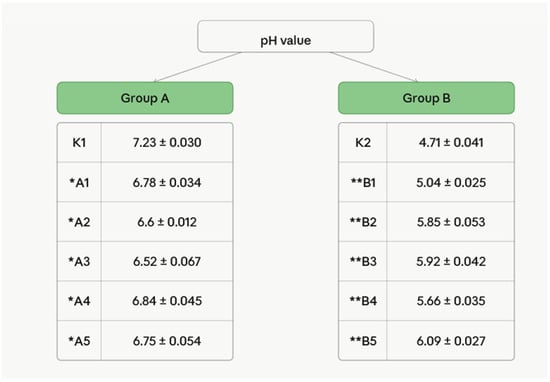
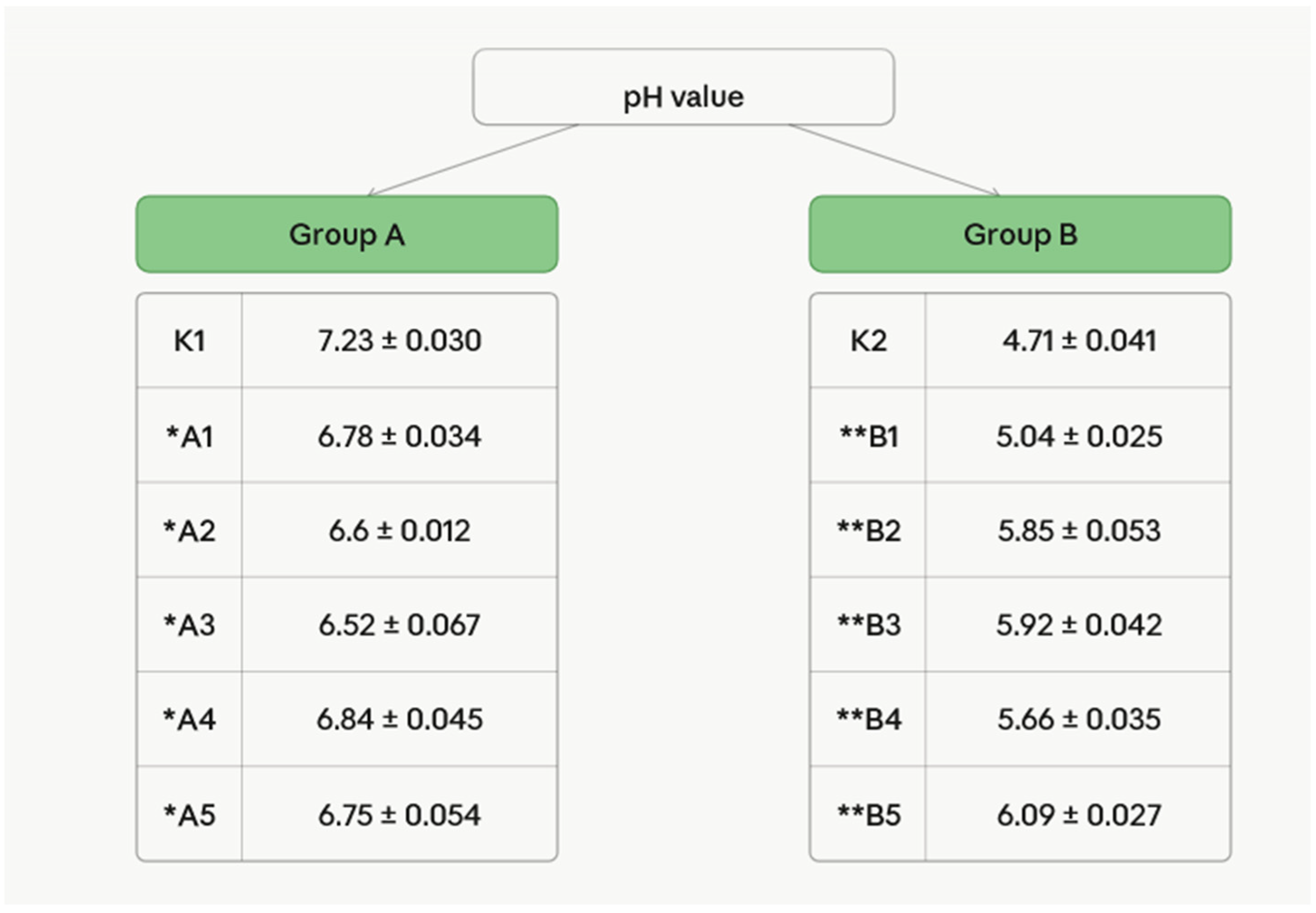
The use of different thickeners in the formulations of samples in groups A and B results in different pH values for samples belonging to both groups. The determined pH values are presented in Figure 3 below.
Figure 3.
pH values of samples from groups A and B, * p < 0.05 vs. K1, ** p < 0.05 vs. K2. Group A: acrylate copolymer-based formulations; group B: guar gum-based formulations. K: control; 1–5: specific surfactant blends (see Table 1).
The pH values of the samples in group A ranged from 6.52 to 7.23. The highest pH value (7.23 ± 0.030) was found in sample K1 (without SAAs). The addition of SAAs caused a decrease in pH, but the values remained close to neutral pH. The pH values of the samples in group B ranged from 4.71 to 6.09. The highest pH values were found in samples B3 and B5 with CAPB compared to formulations without CAPB.
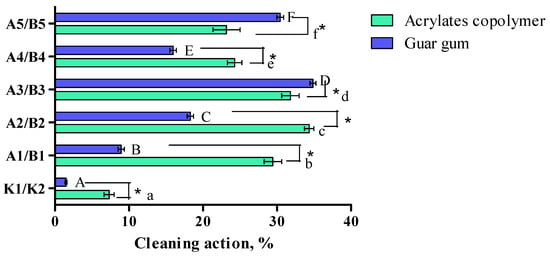
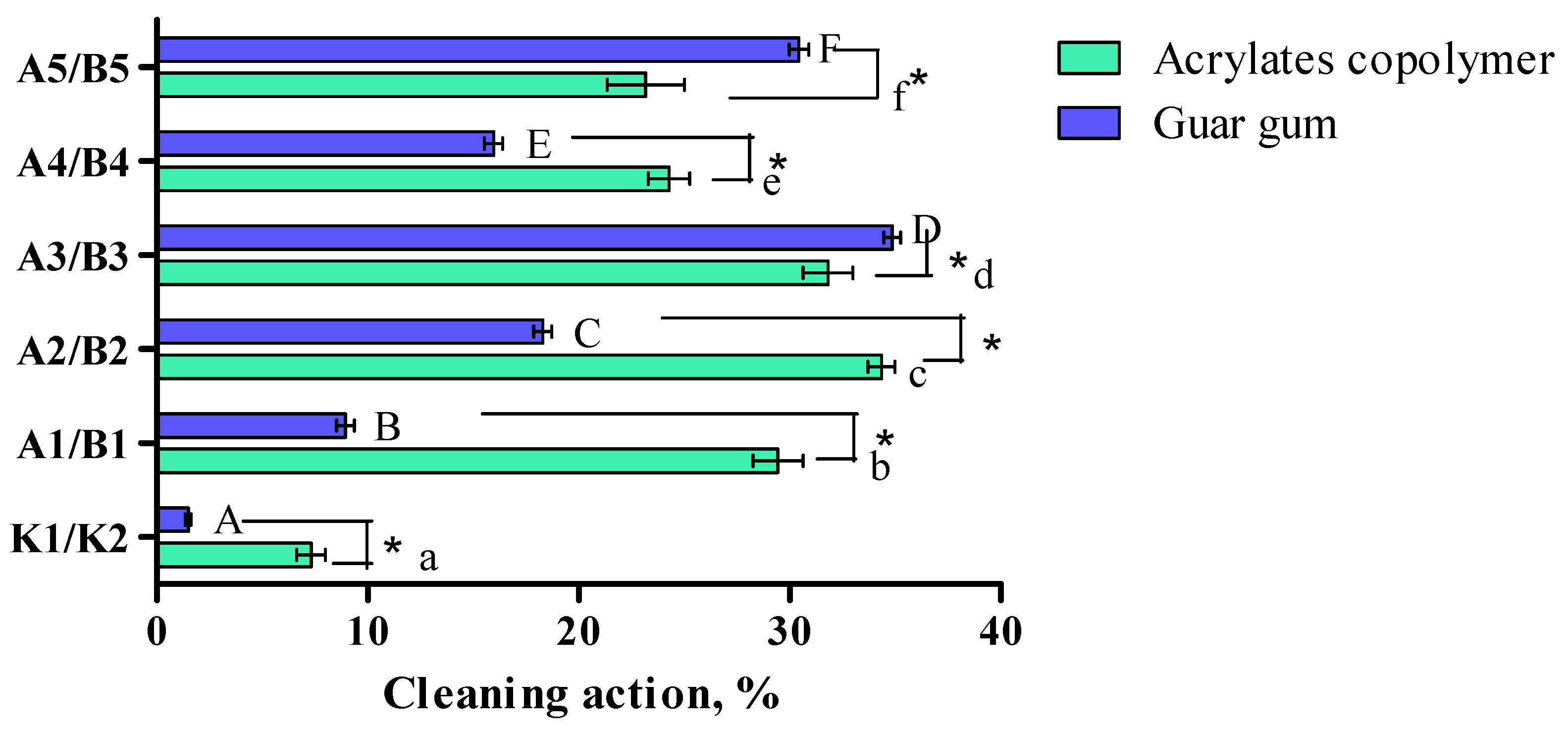
The results of the cleansing power assessment showed that the cleaning properties of SAAs vary depending on both the thickener and the composition of the sample (Figure 4).
Figure 4.
Cleansing power (%) of shampoo formulations containing acrylate copolymer (group A) and guar gum (group B). Data are presented as mean ± S.E. (n = 3). Asterisks (*) indicate statistically significant differences between formulations with identical surfactant composition but different thickeners (e.g., A1 vs. B1, A2 vs. B2). Different letters indicate statistically significant differences between formulations within the same thickener group (lowercase—acrylate copolymer, uppercase—guar gum, p < 0.05). K: control; 1–5: specific surfactant blends (see Table 1). GraphPad Prism program (GraphPad Prism version 11.0.0 for Windows, GraphPad Software, Boston, MA, USA) was used for data analysis and figure drawing.
The highest cleansing power was found in samples A2 and B3, whereas in the B2 formulation (without CAPB), the cleansing power was statistically significantly lower. The addition of CAPB to the guar gum-based shampoo formulation increased the cleansing power (from 18.29% in sample B2 to 34.85% in sample B3). The same trend is observed in samples B4 and B5—the incorporation of CAPB resulted in a statistically significant increase in cleansing power in sample B5. Meanwhile, the addition of CAPB to the acrylate copolymer-based formulation resulted in a decrease in cleansing power (from 34.35% in sample A2 to 31.82% in sample A3).
3.2. Foam Volume and Stability Assessment
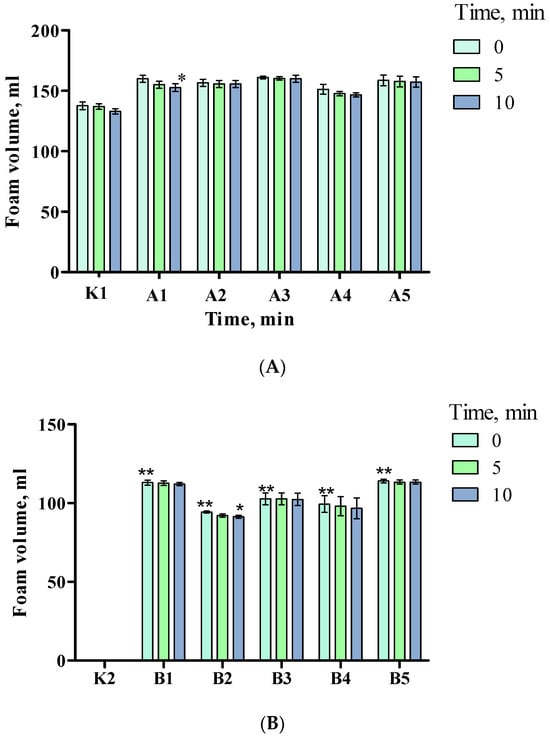
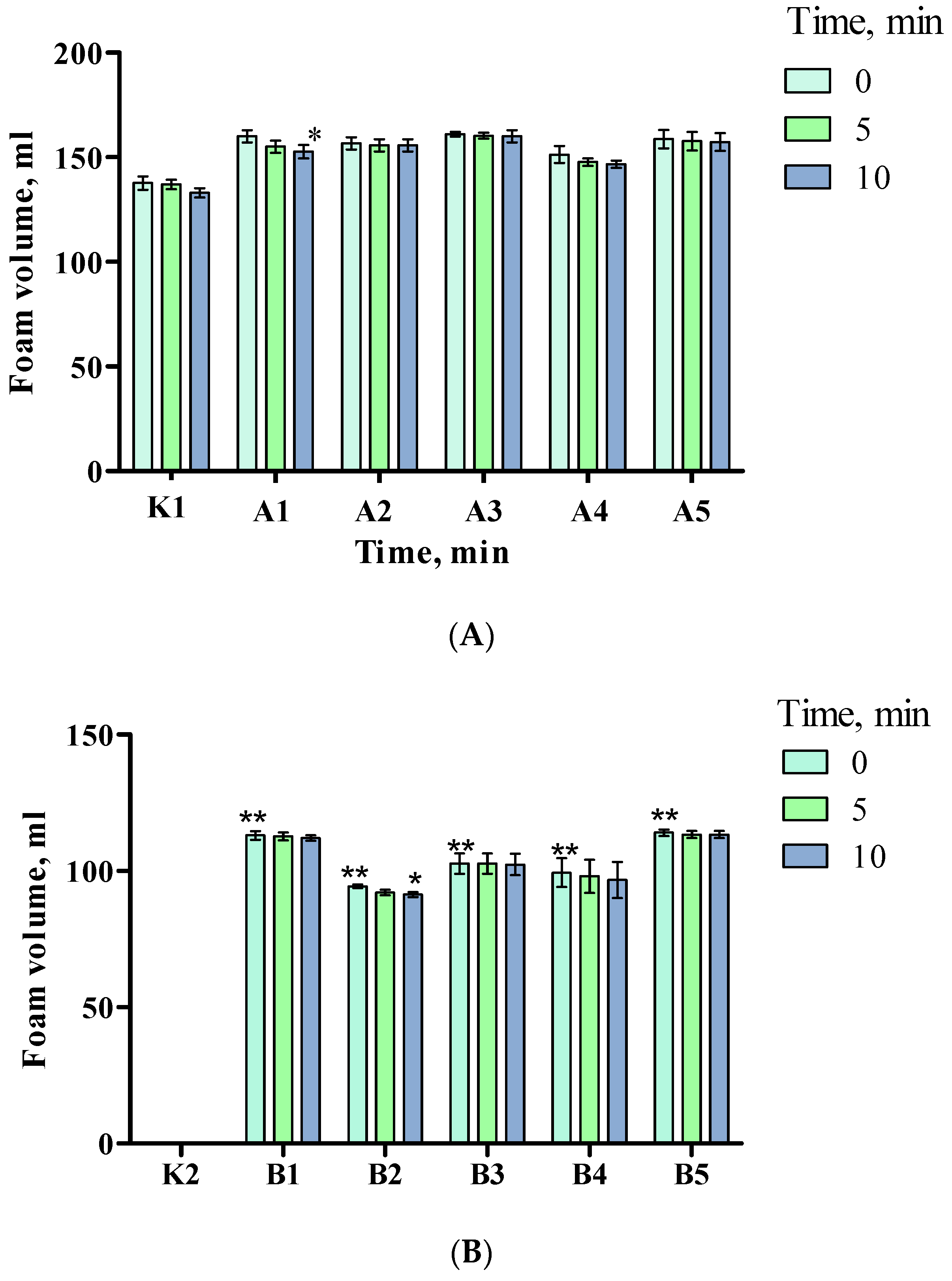
The results of the foam volume and stability assessment of the prepared group A and B shampoo samples are presented in Figure 5.
Figure 5.
Foam volume measured immediately after mixing (0 min) and its change after 5 min and 10 min. (A)—acrylate copolymer thickener, (B)—guar gum thickener, * p < 0.05 0 min vs. 10 min; ** p < 0.05 vs. group A, n = 3. Group A: acrylate copolymer-based formulations; group B: guar gum-based formulations. K: control; 1–5: specific surfactant blends (see Table 1). GraphPad Prism program (GraphPad Prism version 11.0.0 for Windows, GraphPad Software, Boston, MA, USA) was used for data analysis and figure drawing.
A comparison of the foam volume between groups A and B indicates that the use of acrylate copolymer as a thickener resulted in a higher foam volume (group A). Among the Group A shampoo samples, the highest foam volume was achieved in sample A3 (161.00 ± 1.16 mL) when measured immediately. In addition, the acrylate copolymer itself has foam-promoting properties, as foam formation was observed in sample K1, whereas no foam was observed in the guar gum-based control sample K2. The addition of CAPB to guar gum-based shampoo formulations increased foam volume and stability—the foam volume of samples B3 and B5 was higher than that of samples B2 and B4, which contained the same SAA concentrations without CAPB. The foam formed was also more stable.
3.3. Texture Analysis
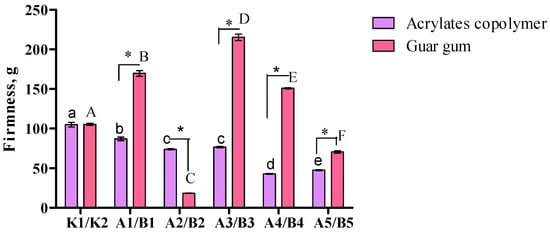
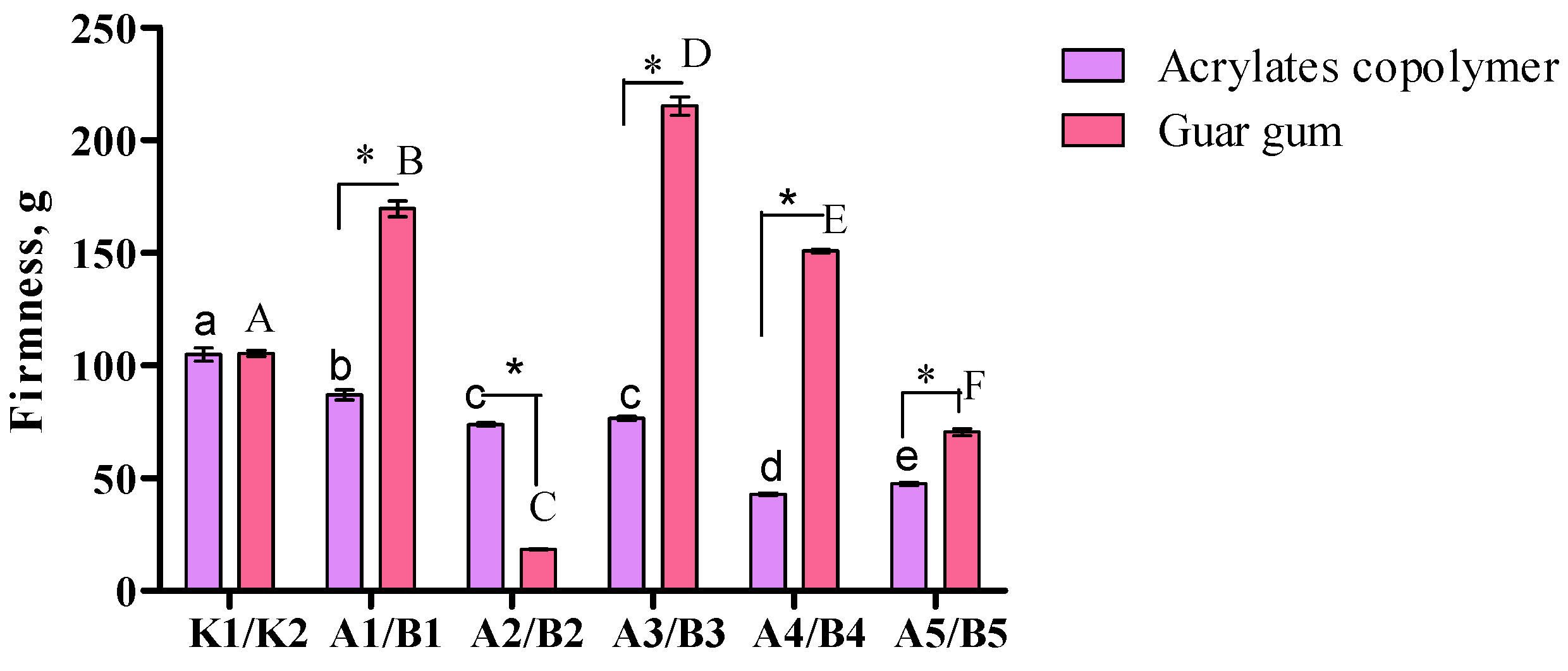
During texture analysis, the parameters of firmness, consistency, cohesiveness and index of viscosity shampoo samples from groups A and B were evaluated. As shown in Figure 6, Figure 7, Figure 8 and Figure 9, the texture profile of shampoo formulations was more strongly affected by the choice of thickener than by individual surfactant concentrations.
Figure 6.
Differences in firmness (g) of shampoo formulations containing acrylate copolymer (group A) and guar gum (group B). Data are presented as mean ± S.E. (n = 3). Asterisks (*) indicate statistically significant differences between formulations with identical surfactant composition but different thickeners (e.g., A1 vs. B1, A2 vs. B2). Different letters indicate statistically significant differences between formulations within the same thickener group (lowercase—acrylate copolymer, uppercase—guar gum, p < 0.05). K: control; 1–5: specific surfactant blends (see Table 1). GraphPad Prism program (GraphPad Prism version 11.0.0 for Windows, GraphPad Software, Boston, MA, USA) was used for data analysis and figure drawing.
Figure 7.
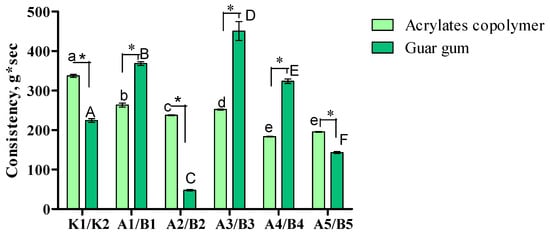
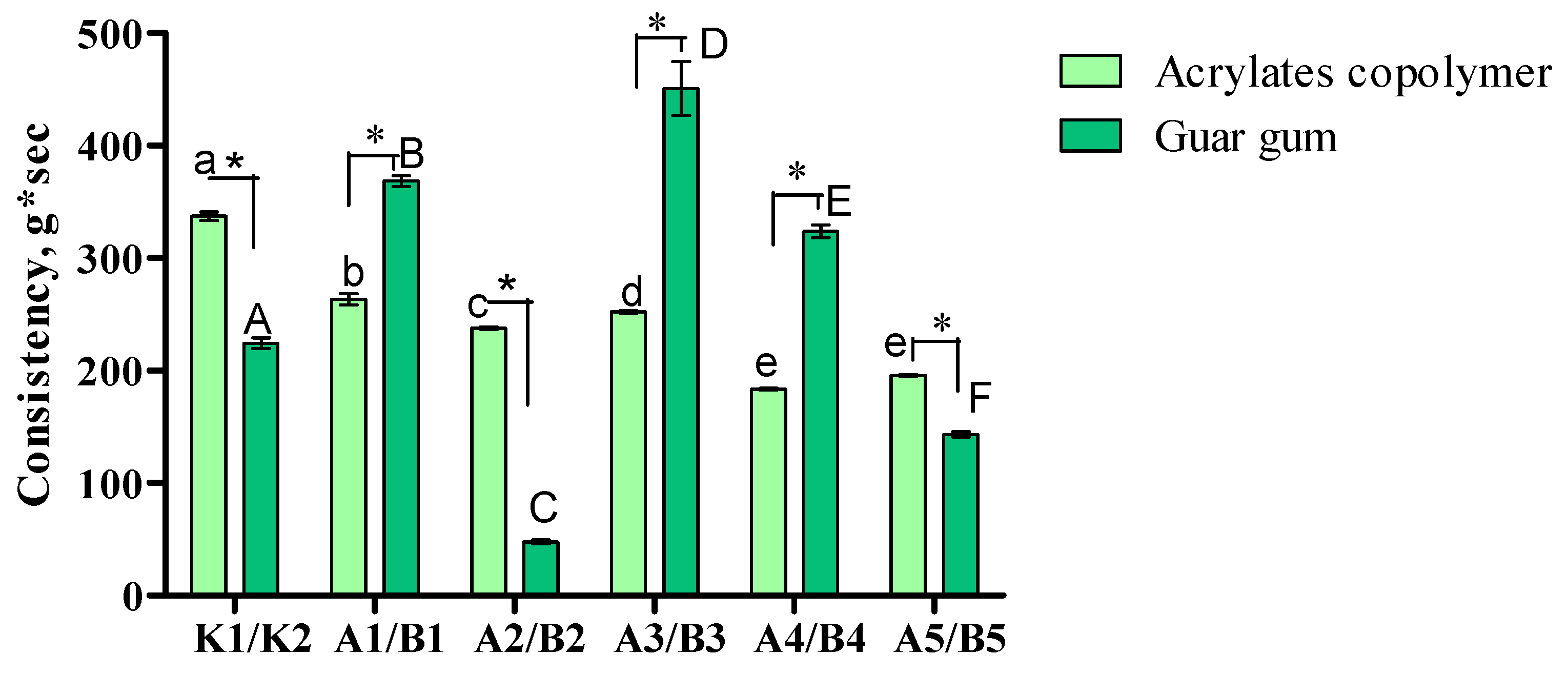
Differences in consistency (g × s) of shampoo formulations containing acrylate copolymer (group A) and guar gum (group B). Data are presented as mean ± S.E. (n = 3). Asterisks (*) indicate statistically significant differences between formulations with identical surfactant composition but different thickeners (e.g., A1 vs. B1, A2 vs. B2). Different letters indicate statistically significant differences between formulations within the same thickener group (lowercase—acrylate copolymer, uppercase—guar gum, p < 0.05). K: control; 1–5: specific surfactant blends (see Table 1). GraphPad Prism program (GraphPad Prism version 11.0.0 for Windows, GraphPad Software, Boston, MA, USA) was used for data analysis and figure drawing.
Figure 8.
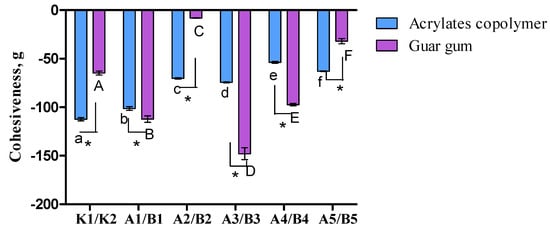
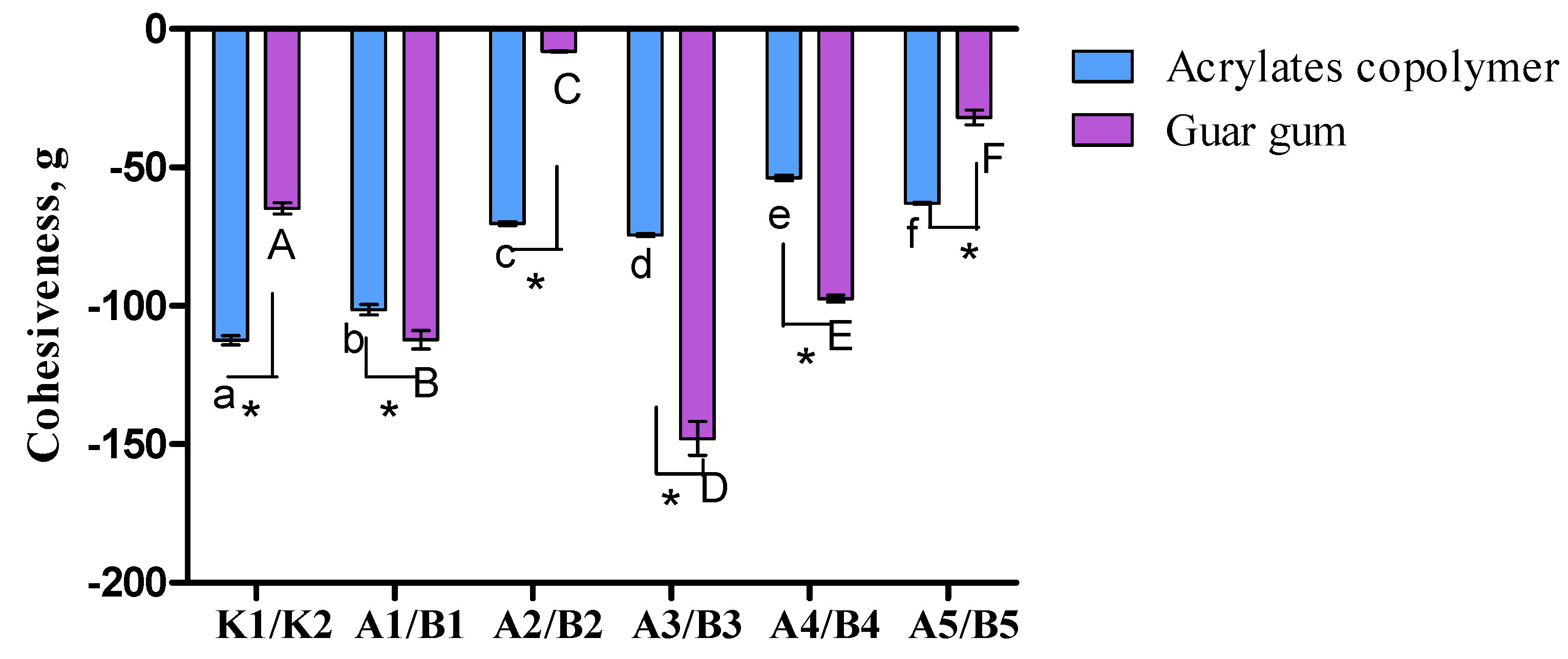
Differences in cohesiveness (g) of shampoo formulations containing acrylate copolymer (group A) and guar gum (group B). Data are presented as mean ± S.E. (n = 3). Asterisks (*) indicate statistically significant differences between formulations with identical surfactant composition but different thickeners (e.g., A1 vs. B1, A2 vs. B2). Different letters indicate statistically significant differences between formulations within the same thickener group (lowercase—acrylate copolymer, uppercase—guar gum, p < 0.05). K: control; 1–5: specific surfactant blends (see Table 1). GraphPad Prism program (GraphPad Prism version 11.0.0 for Windows, GraphPad Software, Boston, MA, USA) was used for data analysis and figure drawing.
Figure 9.
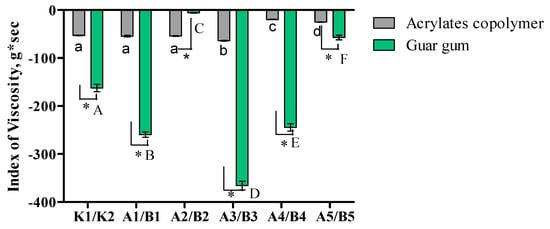
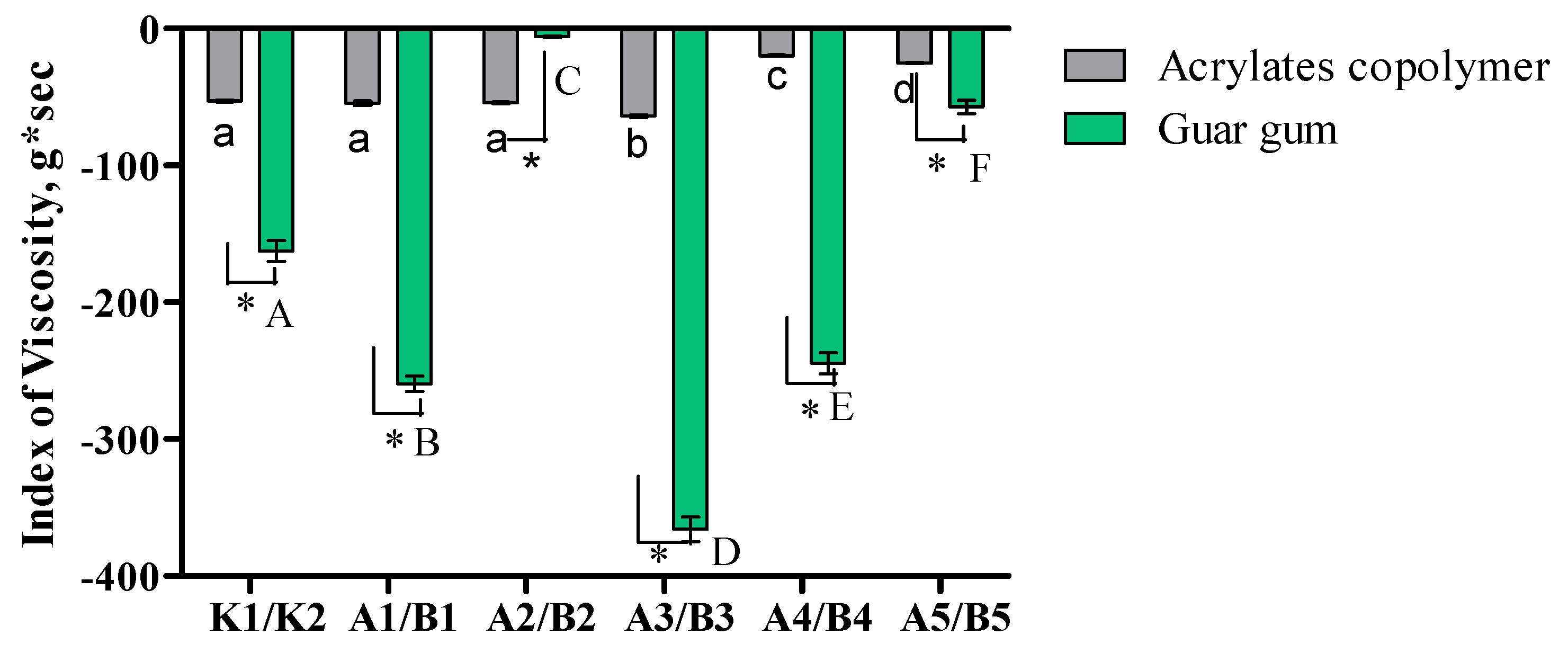
Differences in viscosity index (g × s) of shampoo formulations containing acrylate copolymer (group A) and guar gum (group B). Data are presented as mean ± S.E. (n = 3). Asterisks (*) indicate statistically significant differences between formulations with different thickeners but identical surfactant composition (e.g., A1 vs. B1, A2 vs. B2). Different letters indicate statistically significant differences between formulations within the same thickener group (lowercase—acrylate copolymer, uppercase—guar gum, p < 0.05). K: control; 1–5: specific surfactant blends (see Table 1). GraphPad Prism program (GraphPad Prism version 11.0.0 for Windows, GraphPad Software, Boston, MA, USA) was used for data analysis and figure drawing.
The samples in group B, in which guar gum was used as a thickener, showed higher firmness than the samples in group A, but the firmness was more difficult to control between different samples. The highest firmness was found in sample B3 (215.23 g) and insufficient firmness in sample B2 (18.5 g). In contrast, acrylate copolymer-based formulations showed a narrower firmness range.
The consistency values of the shampoos were influenced by the SAAs and the type of thickener (Figure 7).
Guar gum-based shampoo formulations exhibited greater variability in consistency depending on the type of surfactant used. The highest consistency value (450.8 g·s) was observed in sample B3, whereas sample B2 showed a significantly lower consistency.
The cohesiveness measurement results are presented in Figure 8.
The highest cohesiveness value was observed in sample B3, whereas sample B2 (without CAPB) exhibited the lowest cohesiveness. The incorporation of CAPB also resulted in a statistically significant increase in cohesiveness in formulation A5 (compared to A4), although this increase was smaller. The smallest difference in cohesiveness values between the two thickener groups was found in samples A1 and B1 with sodium coco glucoside tartrate. The incorporation of SAAs into the acrylate copolymer group samples led to a decrease in cohesiveness, whereas in the guar gum samples, the effect of SAAs varied depending on the specific sample.
The index of viscosity was strongly influenced by the thickener; formulations containing acrylate copolymer exhibited more stable viscosity profiles (Figure 9). The index of viscosity values in the guar gum samples was statistically significantly higher, with the highest value observed in sample B3. The index of viscosity of sample B2 (without CAPB) was the lowest among all tested samples. In contrast, the incorporation of CAPB into the formulation with disodium cocoyl glutamate (sample B4) resulted in a decrease in the index of viscosity in the guar gum group. The incorporation of CAPB into the acrylate copolymer samples (formulations A3 and A5) resulted in a statistically insignificant increase in the index of viscosity.
4. Discussion
4.1. pH Value
The obtained results demonstrate that the pH of the shampoo is affected not only by pH-modulating agents but also by the interaction between the thickener and surfactants. This study found that the use of guar gum as a thickener helps to obtain shampoo formulations with lower pH values, which are closer to the physiological pH value of the scalp. The higher pH values of the acrylate copolymer-based formulations were determined by the neutralization-dependent thickening mechanism of the acrylate copolymer, which requires adjustment to near-neutral pH to achieve optimal viscosity. For this reason, the combination of SAAs in the formulations of shampoos based on this thickener had a minor effect on the pH value. In contrast, SAAs had a greater effect on the pH values in the samples of shampoos based on guar gum: the addition of CAPB to the formulations increased the pH values.
From a formulation perspective, these findings are consistent with previous studies reporting that shampoos with slightly acidic pH values are more suitable for damaged hair and are more suitable for maintaining the smooth condition of the hair cuticle. A study by Adav S. et al. (2024) found that pH levels between pH 5 and pH 7 had a minimal effect on hair structure and proteins, indicating that hair care products with pH levels in this range are most suitable for maintaining healthy hair [21]. Similarly, in a study conducted by Bartkutė (2024), the pH of a shampoo formulated with allantoin and patchouli extract was found to be 5.8 [22]. This pH is close to the physiological pH of the scalp and corresponds to a slightly acidic environment, which is favorable for hair care products [8]. Comparable pH ranges were also reported by Jaiswal et al. (2024), who formulated a polyherbal shampoo with pH values between 6.0 and 7.0, as well as by Manawi et al. (2022), who observed pH values ranging from 5.15 to 6.5 in an anti-dandruff shampoo containing MEL and SLS [23,24]. The obtained pH values are generally consistent with those reported for commercial shampoo formulations, which are typically in the range of 4.5–5.5. In the present study, guar gum-based formulations exhibited pH values closer to this range, indicating good compatibility with scalp physiology. This proves that guar gum thickener is suitable for formulating shampoos for damaged hair. In particular, sample B1 demonstrated the most favorable pH for both scalp and hair (pH 5.04), which is associated with reduced cuticle damage. This pH value helps to improve cuticle integrity as it is close to the pH value of the scalp and hair. In addition, the guar gum in the composition contributes to the smoothing effect due to its cationic properties. In contrast, acrylate copolymer-based formulations showed higher pH values (6.52–7.23), which can be explained by the neutralization-dependent thickening mechanism of this polymer. Although the pH values of the acrylate copolymer samples fall within the pH range suitable for hair care products, guar gum thickener would be more suitable for formulating a hair-restoring shampoo.
The differences in pH values between formulations can be explained by the physicochemical properties of the thickeners. Acrylate copolymer is a pH-responsive polymer containing ionizable carboxylic groups, which require neutralization to develop viscosity. With increasing pH, these groups become ionized, leading to expansion of the polymer chains and formation of a more structured network, which is essential for thickening behavior [25]. Consequently, acrylate copolymer-based formulations exhibit higher pH values. In contrast, guar gum is a nonionic polysaccharide that does not require neutralization, and therefore the pH of these systems is mainly determined by the surfactant system and added pH modifiers. Additionally, amphoteric surfactants such as CAPB may influence pH due to their buffering behavior.
In summary, the results obtained showed that when formulating shampoo, it is important to take into account the influence of the thickener—SAAs—on the pH value of the shampoo, rather than relying solely on pH adjustment after production.
4.2. Cleansing Power
The cleansing power values determined in this study fall within the range of cleansing power values obtained in other studies using wool-based methods. In Bartkutė’s (2024) study using the wool thread method, the cleansing power of the formulated shampoo with allantoin was found to be 20.27 ± 0.06%, while Žlabienė et al. (2024) observed similar values for formulations enriched with patchouli extract, which was approximately 20% [22,26]. A broader range of cleansing efficiency (19.6–30.11%) was reported by Jaiswal et al. (2024), indicating that moderate variability in cleansing power is typical for shampoo formulations depending on surfactant composition [23]. Based on the results of previous studies evaluating cleansing power, it can be concluded that the cleansing power measured in this study is optimal and similar to the results obtained in previous studies.
However, not all shampoo formulations analyzed in this study exhibited optimal cleansing power—samples B1 and B4 demonstrated lower cleansing power compared to previous studies; therefore, the composition of these samples is not optimal for formulating a high-quality product. The low cleansing efficiency observed in guar gum-based formulations may also be associated with polymer-related deposition phenomena. Similar effects have been reported in polymer–surfactant systems, where complexes can adsorb onto surfaces and modify their properties, potentially hindering effective soil removal [27]. In contrast, samples A2 and B3 demonstrated the highest cleansing power, indicating a more favorable balance between surfactant activity and formulation structure. The significantly higher cleansing power observed in acrylate copolymer-based formulations (e.g., A1) compared to guar gum systems (e.g., B1) may be attributed to differences in their interaction with surfactants. Acrylate copolymers (HASE), being anionic and capable of associative thickening, can interact with surfactant micelles, potentially enhancing their stability and facilitating the removal of soil through improved dispersion and electrostatic repulsion. In contrast, guar gum, as a non-ionic polysaccharide, forms a more continuous viscous network that may hinder the diffusion of surfactants toward the substrate surface, thereby reducing cleansing power. The differences in cleansing power obtained can also be interpreted based on surfactant aggregation behavior and critical micelle concentration (CMC). As discussed by Cornwell (2018) [13], this decrease in cleansing power at higher SAA concentrations can be explained by the influence of CMC on the cleansing power of shampoo: as the SAA concentration increases, surface tension decreases, resulting in more effective removal of dirt. When the CMC limit is reached, SAAs form micelles [13,20]. Micelles are no longer formed at the air–liquid interface, but in the liquid itself (shampoo), which reduces their effectiveness in interacting with dirt. However, in complex systems containing polymers, this approach is limited. Shampoo formulations are composed of supramolecular complexes formed through interactions between surfactants and polymers, whose structure depends on composition and physicochemical conditions [28]. It has been shown that surfactant–polymer association may occur at the so-called critical aggregation concentration (CAC), which differs from the classical CMC and reflects the onset of cooperative binding between surfactant molecules and polymer chains [28]. Therefore, the observed effects cannot be attributed solely to CMC, but rather to complex polymer–surfactant interactions governing the system structure. Samples A2 and B3 showed the highest cleansing power (34.35% and 34.85%, respectively), and would therefore be most suitable for ensuring sufficient cleaning effect. The highest cleansing power in shampoos is achieved when the SAA concentration is close to CMC, as this is the point at which the optimal cleansing effect is achieved. The results show that the SAAs in samples A2 and B3 were closest to CMC compared to the other samples.
In addition to surfactant concentration, micelle size and structure play a crucial role in cleansing performance. Larger micelles or lamellar phases are less effective at removing lipid impurities [20]. In addition, anionic SAAs may compete for adsorption on the surface, which may also reduce cleansing power. It can be hypothesized that more stable and smaller micellar structures may have formed in samples A2 and B3, contributing to more effective removal of lipid impurities. However, micelle size was not directly measured in this study, and this interpretation is based on observed differences in cleansing performance. The addition of CAPB to the formulation of sample B3 resulted in an increase in cleansing power, while in sample A3 it resulted in a decrease. This can be explained by the fact that the introduction of CAPB changed the composition of the micelles and reduced the activity of free anionic monomers, thus reducing the cleansing power.
These results demonstrated that both acrylate copolymer and guar gum are suitable thickeners for formulating a shampoo with effective cleansing power, but SAAs have the greatest influence on cleansing power. This is evidenced by the difference in cleansing power between samples B2 and B3. Sample B3 had almost twice the cleansing power of sample B2, despite having the same concentration of thickener, primary and secondary SAAs, and differing only in the addition of the auxiliary substance CAPB to sample B3.
4.3. Texture Analysis
The texture profiles of the shampoo samples depended on the interaction between the thickener used and the SAAs. The acrylate copolymer-based samples exhibited more stable texture profile characteristics and were less dependent on SAA combinations, while the guar gum-based samples exhibited greater texture profile variability, which was strongly dependent on the SAAs used in the formulation.
Firmness is a key texture parameter that determines the resistance of shampoo to deformation when squeezed out of the packaging. Silva et al. (2020), in their study of shampoo with botanical extracts using a texture analyzer (TA.XT), determined firmness values ranging from 50.34 g to 70.38 g, which were considered suitable for consumer use [29]. The firmness values of the acrylate copolymer samples were generally comparable to those reported by Silva et al. [29], although they had a slightly wider range of values. Most acrylate copolymer samples demonstrated firmness values consistent with acceptable shampoo textures, indicating that this thickener can provide sufficient structural stability to shampoo while maintaining ease of dispensing. As observed in the study by Silva et al. [29], the highest firmness value within this group was recorded for the formulation lacking surfactants (sample K1), suggesting that the absence of surfactant-induced structural disruption results in increased firmness. Firmness values obtained in guar gum-based samples ranged from very low to very high. Extremely high firmness, as observed in sample B3, may hinder product dispensing and distribution on hair, while insufficient firmness, as observed in sample B2, results in overly fluid formulations that are impractical for shampoo applications. In summary, the firmness results reveal that the use of acrylate copolymer as a thickener ensures more predictable and formulation-robust control of shampoo texture, while guar gum thickener requires more precise optimization to avoid undesirable firmness extremes.
A similar trend was observed for consistency, which reflects the force required to squeeze the shampoo out of the packaging. Consistency values in the literature vary depending on the shampoo formulation. In Bartkutė’s study, the consistency values obtained in the texture analysis ranged from 468.98 to 540.21 g × s [22], while in Mažutytė’s study, they ranged from 342.12 to 374.42 g × s [22,30]. In this study, the consistency values of acrylate copolymer-based shampoo formulations remained within a moderate and formulation-appropriate range. In contrast, guar gum shampoos exhibited both excessive and insufficient consistency values, which have a negative impact on shampoo handling and application.
Cohesiveness values also differed between the groups studied. The guar gum-based shampoo formulations were characterized by inconsistent cohesiveness—the values determined in formulations B2 and B3 indicate significant variation in internal structural interactions, with some samples exhibiting insufficient cohesiveness and others excessively high cohesiveness. In contrast, the acrylate copolymer-based samples had a more stable and balanced cohesiveness profile. Too low cohesiveness indicates poor structural integrity, while too high cohesiveness makes it difficult to rinse the shampoo out of the hair during cleansing [31]. Previous studies provide a useful reference framework for interpreting the cohesiveness values obtained in the present study. In Monkutė’s study, cohesiveness values ranged from −25.151 g to −59.886 g [32]. Similarly, Bartkutė reported cohesiveness values between −36.8 g and −56.13 g, which can be considered indicative of a functionally balanced shampoo texture [22]. In the present study, acrylate copolymer shampoo samples A4 and A5 and guar gum-based sample B5 had cohesiveness values close to the ranges reported in the literature, suggesting an appropriate balance between structural integrity and rinsability. In contrast, sample B2 exhibited extremely low cohesiveness values, indicating insufficient internal structural integrity of the formulation. Conversely, sample B3 showed very high cohesiveness values, suggesting an overly structured system that may negatively affect the ease of product distribution and removal during washing. The results showed that both acrylate copolymer and guar gum help to achieve acceptable cohesiveness values, but the use of guar gum as a thickener may be limited because cohesiveness behavior was strongly dependent on the SAA composition. Guar gum interacts with surfactants primarily through hydrophobic interactions and, depending on system conditions, through weak associative or electrostatic effects. These interactions can lead to the formation of polymer–surfactant complexes, which alter the organization of the polymer network. As reported, “the presence of surfactant caused an increase in guar gum adsorption in all studied systems as a consequence of the formation of complexes” [31]. Depending on the type and concentration of the surfactants, these interactions may either promote network formation and increase structural integrity or disrupt polymer chain entanglement, resulting in reduced cohesiveness. In particular, the incorporation of amphoteric surfactants may enhance compatibility within the system and modify intermolecular interactions, thereby influencing the overall viscoelastic behavior and cohesiveness of the formulation.
The viscosity index parameter describes how much force is required per unit of time to cause a change in the viscosity of the shampoo. The thicker the shampoo, the higher its viscosity index and the more difficult it is to squeeze out of the packaging. Previous studies help to determine what viscosity index values are acceptable when formulating shampoo. The viscosity index of the shampoo determined by Mažutytė was −76.59 g × s [30], while in Monkutė’s study, the viscosity indices ranged from −5.352 g × s to −18.338 g × s [32]. This reflects that the index of viscosity tends to vary depending on the shampoo formulation. Compared to previous studies, the viscosity index range obtained in this study differed between groups. The viscosity index parameters for group A ranged from −19.68 g × s to −63.94 g × s and were similar to the ranges obtained in both previous studies. This indicates that acrylate copolymer provides predictable flow behavior and allows the formulation of shampoos that can be readily dispensed from packaging. In contrast, shampoos formulated with guar gum exhibited greater differences than those reported in the literature. Several samples (K2, B1, B3, and B4) exhibited markedly higher viscosity index values, suggesting excessive resistance to flow and potential difficulty during product dispensing. Only samples B2 and B5 exhibited viscosity index values similar to those obtained in previous studies, indicating that acceptable flow properties can be achieved with guar gum but require careful optimization of surfactant composition.
The particularly low texture parameters observed in sample B2 can be explained by the specific surfactant composition of this formulation. Sample B2 contains only anionic surfactants, which are known to interact weakly with nonionic polysaccharides such as guar gum. Previous studies have shown that there occurs a significant drop in the consistency index with the addition of anionic surfactant, indicating modest interactions between the surfactant and the polymer [33]. In such systems, “weak to moderate interactions… result in small to modest changes in rheological properties” [33]. As a consequence, polymer chain entanglement is limited and a stable three-dimensional network is not effectively formed, leading to low cohesiveness and consistency values. This explains why sample B2 exhibits the lowest texture parameters compared to other formulations containing different surfactant types. According to the review by Cornwell, the reason for this may be the different properties of anionic SAAs [13]. Although both substances do not interact strongly with thickener molecules, the interaction of glutamates is weaker, and they do not cause the formation of a micelle network, reduce micelle aggregation, and thus reduce the values of shampoo texture parameters. The addition of CAPB (e.g., B3) to the formulation resulted in higher texture parameters, but they remained lower than those of the initial A5 sample. The pronounced increase in viscosity observed in guar gum-based formulations upon addition of CAPB suggests a key role of this surfactant in structuring the system. CAPB is an amphoteric low-molecular-weight SAA, the largest part of which is an alkyl chain. For this reason, CAPB acts as a hydrophobic thickener in the formulation [13].
The inclusion of CAPB (e.g., B3) significantly enhances viscosity, which may be explained by its amphoteric nature. CAPB can participate in the formation of mixed micellar structures and act as a bridging component between surfactant micelles and the polymer matrix. This leads to improved network formation and increased resistance to flow. Therefore, CAPB may function as a structuring agent or “micellar mediator” in guar gum-based systems, facilitating the development of a more cohesive and stable formulation.
The observed differences in texture behavior between the two formulation groups can be further explained by their distinct thickening mechanisms. Acrylate copolymer (group A) exhibits associative thickening, where hydrophobic groups of the polymer interact with surfactant micelles, forming structured and interconnected networks. This results in more robust and predictable rheological behavior, less sensitive to variations in surfactant composition. In contrast, guar gum (group B) relies primarily on polymer chain entanglement and hydrogen bonding. Such a network is more susceptible to disruption by surfactant type and charge, particularly in the presence of anionic surfactants. As a result, guar gum-based systems exhibit greater variability and sensitivity to formulation changes, leading to less predictable texture properties. This fundamental difference explains the higher robustness of synthetic associative polymers compared to natural polysaccharide-based systems.
4.4. Foam Volume and Stability
Although foam volume does not directly affect the main functions of shampoo (in this case, removing dirt and strengthening and restoring hair), it is associated with greater consumer satisfaction with the product. Foam stability is important so that the foam does not disappear immediately, but is maintained throughout the entire hair cleansing process. The samples in group A with acrylate copolymer showed greater foaming than the samples in group B with guar gum, indicating that foam formation depends not only on surfactant composition but also on the selected thickener. The foam volumes obtained in this study were lower than those reported by Monkutė et al., who observed values of 172–179 mL and Žlabienė et al., who reported initial foam volumes of approximately 178 mL that decreased to 160 mL within 4 min [26,32]. Despite the lower foam volume achieved, in this study, both guar gum and acrylate copolymer group samples exhibited greater foam stability, suggesting that formulation structure rather than maximum foam volume may play a more critical role in maintaining foam during use.
The enhanced foam stability observed in acrylate copolymer-based formulations can be attributed to increased viscosity and the rheological properties of this thickener. Higher viscosity slows down the flow of liquid from the walls of the bubbles formed, so the bubble films formed are stronger and last longer. These results may have been due to the interaction properties of the acrylate copolymer and anionic SAAs (sodium coco glycoside tartrate). Although an increase in viscosity and texture parameters is often associated with improved foam stability due to reduced liquid drainage, this relationship is not universal. Increased viscosity may also hinder foam formation and reduce foamability [34]. In polymer–surfactant systems, the effect of polymers on foam properties strongly depends on the type of surfactant present. It has been shown that the addition of polymers can improve foam stability in systems containing zwitterionic surfactants, whereas in anionic surfactant systems, the same additives may not enhance foam stability and can even lead to faster foam decay [35]. This behavior is attributed to differences in polymer–surfactant interactions and surfactant packing at the air–liquid interface. Therefore, the observed discrepancy between high texture parameters and limited foam stability in some guar gum systems can be explained by the dominant role of interfacial properties and surfactant type rather than bulk viscosity alone. However, acrylate copolymer belongs to the HASE class of synthetic polymers [31]. The hydrophobic groups in the chain of polymers belonging to this class determine the hydrophobic interaction, which leads to the formation of intermolecular networks. It is their formation that ensures increased viscosity and structural stability. In addition, when used in combination with SAAs, synergy is possible and the foaming properties of this thickener are enhanced [31]. However, if the concentration of acrylate copolymer is too low or the proportions of SAAs and this thickener are not selected correctly, the hydrophobic interactions necessary to maintain stable viscosity may be disrupted [31]. According to Cornwell (2018), foams collapse due to rapid fluid leakage between bubble walls, as well as weak intermolecular bonds between SAA molecules [13]. Anionic SAAs are not prone to forming strong interactions with each other, so the resulting foam may be less stable.
When the concentration of the surfactant reaches the critical micelle concentration (CMC), foam formation improves due to reduced surface tension and increased surfactant adsorption at the air–liquid interface. The closer the value is to CMC, the fewer free SAA molecules remain in the liquid, and the better the foam formation. Polymers can have a positive effect on the foam-forming properties of SAAs because, at concentrations below CMC, SAAs increase the density of the surface active layer. However, when the CMC is exceeded, SAAs begin to form micelles inside the liquid. This micelle formation results in a lower amount of free SAAs in the solution, so fewer SAAs molecules can be adsorbed on the surface of the liquid [36]. Another factor that is important to consider when interpreting the foam volume results is the formation of complexes between the polymer and SAAs. Since sodium coco glycoside tartrate is an anionic surfactant, it can form complexes with acrylate copolymer. The complexes formed can be of two types: surface complexes and bulk complexes. The formation of surface complexes leads to the formation of denser adsorption layers, which increase foam stability by providing stronger mechanical support for the bubble films. Bulk complexes result in a lower concentration of free SAA molecules, fewer of which can be adsorbed onto the surface, thereby reducing the foam volume [36]. Based on the results obtained in this study, the differences in foam volume between guar gum and acrylate copolymer samples can be explained by the different thickening mechanisms of these thickeners and their different interactions with SAAs. Acrylate copolymer shampoo formulations exhibited higher foam volumes, which can be explained by the formation of hydrophobically associated polymer networks characteristic of HASE thickeners. These networks increase viscosity and slow down the flow of liquid from the foam lamellae, resulting in the formation of stable foam. In contrast, guar gum formulations exhibited lower foam volumes due to increased bulk viscosity. This property does not promote hydrophobic intermolecular network formation to the same extent as acrylate copolymer, leading to faster liquid drainage from foam films. The addition of CAPB improved the foaming properties of guar gum formulations, likely by enhancing surfactant packing at the air–liquid interface and partially compensating for the lack of hydrophobic polymer associations.
These results show that foam formation in shampoo is determined not only by SAA combinations (although they also have a significant effect on foam volume), but also by the structural properties of the thickener. Acrylate copolymer helps to formulate shampoos with higher foaming properties, while guar gum-based formulations require precise optimization of SAA concentration in order to achieve similar results.
This study provides a systematic evaluation of the influence of different thickeners on shampoo properties; however, several limitations should be acknowledged. The study focused on physicochemical and performance parameters under controlled laboratory conditions, without evaluating long-term stability, sensory perception, or in vivo performance on hair. In addition, micellar structure and size were not directly characterized, and the interpretation of polymer–surfactant interactions was based on indirect observations.
Future studies should focus on advanced characterization techniques, such as dynamic light scattering or interfacial rheology, to better understand the relationship between microstructure and macroscopic performance. Furthermore, the inclusion of sensory analysis and consumer-oriented testing would provide a more comprehensive evaluation of formulation performance.
The observed differences between acrylate copolymer and guar gum highlight the importance of considering not only the origin of the raw material (synthetic vs. natural), but also its compatibility with surfactant systems. Such an approach supports the development of more sustainable formulations by facilitating informed ingredient selection and reducing the need for trial-and-error formulation strategies.
4.5. Formulation Implications
The results reveal the suitability of acrylate copolymer and guar gum as thickeners in shampoo formulations. Acrylate copolymer is a suitable thickener choice for formulating a shampoo intended for daily care of normal hair, as its pH value is close to weakly acidic, but it would not be the most suitable for improving the condition of damaged hair cuticles. Due to the neutralization-dependent thickening mechanism of acrylate copolymer, the pH values maintained by this thickener are suitable for shampoos intended for babies and children, as it does not irritate the eyes. In addition, this thickener will help to achieve a favorable texture and higher foam volume more easily, without the need for complex SAA combinations. However, the applicability of acrylate copolymer thickeners is limited when formulating lower-pH shampoos (~5). In contrast, guar gum-based formulations enabled greater flexibility in achieving lower, hair-friendly pH values and may contribute to a softer, more conditioning sensory profile. Guar gum would be more suitable for formulating a shampoo designed to strengthen and restore hair, as it supports lower pH values, but would require extremely precise selection of SAA combinations, as even minor changes in the formulation can critically affect the texture or reduce the cleansing power. Although acrylate copolymer-based formulations demonstrated superior texture and foam properties, their requirement for near-neutral pH represents a formulation trade-off. While such pH values are considered eye-compatible, they may promote hair shaft swelling and potential cuticle disruption. Therefore, the selection of thickener should be based on the intended application of the shampoo, balancing performance attributes with hair compatibility. Acrylate copolymer may be more suitable in formulations where enhanced texture and mildness to the eyes are prioritized, such as in products for children, whereas guar gum may be preferable when maintaining lower, hair-compatible pH is the primary objective.
In addition to pH effects, the choice of pH modifiers may also influence the ionic strength of the formulation and thereby affect surfactant behavior. Triethanolamine and citric acid introduce different counter-ions into the system, which can alter electrostatic interactions between surfactant headgroups and influence micellar organization. In acrylate copolymer-based systems, the presence of triethanolamine may contribute to a more favorable ionic environment for associative thickening, potentially enhancing hydrophobic interactions and network formation. In contrast, citric acid in guar gum-based systems may lead to different electrolyte conditions, which could influence polymer hydration and surfactant–polymer interactions. Although these effects were not investigated in detail in this study, they may partially contribute to the observed differences in formulation performance.
5. Conclusions
Shampoo properties, including pH, foam characteristics, cleansing power, and texture, are governed by the interactions between thickeners and SAAs, highlighting the importance of their compatibility in formulation design. Acrylate copolymer enabled the development of formulations with more stable and consistent performance, showing lower sensitivity to variations in surfactant composition and allowing greater flexibility in SAA selection, although its application is limited in acidic systems due to the requirement for neutralization. In contrast, guar gum allowed more flexible pH adjustment and is suitable for formulations targeting damaged or chemically treated hair; however, it exhibited higher sensitivity to surfactant type and concentration. Overall, these findings demonstrate that thickener selection should consider not only viscosity enhancement but also its interaction with surfactants and its impact on overall formulation performance, supporting a more holistic approach to shampoo design. Despite the valuable insights obtained in this study, certain limitations should be acknowledged. The formulations were evaluated under laboratory conditions without long-term stability or toxicity assessment. Furthermore, the results were based on instrumental measurements, which may not fully reflect consumer perception. Therefore, future studies should include stability and safety evaluations, as well as testing on human hair tresses to assess sensory properties and validate the relationship between mechanical measurements and perceived product performance.
Author Contributions
Conceptualization, D.M.K. and U.B.; writing—original draft preparation, D.M.K. and U.B. All authors have read and agreed to the published version of the manuscript.
Funding
This research received no external funding.
Institutional Review Board Statement
Not applicable.
Informed Consent Statement
Not applicable.
Data Availability Statement
The original contributions presented in this study are included in the article. Further inquiries can be directed to the corresponding author.
Acknowledgments
The authors wish to thank Pharmaceutical and Health technology Open access center, LUHS, Kaunas, Lithuania, for the support of this study.
Conflicts of Interest
The authors declare no conflicts of interest.
Abbreviations
The following abbreviations are used in this manuscript:
| SAAs | Surface Active Agents |
| HASE | Hydrophobically Modified Alkali-Swellable Emulsions |
| CAC | Critical Aggregation Concentration |
| CAPB | Cocamidopropyl Betaine |
| SLS | Sodium Lauryl Sulfate |
| MEL | Mannosylerythritol Lipids |
References
- Gubitosa, J.; Rizzi, V.; Fini, P.; Cosma, P. Hair Care Cosmetics: From Traditional Shampoo to Solid Clay and Herbal Shampoo, A Review. Cosmetics 2019, 6, 13. [Google Scholar] [CrossRef] [Scilit]
- Godeto, Y.G.; Bachheti, R.K.; Bachheti, A.; Saini, S.; Wabaidur, S.M.; Mohammed, A.A.; Širić, I.; Kumar, P.; Abou Fayssal, S.; Rai, N. Sustainable use of extracts of some plants growing in Ethiopia for the formulation of herbal shampoo and its antimicrobial evaluation. Sustainability 2023, 15, 3189. [Google Scholar] [CrossRef] [Scilit]
- Simovic, S.; Tamburic, S.; Milic-Askrabic, J.; Rajic, D. An investigation into interactions between polyacrylic polymers and a non-ionic surfactant: An emulsion preformulation study. Int. J. Pharm. 1999, 184, 207–217. [Google Scholar] [CrossRef] [Scilit] [PubMed]
- Milanović, M.; Krstonošić, V.; Dokić, L.; Hadnađev, M.; Dapčević Hadnađev, T. Insight into the interaction between Carbopol® 940 and ionic/nonionic surfactant. J. Surfactants Deterg. 2015, 18, 505–516. [Google Scholar] [CrossRef] [Scilit]
- Barreiro-Iglesias, R.; Alvarez-Lorenzo, C.; Concheiro, A. Incorporation of small quantities of surfactants as a way to improve the rheological and diffusional behavior of carbopol gels. J. Control. Release 2001, 77, 59–75. [Google Scholar] [CrossRef] [Scilit]
- Benhur, A.M.; Diaz, J.; Amin, S. Impact of polyelectrolyte-surfactant interactions on the rheology and wet lubrication performance of conditioning shampoo. Int. J. Cosmet. Sci. 2021, 43, 246–253. [Google Scholar] [CrossRef] [Scilit]
- Yang, J.; Pal, R. Investigation of surfactant-polymer interactions using rheology and surface tension measurements. Polymers 2020, 12, 2302. [Google Scholar] [CrossRef] [Scilit]
- Abbasi Moud, A. Rheology and microscopy analysis of polymer–surfactant complexes. Colloid Polym. Sci. 2022, 300, 733–762. [Google Scholar] [CrossRef] [Scilit]
- Dombrink, K.J.; Tanis, D.O. pH and Hair Shampoo. ChemMatters, April 1983; p. 8.
- Yadav, A.R.; Mohite, S.K. Formulation and evaluation of antidandruff shampoo. Res. J. Top. Cosmet. Sci. 2020, 11, 55–58. [Google Scholar] [CrossRef] [Scilit]
- Dias, M.F.; de Almeida, A.M.; Cecato, P.M.; Adriano, A.R.; Pichler, J. The shampoo pH can affect the hair: Myth or reality? Int. J. Trichology 2014, 6, 95–99. [Google Scholar] [CrossRef] [Scilit] [PubMed]
- Lochhead, R.Y. A Review of Recent Advances in the Polymeric Delivery of Attributes in Cosmetics and Personal Care Products. In Polymeric Delivery of Therapeutics; American Chemical Society: Washington, DC, USA, 2010; Chapter 1. [Google Scholar]
- Madni, A.; Khalid, A.; Wahid, F.; Ayub, H.; Khan, R.; Kousar, R. Preparation and Applications of Guar Gum Composites in Biomedical, Pharmaceutical, Food, and Cosmetics Industries. Curr. Nanosci. 2021, 17, 365–379. [Google Scholar] [CrossRef] [Scilit]
- Jamshidian, M.; Savary, G.; Grisel, M.; Picard, C. Stretching properties of xanthan and hydroxypropyl guar in aqueous solutions and in cosmetic emulsions. Carbohydr. Polym. 2014, 112, 334–341. [Google Scholar] [CrossRef] [Scilit] [PubMed]
- Zięba, M.; Klimaszewska, E.; Ogorzałek, M. Application of plant-derived rheology modifiers in hair shampoos. Towarozn. Probl. Jakości Pol. J. Commod. Sci. 2018, 57, 150–157. [Google Scholar]
- McMullen, R.L.; Laura, D.; Zhang, G.; Kroon, B. Investigation of the interactions of cationic guar with human hair by electrokinetic analysis. Int. J. Cosmet. Sci. 2021, 43, 375–390. [Google Scholar] [CrossRef] [Scilit]
- Jayakody, M.M.; Kaushani, K.G.; Vanniarachchy, M.P.; Wijesekara, I. Hydrocolloid and water soluble polymers used in the food industry and their functional properties: A review. Polym. Bull. 2023, 80, 3585–3610. [Google Scholar] [CrossRef] [Scilit]
- Azadbakht, M.; Monadi, T.; Esmaeili, Z.; Chabra, A.; Tavakoli, N. Formulation and evaluation of licorice shampoo in comparison with commercial shampoo. J. Pharm. Bioallied Sci. 2018, 10, 208–215. [Google Scholar] [CrossRef] [Scilit]
- Klein, K. Evaluating shampoo foam. Cosmet. Toilet. 2004, 119, 32–35. [Google Scholar]
- Kumar, A.; Mali, R.R. Evaluation of prepared shampoo formulations and to compare formulated shampoo with marketed shampoos. Evaluation 2010, 3, 025. [Google Scholar]
- Adav, S.S.; Wu, A.R.Y.L.; Ng, K.W. Insights into structural and proteomic alterations related to pH-induced changes and protein deamidation in hair. Int. J. Cosmet. Sci. 2025, 47, 281–296. [Google Scholar] [CrossRef] [Scilit]
- Bartkutė, E. Formulation and Evaluation of Herbal Shampoo. Master’s Thesis, Lithuanian University of Health Sciences (Lithuania), Kaunas, Lithuania, 2024. [Google Scholar]
- Jaiswal, N.; Singh, A.K.; Kumari, K.; Jit, T.; Roy, S.D.; Shil, D.; Chakraborty, J.; Mallick, S. Formulation & Evaluation of Polyherbal Shampoo. IJP 2024, 11, 494–501. [Google Scholar]
- Mawani, J.S.; Mali, S.N.; Pratap, A.P. Formulation and evaluation of antidandruff shampoo using mannosylerythritol lipid (MEL) as a bio-surfactant. Tenside Surfactants Deterg. 2023, 60, 44–53. [Google Scholar] [CrossRef] [Scilit]
- Thompson, C.J.; Ainger, N.; Starck, P.; Mykhaylyk, O.O.; Ryan, A.J. Shampoo science: A review of the physiochemical processes behind the function of a shampoo. Macromol. Chem. Phys. 2023, 224, 2200420. [Google Scholar] [CrossRef] [Scilit]
- Žlabienė, U.; Bartkutė, E.; Bernatonienė, J. Unlocking the Potential: A Comprehensive Analysis of the Technological Properties and Consumer Perception of Shampoo Enriched with Patchouli Extract and Allantoin. Cosmetics 2024, 11, 53. [Google Scholar] [CrossRef] [Scilit]
- Kakizawa, Y.; Miyake, M. Creation of new functions by combination of surfactant and polymer-complex coacervation with oppositely charged polymer and surfactant for shampoo and body wash. J. Oleo Sci. 2019, 68, 525–539. [Google Scholar]
- Fernández-Peña, L.; Guzmán, E. Physicochemical Aspects of the Performance of Hair-Conditioning Formulations. Cosmetics 2020, 7, 26. [Google Scholar] [CrossRef] [Scilit]
- Silva, L.N.; Leite, M.G.; Costa, G.M.; Campos, P.M. Influence of botanical extracts in the texture profile of shampoo formulations. Int. J. Phytocosmetics Nat. Ingred. 2020, 7, 6. [Google Scholar]
- Mažutytė, V. Šampūno su Žaliosios Arbatos Ekstraktu bei Rozmarinų CO2Ekstraktu Technologija ir Kokybės Vertinimas. Master’s Thesis, Lithuanian University of Health Sciences (Lithuania), Kaunas, Lithuania, 2021. [Google Scholar]
- Grządka, E.; Wiśniewska, M.; Gun’ko, V.M.; Zarko, V.I. Adsorption, electrokinetic and stabilizing properties of the guar gum/surfactant/alumina system. J. Surfactants Deterg. 2015, 18, 445–453. [Google Scholar]
- Monkutė, G. Šampūno su Saldymedžių Šaknų Ekstraktu Formulės Modeliavimas ir Kokybės Tyrimai. Master’s Thesis, Lietuvos Sveikatos Mokslų Universitetas, Farmacijos Fakultetas, Kaunas, Lithuania, 2018. [Google Scholar]
- Pal, R.; Sun, C.-C. Influence of Added Surfactants on the Rheology and Surface Activity of Polymer Solutions. ChemEngineering 2025, 9, 105. [Google Scholar] [CrossRef] [Scilit]
- Sheng, Y.; Zhang, H.; Song, X.; Wang, Z.; Wang, X.; Li, Y. Comparative study on foaming and foam stability of multiple mixed systems of fluorocarbon, hydrocarbon, and amino acid surfactants. J. Surfactants Deterg. 2023, 26, 683–691. [Google Scholar] [CrossRef] [Scilit]
- Alves, L.; Magalhães, S.; Esteves, C.; Sebastião, M.; Antunes, F. Synergisms between Surfactants, Polymers, and Alcohols to Improve the Foamability of Mixed Systems. J. 2024, 7, 169–182. [Google Scholar] [CrossRef] [Scilit]
- Petkova, R.; Tcholakova, S.; Denkov, N.D. Foaming and foam stability for mixed polymer–surfactant solutions: Effects of surfactant type and polymer charge. Langmuir 2012, 28, 4996–5009. [Google Scholar] [CrossRef] [Scilit]

Disclaimer/Publisher’s Note: The statements, opinions and data contained in all publications are solely those of the individual author(s) and contributor(s) and not of MDPI and/or the editor(s). MDPI and/or the editor(s) disclaim responsibility for any injury to people or property resulting from any ideas, methods, instructions or products referred to in the content. |
© 2026 by the authors. Licensee MDPI, Basel, Switzerland. This article is an open access article distributed under the terms and conditions of the Creative Commons Attribution (CC BY) license.