


Abstract
Canities results from a progressive decline in melanocyte activity and melanin synthesis and is commonly associated with aesthetic concerns that motivate the use of cosmetic products for hair color correction. Shampoo, due to its frequent use, represents a suitable vehicle for the gradual deposition of pigments on the hair fiber. This study aimed to design and develop a shampoo containing dark synthetic semi-permanent dyes for the gradual coverage of gray hair. Four shampoo formulations were developed and evaluated through in vitro tests using bleached hair tresses to assess color deposition and performance. The selected formulation was subsequently subjected to accelerated stability studies and color sustainability evaluation. The results showed that the formulation maintained organoleptic, physicochemical, microbiological, and functional stability. Color sustainability assays indicated that the gray–black coloration persisted on hair tresses containing approximately 90% canities after eight washing cycles. The formulation incorporating the semi-permanent dyes Basic Blue 124, Basic Yellow 87, Basic Orange 31, and Basic Red 51 achieved a gradual gray–black tonal effect. In conclusion, the developed shampoo demonstrated stability and effectiveness for the gradual cosmetic coverage of gray hair.
1. Introduction
Human hair is an epidermal appendage [1] whose primary function is protection against environmental factors [2], while also playing an important social and aesthetic role [3]. Its structure is mainly composed of keratin and melanin, the pigment responsible for hair color [4]. Two main types of melanin are present: eumelanin, responsible for dark pigmentation, and pheomelanin, associated with reddish or yellowish hues [5].
With advancing age, melanocyte activity progressively decreases, leading to reduced melanin synthesis and the appearance of gray or white hair, commonly referred to as canities [6]. This gradual process may also be accompanied by changes in hair shaft thickness, including thickening or thinning. On average, the onset of canities occurs around the age of 34 years [7,8]. Although physiologically normal, this phenomenon often has a psychological impact due to its association with aging and perceived loss of youthfulness, motivating individuals to seek cosmetic approaches to attenuate this undesired pigmentation [9,10,11].
A variety of cosmetic products are available to conceal gray hair, ranging from temporary to permanent solutions. Permanent hair dyes are the most widely used because they provide effective and long-lasting coverage. However, their mechanism of action involves hydrogen peroxide-mediated oxidation, which allows pigment penetration into the hair fiber by opening the cuticle [12,13]. This chemical process may weaken and thin the hair shaft and can induce irritation or allergic reactions with repeated use [13]. In contrast, semi-permanent dyes constitute a milder alternative, as they mainly deposit on the cuticle and, to a lesser extent, on the cortex. Although less durable, they allow for gradual, natural-looking darkening with a reduced risk of hair damage [14].
Shampoo is a cosmetic product primarily intended for hair cleansing; however, due to its frequent use and versatility, it has evolved into a multifunctional formulation capable of conditioning, protecting, and even imparting color [15]. Therefore, the present study aimed to design and develop a shampoo formulation utilizing cationic semi-permanent dyes for the gradual coverage of gray hair. Unlike conventional products that produce immediate pigmentation or artificial undertones such as bluish tints, this formulation allows for a controlled and progressive gray-to-black transition, achieving consistent color depth through cumulative pigment deposition.
2. Materials and Methods
2.1. Shampoo Formulation
To select the semi-permanent dyes used in the formulation, four shampoo formulations containing different dark synthetic semi-permanent dyes were developed. The composition of the formulations is presented in Table 1.
Table 1.
Composition and ingredients of the shampoo base formulations.
In addition to four formulations evaluated in vitro for semi-permanent dye selection, an additional formulation was developed (Table 2). This formulation was included to select the shampoo base, and all formulations were compared in the preliminary stability study.
Table 2.
Composition of experimental formulas for semi-permanent dyes system selection.
2.2. Shampoo Development
The formulations were prepared following the guidelines described by Robles and Chalini [16], with minor modifications. Deionized water was heated to boiling using an electric kettle and weighed in the main container using an analytical balance (Aczet, model CY6102, Mumbai, India). Glycerin, EDTA, semi-permanent dyes, and guar gum or carbomer (depending on the formulation) were then added and homogenized using a homogenizer (Witeg, model HG-15A, Wertheim, Germany) at 30 Hz until complete dispersion was achieved.
For Formula E, triethanolamine was subsequently incorporated and the mixture was homogenized at 35 Hz. Sodium laureth sulfate was then added and mixed at the same speed. Once fully dissolved, the homogenization speed was increased to 40 Hz and cocamide MIPA was incorporated, maintaining agitation until complete dispersion. The homogenizer was then turned off.
C14–16 olefin sulfonate was added and mixed manually, and the formulation was allowed to cool. When the temperature reached 60 °C, monitored using a glass thermometer (Giardino, Lima, Peru), PEG-12 dimethicone or dimethiconol (depending on the formulation) was incorporated. Subsequently, betaine was added and the mixture was stirred for approximately 2 min until complete integration was achieved.
At 45 °C, the fragrance and preservative were added. Finally, the formulation was allowed to stand until it reached 25 °C, after which the pH was measured and adjusted with citric acid if necessary. The viscosity was also evaluated, and when required, dimethyl lauramide/myristamide was gradually added until the desired viscosity was obtained.
2.3. In Vitro Performance Evaluation of the Proposed Formulations
Following the guidelines established by Han et al. [17], which called for testing on bleached hair strands, each strand was washed using shampoo and then rinsed with water. This procedure was repeated daily for 2 weeks. Photographs were taken every 2 to 3 days to observe the progressive color change in the strands. Subsequently, each image was analyzed in Adobe Photoshop 2020 (version 21.0.6; Adobe Inc., San Jose, CA, USA), and the hair color was identified using the Pantone color palette as a reference.
2.4. Preliminary Stability of the Formulations Using the Selected Pigments
The in vitro evaluation of the proposals, two formulations underwent preliminary stability testing to assist and guide the selection of the final formulation. The guidelines established by ANVISA [18] were followed; the formulations were stored in clear glass bottles under two conditions: at controlled room temperature and at 50 °C in a drying oven (Memmert GmbH + Co. KG, Schwabach, Germany). The study period lasted 15 days, and analyses were conducted at the start, on day 7, and on day 15. The parameters considered were organoleptic characteristics such as appearance, color, and odor, as well as physicochemical characteristics such as pH, viscosity, and foam index.
2.5. Accelerated Stability of the Selected Formula
After evaluating and analyzing the results of the preliminary stability study, the selected formula was subjected to an accelerated stability study. The objective of this test was to generate predictive information on the stability of the product, evaluating its ability to maintain its organoleptic and physicochemical characteristics over time under controlled storage conditions.
In accordance with the guidelines established by ANVISA [18], less extreme conditions than those used in the preliminary stability study were employed. To this end, the shampoo formula was packaged in clear glass bottles and stored at temperatures of 4 °C, 30 °C, and 40 °C. The total study period was six months, with evaluation points established on days 0, 7, 15, 30, 60, 90, and 180.
At each control point, the organoleptic characteristics (appearance, color, and odor), physicochemical characteristics (pH, viscosity, and foam index), and microbiological parameters (total aerobic mesophilic microorganisms, molds and yeasts, Escherichia coli, Pseudomonas aeruginosa, and Staphylococcus aureus) were evaluated in order to identify possible variations associated with time and storage conditions.
2.6. Organoleptic Characteristics
Appearance: This was carried out by visual inspection, considering consistency, homogeneity, transparency, and the possible presence of particles or macroscopic modifications. A laboratory spatula was used to facilitate observation.
Color: Visually evaluated with the aid of an artificial white light source to detect possible color changes during the study period.
Odor: This was assessed semi-quantitatively using a predefined ordinal intensity scale, described in Table 3. The assessment was carried out by direct olfactory perception, comparing samples stored under different experimental conditions.
Table 3.
Semi-quantitative scale for evaluating odor intensity.
2.7. Physicochemical Characteristics
pH: Measured using the potentiometric method with a pH meter (Orion Star A211, Thermo Fisher Scientific, Waltham, MA, USA) equipment, model 3 Star. Measurements were taken directly on the samples at a temperature of 25 °C.
Viscosity: This was determined using a viscometer (Brookfield DV, AMETEK Brookfield, Middleboro, MA, USA). Measurements were taken directly on the sample placed in a beaker, selecting the spindle number and rotation speed (rpm) in accordance with the formulation brief.
Foam index: This was determined using the method described by Granja-Garaycoa et al. [19]. To do this, 1 mL of distilled water and 1 mL of the product were added to a test tube, which was sealed with laboratory film (Parafilm®). The tube was then shaken manually for 1 min and the height of the foam formed was measured from the start to the end of the foam column using a ruler. The results were expressed in centimeters.
2.8. Evaluation of Shampoo Performance Stability
Once the 6-month accelerated stability period was complete, the in vitro performance of the sample was evaluated at 40 °C on bleached hair strands and strands with 90% gray hair, and compared with a freshly manufactured shampoo formula. To do this, the same procedure used for the initial evaluation of the in vitro performance of the formulations was followed.
2.9. In Vitro Evaluation of Color Sustainability
The sustainability of the shampoo formula was evaluated using strands of bleached hair and strands with 90% gray hair. Each strand was washed with the selected shampoo formula following the same procedure used for the initial in vitro performance evaluation of the formulations. These colored strands were washed with a basic pigment-free shampoo, eight wash cycles were performed, and the hair was dried between each cycle. Color durability and wash resistance were determined, and photographs were taken at the beginning and end of the test to record the results.
2.10. Statistical Analysis
The qualitative and quantitative results obtained during the stability studies were recorded in specific formats, considering time as a control variable. Regression analysis was applied to evaluate the behavior of the quantitative characteristics of the shampoo over time, supplemented with trend graphs. The normality of the data was evaluated using the Shapiro–Wilk test. Subsequently, Student’s t-test was applied to determine the existence of statistically significant differences between the results, considering a significance level of 95% (α = 0.05). Statistical analyses were performed using SPSS software (version 26.0; IBM Corp., Armonk, NY, USA).
3. Results
3.1. Proposals for Shampoos Containing Dark Synthetic Semi-Permanent Dyes
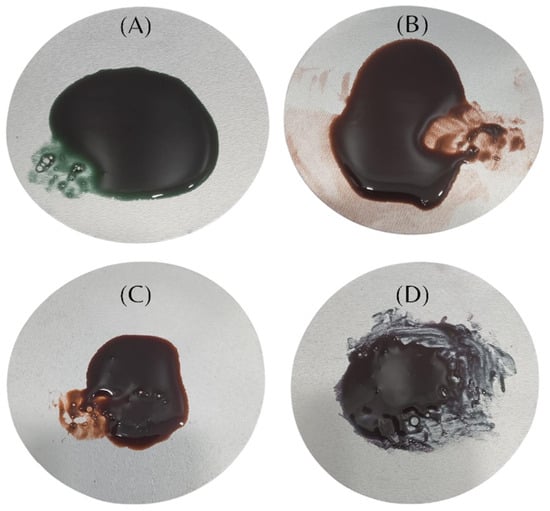
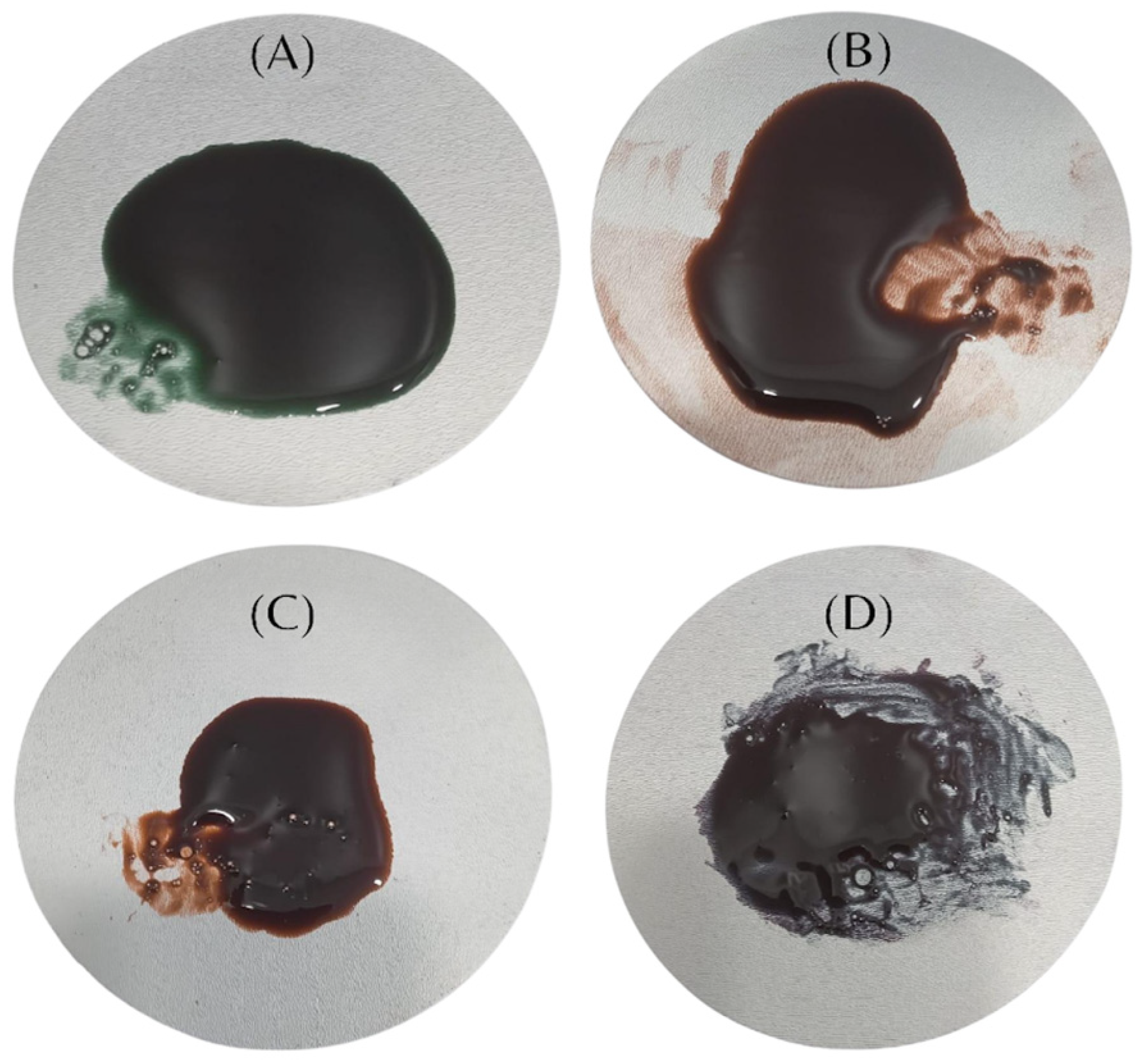
Four shampoo formulations containing synthetic dark semi-permanent dyes were prepared and evaluated for their physicochemical characteristics. As shown in Table 4, all formulations presented a viscous liquid appearance with dark coloration ranging from dark brown to black-gray. The pH values ranged from 5.95 to 6.25, which falls within the acceptable range for scalp and hair care products. Viscosity values varied between 5189 and 10,245 cP, indicating differences in the thickening systems and possible interactions among the dyes within the formulations. The visual appearance of the formulations is presented in Figure 1.
Table 4.
Physicochemical characteristics of shampoo formulations containing synthetic dark pigments.
Figure 1.
Visual appearance of shampoo formulations containing synthetic dark semi-permanent dyes: (A) formulation A, (B) formulation B, (C) formulation C, and (D) formulation D.
3.2. In Vitro Performance Evaluation
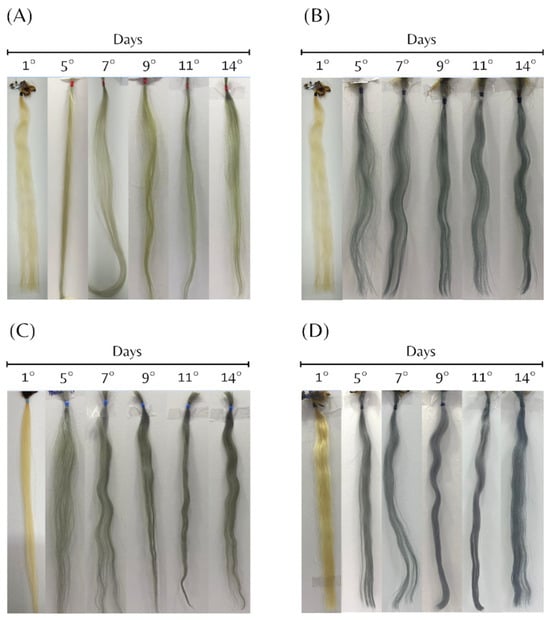
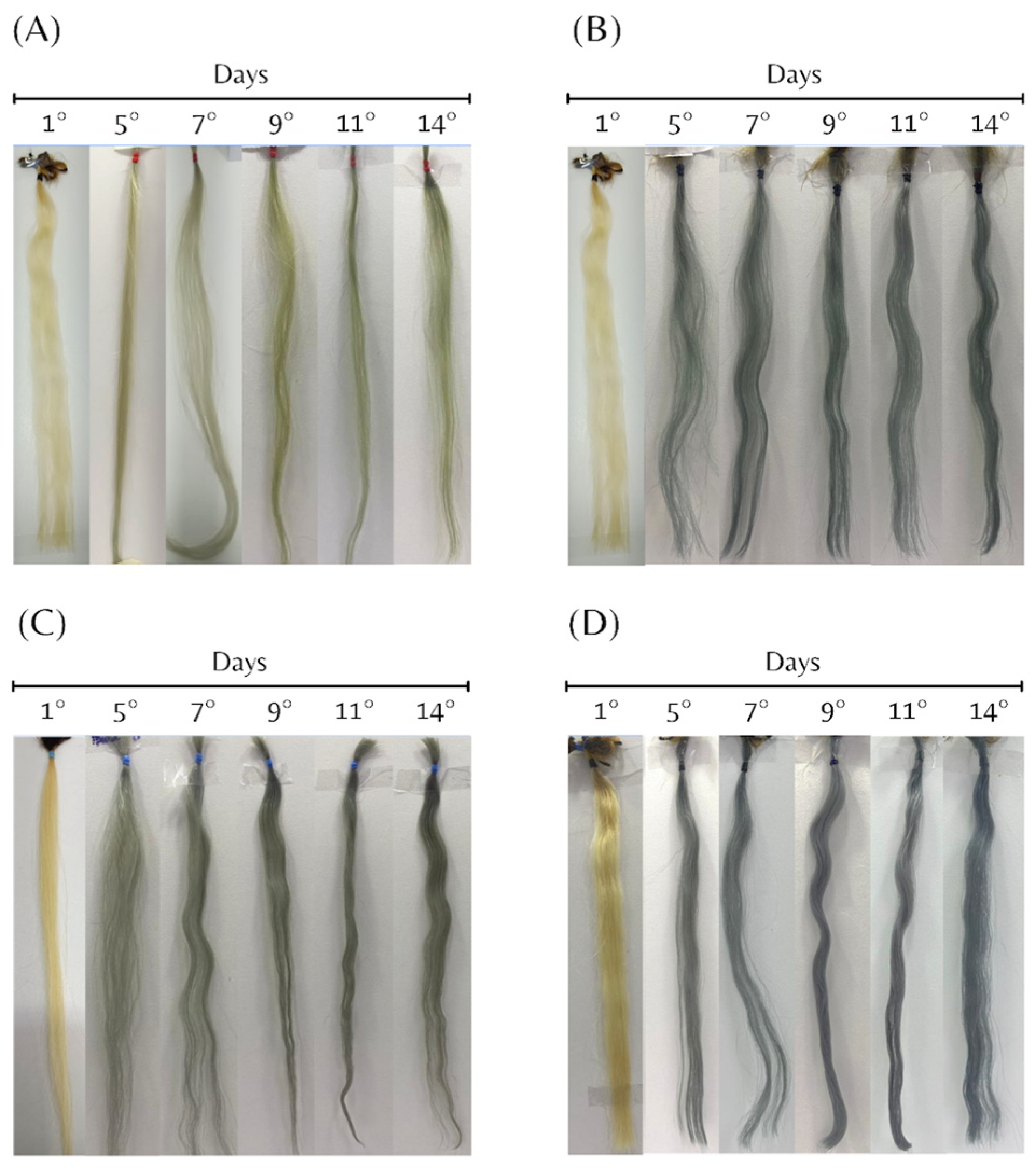
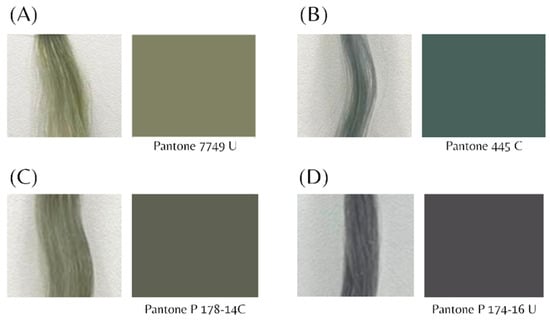
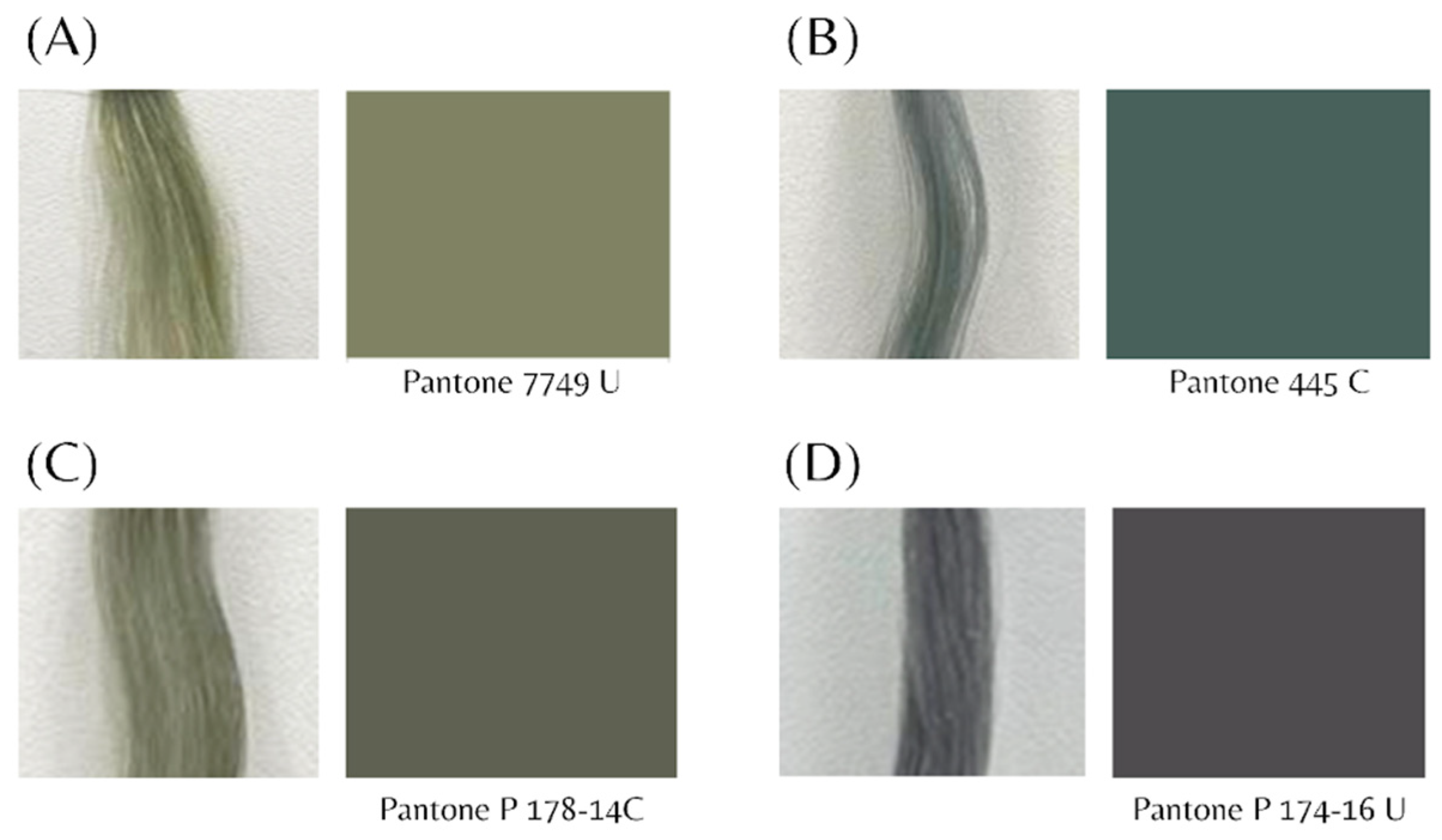
The four shampoo formulations were subjected to a performance evaluation using bleached hair tresses. After 14 washing cycles, the color changes were analyzed using Adobe Photoshop. The progressive color deposition observed during the washing cycles is presented in Figure 2, while the final color shades obtained after the evaluation period are shown in Figure 3.
Figure 2.
Visual evaluation of color deposition on bleached hair tresses after repeated washing cycles with shampoo formulations containing synthetic semi-permanent dyes. Images show the progressive color change in the hair fibers during the evaluation period: (A) formulation A, (B) formulation B, (C) formulation C, and (D) formulation D.
Figure 3.
Final color shades obtained on bleached hair tresses after treatment with the developed shampoo formulations. The corresponding Pantone references were: (A) formulation A (Pantone 7749 U), (B) formulation B (Pantone 445 C), (C) formulation C (Pantone P 178-14 C), and (D) formulation D (Pantone P 174-16 U).
The results indicated that formulation A exhibited a yellowish-gray coloration, formulation B a bluish-gray coloration, and formulation C a greenish-gray coloration, whereas formulation D presented a blackish-gray shade. Therefore, the semi-permanent dyes present in formulation D: Basic Blue 124, Basic Yellow 87, Basic Orange 31, and Basic Red 51, were selected for further studies.
3.3. Preliminary Stability
After selecting the semi-permanent dyes, formulation D was compared with an additional formulation (formulation E) in order to determine the most suitable shampoo base. The results of the organoleptic evaluation are presented in Table 5. Regarding appearance and color, both parameters remained unchanged in formulations D and E throughout the study period. However, a decrease in odor intensity was observed in formulation D compared with formulation E.
Table 5.
Organoleptic evaluation of the preliminary stability of shampoo formulations D and E.
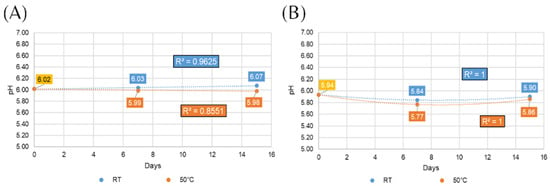
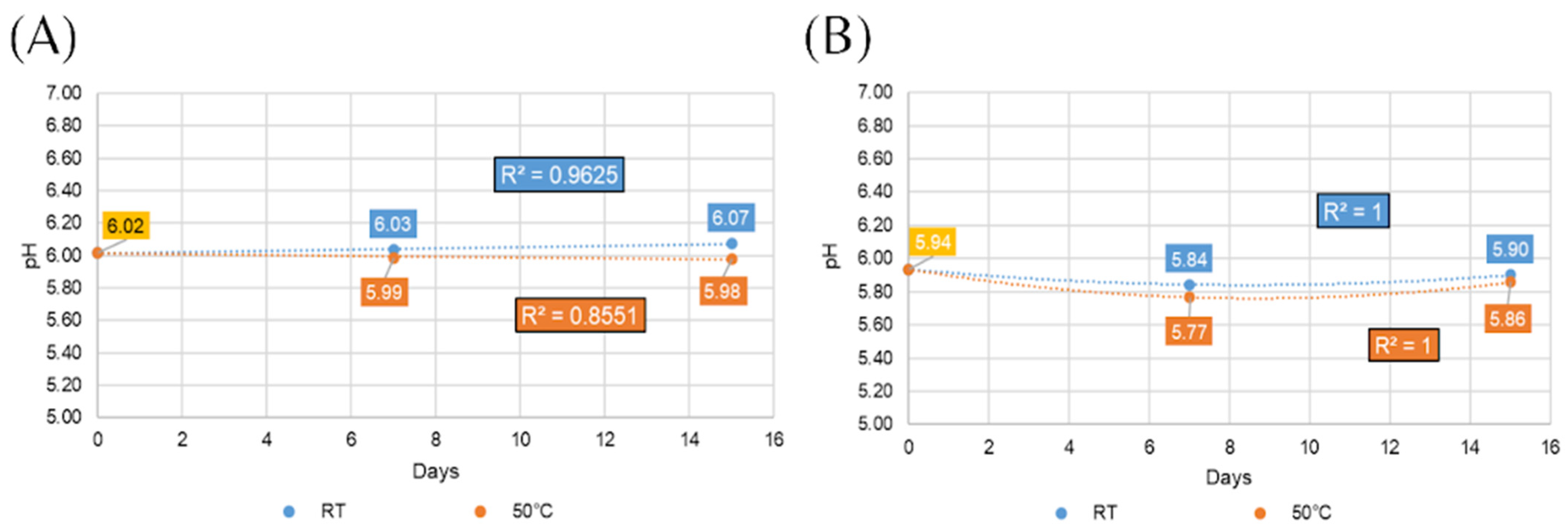
The analysis of the pH results is presented in Figure 4. Both formulations initially showed similar pH values: 6.02 for formulation D and 5.94 for formulation E. After 15 days at 50 °C, the pH slightly decreased in both formulations, reaching 5.98 for formulation D and 5.86 for formulation E. Statistical analysis revealed a significant difference in formulation D after 15 days when comparing the results obtained at room temperature and at 50 °C, whereas formulation E showed no statistically significant differences.
Figure 4.
Changes in pH values of shampoo formulations stored at room temperature (RT) and 50 °C over 15 days: (A) formulation D; (B) formulation E.
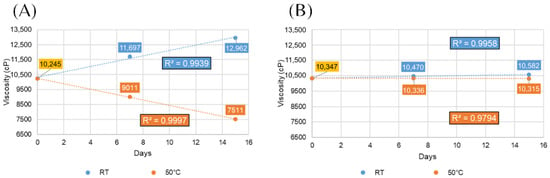
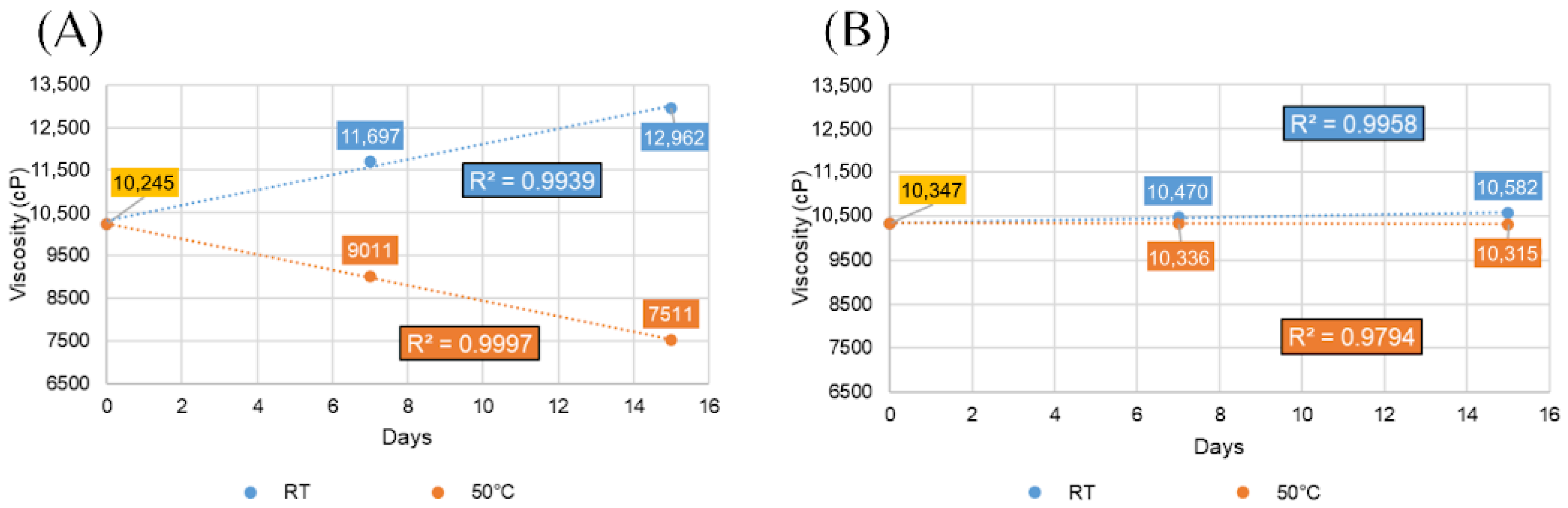
The viscosity results are presented in Figure 5. Both formulations initially showed similar viscosity values, with 10,245 cP for formulation D and 10,357 cP for formulation E. After 15 days at 50 °C, the viscosity decreased in both formulations, reaching 7511 cP for formulation D and 10,315 cP for formulation E. Statistical analysis indicated a significant difference in formulation D, whereas no statistically significant difference was observed in formulation E.
Figure 5.
Changes in viscosity of shampoo formulations stored at room temperature (RT) and 50 °C over a period of 15 days: (A) formulation D; (B) formulation E.
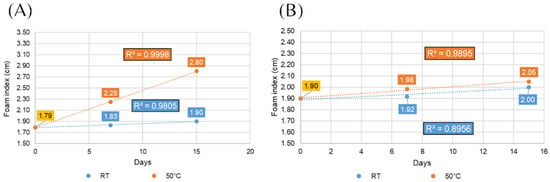
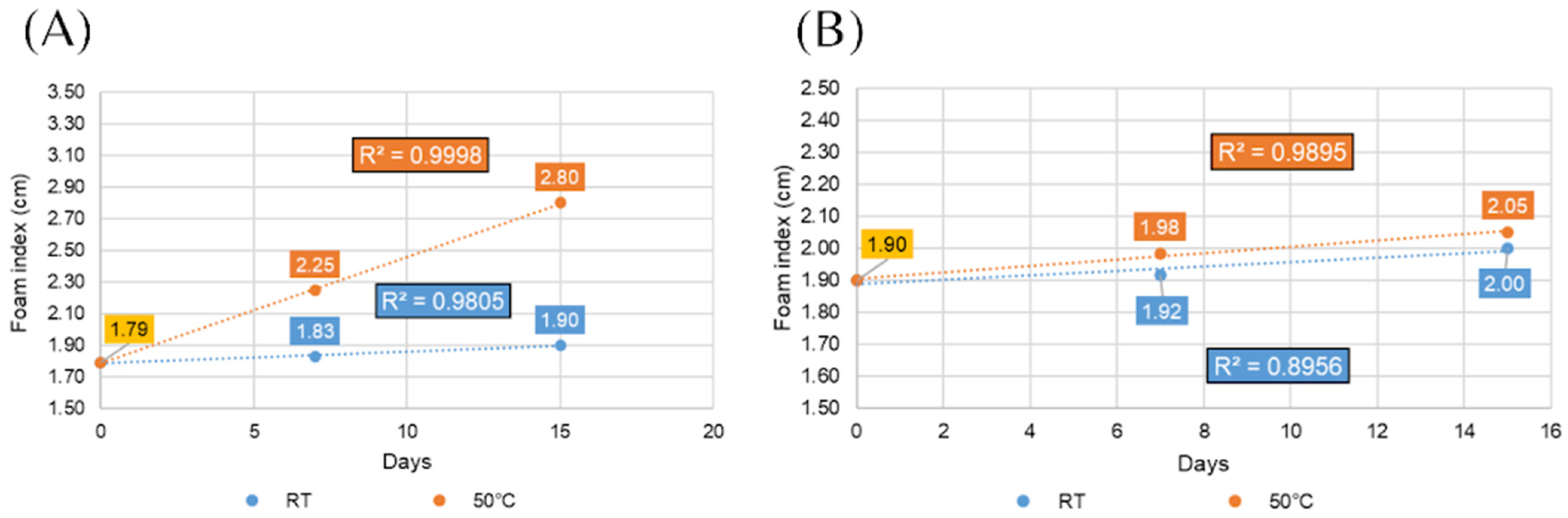
Finally, the foam index results are presented in Figure 6. The initial values were 1.79 cm for formulation D and 1.90 cm for formulation E. After 15 days at 50 °C, the foam index increased in both formulations, reaching 2.80 cm for formulation D and 2.05 cm for formulation E. In both cases, a linear trend was observed, with formulation D showing a steeper slope than formulation E. In addition, statistical analysis revealed a significant difference for formulation D.
Figure 6.
Changes in the foam index of shampoo formulations stored at room temperature (RT) and 50 °C over a period of 15 days: (A) formulation D; (B) formulation E.
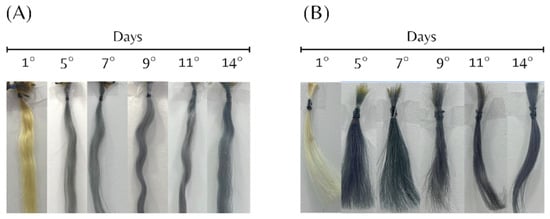
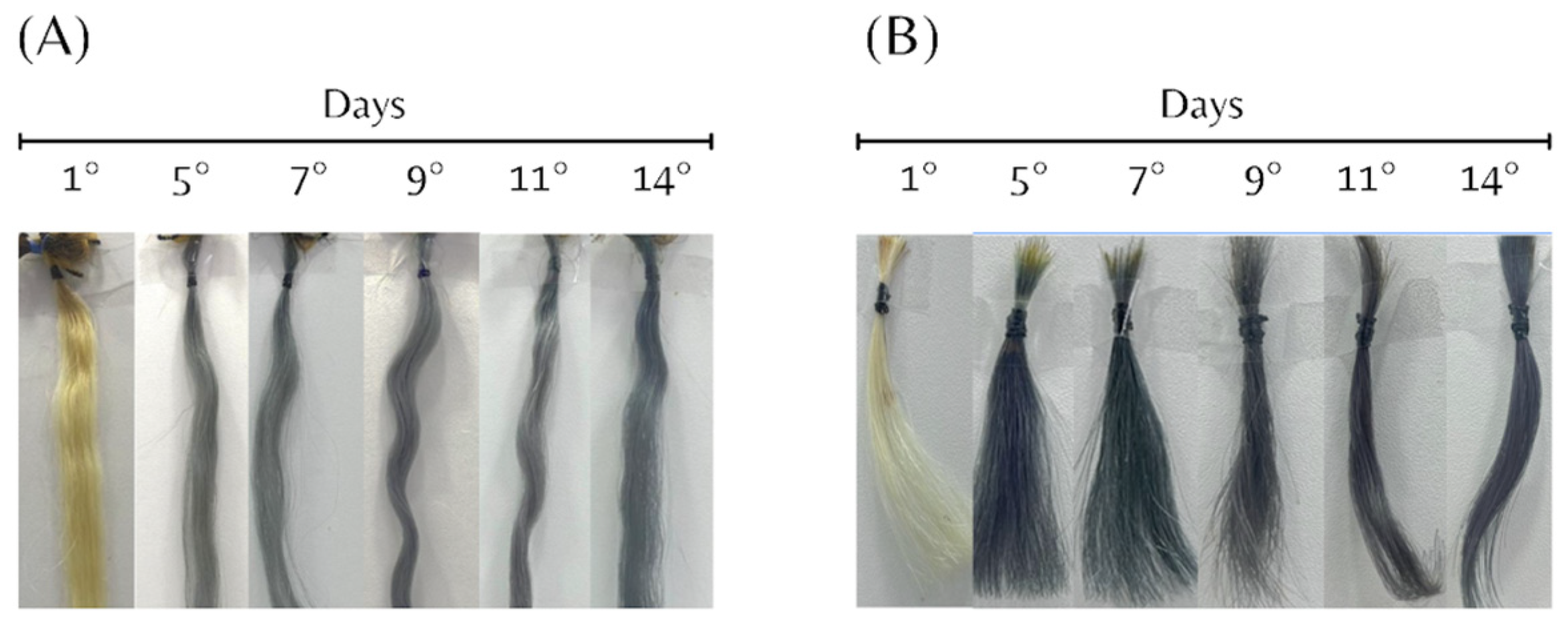
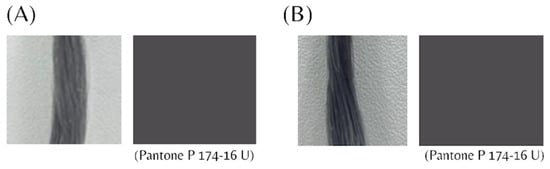
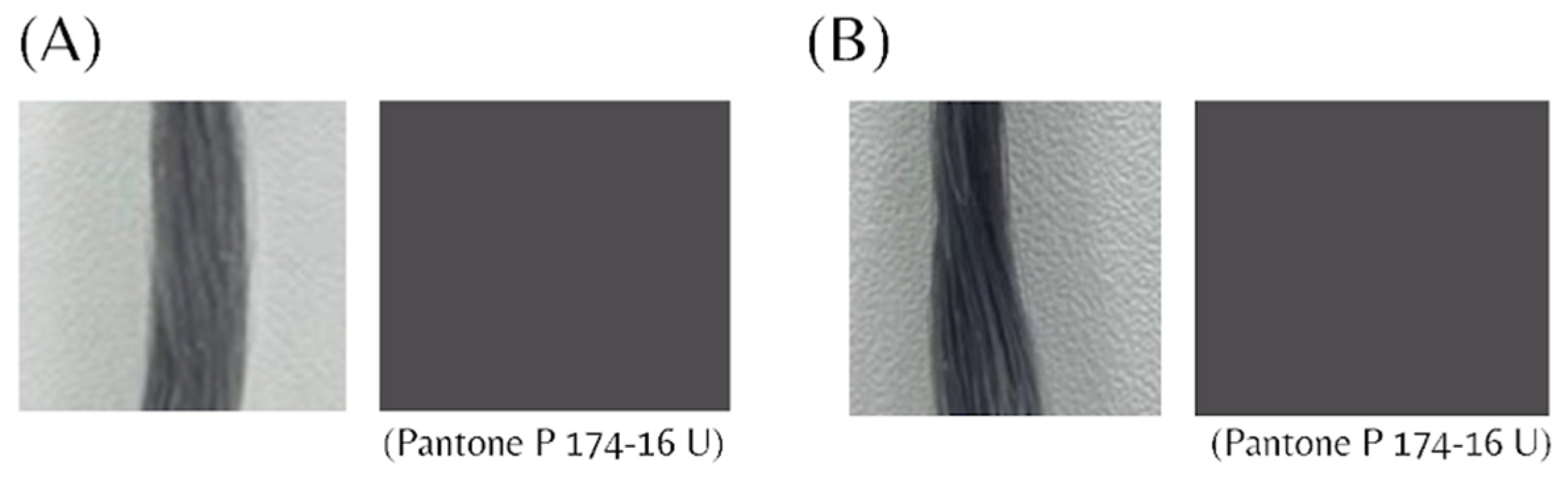
In addition, the performance of both formulations was compared. The progressive color deposition observed during the washing cycles is shown in Figure 7, while the final color obtained on the bleached hair tresses is presented in Figure 8. Both formulations produced a similar blackish-gray coloration.
Figure 7.
Progressive color deposition on bleached hair tresses during repeated washing cycles with the developed shampoo formulations over a 14-day evaluation period. (A) Formulation D; (B) Formulation E.
Figure 8.
Final color shades obtained on bleached hair tresses after treatment with the developed shampoo formulations. (A) Formulation D and (B) formulation E, both producing a blackish-gray shade corresponding to Pantone P 174-16 U.
3.4. Accelerated Stability of the Selected Formula
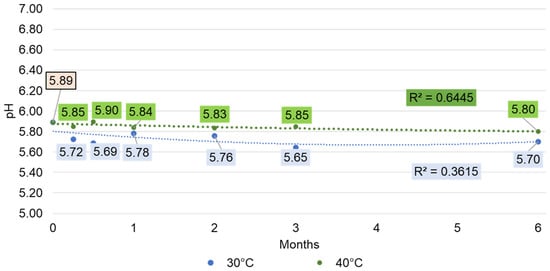
Based on the results of the preliminary stability study, Formula E was selected because it showed better organoleptic and physicochemical results. Table 6 shows the results of the organoleptic characteristics of Formula E. The appearance and color remained constant throughout the study period. The intensity of the odor decreased after 15 days and remained unchanged until 6 months. According to Figure 9, the initial pH was 5.89. At 6 months, the pH decreased to 5.80 under storage conditions at 40 °C and to 5.70 under storage conditions at 30 °C. Statistical analysis indicated that there were no significant differences between the pH values at 6 months when comparing both storage conditions.
Table 6.
Organoleptic results of accelerated stability of formula E.
Figure 9.
pH results for formula E in accelerated stability testing.
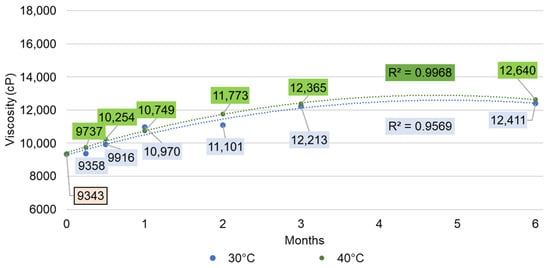
The viscosity results are shown in Figure 10. Under storage conditions at 30 °C and 40 °C, an upward trend was observed, stabilizing after the fifth month of the study. The initial viscosity was 9343 cP, and at the end of the 6 months, it reached values of 12,640 cP at 40 °C and 12,411 cP at 30 °C. Statistical analysis indicated that there was no significant difference between the viscosity values at 6 months into the study.
Figure 10.
Viscosity results for formula E in accelerated stability.
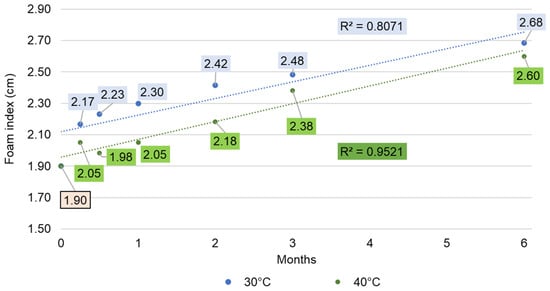
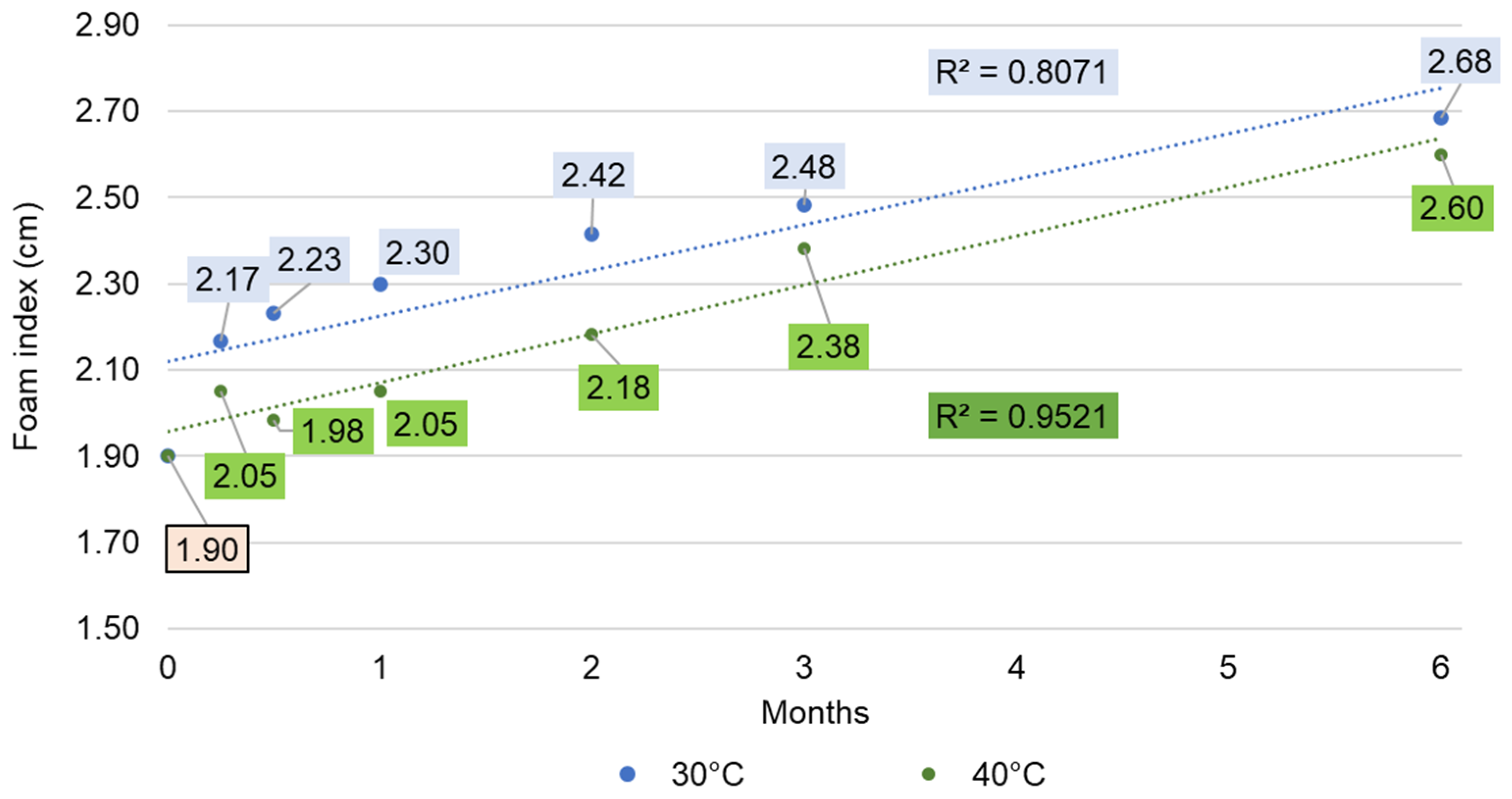
Finally, Figure 11 shows the results of the foam index. The initial value was 1.90 cm. After 6 months of study, the foam index increased in both storage conditions, reaching values of 2.68 cm at 30 °C and 2.60 cm at 40 °C. Statistical analysis indicated that there are no significant differences between the values obtained under conditions of 30 °C and 40 °C.
Figure 11.
Foam index results for formula E in accelerated stability.
Microbiological evaluation of Formulation E was performed at three time points, at baseline, after 3 months, and after 6 months under storage at 40 °C. All results remained within established acceptability limits throughout the study period, demonstrating the microbiological stability of the formulation.
3.5. Evaluation of Shampoo Performance Stability
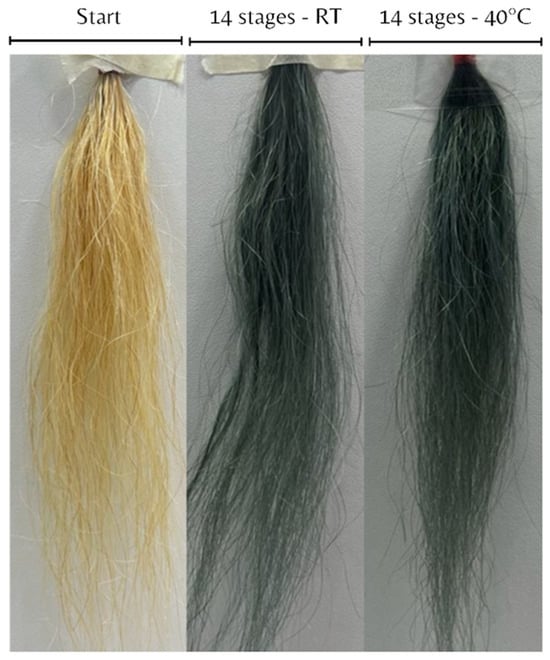
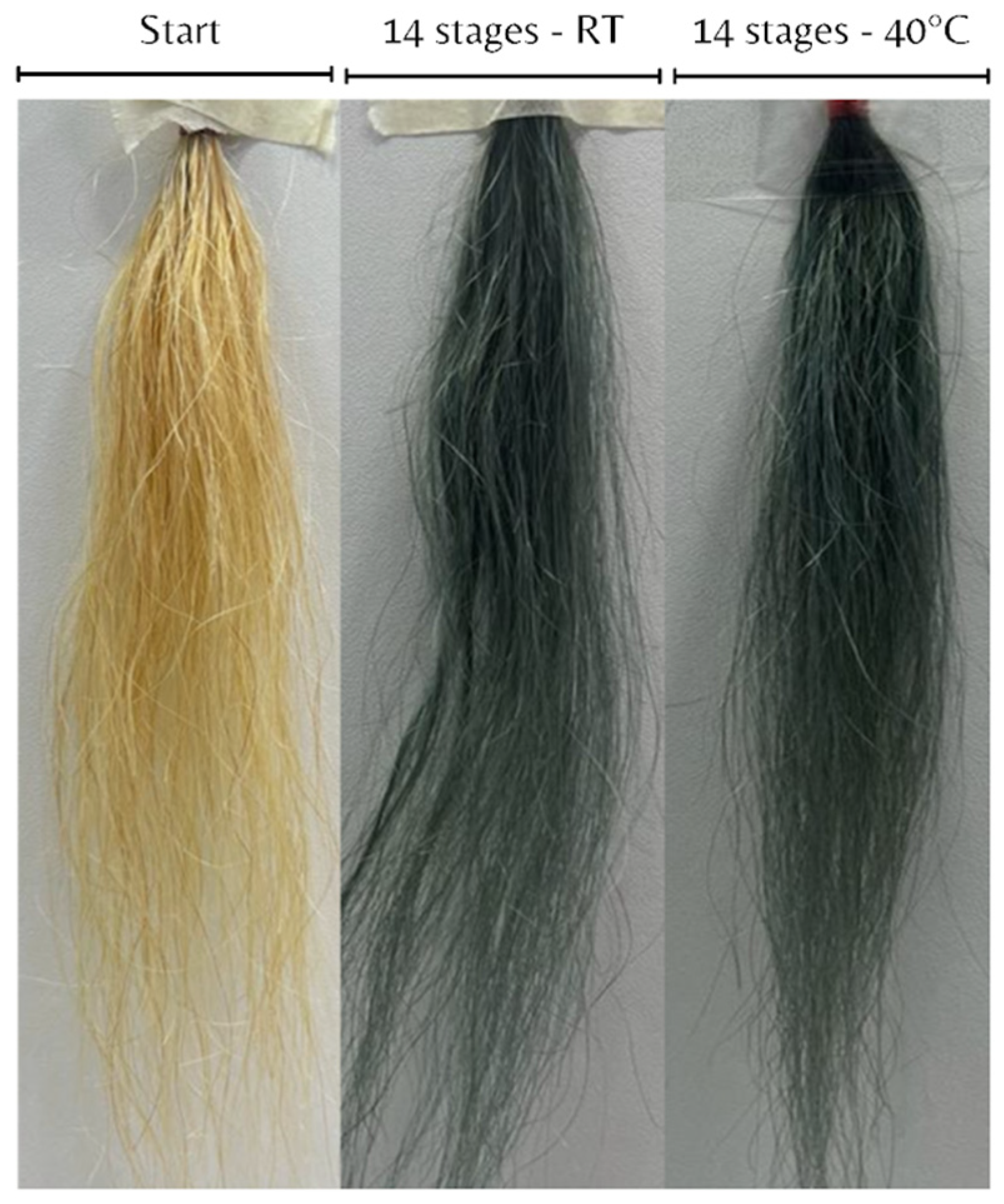
In vitro performance was evaluated on bleached hair strands and strands with 90% gray hair, using shampoo stored at 40 °C after 6 months of study. The results were compared with those obtained for a freshly manufactured shampoo.
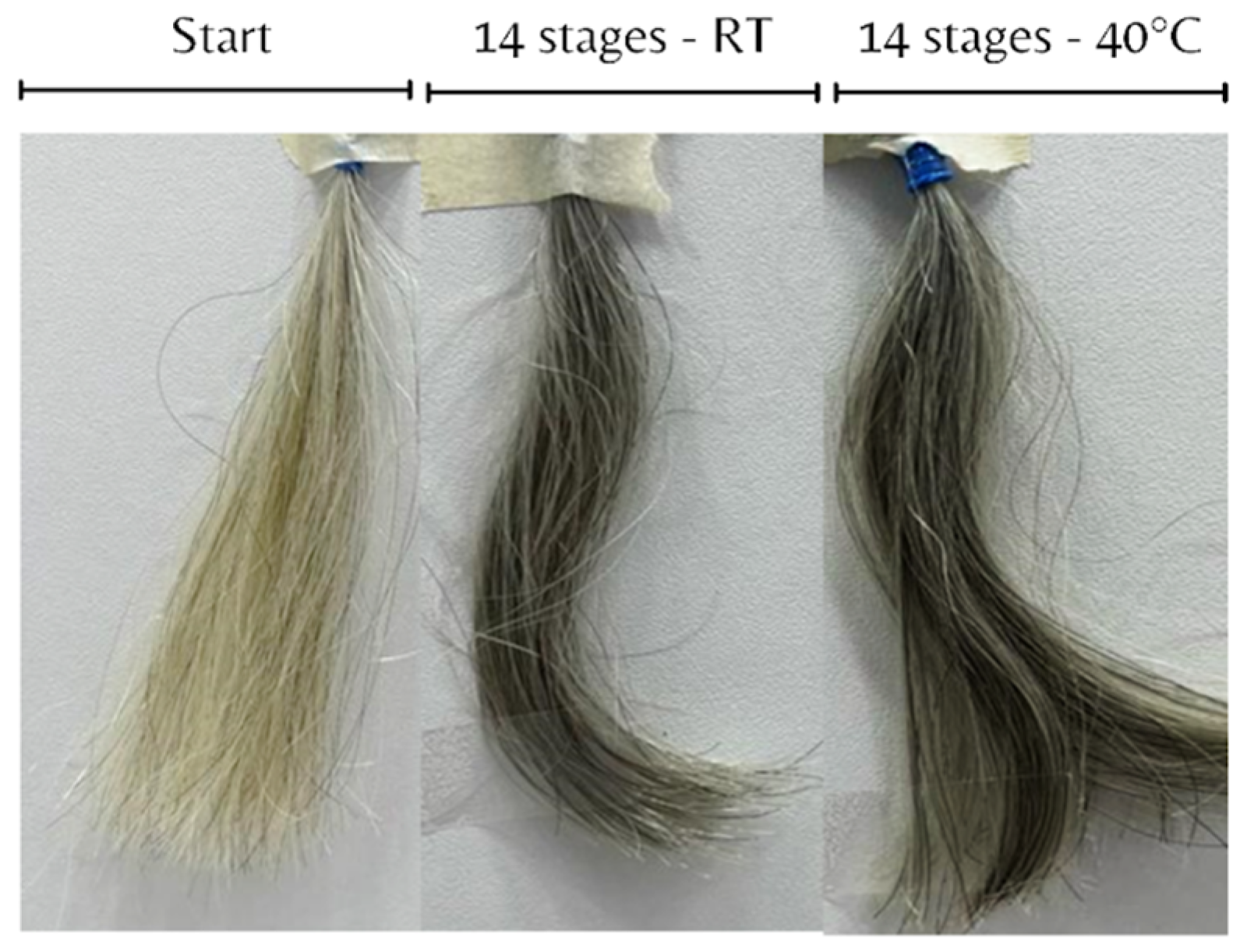
Figure 12 shows the results of the shampoo’s performance stability, indicating that both at room temperature and at 40 °C, the product maintains its ability to color highlights. Similarly, Figure 13 shows that performance stability is maintained in highlights with 90% gray hair.
Figure 12.
In vitro performance evaluation on bleached wicks under conditions of ambient temperature and 40 °C.
Figure 13.
In vitro performance evaluation at 90% gray hair under conditions of ambient temperature and 40 °C.
3.6. In Vitro Evaluation of Color Sustainability
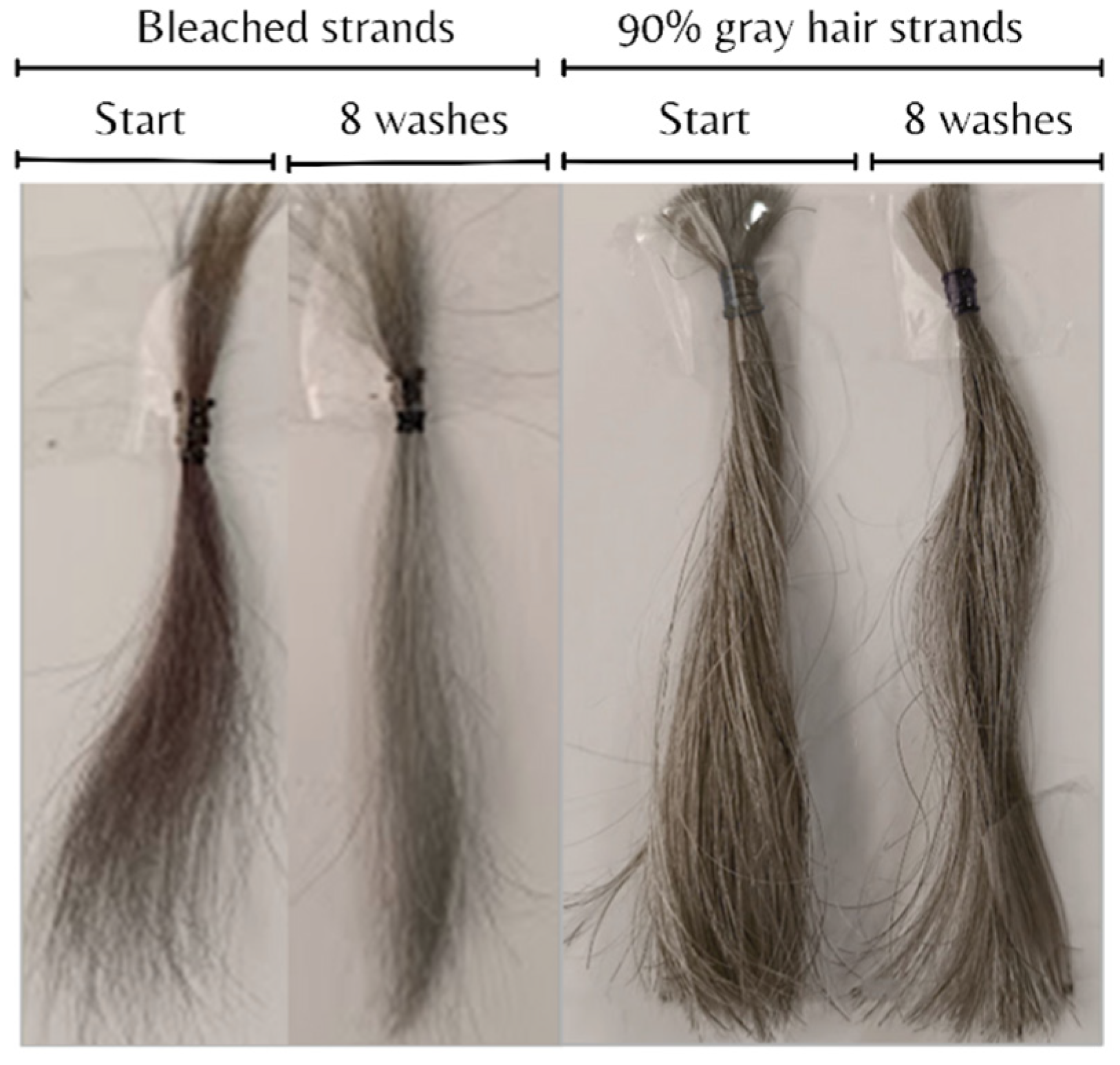
An in vitro evaluation of color sustainability was carried out, showing color coverage on bleached hair strands. In the case of strands with 90% gray hair, the color remained after completing the cycle of 8 washes (Table 7).
Table 7.
Color sustainability results.
Figure 14 shows the results obtained on bleached hair strands and strands with 90% gray hair, before and after the application of the 8 wash cycles.
Figure 14.
Color sustainability results on bleached strands and strands with 90% gray hair.
4. Discussion
The development of the shampoo formulation was carried out considering the desired product characteristics, including color performance and physicochemical stability. In addition, commercially available products were reviewed as references to guide the formulation process. Among the evaluated products were Black Shampoo Life For Men and Dexe Black Hair Shampoo. After examining their ingredient lists and general characteristics, Black Shampoo Life For Men was selected as a benchmark formulation. During the performance evaluation of this product, it was observed that the resulting color on the hair tended to appear bluish. Therefore, the present formulation aimed to obtain a black coloration in order to achieve a more natural appearance on the hair.
From a regulatory perspective, the use of semi-permanent dyes in rinse-off formulations requires consideration of the specific restrictions established by cosmetic regulations, such as Regulation (EC) N° 1223/2009 in the European Union [20]. These regulations define permitted dyes, maximum concentrations, and conditions of use. The classification of the product as a rinse-off formulation is relevant, as exposure time and systemic absorption are generally lower compared to leave-on products. In the present study, the dyes were used at low concentrations (0.3–0.45%), consistent with typical cosmetic applications. Nevertheless, a comprehensive safety and regulatory assessment would be required prior to commercialization, including verification of compliance with regional regulatory frameworks.
Comparative analysis with existing products is commonly used during cosmetic product development to define formulation targets and desired product performance. Similar approaches have been reported by Saini and Thakur [21], who evaluated the performance of a shampoo formulation by comparing it with commercial brands such as Loreal and Dove. Likewise, Ferraris et al. [22] highlighted the importance of comparing the characteristics and claims of newly developed cosmetic formulations with those of products already available on the market to identify potential advantages and desired attributes.
Another important parameter considered during the formulation stage was the pH of the shampoo. Previous studies indicate that a pH range between 5 and 7 is generally recommended for hair cleansing products. Manjramkar et al. [23] analyzed 33 shampoos available on the market and reported that most of them presented pH values within this range, emphasizing that although there is no standardized pH for shampoo formulations, slightly acidic formulations are generally preferred. These findings are consistent with the observations of AlQuadeib et al. [24], who indicated that the acceptable pH range for shampoos typically falls between 5 and 7, which is close to the physiological pH of the skin. Maintaining a slightly acidic pH is considered beneficial because it helps minimize potential damage to the hair fiber during washing.
Based on these considerations, four formulations (A, B, C, and D) were developed, each characterized by the use of different pigment combinations. The composition of each formulation included surfactants, viscosity-enhancing agents, conditioning agents, and pH and viscosity regulators. The semi-permanent dyes incorporated in the formulations, such as Basic Brown 17, Basic Red 76, HC Blue N°. 16, and Acid Violet 43, belong to the category of semipermanent dyes. Due to their relatively low molecular weight, these compounds are capable of penetrating the intermediate layers of the hair cuticle, allowing gradual coloration with repeated shampoo use [14].
The selection of surfactants and conditioning agents was based on their known effectiveness in shampoo formulations. Patidar [25] reported that combinations of surfactants such as lauryl/laureth sulfates and sodium olefin sulfonate improve cleansing performance and facilitate the removal of sebum from the hair. In addition, the incorporation of conditioning agents contributes to improving hair softness and shine after the action of detergents. Similar formulation strategies have been described by Kadam et al. [26], who developed a shampoo using sodium lauryl sulfate as a surfactant and guar gum as a viscosity stabilizer. Likewise, Atmanto and Ambarwati [27] reported a shampoo formulation containing sodium lauric sulfate (10%), cocamide DEA (4%), and citric acid as a pH regulator. Lopes et al. [28] also developed a shampoo designed to gradually color the hair, incorporating Acid Violet 43 (0.001%), sodium laureth sulfate, cocamidopropyl betaine, cocoamide DEA, glycol distearate, citric acid, phenoxyethanol, propylene glycol, and cyclomethicone. The analysis of these studies indicates that the formulations proposed in the present research include the essential components commonly used in shampoo development.
The developed formulations were subjected to an in vitro performance evaluation using bleached hair tresses in order to select the most suitable pigment combination. Formulation A, despite containing dark semi-permanent dyes such as Basic Brown 17, exhibited a yellowish-gray coloration, deviating from the expected darker shade. Formulations B and C produced darker colors; however, they showed bluish and greenish tones, respectively. In contrast, formulation D produced a blackish-gray coloration, which corresponded to the desired shade.
This effect can be attributed to the presence of the pigment combination Basic Blue 124, Basic Yellow 87, Basic Orange 31, and Basic Red 51, incorporated at a concentration of 0.3% in the formulation. According to a study conducted by the company Jarocol [29], the pigment used in formulation A produces an intense black tone on bleached hair tresses when applied at a concentration of 0.2% for 10 min. However, during the performance evaluation, formulation A did not achieve the expected black coloration. This may be attributed to the presence of surfactants in the formulation, as well as possible interactions occurring during the formulation process.
In another study, Lopes et al. [28] reported that the pigment Acid Violet 43, used in formulations B and C, neutralizes orange and reddish tones in bleached hair. This observation is also supported by Rodatun y Kecvara [30], who described this pigment as an anti-yellowing agent. Such an effect may be beneficial for bleached hair tresses, where similar behavior could be expected from other semi-permanent dyes such as Basic Brown 16 and Basic Blue 99.
Similarly, a study conducted by the company Mandom [31] formulated a conditioner containing the pigment Basic Blue 124, which is also present in formulation D. Their results indicated that the coloration obtained on gray hair tresses was similar to that produced by the pigment alone. In addition, microscopic analysis revealed that this pigment penetrated the hair surface, confirming the mechanism of action of semipermanent dyes.
After evaluating the four formulations, Formula D was selected for preliminary stability testing because it achieved the expected black-grayish shade. Subsequently, an additional formulation (Formula E) was developed, containing the same semi-permanent dyes but a modified shampoo base, with the aim of comparing stability performance and selecting the most suitable formulation matrix. Both formulations exhibited comparable in vitro performance, indicating that changes in the base composition did not affect semi-permanent dyes efficacy.
Formula E exhibited superior performance compared with Formula D, as evidenced by consistent results throughout the 15-day study period and the absence of statistically significant differences between final measurements at ambient temperature and 50 °C (p < 0.05). Notably, viscosity measurements revealed a decreasing trend for Formula D at 50 °C, whereas Formula E maintained more stable rheological behavior. This behavior may be attributed to silicone-based polyols such as PEG-12 dimethicone. Johansson and Somasundaran [32] reported that PEG-12 dimethicone may reduce shampoo viscosity, while Roy and Moulik [33] described its hydrotropic behavior, which can decrease viscosity through micellar destabilization in formulations with high surfactant concentrations. In contrast, Formula E excluded PEG-12 dimethicone and incorporated dimethiconol as a conditioning agent, together with carbomer as a polymeric thickener. Carbomer is known to enhance viscosity and promote suspension of particulate materials [32]. Dimethiconol contains silanol (Si-OH) functional groups; these groups are more polar than conventional silicone fluids, potentially reducing buildup compared with silicones of similar molecular weight. Silanol-containing materials are also used to protect color on dyed hair by sealing the hair fiber [34], which may contribute to improved pigment retention and overall formulation stability observed in Formula E. Overall, replacing PEG-12 dimethicone with dimethiconol and incorporating carbomer resulted in enhanced viscosity stability and improved overall formulation robustness.
The preliminary stability evaluation revealed that Formula E demonstrated superior performance, which led to accelerated stability testing over a six-month period, during which organoleptic, physicochemical, microbiological, and performance characteristics were assessed. The shampoo maintained a consistent appearance and color throughout the study, indicating that pigment incorporation did not compromise visual stability under accelerated conditions. However, a slight reduction in odor intensity was observed, particularly at elevated temperature (40 °C). Similar findings were reported by Marcos et al. [35], who evaluated accelerated stability in a shampoo containing natural colorants and observed stable organoleptic properties under comparable conditions. Furthermore, Kaoru [36] indicated that formulation parameters such as pH may influence fragrance stability. Given that shampoos typically exhibit a slightly acidic pH, this factor may contribute to changes in aroma perception over time.
pH evaluation revealed a slight decrease at 40 °C, from 5.89 to 5.80, suggesting that the formulation remained chemically stable and was not adversely affected by the acidity of the semi-permanent dyes. Statistical analysis confirmed the absence of significant differences, supporting overall pH stability. This behavior is consistent with findings by Marcos et al. [35], who observed a gradual pH decrease in a shampoo containing natural colorants during 90 days of storage at 40 °C, decreasing from 6.07 to 5.90. According to this study, pH values within the range of 5 to 7 are considered suitable for hair care formulations. Comparable results were reported by Malpani et al. [37], who demonstrated stable pH values around 6 during four weeks of storage at 30 °C, reinforcing the importance of maintaining slightly acidic conditions to minimize scalp irritation.
Viscosity evaluation represented another key parameter, showing an increasing trend from 9343 cp to 12,640 cp. A gradual rise was observed until the fifth month, after which values stabilized. This behavior may be associated with interactions between formulation components that contribute to progressive structuring of the system, rather than reflecting only the initial properties of the freshly prepared shampoo. In contrast to studies reporting viscosity reduction during storage, such as Marcos et al. [35], who used hydroxyethylcellulose, and Oliveira et al. [38], who used sodium chloride as a thickening agent, the increase observed in this formulation may be attributed to the specific combination of cocamidopropyl betaine, carbomer, cocamide MIPA, and dimethyl lauramide/myristamide. Klein and Palefsky [39] reported that betaines can enhance viscosity in shampoos containing anionic surfactants, as these compounds typically contain 6–8% sodium chloride, which enlarges surfactant micelles and consequently increases viscosity. Considering that the developed formulation contains sodium laureth sulfate and sodium C14-16 olefin sulfonate, this effect may explain the observed rheological behavior. Additionally, alkanolamides such as dimethyl lauramide/myristamide may further increase viscosity through interactions with salts present in betaine systems. Carbomer also plays a critical role, increasing viscosity and supporting the suspension of particulate materials, thereby contributing to uniform pigment distribution. Jaworski et al. [40] indicated that carbomer forms a microgel structure, leading to increased viscosity. This microgel network, formed through neutralization of carbomer carboxyl groups with an alkaline component such as the triethanolamine used in this formulation, facilitates particle suspension.
Foam index evaluation revealed an increase from 1.90 cm to 2.60 cm, consistent with previous studies on foam stability in shampoo formulations. Gahlawat et al. [41] reported increased foam stability after three months of storage at 45 °C. Similarly, AlQuadeib et al. [24] analyzed the stability of different commercial shampoos, reporting a slight increase in foam values under 45 °C conditions after eight weeks. Foam stability is closely related to surfactant composition and may be enhanced by increased viscosity, as reported by Baranova et al. [42], who demonstrated that the combination of surfactants such as sodium laureth sulfate (10%) and cocamidopropyl betaine (5%) provides greater foaming capacity (239 mm) compared with mixtures of disodium laureth sulphosuccinate and cocamidopropyl betaine (216 mm). Although foam characteristics do not directly determine cleansing efficacy, they significantly influence consumer perception, as higher foam volume is often associated with improved product performance.
After accelerated stability testing, the in vitro performance of the formulation was evaluated using bleached hair strands and hair containing 90% gray hair. The black-grayish coloration was maintained both at 40 °C and at room temperature, indicating stability of pigment performance. In bleached hair strands, the black color was evident after the first wash, whereas in gray hair strands, noticeable coloration appeared after seven washes. This behavior may be explained by He et al. [43], who reported that in bleached hair the cuticle layers are damaged and disrupted, exposing the cortex and facilitating pigment deposition, thereby promoting faster color development compared with gray hair, whose cuticles remain more closed. Dashi [44] also reported that the bleaching process causes chemical damage to the cuticular layer due to hydrogen peroxide action, facilitating penetration of semi-permanent dyes with low molecular weight. Furthermore, Ballarin et al. [45] indicated that pH is a critical factor controlling pigment diffusion and adsorption in hair fibers. According to their findings, the basic dyes used in Formula E are pH-dependent; under acidic conditions, greater pigment deposition occurs on the hair surface than within internal layers due to repulsive interactions between the positively charged hair fiber and similarly charged dyes. However, at a pH close to 6, increased pigment presence is observed in both the cuticle and cortex, suggesting more effective diffusion into the outer hair layers.
The color sustainability was evaluated on bleached strands and hair with 90% gray fibers. The results showed that after eight washes with a base shampoo with a pH of 6, bleached strands exhibited a notable decrease in color intensity, whereas greater color retention was observed in hair containing 90% gray fibers. This difference can be attributed to the type of hair used in the study. As mentioned above, bleached hair, having previously undergone oxidative chemical processes, presents structural damage and increased porosity. Although this facilitates dye uptake, it also leads to greater pigment loss during washing, reducing color durability and indicating limited pigment accumulation. While gray hair, despite lacking melanin, has a more intact cuticle structure, favoring color retention, and its persistence of color suggests a dynamic balance between pigment deposition and removal, resulting in a more stable tonal effect rather than continuous accumulation [46]. However, variations in hair condition, including porosity, structural damage, and prior chemical treatments, can significantly influence long-term color uniformity. Therefore, more comprehensive studies are recommended to further evaluate the effects of cumulative deposition under real-world conditions [43].
A similar study by Yun and Ahn [47] evaluated color sustainability using three types of shampoo (acidic, neutral, and alkaline) and applying up to 10 washes. The results revealed that washing with acidic and neutral shampoos caused color loss in gray hair strands dyed with acidic dyes compared to gray hair dyed with basic dyes. In addition, it was observed that bleached hair strands dyed with acidic dyes tended to lighten and acquire yellowish tones when washed with all three types of shampoo. These results suggest that differences in the color of gray or bleached hair after 10 shampoo washes are due more to the type of pigment used than to the type of shampoo used. Therefore, it is recommended that hair dyed with basic pigment be washed with a shampoo that has a pH value below 7.80, and preferably close to the isoionic point of the hair. In the case of this research, formula E used basic semi-permanent dyes together with a slightly acidic shampoo. This approach helped the gray strands withstand washing without experiencing significant color loss.
Despite the promising results obtained, this study presents some limitations that should be acknowledged. First, bleached hair strands were used as an experimental model during the initial evaluation stages due to their reproducibility and sensitivity to color changes. However, their increased porosity and structural damage may overestimate pigment deposition compared to natural gray hair. Even though hair containing 90% gray fibers was included in later evaluations, differences in deposition behavior were observed, highlighting the importance of substrate selection and limiting the direct extrapolation of results to all hair types. Second, the study was limited to in vitro evaluations, which allow for controlled and reproducible conditions but do not fully replicate real-use scenarios. Although the formulation was developed using cosmetic-grade ingredients and a pH compatible with scalp physiology, no in vivo skin irritation or sensitization studies were performed, making dermatological evaluation necessary to ensure product safety under real conditions of use. Finally, color evaluation was primarily based on visual and digital analysis. While suitable for comparative purposes, these methods could be complemented by instrumental techniques such as CIELab color measurements or spectrophotometric analysis to provide more robust and quantitative data.
Future studies should address these limitations by incorporating in vivo evaluations, long-term use assessments, advanced instrumental color analysis, and safety testing. Overall, the study provides strong evidence for the development of a shampoo capable of gradual gray hair coverage using semi-permanent dyes, supported by its stability and functional performance.
5. Conclusions
The results demonstrated that the formulation containing Basic Blue 124, Basic Yellow 87, Basic Orange 31, and Basic Red 51 enabled the development of a shampoo incorporating dark synthetic semi-permanent dyes capable of imparting a gradual black-gray coloration to gray hair. The formulation exhibited physicochemical, microbiological, and functional stability, maintaining critical quality attributes and ensuring color persistence after repeated washing cycles. These findings substantiate the rational selection of dyes and excipients and provide scientific evidence supporting their potential as an innovative approach for the gradual coverage of gray hair.
Author Contributions
Conceptualization, E.P.-S., B.S.-T. and A.C.-L.; methodology, E.P.-S., A.B.-A., A.Z.-S. and L.Q.-R.; software, E.P.-S. and B.S.-T.; validation, D.B.-I. and G.S.-C.; formal analysis, E.P.-S. and F.C.-M.; investigation, E.P.-S., A.B.-A., A.Z.-S. and L.Q.-R.; resources, B.S.-T., A.C.-L. and N.R.-C.; data curation, A.B.-A. and L.Q.-R.; writing—original draft preparation, F.C.-M., A.B.-A., A.Z.-S. and L.Q.-R.; writing—review and editing, E.P.-S., F.C.-M., D.B.-I. and G.S.-C.; visualization, E.P.-S., B.S.-T. and A.C.-L.; supervision, B.S.-T., A.C.-L. and N.R.-C. All authors have read and agreed to the published version of the manuscript.
Funding
This research received no external funding.
Institutional Review Board Statement
Not applicable.
Informed Consent Statement
Not applicable.
Data Availability Statement
The data presented in this study are available from the corresponding author upon reasonable request.
Acknowledgments
During the preparation of this manuscript, the authors used ChatGPT (OpenAI, version GPT-4) for language editing and grammatical improvement. The authors have carefully reviewed and edited the output and take full responsibility for the content of this publication.
Conflicts of Interest
The authors declare no conflicts of interest.
Abbreviations
The following abbreviations are used in this manuscript:
| RT | Room temperature |
| cP | Centipoise |
| SLES | Sodium Laureth Sulfate |
| SLS | Sodium Lauryl Sulfate |
References
- Gubitosa, J.; Rizzi, V.; Fini, P.; Cosma, P. Hair Care Cosmetics: From Traditional Shampoo to Solid Clay and Herbal Shampoo, A Review. Cosmetics 2019, 6, 13. [Google Scholar] [CrossRef] [Scilit]
- Bouillon, C.; Wilkinson, J. The Science of Hair Care, 2nd ed.; Taylor & Francis Group: New York, NY, USA, 2005; pp. 16–20. [Google Scholar]
- Baki, G.; Alexander, K.S. Introduction to Cosmetic Formulation and Technology; Wiley: Hoboken, NJ, USA, 2015; pp. 448–458. [Google Scholar]
- Park, A.M.; Khan, S.; Rawnsley, J. Hair Biology Growth and Pigmentation. Facial Plast. Surg. Clin. N. Am. 2018, 26, 415–424. [Google Scholar] [CrossRef] [Scilit] [PubMed]
- Wagner, R.C. The Structure of the Medulla and Its Influence on the Mechanical and Color Properties of Hair. Ph.D. Thesis, Universidade Estadual de Campinas, Campinas, Brazil, 2006. [Google Scholar]
- Huang, S.; Rompolas, P. The Psychology of Gray Hair. Dev. Cell 2020, 52, 548–549. [Google Scholar] [CrossRef] [Scilit]
- Triwongwaranat, D.; Thuangtong, R.; Arunkajohnsak, S. A Review of the Etiologies, Clinical Characteristics, and Treatment of Canities. Int. J. Dermatol. 2019, 58, 659–666. [Google Scholar] [CrossRef] [Scilit] [PubMed]
- Gunarathna, B.W.A.S.; Wickramarachchi, W.J. The Evaluation of the Effects of Selected Herbal Formulation in the Management of Palitya (Gray Hair). Int. J. Multidisc. Res. Dev. 2020, 7, 20–23. [Google Scholar]
- Rameshk, M.; Khandani, S.K.; Raeiszadeh, M. Medicinal Herbs Affecting Gray Hair in Iranian Traditional Medicine. Iran. J. Med. Sci. 2016, 41, S42. [Google Scholar]
- Cecil, V.; Pendry, L.; Salvatore, J.; Kurz, T. Women and Grey Hair: An Abomination of the Body. In Feminist Interrogations of Women’s Head Hair; Barak-Brandes, S., Kama, A., Eds.; Routledge: New York, NY, USA, 2018; pp. 124–140. [Google Scholar]
- Zhang, Y.; Birmann, B.M.; Han, J.; Giovannucci, E.L.; Speizer, F.E.; Stampfer, M.J.; Rosner, B.A.; Schernhammer, E.S. Personal Use of Permanent Hair Dyes and Cancer Risk and Mortality in US Women: Prospective Cohort Study. BMJ 2020, 370, m2942. [Google Scholar] [CrossRef] [Scilit]
- Alonso de León, T.; Ruiz-Gómez, D.; Gay-Muñoz, P.M.; Cano-Aguilar, L.E.; Asz-Sigall, D. Current updates in hair aesthetics and care. Dermatol. CMQ 2022, 20, 205–215. [Google Scholar]
- Bailer, A.C.; Dognini, L.; Moser, D.K. Synthetic Hair Coloration: Concepts, Classification, and Functions. Bachelor’s Thesis, Universidade do Vale do Itajaí, Itajaí, Brazil, 2020. [Google Scholar]
- Da França, S.A.; Dario, M.F.; Esteves, V.B.; Baby, A.R.; Velasco, M.V.R. Types of Hair Dye and Their Mechanisms of Action. Cosmetics 2015, 2, 110–126. [Google Scholar] [CrossRef] [Scilit]
- Luengo, G.S.; Fameau, A.-L.; Léonforte, F.; Greaves, A.J. Surface Science of Cosmetic Substrates, Cleansing Actives and Formulations. Adv. Colloid Interface Sci. 2021, 290, 102383. [Google Scholar] [CrossRef] [Scilit]
- Robles-Madrigal, P.; Chalini-Herrera, J.D. Technology for the preparation of liquid soap (shampoo) at laboratory scale. Humanid. Tecnol. Cienc. 2019, 21, 1–6. [Google Scholar]
- Han, S.Y.; Kang, E.K.; Choi, I.S. Iron Gall Ink Revisited: A Surfactant-Free Emulsion Technology for Black Hair-Dyeing Formulation. Cosmetics 2021, 8, 9. [Google Scholar] [CrossRef] [Scilit]
- Agência Nacional de Vigilância Sanitária (ANVISA). Stability Guide for Cosmetic Products; ANVISA: Brasília, Brazil, 2005; pp. 17–22.
- Granja-Garaycoa, G.S.; Pesantes-Garófalo, G.D. Preparation of a Shampoo Based on Salicylic Acid with Mentha piperita Extract and Aloe vera for the Control of Pityriasis (Dandruff). Bachelor’s Thesis, Universidad de Guayaquil, Guayaquil, Ecuador, 2022. [Google Scholar]
- European Parliament and Council. Regulation (EC) No 1223/2009 of the European Parliament and of the Council of 30 November 2009 on cosmetic products. Off. J. Eur. Union 2009, L342, 59–209. [Google Scholar]
- Saini, S.; Thakur, V. Comparing Clinic Plus Marketing Strategy with Competitors of Similar Product Vertical and Statistically Analysing the Current Market Trends. Master’s Thesis, University School of Management & Entrepreneurship, New Delhi, India, 2021. [Google Scholar]
- Ferraris, C.; Rimicci, C.; Garelli, S.; Ugazio, E.; Battaglia, L. Nanosystems in Cosmetic Products: A Brief Overview of Functional, Market, Regulatory and Safety Concerns. Pharmaceutics 2021, 13, 1408. [Google Scholar] [CrossRef] [Scilit]
- Manjramkar, V.; Pandey, R.; Mishra, R. To Study the pH of Human Scalp and Various Brands of Shampoos. Int. J. Adv. Innov. Res. 2019, 6, 142–144. [Google Scholar]
- AlQuadeib, B.T.; Eltahir, E.K.D.; Banafa, R.A.; Al-Hadhairi, L.A. Pharmaceutical Evaluation of Different Shampoo Brands in Local Saudi Market. Saudi Pharm. J. 2018, 26, 98–106. [Google Scholar] [CrossRef] [Scilit]
- Patidar, D.K. Polyherbal Anti-Dandruff Shampoo: Basic Concept, Benefits, and Challenges. Asian J. Pharm. 2018, 12, S849–S858. [Google Scholar] [CrossRef]
- Kadam, V.R.; Sangle, V.R.; Kathawate, G.S.; Surwase, U.S. Formulation and Evaluation of Herbal Anti-Dandruff Shampoo. Int. J. Curr. Sci. 2020, 10, 25053–25055. [Google Scholar]
- Atmanto, D.; Ambarwati, N.S. Development of an Eco-Shampoo Formulation Using Local Environmental Plant Extracts for Healthy Hair as an Effort to Increase the Potential of Environmental Resources. Biol. Med. Nat. Prod. Chem. 2023, 12, 399–405. [Google Scholar] [CrossRef] [Scilit]
- Lopes Pereira, M.J.; Rodrigues Neto, E.M.; Girão Junior, F.J.; Macedo Arraes, M.L.B.; Gonçalves Araujo, T. Evaluation of the Behaviour of Violet Acid Pigment 43 in Formulations of Shampoos and Conditioners in Bleached Hair. J. Young Pharm. 2018, 10, 282–287. [Google Scholar] [CrossRef] [Scilit]
- Co-In Korea. Jarocol Series. Available online: https://coinkorea.modoo.at/?link=ei52t6md (accessed on 31 May 2023).
- Rodatun, K.; Kecvara, O. Pengaruh Penggunaan Silver Shampoo terhadap Hasil Akhir Pewarnaan Rambut Artistik Menggunakan Teknik Tipping. J. Tata Rias 2020, 9, 325–339. [Google Scholar] [CrossRef]
- Mandom Corp. Mandom Discovers That “Basic Blue 124” Dyes Hair but Does Not Easily Dye Skin: Applying This Finding to the Development of Hair Color Conditioners; News Release; Mandom Corp.: Osaka, Japan, 2018; pp. 1–3. [Google Scholar]
- Johansson, I.; Somasundaran, P. Handbook for Cleaning/Decontamination of Surfaces; Elsevier: Amsterdam, The Netherlands, 2007; pp. 290–294. [Google Scholar]
- Roy, B.; Moulik, S. Effect of Hydrotropes on Solution Behavior of Amphiphiles. Curr. Sci. 2003, 85, 1148–1155. [Google Scholar] [CrossRef] [Scilit]
- O’Lenick, A.J. Basic Silicone Materials. In Silicones for Personal Care, 2nd ed.; Allured Publishing Corporation: Carol Stream, IL, USA, 2009; pp. 35–54. [Google Scholar]
- de Marcos, H.M.F.; Favaro, L.I.L.; Harada, L.K.; Tubino, M.; Yoshida, V.M.H.; Balcão, V.M.; Duarte, M.M.; Vila, C. Development and Evaluation of Physico-Chemical Stability of Cosmetic Formulations Employing the Fruits of the Jussara Palm Tree (Euterpe edulis Martius): Tinting Shampoo and Exfoliant Cream. Biomed. Biopharm. Res. J. 2020, 17, 102–118. [Google Scholar] [CrossRef] [Scilit]
- Kaoru, A. Understanding Fragrance: From Chemistry to Emotion. In Cosmetic Formulation: Principles and Practice; Benson, H., Ed.; Taylor & Francis Group: New York, NY, USA, 2019; pp. 263–277. [Google Scholar]
- Malpani, T.; Jeithliya, M.; Pal, N.; Puri, P. Formulation and Evaluation of Pomegranate Based Herbal Shampoo. J. Pharmacogn. Phytochem. 2020, 9, 1439–1444. [Google Scholar]
- Oliveira, F.G.S.; Fernandes, Y.C.; Büttner-Pires, J.; Cargnin, S.T.; Sinhorin, P.; Almeida, J.R.G.S.; Ferrarini, S.R. Microencapsulated Myrciaria cauliflora Berg. Fruit Peel Extract as a Natural Pigment for Neutralizing Shampoo Preparation. Sci. Electron. Arch. 2021, 14, 50–58. [Google Scholar] [CrossRef] [Scilit]
- Klein, K.; Palefsky, I. Shampoo Formulation. In Handbook for Cleaning/Decontamination of Surfaces; Johansson, I., Somasundaran, P., Eds.; Elsevier: Amsterdam, The Netherlands, 2007; pp. 277–296. [Google Scholar]
- Jaworski, Z.; Spychaj, T.; Story, A.; Story, G. Carbomer Microgels as Model Yield-Stress Fluids. Rev. Chem. Eng. 2021, 38, 881–919. [Google Scholar] [CrossRef] [Scilit]
- Gahlawat, J.; Sharma, D.; Thakur, G.S.; Chobdar, J.; Sharma, V. Formulation and Evaluation of Polyherbal Liquid Shampoo. Eur. J. Biomed. Pharm. Sci. 2019, 6, 149–154. [Google Scholar]
- Baranova, I.I.; Zaika, S.V.; Bezpala, Y.O.; Roik, O.M.; Zaporozhska, S.M.; Shostak, L. Development of Foaming Shampoo Base for the Treatment of Seborrheic Dermatitis. J. Adv. Pharm. Educ. Res. 2020, 10, 143–149. [Google Scholar] [CrossRef] [Scilit]
- He, Y.; Cao, Y.; Nie, B.; Wang, J. Mechanisms of impairment in hair and scalp induced by hair dyeing and perming and potential interventions. Front. Med. 2023, 10, 1139607. [Google Scholar] [CrossRef] [Scilit]
- Dashi, D. Development of New Products for Hair Coloring and Hair Bleaching. Ph.D. Thesis, Università degli Studi di Trieste, Trieste, Italy, 2020. [Google Scholar]
- Ballarin, B.; Galli, S.; Morigi, M. Study of dyeing properties of semipermanent dyestuffs for hair. Int. J. Cosmet. Sci. 2007, 29, 49–57. [Google Scholar] [CrossRef] [Scilit]
- Lim, Y.S.; Nizard, C.; Pays, K.; Brun, C.; Kurfurst, R. A Multifaceted View on Ageing of the Hair and Scalp. Cosmetics 2025, 12, 284. [Google Scholar] [CrossRef] [Scilit]
- Yun, K.; Ahn, C. Effect of Surfactant Type on the Dyeability and Color Resistance of Semi-Permanent Basic Hair Dye. Fash. Text. 2023, 10, 4. [Google Scholar] [CrossRef] [Scilit]

Disclaimer/Publisher’s Note: The statements, opinions and data contained in all publications are solely those of the individual author(s) and contributor(s) and not of MDPI and/or the editor(s). MDPI and/or the editor(s) disclaim responsibility for any injury to people or property resulting from any ideas, methods, instructions or products referred to in the content. |
© 2026 by the authors. Licensee MDPI, Basel, Switzerland. This article is an open access article distributed under the terms and conditions of the Creative Commons Attribution (CC BY) license.