
Skip to Content
  • 0.4
    CiteScore
  • 20 days
    Submission to First Decision
  • 5 days
    Acceptance to Publication

Cardiovascular Medicine

Cardiovascular Medicine is an international, peer-reviewed, scholarly, open access journal that covers the entire spectrum of cardiovascular medicine, published quarterly online by MDPI (from Volume 28, Issue 1 - 2025). The Swiss Society of Perfusion (SSoP) and the Swiss Society of Cardiac Surgery (SGHC/SSCC) are affiliated with Cardiovascular Medicine and their members receive a discount on the article processing charges.

Get Alerted

Add your email address to receive forthcoming issues of this journal.

All Articles (1,845)

  • Study Protocol
  • Open Access

Cardiac Resynchronization Therapy and Gut Microbiota: Rationale and Design of the ‘GUT-CRT’ Cohort Study

  • Kyriaki Mavromoustakou,
  • Aikaterini Vasilou and
  • Konstantinos Tsioufis
  • + 9 authors

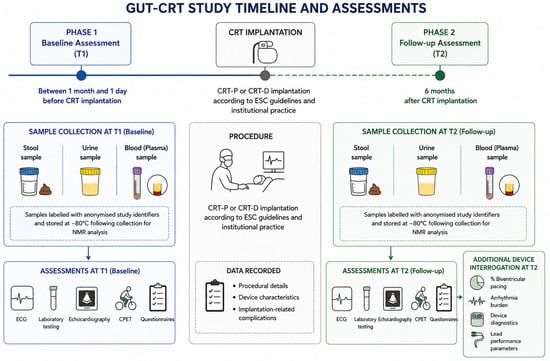
Objective: Gut dysbiosis has been increasingly implicated in the pathophysiology and progression of chronic heart failure. CRT improves cardiac function and promotes reverse cardiac remodelling. However, the impact of CRT on gut microbiota composition remains largely unknown. This study protocol describes a prospective cohort study designed to investigate changes in gut microbiota and microbial-derived metabolites following CRT implantation. Methods: ‘GUT-CRT’ is a single-centre, prospective observational cohort study enrolling 50 adults with chronic heart failure undergoing CRT-P or CRT-D implantation. Stool, urine and serum samples will be collected at two timepoints (pre-CRT and 6 months post-CRT). Gut microbiota composition will be assessed using 16S rRNA gene sequencing or metagenomic analyses. Urinary and serum TMAO concentrations will be quantified using NMR spectroscopy, alongside assessment of heart failure biomarkers, echocardiographic parameters, and cardiopulmonary exercise testing variables. The primary endpoint is the within-participant change in gut microbiota composition following CRT implantation. Secondary analyses will investigate changes in serum and urinary TMAO concentrations and associations between microbiome alterations, and exploratory analyses will investigate associations between microbiome alterations and serum and urinary TMAO concentrations with biomarkers’ responses, echocardiographic parameters, cardiopulmonary exercise performance, and clinical response to CRT. Results: As this is a study protocol, no results are currently available. Planned analyses include alpha-diversity and beta-diversity comparisons, differential taxonomic abundance analyses, metagenomic pathway analyses, multivariable modelling, and exploratory analyses examining associations between microbiome changes and clinical response to CRT. Conclusions: This study may provide novel insights into the interaction between cardiac resynchronization therapy and the gut microbiome in patients with chronic heart failure. Understanding whether improvements in cardiac function and haemodynamics are accompanied by favourable changes in gut microbial composition may contribute to a better understanding of the gut–heart axis and identify potential microbiome-related biomarkers of CRT response.

Cardiovasc. Med.

21 November 2026

GUT-CRT study timeline and assessments.
  • Article
  • Open Access

Postoperative Hypocholesterolemia and Adverse Outcomes After Aortic and Mitral Valve Surgery

  • Maarten de Haan,
  • Rick Bezemer and
  • F. Joost ter Woorst
  • + 2 authors

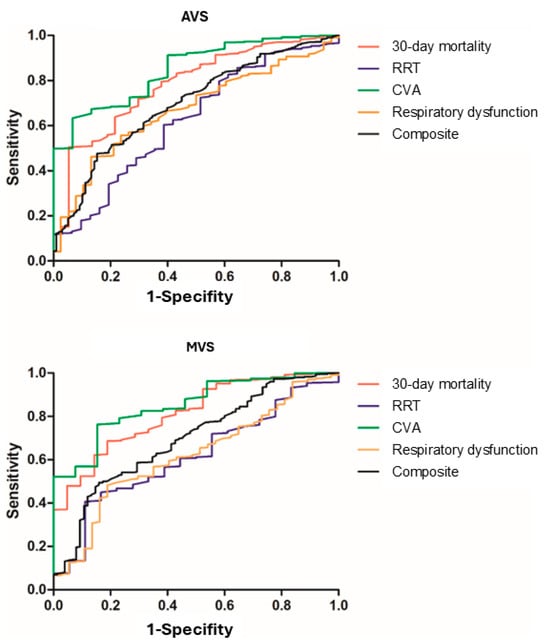
Recently, we demonstrated that early postoperative low cholesterol levels associate with mortality and major complications after coronary artery bypass grafting (CABG). To assess whether this pattern extends to valve surgery, we analyzed adult patients undergoing elective aortic (AVS) or mitral valve surgery (MVS) between 2010 and 2023. The minimum cholesterol level during the first five postoperative days was evaluated both continuously and using outcome specific thresholds derived from Receiver Operating Characteristic (ROC) and Youden analysis. In 1326 AVS and 779 MVS patients, the minimum postoperative cholesterol was associated with adverse events, with area under curve (AUC) values of 0.697 (0.645–0.749) in AVS and 0.694 (0.633–0.756) in MVS. For 30-day mortality, cerebrovascular events (CVA), renal replacement therapy (RRT), and respiratory dysfunction, the corresponding thresholds showed significant associations with their respective outcomes (AUC 0.615–0.848; sensitivity 0.406–0.762; specificity 0.613–0.933), with unadjusted odds ratios ranging from 2.4 to 9.3 across primary endpoints (reaching up to 24.2 for CVA, which exhibited wide confidence intervals due to low event counts, all p < 0.05). Thresholds for the composite adverse outcome showed a consistent association in both AVS and MVS (AUC 0.694–0.697; sensitivity 0.476–0.494; specificity 0.840–0.847), providing an aggregated endpoint that complements the individual outcomes. These thresholds aligned with the same low cholesterol range observed in CABG, suggesting a potentially shared post-cardiotomy metabolic stress response across cardiac surgical populations that warrants further prospective investigation.

Cardiovasc. Med.

17 November 2026

Area under curve (AUC) with 95% CI values of minimal cholesterol on adverse outcomes. AVS: 30-day mortality AUC 0.780 (0.707–0.853), RRT 0.848 (0.768–0.929), CVA 0.624 (0.521–0.727), respiratory dysfunction 0.671 (0.596–0.746), composite adverse outcome 0.697 (0.645–0.749). MVS: 30-day mortality AUC 0.812 (0.730–0.894), RRT 0.852 (0.767–0.936), CVA 0.615 (0.497–0.733), respiratory dysfunction 0.618 (0.531–0.705), composite adverse outcome 0.694 (0.633–0.756).
  • Case Report
  • Open Access

Clinical Decision-Making in High-Risk Cross-Platform Redo-TAVI: Pre-Emptive Coronary Wiring and Chimney Stenting

  • Sasho Stanisavljevikj,
  • Alexander Staudt and
  • Christian Fahje Klopsch
  • + 10 authors

Redo transcatheter aortic valve implantation (TAVI) in patients with prior transapical SAPIEN 3 valves carries a significant risk of coronary obstruction (CO). Chimney stenting is an established strategy to maintain coronary perfusion in high-risk valve-in-valve (ViV) procedures. We treated an 87-year-old cachectic woman with BMI of 16.9 kg/m2 who presented with cardiac decompensation due to severe restenosis of a 20 mm SAPIEN 3 valve implanted using a transapical approach in 2017. Computed tomography revealed index prosthesis frame extension beyond the sinotubular junction at the right coronary sinus, posing a risk of RCA occlusion. A staged transfemoral redo-TAVI using a 23 mm Medtronic Evolut FX+ valve was performed followed by deployment of the pre-positioned stent in the so-called chimney technique. The RCA guidewire and undeployed coronary stent were positioned in advance as a protective measure before valve deployment. During valve deployment, inferior ST-segment elevation occurred, prompting stent implantation in order to restore RCA patency. Angiography confirmed preserved coronary flow and optimal valve function. Careful preprocedural evaluation—including CT-based assessment of coronary height, sinus anatomy, and virtual valve modeling—is essential to minimize the risk of CO in ViV or redo-TAVI procedures. The chimney technique provides an effective bailout strategy for acute coronary obstruction, while procedural strategies such as commissural alignment and the cusp-overlap technique can optimize procedural and hemodynamic outcomes. Pre-emptive coronary protection using chimney stenting enables safe and effective redo transfemoral TAVI in patients with complex anatomy and prior transapical valve implantation, ensuring hemodynamic success and minimizing complications.

Cardiovasc. Med.

4 November 2026

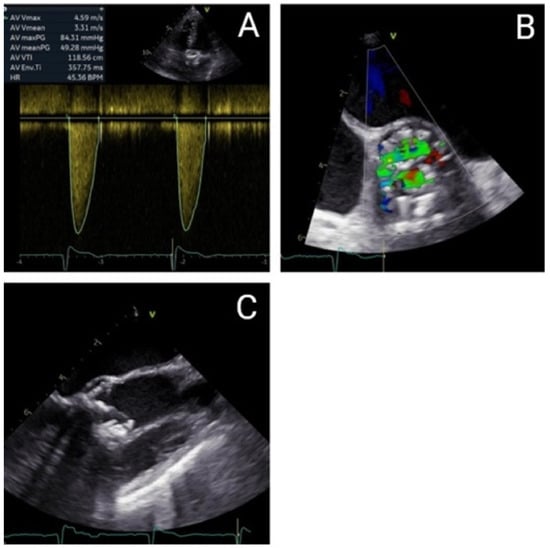
Echocardiographic Assessment of Bioprosthetic Aortic Valve. (A) Continuous–wave (CW) Doppler performed on admission, demonstrating elevated transvalvular gradients. (B) Transesophageal echocardiography (TEE), short–axis view, showing turbulent flow across the bioprosthetic valve on color Doppler, indicative of severe stenosis. (C) TEE, long–axis view, revealing marked calcification of the bioprosthetic valve on admission. Labels (A–C) are displayed in white.
  • Article
  • Open Access

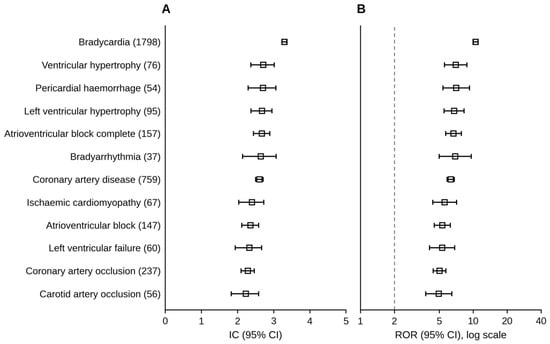
Background: Beta-blockers are widely prescribed across cardiovascular indications, yet their real-world cardiovascular adverse-event profiles across drug generations remain incompletely characterised in large pharmacovigilance datasets. Objective: The objective was to describe and compare cardiovascular adverse-event reporting patterns for atenolol, bisoprolol and nebivolol in the FDA Adverse Event Reporting System (FAERS). Methods: We performed a retrospective disproportionality analysis of FAERS reports using OpenVigil 2.1, covering each drug’s available reporting history from the first quarter of 2004 (2007 for nebivolol) through the third quarter of 2025 (FAERS 2025 Q3). Cardiovascular events were defined as individual MedDRA Preferred Terms; signals were assessed with the Reporting Odds Ratio (ROR, 95% CI) and Information Component (IC) under Evans’ criteria. Individual case safety reports were also analysed for demographics, seriousness and outcomes. Results: Atenolol was most strongly associated with bradycardia (ROR = 10.513), followed by pericardial haemorrhage (ROR = 7.067) and ventricular hypertrophy (ROR = 6.999). Bisoprolol showed the highest signals for diastolic dysfunction (ROR = 24.875), atrial tachycardia (ROR = 23.283) and chronic cardiac failure (ROR = 23.222). Nebivolol had the lowest overall reporting volume, although counts were not adjusted for exposure; its strongest signals were bradycardia (ROR = 9.619) and coronary artery stenosis (ROR = 9.351). Paediatric reports (0–17 years) were uncommon for atenolol and bisoprolol and nearly absent for nebivolol; none of the three is FDA-approved in this group. Reports mainly involved older adults (60–89 years), and a substantial proportion were classified as serious. Conclusions: All three agents generated significant signals across a broad range of cardiovascular events. Nebivolol had the lowest reporting volume, but this should not be interpreted as evidence of a safer profile. Because FAERS disproportionality cannot establish causality, these findings are hypothesis-generating and require prospective confirmation before they can inform beta-blocker selection.

Cardiovasc. Med.

20 October 2026

Atenolol: twelve highest-ranking cardiovascular adverse-event signals, ordered by information component (IC). (A) IC with its 95% credibility interval (CI); the lower bound (IC025) was above 0 for every event shown. (B) Reporting odds ratio (ROR) with its 95% confidence interval on a log scale; the dashed line marks ROR = 2 (Evans’ criteria). Report counts are shown in parentheses. Squares mark the point estimates and capped horizontal lines mark the intervals; for the events with the largest report counts the interval is narrower than the square. Results for all 38 atenolol drug–event pairs are listed in Table 1.

Featured Articles of Last Quarter

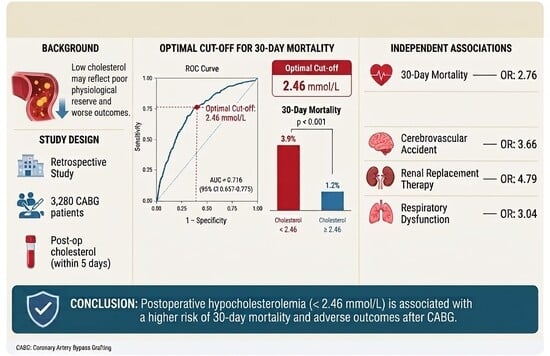
The association between minimum cholesterol levels during the first five postoperative days following CABG and the observed probability of adverse events. A rug plot is included along the x axis to illustrate the distribution of individual cholesterol measurements.

Highly Accessed Articles

News & Conferences

Latest Issues

Open for Submission

Journal Sections

XFacebookLinkedIn
Cardiovasc. Med. - ISSN 1664-204X