Skip to Content
  • 2.5
    Impact Factor
  • 4.8
    CiteScore
  • 19 days
    Submission to First Decision
  • 3 days
    Acceptance to Publication

Aerospace

Aerospace is a peer-reviewed, open access journal of aeronautics and astronautics, published monthly online by MDPI. The European Aerospace Science Network (EASN) and ECATS International Association are affiliated with Aerospace and their members receive a discount on the article processing charges.

Get Alerted

Add your email address to receive forthcoming issues of this journal.

All Articles (5,998)

  • Article
  • Open Access

A plant–controller co-design methodology is proposed in which the reference model dynamics are parameterized and incorporated directly into the optimization rather than prescribed a priori. Within an Explicit Model Following (EMF) architecture, plant-design variables and reference-model parameters are optimized simultaneously with the controller gains, subject to prescribed stability, performance, and maneuverability constraints. The framework accommodates H2, H∞, and mixed H2/H∞ state-feedback synthesis and can be extended to multiple design points. The bilinearities arising from the coupled plant–controller–reference model optimization are addressed through a perturbation-based iterative procedure that decomposes the resulting Bilinear Matrix Inequality (BMI) problem into sequential convex Linear Matrix Inequality (LMI) subproblems. The proposed framework is demonstrated and validated through an integrated sizing and control-design problem for a representative quad-wing tilt-rotor Vertical Take-Off and Landing (VTOL) air vehicle, where aircraft-specific maneuverability and handling-quality requirements are incorporated as design constraints. Compared with the initial controller design obtained for fixed plant parameters, the final co-designed plant–controller configuration achieves a substantial improvement in closed-loop performance, with the maximum control demand reduced by approximately 70% in the directional control case. Further optimization of the reference-model parameters yields an additional 3–5% improvement in control effort metrics, indicating that the prescribed closed-loop dynamics can influence the overall co-design optimum while maintaining the required handling-quality constraints.

Aerospace

15 October 2026
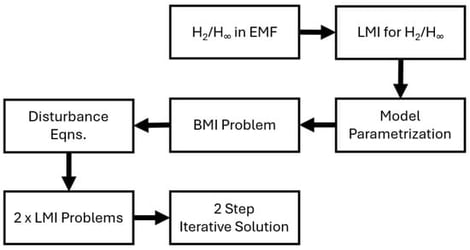
Overview of the proposed iterative co-design procedure.
  • Article
  • Open Access

Adhesively bonded carbon-fiber-reinforced polymer (CFRP) joints offer efficient load transfer and weight-saving potential in aerospace structures. The simple geometry of single-lap joints (SLJs) makes them useful for examining bond durability, although the effects of hygrothermal aging on their performance have not been sufficiently investigated. This research systematically integrates moisture absorption experiments, mechanical testing, finite element modeling (FEM), and deep neural network (DNN) modeling to provide a comprehensive analysis of moisture absorption behavior, strength degradation, and the evolution of failure modes within the adhesive layer. Initially, three types of adhesives were aged under various hygrothermal aging conditions to investigate their moisture absorption behavior and mechanical performance after aging. The tensile strength and modulus of the adhesives decreased linearly with increasing moisture uptake. In addition, hygrothermal aging tests were conducted on SLJs. Results demonstrated a significant reduction in joint shear strength during aging, accompanied by a transition in failure mode from cohesive to interfacial. Subsequently, a hygrothermally coupled FE model was developed using the experimental data and combined with a cohesive zone model to simulate joint strength evolution. The FE model achieved a calculation error within 5%. To address the high computational cost associated with finite element analysis of hygrothermal aging in SLJ structures and to enhance the physical interpretability of data-driven models, a novel prediction strategy was introduced. A three-stage serial neural network model was constructed using experimental and simulation data, with the quadratic stress criterion and power-law criterion embedded as physical constraints. Compared to unconstrained models, this physics-constrained neural network exhibited superior prediction accuracy and stability. The proposed method offers a valuable reference for the design and evaluation of the durability of CFRP bonded structures.

Aerospace

15 October 2026

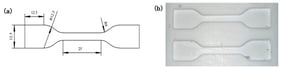
Design and fabrication of adhesive dogbone components: (a) design of dogbone components; (b) the completed adhesive test specimen after forming.
  • Article
  • Open Access

In time-marching simulation of airborne wind energy systems (AWESs), the tether is usually discretised into a series of lumped masses (i.e., nodes) connected by spring and damper elements. There is no consensus on the appropriate number of nodes for AWES applications, although it is known that using more nodes than necessary is computationally costly. In this work, we examine the trim solutions of a fixed-wing aircraft connected to the ground by a 500 m tether. A successive difference metric is proposed to quantify the convergence rate of the trim solutions as more nodes are added. We then compare this gain in accuracy to the simulation time and memory usage by plotting their Pareto fronts. Results reveal that using 6–8 tether nodes (i.e., 7–9 segments) is sufficient. Compared to using 15 nodes, 8 nodes keep the successive difference metric below 2%, run over 13 times faster, and require less than a quarter of memories. Beyond 8 nodes, the differential equation solver appears to enter a new stiffness regime, resulting in rapid rises in computation time and memory usage. These findings suggest that the conservative choices of 10–20 nodes can be relaxed, promising significantly lower computation costs in future studies.

Aerospace

15 October 2026

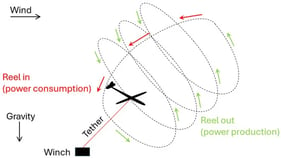
Schematic of a full pumping cycle in a groundgen AWES, comprising a reel-out phase (shown here in circular-pattern flight) followed by reel-in.
  • Article
  • Open Access

Stall inception in high-speed counter-rotating axial compressors remains insufficiently understood because of the complex unsteady interactions between adjacent rotating blade rows. In this study, full-annulus unsteady Reynolds-averaged Navier–Stokes simulations combined with dense pressure monitoring, time-frequency analysis, and dynamic mode decomposition are used to investigate the evolution of a low-frequency stall precursor. A dominant disturbance at approximately 700 Hz in the stationary frame, corresponding to approximately 370 Hz in the rear-rotor-relative frame, is first detected in the rear-rotor region and subsequently appears at upstream and downstream monitoring stations. Its amplitude increases continuously over several rotor revolutions as the compressor approaches stall inception. Circumferential pressure signals exhibit an ordered phase progression around the annulus, indicating an annulus-scale, circumferentially organized disturbance rather than isolated local fluctuations. Dynamic mode decomposition associates the 370 Hz mode with periodic displacement and deformation of the rear-rotor shock system. Shock-position histories further reveal increasing oscillation amplitudes and circumferential phase shifts as stall is approached. Larger shock excursions are accompanied by stronger near-tip streamline deflection and precede substantial passage-blockage growth. These results identify the rear rotor as the earliest detected and primary amplification region of the precursor and support an interpretation involving progressively amplified shock-related unsteadiness and subsequent deterioration of passage flow capacity.

Aerospace

15 October 2026

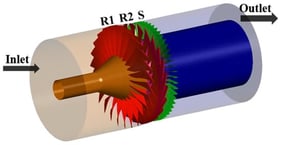
Geometry and computational domain of the counter-rotating axial compressor.

Highly Accessed Articles

News & Conferences

Latest Issues

Open for Submission

Journal Sections

Space Telescopes & Payloads
Reprint

Space Telescopes & Payloads

Editors: Ariadna Calcines Rosario, John Capone, Sophie Musset, Paula Chadwick
Mission Analysis and Design of Lighter-than-Air Flying Vehicles
Reprint

Mission Analysis and Design of Lighter-than-Air Flying Vehicles

Editors: Alberto Rolando, Carlo E. D. Riboldi
XFacebookLinkedIn
Aerospace - ISSN 2226-4310