



Children, Volume 12, Issue 11 (November 2025) – 153 articles
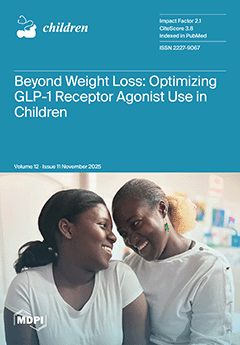
Cover Story (view full-size image):
Glucagon-like peptide-1 receptor agonists (GLP-1RAs) are reshaping pediatric obesity and type 2 diabetes management, with approved products offering significant BMI and weight reductions. However, major knowledge gaps remain. Long-term safety and durability of effect in youth are unknown, particularly regarding bone health, lean mass preservation, and neurohormonal development. Optimal dosing, duration, and criteria for treatment discontinuation risk for weight rebound require further study. This review integrates clinical and mechanistic evidence while underscoring the urgent need for longitudinal, pediatric-specific research to inform safe and effective obesity pharmacotherapy in growing children. View this paper
- Issues are regarded as officially published after their release is announced to the table of contents alert mailing list.
- You may sign up for e-mail alerts to receive table of contents of newly released issues.
- PDF is the official format for papers published in both, html and pdf forms. To view the papers in pdf format, click on the "PDF Full-text" link, and use the free Adobe Reader to open them.
Previous Issue
Next Issue
