


You are currently viewing a new version of our website. To view the old version click .

Electronics

Electronics is an international, peer-reviewed, open access journal on the science of electronics and its applications published semimonthly online by MDPI.
The Polish Society of Applied Electromagnetics (PTZE) is affiliated with Electronics and their members receive a discount on article processing charges.
Quartile Ranking JCR - Q2 (Engineering, Electrical and Electronic)

All Articles (27,165)

A window-embedded broadband vehicle-mounted antenna for frequency modulation (FM) broadcast application is proposed. Antenna miniaturization at sub-gigahertz frequencies remains challenging due to the inherently long wavelengths, which impose strict constraints on compactness, bandwidth, and structural weight. A promising strategy to alleviate this problem is to use the vehicle itself as an effective radiator to enhance the bandwidth and maintain good radiation performance. In this work, the potentialities of the radiation patterns offered by the vehicle are analyzed by using the characteristic mode theory (CMT). A compact T-shape coupling element, with dimensions of 0.2λ0 × 0.08λ0 × 0.01λ0, is employed to simultaneously excite multiple significant characteristic modes, thereby broadening the operating band. Both simulated and measured results validate that the proposed antenna can cover the FM broadcast operating band from 87 MHz to 108 MHz, with the 1:10 scaled prototype achieving a maximum measured gain of 7.4 dBi at 950 MHz. The proposed antenna and design strategy have advantages in radio broadcasting, radio navigation, and military and law enforcement communication systems for its low-cost, compact, and easy conformal structure.

25 December 2025

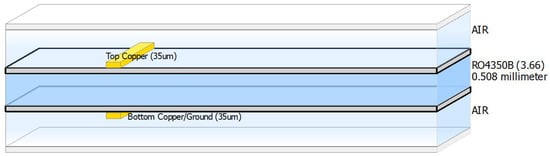
(a) Schematic of the three-dimensional simplified vehicle model. (b) Architecture of the coupling elements.

Driven by technological innovation, service diversification, and the evolution and defects of current networks, the 6th-generation (6G) network architecture is lacking in research. One of the challenges in this research is that the architectural design should take into account multiple factors: customers, operators, and vendors. For service-oriented and network-oriented design requirements, this article proposes a data-driven distributed autonomous architecture (DDAA) for 6G with a three-layer four-plane logical hierarchy. The architecture is simplified as four network function units (NFUs), the interaction among which is carried via dual-bus interfaces, i.e., the service-based interface (SBI) and data transmission interface (DTI). In addition, it is user data-centric and rendered as distributed autonomous domains (ADs) with different scales to better adapt to customized services. Different transition stages from the 5th generation (5G) to 6G are discussed. Network simplification evaluation is further provided by going through several signaling procedures of the 3rd-generation partnership project (3GPP), inspiring advanced research and subsequent standardization of the 6G network architecture.

25 December 2025

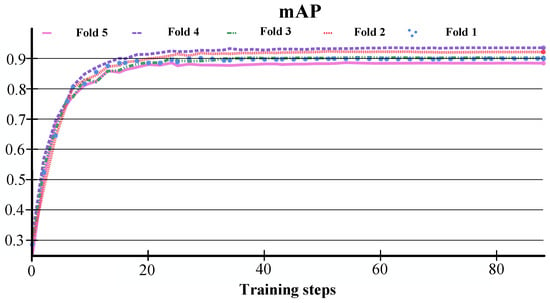
The increasing frequency and severity of urban crowd disasters underscore a critical need for intelligent surveillance systems capable of real-time crowd anomaly detection and early warning. While deep learning models such as LSTMs, ConvLSTMs, and Transformers have been applied to video-based crowd anomaly detection, they often face limitations in long-term contextual reasoning, computational efficiency, and interpretability. To address these challenges, this paper proposes HiMeLSTM, a crowd anomaly detection framework built around a hippocampal-inspired memory-enhanced LSTM backbone that integrates Long Short-Term Memory (LSTM) networks with an Episodic Memory Unit (EMU). This hybrid design enables the model to effectively capture both short-term temporal dynamics and long-term contextual patterns essential for understanding complex crowd behavior. We evaluate HiMeLSTM on two publicly available crowd-anomaly benchmark datasets (UCF-Crime and ShanghaiTech Campus) and an in-house CrowdSurge-1K dataset, demonstrating that it consistently outperforms strong baseline architectures, including Vanilla LSTM, ConvLSTM, a lightweight spatial–temporal Transformer, and recent reconstruction-based models such as MemAE and ST-AE. Across these datasets, HiMeLSTM achieves up to 93.5% accuracy, 89.6% anomaly detection rate (ADR), and a 0.89 F1-score, while maintaining computational efficiency suitable for real-time deployment on GPU-equipped edge devices. Unlike many recent approaches that rely on multimodal sensors, optical-flow volumes, or detailed digital twins of the environment, HiMeLSTM operates solely on raw CCTV video streams combined with a simple manually defined zone layout. Furthermore, the hippocampal-inspired EMU provides an interpretable memory retrieval mechanism: by inspecting the retrieved episodes and their att ention weights, operators can understand which past crowd patterns contributed to a given decision. Overall, the proposed framework represents a significant step toward practical and reliable crowd monitoring systems for enhancing public safety in urban environments.

25 December 2025

Accelerating Post-Quantum Cryptography: A High-Efficiency NTT for ML-KEM on RISC-V

  • Duc-Thuan Dam,
  • Khai-Duy Nguyen and
  • Duc-Hung Le
  • + 1 author
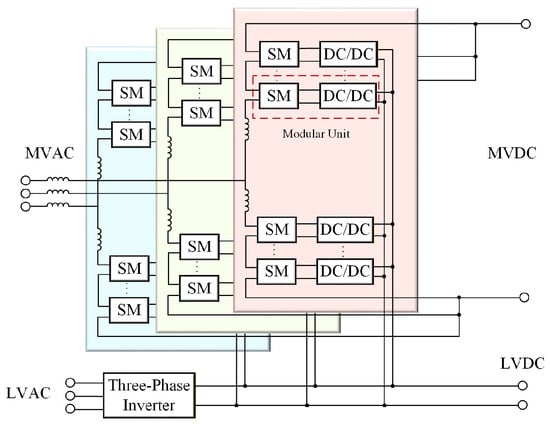
Post-quantum cryptography (PQC) is rapidly being standardized, with key primitives such as Key Encapsulation Mechanisms (KEMs) and Digital Signature Algorithms (DSAs) moving into practical applications. While initial research focused on pure software and hardware implementations, the focus is shifting toward flexible, high-efficiency solutions suitable for widespread deployment. A system-on-chip is a viable option with the ability to coordinate between hardware and software flexibly. However, the main drawback of this system is the latency in exchanging data during computation. Currently, most SoCs are implemented on FPGAs, and there is a lack of SoCs realized on ASICs. This paper introduces a complete RISC-V SoC design in an ASIC for Module Lattice-based KEM. Our system features a RISC-V processor tightly integrated with a high-efficiency Number Theoretic Transform (NTT) accelerator. This accelerator leverages custom instructions to accelerate cryptographic operations. Our research has achieved the following results: (1) The accelerator provides a speedup of up to 14.51 × for NTT and 16.75 × for inverse NTT operations compared to other RISC-V platforms; (2) This leads to end-to-end performance improvements for ML-KEM of up to 56.5% for security level I, 50.9% for level III, and 45.4% for level V; (3) The ASIC design is fabricated using a 180 nm CMOS process at a maximum operating frequency of 118 MHz with an area overhead of 8.7%. The chip achieved a minimum power consumption of 5.913 μW at 10 kHz and 0.9 V of supply voltage.
24 December 2025

News & Conferences

Issues

Open for Submission

Editor's Choice

Reprints of Collections

Biometric Recognition
Reprint

Biometric Recognition

Latest Advances and Prospects
Editors: Yunlong Wang, Zhaofeng He, Caiyong Wang, Jianze Wei, Min Ren

Get Alerted

Add your email address to receive forthcoming issues of this journal.

XFacebookLinkedIn
Electronics - ISSN 2079-9292