



Appl. Sci., Volume 15, Issue 20 (October-2 2025) – 439 articles
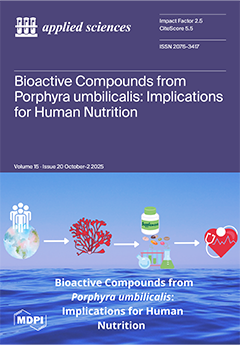
Cover Story (view full-size image):
Porphyra umbilicalis is a red macroalga belonging to the genus Porphyra and the family Bangiaceae. Porphyra umbilicalis distinguishes itself among macroalgae due to its remarkable biochemical composition and nutritional value. It contains a broad spectrum of bioactive compounds, including macronutrients and micronutrients. Among the macronutrients, carbohydrates, proteins, and essential fatty acids are particularly abundant, with protein levels reaching up to 40% dw (dry weight). Its high protein content makes Porphyra umbilicalis a promising alternative and sustainable protein source, particularly for plant-based diets. Its micronutrients, including vitamins (C, E, and B-group), pigments, and mineral components, contribute to antioxidant protection, metabolic regulation, and maintenance of overall nutritional balance. View this paper
- Issues are regarded as officially published after their release is announced to the table of contents alert mailing list.
- You may sign up for e-mail alerts to receive table of contents of newly released issues.
- PDF is the official format for papers published in both, html and pdf forms. To view the papers in pdf format, click on the "PDF Full-text" link, and use the free Adobe Reader to open them.
Previous Issue
Next Issue
