


Abstract
In order to expand the raw material base of lignocellulosic briquettes, and due to the shortage of wood materials, the use of lignocellulosic residues from the agricultural sector (such as hemp waste) became the main objective of this research. In order to state the significant differences between these briquettes, the lignocellulosic briquettes were obtained from hemp core waste and oak sawdust on the same hydraulic briquetting installation. The main properties of the two categories of briquettes were determined; we obtained a bulk density of about 450 kg/m3 for hemp core waste and 530 kg/m3 for oak sawdust. Also, the calorific values of the two categories of materials were about 18.2 MJ/kg and 17.5 MJ/kg, high calorific values (HCV) for hemp core waste/oak sawdust, and the calcined ash content was 5.8% for hemp and 0.8% for oak sawdust briquettes. As a general conclusion, through their physical–mechanical, calorific and chemical properties, it can be stated that the remains of the core obtained when obtaining hemp fibers can be used successfully to make fuel briquettes.
1. Introduction
The current shortage of wood and wood-based semi-finished products/composites has led to the search for new solutions to replace them. Thus, in the field of lignocellulosic briquettes, it has been found that lignocellulosic residues left after obtaining agricultural products, such as straw, corn cobs, sunflower seed shells, animal bedding, etc., represent a quality raw material to replace wood sawdust.
Hemp (Cannabis sativa spp.) is an annual plant that has a very fast growth, being the fastest growing plant on earth along with bamboo. The species is part of the genus Cannabis, family Cannabaceae. The very fast annual growth of hemp makes it possible to reach a height of about 3 m in a single season. Being a technical plant, hemp is cultivated for its 5–55 cm long fiber, used in the textile industry for the manufacture of fabrics. The extraction of fibers from the stems has been performed since ancient times by macerating (melting) the lignocellulosic parts in lakes or ponds. After 10–15 days, the hemp is removed, dried and then crushed with a specific device in order to separate the inner lignocellulosic part from fibers. In this way, about 50% of the stem is transformed into lignocellulosic waste, with possible uses in the briquette and pellet industry or directly in combustion. The global industrial hemp market was estimated at USD 11.03 billion in 2024, and is expected to be USD 30.24 billion in 2029, with the proportion of lignocellulosic waste being about 50%. Common hemp is a species of the Cannabaceae family, in which the maximum level of tetrahydrocannabinol is very low at around 0.3%. Hemp has a number of advantages, including storing between 9 and 15 tons of carbon dioxide in five months of vegetation, just like a very young forest; stopping the cycle of some plant diseases in crop rotation; preventing soil erosion and reducing water loss from the soil; and not requiring pesticides. Hemp is sponsored by the European community and is cultivated in many European countries, on an area that has increased from 20,540 hectares in 2015 to 33,020 in 2022, an increase of 60%. Hemp production in the European Union increased from 97,130 tonnes (about 38,850 m3) to 179,020 tonnes (about 68,000 m3) between 2015 and 2022, at a rate of 0.4 t/m3, an increase of over 80%. France is the leading European hemp producer, with about 60%, followed by Germany and The Netherlands [1].
Oak is a very valuable species, with its main uses being in the production of esthetic veneers, timber, paneling and parquet. The residues obtained from the processing of oak logs, with over 50–60% from sawing timber or cutting esthetic veneers, could be used in the manufacture of briquettes and pellets. Oak residues are less used in the composite materials industry due to the oxidation of tannins during processing and gluing.
Briquettes obtained from lignocellulosic agricultural residues have similar properties to those obtained from wood sawdust, both in terms of physical–mechanical properties and calorific or chemical properties. From an ecological point of view, briquettes are friendly to the environment, being neutral towards carbon dioxide, by eliminating into the atmosphere the same amount that it absorbed during the life of the tree or plant in question through the photosynthesis process. Further analyzing the life cycle assessment, the exclusive use of lignocellulosic residues in obtaining briquettes is a strong point that creates sustainable activity in the long term [1]. From the study of other bibliographic references [1,2,3,4,5], it was observed that agricultural residues still have a higher ash content than that of woody residues, such as, for example, wheat straw with a content of 6.5%, corn cobs with a 10% content, and alfalfa with over 11% content. These increased ash contents are due to the chemical composition of these lignocellulosic residues, namely higher percentages of secondary chemical compounds such as silicates and oxalates [6,7,8]. These briquettes are sustainable products, and will have an important role in the next decades [9,10]. The slight increase in ash content will determine a slight decrease in calorific value, also correlated with the moisture content of the lignocellulosic residues, according to a relationship of the following form (Spirchez and Lunguleasa) [11]:
where HCV—high calorific value, in MJ/kg; Mc—moisture content, in decimals; As—ash content, in decimals.
HCV = 18.9 (1 − 1.13 × Mc − 0.12 × As)
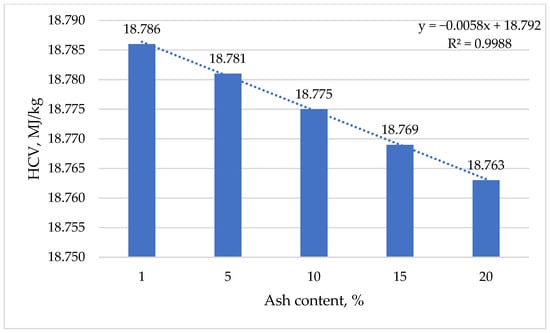
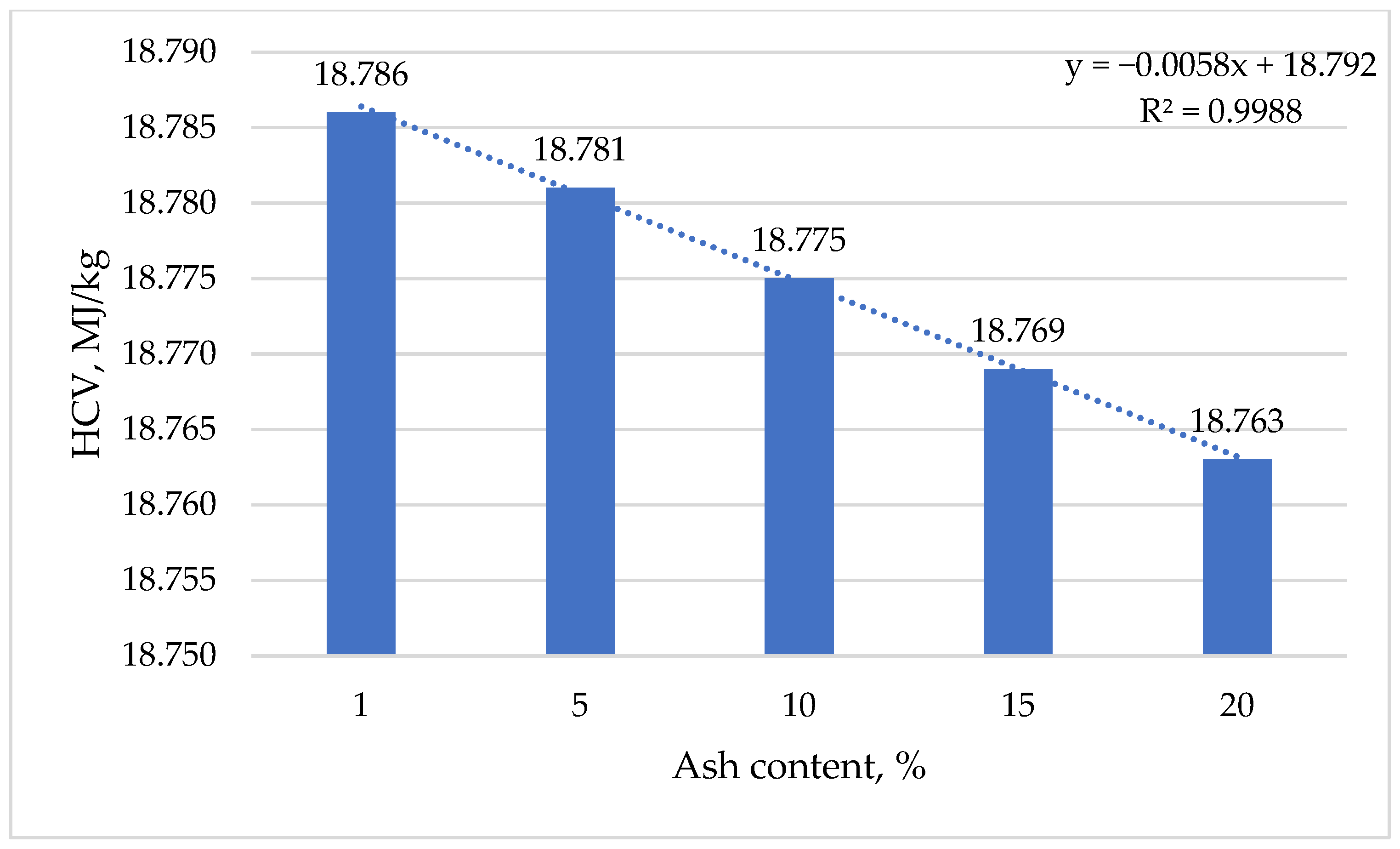
Using relation (1), the following diagram (Figure 1) could be created, which clearly shows that, once the ash content increases the calorific value will decrease slightly, but within the limits of only 23–25 kJ/kg.
Figure 1.
Dependence of calorific value (Oy) on ash content (Ox).
Briquettes represent an alternative source of energy [12,13,14,15,16] and have a low carbon footprint [17,18,19,20,21,22,23]. The properties of lignocellulosic briquettes are directly dependent on the dimensional characteristics (length and diameter) and mass. Also, the dimensional characteristics and properties of the briquettes are standardized and clearly specified. As some authors [19,20,21,22,23,24] have specified, the moisture content of the briquettes must be less than 10%. Sometimes, higher moisture content is accepted, but it should be less than 18% (as ÖNORM M7135/Austria stated) [24]; the unit density should be at least 525 kg/m3 (as CTI-R04/5/Italy accepted) [22]; the calorific value should be at least 16.7 MJ/kg by Britisch BioGen/UK [21]; and the ash content should be at most 6% (accepted by ÖNORM M7135/Austria) [24]. By conducting studies on briquettes made from pine wood pressed with a vertical hydraulic installation as Ramírez-Ramírez et al. (2021) stated [24], the unit densities of at least 813 kg/m3, an average ash content of 0.55%, and a calorific value of at least 20.5 MJ/kg (due to the high resin content) were obtained. Other authors managed to find a new method for determining the calorific value, about 90 times faster than the classic calorimetric method; some [25,26,27] found that the sawdust briquetting method is a method of sequestering carbon and increasing combustion efficiency, and others [28,29,30] found that under favorable conditions, the maximum unit density of briquettes cannot exceed 1.4 g/cm3 (as a wooden substance with maximum density and zero microscopical and macroscopical voids).
The main purpose of this work is to make briquettes from hemp lignocellulosic waste and to determine their main characteristics in order use them as combustible materials. In order to know the combustion capacity of the studied briquettes, several physical properties (moisture content, density), mechanical properties (compressive and splitting strength) and energetic properties (calorific value, calorific density and ash content) were determined. For comparison, briquettes made from oak (Quercus robur L.) sawdust were chosen, a material that has demonstrated its ability to make briquettes with superior characteristics.
2. Method and Materials
2.1. Raw Material
Two types of lignocellulosic residues were used, namely hemp core waste taken from a fiber producer (for sealing water and gas pipe joints in the field of household and industrial installations) and oak sawdust (obtained from sawing and edging timber in a woodworking workshop). These residues were dried in a Memmert type (Hamburg, Germany) laboratory oven, until a moisture content of 10% was obtained, and their granulometry, bulk density, etc., were also determined. All these first determinations will be correlated with the real briquette features obtained on the hydraulic briquetting machine.
2.2. Determination of Mass Granulometry Percentage
The mass granulometry of the small materials was determined to see what the percentages of participation of each fraction are (these determining the characteristics of the future briquettes), using sieves with dimensions of 4 × 4, 3.15 × 3.15, 2 × 2, 1.25 × 1.25 and 0.8 × 0.8 mm for sorting. The fraction that passed the last sieve of 0.8 × 0.8 mm was called “Rest”. The test was performed on a vibrating device (by changing polarity of electric current), currently used in the evaluation of the granulometry of chips in composite board technology. A total of 15 g of material of each type was used and 5 tests were performed for each type of material separately. Initially, the mass of each fraction was determined with a Kern type analytical balance (Frankfurt, Germany), after which we determined the percentage of mass participation in the total sample, with a relationship in the following form:
where Mp—mass participation percentage, in %; mf—mass of fraction, in g; mt—total mass of the sample.
The intention in determining these granulometries was to observe how the two types of wood chips break down by observing the different fractions. It was also based on the old observation [22,23] that, from small chips, we obtain briquettes with slightly higher densities but slightly lower resistance and vice versa, and that, from coarse chips, we obtain lower densities and slightly higher mechanical properties, all due to the different compression and compaction of the particles.
2.3. Determining the Bulk Density of Material
In order to see more clearly the degree of loosening of the small material, allowing us to obtain a clear idea regarding the dimensions of the lignocellulosic particles, the bulk density determination test (EN 15103) [31,32] was performed. For this, a cylinder directly graduated in cm3 was used, into which shredded material was introduced up to a certain division (usually the maximum). This volume was then weighed with a Kern-type analytical balance, and by relating the mass to the volume, the bulk density of the shredded material was found. Overall, 10 tests were performed, corresponding to each type of material.
2.4. Briquetting
A Gold Star briquetting machine (Brasov, Romania) was used to obtain the briquettes with a hydraulic drive, both to compress the small material and for its continuous mixing during briquetting. The agglomerate compression pressure in the briquetting machine was constant and equal to 20 bars, and the average time to release a briquette was 1 min. For the current needs of the research (density, compressive strength, splitting resistance, calorific value, etc.), 50–60 briquettes were obtained from each type of small material.
2.5. Determining Unit Density
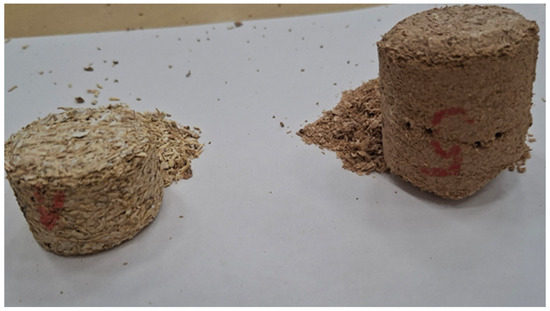
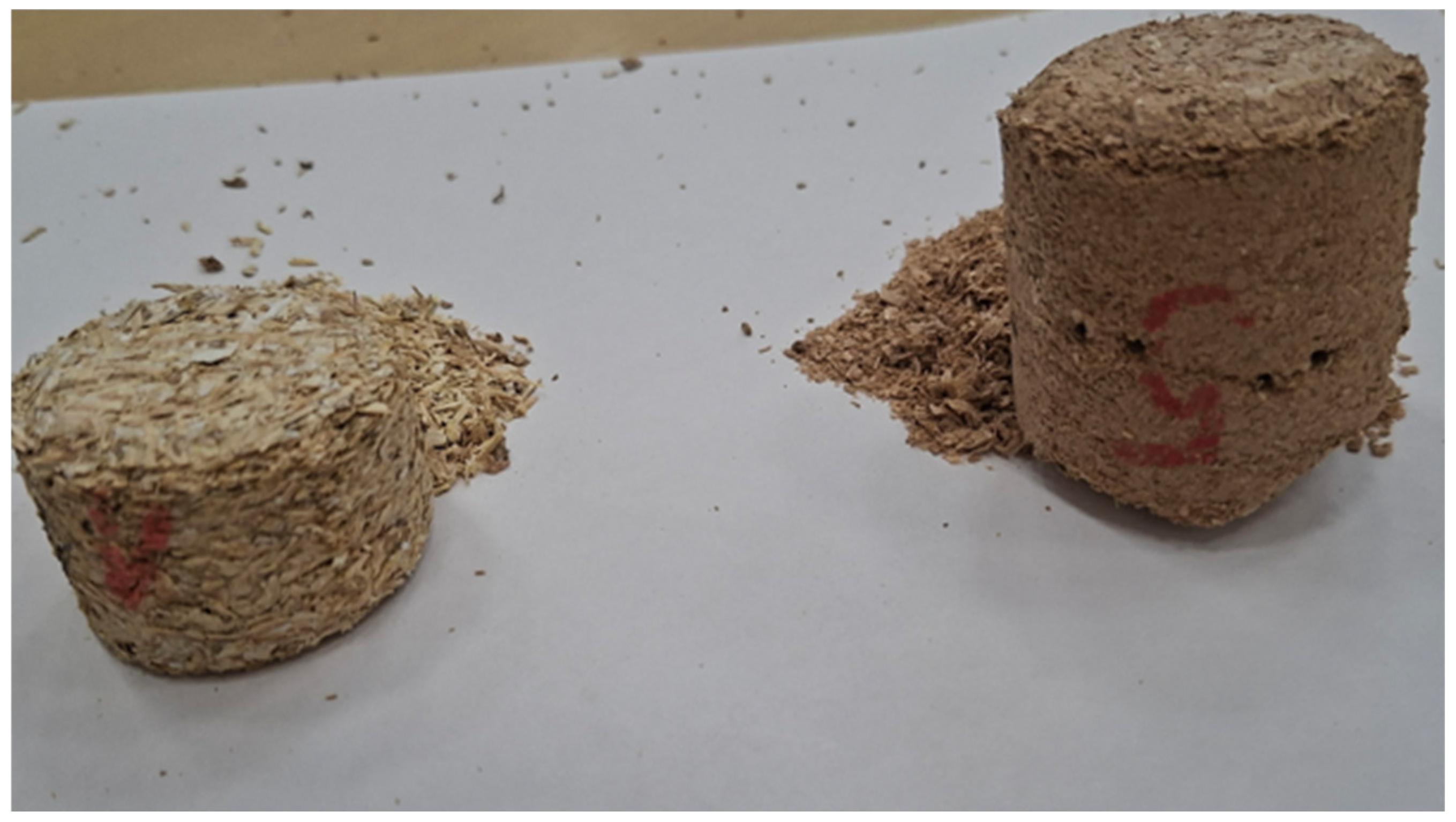
Each briquette (Figure 2) was conditioned to have a moisture content of around 10% and was weighed on a Kern analytical balance. Then, its dimensions (diameter and length) were measured using an electronic caliper with two decimal units.
Figure 2.
Hemp briquette (left) and oak briquette (right).
The unit density of the briquettes was determined as the ratio between their mass and cylindrical volume using the following relationship (Equation (2)):
where ρb represents the density of the briquettes, in kg/m3; mb—mass of the briquettes, in g; db—diameter of the briquettes, in mm; and lb—length of the briquettes, in mm.
Ten briquettes were prepared and tested in order to obtain significant density values.
2.6. Determination of Compressive Strength
The compressive strength is one of the important mechanical properties of briquettes, ensuring their stability during transport and storage [32,33]. In order to perform this test, a conditioned sample was taken, measuring its two dimensions, length and diameter. Next, this briquette was introduced between the plates of the universal testing machine and a force was applied until the briquette was broken. In order to identify the breaking area, the surface determined by the two dimensions of the briquette, i.e., the area of a parallel-piped rectangle, was taken into account, as can be seen in the resistance relationship: (Equation (4)):
where σc—compressive strength, in N/mm2; Fc,max—maximum compressive force, when the briquette was broken, in N; d—the briquette diameter, in mm; and l—the briquette length, in mm.
To identify the statistical parameters of the results, 10 briquettes of each type of lignocellulosic briquettes were used.
2.7. Resistance to Splitting of the Briquettes
Especially long briquettes have the possibility of splitting into two or more parts when splitting stresses occur. The splitting resistance of briquettes (similar to that of solid wood) is very low because there is no adhesive in the direction of the splitting forces, but only a few mechanical adhesion forces due to pressure and lignin activation. To perform this test, a cutting knife with a blunt tip (rounding radius around 1 mm) was designed, having a thickness of 10 mm, a width of 12 cm, and a bilateral angle at the tip of 35°. This device was fixed in the upper head of the testing machine and applied at a speed of 10 mm/min to the briquette placed at the bottom of the workbench, until it split into two parts. The splitting resistance took into account the maximum splitting force and the cross-sectional area of the briquette:
where σs is the splitting strength of the briquette, in N/mm2; Fsmax—maximum splitting force, in N; and d—average diameter of the briquette determined as the arithmetic mean of two perpendicular diameters, made on the specimen before testing, in mm.
Ten specimens were tested to obtain significant results and to integrate the test into a confidence interval of values of 95%.
2.8. Calorific Value of Briquettes
The calorific value of briquettes is one of the main properties of briquettes, given their preferred use in combustion, and represents the amount of heat released by their mass unit [34]. Before each determination, small pieces of 0.8 g were detached from the briquettes and dried in an oven until a constant mass was attained. The installation used to determine the calorific value was the adiabatic calorimeter XRY-1C Shanghai Geological Ltd., Shanghai, China, which determined the calorific value based on the temperature difference in the calorimeter during the period of the beginning and end of the combustion of the specimen in the calorimeter bomb. In order to capture a series of oxides that would negatively influence the combustion of the sample in the calorimetric bomb, the manufacturer of the installation proposed the use of 3 mL of distilled water on the bottom of the bomb, which slightly increased the moisture content of the sample up to 5%, during the initial period of operation of the installation, that is, until the sample was ignited. To determine the calorific value at 0% moisture content, reference relationships can be used [11]. Eight pieces of each type of oven-dry briquette with a mass of about 0.8 g were used [34,35,36,37], and to intensify the combustion, about 30 bars of technical oxygen were introduced into the calorimeter bomb. The installation software provided for the use of the Renault––Phander method, namely the following general working relationship (Equation (5)):
where CV—calorific value of the briquette, in MJ/kg; kc—calorimeter coefficient, in MJ/°C; Tf—final temperature, at the end of the test, in °C; Ti—initial temperature, at the beginning of the test, in °C; qw—quantity of heat given by the nickel wire, in MJ/kg; qc—quantity of heat given by the cotton wire, in MJ/kg; and m—mass of the sample extracted from the type of briquette analyzed (about 0.8 g), in kg.
Since the calorimeter software offered a high and a low calorific value, which means that during the test the briquettes had a moisture content (small, by the way, around 4–5%), the calorific value for oven dry wood had to be determined with the following relationship [28]:
where CV0—calorific value of briquettes with 0% moisture conte9-nt, in MJ/kg; CVMc—calorific value of briquettes with a certain moisture content, in MJ/kg; and Mc—moisture content.
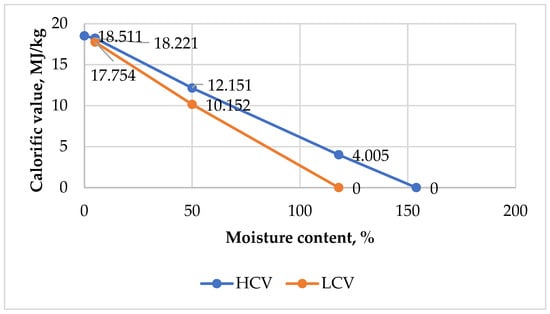
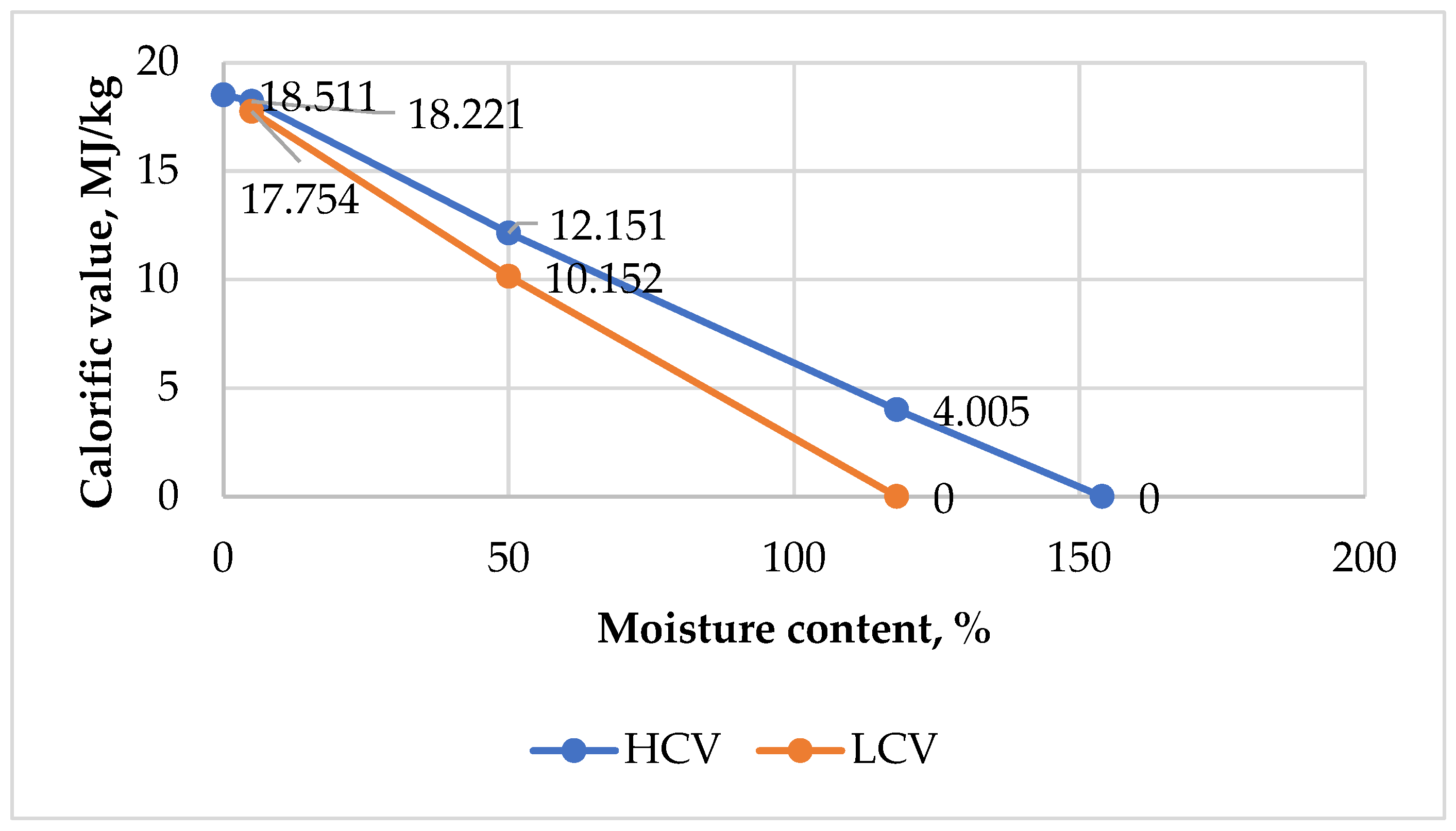
To observe the influence of moisture content on calorific value, pieces of briquettes with a moisture content of 50% were used, at which the calorific value was determined. By coupling the values obtained with those for a moisture content of 5%, two points could be obtained, through which the linear equations visible in the figures from the results chapter were plotted.
2.9. Calorific Density of Briquettes
Since the calorific value was expressed per unit mass, and as it is often desirable to express it per unit volume, the calorific density of the briquettes was determined, considering the unit density of the briquettes and calorific value, using the following determination relationship:
where Dc—calorific density, in MJ/m3; CV—calorific value of straw briquettes, in MJ/kg, ρb—density of briquettes, in kg/m3.
2.10. Ash Content
The ash content of the briquettes is important in knowing the amount of calcined ash produced during combustion in order to extract, transport and process it. About 20 g was taken from the hemp waste and oak sawdust samples, resulting from sorting with a 1 × 1 mm sieve. For calcination, 10 crucibles were prepared from a nickel-chromium alloy resistant to high temperatures of 600 °C [38,39] were used for the calcination of lignocellulosic material, in which a thin layer of 0.3–0.6 g of dry dust at 105 °C was placed. By knowing the weight of the crucibles, the initial mass (before introduction into the oven) and the final mass (after extraction from the calciner and cooling) of the material were determined. The calculation relationship was the following (Equation (9)):
where Ac%—ash content, in %; ma—mass of calcined ash, in g; and ms—mass of sample, in g.
Ten replicates of ash content were performed for both hemp waste and oak sawdust.
2.11. Statistical Analysis of Data
The main statistical parameters were determined, such as mean and median, standard deviation, coefficient of variation, etc. Also, each graph made had a tendence curve (usually linear) and a Pearson R2 coefficient that expressed the precision of the measurements was determined.
3. Results
The results of the tests and measurements were centralized in tables, the vast majority of them being entered into Microsoft Excel programs in order to find the statistical parameters and create comparative graphs.
3.1. Dimensions and Bulk Density of Raw Material
The dimensions and mass of the briquettes obtained from the two types of materials are presented in Table 1. Based on these data, the unit density of the briquettes was subsequently determined and it had a major influence on their unit and bulk density.
Table 1.
Dimensions and mass of briquettes.
It was observed that the length of the briquettes from the hemp waste, of about 32.8 mm, was approximately 31.3% smaller than that of the oak briquettes, which meant that the oak sawdust settled better in the extrusion channel than that of the hemp waste.
Regarding the diameter expansion of the two categories of materials, expressed by the diameter of the briquettes after about 1 h from exiting the extrusion channel, compared to the calibrated diameter of the channel of 40 mm, greater expansion of the oak briquettes was observed compared to the hemp briquettes, rising by 3.6% compared to 0.07%. This means that the hemp waste was more difficult to compact, ultimately obtaining a reduced unit density of these briquettes.
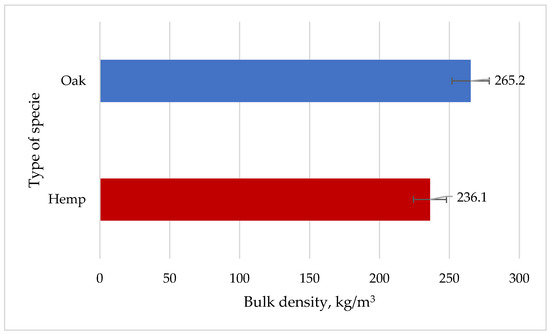
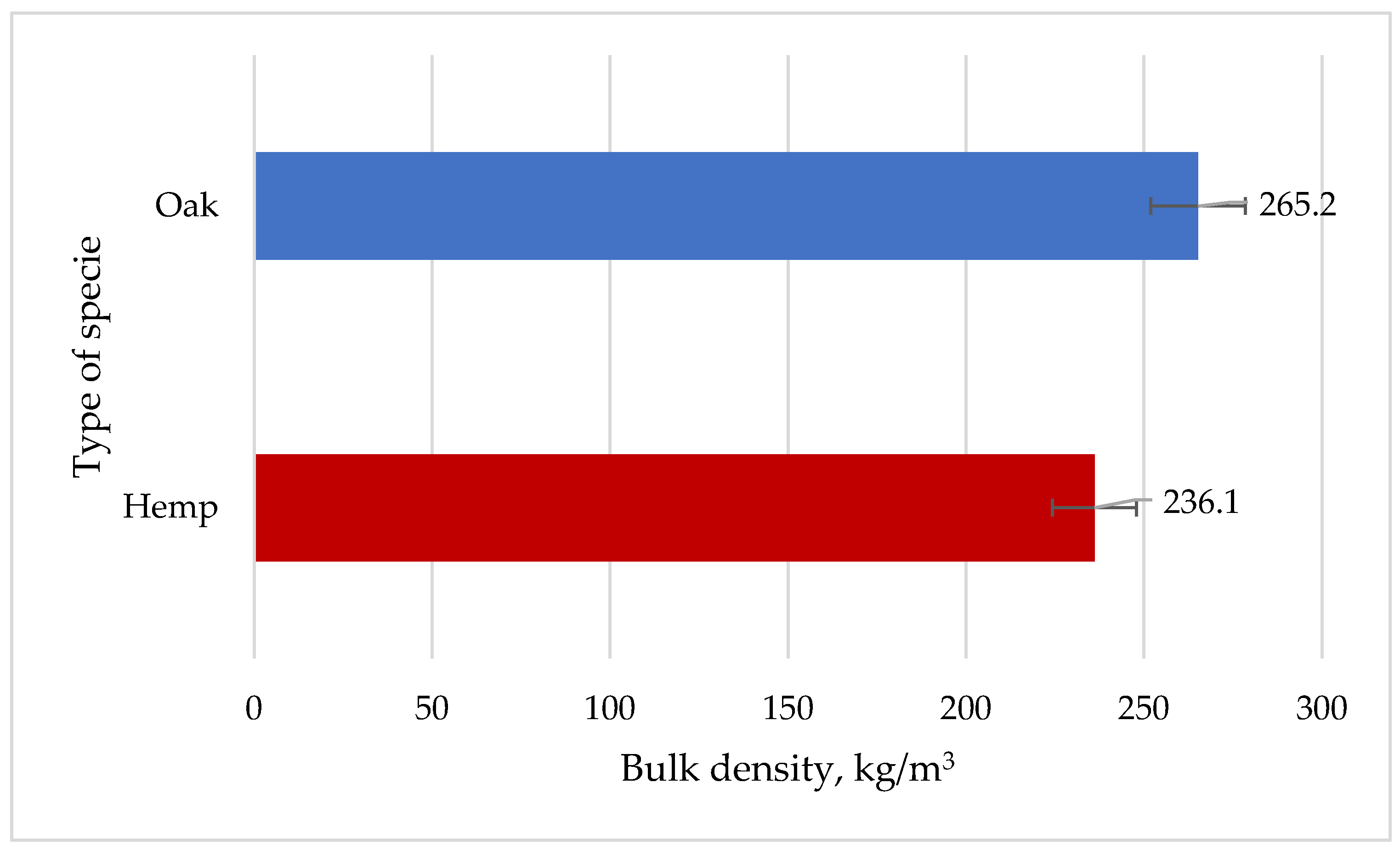
Even the bulk density (Figure 3) of hemp waste was 10.9% lower than that of oak sawdust, confirming the conclusions from previous determinations, namely the increasing briquette diameter.
Figure 3.
Bulk density of hemp and oak raw material.
3.2. Raw Material Granulometry
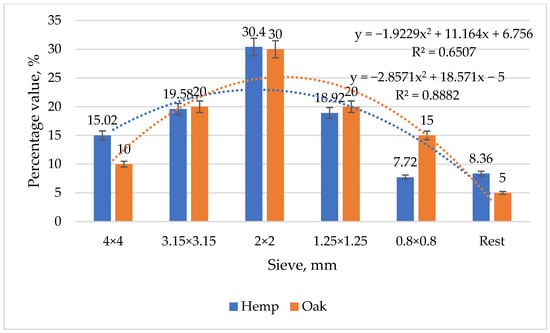
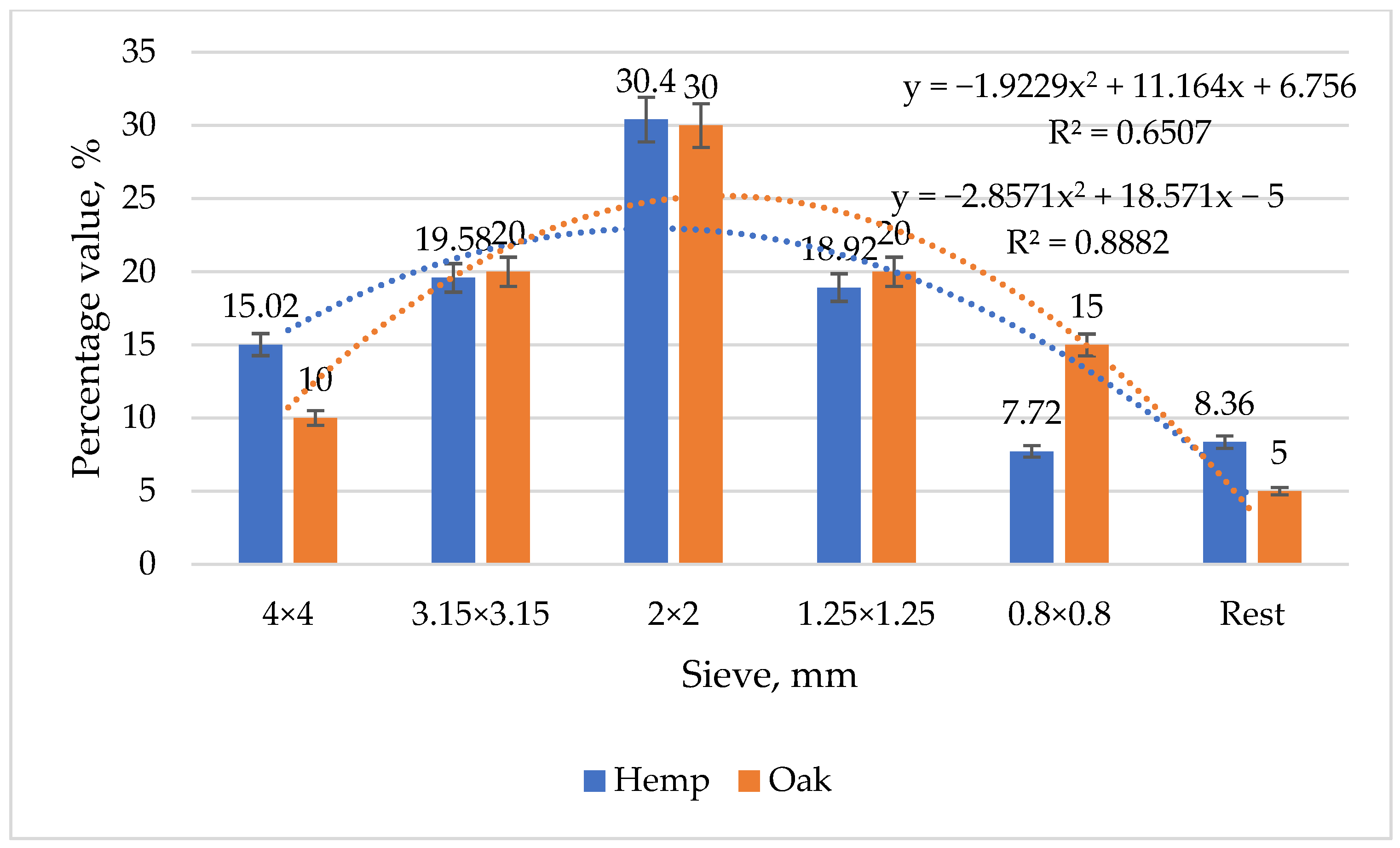
The granulometry of the two types of lignocellulosic materials used in briquetting is presented in Figure 4, noting a shift to the right between the two Gaussian curves, as well as a slightly higher peak for hemp sawdust. Also, oak sawdust is more uniform than hemp sawdust, with the Pearson coefficient of determination R2 (within the polynomial curves) of 0.88 being higher than that of oak sawdust at 0.65.
Figure 4.
Granulometry of raw material hemp and oak.
Looking carefully at the two particle size graphs, it is observed that they are quite close, with peaks in the 1.25–2.0 mm area. This slight difference is due to the fact that hemp chips are lighter than oak chips (Figure 3). Therefore, from this observation, we expect that the granulometry will not have a major influence on the physical and mechanical properties of the briquettes.
3.3. Bulk Density of Briquettes
The bulk density of the briquettes determined in cylindrical buckets of known volume had different values and depended on both the length of the briquettes and their mass (Table 1). The bulk density values of the briquettes of 450 kg/m3 for hemp and 530 kg/m3 for oak show that the hemp briquettes compress less during briquetting.
3.4. Unit Density of Briquettes
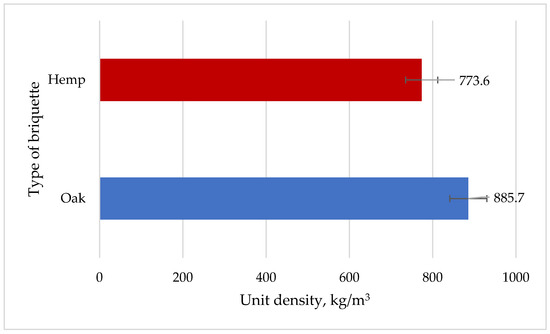
The unit density of hemp briquettes was 12.6% lower than that of oak briquettes (Figure 5).
Figure 5.
Unit density of briquettes.
3.5. The Compressive Strength of Briquettes
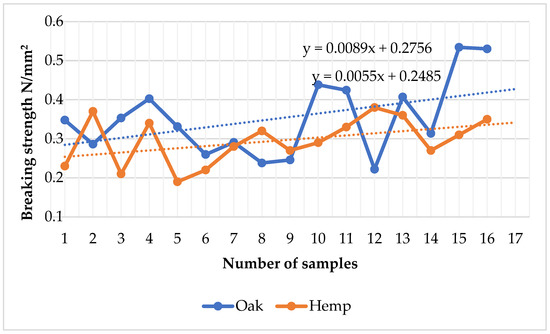
The average compressive strength of the hemp briquettes was 0.29 N/mm2 and 0.35 N/mm2 for the oak briquettes, i.e., 15.3% lower. By putting all the values obtained on the same graph (Figure 6), it is observed that the inclination angles between the two linear equations with the angle related to the horizontal line have slightly different values, with a difference of less than 1 sexagesimal degree. This means that there are no major differences in the homogeneity of the two types of briquettes from the point of view of compressive strength.
Figure 6.
Breaking strength of briquettes.
3.6. Splitting Strength
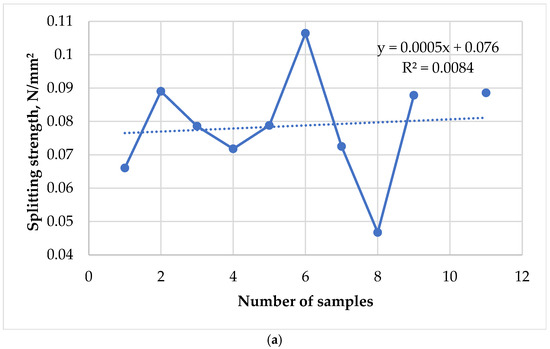
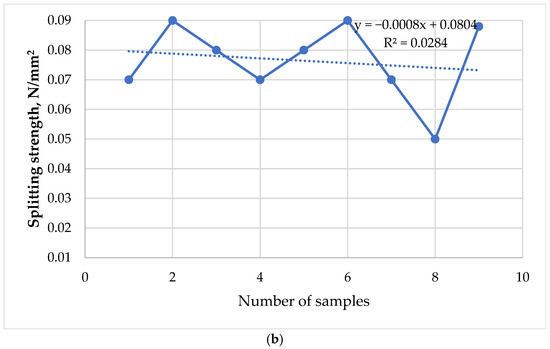
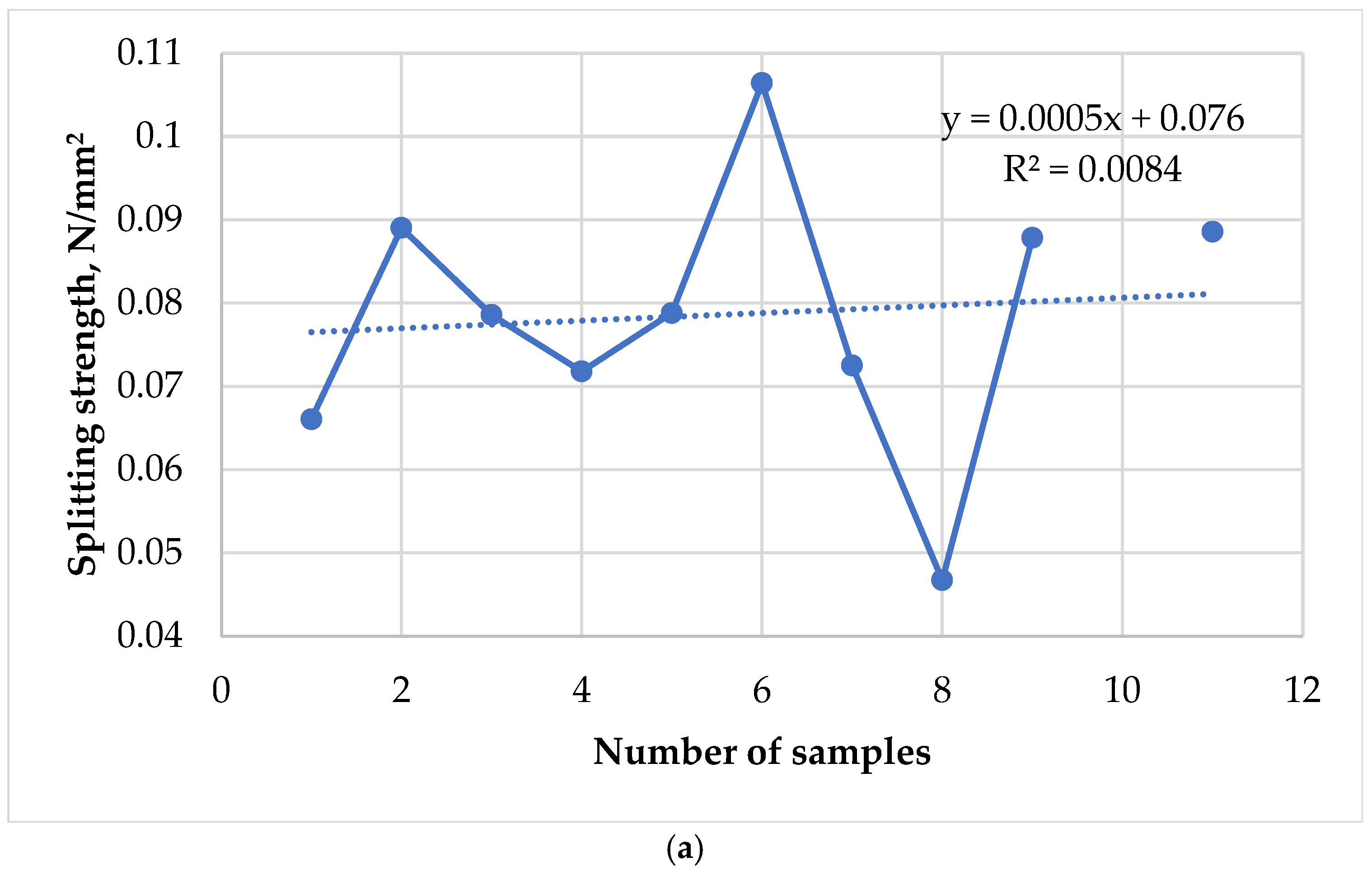
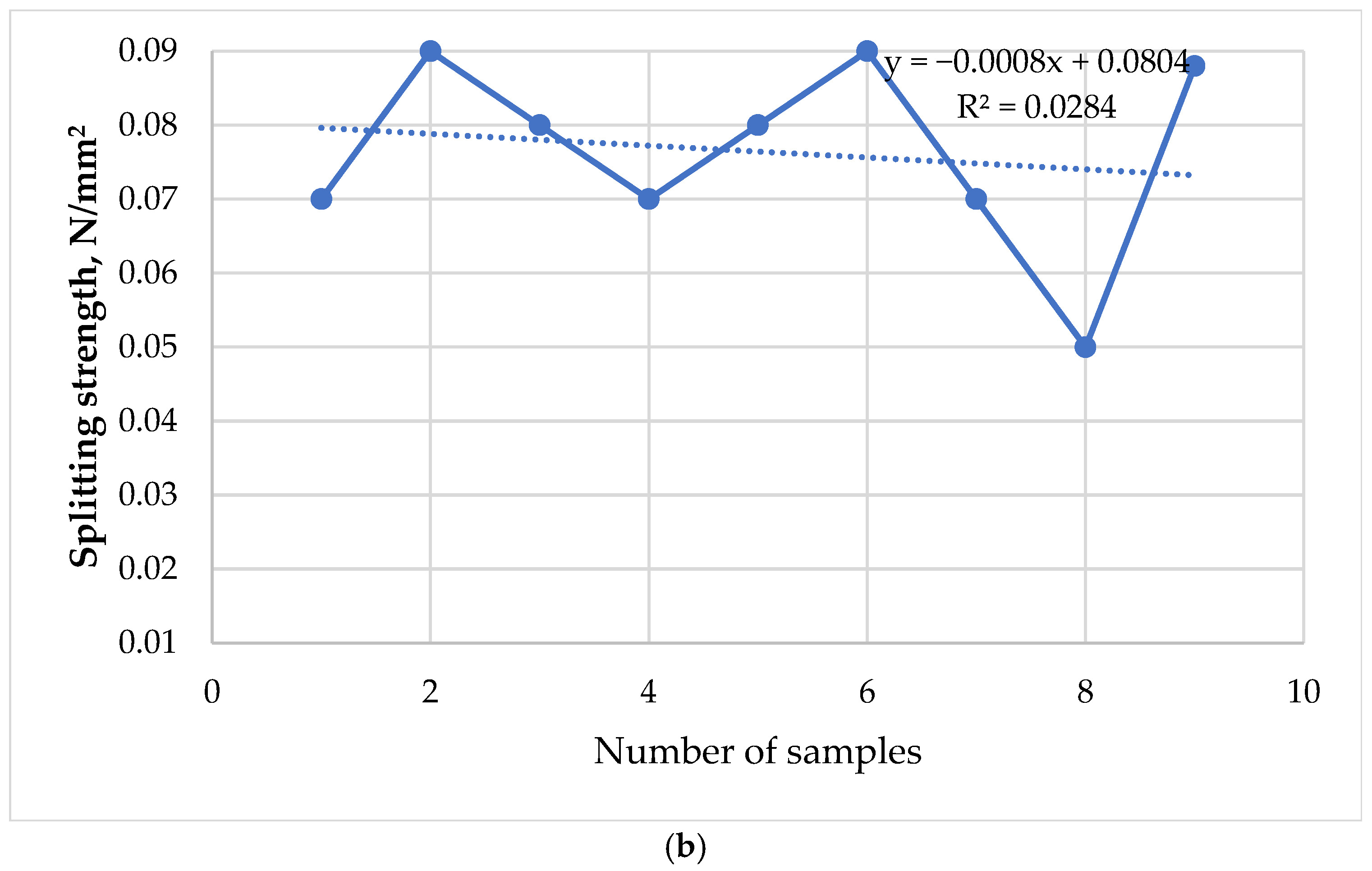
The splitting resistance, obtained according to the determination methodology by splitting the briquette along the cross-sectional plane, had low values of about 0.079 N/mm2 in the case of oak and 0.076 N/mm2 in the case of hemp briquettes (Figure 7). Therefore, the splitting resistance of hemp briquettes was 3.7% lower than that of oak.
Figure 7.
Splitting strength of oak briquettes (a) and hemp briquettes (b).
Figure 7 shows two important things. The first aspect refers to the very low values of briquette splitting, which are over ten times lower than those of wood. This is given by the fact that no adhesives are used to create the briquettes, the briquettes being obtained only by the slight activation of lignin during the compression process. The second very important thing observable from the two figures is the high variability of the values obtained for both oak and hemp samples, this being given by the granulometry but also by the different positioning of small particles in the lower part of the extrusion channel.
3.7. Calorific Value of Briquettes
The calorific values of hemp briquettes were 18,221 KJ/kg (as HCV) and 17,754 KJ/kg (as LCV), with values of 17,551 KJ/kg (as HCV) and 17,341 KJ/kg (as LCV) for oak briquettes, at a moisture content in the calorimeter bomb of about 5% (Figure 8).
Figure 8.
Influence of moisture content on calorific value (HCV and LCV) of hemp briquettes.
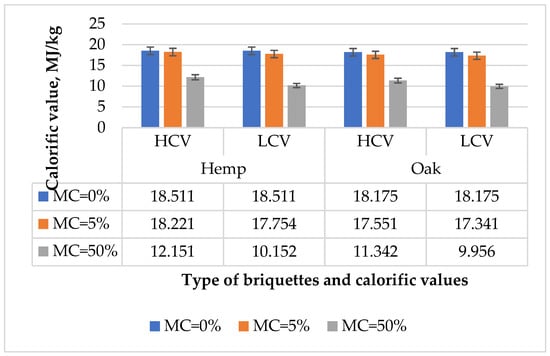
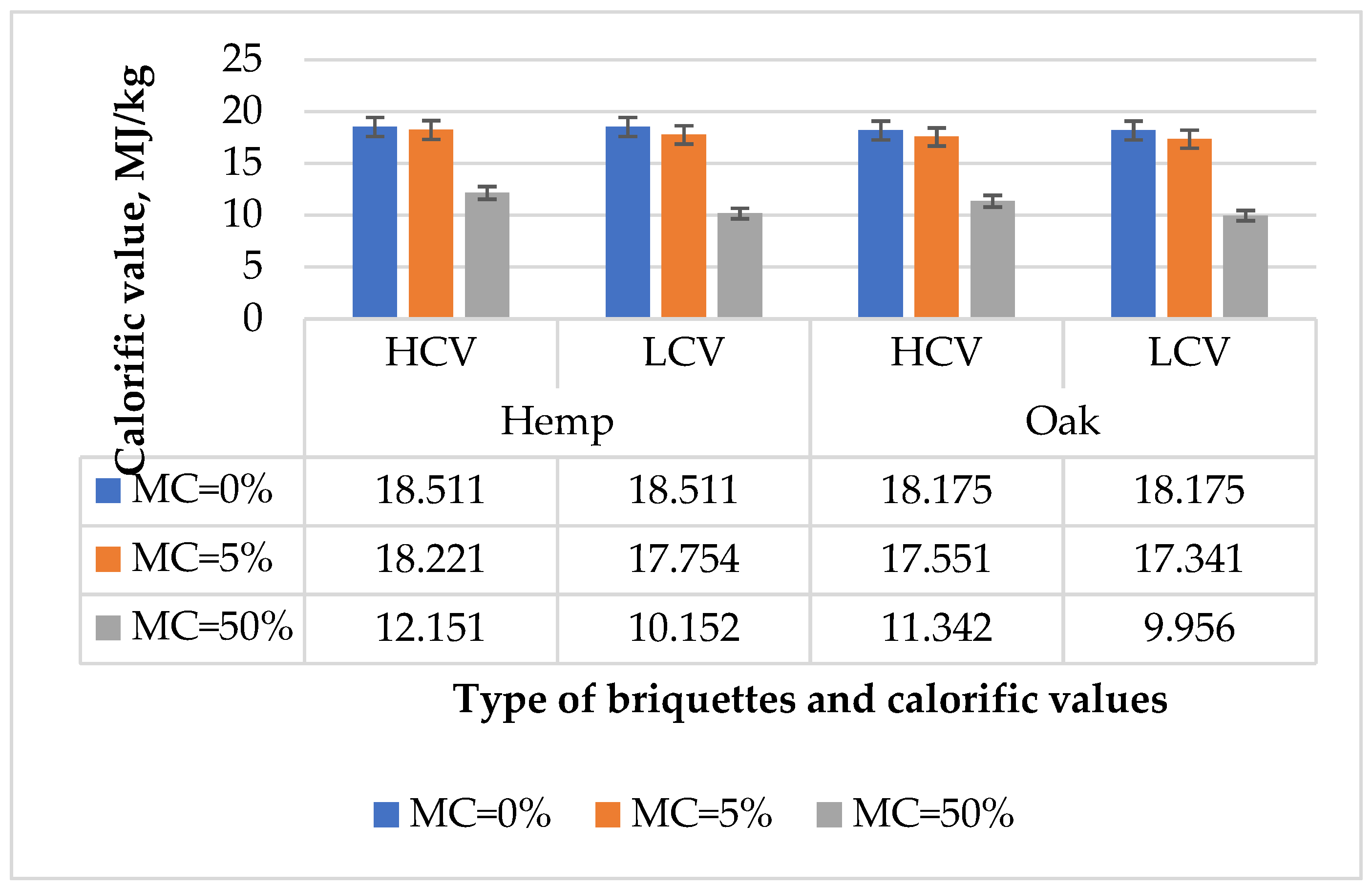
Figure 9 shows that for the moisture content obtained during the initial process of determining the calorific value, the higher calorific value was 18.221 MJ/kg and the lower calorific value was 17.754 MJ/kg. Other calorific values for 50% moisture are also visible in Figure 8. If the calorific value for moisture content of 0% (obtained with Equation (7)) is used, the calorific value of the two types of briquettes becomes 18.511 MJ/kg for hemp briquettes and 18.175 MJ/kg in the case of oak briquettes (Figure 9). Figure 9 also shows the different values of the calorific value for the two types of briquettes and for the two types of calorific values, HCV and LCV.
Figure 9.
Calorific value (HCV—high calorific value; LCV—low calorific value) of hemp and oak briquettes, for some of moisture content (MC = 0%; MC = 5% and MC = 50%).
The calorific density was determined in order to size the feed silo of a thermal power plant, which is usually expressed in m3. Also, in many thermal calculations this unit of measurement is required, which means we must have already decided to calculate them. The calorific density of the two types of briquettes was 18,511 × 0.773 = 14.300 MJ/m3 for hemp waste and 17,839 × 0.885 = 15.787 MJ/m3 for oak sawdust. A slight decrease in the calorific density was identified in the case of hemp waste briquettes of 9.4% due to the lower density and the appropriate calorific value.
3.8. Ash Content
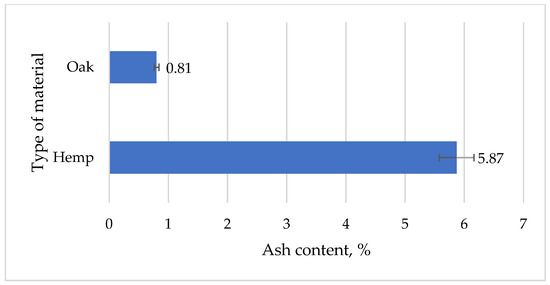
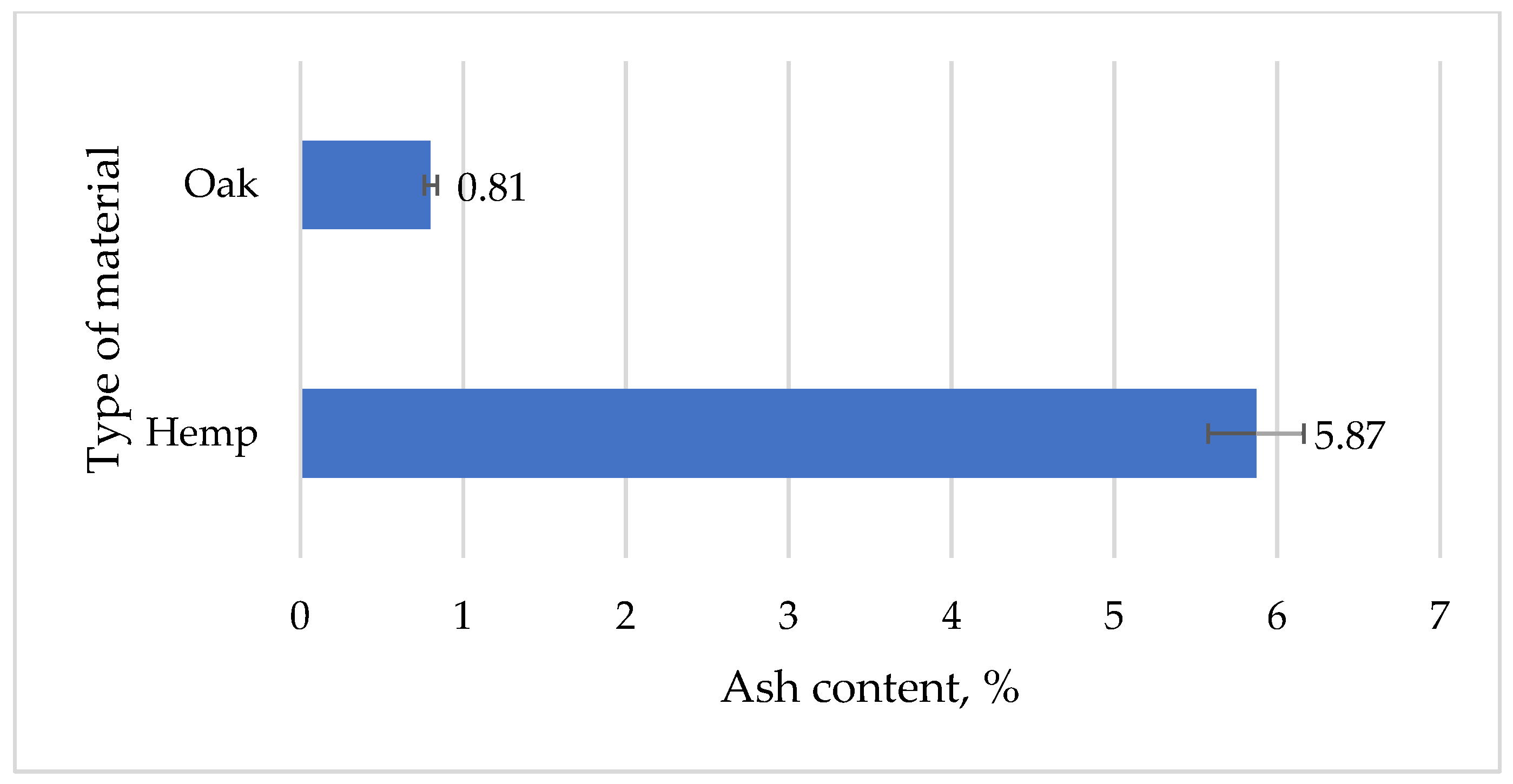
The ash content (Figure 10) of the two types of briquettes was very different because the two categories of briquettes were different (they belong separately to agricultural and wood resources).
Figure 10.
Ash content of hemp and oak waste.
In general, all technical or consumer agricultural crops have a higher ash content than wood, which is due to the high cellulose content (up to 70%) [39,40,41,42,43] and lower lignin content, as well as secondary chemical compounds in increased quantities.
4. Discussions
Hemp waste comprises lignocellulosic residues obtained from Cannabis sativa when this plant is used to obtain its specific fibers. From this point of view, common hemp is a technical plant, even though in most cases the seeds of the plant can be used in cosmetics and pharmacy. The main objective of the work, namely to obtain briquettes from lignocellulosic waste of hemp stems, was achieved by obtaining briquettes with characteristics suitable for use in combustion. Also, the mechanical properties of the briquettes were determined, some of which were original to the work. In the same sense, an adequate methodology for these determinations was appropriately detailed.
Following all the values in Table 2, a slight decrease in the properties of hemp briquettes is observed, this being due to the physico-chemical properties of hemp residues. For instance, splitting strength was 0.079 N/mm2 for oak briquettes and 0.076 N/mm2 for hemp briquettes. However, these small decreases do not have a major impact on the uses of briquettes for combustion purposes, especially due to better calorific properties. Figure 9 shows that for the moisture content obtained during the initial process of determining the calorific value, the higher calorific value was 18.221 MJ/kg and the lower calorific value was 17.754 MJ/kg. Other calorific values for 50% moisture are also visible in Figure 9. The exception to this rule was the calorific value, which was slightly higher in the case of hemp residues, and the ash content, which fell within the range of agricultural residues.
Table 2.
Centralized data of briquettes.
The bulk and unit density were acceptable for hemp waste, with small variations in decrease, compared to oak wood briquettes. The cause of these differences was given by the different chemical composition of the hemp plant stem, especially of some oils that ensure the hemp bag particles do not adhere easily to each other. The unit density values of 773 kg/m3 and the bulk density of 450 kg/m3 are within the limits of international standards [21] and are close to those values found by other researchers in the field.
The low compressive strengths (Table 2) were mainly due to the briquetting method, involving a hydraulic installation that offered quite low unit densities, compared to other types of installations such as those with a crank mechanism, a hammer, and a helical screw [8,9,10,11]. The calorific value of hemp sawdust was slightly higher than that of oak (Table 2), largely due to the existence of chemical compounds different from those of wood particles. Other authors [8,21] found calorific values close to those found in the work. Hemp sawdust briquettes had a calorific value 3.7% higher than that of oak sawdust due to the fact that only the lignocellulosic part of hemp was used, and oak has a low percentage of tannins, which reduces its calorific value.
Regarding the particle granulometry, it was observed that there were two minor differentiating elements between hemp and oak, namely a slightly higher peak for hemp (representing a greater amount of thick chips) and a shift in the graph to the right (representing greater non-uniformity of these particles). Both aspects led to obtaining briquettes with slightly lower properties of hemp. The existence of very close curve peaks in the 1.25–2 mm area demonstrated the weak influence of granulometry on the physical and mechanical properties of the briquettes. In the same sense, even the bulk density of the two categories of materials leads to the conclusion that hemp briquettes have a slight decrease in unit density and mechanical properties. There was no need to obtain briquettes with different granulometry because the granulometry analysis created enough data for us to draw some pertinent conclusions.
Regarding the dimensional characteristics of the briquettes, they differed, with hemp ones being 31.3% shorter than oak ones. This differentiation highlighted the fact that the oak sawdust settled and compacted much better in the extrusion channel (which had a constant volume) than the hemp one, ultimately determining a longer length. Despite this fact, the elastic recovery of the briquettes after exiting the extrusion channel was higher in the case of the oak briquettes, at 3.6%, compared to the hemp briquettes which had an elastic recovery of only 0.07%. The above dimensional considerations were in direct correlation with the densities of the briquettes, the hemp briquettes having a unit density 12.6% lower than the hemp briquettes.
The ash content of hemp dust, with an average value of 5.87%, fell within the extreme limits of the European standards [21] of 6% for agricultural plant materials. In the case of some softwood species the ash content was about 0.4% [8,44,45,46,47,48,49,50,51]. Other plant residues had an ash content of 10.3% in the case of alfalfa, 6.9% in the case of cornstover, and 20% in the case of pear peal [8,21,52], the differences being given by the content of chemical compounds of these lignocellulosic materials. It was also observed that the ash content negatively influences the calorific value of the lignocellulosic material, as presented in the introductory chapter (Figure 1). The major implications of the higher ash content in hemp briquettes are related to the more frequent emptying of the ash box and its use as a fertilizer. Therefore, if in the case of oak briquettes, the ash is discharged weekly; in the case of hemp briquettes, it should be performed daily. To remedy this situation, it is recommended to continuously discharge the ash with a screw conveyor into a large container, which will be performed weekly by the company transforming it into fertilizer. Also, to remedy this situation, it is recommended to burn the two types of briquettes together in a ratio of 1:10 in favor of the oak ones.
The price of briquettes at the European level is quite low: it is 0.28 EUR/kg for beech and oak briquettes, 0.27 EUR/kg for softwood briquettes, and 0.22 for straw briquettes (similar to hemp residues). The manufacturing process is fully automated, and so from this point of view, the manufacturing labor is negligible. The highest expenses are the cost of raw materials (30%) and their drying (24.9%), company expenses (11.9%), raw material storage (8.3%), briquetting (8%), cooling (8.6%) and the packaging/storage of briquettes (8.3%). The use of briquettes for combustion in residential, commercial or industrial spaces is opportune, successfully replacing firewood, which can be used with greater efficiency in composite materials technology [1,5].
The use of hemp briquettes is very opportune because its residues are renewable year after year (like any type of biomass) and sustainable. The transformation of lignocellulosic hemp residues into briquettes meets a pressing need of users at an acceptable price (firewood is increasingly scarce and the price increases from year to year). It should be noted that the storage in nature and the natural degradation of these residues will release the same amount of carbon dioxide in the atmosphere as when used in combustion. The manufacturing flow line of hemp briquettes does not require changes. The only disadvantage of hemp briquettes is the higher ash content than wood residues, for which specific storage and efficient use measures must be taken when using them. For the sustainability of the briquetting process in the production company, it is recommended to use the received residues successively in such a way as to solve the use of the relatively small quantity of hemp residues, but also the continuity of the production process.
Taking into account the objectives and activities of the work, the following original points stand out: a complete analysis of the properties of hemp briquettes was carried out, a comparison was made between hemp briquettes and oak wood briquettes, and an original methodology was used to determine the compressive strength and splitting resistance.
Other aspects of hemp briquettes will be presented in another study, emphasizing the complex influences of chemical compounds on calorific value and ash content. Emphasis will also be placed on other properties of briquettes such as the abrasion method and fine particle content. Also, more research will be performed that combines oak and hemp residues with some additives, even though in our preliminary research it seemed that there was an incompatibility between these two types of lignocellulosic residues.
5. Conclusions
Through all the research carried out in the work, it was found that hemp lignocellulosic waste can be used as a raw material for obtaining briquettes with good combustion characteristics. Also, there was no need for the additional processing of the waste in order to obtain briquettes, which is a great advantage of these lignocellulosic residues.
The calorific value of 18,511 KJ/kg fell within the limits of woody and plant lignocellulosic materials, giving these briquettes an added quality, and the ash content of 5.87% falls within the range of plant materials and within the maximum limit of 6% of the Austrian standard ÖNORM M 7135:2000 [24].
The unit density of hemp briquettes of 773.6 kg/m3, 12.7% less than that of oak, provided a good breaking strength, albeit one 15.3% lower than that of oak, and a splitting strength 3.5% lower [53,54].
The bulk density of hemp briquettes of 450 kg/m3 made their splitting strength quite low, around 0.07 N/mm2. By comparison, the specific strength of solid wood is quite low, somewhere between 1 and 3 N/mm2 [47].
Author Contributions
Conceptualization, A.L. and C.S.; methodology, A.L.; software, C.S.; validation, A.L. and C.S.; formal analysis, C.S.; investigation, A.L.; resources, C.S.; data curation, A.L.; writing—original draft preparation, C.S.; writing—review and editing, C.S.; visualization, A.L.; supervision, A.L.; project administration, C.S.; funding acquisition, A.L. All authors have read and agreed to the published version of the manuscript.
Funding
This research received no external funding.
Institutional Review Board Statement
Not applicable.
Informed Consent Statement
Not applicable.
Data Availability Statement
Data are available at authors.
Conflicts of Interest
The authors declare no conflicts of interest.
References
- Eriksson, S.; Prior, M. The Briquetting of Agricultural Wastes For Fuel; FAO: Rome, Italy, 1990; Available online: http://www.fao.org/docrep/t0275e/t0275e00.HTM (accessed on 2 June 2020).
- Lakó, J.; Hancsók, J.; Yuzhakova, T.; Marton, G.; Utasi, A.; Rédey, Á. Biomass—A source of chemicals and energy for sustainable development. Environ. Eng. Manag. J. 2008, 7, 499–509. [Google Scholar] [CrossRef] [Scilit]
- Liu, X.; Hua, W.; Wu, S. Characterization of thermo-chemical degradation and pyrolysis properties for three kinds of biomass residues. BioResources 2016, 11, 8806–8819. [Google Scholar] [CrossRef] [Scilit]
- Venendaal, R.; Jørgensen, U.; Foster, C.A. European energy crops: A synthesis. Biomass Bioenerg. 1997, 13, 147–185. [Google Scholar] [CrossRef] [Scilit]
- Zhou, Q.; Le, Q.V.; Yang, H.; Gu, H.; Yang, Y.; Sonne, C.; Tabatabaei, M.; Lam, S.S.; Li, C.; Chen, X.; et al. Sustainable conversion of agricultural biomass into renewable energy products: A. Discussion. BioResources 2022, 17, 3489–3508. [Google Scholar] [CrossRef] [Scilit]
- Kraszkiewicz, A.; Kachel, M.; Parafiniuk, S.; Zając, G.; Niedziółka, I.; Sprawka, M. Assessment of the Possibility of Using Hemp Biomass (Cannabis Sativa L.) for Energy Purposes: A Case Study. Appl. Sci. 2019, 9, 4437. [Google Scholar] [CrossRef] [Scilit]
- Basak, M.; Broadway, M.; Lewis, J.; Starkey, H.; Bloomquist, M.; Peszlen, I.; Davis, J.; Lucia, L.A.; Pal, L. A critical review of industrial fiber hemp anatomy, agronomic practices, and valorization into sustainable bioproducts. BioResources 2025, 20, 5030–5070. [Google Scholar] [CrossRef] [Scilit]
- Zvicevičius, E.; Žiūra, K.; Tilvikienė, V.; Bakšinskaitė, A. Biomass analysis of industrial hemp “Felina 32” and the influence of plant height on its quality. BioResources 2024, 19, 6380–6402. [Google Scholar] [CrossRef] [Scilit]
- EUROSTAT. Forestry in the EU and the World, A Statistical Portrait, 1st ed.; Publications Office of the European Union: Luxembourg, 2014; Available online: https://ec.europa.eu/eurostat/web/products-statistical-books/-/ks-31-11-137 (accessed on 3 August 2023).
- EUROSTAT. Statistics in Focus 44/2012, Environment and Energy Management. 2014. Available online: https://ec.europa.eu/eurostat/web/products-statistics-in-focus/-/ks-sf-12-044 (accessed on 7 July 2022).
- Spirchez, C.; Lunguleasa, A.; Croitoru, C. Ecological briquettes from sunflower seed husk. In E3S Web of Conferences 80,01001; EDP Sciences: Les Ulis, France, 2019. [Google Scholar] [CrossRef] [Scilit]
- Okello, C.; Pindozzi, S.; Faugno, S.; Boccia, L. Bioenergy potential of agricultural and forest residues in Uganda. Biomass Bioenerg. 2013, 56, 515–525. [Google Scholar] [CrossRef] [Scilit]
- Boutin, J.P.; Gervasoni, R.; Help, K.; Seyboth, P.; Lamers, M.; Ratton, E. Alternative energy sources in Transition Countries. The case of Bio-energy in Ukraine. Environ. Eng. Manag. J. 2007, 6, 3–11. [Google Scholar] [CrossRef] [Scilit]
- Brožek, M.; Nováková, A.; Kolářová, M. Quality evaluation of briquettes made from wood waste. Res. Agr. Eng. 2012, 58, 30–35. [Google Scholar] [CrossRef] [Scilit]
- Breeze, P. Energy from Waste, 1st ed.; 2017 Paperback eBook; Academic Press: Cambridge, MA, USA, 2017; ISBN 9780128095133. [Google Scholar]
- Dhillon, R.S.; von Wuelhlisch, G. Mitigation of global warming through renewable biomass. Biomass Bioenerg. 2013, 48, 75–87. [Google Scholar] [CrossRef] [Scilit]
- ECCommission of the European Communities. Energy for the future: Renewable sources of energy. In White Paper for a Community Strategy and Action Plan; European Commission, COM: Luxembourg, 1997; Available online: http://aei.pitt.edu/1130/1/energy_white_paper_COM_97_599.pdf (accessed on 6 December 2021).
- Database 2025. Available online: https://www.wood-database.com/english-oak/ (accessed on 4 July 2024).
- Kim, S.; Bruce, E.D. Cumulative energy and global warming impact from the production of biomass for biobased products. J. Ind. Ecol. 2003, 4, 147–162. [Google Scholar] [CrossRef] [Scilit]
- Lamlom, H.; Savidge, R.A. A reassessment of carbon content in wood: Variation within and between 41 North American species. Biomass Bioenerg 2003, 25, 381–388. [Google Scholar] [CrossRef] [Scilit]
- Demirbas, A. Resource facilities and biomass conversion processing for fuels and chemicals. Energ. Convers. Manag. 2011, 42, 1357–1378. [Google Scholar] [CrossRef] [Scilit]
- Verna, V.K.; Bram, S.; De Rucky, J. Small scale biomass systems: Standards, Quality, Labeling and Market Driving Factors—An Outlook. Biomass Bioenerg. 2009, 33, 1393–1402. [Google Scholar] [CrossRef] [Scilit]
- Wang, S.; Littell, R.C.; Rockwood, D.L. Variation in density and moisture content of wood and bark among twenty eucalyptus grandis progenies. Wood Sci. Technolog. 1984, 18, 97–100. [Google Scholar]
- ÖNORM M 7135 [2000]; Pellets and Briquettes–Requirements and Test Conditions. Austria Standards Institute: Vienna, Austria; European Committee of Standardization: Brussels, Belgium, 2000.
- EN 14774-2; Solid biofuels-Determination of moisture content-Oven dry method-Part 2. Total moisture- Simplified procedure. European Committee of Standardization: Brussels, Belgium, 2017.
- Ramírez-Ramírez, M.A.; Carrillo-Parra, A.; Ruíz-Aquino, F.; Pintor-Ibarra, L.F.; González-Ortega, N.; Orihuela-Equihua, R.; Carrillo-Ávila, N.; Luján-Álvarez, C.; Rutiaga-Quinones, J.G. Valorization of briquettes fuel using Pinus spp. sawdust from five regions of Mexico. BioResources 2021, 16, 2249–2263. [Google Scholar] [CrossRef] [Scilit]
- Marreiro, H.; Peruchi, R.S.; Lopes, M.B.P.; Andersen, S.; Eliziário, S.; Rotella Junior, P. Empirical Studies on Biomass Briquette Production: A Literature Review. Energies 2021, 14, 8320. [Google Scholar] [CrossRef] [Scilit]
- Nurek, T.; Gendek, A.; Dąbrowska, M. Influence of the Die Height on the Density of the Briquette Produced from Shredded Logging Residues. Materials 2021, 14, 3698. [Google Scholar] [CrossRef] [Scilit]
- Krajnic, N. Wood Fuels Handbook; Food and agriculture organization of the United Nations (FAO): Pristina, Croatia, 2015; Available online: http://large.stanford.edu/courses/2017/ph240/timcheck1/docs/fao-krajnc-2015.pdf (accessed on 23 January 2023).
- WHM. Wood Handbook: Wood as an Engineering Material; General Technical Report 113; Department of Agriculture, Forest Service, Forest Products Laboratory: Madison, WI, USA, 2020. Available online: https://www.fpl.fs.usda.gov/documnts/fplgtr/fpl_gtr190.pdf (accessed on 15 March 2022).
- Aebiom. Wood Fuels Handbook; European Biomass Association: Brussels, Belgium, 2013; Available online: https://www.montana.edu/extension/forestry/wood-burning/pellets/WOOD_FUELS_HANDBOOK_BTC_EN.pdf (accessed on 25 April 2022).
- EN 15103; Solid Biofuels–Determination of Bulk Density. European Committee for Standardization: Brussels, Belgium, 2023.
- Suteu, D.; Zaharia, D.; Popovici, C.; Măluţan, T.; Rusu, L.; Tabacaru, L. Wood waste as a renewable source of energy. Environ. Eng. Manag. J. 2016, 3, 665–674. [Google Scholar] [CrossRef] [Scilit]
- Quilhó, T.; Pereira, H. Within and between-tree variation of bark content and wood density of Eucalyptus globulus in commercial plantations. Iawa J. 2001, 22, 255–265. [Google Scholar] [CrossRef] [Scilit]
- DIN 51900-1; Determining the Gross Calorific Value of Solid and Liquid Fuels Using the Bomb Calorimeter and Calculation of Net Calorific Value. Part 1: General Information. German National Standard: Berlin, Germany, 2000.
- EN 14918; Solid Biofuels-Determination of Calorific Value. European Committee for Standardization: Brussels, Belgium, 2023.
- ISO 1928; Solid Mineral Fuels. Determining the Gross Calorific Power by Calorimeter Bomb and Calculus of Net Calorific Power. International Organization for Standardization: Geneva, Switzerland, 2009.
- ASTM D3865-12; Standard Test Method for Gross Calorific Value of Coal and Coke. American Society for Testing and Materials: West Conshohocken, PA, USA, 2000.
- ASTM E-1755-01; Standard Method for the Determination of Ash in Biomass. American Society for Testing and Materials, International: Philadelphia, PA, USA, 2003.
- Hytonen, J.; Nurmi, J. Heating value and ash content of intensively managed stands. Wood Res. 2015, 60, 71–82. [Google Scholar]
- Pettersen, R. The Chemistry of Solid Wood; American Chemical Society: Washington, DC, USA, 1984. [Google Scholar]
- Pesonen, J.; Kuokkanen, T.; Kaipiainen, E.; Koskela, J.; Jerkku, I.; Pappinen, A.; Villa, A. Chemical and physical properties of short rotation tree species. Eur. J. Wood Wood Pro. 2014, 72, 769–777. [Google Scholar] [CrossRef] [Scilit]
- Usta, M.; Kara, Z. The chemical composition of wood and bark of Cedrus libani A. Rich. Eur. J. Wood Wood Prod. 1997, 55, 268. [Google Scholar] [CrossRef] [Scilit]
- Wang, D. Wood Chemistry. Fundamentals and Application, Taiwan. 2015. Available online: https://api.pageplace.de/preview/DT0400.9780080925899_A23591908/preview-9780080925899_A23591908.pdf (accessed on 2 July 2024).
- Kaliyan, N.; Morey, R.V. Factors affecting strength and durability of densified biomass products. Biomass Bioenerg. 2009, 33, 337–359. [Google Scholar] [CrossRef] [Scilit]
- Cui, X.; Yang, J.; Shi, X.; Lei, W.; Huang, T.; Bai, C. Pelletization of Sunflower Seed Husks: Evaluating and Optimizing Energy Consumption and Physical Properties by Response Surface Methodology (RSM). Processes 2019, 7, 591. [Google Scholar] [CrossRef] [Scilit]
- Pintiaux, T.; Viet, D.; Vandenbossche, V.; Rigal, L.; Rouilly, A. Binderless materials obtained by thermo-compressive processing of lignocellulosic fibers: A comprehensive review. BioResources 2015, 10, 1915–1963. [Google Scholar] [CrossRef] [Scilit]
- Kuhlman, T.; Diego, V.; Koomen, E. Exploring the potential of reed as a bioenergy crop in the Netherlands. Biomass Bioenerg. 2013, 55, 41–52. [Google Scholar] [CrossRef] [Scilit]
- Rosa, P.M.; Antoniassi, R.; Freitas, S.C.; Bizzo, H.R.; Zanotto, D.L.; Oliveira, M.F.; Castiglioni, V.B.R. Chemical composition of Brazilian sunflower varieties. Helia 2009, 32, 145–156. [Google Scholar] [CrossRef] [Scilit]
- Serrano-Vega, M.J.; Garcés, R.; Martínez-Force, E. Cloning, characterization and structural model of a Fat A-type thioesterase from sunflower seeds (Helianthus annuus L.). Planta 2005, 221, 868–880. [Google Scholar] [CrossRef] [Scilit] [PubMed]
- Whittaker, I.; Shield, C. Short rotation woody energy crop supply chains in Biomass Supply Chains. In Biomass Supply Chains for Bioenergy and Biorefining; Woodhead Publishing: London, UK, 2016; pp. 217–248. [Google Scholar]
- Zygarlicke, C.; Folkedahl, B. Effects of biomass blending on combustion ash. Carbon 2003, 48, 641. [Google Scholar]
- Ivanova, T.; Kolacíková, M.; Havrland, B.; Hutla, P. Mechanical and chemical properties of briquettes made of waste hemp (Cannabis sativa var. Finola) biomass. AgriTech. Sci. 2014, 8, 1–4. [Google Scholar]
- Roman, K.; Grzegorzewska, E. The Comparison of Physical and Chemical Properties of Pellets and Briquettes from Hemp (Cannabis sativa L.). Energies 2024, 17, 2210. [Google Scholar] [CrossRef] [Scilit]

Disclaimer/Publisher’s Note: The statements, opinions and data contained in all publications are solely those of the individual author(s) and contributor(s) and not of MDPI and/or the editor(s). MDPI and/or the editor(s) disclaim responsibility for any injury to people or property resulting from any ideas, methods, instructions or products referred to in the content. |
© 2025 by the authors. Licensee MDPI, Basel, Switzerland. This article is an open access article distributed under the terms and conditions of the Creative Commons Attribution (CC BY) license (https://creativecommons.org/licenses/by/4.0/).