Zoonotic Dis. 2024, 4(2), 135-145; https://doi.org/10.3390/zoonoticdis4020013 - 03 May 2024
Abstract
►
Show Figures
Background: Taeniosis and cysticercosis are human infections caused by the pork tapeworm, Taenia solium. This study is a baseline for community-based intervention. We determined the prevalence of human cysticercosis and associated risk factors following a deworming program conducted throughout the country, with
[...] Read more.
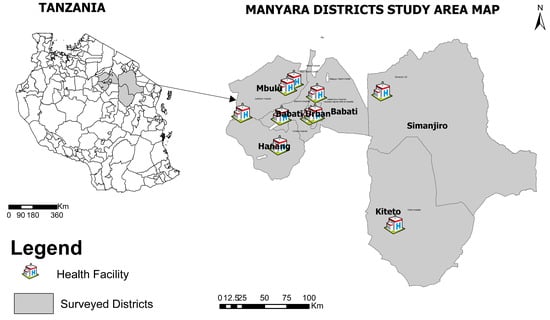
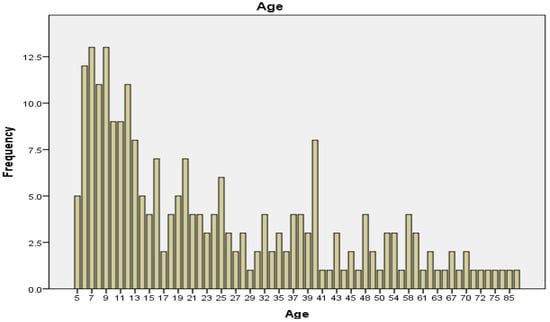
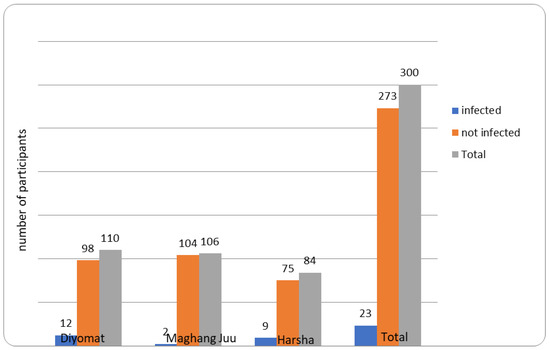
Background: Taeniosis and cysticercosis are human infections caused by the pork tapeworm, Taenia solium. This study is a baseline for community-based intervention. We determined the prevalence of human cysticercosis and associated risk factors following a deworming program conducted throughout the country, with Mbulu District being among the districts in Northern Tanzania. Methods: Human cysticercosis was determined by enzyme-linked immunosorbent assay (Ag- ELISA). Household interviews and observations were conducted to identify risk factors for cysticercosis transmissions among households and communities. Results: Three hundred individuals participated in this study. The age ranged from 5 to 89 years, with a median of 19 years. The prevalence of human cysticercosis was 23 (7.67%). The prevalence was high with 6 (11.76%) among individuals aged 26 to 35 years and ±45 years. There was no statistically significant difference in the prevalence by age group, sex, or occupation. Among the 300 participants, 82 (27.3%) had received anthelmintics during the previous year; among these, 5 (21.7%) were infected. The likelihood of infection was low among anthelmintic users by 28% [0.72 (0.26–2.01)], but the protection was not significant. The communities differed in risk factors on the availability of a clean and safe water supply; 52.7% (46/86) of households visited had no pit latrine. The cysticercosis prevalence showed a significant difference in communities. Conclusions: The prevalence of human cysticercosis was high and associated with higher age groups. The prevalence was low among those who had taken anthelmintics and was associated with lower age groups. The current school deworming program has a positive effect on school children, while the elderly are at higher risk because the intervention did not target them. It is recommended to scale up anthelmintic intervention to higher age groups.
Full article
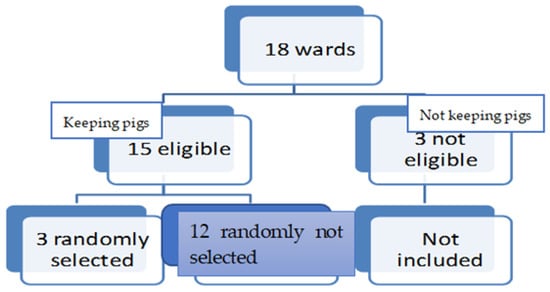
Figure 1