Special Issue "Accident Prevention and Risk Management for Safe and Sustainable Transportation"

A special issue of Sustainability (ISSN 2071-1050). This special issue belongs to the section "Sustainable Transportation".

Deadline for manuscript submissions: 28 June 2022.

Special Issue Editors

Dr. Juneyoung Park
E-Mail Website1 Website2
Guest Editor
Department of Transportation and Logistics Engineering / Department of Smart City Engineering, Hanyang University, Ansan 15588, Korea
Interests: traffic safety; proactive crash risk management; big data analytics; traffic control in connected and autonomous vehicle environment
Dr. Yina Wu
E-Mail Website
Guest Editor
Department of Civil, Environmental, and Construction Engineering, University of Central Florida, Orlando, FL 32816, USA
Interests: traffic safety; real-time traffic control and management; connected and autonomous vehicle (CAV); vulnerable road user safety
Dr. Hochul Park
E-Mail Website
Guest Editor
Department of Transportation Engineering, Myongji University, Yongin 17058, Korea
Interests: smart mobility; safe and sustainable transportation; traffic operation and management

Special Issue Information

Dear Colleagues,

A safe and sustainable transportation environment has been considered as an important issue. The main purpose of this Special Issue is to investigate novel research idea to determine advanced alternatives for safe and sustainable transportation. This Special Issue covers a wide range of studies, including theoretical research, empirical practices, and review articles. The potential topics include but are not limited to the followings: (1) analytical methods in accident prevention; (2) safety evaluation of transportation countermeasures; (3) approaches including artificial and computational intelligence; (4) proactive crash risk management; (5) analysis of risky driving behaviour; (6) traffic operation in connected and autonomous environment; (7) models to determine factors contributing to accident; (8) big-data mining applications; (9) strategies to enhance safety of multimodal transportation networks; and (10) cooperative intelligent transportation system and advanced communication technology. Other topics related to accident prevention and risk management are also welcomed. This Special Issue on “Accident Prevention and Risk Management for Safe and Sustainable Transportation” is expected to provide useful insights and knowledge to make safe and sustainable transportation.

Dr. Juneyoung Park
Dr. Yina Wu
Dr. Hochul Park
Guest Editors

Manuscript Submission Information

Manuscripts should be submitted online at www.mdpi.com by registering and logging in to this website. Once you are registered, click here to go to the submission form. Manuscripts can be submitted until the deadline. All papers will be peer-reviewed. Accepted papers will be published continuously in the journal (as soon as accepted) and will be listed together on the special issue website. Research articles, review articles as well as short communications are invited. For planned papers, a title and short abstract (about 100 words) can be sent to the Editorial Office for announcement on this website.

Submitted manuscripts should not have been published previously, nor be under consideration for publication elsewhere (except conference proceedings papers). All manuscripts are thoroughly refereed through a single-blind peer-review process. A guide for authors and other relevant information for submission of manuscripts is available on the Instructions for Authors page. Sustainability is an international peer-reviewed open access semimonthly journal published by MDPI.

Please visit the Instructions for Authors page before submitting a manuscript. The Article Processing Charge (APC) for publication in this open access journal is 1900 CHF (Swiss Francs). Submitted papers should be well formatted and use good English. Authors may use MDPI's English editing service prior to publication or during author revisions.

Keywords

  • Accident Prevention
  • Risk Management
  • Analytical Methods and Approaches
  • Traffic Safety
  • Sustainability

Published Papers (13 papers)

Order results
Result details
Select all
Export citation of selected articles as:

Research

Article
The Effectiveness of Selected Devices to Reduce the Speed of Vehicles on Pedestrian Crossings
Sustainability 2021, 13(17), 9678; https://doi.org/10.3390/su13179678 (registering DOI) - 28 Aug 2021
Viewed by 179
Abstract
Accidents involving pedestrians often result in serious injury or death. The main goal of this conducted research is to evaluate selected devices that will help reduce the speed of vehicles on pedestrian crossings. Many devices from a group of “speed control measures” and [...] Read more.
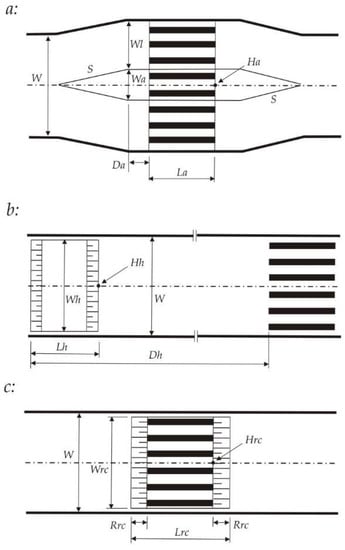
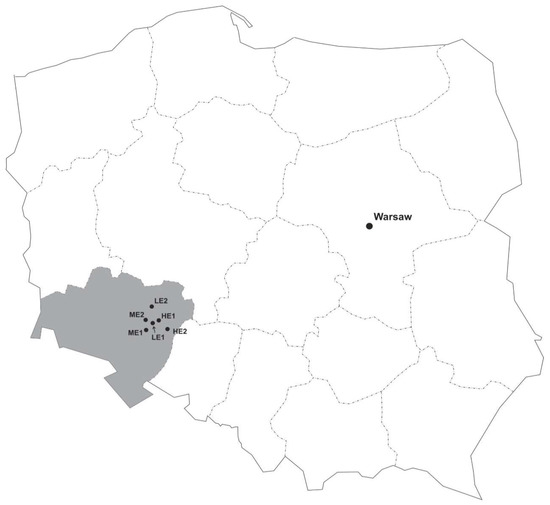
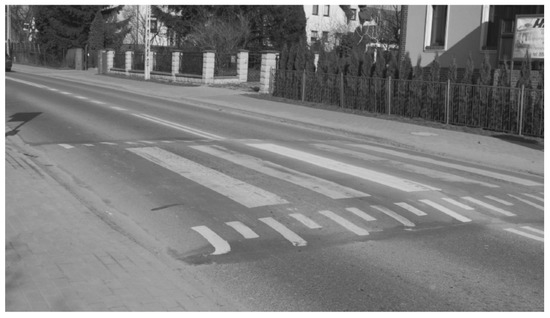
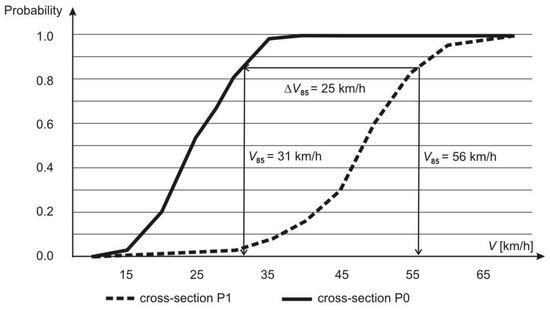
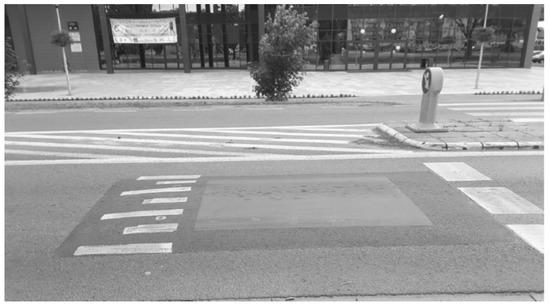
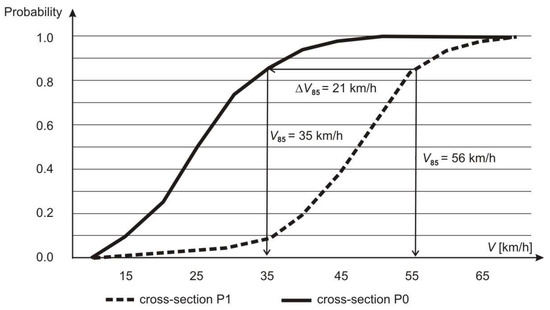
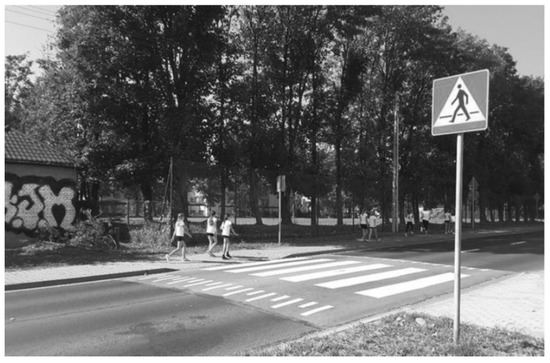
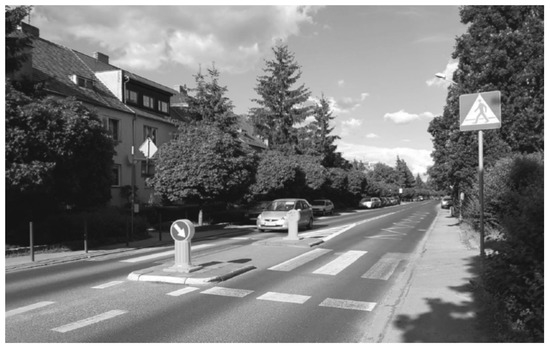
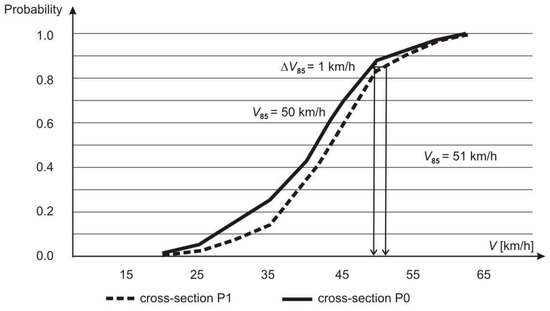
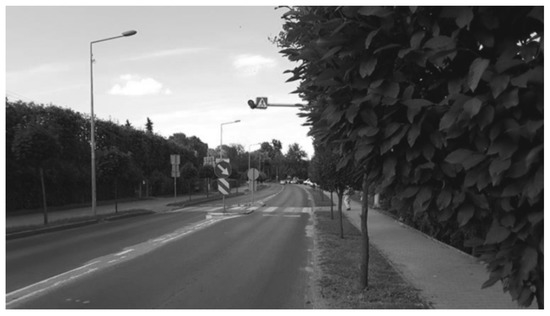
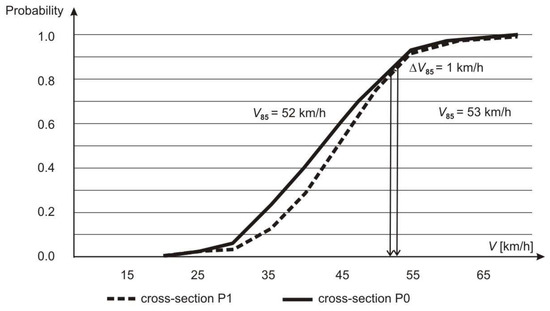
Accidents involving pedestrians often result in serious injury or death. The main goal of this conducted research is to evaluate selected devices that will help reduce the speed of vehicles on pedestrian crossings. Many devices from a group of “speed control measures” and “mid block tools” (refugee islands, speed tables, and raised pedestrian crossings) are examined to find the most effective ones. In our research, the range of reduction of a vehicle’s speed is used as a main measure of effectiveness, but a wider statistical analysis was conducted as well. One of the results of the research is the identification of three categories of devices referred to as high effectives (good), medium effectives (intermediate), and low or lack of effectives (bad). The content of the paper starts by highlighting the reasons to reduce the vehicle’s speed on pedestrian crossings (as an introduction). Next, we present the description of devices used to reduce the vehicle’s speed with a presentation of the research of their effectiveness. The studies that have been conducted are described in the following chapters: first, the characteristic of method and location, second, with discussion, the results of research and identification of the three categories of devices. The paper is then summarized by conclusions and comments. The research only covered the issues of road traffic engineering. The research was made in Poland, but the conclusions could be useful worldwide due to similar traffic rules and technical solutions. Full article
Article
Effectiveness of Pedestrian Safety Service Provision Using Sensing Technology
Sustainability 2021, 13(16), 9333; https://doi.org/10.3390/su13169333 - 19 Aug 2021
Viewed by 241
Abstract
In this study, we describe the results of an analysis of the effectiveness of providing pedestrian safety services, in terms of reducing pedestrian traffic accidents. We conducted our analysis by investigating the speed of vehicles at two different demonstration points, where the same [...] Read more.
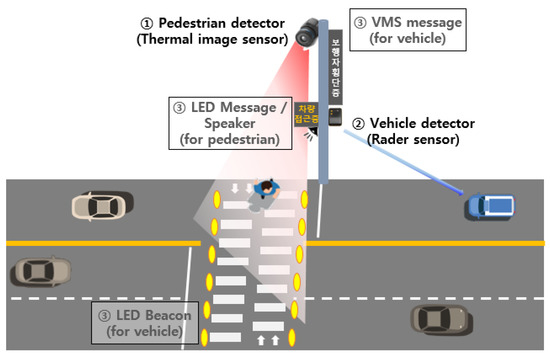
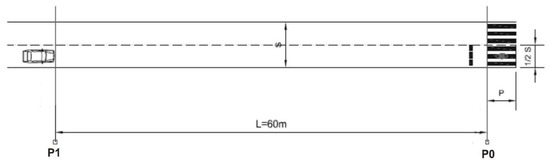
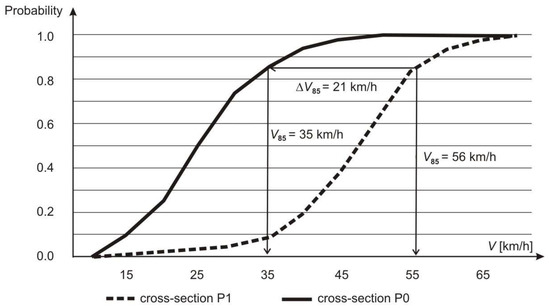
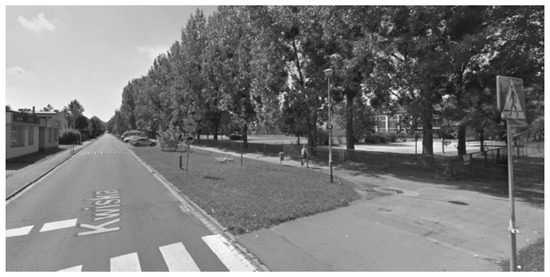
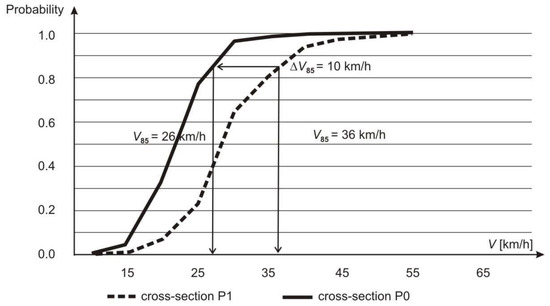
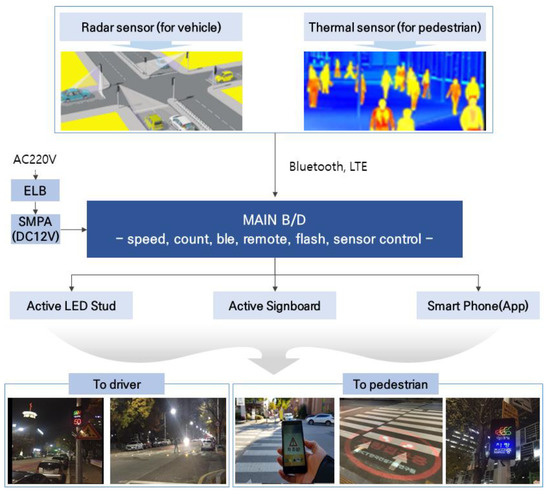
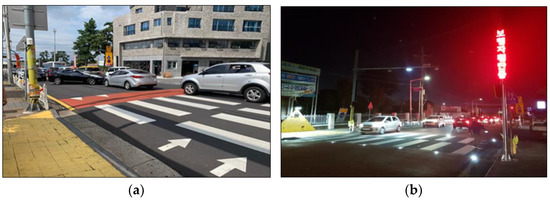
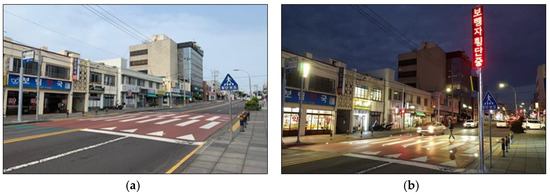
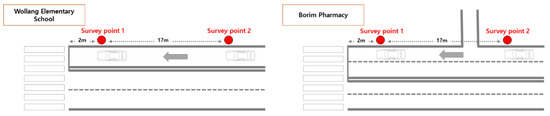
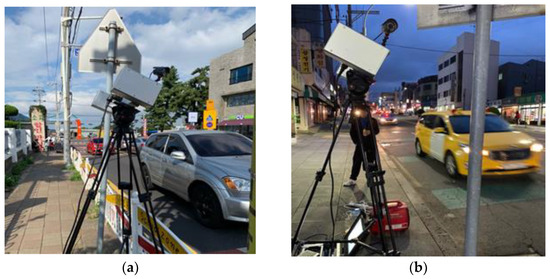
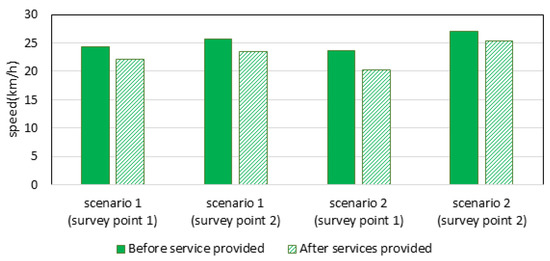
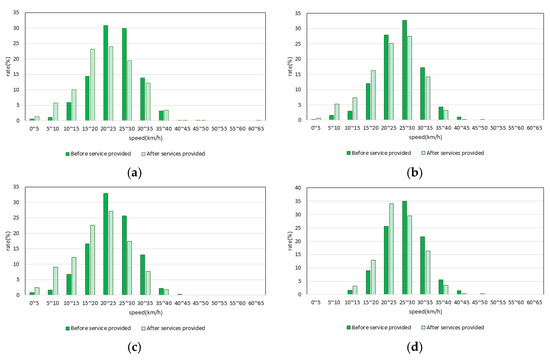
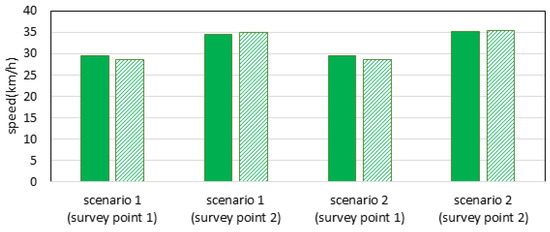
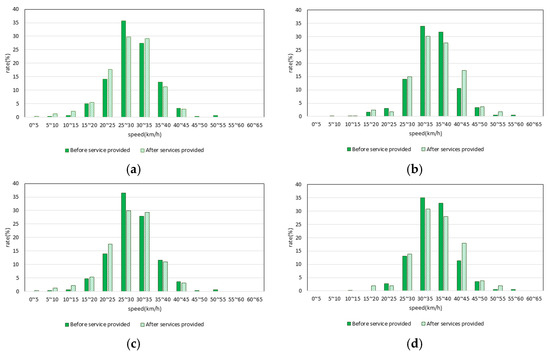
In this study, we describe the results of an analysis of the effectiveness of providing pedestrian safety services, in terms of reducing pedestrian traffic accidents. We conducted our analysis by investigating the speed of vehicles at two different demonstration points, where the same system and service were provided. For this purpose, we selected a child protection zone and a point on a general road section where a raised crossing is installed. We conducted vehicle speed surveys at the point adjacent to the crosswalk and the points where the driver is expected to be fully provided with information, in order to examine the change in vehicle approach speed, depending on the provision of the service. Overall, the analysis showed that the vehicle’s speed at the point and approaching speed decreased when the pedestrian safety service was provided; however, the effect was more pronounced in the child protection zone, considering the characteristics of the demonstration points. From these results, we conclude that it is necessary to provide services and develop guidelines considering the surrounding environment, such as traffic safety facilities and road safety facilities, according to the characteristics and classification of each point, in order to provide efficient pedestrian safety services. Full article
Show Figures

Figure 1
Article
Determining an Improved Traffic Conflict Indicator for Highway Safety Estimation Based on Vehicle Trajectory Data
Sustainability 2021, 13(16), 9278; https://doi.org/10.3390/su13169278 - 18 Aug 2021
Viewed by 263
Abstract
Currently, several traffic conflict indicators are used as surrogate safety measures. Each indicator has its own advantages, limitations, and suitability. There are only a few studies focusing on fixed object conflicts of highway safety estimation using traffic conflict technique. This study investigated which [...] Read more.
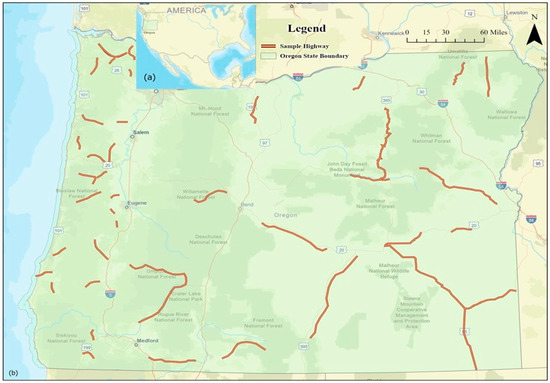
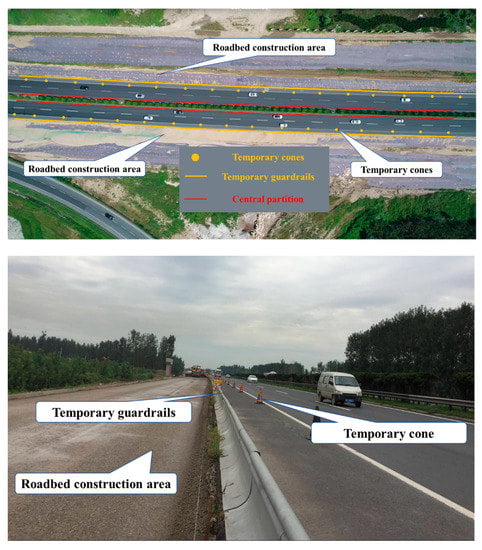
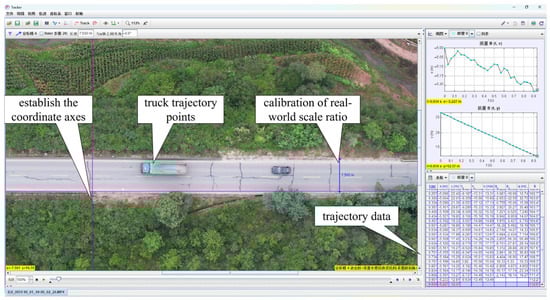
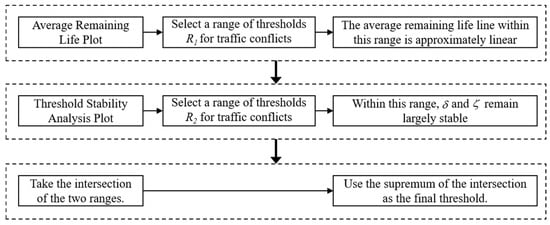
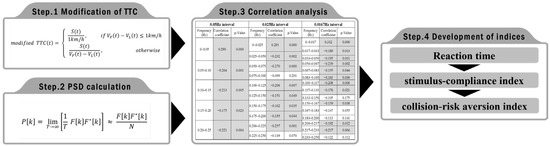
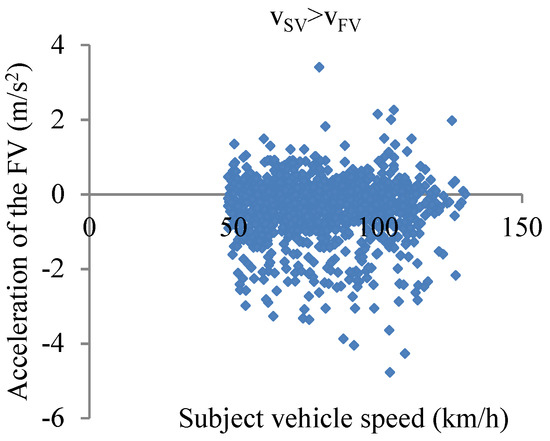
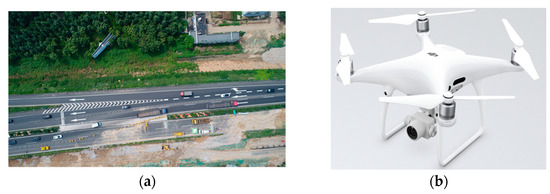
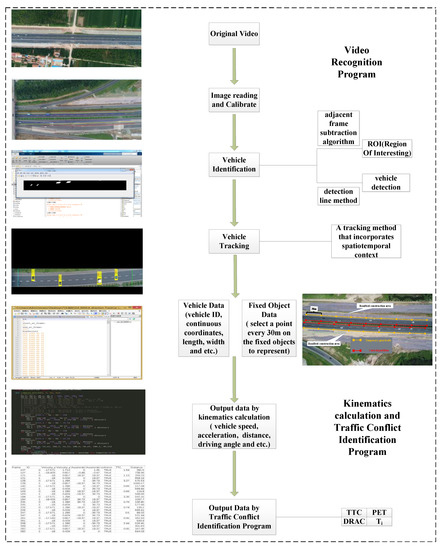
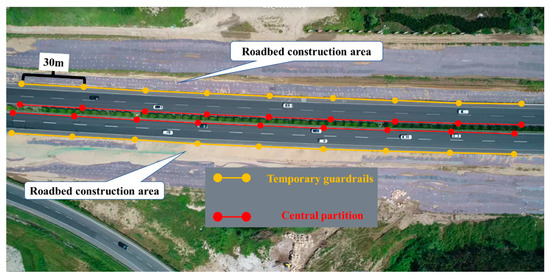
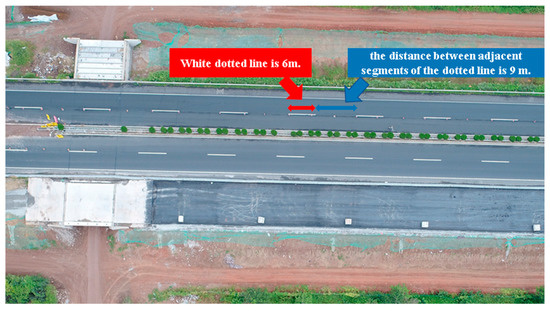
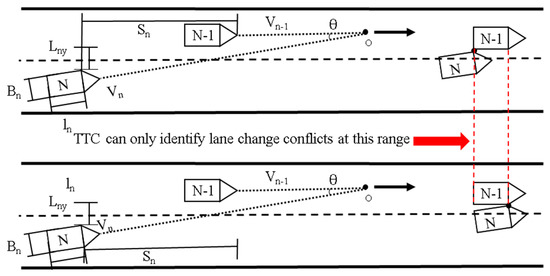
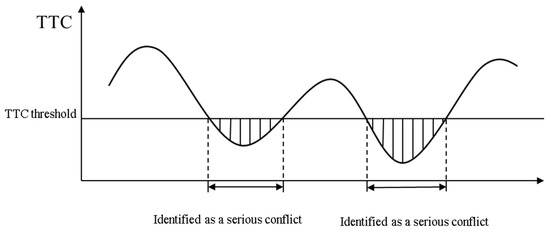
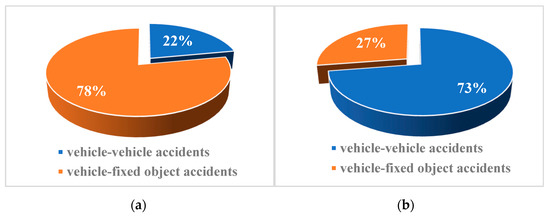
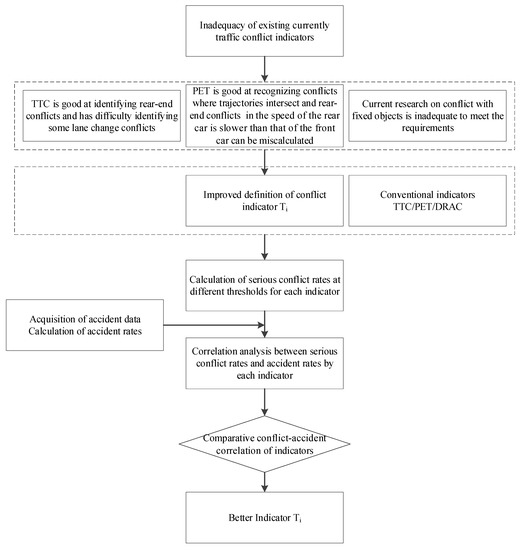
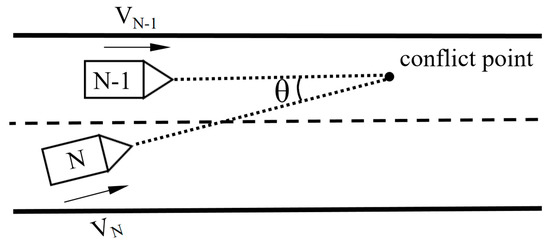
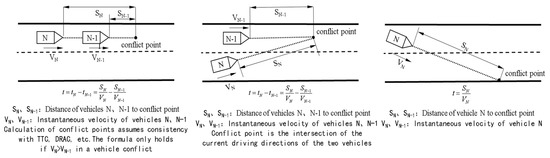
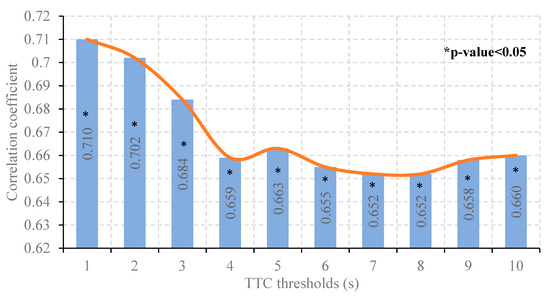
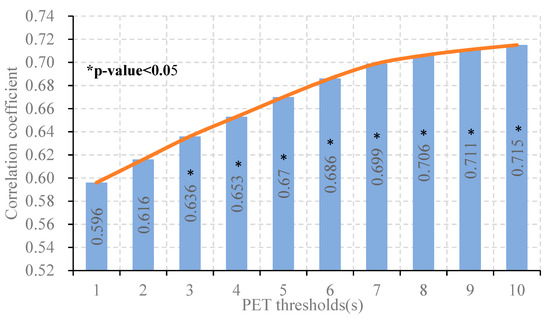
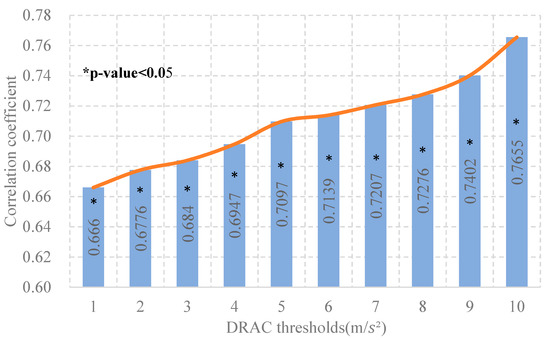
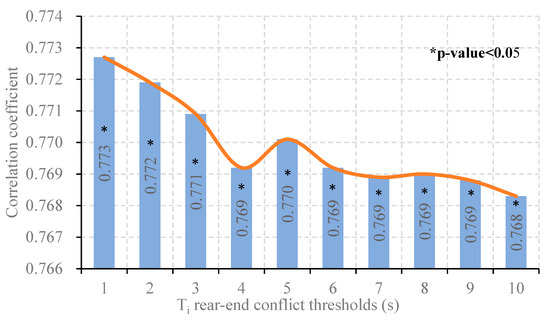
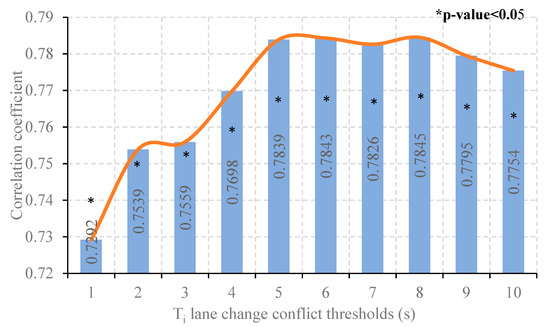
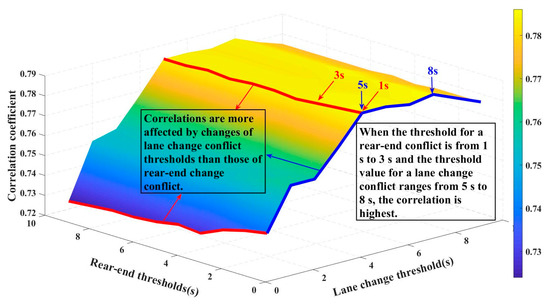
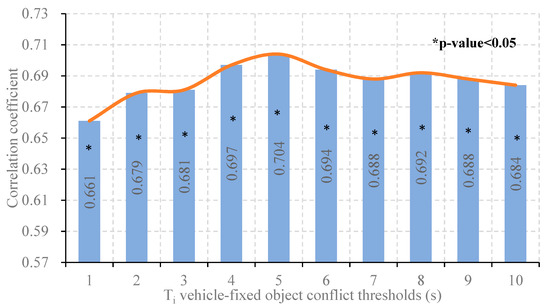
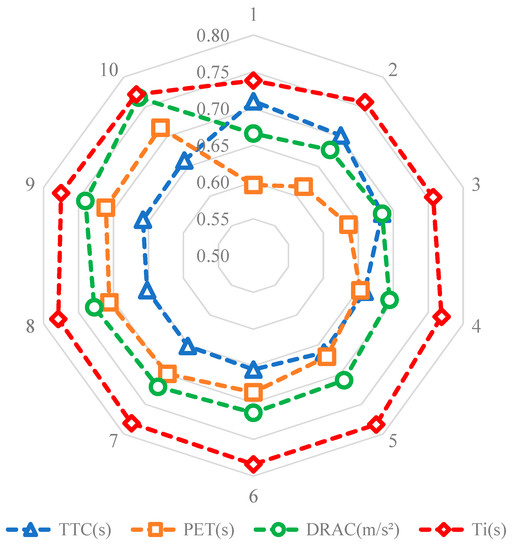
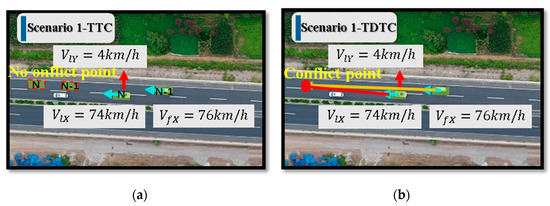
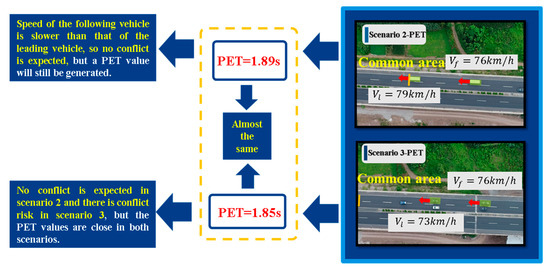
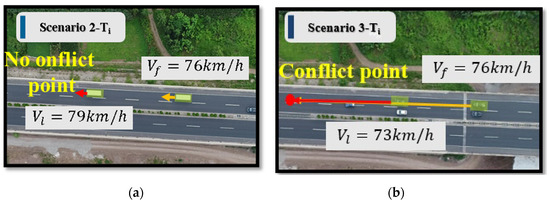
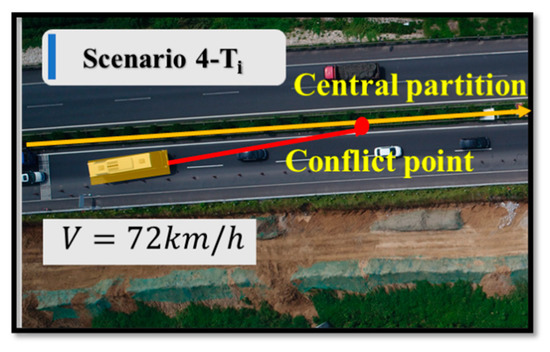
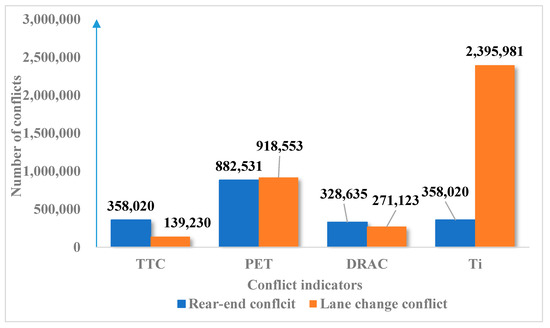
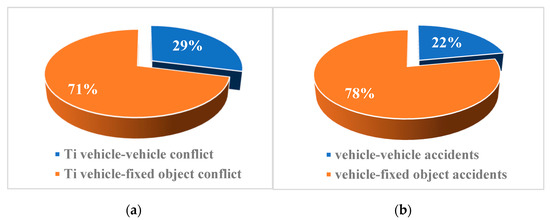
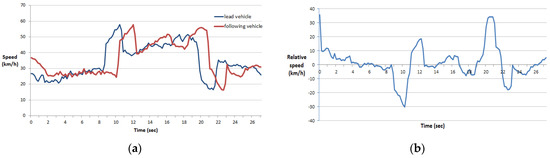
Currently, several traffic conflict indicators are used as surrogate safety measures. Each indicator has its own advantages, limitations, and suitability. There are only a few studies focusing on fixed object conflicts of highway safety estimation using traffic conflict technique. This study investigated which conflict indicator was more suitable for traffic safety estimation based on conflict-accident Pearson correlation analysis. First, a high-altitude unmanned aerial vehicle was used to collect multiple continuous high-precision videos of the Jinan-Qingdao highway. The vehicle trajectory data outputted from recognition of the videos were used to acquire conflict data following the procedure for each conflict indicator. Then, an improved indicator Ti was proposed based on the advantages and limitations of the conventional indicators. This indicator contained definitions and calculation for three types of traffic conflicts (rear-end, lane change and with fixed object). Then the conflict-accident correlation analysis of TTC (Time to Collision)/PET (Post Encroachment Time)/DRAC (Deceleration Rate to Avoid Crash)/Ti indicators were carried out. The results show that the average value of the correlation coefficient for each indicator with different thresholds are 0.670 for TTC, 0.669 for PET, and 0.710 for DRAC, and 0.771 for Ti, which Ti indicator is obviously higher than the other three conventional indicators. The findings of this study suggest TTC often fails to identify lane change conflicts, PET indicator easily misjudges some rear-end conflict when the speed of the following vehicle is slower than the leading vehicle, and PET is less informative than other indicators. At the same time, these conventional indicators do not consider the vehicle-fixed objects conflicts. The improved Ti can overcome these shortcomings; thus, Ti has the highest correlation. More data are needed to verify and support the study. Full article
Show Figures

Figure 1
Article
Machine Learning-Based Models for Accident Prediction at a Korean Container Port
Sustainability 2021, 13(16), 9137; https://doi.org/10.3390/su13169137 - 16 Aug 2021
Viewed by 329
Abstract
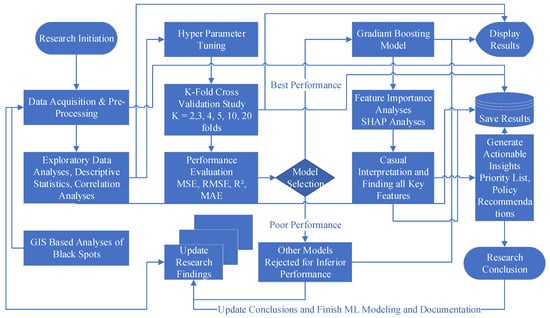
The occurrence of accidents at container ports results in damages and economic losses in the terminal operation. Therefore, it is necessary to accurately predict accidents at container ports. Several machine learning models have been applied to predict accidents at a container port under [...] Read more.
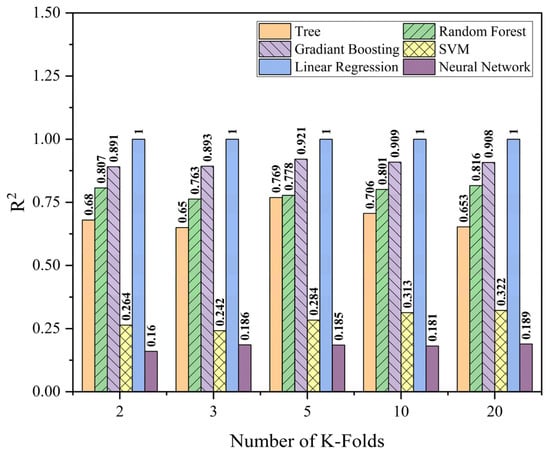
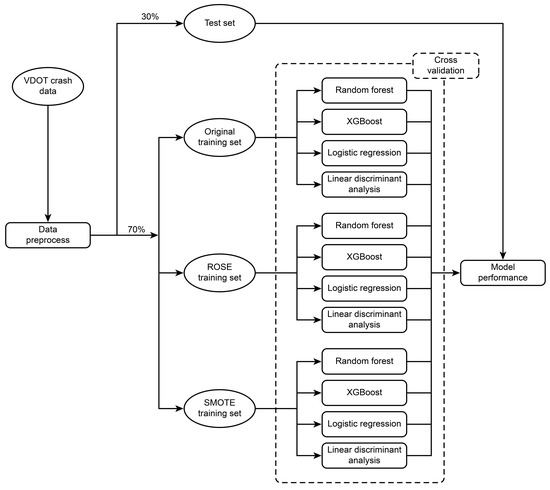
The occurrence of accidents at container ports results in damages and economic losses in the terminal operation. Therefore, it is necessary to accurately predict accidents at container ports. Several machine learning models have been applied to predict accidents at a container port under various time intervals, and the optimal model was selected by comparing the results of different models in terms of their accuracy, precision, recall, and F1 score. The results show that a deep neural network model and gradient boosting model with an interval of 6 h exhibits the highest performance in terms of all the performance metrics. The applied methods can be used in the predicting of accidents at container ports in the future. Full article
Article
Crash Prediction Models for Horizontal Curve Segments on Two-Lane Rural Roads in Thailand
Sustainability 2021, 13(16), 9011; https://doi.org/10.3390/su13169011 - 12 Aug 2021
Viewed by 294
Abstract
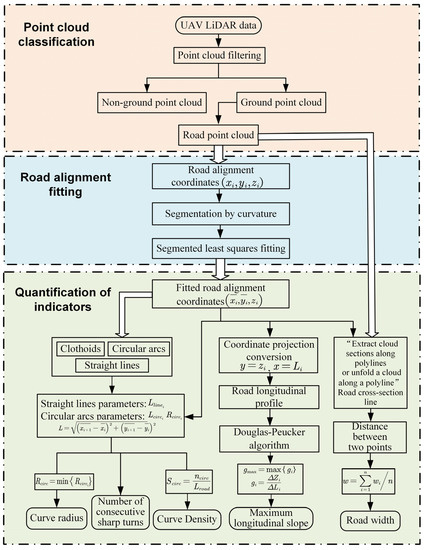
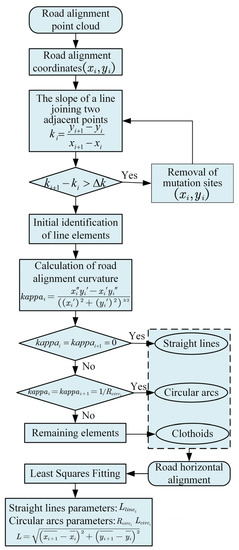
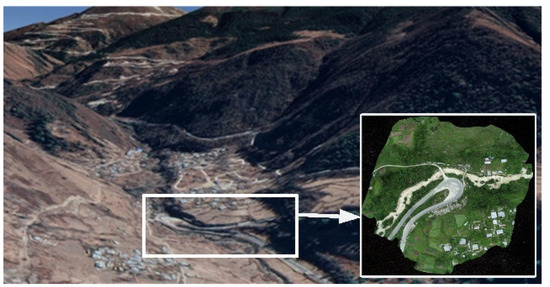
The number of road crashes continues to rise significantly in Thailand. Curve segments on two-lane rural roads are among the most hazardous locations which lead to road crashes and tremendous economic losses; therefore, a detailed examination of its risk is required. This study [...] Read more.
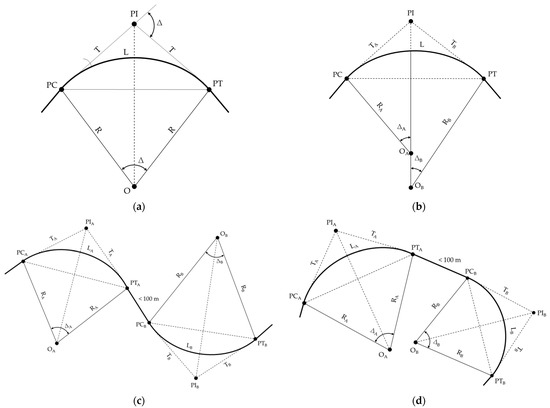
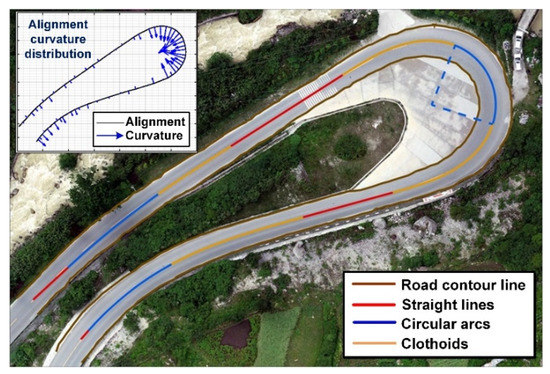
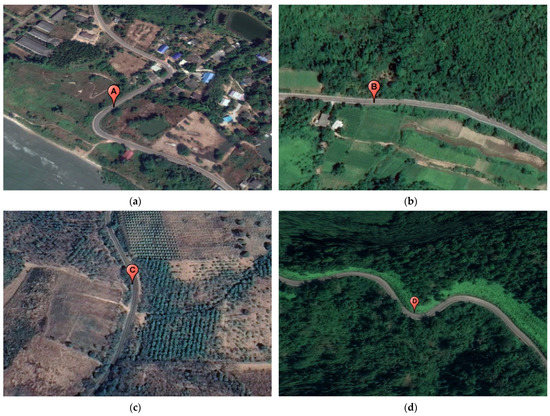
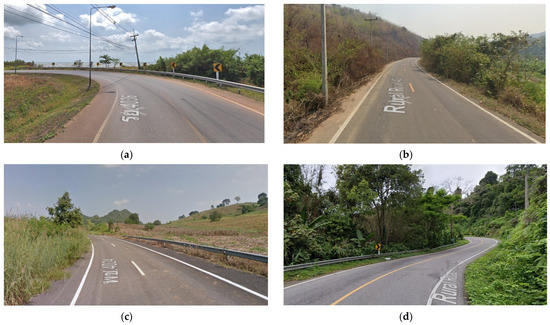
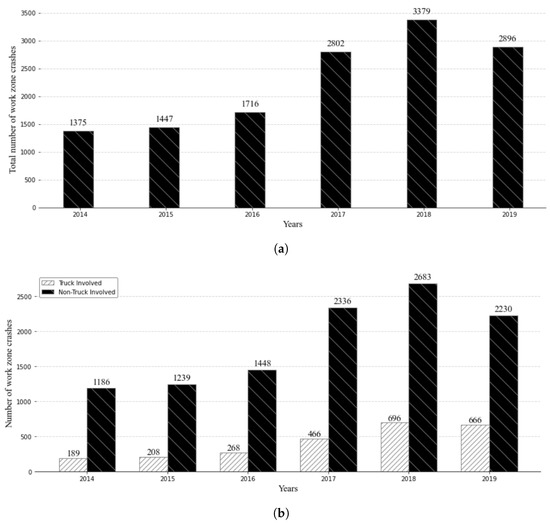
The number of road crashes continues to rise significantly in Thailand. Curve segments on two-lane rural roads are among the most hazardous locations which lead to road crashes and tremendous economic losses; therefore, a detailed examination of its risk is required. This study aims to develop crash prediction models using Safety Performance Functions (SPFs) as a tool to identify the relationship among road alignment, road geometric and traffic conditions, and crash frequency for two-lane rural horizontal curve segments. Relevant data associated with 86,599 curve segments on two-lane rural road networks in Thailand were collected including road alignment data from a GPS vehicle tracking technology, road attribute data from rural road asset databases, and historical crash data from crash reports. Safety Performance Functions (SPFs) for horizontal curve segments were developed, using Poisson regression, negative binomial regression, and calibrated Highway Safety Manual models. The results showed that the most significant parameter affecting crash frequency is lane width, followed by curve length, traffic volume, curve radius, and types of curves (i.e., circular curves, compound curves, reverse curves, and broken-back curves). Comparing among crash prediction models developed, the calibrated Highway Safety Manual SPF outperforms the others in prediction accuracy. Full article
Show Figures

Figure 1
Article
A Crash Prediction Method Based on Artificial Intelligence Techniques and Driving Behavior Event Data
Sustainability 2021, 13(11), 6102; https://doi.org/10.3390/su13116102 - 28 May 2021
Viewed by 623
Abstract
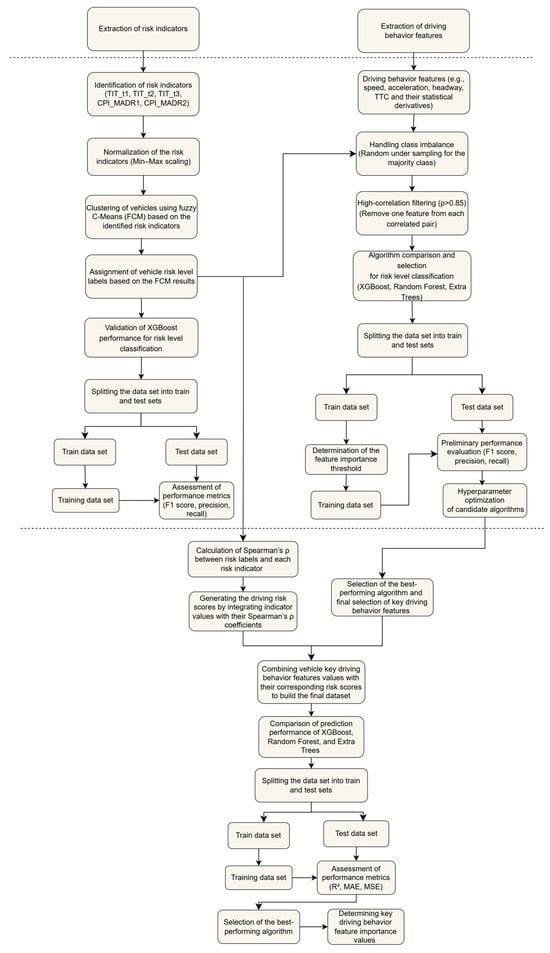
Various studies on how to prevent and deal with traffic accidents are ongoing. In the past, the key research emphasis was on passive accident response measures that analyzed roadway-based historical data to identify road sections with high crash risk. Through assessing crash risks [...] Read more.
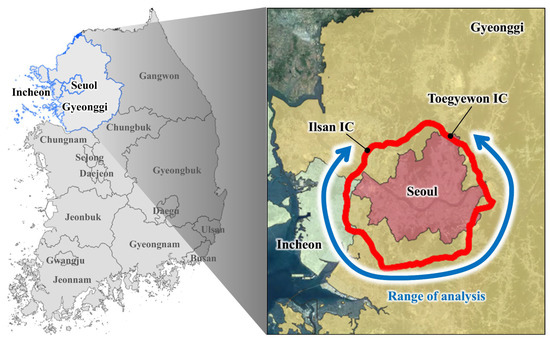
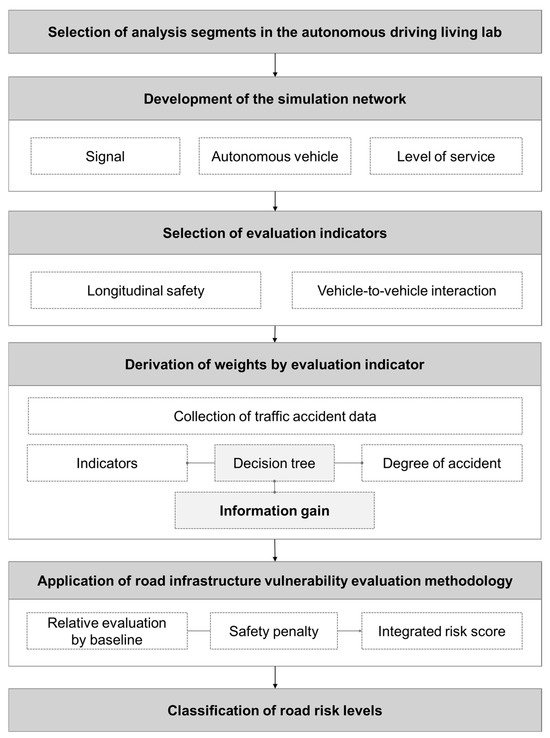
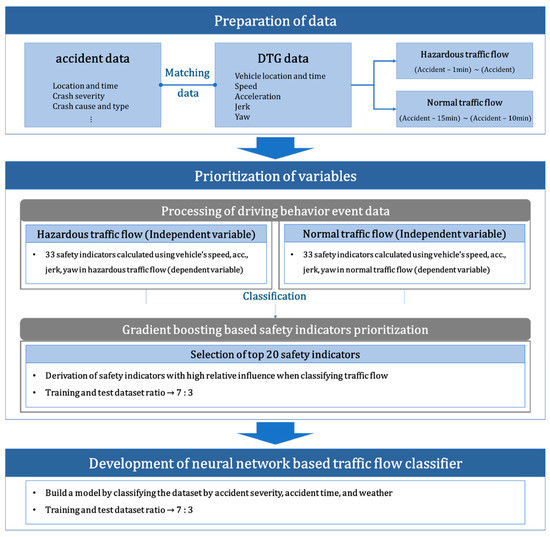
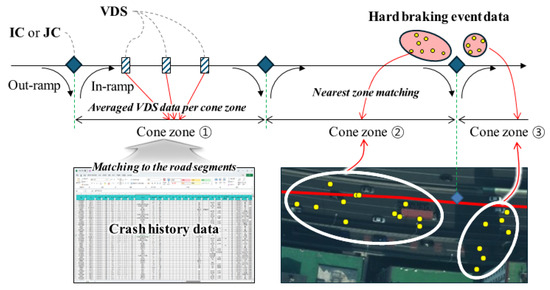
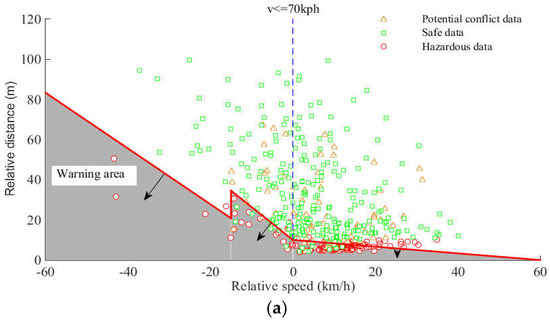
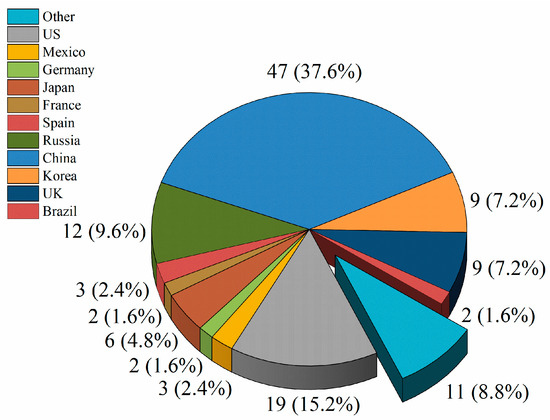
Various studies on how to prevent and deal with traffic accidents are ongoing. In the past, the key research emphasis was on passive accident response measures that analyzed roadway-based historical data to identify road sections with high crash risk. Through assessing crash risks by analyzing simulation data and actual vehicle driving trajectory data, this study suggests a method of effectively preventing accidents before they happen. In this analysis, using digital tachograph (DTG) data, which is the vehicle trajectory data for commercial vehicles running on Korean highways, hazardous and normal traffic flows were identified and extracted. Driving behavior event data for both types of traffic flow was processed by measuring safety indicators through the extracted data. Safety indicators with a high impact on traffic flow classification were then extracted using gradient boosting, a representative ensemble technique. A neural network analysis was performed using the extracted safety indicators as independent variables to create a traffic flow classifier, which had a high accuracy of 94.59%. The DTG data set was also classified based on the severity of each accident that occurred in the studied roadway, the time of the accident, and the weather; the results were compiled to enable comprehensive accident prediction. It is expected that proactive crash prevention will be possible in the future by evaluating real-time accident risks using the findings and ensemble-based methodologies of this paper. Full article
Show Figures

Figure 1
Article
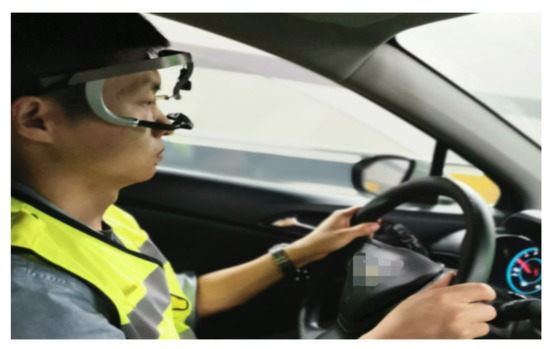
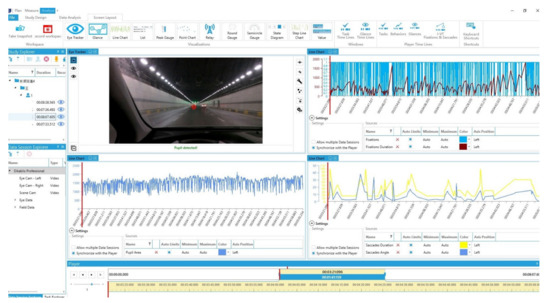
Visual Characteristics of Drivers at Different Sections of an Urban Underpass Tunnel Entrance: An Experimental Study
Sustainability 2021, 13(9), 5224; https://doi.org/10.3390/su13095224 - 07 May 2021
Viewed by 396
Abstract
The increase in the number of traffic accidents due to the increasing number of urban underpass tunnels necessitate a better investigation of drivers’ visual characteristics when entering the tunnels. A total of 20 drivers were gathered to perform a real vehicle experiment in [...] Read more.
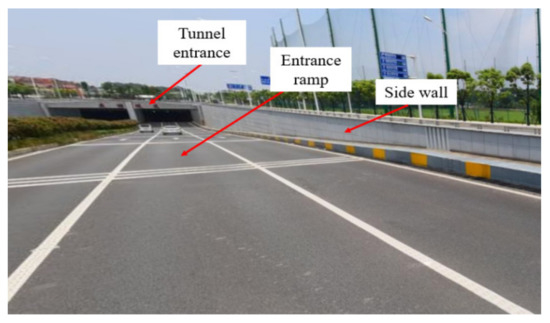
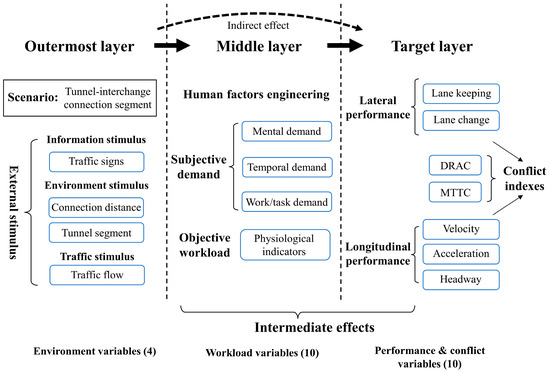
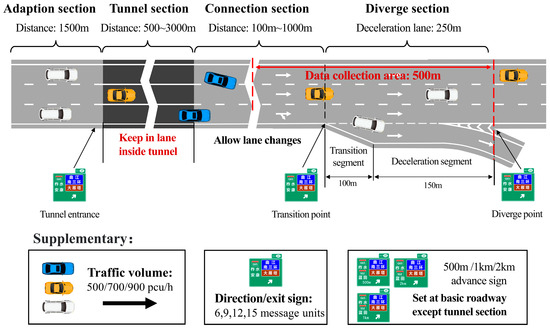
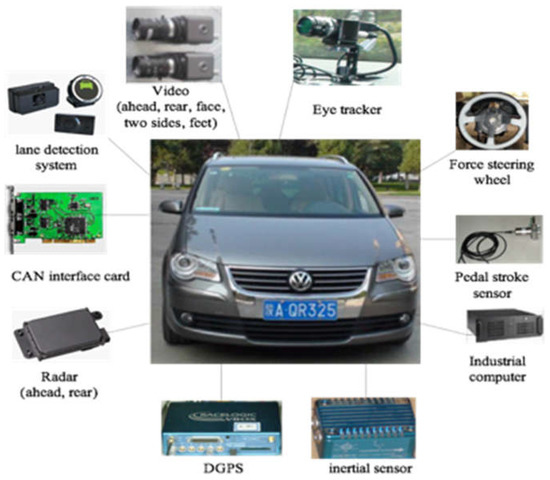
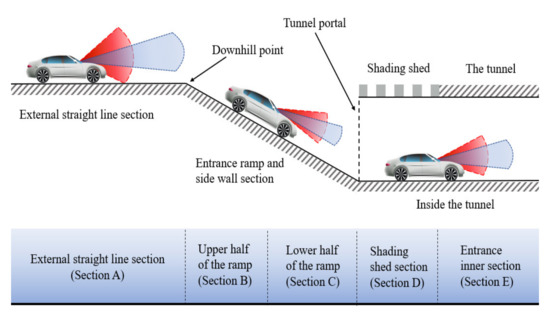
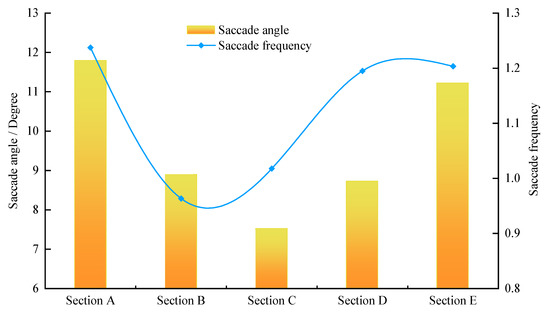
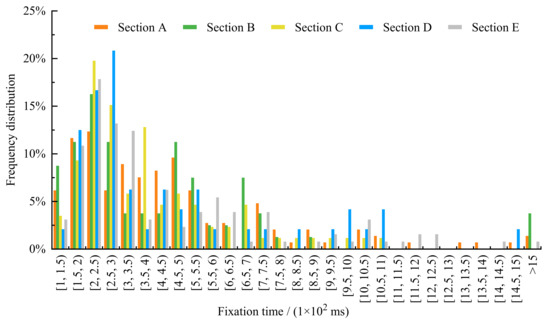
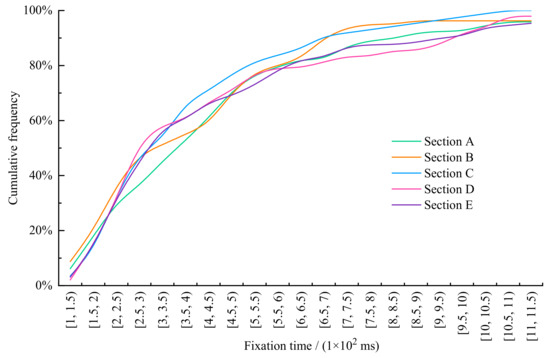
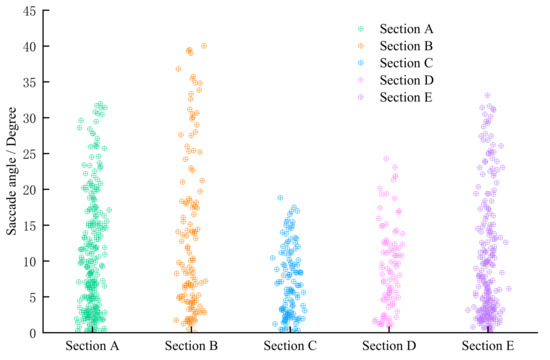
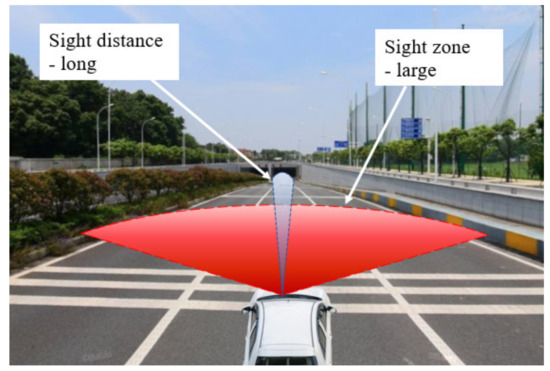
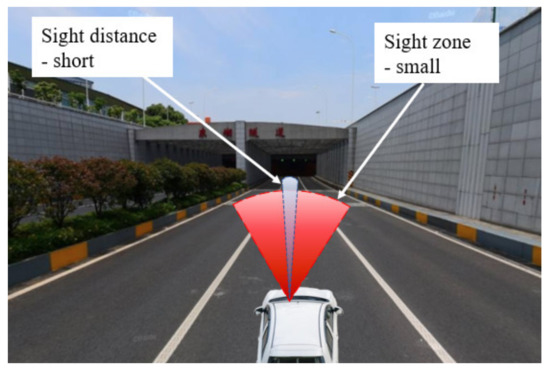
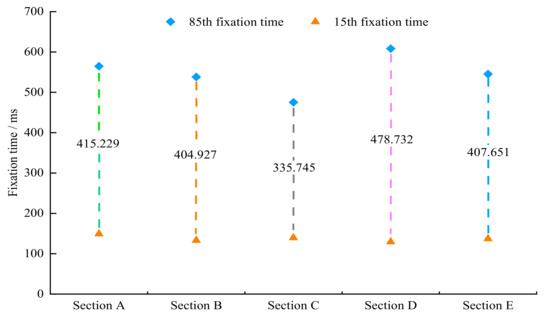
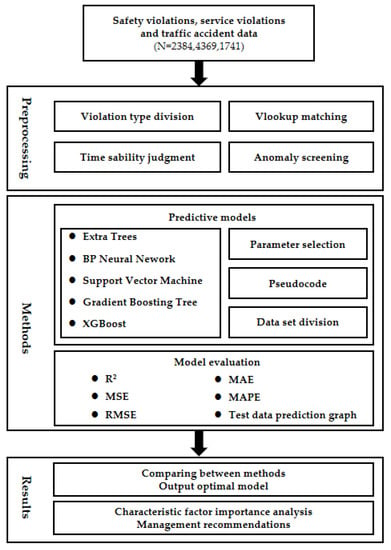
The increase in the number of traffic accidents due to the increasing number of urban underpass tunnels necessitate a better investigation of drivers’ visual characteristics when entering the tunnels. A total of 20 drivers were gathered to perform a real vehicle experiment in an urban underpass tunnel. The saccade angle, saccade frequency, and fixation time were selected as the research indexes. The urban underpass tunnel entrance was divided into five sections, namely the external straight line section, the upper half of the ramp, the lower half of the ramp, the shading shed section, and the entrance inner section. The results showed that the saccade angle and frequency of the ramp were significantly smaller than that of the external straight line and the tunnel interior, and the saccade range in front of the entrance was more concentrated. The changes in fixation time and the difference range of 15th-85th fixation time threshold in each section were analyzed. The fixation time of all sections was distributed within the range of 149.476 to 475.414 ms. The driver’s fixation was more and more concentrated when the sidewalls were higher and closer to the portal. Full article
Show Figures

Figure 1
Article
Crash- and Simulation-Based Safety Performance Evaluation of Freeway Rest Area
Sustainability 2021, 13(9), 4963; https://doi.org/10.3390/su13094963 - 28 Apr 2021
Viewed by 405
Abstract
The main objective of this study was to evaluate the safety effects caused by altering the lengths of deceleration and acceleration lanes at rest areas on expressways in Korea. Although general conclusions can be found through crash-based safety analysis, to examine more specific [...] Read more.
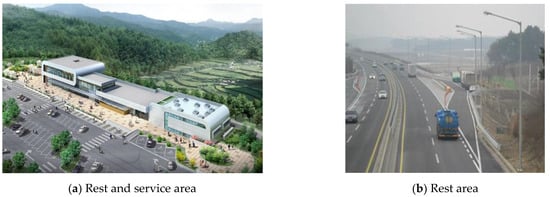
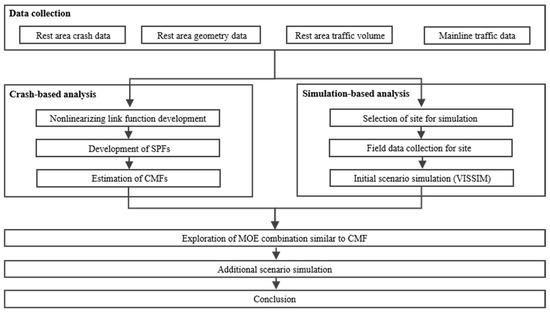
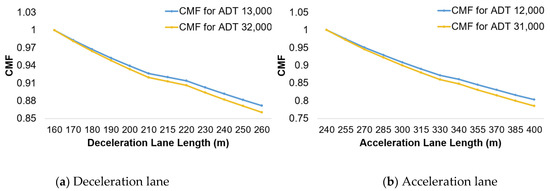
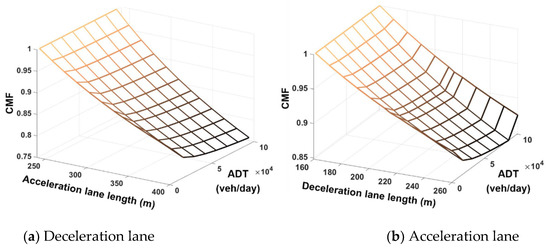
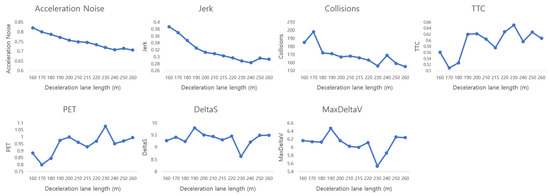
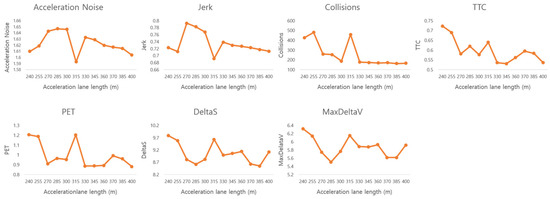
The main objective of this study was to evaluate the safety effects caused by altering the lengths of deceleration and acceleration lanes at rest areas on expressways in Korea. Although general conclusions can be found through crash-based safety analysis, to examine more specific optimal conditions considering various traffic conditions, this study proposes a novel framework to explore and evaluate crash-based and simulation-based safety performances. For this purpose, the safety performance function (SPF) and crash modification factor (CMF) were developed to reflect real-world safety impacts. To consider nonlinear trends of the parameters, nonlinearizing link functions were introduced into the analysis. Two types of simulation analyses were conducted to (1) find the combination of surrogate safety measures (SSMs) that best fit with the crash-based safety performance results and (2) determine the optimal lengths of deceleration lane and acceleration lanes for different traffic conditions. The results showed that the best length of deceleration lane of a rest area is between 240 and 260 m, depending on the traffic conditions. The results also indicated that the optimal length of acceleration lane of a rest area is between 385 and 400 m, depending on the traffic parameters. The findings of this study could be used to determine the safety solutions with a micro-traffic simulator. Full article
Show Figures

Figure 1
Article
Interdisciplinary Evaluation of Intersection Performances—A Microsimulation-Based MCDA
Sustainability 2021, 13(4), 1859; https://doi.org/10.3390/su13041859 - 09 Feb 2021
Cited by 1 | Viewed by 707
Abstract
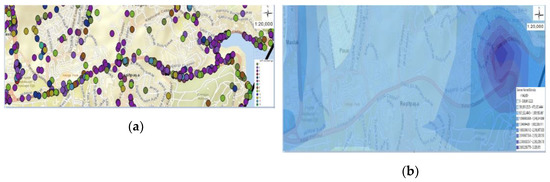
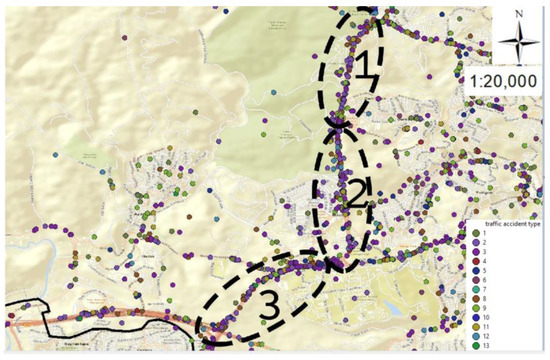
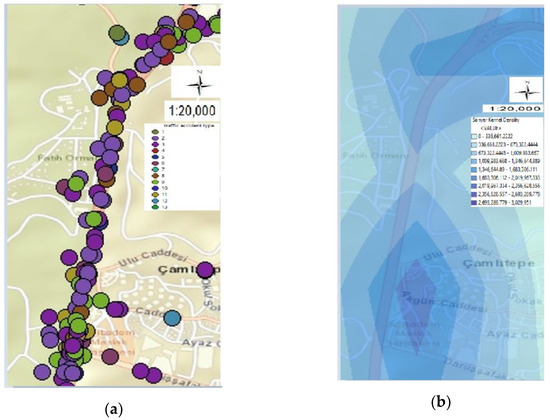
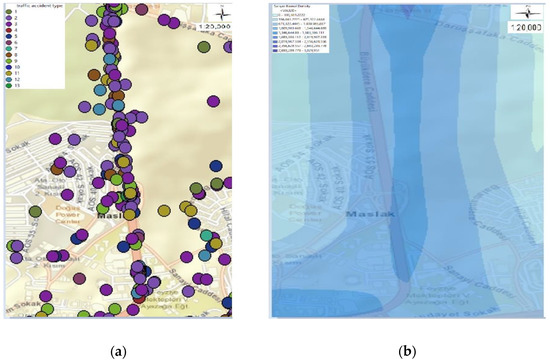
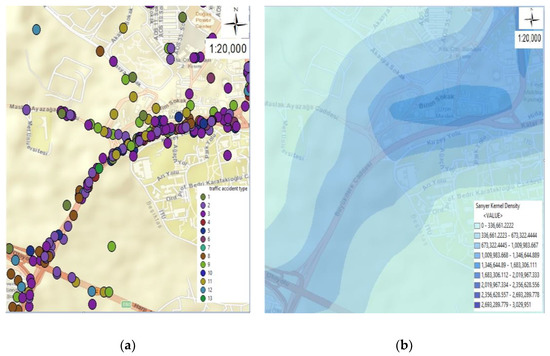
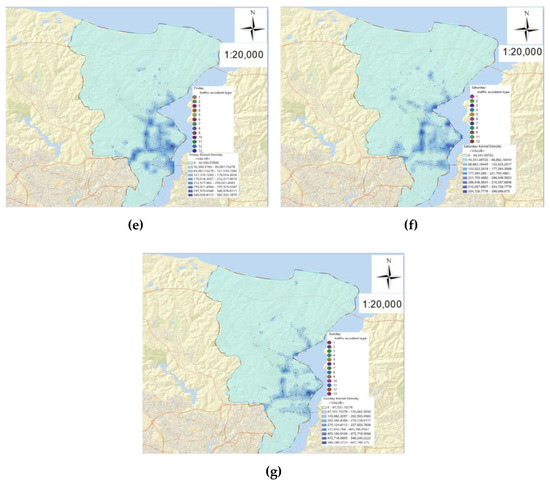
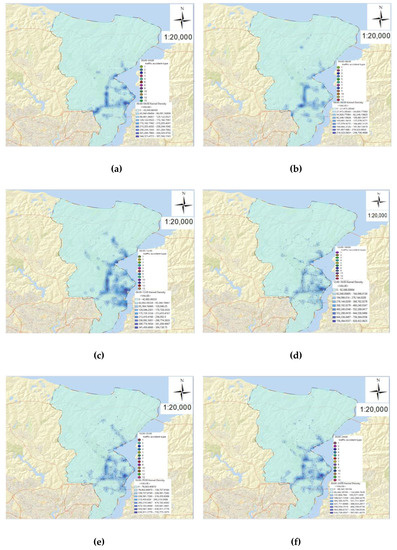
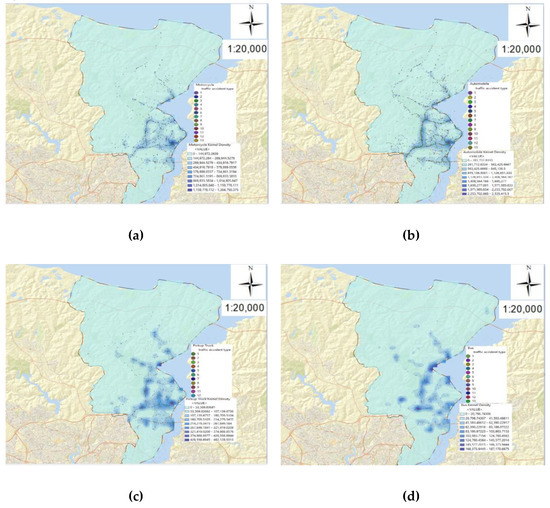
Intersections are the most important regions in terms of urban traffic management. The intersection areas on the corridor should be analyzed together for consistency in traffic engineering. To do so, three intersections on the Vatan Street corridor in İstanbul, the most crowded city [...] Read more.
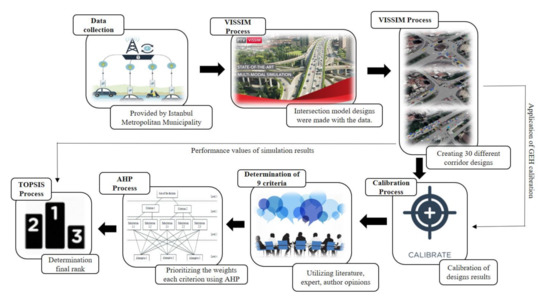
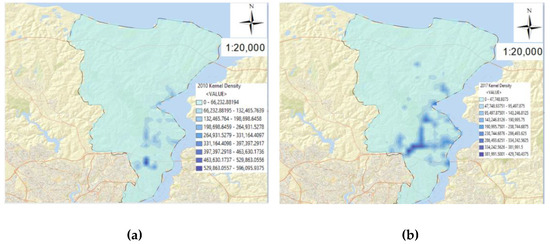
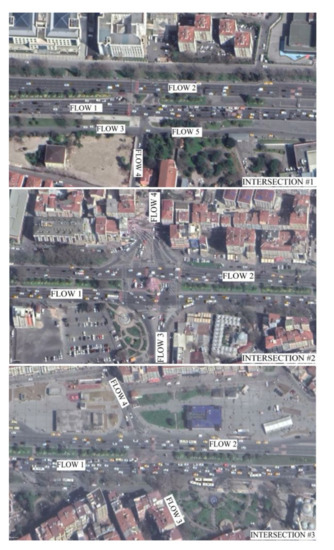
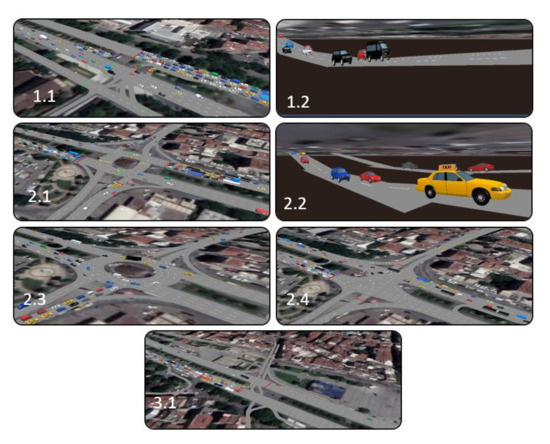
Intersections are the most important regions in terms of urban traffic management. The intersection areas on the corridor should be analyzed together for consistency in traffic engineering. To do so, three intersections on the Vatan Street corridor in İstanbul, the most crowded city of Turkey, were examined. Various geometric and signal designs were performed for intersections and the most suitable corridor design was analyzed. The corridor designs were modeled with the PTV VISSIM microsimulation software. The most suitable corridor design was evaluated by using the results obtained from the microsimulation via analytical hierarchy process (AHP) and technique for order preference by similarity to ideal solution (TOPSIS) from multi criteria decision analysis (MCDA) methods. The evaluation criteria in the study are vehicle delay, queue length, stopped delay, stops, travel time, vehicle safety, CO emission, fuel consumption, and construction cost. As a result, the current and the most suitable alternative corridors were compared according to the comparison parameters and up to 80% improvements were observed. Thus, some advantages were obtained in terms of energy, environment, time, and cost. Full article
Show Figures

Figure 1
Article
Fail to Yield? An Analysis of Ambulance Crashes in Taiwan
Sustainability 2021, 13(3), 1566; https://doi.org/10.3390/su13031566 - 02 Feb 2021
Viewed by 459
Abstract
Introduction—Medical emergency vehicles help patients get to the hospital quickly. However, there were more and more ambulance crashes on the road in Taiwan during the last decade. This study investigated the characteristics of medical emergency vehicle crashes in Taiwan from January 2003 to [...] Read more.
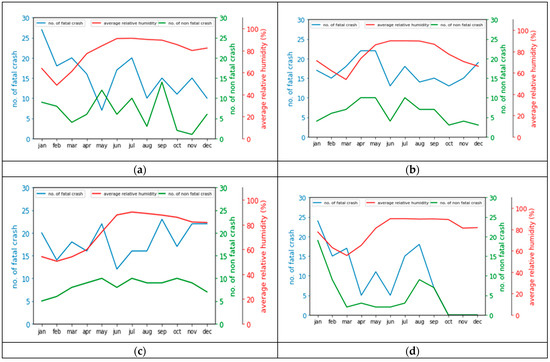
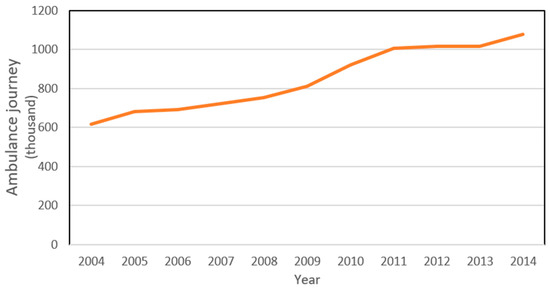
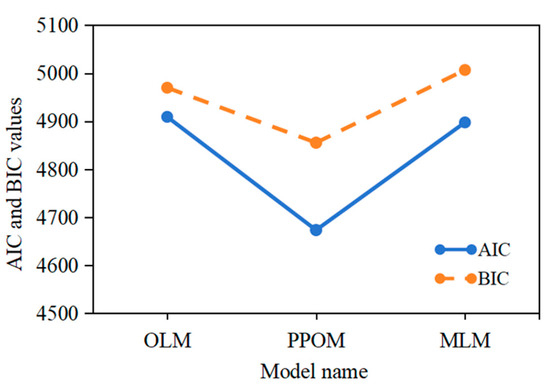
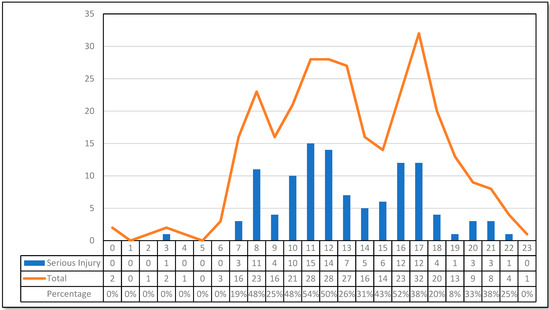
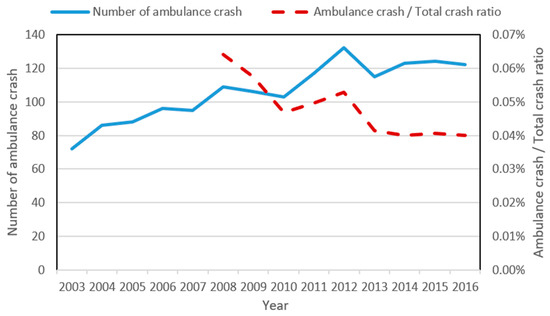
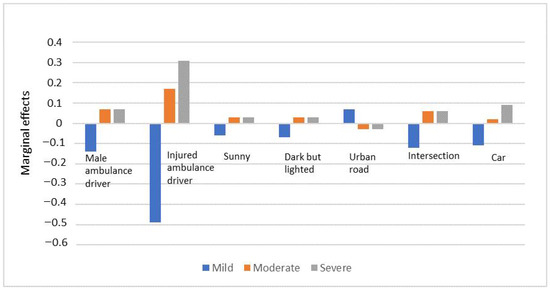
Introduction—Medical emergency vehicles help patients get to the hospital quickly. However, there were more and more ambulance crashes on the road in Taiwan during the last decade. This study investigated the characteristics of medical emergency vehicle crashes in Taiwan from January 2003 to December 2016. Methods—The ordered logit (OL) model, multinominal logit (MNL) model, and partial proportional odds (PPO) model were applied to investigate the relationship between the severity of ambulance crash injuries and its risk factors. Results—We found the various factors have different effects on the overall severity of ambulance crashes, such as ambulance drivers’ characteristics and road and weather conditions. When another car was involved in ambulance crashes, there was a disproportionate effect on the different overall severity, as found by the PPO model. Conclusions—The results showed that male ambulance drivers and car drivers who failed to yield to an ambulance had a higher risk of severe injury from ambulance crashes. Ambulance crashes are an emerging issue and need further policies and public education regarding Taiwan’s ambulance transportation safety. Full article
Show Figures

Figure 1
Article
Older Pedestrian Traffic Crashes Severity Analysis Based on an Emerging Machine Learning XGBoost
Sustainability 2021, 13(2), 926; https://doi.org/10.3390/su13020926 - 18 Jan 2021
Cited by 2 | Viewed by 686
Abstract
Older pedestrians are vulnerable on the streets and at significant risk of injury or death when involved in crashes. Pedestrians’ safety is critical for roadway agencies to consider and improve, especially older pedestrians aged greater than 65 years old. To better protect the [...] Read more.
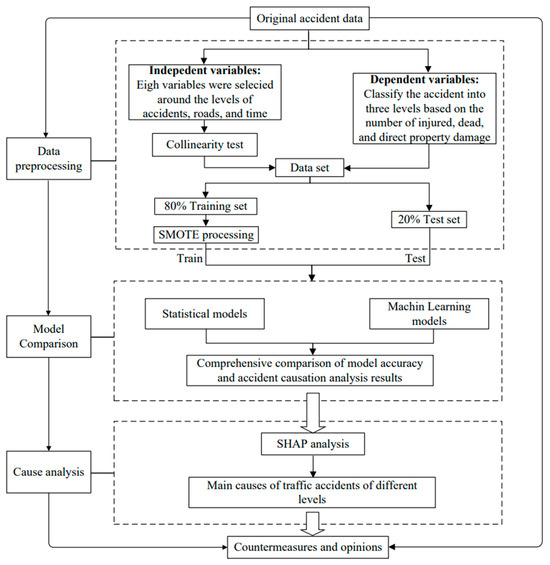
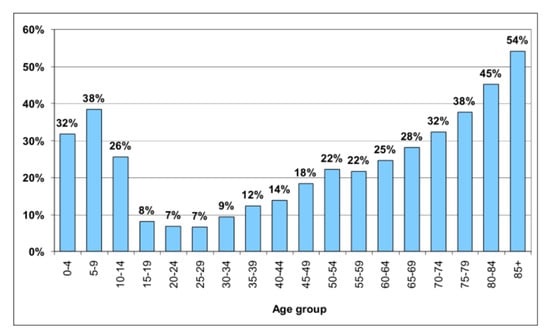
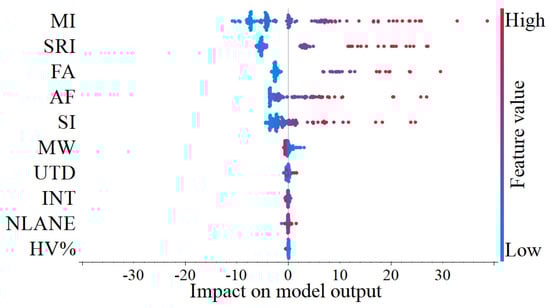
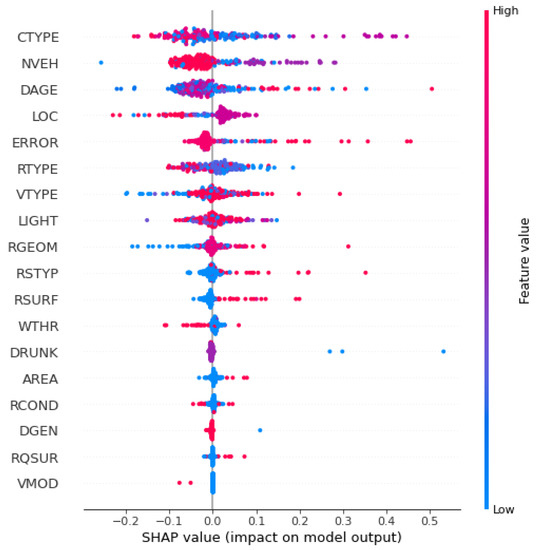
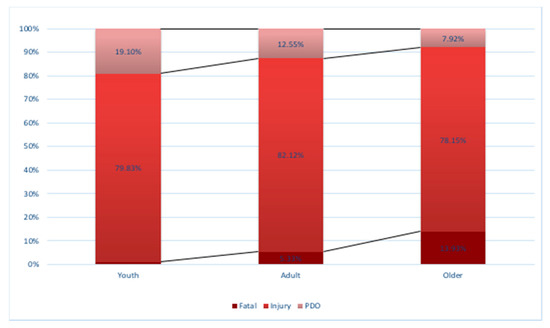
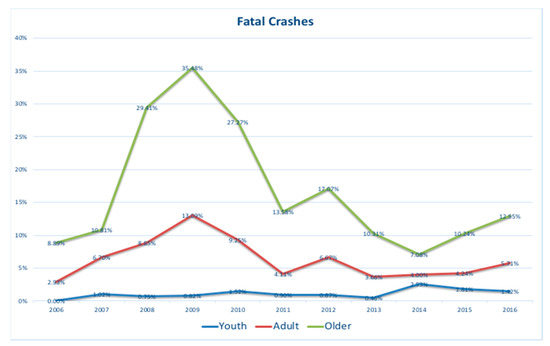
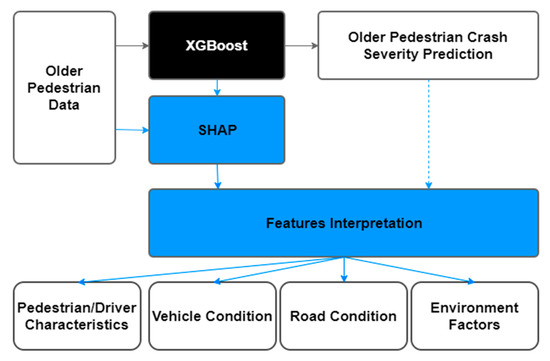
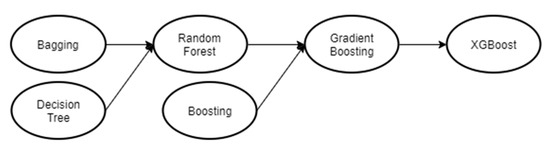
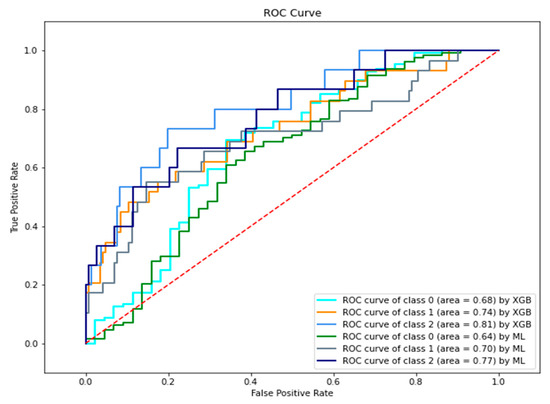
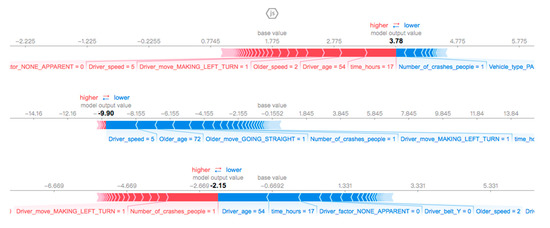
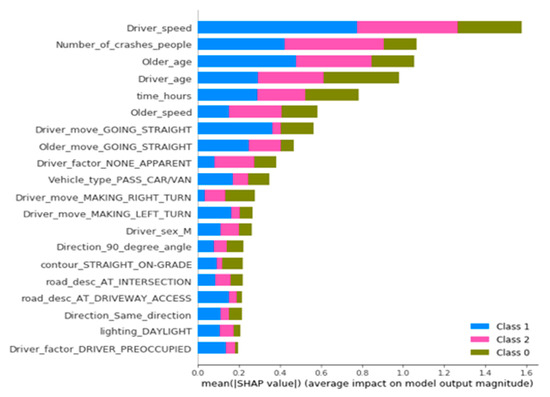
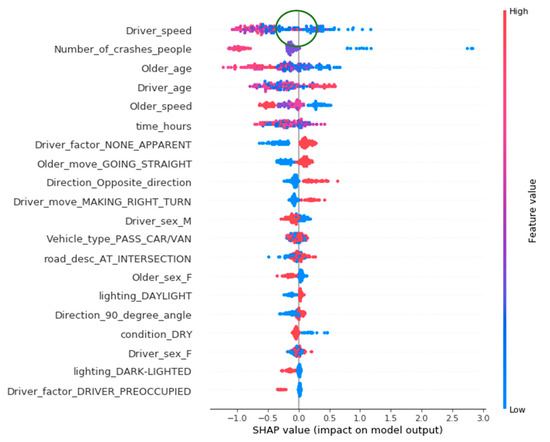
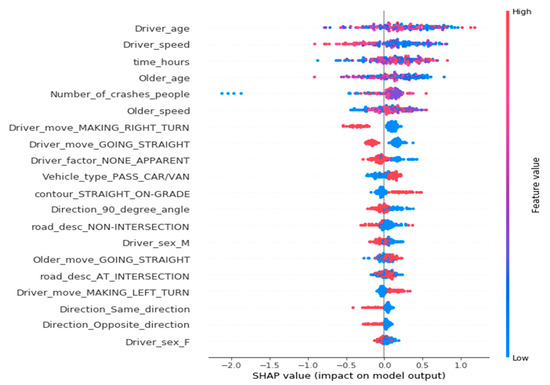
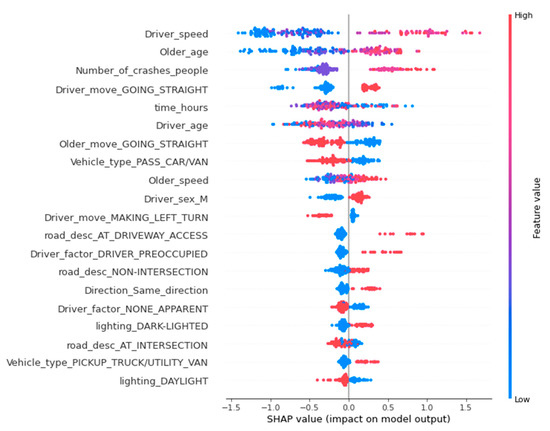
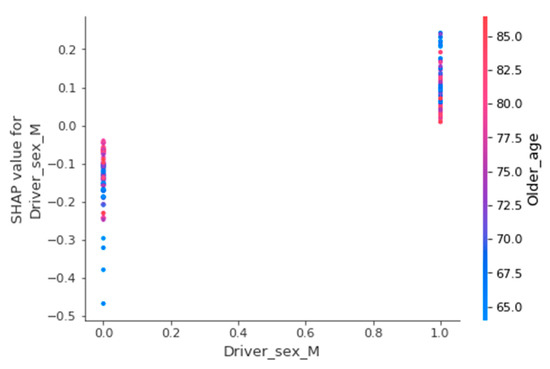
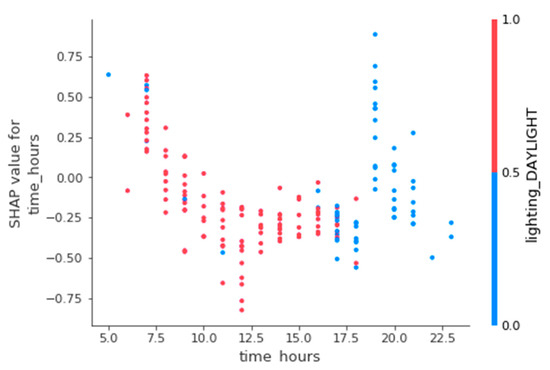
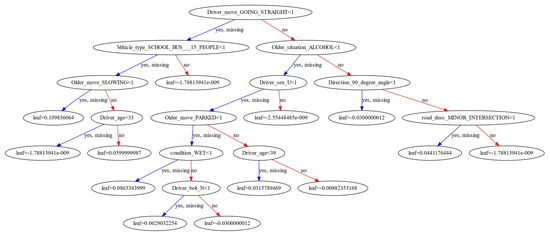
Older pedestrians are vulnerable on the streets and at significant risk of injury or death when involved in crashes. Pedestrians’ safety is critical for roadway agencies to consider and improve, especially older pedestrians aged greater than 65 years old. To better protect the older pedestrian group, the factors that contribute to the older crashes need to be analyzed deeply. Traditional modeling approaches such as Logistic models for data analysis may lead to modeling distortions due to the independence assumptions. In this study, Extreme Gradient Boosting (XGBoost), is used to model the classification problem of three different levels of severity of older pedestrian traffic crashes from crash data in Colorado, US. Further, Shapley Additive explanations (SHAP) are implemented to interpret the XGBoost model result and analyze each feature’s importance related to the levels of older pedestrian crashes. The interpretation results show that the driver characteristic, older pedestrian characteristics, and vehicle movement are the most important factors influencing the probability of the three different severity levels. Those results investigate each severity level’s correlation factors, which can inform the department of traffic management and the department of road infrastructure to protect older pedestrians by controlling or managing some of those significant features. Full article
Show Figures

Figure 1
Article
Identification of Contributing Factors for Driver’s Perceptual Bias of Aggressive Driving in China
Sustainability 2021, 13(2), 766; https://doi.org/10.3390/su13020766 - 14 Jan 2021
Cited by 1 | Viewed by 562
Abstract
Aggressive driving is common across the world. While most aggressive driving is conscious, some aggressive driving behavior may be unconscious on part of motor vehicle drivers. Perceptual bias of aggressive driving behavior is one of the main causes of traffic accidents. This paper [...] Read more.
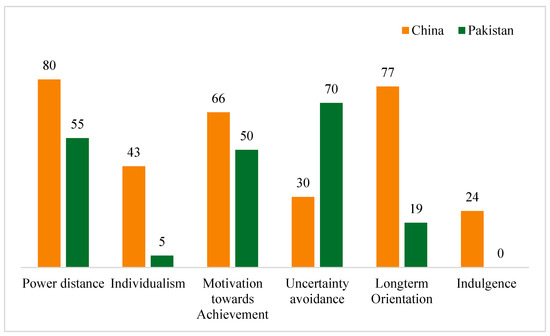
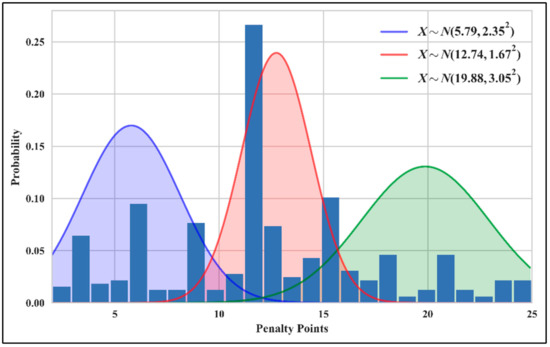
Aggressive driving is common across the world. While most aggressive driving is conscious, some aggressive driving behavior may be unconscious on part of motor vehicle drivers. Perceptual bias of aggressive driving behavior is one of the main causes of traffic accidents. This paper focuses on identifying impact factors related to aggressive driving perceptual bias. Questionnaire data from 690 drivers, collected from a drivers’ retraining course administered by the Traffic Management Bureau in Nanjing, China, were used to collect drivers’ socioeconomic characteristics, personality traits, and external environment data. Actual penalty points were considered as an objective indicator and Gaussian mixture model (GMM) was used to cluster an objective indicator into different levels. The driving anger expression (DAX) was used to measure drivers’ self-assessment of aggressive driving behavior and then to identify perceptual biases. Then a binary logistic model was estimated to explore the influence of different factors on drivers’ perceptual bias of aggressive driving behavior. Results showed that bus drivers were less likely to have perceptual bias of aggressive driving behavior. Truck drivers, drivers with an extraversion characteristic, and drivers who have dissatisfaction with road infrastructure and actual work were likely to have a perceptual bias. The findings are potentially beneficial for proposing targeted countermeasures to identify dangerous drivers and improve drivers’ safety awareness. Full article
Show Figures

Figure 1
Article
The Effects of Macroeconomic Factors on Road Traffic Safety: A Study Based on the ARDL-ECM Model
Sustainability 2020, 12(24), 10262; https://doi.org/10.3390/su122410262 - 09 Dec 2020
Viewed by 646
Abstract
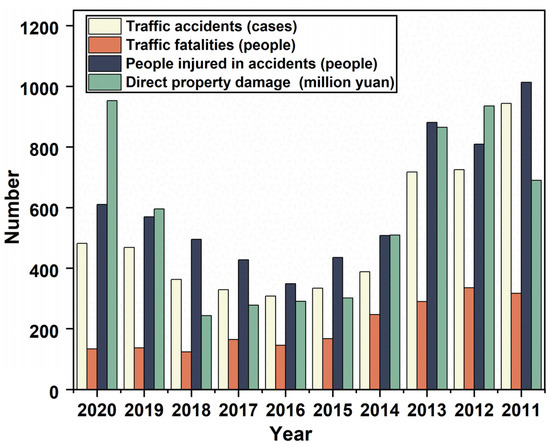
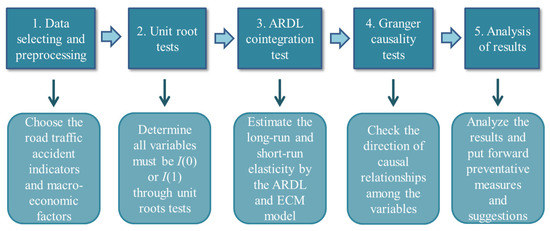
This paper attempts to examine whether socioeconomic volatility produces differentiated effects on road traffic accident indicators. Adopting the Autoregressive distributed lag error-correction model (ARDL-ECM), this paper explores the long-term equilibrium and short-term interactions between five common economic indicators, namely, average salaries (AS), employment [...] Read more.
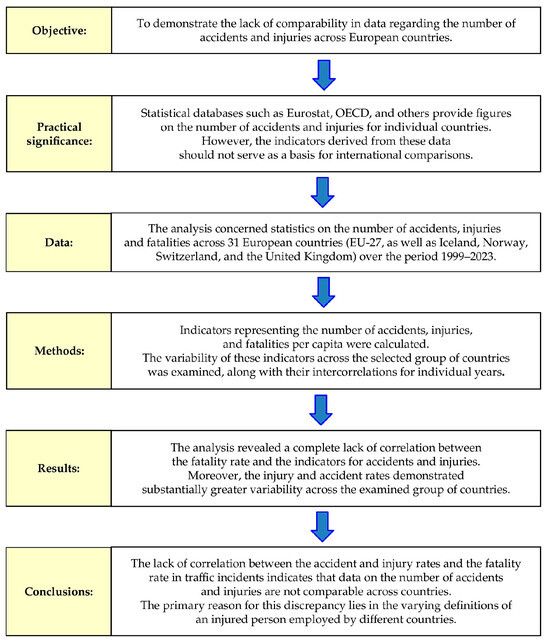
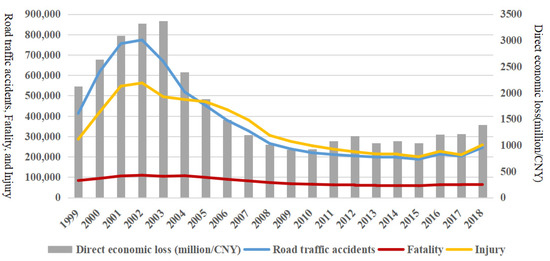
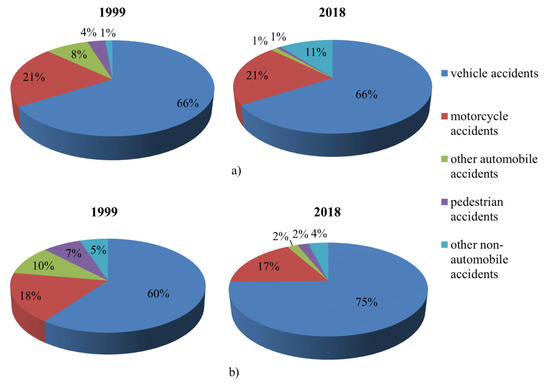
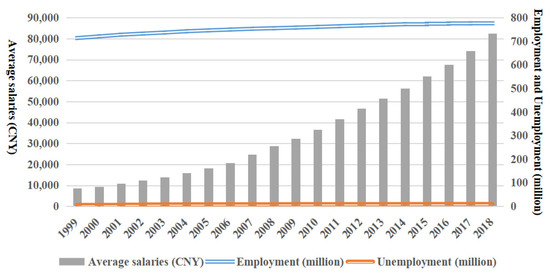
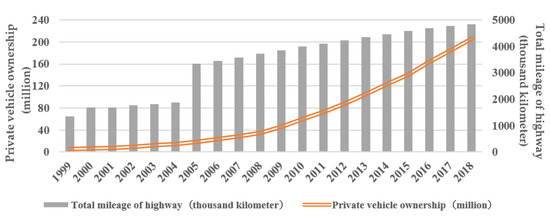
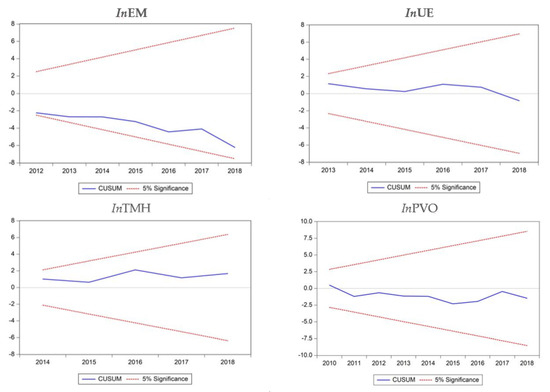
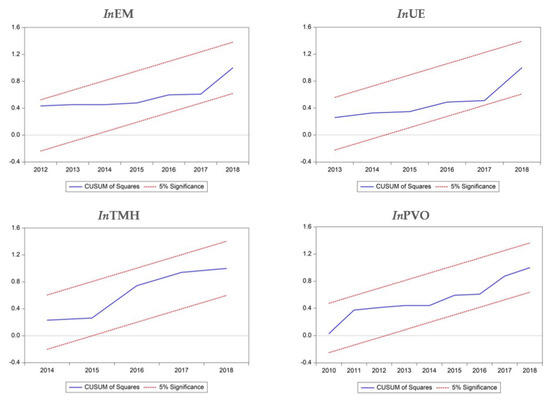
This paper attempts to examine whether socioeconomic volatility produces differentiated effects on road traffic accident indicators. Adopting the Autoregressive distributed lag error-correction model (ARDL-ECM), this paper explores the long-term equilibrium and short-term interactions between five common economic indicators, namely, average salaries (AS), employment (EM), unemployment (UE), total mileage of highway (TMH), and private vehicle ownership (PVO), as well as road traffic-related indicators including the number of road traffic accidents (RTA), injuries (IN), fatalities (FA), and direct economic losses (DEL), using data of road traffic accidents spanning from 1999 to 2018 in China. The study found that all economic indicators except average salaries showed a long-term equilibrium with road traffic accident indicators. The Granger causality test showed that, over the short term, an increase in employment could lead to an increase in injuries, and an increase in private vehicle ownership could cause a rise in fatalities. This study demonstrates that the volatility in economic indicators indeed produces differentiated effects on road traffic accident indicators, providing a theoretical basis for improving road safety performance and formulating relevant policies. Full article
Show Figures

Figure 1
Back to TopTop