
Journal Description
Remote Sensing
Remote Sensing
is an international, peer-reviewed, open access journal about the science and application of remote sensing technology, published semimonthly online by MDPI. The Remote Sensing Society of Japan (RSSJ) and Japan Society of Photogrammetry and Remote Sensing (JSPRS) are affiliated with Remote Sensing and their members receive discounts on the article processing charge.
- Open Access— free for readers, with article processing charges (APC) paid by authors or their institutions.
- High Visibility: indexed within Scopus, SCIE (Web of Science), Ei Compendex, PubAg, GeoRef, Astrophysics Data System, Inspec, dblp, and other databases.
- Journal Rank: JCR - Q1 (Geosciences, Multidisciplinary) / CiteScore - Q1 (General Earth and Planetary Sciences)
- Rapid Publication: manuscripts are peer-reviewed and a first decision is provided to authors approximately 24.3 days after submission; acceptance to publication is undertaken in 2.6 days (median values for papers published in this journal in the second half of 2025).
- Recognition of Reviewers: reviewers who provide timely, thorough peer-review reports receive vouchers entitling them to a discount on the APC of their next publication in any MDPI journal, in appreciation of the work done.
- Companion journal: Geomatics.
- Journal Cluster of Geospatial and Earth Sciences: Remote Sensing, Geosciences, Quaternary, Earth, Geographies, Geomatics and Fossil Studies.
Impact Factor:
4.1 (2024);
5-Year Impact Factor:
4.8 (2024)
Latest Articles
POCA-Lite: A Lightweight Change-Detection Architecture with Geometry-Aware Auxiliary Supervision and Feedback Fusion
Remote Sens. 2026, 18(10), 1673; https://doi.org/10.3390/rs18101673 - 21 May 2026
Abstract
Building change detection from bi-temporal remote-sensing imagery underpins urban planning, infrastructure monitoring, and disaster assessment. Existing deep-learning methods achieve high accuracy but rely on large parameter counts, while pixel-level supervision provides limited boundary guidance. We propose POCA-lite, a lightweight encoder–decoder with an inference-coupled
[...] Read more.
Building change detection from bi-temporal remote-sensing imagery underpins urban planning, infrastructure monitoring, and disaster assessment. Existing deep-learning methods achieve high accuracy but rely on large parameter counts, while pixel-level supervision provides limited boundary guidance. We propose POCA-lite, a lightweight encoder–decoder with an inference-coupled geometry branch: three geometric prediction heads—distance transform, boundary, and center heatmap—whose outputs are fused back into the decoder via a feedback pathway active at both training and inference. On the LEVIR-CD benchmark under a unified retraining protocol, multi-seed evaluation shows that POCA-lite matches SNUNet in mean F1 while using 47% fewer parameters and 53% fewer FLOPs. Boundary F1 improves by 9.22 pp over the no-geometry baseline. Decomposition ablations reveal two complementary improvement sources: geometric supervision alone recovers 85% of the total gain, while the feedback fusion pathway recovers 92%; their combination achieves the full result. Geometry-aware targets outperform a generic multitask control. Cross-architecture transfer to SNUNet yields +1.06 pp F1. However, cross-dataset evaluation on WHU-CD shows that the method underperforms SNUNet on dense urban morphology, and zero-shot cross-dataset transfer is not established. These results indicate that inference-coupled geometric supervision is effective for lightweight, boundary-sensitive change detection on domains with well-separated building morphology, but its applicability is scope-bounded.
Full article
Open AccessArticle
Backpack LiDAR Supports Biotope-Scale Assessment of Structure, Maintenance, and Net Carbon Budget in Urban Park Plant Communities
by
Zixin Zhao, Yuxi Yang, Yumeng Ma, Xiaoxu Zhang, Ling Qiu and Tian Gao
Remote Sens. 2026, 18(10), 1672; https://doi.org/10.3390/rs18101672 - 21 May 2026
Abstract
Urban parks are often regarded as carbon sinks, yet their net carbon performance depends on the balance between vegetation carbon uptake and maintenance-related emissions, as well as the accurate representation of within-park spatial heterogeneity. This study used backpack LiDAR, field vegetation surveys, and
[...] Read more.
Urban parks are often regarded as carbon sinks, yet their net carbon performance depends on the balance between vegetation carbon uptake and maintenance-related emissions, as well as the accurate representation of within-park spatial heterogeneity. This study used backpack LiDAR, field vegetation surveys, and maintenance inventories to quantify annual carbon sequestration, maintenance emissions, and net carbon budget in 44 plots covering nine biotope types across 16 parks in central Xianyang, China. A four-level biotope classification incorporating canopy openness, ground cover, tree composition, and vertical stratification was applied to link LiDAR-derived three-dimensional structure with ecological-unit-level carbon accounting. Carbon sequestration and net carbon budget differed significantly among biotopes, whereas maintenance emissions did not. Closed broadleaved single-layer forest showed the highest carbon sequestration density (0.772 kg C m−2), while hard-surfaced partly closed broadleaved single-layer forest showed the lowest value (0.132 kg C m−2). Closed woody biotopes functioned as strong carbon sinks, partly closed biotopes as weak sinks, and the partly open short-grass biotope was the only carbon source. Three-dimensional green volume density was the strongest positive predictor of net carbon budget (β = 0.417, p = 0.032), followed by stem density (β = 0.276, p = 0.048), whereas irrigation-related emissions showed a significant negative coefficient (β = −0.276, p = 0.021). Carbon sequestration explained more variation in net carbon budget than maintenance emissions (adjusted R2 = 0.409 vs. 0.134). These findings suggest that backpack LiDAR can support fine-scale identification of priority carbon-sink units in urban parks and that low-carbon park management should prioritize three-dimensional woody vegetation structure while reducing high-input irrigation where feasible.
Full article
Open AccessArticle
ChangeVLM: A Language-Guided Semantic Alignment Framework for Binary Remote Sensing Change Detection
by
Dongxu Li, Peng Chu, Chen Yang, Zhen Wang and Chuanjin Dai
Remote Sens. 2026, 18(10), 1671; https://doi.org/10.3390/rs18101671 - 21 May 2026
Abstract
Against the backdrop of complex features and spectral heterogeneity in high-resolution remote sensing imagery, traditional methods suffer from insufficient semantic understanding, while existing vision–language change detection models face low efficiency, poor spatial localization, and decoupled detection–description pipelines. To overcome these limitations, this paper
[...] Read more.
Against the backdrop of complex features and spectral heterogeneity in high-resolution remote sensing imagery, traditional methods suffer from insufficient semantic understanding, while existing vision–language change detection models face low efficiency, poor spatial localization, and decoupled detection–description pipelines. To overcome these limitations, this paper proposes ChangeVLM, a language-guided semantic alignment framework for binary remote sensing change detection, enabling end-to-end, prompt-free, highly efficient, and interpretable change detection. Its key advantages include the following, (1) Higher detection accuracy with F1 scores of 91.52%, 83.56%, and 75.29% on LEVIR-CD, SYSU-ChangeDet, and HRCUS datasets, outperforming 18 state-of-the-art methods. (2) Stronger edge integrity and small-object detection capability; (3) practical deployment efficiency: the end-to-end FLOPs is 560.7G. Additionally, under an optimized inference setting with pre-extracted features, the effective computation can be reduced to 13.05G. (4) Language-guided semantic regularization to enhance visual discrimination, without requiring external text prompts. The Asymmetric Fusion Module (AFM), lightweight ChangeHead, and Change-Aware Cross-Modal Fusion Module (CACMF) jointly enhance spatial precision, efficiency, and interpretability. Extensive experiments validate that ChangeVLM achieves a superior accuracy–efficiency trade-off. This method provides an effective, deployable solution for high-resolution remote sensing binary change detection, where the language branch acts only as a regularization signal.
Full article
(This article belongs to the Special Issue Foundation Model-Based Multi-Modal Data Fusion in Remote Sensing)
Open AccessArticle
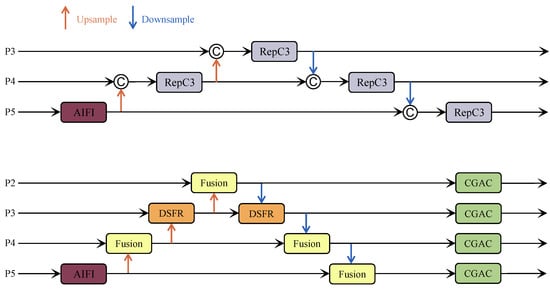
From Generic to Adaptive: Similarity-Adaptive Receptive-Field Cross DETR for Remote-Sensing Object Detection
by
Chenyu Lin, Yunzhan Fu, Hang Xu, Xuyang Teng and Tingyu Wang
Remote Sens. 2026, 18(10), 1670; https://doi.org/10.3390/rs18101670 - 21 May 2026
Abstract
Object detection in optical remote sensing imagery faces persistent challenges from severe instance overlap, extreme spatial density, and motion or atmospheric blur. These degradations cause conventional detectors to over-mix neighboring instance features and fail to separate closely packed objects. To address these limitations,
[...] Read more.
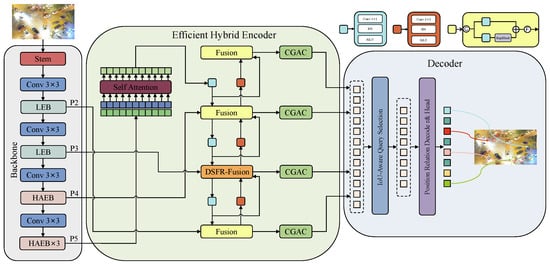
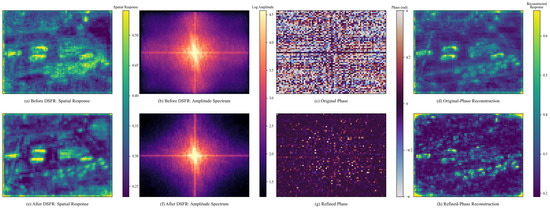
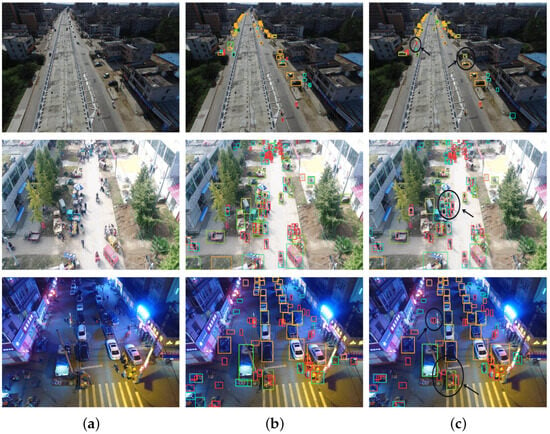
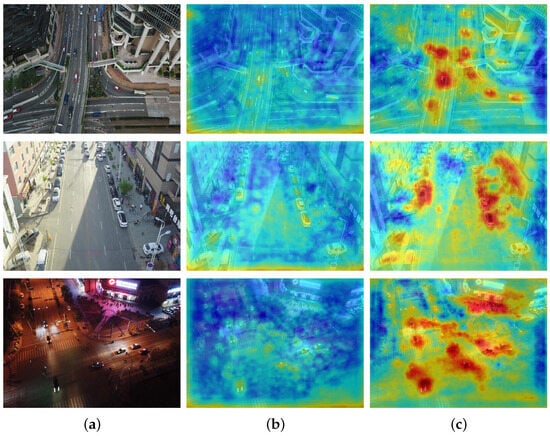
Object detection in optical remote sensing imagery faces persistent challenges from severe instance overlap, extreme spatial density, and motion or atmospheric blur. These degradations cause conventional detectors to over-mix neighboring instance features and fail to separate closely packed objects. To address these limitations, we propose SARC-DETR, a detection framework that augments the RT-DETR architecture with two complementary plug-in modules: Similarity Adaptive Convolution (SAC) and Receptive Field Cross Convolution (RCC). SAC introduces a reproducing-kernel-Hilbert-space (RKHS) motivated similarity gate that selectively suppresses responses inconsistent with local feature prototypes, thereby reducing cross-instance interference in overlapped and blurred regions. RCC constructs a large directional receptive field through orthogonal strip-based aggregation and content-adaptive fusion, enabling efficient long-range context capture without quadratic complexity overhead. Both modules can be integrated into existing DETR-style detectors without modifying the detection head or training protocol. On VisDrone2019-DET, SARC-DETR improves from 29.7 to 34.8, from 49.5 to 56.2, and from 19.2 to 24.8. On DIOR, AP rises from 57.9 to 68.4, and on NWPU VHR-10, from 44.4 to 66.5, demonstrating robust cross-dataset generalization. After structural reparameterization, the additional overhead is less than 0.75 M parameters and 0.36 G FLOPs, confirming deployment suitability for UAV and satellite-based remote sensing applications.
Full article
(This article belongs to the Special Issue Deep Learning-Based Interpretation and Processing of Remote Sensing Images)
Open AccessArticle
Evaluating Multi-Source Soil Moisture Products for Root-Zone Soil Moisture Representation in Yunnan, China
by
Ruijie Wang, Gang Zhou, Chao Li and Siyu Ma
Remote Sens. 2026, 18(10), 1669; https://doi.org/10.3390/rs18101669 - 21 May 2026
Abstract
Root zone soil moisture (RZSM) is critical for understanding hydrological processes and monitoring agricultural drought, yet its accurate representation remains challenging in topographically complex regions. Using 40 cm in situ SM observations from 19 ground stations in Yunnan Province, China, during 2008–2012 as
[...] Read more.
Root zone soil moisture (RZSM) is critical for understanding hydrological processes and monitoring agricultural drought, yet its accurate representation remains challenging in topographically complex regions. Using 40 cm in situ SM observations from 19 ground stations in Yunnan Province, China, during 2008–2012 as the reference, this study systematically evaluated the performance of five widely used multi-source soil moisture (SM) products and their different depth layers, including ERA5-Land, GLDAS Noah, GLEAM, ASCAT H141, and CCI SM. A CCI-derived RZSM proxy generated by exponential filtering, hereafter CCI RZSM, was also included. Product performance was assessed using original and deseasonalized time series, and the effects of land-use type, long-term wetness background, and short-term dry conditions on product performance were explicitly examined. The results showed that the intermediate and deeper layers of ERA5-Land and ASCAT H141, especially the 7–28 cm layers, exhibited better performance in capturing RZSM dynamics, achieving a favorable balance among temporal correlation (r > 0.6), random error and systematic bias. Surface-layer products showed limited direct representativeness, and effective RZSM representativeness differed substantially among nominal product layers. Deseasonalization showed that original-series correlations were partly supported by the shared seasonal wet–dry cycle, whereas most products had weaker skill in tracking non-seasonal RZSM anomalies. Environmental background substantially modulated error structures: stronger positive Bias generally occurred at drier stations, Grassland showed higher positive Bias, Cropland showed greater dispersion, and Forest displayed relatively balanced performance. Under dry conditions, temporal correlations declined for nearly all products, whereas increases in random error were mainly concentrated in surface layers. Exponential filtering improved the temporal consistency of CCI SM in representing RZSM, but the filtering with a fixed characteristic time parameter (T) performed worse than filtering with station-optimized T, indicating limited generalizability in ungauged regions. Overall, RZSM representativeness in Yunnan is jointly controlled by product structure, environmental background, and wet–dry conditions. ERA5-Land and ASCAT H141 intermediate-to-deep layers are therefore more suitable for RZSM anomaly and drought applications in Yunnan Province.
Full article
(This article belongs to the Special Issue Multi-Source Remote Sensing Data in Hydrology and Geophysical Processes)
Open AccessArticle
Three-Dimensional Deformation Field Inversion Based on Fused Monitoring Data of GNSS and InSAR: A Case Study of Jinchuan No. 2 Mining Area
by
Jie Guo, Yewei Song, Gaofeng Wu, Xin Hui, Fengshan Ma and Guang Li
Remote Sens. 2026, 18(10), 1668; https://doi.org/10.3390/rs18101668 - 21 May 2026
Abstract
Surface rock movement can lead to geological or environmental problems such as surface subsidence, ground fissure development, and deformation of engineering structures, and its evolution process exhibits significant spatiotemporal heterogeneity. Therefore, conducting high-precision, spatiotemporally continuous monitoring of surface deformation is of great significance
[...] Read more.
Surface rock movement can lead to geological or environmental problems such as surface subsidence, ground fissure development, and deformation of engineering structures, and its evolution process exhibits significant spatiotemporal heterogeneity. Therefore, conducting high-precision, spatiotemporally continuous monitoring of surface deformation is of great significance for revealing subsidence mechanisms, assessing potential risks, and guiding disaster reduction decisions. GNSS and InSAR have become mainstream methods for monitoring surface deformation, but they still have limitations in terms of spatial sparsity, 3D deformation inversion capability, and data gaps in areas of strong deformation. To address these issues, this paper takes the Jinchuan copper-nickel mine’s No. 2 mining area as the research object and comprehensively utilizes multi-source monitoring data from GNSS and InSAR to construct a joint inversion model of the surface 3D deformation field based on posterior variance component estimation, achieving adaptive optimization of weight allocation and collaborative solution of 3D deformation. To address the issue of InSAR decorrelation in areas of strong deformation, which leads to missing deformation information, a fitting and estimation approach was applied to supplement six decorrelated points that spatially coincide with GNSS stations. These points are located in key deformation areas, and their reconstruction effectively improves the completeness and reliability of the deformation field in critical regions. Based on this, an automated solution process for the fusion model is implemented using MATLAB R2022b, and the joint inversion yields spatiotemporally continuous 3D deformation fields in the northward, eastward, and vertical directions. The results show that compared with traditional monitoring methods, the proposed fusion model exhibits higher inversion accuracy and stability under different InSAR technology conditions, effectively suppressing the impact of single data source errors on the overall solution results. Among them, SBAS-InSAR shows slightly higher accuracy in the vertical direction, while PS-InSAR achieves higher accuracy in the planar direction, as indicated by lower RMSE and MAE values. The research results improve the accuracy and reliability of surface deformation monitoring in mining areas, providing important technical support for safe mining and refined management.
Full article
(This article belongs to the Special Issue Application of Advanced Remote Sensing Techniques in Mining Areas)
Open AccessArticle
WFSCA-YOLO: Robust Object Detection for Terrestrial Optical Sensing Under Atmospheric Degradation via a Wavelet-Driven Frequency–Spatial Co-Awareness Framework
by
Jiabao Yan, Qihang Xu, Zhian Zheng, Xian-Hua Han, Junjie Zhu and Yanhua Lin
Remote Sens. 2026, 18(10), 1667; https://doi.org/10.3390/rs18101667 - 21 May 2026
Abstract
Optical object detection under fog-induced atmospheric degradation remains a challenging problem for terrestrial sensing and monitoring systems. Atmospheric scattering reduces image contrast and attenuates high-frequency edge and texture features that are important for precise object localization, while standard downsampling in convolutional neural networks
[...] Read more.
Optical object detection under fog-induced atmospheric degradation remains a challenging problem for terrestrial sensing and monitoring systems. Atmospheric scattering reduces image contrast and attenuates high-frequency edge and texture features that are important for precise object localization, while standard downsampling in convolutional neural networks (CNNs) further amplifies this information loss during feature extraction. Existing spatial-domain methods largely improve pixel appearance or feature refinement without explicitly preserving fog-weakened high-frequency edge and texture features during feature extraction. To address this issue, we propose WFSCA-YOLO, a frequency-aware and feature-preserving detection framework with cross-domain fusion between frequency-domain details and spatial semantic responses. The framework introduces the Wavelet-driven Frequency–spatial Co-awareness Block (WFSCA-Block) into YOLOv8, where the Discrete Wavelet Transform (DWT) is used to decompose feature maps into multi-directional high-frequency subbands and preserve high-frequency edge and texture features degraded by atmospheric scattering. A Cross-Domain Feature Selector (CDFS) is further designed to adaptively recalibrate the fusion of frequency-domain details and spatial semantic responses under varying visibility conditions. Experiments on synthetic and real-world degraded optical benchmarks from near-ground scenes, namely Foggy Cityscapes and RTTS, show that WFSCA-YOLO consistently outperforms representative state-of-the-art methods, achieving 50.3% mAP@50 on Foggy Cityscapes (2.1 percentage points above the baseline) and a mean mAP@50 of 79.28% on RTTS over three independent runs. Under a unified FP32 batch-1 inference benchmark, WFSCA-YOLO runs at 134.76 FPS on an RTX 4090D, indicating real-time capability with only a slight latency increase relative to the YOLOv8-s baseline. These results indicate that preserving high-frequency edge and texture features is an effective strategy for robust perception under degraded visibility and offers practical potential for terrestrial sensing and monitoring platforms.
Full article
(This article belongs to the Section Engineering Remote Sensing)
Open AccessArticle
GDBNet: A Three-Branch Semantic Segmentation Network Integrating CNN and Transformer for Land Cover Classification in Ski Resorts
by
Zhiwei Yi, Lingjia Gu, Ruifei Zhu, Junwei Tian and He Mi
Remote Sens. 2026, 18(10), 1666; https://doi.org/10.3390/rs18101666 - 21 May 2026
Abstract
As a critical component of ice-snow tourism, land cover classification for ski resorts is crucial to ice-snow resource management. However, there is currently a scarcity of datasets and methods capable of high-precision mapping for such fine-grained scenarios. Although Transformers with long-sequence interactions and
[...] Read more.
As a critical component of ice-snow tourism, land cover classification for ski resorts is crucial to ice-snow resource management. However, there is currently a scarcity of datasets and methods capable of high-precision mapping for such fine-grained scenarios. Although Transformers with long-sequence interactions and convolutional neural networks (CNNs) have emerged as mainstream solutions, their performance remains limited on high-resolution remote sensing data characterized by small datasets and high heterogeneity. Targeting land cover classification in ski resort areas, this study proposes a triple-branch segmentation framework integrating CNNs and Transformers to extract global, detail and boundary features (GDBNet), and constructs the first high-resolution ski resort land cover dataset with a resolution of 0.75 m using JiLin-1 satellite constellation (LULC_SKI). The framework employs a backbone combining SegFormer with dual CNN branches. SegFormer captures global semantic context, while dual ResNet-18 branches extract local semantics and edge details respectively. The neck integrates two specialized feature interaction modules, the proposed Pixel-Guided Feature Attention (PG-AFM) and Boundary-Guided Feature Attention (BG-AFM), which synergistically fuse these heterogeneous feature representations for enhanced multi-scale modeling. For the segmentation head, a multi-task learning approach supervises both semantic and edge outputs. LULC_SKI covers seven representative ski resorts in Jilin Province, China, comprising 10,000 multi-seasonal images annotated with six land cover classes, including roads, vegetation, built-up areas, ski runs, water bodies, and cropland. Experiments demonstrate GDBNet achieves 85.44% mIoU and 91.84% mF1 on LULC_SKI, outperforming other advanced models with particularly significant improvements for linear objects like roads and ski runs. Extensive experimental comparisons show that GDBNet delivers consistently excellent performance on both the iSAID and LoveDA datasets, underscoring the superiority of our proposed method. Ablation studies validate the effectiveness of the triple-branch architecture, attention modules, and multi-task supervision. This work proposes a modular framework for land cover classification in complex ski resort scenarios.
Full article
(This article belongs to the Special Issue Signal Processing, Image Processing and Fusion Techniques in Remote Sensing)
Open AccessArticle
Hidden Forest in Non-Forest Land: A Remote Sensing-Based Mapping Case in Lithuania
by
Monika Papartė, Donatas Jonikavičius and Gintautas Mozgeris
Remote Sens. 2026, 18(10), 1665; https://doi.org/10.3390/rs18101665 - 21 May 2026
Abstract
Woody vegetation growing outside officially designated forest land represents a significant but poorly quantified resource in many countries, where institutional and methodological limitations hinder its systematic accounting. This study develops and applies a multi-stage remote sensing-based framework to identify and characterize forest-eligible areas
[...] Read more.
Woody vegetation growing outside officially designated forest land represents a significant but poorly quantified resource in many countries, where institutional and methodological limitations hinder its systematic accounting. This study develops and applies a multi-stage remote sensing-based framework to identify and characterize forest-eligible areas (FEAs) in Lithuania by integrating airborne LiDAR, Sentinel-2 time series, historical orthophotos, and national geospatial datasets. The workflow combines (i) LiDAR-derived canopy height model generation and object-based segmentation, (ii) rule-based aggregation of vegetation segments according to legal forest criteria, (iii) multi-index Sentinel-2 change detection to exclude recent disturbances, and (iv) deep learning-based classification of historical orthophotos to assess stand age. Three detection approaches were evaluated—LiDAR-based, land parcel identification system (LPIS)-based, and their combination. A total of 111,754.4 ha of FEAs were identified outside official forest land, of which 76,204.6 ha meet the minimum age criterion for classification as forest land under national legislation. The designation of these areas as forest land would increase national forest cover from 33.9% to 35.0%. The LiDAR-based approach achieved the highest overall accuracy after dataset refinement (91.5%), while the combined approach yielded the highest precision (97.1%). Accuracy improved notably when reference points affected by definitional conflicts and temporal inconsistencies were excluded, indicating that apparent detection errors were largely attributable to reference data limitations rather than algorithmic failure. The proposed framework offers a scalable solution for wall-to-wall identification and monitoring of unregistered forest resources, with direct applications for national forest inventories and LULUCF reporting.
Full article
(This article belongs to the Special Issue Remote Sensing-Guided Land-Use Optimization for Carbon Neutrality)
Open AccessArticle
LiteRoadSegNet: A Lightweight Road Segmentation Framework with Semantic–Topological Contrastive Learning in High-Resolution Remote Sensing Imagery
by
Tao Wu, Yu Peng, Jianxin Qin, Yiliang Wan and Yaling Hu
Remote Sens. 2026, 18(10), 1664; https://doi.org/10.3390/rs18101664 - 21 May 2026
Abstract
Deploying deep learning models for high-resolution remote sensing image segmentation remains challenging in resource-constrained scenarios due to the high computational cost of dense prediction and the structural vulnerability of thin objects such as roads. To address these challenges, we propose LiteRoadSegNet, a lightweight
[...] Read more.
Deploying deep learning models for high-resolution remote sensing image segmentation remains challenging in resource-constrained scenarios due to the high computational cost of dense prediction and the structural vulnerability of thin objects such as roads. To address these challenges, we propose LiteRoadSegNet, a lightweight and deployment-oriented segmentation framework that achieves a favorable balance among efficiency, accuracy, and structural preservation. The proposed model adopts a compact encoder–decoder architecture composed of a lightweight hierarchical vision transformer and a streamlined decoder, enabling efficient multi-scale feature representation under limited computational budgets. To enhance structural consistency without increasing inference overhead, we further design a low-cost semantic–topological dual-branch contrastive learning scheme which enhances feature discriminability and preserves road connectivity during training. In addition, to improve deployment robustness in cross-region scenarios, we incorporate a lightweight test-time adaptation strategy based on Adaptive Batch Normalization (AdaBN) and sliding-window inference. This strategy enables seamless adaptation to unlabeled target domains without requiring model retraining. Extensive experiments demonstrate that LiteRoadSegNet achieves competitive segmentation performance and superior topology preservation while maintaining a small model footprint and high inference efficiency, making it well suited for large-scale remote sensing applications under resource-constrained environments.
Full article
(This article belongs to the Special Issue Lightweight Artificial-Intelligence Techniques for Remote-Sensing Image Processing)
Open AccessArticle
Real-Time Early Warning of Incipient Fire in Multiple Urban Scenarios: A Deep Learning-Based Monitoring Method
by
Lingyi Meng, Mengquan Wu, Jinkun Gao, Shikuan Wang, Xiaodong Song, Jie Zhao, Hongchun Liu, Xindan Cao, Longxing Liu, Gang Chen and Jinyi Lv
Remote Sens. 2026, 18(10), 1663; https://doi.org/10.3390/rs18101663 - 21 May 2026
Abstract
►▼
Show Figures
Urban fire incidents in complex built environments pose severe threats to public safety. However, the unstructured nature of urban scenes presents substantial challenges for existing detection algorithms in reliably identifying incipient flames and diffuse smoke under dynamic visual interference. To address this issue,
[...] Read more.
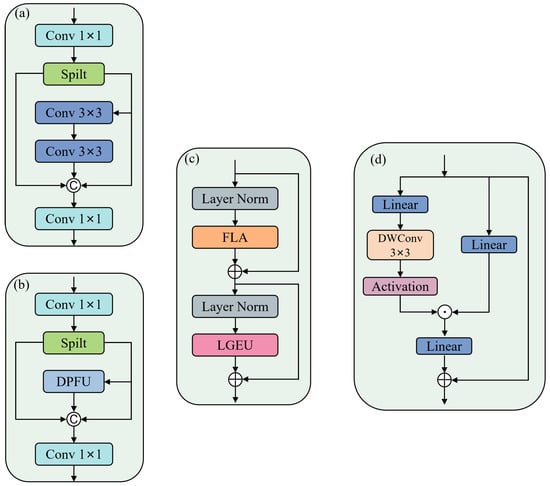
Urban fire incidents in complex built environments pose severe threats to public safety. However, the unstructured nature of urban scenes presents substantial challenges for existing detection algorithms in reliably identifying incipient flames and diffuse smoke under dynamic visual interference. To address this issue, we propose YOLO-Fire, a lightweight and high-precision detection algorithm based on YOLOv11. Specifically, a Hybrid Feature Fusion Module (HFFM) adopts a parallel dual-stream architecture to structurally decouple high-frequency flame boundaries from low-frequency smoke textures. A Dual-Scale Contextual Diffusion (DCD) mechanism establishes global contextual constraints through an additive diffusion strategy, effectively suppressing fire-like background interference while enhancing semi-transparent smoke features. In addition, a Gaussian Spatial Pyramid Pooling Fast (GSPPF) module further improves multi-scale receptive field aggregation. Evaluated on a self-constructed large-scale urban fire dataset, YOLO-Fire achieves an mAP50 of 75.7%, mAP50-95 of 53.3%, and an F1-score of 73.7%, with only 10.02 M parameters, surpassing the YOLOv11 baseline by 2.4%, 4.5%, and 2.9%, respectively. Ablation studies confirm that each proposed module contributes both independently and synergistically to the overall performance gains. Comprehensive comparisons with mainstream detectors and specialized fire detection models further demonstrate that YOLO-Fire achieves superior overall performance, outperforming YOLO-FireAD and FireSmoke-YOLO by 2.7% and 2.4% in mAP50, respectively, while maintaining lower computational complexity. Furthermore, inference evaluation on a single-core CPU achieves 17.28 FPS, validating the practical deployment potential of YOLO-Fire in resource-constrained environments and offering an efficient, lightweight solution for real-time urban fire surveillance and early warning.
Full article

Figure 1
Open AccessArticle
Stereo Radargrammetry Using Deep Learning-Based Image Matching with Fine-Tuned Model on Synthetic Aperture Radar Images
by
Koichi Ito, Tatsuya Sasayama, Shintaro Ito, Haruki Iwasa, Takafumi Aoki and Jyunpei Uemoto
Remote Sens. 2026, 18(10), 1662; https://doi.org/10.3390/rs18101662 - 21 May 2026
Abstract
Stereo radargrammetry using Synthetic Aperture Radar (SAR) images is a powerful technique for all-weather 3D topographic measurements. However, conventional methods based on local template matching often struggle to establish accurate correspondences in mountainous or vegetated areas due to severe SAR-specific geometric modulations. In
[...] Read more.
Stereo radargrammetry using Synthetic Aperture Radar (SAR) images is a powerful technique for all-weather 3D topographic measurements. However, conventional methods based on local template matching often struggle to establish accurate correspondences in mountainous or vegetated areas due to severe SAR-specific geometric modulations. In this paper, we propose a novel high-accuracy stereo radargrammetry framework by introducing RoMa, a robust Transformer-based deep learning model, for dense SAR image matching. Optical pre-trained deep learning models often suffer from a domain gap. To overcome this limitation, we develop an automated pipeline to construct a patch-based SAR image dataset using a reference Digital Surface Model (DSM) and an SAR projection model. By fine-tuning RoMa on this dataset, the model effectively adapts to the complex non-linear deformations of SAR images. Furthermore, unlike conventional methods, our approach establishes correspondences directly on the original slant-range images without requiring ground-range projection, thereby avoiding image quality degradation caused by pixel interpolation. Experimental results using airborne Pi-SAR2 images demonstrate that the fine-tuned RoMa significantly outperforms conventional methods, achieving an 82.86% matching accuracy at a 10-pixel threshold. In the 3D measurement evaluation, the proposed method achieves the lowest elevation mean error ( m) and the highest inlier ratio (74.1%), proving its effectiveness in generating accurate, dense, and wide-area 3D point clouds even in challenging terrains.
Full article
(This article belongs to the Special Issue SAR Images Processing and Analysis (3rd Edition))
►▼
Show Figures

Figure 1
Open AccessArticle
Fringe-Enhanced Phase Unwrapping Method Based on an Iterative Bayes–Sard Quadrature Kalman Filter
by
Mingsi Lin, Xiangzhen Zeng and Xiaomao Chen
Remote Sens. 2026, 18(10), 1661; https://doi.org/10.3390/rs18101661 - 21 May 2026
Abstract
Phase unwrapping plays a vital role in interferometric synthetic aperture radar (InSAR) processing. However, the presence of noise can introduce inconsistencies in phase discontinuities, giving rise to residue points that may cause unwrapping errors. To address this challenge, this paper for the first
[...] Read more.
Phase unwrapping plays a vital role in interferometric synthetic aperture radar (InSAR) processing. However, the presence of noise can introduce inconsistencies in phase discontinuities, giving rise to residue points that may cause unwrapping errors. To address this challenge, this paper for the first time applies the Bayes–Sard quadrature transform to the phase unwrapping problem and proposes an iterative Bayes–Sard quadrature Kalman filter phase unwrapping method (IBSQKF). In contrast to the conventional unscented Kalman filter algorithm, the Bayes–Sard moment transform can quantify the additional uncertainty introduced by quadrature errors. Through integration with the proposed iterative strategy, it enables more accurate calibration of state estimation and effectively reduces the root mean square error. To further enhance unwrapping accuracy, a multi-level and multi-scale feature fusion neural network (PFTNet) is developed as a pre-filtering module to independently process the real and imaginary components of the complex interferometric phase representation, which can effectively enhance the clarity of the interferometric fringes. By integrating PFTNet with IBSQKF, a complete phase unwrapping framework (PFT-IBSQKF) is constructed to further improve unwrapping accuracy. Experiments on both simulated and real data demonstrate that IBSQKF can reliably restore phase continuity, while PFT-IBSQKF can further reduce unwrapping errors, especially in low signal-to-noise-ratio or fringe-blurred scenarios. Despite the introduction of the iterative strategy, the proposed framework still maintains an acceptable computational cost while achieving high unwrapping accuracy.
Full article
(This article belongs to the Special Issue Advances in InSAR Processing: Algorithmic Developments and Diverse Applications)
►▼
Show Figures

Figure 1
Open AccessArticle
Maize LAI Retrieval Using PointNet++ and Transfer Learning with Integrated 3D Radiative Transfer Modeling and LiDAR Point Clouds
by
Qiqi Li, Shengbo Chen, Liang Cui, Yaqi Zhang, Hao Chen, Jinchen Zhu, Menghan Wu, Aonan Zhang and Jiaqi Yang
Remote Sens. 2026, 18(10), 1660; https://doi.org/10.3390/rs18101660 - 21 May 2026
Abstract
Accurately estimating leaf area index (LAI) is vital for evaluating crop growth and predicting yields. Conventional approaches, however, often struggle due to the limited representativeness of available data and the complex structure of plant canopies, which reduce their reliability across diverse canopy architectures
[...] Read more.
Accurately estimating leaf area index (LAI) is vital for evaluating crop growth and predicting yields. Conventional approaches, however, often struggle due to the limited representativeness of available data and the complex structure of plant canopies, which reduce their reliability across diverse canopy architectures and observation conditions. To overcome these challenges, this work introduces an LAI retrieval framework that combines a three-dimensional radiative transfer model (3D RTM) with deep learning techniques. Representative 3D maize canopy scenarios were generated using the LESS model, producing synthetic LiDAR point clouds constrained by realistic structural parameters. A deep learning model based on PointNet++ was trained, and transfer learning (TL) was employed to facilitate knowledge transfer from simulated to actual measured data. The TL-enhanced model demonstrated significant improvement, with R2 rising from 0.537 to 0.842 and RMSE dropping from 0.541 to 0.288 m2·m−2. Moreover, retrieval performance was notably affected by scanning mode, angle, and stem diameter, achieving optimal results under TLS acquisition, moderate scanning angles, and intermediate stem widths. These findings suggest that integrating 3D RTM-generated synthetic point clouds with transfer learning is an effective strategy for enhancing the robustness and generalization of LiDAR-based LAI retrieval.
Full article
(This article belongs to the Special Issue Advanced Quantitative Remote Sensing for Sustainable Agriculture and Vegetation: From Multi-Sensor Fusion to AI-Driven Global Food Security)
►▼
Show Figures

Figure 1
Open AccessTechnical Note
First Light Capabilities of UVSQ-SAT NG NanoCam: Preliminary Limb Temperature Retrieval from a CubeSat Imager
by
Pedro Da Costa Louro, Mustapha Meftah, Philippe Keckhut, Christophe Dufour, André-Jean Vieau, Alain Hauchecorne, Mathieu Ratynski and Antoine Mangin
Remote Sens. 2026, 18(10), 1659; https://doi.org/10.3390/rs18101659 - 21 May 2026
Abstract
This study assesses the technical feasibility of using polar orbiting satellite constellations to generate temperature profiles in the middle atmosphere, based on image analysis from the UVSQ-Sat NG nanosatellite. We first identified the phenomena influencing the temperature of this layer of the atmosphere,
[...] Read more.
This study assesses the technical feasibility of using polar orbiting satellite constellations to generate temperature profiles in the middle atmosphere, based on image analysis from the UVSQ-Sat NG nanosatellite. We first identified the phenomena influencing the temperature of this layer of the atmosphere, specifying their amplitudes and spatio-temporal resolutions. We then present the UVSQ-Sat NG nanosatellite and its Nanocam instrument, whose images of the Earth’s limb served as the basis for our processing. Finally, we detail the processing methodology, demonstrating its applicability to any image of the Earth’s limb acquired in the spectral range from near-UV to near-IR, subject to the following strict conditions: a measurement dynamic range greater than 1000 and rigorous control of instrumental noise. This approach paves the way for continuous, global monitoring of the middle atmosphere, which is essential for improving climate and weather models.
Full article
(This article belongs to the Special Issue Satellite Observation of Middle and Upper Atmospheric Dynamics)
►▼
Show Figures

Figure 1
Open AccessArticle
Dynamic World Shannon Entropy as a Scale-Sensitive Indicator of Surface Urban Heat Island Intensity: Evidence from Seven Romanian Cities
by
Zsolt Magyari-Sáska and Ionel Haidu
Remote Sens. 2026, 18(10), 1658; https://doi.org/10.3390/rs18101658 - 21 May 2026
Abstract
►▼
Show Figures
Surface urban heat island intensity is shaped not only by land-cover composition but also by the spatial heterogeneity of urban surfaces. This study evaluates whether Shannon entropy derived from Dynamic World class probabilities can serve as a robust indicator of pointwise SUHI intensity
[...] Read more.
Surface urban heat island intensity is shaped not only by land-cover composition but also by the spatial heterogeneity of urban surfaces. This study evaluates whether Shannon entropy derived from Dynamic World class probabilities can serve as a robust indicator of pointwise SUHI intensity across seven major Romanian cities. Summer daytime Landsat 8/9 observations for 2021–2025 were harmonized into multi-year median land surface temperature composites, while Dynamic World probabilities were used to compute normalized Shannon entropy at 90, 150, 300, and 600 m aggregation windows. SUHI was defined relative to a rural reference whose delineation was examined through a multi-parameter sensitivity analysis, after which entropy–SUHI relationships were modeled using generalized additive models with and without an additional spatial smooth. Across all seven cities, the entropy–SUHI relationship was consistently negative, with higher entropy values tending to be associated with lower local thermal excess. The best-supported models were usually obtained at 150 m and more broadly within the 150–300 m range, while very coarse aggregation weakened performance. Spatially adjusted models explained 57.2–82.4% of SUHI deviance, showing that entropy is consistently associated with a stable but partial component of intra-urban thermal variability. Alternative tied-best rural delineations mainly shifted the SUHI baseline and left the fitted entropy response essentially unchanged. Our findings support probability-based entropy as a reliable, scale-sensitive descriptor of urban surface mixture relevant to intra-urban thermal patterning across diverse geographical and climatic settings.
Full article

Figure 1
Open AccessArticle
What Makes the Lower Urban Land Coverage City a Deeper Ozone Trap: Implications from a Case Study in the Sichuan Basin, Southwest China
by
Chenxi Wang, Yang Liu, Weijia Wang, Liantang Deng, Xiaofei Sun, Gang Liu, Huaiyong Shao and Zheng Jin
Remote Sens. 2026, 18(10), 1657; https://doi.org/10.3390/rs18101657 - 21 May 2026
Abstract
The urban–rural gradient of surface ozone concentration is closely associated with urban scale and has been widely reported in megacities globally. However, in the Sichuan Basin of southwestern China, a paradoxical asymmetric pattern between the ozone gradient and the physical urban footprint has
[...] Read more.
The urban–rural gradient of surface ozone concentration is closely associated with urban scale and has been widely reported in megacities globally. However, in the Sichuan Basin of southwestern China, a paradoxical asymmetric pattern between the ozone gradient and the physical urban footprint has emerged. By integrating multi-source satellite observations (e.g., TROPOMI), reanalysis data (ERA5-Land), and a concentric-ring spatial gradient analysis, we quantify a dipole-like urban surface ozone trap pattern in two megacities (Chengdu and Chongqing) from 2013 to 2019. We found that the urban–rural ozone gradients in Chongqing were substantially steeper than those in Chengdu, despite Chongqing’s smaller physical urban footprint. Specifically, in winter, the maximum daily average 8 h ozone level in the urban core drops to 27.5 μg m−3 in Chongqing and 47.9 μg m−3 in Chengdu, with outward radial increasing rates of 6.49% and 1.88% per 10 km, respectively. Conversely, the absolute nitrogen dioxide level in Chengdu is higher, highlighting an asymmetric titration behavior between the two cities. Regarding the chemical regime, analysis of the ratio (β) of nitrogen dioxide to formaldehyde reveals that Chongqing’s core operates under a more severe VOC-limited environment (β is 2.53 and radial gradient is −6.77% per 10 km) compared to Chengdu (β is 2.43 and gradient is −5.34% per 10 km). Furthermore, vertical cross-section analyses indicate that Chongqing’s deep-valley topography induces severe boundary layer compression and aerodynamic stagnation. Thus, rather than acting independently, these localized meteorological constraints function as crucial physical modulators that trap precursor emissions and exacerbate the non-linear chemical titration. This study elucidates how synergistic interactions between basin topography, physical urban footprints, and atmospheric chemistry shape localized ozone traps, providing a referable perspective for assessing complex urban atmospheric environments.
Full article
(This article belongs to the Special Issue Remote Sensing Data Refinement and Utilization for Advanced Atmospheric Observations)
►▼
Show Figures

Figure 1
Open AccessArticle
DAAINet: Domain Adversarial Anti-Interference Network for Bi-Temporal Change Detection
by
Jiyuan Yang, Kun Gao, Baiyang Hu, Zefeng Zhang, Jingyi Wang, Yuqing He and Yunpeng Feng
Remote Sens. 2026, 18(10), 1656; https://doi.org/10.3390/rs18101656 - 21 May 2026
Abstract
►▼
Show Figures
Bi-temporal change detection (CD) in remote sensing (RS) aims to map image pairs at different times into a shared feature space to discriminate variant regions effectively. However, factors such as cloud interference may disrupt the feature distribution of RS images and cause pseudo-change
[...] Read more.
Bi-temporal change detection (CD) in remote sensing (RS) aims to map image pairs at different times into a shared feature space to discriminate variant regions effectively. However, factors such as cloud interference may disrupt the feature distribution of RS images and cause pseudo-change problems. Existing public change detection datasets also pay less attention to such pseudo-change phenomena. To address the pseudo-change problems of CD applications, we propose a Domain Adversarial Anti-Interference Change Detection Network (DAAINet), which uses ResNet to extract multi-scale features from the original input images. Semantic features are then obtained and fed into a subsequent graph convolution module after soft clustering, by introducing a domain adversarial structure to align the feature space in RS images. In the graph convolution module, the association of node context is utilized to predict the adjacency relationship between objects. We collected data and constructed a real-world dataset called “Cloud Interference Change Detection” (CICD), which focuses on real bi-temporal remote sensing image data containing cloud interference and includes pseudo-changes caused by factors such as the presence of temporary objects and illumination changes. Experimental results demonstrate that our method is more robust and efficient compared to other state-of-the-art methods on two public CD datasets, and achieves state-of-the-art performance on the noise-corrupted CICD dataset, surpassing prior methods by up to 5.67%p in IoU and 1.42%p in recall.
Full article

Figure 1
Open AccessCorrection
Correction: Khan, M.; Chen, R. Assessing the Impact of Land Use and Land Cover Change on Environmental Parameters in Khyber Pakhtunkhwa, Pakistan: A Comprehensive Study and Future Projections. Remote Sens. 2025, 17, 170
by
Mehjabeen Khan and Ruishan Chen
Remote Sens. 2026, 18(10), 1655; https://doi.org/10.3390/rs18101655 - 21 May 2026
Abstract
Error in Affiliation(s) and Email Address [...]
Full article
(This article belongs to the Special Issue Advances of Remote Sensing in Land Cover and Land Use Mapping)
Open AccessArticle
Digital Landscapes: Assessing Fire Severity and Its Drivers Using Remote Sensing and Google Earth Engine Based on dNBR and NPP Indicators
by
Dana El Khatib, Georgio Kallas, Joseph Bechara, Micheline Wehbe and Jean Stephan
Remote Sens. 2026, 18(10), 1654; https://doi.org/10.3390/rs18101654 - 20 May 2026
Abstract
Wildfires are an increasingly recurrent disturbance in Mediterranean forest landscapes, yet fire severity assessment remains limited in data-scarce regions such as Lebanon. This study aims to assess wildfire severity patterns and identify the main environmental drivers influencing fire severity across the forests of
[...] Read more.
Wildfires are an increasingly recurrent disturbance in Mediterranean forest landscapes, yet fire severity assessment remains limited in data-scarce regions such as Lebanon. This study aims to assess wildfire severity patterns and identify the main environmental drivers influencing fire severity across the forests of Akkar, northern Lebanon, within a Digital Landscapes framework. Fire severity was mapped using the Differenced Normalized Burn Ratio (dNBR) derived from multi-temporal Landsat-8 imagery (2013–2024) processed in Google Earth Engine. Vegetation productivity was assessed through annual Net Primary Productivity (NPP), while topographic variables (elevation, slope, and aspect) were derived from a Digital Elevation Model. The results reveal heterogeneous fire severity patterns over the study period and pronounced spatial variability in NPP, with no consistent linear relationship between productivity and fire severity. Principal Component Analysis (PCA) was applied to explore multivariate relationships between fire severity, productivity, and terrain. PCA results show that the first two components explain 77.4% of the total variance, indicating that fire severity is primarily structured by topographic factors, particularly elevation and solar exposure, while vegetation productivity plays a secondary role. These findings highlight the dominant influence of terrain on wildfire severity in Mediterranean mountainous landscapes, and demonstrate the value of integrating remote sensing, cloud-based platforms, and multivariate analysis for fire assessment in data-scarce regions. The study contributes to the advancement of Digital Landscapes approaches by providing a scalable and data-driven framework for understanding fire dynamics and supporting future landscape management and risk assessment strategies.
Full article
(This article belongs to the Special Issue Advances in Remote Sensing for Burned Area Mapping)
►▼
Show Figures

Figure 1
Journal Menu
► ▼ Journal Menu-
- Remote Sensing Home
- Aims & Scope
- Editorial Board
- Reviewer Board
- Topical Advisory Panel
- Photography Exhibition
- Instructions for Authors
- Special Issues
- Topics
- Sections & Collections
- Article Processing Charge
- Indexing & Archiving
- Editor’s Choice Articles
- Most Cited & Viewed
- Journal Statistics
- Journal History
- Journal Awards
- Society Collaborations
- Conferences
- Editorial Office
Journal Browser
► ▼ Journal BrowserHighly Accessed Articles
Latest Books
E-Mail Alert
News
Topics
Topic in
Sustainability, Buildings, Sensors, Remote Sensing, Land, Climate, Atmosphere
Advances in Low-Carbon, Climate-Resilient, and Sustainable Built Environment
Topic Editors: Baojie He, Stephen Siu Yu Lau, Deshun Zhang, Andreas Matzarakis, Fei GuoDeadline: 25 May 2026
Topic in
Atmosphere, Forests, Geosciences, Hydrology, Land, Remote Sensing, Sustainability
Karst Environment and Global Change—Second Edition
Topic Editors: Xiaoyong Bai, Yongjun Jiang, Jian Ni, Xubo Gao, Yuemin Yue, Jiangbo Gao, Junbing Pu, Hu Ding, Qiong Xiao, Zhicai ZhangDeadline: 16 June 2026
Topic in
Aerospace, Drones, Electronics, Remote Sensing, Sensors, Signals
Civil and Public Domain Applications of Unmanned Aviation 2025
Topic Editors: Kimon P. Valavanis, Nikolaos VitzilaiosDeadline: 30 June 2026
Topic in
Applied Sciences, Information, Remote Sensing, Signals, Symmetry, J. Imaging
Image Processing, Signal Processing and Their Applications
Topic Editors: Jun Xu, Lianbo MaDeadline: 16 July 2026
Conferences
Special Issues
Special Issue in
Remote Sensing
Advances in Estimating Aboveground Biomass Based on Multi-source Remote Sensing Data
Guest Editors: Shaobo Sun, Xufeng Wang, Kai LiuDeadline: 25 May 2026
Special Issue in
Remote Sensing
Multisource Remote Sensing Data Fusion and Applications in Vegetation Monitoring (Second Edition)
Guest Editors: Dong Liu, Jiakui Tang, Qing ZhangDeadline: 28 May 2026
Special Issue in
Remote Sensing
Monitoring and Restoration of Mining-Impacted Ecosystems Using Remote Sensing Technology
Guest Editors: Qiang Yu, Huaguo Huang, Jianbo QiDeadline: 28 May 2026
Special Issue in
Remote Sensing
Recent Advances in Remote Sensing of Soil Moisture
Guest Editors: Indishe Senanayake, Natthachet Tangdamrongsub, Bin FangDeadline: 28 May 2026
Topical Collections
Topical Collection in
Remote Sensing
Feature Papers for Section Environmental Remote Sensing
Collection Editor: Magaly Koch
Topical Collection in
Remote Sensing
The VIIRS Collection: Calibration, Validation, and Application
Collection Editors: Xi Shao, Xiaoxiong Xiong, Changyong Cao
Topical Collection in
Remote Sensing
Feature Paper Collection on Remote Sensing in Geology, Geomorphology and Hydrology Section
Collection Editors: Francesca Ardizzone, Giuseppe Casula
Topical Collection in
Remote Sensing
Sentinel-2: Science and Applications
Collection Editors: Clement Atzberger, Jadu Dash, Olivier Hagolle, Jochem Verrelst, Quinten Vanhellemont, Jordi Inglada, Tuomas Häme