What Makes the Lower Urban Land Coverage City a Deeper Ozone Trap: Implications from a Case Study in the Sichuan Basin, Southwest China
 , , ,
, , , 
Highlights
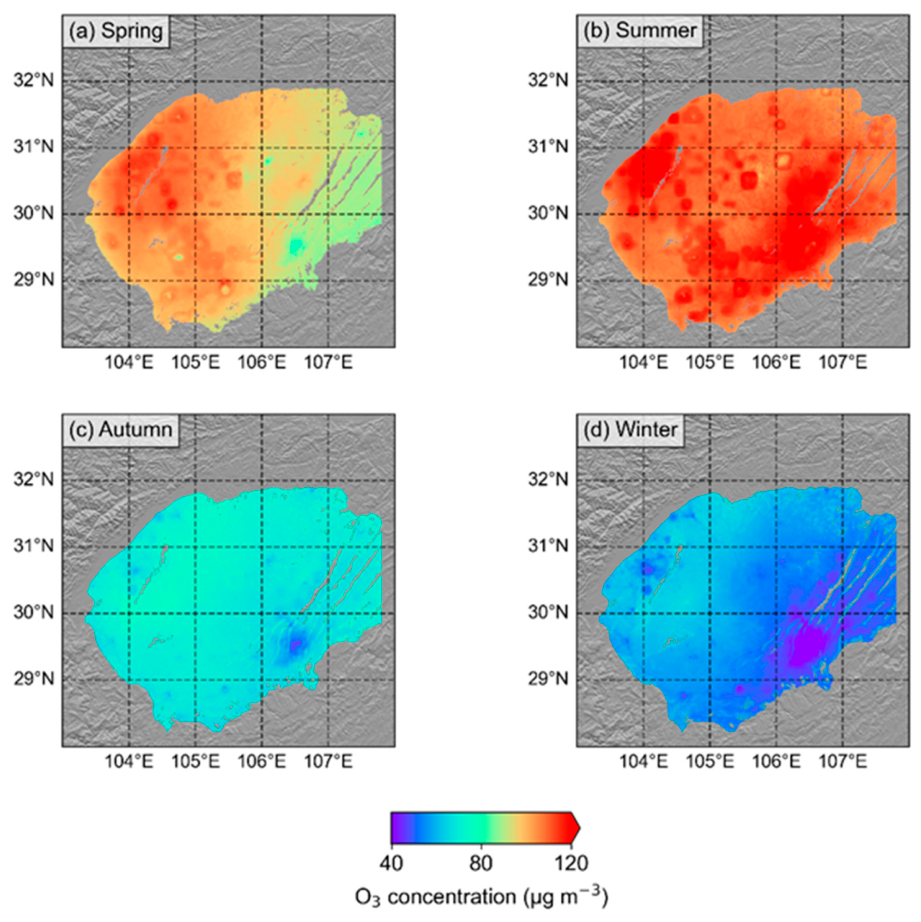
- A dipole-like spatial pattern of near-surface ozone trapping across two megacities in the Sichuan Basin is demonstrated via air quality reanalysis during 2013–2019.
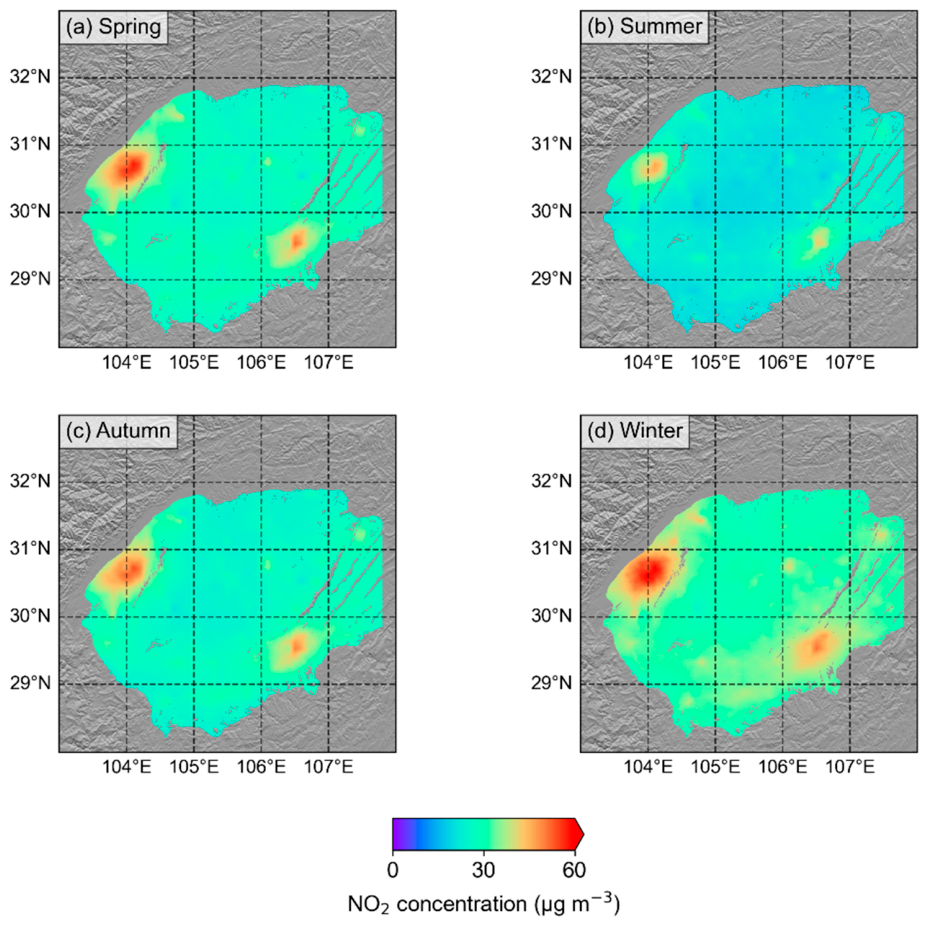
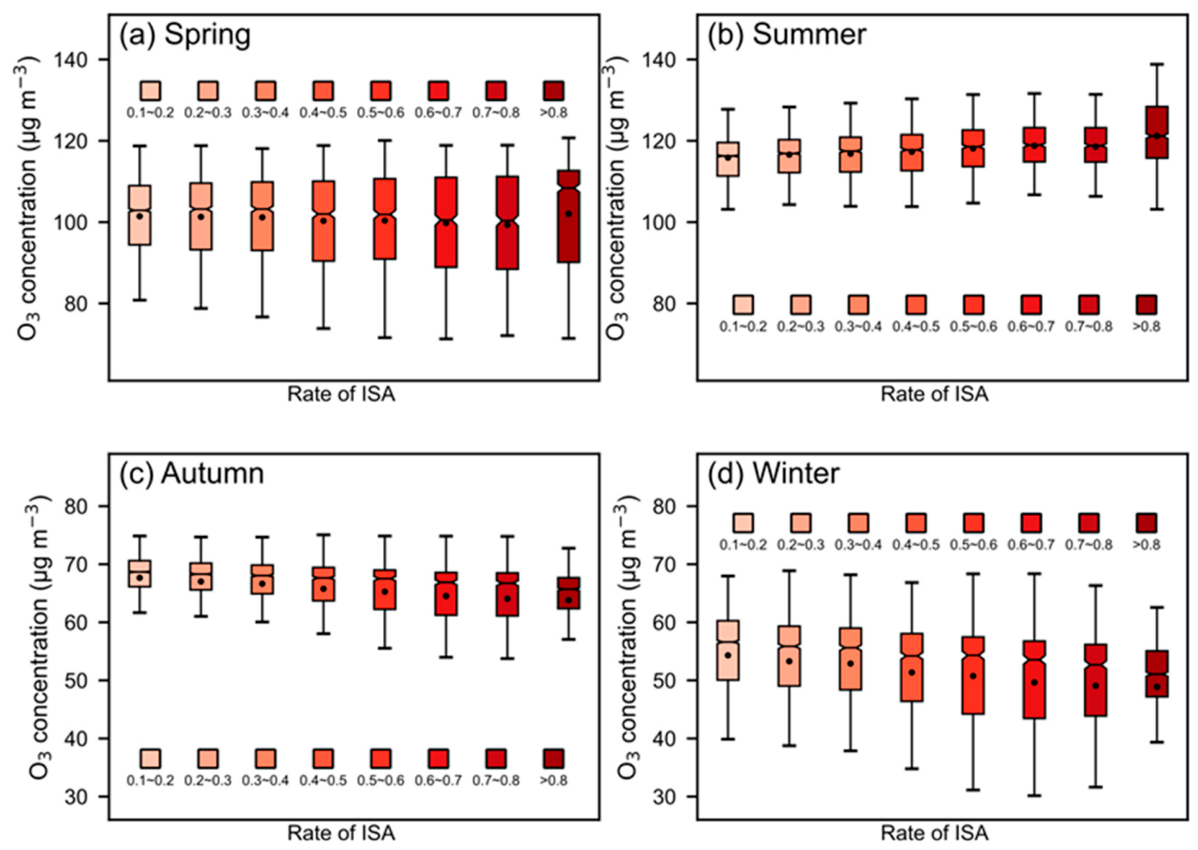
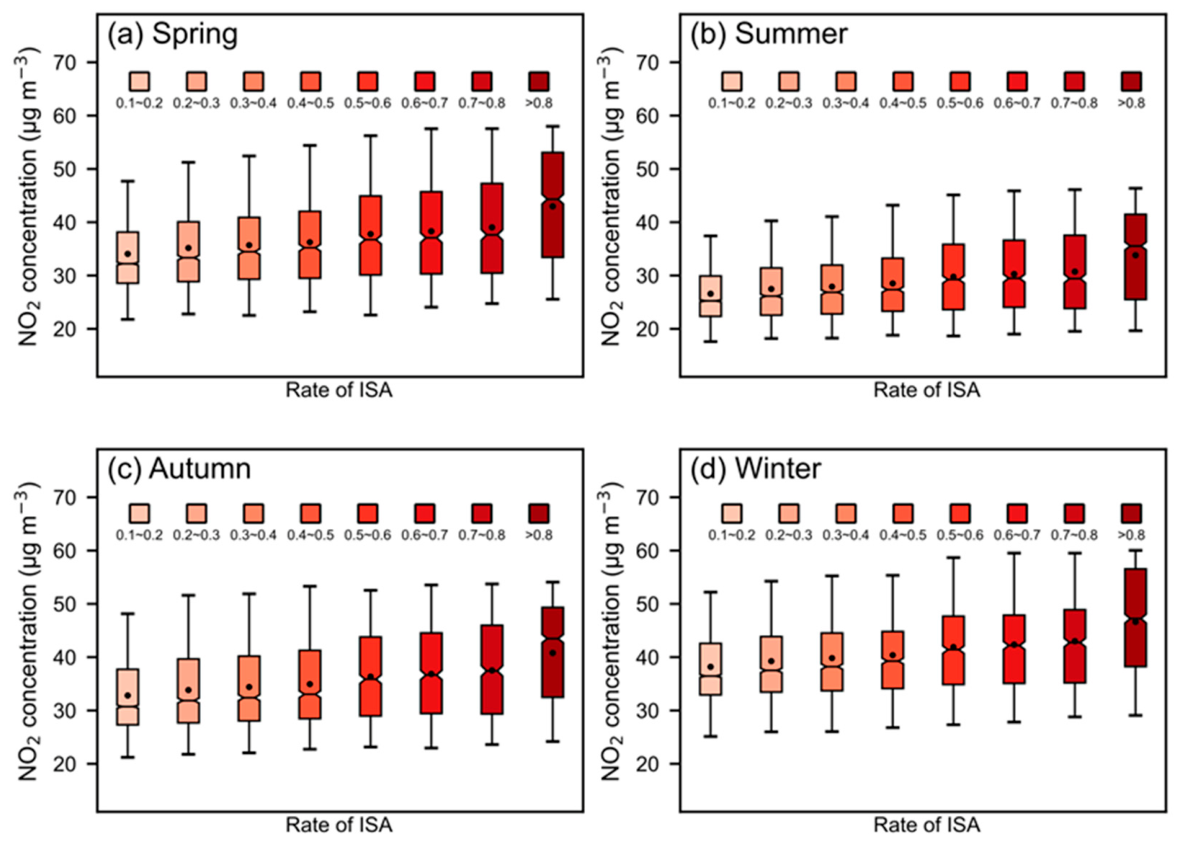
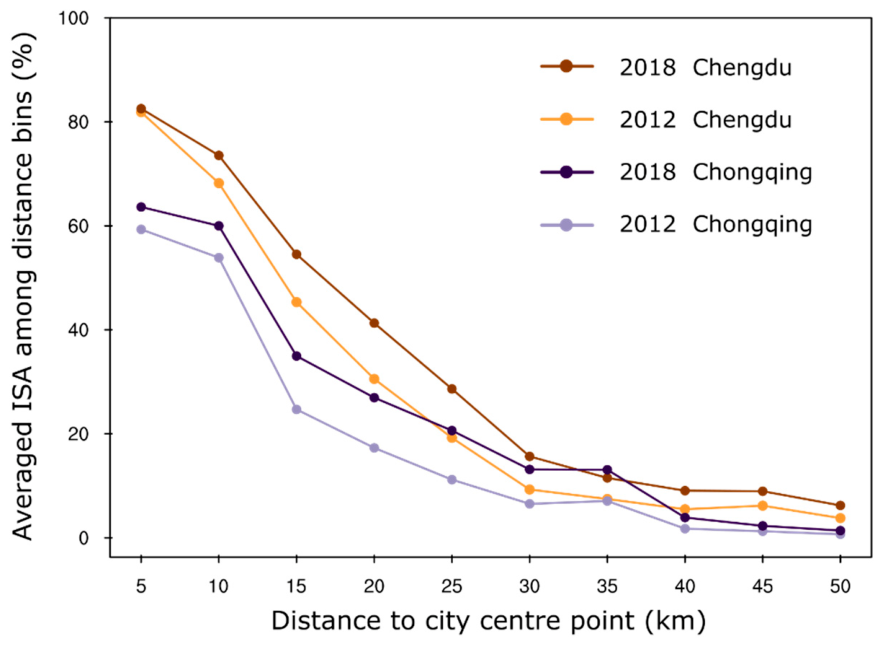
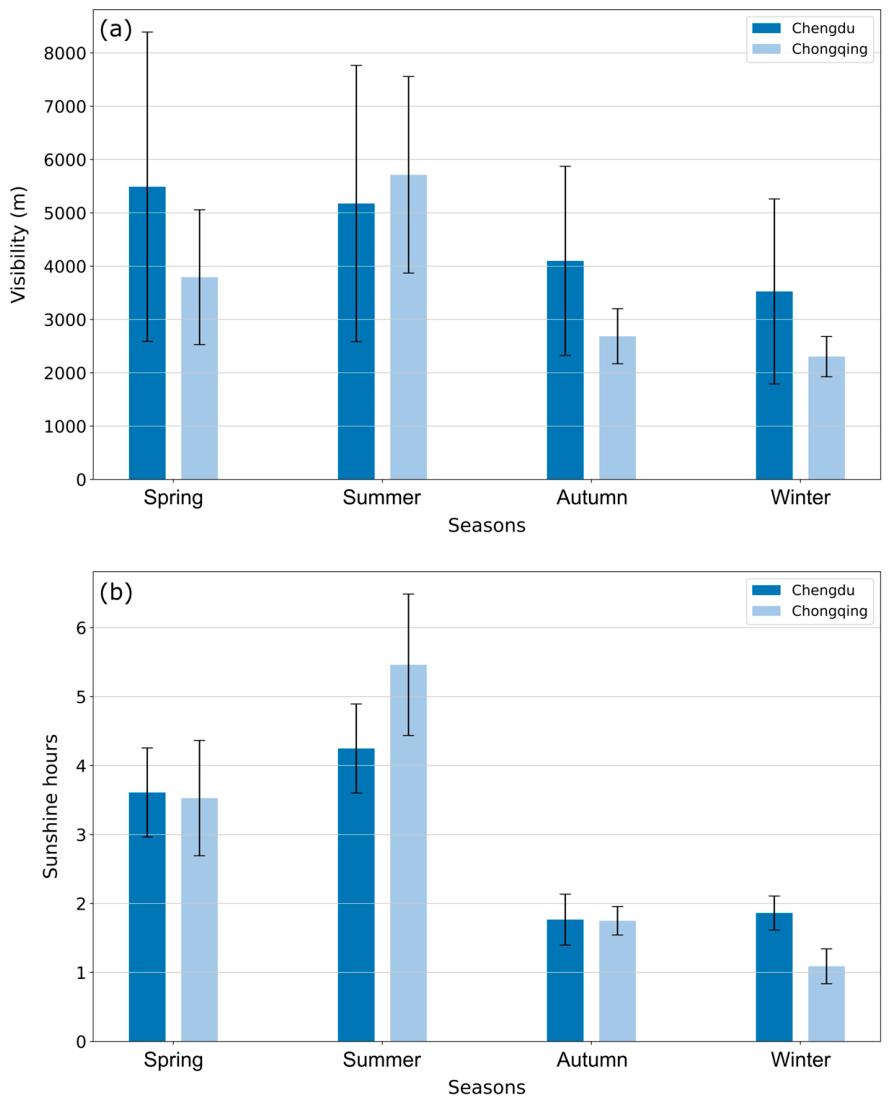
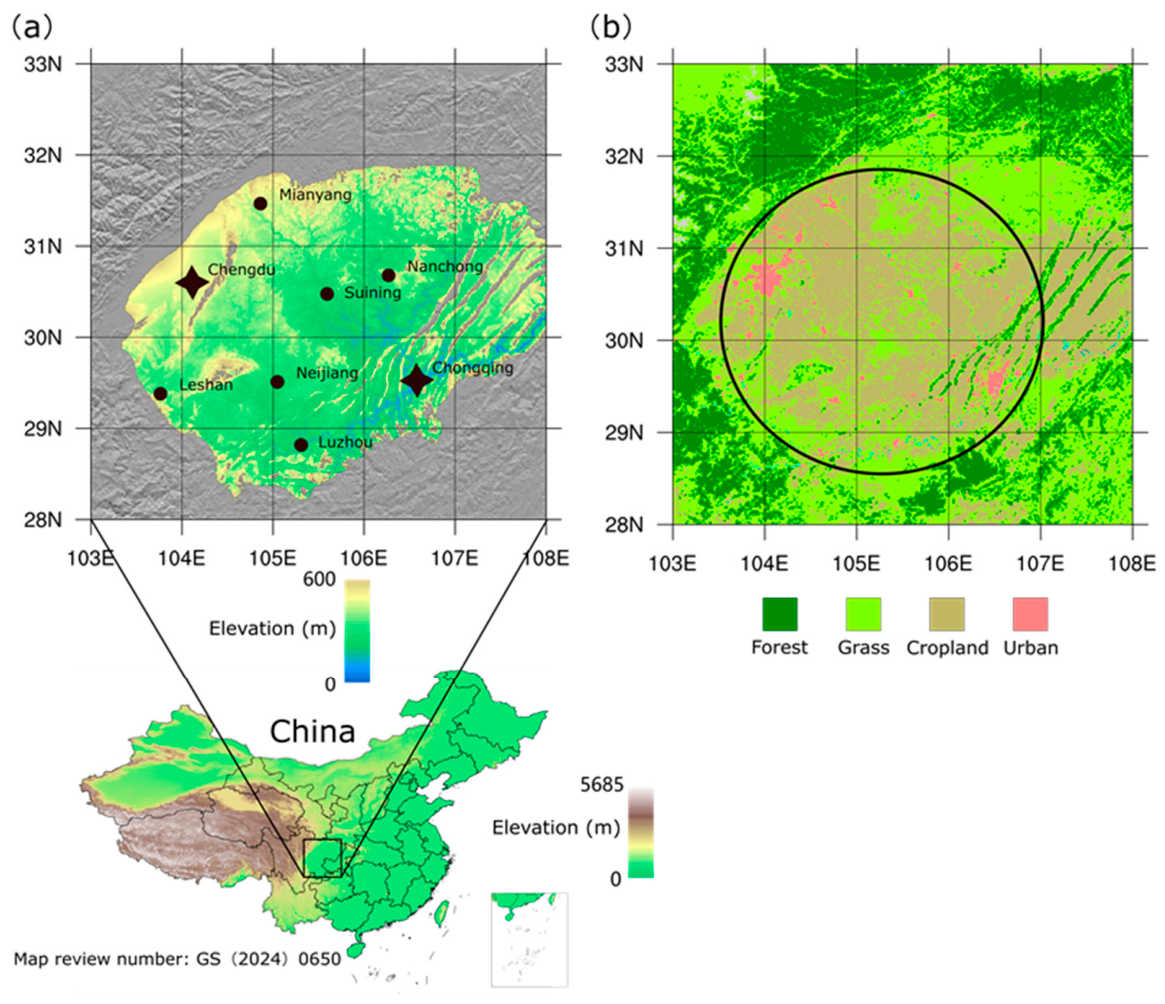
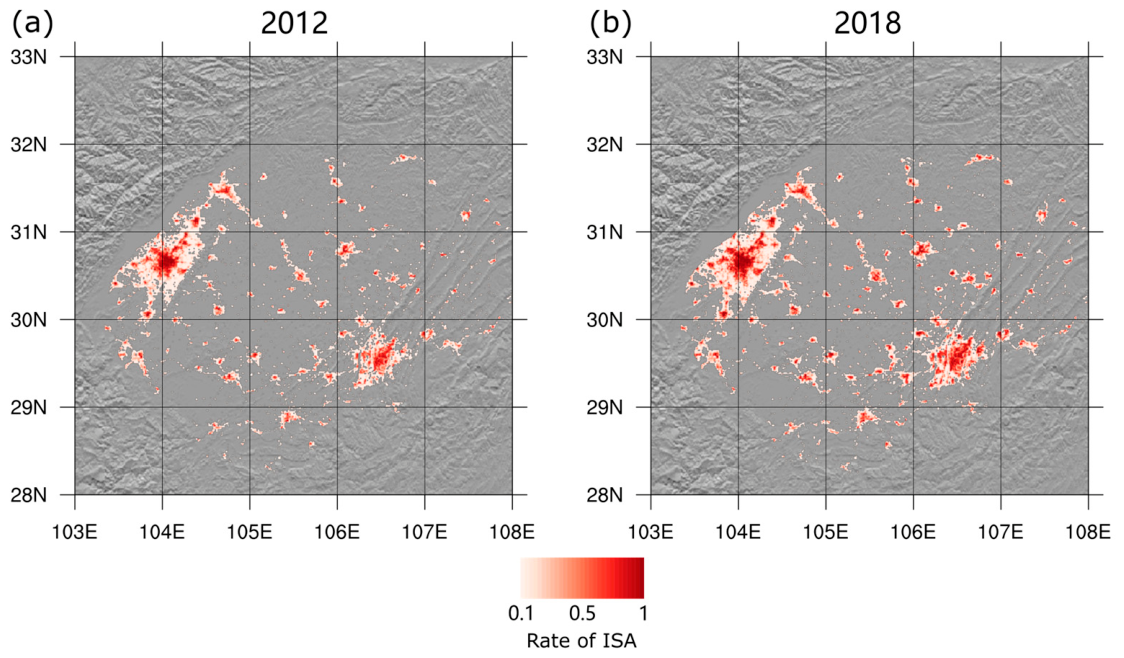
- Chongqing exhibited a deeper ozone trap compared to Chengdu despite its lower urban land cover and nitrogen dioxide levels.
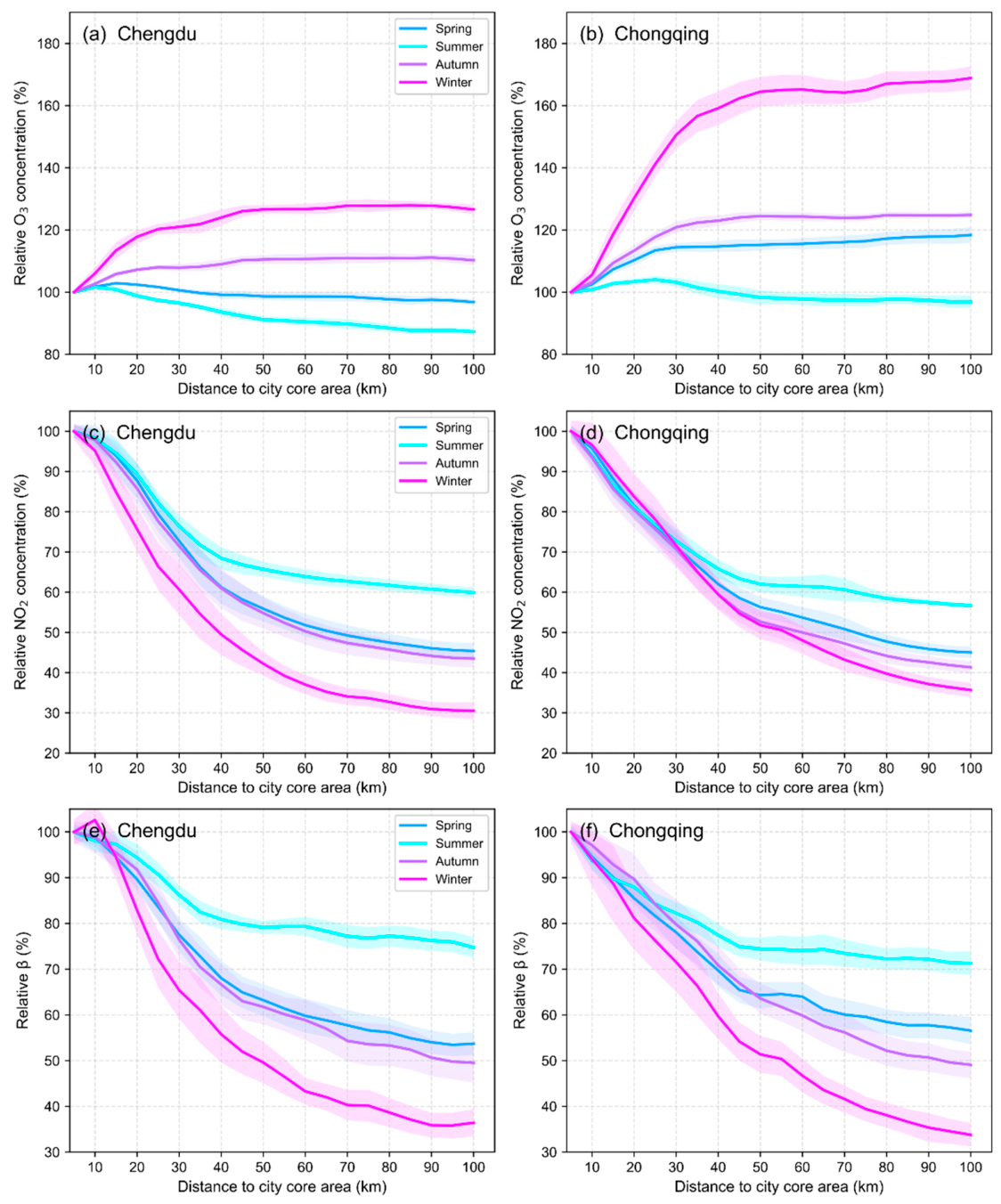
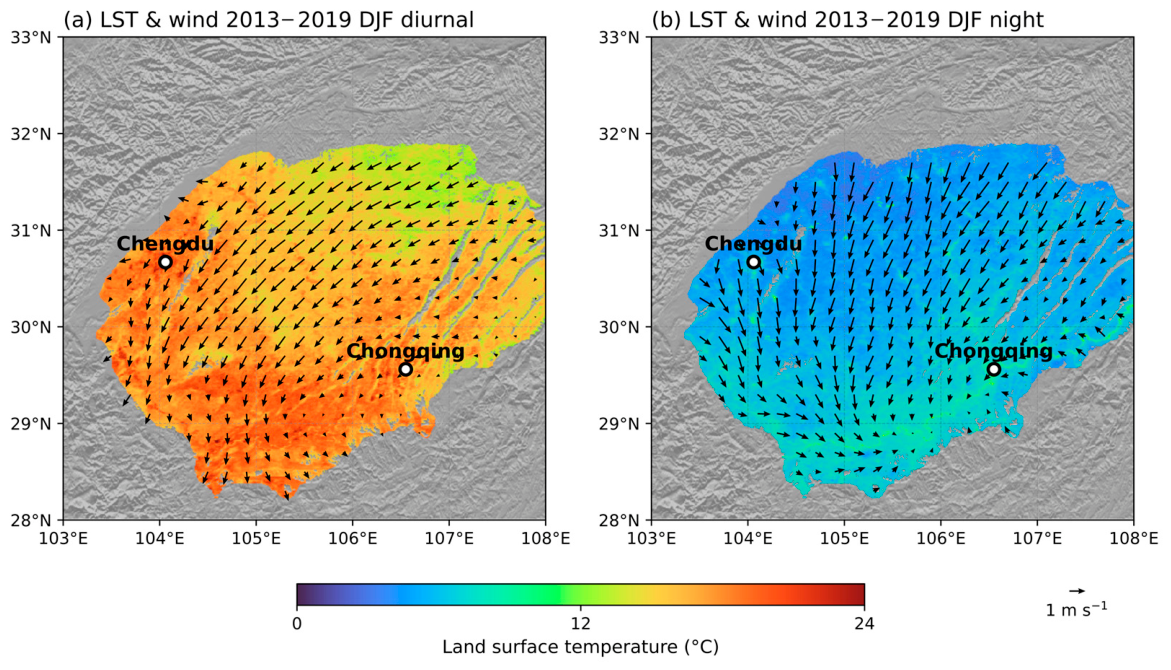
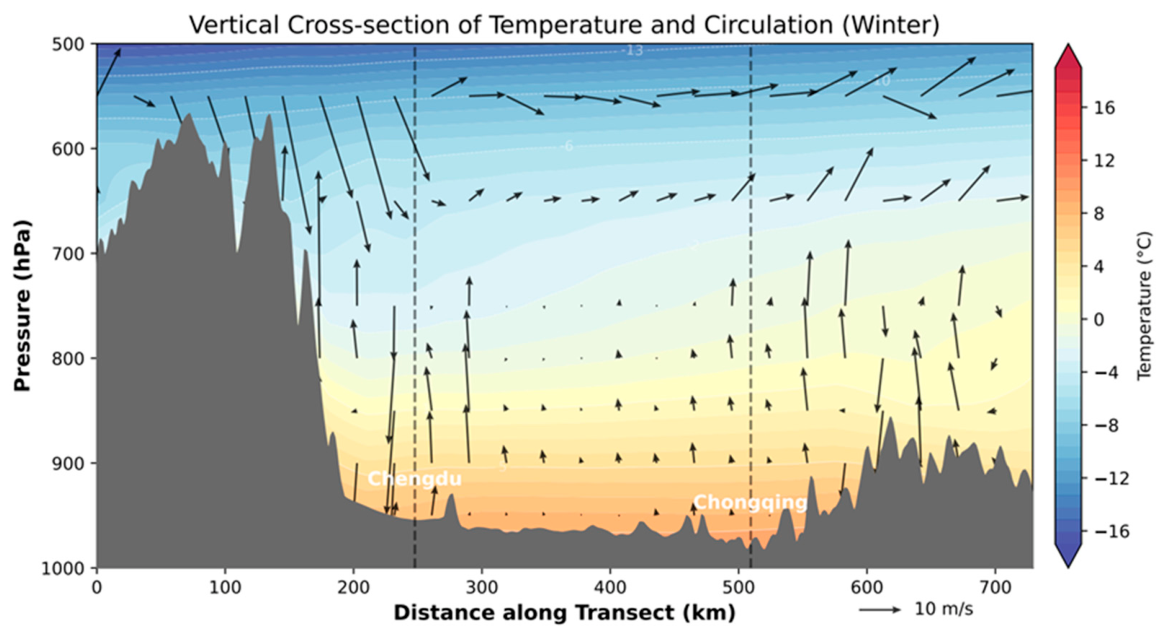
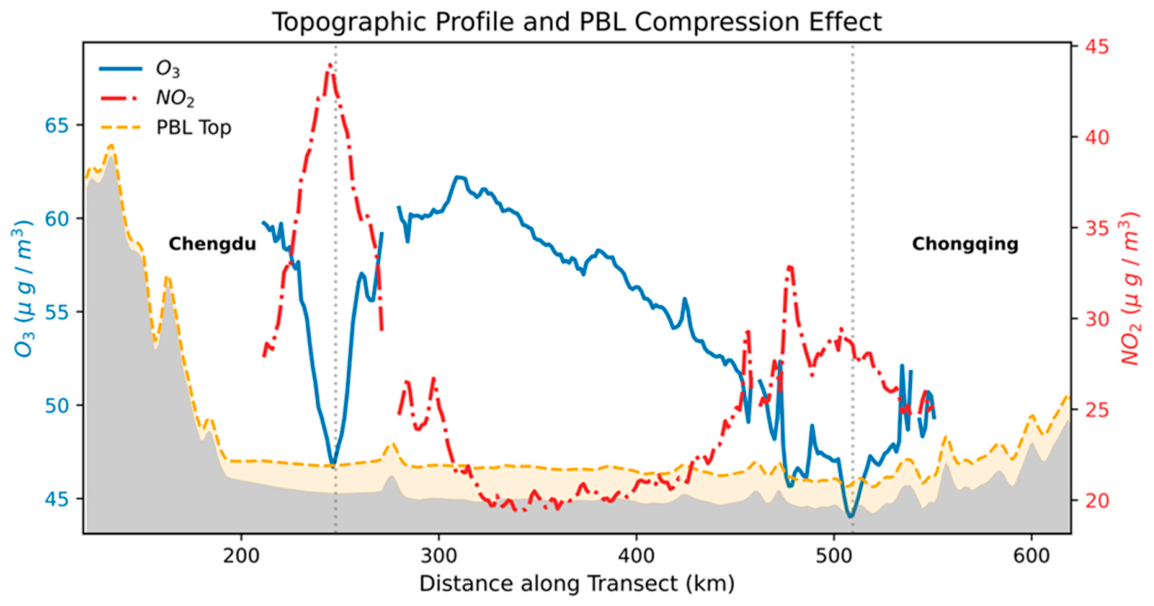
- Severe wintertime ozone traps are highly localized phenomena fundamentally constrained by basin topography and boundary layer dynamics.
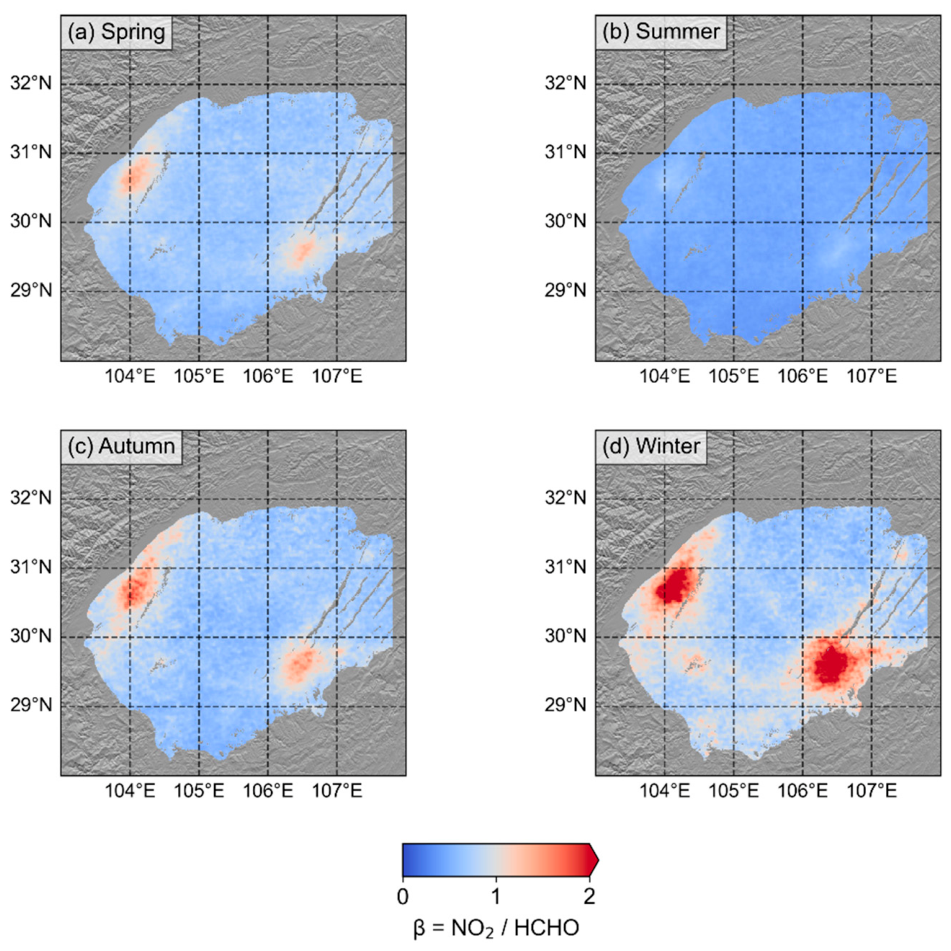
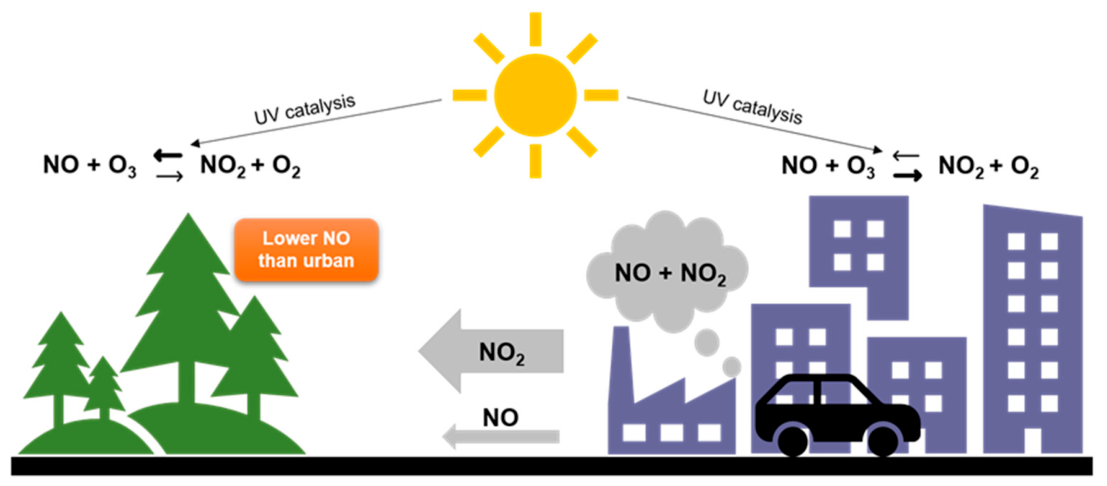
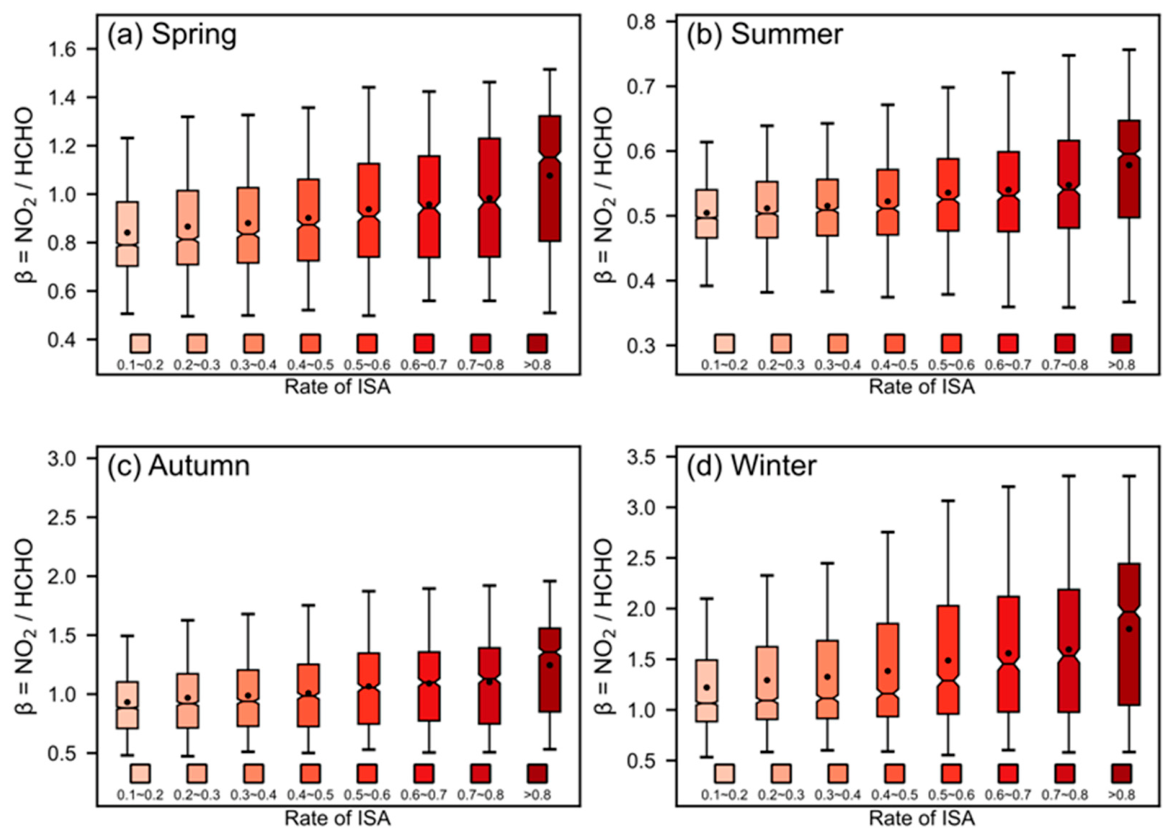
- Topographically induced aerodynamic stagnation acts as a crucial physical modulator, synergistically exacerbating the chemical NO titration effect.
Abstract
1. Introduction
2. Materials and Methods
2.1. Study Area
2.2. Evaluation of Urban Land Cover Level
2.3. Datasets for Air Pollutants
2.4. Meteorological Datasets
2.5. Analysis of the Urban–Rural Gradients
3. Results
3.1. Response of Pollutant Concentration to Urban Land Cover Level
3.2. Characterization of the Urban Ozone Trap
3.3. Possible Causes for the Ozone Trap Disparity in Strength
4. Discussion
5. Conclusions
Supplementary Materials
Author Contributions
Funding
Data Availability Statement
Acknowledgments
Conflicts of Interest
Abbreviations
| VOCs | Volatile organic compounds |
| GAIA | Global annual impervious area GAIA |
| ISA | Impervious surface area |
| LST | Land surface temperature |
| MDA8 | Maximum daily average 8 h |
References
- Sillman, S. The relation between ozone, NOx and hydrocarbons in urban and polluted rural environments. Atmos. Environ. 1999, 33, 1821–1845. [Google Scholar] [CrossRef]
- Kleinman, L.I. Low and high NOx tropospheric photochemistry. J. Geophys. Res. Atmos. 1994, 99, 16831–16838. [Google Scholar] [CrossRef]
- Lelieveld, J.; Dentener, F.J. What controls tropospheric ozone? J. Geophys. Res. Atmos. 2000, 105, 3531–3551. [Google Scholar] [CrossRef]
- Murphy, J.G.; Day, D.A.; Cleary, P.A.; Wooldridge, P.J.; Millet, D.B.; Goldstein, A.H.; Cohen, R.C. The weekend effect within and downwind of Sacramento—Part 1: Observations of ozone, nitrogen oxides, and VOC reactivity. Atmos. Chem. Phys. 2007, 7, 5327–5339. [Google Scholar] [CrossRef]
- Mickley, L.J.; Murti, P.P.; Jacob, D.J.; Logan, J.A.; Koch, D.M.; Rind, D. Radiative forcing from tropospheric ozone calculated with a unified chemistry-climate model. J. Geophys. Res. Atmos. 1999, 104, 30153–30172. [Google Scholar] [CrossRef]
- Unger, N.; Shindell Drew, T.; Koch Dorothy, M.; Streets David, G. Cross influences of ozone and sulfate precursor emissions changes on air quality and climate. Proc. Natl. Acad. Sci. USA 2006, 103, 4377–4380. [Google Scholar] [CrossRef]
- Monks, P.S.; Archibald, A.T.; Colette, A.; Cooper, O.; Coyle, M.; Derwent, R.; Fowler, D.; Granier, C.; Law, K.S.; Mills, G.E.; et al. Tropospheric ozone and its precursors from the urban to the global scale from air quality to short-lived climate forcer. Atmos. Chem. Phys. 2015, 15, 8889–8973. [Google Scholar] [CrossRef]
- Liu, W.; Hegglin, M.I.; Checa-Garcia, R.; Li, S.; Gillett, N.P.; Lyu, K.; Zhang, X.; Swart, N.C. Stratospheric ozone depletion and tropospheric ozone increases drive Southern Ocean interior warming. Nat. Clim. Change 2022, 12, 365–372. [Google Scholar] [CrossRef]
- Anenberg Susan, C.; Schwartz, J.; Shindell, D.; Amann, M.; Faluvegi, G.; Klimont, Z.; Janssens-Maenhout, G.; Pozzoli, L.; Van Dingenen, R.; Vignati, E.; et al. Global Air Quality and Health Co-benefits of Mitigating Near-Term Climate Change through Methane and Black Carbon Emission Controls. Environ. Health Perspect. 2012, 120, 831–839. [Google Scholar] [CrossRef]
- Tai, A.P.K.; Martin, M.V.; Heald, C.L. Threat to future global food security from climate change and ozone air pollution. Nat. Clim. Change 2014, 4, 817–821. [Google Scholar] [CrossRef]
- Lelieveld, J.; Evans, J.S.; Fnais, M.; Giannadaki, D.; Pozzer, A. The contribution of outdoor air pollution sources to premature mortality on a global scale. Nature 2015, 525, 367–371. [Google Scholar] [CrossRef] [PubMed]
- Yue, X.; Unger, N.; Harper, K.; Xia, X.; Liao, H.; Zhu, T.; Xiao, J.; Feng, Z.; Li, J. Ozone and haze pollution weakens net primary productivity in China. Atmos. Chem. Phys. 2017, 17, 6073–6089. [Google Scholar] [CrossRef]
- Wang, T.; Xue, L.; Brimblecombe, P.; Lam, Y.F.; Li, L.; Zhang, L. Ozone pollution in China: A review of concentrations, meteorological influences, chemical precursors, and effects. Sci. Total Environ. 2017, 575, 1582–1596. [Google Scholar] [CrossRef]
- Lu, X.; Hong, J.; Zhang, L.; Cooper, O.R.; Schultz, M.G.; Xu, X.; Wang, T.; Gao, M.; Zhao, Y.; Zhang, Y. Severe Surface Ozone Pollution in China: A Global Perspective. Environ. Sci. Technol. Lett. 2018, 5, 487–494. [Google Scholar] [CrossRef]
- Wang, Y.; Shen, L.; Wu, S.; Mickley, L.; He, J.; Hao, J. Sensitivity of surface ozone over China to 2000–2050 global changes of climate and emissions. Atmos. Environ. 2013, 75, 374–382. [Google Scholar] [CrossRef]
- Nelson, B.S.; Drysdale, W.S. Urban ozone trends in Europe and the USA (2000–2021). Atmos. Chem. Phys. 2025, 25, 16009–16026. [Google Scholar] [CrossRef]
- Yağcı, C. Linking Urban Land Use Change and Tropospheric Ozone Dynamics in a Mid-Sized City. Land 2026, 15, 456. [Google Scholar] [CrossRef]
- Zhang, X.; Zhao, L.; Cheng, M.; Wu, X.; Chen, D. Urban ozone sink inferred from surface measurements in China. J. Clean. Prod. 2020, 253, 119881. [Google Scholar] [CrossRef]
- Stasiuk, W.N.; Coffey, P.E. Rural and Urban Ozone Relationships In New York State. J. Air Pollut. Control Assoc. 1974, 24, 564–568. [Google Scholar] [CrossRef] [PubMed]
- Dueñas, C.; Fernández, M.C.; Cañete, S.; Carretero, J.; Liger, E. Analyses of ozone in urban and rural sites in Málaga (Spain). Chemosphere 2004, 56, 631–639. [Google Scholar] [CrossRef] [PubMed]
- Atkinson Richard, W.; Yu, D.; Armstrong Ben, G.; Pattenden, S.; Wilkinson, P.; Doherty Ruth, M.; Heal Mathew, R.; Anderson, H.R. Concentration–Response Function for Ozone and Daily Mortality: Results from Five Urban and Five Rural U.K. Populations. Environ. Health Perspect. 2012, 120, 1411–1417. [Google Scholar] [CrossRef]
- Im, U.; Incecik, S.; Guler, M.; Tek, A.; Topcu, S.; Unal, Y.S.; Yenigun, O.; Kindap, T.; Odman, M.T.; Tayanc, M. Analysis of surface ozone and nitrogen oxides at urban, semi-rural and rural sites in Istanbul, Turkey. Sci. Total Environ. 2013, 443, 920–931. [Google Scholar] [CrossRef] [PubMed]
- Betancourt-Odio, A.; Valencia, D.; Soffritti, M.; Budría, S. An analysis of ozone pollution by using functional data: Rural and urban areas of the Community of Madrid. Environ. Monit. Assess. 2021, 193, 401. [Google Scholar] [CrossRef] [PubMed]
- Yan, Y.; Lin, J.; Pozzer, A.; Kong, S.; Lelieveld, J. Trend reversal from high-to-low and from rural-to-urban ozone concentrations over Europe. Atmos. Environ. 2019, 213, 25–36. [Google Scholar] [CrossRef]
- Wu, K.; Wang, Y.; Qiao, Y.; Liu, Y.; Wang, S.; Yang, X.; Wang, H.; Lu, Y.; Zhang, X.; Lei, Y. Drivers of 2013–2020 ozone trends in the Sichuan Basin, China: Impacts of meteorology and precursor emission changes. Environ. Pollut. 2022, 300, 118914. [Google Scholar] [CrossRef] [PubMed]
- Zhao, S.; Yu, Y.; Yin, D.; Qin, D.; He, J.; Dong, L. Spatial patterns and temporal variations of six criteria air pollutants during 2015 to 2017 in the city clusters of Sichuan Basin, China. Sci. Total Environ. 2018, 624, 540–557. [Google Scholar] [CrossRef]
- Zhao, S.; Yu, Y.; Qin, D.; Yin, D.; Dong, L.; He, J. Analyses of regional pollution and transportation of PM2.5 and ozone in the city clusters of Sichuan Basin, China. Atmos. Pollut. Res. 2019, 10, 374–385. [Google Scholar] [CrossRef]
- Fang, C.; Tan, X.; Zhong, Y.; Wang, J. Research on the Temporal and Spatial Characteristics of Air Pollutants in Sichuan Basin. Atmosphere 2021, 12, 1504. [Google Scholar] [CrossRef]
- Ning, G.; Yim, S.H.L.; Yang, Y.; Gu, Y.; Dong, G. Modulations of synoptic and climatic changes on ozone pollution and its health risks in mountain-basin areas. Atmos. Environ. 2020, 240, 117808. [Google Scholar] [CrossRef]
- Liao, T.; Gui, K.; Jiang, W.; Wang, S.; Wang, B.; Zeng, Z.; Che, H.; Wang, Y.; Sun, Y. Air stagnation and its impact on air quality during winter in Sichuan and Chongqing, southwestern China. Sci. Total Environ. 2018, 635, 576–585. [Google Scholar] [CrossRef]
- Cao, B.; Wang, X.; Ning, G.; Yuan, L.; Jiang, M.; Zhang, X.; Wang, S. Factors influencing the boundary layer height and their relationship with air quality in the Sichuan Basin, China. Sci. Total Environ. 2020, 727, 138584. [Google Scholar] [CrossRef] [PubMed]
- Danielson, J.J.; Gesch, D.B. Global Multi-Resolution Terrain Elevation Data 2010 (GMTED2010); U.S. Geological Survey: Reston, VA, USA, 2011; p. 26.
- Friedl, M.A.; Sulla-Menashe, D. MCD12Q1 MODIS/Terra+Aqua Land Cover Type Yearly L3 Global 500 m SIN Grid V006 Data Set; NASA Land Processes Distributed Active Archive Center: Sioux Falls, SD, USA, 2019. [CrossRef]
- Gong, P.; Li, X.; Wang, J.; Bai, Y.; Chen, B.; Hu, T.; Liu, X.; Xu, B.; Yang, J.; Zhang, W.; et al. Annual maps of global artificial impervious area (GAIA) between 1985 and 2018. Remote Sens. Environ. 2020, 236, 111510. [Google Scholar] [CrossRef]
- Li, X.; Gong, P.; Zhou, Y.; Wang, J.; Bai, Y.; Chen, B.; Hu, T.; Xiao, Y.; Xu, B.; Yang, J.; et al. Mapping global urban boundaries from the global artificial impervious area (GAIA) data. Environ. Res. Lett. 2020, 15, 094044. [Google Scholar] [CrossRef]
- Yang, Z.; Li, Z.; Cheng, F.; Lv, Q.; Li, K.; Zhang, T.; Zhou, Y.; Zhao, B.; Xue, W.; Wei, J. Two-decade surface ozone (O3) pollution in China: Enhanced fine-scale estimations and environmental health implications. Remote Sens. Environ. 2025, 317, 114459. [Google Scholar] [CrossRef]
- Wei, J.; Li, Z.; Wang, J.; Li, C.; Gupta, P.; Cribb, M. Ground-level gaseous pollutants (NO2, SO2, and CO) in China: Daily seamless mapping and spatiotemporal variations. Atmos. Chem. Phys. 2023, 23, 1511–1532. [Google Scholar] [CrossRef]
- Wei, J.; Liu, S.; Li, Z.; Liu, C.; Qin, K.; Liu, X.; Pinker, R.T.; Dickerson, R.R.; Lin, J.; Boersma, K.F.; et al. Ground-Level NO2 Surveillance from Space Across China for High Resolution Using Interpretable Spatiotemporally Weighted Artificial Intelligence. Environ. Sci. Technol. 2022, 56, 9988–9998. [Google Scholar] [CrossRef]
- Veefkind, J.P.; Aben, I.; McMullan, K.; Förster, H.; de Vries, J.; Otter, G.; Claas, J.; Eskes, H.J.; de Haan, J.F.; Kleipool, Q.; et al. TROPOMI on the ESA Sentinel-5 Precursor: A GMES mission for global observations of the atmospheric composition for climate, air quality and ozone layer applications. Remote Sens. Environ. 2012, 120, 70–83. [Google Scholar] [CrossRef]
- Muñoz-Sabater, J.; Dutra, E.; Agustí-Panareda, A.; Albergel, C.; Arduini, G.; Balsamo, G.; Boussetta, S.; Choulga, M.; Harrigan, S.; Hersbach, H.; et al. ERA5-Land: A state-of-the-art global reanalysis dataset for land applications. Earth Syst. Sci. Data 2021, 13, 4349–4383. [Google Scholar] [CrossRef]
- Hu, X.; Li, J.; Chen, H.; Yu, R. How well does ERA5 reanalysis depict low-level winds associated with nocturnal rainfall in Sichuan Basin. Atmos. Res. 2026, 330, 108600. [Google Scholar] [CrossRef]
- Zhang, Y.; Yin, P.; Li, X.; Niu, Q.; Wang, Y.; Cao, W.; Huang, J.; Chen, H.; Yao, X.; Yu, L.; et al. The divergent response of vegetation phenology to urbanization: A case study of Beijing city, China. Sci. Total Environ. 2022, 803, 150079. [Google Scholar] [CrossRef]
- Zhou, R.; Wang, S.; Shi, C.; Wang, W.; Zhao, H.; Liu, R.; Chen, L.; Zhou, B. Study on the Traffic Air Pollution inside and outside a Road Tunnel in Shanghai, China. PLoS ONE 2014, 9, e112195. [Google Scholar] [CrossRef]
- Hagenbjörk, A.; Malmqvist, E.; Mattisson, K.; Sommar, N.J.; Modig, L. The spatial variation of O3, NO, NO2 and NOx and the relation between them in two Swedish cities. Environ. Monit. Assess. 2017, 189, 161. [Google Scholar] [CrossRef]
- Jin, X.; Fiore, A.; Boersma, K.F.; Smedt, I.D.; Valin, L. Inferring Changes in Summertime Surface Ozone–NOx–VOC Chemistry over U.S. Urban Areas from Two Decades of Satellite and Ground-Based Observations. Environ. Sci. Technol. 2020, 54, 6518–6529. [Google Scholar] [CrossRef]
- Barrett, B.S.; Raga, G.B. Variability of winter and summer surface ozone in Mexico City on the intraseasonal timescale. Atmos. Chem. Phys. 2016, 16, 15359–15370. [Google Scholar] [CrossRef]
- Gong, C.; Liao, H. A typical weather pattern for ozone pollution events in North China. Atmos. Chem. Phys. 2019, 19, 13725–13740. [Google Scholar] [CrossRef]
- Ren, J.; Hao, Y.; Zheng, X.; Li, X.; Xie, S. Ozone response to precursors changes in the Chengdu-Chongqing economic circle, China, from satellite and ground-based observations. Sci. Total Environ. 2024, 953, 176037. [Google Scholar] [CrossRef] [PubMed]
- Jin, X.; Holloway, T. Spatial and temporal variability of ozone sensitivity over China observed from the Ozone Monitoring Instrument. J. Geophys. Res. Atmos. 2015, 120, 7229–7246. [Google Scholar] [CrossRef]
- Li, K.; Jacob Daniel, J.; Liao, H.; Shen, L.; Zhang, Q.; Bates Kelvin, H. Anthropogenic drivers of 2013–2017 trends in summer surface ozone in China. Proc. Natl. Acad. Sci. USA 2019, 116, 422–427. [Google Scholar] [CrossRef] [PubMed]
- Yang, X.; Wu, K.; Wang, H.; Liu, Y.; Gu, S.; Lu, Y.; Zhang, X.; Hu, Y.; Ou, Y.; Wang, S.; et al. Summertime ozone pollution in Sichuan Basin, China: Meteorological conditions, sources and process analysis. Atmos. Environ. 2020, 226, 117392. [Google Scholar] [CrossRef]
- Yang, X.; Wu, K.; Lu, Y.; Wang, S.; Qiao, Y.; Zhang, X.; Wang, Y.; Wang, H.; Liu, Z.; Liu, Y.; et al. Origin of regional springtime ozone episodes in the Sichuan Basin, China: Role of synoptic forcing and regional transport. Environ. Pollut. 2021, 278, 116845. [Google Scholar] [CrossRef]
- Liu, R.; Ma, Z.; Liu, Y.; Shao, Y.; Zhao, W.; Bi, J. Spatiotemporal distributions of surface ozone levels in China from 2005 to 2017: A machine learning approach. Environ. Int. 2020, 142, 105823. [Google Scholar] [CrossRef]
- Deng, C.; Tian, S.; Li, Z.; Li, K. Spatiotemporal characteristics of PM2.5 and ozone concentrations in Chinese urban clusters. Chemosphere 2022, 295, 133813. [Google Scholar] [CrossRef]
- Hayashida, S.; Kajino, M.; Deushi, M.; Sekiyama, T.T.; Liu, X. Seasonality of the lower tropospheric ozone over China observed by the Ozone Monitoring Instrument. Atmos. Environ. 2018, 184, 244–253. [Google Scholar] [CrossRef]
- Ashmore, M.R. Assessing the future global impacts of ozone on vegetation. Plant Cell Environ. 2005, 28, 949–964. [Google Scholar] [CrossRef]
- Grulke, N.E.; Heath, R.L. Ozone effects on plants in natural ecosystems. Plant Biol. 2020, 22, 12–37. [Google Scholar] [CrossRef]
- Deroubaix, A.; Brasseur, G.; Gaubert, B.; Labuhn, I.; Menut, L.; Siour, G.; Tuccella, P. Response of surface ozone concentration to emission reduction and meteorology during the COVID-19 lockdown in Europe. Meteorol. Appl. 2021, 28, e1990. [Google Scholar] [CrossRef]
- Munir, S.; Chen, H.; Ropkins, K. Quantifying temporal trends in ground level ozone concentration in the UK. Sci. Total Environ. 2013, 458–460, 217–227. [Google Scholar] [CrossRef]






| City | Pollutant | Season | |||||||
|---|---|---|---|---|---|---|---|---|---|
| Spring | Summer | Autumn | Winter | ||||||
| Core | Slope | Core | Slope | Core | Slope | Core | Slope | ||
| Chengdu | O3 | 110.1 | −0.50 | 127.8 | −1.67 | 62.3 | 1.02 | 47.9 | 1.88 |
| NO2 | 55.7 | −5.26 | 44.9 | −5.07 | 51.0 | −5.49 | 57.8 | −5.34 | |
| NO2/HCHO | 1.38 | −4.78 | 0.67 | −2.23 | 1.65 | −5.34 | 2.43 | −6.22 | |
| Chongqing | O3 | 78.1 | 1.03 | 117.3 | −0.56 | 48.0 | 2.80 | 27.5 | 6.49 |
| NO2 | 49.3 | −3.46 | 40.1 | −3.91 | 47.8 | −3.88 | 49.62 | −3.17 | |
| NO2/HCHO | 1.28 | −4.15 | 0.65 | −2.20 | 1.42 | −5.66 | 2.53 | −6.77 | |
Disclaimer/Publisher’s Note: The statements, opinions and data contained in all publications are solely those of the individual author(s) and contributor(s) and not of MDPI and/or the editor(s). MDPI and/or the editor(s) disclaim responsibility for any injury to people or property resulting from any ideas, methods, instructions or products referred to in the content. |
© 2026 by the authors. Licensee MDPI, Basel, Switzerland. This article is an open access article distributed under the terms and conditions of the Creative Commons Attribution (CC BY) license.
Share and Cite
Wang, C.; Liu, Y.; Wang, W.; Deng, L.; Sun, X.; Liu, G.; Shao, H.; Jin, Z. What Makes the Lower Urban Land Coverage City a Deeper Ozone Trap: Implications from a Case Study in the Sichuan Basin, Southwest China. Remote Sens. 2026, 18, 1657. https://doi.org/10.3390/rs18101657
Wang C, Liu Y, Wang W, Deng L, Sun X, Liu G, Shao H, Jin Z. What Makes the Lower Urban Land Coverage City a Deeper Ozone Trap: Implications from a Case Study in the Sichuan Basin, Southwest China. Remote Sensing. 2026; 18(10):1657. https://doi.org/10.3390/rs18101657
Chicago/Turabian StyleWang, Chenxi, Yang Liu, Weijia Wang, Liantang Deng, Xiaofei Sun, Gang Liu, Huaiyong Shao, and Zheng Jin. 2026. "What Makes the Lower Urban Land Coverage City a Deeper Ozone Trap: Implications from a Case Study in the Sichuan Basin, Southwest China" Remote Sensing 18, no. 10: 1657. https://doi.org/10.3390/rs18101657
APA StyleWang, C., Liu, Y., Wang, W., Deng, L., Sun, X., Liu, G., Shao, H., & Jin, Z. (2026). What Makes the Lower Urban Land Coverage City a Deeper Ozone Trap: Implications from a Case Study in the Sichuan Basin, Southwest China. Remote Sensing, 18(10), 1657. https://doi.org/10.3390/rs18101657